


The prevalences of overweight and obesity, as well as their associated risk factors, differ greatly across ethnic groups in Canada( Reference Tremblay, Perez and Ardern 1 ). Canadians of Middle East (or Arab) origin represent >1·2 % of the total Canadian population and comprise one of the largest non-European ethnic groups in the country( 2 ). After adjusting for socio-economic factors, Middle Eastern Canadians are found more likely to be obese than individuals from the white, Chinese, Japanese and South Asian communities( Reference Liu, So and Mohan 3 ). Additionally, long-term Middle Eastern migrants in Canada (≥11 years) are found to be more overweight and obese than more recent immigrants (0–10 years)( Reference Tremblay, Perez and Ardern 1 ). The high prevalence of excessive weight among Arab Canadians and the finding that the prevalence increases with time may result from the adoption of dietary and behavioural risk factors uncommon to the environment of their home countries prior to migration and acquired during the acculturation process in Canada( Reference Tremblay, Perez and Ardern 1 , Reference Nakanishi, Okubo and Yoneda 4 , Reference McDonald and Kennedy 5 ).
A modifiable dietary risk factor associated with excessive weight is the consumption of food and drink products high in dietary sugars( 6 – Reference Johnson, Appel and Brands 8 ). Such products include soft drinks, sweetened juices and other beverages, candies and chocolate, sugary baked goods, ice creams and other desserts. These products share several nutritional characteristics that make them unhealthy: they are energy dense (for solids), have a high content of free sugars and are often high in fats and saturated fats, while being low in fibre, protein, vitamins and minerals. Most of these products are also rich in high-fructose corn syrup which, when metabolized, may be linked to the development of chronic diseases( Reference Lustig 9 ). Furthermore, in Western countries, sweetened products are often sold in large portion sizes and are commonly consumed as snacks, both of which may contribute to energy imbalance( Reference Chapelot 10 ).
In the traditional cuisine of the Middle East region, sweetened tea is consumed on a daily basis. Other sweet products include a variety of pastries and desserts generally home-prepared and traditionally consumed during festivities or special occasions( Reference Hassan-Wassef 11 – Reference Nickles 14 ). However, in the last few decades dietary patterns have changed considerably in the Middle East, with an increase in consumption of Western-type food including candies, soft drinks and junk foods. This has been accompanied by a rise in the prevalence of obesity and chronic diseases( Reference Hassan-Wassef 11 , Reference Nasreddine, Hwalla and Sibai 15 , Reference Musaiger and Al-Hazzaa 16 ). Similarly, Arab migrants are exposed to a new food environment when they come to Canada, where sweetened products are abundant, cheap, convenient, accessible and normatively consumed in the regular diet. Consumption patterns of sweetened products, however, are unknown in the Middle Eastern Canadian community.
To address the problems of overweight/obesity it is also important to understand how dietary patterns relate to energy expenditure. In Western countries, sweetened product consumption is associated with physical inactivity and sedentary behaviours, including television viewing and recreational computer use( Reference Must and Tybor 17 – Reference Rehm, Matte and Van Wye 19 ). Such relationships are important to examine among Middle Eastern Canadians because they report one of the lowest levels of physical activity among all ethnic groups in Montreal( Reference O'Loughlin, Maximova and Tan 20 ) and in the country( Reference Tremblay, Bryan and Perez 21 , Reference Dogra, Meisner and Ardern 22 ).
Studying the consumption patterns of sweetened products is a difficult task because there is no international consensus on how to report and measure dietary sugars contained in foods and drinks( Reference Cummings and Stephen 23 ). The WHO suggests an upper intake limit of 10 % of free sugars (percentage of total energy); which include all mono- and disaccharides added to foods by the manufacturer, cook or consumer, plus sugars naturally present in honey, syrups and fruit juices( 6 ). Health Canada recommends an upper intake limit of 25 % of added sugars, but Canadian food composition tables contain data only on total sugars, which includes all mono- and disaccharides present in food and drinks( 24 ). Such tables do not allow the distinction between total sugars according to food sources and food processing.
There is evidence that food processing matters for obesity; processed sources of dietary sugars are positively associated with weight gain (e.g. soft drinks, sweets and cookies), whereas unprocessed sources of dietary sugars (e.g. fruits) are inversely associated with it( Reference Mozaffarian, Hao and Rimm 25 ). To address the issue of food processing, researchers from the School of Public Health at the University of São Paulo introduced a new classification of foodstuffs based on the nature, extent and purpose of their processing( Reference Monteiro, Levy and Claro 26 ). This classification divides all foods and drinks into three groups: (i) foods that are unprocessed or minimally processed; (ii) processed culinary ingredients; and (iii) food and drink products that are processed or ultra-processed. The third group is hypothesized to be the most significant in the context of obesity and chronic diseases( Reference Monteiro, Levy and Claro 27 – Reference Monteiro and Cannon 30 ).
In the current paper, we operationalize a definition of sweetened products adapted from the classification system developed in Brazil and apply it to: (i) describe the consumption patterns of sweetened products in a Catholic Middle Eastern Canadian community; and (ii) examine the associations between sweetened product consumption and physical activity, sedentary behaviours and BMI. These objectives are essential to address because the burden of overweight/obesity among Middle Eastern Canadians is an increasing public health issue; this is one of the growing migrant groups in Canada, constituting >4 % of the urban population of Montreal and Ottawa( 2 ).
Methods
Design
A two-stage cross-sectional study was conducted. During Stage 1, 24 h recalls (n 42) were administered to measure total sugar intake (from all food sources), total energy intake, and to identify the list of sweetened products consumed in the studied community. This list served as the basis of an FFQ administered in Stage 2 to measure the daily consumption of sweetened products and to collect sociodemographic and behavioural data (n 192).
Participants
The Middle East Canadian community is a heterogeneous group composed mainly of Lebanese (41 %), Egyptian (12 %), Syrian (6 %), Moroccan (6 %) and Iraqi (6 %). The community is equally divided between Muslims and Christians( 2 ). Religious affiliation is important to acknowledge in the Arab community since Muslims may follow dietary restrictions or prohibitions( Reference Sabate 31 , Reference Vallianatos and Raine 32 ).
The target population of the present study is an established Catholic Middle Eastern community living in Montreal, Canada. This population consists of first- and second-generation migrants primarily from Egypt, Lebanon and Syria. Recruitment and data collection were done at three Catholic Middle Eastern churches located in Montreal. Participation was solicited through public announcements and was limited to one respondent per household to avoid bias related to family customs. Participants were all volunteers and could withdraw from the study at any point.
Forty-two self-declared normoglycaemic individuals (twenty-five women, seventeen men) evenly distributed across age groups (18–30 years, 31–45 years and 46–60 years) participated in Stage 1. One hundred and ninety-two individuals (105 women, eighty-seven men) participated in Stage 2, of whom two were not included in the analysis because of missing data/no answer. No individuals from Stage 1 participated in Stage 2. Self-reported normoglycaemic status was verified with a glycated Hb (HbA1c) test using a Cholestech GDX instrument (Cholestech Corporation, Hayward, CA, USA)( 33 ); an exclusion cut-off of >6·5 % was applied( 34 ).
The research protocol was submitted and approved by the ethics committee of the Centre Hospitalier de l'Université de Montréal (SL 06-063). All participants provided informed written consent.
Definition of sweetened products
We operationalized a definition of sweetened products that included all processed sources of total sugars using the classification of foodstuffs developed in Brazil( Reference Monteiro, Levy and Claro 26 ). Processed sources of total sugars are found in processed culinary ingredients extracted from unprocessed or minimally processed foods (such as sugars extracted from beets or canes). Sources of total sugars in this group are table sugar, honey and other natural sweeteners used by individuals to enhance the palatability of beverages, such as tea and coffee, or dishes. Processed sources of total sugars are also found in ultra-processed products defined as ready-to-consume industry formulations manufactured mostly or entirely from industrial ingredients and containing little or no whole foods. Sources of total sugars in this group include candies, chocolate, sugary baked good, soft drinks, fruit juices and drinks, sweetened dairy products, as well as sweet sauces.
In the present paper, sweetened products are defined as all culinary processed ingredients and ultra-processed products for which total sugars exceeded 20 % of total energy. The 20 % cut-off mark was derived from the analysis of 24 h recalls in Stage 1 (n 42) and using the Canada Nutrient File (CNF)( 35 ). Our definition excludes unprocessed or minimally processed sources of total sugars found in fruits, legumes, vegetables, grains and milk. Therefore, it aligns with previous research( Reference Monteiro, Levy and Claro 26 ) and recommendations on dietary sugars( 6 – Reference Johnson, Appel and Brands 8 ).
Data collection
The 24 h recalls were conducted by the lead author while the survey instruments in Stage 2 were completed via self-report under the supervision of the lead author. The FFQ included a list of sweetened products identified from the 24 h recall analysis. Respondents were asked to report the average number of days per week, in a typical week (i.e. excluding festivities), they ate each listed product. They also reported how many portions of the product they typically ate or drank. Examples of portion sizes were taken from the CNF and provided to participants( 35 ). Lastly, participants were asked to indicate the time of the day when each product was usually consumed (i.e. breakfast, morning, lunch, afternoon, dinner, evening).
Sociodemographic and behavioural characteristics were collected using a self-reported questionnaire adapted from the Canadian Community Health Survey( 36 ). Participants were free to answer ‘I don't know/I don't want to answer’ to each question. Participants self-reported height and weight. BMI was calculated as kg/m2 and using standard criteria of classification( Reference Pi-Sunyer 37 ) was classified as normal weight (≥18·5 and <25·0 kg/m2), overweight (≥25·0 and <30·0 kg/m2) or obese (≥30·0 kg/m2). Education level was measured as the highest diploma obtained and coded as college/high school or university. Student status was registered as being a student or not at the time of the study. Employment was registered as being employed or not at the time of the study. Physical activity was enquired by asking ‘How many times per week do you exercise enough to sweat?’, with answer choices ranging from 0 to ≥4 times/week. Television viewing was measured by asking ‘In the last 3 months, how much time have you spent watching television or movies on a typical day?’, with answers choices ranging from 0 to ≥3 h/d. A similar question and answers were used for recreational computer use.
Data analysis
In Stage 1, 24 h recall data analysis was conducted by a trained nutritionist using the CNF. In Stage 2, consumption of sweetened products was calculated using the FFQ data on frequency of consumption and portion sizes and the average amount of total sugars contained in a mean portion of each food product using the CNF. For each product, this amount corresponded to the average amount of total sugars contained in all types of the given item (i.e. both commercial and home-prepared types). The relative share of each product to the total consumption of all sweetened products was also calculated. In all tables and analysis of the present paper, consumption of sweetened products is reported as daily grams of total sugars (g/d).
Analyses using Pearson correlation were performed between sociodemographic factors, sedentary activities, physical activity and BMI. Univariate regression analyses (generalized linear regression model, gamma distribution and log-link function) were then carried out to examine the associations between consumption of sweetened products and physical activity, sedentary activities and BMI, adjusting for age. Last, all variables significantly associated with sweetened product consumption were entered in a multivariate regression model, while adjusting for age. In the models, age and BMI were entered as continuous variables, while others were entered as ordinal: physical activity (0, 1, 2, 3 or ≥4 times/week), recreational computer use (<1 h/d, 1–2 h/d and ≥3 h/d) and television viewing (<1 h/d, 1–2 h/d and ≥3 h/d). Statistical validity of the regression analysis was assessed using Akaike's information criterion and Pearson square (using the SPSS statistical software package version 19). Additionally, we tested whether considering liquid and solid sources of sweetened products separately generated any significant differences. We also verified whether fat content (daily grams of total fats from sweetened products) was related to the dependent and exposure variables, and if it could be a potential confounder or covariate.
Results
As measured in Stage 1 (n 42), total sugar intake from all food sources (regardless of processing) was 108·8 g/d or 20·3 % of daily energy (9477 kJ (2265 kcal)). It was slightly higher in women (21·6 %) than in men (18·3 %); however, consumption in grams was higher in men (131·0 g/d) than in women (93·7 g/d).
Table 1 presents the list of twenty-six sweetened products identified in the 24 h recalls at Stage 1 and included in the present study. Oriental pastries (also known as baklava) were the only product found to be culturally specific to the Middle East region. Cereals were not included in the list since the total sugar content of various cereals found in the CNF ranged from 4 % to 52 %. Fruit juices and drinks were combined into a single category based on the similarity of their total sugar content.
Characteristics of sweetened products consumed in the Catholic Middle Eastern community of Montreal (n 190)
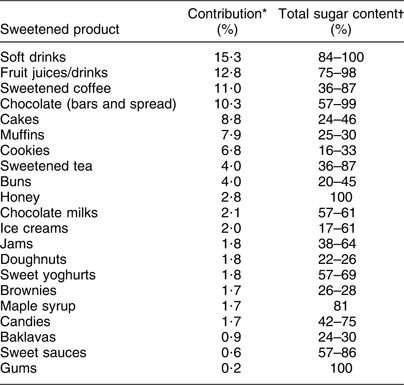
*Contribution of each product to total sweet product consumption (as a percentage of total sugars). This contribution is a function of the frequency of consumption, average portion consumption and total sugar content in mean portions.
†Total sugar content refers to the percentage of energy attributed to total sugars in each product. Percentages were calculated using the Canada Nutrient File( 35 ) and included all varieties of a given product. For example, ice cream products contain between 17 % and 61 % of energy from total sugars.
Participants at Stage 2 (n 190) were aged between 18 and 60 years old with a mean age of 35 (sd 12·8) years. Most participants were born in Egypt (31·9 %), Lebanon (25·1 %), Syria (14·7 %) and other Middle Eastern countries including Kuwait, Palestine and Saudi Arabia (5·3 %). These individuals and their families migrated to Canada between 1962 and 2007, 86 % of whom arrived before 2000. Another 23 % of participants were born in Canada; they were second-generation migrants from parents born in the Middle East. Among the participants, 48 % were normal weight, 36 % were overweight and 16 % were obese.
As measured by the FFQ at Stage 2, average consumption of sweetened products was 75·4 (sd 50·9) g/d (n 190) with a range from 2·9 to 316 g/d, and followed a gamma-type distribution. The share of each sweetened product to total sweetened product consumption (as a percentage of total sugars) is shown in Table 1. The main sources of sweetened products were juices and beverages (soft drinks, fruit juices/drinks and sweetened coffee), chocolates and sugary baked goods (cookies, cakes and muffins).
Table 2 presents the consumption share of selected sweetened products according to the period of the day, as measured by the FFQ at Stage 2. Most products were consumed between meals, including 70·4 % of chocolate bars, 61·6 % of cookies, 55·0 % of cakes and 70·9 % of ice creams. These were eaten mainly in the afternoon and during the evening. Almost two-thirds of soft drinks and sweetened juices were consumed during meals, whereas sweetened coffee and tea were consumed equally during and between meals.
Consumption of main sweetened products according to period of the day in the Catholic Middle Eastern community of Montreal (n 190)

*Each line shows the temporal distribution of consumption of each product for all individuals (n 190). For example, 4·4 % of all soft drinks in this community were consumed at breakfast, whereas 30·7 % were consumed at lunch.
Table 3 shows the consumption of sweetened products according to the participants' sociodemographic characteristics at Stage 2. Most importantly, younger individuals ate significantly more sweetened products than older individuals (P < 0·01) and this was true for both liquid (P < 0·01) and solid sources of sweetened products (P < 0·02). Men consumed more sweets (83·9 g/d) than women (69·0 g/d), and this difference was significant only for liquid sources (P < 0·01). Higher consumption of sweetened products was also found among students, individuals without a university degree and those who were single or divorced/separated/widowed. Additionally, individuals born in Canada ate more sweetened products than recent immigrants, and recent immigrants (≤10 years) ate more of these products than long-term migrants (≥11 years). However, relatively high correlations were found between age and all of these variables: time since immigration (R = 0·36; P < 0·01), civil status (R = 0·49; P < 0·01), student status (R = 0·58; P < 0·01) and education level (R = 0·18; P < 0·01). After controlling for age, all relationships between sociodemographic variables and consumption of sweetened products lost their statistical significance. Sociodemographic variables were not significantly related to the consumption level of either liquid or solid sources of sweetened products.
Consumption of sweetened products according to sociodemographic characteristics in the Catholic Middle Eastern community of Montreal (n 190)

*Mean daily amount of total sugars (g/d) from all sweetened products.
†Univariate analyses with the generalized linear model (gamma distribution, log-link function) between sweetened product consumption and each sociodemographic variable, controlling for age.
‡Only respondents who agreed to report family income were included (n 173).
A low correlation was found between television viewing and recreational computer use (R = 0·16; P < 0·05). Sedentary behaviours were not correlated with BMI. Table 4 shows the consumption of sweetened products according to BMI, physical activity and sedentary behaviours. After controlling for age, consumption of sweetened products was significantly higher in participants who spent more time using their computer for recreational purposes (P < 0·01) and this association was significant for both solid (P < 0·01) and liquid sources (P < 0·01) of sweetened products. Consumption of sweetened products was also significantly higher in participants who spent more time watching television (P < 0·01) after controlling for age, but this association was not significant when solid and liquid sources of sweetened products were considered separately.
Consumption of sweetened products according to BMI, physical activity and sedentary activities in the Catholic Middle Eastern community of Montreal (n 190)

*Mean daily amount of total sugars (g/d) from all sweetened products.
†All univariate regressions were controlled for age and performed with the generalized linear model (scale response was gamma with log-link function).
‡A quadratic regression analysis was performed to account for the U-shaped relationship between physical activity and consumption of sweetened products.
An inverse but non-significant relationship was found between sweetened product consumption and BMI (P < 0·89), and this was true for both liquid and solid sources. Furthermore, a U-shaped relationship was found between level of physical activity and consumption of sweetened products (P < 0·01); there was a gradual and inverse linear relationship between consumption of these products and the level of physical activity from individuals who did not do any exercise to those who exercised up to 3 times/week. However, the highest consumers of sweetened products were found among participants who exercised the most (≥4 times/week). In a post hoc test, the addition of a quadratic term to the model for physical activity was statistically significant (P < 0·04). The nature of the association between level of physical activity and consumption of sweetened products was the same for both liquid and solid sources.
Finally, in the multivariate generalized linear regression model (χ = 29·9; P < 0·001), both age (exp (β) = 0·99; P < 0·01) and level of physical activity (exp (β) = 1·08; P < 0·01) were independently and inversely associated with consumption of sweetened products. The positive value of the exponentiated betas for physical activity indicates that consumption of sweetened products rose after a certain level of physical activity (≥4 h/week). Recreational computer use (exp (β) = 1·17; P < 0·01) was positively associated with consumption of these products. No differences were observed when multivariate analyses were ran for solid and liquid sources separately.
Fat consumption (g total fat/d) was moderately related to sweetened product consumption (R = 0·50; P < 0·01). It was not related to sex (R = 0·54; P < 0·161) nor to physical activity (R = 0·17; P < 0·811), and had a low correlation with age (R = 0·26; P < 0·01) and recreational computer use (R = 0·21; P < 0·01). Adding fat consumption as a covariate in the multivariate model did not alter the direction nor change the significance level of the measured associations.
Discussion
The present paper describes for the first time the consumption patterns of sweetened food and drink products in a Catholic Middle Eastern Canadian community and reports its associations with sedentary behaviours, physical activity and BMI.
The consumption level of sweetened products amounted to 75·4 g total sugars/d or 15·1 % of daily energy intake (based on 8368 kJ (2000 kcal)/d), which far exceeds the WHO upper limit for free sugars( 6 ) set at 10 %. This is true for all participants, regardless of their BMI. The consumption level of sugar in the Catholic Middle Eastern Canadian community is also higher than the one reported for Lebanese living in Beirut (11·4 % of daily energy intake)( Reference Nasreddine, Hwalla and Sibai 15 ). Elsewhere, higher levels of sugar intake (>20 % of daily energy intake) were reported in rural Egypt, mostly due to the consumption of sweetened tea( Reference Hassan, Moussa and Ismail 38 ), as well as in children of aged 6–12 years who consumed sugary baked goods in Syria( Reference Jaghasi, Hatahet and Dashash 39 ).
In the traditional diets of the Middle East region sweetened tea was consumed daily and home-prepared pastries and desserts were prepared and consumed on festivities( Reference Issa, Salameh and Batal 12 – Reference Nickles 14 ). However, most of the processed sources of dietary sugars identified in our study are ultra-processed products and include soft drinks, fruit juices and drinks, chocolates and sugary baked goods, as well as sweetened coffee. These products are typical of the Western-type diet( Reference Guthrie and Morton 40 ) and designed to be consumed as snacks( Reference Monteiro, Gomes and Cannon 29 ). This is consistent with our finding that most sweetened products were consumed between meals.
Sweetened product consumption from both liquid and solid sources was significantly higher among younger individuals. Similar relationships were reported for total sugars consumption in Canada( Reference Blanchet, Plante and Rochette 41 ) and for free sugars consumption in Lebanon( Reference Nasreddine, Hwalla and Sibai 15 ). We also found that consuming sweetened products was associated with television viewing and recreational computer use. In Western countries, similar relationships were reported between these behaviours and consumption of soft drinks and sugary foods( Reference Must and Tybor 17 – Reference Rehm, Matte and Van Wye 19 , Reference Andersen, Lillegaard and Overby 42 ).
The relationship between consumption of sweetened products and level of physical activity was less straightforward. Inactive individuals consumed more sweetened food and drink products than low and moderately active individuals. One study reported a similar association with soft drink consumption( Reference Rehm, Matte and Van Wye 19 ). However, we also noted that very physically active individuals (≥4 times/week) reported the highest consumption level of sweetened products. In a previous paper we reported that sweetened products are consumed by Middle Eastern Canadians while performing both physical and mental activities( Reference Moubarac, Cargo and Receveur 43 ). Marketing and sales efforts of sweetened products are indeed focused on promoting their energizing properties and association with sports( Reference Deldicque and Francaux 44 ).
We observed an inverse (but not significant) relationship between consumption of sweetened products and BMI. Similar results are reported in other cross-sectional studies( Reference Andersen, Lillegaard and Overby 42 , Reference Bandini, Vu and Must 45 ). Our result must be interpreted by taking into account the cross-sectional design and the fact that consumption of sweets is related to health concerns and weight-loss intention( Reference Mullie, Aerenhouts and Clarys 46 ). Indeed, at the time of the study, individuals with excessive weight reported a higher preoccupation with watching/restricting their dietary intake than normal weight individuals (data not shown). It is also possible that overweight and obese participants under-reported their weight or under-reported their consumption of sweetened products. Because of the above limitations our data cannot be taken as evidence that consumption of sweetened products does not affect weight gain. Indeed, such a relationship is well attested in longitudinal and clinical studies in the literature( Reference Mozaffarian, Hao and Rimm 25 , Reference Bray 47 – Reference Schulze, Manson and Ludwig 51 ).
Finally, in the multivariate analysis, we found that recreational computer use, physical activity and age were independently associated to the consumption of sweetened products. This means that, at least in this community, computer use is a better marker for sedentary behaviour than television viewing. This may reflect a shift in the use of technology, especially by adolescents and young adults, where computers, along with new media tools such as YouTube and Facebook, are replacing television as the number one sedentary activity. Excessive recreational computer use (>3 h/d) was associated with the consumption of sugary drinks, independent of television viewing, in a sample of Californian adolescents( Reference Shi and Mao 52 ).
Other limitations of our study included the fact that participants were self-selected into the study. Non-respondents would include individuals not attending church/not participating in church activities. However, the vast majority of Arab Canadians (94 %) describe themselves as being part of a religious faith( 2 ) and there is no reason to believe that characteristics of church attenders and non-attenders differ in terms of the variables examined herein. Our sample, however, is restricted to individuals with a medium to high socio-economic profile.
Implications and conclusion
The findings of the present study have important implications for the prevention and management of overweight and obesity in the Middle Eastern Canadian population. The consumption level of sweetened products largely exceeds the recommended upper intake of free sugars as set by the WHO( 6 ) and this is true for normal weight, overweight and obese individuals. To reduce intake of sugars, consumption of soft drinks, juices and beverages, chocolates and sugary baked goods should be targeted, primarily when eaten as snacks between meals. Health promotion initiatives should also focus on sedentary behaviours and physical activity, both of which are associated with consumption of these products. The association between physical activity and consumption of sweetened products requires further examination especially in very active individuals who may overuse sweetened products as the main source of energy while exercising. This is important considering that Middle East Canadians report one of the lowest levels of physical activity in the country( Reference Tremblay, Bryan and Perez 21 , Reference Dogra, Meisner and Ardern 22 ).
The study also has implications for migrant health studies. Most sweetened products consumed by our sampled community are ultra-processed products which are characterized by a poor dietary quality( Reference Monteiro, Levy and Claro 27 , Reference Moubarac, Martins and Claro 28 ) and associated with weight gain and the development of chronic diseases( Reference Asfaw 53 , Reference Tavares, Fonseca and Garcia Rosa 54 ). These products consumed as snacks are increasingly replacing foods and ingredients use to prepare meals and dishes( Reference Monteiro, Gomes and Cannon 29 , Reference Monteiro and Cannon 30 ). This is important for migrants exposed to a new food environment when they come to Canada or the USA where sweetened products are cheap, abundant, attractive, convenient, and part of the food culture. Using the methodology described in the present paper, future studies could focus on describing the consumption patterns of sweetened foods and beverages in other migrant communities to address their role in increasing the burden of overweight/obesity and chronic diseases.
Acknowledgements
Sources of funding: This research received no specific grant from any funding agency in the public, commercial or not-for-profit sectors. Conflicts of interest: The authors report no conflict of interests. Authors’ contributions: The empirical study was planned by all authors, and was supervised by M.D. Data preparation and analysis was undertaken by J.-C.M. The initial draft of the paper was prepared by J.-C.M., following extensive discussions with O.R., M.C. and M.D. Successive drafts were developed by J.-C.M., with inputs from the other co-authors. All authors have reviewed and approved the final version. Acknowledgements: The authors wish to thank Carlos Augusto Monteiro for his comments on the definition of sweet food and drink products.



