

Introduction
The existence of unmet need for social care among older people is a critical policy question particularly in the British context, against the background of changing family structures which may affect the future supply of informal care (Buckner and Yeandle Reference Buckner and Yeandle2007; Pickard et al. Reference Pickard, Wittenberg, Comas-Herrera, King and Malley2007), and reductions in the funding for state-funded formal care (Ismail, Thorlby and Holder Reference Ismail, Thorlby and Holder2014; Mortimer and Green Reference Mortimer and Green2015). However, getting a grasp of the impact of such changes on the degree to which older people's needs are being met has proven a challenge. Empirical evidence on the extent and nature of unmet need among older people has been difficult to produce, partly due to the difficulty in accurately defining what unmet need means, and partly due to the lack of nationally representative data on this topic.
The challenges in designing adequate and sustainable systems of social care are not faced by British policy makers alone, nor is the scientific challenge of defining and measuring unmet need for social care exclusive to the British context. Research in Australia identifies unmet need among older patients as a critical component of addressing the tension ‘between fulfilling client and carer wishes and the provider's duty of care in meeting the client's health and social needs' (Harrison et al. Reference Harrison, Low, Barnett, Gresham and Brodaty2014: 208), while in the United States of America (USA), a better understanding of unmet need is seen as facilitating greater use of evidence-based care for older people with particular needs, such as dementia (Johnston et al. Reference Johnston, Samus, Morrison, Leoutsakos, Hicks, Handel, Rye, Robbins, Rabins, Lyketsos and Black2011). This paper builds on existing efforts to understand conceptually and examine empirically patterns of unmet need amongst older people, in order to provide an up-to-date analysis of its extent and the characteristics associated with it. The following section engages with conceptual arguments on the definition of need and unmet need, drawing on global scholarship and highlighting the complexity of unmet need as a concept. This is followed by a critical review of empirical evidence in this area, synthesising studies using a range of approaches to define unmet need among older adults. The paper then discusses the data and methods used, before presenting the results of the analysis. The final section pulls together the key findings and contextualises them in existing knowledge, pointing to policy implications arising from this work, a number of limitations in the paper and avenues for future research.
Conceptualising need for social care
The concept of need is central to our understanding of how welfare states design and provide social policies for (younger and) older people, including social care-related benefits and services. Nevertheless, as Liddiard (Reference Liddiard, Baldock, Manning and Vickerstaff2007: 121) notes, ‘definitions of need, whether they are explicit in policies and eligibility rules, or implicit in the decisions made by welfare providers, are rationing devices: they determine who gets what’. As such, definitions of need can place a greater value on one older person's need against another's, and such definitions may be derived from objective measurements or from subjective reports, or a combination of the two (Godfrey and Callaghan Reference Godfrey and Callaghan2000). In the context of social care, Bradshaw's (Reference Bradshaw1972) distinction between normative need, on the one hand, as expressed by experts or professionals, and felt or expressed need, on the other hand, as expressed by older person's themselves, begins to unravel the complexity of need as a concept. More recent work has differentiated between a clinical approach, which relies on clinical guidelines and assessment, and a subjective approach, which is based on the individual patients' personal assessment (Allin, Grignon and Le Grand Reference Allin, Grignon and Le Grand2010). However, even a simple dichotomy between more- and less-objective ways in defining need raises issues, e.g. much research has used the care provider's perspective (whether formal or informal) in order to pinpoint the care recipient's needs (see e.g. Bień et al. Reference Bień, Mckee, Döhner, Triantafillou, Lamura, Doroszkiewicz, Krevers and Kofahl2013; Miranda-Castillo, Woods and Orrell Reference Miranda-Castillo, Woods and Orrell2013). A common departure point for much literature focusing on the need for assistance among (younger and) older individuals is the strong link between need and one's difficulty with daily functions or activities, which in turn can determine the type of assistance required (Allen, Piette and Mor Reference Allen, Piette and Mor2014; Vlachantoni et al. Reference Vlachantoni, Shaw, Evandrou and Falkingham2015). Another widely accepted and evidenced aspect of need among older individuals is the predominance of informal care provision (see e.g. Buckner and Yeandle Reference Buckner and Yeandle2007; Dunatchik et al. Reference Dunatchik, Icardi, Roberts and Blake2016; Maplethorpe, Darton and Wittenberg Reference Maplethorpe, Darton and Wittenberg2015). However, the dynamic nature of older people's needs can have a direct effect on the amount and type of support required from a range of sources (e.g. Diwan and Moriarty Reference Diwan and Moriarty1995).
Conceptualising unmet need for social care
Notwithstanding the complexity of need as a concept, the conceptualisation of unmet need has been shown in existing literature to amount to more than the mere opposite of having one's needs met. Indeed, one part of the literature has taken what might be described as an ‘absolute’ approach to measuring unmet need for different types of activity, which identifies individuals with needs who do not receive any support with such needs (Allen, Piette and Mor Reference Allen, Piette and Mor2014; Davey et al. Reference Davey, Takagi, Sundstrom and Malmberg2013; Low et al. Reference Low, Fletcher, Gresham and Brodaty2014; Vlachantoni et al. Reference Vlachantoni, Shaw, Willis, Evandrou, Falkingham and Luff2011). Another part of the literature has adopted a more ‘relative’ approach, which focuses on the population who may be able to perform particular activities with some difficulty or only with help (e.g. Maplethorpe, Darton and Wittenberg Reference Maplethorpe, Darton and Wittenberg2015), and tries to identify the level of adequacy of support received (however little), and the nature of the adverse impact as a result of such inadequacy (Freedman and Spillman Reference Freedman and Spillman2014; He et al. Reference He, Craig, Xu, Covinsky, Stallard, Thomas, Hass and Sands2015; LaPlante et al. Reference LaPlante, Kaye, Kang and Harrington2004). For example, in the study by DePalma et al. (Reference DePalma, Xu, Covinsky, Craig, Stallard, Thomas and Sands2013), participants were considered to have unmet need for activities of daily living (ADLs) if they reported that they did not receive needed help, could have used more help or had to wait to do the task, because they did not have enough help. Some work has explicitly linked unmet need with the policy context of a particular country, e.g. recent United Kingdom-based studies have defined unmet need in relation to an older person's eligibility for support from their Local Authority (Dunatchik et al. Reference Dunatchik, Icardi, Roberts and Blake2016) and as the gap between the level of support received by an older person and the average state-supported care packages for people in different circumstances at the time (Forder and Fernandez Reference Forder and Fernandez2010).
Conceptual frameworks of defining and measuring unmet need have mapped a range of indicators which can be useful in unravelling specific aspects or dimensions of the concept. Many scholars have used one's difficulty with ADLs or instrumental activities of daily living (IADLs) in order to express need for different types of care. For example, Ashokkumar, Chacko and Munuswamy (Reference Ashokkumar, Chacko and Munuswamy2012) defined older people with disabilities as being ‘at risk’ of having unmet needs, while unmet need was defined as the combination of reporting a disability, and lacking human assistance and the use of an assistive device. The use of technology as a way of meeting one's needs on a day-to-day basis and thus avoiding unmet need has been highlighted in both a nationally representative study in the USA (Stineman et al. Reference Stineman, Xie, Pan, Kurichi, Saliba and Streim2011), and smaller-scale studies in Norway (Gramstad, Storli and Hamran Reference Gramstad, Storli and Hamran2013) and Sweden (Löfqvist et al. Reference Löfqvist, Slaug, Ekström, Kylberg and Haak2016). Vlachantoni et al. (Reference Vlachantoni, Shaw, Willis, Evandrou, Falkingham and Luff2011) used two scales of need and support, and visualised unmet need in the United Kingdom at the point between the report of difficulty with particular tasks (need) meets the lack of support received by the older person. Other studies have differentiated between different types of home and/or community-provided services, for instance Casado, Van Vulpen and Davis (Reference Casado, Van Vulpen and Davis2011) and Casado and Sang (Reference Casado and Lee2012) distinguished between predisposing factors, the care recipients' needs, the care-giver's needs and factors enabling the provision of care (e.g. formal or informal), as elements affecting access to different services. The study of unmet need among older people with cognitive impairment (see e.g. Ghio et al. Reference Ghio, Amore, Natta, Vaggi and Ferrannini2014; Houtjes et al. Reference Houtjes, Van Meijel, Deeg and Beekman2011; Johnston et al. Reference Johnston, Samus, Morrison, Leoutsakos, Hicks, Handel, Rye, Robbins, Rabins, Lyketsos and Black2011; Li et al. Reference Li, Kyrouac, Mcmanus, Cranston and Hughes2012; McCausland et al. Reference McCausland, Guerin, Tyrrell, Donohoe, O'Donoghue and Dodd2010; Quail, Wolfson and Lippman Reference Quail, Wolfson and Lippman2011; Shooshtari, Naghipur and Zhang Reference Shooshtari, Naghipur and Zhang2012; Stobbe et al. Reference Stobbe, Wierdsma, Mulder, Kok, Kroon and Depla2015) or with palliative care needs (e.g. Nanda et al. Reference Nanda, Bourbonniere, Wetle and Teno2010; Ventura et al. Reference Ventura, Burney, Brooker, Fletcher and Ricciardelli2014) represents a significant part of existing literature, nevertheless these two types of unmet need often extend beyond social care and are thus outside the remit of the present paper.
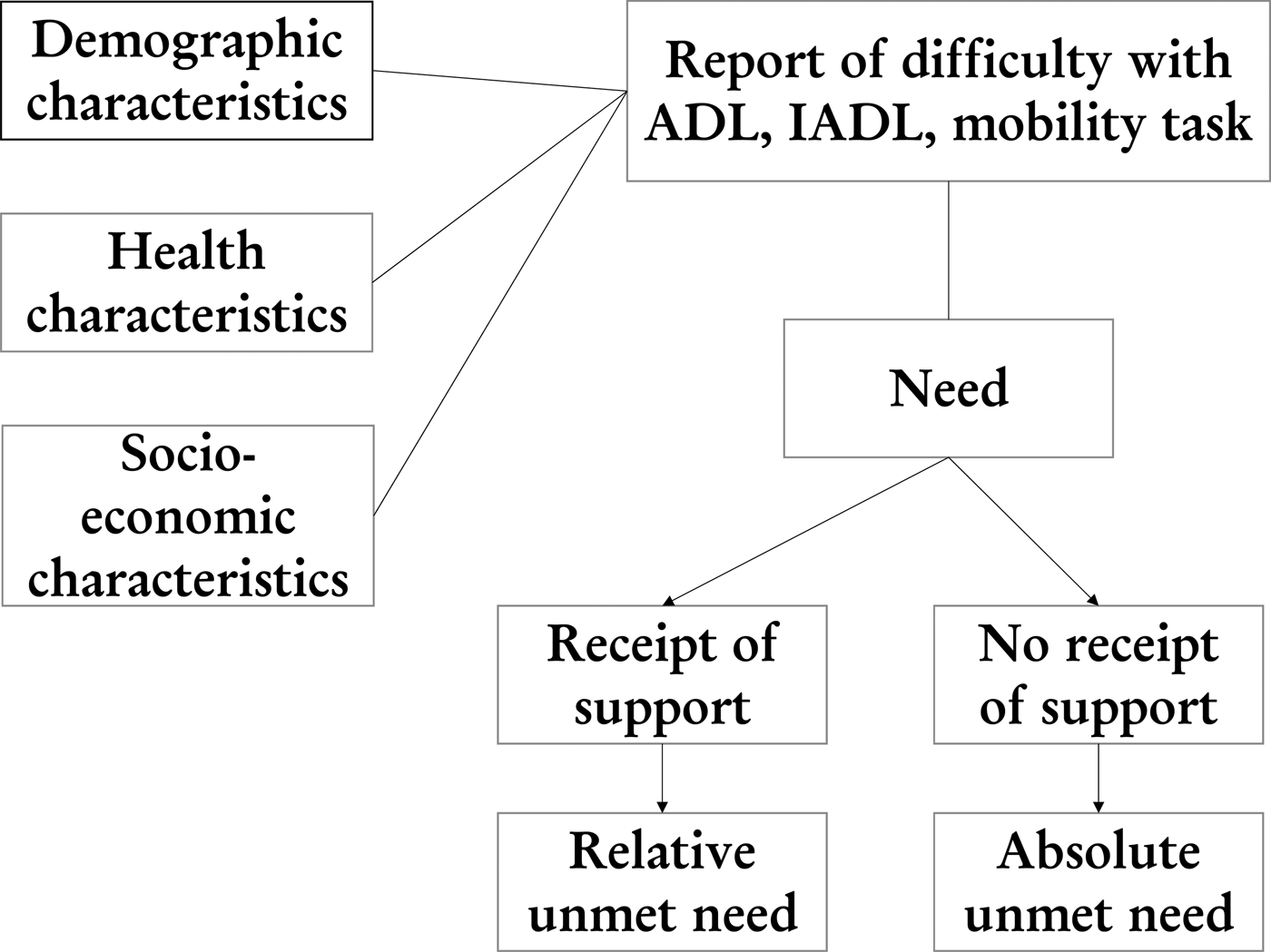
Drawing on existing research, the existence of need is conceptualised in the paper as a diverse concept which is a direct result of an older person's report of difficulty with different types of function, including ADLs, IADLs and mobility tasks (see Figure 1). The three types of task (ADLs, IADLs, mobility) are treated as distinct categories of functions for which particular skills are essential, however, there is no assumption that one's difficulties with different tasks within each category are comparable and of equal value (i.e. that one's difficulty with dressing is of equal value to one's difficulty with bathing). Instead, the intention is to conceptualise unmet need in its different forms. The paper adopts an ‘absolute’ approach to defining unmet need among older people, thereby understanding unmet need as the report of a difficulty with a certain task combined with the complete lack of support with such task. The reason for adopting this approach is that it can point to the specific part of the older population who are most at need of support, and can have important value in informing policy-relevant debates about the organisation and provision of social care, particularly at times of budgetary constraints (Ismail, Thorlby and Holder Reference Ismail, Thorlby and Holder2014).
Conceptualising unmet need for social care.
The prevalence of, and factors associated with, unmet need for social care
Existing evidence of unmet need among older people covers a host of countries and regions around the world. Nationally representative data from Canada in 2002 show that about 18 per cent of individuals aged 65 and over have unmet need, of whom approximately half receive some (but not enough) support (Busque and Legare Reference Busque and Legare2012). The characteristics associated with unmet need included living alone, being aged 70 and over and single, financially dependent, a higher level of disability and the report of chronic conditions. International studies on unmet need have also pointed to needs other than those relating to physical functioning, e.g. an Australian study with 50 older respondents found that the participants' unmet needs predominantly related to social and recreational activities, eating, and physical and mental health (Harrison et al. Reference Harrison, Low, Barnett, Gresham and Brodaty2014). Within India, it was found that 53 per cent of persons aged 60 and over reported a disability and, among those, almost one-third had unmet need for their disability (Ashokkumar, Chacko and Munuswamy Reference Ashokkumar, Chacko and Munuswamy2012).
Within the USA, descriptive analysis of the 2011 National Health and Aging Trends Study (N = 4,000+ older individuals) showed that unmet need was most likely to be experienced in assisted living settings (42 per cent), followed by retirement or senior housing settings (37 per cent) and traditional community housing (31 per cent), however, multivariate analysis found those in retirement or senior housing face a higher risk of unmet need than those in traditional community housing, while those in independent or assisted living settings showed a relatively lower risk (Freedman and Spillman Reference Freedman and Spillman2014). The importance of having access to professional services is also emphasised in Casado and Sang's (Reference Casado and Lee2012) study which showed that the predictors of unmet need varied depending on the type of service, but included the care-giver's gender and education, the care recipient functional dependency and cognitive impairment, and other factors. Finally, within the US context, evidence has drawn a strong link between unmet need for one or two ADLs and a mortality risk (He et al. Reference He, Craig, Xu, Covinsky, Stallard, Thomas, Hass and Sands2015).
Within the British context, Vlachantoni et al. (Reference Vlachantoni, Shaw, Willis, Evandrou, Falkingham and Luff2011) conducted a scoping study of three data-sets and found that unmet need among older people tends to be higher in the case of ADLs (between 50 and 66% of those reporting difficulty with such activities) compared to the case of IADLs (about 10%). Analysis of the Health Survey for England 2014 found that the level of unmet need varied according to different activities, however 13 per cent of men and 18 per cent of women over the age of 65 reported some unmet need with at least one ADL (Maplethorpe, Darton and Wittenberg Reference Maplethorpe, Darton and Wittenberg2015). Finally, Forder and Fernandez (Reference Forder and Fernandez2010) used the Personal Social Services Research Unit dynamic micro-simulation model to estimate the effects of a reduction in funding for social care provision in the future. This research used a ‘demand-led’ scenario of funding, where funding increases sufficiently to maintain current eligibility thresholds and means-test criteria, and a ‘reduced-budget’ scenario, reflecting a 6.7 per cent per annum real-terms reduction in the total budget available for social care for 2011/12 and 2012/13. The results showed that by 2012/13 there would be 9,000 ‘high-dependency’ people with unmet need under the former scenario, and 260,000 people under the latter scenario. Crucially, Forder and Fernandez (Reference Forder and Fernandez2010) demonstrated that the availability of informal care had a significant effect on future demand for social care and its costs.
In terms of the characteristics associated with unmet need for daily activities, a combination of factors has been shown to be important. For instance, a Taiwanese study with a nationally representative sample showed that health (e.g. number of illnesses), socio-economic (e.g. education level) and demographic (e.g. living arrangements) factors were all associated with experiencing unmet need for ADLs (Liu, Chang and Huang Reference Liu, Chang and Huang2012). A study in New Zealand found that the report of a mobility difficulty, providing care to another person and being female were significant predictors of unmet need for assistance (Wilkinson-Meyers et al. Reference Wilkinson-Meyers, Brown, Mclean and Kerse2014). A qualitative study of Native Americans found that almost half (48 per cent) reported an unmet need with one or more ADLs or IADLs, and that the number of difficulties with ADLs/IADLs as well as the level of social support received were significant correlates of unmet assistance need (Schure, Conte and Turner Goins Reference Schure, Conte and Turner Goins2015).
Finally, a smaller part of the empirical evidence on unmet need among older people draws links between such needs and the broader policy context in which older people live. Within the European context, Bien et al. (Reference Bień, Mckee, Döhner, Triantafillou, Lamura, Doroszkiewicz, Krevers and Kofahl2013) used data from the 2003/4 EUROFAMCARE data-set on a number of European countries, and defined unmet need through a question asking the carer whether the older person has a need for help with health, physical/personal, mobility or domestic needs. The study found that older people in Greece, Italy and Poland used mostly health-oriented services, used fewer services overall and also demonstrated a higher level of unmet care needs compared with older people in the United Kingdom, Germany and Sweden. A Dutch study on frail older people in primary care showed that unmet need for physical activities was relatively lower than unmet need for psycho-social needs (Hoogendijk et al. Reference Hoogendijk, Muntinga, Van Leeuwen, Van Der Horst, Deeg, Frijters, Hermsen, Jansen, Nijpels and Van Hout2014), and a small-scale Australian study (N = 55) showed that unmet need for a range of domains of functioning was a relatively weak predictor of receiving packaged or non-packaged care in later life (Low et al. Reference Low, Fletcher, Gresham and Brodaty2014).
The prevalence of unmet need in the broader policy context has also been studied in the North American context. For example, Dubuc et al. (Reference Dubuc, Dubois, Raiche, Gueye and Hebert2011) used 2002–2006 data on individuals aged 75 and over in Canada and found that living in areas with integrated services reduced the risk of experiencing unmet need, while some individual characteristics (e.g. being a woman and living alone) were associated with a higher risk. Within the US context, the incidence of unmet need has also been used to analyse aspects of the broader policy system (e.g. Davey et al. Reference Davey, Takagi, Sundstrom and Malmberg2013). Xu et al. (Reference Xu, Covinsky, Stallard, Thomas and Sands2012) and DePalma et al. (Reference DePalma, Xu, Covinsky, Craig, Stallard, Thomas and Sands2013) both analysed data from the Long-term Care Survey in order to understand the role of unmet need with ADLs in affecting admission or re-admission to hospital among older people, and found that after controlling for demographic, health and functioning characteristics, reporting insufficient support (or unmet need) related to ADLs was associated with an increased risk for hospital admission or re-admission. Finally, a Japanese study found that unmet need for ADLs was associated with nurse-visiting services, emphasising the importance of hospital discharge processes taking into account the older patients' functioning abilities (Nagata et al. Reference Nagata, Taguchi, Naruse, Kuwahara and Murashima2013).
Data and methods
This paper employs data from Wave 7 of the English Longitudinal Study of Ageing (ELSA), which is a longitudinal survey of people aged 50 and over living in private households in England (NatCen Social Research 2016). The ELSA sample was originally drawn from respondents to the Health Survey for England (HSE), an annual cross-sectional household survey which collects a range of health data and biometric measures. Each HSE sample is drawn using a two-stage sampling strategy, which involves a selection based on postcodes selected from the Postcode Address File and a random selection of households from a fixed number of addresses covering each postcode sector. As a result, the HSE is nationally representative of private households in England. There is a potential loss of representativeness before the ELSA sample was drawn from HSE data due to non-response to HSE, refusal to be re-contacted, attrition between HSE and ELSA, and the exclusion of individuals living in institutions such as residential and nursing homes. However, later waves of the ELSA also included a small number of older individuals living in care homes, and other factors affecting the composition of the sample have been partly mitigated by the use of weights in the analysis.
The analytical sample for this paper focuses on 5,591 respondents in the ELSA data-set who are aged 65 and over and who had no missing information in their report of difficulty with certain ADLs (e.g. dressing), IADLs (e.g. shopping for groceries) or mobility tasks (e.g. walking 100 yards). The measurement of difficulty with ADLs was developed in the 1960s, and is used to evaluate an individual's ability to perform functional activities independently (Katz et al. Reference Katz, Ford, Moskowitz, Jackson and Jaffee1963). ADLs refer to basic functional abilities, such as bathing or dressing, whereas IADLs, such as managing one's finances, are understood to be at a higher level of functioning, might require mental and/or physical capacity, and can diminish earlier than ADLs (Lawton and Brody Reference Lawton and Brody1969). Individuals who responded to the survey by proxy were not included in the analysis (for more information on the cross-sectional weight construction, see NatCen Social Research 2016).
The report of difficulty with an ADL, IADL or mobility task is a key threshold in the ELSA questionnaire which determines whether the respondent will be asked further questions regarding the receipt of support with particular tasks from different sources (e.g. informal or formal sources). In addition, the questionnaire collects detailed information on the respondents' health status if they are aged 65 and over, in addition to a range of individual-level variables which can affect the nature and extent of unmet need experienced by an older person. The analysis presented below followed four steps. The first step involves identifying the population who are ‘at risk’ of experiencing unmet need, that is, individuals who report at least one difficulty with an ADL, IADL or mobility task. Such an approach has been utilised in past research (e.g. Maplethorpe, Darton and Wittenberg Reference Maplethorpe, Darton and Wittenberg2015), often by amalgamating different tasks within the same type of difficulty, such as ADLs or IADLs. In this paper, the latter approach is adopted in order to disentangle the experience of unmet need with activities which might require significantly different amounts and types of effort and skills (i.e. difficulty with bathing compared to difficulty with paying one's bills).
The Wave 7 ELSA questionnaire collected information about older respondents' difficulty with six ADLs, nine IADLs and 11 mobility tasks,Footnote 1 however, the respondents were only asked whether they received support if they reported difficulty with a selected number of activities which form the basis for the present analysis. These are the following ADLs: difficulty with dressing, including putting on shoes and socks; difficulty walking across a room; difficulty bathing or showering; difficulty eating, such as cutting up food; difficulty getting in and out of bed; and difficulty using the toilet, including getting up or down; the following IADLs: difficulty shopping for groceries; difficulty taking medications; difficulty doing work around the house or garden; and difficulty managing money, such as paying bills and keeping track of expenses; and the following mobility tasks: difficulty walking 100 yards; difficulty climbing several flights of stairs without resting; and difficulty climbing one flight of stairs without resting. The exact question in the survey was worded as: ‘Please tell me if you have any difficulty with these because of a physical, mental, emotional or memory problem’ (NatCen Social Research 2016).
Having identified the population ‘at risk’, the second step of the analysis examines the extent of unmet need among the older population, defining unmet need as the lack of receipt of any support (from any source) once an individual has reported a difficulty with any of the ADLs, IADLs or mobility activities in the analysis, reflecting the ‘absolute’ approach adopted in this paper. The precise question asked of respondents was: ‘Thinking about the activities that you have problems with, does anyone ever help you with these activities (including your partner or other people in your household)?’ The results take into account gender differences building on existing research which has highlighted this important dimension (Maplethorpe, Darton and Wittenberg Reference Maplethorpe, Darton and Wittenberg2015).
In the third step, the analysis tests for statistically significant associations between the individuals who experience unmet need with the selected ADLs, IADLs or mobility tasks, and a range of individual characteristics covering demographic, health and socio-economic factors which have been highlighted in previous research, in order to explore the composition of the population with unmet need (e.g. Freedman and Spillman Reference Freedman and Spillman2014; Liu, Chang and Huang Reference Liu, Chang and Huang2012). These include demographic characteristics (age group, gender, marital status, living arrangements); health characteristics (self-reported general health, report of a limiting long-term illness (LLTI); characteristics indicating the availability of informal support (marital status, living arrangements); and socio-economic characteristics (housing tenure, level of educational qualifications, occupational social class). In terms of the report of a LLTI, respondents were asked whether they had an illness, disability or infirmity which troubled them over a period of time and, if so, whether it limited their activities in any way. The report of LLTI and self-reported health have been shown in previous research to be reliable indicators of older people's physical wellbeing (Manor, Matthews and Power Reference Manor, Matthews and Power2001). The housing tenure variable distinguishes between individuals who own their own home (owner-occupiers), those who rent from the private sector, those who rent from the social sector (e.g. Local Authority or Housing Association) and those who live rent-free. The living arrangements variable distinguishes between living alone, living with one's spouse and all other living arrangements (e.g. living with one's sibling or child).
The fourth and final step uses three binary logistic regressions to examine the relative importance of individual characteristics in determining whether an older person will experience unmet need with at least one of the selected tasks (Abraham and Ledolter Reference Abraham and Ledolter2006). Here, the analytical sample is restricted to those older people who have reported a particular type of difficulty (N = 1,223 for ADL; 1,217 for IADL; 2,364 for mobility). The results are presented using odds ratios (OR) which are located within confidence intervals.
Results
The older population ‘at risk’ of experiencing unmet need
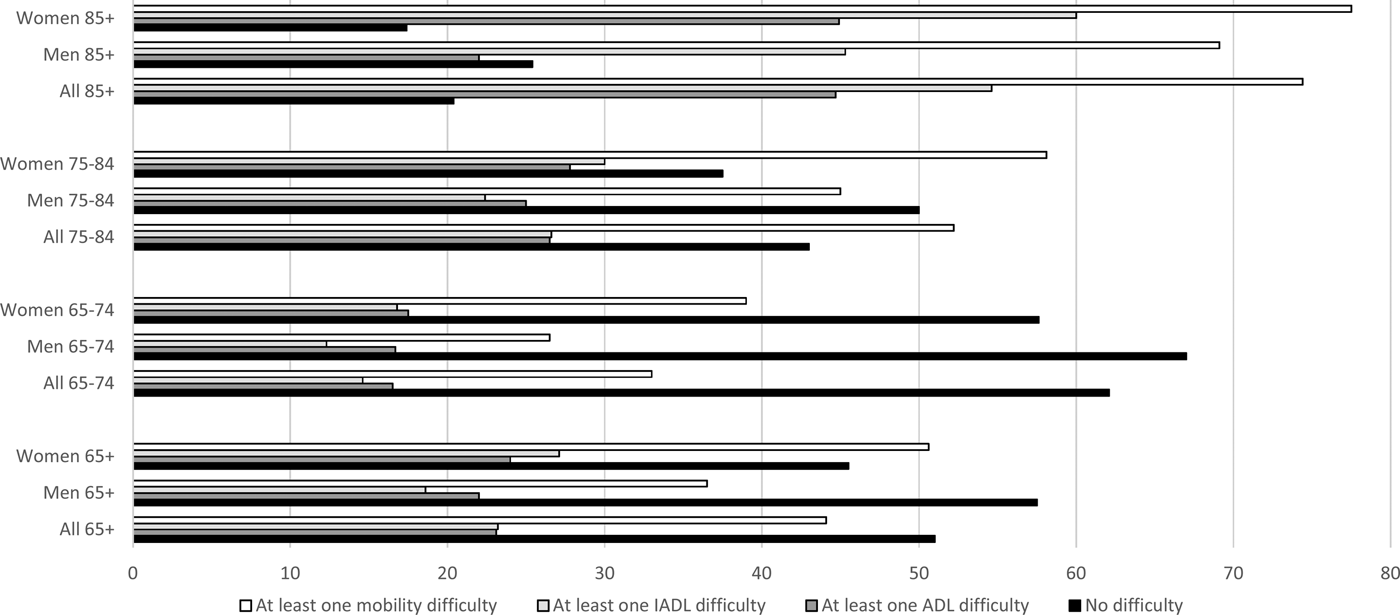
The population ‘at risk’ of experiencing unmet need is defined as individuals aged 65 and over who report a difficulty with an ADL, IADL or mobility task. Figure 2 plots such a population for the three categories of difficulty, as well as different age groups (65–74, 75–84 and 85 and over), and the two genders. It shows that just over 23 per cent of all individuals aged 65 and over reported difficulty with an ADL, compared to a similar proportion who reported a difficulty with an IADL and about 44 per cent who reported a mobility-related difficulty. About 51 per cent of all individuals aged 65 and over (slightly higher for men than women) reported no difficulty with any of the three types of activity, and this proportion was even higher for ADL difficulties (62 per cent), compared to IADL or mobility difficulties (43 and 20 per cent, respectively). The experience of all three types of difficulty was more common among the older age group (85 and over) compared to those aged 65–74 and 75–84. Women in all age groups were more likely than men to report a difficulty, except for the report of an ADL difficulty in the 65–74 age group, where the prevalence rate was similar (18% among women; 17% among men). With regard to the report of difficulty with IADLs, the gender differences shown in the figure to some extent reflect the fact that older women are generally more likely than older men to report difficulty with specific IADL tasks, such as doing housework/garden work or preparing a hot meal, and this may in turn reflect a gendered division of labour within the household. All differences between age groups and genders were statistically significant at the p < 0.001 level.
Percentage reporting at least one activity of daily living (ADL), instrumental activity of daily living (IADL) or mobility difficulty, by age group and gender.
The extent of unmet need among older people for ADLs, IADLs or mobility tasks
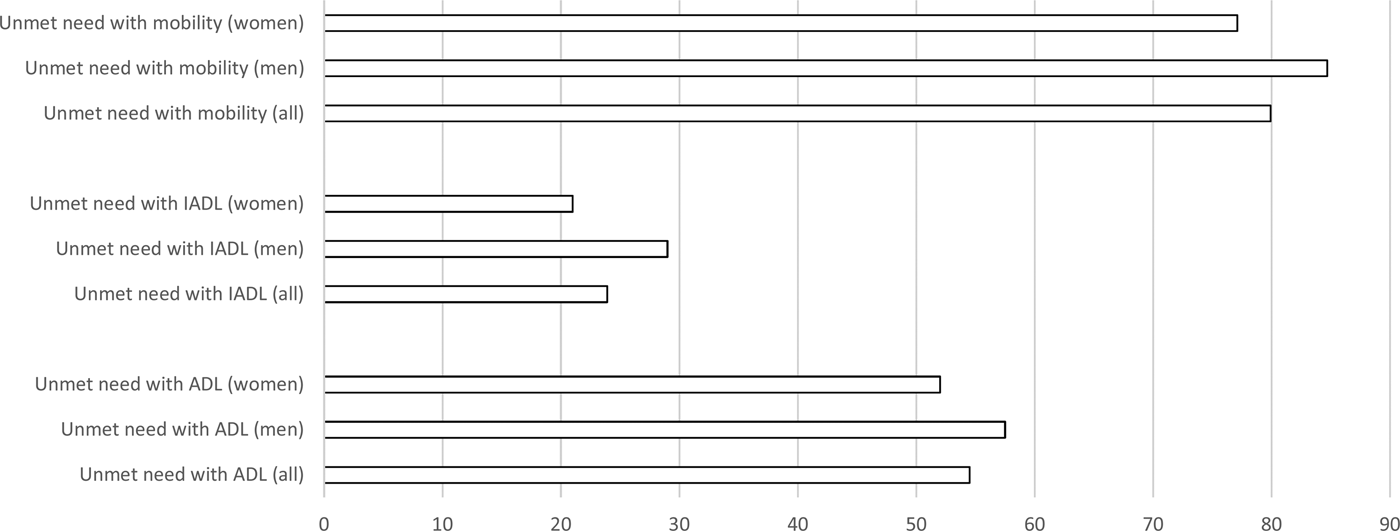
Focusing on the population ‘at risk’, Figure 3 shows the percentage of individuals who reported difficulty with at least one of the three categories of tasks and did not report receiving any support (formal or informal) with any of these difficulties. In essence, this figure shows the prevalence of unmet need for different types of activities among the total population aged 65 and over, and among men and women separately. About 55 per cent of older individuals with an ADL difficulty reported not receiving any support, compared to 24 per cent of those with an IADL difficulty and 80 per cent of those with a mobility difficulty. A higher percentage of men than women reported unmet need across all three types of difficulty, e.g. almost 58 per cent of men compared to 52 per cent of women reported difficulty with at least one ADL and not receiving any support. The differences shown in Figure 3 were all statistically significant at the p < 0.001 level.
Among those reporting an activity of daily living (ADL), instrumental activity of daily living (IADL) or mobility difficulty, percentage not receiving any help, by gender.
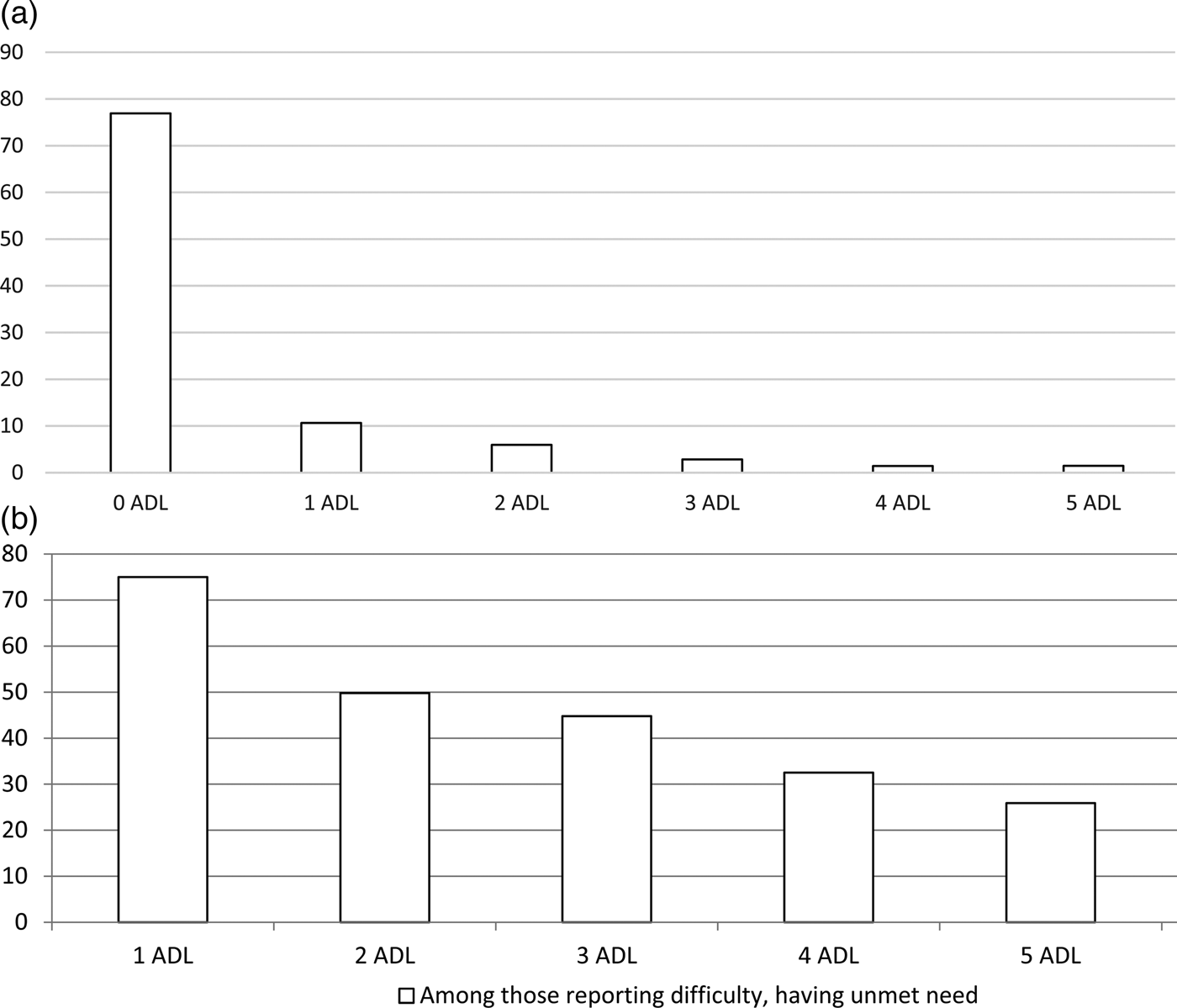
Figures 4a, 4b, 5a and 5b unravel the experience of unmet need further, by focusing on individuals' experience of difficulty with performing ADLs, as such experience is the closest associated with the need for policy interventions which can safeguard the wellbeing of older persons (Ismail, Thorlby and Holder Reference Ismail, Thorlby and Holder2014). Almost 77 per cent of all individuals aged 65 did not report a difficulty with an ADL (Figure 4a). The remaining 23 per cent included almost 11 per cent who reported difficulty with one ADL, almost 6 per cent with two ADLs and lower percentages (between 1 and 3%) of this population who had difficulty with between three and six ADLs. Figure 4b shows that among those reporting ADL difficulties (which may be in addition to difficulties with IADL and/or mobility tasks), the proportion who experienced unmet need decreased in line with the increasing number of ADL difficulties, except for the category with the highest number of ADL difficulties. For instance, about 75 per cent of those with one ADL difficulty reported not receiving any support for that ADL difficulty, compared to 26 per cent of those with five ADL difficulties. However, almost half (48% or 33 individuals in the sample) of those with six ADL difficulties reported not receiving any support for such difficulties.
(a) Report of difficulty, by number of activities of daily living (ADLs); (b) among those reporting difficulty with ADLs, percentage experiencing unmet need.
(a) Report of difficulty with specific activities of daily living (ADLs), by sex; (b) among those reporting difficulty with specific ADLs, unmet need by sex.
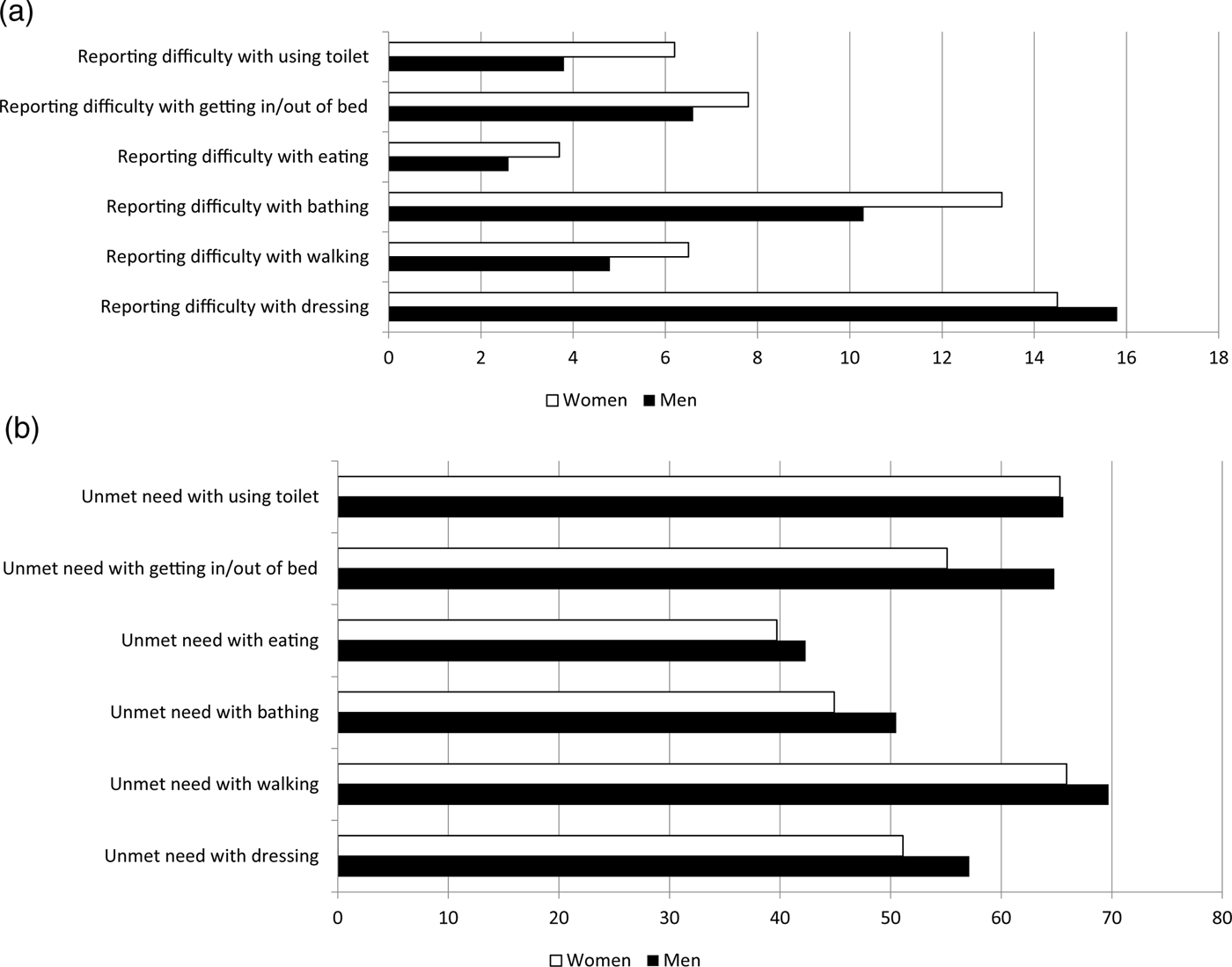
Examining the number of ADL difficulties that individuals experience unmet need for is important in providing a sense of the scale of the challenge of unmet need for formal and informal carers alike. However, such a calculation treats each ADL difficulty as having the same value, an approach which can lose sight of the nuances involved in designing support for particular ADLs. Figure 5a shows the percentage of men and women reporting a difficulty with each particular ADL, while Figure 5b focuses on those reporting a difficulty and shows the percentage not receiving any support with such ADL (i.e. experiencing unmet need). Figure 5a shows that women are more likely than men to report a difficulty with each ADL, nevertheless, Figure 5b shows that among all individuals who report such difficulty, men are more likely than women to experience unmet need. The percentage of older people reporting difficulty is highest for dressing (16% of men and 15% of women) and lowest for eating (just 3% of men and 4% of women) (Figure 5a). However, unmet need (Figure 5b) is highest for walking (70% of men and 66% of women) and using the toilet (66% of men and 65% of women), whereas unmet need is lowest for difficulty with eating – although it is still high at 42 per cent of men and 40 per cent of women.
Individual characteristics associated with the experience of unmet need
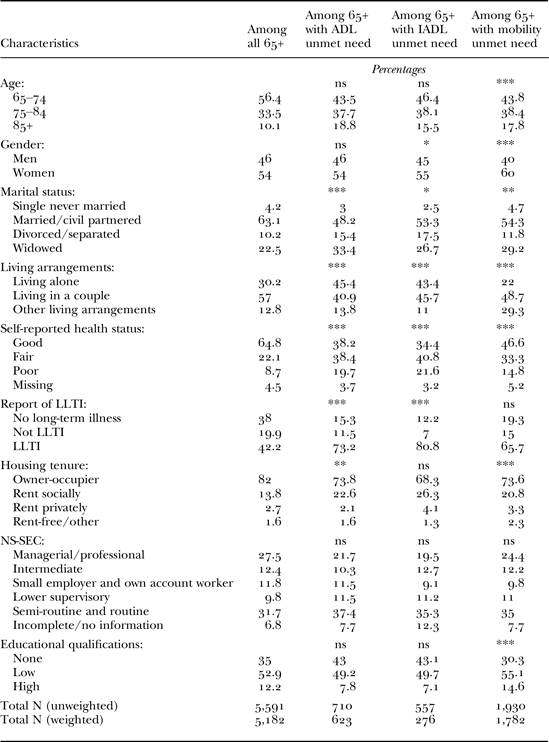
Table 1 shows the association at the bivariate level between older respondents' individual characteristics and the experience of unmet need with ADLs, IADLs or mobility tasks, comparing the three groups with the total sample population aged 65 and over. In terms of demographic characteristics, the table shows that individuals who experienced unmet need with at least one ADL were older compared to those who experienced unmet need with either an IADL or mobility task, with almost 34 per cent of the former category being aged 80 and over, compared to 32 per cent of those with IADL unmet need and 35 per cent of those with a mobility-related unmet need. The gender balance within the groups experiencing ADL or IADL unmet need was comparable to the sample as a whole, however, women were slightly over-represented among those with a mobility-related unmet need. In terms of marital status, individuals experiencing unmet need with ADLs were more likely to be widowed, and the percentage of single never-married persons was slightly higher among those reporting a mobility-related unmet need. Those experiencing ADL- or IADL-related unmet need were significantly more likely than those with mobility-related unmet need to be living alone, while living in a couple and other living arrangements were more prevalent among the group with unmet need for mobility tasks.
Individual characteristics associated with the report of unmet need with activity of daily living (ADL), instrumental activity of daily living (IADL) or mobility difficulty
Notes: The table shows weighted percentages. LLTI: limiting long-term illness. NS-SEC: National Statistics Socio-economic Classification.
Source: Author's analysis of English Longitudinal Study of Ageing (Wave 7).
Significance levels: * p < 0.05, ** p < 0.01, *** p < 0.001, ns: not significant (p > 0.05).
In terms of health, all three groups of individuals experiencing unmet need were significantly less likely than the sample as a whole to report good health, and more likely to report fair or poor health (i.e. between 34 and 47% among the unmet need groups compared to 65% among the total population aged 65 and over). However, individuals with mobility-related unmet need were the most likely among the three to report good health, and the least likely to report poor health. Reflecting a different dimension of one's health status, and in line with the self-reports of health status, the report of a LLTI was higher among the three groups with unmet need compared to the total population, with those experiencing mobility-related unmet need again being less likely than their counterparts in the other two groups to report such an illness. Finally, in terms of socio-economic status, individuals experiencing unmet need generally reflected a lower status. They were less likely than the general population to be owner-occupiers and to belong to the highest occupational social class group, and more likely to belong to the bottom three groups of the National Statistics Socio-economic Classification scale. Those with a mobility-related unmet need appeared to be less likely than individuals with an ADL or IADL unmet need to have no educational qualifications, and much more likely to have high educational qualifications.
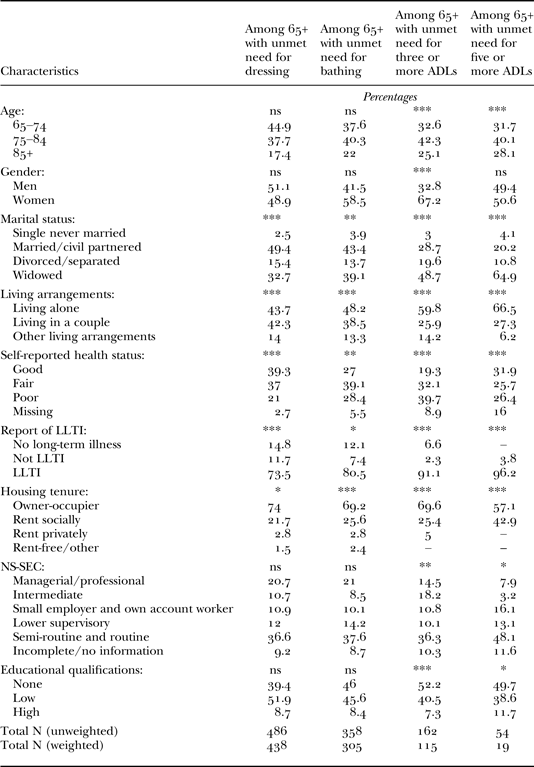
Focusing specifically on the extent and nature of unmet need with ADLs, Table 2 uses two ADL examples (dressing and bathing) in order to explore the characteristics associated with the experience of unmet need, as such activities have been identified to be critical for the wellbeing of older people on an everyday basis (Ismail, Thorlby and Holder Reference Ismail, Thorlby and Holder2014). Individuals with unmet need for dressing were generally younger than those with unmet need for bathing, and more likely to be men. A slightly higher proportion of those with unmet need for bathing were widowed compared to those with unmet need for dressing (39% compared to 33%), and also lived alone (48% compared to 44%). Those with unmet need for dressing were more likely to report good health (39% compared to 27%), and slightly more likely to report no long-term, or a long-term but not limiting, illness, than persons with unmet need for bathing. In terms of socio-economic characteristics, individuals with unmet need for dressing were more likely to own their own home (74% compared to 69%), and less likely to have no educational qualifications (39% compared to 46%). Table 2 also indicates the characteristics of individuals with an increased level of unmet need (for three or more ADLs and for five or more ADLs). The higher the number of ADLs with which one experiences unmet need, the more likely they were to be older, male, widowed and living alone. The prevalence of a LLTI also increased with the level of unmet need for ADLs, however, surprisingly, so did the report of good health (but not fair health). Finally, the socio-economic characteristics also indicated a lower socio-economic status for those with unmet need for five or more ADLs, compared to three or more ADLs.
Individual characteristics associated with the report of unmet need with specific activity of daily living (ADL) difficulties
Notes: The table shows weighted percentages and unweighted sample counts. LLTI: limiting long-term illness. NS-SEC: National Statistics Socio-economic Classification. –: Sample size below 5.
Source: Author's analysis of English Longitudinal Study of Ageing (Wave 7).
Significance levels: * p < 0.05, ** p < 0.01, *** p < 0.001, ns: not significant (p > 0.05).
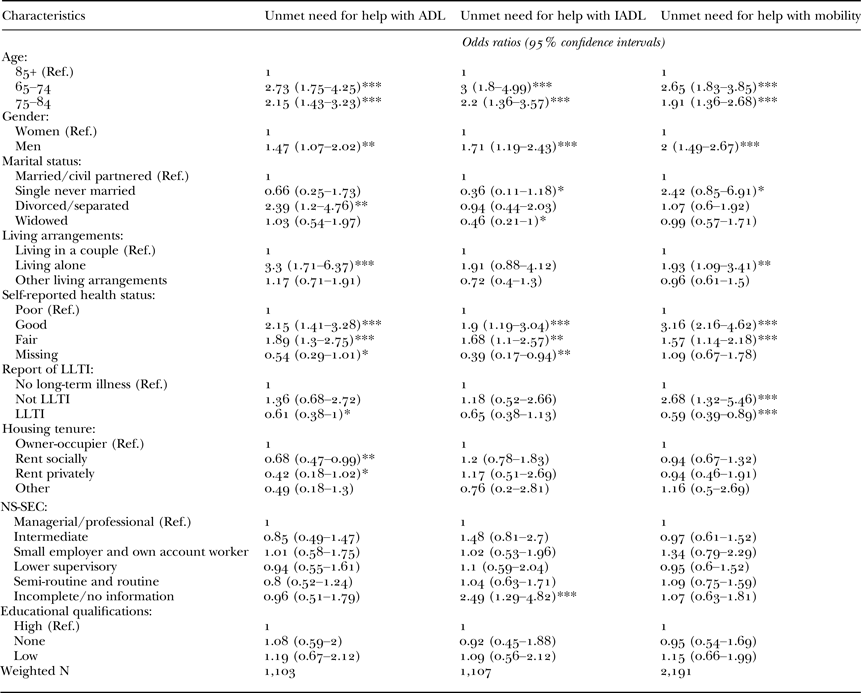
The final part of the analysis considers the association between individual characteristics and the experience of unmet need among older people using binary logistic regression models for each of the types of activity (ADL, IADL and mobility), where the outcome variable is the individual's experience of unmet need (i.e. reporting a difficulty and not receiving any support). The analysis again is restricted to individuals aged 65 and over who reported at least one ADL, IADL or mobility difficulty, with the outcome variable representing 1 for those who reported difficulty but did not receive any support, and 0 for those who reported difficulty and received some support, although the samples for the individual models are different. In terms of unmet need for ADL difficulties, individuals aged between 65 and 74 are more likely to experience unmet need than those aged 85 and over (OR = 2.73), as are men compared to women (Table 3). Being divorced or separated increases the risk of experiencing such unmet need compared to being married. Living alone increases such risk compared to living in a couple, although the finding for the ‘living alone’ category requires caution due to wide confidence intervals. Reporting good or fair health is associated with a higher risk of having unmet need for ADLs compared to reporting poor health, while having a LLTI is associated with a lower such risk, compared to having no LLTI at all. Out of the socio-economic indicators, only the housing tenure showed statistically significant results, with private and social renters showing a lower risk of unmet need for ADLs compared to owning one's home.
Binomial logistic regressions for predicting unmet need with activity of daily living (ADL), instrumental activity of daily living (IADL) or mobility tasks among people aged 65 and over, by individual characteristics
Notes: Ref.: reference category. LLTI: limiting long-term illness. NS-SEC: National Statistics Socio-economic Classification.
Source: Author's analysis of the English Longitudinal Study of Ageing (Wave 7).
Significance levels: * p < 0.1, ** p < 0.05, *** p < 0.01.
Focusing on unmet need for IADL activities, individuals aged between 65 and 74 are more likely to experience such unmet need than those aged 85 and above; and the same is true for men compared to women. Being single never married or widowed reduces one's risk of experiencing such unmet need compared to being married. Reporting good or fair health (compared to poor health) was also associated with this type of unmet need. In terms of socio-economic variables, housing tenure, socio-economic class and educational qualifications had no effect.
Finally, in terms of unmet need for mobility difficulties, individuals aged 65–74 and 75–84 were more likely to experience such unmet need than those aged 85 and over, while men were significantly more likely than women to be in this category. Being single (compared to being married) and living alone (compared to living in a couple) were both associated with a higher risk of unmet need for mobility tasks. Good and fair health increased the risk of experiencing such unmet need, compared to poor health, while having a long-term not limiting illness increased such risk and having a LLTI decreased it, compared to having no long-term illness at all. No socio-economic indicators were found to be significant.
Discussion and conclusion
The aim of this paper was to investigate the extent and nature of unmet need for social care among older people in England, focusing on the population reporting difficulty with ADLs, IADLs or mobility tasks. The analysis of data on nearly 6,000 individuals from the ELSA Wave 7 data-set showed that about 55 per cent of older individuals with an ADL difficulty reported not receiving any support, compared to 24 per cent of those with an IADL difficulty and 80 per cent of those with a mobility difficulty. Mapping unmet need among older people is a critical exercise which has been undertaken in many countries around the world as a way of enhancing the evidence base relating to different types of needs (Quail, Wolfson and Lippman Reference Quail, Wolfson and Lippman2011), as well as assessing the effectiveness of the broader social care context in which older people live (Dubuc et al. Reference Dubuc, Dubois, Raiche, Gueye and Hebert2011).
The paper adds a number of key messages to the existing literature in this area. Firstly, the prevalence of unmet need among older people in England is significant, whichever types of difficulty one focuses on (ADLs, IADLs or mobility tasks). This paper shows significantly higher prevalence rates of unmet need among older people compared to previous studies in the British context (e.g. Maplethorpe, Darton and Wittenberg Reference Maplethorpe, Darton and Wittenberg2015), which almost certainly relates to diverse definitions of the population ‘at risk’ of experiencing unmet need, as well as the experience of unmet need itself. The analysis is also focused on older people residing in private homes, where the risk of experiencing unmet need compared to living in an institutionalised setting may be lower to start with (e.g. Freedman and Spillman Reference Freedman and Spillman2014), thereby under-estimating unmet need with particular activities. Nevertheless, this finding is critical against existing research pointing to demographic changes which can affect the provision of informal care in the future (Pickard et al. Reference Pickard, Wittenberg, Comas-Herrera, King and Malley2007), and to reductions in the funding of state-funded formal care (Ismail, Thorlby and Holder Reference Ismail, Thorlby and Holder2014; Mortimer and Green Reference Mortimer and Green2015), the combination of which can result in a further increase in unmet need.
The second key message from this paper is that demographic characteristics, especially being male and living alone, are strong predictors of unmet need with difficulty with at least one ADL or mobility task. Given the dearth of empirical evidence on unmet need in the British context, some of the results in this paper are in line with previous research in other countries. For example, Zhu (Reference Zhu2015) found that age was a significant determinant of urban residents' unmet need in China, while gender was significant in predicting rural residents' unmet need; Momtaz, Hamid and Ibrahim (Reference Momtaz, Hamid and Ibrahim2012) also showed older men to face a higher risk of unmet need for social care than older women, and finally Davey et al. (Reference Davey, Takagi, Sundstrom and Malmberg2013) and Liu, Chang and Huang (Reference Liu, Chang and Huang2012) both highlighted living arrangements as a significant predictor of unmet need in the USA and China, respectively. The general lack of statistical significance among socio-economic variables such as education is in contrast to some existing research (e.g. Hoogendijk et al. Reference Hoogendijk, Muntinga, Van Leeuwen, Van Der Horst, Deeg, Frijters, Hermsen, Jansen, Nijpels and Van Hout2014), and could be the result of using an ‘absolute’ approach to define unmet need in this paper. Focusing on individuals who reported at least one type of difficulty but did not receive any support from any source (informal or formal), highlights a higher level of need or dependence, where an individual's demographic characteristics, health status and living arrangements are more important than their socio-economic status and potential resources. This finding may also reflect the fact that older people's socio-economic status is an important part of assessing individuals' contribution to the cost of social care, once they have been deemed eligible to receive it, which may not be the case in other countries.
When the analysis focused on unmet need with particular ADLs, it was shown that unmet need for bathing tends to be associated with characteristics which indicate greater vulnerability, such as a higher age, poorer health status and lower socio-economic status. Such a result is in line with existing work which points to a strong association between one's level of frailty and the report of unmet need (Ashokkumar, Chacko and Munuswamy Reference Ashokkumar, Chacko and Munuswamy2012; Bień et al. Reference Bień, Mckee, Döhner, Triantafillou, Lamura, Doroszkiewicz, Krevers and Kofahl2013; Hoogendijk et al. Reference Hoogendijk, Muntinga, Van Leeuwen, Van Der Horst, Deeg, Frijters, Hermsen, Jansen, Nijpels and Van Hout2014). A similar gradient of vulnerability was found when comparing individuals with unmet need for three or more ADLs, compared to individuals with unmet need for five or more ADLs, and such a result is also compatible with other research which has distinguished between different numbers of ADLs (DePalma et al. Reference DePalma, Xu, Covinsky, Craig, Stallard, Thomas and Sands2013). Taken together, these results point not only to an evidenced link between one's health status, their risk of reporting difficulty with ADLs and their risk of experiencing unmet need with such ADLs, but also to a link between unmet need and other demographic and socio-economic characteristics which reflect vulnerability. Such vulnerability can, in turn, have an adverse effect on older individuals' coping strategies, whether relating to financial or social resources and networks, and their ability to maintain their health and wellbeing. These findings also show that the link between specific individual characteristics and unmet need transcends country-specific policy contexts, highlighting the importance of safeguarding older people's wellbeing globally.
Notwithstanding the contribution of this paper to our understanding of unmet need for social care among older people in England, the analysis presents certain limitations which ought to be taken into account when interpreting the results. The first limitation is that the regression findings may be masking potential heterogeneity in the models, which is due to factors not included in the analysis, e.g. more objective definitions of frailty in later life (e.g. diagnosed conditions) or operationalisation of financial resources (e.g. household or individual income). Such a potential demands caution when interpreting the regression coefficients and drawing conclusions for the national population. A second limitation is that not all IADLs and mobility tasks were included in the analysis due to the structure of the ELSA Wave 7 questionnaire, thereby presenting essentially an incomplete picture of unmet need among older people in relation to items in these two categories. However, all ADLs in the questionnaire were included in the analysis, which provides a complete picture of perhaps the most critical and policy-relevant kind of unmet need, as such activities are crucial for the wellbeing of older people on an everyday basis (Ismail, Thorlby and Holder Reference Ismail, Thorlby and Holder2014).
Thirdly, the empirical investigation of the extent and nature of unmet need for social care has often required a ‘compartmentalisation’ of individuals in different categories of need (and unmet need), which may be necessarily less complex than the reality. Indeed, individuals may have difficulty with a combination of different numbers of ADL, IADL and mobility tasks, but may experience unmet need only with some of those tasks. As a result, the approach in this paper, as in previous examples of research in this field (e.g. Harrison et al. Reference Harrison, Low, Barnett, Gresham and Brodaty2014), has aimed at disentangling the nature of unmet need with particular exemplars from the list of ADL difficulties, in order to understand aspects of unmet need which might require the most immediate intervention. However, the picture of unmet need for social care in later life is necessarily more complex than depicted in this paper. A related fourth limitation of the paper is that older individuals who report a difficulty and do receive some level of support (formal or informal) are excluded from the present analysis. However, the extent to which the receipt of some level of support is adequate and/or effective in covering older people's needs remains a critical research question which is beyond the scope of this paper, but still central in the context of budgetary constraints impacting on the provision of social care. A fifth limitation relates to the focus of the paper on the characteristics of unmet need at one point in time using the latest available data at the national level in England. However, the experience of unmet need can be as dynamic as the experience of need (e.g. Godfrey and Callaghan Reference Godfrey and Callaghan2000), and future research can investigate such dynamic change over time in greater detail.
Despite such limitations, the paper has added to our understanding of unmet need for social care among older people in England. Future research can focus on the study of unmet need for different kinds of social care, such as informal, formal paid by the state and formal paid for privately, which is required in order to unravel further the patterns of unmet need identified in this paper.
Supplementary material
To view supplementary material for this article, please visit https://doi.org/10.1017/S0144686X17001118
Acknowledgements
The author gratefully acknowledges the research assistance by Dr Zhixin Frank Feng and Kylie Meyer. This research is part of two Economic and Social Research Council-funded projects: Centre for Population Change (CPC; grant number ES/K007394/1) and the Global Challenges Research Fund's Global Ageing and Long-term Care Network (GALNet; grant number ES/P006779/1) at the University of Southampton.


 Open access

