

Introduction
Stroke is among the main causes of disabilities in adults, and in Canada, 315,000 people living in the community suffer from the effects of a stroke (Public Health Agency of Canada, 2011); the majority are older people since aging is a main risk factor for stroke (National Heart, Lung, and Blood Institute, 2017). Stroke can have a devastating impact on people’s lives and result in physical, cognitive, emotional, and social disabilities. As a result, older adults who have had a stroke frequently require varying degrees of help to maintain their social participation (Fougeyrollas, Cloutier, Bergeron, Côté, & St-Michel, Reference Fougeyrollas, Cloutier, Bergeron, Côté and St-Michel1998) in daily activities and social roles. Help might be required for basic activities of daily living (ADL) as well as more complex activities, including instrumental activities of daily living (IADL), and leisure and social activities (Public Health Agency of Canada, 2009). Nevertheless, up to 85 per cent of stroke survivors return home, and many need help from caregivers to compensate for their disabilities and restrictions in participation (Canadian Institute for Health Information, 2009). In Canada, more than one in four people reported helping a family member living with disabilities, such as those secondary to a stroke (Sinha, Reference Sinha2013). Caregivers’ help is often essential for stroke survivors to stay at home, especially when they suffer from post-stroke cognitive deficits, which is the case for almost half of stroke survivors (Mellon et al., Reference Mellon, Brewer, Hall, Horgan, Williams and Hickey2015). These cognitive impairments may affect memory, spatial ability, executive functions, attention and language, and restrict ADL and IADL (Sun, Tan, & Yu, Reference Sun, Tan and Yu2014).
Caregivers do not all provide the same types of help for a given situation, due in part to a lack of knowledge regarding their effects on disabilities, participation, self-esteem and the caregiving relationship (MacIsaac, Harrison, & Godfrey, Reference MacIsaac, Harrison and Godfrey2010). Different types of help may result in various outcomes for the person who has had a stroke (Bhogal, Teasell, Foley, & Speechley, Reference Bhogal, Teasell, Foley and Speechley2003). For instance, providing the maximum emotional support along with only the amount of assistance required for disabilities in ADL and IADL was found to be the most beneficial combination in terms of fostering the participation of people suffering from the effects of a stroke and living at home. Interestingly, the type of help provided by the caregiver seems to be determined by the type and pattern of post-stroke impairment. For instance, help given to people without cognitive deficits post-stroke differs from that given when cognitive deficits are predominant. Furthermore, depending on the presence of some specific cognitive deficits, some types of help are used more than others (Viscogliosi, Caron, Desrosiers, & Belleville, Reference Viscogliosi, Caron, Desrosiers and Belleville2013).
The particular type of help that the caregiver provides can also vary as a function of the quality of the relationship between caregiver and care recipient (McPherson, Wilson, Chyurlia, & Leclerc, Reference McPherson, Wilson, Chyurlia and Leclerc2011). When the caregiver–care recipient relationship is good, the caregiver uses types of help that foster the care recipient’s well-being and self-esteem. Even though some types of help are more appropriate to maintain the social participation of people who have had a stroke, if they require more of the caregivers’ time or energy, their use could have adverse long-term effects for both of them. Some types of help could actually increase care recipients’ behavioral problems especially in the presence of cognitive deficits. For caregivers, the burden created by their role has been associated with adverse effects such as subsequent memory deficits in caregivers (Chen & Botticello, Reference Chen and Botticello2013), particularly when the stress and caregiving role lasted for a long time (Bhattacharjee, Vairale, Gawali, & Dalal, Reference Bhattacharjee, Vairale, Gawali and Dalal2012). Thus, to be beneficial, types of help not only should have a positive impact on the care recipient but also not have a negative impact on the caregiver.
Zarit, Reever, and Bach-Peterson (Reference Zarit, Reever and Bach-Peterson1980) described caregiver’s burden as the negative consequences for the caregiver of caring tasks done for another person. Burden can be objective or subjective. Objective burden depends on how much physical assistance and how many interventions are needed to assist the care recipient. Subjective burden encompasses the caregiver’s feelings and perceptions associated with performing caregiving functions. Among the different dimensions affected by stroke, cognitive deficits are ones that have a major impact on caregiver’s burden (Othman, Wong, Drahman, & Zakaria, Reference Othman, Wong, Drahman and Zakaria2014). Since types of help differ when cognitive deficits are present, and cognitive deficits are related to greater caregiver burden, it is possible that some types of help could be used more by caregivers experiencing a greater burden. Moreover, because different types of help influence differently the care recipient’s recovery and participation (Viscogliosi et al., Reference Viscogliosi, Caron, Desrosiers and Belleville2013), they may also result in different caregiver burden. It is thus important to understand the relationship between the types of help provided by caregivers and the level of burden to help minimize caregiver burden while optimizing the social participation of people with cognitive deficits following a stroke.
This study aimed to examine the relationship between types and amount of help provided by family caregivers to optimize the participation in daily activities and social roles of older adults with cognitive deficits following a stroke and the different dimensions and level of burden.
Methods
This study used a mixed-method design based on the Miles and Huberman approach (Miles & Huberman, Reference Miles and Huberman2003). We adopted a pragmatic paradigm as our epistemological position, situated on a continuum between post-positivism and naturalism. Qualitative and quantitative methods were integrated in all steps of the study: sampling, data collection, analysis, and interpretation using the Miles and Huberman approach.
The study was approved by the Research Ethics Committees and professional services managers of the institutions involved in recruitment. Caregivers and care recipients both gave informed written consent.
Recruitment of Participants
This study was part of a larger research project (Desrosiers et al., Reference Desrosiers, Demers, Robichaud, Vincent, Belleville and Ska2008) carried out with 197 older adults with stroke, recruited at discharge from an acute care hospital, rehabilitation unit, or geriatric day hospital in three cities in the province of Québec. The caregivers recruited for the present study were the main caregivers of some of the older adults with stroke (> 65 years) involved in the larger study.
In the larger study (Desrosiers et al., Reference Desrosiers, Demers, Robichaud, Vincent, Belleville and Ska2008), we used cognitive tests to identify deficits in memory, visual perception, executive functions, unilateral attention, and language of the participants with stroke. The tests used were valid and reliable and have reference values to determine the presence or absence of specific cognitive deficits. The Logical Memory subtest of the WMS III (Wechsler, Reference Wechsler1987) was selected to measure episodic memory. We assessed visual perception with the Motor Free Visual Perceptual Test, vertical version (MVPT-V) (Mercier, Hébert, & Gauthier, Reference Mercier, Hébert and Gauthier1995). The inhibition capacities of executive functions were measured with the Victoria Stroop Test (Stroop, Reference Stroop1935); we measured unilateral visual neglect with the Bells Test (Gauthier, Dehaul, & Joanette, Reference Gauthier, Dehaul and Joanette1989). For language abilities, we examined three domains: naming, oral comprehension, and reading. The Boston Naming Test (BNT) (Kaplan, Goodglass, & Weintraub, Reference Kaplan, Goodglass and Weintraub1983) was what we selected to evaluate picture naming. For sentence comprehension, we assessed it with the Token Test, short form (De Renzi & Faglioni, Reference De Renzi and Faglioni1978). Finally, we used the Montreal-Toulouse reading test (Dordain, Nespoulous, Bourdeau, & Lecours, Reference Dordain, Nespoulous, Bourdeau and Lecours1983) to estimate reading abilities. For each cognitive test we recorded raw scores and compared them to reference values to establish the presence of cognitive deficits post-stroke. A more detailed description of these cognitive tests and analysis procedures has been published elsewhere (Viscogliosi, Desrosiers, Belleville, & Caron, Reference Viscogliosi, Desrosiers, Belleville and Caron2011).
Also in the larger study, the Assessment of Life Habits (LIFE-H), short version 3.1 (Fougeyrollas et al., Reference Fougeyrollas, Cloutier, Bergeron, Côté and St-Michel1998), was used to assess the care recipient’s participation. This assessment is based on the disability creation process (DCP) model and measures 77 daily activities and social roles grouped into 12 domains. Each activity or role is measured on a Likert scale ranging from 0 to 9, where a higher score indicates optimal participation. In the LIFE-H, daily activities refer to nutrition, fitness, personal care, housing, mobility, and communication whereas social roles include responsibilities, interpersonal relationships, community life, education, work, and leisure. The education and work domains were not included in this study as they do not usually apply to this age group (Desrosiers et al., Reference Desrosiers, Bourbonnais, Noreau, Rochette, Bravo and Bourget2005), leaving 67 items in 10 domains. The validity and reliability of the LIFE-H have been studied in older adults (Noreau et al., Reference Noreau, Desrosiers, Robichaud, Fougeyrollas, Rochette and Viscogliosi2004; Desrosiers et al., Reference Desrosiers, Noreau, Robichaud, Fougeyrollas, Rochette and Viscogliosi2004).
Quantitative data, including data on the cognitive status and participation of the people with stroke (care recipients) from the larger study, were reviewed to select caregivers according to a maximum variation sampling method. We then selected a theoretical sample of 12 caregivers to obtain a variety of types and severity of cognitive deficits among the care recipients, as well as a range of living situations (alone, with caregiver, etc.), community services used (help with bathing, paratransit, etc.), and types of dyad (spouse, sister, son, etc.).
Data Collection
Caregivers participated in semi-structured interviews at their home lasting approximately 60 to 90 minutes one month (T1), three months (T2), and six months (T3) after the care recipient’s discharge home after receiving care and services. Interviews were recorded and the tapes transcribed. Conducting three interviews with each caregiver helped deepen our understanding of the relationship between different dimensions of caregiver’s burden and the types of help provided.
Materials
Qualitative Interview Guide
The conceptual framework, including the DCP (Fougeyrollas et al., Reference Fougeyrollas, Cloutier, Bergeron, Côté and St-Michel1998), as well as the Bowers (Bowers, Reference Bowers1988) and Vézina and Pelletier (Vézina & Pelletier, Reference Vézina and Pelletier2001) models, inspired the development of the interview guide for caregivers. In Bowers’ model based on grounded theory methodology, five different roles are specified for caregivers’ help: (a) anticipation of care receiver’s needs, (b) prevention of physical or mental deterioration, (c) supervision of care provided by formal or informal services, (d) protection of self-esteem and the dyad’s relationship, and (e) instrumental tasks (for example, personal care), which are more technical activities to maintain physical integrity. Vézina and Pelletier’s model (2001) describes different types of help provided in dementia such as: “accomplish”, “delegate”, “control”, “protect”, “prevent”, “stimulate”, “situation avoidance”, “decide or do for the care -receiver”, and “visit”.
The interview guide for caregivers was validated by a group of experts on stroke and caregiving, comprising four clinicians and three researchers. The guide was then pretested with one caregiver. Interviews began with a broad question on the impact of stroke on the care recipient’s participation and the help provided according to this impact. For each caregiver, more in-depth questions were asked based on the care recipient’s participation and cognitive deficits and also the caregiver’s responses on the quantitative burden questionnaire. In the analysis for the present study, we considered aspects related to participation domains (daily activities: nutrition, fitness, personal care, housing, mobility, and communication; and social roles: responsibilities, interpersonal relationships, community life, and leisure) and types of help provided. Interviews with the first three caregivers were broad to cover the context of help in all domains of participation. Subsequent interviews with caregivers recruited later were designed to deepen elements described in less detail in the first three interviews.
Sociodemographic Questionnaire
We completed a sociodemographic questionnaire with both care recipients and caregivers. Data such as age, gender, community services used, living arrangements, and relationship between caregiver and care recipient were recorded for analysis purposes.
Quantitative Instrument – Caregiver Burden
Caregiver burden was evaluated with the three dimensions of the caregivers’ perceived burden scale (Dumont, St-Onge, Fougeyrollas, & Renaud, Reference Dumont, St-Onge, Fougeyrollas and Renaud1998): (a) daily living support (18 items), (b) concern for care recipient’s well-being (6 items), and (c) impact on caregiver’s social life (17 items). Each of these dimensions includes a series of items where caregivers are asked to choose the score that best reflects their situation on a four-point scale. The Daily living support subscale describing the frequency of assistance provided was scored as never (0), sometimes (1), often (2), and almost all the time (3). The caregiver’s concern for care recipient’s well-being and impact on caregiver’s social life (i.e., how much the caregiving role interferes with own social life) subscales of burden were scored as not true at all (1), somewhat true (2), moderately true (3), and completely true (4). The score for each dimension is the mean score of items in this dimension. A higher score suggests a greater burden on each dimension.
Data Analysis
Qualitative Analysis
To deepen the analysis, our research process went back and forth between data collection and analysis (Miles & Huberman, Reference Miles and Huberman2003) based on the conceptual framework. All the transcripts were coded by the first author using axial coding and selective coding. An external coder co-coded one interview to verify the reliability of the results. Coding was done on NVivo software. We used Miles and Huberman analysis tools – interview synthesis sheets, coding, methodological memos, analytical memos, researchers’ meetings, and analysis matrix – to integrate the qualitative and quantitative methods. A more detailed description of the data analysis has been published elsewhere (Viscogliosi et al., Reference Viscogliosi, Caron, Desrosiers and Belleville2013).
Quantitative Analysis
We used frequencies and proportions for the categorical variables to describe sociodemographic and clinical characteristics of the caregivers and care recipients. For caregiver burden, we dichotomized the score for each dimension to distinguish between a high and low level of burden. On the daily living support subscale, a mean score of 2/3 or more indicates substantial daily living support given by the caregiver. On the concern for care recipient’s well-being subscale, a mean score of 3/4 or more shows great concern for the care recipient’s well-being. On the impact on caregiver’s social life subscale, a mean score of 2/4 and higher indicates a substantial impact on the caregiver’s life. Since there was no guideline for the thresholds, we determined them according to a logical division between the words describing the different categories (never and sometimes / often and most of the time).
Results
Seven of the 12 caregivers who participated in the 36 interviews lived with the care recipient. Caregivers were aged 45 to 88 years, and their schooling varied between 0 and 15 years, with a median of seven. Four caregivers provided 10 or fewer hours of help per week, six between 13 and 16 hours, and two provided more than 20 hours. The caregivers’ relationships with the care recipients included four wives and a husband, two sisters, a stepdaughter, a nephew, a niece, a son, and a mother. Among the care recipients, seven had memory deficits; eight, visual perception deficits; three, unilateral neglect; seven, executive function deficits; and seven presented with language deficits. The age of the care recipients varied between 65 and 86; eight lived at home and four in seniors’ residences; five care recipients received community services (Meals-on-Wheels, paratransit, etc.).
Daily Living Support and Types of Help Provided
On the daily living support subscale of the quantitative burden questionnaire, two caregivers reported giving a lot of daily living support at the time of all three interviews to stimulate the care recipient’s participation. Two caregivers thought they gave a lot of daily living support only at the first interview, and one caregiver reported giving a lot at the second and third interviews only. Seven caregivers reported that they never gave a lot of daily living support.
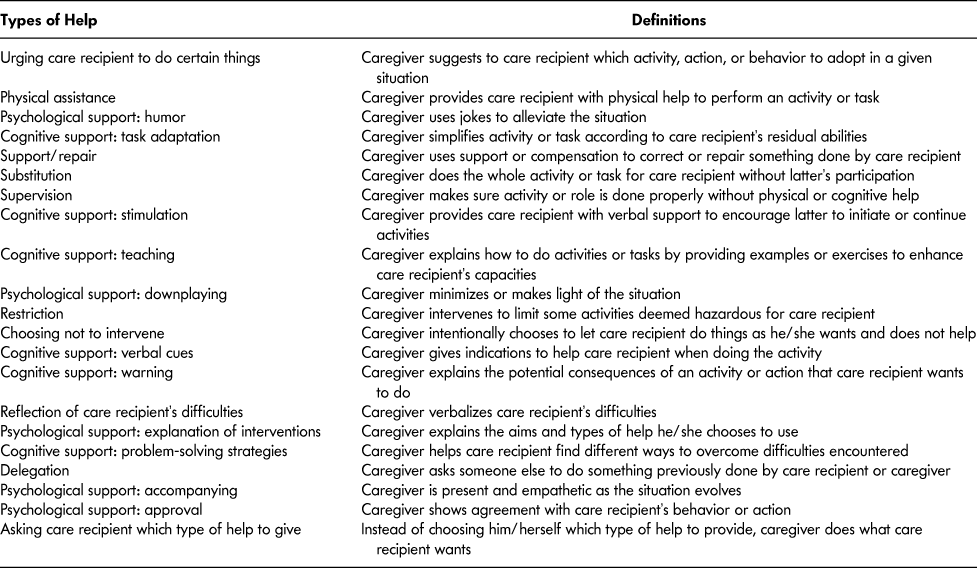
Caregivers who gave a lot of daily living support mostly used types of help that fostered social participation. These types of help include teaching, task modification, verbal cues, downplaying, supervision, and stimulation, and were used more by caregivers who thought they gave their care recipients a lot of daily living support than by those who thought they gave less daily living support. Caregivers who reported giving less daily living support used more types of help that limited the care recipient’s social participation such as restricting the latter’s activities, delegation, substitution, and choosing not to intervene. For definitions of the types of help, see Table 1.
Definitions of types of help provided by caregivers
One caregiver who provided a lot of daily living support explained how she used stimulation with her stepmother to help maintain her capacities, “I said to her: Even if you don’t do the puzzle for a long time, try… it will help you concentrate and move your hands …” (C1T1). Following are two other examples of caregivers who thought they gave a lot of daily living support and used stimulation to maintain the care recipients’ capacities and foster their social participation. In the first example, the caregiver told her care recipient, “Follow me; I’ll watch you do your exercises” (C2T1). To stimulate the ability to walk, the same caregiver insisted:
If you want to, you can do it. They told you that you had to make an effort … It’s not your leg; it’s in your head … You have to tell yourself … sometimes I get upset about his lack of effort … I say, “Don’t give up, you have to tell yourself: I can do that. (C2T1)
A few months later as the situation evolved, the same caregiver said, “If you could build up your strength a bit, it could be fun … we could take walks” (C2T3).
Another caregiver who thought he gave a lot of daily living support used task modification to maintain not only capacities but also self-esteem and to encourage participation in the care recipient’s social roles:
I prepared the bucket and mop and soap and shortened the mop handle. I helped her sit in her wheelchair and said, “Let’s go! I moved the furniture to make room for her wheelchair. She cleaned the whole kitchen floor on Monday … all by herself”. (C10T2)
Finally, the following caregiver felt she gave a lot of daily living support to her care recipient. Because she thought it was important to prevent her care recipient from giving up on a task he found difficult, she used verbal cues: “Place your foot and leg like this, it’ll be easier” (C2T1). Even though considered to require a lot of daily living support, more types of help fostering active social participation were used by caregivers who considered it important to enhance capacities and preserve self-esteem.
Concern for the Care Recipient’s Well-being and Types of Help Provided
On the concern for care recipient’s well-being subscale of the quantitative burden questionnaire, six caregivers expressed great concern for the care recipient’s well-being at all three measurement times. Two caregivers reported great concern for the care recipient’s well-being only at the time of one interview (the second interview for one caregiver and the third for another) and two caregivers at the time of two interviews, while two caregivers expressed a low level of concern for the care recipient’s well-being across the three measurement times.
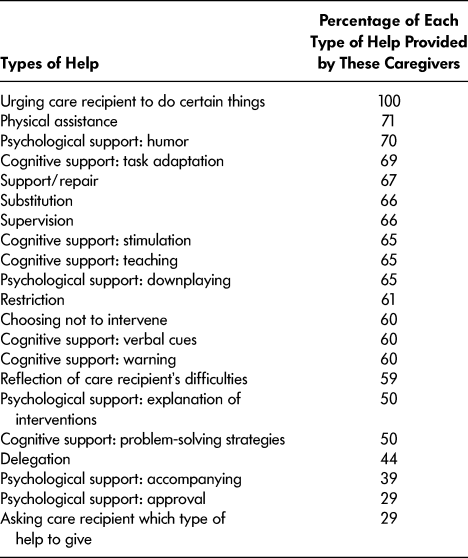
Caregivers who expressed great concern for the care recipient’s well-being reported using more physical assistance, psychological support such as humor and downplaying, cognitive support such as task adaptation and teaching, and also urging the care recipient to do specific things. Support/repair, substitution, supervision, and stimulation were also used more by caregivers who expressed great concern for the care recipient’s well-being than by those who reported less concern. Table 2 shows the percentage of each type of help provided by caregivers who expressed great concern for their care recipients’ well-being compared to those showing less concern. For example, humor (psychological support) was frequently used (70%) by caregivers expressing great concern whereas it was used by only 30 per cent of caregivers less concerned about their care recipient’s well-being. One caregiver who expressed great concern for her care recipient’s well-being used downplaying to preserve the care recipient’s self-esteem and maintain his participation despite difficulties:
It depends on the words he tries to use. Frequently used words are easy but less frequent ones, ones he does not hear or use very often, are difficult for him to find. I told him, “it’s the same for me … sometimes, my memory is poor … for names, if it has been two or three weeks since I heard them, I can’t remember them”. (C3T1)
Types of help provided by caregivers who expressed great concern for care recipient’s well-being
Demonstrating great concern for her care recipient’s well-being, one wife explained how she used psychological support and physical assistance to maintain social participation and self-esteem: “When he tried to open a pack of playing cards, he [her husband] said: ‘I can’t do it.” I opened it for him and told him that he was able to play” (C6T1). Very concerned by her stepmother’s well-being, another caregiver used cognitive support to help regain function and assist with problem-solving: “We’ll try to see what we can do … what the problem is … Are you sure about that? We’ll stop for a second to see … I questioned her to make her realize her mistake” (C1T1). Finally, very concerned about her husband’s well-being, when providing cognitive support to help him use his potential, caregiver #2 (T1) adapted the task by simplifying it and also gave teaching and physical assistance: “Hold onto the bedhead and pull, then if you move your buttocks, it will be easier for you to sit down”. Caregivers who were very concerned for their care recipient’s well-being did not, to any great extent, use delegation, accompanying, approval, or asking care recipient which type of help to give.
Impact on Caregivers’ Social Life and Types of Help Provided
On the impact on social life subscale of the quantitative burden questionnaire, three caregivers experienced great impact on their social life across the three measurement times. Four caregivers reported little impact on their social life in all three interviews. One caregiver experienced a low impact at the time of only one of the three interviews, and four caregivers at the time of two.
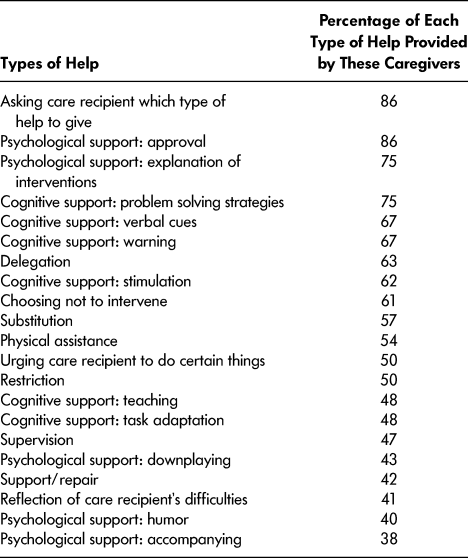
For some specific types of help fostering social participation, self-esteem, and abilities, even though caregivers reported a high level on the daily living support and concern for care recipient’s well-being subscales, they expressed a low level on the impact on caregiver’s social life subscale. For caregivers reporting a low impact on their own social life, the following types of help were provided more often: asking the care recipient which type of help the caregiver should give, psychological support such as approval of the care recipient’s behavior and explaining the type of help given, and cognitive support such as assisting with problem-solving, giving verbal cues and warning. Table 3 presents the percentage of each type of help given by caregivers who reported a low impact on their social life compared to those reporting a great impact on their social life. A total of 75 per cent of the problem-solving strategies to maintain the care recipient’s active social participation were used by caregivers with a low impact on their social life. Supervision, downplaying, repair, reflection of care recipient’s difficulties, humor, and accompanying were used more by those reporting a high impact on their social life. Conversely, other types of help, such as only giving the help the care recipient asked for, as in this example cited by caregiver #9, are related to a low impact on social life;
She told me: If you don’t mind, I’d like you to call for my appointment because sometimes I can’t find my words when talking on the phone or when they ask a question I have difficulty answering it. If I have to find a phone number, sometimes I can’t remember where it is. Then I ask her what to do with her investment even though I have power of attorney. (C9T3)
Types of help provided when impact on caregiver’s own social life was low
Another example of the type of help given by a caregiver who experienced a low impact on her social life was approval of the care recipient’s positive behaviors. Since this care recipient was prone to make negative comments and often displayed aggressive behaviors, his caregiver used frequent approval to help him when he demonstrated positive behaviors, as she modelled herself:
I encourage him when he seems to appreciate the beauty of nature more than before: he said “it’s beautiful … the flowers …” I mentioned it many times before but he never paid any attention to our beautiful surroundings … now he looks around, he appreciates it more ... even the birds …. (C6T3)
A caregiver who reported having a low impact on his social life explained the type of help he gives to maintain the care recipient’s abilities and social participation:
I said to her: “I want you to do a painting for me”. She used to paint very well before the stroke. She told me to choose one of her paintings but I replied that I didn’t want one from before but a new one that she would paint now. She said she would have to buy new brushes and paints. I told her that wasn’t a problem. (C8T2)
Caregiver #7 (T2) explained to her care recipient why she adapted the activity to maintain her abilities: “I explained that I put a sticker on the remote control button that she’s not supposed to touch.” Without creating a great impact on the caregiver’s social life, explaining the help provided and its aim seemed to be related to a strong relationship between caregiver and care recipient. For other types of help such as teaching, supervision, and task adaptation, the impact on the caregiver’s social life did not differ between caregivers who used these types of help to a great or small extent.
Relationship between the Three Subscales of Burden and Types of Help Provided
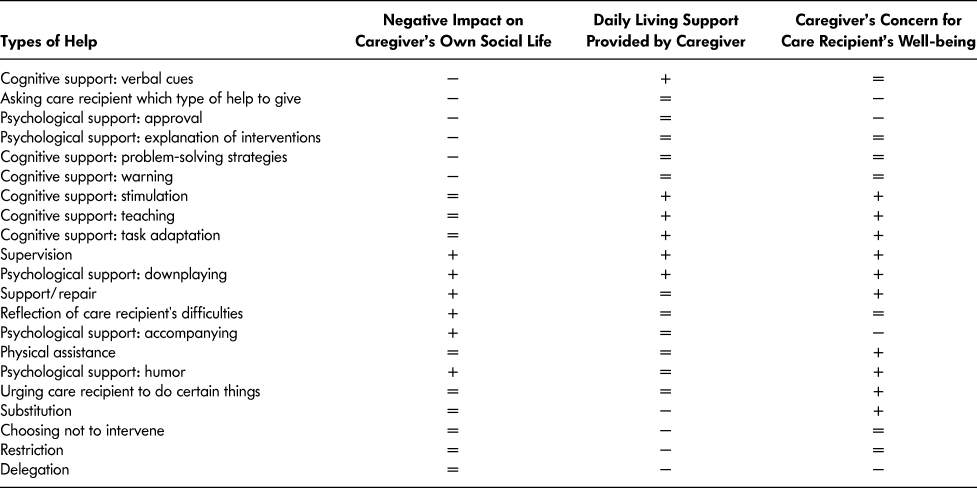
This section presents the relationship between the types of help given by caregivers and the three dimensions of burden. Caregivers who used many verbal cues as cognitive support reported a low impact on their social life, and their concern for their care recipient’s well-being was not high (see Table 4). When caregivers asked care recipients which type of help to give, approved care recipients’ behavior, explained the type of help given, used problem solving as a cognitive support or gave numerous warnings, they reported little impact on their own social life. These types of help were never related to greater concern for the care recipient’s well-being. Moreover, for caregivers who gave a lot of daily living support fostering the care recipient’s social participation, such as task adaptation, teaching, and stimulation, the impact on their own social life remained low even though they expressed great concern for their care recipient’s well-being. This was the case for caregiver #6 (T1), who explained that she adapted tasks to maintain the care recipient’s abilities and active social participation as well as to protect his self-esteem when doing leisure activities:
At the library, he always chooses long complicated novels. I let him choose them but I also borrow some books that are based on facts and not a story to follow. When he tells me that the books he chose aren’t interesting, I show him the ones I chose, and he likes to look at those books.
Comparison of perceived amount of help provided by caregivers, negative impact on their own social life and their concern for care recipient’s well-being for each type of help
Note. +: more for caregivers using this type of help than for those not using it; —: less for caregivers using this type of help than for those not using it; =: equal for caregivers using this type of help and those not using it.
This caregiver thought she gave a lot of daily living support and expressed great concern for her care recipient’s well-being but reported little impact on her social life. Caregiver #9 (T2), who also expressed great concern for her care recipient’s well-being, gave substantial cognitive support to help the care recipient organize her medical appointments and transportation:
[I asked her] “How will you get to the ophthalmologist? You have to ask the residence’s management if they can provide transportation for the appointment.” I could have asked management myself but I knew she could do it. The next week, I checked to see if she had done it, and she had. She told me how she had arranged for transportation with an attendant.
Finally, caregiver #12 (T1) said, “I was making cabbage rolls, she was helping me with her only functioning hand but it was difficult … when she wasn’t watching, I replaced the cabbage to fix the rolls … she wanted to help …”. Being very concerned for his care recipient’s well-being and giving her a lot of daily living support while experiencing little impact on his social life, he allowed her to do whatever she could to help prepare meals in order to maintain her self-esteem.
Supervision and downplaying are two types of help provided to a large extent by caregivers very concerned for their care recipients’ well-being. These types of help were also used more frequently by caregivers who reported a greater impact on their own social life. Even though support/repair and reflection of the care recipient’s difficulties were not used to any great extent, these types of help have a high impact on the caregiver’s social life. Other types of help not often used, such as delegation and choosing not to intervene, are equally used by caregivers expressing a small and a large impact on their own social life. Some types of help not used to any great extent and mostly limiting social participation, such as delegation, were used more by caregivers expressing little concern for the care recipient’s well-being. Restriction and choosing not to intervene were used equally by caregivers reporting little and a lot of impact on their social life and by caregivers expressing little and great concern for their care recipient.
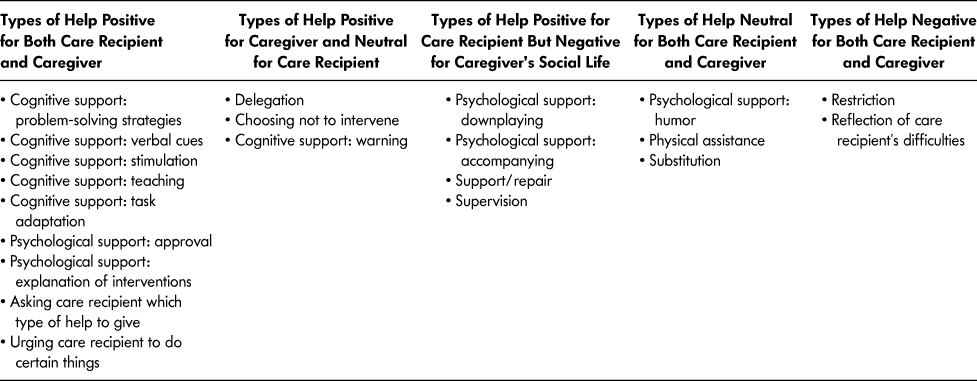
Approval and asking the care recipient which type of help to give were used equally by caregivers expressing a lot or little concern for the care recipient’s well-being. However, these types of help were used more by caregivers who perceived little impact on their social life. In fact, several types of cognitive and psychological support such as teaching and task adaptation fostering the care recipient’s social participation, self-esteem, or abilities were used equally by caregivers reporting more and less impact on their own social life. Otherwise, types of help limiting the care recipient’s social participation or self-esteem such as restriction were used more by caregivers reporting less impact on their social life. Table 5 summarizes positive, neutral, and negative types of help from caregivers’ and care recipients’ standpoints.
Positive, neutral, and negative types of help according to care recipient’s social participation, self-esteem, and capacities, and in relation to impact on caregiver’s social life and burden
Discussion
To our knowledge, this is the first study to explore the relationship between the dimensions and level of burden and the types of help provided by caregivers to optimize the participation of older adults living at home with cognitive deficits post-stroke. We examined three dimensions of burden: (a) daily living support provided to care recipient, (b) caregiver’s concern for care recipient’s well-being, and (c) impact on caregiver’s social life. Some types of help provided by caregivers differed substantially in relation to the level of burden for these three dimensions.
In the presence of cognitive deficits, cognitive (e.g., task adaptation and teaching) and psychological (e.g., downplaying and accompanying) support are the types of help most often used. Types of help fostering the care recipient’s active social participation (e.g., task modification, verbal cues, stimulation) are used more by caregivers who think they provide a lot of daily living support than by caregivers who consider they give little daily living support. Moreover, types of help limiting social participation (e.g., restriction), are used more by caregivers who think they give little daily living support versus those who consider they give a lot. In this context, cognitive support, psychological support, asking the care recipient which type of help to give, and urging the care recipient to do certain things appear to be appropriate types of help congruent with the caregiver’s values and aims centered on social participation and self-esteem. They are also related to a low impact on their social life.
Types of help fostering the care recipient’s active social participation are also used more by caregivers who express concern for the care recipient’s well-being than those who report less concern. Most of the time, when using these types of help that encourage active social participation, caregivers’ perception of the impact on their own social life remains low compared to not using them. Types of help used by caregivers who give a lot of daily living support, such as teaching and downplaying, are those that help care recipients regain their capacities and that foster their self-esteem. Even though they appear to require more time and energy than those limiting the care recipient’s social participation, such as restriction and substitution, they do not have a greater impact on the caregivers’ social life. This is consistent with a previous study wherein it was found that caregivers involved in interventions aimed at maintaining the care recipient’s capacities, self-esteem, and social participation did not experience any increase in their burden (Thivierge, Jean, & Simard, Reference Thivierge, Jean and Simard2014). It is possible that, even when caregivers believe they give more daily living support, if they also believe they contribute to the maintenance of capacities, participation, and self-esteem, the perceived impact on their own social life remains low.
Some caregivers who report a low impact on their social life provide types of help that are characterized by reassuring the care recipient and maintaining a positive caregiving relationship. For instance, explaining the type of help given and assisting with problem solving encourage the care recipient’s active social participation without having a greater negative impact on the caregiver’s social life. Even though these types of help are often used by caregivers to maintain capacities, active social participation, and self-esteem, they probably require relatively less time and energy than other types of help (Rigby, Gubitz, & Phillips, Reference Rigby, Gubitz and Phillips2009).
It is interesting that caregivers who give a lot of daily living support to care recipients do not report a greater impact on their social life than caregivers who do not, if their help takes the form of cognitive support such as verbal cues and teaching and psychological support such as downplaying. Moreover, caregivers who give a lot of daily living support fostering the care recipient’s social participation, such as stimulation and verbal cues, and who are concerned for the care recipient’s well-being, report a low impact on their social life. It has been shown that the relationship between caregiver and care recipient influences some participation domains targeted by caregivers after a stroke (Viscogliosi et al., Reference Viscogliosi, Caron, Desrosiers and Belleville2013). In this context, caregivers could see the positive aspects of their caregiving role, which creates a feeling of psychological uplift and gratification. This could explain the low impact on the caregivers’ social life when providing a lot of daily living support for types of help fostering social participation, self-esteem, and abilities (Mackenzie & Greenwood, Reference Mackenzie and Greenwood2012).
Two types of help – approval and asking the care recipient which type of help to give – are not often used by caregivers who express great concern for the care recipient’s well-being. They are used more by caregivers who report little impact on their social life. It could be hypothesized that in these situations, the strong relationship between caregiver and care recipient may account for the care recipient’s acceptance of the type of help chosen by the caregiver (McPherson et al., Reference McPherson, Wilson, Chyurlia and Leclerc2011) and avoids the need for justification by the caregiver. These types of help could be useful in maintaining social participation, abilities, and self-esteem (Viscogliosi et al., Reference Viscogliosi, Caron, Desrosiers and Belleville2013) and reducing the impact on the caregiver’s social life while improving the relationship between the dyad. Finally, when caregivers express a high level of burden, health professionals should be aware of the utilization of types of help that limit the care recipient’s social participation, such as restriction and reflection of care recipient’s difficulties, since such types of help may have negative effects on both care recipient and caregiver. In fact, these results may in part be due to the negative impact of these types of help on the evolution of the care recipient’s participation, abilities, and self-esteem (MacIsaac et al., Reference MacIsaac, Harrison and Godfrey2010), which may increase caregiver burden, especially because these types of help do not generate positive aspects of caregiving (Zhai, He, Zhou, Liang, & Yu, Reference Zhai, He, Zhou, Liang and Yu2018).
These results have direct and concrete clinical implications for health professionals and community support organizations especially when considering the partnership with caregivers. They could be used to contribute to a family-centred care model, which promotes partnerships between health professionals, care recipients, and caregivers (Creasy, Lutz, Young, & Stacciarini, Reference Creasy, Lutz, Young and Stacciarini2015). In fact, health professionals could use them in their interventions with care recipients and caregivers to give advice on the types of help that have positive effects for the care recipient without having a negative impact on the caregiver’s social life. Since these results stem from caregivers’ experience following care recipients’ strokes, their implications should interest other caregivers in fostering better social participation, abilities, and self-esteem in care recipients while not having a greater negative impact on caregivers’ social life.
Future Research
The choice of which types of help to use should, in addition to encouraging social participation, also consider the impact on the caregiver’s social life. Types of help that foster care recipients’ social participation, self-esteem, and abilities but do not have a great impact on caregivers could be positive for both caregivers and care recipients. Education programs centred on types of help that foster social participation without increasing the impact on caregivers’ social life are important because they have been shown to improve caregivers’ health and emotional well-being (Gelmini, Morabito, & Braidi, Reference Gelmini, Morabito and Braidi2009) and decrease negative outcomes for care recipients (van Exel, Koopmanschap, van der Berg, Brouwer, & van den Bos, Reference van Exel, Koopmanschap, van der Berg, Brouwer and van den Bos2005). Since types of help provided are related to care recipients’ social participation (Chung, Pollock, Campbell, Durward, & Hagen, Reference Chung, Pollock, Campbell, Durward and Hagen2013; Haskins, Reference Haskins2012) and to caregiver burden, they could be included in educational programs for caregivers. However, educational programs rarely focus on cognitive support even though they are used by caregivers of people with cognitive deficits following a stroke. Moreover, these caregivers experience greater burden more often (Othman et al., Reference Othman, Wong, Drahman and Zakaria2014) when care recipients have cognitive deficits. Because caregivers’ needs are complex, especially when cognitive deficits are present, they may require multi-component interventions (Chung et al., Reference Chung, Pollock, Campbell, Durward and Hagen2013).
In a multi-component approach, educational interventions should also use daily life applications to help caregivers adapt cognitive support to common day-to-day problems encountered by caregivers and care recipients in daily life situations. Since the types of help provided by caregivers differ when caregivers who experience a high level of burden are compared to those experiencing a low level, future studies should examine caregivers’ educational needs when they want to maintain their care recipients’ social participation, abilities, and self-esteem.
Future research should also look at the impact of the types of help provided by caregivers on changes in their burden and positive aspects of their role according to the types of help provided. Although the aim of the study was not to compare changes over time in types of help but rather to understand their relationship to burden, it could be interesting for future studies to monitor the evolution of the types of help provided and their impact on caregiver burden and care recipients’ social participation, abilities, and self-esteem. In addition, it would be interesting to explore care recipients’ perception of the acceptability and impact of different types of help on their social participation and the maintenance of their capacities and self-esteem. Finally, future research should consider coping skills (Kumar, Kaur, & Reddemma, Reference Kumar, Kaur and Reddemma2015) and other psychological variables such as anxiety (Jaracz et al., Reference Jaracz, Grabowska-Fudala, Górna, Jaracz, Moczko and Kozubski2015) as well as caregivers’ emotional distress and loneliness (Scholte op Reimer, de Haan, Rijnders, Limburg, & van den Bos,Reference Scholte op Reimer, de Haan, Rijnders, Limburg and van den Bos1998), because they are associated with caregiver burden and could influence the types of help used by caregivers.
Strengths and Limitations
The mixed-method design used in this study was very useful in gaining an in-depth understanding of the relationship between types of help provided by caregivers and the level of different dimensions of their burden. It also shed light on the rationale for the type of help provided. To increase the validity of the mixed analysis, we used quantitative valid and reliable neuropsychological tests with reference values to distinguish between participants whose main cognitive functions were intact or impaired. The quantitative measure of caregiver burden also enabled us to analyse relationships between the level of three dimensions of caregiver’s burden and the types of help reported in the qualitative part of the study.
To meet scientific requirements, we fulfilled the criteria of scientificity (Laperrière, Reference Laperrière1997) (auditability, credibility, transferability). The three interviews with each caregiver enriched our understanding of the types of help provided in relation to the different dimensions of caregiver burden. None of the participants in the qualitative part dropped out of the study. There could have been a social desirability bias in the qualitative interviews even though the caregivers were not aware of the study objectives. However, the relationship of trust developed with the interviewer (first author) in the course of three interviews might have reduced this bias and thus enhanced the validity of the information provided by the caregivers. Although participants were recruited from different settings, we cannot assume that they are representative of all stroke caregivers; in fact, it was not our aim to ensure generalization to the whole population of stroke caregivers. The relatively short duration of our study (six months) aimed to limit attrition but did not allow us to see how the types of help could be used differently with regard to different aspects of caregiver burden over the long term. As an exploratory study, the three times were considered to deepen our understanding of the types of help provided and not to monitor the evolution of the types of help in relationship to caregiver burden. Despite the study’s limitations, the findings shed light on the types of help provided by caregivers in relation to the level of different dimensions of their burden.
Conclusion
Types of help provided to stroke patients differed for caregivers who thought they gave their care recipient a lot compared to little daily living support, who were very concerned compared to not very concerned about the care recipient’s well-being, and who reported a lot rather than little impact on their own social life. Some types of help aimed to encourage care recipients’ social participation or preserve their self-esteem such as humour and downplaying (psychological support), task adaptation, and problem solving (cognitive support). Moreover, repair was used more when caregivers expressed concern for the care recipients’ well-being.
Types of help fostering care recipients’ active social participation and maintaining a positive relationship between them and their caregiver, such as asking the care recipient which type of help to give and assisting in problem-solving, were used mostly by caregivers who reported little impact on their social life. This is true even though they thought they provided a lot of daily living support. Although some types of help seem to require more time and energy, when they are underpinned by values of maintaining autonomy, self-esteem, and dignity, caregivers do not feel that they have a great impact on their own social life. A better understanding of the link between the type of help provided and different dimensions of caregiver burden is essential to help caregivers maintain a low impact on their social life while fostering active social participation by their care recipient. This study contributes to knowledge concerning the partnership between caregivers and health professionals working with people with cognitive deficits post-stroke living in the community.



