



In spite of global improvements in health, child undernutrition remains a major public health problem and is responsible for 45 % of deaths in children under the age of 5 years( Reference Liu, Johnson and Cousens 1 ). The significance of care as an underlying factor for child growth and development has been highlighted in the UNICEF conceptual framework( Reference Engle, Menon and Haddad 2 ). The care concept encompasses behaviours of immediate importance for child health, nutrition and development, such as feeding practices, food preparation and storage, hygienic practices, psychosocial stimulation, care for the child during illnesses and care for the woman. In the majority of societies women are the primary caregivers of children. In order to provide effective care they require resources including education, physical and mental health, autonomy, adequate time and social support( Reference Engle, Menon and Haddad 2 ). While the effects of some of these resources – such as education – on child health and development have been extensively evaluated, women’s autonomy and social support have received less attention. Autonomy provides women with the opportunity to access and control resources and to use these resources in response to the food and health-care needs of their children. Children of women with lower autonomy have been shown to be at a higher risk of mortality( Reference Fantahun, Berhane and Wall 3 , Reference Hossain, Phillips and Pence 4 ), under-immunization( Reference Antai 5 ) and morbidity from acute respiratory infections( Reference Mashal, Takano and Nakamura 6 ). Besides autonomy, adequate social support may increase the amount and quality of care provided by reducing women’s workload, stress and/or lack of resources( Reference Esterik 7 ). It has been shown that children of women with low social support are at a higher risk of mortality( Reference Adams, Madhavan and Simon 8 ), life-threatening injuries and illnesses( Reference Harpham, De Silva and Tuan 9 ) and impaired general health( Reference Kana’Iaupuni, Donato and Thompson-Colon 10 ). Research evaluating the effects of women’s autonomy and social support on children’s nutrition is limited and conflicting results have been reported. For instance, greater women’s autonomy has been associated with better child nutritional status in India( Reference Shroff, Griffiths and Adair 11 , Reference Shroff, Griffiths and Suchindran 12 ) and in Jordan( Reference Doan and Bisharat 13 ) among children under 3 years of age. By contrast, in Kenya, no such association was found among children less than 3 years of age, but higher women’s autonomy was associated with better nutritional status in 3–10-year-old children( Reference Brunson, Shell-Duncan and Steele 14 ). In a study conducted by Smith et al., higher women’s autonomy was associated with shorter duration of breast-feeding in the three regions of South Asia, sub-Saharan Africa and Latin America( Reference Smith, Ramakrishnan and Ndiaye 15 ), while in India a positive association between women’s financial autonomy and breast-feeding practices has been observed( Reference Shroff, Griffiths and Suchindran 12 ).
Additionally, greater women’s social support has been linked to better child nutritional status in children below the age of 2 years, as reported from cross-sectional studies in Vietnam( Reference Harpham, De Silva and Tuan 9 ) and Brazil( Reference Surkan, Ryan and Carvalho Vieira 16 ). In a case–control study in Brazil, women’s lack of economic support during adverse events was associated with a higher risk of malnutrition in 12–23-month-old children of low-income families but no such association was found in children of higher-income families( Reference de BL Carvalhaes, D’Aquino Benicio and Barros 17 ). These findings suggest that the contribution of both women’s autonomy and social support to child nutrition depend on the specific context and the age group in focus.
In Nicaragua, a male dominance tradition has resulted in power inequality and lower women’s autonomy in the household( 18 ). Despite economic growth in recent years, the country is still struggling with a high prevalence of poverty, particularly in rural areas( 19 ). While progress towards achieving some of the Millennium Development Goals such as reducing mortality in infants and children younger than 5 years of age seems to be well on track( 20 ), chronic undernutrition remains one of Nicaragua’s greatest challenges. Seventeen per cent of children under 5 years of age are stunted( 21 ) and 10 % are reportedly anaemic( 22 ). The country is also going through the nutrition transition with an overweight prevalence of 55 % among adults, of whom 22 % are obese( 23 ).
Although infant and young child feeding practices have been acknowledged as some of the most important aspects of child care and a determinant of child nutrition, limited research has focused on the role of women’s autonomy and social support in relation to feeding practices. Understanding the social and contextual factors associated with optimal feeding and nutrition is crucial for ensuring effective nutrition interventions. The present study aims to evaluate the associations of women’s autonomy and social support with infant and young child feeding practices (including consumption of highly processed (HP) snacks and sugar-sweetened beverages (SSB)) and nutritional status of 0–35-month-old children in rural Nicaragua.
Methods
Study setting and population
The study was conducted in the four municipalities of Santo Tomás del Nance, San Juan de Cinco Pinos, San Pedro del Norte and San Francisco del Norte in north-western Nicaragua. The area is collectively called ‘Los Cuatro Santos’ and has about 25 000 inhabitants. Most of the population is engaged in small-scale subsistence farming activities and other income-generating opportunities are scarce. There is a high level of unemployment in the area and mothers are mainly involved in household activities and child care with no stable source of income. While breast-feeding is common among the children under 2 years (60 %), exclusive breast-feeding is low (34 %) within the first 6 months of life. Besides, infant and young child feeding practices are poor especially in terms of meal frequency and dietary diversity( Reference Contreras, Zelaya Blandon and Persson 24 ). In 2003, a Health and Demographic Surveillance System (HDSS) covering the whole population was established in the area by a local non-governmental organization called Asociación para el Desarrollo Económico y Social El Espino (APRODESE). So far three rounds of data collection have occurred. From June to November 2009, a group of trained local interviewers visited all households in the HDSS area and collected data on sociodemographic conditions and household food insecurity. All identified households with at least one child below 3 years of age were revisited by a second group of trained interviewers, at which time data were collected on women’s autonomy and social support, as well as infant and young child feeding practices and consumption of HP snacks and SSB, and anthropometric measurements were performed.
Data
Explanatory variables: women’s autonomy and social support
We constructed a seventeen-item questionnaire to assess women’s autonomy. Five of the seventeen questions were adapted from the Demographic and Health Survey women’s questionnaire( 25 ). Twelve other questions were constructed based on review of previous studies and modified by adding questions measuring women’s autonomy in relation to child health and nutrition. The final questionnaire measured different dimensions of women’s autonomy including financial independence, household-, child-, reproductive and health-related decision making as well as freedom of movement. Women were able to choose between five options ranging from 1=‘cannot decide at all’ to 5=‘decide on my own’ for questions such as ‘How much can you decide to make large household purchases?’ The Cronbach’s α for the instrument was 0·91, indicating good internal consistency.
Women’s social support was measured by a fifteen-item instrument adapted from the Duke-UNC Functional Social Support Questionnaire( Reference Broadhead, Gehlbach and Degruy 26 ). The questionnaire measured different dimensions of social support including confidant (having someone to share and discuss important matters in life), affective (being shown love and caring) and instrumental (such as having help with money during an emergency) support. Except for the first question, the five response options ranged from 1=‘much less than I would like’ to 5=‘as much as I like’ for questions such as ‘Do you have people who care what happens to you?’ Women’s answers to the first question, ‘How many friends and relatives do you have?’, ranged from 1=‘none’ to 5=‘more than four relatives and friends’. The Spanish version of the questionnaire has been validated in relation to child nutritional status in Latin American settings( Reference Alvarado, Zunzunegui and Delisle 27 ). The Cronbach’s α value of the instrument was 0·70 in our sample, suggesting acceptable internal consistency.
A continuous score was created for each one of the instruments by summing up women’s responses to the individual questionnaire items. For both instruments the total scores were further categorized into tertiles (lowest, middle and highest) of autonomy and social support, given that factor analysis did not yield distinct subgroup separation.
Outcomes
A 24 h FFQ was developed to assess infant and young child feeding practices in accordance with the WHO recommended key indicators( 28 – 30 ). The questionnaire consisted of seventy food items and eleven beverages, with the food items organized into seven groups as suggested by the WHO guidelines( 29 , 30 ). The women were asked how many times children had consumed any of the listed items during the day and night prior to the day of the interview. The dietary instrument also included questions about the women’s breast-feeding practices as well as the number of times children usually ate per day. To capture additional aspects of feeding of relevance for a society undergoing a nutrition transition, information on consumption of HP snacks and SSB was included by adding six items of apparent high consumption in the study area: soft drinks, sweetened powdered fruit drinks, cookies, candies, chocolates and salty crispy snacks.
In line with the WHO recommended guidelines( 29 , 30 ) the following feeding indicators were developed and used in the present study.
-
1. Exclusive breast-feeding: the proportion of infants 0–5 months of age who received only breast milk during the previous day.
-
2. Continued breast-feeding: the proportion of children 12–15 months of age who received breast milk during the previous day.
-
3. Minimum dietary diversity: the proportion of children 6–23 months of age who received food from four or more food groups during the previous day. The following seven food groups have been used for tabulation of this indicator: grains, roots and tubers; legumes and nuts; dairy products; flesh foods; eggs; vitamin A-rich fruits and vegetables; other fruits and vegetables.
-
4. Minimum meal frequency: the proportion of breast-fed and non-breast-fed children 6–23 months of age who received solid, semi-solid or soft foods the minimum number of times or more. Minimum is defined as two times for breast-fed infant aged 6–8 months, three times for breast-fed children aged 9–23 months and four times for non-breast-fed children during the previous day.
-
5. Minimum acceptable diet: the proportion of breast-fed children 6–23 months of age who had at least the minimum diet diversity and minimum meal frequency during the previous day, and the proportion of non-breast-fed children 6–23 months of age who received at least two milk feedings and had at least minimum dietary diversity not including milk feeds and the minimum meal frequency during the previous day.
For children older than 24 months, we applied the guidelines for 12–23-month-old children. All feeding indicators were expressed as binary variables (0/1) in the statistical models, where 0 represented meeting and 1 represented not meeting the indicator criteria. Considering the fact that HP snacks and SSB are generally accepted as being unhealthy, in particular for young children, we developed a binary indicator representing whether HP snacks and/or SSB were given (1) or not given (0) to the child.
Children’s weight (to the nearest 0·1 kg) and height/length (to the nearest 0·1 cm) were measured with Tanita digital scales and locally produced wooden boards, respectively. The interviewers were trained in anthropometric measurement techniques and accuracy and precision of their measurements were assessed through standardization sessions. The child anthropometric status outcomes including length/height-for-age Z-score (HAZ), weight-for-height Z-score (WHZ), weight-for-age Z-score (WAZ) and BMI-for-age Z-score (BAZ) were calculated based on the WHO child growth standards( 31 ). HAZ reflects long-term nutritional status and captures evidence of chronic undernutrition, while WHZ is a marker of current nutritional status and sensitive to recent events such as illnesses and food shortage. WAZ is a composite index representing overall nutritional status of the children and BAZ is an index used to capture relative adiposity among children( 32 ). Because of the differences in foremost feeding but also other care needs, we decided to evaluate anthropometric characteristics of the children in two different age strata: below 6 months of age and 6 months and above.
Covariates
Based on previous research on factors associated with infant and young child feeding practices( Reference Senarath, Agho and Akram 33 ) as well as determinants of child nutritional status in the context of Nicaragua( Reference David, Moncada and Ordonez 34 ), the following indicators were selected as potential confounders: municipality, housing quality, food insecurity, women’s education, women’s age (years), child age (months), child sex and number of children under 5 years of age in the household. Housing quality was calculated using information on the quality of household construction, toilet facilities and sources of water and electricity. A housing quality score was created that ranged from 5 to 15 with the higher score indicating better-quality housing. The index was further divided into tertiles: lowest (5–10), middle (11–12) and highest (13–15). Women’s education was classified into lowest (<5 years), middle (5–9 years) and highest (>9 years).
We measured household food insecurity using the Household Food Insecurity Access Scale (HFIAS). The scale consists of nine questions measuring three domains of food insecurity: (i) ‘anxiety and uncertainty about the household food supply’; (ii) ‘insufficient quality’; and (iii) ‘insufficient food intake and its physical consequences’( Reference Coates, Swindale and Bilinsky 35 ). The scores ranged from 0 to 27, with a higher score reflecting a higher level of food insecurity. The scale showed high internal consistency in our sample with Cronbach’s α=0·86. Households were further categorized into lowest (HFIAS score=0–7), middle (HFIAS score=8–11) and highest (HFIAS score=13–27) tertiles of food insecurity.
All of the questionnaires were pilot tested on twenty women in a nearby community with a setting similar to the study area. The pilot testing permitted modifications in the questionnaires such as clarification of phrasing questions and inclusion of missing food items. Prior to and after the pilot testing, the local interviewers underwent several day-long training sessions that included discussion of the concepts of the questions and pseudo interviews. The interviewers were also provided with a manual to be used in the field if needed. All data collection was closely supervised by one of the co-authors (M.C.) who was present in the field.
Statistical analyses
Descriptive characteristics of women and children are presented as frequencies and percentages. Women’s scores on autonomy and social support questionnaires are presented as means and standard deviations. Descriptive statistics of infant and young child feeding practices and consumption of HP snacks and SSB (as categorical variables) are presented as percentages and 95 % confidence intervals according to women’s autonomy and social support categories. Normality of child anthropometric data was evaluated and established by visual examination of histograms and Q–Q plots. Descriptive statistics of child nutritional status (as continuous variables) are presented as means and standard deviations for the total sample of children and according to women’s autonomy and social support tertiles. We used the χ 2 test to compare proportions and ANOVA followed by the Bonferroni post hoc test to compare means and examine factors associated with infant and young child feeding, HP snacks and/or SSB consumption and nutritional status. Finally, we used the general linear model for continuous outcomes and logistic regression for binary outcomes to estimate associations with the main explanatory variables. To facilitate comparisons of our results with results from a series of papers on a similar topic( Reference Senarath, Agho and Akram 33 ), we defined main outcome as negative (‘not meeting recommended feeding behaviour’) and coded the statistical analyses according to the convention that an odds below 1 is a favourable and an odds above 1 is an unfavourable outcome.
The results in the study are presented in three models. A first unadjusted model was followed by a second model adjusting for factors considered as potential confounders including municipality, housing quality, food insecurity, women’s education, women’s age (years) and child age (months). In order to evaluate the independent effects of social support and autonomy, a third model was tested where these two factors were both included in addition to the previously mentioned potential confounding factors. Child sex and number of children under 5 years of age in the household were also considered as potential confounders; however, since they were not significantly associated with any of the measured outcomes, they were not included in the final models. The regression diagnostic procedure showed no evidence of multicollinearity (variance inflation factor <1·172 and tolerance >0·853) in the evaluated statistical models. Statistical analyses were performed using the statistical software package IBM SPSS Statistics version 20 and OpenEpi version 3·01( Reference Dean, Sullivan and Soe 36 ).
Results
Of the 1500 eligible households with children under 3 years of age that were identified by the first group of trained interviewers, 1371 households were revisited and included in the study (Fig. 1). The main reasons for missing data were that the children had not been registered during the first round of household visits or were not found during the second round despite three repeated home visits. Children who had passed the age of eligibility or had questionnaires with missing information were also excluded from the final sample. Table 1 presents household, women’s and individual characteristics of the 1371 children aged 0–35 months. The majority of households had a latrine or toilet and access to electricity, while 22 % had access to tap water. Most of the households had earth or soil as the main flooring material and adobe/brick or wood as the main wall material. The majority of the women were housewives and about two-thirds had more than 5 years of schooling. About 20 % of the children were stunted while 9 % were overweight.
Flowchart of participation in the infant and young child feeding and nutrition study in Los Cuatro Santos, Nicaragua, 2009 (HDDS, Health and Demographic Surveillance System)

Characteristics of households, women and children aged 0–35 months in Los Cuatro Santos, Nicaragua, 2009
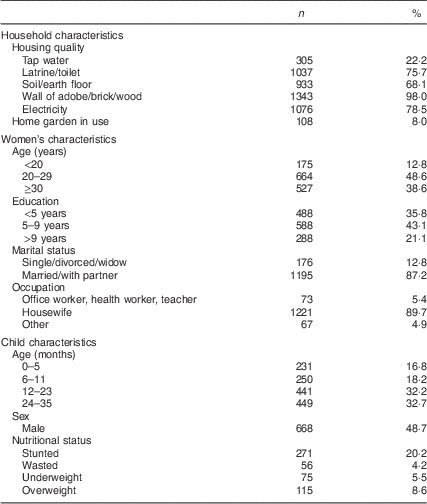
Definitions: stunted, height-for-age Z-score <−2; wasted, weight-for-height Z-score <−2; underweight, weight-for-age Z-score <−2; overweight, BMI-for-age Z-score >2.
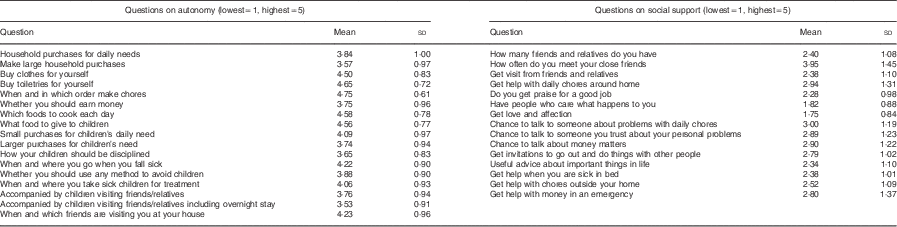
The descriptive statistics of women’s autonomy and social support scores are presented in Table 2. The mean score for women’s autonomy was 69·3 (sd 9·5; range 34–85). Among women, 72 % decided on their own about the type of foods to give to their children. Moreover, almost 63 % of the women could decide to a large extent or on their own when and where they could take their sick children for treatment (results not shown). The mean score for women’s social support was 39·2 (sd 7·50; range 19–72). About 20 % of the women reported they had no friends and/or relatives and more than 40 % said they hardly had someone who cared about them (results not shown). There was a small negative correlation between women’s autonomy and social support (Pearson correlation=−0·1, P<0·01; results not shown).
Mean and standard deviation of women’s score in autonomy and social support in Los Cuatro Santos, Nicaragua, 2009 (n 1371)
Associations between women’s autonomy/social support and infant/young child feeding practices
Descriptive statistics of infant and young child feeding practices according to women’s autonomy and social support are presented in Table 3. Compared with women in the highest autonomy tertile, women in the lowest tertile had more appropriate breast-feeding practices, i.e. the odds for not exclusive breast-feeding (adjusted odds ratio (ORadj)=0·24; 95 % CI 0·08, 0·71) and not continued breast-feeding (ORadj=0·24; 95 % CI 0·07, 0·81) were lower among these women (Table 4). Women in the middle tertile of autonomy had generally better complementary feeding practices, i.e. compared with the women in the highest tertile, the odds for not meeting minimum meal frequency (ORadj=0·68; 95 % CI 0·50, 0·94), dietary diversity (ORadj=0·69; 95 % CI 0·48, 0·98) and acceptable diet (ORadj=0·63; 95 % CI 0·46, 0·85) were lower among the children of women in this group. However, children of women in the middle tertile of autonomy also had higher odds of consuming HP snacks and/or SSB. The results remained significant after adjustment for potential confounders (ORadj=1·45; 95 % CI 1·02, 2·06; Table 4).
Descriptive statistics of infant/young child feeding practices and consumption of HP snacks and/or SSB according to women’s autonomy and social support in Los Cuatro Santos, Nicaragua, 2009

HP, highly processed, SSB, sugar-sweetened beverages; N, total number of children in the age group; EBF, exclusive breast-feeding; BF, breast-feeding; MMF, minimum meal frequency; MDD, minimum dietary diversity; MAD, minimum acceptable diet.
Odds of inappropriate feeding practices among children 0–35 months of age according to women’s autonomy and social support in Los Cuatro Santos, Nicaragua, 2009
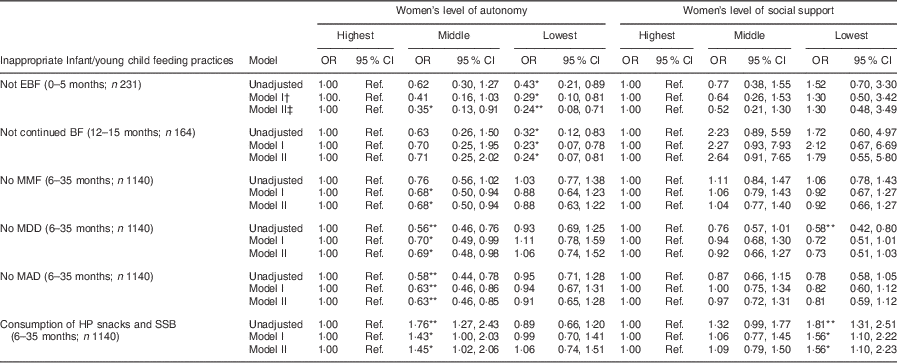
EBF, exclusive breast-feeding; BF, breast-feeding; MMF, minimum meal frequency; MDD, minimum dietary diversity; MAD, minimum acceptable diet; HP, highly processed; SSB, sugar-sweetened beverages; Ref., Referent category.
*P<0·05, **P<0·01.
† Adjusted for municipality, housing quality, food insecurity, women’s education, women’s age (years) and child age (months).
‡ Adjusted as in Model I adding women’s level of social support/autonomy using multivariate logistic regression.
Children of women with lowest social support were more likely to consume HP snacks and/or SSB (ORadj=1·56; 95 % CI 1·10, 2·23), but also had marginally significant higher odds of meeting dietary diversity (Table 4). No other associations were found between women’s social support and infant and young child feeding practices in the adjusted models.
Associations between women’s autonomy/social support and child nutritional status
Descriptive statistics of child nutritional status by women’s autonomy and social support are presented in Table 5. HAZ and WAZ were significantly higher among the older children of women with highest autonomy in the unadjusted models (Table 6). After adjustment for potential confounders, we did not find any significant associations between women’s autonomy and child nutritional status in either of the age categories.
Descriptive statistics of child nutritional status according to women’s autonomy and social support in Los Cuatro Santos, Nicaragua, 2009
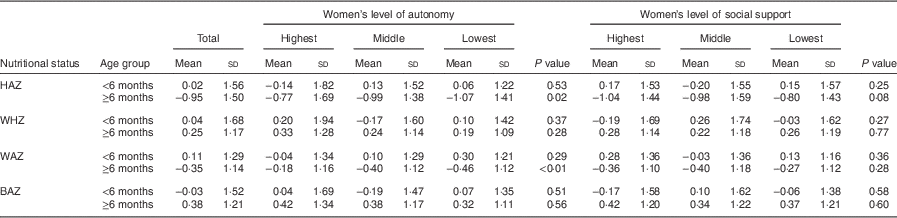
HAZ, height-for-age Z-score; WHZ, weight-for-height Z-score; WAZ, weight-for-age Z-score; BAZ, BMI-for-age Z-score.
Association of child nutritional status with women’s autonomy and social support in children aged 0–5 and 6–35 months in Los Cuatro Santos, Nicaragua, 2009

HAZ, height-for-age Z-score; WHZ, weight-for-height Z-score; WAZ, weight-for-age Z-score; BAZ, BMI-for-age Z-score; Ref., Referent category.
*P<0·05, **P<0·01.
† Adjusted for municipality, housing quality, food insecurity, women’s education, women’s age (years) and child age (months).
‡ Adjusted as in Model I adding women’s level of social support/autonomy using the general linear model.
With regard to social support, adjusted analyses showed that children aged 6–35 months of women in the lowest social support tertile had significantly higher HAZ (β=0·26; 95 % CI 0·05, 0·48; Table 6) and lower odds (ORadj=0·63; 95 % CI 0·42, 0·93) of stunting (HAZ<−2) compared with women in the highest social support tertile (results not shown).
Discussion
In the present study, children of women with lowest autonomy were more likely to be exclusively breast-fed and continue to be breast-fed at 1 year of age. Children of women from the middle tertile of autonomy had better complementary feeding practices, but were also more likely to consume HP snacks and SSB. Children of women with the lowest level of social support had greater odds of HP snacks and SSB consumption, but they also had higher HAZ.
We found that children of women with lowest autonomy were more likely to be exclusively breast-fed and continue to be breast-fed after 1 year of age. This finding is similar to that of a study conducted by Smith et al., where an inverse association between women’s autonomy and duration of breast-feeding was reported across sub-Saharan Africa, South Asia and Latin America( Reference Smith, Ramakrishnan and Ndiaye 15 ). In Los Cuatro Santos, low autonomy may prevent women from purchasing commercial baby food products; it might also imply the influence of older relatives and relations who may have traditional views regarding breast-feeding practices. Further, women with lower autonomy may exclusively breast-feed and/or continue breast-feeding as they might be restricted in their mobility and thus stay more at home and have more opportunities to breast-feed. Children of women in the middle tertile of autonomy had the best complementary feeding practices. A potential explanation might be that while low autonomy reduces women’s access to and control over resources in the household, the highest scores in autonomy might imply a lower level of partner support and thus more responsibility for women, which could reduce their caregiving capacity. Furthermore, women in the middle tertile of autonomy may be deciding jointly with their partners. This might reflect good relations and potentially better communication between partners which might have resulted in better child complementary feeding practices.
The difference in terms of better breast-feeding practices among the women within the lowest tertile of autonomy as compared with better complementary feeding among women within the middle tertile might also reflect their access over the family’s economic resources. That is, while women in the lowest autonomy tertile chose to breast-feed because of not having enough money to buy commercial baby food products, higher level of women’s autonomy might increase their economic freedom which may translate into better complementary feeding after 6 months of age when more external resources rather than breast milk are necessary to meet children’s dietary needs.
We did not find women’s autonomy to be significantly associated with child nutritional status. This finding is consistent with a study conducted in Kenya, which found no significant association between women’s autonomy and nutritional status in children younger than 3 years of age. The authors hypothesized that receiving a significant portion of nutrition from breast milk might buffer women’s limited control over household resources( Reference Brunson, Shell-Duncan and Steele 14 ). By contrast, greater women’s autonomy was associated with better nutritional status in children under 3 years in Jordan( Reference Doan and Bisharat 13 ) and India( Reference Shroff, Griffiths and Adair 11 , Reference Shroff, Griffiths and Suchindran 12 ). The weaker influence of women’s decision making on child nutritional status in Latin American countries compared with South-East Asia and sub-Saharan Africa has been reported in previous studies( Reference Smith, Ramakrishnan and Ndiaye 15 ). Although the results were not significant, the direction of association showed that higher women’s autonomy was related with better nutritional status in children older than 6 months in our study. In general, the higher status of women in Latin America( Reference Smith, Ramakrishnan and Ndiaye 15 ) and a lower prevalence of malnutrition in our sample might have limited us from finding significant associations between women’s autonomy and child nutritional status.
No significant associations were found between women’s social support and infant/young child feeding practices. However, contrary to what was expected, women in the lowest tertile of social support had infants with the highest HAZ and also the lowest occurrence of stunting. Similarly to this finding, a study that included 1-year-old children from Peru, Ethiopia, Vietnam and India reported that while support from one individual was associated with better WHZ among the children, women’s support from two or more individuals was associated with a slight reduction in their children’s WHZ except for those in non-poor households( Reference De Silva and Harpham 37 ). A large social support may not always be beneficial as it may also reflect the number of people whom an individual is obliged to care for and not only the number of people who care about the individual. Therefore a higher social support score might imply higher amounts of stress and responsibilities, which can negatively affect the quality and quantity of women’s caregiving practices. Consistent with this explanation, an earlier study in Nicaragua showed increased mental distress among families with higher levels of social support( Reference Ahearn and Noble 38 ). Moreover, it has been shown that the presence of the immediate kin at the time of childbearing, although beneficial, can also entail stress and conflict due to interpersonal tensions and conflicting interests( Reference Cramer and McDonald 39 ). The added responsibilities and emotional toll that may come with maintaining social networks may outweigh the actual support that such networks supply to women, thus diminishing their caring capacity and ultimately affecting their children’s nutritional status. Another alternative explanation for the association found between women’s social support and children’s nutritional status is the possibility of reverse causality, whereby women might seek more social support in order to get help when their children do not grow properly.
The associations between the explanatory factors and child feeding and nutritional status did not follow a consistent pattern in our study. For instance, while children of women in the middle tertile of autonomy had better complementary feeding practices, their children did not have better nutritional status. Similarly, the lowest tertile of women’s social support was associated with better child nutritional status but not with better infant and young child feeding practices. Given that child growth is a result not only of feeding practices but also of other factors in the children’s social and physical environment, this may not be surprising.
Some strengths of our study are the high participation (92 %) of the eligible children and the use of a validated tool for assessment of women’s social support, as well as including child-related items in the women’s autonomy questionnaire. There are also some limitations such as the cross-sectional nature of the study which will not allow causal inference to be made and reliance on women’s responses to a 24 h FFQ that may not reflect their usual feeding practices. Further, despite adjustment for important potential confounders, the possibility of limitations in assessment of the confounders exists and thus residual confounding cannot be ruled out.
In this rural setting, lower levels of both women’s autonomy and social support were independently associated with favourable feeding practices and better nutrition such as more exclusive breast-feeding, better complementary diet and less stunting. However, the significance of these associations should be interpreted with caution as autonomy and social support may reflect broader social and economic structures of importance for child feeding practices and nutrition rather than indicate a causal relationship.
Acknowledgements
Acknowledgements: The authors are grateful to the study team who collaborated throughout the research process. They also thank the women and children who participated in the study. Financial support: Financial support for the study was provided by the Swedish International Development Cooperation Agency (Sida) and the International Maternal and Child Health Unit, Department of Women’s and Children’s Health, Uppsala University. The funders had no role in the design, analysis or writing of this article. Conflict of interest: None. Authorship: S.Z. analysed and interpreted the data and drafted the manuscript. E.-C.E. conceived and designed the study, supervised the analyses, interpreted the data and revised the manuscript. M.C. contributed in acquisition of the data, interpretation of the analyses and revising the manuscript. L.-Å.P. contributed in interpretation of the analyses and revising the manuscript. E.Z.B. contributed in the design of the study, was responsible for data collection, contributed in interpretation of the analyses and revising the manuscript. A.H. contributed in interpretation of the analyses and revising the manuscript. All co-authors read and approved the final draft. Ethics of human subject participation: The study was conducted according to the guidelines laid down in the Declaration of Helsinki and all procedures involving human subjects/patients were approved by the Biomedical Research Ethics Committee at the University of León in Nicaragua. Verbal informed consent was obtained from all subjects/patients. Verbal consent was witnessed and formally recorded.



