Dyslipidaemia, a prevalent metabolic disorder and a major risk factor for CVD, is characterised by abnormal fasting blood lipid profile components including elevated total cholesterol total cholesterol (TC) levels greater than 200 mg/dl, LDL-cholesterol levels exceeding 130 mg/dl, TAG levels surpassing 150 mg/dl and decreased HDL-cholesterol levels below 40 mg/dl in men and below 50 mg/dl in women(Reference Tabatabaei-Malazy, Qorbani and Samavat1). The prevalence rates are 39·7 % for hypertriglyceridaemia, 21·2 % for hypercholesterolemia, 16·4 % for increased LDL-cholesterol, 68·4 % for low HDL-cholesterol and 81·0 % for dyslipidaemia. Hypercholesterolaemia and low HDL-cholesterol are more prevalent among women, while hypertriglyceridaemia is more prevalent among men. Dyslipidaemia is more prevalent in women (OR of 1·8)(Reference Khanali, Ghasemi and Rashidi2).
MicroRNAs (miRNAs) are small, non-coding RNA molecules that play a pivotal role in the regulation of gene expression at the post-transcriptional level(Reference Dexheimer and Cochella3). They regulate over 60 % of human coding genes(Reference Ono4). Dysregulation of miRNA expression has been implicated in numerous diseases, including cancer, CVD and metabolic conditions like hyperlipidaemia(Reference Xiang, Mao and Zuo5). Circulating miRNAs have emerged as potential biomarkers for various conditions, reflecting changes in cellular processes,(Reference Fichtlscherer, De Rosa and Fox6) and they can be used as an early diagnostic tool along with potential therapeutic properties(Reference Behrouzi, Ashrafian and Mazaheri7).
miRNAs have emerged as key regulators of lipid metabolism, influencing processes such as cholesterol synthesis, lipid transport and adipocyte differentiation(Reference Xiang, Mao and Zuo5,Reference Yang, Cappello and Wang8,Reference Rayner and Moore9) . Among these, miR-27a and miR-33a have garnered significant attention for their roles in modulating genes involved in lipid homoeostasis(Reference Singh, Aryal and Zhang10,Reference Zhang, Price and Fernández-Hernando11) . miR-27a has been suggested as a main regulator of cholesterol metabolism,(Reference Khan, Agarwal and Reddy12) and miR-33 is a potential biomarker for therapeutic goals owing to its appropriate response to dietary interventions(Reference Flowers, Froelicher and Aouizerat13). By focusing on these miRNAs, we aimed to investigate their potential modulation by synbiotic supplementation and their impact on lipid parameters in patients with dyslipidaemia.
Growing evidence indicates that miRNA expression is influenced by the gut microbiota (GM)(Reference Li, Chen and Wang14–Reference Ionescu, Enache and Cretoiu16). The main mechanism of action primarily involves the metabolites produced by the GM, including lipopolysaccharide, SCFA and amyloid(Reference Li, Chen and Wang14). Recent research has highlighted a strong correlation between dyslipidaemia and alterations in the composition of GM(Reference Flaig, Garza and Singh17,Reference Lei, Zhao and Zhang18) . Firmicutes and Bacteroidetes are considered to be the most abundant bacteria in the gut, comprising up to 90 % of the GM(Reference Bidell, Hobbs and Lodise19). Previous studies have shown that alterations in the abundance of these phyla are linked to metabolic disturbances(Reference Carding, Verbeke and Vipond20), justifying our interest in evaluating them in the context of synbiotic supplementation.
Synbiotics, a combination of probiotics and prebiotics, have gained attention for their potential to modulate GM composition(Reference Sergeev, Aljutaily and Walton21) and promote host metabolism(Reference Arabi, Bahrami and Rahnama22). In addition, it has been suggested synbiotics may impact miRNA expression(Reference Zeinali, Aghaei Zarch and Vahidi Mehrjardi23) and might be a complementary therapeutic strategy to manage dyslipidaemia(Reference Hadi, Ghaedi and Khalesi24).
While previous studies have investigated the potential benefits of synbiotic supplementation on traditional lipid parameters, this research aims to delve deeper by investigating the specific influence of multi-species synbiotic supplementation on circulating miRNAs related to lipid metabolism including miR-27a and miR-33a. These miRNAs through regulating expression levels of genes involved in lipid metabolism including LDLR and ATP-binding cassette subfamily A member 1 (ABCA1) at the post-transcriptional level play crucial roles in lipid metabolism and may serve as novel biomarkers for dyslipidaemia(Reference Ono4,Reference Khan, Agarwal and Reddy12) .
The objective of the study is to provide valuable insights into the molecular mechanisms underlying the effects of synbiotic supplementation on dyslipidaemia. By evaluating both traditional lipid parameters and miRNA expression, the research aims to contribute to a comprehensive understanding of the potential therapeutic impact of multi-species synbiotics in managing dyslipidaemia.
Methods
Study design and population
This study was a 12-week randomised, double-blind, placebo-controlled, parallel-group clinical trial conducted between May 2022 and September 2022. Fifty-six adult men diagnosed with dyslipidaemia were recruited from patients referred to the Nutrition Clinic in Mahshahr, Iran. Inclusion criteria included willingness to participate, adults aged up to 60 years with mixed dyslipidaemia (with TAG levels between 200 and 400 mg/dl and LDL-cholesterol levels between 130 and 160 mg/dl).
Exclusion criteria encompassed the use of chemical or herbal lipid-lowering drugs, presence of familial dyslipidaemia, any history of heart, kidney, liver, gastrointestinal, endocrine, autoimmune diseases, malignancies, significant changes in body weight, diet or lifestyle in the last 6 months, smoking, alcohol consumption, drug abuse, intake of antibiotics or dietary supplements of antioxidants, probiotics, prebiotics, or synbiotics in the past 6 months and frequent travel.
The participants’ socio-demographic characteristics, including age, gender, ethnicity, marital status, educational level, occupational status and smoking, were assessed using a self-report socio-demographic questionnaire during the recruitment phase. Due to logistic limitations, this study specifically included male patients.
Intervention
The synbiotic formula used in this study was developed based on previous research findings indicating its efficacy in modulating gut microbiota and lipid metabolism, which determined the composition and dosage of probiotics and prebiotics. The synbiotic supplement sachet contained 3 × 10¹⁰ colony forming unit six lyophilised probiotic strains, including Lactobacillus (L.) acidophilus (Reference Wang, Guo and Gao25) ATCC4356, L. fermentum (Reference Kullisaar, Zilmer and Salum26) DSM14241, L. plantarum (Reference Fuentes, Lajo and Carrión27) ATCC14917, Bifidobacterium (B.) longum (Reference Xiao, Kondo and Takahashi28) BAA-999, B. lactis (Reference Bernini, Simão and Alfieri29) ATCC27536 and Saccharomyces (S.) boulardii (Reference Chao, Lihong and Xiaohui30) CNCM I-745. Inulin and fructooligosaccharide(Reference Hadi, Ghaedi and Khalesi24) were included as prebiotics at a dosage of 5 g in equal amounts(Reference Davani-Davari, Negahdaripour and Karimzadeh31). Placebo sachets contained 5 g of corn starch, while the synbiotic and placebo sachets were identical in flavour, aroma, colour and appearance. They were produced and packaged by Faradaru Pharmaceutical Company. Participants were instructed to dissolve the synbiotic or placebo powders in a cup of water (240 ml) and take them twice a day (BID), 30 min before lunch and dinner for 12 weeks. The study duration was based on the recommendation of a systematic review and meta-analysis study on the effects of synbiotics on lipid profile(Reference Hadi, Ghaedi and Khalesi24). The participants received two boxes of either the active ingredient or placebo every 4 weeks, each containing 30 sachets along with storage instructions below 25°C as recommended by the manufacturer.
Randomisation and blinding
In this study, a simple randomisation technique was implemented through computer-generated random numbers by a third party to randomly assign eligible individuals to two groups. The enrollment and screening procedures were carried out by a research assistant under the supervision of the primary investigator. To maintain blinding, both the patients and the researchers involved in the study were unaware of the assigned interventions. The synbiotic and placebo sachets, along with their packaging, were carefully designed to have similar color and appearance. Additionally, to ensure individual blinding, an independent person not associated with the study coded the packages, effectively concealing the identity of the interventions.
Dietary intake and physical activity assessment
The participants’ nutrient and energy intake was evaluated using a 3-day food record (two weekdays and one weekend day) at the beginning and end of the intervention. The dietary intake was analysed using Nutritionist IV software (First Data Bank; Hearst Corp). To assess the participants’ physical activity level, a self-reported questionnaire on PA(Reference Aadahl and Jørgensen32) was administered at both baseline and end of the study. PA was determined using the values of the metabolic equivalent of task-hours (MET-h)/day for each PA, regarding the time spent in each activity. Throughout the study, participants were instructed to maintain their regular diet and PA patterns.
Anthropometric measurements
Anthropometric measures, including height, weight, waist circumference, body fat percentage, visceral fat percentage and BMI, were measured at the baseline and end of the trial. Height was measured using a digital stadiometer (InBody, BSM170) with an accuracy of 0·1 cm, without shoes, head facing forward and heels attached to the device. Body fat percentage, visceral fat percentage and weight (with an accuracy of 0·1 kg) were determined using an electrical body composition analyser (InBody270) with a light cloth and no shoes. Waist circumference was measured with a non-flexible tape in the standing position from the midpoint between the lowest rib and iliac crest. BMI was calculated by dividing the weight in kilograms by the height squared in metres.
Laboratory assessment
Assessment of serum lipid parameters
For biochemical assessment, 5 ml of venous blood samples were collected after 10–12 h of overnight fasting at baseline and after 12 weeks of the study. The serum samples were separated by centrifugation and immediately frozen at −70°C until analysis.
Serum levels of TC, TAG, HDL-cholesterol and very low-density lipoprotein were assessed using an enzymatic method (ParsAzmun Company). The concentration of LDL-cholesterol was measured using the Friedewald formula(Reference Friedewald, Levy and Fredrickson33). The serum levels of sdLDL-cholesterol, apolipoproteins including apoA-I and apoB-100 were assayed using ELISA kits (Randox CompanyUK).
Analysis of circulating miR-27a and miR-33a
To determine the expression levels of circulatory miR-27a and miR-33a, quantitative real-time PCR was performed using the ABI StepOne Plus detection system (ABI). The miRNA was extracted using miRcute Serum/Plasma miRNA Isolation Kit as recommended by the manufacturer’s protocol (TIANGEN). The purity of RNA at 260/280 OD ratio and the RNA integrity were evaluated using an Eppendorf µCuvette G1·0 microvolume measuring cell (Eppendorf). High-purity RNA with an OD of 260/280 ratio above 1:8 was used for cDNA synthesis. The cDNA was synthesised using miRcute miRNA First-strand cDNA Synthesis Kit (TIANGEN) based on the polyadenylation method. miRNA levels were quantified by the qRT-PCR method using the miRcute miRNA qPCR Detection Kit (SYBR Green) (TIANGEN, China). The thermal program consisted of 95°C for 5 min, followed by forty cycles of 94°C for 15 sec, 60°C for 15 sec and 72°C for 20 sec. Each experiment was performed with two technical replicates. The relative expression level of the target genes was compared to the miR-16 gene as a housekeeping gene. Two separate reactions without cDNA or with RNA were performed in parallel as controls. Melting curve analysis was performed to verify the presence of gene-specific peaks and the absence of primer dimmers. Relative quantification was performed according to the comparative 2–ΔΔCt method, using cycle threshold values extracted from StepOne software version 2.3. The miRNAs sequences (miR27a, GeneBank Accession No: NR_029501·1; miR33a, GeneBank Accession No: NR_029507·1, miR16: GeneBank Accession No: NR_029486·1) were obtained from Gene Bank (https://www.ncbi.nlm.nih.gov/nucleotide/). Primers were designed using the sRNAPrimerDB online tool (http://www.srnaprimerdb.com/submitA). The sequences of primers and adapter were as follows: miR27a: 5’-GGCTTAGCTGCTTGTGA-3’, miR33a: 5’-GTGCATTGTAGTTGCATTG-3’, miR16:5’-AGCAGCACGTAAATATTGG-3’ and adapter sequence: 5’-GAACATGTCTGCGTATCTC-3’. PCR products were analysed by 2 % agarose gel electrophoresis to confirm the predicted size (approximately 90 bp, including mature miRNA and adapter sequences) of amplified miRNAs. Calculation of the amplification efficiency was determined from the slope of the standard curve as described previously(Reference Tabandeh, Jozaie and Ghotbedin34). Standard curves were generated by performing qRT-PCR on each gene using serially diluted cDNA samples. The amplification efficiency was then calculated using the formula E = (10−1/slope − 1) × 100 %.
Assessment of fecal bacteria
This study collected fresh stool samples from patients at the beginning and end of the study, which were stored at 4°C and then frozen at −80°C with an ID code for further analysis. The number of Firmicutes and Bacteroidetes populations was determined using real-time PCR analysis with the absolute quantification method. The PCR assay used a hydrolysis probe targeting the 16S rRNA gene, and a standard curve was constructed using serially diluted plasmid DNA containing the 16S rDNA from standard bacterial species. DNA extraction was performed using the Stool DNA isolation kit (Cat No: FASTI 001-1, FavorPrep Stool DNA Isolation Mini Kit, FAVORGEN, Taiwan), and amplification and detection of DNA were performed with a YTA qPCR Probe MasterMix kit (Yekta Tajhiz) in an ABI StepOnePlus. The standard curves were generated using triplicate sevenfold dilutions of plasmid DNA from 0 to 107 plasmid/reaction, and the results were expressed as the LOG10 CFU/g of stool. The amplification efficiency was calculated using the formula E% = (10–1/slope − 1) × 100. E is one if the amount of PCR product exactly doubles with each cycle and the efficiency expressed in percent is 100 %.
Assessment of fecal short-chain fatty acids
Assessment of fecal SCFA including acetate, butyrate and propionate was performed by GC method using a GC Device (GC-2014 Shimadzu, apparatus, Japan) following established protocols(Reference Tangerman and Nagengast35). Before analysis, samples were thawed and processed according to standardised procedures. Initially, a 500 mg sample of homogenised fecal matter was treated with a 15 % aqueous azide solution in a Falcon tube. Subsequently, phosphoric acid was added to each 100 mg of the sample, ensuring complete homogenisation. Following this, 2-ethyl butyraldehyde was introduced as an internal standard. After centrifugation, the supernatant was filtered for injection. The GC analysis was performed utilising a Shimadzu GC-2014 apparatus with specific column and carrier gas settings. This methodological approach, which involved precise preparation steps and sophisticated GC instrumentation, facilitated the accurate quantification of SCFA in fecal samples.
Compliance
To monitor patient compliance with the consumption of sachets, individuals were asked to return unconsumed sachets at the end of each month. The number of sachets remaining in boxes determined their compliance. At the end of the study, participants who consumed less than 90 % of their sachets were excluded. To increase the compliance rate and decrease the dropout rate among the participants, daily messages were sent to their cell phones, and weekly phone calls were made to remind them to take the supplement and ask about possible side effects.
Sample size
The sample size was calculated using the equation for estimation of sample size in clinical trials(Reference Sakpal36) based on the parameter of total cholesterol in previous research(Reference Cicero, Fogacci and Bove37) (with an alpha error of 0·05 and a beta error of 20 %). Twenty-five participants per group were estimated and after considering an anticipated dropout rate of 10 %, fifty-six individuals diagnosed with dyslipidaemia (twenty-eight patients per group) were recruited.
Statistical analysis
The Kolmogorov–Smirnov test was used to evaluate the normality of data. Between-group and within-group comparisons were conducted by independent sample t test or paired sample t test, respectively. A general linear model was used to control confounding variables. A Pearson’s correlation coefficient analysis was used to describe the association between miRNA expression levels and other variables. Intention-to-treat and per-protocol analyses were performed to analyse the data. An intention-to-treat analysis was conducted, addressing missing data through mean imputation, and encompassed all randomised participants, irrespective of protocol adherence or missing data. The per-protocol analysis, which included only participants who completed the study, yielded consistent results, highlighting the robustness of our findings. Due to space constraints, only the results from the per-protocol analysis are presented in this manuscript. The Statistical Package for Social Science software (SPSS Inc., version 28) was used for the statistical analysis of data. P ≤ 0·05 was considered statistically significant.
Results
The consort flow diagram is shown in Fig. 1. Of the 105 volunteers enrolled in this study, fifty-six patients were eligible to participate and randomly assigned to the synbiotic (n 28) and placebo (n 28) groups. Six patients (three patients from each group) were excluded from the study because of a low compliance rate. A high compliance rate (90·0 %) was observed in the fifty patients who completed the study. All the recruited participants were male with an average age of 42·4 years.
Consort flow chart.

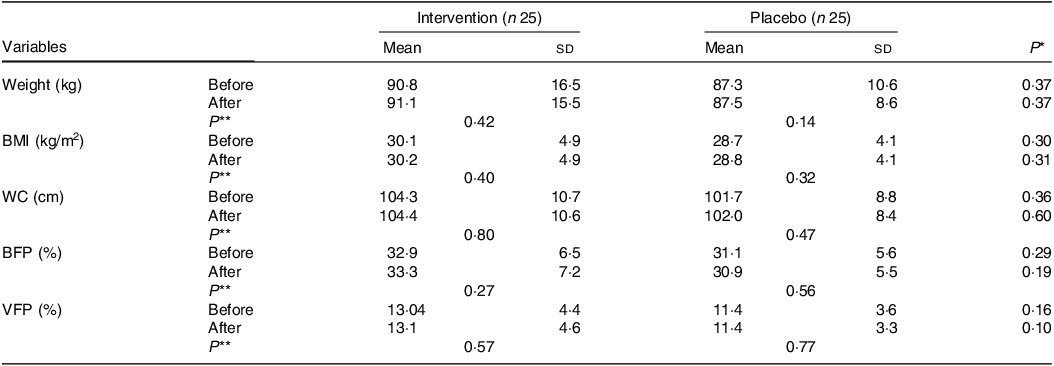
Table 1 provides data on the anthropometric indices before and after the study for both the intervention and placebo groups. The study revealed no significant differences in these variables between the two groups at both baseline and post-intervention. Additionally, there were no significant changes observed in these parameters within each group at the study’s conclusion compared with the baseline. Furthermore, the dietary intake and physical activity level of participants in both the intervention and placebo groups showed no significant differences between groups and no significant changes within each group.
Anthropometric measures before and after study between and within groups

WC, waist circumference; BFP, body fat percentage; VFP, visceral fat percentage.
Data are presented as mean and sd.
P < 0·05 is statistically significant.
* P for between-group comparison was reported based on an independent sample t test.
** P for within-group comparison was reported based on a paired sample t test.
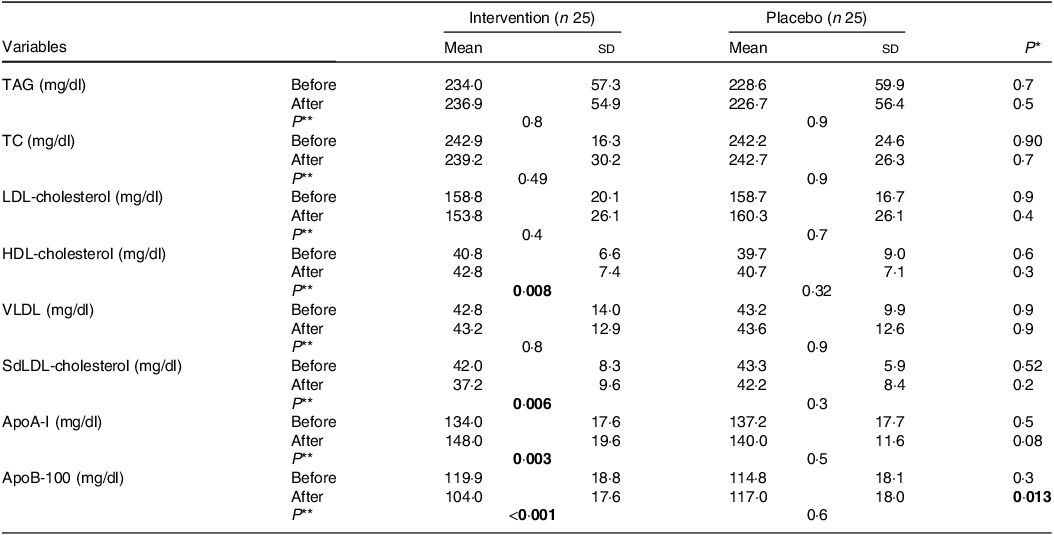
Serum lipid parameters and apolipoproteins of the two groups are detailed in Table 2. At the baseline, no significant difference was observed between the two groups in these parameters.
Serum lipid parameters before and after intervention between and within groups

TC, total cholesterol; VLDL, very low-density lipoprotein.
Data are presented as mean and sd.
P < 0·05 is statistically significant.
* P for between-group comparison was reported based on an independent sample t test.
** P for within-group comparison was reported based on paired sample t test.
The mean serum HDL-cholesterol and apoA-I concentration was significantly increased, and serum sdLDL-cholesterol and apoB-100 significantly decreased after 12 weeks of synbiotic supplementation in the intervention group (Table 2). However, no significant difference in the above parameters was observed in the placebo group at the end of the trial. TC, TAG, LDL-cholesterol and very low-density lipoprotein did not have a significant change in both groups after intervention.
At the end of the study, miR-27a and miR-33a relative expression levels were significantly decreased in the intervention group compared with the placebo group (P = 0·008, P = 0·001) (Fig. 2).
miR-33a and miR-27a relative expression levels in the study groups.

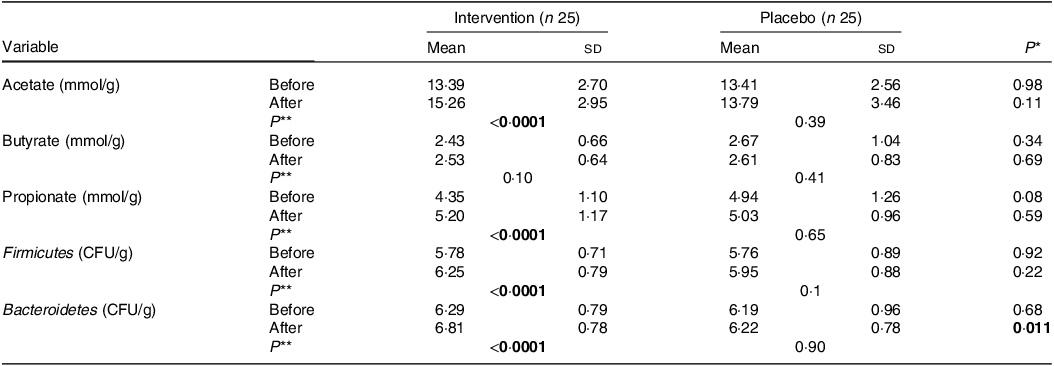
The mean of fecal SCFA including acetate, butyrate and propionate significantly increased in the intervention group at the end of the study. No significant change was observed in the placebo group (Table 3).
Fecal SCFA and bacteria before and after intervention between and within groups

CFU, colony forming unit; SCFA, short-chain fatty acid.
* P for between-group comparison was reported based on an independent sample t test.
** P for within-group comparison was reported based on paired sample t test.
Data are presented as mean and sd.
P < 0·05 statistically significant.
In the intervention group, the mean colony forming unit of Firmicutes and Bacteroidetes was significantly increased (p < 0·0001, p < 0·0001) (Table 3).
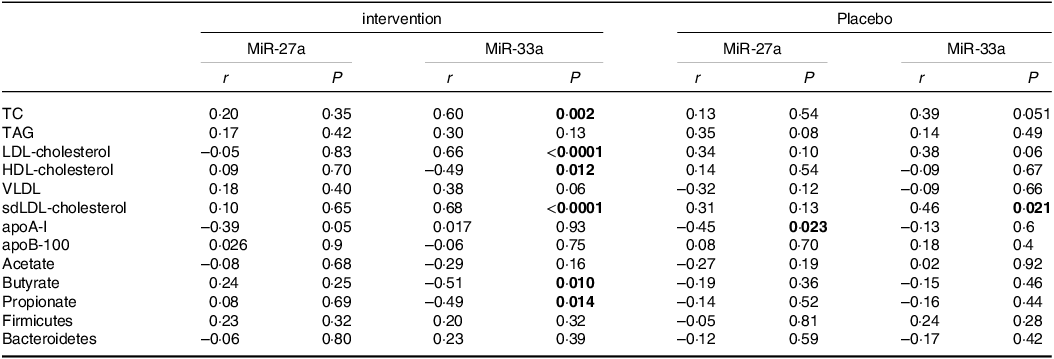
A strong positive correlation was observed between miR-33a expression levels with serum TC, LDL-cholesterol and sdLDL-cholesterol in the intervention group (r = 0·60, P = 0·002), (r = 0·66, P < 0·001) and (r = 0·68, P < 0·001), respectively, according to Pearson’s correlation coefficient analysis. In addition, a negative correlation also existed between the changes in miR-33a expression levels with serum HDL-cholesterol (r = –0·49, P = 0·012) and fecal concentrations of butyrate and propionate (r = –0·51, P = 0·010; r = –0·49, P = 0·014, respectively) in the intervention group (Table 4).
Parametric Pearson’s correlation coefficient of miR-27a and miR-33a expression levels with other variables changes in two groups

TC, total cholesterol; VLDL, very low-density lipoprotein.
Statistical analysis was done using Pearson‘s correlation coefficient.
P < 0·05 was considered statistically significant.
Discussion
Research has demonstrated that GM-targeted interventions including synbiotic administration can influence miRNA expression patterns(Reference Davoodvandi, Marzban and Goleij38). However, the specific impact of synbiotic supplementation on miRNAs associated with lipid metabolism in patients with dyslipidaemia has remained elusive until now.
Our study represents the first investigation into the effects of synbiotic supplementation on the expression levels of miR-27a and miR-33a in dyslipidaemia. We conducted a 12-week synbiotic supplementation trial and evaluated the impact of this intervention on circulating miRNA levels, serum lipid parameters, fecal short-chain fatty acid concentrations and most abundant gut bacteria.
Existing evidence on the effects of synbiotics on miRNA expression is limited. In an in vivo study, administration of L. rhamnosus in mice decreased ethanol-elevated miR122a levels and attenuated ethanol-induced liver injury(Reference Zhao, Zhao and Dong39). Rodríguez-Nogales et al. investigated the effects of two probiotic species, L. fermentum and L. salivarius, on inflammation-related miRNAs, demonstrating positive outcomes on gut dysbiosis and miRNA expression levels in male mice(Reference Rodríguez-Nogales, Algieri and Garrido-Mesa40). Conversely, a pilot study indicated that a 6-month supplementation with a multi-species probiotic did not alter the expression levels of miR-29a-c in HIV-positive subjects(Reference Ceccarelli, Fratino and Selvaggi41).
Our results showed a significant downregulation of miR-27a and miR-33a expression levels following synbiotic supplementation. Downregulation of miR-33a through the increasing expression of ABCA1 and ABCG1 genes could improve reverse cholesterol transport leading to elevated circulating HDL-cholesterol levels(Reference Kim, Kim and Umemura42). Moreover, aligned with our results, Simionescu et al. found a significant positive correlation between miR-33a expression and TC, TAG, LDL-cholesterol and apoB-100 and an adverse correlation, but not statistically significant with HDL-cholesterol(Reference Simionescu, Niculescu and Sanda43).
Our findings further support the potential therapeutic implications of inhibiting miR-27a expression to alleviate hypercholesterolaemia. This inhibition could enhance the expression of the LDLR (primary route for LDL-cholesterol clearance from circulation) gene and reduce LDLR degradation by lowering proprotein convertase subtilisin/kexin type 9 levels(Reference Alvarez, Khosroheidari and Eddy44).
While our study primarily emphasised the regulation of miRNA expression, it is important to acknowledge that GM-targeted interventions may exert their metabolic effects through diverse mechanisms. For instance, the activation of peroxisome proliferator-activated receptors plays a pivotal role in lipid metabolism and are known to be influenced by GM composition and metabolites(Reference Salamat, Tabandeh and Jahan-Mihan45).
Approximately 90 % of the adult GM consists of the predominant phyla Bacteroidetes and Firmicutes. These phyla are essential for producing SCFA that are suggested to mediate the several positive effects of synbiotics on lipid metabolism(Reference Ambrozkiewicz, Karczmarski and Kulecka46,Reference Peng, Xiao and Hu47) . SCFA activate the adenosine monophosphate-activated protein kinase pathway, which inhibits the synthesis of fatty acids, cholesterol and TAG, potentially improving lipid disorders(Reference He, Zhang and Shen48). Particularly, butyrate may increase HDL-cholesterol levels by upregulating genes involved in HDL-cholesterol synthesis and transport, such as apoA-I and ABCA1(Reference Popeijus, Zwaan and Tayyeb49). Additionally, SCFA enhance gut barrier function, decreasing gut permeability, which in turn can restrict the entry of bacterial endotoxins into the bloodstream, consequently improving low-grade inflammation and lipid metabolism(Reference Salamat, Jahan-Mihan and Tabandeh50). The observed increase in fecal short-chain fatty acid concentrations and alterations in gut bacteria abundance following synbiotic supplementation suggest a potential mechanistic link between GM modulation and lipid metabolism.
Although the current study did not observe significant reductions in serum TC and LDL-cholesterol levels, the observed improvements in the serum levels of apolipoproteins including apoA-I and apoB-100 and sdLDL-cholesterol underscore the importance of considering alternative lipid markers for assessing cardiovascular risk, notably, serum sdLDL-cholesterol levels have emerged as a more accurate predictor of cardiovascular risk than LDL-cholesterol levels, emphasising the clinical relevance of our findings(Reference Liou and Kaptoge51). Moreover, serum apoB-100 that has shown a significant reduction in the current study is suggested to be a more useful and accurate biomarker than LDL-cholesterol in determining atherogenic lipid levels(Reference Behbodikhah, Ahmed and Elyasi52).
There is a discrepancy in the effects of synbiotic supplementation on lipid parameters across different studies(Reference Cicero, Fogacci and Bove37,Reference Tajabadi-Ebrahimi, Sharifi and Farrokhian53–Reference Shakeri, Hadaegh and Abedi55) underscores the need for further research to elucidate the underlying mechanisms and address existing controversies. Factors such as subject characteristics, synbiotic composition and study design and duration may contribute to variability in outcomes.
Our study provides valuable insights into the molecular and microbial pathways underlying synbiotic-mediated improvements in lipid metabolism. By demonstrating significant alterations in miR-27a and miR-33a expression levels and gut bacteria abundance following synbiotic supplementation, our findings contribute to a deeper understanding of the therapeutic potential of synbiotics in dyslipidaemia management.
Further research exploring the long-term effects of synbiotic supplementation on GM composition, miRNA regulation and lipid metabolism is warranted to fully elucidate its therapeutic potential and clinical implications.
Limitation and strength
Our study has several strengths. First, this is the first randomised clinical trial to investigate the effects of synbiotic supplementation on circulating levels of miR-27a and miR-33a in patients with dyslipidaemia, providing novel insights into the potential therapeutic benefits of synbiotics in this population. Furthermore, the components of the synbiotic supplement were determined based on prior research that indicated the efficacy of the specific probiotic species and prebiotic fibres used in the synbiotic formula for improving lipid metabolism. Additionally, the study was conducted among a homogenous group of non-smoker adult men with similar ethnicity and lifestyle, minimising confounding factors. Lastly, the high compliance rate among participants who completed the 12-week study period in both groups strengthens the reliability of the results.
However, there are a few limitations to acknowledge. First, the study included only male participants due to logistic constraints. Second, the study did not examine the target gene expression of the investigated miRNAs, which could be an area for future research to gain a deeper understanding of their functional implications.
Conclusions
In conclusion, this study provides valuable insights into the effects of synbiotic supplementation on the expression of lipometabolic-related miRNAs and serum lipid biomarkers in patients with dyslipidaemia. Additionally, the findings suggest that synbiotic supplementation may positively influence GM composition and short-chain fatty acid production, which are known to impact lipid metabolism. Overall, this study’s results support the potential of synbiotics consumption as a promising approach for modulating miRNA expression and improving lipid parameters in patients with dyslipidaemia. Further studies with larger sample sizes and longer durations, including both sexes, are warranted to confirm and expand upon these findings.
Acknowledgements
The authors would like to acknowledge all the participants for their cooperation and Faradaru Pharmaceutical Company for producing and supplying synbiotic and placebo sachets.
This study is part of a Ph.D. thesis that is funded by the Vice-Chancellor for Research and Technology of Ahvaz Jundishapur University of Medical Sciences (Grant number: NRC-0009).
All authors contributed to the design of the research. S. S. conducted the research, analysed data and wrote the manuscript. A. M. supervised the study. All authors contributed to review and edit the manuscript draft. All authors read and approved the final manuscript.
The authors declare none.
The study protocol was approved by the ethics committee of Ahvaz Jundishapur University of Medical Sciences in accordance with the Declaration of Helsinki (Approval code: IR.AJUMS.REC.1400.581). The trial was registered on 2 February 2022, in the Iranian Registry of Clinical Trials (registration reference: IRCT20180128038540N2). Before the start of the study, written informed consent was obtained from each participant, and their privacy and confidentiality were ensured throughout the trial.