





Introduction
Over the past 15 yr, Oman has experienced significant economic growth, mainly driven by rising oil prices, prudent macroeconomic policies, business reforms, and increased investments in health, education, and infrastructure. Despite these gains, the country remains heavily reliant on hydrocarbon revenues and foreign labor, making it the most vulnerable economy among the Gulf Cooperation Council (GCC) nations. National policy has therefore emphasized sustainable agriculture and rural development as critical pathways for enhancing food security and promoting economic diversification (FAO, Ministry of Agriculture and Fisheries 2016). However, agricultural production, particularly of staple crops such as wheat (Triticum aestivum L.), remains constrained by arid climatic conditions, limited water resources, and inefficient farming practices (Farooq et al. Reference Farooq, Ullah, Al-Hinai, Nadaf, Al-Sadi, Al-Farsi and Alkhamisi2022). Among these challenges, biological invasions by noxious weeds have emerged as a major, yet under-explored, threat to agricultural sustainability in the region. Within this broader policy emphasis on sustainable agriculture and rural development, biological constraints, particularly the spread of invasive alien weeds, have emerged as an increasingly important but under-recognized challenge to achieving productivity, livelihood resilience, and food security goals in Oman (Government of the Sultanate of Oman 2016; Patzelt et al. Reference Patzelt, Pyšek, Pergl and van Kleunen2022).
One of the most problematic invasive species in Oman is parthenium weed, noted for its rapid spread, high biological plasticity, prolific seed production, and strong allelopathic effects (Patzelt et al. Reference Patzelt, Pyšek, Pergl and van Kleunen2022). Beyond these biological traits, parthenium causes substantial damage to vegetation, pasturelands, and crops, while suppressing the growth of native plants and trees (Shammas Reference Shammas2021). Originally native to Central America, parrthenium has now established populations in more than 50 countries, where it disrupts crop production, reduces livestock productivity, and poses risks to human and animal health (Bajwa et al. Reference Bajwa, Farooq, Nawaz, Yadav, Chauhan and Adkins2019; Shabbir et al. Reference Shabbir, Bajwa, Mao, Kezar, Dorji and Adkins2024a). In southern Oman, particularly in Dhofar, subsistence farming and pastoralism sustain thousands of households, yet pathenium infestations are a growing concern. First documented in the Dhofar Mountains in 1998, the weed is now associated with livestock mortality, degraded pasturelands, and reduced crop yields (Al Ruheili et al. Reference Al Ruheili, Al Sariri and Al Subhi2022; Shammas Reference Shammas2021). Despite growing evidence of its ecological presence, comprehensive assessments of its socioeconomic impact remain limited.
The biological success of parthenium is underpinned by several factors, including its aggressive morphology, rapid reproductive cycle, long-lived seedbank, and tolerance to abiotic stresses (Adkins and Shabbir Reference Adkins and Shabbir2014; Navie et al. Reference Navie, McFadyen, Panetta and Adkins1996). The weed thrives under diverse environmental conditions, outcompeting native and cultivated species for water, nutrients, and sunlight. Its phytotoxic effects further alter soil chemistry, reduce biodiversity, and cause health issues, including dermatitis and respiratory disorders, in humans and animals (Shrestha et al. Reference Shrestha, Bajwa, Neupane and Subedi2015). Consequently, parthenium invasion exerts not only ecological but also profound socioeconomic pressures, particularly in smallholder farming systems where livelihoods depend heavily on crop and livestock production.
Internationally, parthenium has been shown to undermine rural productivity and food security. In Kenya, Ngaruiya et al. (Reference Ngaruiya, Mwangi and Oduor2020) documented significant yield losses in smallholder farms, while Zelalem and Tora (Reference Zelalem and Tora2019) reported reduced crop and livestock performance in Ethiopia. Locally, however, responses remain fragmented, and farmer awareness of effective control strategies is generally low. In Dhofar, where subsistence farming and pastoralism are central to household livelihoods, the socioeconomic implications of parthenium remain poorly quantified, leaving a critical gap for evidence-based policymaking and land management.
This study addresses this gap by examining the socioeconomic impacts of parthenium on farming households in Dhofar, Oman. It uniquely integrates farmer demographics, infestation intensity, and management practices, including mechanical and chemical control, to assess their combined influence on household income and livelihood resilience. By situating the parthenium challenge within Oman’s distinct socioeconomic context, the study provides novel insights into how invasive weeds affect rural livelihoods and agricultural productivity. The research advances the field by linking farmer characteristics, management strategies, and economic outcomes, an approach that is underrepresented mainly in both local and regional studies of biology and agricultural economics. Ultimately, the findings inform integrated weed management (IWM) strategies, rural development planning, and policies aimed at sustaining livelihoods in arid, invasion-prone economies facing both ecological and climatic stressors.
Materials and Methods
The Study Area
The study was conducted in Dhofar Governorate, the largest of Oman’s 11 governorates, which comprises 10 wilayats (districts) (Al-Siyabi et al. Reference Al-Siyabi, Bose and Al-Masroori2021). Dhofar is in southern Oman, bordering Yemen’s Al Mahrah Governorate and Saudi Arabia’s Eastern Province. It has a population of 416,458 (2020 census) and covers an area of 99,300 km2, with Salalah as its capital. The governorate is the region in Oman most severely affected by parthenium, making it a critical area for examining the socioeconomic impacts of this invasive species. Field assessments and household surveys were carried out between June and August 2022 across seven sites in six wilayats: Mirbat (Tawi Attair), Taqa (Jibjat and Madinat Al Haq), Dhalkut (Sarfayt), Rakhyut (Shaat), Salalah (Zeek), and Sadah (Lagga Shalyon).
This study combined agricultural farm assessments with structured household surveys to capture both the distribution of parthenium and its socioeconomic consequences. Agricultural farm surveys coincided with the peak growing season and targeted heavily infested areas across croplands, rangelands, and roadsides. Transect walks of 50 to 100 m were conducted to record weed density, ground cover, and spatial distribution, while GPS coordinates enabled spatial mapping and cross-validation with farmer perceptions.
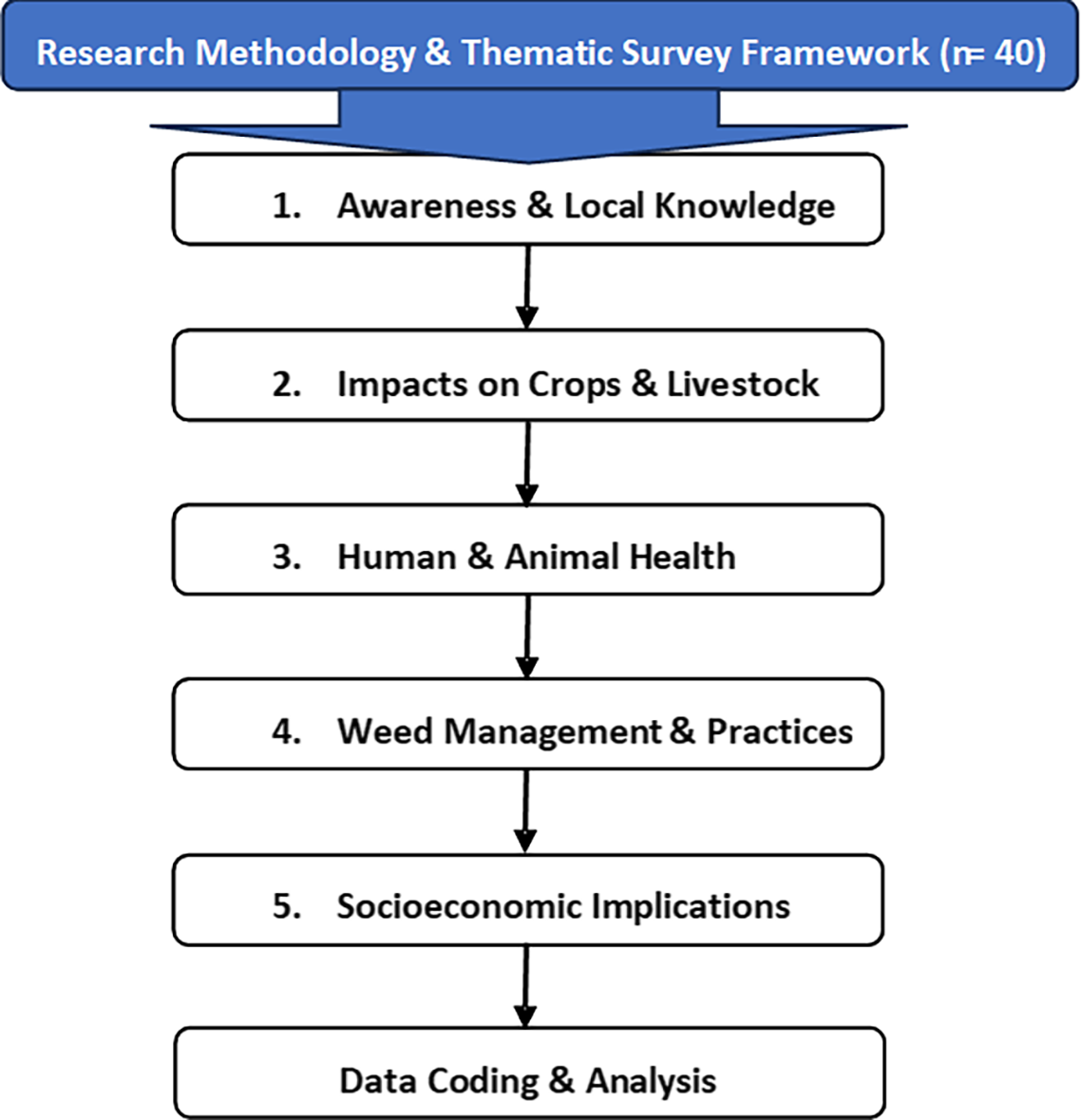
Household surveys employed a stratified random sampling design to ensure representation across different livelihood groups, including farmers, herders, and agropastoralists. A total of 40 households were interviewed using a semi-structured questionnaire, administered in Arabic by trained enumerators, with face-to-face interviews lasting 30 to 45 min. The survey collected both quantitative and qualitative data across five thematic areas: (1) awareness and local knowledge, (2) effects on agricultural production, (3) impacts on animal and human health, (4) current weed management practices, and (5) broader socioeconomic implications (Figure 1). Additionally, expert interviews with agricultural officers and community leaders were conducted to validate the household-level findings and to provide context on institutional support and management challenges.
Research methodology and thematic survey framework based on responses from farming households in Dhofar, Oman.

Before conducting interviews, enumerators explained the study’s objectives, the voluntary nature of participation, and the confidentiality procedures. Verbal informed consent was obtained, and each participant was assigned a unique code to ensure anonymity. Only basic demographic data, including gender, age, education, and occupation, were collected. Survey responses were initially recorded manually and later digitized and cleaned using a double-entry system. Quantitative data were analyzed through descriptive and inferential statistics, while qualitative responses were thematically coded. This methodology follows established best practices for invasive species impact assessments and participatory rural appraisal approaches (Shackleton et al. Reference Shackleton, McGarry, Fourie, Gambiza, Shackleton and Fabricius2007).
Data Analysis
To examine the relationships among farmer characteristics, parthenium infestation, management practices, and economic outcomes, this study employed partial least-squares structural equation modelling (PLS-SEM). PLS-SEM was selected due to its suitability for predictive analysis, its ability to accommodate formative constructs, and its robustness when applied to small-to-medium sample sizes (Hair et al. Reference Hair, Risher, Sarstedt and Ringle2019). Compared with traditional multivariate techniques such as multiple or logistic regression, SEM allows for the simultaneous estimation of complex relationships among observed and latent variables while explicitly accounting for measurement error.
Within the SEM family, both covariance-based SEM (CB-SEM) and PLS-SEM are commonly used; however, PLS-SEM is particularly appropriate when the research objective emphasizes prediction and theory development over model fit, and when constructs are formed by multiple contributing indicators rather than by reflective measures. Accordingly, a formative measurement specification was adopted in this study.
In addition to the PLS-SEM analysis, bivariate relationships between crop yields and the timing of parthenium detection were examined using Pearson’s correlation coefficients. Crop yield variables (kg m⁻²) for major crops (wheat, sugarcane [Saccharum officinarum L.], potato [Solanum tuberosum L.], pea (Pisum sativum L.), and tomato [Solanum lycopersicum L.]) were correlated with farmer-reported timing of first detection of P. hysterophorus in corresponding crop fields. The detection timing variable was treated as an ordinal measure indicating the stage at which the weed was first detected (e.g., early vs. late). Statistical significance was evaluated at the 5% and 1% levels using one-tailed tests, consistent with the directional expectation that delayed detection is associated with adverse yield outcomes. To assess discriminant validity among latent constructs, the Fornell–Larcker criterion was applied. Specifically, the square root of the average variance extracted (AVE) for each construct was compared with its correlations with other constructs. Discriminant validity is established when the square root of AVE exceeds the corresponding inter-construct correlations, indicating that each construct shares more variance with its own indicators than with other constructs (Fornell and Larcker Reference Fornell and Larcker1981; Hair et al. Reference Hair, Risher, Sarstedt and Ringle2019).
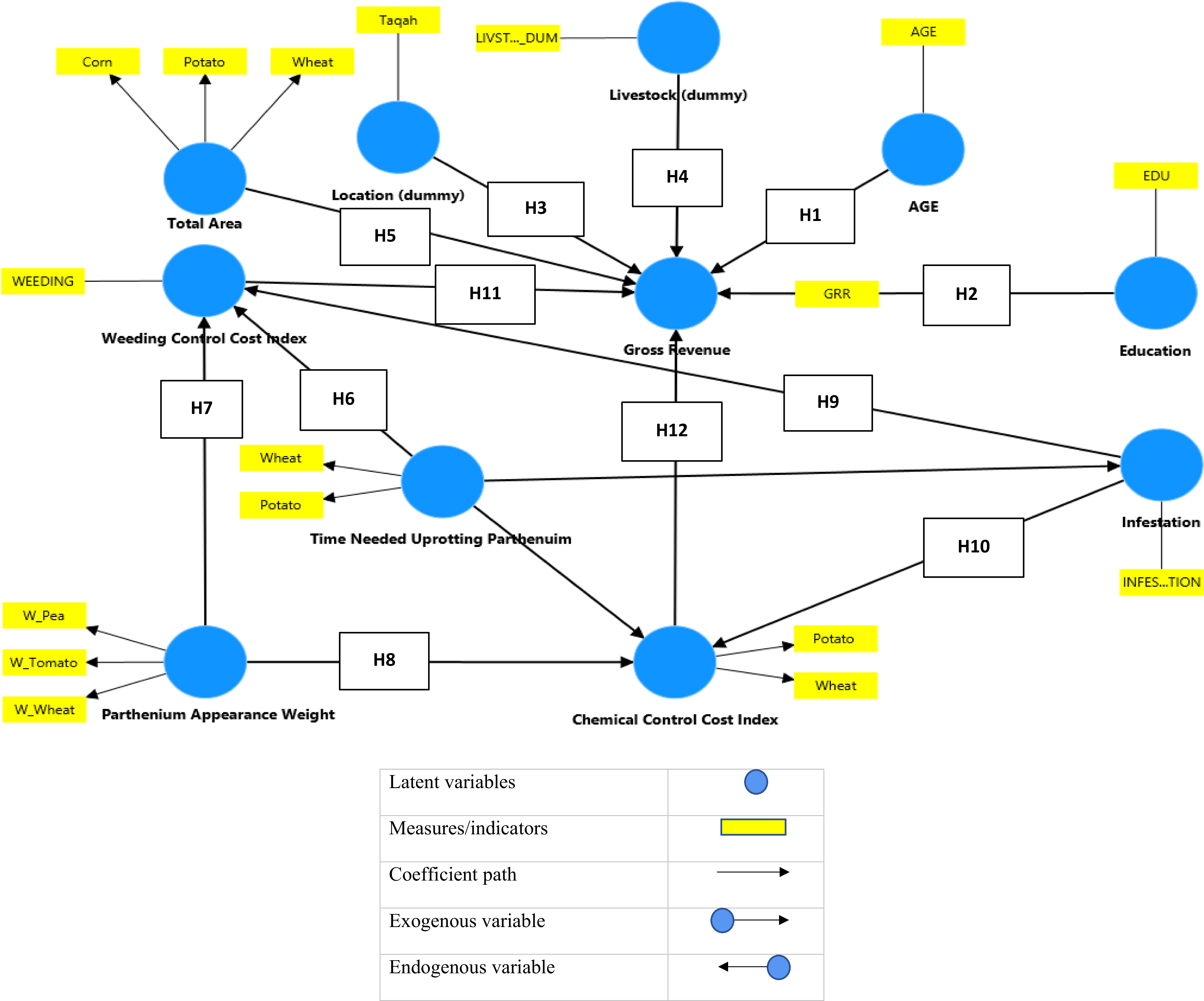
Latent constructs were specified graphically, with observed indicators linked to their respective constructs and directional paths representing hypothesized causal relationships. Measurement quality was assessed before evaluation of the structural model to ensure indicator relevance and construct validity. Exogenous variables—including cultivated area, location, livestock ownership, age, education, infestation level, P. hysterophorus appearance weight, weeding cost index, chemical control cost index, and time required for uprooting parthenium—were hypothesized to influence the endogenous construct of gross revenue. Both direct and indirect effects were estimated to capture the joint influence of demographic, biophysical, and management factors.
From an agronomic and economic perspective, infestation pressure was assumed to precede economic outcomes. Parthenium infestation reduces crop productivity through competition for essential resources, thereby affecting household gross revenue. Although farm income may influence farmers’ capacity to invest in control measures, this relationship is captured through the weeding control index and chemical control index, preserving a unidirectional causal structure: infestation → management response → revenue.
Model Specification
This study adopts a formative specification approach (Figure 2), in which latent constructs are shaped by their indicators rather than merely reflected by them. Farmer gross income is modeled as a function of age (a proxy for experience), education, location, livestock ownership, and weed management practices, including the weeding control index and the chemical control index. These variables are formative indicators, because each uniquely contributes to total income.
Conceptual linkages to farm income (gross revenue) based on survey data collected from farming households in Dhofar, Oman. See Table 10 for hypothesis testing codes (H1–H12). Source: Generated using partial least-squares structural equation modeling (PLS-SEM) analysis with SmartPLS 4 (Ringle et al. Reference Ringle, Wende and Becker2024).

The Weeding Control Index is determined by the appearance weight (i.e., aboveground shoot biomass) of parthenium, the parthenium infestation level (defined as the relative density and ground cover of the weed), and the time required to uproot the weeds, which reflects the effectiveness of manual control efforts. Similarly, the chemical control index incorporates parthenium infestation level, appearance weight, and uprooting time to evaluate the extent and cost of chemical interventions. This formative approach emphasizes the collective contribution of indicators, recognizing that variations in the predictors drive changes in latent constructs.
This methodology enables the examination of how multiple biophysical, demographic, and management factors jointly influence farmer income and weed control strategies, providing a rigorous framework for linking ecological impacts with socioeconomic outcomes in invasion-prone farming systems.
Results and Discussion
Descriptive Characteristics of the Sample
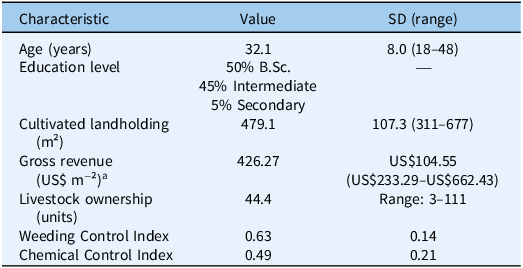
The study included 40 male-headed farm households across six wilayats of Dhofar (Table 1). Respondents were relatively young, with a mean age of 32.1 yr (SD = 8.0, range = 18 to 48). Education levels were comparatively high: 50% held a Bachelor of Science (B.Sc.) degree, 45% completed intermediate schooling, and 5% had secondary education, indicating a well-educated rural sample. The average cultivated area was 479.1 m² (SD = 107.3), with a mean gross revenue of US$426.27 m−² (SD = US$104.55). Livestock ownership averaged 44.4 units per household (range = 3 to 111), reflecting the region’s mixed crop–livestock systems. Weed management practices were mixed, with the parthenium control index averaging 0.63 (SD = 0.14) and the chemical control index averaging 0.49 (SD = 0.21), reflecting reliance on both manual and chemical interventions. These descriptive indicators serve as the baseline for analyzing the relationships between sociodemographic characteristics, farm revenue, and weed management strategies.
Descriptive characteristics of surveyed farming households in Dhofar, Oman (n = 40).

a OMR 1 = US$2.60.
Knowledge and Awareness of Parthenium
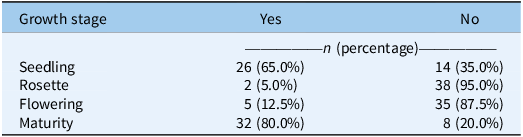
All farmers reported being able to identify parthenium; however, recognition varied across different growth stages (Table 2). Recognition was highest at maturity (80%) and at the seedling stage (65%), while only 5% and 12.5% could identify the weed at the rosette and flowering stages, respectively. Limited recognition of parthenium at early growth stages, particularly during the rosette phase, has important implications for timely management and effective control. Effective control is most successful when implemented at the rosette stage before flowering and seed set (Adkins and Shabbir Reference Adkins and Shabbir2014). Limited early-stage recognition delays interventions, increasing labor and chemical management costs. Comparable studies in Africa and Asia highlight weak early-stage recognition as a key driver of uncontrolled spread (Bajwa et al. 2019). These findings underscore the importance of farmer training and extension programs that prioritize early identification to mitigate both ecological and economic burdens.
Farmers’ recognition of Parthenium hysterophorus at different growth stages in Dhofar, Oman (n = 40).

Farmers’ Perceptions of Parthenium Spread and Introduction Pathways
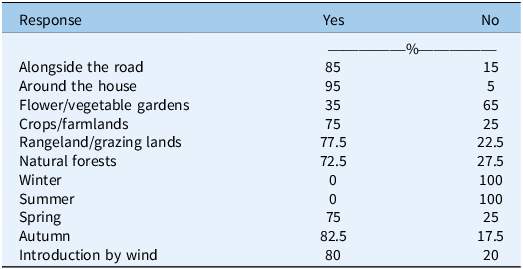
Farmers reported widespread presence of partheinum across multiple land-use types, including roadsides (85%), homesteads (95%), farmlands (75%), rangelands (77.5%), and natural forests (72.5%) (Table 3). Infestations were most frequently reported during spring (75%) and autumn (82.5%), reflecting the weed’s ability to exploit favorable climatic conditions (Adkins and Shabbir Reference Adkins and Shabbir2014; Bajwa et al. 2019). Recognition during winter and summer was minimal, in line with evidence that parthenium growth peaks under moderate temperature and moisture regimes (Shabbir et al. Reference Shabbir, Bajwa and Adkins2024b).
Reported occurrence of parthenium by location and season in Dhofar, Oman (n = 40).

Farmers identified wind (80%) and animal movement (80%) as the primary pathways for parthenium spread, while irrigation water was cited less frequently (17.5%) (Table 4). No respondents mentioned contaminated seeds, farm machinery, or ornamental plants, despite these being well-documented dispersal vectors in other regions (Bajwa et al. Reference Bajwa, Chauhan, Farooq, Shabbir and Adkins2016). This under-recognition may partly reflect limited exposure to extension materials and the often-invisible nature of seed contamination. Overall, these findings underscore the need for targeted extension efforts that address both visible and less apparent dispersal mechanisms to prevent further spread and strengthen IWM (Adkins and Shabbir Reference Adkins and Shabbir2014; Bajwa et al. Reference Bajwa, Chauhan, Farooq, Shabbir and Adkins2016).
Farmers’ perceptions of pathways for parthenium introduction in Dhofar, Oman.

Perceived Impacts of Parthenium on Livestock and Fodder
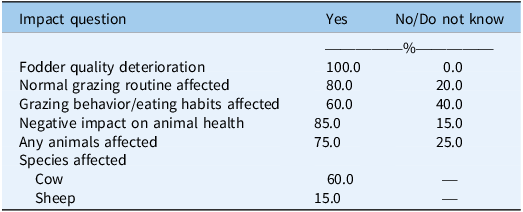
Beyond its spread across agricultural landscapes, parthenium was widely perceived to negatively affect livestock systems. Farmers unanimously reported reductions in fodder quality and disruptions to livestock production (Table 5). Altered grazing routines were observed in 80% of cases, changes in grazing behavior in 60%, and adverse effects on animal health in 85%. Overall, 75% of households indicated that their animals had already been affected, primarily cattle (60%) and sheep (15%). These findings are consistent with evidence from Ethiopia and India showing that partheinum reduces forage quality, alters feeding behavior, and causes toxicity-related health problems in livestock (Adkins and Shabbir Reference Adkins and Shabbir2014; Bajwa et al. 2019; Nigatu et al. Reference Nigatu, Hassen, Sharma and Adkins2010). The results highlight parthenium’s dual threat to both crop and livestock systems, reinforcing the importance of integrated management strategies in mixed farming environments.
Farmers’ perceptions of impacts of parthenium on livestock and fodder quality in Dhofar, Oman (n = 40).

Human Health Impacts of Parthenium
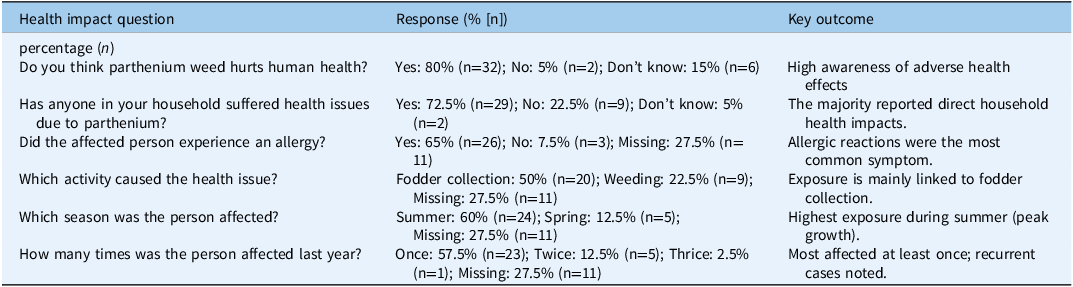
Most respondents (80%) perceived parthenium as harmful to human health, with 72.5% reporting that at least one household member had been affected (Table 6). Allergic reactions were most common (65%), often occurring during fodder collection (50%) and weeding (22.5%). Seasonal variation was notable, with most cases occurring during summer (60%), consistent with parthenium’s peak growth period. Recurrent exposures were reported by 57.5% of households. These findings are consistent with global evidence linking parthenium to dermatitis, respiratory issues, and chronic allergies (Adkins and Shabbir Reference Adkins and Shabbir2014; Shabbir et al. Reference Shabbir, Bajwa and Adkins2024a, Reference Shabbir, Bajwa, Mao, Kezar, Dorji and Adkins2024b). This emphasizes the occupational health risks for farmers and the need to integrate human health considerations into weed management programs.
Reported human health impacts associated with parthenium among surveyed households in Dhofar, Oman (n = 40).

Correlation of Crop Yields and Parthenium Detection Timing
Correlation analysis revealed significant associations between crop yields and the timing of parthenium detection (Table 7). Wheat yield was positively correlated with parthenium detection in sugarcane (r = 0.523, P < 0.05), potato (r = 0.564, P < 0.05), pea (r = 0.594, P < 0.05), and tomato (r = 0.575, P < 0.01). Potato yield correlated with tomato detection (r = 0.875, P < 0.01), and tomato yield correlated with detection in potato (r = 0.502, P < 0.01) and pea fields (r = 0.793, P < 0.01). These patterns suggest that delayed recognition increases the risk of yield losses and that infestations in one crop can influence management in others, consistent with the interdependence of mixed farming systems in Dhofar. These findings reinforce the importance of early-stage recognition and IWM (Adkins and Shabbir Reference Adkins and Shabbir2014; Shabbir et al. Reference Shabbir, Bajwa, Mao, Kezar, Dorji and Adkins2024a).
Correlations between average crop yields and timing of first parthenium recognition in Dhofar, Oman (n = 40). a

a Values are Pearson correlation coefficients. *P < 0.05; **P < 0.01 (one-tailed test). Only significant correlations (P < 0.05) are presented; all other correlations were not significant (P > 0.05).
Assessing Discriminant Validity
Discriminant validity was confirmed using the Fornell-Larcker criterion (Table 8). All constructs achieved AVE values greater than 0.5 (Chemical Control Cost Index = 0.856; parthenium appearance weight = 0.571; time needed for uprooting parthenium = 0.688), and the square root of each AVE exceeded correlations between constructs. For example, the square root of the AVE for the chemical control cost index was 0.925. At the same time, correlations with other constructs were negative (e.g., −0.345 with parthenium appearance weight), confirming that constructs measure distinct underlying concepts.
Discriminant validity assessment using the Fornell–Larcker criterion. a

a Bold diagonal values represent the square root of the average variance extracted (AVE) for each construct. Off-diagonal values are inter-construct correlations. Discriminant validity is supported when the square root of AVE for each construct exceeds its correlations with other constructs.
The Empirical Findings
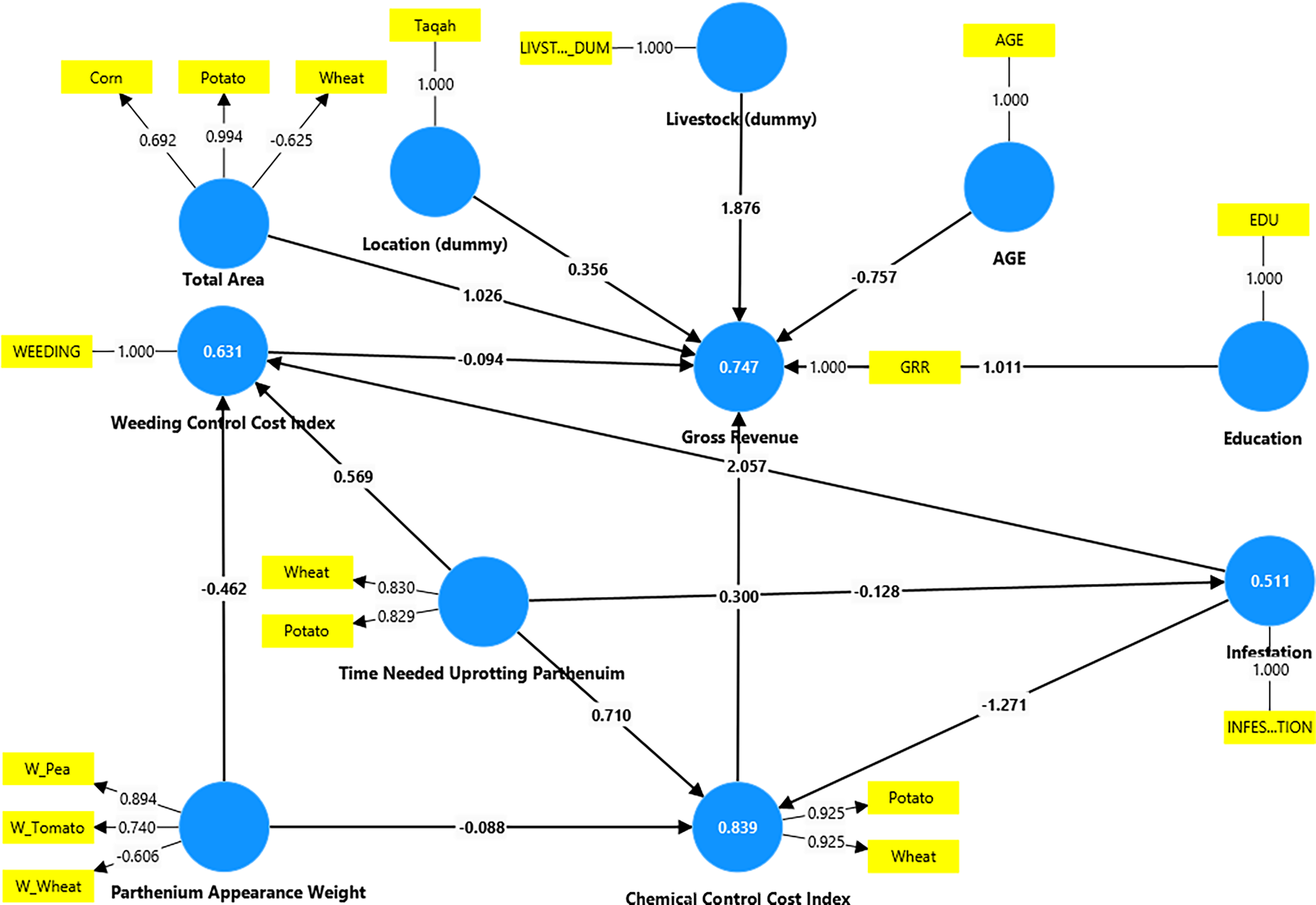
The structural equation model (Figure 3) illustrates how demographic characteristics, farm attributes, and weed management strategies interact to influence gross revenue. Education had a positive effect on income, whereas age had a negative effect, suggesting that younger, better-educated farmers adopt more effective practices. The total cultivated area contributed positively to revenue, while parthenium infestation reduced income both directly and indirectly by increasing labor and chemical costs. Time spent uprooting parthenium increased management costs but effectively reduced infestation levels. Crop-specific analysis revealed that peas were more vulnerable than wheat and tomatoes, highlighting the need for tailored management approaches.
Graphic illustration of the determinants of gross revenue based on PLS-SEM structural model results using survey data from farming households in Dhofar, Oman. Source: Authors’ analysis; PLS-SEM model analysis generated using SmartPLS 4 (Ringle et al. Reference Ringle, Wende and Becker2024).

Determinants of Gross Revenue
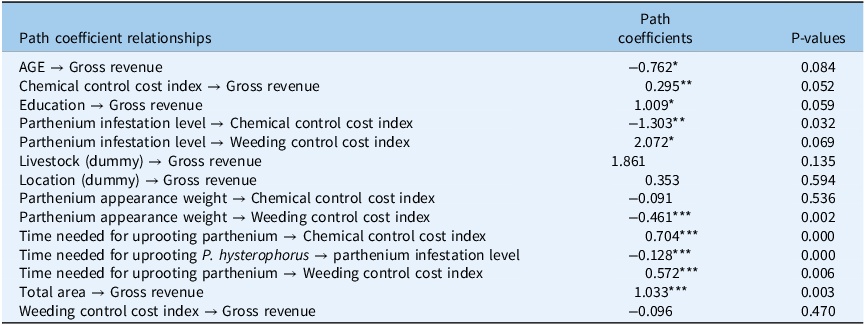
SEM analysis identified several key determinants of income (Table 9). Age was negatively associated with gross revenue (β = −0.762, P = 0.084), indicating that younger farmers were more productive. Education had a positive effect (β = 1.009, P = 0.059), highlighting the role of knowledge in implementing effective weed management and farm strategies (Paltasingh and Goyari Reference Paltasingh and Goyari2018). Cultivated area strongly contributed to revenue (β = 1.033, P = 0.003), consistent with economies of scale observed in smallholder farming (Carletto et al. Reference Carletto, Savastano and Zezza2013). Livestock ownership and location were not significant determinants. At the same time, chemical control expenditures had a positive effect on revenue (β = 0.295, P = 0.052), consistent with studies showing that herbicide use mitigates yield loss (Kaur et al. Reference Kaur, Aggarwal, Kumar and Dhiman2014; Nigatu et al. Reference Nigatu, Hassen, Sharma and Adkins2010). Manual weeding costs were not significant (β = −0.096, P = 0.470).
Standardized path coefficients for determinants of gross revenue and weed management cost indices for parthenium in Dhofar, Oman.

* P < 0.10.
** P < 0.05.
*** P < 0.01.
Determinants of Weed Management Costs
Parthenium hysterophorus infestation increased manual weeding costs (β = 2.072, P = 0.069) but reduced chemical control costs (β = −1.303, P = 0.032), reflecting substitution between labor and chemicals under resource constraints (Tamado and Milberg Reference Tamado and Milberg2008). Parthenium’s appearance negatively affected weeding costs (β = −0.461, P = 0.002), indicating that larger, more visible weeds are easier to remove. Time invested in uprooting increased both chemical (β = 0.704, P < 0.001) and manual control costs (β = 0.572, P = 0.006) but effectively reduced infestation (β = −0.128, P < 0.001). These findings underscore the trade-offs between labor intensity, cost, and ecological effectiveness, highlighting the importance of IWM, which combines manual and chemical methods (Adkins and Shabbir Reference Adkins and Shabbir2014; Bajwa et al. Reference Bajwa, Chauhan, Farooq, Shabbir and Adkins2016). Crop-specific effects showed peas were highly vulnerable (r = 0.894), while wheat and tomato were more resilient (−0.606 and −0.740, respectively), emphasizing the need for crop-tailored strategies (Kohli et al. Reference Kohli, Batish, Singh and Dogra2006).
Hypothesis Testing Results
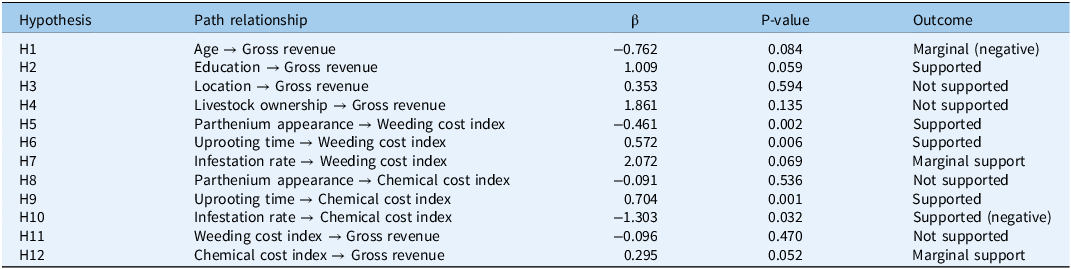
The results of the hypothesis testing based on the PLS-SEM analysis are summarized in Table 10. Education and age emerged as key determinants of farm performance. Education positively influenced gross revenue (H2: β = 1.009, P = 0.059), while age had a marginally negative effect (H1: β = −0.762, P = 0.084). Location (H3) and livestock ownership (H4) were not significant. Weed management effects were mixed: larger parthenium plants reduced weeding costs (H5: β = −0.461, P = 0.002), while longer uprooting times (H6: β = 0.572, P = 0.006) and higher infestations (H7: β = 2.072, P = 0.069) increased labor costs. For chemical control, uprooting time raised expenditures (H9: β = 0.704, P < 0.001), whereas infestation unexpectedly reduced them (H10: β = −1.303, P = 0.032), reflecting substitution from chemical to manual control under high infestation pressure. Weeding costs were not significant for gross income (H11: β = −0.096, P = 0.470), while chemical control costs were marginally associated with higher revenue (H12: β = 0.295, P = 0.052). Collectively, these results emphasize the critical role of farmer education, early detection, strategic chemical use, and IWM in mitigating parthenium’s economic impact on smallholder farms in Dhofar.
Hypothesis testing results from the partial least-squares structural equation modeling (PLS-SEM) analysis for parthenium in Dhofar, Oman.

Policy Implications
This study demonstrates that demographic factors, particularly education and age, significantly shape farmers’ capacity to manage parthenium and sustain agricultural income in Dhofar, Oman. Education was positively associated with gross revenue, while younger farmers were more effective in adopting modern practices. Larger cultivated areas increased income, and chemical control expenditures were marginally associated with higher revenues through yield protection. Manual uprooting, while labor-intensive and costly, effectively reduced infestation levels, highlighting the ecological value of sustained mechanical control. Crop-specific vulnerabilities underscore the importance of tailored management approaches, and reported impacts on livestock and human health indicate broader socioeconomic risks. Limited early-stage recognition and underappreciation of hidden dispersal pathways reveal critical knowledge gaps among farmers.
Policy recommendations include enhancing farmer training and extension services to improve early identification and integrated control, promoting crop-specific management strategies, and combining chemical and manual interventions to optimize ecological and economic outcomes. Such approaches are essential to safeguard rural livelihoods, food security, and resilience in arid, invasion-prone agricultural systems.
Data and code availability
Anonymized survey datasets and accompanying data dictionaries are available from the corresponding author upon reasonable request. The SmartPLS 4 project files (model specification and outputs) and data-processing scripts used to prepare analysis inputs are available from the corresponding author upon reasonable request.
Acknowledgments
The authors thank the farmers and landowners of Dhofar for their time and cooperation, as well as the staff of the Ministry of Agriculture, Fisheries, and Water Resources in Dhofar for their logistical support. We also appreciate the valuable feedback from colleagues at the College of Agricultural and Marine Sciences, Sultan Qaboos University. Generative artificial intelligence tools (ChatGPT, OpenAI) were used exclusively to enhance language clarity and manuscript organization. These tools were not used for data generation, analysis, or interpretation, and full responsibility for the scientific content remains with the authors.
Funding statement
Sultan Qaboos University supported this work under grant no. SR/AGR/CROP/24/02.
Competing interests
The authors declare no competing financial interests or personal relationships that could have influenced the work reported in this paper.
Ethics approval
All procedures involving human participants complied with institutional and national research ethics standards. Ethical approval was obtained from the College of Agricultural & Marine Sciences Research Ethics Committee, Sultan Qaboos University. Where formal review was not required, the committee confirmed a waiver on the basis that the study was non-interventional, anonymous, and minimal risk.
Consent to participate
Before each interview, enumerators explained the study objectives, the voluntary nature of participation, and confidentiality measures. Verbal informed consent was obtained from all participants, and unique codes were used in place of personal identifiers.
Consent for publication
Participants were informed that aggregate, de-identified results would be disseminated in academic outlets, and consent for the publication of such non-identifiable information was obtained. No images or personally identifiable data are published here.




 Open access

