










1 Introduction
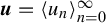
In 1968, Cobham [Reference Cobham11] conjectured that every number whose expansion in an integer base is an automatic sequence is either rational or transcendental [Reference Cobham11]. Recall that a sequence
$\boldsymbol u=\langle u_n\rangle _{n=0}^{\infty }$
 is k-automatic for
$k \geq 2$
is k-automatic for
$k \geq 2$
 if there is an automaton that outputs
$u_n$
if there is an automaton that outputs
$u_n$
 when given a base-k representation of n as input. A k-automatic sequence can equivalently be characterised as the fixed point of a k-uniform morphism, that is, a morphism on a finite alphabet that maps each letter to a string of length k. The transcendence of irrational automatic numbers over an integer base was proven in 2004 by Adamczewski, Bugeaud and Luca [Reference Adamczewski, Bugeaud and Luca3], using Schlickewei’s p-adic subspace theorem.
In [Reference Cobham11], Cobham also stated a more general version of his conjecture, in which the rational–transcendental dichotomy is posited for numbers whose expansion in an integer base is given by a morphism of exponential growth. Recall here that a primitive morphism has exponential growth if its expansion factor (the Perron–Frobenius eigenvalue of its characteristic matrix) is strictly greater than one. The expansion factor of a k-uniform morphism is k and, hence, such morphisms have exponential growth for
$k\geq 2$
 . This second form of Cobham’s conjecture was confirmed in [Reference Adamczewski, Cassaigne and Le Gonidec4] using a construction similar to that used in the case of uniform morphisms. It is noted in [Reference Adamczewski and Bugeaud1] that the further extension to words generated by morphisms of merely polynomial growth encompasses several other longstanding open problems in transcendence theory.
Another natural generalisation of Cobham’s conjecture involves a formulation for algebraic-number bases as opposed to rational integer bases: for
$b\geq 2$
 ,
$\boldsymbol {u} \in \{0,1,\ldots , b-1\}^\omega $
,
$\boldsymbol {u} \in \{0,1,\ldots , b-1\}^\omega $
 a fixed point of a morphism of exponential growth and
$\beta $
a fixed point of a morphism of exponential growth and
$\beta $
 an algebraic number,
$|\beta |>1$
an algebraic number,
$|\beta |>1$
 , the number
$[\![ \boldsymbol {u}]\!] _{\beta }:=\sum _{n=0}^\infty ({u_n}/{\beta ^n})$
, the number
$[\![ \boldsymbol {u}]\!] _{\beta }:=\sum _{n=0}^\infty ({u_n}/{\beta ^n})$
 either lies in
$\mathbb Q(\beta )$
either lies in
$\mathbb Q(\beta )$
 or is transcendental. Such a result was recently obtained in the case of uniform morphisms by Adamczewski and Faverjon [Reference Adamczewski and Faverjon5] using Mahler’s method. Beyond the case of uniform morphisms, transcendence results for morphic words over algebraic bases are more restricted. However, the techniques of [Reference Adamczewski and Bugeaud1] can be extended to prove that for a word
$\boldsymbol u$
or is transcendental. Such a result was recently obtained in the case of uniform morphisms by Adamczewski and Faverjon [Reference Adamczewski and Faverjon5] using Mahler’s method. Beyond the case of uniform morphisms, transcendence results for morphic words over algebraic bases are more restricted. However, the techniques of [Reference Adamczewski and Bugeaud1] can be extended to prove that for a word
$\boldsymbol u$
 and algebraic number
$\beta $
and algebraic number
$\beta $
 , subject to a non-trivial inequality between the height of
$\beta $
, subject to a non-trivial inequality between the height of
$\beta $
 and a measure of the periodicity of
$\boldsymbol u$
and a measure of the periodicity of
$\boldsymbol u$
 , called the Diophantine exponent, the number
$[\![ \boldsymbol {u}]\!] _{\beta }$
, called the Diophantine exponent, the number
$[\![ \boldsymbol {u}]\!] _{\beta }$
 is either transcendental or lies in
$\mathbb {Q}(\beta )$
is either transcendental or lies in
$\mathbb {Q}(\beta )$
 ; see [Reference Adamczewski and Bugeaud2, Theorem 1]. This result can be applied in the case where
$\boldsymbol u$
; see [Reference Adamczewski and Bugeaud2, Theorem 1]. This result can be applied in the case where
$\boldsymbol u$
 is the fixed point of a morphism of exponential growth and
$\beta $
is the fixed point of a morphism of exponential growth and
$\beta $
 has height bounded above by a quantity determined by
$\boldsymbol u$
has height bounded above by a quantity determined by
$\boldsymbol u$
 .
.
The object of this paper is to make further progress on the extension of Cobham’s conjecture to algebraic-number bases. We focus on morphisms whose expansion factor is a Pisot number, that is, an algebraic integer whose Galois conjugates all have absolute value strictly less than one. Pisot morphisms are of particular interest in view of the Pisot substitution conjecture. This says that the shift dynamical system associated with an irreducible Pisot morphism has pure point spectrum (see [Reference Akiyama, Barge, Berthé, Lee, Siegel, Kellendonk, Lenz and Savinien6, Reference Host and Parreau17] and [Reference Queffélec26, Ch. 6.3]) or, equivalently, is measurably isomorphic to a translation on a compact abelian group equipped with the Haar measure [Reference Glasner15, Theorem 9.3]. Notable positive examples of this conjecture include the Fibonacci morphism, whose associated shift dynamical system arises as the coding of a rotation on the unit circle, and the Tribonacci morphism, whose associated dynamical system arises as the coding, via the Rauzy fractal, of a translation on the two-torus [Reference Arnoux and Rauzy7, Reference Rauzy27].
One of our main contributions is to exhibit a link between the respective conjectures of Pisot and Cobham. This is established via a combinatorial criterion on an infinite word called echoing, given in Definition 3.1. In Theorem 5.1, we show that if
$\boldsymbol u \in \{0,\ldots ,b-1\}^{\omega }$
 is echoing, then for all algebraic numbers
$\beta $
is echoing, then for all algebraic numbers
$\beta $
 , either
$[\![ \boldsymbol {u}]\!] _{\beta }$
, either
$[\![ \boldsymbol {u}]\!] _{\beta }$
 is transcendental or it lies in the field
$\mathbb Q(\beta )$
is transcendental or it lies in the field
$\mathbb Q(\beta )$
 . We furthermore give a sufficient condition for a word to be echoing in terms of Livshits’ balanced-pair algorithm: namely, we show that a morphic word on which this algorithm terminates with coincidence is echoing. It is known that the algorithm terminates with coincidence for any irreducible Pisot morphism on a binary alphabet. Moreover, for an irreducible Pisot morphism on an arbitrary alphabet, the algorithm terminates with coincidence if and only if the morphism has pure discrete spectrum [Reference Akiyama, Barge, Berthé, Lee, Siegel, Kellendonk, Lenz and Savinien6, Theorem 5.3]. We conclude that all words defined by irreducible Pisot morphisms on a binary alphabet are echoing and hence obey (the algebraic-number-base extension of) Cobham’s conjecture. Assuming the Pisot conjecture, words defined by irreducible Pisot morphisms on arbitrary finite alphabets are also echoing and thereby obey Cobham’s conjecture.
We further propose in Definition 6.1 a strengthening of the echoing condition, called strongly echoing, and show that if
$\boldsymbol u \in \{0,\ldots ,b-1\}^{\omega }$
 is strongly echoing, then
$[\![ \boldsymbol {u}]\!] _{\beta }$
is strongly echoing, then
$[\![ \boldsymbol {u}]\!] _{\beta }$
 is transcendental, that is, we eliminate the eventuality that
$[\![ \boldsymbol {u}]\!] _{\beta }$
is transcendental, that is, we eliminate the eventuality that
$[\![ \boldsymbol {u}]\!] _{\beta }$
 lies in
$\mathbb Q(\beta )$
lies in
$\mathbb Q(\beta )$
 . By a combinatorial analysis of balanced pairs, we show that for all
$k\geq 2$
. By a combinatorial analysis of balanced pairs, we show that for all
$k\geq 2$
 , the k-Bonacci word is strongly echoing and hence that for any such word
$\boldsymbol u$
, the k-Bonacci word is strongly echoing and hence that for any such word
$\boldsymbol u$
 , the number
$[\![ \boldsymbol {u}]\!] _{\beta }$
, the number
$[\![ \boldsymbol {u}]\!] _{\beta }$
 is transcendental.
The present paper is a development of the conference paper [Reference Kebis, Luca, Ouaknine, Scoones and Worrell19]. The combinatorial transcendence conditions presented below are based on a condition introduced therein and in the MSc thesis [Reference Kebis18]. These conditions in turn build on ideas introduced in [Reference Luca, Ouaknine and Worrell24] to prove transcendence results for Sturmian sequences. In the present paper, we have divided the notion of echoing sequence into weak and strong variants, highlighting the importance of the non-vanishing condition in the formulation of the latter. The applications to Pisot morphisms in §4, including the connection with the Pisot conjecture, and k-Bonacci sequences in §7 did not appear in [Reference Kebis, Luca, Ouaknine, Scoones and Worrell19].
2 Preliminaries
2.1 Morphic sequences
Consider an alphabet
$\Sigma = \{0,\ldots ,k-1\}$
 . We endow the set
$\Sigma ^{\omega }$
. We endow the set
$\Sigma ^{\omega }$
 of infinite words over
$\Sigma $
of infinite words over
$\Sigma $
 with the product topology, where
$\Sigma $
with the product topology, where
$\Sigma $
 has the discrete topology. The shift map
$\sigma :\Sigma ^{\omega }\rightarrow \Sigma ^{\omega }$
has the discrete topology. The shift map
$\sigma :\Sigma ^{\omega }\rightarrow \Sigma ^{\omega }$
 is defined by
$\sigma (u_0u_1u_2 \cdots ) = u_1u_2u_3\cdots $
is defined by
$\sigma (u_0u_1u_2 \cdots ) = u_1u_2u_3\cdots $
 .
.
A morphism is a homomorphism
$\varphi : \Sigma ^+ \rightarrow \Sigma ^+$
 of the free semigroup
$\Sigma ^+$
of the free semigroup
$\Sigma ^+$
 . The incidence matrix
$M_\varphi \in \mathbb N^{k\times k}$
. The incidence matrix
$M_\varphi \in \mathbb N^{k\times k}$
 of
$\varphi $
of
$\varphi $
 is defined by taking
$(M_\varphi )_{i,j}$
is defined by taking
$(M_\varphi )_{i,j}$
 to be the number of occurrences of the symbol j in
$\varphi (i)$
to be the number of occurrences of the symbol j in
$\varphi (i)$
 . We say that
$\varphi $
. We say that
$\varphi $
 is primitive if some power of
$M_\varphi $
is primitive if some power of
$M_\varphi $
 is positive and we say that
$\varphi $
is positive and we say that
$\varphi $
 has exponential growth if the spectral radius
$\rho (M_{\varphi })$
has exponential growth if the spectral radius
$\rho (M_{\varphi })$
 of
$M_\varphi $
of
$M_\varphi $
 is strictly greater than one. If
$M_\varphi $
is strictly greater than one. If
$M_\varphi $
 is primitive then, by the Perron–Frobenius theorem, its spectral radius is a strictly positive real eigenvalue and all other eigenvalues have absolute value strictly less than
$\rho (M_{\varphi })$
is primitive then, by the Perron–Frobenius theorem, its spectral radius is a strictly positive real eigenvalue and all other eigenvalues have absolute value strictly less than
$\rho (M_{\varphi })$
 . We say that
$\varphi $
. We say that
$\varphi $
 is irreducible if its characteristic polynomial is irreducible over
$\mathbb Q$
is irreducible if its characteristic polynomial is irreducible over
$\mathbb Q$
 . We define
$\varphi $
. We define
$\varphi $
 to be of Pisot type (or simply Pisot) if
$\rho (M_{\varphi })$
to be of Pisot type (or simply Pisot) if
$\rho (M_{\varphi })$
 is a Pisot number, that is, all its Galois conjugates have absolute value strictly less than one.
Let
$\varphi $
 be a primitive morphism over alphabet
$\Sigma $
be a primitive morphism over alphabet
$\Sigma $
 . Assume that
$\varphi $
. Assume that
$\varphi $
 is prolongable, that is,
$\varphi (0) = 0u$
is prolongable, that is,
$\varphi (0) = 0u$
 for some word
$u \in \Sigma ^+$
for some word
$u \in \Sigma ^+$
 . Then, the sequence
$(\varphi ^n(0))_{n\geq 0}$
. Then, the sequence
$(\varphi ^n(0))_{n\geq 0}$
 of finite words converges to an infinite word
$\boldsymbol u$
of finite words converges to an infinite word
$\boldsymbol u$
 that is a fixed point of
$\varphi $
that is a fixed point of
$\varphi $
 . The word
$\boldsymbol u$
. The word
$\boldsymbol u$
 is uniformly recurrent, that is, each finite factor occurs infinitely often and there is an upper bound on the length of the gaps between every pair of successive occurrences of the factor.
We refer to the shift dynamical system
$(X_\varphi ,\sigma )$
 , where
$X_\varphi $
, where
$X_\varphi $
 is the topological closure of the orbit of
$\boldsymbol u$
is the topological closure of the orbit of
$\boldsymbol u$
 under the shift map and, by a slight abuse of notation,
$\sigma $
under the shift map and, by a slight abuse of notation,
$\sigma $
 denotes the restriction of the shift map to
$X_\varphi $
denotes the restriction of the shift map to
$X_\varphi $
 . For a primitive morphism, this dynamical system has a unique ergodic measure
$\mu $
. For a primitive morphism, this dynamical system has a unique ergodic measure
$\mu $
 and we have a unitary operator
$U_\varphi : L^2(X_\varphi ,\mu ) \rightarrow L^2(X_\varphi ,\mu )$
and we have a unitary operator
$U_\varphi : L^2(X_\varphi ,\mu ) \rightarrow L^2(X_\varphi ,\mu )$
 , defined by
$U_\varphi (f)=f\circ \sigma $
, defined by
$U_\varphi (f)=f\circ \sigma $
 for f a square-integrable function on the measure space
$(X_\varphi ,\mu )$
for f a square-integrable function on the measure space
$(X_\varphi ,\mu )$
 . The morphism
$\varphi $
. The morphism
$\varphi $
 is said to have pure discrete spectrum if the space
$L^2(X_\varphi ,\mu )$
is said to have pure discrete spectrum if the space
$L^2(X_\varphi ,\mu )$
 has a basis of eigenvectors of
$U_\varphi $
has a basis of eigenvectors of
$U_\varphi $
 .
.
2.2 Number theory
Let K be a number field of degree d over
$\mathbb Q$
 and let
$M(K)$
and let
$M(K)$
 be the set of places of K. We divide
$M(K)$
be the set of places of K. We divide
$M(K)$
 into the collection of Archimedean places, which are determined either by an embedding of K in
$\mathbb {R}$
into the collection of Archimedean places, which are determined either by an embedding of K in
$\mathbb {R}$
 or a complex-conjugate pair of embeddings of K in
$\mathbb {C}$
or a complex-conjugate pair of embeddings of K in
$\mathbb {C}$
 , and the set of non-Archimedean places, which are determined by prime ideals in the ring
$\mathcal {O}_K$
, and the set of non-Archimedean places, which are determined by prime ideals in the ring
$\mathcal {O}_K$
 of integers of K.
For
$a \in K$
 and
$v \in M(K)$
and
$v \in M(K)$
 , define the absolute value
$|a|_v$
, define the absolute value
$|a|_v$
 as follows:
$|a|_v := |\sigma (a)|^{1/d}$
as follows:
$|a|_v := |\sigma (a)|^{1/d}$
 if v corresponds to a real embedding
$\sigma :K\rightarrow \mathbb {R}$
if v corresponds to a real embedding
$\sigma :K\rightarrow \mathbb {R}$
 ;
$|a|_v := |\sigma (a)|^{2/d}$
;
$|a|_v := |\sigma (a)|^{2/d}$
 if v corresponds to a complex-conjugate pair of embeddings
$\sigma ,\overline {\sigma }:K \rightarrow \mathbb {C}$
if v corresponds to a complex-conjugate pair of embeddings
$\sigma ,\overline {\sigma }:K \rightarrow \mathbb {C}$
 ;
$|a|_v := N(\mathfrak {p})^{-\mathrm {ord}_{\mathfrak {p}}(a)/d}$
;
$|a|_v := N(\mathfrak {p})^{-\mathrm {ord}_{\mathfrak {p}}(a)/d}$
 if v corresponds to a prime ideal
$\mathfrak {p}$
if v corresponds to a prime ideal
$\mathfrak {p}$
 in
$\mathcal {O}$
in
$\mathcal {O}$
 and
$\mathrm {ord}_{\mathfrak {p}}(a)$
and
$\mathrm {ord}_{\mathfrak {p}}(a)$
 is the order to which
$\mathfrak {p}$
is the order to which
$\mathfrak {p}$
 divides the ideal
$a\mathcal {O}$
divides the ideal
$a\mathcal {O}$
 . With the above definitions, we have the product formula:
$\prod _{v \in M(K)} |a|_v = 1$
. With the above definitions, we have the product formula:
$\prod _{v \in M(K)} |a|_v = 1$
 for all
$a \in K^\times $
for all
$a \in K^\times $
 . Given a set of places
$S\subseteq M(K)$
. Given a set of places
$S\subseteq M(K)$
 , the ring
$\mathcal {O}_S$
, the ring
$\mathcal {O}_S$
 of S-integers is the subring comprising all
$a \in K$
of S-integers is the subring comprising all
$a \in K$
 such that
$|a|_v \leq 1$
such that
$|a|_v \leq 1$
 for all non-Archimedean places
$v\not \in S$
for all non-Archimedean places
$v\not \in S$
 .
.
For
$m\geq 1$
 , the Weil height of the projective point
$\boldsymbol {a}=[a_0 : a_1 : \cdots : a_m] \in \mathbb {P}^m(K)$
, the Weil height of the projective point
$\boldsymbol {a}=[a_0 : a_1 : \cdots : a_m] \in \mathbb {P}^m(K)$
 is
is

This definition is independent of the choice of the field K containing
$a_0,\ldots ,a_m$
 . We define the height
$H(a)$
. We define the height
$H(a)$
 of
$a \in K$
of
$a \in K$
 to be the height
$H([1 : a])$
to be the height
$H([1 : a])$
 of the corresponding point in
$\mathbb {P}^1(K)$
of the corresponding point in
$\mathbb {P}^1(K)$
 . For a non-zero Laurent polynomial
$f = x^n \sum _{i=0}^m a_i x^i \in K[x,x^{-1}]$
. For a non-zero Laurent polynomial
$f = x^n \sum _{i=0}^m a_i x^i \in K[x,x^{-1}]$
 , where
$m\geq 1$
, where
$m\geq 1$
 and
$n\in \mathbb Z$
and
$n\in \mathbb Z$
 , following [Reference Lenstra20], we define its height
$H(f)$
, following [Reference Lenstra20], we define its height
$H(f)$
 to be the height
$H([a_0 : \cdots : a_m])$
to be the height
$H([a_0 : \cdots : a_m])$
 of the vector of coefficients.
The following special case of the p-adic subspace theorem of Schlickewei [Reference Schlickewei28] is one of the main ingredients of our approach. (We formulate the special case of the subspace theorem in which all but one of the linear forms are coordinate variables.)
Theorem 2.1. Let
$S \subseteq M(K)$
 be a finite set of places of K that contains all Archimedean places. Let
$v_0 \in S$
be a finite set of places of K that contains all Archimedean places. Let
$v_0 \in S$
 be a distinguished place and choose a continuation of
$|\cdot |_{v_0}$
be a distinguished place and choose a continuation of
$|\cdot |_{v_0}$
 to
$\overline {\mathbb Q}$
to
$\overline {\mathbb Q}$
 , also denoted
$|\cdot |_{v_0}$
, also denoted
$|\cdot |_{v_0}$
 . Given
$m\geq 2$
. Given
$m\geq 2$
 , let
$L(x_1,\ldots ,x_{m})$
, let
$L(x_1,\ldots ,x_{m})$
 be a linear form with algebraic coefficients and let
$i_0 \in \{1,\ldots ,m\}$
be a linear form with algebraic coefficients and let
$i_0 \in \{1,\ldots ,m\}$
 be a distinguished index such that
$x_{i_0}$
be a distinguished index such that
$x_{i_0}$
 has non-zero coefficient in
$\overline {\mathbb Q}$
has non-zero coefficient in
$\overline {\mathbb Q}$
 . Then, for any
$\varepsilon>0$
. Then, for any
$\varepsilon>0$
 , the set of solutions
$\boldsymbol {a}=(a_1,\ldots ,a_m) \in (\mathcal {O}_S)^m$
, the set of solutions
$\boldsymbol {a}=(a_1,\ldots ,a_m) \in (\mathcal {O}_S)^m$
 of the inequality

is contained in a finite union of proper linear subspaces of
$K^m$
 .
.
We need the following proposition about roots of univariate polynomials.
Proposition 2.1. [Reference Lenstra20, Proposition 2.3]
Let
$f \in K[x,x^{-1}]$
 be a Laurent polynomial with at most
$k+1$
be a Laurent polynomial with at most
$k+1$
 terms. Assume that f can be written as the sum of two polynomials g and h, where every monomial of g has degree at most
$d_0$
terms. Assume that f can be written as the sum of two polynomials g and h, where every monomial of g has degree at most
$d_0$
 and every monomial of h has degree at least
$d_1$
and every monomial of h has degree at least
$d_1$
 . Let
$\beta $
. Let
$\beta $
 be a root of f that is not a root of unity. If
$d_1-d_0> ({\log (k \, H(f)))}/({\log H(\beta ) })$
be a root of f that is not a root of unity. If
$d_1-d_0> ({\log (k \, H(f)))}/({\log H(\beta ) })$
 , then
$\beta $
, then
$\beta $
 is a common root of g and h.
We also need the following separation bound [Reference Waldschmidt30, Ch. 3].
Proposition 2.2. Let
$f \in \mathbb Z[x]$
 have degree d and let L be the sum of the absolute value of its coefficients. If
$\beta \in \overline {\mathbb Q}$
have degree d and let L be the sum of the absolute value of its coefficients. If
$\beta \in \overline {\mathbb Q}$
 is not a root of f, then

where c is a constant that depends only on the height of
$\beta $
 .
.
3 Echoing words
In this section, we present the main definition of the paper—the notion of echoing word. To motivate this, we first present an informal analysis of periodicity properties of the Fibonacci and Tribonacci words, which are perhaps the two best-known examples of Pisot morphic words.
3.1 The Fibonacci word
Let
$\Sigma =\{0,1\}$
 and consider the morphism
$\varphi :\Sigma ^+\rightarrow \Sigma ^+$
and consider the morphism
$\varphi :\Sigma ^+\rightarrow \Sigma ^+$
 given by
$\varphi (0)=01$
given by
$\varphi (0)=01$
 and
$\varphi (1)=0$
and
$\varphi (1)=0$
 . The Fibonacci word
$\boldsymbol u_{\mathrm {Fib}} \in \Sigma ^\omega $
. The Fibonacci word
$\boldsymbol u_{\mathrm {Fib}} \in \Sigma ^\omega $
 is the morphic word

The Fibonacci word is not periodic and, hence,
$\boldsymbol u_{\mathrm {Fib}}$
 is not equal to any of its tails
$\sigma ^n(\boldsymbol u_{\mathrm {Fib}})$
is not equal to any of its tails
$\sigma ^n(\boldsymbol u_{\mathrm {Fib}})$
 for
$n>0$
for
$n>0$
 . However, if the shift n is well chosen, then the mismatches between
$\boldsymbol u_{\mathrm {Fib}}$
. However, if the shift n is well chosen, then the mismatches between
$\boldsymbol u_{\mathrm {Fib}}$
 and
$\sigma ^n(\boldsymbol u_{\mathrm {Fib}})$
and
$\sigma ^n(\boldsymbol u_{\mathrm {Fib}})$
 are sparse. This intuition will be formalised in the definition of echoing word. A good choice of shifts are the elements of the sequence
$\langle 1,2,3,5,8,\ldots \rangle $
are sparse. This intuition will be formalised in the definition of echoing word. A good choice of shifts are the elements of the sequence
$\langle 1,2,3,5,8,\ldots \rangle $
 of Fibonacci numbers: for example, vertically aligning
$\boldsymbol u_{\mathrm {Fib}}$
of Fibonacci numbers: for example, vertically aligning
$\boldsymbol u_{\mathrm {Fib}}$
 and
$\sigma ^5(\boldsymbol u_{\mathrm {Fib}})$
and
$\sigma ^5(\boldsymbol u_{\mathrm {Fib}})$
 , and shading mismatches, we have

Observe that each mismatch involves a factor 10 of
$\boldsymbol u_{\mathrm {Fib}}$
 for which the corresponding factor in
$\sigma ^5(\boldsymbol u_{\mathrm {Fib}})$
for which the corresponding factor in
$\sigma ^5(\boldsymbol u_{\mathrm {Fib}})$
 is the reverse, 01. In fact, we see the same phenomenon for all shifts of
$\boldsymbol u_{\mathrm {Fib}}$
is the reverse, 01. In fact, we see the same phenomenon for all shifts of
$\boldsymbol u_{\mathrm {Fib}}$
 by an element of the Fibonacci sequence. Furthermore, it turns out that for each successive shift, the distance between the mismatched factors increases. This is formalised below as the expanding gaps property.
3.2 The Tribonacci word
The following example illustrates some more complicated phenomena than the Fibonacci case. Let
$\Sigma =\{0,1,2\}$
 and consider the morphism
$\varphi :\Sigma ^+\rightarrow \Sigma ^+$
and consider the morphism
$\varphi :\Sigma ^+\rightarrow \Sigma ^+$
 given by
$\varphi (0)=01$
given by
$\varphi (0)=01$
 ,
$\varphi (1)=02$
,
$\varphi (1)=02$
 and
$\varphi (2)=0$
and
$\varphi (2)=0$
 . The Tribonacci word
$\boldsymbol u_{\mathrm {Tri}} \in \Sigma ^\omega $
. The Tribonacci word
$\boldsymbol u_{\mathrm {Tri}} \in \Sigma ^\omega $
 is the morphic word

Associated with the Tribonacci word, we have the sequence
$\langle t_n \rangle _{n=0}^\infty $
 of Tribonacci numbers, defined by the recurrence
$t_n = t_{n-1}+t_{n-2}+t_{n-3}$
of Tribonacci numbers, defined by the recurrence
$t_n = t_{n-1}+t_{n-2}+t_{n-3}$
 and initial conditions
$t_0=1, t_1=2,t_2=4$
and initial conditions
$t_0=1, t_1=2,t_2=4$
 . It is easy to see that the word
$\varphi ^n(0)$
. It is easy to see that the word
$\varphi ^n(0)$
 has length
$t_n$
has length
$t_n$
 for all
$n\in \mathbb {N}$
for all
$n\in \mathbb {N}$
 .
.
In the spirit of our analysis of the Fibonacci word, we match the Tribonacci word against shifts of itself by elements of the Tribonacci sequence
$\langle 1,2,4,7,13,24,\ldots \rangle $
 . For example, comparing
$\boldsymbol u_{\mathrm {Tri}}$
. For example, comparing
$\boldsymbol u_{\mathrm {Tri}}$
 and
$\sigma ^{13}(\boldsymbol u_{\mathrm {Tri}})$
and
$\sigma ^{13}(\boldsymbol u_{\mathrm {Tri}})$
 , we have

Notice that the shaded mismatches appear as a fixed set of factors (either 10, 20 or 102) in
$\boldsymbol u_{\mathrm {Tri}}$
 that get reversed in
$ \sigma ^{13}(\boldsymbol u_{\mathrm {Tri}})$
that get reversed in
$ \sigma ^{13}(\boldsymbol u_{\mathrm {Tri}})$
 . Unlike with the Fibonacci word, this time, the factors may appear close to each other. Nevertheless, by suitably grouping neighbouring mismatch factors, we recover a form of the expanding gaps property, and we are moreover able to show that the mismatches between
$\boldsymbol u_{\mathrm {Tri}}$
. Unlike with the Fibonacci word, this time, the factors may appear close to each other. Nevertheless, by suitably grouping neighbouring mismatch factors, we recover a form of the expanding gaps property, and we are moreover able to show that the mismatches between
$\boldsymbol u_{\mathrm {Tri}}$
 and its shifts are relatively sparse.
3.3 Definition of echoing words
Drawing on the respective examples of the Fibonacci and Tribonacci words, we give in this section the formal definition of echoing word. To this end, we introduce the following notation and terminology. Given two non-empty intervals
$I,J \subseteq \mathbb {N}$
 , write
$I<J$
, write
$I<J$
 if
$a<b$
if
$a<b$
 for all
$a\in I$
for all
$a\in I$
 and
$b\in J$
and
$b\in J$
 , and define the distance of I and J to be
$d(I,J):=\min \{|a-b|:a\in I,b\in J\}$
, and define the distance of I and J to be
$d(I,J):=\min \{|a-b|:a\in I,b\in J\}$
 . Furthermore, define the density of a non-empty finite set
$S\subseteq \mathbb N$
. Furthermore, define the density of a non-empty finite set
$S\subseteq \mathbb N$
 to be
$\mathrm {den}(S):={|S|}/{\max (S)}$
to be
$\mathrm {den}(S):={|S|}/{\max (S)}$
 . For two functions
$f(n)$
. For two functions
$f(n)$
 and
$g(n)$
and
$g(n)$
 , we write
$f\ll g$
, we write
$f\ll g$
 if there exist positive constants
$n_0,c_1$
if there exist positive constants
$n_0,c_1$
 such that for all
$n\geq n_0$
such that for all
$n\geq n_0$
 , we have
$f(n) \leq ~c_1 g(n)$
, we have
$f(n) \leq ~c_1 g(n)$
 . We also write
$f\asymp g$
. We also write
$f\asymp g$
 if both
$f\ll g$
if both
$f\ll g$
 and
$g\ll f$
and
$g\ll f$
 .
.
Definition 3.1. Let
$\Sigma :=\{0,\ldots ,b-1\}$
 be a finite alphabet. An infinite word
$\boldsymbol {u}=u_0u_1u_2\cdots \in \Sigma ^{\omega }$
be a finite alphabet. An infinite word
$\boldsymbol {u}=u_0u_1u_2\cdots \in \Sigma ^{\omega }$
 is said to be echoing if for all
$\varepsilon>0$
is said to be echoing if for all
$\varepsilon>0$
 , there exist sequences of integers
$r_n,s_n$
, there exist sequences of integers
$r_n,s_n$
 and non-empty intervals
$I_{n,j}$
and non-empty intervals
$I_{n,j}$
 indexed by
$n\in \mathbb N$
indexed by
$n\in \mathbb N$
 , such that
$0\leq r_n<s_n$
, such that
$0\leq r_n<s_n$
 and
$\{0\}=I_{n,0}<I_{n,1} < I_{n,2} < \cdots $
and
$\{0\}=I_{n,0}<I_{n,1} < I_{n,2} < \cdots $
 , satisfying the following properties:
-
(1) (covering) $\{ i \in \mathbb N : u_{i+s_n} \neq u_{i+r_n} \} \subseteq \bigcup _{j=1}^\infty I_{n,j}$
 ;
; -
(2) (density) $\mathrm {den}(\bigcup _{j=1}^m I_{n,j} ) \leq \varepsilon $
for
$\min (m,n)$
sufficiently large; -
(3) (expanding gaps) $\lim _{n\rightarrow \infty }(s_n-r_n){\kern-1pt}={\kern-1pt}\infty $
and for all
$j{\kern-1pt}\in{\kern-1pt} \mathbb N$
, we have
$d(I_{n,j},I_{n,j+1}) \gg s_n$
, with the implied constant being independent of j.


The notion of echoing word concerns the alignment of the suffixes
$\sigma ^{r_n}(\boldsymbol u)$
 and
$\sigma ^{s_n}(\boldsymbol u)$
and
$\sigma ^{s_n}(\boldsymbol u)$
 of
$\boldsymbol u$
of
$\boldsymbol u$
 , where
$s_n-r_n$
, where
$s_n-r_n$
 tends to infinity. The conditions imply that the set of discrepancies between these two suffixes is contained in a union of intervals of asymptotic density at most
$\varepsilon $
tends to infinity. The conditions imply that the set of discrepancies between these two suffixes is contained in a union of intervals of asymptotic density at most
$\varepsilon $
 and such that the distance between successive intervals grows linearly with
$s_n$
and such that the distance between successive intervals grows linearly with
$s_n$
 .
.
We show that the Fibonacci and Tribonacci words are both echoing. As suggested by the examples above, in the case of the Fibonacci word, a suitable choice of the sequence
$\langle s_n\rangle _{n=0}^\infty $
 of shifts is the sequence of Fibonacci numbers, while in the case of the Tribonacci word, it is the sequence of Tribonacci numbers (and in both cases,
$\langle r_n\rangle _{n=0}^\infty $
of shifts is the sequence of Fibonacci numbers, while in the case of the Tribonacci word, it is the sequence of Tribonacci numbers (and in both cases,
$\langle r_n\rangle _{n=0}^\infty $
 is the all-zero sequence). In the case of the Fibonacci word, the intervals
$I_{n,j}$
is the all-zero sequence). In the case of the Fibonacci word, the intervals
$I_{n,j}$
 are doubletons, whereas in the case of the Tribonacci word, their total length grows with n, although the asymptotic density of
$\bigcup _{j=1}^\infty I_{n,j}$
are doubletons, whereas in the case of the Tribonacci word, their total length grows with n, although the asymptotic density of
$\bigcup _{j=1}^\infty I_{n,j}$
 tends to zero as n tends to infinity.
4 Binary Pisot morphic words are echoing
4.1 Balanced pairs
A pair of words
$(x,y) \in \Sigma ^+\times \Sigma ^+$
 is said to be balanced if x and y have the same commutative image. A balanced pair is said to be irreducible if it cannot be decomposed as a product (in the semigroup
$\Sigma ^+\times \Sigma ^+$
is said to be balanced if x and y have the same commutative image. A balanced pair is said to be irreducible if it cannot be decomposed as a product (in the semigroup
$\Sigma ^+\times \Sigma ^+$
 ) of two or more balanced pairs. For
$x \in \Sigma $
) of two or more balanced pairs. For
$x \in \Sigma $
 , we call the balanced pair
$(x,x)$
, we call the balanced pair
$(x,x)$
 a coincidence. An irreducible balanced pair that is not a coincidence is called a mismatch.
Let
$\varphi :\Sigma ^+ \rightarrow \Sigma ^+$
 be a morphism. Note that if
$(x,y)$
be a morphism. Note that if
$(x,y)$
 is a balanced pair, then so is
$(\varphi (x),\varphi (y))$
is a balanced pair, then so is
$(\varphi (x),\varphi (y))$
 . A finite set
$\Gamma \subseteq \Sigma ^+\times \Sigma ^+$
. A finite set
$\Gamma \subseteq \Sigma ^+\times \Sigma ^+$
 of irreducible balanced pairs is said to be closed for
$\varphi $
of irreducible balanced pairs is said to be closed for
$\varphi $
 if for all
$(x,y) \in \Gamma $
if for all
$(x,y) \in \Gamma $
 , we can write
$(\varphi (x),\varphi (y))$
, we can write
$(\varphi (x),\varphi (y))$
 as a product of balanced pairs in
$\Gamma $
as a product of balanced pairs in
$\Gamma $
 . If
$\Gamma $
. If
$\Gamma $
 is closed, then
$\varphi $
is closed, then
$\varphi $
 naturally lifts to a morphism
$\widetilde {\varphi }$
naturally lifts to a morphism
$\widetilde {\varphi }$
 on
$\Gamma $
on
$\Gamma $
 such that
$\widetilde {\varphi }((x,y))$
such that
$\widetilde {\varphi }((x,y))$
 is the decomposition of
$(\varphi (x),\varphi (y))$
is the decomposition of
$(\varphi (x),\varphi (y))$
 as a product of elements of
$\Gamma $
as a product of elements of
$\Gamma $
 . We note that
$\widetilde {\varphi }$
. We note that
$\widetilde {\varphi }$
 necessarily maps a coincidence to a string of coincidences. We say that
$\widetilde {\varphi }$
necessarily maps a coincidence to a string of coincidences. We say that
$\widetilde {\varphi }$
 satisfies the coincidence condition if for all
$(x,y) \in \Gamma $
satisfies the coincidence condition if for all
$(x,y) \in \Gamma $
 , there exists
$k\geq 0$
, there exists
$k\geq 0$
 such that the string
$\widetilde {\varphi }^k((x,y))$
such that the string
$\widetilde {\varphi }^k((x,y))$
 contains a coincidence. It is not difficult to see that if
$\widetilde {\varphi }$
contains a coincidence. It is not difficult to see that if
$\widetilde {\varphi }$
 satisfies the coincidence condition, then the asymptotic upper density of mismatch symbols in
$\widetilde {\varphi }^k((x,y))$
satisfies the coincidence condition, then the asymptotic upper density of mismatch symbols in
$\widetilde {\varphi }^k((x,y))$
 decays to zero at an exponential rate in k.
Let
$\boldsymbol u$
 be a fixed point of a primitive morphism
$\varphi $
be a fixed point of a primitive morphism
$\varphi $
 . Given a non-empty prefix x of
$\boldsymbol u$
. Given a non-empty prefix x of
$\boldsymbol u$
 , since
$\boldsymbol u$
, since
$\boldsymbol u$
 is recurrent, we can write
$\boldsymbol u = x y x \boldsymbol u'$
is recurrent, we can write
$\boldsymbol u = x y x \boldsymbol u'$
 for some
$y \in \Sigma ^*$
for some
$y \in \Sigma ^*$
 and suffix
$\boldsymbol u' \in \Sigma ^{\omega }$
and suffix
$\boldsymbol u' \in \Sigma ^{\omega }$
 . Given as input the prefix x, the balanced-pair algorithm [Reference Livshits21, Reference Livshits22] successively computes all irreducible factors of the balanced pairs
$(\varphi ^k(xy),\varphi ^k(yx))$
. Given as input the prefix x, the balanced-pair algorithm [Reference Livshits21, Reference Livshits22] successively computes all irreducible factors of the balanced pairs
$(\varphi ^k(xy),\varphi ^k(yx))$
 for
$k=1,2,\ldots .$
for
$k=1,2,\ldots .$
 We say that the algorithm terminates with coincidence if the resulting set
$\Gamma $
We say that the algorithm terminates with coincidence if the resulting set
$\Gamma $
 of irreducible factors is finite and the lifting of
$\varphi $
of irreducible factors is finite and the lifting of
$\varphi $
 to a morphism
$\widetilde {\varphi }$
to a morphism
$\widetilde {\varphi }$
 on
$\Gamma $
on
$\Gamma $
 satisfies the coincidence condition.
The following result is [Reference Akiyama, Barge, Berthé, Lee, Siegel, Kellendonk, Lenz and Savinien6, Theorem 5.3]. The fact that
$(X_\varphi ,\sigma )$
 has pure discrete spectrum if the balanced-pair algorithm for
$\varphi $
has pure discrete spectrum if the balanced-pair algorithm for
$\varphi $
 terminates with coincidence on some input prefix is due to Livshits [Reference Livshits21, Reference Livshits22]. The converse direction follows by combining [Reference Sirvent and Solomyak29, Corollary 5.3] and [Reference Clark and Sadun10, Corollary 3.2].
Theorem 4.1. Given an irreducible Pisot substitution
$\varphi $
 , the substitutive dynamical system
$(X_\varphi ,\sigma )$
, the substitutive dynamical system
$(X_\varphi ,\sigma )$
 has pure discrete spectrum if and only if the balanced-pair algorithm for
$\varphi $
has pure discrete spectrum if and only if the balanced-pair algorithm for
$\varphi $
 terminates with coincidence for some input prefix.
Hollander and Solomyak [Reference Hollander and Solomyak16] showed that the balanced-pair algorithm terminates for irreducible Pisot morphisms on two-element alphabets, while Barge and Diamond [Reference Barge and Diamond8] showed that the output satisfies the coincidence condition. This gives the following theorem.
Theorem 4.2. Let
$\varphi $
 be an irreducible Pisot morphism on a two-letter alphabet with fixed point
$\boldsymbol u$
be an irreducible Pisot morphism on a two-letter alphabet with fixed point
$\boldsymbol u$
 . Then, there exists a non-empty prefix x of
$\boldsymbol u$
. Then, there exists a non-empty prefix x of
$\boldsymbol u$
 such that the balanced-pair algorithm terminates with coincidence on input x.
4.2 The Tribonacci word is echoing
This section presents an extended example of an echoing word. The construction is only sketched below, and will be treated more formally and in more generality in Lemma 4.4 and Theorem 7.1.
Consider the alphabet
$\Sigma =\{0,1,2\}$
 and the Tribonacci morphism
$\varphi : \Sigma ^+\rightarrow \Sigma ^+$
and the Tribonacci morphism
$\varphi : \Sigma ^+\rightarrow \Sigma ^+$
 , defined by
$\varphi (0)=01$
, defined by
$\varphi (0)=01$
 ,
$\varphi (1)=02$
,
$\varphi (1)=02$
 and
$\varphi (2)=0$
and
$\varphi (2)=0$
 . We introduce the alphabet
$\Gamma := \{a_0,\ldots ,a_{10}\}$
. We introduce the alphabet
$\Gamma := \{a_0,\ldots ,a_{10}\}$
 of irreducible balanced pairs, whose elements (depicted as tiles) are as follows:

We partition
$\Gamma $
 into the subset
$\Gamma _0:=\{a_0,\ldots ,a_7\}$
into the subset
$\Gamma _0:=\{a_0,\ldots ,a_7\}$
 of mismatches and the subset
$\Gamma _1:=\{a_8,a_9,a_{10}\}$
of mismatches and the subset
$\Gamma _1:=\{a_8,a_9,a_{10}\}$
 of coincidences.
The map
$\varphi $
 lifts to a morphism
$\widetilde {\varphi } : \Gamma ^+\rightarrow \Gamma ^+$
lifts to a morphism
$\widetilde {\varphi } : \Gamma ^+\rightarrow \Gamma ^+$
 that is defined as follows:

and

By inspection,
$\widetilde {\varphi }$
 satisfies the coincidence condition.
Let the projection morphisms
$\pi _1,\pi _2 :\Gamma ^+ \rightarrow \Sigma ^+$
 be defined by
$\pi _1(x,y):=x$
be defined by
$\pi _1(x,y):=x$
 and
$\pi _2(x,y):=y$
and
$\pi _2(x,y):=y$
 for all
$(x,y)\in \Gamma $
for all
$(x,y)\in \Gamma $
 . Denote by
$\boldsymbol u \in \Sigma ^{\omega }$
. Denote by
$\boldsymbol u \in \Sigma ^{\omega }$
 the Tribonacci word and by

the image of
$\boldsymbol u$
 under the coding
$\iota :\Sigma ^+\rightarrow \Gamma ^+$
under the coding
$\iota :\Sigma ^+\rightarrow \Gamma ^+$
 given by

Then,
$\pi _1(\boldsymbol w) = \boldsymbol u$
 and
$\pi _2(\boldsymbol w)=\sigma (\boldsymbol u)$
and
$\pi _2(\boldsymbol w)=\sigma (\boldsymbol u)$
 . Furthermore, for
$n_0 \in \mathbb N$
. Furthermore, for
$n_0 \in \mathbb N$
 , we can write

where
$ {w}_0, {w}_1,\ldots \in \Gamma ^*$
 are sequences of coincidence symbols and
$a_{i_1},a_{i_2},\ldots \in \Gamma $
are sequences of coincidence symbols and
$a_{i_1},a_{i_2},\ldots \in \Gamma $
 are mismatch symbols. Since
$\widetilde {\varphi }$
are mismatch symbols. Since
$\widetilde {\varphi }$
 satisfies the coincidence condition, by making
$n_0\in \mathbb {N}$
satisfies the coincidence condition, by making
$n_0\in \mathbb {N}$
 sufficiently large, the upper asymptotic density of mismatch symbols in
$\widetilde {\varphi }^{n_0}(\boldsymbol {w})$
sufficiently large, the upper asymptotic density of mismatch symbols in
$\widetilde {\varphi }^{n_0}(\boldsymbol {w})$
 can be made arbitrarily small.
The data to show the echoing property (see Definition 3.1) are as follows. For all
$n\in \mathbb {N}$
 , consider the image of (4.1) under the n-fold application of
$\widetilde {\varphi }$
, consider the image of (4.1) under the n-fold application of
$\widetilde {\varphi }$
 :
:

We define
$r_n:=0$
 and
$s_n:=|\varphi ^{n+n_0}(0)|$
and
$s_n:=|\varphi ^{n+n_0}(0)|$
 . We also have
$\pi _1(\widetilde {\varphi }^{n+n_0}(\boldsymbol w)) =\boldsymbol u$
. We also have
$\pi _1(\widetilde {\varphi }^{n+n_0}(\boldsymbol w)) =\boldsymbol u$
 and
$\pi _2(\widetilde {\varphi }^{n+n_0}(\boldsymbol w)) =\sigma ^{s_n}(\boldsymbol u)$
and
$\pi _2(\widetilde {\varphi }^{n+n_0}(\boldsymbol w)) =\sigma ^{s_n}(\boldsymbol u)$
 . For all
$j\in \{1,2,\ldots \}$
. For all
$j\in \{1,2,\ldots \}$
 , we define
$I_{n,j} \subseteq \mathbb {N}$
, we define
$I_{n,j} \subseteq \mathbb {N}$
 to be the smallest interval of positions in
$\boldsymbol u=\pi _1(\widetilde {\varphi }^{n+n_0}(\boldsymbol w))$
to be the smallest interval of positions in
$\boldsymbol u=\pi _1(\widetilde {\varphi }^{n+n_0}(\boldsymbol w))$
 that contains all mismatch symbols occurring in the factor
$\pi _1(\widetilde {\varphi }^{n}(a_{i_j}))$
that contains all mismatch symbols occurring in the factor
$\pi _1(\widetilde {\varphi }^{n}(a_{i_j}))$
 (see (4.2) for an illustration). By construction, this choice satisfies the covering property. Intuitively, the density property follows from the fact that, by primitivity of
$\varphi $
(see (4.2) for an illustration). By construction, this choice satisfies the covering property. Intuitively, the density property follows from the fact that, by primitivity of
$\varphi $
 , for all
$n\in \mathbb N$
, for all
$n\in \mathbb N$
 , the upper asymptotic density of
$\bigcup _{j=1}^\infty I_{n,j}$
, the upper asymptotic density of
$\bigcup _{j=1}^\infty I_{n,j}$
 is bounded above by a constant multiple of the upper asymptotic density of mismatch symbols in
$\widetilde {\varphi }^{n_0}(\boldsymbol {w})$
is bounded above by a constant multiple of the upper asymptotic density of mismatch symbols in
$\widetilde {\varphi }^{n_0}(\boldsymbol {w})$
 , which can be made arbitrarily small as previously noted.
It remains to consider the expanding gaps property. Here, we note that, by definition of
$r_n$
 and
$s_n$
and
$s_n$
 , we clearly have
$\lim _{n\rightarrow \infty }(s_n-r_n)=\infty $
, we clearly have
$\lim _{n\rightarrow \infty }(s_n-r_n)=\infty $
 . Moreover, the primitivity of
$\varphi $
. Moreover, the primitivity of
$\varphi $
 can be used to show that
$d(I_{n,j},I_{n,j+1})\gg s_n$
can be used to show that
$d(I_{n,j},I_{n,j+1})\gg s_n$
 for all
$j\in \mathbb N$
for all
$j\in \mathbb N$
 . Note that this bound holds even when the factor
$w_j$
. Note that this bound holds even when the factor
$w_j$
 in (4.1) is empty, since
$\widetilde \varphi (a_{i_{j+1}})$
in (4.1) is empty, since
$\widetilde \varphi (a_{i_{j+1}})$
 starts with a coincidence symbol.
4.3 Pisot morphic words are echoing
The following is the main result of this section.
Theorem 4.3. Let
$\boldsymbol u$
 be a fixed point of an irreducible Pisot morphism
$\varphi $
be a fixed point of an irreducible Pisot morphism
$\varphi $
 over alphabet
$\Sigma $
over alphabet
$\Sigma $
 . Assuming the Pisot conjecture, it holds that
$\boldsymbol u$
. Assuming the Pisot conjecture, it holds that
$\boldsymbol u$
 is echoing. In the case that
$\Sigma $
is echoing. In the case that
$\Sigma $
 is a binary alphabet,
$\boldsymbol u$
is a binary alphabet,
$\boldsymbol u$
 is echoing unconditionally.
Theorem 4.3 follows from Theorems 4.1 and 4.2 (which respectively give conditions for the balanced-pair algorithm to terminate with coincidence over binary and general alphabets) and the following lemma (showing that termination with coincidence implies the echoing condition). The proof of Lemma 4.4 generalises the construction for the Tribonacci word in §4.2.
Lemma 4.4. Let
$\boldsymbol u$
 be a fixed point of a primitive morphism
$\varphi $
be a fixed point of a primitive morphism
$\varphi $
 over alphabet
$\Sigma $
over alphabet
$\Sigma $
 . If there is a finite set
$\Gamma $
. If there is a finite set
$\Gamma $
 of balanced pairs such that
$\varphi $
of balanced pairs such that
$\varphi $
 lifts to a morphism
$\widetilde {\varphi } : \Gamma ^+\rightarrow \Gamma ^+$
lifts to a morphism
$\widetilde {\varphi } : \Gamma ^+\rightarrow \Gamma ^+$
 satisfying the coincidence condition, then
$\boldsymbol u$
satisfying the coincidence condition, then
$\boldsymbol u$
 is either eventually periodic or echoing.
Proof. By assumption, there exists a finite alphabet
$\Gamma \subseteq \Sigma ^+\times \Sigma ^+$
 of irreducible balanced pairs and a lifting of
$\varphi $
of irreducible balanced pairs and a lifting of
$\varphi $
 to a morphism
$\widetilde {\varphi } : \Gamma ^+ \rightarrow \Gamma ^+$
to a morphism
$\widetilde {\varphi } : \Gamma ^+ \rightarrow \Gamma ^+$
 satisfying the coincidence condition. More specifically, we suppose that
$\Gamma $
satisfying the coincidence condition. More specifically, we suppose that
$\Gamma $
 is the output of the balanced-pair algorithm on input x a non-empty prefix of
$\boldsymbol u$
is the output of the balanced-pair algorithm on input x a non-empty prefix of
$\boldsymbol u$
 . Since x occurs in
$\boldsymbol u$
. Since x occurs in
$\boldsymbol u$
 with bounded gaps, we may write
$\boldsymbol u = x y_1 x y_2 x \cdots $
with bounded gaps, we may write
$\boldsymbol u = x y_1 x y_2 x \cdots $
 for some
$y_1,y_2,\ldots \in \Sigma ^*$
for some
$y_1,y_2,\ldots \in \Sigma ^*$
 and obtain an infinite word
$\boldsymbol w \in \Gamma ^{\omega }$
and obtain an infinite word
$\boldsymbol w \in \Gamma ^{\omega }$
 by decomposing the infinite sequence of balanced pairs

into a sequence of irreducible balanced pairs in
$\Gamma $
 . Note that
$\pi _1(\boldsymbol w) = \boldsymbol u$
. Note that
$\pi _1(\boldsymbol w) = \boldsymbol u$
 and
$\pi _2(\boldsymbol w) = \sigma ^{\ell }(\boldsymbol u)$
and
$\pi _2(\boldsymbol w) = \sigma ^{\ell }(\boldsymbol u)$
 , where
$\ell =|x|$
, where
$\ell =|x|$
 . Since
$\varphi $
. Since
$\varphi $
 is primitive, there exists
$c_0>0$
is primitive, there exists
$c_0>0$
 such that for all
$\gamma ,\gamma ' \in \Gamma $
such that for all
$\gamma ,\gamma ' \in \Gamma $
 and all
$n\in \mathbb N$
and all
$n\in \mathbb N$
 , we have

Assume that
$\boldsymbol u$
 is not ultimately periodic. Then, given
$n_0 \in \mathbb {N}$
is not ultimately periodic. Then, given
$n_0 \in \mathbb {N}$
 , the word
$\widetilde {\varphi }^{n_0}(\boldsymbol w)$
, the word
$\widetilde {\varphi }^{n_0}(\boldsymbol w)$
 contains infinitely many mismatch symbols. Moreover, since
$\widetilde {\varphi }$
contains infinitely many mismatch symbols. Moreover, since
$\widetilde {\varphi }$
 satisfies the coincidence condition, for
$n_0$
satisfies the coincidence condition, for
$n_0$
 sufficiently large,
$\widetilde {\varphi }^{n_0}(\boldsymbol w)$
sufficiently large,
$\widetilde {\varphi }^{n_0}(\boldsymbol w)$
 also contains infinitely many coincidence symbols. For such
$n_0$
also contains infinitely many coincidence symbols. For such
$n_0$
 , we thus have either

where
${ z}_0,{ z}_1,\ldots \in \Gamma ^+$
 are non-null sequences of mismatch symbols and
${ v}_0,{ v}_1,\ldots \in \Gamma ^+$
are non-null sequences of mismatch symbols and
${ v}_0,{ v}_1,\ldots \in \Gamma ^+$
 are non-null sequences of coincidence symbols. Let
$\varepsilon>0$
are non-null sequences of coincidence symbols. Let
$\varepsilon>0$
 be given as in the definition of an echoing sequence. Since
$\widetilde {\varphi }$
be given as in the definition of an echoing sequence. Since
$\widetilde {\varphi }$
 satisfies the coincidence condition, for sufficiently large
$n_0\in \mathbb {N}$
satisfies the coincidence condition, for sufficiently large
$n_0\in \mathbb {N}$
 , the upper asymptotic density of mismatch symbols in
$\widetilde {\varphi }^{n_0}(\boldsymbol {w})$
, the upper asymptotic density of mismatch symbols in
$\widetilde {\varphi }^{n_0}(\boldsymbol {w})$
 is at most
$\varepsilon /c_0$
is at most
$\varepsilon /c_0$
 .
.
The data to show the echoing property (see Definition 3.1) are as follows. Let us assume the left-hand case in (4.5); the reasoning for the right-hand case follows with minor changes. For all
$n\in \mathbb {N}$
 , consider the string

Then, for all
$n\in \mathbb N$
 , we have
$\pi _1(\widetilde {\varphi }^{n+n_0}(\boldsymbol w)) = \boldsymbol u$
, we have
$\pi _1(\widetilde {\varphi }^{n+n_0}(\boldsymbol w)) = \boldsymbol u$
 and
$\pi _2(\widetilde {\varphi }^{n+n_0}(\boldsymbol w)) = \sigma ^{t_n}(\boldsymbol u)$
and
$\pi _2(\widetilde {\varphi }^{n+n_0}(\boldsymbol w)) = \sigma ^{t_n}(\boldsymbol u)$
 , where
$t_n:= |\varphi ^{n+n_0}(x)|$
, where
$t_n:= |\varphi ^{n+n_0}(x)|$
 .
.
For all
$n\in \mathbb N$
 , define
$r_n:=|\pi _1(\widetilde {\varphi }^n( z_0))|$
, define
$r_n:=|\pi _1(\widetilde {\varphi }^n( z_0))|$
 and
$s_n:=r_n+t_n$
and
$s_n:=r_n+t_n$
 . For all
$j\in \{1,2,\ldots \}$
. For all
$j\in \{1,2,\ldots \}$
 , we define
$I_{n,j} \subseteq \mathbb {N}$
, we define
$I_{n,j} \subseteq \mathbb {N}$
 to be the interval of positions in
$\boldsymbol u =\pi _1(\widetilde {\varphi }^{n+n_0}(\boldsymbol w))$
to be the interval of positions in
$\boldsymbol u =\pi _1(\widetilde {\varphi }^{n+n_0}(\boldsymbol w))$
 corresponding to the factor
$\pi _1(\widetilde {\varphi }^{n}(z_j))$
corresponding to the factor
$\pi _1(\widetilde {\varphi }^{n}(z_j))$
 (see (4.6)). By construction, this choice satisfies the covering property. Since the mismatch symbols in
$\widetilde {\varphi }^{n_0}(\boldsymbol w)$
(see (4.6)). By construction, this choice satisfies the covering property. Since the mismatch symbols in
$\widetilde {\varphi }^{n_0}(\boldsymbol w)$
 have upper asymptotic density at most
$\varepsilon /c_0$
have upper asymptotic density at most
$\varepsilon /c_0$
 , by (4.4), we have
$\mathrm {den}(\bigcup _{j=1}^m I_{n,j})\leq \varepsilon $
, by (4.4), we have
$\mathrm {den}(\bigcup _{j=1}^m I_{n,j})\leq \varepsilon $
 for m sufficiently large; hence, the density property holds. Finally, by primitivity of
$\varphi $
for m sufficiently large; hence, the density property holds. Finally, by primitivity of
$\varphi $
 ,
$\pi _1(\widetilde \varphi ^n(\gamma ))$
,
$\pi _1(\widetilde \varphi ^n(\gamma ))$
 has the same asymptotic growth rate as a function of n for all
$\gamma \in \Gamma $
has the same asymptotic growth rate as a function of n for all
$\gamma \in \Gamma $
 . It follows that
$d(I_{n,j},I_{n,j+1})\gg s_n$
. It follows that
$d(I_{n,j},I_{n,j+1})\gg s_n$
 for all
$j\in \mathbb N$
for all
$j\in \mathbb N$
 , with the implied constant being independent of j. Since
$s_n-r_n=|\varphi ^{n+n_0}(x)|$
, with the implied constant being independent of j. Since
$s_n-r_n=|\varphi ^{n+n_0}(x)|$
 , we clearly have
$\lim _{n\rightarrow \infty }(s_n-r_n)=\infty $
, we clearly have
$\lim _{n\rightarrow \infty }(s_n-r_n)=\infty $
 . This establishes the expanding gaps property.
5 Transcendence for echoing words
We have the following transcendence result for echoing words.
Theorem 5.1. Let
$\Sigma := \{0,1,\ldots , b-1\}$
 and suppose that the sequence
$\boldsymbol {u}=\langle u_m\rangle _{m=0}^\infty \in \Sigma ^{\omega }$
and suppose that the sequence
$\boldsymbol {u}=\langle u_m\rangle _{m=0}^\infty \in \Sigma ^{\omega }$
 is echoing. Then, for any algebraic number
$\beta $
is echoing. Then, for any algebraic number
$\beta $
 such that
$|\beta |>1$
such that
$|\beta |>1$
 , the sum
$\alpha :=\sum _{m=0}^\infty ({u_m}/{\beta ^m})$
, the sum
$\alpha :=\sum _{m=0}^\infty ({u_m}/{\beta ^m})$
 is either transcendental or lies in
$\mathbb Q(\beta )$
is either transcendental or lies in
$\mathbb Q(\beta )$
 .
.
Proof. Suppose that
$\alpha $
 is algebraic. We use the subspace theorem to show that
$\alpha \in \mathbb Q(\beta )$
is algebraic. We use the subspace theorem to show that
$\alpha \in \mathbb Q(\beta )$
 . Let S comprise all the Archimedean places of
$\mathbb Q(\beta )$
. Let S comprise all the Archimedean places of
$\mathbb Q(\beta )$
 and all non-Archimedean places corresponding to prime ideals
$\mathfrak {p}$
and all non-Archimedean places corresponding to prime ideals
$\mathfrak {p}$
 of
$\mathcal O_{\mathbb Q(\beta )}$
of
$\mathcal O_{\mathbb Q(\beta )}$
 such that
$\mathrm {ord}_{\mathfrak {p}}(\beta )\neq 0$
such that
$\mathrm {ord}_{\mathfrak {p}}(\beta )\neq 0$
 . Let
$v_0\in S$
. Let
$v_0\in S$
 be the place corresponding to the inclusion of
$\mathbb Q(\beta )$
be the place corresponding to the inclusion of
$\mathbb Q(\beta )$
 in
$\mathbb {C}$
in
$\mathbb {C}$
 . Recall that
$|\cdot |_{v_0}=|\cdot |^{e_0}$
. Recall that
$|\cdot |_{v_0}=|\cdot |^{e_0}$
 , where
$|\cdot |$
, where
$|\cdot |$
 denotes the usual absolute value on
$\mathbb {C}$
denotes the usual absolute value on
$\mathbb {C}$
 and
$e_0={1}/({\mathrm {deg}(\beta )})$
and
$e_0={1}/({\mathrm {deg}(\beta )})$
 if
$\beta $
if
$\beta $
 is real and
$e_0={2}/({\mathrm {deg}(\beta )})$
is real and
$e_0={2}/({\mathrm {deg}(\beta )})$
 otherwise. Let
$\kappa \geq b$
otherwise. Let
$\kappa \geq b$
 be an upper bound of
$|\beta |_v$
be an upper bound of
$|\beta |_v$
 for all
$v \in S$
for all
$v \in S$
 .
.
Let
$\varepsilon :=({e_0 \log |\beta |})/({4|S|\log \kappa })$
 . By the assumption that
$\boldsymbol u$
. By the assumption that
$\boldsymbol u$
 is echoing, for all
$n \in \mathbb N$
is echoing, for all
$n \in \mathbb N$
 , there exist
$0\leq r_n < s_n$
, there exist
$0\leq r_n < s_n$
 and a sequence of intervals
$\{0\}=I_{n,0}<I_{n,1} < I_{n,2} < \cdots $
and a sequence of intervals
$\{0\}=I_{n,0}<I_{n,1} < I_{n,2} < \cdots $
 satisfying conditions (1)–(3) of Definition 3.1 for the above choice of
$\varepsilon $
satisfying conditions (1)–(3) of Definition 3.1 for the above choice of
$\varepsilon $
 .
.
Define
$\rho :=({4|S|\log \kappa })/({e_0 \log |\beta |})$
 . The expanding-gaps condition gives
$d(I_{n,j}, I_{n,j+1}) \gg ~s_n$
. The expanding-gaps condition gives
$d(I_{n,j}, I_{n,j+1}) \gg ~s_n$
 for
$j\in \mathbb N$
for
$j\in \mathbb N$
 , with the implied constant being independent of j; thus, there exists
$m \in \mathbb N$
, with the implied constant being independent of j; thus, there exists
$m \in \mathbb N$
 such that for all n, the right endpoint
$t_n$
such that for all n, the right endpoint
$t_n$
 of
$I_{n,m}$
of
$I_{n,m}$
 satisfies
$t_n \geq \rho s_n$
satisfies
$t_n \geq \rho s_n$
 . For
$n\in \mathbb {N}$
. For
$n\in \mathbb {N}$
 , define
$\boldsymbol {a}_n=(a_{n,1},\ldots ,a_{n,m+3}) \in (\mathcal {O}_S)^{m+3}$
, define
$\boldsymbol {a}_n=(a_{n,1},\ldots ,a_{n,m+3}) \in (\mathcal {O}_S)^{m+3}$
 by
by

By passing to a subsequence of
$n\in \mathbb N$
 , we may assume that there exists
$J\subseteq \{1,\ldots ,m\}$
, we may assume that there exists
$J\subseteq \{1,\ldots ,m\}$
 such that for all
$j \in \{1,\ldots ,m\}$
such that for all
$j \in \{1,\ldots ,m\}$
 and
$n \in \mathbb N$
and
$n \in \mathbb N$
 , we have
$a_{n,j+3}\neq 0$
, we have
$a_{n,j+3}\neq 0$
 if and only if
$j \in J$
if and only if
$j \in J$
 .
.
Consider the linear form

Then, we have

where the second equation holds because the extra summands for
$j\not \in J$
 contribute zero, while the third equation holds because the set
$\{ i \in \{0,\ldots ,t_n\} : u_{i+s_n}\neq u_{i+r_n}\}$
contribute zero, while the third equation holds because the set
$\{ i \in \{0,\ldots ,t_n\} : u_{i+s_n}\neq u_{i+r_n}\}$
 is contained in
$\bigcup _{j=1}^m I_{n,j}$
is contained in
$\bigcup _{j=1}^m I_{n,j}$
 .
.
We apply the subspace theorem (Theorem 2.1) with distinguished index
$i_0=3$
 and distinguished place
$v_0$
and distinguished place
$v_0$
 as defined at the start of the current proof. To set up the application of the subspace theorem, we estimate the absolute values of the components of
$\boldsymbol a_n$
as defined at the start of the current proof. To set up the application of the subspace theorem, we estimate the absolute values of the components of
$\boldsymbol a_n$
 . By the product formula, we have
$\prod _{v\in S} |a_{n,1}|_v = \prod _{v\in S} |a_{n,2}|_v = 1$
. By the product formula, we have
$\prod _{v\in S} |a_{n,1}|_v = \prod _{v\in S} |a_{n,2}|_v = 1$
 . Next, by the facts that
$t_n\geq \rho s_n$
. Next, by the facts that
$t_n\geq \rho s_n$
 and
$\rho :=({4|S|\log \kappa })/({e_0 \log |\beta |})$
and
$\rho :=({4|S|\log \kappa })/({e_0 \log |\beta |})$
 , we have

Furthermore, by the density condition, for m sufficiently large, we have
$\sum _{j=1}^{m} |I_{n,j}| \leq \varepsilon t_n$
 for all
$n\in \mathbb N$
for all
$n\in \mathbb N$
 . By the product formula and the fact that
$\varepsilon :=({e_0 \log |\beta |})/({4|S|\log \kappa })$
. By the product formula and the fact that
$\varepsilon :=({e_0 \log |\beta |})/({4|S|\log \kappa })$
 , we have

Combining (5.4), (5.5) and the bound
$|L(\boldsymbol {a}_n)|_{v_0} \ll |\beta |^{-e_0t_n}$
 from (5.3), we have

For all but finitely many n, the right-hand side of (5.6) is less than
$|\beta |^{-e_0t_n/3}$
 . However, there exists a constant
$c_1>0$
. However, there exists a constant
$c_1>0$
 such that the height of
$\boldsymbol a_n$
such that the height of
$\boldsymbol a_n$
 satisfies
$H(\boldsymbol {a}_n) \leq |\beta |^{c_1 t_n}$
satisfies
$H(\boldsymbol {a}_n) \leq |\beta |^{c_1 t_n}$
 for all n. Thus, the right-hand side of (5.6) is at most
$H(\boldsymbol {a}_n)^{-e_0/3c_1}$
for all n. Thus, the right-hand side of (5.6) is at most
$H(\boldsymbol {a}_n)^{-e_0/3c_1}$
 for infinitely many n. We can hence apply the subspace theorem (Theorem 2.1) to obtain a non-zero linear form

with coefficients in
$\mathbb {Q}(\beta )$
 such that
$F(\boldsymbol {a}_n)=0$
such that
$F(\boldsymbol {a}_n)=0$
 for infinitely many
$n\in \mathbb {N}$
for infinitely many
$n\in \mathbb {N}$
 . In other words,

for infinitely many
$n\in \mathbb N$
 .
.
We claim that
$\alpha _3\neq 0$
 in (5.7). The proof is as follows. Equation (5.7) is equivalent to the assertion that
$P_n(\beta )=0$
in (5.7). The proof is as follows. Equation (5.7) is equivalent to the assertion that
$P_n(\beta )=0$
 for the Laurent polynomial
$P_n(x):=P_{n,1}(x)+P_{n,2}(x)+P_{n,3}(x)+\sum _{j \in J} P_{n,3+j}(x)$
for the Laurent polynomial
$P_n(x):=P_{n,1}(x)+P_{n,2}(x)+P_{n,3}(x)+\sum _{j \in J} P_{n,3+j}(x)$
 , where

The height of
$P_n$
 is bounded independently of n and
$P_n$
is bounded independently of n and
$P_n$
 has at most
$s_n+t_n$
has at most
$s_n+t_n$
 terms, that is, the number of terms is bounded by a constant multiple of
$s_n$
terms, that is, the number of terms is bounded by a constant multiple of
$s_n$
 . However, for
$j<j'\in J\cup \{0\}$
. However, for
$j<j'\in J\cup \{0\}$
 , the gap between the minimum degree of
$P_{n,3+j}(x)$
, the gap between the minimum degree of
$P_{n,3+j}(x)$
 and the maximum degree of
$P_{n,3+j'}(x)$
and the maximum degree of
$P_{n,3+j'}(x)$
 is
$\gg s_n$
is
$\gg s_n$
 by the expanding-gaps condition. Applying Proposition 2.1, we deduce that for n sufficiently large, if
$P_n(\beta )=0$
by the expanding-gaps condition. Applying Proposition 2.1, we deduce that for n sufficiently large, if
$P_n(\beta )=0$
 , then for
$j\in J$
, then for
$j\in J$
 , each summand
$P_{n,3+j}(\beta )$
, each summand
$P_{n,3+j}(\beta )$
 must individually vanish. Since
$P_{n,3+j}(\beta )=\alpha _{3+j} a_{n,3+j}$
must individually vanish. Since
$P_{n,3+j}(\beta )=\alpha _{3+j} a_{n,3+j}$
 and
$a_{n,3+j}\neq 0$
and
$a_{n,3+j}\neq 0$
 for all
$j \in J$
for all
$j \in J$
 , it follows that
$\alpha _{3+j}=0$
, it follows that
$\alpha _{3+j}=0$
 for all
$j\in J$
for all
$j\in J$
 . We conclude that
$\alpha _3\neq 0$
. We conclude that
$\alpha _3\neq 0$
 since otherwise, we have
$F(\boldsymbol a_n)= \alpha _1\beta ^{s_n}+\alpha _2\beta ^{r_n}=0$
since otherwise, we have
$F(\boldsymbol a_n)= \alpha _1\beta ^{s_n}+\alpha _2\beta ^{r_n}=0$
 for infinitely many n, which contradicts the fact that
$\lim _{n\rightarrow \infty } (s_n-r_n)=\infty $
for infinitely many n, which contradicts the fact that
$\lim _{n\rightarrow \infty } (s_n-r_n)=\infty $
 .
.
Having established that
$\alpha _3$
 is not zero, dividing (5.7) by
$\beta ^{s_n}$
is not zero, dividing (5.7) by
$\beta ^{s_n}$
 and letting n tend to infinity, we have
$\alpha _1+\alpha _3 \sum _{i=0}^\infty u_i\beta _i=0$
and letting n tend to infinity, we have
$\alpha _1+\alpha _3 \sum _{i=0}^\infty u_i\beta _i=0$
 . Hence,
$\sum _{i=0}^\infty u_i\beta _i$
. Hence,
$\sum _{i=0}^\infty u_i\beta _i$
 lies in
$\mathbb Q(\beta )$
lies in
$\mathbb Q(\beta )$
 , as we wanted to prove.
6 Strongly echoing sequences
6.1 The non-vanishing condition
The following definition presents a strengthening of the echoing condition that allows proving transcendence outright (removing the possibility that
$[\![ \boldsymbol {u}]\!] _{\beta }$
 be algebraic). The change to Definition 3.1 involves strengthening the expanding-gaps condition (to specify both lower and upper bounds on the gaps between intervals) and adding a fourth condition, called non-vanishing. The latter guarantees the existence of at least two intervals of mismatches that are non-zero when evaluated in base
$\beta $
be algebraic). The change to Definition 3.1 involves strengthening the expanding-gaps condition (to specify both lower and upper bounds on the gaps between intervals) and adding a fourth condition, called non-vanishing. The latter guarantees the existence of at least two intervals of mismatches that are non-zero when evaluated in base
$\beta $
 .
.
Definition 6.1. Let
$\Sigma :=\{0,\ldots ,b-1\}$
 be a finite alphabet. An infinite word
$\boldsymbol {u}=u_0u_1u_2\cdots \in \Sigma ^{\omega }$
be a finite alphabet. An infinite word
$\boldsymbol {u}=u_0u_1u_2\cdots \in \Sigma ^{\omega }$
 is said to be strongly echoing if for all
$\varepsilon>0$
is said to be strongly echoing if for all
$\varepsilon>0$
 , there exist sequences of integers
$r_n,s_n$
, there exist sequences of integers
$r_n,s_n$
 and non-empty intervals
$I_{n,j}$
and non-empty intervals
$I_{n,j}$
 indexed by
$n\in \mathbb N$
indexed by
$n\in \mathbb N$
 such that
$0\leq r_n<s_n$
such that
$0\leq r_n<s_n$
 and
$\{0\}=I_{n,0}<I_{n,1} < I_{n,2} < \cdots $
and
$\{0\}=I_{n,0}<I_{n,1} < I_{n,2} < \cdots $
 , satisfying the following properties:
-
(1) (covering) $\{ i \in \mathbb N : u_{i+s_n} \neq u_{i+r_n} \} \subseteq \bigcup _{j=1}^\infty I_{n,j}$
; -
(2) (density) $\mathrm {den}(\bigcup _{j=1}^m I_{n,j} ) \leq \varepsilon $
for
$\min (m,n)$
sufficiently large; -
(3) (expanding gaps) $\lim _{n\rightarrow \infty }(s_n-r_n)=\infty $
and for all
$j\in \mathbb N$
, we have
$d(I_{n,j},I_{n,j+1}) \asymp s_n$
, where the implied constant is independent of j; -
(4) (non-vanishing) for all $\beta \in \overline {\mathbb {Q}}$
such that
$|\beta |>1$
, there exist
$1\leq j_0<j_1$
such that for all
$n\in \mathbb {N}$
and
$j\in \{j_0,j_1\}$
, we have
$\sum _{i \in I_{n,j}} (u_{i+s_n}-u_{i+r_n})\beta ^{-i}\neq 0$
.


In §7, we show that the substitutive sequence defined by the k-Bonacci morphism is strongly echoing for all
$k\geq 2$
 . The case
$k=2$
. The case
$k=2$
 (the Fibonacci word) is straightforward. In the following section, we treat the case
$k=3$
(the Fibonacci word) is straightforward. In the following section, we treat the case
$k=3$
 (the Tribonacci word), continuing the extended example from §4.2.
6.2 The Tribonacci word is strongly echoing
For
$\Sigma :=\{0,1,2\}$
 , let
$\varphi : \Sigma ^+\rightarrow \Sigma ^+$
, let
$\varphi : \Sigma ^+\rightarrow \Sigma ^+$
 be the morphism that defines the Tribonacci word
$\boldsymbol u \in \Sigma ^\omega $
be the morphism that defines the Tribonacci word
$\boldsymbol u \in \Sigma ^\omega $
 and let
$\widetilde {\varphi } : \Gamma ^+\rightarrow \Gamma ^+$
and let
$\widetilde {\varphi } : \Gamma ^+\rightarrow \Gamma ^+$
 be its lifting to the closed set of balanced pairs, as defined in §4.2, with
$\pi _1,\pi _2:\Gamma ^+\rightarrow \Sigma ^+$
be its lifting to the closed set of balanced pairs, as defined in §4.2, with
$\pi _1,\pi _2:\Gamma ^+\rightarrow \Sigma ^+$
 the associated projection morphisms. We recall the construction showing that
$\boldsymbol u$
the associated projection morphisms. We recall the construction showing that
$\boldsymbol u$
 is echoing and argue that the non-vanishing condition is also satisfied. In particular, we refer to the shifts
$r_n:=0$
is echoing and argue that the non-vanishing condition is also satisfied. In particular, we refer to the shifts
$r_n:=0$
 and
$s_n:=|\varphi ^{n+n_0}(0)|$
and
$s_n:=|\varphi ^{n+n_0}(0)|$
 , and intervals
$I_{n,j}$
, and intervals
$I_{n,j}$
 that witness that
$\boldsymbol u$
that witness that
$\boldsymbol u$
 is echoing.
For all
$n\in \mathbb N$
 and
$j\in \{1,2,\ldots \}$
and
$j\in \{1,2,\ldots \}$
 , define the polynomial
$P_{n,j}(x) \in \mathbb {Z}[x]$
, define the polynomial
$P_{n,j}(x) \in \mathbb {Z}[x]$
 by
by

Inspecting condition (4) of Definition 6.1, to show that
$\boldsymbol u$
 is non-vanishing, we must prove that for all
$\beta $
is non-vanishing, we must prove that for all
$\beta $
 such that
$|\beta |>1$
such that
$|\beta |>1$
 , there exist indices
$j_0<j_1$
, there exist indices
$j_0<j_1$
 such that
$P_{n,j_0}(\beta ^{-1})\neq 0$
such that
$P_{n,j_0}(\beta ^{-1})\neq 0$
 and
$P_{n,j_1}(\beta ^{-1})\neq 0$
and
$P_{n,j_1}(\beta ^{-1})\neq 0$
 for infinitely many n. To this end, we give a recursive characterisation of the polynomials
$P_{n,j}$
for infinitely many n. To this end, we give a recursive characterisation of the polynomials
$P_{n,j}$
 .
.
Recall the mismatch symbols
$a_0,\ldots ,a_7$
 in
$\Gamma $
in
$\Gamma $
 . For all
$i \in \{0,\ldots ,7\}$
. For all
$i \in \{0,\ldots ,7\}$
 and
$n\in \mathbb {N}$
and
$n\in \mathbb {N}$
 , define the polynomial
$Q_{n,i}(x) \in \mathbb Z[x]$
, define the polynomial
$Q_{n,i}(x) \in \mathbb Z[x]$
 by the equation

where
$\ell =|\pi _1(\widetilde {\varphi }(a_i))|$
 . For example, we have
$Q_{0,6}(x) = -2+x-x^2+2x^3$
. For example, we have
$Q_{0,6}(x) = -2+x-x^2+2x^3$
 since
$a_6 = \big[\begin{smallmatrix}0&1&0&2\\ 2&0&1&0\end{smallmatrix}\big]$
since
$a_6 = \big[\begin{smallmatrix}0&1&0&2\\ 2&0&1&0\end{smallmatrix}\big]$
 . Referring to the list of symbols
$a_{i_1},a_{i_2},\ldots $
. Referring to the list of symbols
$a_{i_1},a_{i_2},\ldots $
 and the corresponding intervals
$I_{n,j}$
and the corresponding intervals
$I_{n,j}$
 in (4.2), we observe that for all
$n\in \mathbb N$
in (4.2), we observe that for all
$n\in \mathbb N$
 and
$j \in \{1,2,\ldots \}$
and
$j \in \{1,2,\ldots \}$
 , polynomial
$P_{n,j}$
, polynomial
$P_{n,j}$
 is the product
$Q_{n,i_j}$
is the product
$Q_{n,i_j}$
 and a monomial. Thus, our task is to find
$j_0<j_1$
and a monomial. Thus, our task is to find
$j_0<j_1$
 such that
$Q_{n,i_{j_0}}(\beta ^{-1})\neq 0$
such that
$Q_{n,i_{j_0}}(\beta ^{-1})\neq 0$
 and
$Q_{n,i_{j_1}}(\beta ^{-1})\neq 0$
and
$Q_{n,i_{j_1}}(\beta ^{-1})\neq 0$
 for infinitely many n.
We claim that for all n, there exists
$i\in \{0,\ldots ,7\}$
 such that
$Q_{n,i}(\beta ^{-1}) \neq 0$
such that
$Q_{n,i}(\beta ^{-1}) \neq 0$
 . From the claim, it follows that there exists
$i^* \in \{0,\ldots ,7\}$
. From the claim, it follows that there exists
$i^* \in \{0,\ldots ,7\}$
 such that
$Q_{n,i^*}(\beta ^{-1}) \neq 0$
such that
$Q_{n,i^*}(\beta ^{-1}) \neq 0$
 for infinitely many
$n \in \mathbb N$
for infinitely many
$n \in \mathbb N$
 . Since
$\widetilde {\varphi }$
. Since
$\widetilde {\varphi }$
 acts primitively on the set of mismatch symbols, for
$n_0$
acts primitively on the set of mismatch symbols, for
$n_0$
 sufficiently large,
${i^*}$
sufficiently large,
${i^*}$
 occurs infinitely often in the list
$i_1,i_2,\ldots $
occurs infinitely often in the list
$i_1,i_2,\ldots $
 in (4.1). In particular, there exist
$j_0<j_1$
in (4.1). In particular, there exist
$j_0<j_1$
 such that
$Q_{n,i_{j_0}}(\beta ^{-1})\neq 0$
such that
$Q_{n,i_{j_0}}(\beta ^{-1})\neq 0$
 and
$Q_{n,i_{j_1}}(\beta ^{-1})\neq 0$
and
$Q_{n,i_{j_1}}(\beta ^{-1})\neq 0$
 for infinitely many n. This is what we wanted to prove and it remains to justify the claim.
For all
$n\in \mathbb N$
 , we have the vector
$\boldsymbol {Q}_n:=(Q_{n,0},\ldots ,Q_{n,7}) \in \mathbb {Z}[x]^{8}$
, we have the vector
$\boldsymbol {Q}_n:=(Q_{n,0},\ldots ,Q_{n,7}) \in \mathbb {Z}[x]^{8}$
 of polynomials. We want to show that
$\boldsymbol {Q}_n(\beta ^{-1})\neq 0$
of polynomials. We want to show that
$\boldsymbol {Q}_n(\beta ^{-1})\neq 0$
 for all n. The action of
$\widetilde {\varphi }$
for all n. The action of
$\widetilde {\varphi }$
 gives rise to a recurrence for
$\boldsymbol Q_n$
gives rise to a recurrence for
$\boldsymbol Q_n$
 . For example, we have
$\widetilde {\varphi }(a_6) = a_8a_1a_3a_1$
. For example, we have
$\widetilde {\varphi }(a_6) = a_8a_1a_3a_1$
 and, hence,

We deduce that

where
$\ell _{n,i} = |\pi _1(\widetilde {\varphi }^n(a_i))|$
 for all
$i\in \{0,\ldots ,8\}$
for all
$i\in \{0,\ldots ,8\}$
 . Calculating the corresponding recurrences for each polynomial
$Q_{n+1,i}(x)$
. Calculating the corresponding recurrences for each polynomial
$Q_{n+1,i}(x)$
 yields the vector recurrence
$\boldsymbol {Q}_{n+1} = M_n \, \boldsymbol {Q}_n$
yields the vector recurrence
$\boldsymbol {Q}_{n+1} = M_n \, \boldsymbol {Q}_n$
 , where

However,
$Q_{0,0}=(x-1)$
 and
$\mathrm {det}(M_n)=x^{\ell _{n,0}+\ell _{n,1}+8\ell _{n,8}}$
and
$\mathrm {det}(M_n)=x^{\ell _{n,0}+\ell _{n,1}+8\ell _{n,8}}$
 . Hence, for all
$\beta \neq 1$
. Hence, for all
$\beta \neq 1$
 , we have
$\boldsymbol {Q}_0(\beta ^{-1}) \neq \boldsymbol {0}$
, we have
$\boldsymbol {Q}_0(\beta ^{-1}) \neq \boldsymbol {0}$
 and, by induction on n,
$\boldsymbol {Q}_n(\beta ^{-1}) \neq \boldsymbol {0}$
and, by induction on n,
$\boldsymbol {Q}_n(\beta ^{-1}) \neq \boldsymbol {0}$
 for all
$n\in \mathbb N$
for all
$n\in \mathbb N$
 . The claim is proven and this completes the argument that
$\boldsymbol u$
. The claim is proven and this completes the argument that
$\boldsymbol u$
 is strongly echoing.
6.3 Transcendence result
For a strongly echoing sequence
$\boldsymbol u$
 and algebraic
$\beta $
and algebraic
$\beta $
 , we can show that
$[\![ \boldsymbol {u}]\!] _{\beta }$
, we can show that
$[\![ \boldsymbol {u}]\!] _{\beta }$
 is outright transcendental. Whereas in the proof of Theorem 5.1 we assume that
$[\![ \boldsymbol {u}]\!] _{\beta }$
is outright transcendental. Whereas in the proof of Theorem 5.1 we assume that
$[\![ \boldsymbol {u}]\!] _{\beta }$
 is algebraic and use the subspace theorem to show that it lies in
$\mathbb Q(\beta )$
is algebraic and use the subspace theorem to show that it lies in
$\mathbb Q(\beta )$
 , in the following, we continue the argument by applying the subspace theorem a second time (employing the non-vanishing condition) to derive a contradiction.
Theorem 6.1. Let
$\Sigma := \{0,1,\ldots , b-1\}$
 and suppose that the sequence
$\boldsymbol {u}=\langle u_m\rangle _{m=0}^\infty \in \Sigma ^{\omega }$
and suppose that the sequence
$\boldsymbol {u}=\langle u_m\rangle _{m=0}^\infty \in \Sigma ^{\omega }$
 is strongly echoing. Then, for any algebraic number
$\beta $
is strongly echoing. Then, for any algebraic number
$\beta $
 such that
$|\beta |>1$
such that
$|\beta |>1$
 , the sum
$\alpha :=\sum _{m=0}^\infty ({u_m}/{\beta ^m})$
, the sum
$\alpha :=\sum _{m=0}^\infty ({u_m}/{\beta ^m})$
 is transcendental.
Proof. We suppose that
$\alpha $
 is algebraic and obtain a contradiction. We refer to the proof of Theorem 5.1, whose notation we freely use in the following. In particular, we use the distinguished place
$v_0$
is algebraic and obtain a contradiction. We refer to the proof of Theorem 5.1, whose notation we freely use in the following. In particular, we use the distinguished place
$v_0$
 on the field
$\mathbb Q(\beta )$
on the field
$\mathbb Q(\beta )$
 , the tuples
$\boldsymbol a_n \in (\mathcal O)_S^{m+3}$
, the tuples
$\boldsymbol a_n \in (\mathcal O)_S^{m+3}$
 in (5.1) and the linear form L in (5.2), which satisfies the inequality
$|L(\boldsymbol a_n)| \ll |\beta |^{-t_n}$
in (5.1) and the linear form L in (5.2), which satisfies the inequality
$|L(\boldsymbol a_n)| \ll |\beta |^{-t_n}$
 shown in (5.3). As before, by passing to a subsequence of
$n\in \mathbb N$
shown in (5.3). As before, by passing to a subsequence of
$n\in \mathbb N$
 , we assume that there is a set
$J \subseteq \{1,\ldots ,m\}$
, we assume that there is a set
$J \subseteq \{1,\ldots ,m\}$
 such that for all
$n\in \mathbb N$
such that for all
$n\in \mathbb N$
 , we have
$a_{n,j}\neq 0$
, we have
$a_{n,j}\neq 0$
 if and only if
$j\in J$
if and only if
$j\in J$
 . Crucially, J is non-empty in this case since it contains the indices
$j_0$
. Crucially, J is non-empty in this case since it contains the indices
$j_0$
 and
$j_1$
and
$j_1$
 appearing in the non-vanishing condition. The only deviation from the basic set-up of Theorem 5.1 concerns the choice of parameter
$m \in \mathbb N$
appearing in the non-vanishing condition. The only deviation from the basic set-up of Theorem 5.1 concerns the choice of parameter
$m \in \mathbb N$
 in (5.1), as we now explain.
For the index
$j_0$
 from the non-vanishing condition, since
$d(I_{n,j},I_{n,j+1}) \ll s_n$
from the non-vanishing condition, since
$d(I_{n,j},I_{n,j+1}) \ll s_n$
 for all
$j<j_0$
for all
$j<j_0$
 by the upper-bound part of the expanding-gaps condition, we can write
$a_{n,3+j_0}$
by the upper-bound part of the expanding-gaps condition, we can write
$a_{n,3+j_0}$
 as a polynomial in
$\beta $
as a polynomial in
$\beta $
 of height at most b and degree bounded by a constant multiple of
$s_n$
of height at most b and degree bounded by a constant multiple of
$s_n$
 . Applying Proposition 2.2, there exists a constant
$c_2>0$
. Applying Proposition 2.2, there exists a constant
$c_2>0$
 such that
$|a_{n,3+j_0}| \gg |\beta |^{-c_2s_n}$
such that
$|a_{n,3+j_0}| \gg |\beta |^{-c_2s_n}$
 . By the expanding gaps condition (this time, the lower bound
$d(I_{n,j},I_{n,j+1}) \gg s_n$
. By the expanding gaps condition (this time, the lower bound
$d(I_{n,j},I_{n,j+1}) \gg s_n$
 ), we can choose m sufficiently large that
$m \geq j_0,j_1$
), we can choose m sufficiently large that
$m \geq j_0,j_1$
 and for all n, the right endpoint
$t_n$
and for all n, the right endpoint
$t_n$
 of interval
$I_{n,m}$
of interval
$I_{n,m}$
 satisfies
$t_n \geq (\rho +6c_2)s_n$
satisfies
$t_n \geq (\rho +6c_2)s_n$
 for all n.
Exactly as in the proof of Theorem 5.1, from the subspace theorem, we obtain a linear form

with algebraic coefficients such that
$F(\boldsymbol {a}_n)=0$
 for infinitely many
$n\in \mathbb {N}$
for infinitely many
$n\in \mathbb {N}$
 , and such that
$\alpha _3\neq 0$
, and such that
$\alpha _3\neq 0$
 and
$\alpha _{3+j}= 0$
and
$\alpha _{3+j}= 0$
 for all
$j \in J$
for all
$j \in J$
 .
.
Here is where we deviate from the proof of Theorem 5.1. Subtracting a suitable multiple of F from L, we obtain a new linear form
$L'$
 whose support contains
$x_{3+j}$
whose support contains
$x_{3+j}$
 for
$j\in J$
for
$j\in J$
 , but not
$x_3$
, but not
$x_3$
 , and that satisfies
$|L'( \boldsymbol a_n)| \ll |\beta |^{-t_n}$
, and that satisfies
$|L'( \boldsymbol a_n)| \ll |\beta |^{-t_n}$
 for infinitely many n. Since
$j_0,j_1 \in J$
for infinitely many n. Since
$j_0,j_1 \in J$
 (by the non-vanishing condition) the support of
$L'$
(by the non-vanishing condition) the support of
$L'$
 contains at least two variables.
Our aim is to apply the subspace theorem to
$L'$
 , with distinguished index
$3+j_0$
, with distinguished index
$3+j_0$
 and distinguished place
$v_0$
and distinguished place
$v_0$
 . To this end, from (5.4) and (5.5), we have

Recalling that
$|a_{n,3+j_0}| \gg |\beta |^{-c_2s_n}$
 and
$|L'( \boldsymbol a_n)| \ll |\beta |^{-t_n}$
and
$|L'( \boldsymbol a_n)| \ll |\beta |^{-t_n}$
 , since
$t_n \geq 6c_2s_n$
, since
$t_n \geq 6c_2s_n$
 , we have

Multiplying (6.5) and (6.6), we get

For all but finitely many n, the right-hand side of (6.7) is less than
$|\beta |^{-e_0 t_n/4 }$
 . However, there exists a constant
$c_3>0$
. However, there exists a constant
$c_3>0$
 such that the height of
$\boldsymbol a_n$
such that the height of
$\boldsymbol a_n$
 satisfies the bound
$H(\boldsymbol {a}_n) \leq |\beta |^{c_3 t_n}$
satisfies the bound
$H(\boldsymbol {a}_n) \leq |\beta |^{c_3 t_n}$
 for all n. Thus, the right-hand side of (6.7) is at most
$H(\boldsymbol {a}_n)^{-e_0/4c_3}$
for all n. Thus, the right-hand side of (6.7) is at most
$H(\boldsymbol {a}_n)^{-e_0/4c_3}$
 for infinitely many n. Thus, we may apply the subspace theorem to obtain a non-zero linear form

with algebraic coefficients whose support does not include
$x_3$
 such that
$G(\boldsymbol a_n)=0$
such that
$G(\boldsymbol a_n)=0$
 for infinitely many n. As shown in the proof of the claim at the end of Theorem 5.1, the conditions that
$G(\boldsymbol a_n)=0$
for infinitely many n. As shown in the proof of the claim at the end of Theorem 5.1, the conditions that
$G(\boldsymbol a_n)=0$
 for infinitely many n and that
$x_3$
for infinitely many n and that
$x_3$
 not appear in the support of G entail that G is identically zero, which yields the desired contradiction.
7 The k-Bonacci word is strongly echoing
Let
$k\geq 2$
 and consider the alphabet
$\Sigma := \{0,\ldots ,k-1\}$
and consider the alphabet
$\Sigma := \{0,\ldots ,k-1\}$
 . The k-Bonacci morphism
$\varphi :\Sigma ^+ \rightarrow \Sigma ^+$
. The k-Bonacci morphism
$\varphi :\Sigma ^+ \rightarrow \Sigma ^+$
 is defined by
$\varphi (0):=01, \varphi (1):=02, \ldots ,\varphi (k-2) = 0\,(k-1)$
is defined by
$\varphi (0):=01, \varphi (1):=02, \ldots ,\varphi (k-2) = 0\,(k-1)$
 and
$\varphi (k-1)=0$
and
$\varphi (k-1)=0$
 . Let
$\boldsymbol u := \lim _{n\rightarrow \infty } \varphi ^n(0)$
. Let
$\boldsymbol u := \lim _{n\rightarrow \infty } \varphi ^n(0)$
 be the k-Bonacci word. The cases
$k=2$
be the k-Bonacci word. The cases
$k=2$
 and
$k=3$
and
$k=3$
 respectively yield the Fibonacci and Tribonacci words as considered in §§3.1 and 3.2. The main result of this section shows that
$\boldsymbol u$
respectively yield the Fibonacci and Tribonacci words as considered in §§3.1 and 3.2. The main result of this section shows that
$\boldsymbol u$
 is strongly echoing.
Theorem 7.1. For
$k\geq 2$
 , the k-Bonacci word is strongly echoing.
The proof of Theorem 7.1 is given below. To prepare the ground, we first describe the output of the balanced-pair algorithm for the k-Bonacci word and the consequent lifting of
$\varphi $
 to a morphism
$\widetilde {\varphi }$
to a morphism
$\widetilde {\varphi }$
 on balanced pairs. As with the example of the Tribonacci word, the key to establishing the non-vanishing property is to show that a certain matrix of polynomials related to
$\widetilde {\varphi }$
on balanced pairs. As with the example of the Tribonacci word, the key to establishing the non-vanishing property is to show that a certain matrix of polynomials related to
$\widetilde {\varphi }$
 (generalising (6.3)) is non-singular when evaluated at any number
$\beta \in \mathbb C\setminus \{0,1\}$
(generalising (6.3)) is non-singular when evaluated at any number
$\beta \in \mathbb C\setminus \{0,1\}$
 .
.
7.1 Balanced pairs for the k-Bonacci morphism
Write
$\Sigma _{\bot }:=\Sigma \cup \{-1\}$
 . For
$a \in \Sigma _\bot $
. For
$a \in \Sigma _\bot $
 , the iterated palindromic closure
$\mathrm {pal}(a) \in \Sigma ^*$
, the iterated palindromic closure
$\mathrm {pal}(a) \in \Sigma ^*$
 is inductively defined by
$\mathrm {pal}(-1):=\varepsilon $
is inductively defined by
$\mathrm {pal}(-1):=\varepsilon $
 and
$\mathrm {pal}(a) := \mathrm {pal}(a-1) \,a\, \mathrm {pal}(a-1)$
and
$\mathrm {pal}(a) := \mathrm {pal}(a-1) \,a\, \mathrm {pal}(a-1)$
 for
$a> -1$
for
$a> -1$
 . (Note that
$\mathrm {pal}(a)$
. (Note that
$\mathrm {pal}(a)$
 denotes the iterated palindromic closure of the string
$01\cdots a$
denotes the iterated palindromic closure of the string
$01\cdots a$
 , as introduced by de Luca [Reference de Luca12].) In manipulating balanced pairs, we write expressions in the free group generated by
$\Sigma $
, as introduced by de Luca [Reference de Luca12].) In manipulating balanced pairs, we write expressions in the free group generated by
$\Sigma $
 that simplify to elements of the free monoid generated by
$\Sigma $
that simplify to elements of the free monoid generated by
$\Sigma $
 . For example, for
$x,y \in \Sigma ^*$
. For example, for
$x,y \in \Sigma ^*$
 , we write
$y^{-1}x$
, we write
$y^{-1}x$
 when y is a prefix of x.
-
(1) For $a \in \Sigma $
, we write
$[a]$
for the balanced pair
$ \big[\begin{smallmatrix}a\\a\end{smallmatrix}\big] $
. -
(2) For $a>b>c$
in
$\Sigma _\bot $
,
$[a,b,c]$
denotes the balanced pair
$\Big[\begin{smallmatrix} a\, \mathrm {pal}(b) \mathrm {pal}(c)^{-1} \\ \mathrm {pal}(c)^{-1}\mathrm {pal}(b)\, a \end{smallmatrix}\Big]$
. This pair is irreducible since the only occurrences of a are on the top left and bottom right. -
(3) For $a<b<c$
in
$\Sigma _\bot $
,
$[a,b,c]$
denotes the balanced pair
$\Big[\begin{smallmatrix} \mathrm {pal}(a)^{-1}\mathrm {pal}(b)\, c \\ c\, \mathrm {pal}(b) \mathrm {pal}(a)^{-1} \end{smallmatrix}\Big]$
. This pair is irreducible since the only occurrences of c are on the top right and bottom left.


We consider the following alphabet of irreducible balanced pairs:

We extend the definition of iterated palindromic closure to a map
$\mathrm {pal}:\Sigma \times \Sigma \rightarrow \Gamma ^*$
 , defined inductively by
$\mathrm {pal}(a,a) := \varepsilon $
, defined inductively by
$\mathrm {pal}(a,a) := \varepsilon $
 and
and

We use this map to characterise the lifting of
$\varphi $
 to a morphism
$\widetilde {\varphi } :\Gamma ^+\rightarrow \Gamma ^+$
to a morphism
$\widetilde {\varphi } :\Gamma ^+\rightarrow \Gamma ^+$
 as follows:

The correctness of the above characterisation can be shown by direct calculation using the facts that
$\varphi (\mathrm {pal}(a)) = \mathrm {pal}(a+1)0^{-1}$
 for
$a\in \{0,\ldots ,k-2\}$
for
$a\in \{0,\ldots ,k-2\}$
 and
$\varphi (\mathrm {pal}(-1)) = \varepsilon = \mathrm {pal}(-1)$
and
$\varphi (\mathrm {pal}(-1)) = \varepsilon = \mathrm {pal}(-1)$
 . For example, for
$k-1>a>b>c \geq 0$
. For example, for
$k-1>a>b>c \geq 0$
 , we have

and

We conclude that
$\widetilde {\varphi }([a,b,c]) =[0]\, [a+1,b+1,c+1]$
 . The other cases follow by similar reasoning.
The construction above shows that the balanced-pair algorithm terminates with coincidence for the k-Bonacci morphism. Using Lemma 4.4, we conclude that the k-Bonacci word is echoing. The rest of the proof is dedicated to establishing the non-vanishing condition.
The incidence graph
$\mathcal G_{\widetilde {\varphi }}$
 of
$\widetilde {\varphi }$
of
$\widetilde {\varphi }$
 has set of vertices the set
$\Gamma _0 := \Gamma \setminus \{[a]: a\in \Sigma \}$
has set of vertices the set
$\Gamma _0 := \Gamma \setminus \{[a]: a\in \Sigma \}$
 comprising the mismatch symbols
$[a,b,c]$
comprising the mismatch symbols
$[a,b,c]$
 in
$\Gamma $
in
$\Gamma $
 . There is a directed edge from
$[a,b,c]$
. There is a directed edge from
$[a,b,c]$
 to
$[a',b',c']$
to
$[a',b',c']$
 if and only if
$[a',b',c']$
if and only if
$[a',b',c']$
 appears in the string
$\widetilde {\varphi }([a,b,c])$
appears in the string
$\widetilde {\varphi }([a,b,c])$
 .
.
Proposition 7.1. The incidence graph
$\mathcal G_{\widetilde {\varphi }}$
 has a unique cycle cover.
Proof. We specify a cycle cover
$\mathcal C$
 of
$\mathcal G_{\widetilde {\varphi }}$
of
$\mathcal G_{\widetilde {\varphi }}$
 by defining a function
$s:\Gamma _0\rightarrow \Gamma _0$
by defining a function
$s:\Gamma _0\rightarrow \Gamma _0$
 that determines an outgoing edge from every vertex. Specifically, for
$a>b>c$
that determines an outgoing edge from every vertex. Specifically, for
$a>b>c$
 , we have

and for
$a<b<c$
 , we have

Informally, whenever there is a choice of an outgoing edge from a node
$[a,b,c]$
 in
$\mathcal G_{\widetilde {\varphi }}$
in
$\mathcal G_{\widetilde {\varphi }}$
 , the function s selects the edge leading to the central letter of the string
$\widetilde {\varphi }([a,b,c])$
, the function s selects the edge leading to the central letter of the string
$\widetilde {\varphi }([a,b,c])$
 .
.
It can be seen by direct calculation that
$\mathcal C$
 is a cycle cover. Indeed,
$\mathcal C$
is a cycle cover. Indeed,
$\mathcal C$
 is a union of cycles of the following form, where
$a>b >-1$
is a union of cycles of the following form, where
$a>b >-1$
 :
:

We now show that
$\mathcal C$
 is the unique cycle cover of
$\mathcal G_{\widetilde {\varphi }}$
is the unique cycle cover of
$\mathcal G_{\widetilde {\varphi }}$
 . To this end, recall that a
$\mathcal C$
. To this end, recall that a
$\mathcal C$
 -alternating cycle is a bipartite graph
$\mathcal {A}=(U,V,E)$
-alternating cycle is a bipartite graph
$\mathcal {A}=(U,V,E)$
 , where U and V are disjoint sets of vertices of
$\mathcal G_{\widetilde {\varphi }}$
, where U and V are disjoint sets of vertices of
$\mathcal G_{\widetilde {\varphi }}$
 with
$|U|=|V|\geq 2$
with
$|U|=|V|\geq 2$
 ,
$E\subseteq U\times V$
,
$E\subseteq U\times V$
 is a set of edges of
$\mathcal G_{\widetilde {\varphi }}$
is a set of edges of
$\mathcal G_{\widetilde {\varphi }}$
 and each vertex of
$\mathcal {A}$
and each vertex of
$\mathcal {A}$
 is incident to two edges in E, of which one lies in
$\mathcal C$
is incident to two edges in E, of which one lies in
$\mathcal C$
 . By Berge’s theorem [Reference Lovász and Plummer23, Ch. 2], the uniqueness of
$\mathcal C$
. By Berge’s theorem [Reference Lovász and Plummer23, Ch. 2], the uniqueness of
$\mathcal C$
 as a cycle cover is equivalent to the non-existence of a
$\mathcal C$
as a cycle cover is equivalent to the non-existence of a
$\mathcal C$
 -alternating cycle; see Figure 1 for a representation of an alternating cycle.
An alternating cycle for a cycle cover
$\mathcal C$
 . The horizontal edges lie in
$\mathcal C$
. The horizontal edges lie in
$\mathcal C$
 and the non-horizontal edges are not in
$\mathcal C$
and the non-horizontal edges are not in
$\mathcal C$
 . Removing the horizontal edges from
$\mathcal C$
. Removing the horizontal edges from
$\mathcal C$
 and replacing them by the non-horizontal edges yields a new cycle cover. However, if
$\mathcal C'$
and replacing them by the non-horizontal edges yields a new cycle cover. However, if
$\mathcal C'$
 is a cycle cover other than
$\mathcal C$
is a cycle cover other than
$\mathcal C$
 , then the symmetric difference of the respective sets of edges in
$\mathcal C$
, then the symmetric difference of the respective sets of edges in
$\mathcal C$
 and
$\mathcal C'$
and
$\mathcal C'$
 can be partitioned into alternating paths of the above form.
![A directed graph showing an alternating cycle. Blue horizontal arrows connect nodes [a sub i, b sub i, c sub i] to [a sub i+1, b sub i+1, c sub i+1] for even i, while black diagonal arrows connect them in reverse or staggered order.](https://static.cambridge.org/binary/version/id/urn:cambridge.org:id:binary:20260710033412334-0106:S0143385726103241:S0143385726103241_fig1.png?pub-status=live)
The nodes in
$\mathcal G_{\widetilde {\varphi }}$
 that have outdegree at least two have the form
$[k{\kern-1pt}-{\kern-1pt}1,a,b]$
that have outdegree at least two have the form
$[k{\kern-1pt}-{\kern-1pt}1,a,b]$
 or
${[a,b,k{\kern-1pt}-{\kern-1pt}1]}$
or
${[a,b,k{\kern-1pt}-{\kern-1pt}1]}$
 . Hence, for any bipartite subgraph of the form shown in Figure 1, there are two cases. The first case is that
$a_0{\kern-1pt}={\kern-1pt}a_2{\kern-1pt}={\kern-1pt}\cdots {\kern-1pt}={\kern-1pt}a_{2m}{\kern-1pt}={\kern-1pt}k-1$
. Hence, for any bipartite subgraph of the form shown in Figure 1, there are two cases. The first case is that
$a_0{\kern-1pt}={\kern-1pt}a_2{\kern-1pt}={\kern-1pt}\cdots {\kern-1pt}={\kern-1pt}a_{2m}{\kern-1pt}={\kern-1pt}k-1$
 and
$a_1{\kern-1pt}={\kern-1pt}a_3{\kern-1pt}={\kern-1pt}\cdots {\kern-1pt}={\kern-1pt} a_{2m+1}{\kern-1pt}={\kern-1pt}-1$
and
$a_1{\kern-1pt}={\kern-1pt}a_3{\kern-1pt}={\kern-1pt}\cdots {\kern-1pt}={\kern-1pt} a_{2m+1}{\kern-1pt}={\kern-1pt}-1$
 . Since the blue edges point to the central factor of an iterated palindromic closure, we have
$c_1>c_3>\cdots > c_{2m+1}>c_1$
. Since the blue edges point to the central factor of an iterated palindromic closure, we have
$c_1>c_3>\cdots > c_{2m+1}>c_1$
 , which is a contradiction. The second case is that
${c_0=c_2=\cdots =c_{2m}=k-1}$
, which is a contradiction. The second case is that
${c_0=c_2=\cdots =c_{2m}=k-1}$
 and
$c_1=c_3=\cdots = c_{2m+1}=-1$
and
$c_1=c_3=\cdots = c_{2m+1}=-1$
 . Then, we have
$a_1>a_3>\cdots > a_{2m+1}>a_1$
. Then, we have
$a_1>a_3>\cdots > a_{2m+1}>a_1$
 , which is again a contradiction. We conclude that an alternating cycle of the form shown in Figure 1 cannot exist and, hence, the cycle cover
$\mathcal C$
, which is again a contradiction. We conclude that an alternating cycle of the form shown in Figure 1 cannot exist and, hence, the cycle cover
$\mathcal C$
 is unique.
7.2 Strong echoing condition
Write
$\Gamma _0:=\{a_0,\ldots ,a_m\}$
 for the set of mismatch symbols in
$\Gamma $
for the set of mismatch symbols in
$\Gamma $
 . For
$i \in \{0,\ldots ,m\}$
. For
$i \in \{0,\ldots ,m\}$
 , define
$Q_{n,i}(x) \in \mathbb {Z}[x]$
, define
$Q_{n,i}(x) \in \mathbb {Z}[x]$
 by
by

Using Proposition 7.1, we prove the following result.
Proposition 7.2. The vector
$\boldsymbol Q_n := (Q_{n,0},\ldots ,Q_{n,m}) \in \mathbb Z[x]^{m+1}$
 is such that
$\boldsymbol Q_n(\beta ^{-1}) \neq \boldsymbol 0$
is such that
$\boldsymbol Q_n(\beta ^{-1}) \neq \boldsymbol 0$
 for all
$\beta \in \mathbb C\setminus \{0,1\}$
for all
$\beta \in \mathbb C\setminus \{0,1\}$
 .
.
Proof. Without loss of generality, assume that
$a_0 \in \Gamma $
 is the matched pair
$(01,10)$
is the matched pair
$(01,10)$
 . Then,
$Q_{0,0}(x)$
. Then,
$Q_{0,0}(x)$
 is the polynomial
$-1+x$
is the polynomial
$-1+x$
 . Hence,
$\boldsymbol Q_0(\beta ) \neq \boldsymbol 0$
. Hence,
$\boldsymbol Q_0(\beta ) \neq \boldsymbol 0$
 for
$\beta \neq 1$
for
$\beta \neq 1$
 .
.
We next describe a recurrence
$\boldsymbol Q_{n+1} = M_n \, \boldsymbol Q_n$
 , where
$M_n \in \mathbb Z[x]^{(m+1)\times (m+1)}$
, where
$M_n \in \mathbb Z[x]^{(m+1)\times (m+1)}$
 . The matrix entries
$(M_n)_{i,j}$
. The matrix entries
$(M_n)_{i,j}$
 are defined as follows. Suppose
$\widetilde {\varphi }(a_i) = a_{j_1} \cdots a_{j_s}$
are defined as follows. Suppose
$\widetilde {\varphi }(a_i) = a_{j_1} \cdots a_{j_s}$
 . Then,
$\widetilde {\varphi }^{n+1}(a_i) = \widetilde {\varphi }^n(a_{j_1}) \cdots \widetilde {\varphi }^n(a_{j_s})$
. Then,
$\widetilde {\varphi }^{n+1}(a_i) = \widetilde {\varphi }^n(a_{j_1}) \cdots \widetilde {\varphi }^n(a_{j_s})$
 . This equation allows us to write the polynomial
$Q_{n+1,i}(x)$
. This equation allows us to write the polynomial
$Q_{n+1,i}(x)$
 as a linear combination of the polynomials
$Q_{n,0}(x),\ldots ,Q_{n,m}(x)$
as a linear combination of the polynomials
$Q_{n,0}(x),\ldots ,Q_{n,m}(x)$
 . Specifically, we have

Note that
$(M_n)_{i,j}\neq 0$
 only if there is an edge from
$a_i$
only if there is an edge from
$a_i$
 to
$a_j$
to
$a_j$
 in the incidence graph
$\mathcal G_{\widetilde {\varphi }}$
in the incidence graph
$\mathcal G_{\widetilde {\varphi }}$
 . Thus, we have
$\det (M_n) = \prod _{i=0}^m (M_n)_{i,s(i)}$
. Thus, we have
$\det (M_n) = \prod _{i=0}^m (M_n)_{i,s(i)}$
 for the map
$s : \{0,\ldots ,m\}\rightarrow \{0,\ldots ,m\}$
for the map
$s : \{0,\ldots ,m\}\rightarrow \{0,\ldots ,m\}$
 that specifies the unique cycle cover of
$\mathcal G_{\widetilde {\varphi }}$
that specifies the unique cycle cover of
$\mathcal G_{\widetilde {\varphi }}$
 , as defined in the proof of Proposition 7.1. By definition of s, the symbol
$a_{s(i)}$
, as defined in the proof of Proposition 7.1. By definition of s, the symbol
$a_{s(i)}$
 has a single occurrence in the string
$\widetilde {\varphi }(a_i)$
has a single occurrence in the string
$\widetilde {\varphi }(a_i)$
 , namely as the central factor in an iterated palindromic closure. It follows that
$M_{i,s(i)}$
, namely as the central factor in an iterated palindromic closure. It follows that
$M_{i,s(i)}$
 is a monomial for all
$i\in \{1,\ldots ,m\}$
is a monomial for all
$i\in \{1,\ldots ,m\}$
 and, hence,
$\det (M_n)$
and, hence,
$\det (M_n)$
 is a monomial. Thus,
$M_n(\beta ^{-1})$
is a monomial. Thus,
$M_n(\beta ^{-1})$
 is non-singular for all
$\beta \neq 0$
is non-singular for all
$\beta \neq 0$
 .
.
From recurrence
$\boldsymbol Q_{n+1} = M_n \, \boldsymbol Q_n$
 and the facts that
$\boldsymbol Q_0(\beta ) \neq \boldsymbol 0$
and the facts that
$\boldsymbol Q_0(\beta ) \neq \boldsymbol 0$
 for
$\beta \neq 1$
for
$\beta \neq 1$
 and
$\det (M_n)(\beta )\neq 0$
and
$\det (M_n)(\beta )\neq 0$
 for
$\beta \neq 0$
for
$\beta \neq 0$
 , we have by induction on
$n\in \mathbb N$
, we have by induction on
$n\in \mathbb N$
 that
$\boldsymbol Q_n(\beta ^{-1})\neq \boldsymbol 0$
that
$\boldsymbol Q_n(\beta ^{-1})\neq \boldsymbol 0$
 for all
$n\in \mathbb N$
for all
$n\in \mathbb N$
 and
$\beta \in \mathbb C\setminus \{0,1\}$
and
$\beta \in \mathbb C\setminus \{0,1\}$
 .
.
We can now prove the main result of this section. The proof develops the construction in §§4.2 and 6.2 showing that the Tribonacci word is strongly echoing.
Proof of Theorem 7.1
By inspection, the lifting
$\widetilde {\varphi }$
 of the k-Bonacci morphism
$\varphi $
of the k-Bonacci morphism
$\varphi $
 to the set
$\Gamma $
to the set
$\Gamma $
 of balanced pairs satisfies the coincidence condition. Furthermore, since
$\varphi $
of balanced pairs satisfies the coincidence condition. Furthermore, since
$\varphi $
 is primitive, there exists
$c_0>0$
is primitive, there exists
$c_0>0$
 such that for all
$\gamma ,\gamma ' \in \Gamma $
such that for all
$\gamma ,\gamma ' \in \Gamma $
 and all
$n\in \mathbb N$
and all
$n\in \mathbb N$
 , we have

Let
$\boldsymbol u \in \Sigma ^\omega $
 be the k-Bonacci word and let
$\boldsymbol w \in \Gamma ^\omega $
be the k-Bonacci word and let
$\boldsymbol w \in \Gamma ^\omega $
 be the image of
$\boldsymbol u$
be the image of
$\boldsymbol u$
 under the coding
$\iota :\Sigma \rightarrow \Gamma $
under the coding
$\iota :\Sigma \rightarrow \Gamma $
 given by

Since
$\pi _1\circ \iota = \varphi $
 , we have
$\pi _1(\boldsymbol w)=\boldsymbol u$
, we have
$\pi _1(\boldsymbol w)=\boldsymbol u$
 . Moreover, since
$\sigma \circ \pi _1\circ \iota $
. Moreover, since
$\sigma \circ \pi _1\circ \iota $
 and
$\pi _2 \cdot \iota $
and
$\pi _2 \cdot \iota $
 coincide on any word on
$\Sigma ^\omega $
coincide on any word on
$\Sigma ^\omega $
 , we have
$\pi _2(\boldsymbol w) = \sigma (\boldsymbol u)$
, we have
$\pi _2(\boldsymbol w) = \sigma (\boldsymbol u)$
 .
.
Given
$n_0\in \mathbb N$
 , write

where
$ {w}_0, {w}_1,\ldots \in \Gamma ^*$
 are sequences of coincidence symbols and
$a_{i_1},a_{i_2},\cdots \in \Gamma $
are sequences of coincidence symbols and
$a_{i_1},a_{i_2},\cdots \in \Gamma $
 are mismatch symbols. The word
$\widetilde {\varphi }^{n_0}(\boldsymbol w)$
are mismatch symbols. The word
$\widetilde {\varphi }^{n_0}(\boldsymbol w)$
 is uniformly recurrent, being the morphic image of the uniformly recurrent word
$\boldsymbol u$
is uniformly recurrent, being the morphic image of the uniformly recurrent word
$\boldsymbol u$
 . Hence, there is a uniform upper bound on the length of the factors
$ w_i$
. Hence, there is a uniform upper bound on the length of the factors
$ w_i$
 , depending only on
$n_0$
, depending only on
$n_0$
 . Let
$\varepsilon>0$
. Let
$\varepsilon>0$
 be as in the definition of echoing sequence (Definition 6.1). Since
$\widetilde {\varphi }$
be as in the definition of echoing sequence (Definition 6.1). Since
$\widetilde {\varphi }$
 satisfies the coincidence condition, for sufficiently large
$n_0\in \mathbb {N}$
satisfies the coincidence condition, for sufficiently large
$n_0\in \mathbb {N}$
 , the upper asymptotic density of mismatch symbols in
$\widetilde {\varphi }^{n_0}(\boldsymbol {w})$
, the upper asymptotic density of mismatch symbols in
$\widetilde {\varphi }^{n_0}(\boldsymbol {w})$
 is at most
$\varepsilon /c_0$
is at most
$\varepsilon /c_0$
 .
.
The data to show the strong echoing property are as follows. For all
$n\in \mathbb {N}$
 , consider the image of (7.2) under the n-fold application of
$\widetilde {\varphi }$
, consider the image of (7.2) under the n-fold application of
$\widetilde {\varphi }$
 :
:

We define
$r_n:=0$
 and
$s_n:=|\varphi ^{n+n_0}(0)|$
and
$s_n:=|\varphi ^{n+n_0}(0)|$
 . Then,
$\pi _1(\widetilde {\varphi }^{n+n_0}(\boldsymbol w)) =\boldsymbol u$
. Then,
$\pi _1(\widetilde {\varphi }^{n+n_0}(\boldsymbol w)) =\boldsymbol u$
 and
$\pi _2(\widetilde {\varphi }^{n+n_0}(\boldsymbol w)) =\sigma ^{s_n}(\boldsymbol u)$
and
$\pi _2(\widetilde {\varphi }^{n+n_0}(\boldsymbol w)) =\sigma ^{s_n}(\boldsymbol u)$
 . For all
$j\in \{1,2,\ldots \}$
. For all
$j\in \{1,2,\ldots \}$
 , we define
$I_{n,j} \subseteq \mathbb {N}$
, we define
$I_{n,j} \subseteq \mathbb {N}$
 to be the smallest interval of positions in
$\boldsymbol u=\pi _1(\widetilde {\varphi }^{n+n_0}(\boldsymbol w))$
to be the smallest interval of positions in
$\boldsymbol u=\pi _1(\widetilde {\varphi }^{n+n_0}(\boldsymbol w))$
 that contains all mismatch symbols occurring in the factor
$\pi _1(\widetilde {\varphi }^{n}(a_{i_j}))$
that contains all mismatch symbols occurring in the factor
$\pi _1(\widetilde {\varphi }^{n}(a_{i_j}))$
 , as shown in (7.3). By construction, this choice satisfies the covering property. To establish the density property, we note that since the mismatch symbols in
$\widetilde {\varphi }^{n_0}(\boldsymbol w)$
, as shown in (7.3). By construction, this choice satisfies the covering property. To establish the density property, we note that since the mismatch symbols in
$\widetilde {\varphi }^{n_0}(\boldsymbol w)$
 have upper asymptotic density at most
$\varepsilon /c_0$
have upper asymptotic density at most
$\varepsilon /c_0$
 , by (7.1), we have
$\mathrm {den}(\bigcup _{j=1}^m I_{n,j})\leq \varepsilon $
, by (7.1), we have
$\mathrm {den}(\bigcup _{j=1}^m I_{n,j})\leq \varepsilon $
 for all sufficiently large m. Finally, the uniform upper bound on the length of the factors
$w_i$
for all sufficiently large m. Finally, the uniform upper bound on the length of the factors
$w_i$
 and the bound (7.1) imply that
$d(I_{n,j},I_{n,j+1}) \asymp s_n$
and the bound (7.1) imply that
$d(I_{n,j},I_{n,j+1}) \asymp s_n$
 for all
$j\geq 1$
for all
$j\geq 1$
 . (Note that this growth bound holds even when the word
$w_j$
. (Note that this growth bound holds even when the word
$w_j$
 is empty since
$\widetilde {\varphi }(a_{i_{j+1}})$
is empty since
$\widetilde {\varphi }(a_{i_{j+1}})$
 starts with a coincidence.) We have thus established the expanding-gaps property.
It remains to consider the non-vanishing property. To this end, for all
$n\in \mathbb N$
 and
$j\in \{1,2,\ldots \}$
and
$j\in \{1,2,\ldots \}$
 , define the polynomial
$P_{n,j}(x) \in \mathbb {Z}[x]$
, define the polynomial
$P_{n,j}(x) \in \mathbb {Z}[x]$
 by
by

Given
$\beta \in \mathbb C$
 with
$|\beta |>1$
with
$|\beta |>1$
 , we must show that there exist distinct indices
$j_0,j_1$
, we must show that there exist distinct indices
$j_0,j_1$
 such that
$P_{n,j_0}(\beta ^{-1})\neq 0$
such that
$P_{n,j_0}(\beta ^{-1})\neq 0$
 and
$P_{n,j_1}(\beta ^{-1})\neq 0$
and
$P_{n,j_1}(\beta ^{-1})\neq 0$
 for infinitely many
$n\in \mathbb N$
for infinitely many
$n\in \mathbb N$
 . By Proposition 7.2, for all
$n\in \mathbb N$
. By Proposition 7.2, for all
$n\in \mathbb N$
 , there exists
$i\in \{0,\ldots ,m\}$
, there exists
$i\in \{0,\ldots ,m\}$
 such that
$Q_{n,i}(\beta ^{-1})\neq 0$
such that
$Q_{n,i}(\beta ^{-1})\neq 0$
 . Hence, there exists
$i^*$
. Hence, there exists
$i^*$
 such that
$Q_{n,i^*}(\beta ^{-1})\neq 0$
such that
$Q_{n,i^*}(\beta ^{-1})\neq 0$
 for infinitely many
$n\in \mathbb N$
for infinitely many
$n\in \mathbb N$
 . There are arbitrarily large choices of
$n_0$
. There are arbitrarily large choices of
$n_0$
 such that
$i^*$
such that
$i^*$
 occurs infinitely often in the list
$i_1,i_2,i_3,\ldots $
occurs infinitely often in the list
$i_1,i_2,i_3,\ldots $
 in (7.2). For such an
$n_0$
in (7.2). For such an
$n_0$
 , there exist
$j_0<j_1$
, there exist
$j_0<j_1$
 such that
$i_{j_0}=i_{j_1}=i^*$
such that
$i_{j_0}=i_{j_1}=i^*$
 . Then,
$Q_{n,i_{j_0}}(\beta ^{-1})\neq 0$
. Then,
$Q_{n,i_{j_0}}(\beta ^{-1})\neq 0$
 and
$Q_{n,i_{j_1}}(\beta ^{-1})\neq 0$
and
$Q_{n,i_{j_1}}(\beta ^{-1})\neq 0$
 for infinitely many n. However, for all
$j \in \{1,2,\ldots \}$
for infinitely many n. However, for all
$j \in \{1,2,\ldots \}$
 ,
$P_{n,j}$
,
$P_{n,j}$
 is the product of
$Q_{n,i_j}$
is the product of
$Q_{n,i_j}$
 and a monomial in x. Hence,
$P_{n,{j_0}}(\beta ^{-1})\neq 0$
and a monomial in x. Hence,
$P_{n,{j_0}}(\beta ^{-1})\neq 0$
 and
$P_{n,{j_1}}(\beta ^{-1})\neq 0$
and
$P_{n,{j_1}}(\beta ^{-1})\neq 0$
 for infinitely many n.
8 Conclusion
Resolving Pisot’s conjecture is an important research objective in dynamical systems [Reference Akiyama, Barge, Berthé, Lee, Siegel, Kellendonk, Lenz and Savinien6, Reference Mercat and Akiyama25]. Our main results relate Pisot’s conjecture to a version of Cobham’s conjecture concerning the transcendence of numbers whose expansions in an algebraic base are given by irreducible Pisot morphisms. A natural direction for further research is to determine classes of morphisms that lead to strongly echoing words, rather than merely echoing words (for which we would obtain transcendence outright by applying Theorem 6.1, rather than the weaker rational-transcendental dichotomy obtained from Theorem 5.1). In the present work, we have obtained such a result for the class of k-Bonacci morphisms. One can ask whether the strong echoing property holds for the sub-class of Arnoux–Rauzy words whose S-adic expansion is periodic (see [Reference Fogg, Berthé, Ferenczi, Mauduit and Siegel14, Ch. 7] for the notion of S-adic expansion). In this regard, we note that a number whose expansion in an integer base is an Arnoux–Rauzy word is necessarily transcendental [Reference Berthe, Ferenczi and Zamboni9, Reference Ferenczi and Mauduit13]. However, [Reference Kebis18, §3.1] gives an example of the Episturmian word
$\boldsymbol u$
 and an algebraic base
$\beta $
and an algebraic base
$\beta $
 such that the non-vanishing condition fails and the number
$[\![ \boldsymbol {u}]\!] _{\beta }$
such that the non-vanishing condition fails and the number
$[\![ \boldsymbol {u}]\!] _{\beta }$
 belongs to
$\mathbb Q(\beta )$
belongs to
$\mathbb Q(\beta )$
 .
.
Acknowledgements
We thank the anonymous referee for identifying an error in an earlier version of the paper. We gratefully acknowledge support from UKRI Frontier Research Grant EP/X033813/1, ERC grant DynAMiCS (101167561) and DFG grant 389792660 as part of TRR 248. J.O. is also affiliated with Keble College, Oxford as an Emmy Network fellow.




 Open access

