


Highlights
-
In 595 RCTs of moderate to severe TBI, the average proportion of females was 23.14%, with a small but significant increase over time.
-
Fewer females were enrolled in RCTs conducted in the acute phase, compared of the chronic phase.
-
The proportion of females was lower than expected by epidemiology alone.
Introduction
Broadly, traumatic brain injury (TBI) can be defined as “an alteration in brain function, or other evidence of brain pathology, caused by an external force.” Reference Menon, Schwab, Wright and Maas1 TBI is a major global cause of disability and mortality and can have devastating consequences for affected individuals. Reference Robinson2 The severity of TBI can be categorized as mild, moderate or severe depending on neurological symptoms and indicators such as the duration of post-traumatic amnesia and loss of consciousness. Reference Blennow, Brody and Kochanek3 Injury severity is also commonly determined based on the initial Glasgow Coma Scale score, with lower scores indicating more severe injuries; individuals with TBI who present with scores of 13–15 are categorized as mild injuries, while individuals who present with scores ≤ 12 are categorized as moderate-to-severe injuries and often require specialized neurological and/or neurosurgical care. Reference Robinson2 According to the Public Health Agency of Canada, 4 even when categorized as being mild in severity, TBI can result in significant functional deficits.
Causes of TBI vary depending on population characteristics, such as geographical region, sex, age and other sociodemographic factors. Reference Haarbauer-Krupa, Pugh, Prager, Harmon, Wolfe and Yaffe5 One important characteristic that influences the incidence, clinical presentation and outcomes post-TBI is sex, which is the focus of this review. Sex differences are apparent following TBI. Males are more likely to be hospitalized than females after moderate-to-severe TBI across all age groups Reference Colantonio, Saverino and Zagorski6 but are also more likely to leave the hospital against medical advice. Reference Mollayeva, Mollayeva and Colantonio7 Epidemiological studies of TBI demonstrate that male patients are more likely to sustain and survive moderate-to-severe TBI than female patients; Reference Andriessen, Horn and Franschman8,Reference Watanitanon, Lyons and Lele9 studies suggest that 7 of every 10 persons with moderate-to-severe TBI are male, although one review found the ratio ranged from 1.2:1 to 4.6:1, Reference Andriessen, Horn and Franschman8–Reference Ratcliff, Greenspan and Goldstein13 and a meta-analysis provided an estimate of males being 2.2 times as likely to sustain a TBI. Reference Frost, Farrer, Primosch and Hedges14 Together, these studies suggested that about 30%–33% of the population with TBI would be female, indicating a 2:1 male-to-female ratio. Male patients are more likely to experience TBI as a consequence of being struck by/against an object, whereas female patients are more likely to sustain their injuries from falls; males also experience a higher percentage of intentional injuries compared with females. Reference Colantonio, Saverino and Zagorski6,Reference Mollayeva, Mollayeva and Colantonio7 Females report higher symptom severities in the acute and subacute phases post-injury Reference Mollayeva, Mollayeva and Colantonio7 and are more likely to seek medical and/or rehabilitation care after TBI than their male counterparts. Reference Yakerson15 While females are more likely to die from a head injury than males, male sex has been shown to be an independent predictor of impaired executive function following TBI. Reference Mollayeva, Mollayeva and Colantonio7
Previous literature showed the underrepresentation of female individuals in clinical trials of various medical conditions. Reference Feldman, Ammar, Lo, Trepman, van Zuylen and Etzioni16 For neurological diseases in particular, a previous systematic review showed that females were underrepresented in stroke trials, accounting for 38.8% of participants, and with lower female participation in studies conducted in the subacute and chronic phase post-stroke despite an almost equal incidence of stroke in males and females. Reference Mehrabi, Harnett and Saikaley17 Given the importance of sex for patient outcomes post-TBI, understanding sex differences among research participants in RCTs is critical to address the needs of male and female individuals with moderate-to-severe TBI.
This review aimed to examine the proportion of female and male participants included in randomized controlled trials (RCTs) of interventions for moderate-to-severe TBI over time.
Method
Use of terminology
Sex and gender are variables that impact health, including prevention, diagnosis and therapeutic practices. The word “sex” refers to “the biological and physiological characteristics that distinguish males from females” and is a classification based on sexual organs and chromosomes. Reference Giordano, Rojas-Valencia, Bhargava and Lifshitz18 In contrast, “gender” relates to socially constructed roles and behaviors within a cultural context. Reference Ristvedt19 While we acknowledge the importance of gender in TBI, this review focuses only on the participant’s biological sex. We were unable to evaluate gender as it was not reported in any of the included studies.
Literature search
A systematic review of RCTs was conducted and reported in accordance with the Preferred Reporting Items for Systematic Reviews and Meta-Analyses (PRISMA) guidelines. A literature search was conducted using MEDLINE, PubMed, Scopus, CINAHL, EMBASE and PsycINFO for all articles published up to and including December 2022. The search was restricted to RCTs published in the English language. Select key terms such as “brain injury,” “head injury,” “head trauma,” “randomized,” “placebo controlled” and “randomized controlled trial” were used in combination, and Medical Subject Headings (MeSH) was used as available in each database. Variations of these terms were used, as appropriate, for each separate database search. Full searches from each database were imported to EndNote version 8 (Camelot UK Bidco Limited [Clarivate]). All duplicate references were removed. First, titles and abstracts of unique articles were screened, and this was followed by a full-text review. Articles were assessed by two independent reviewers at the title and abstract screening stage and at the full-text stage, with a third reviewer assisting to solve cases of disagreement as needed. Two reviewers participated in the data extraction process.
Inclusion and exclusion criteria
Studies were included if they met the following a priori criteria: (1) human participants with a mean age ≥18 years, (2) ≥50% of the sample had moderate-to-severe TBI, (3) the study design was an RCT and (4) the study reported the sex of participants. Exclusion criteria were (1) >50% of the sample had mild TBI, (2) >50% of the sample had a brain injury of nontraumatic etiology, (3) protocols, (4) secondary analyses of RCTs and (5) studies with unclear injury etiology and/or severity. If the full-text version of an article could not be located, an email was sent to the corresponding author requesting a copy. Authors were given one month to respond before the article was excluded.
Data extraction
Data extracted included author, year, country, sample size, number of female and male participants and time post-injury. If any data was missing, it was recorded as “Not Reported (NR)” for that particular variable.
Statistical analysis
Analyses were performed using IBM SPSS software (version 29.0.0). We performed a Levene’s test for equality of variances. Accordingly, the Kruskal–Wallis test with post hoc analysis was performed to compare variables across different groups of RCTs with different characteristics. A binomial test was performed to examine sex differences by time post-injury, country and mean sample sizes.
Linear regression of the percentage of female participants and the year of publication was performed to show the trend of female participation over time. The regression analysis was done for RCTs after 1990 due to the small number of RCTs in previous years, affecting the homoscedasticity of data. Outliers were also identified in SPSS and removed from the data set for the aim of linear regression. A p-value of <0.05 was considered significant in all analyses.
Results
Study selection and data extraction
In total, 9,053 articles were screened for title and abstract; of these, 846 underwent full-text review. Finally, 662 RCTs were identified as RCTs of moderate-to-severe TBI; of these, 67 RCTs (10.1%) did not report the sex of the participants in the study, and 595 (89.9%) reported sex data for their participants. Therefore, 595 RCTs were included in the analysis (Figure 1).
Preferred Reporting Items for Systematic Reviews and Meta-Analyses (PRISMA) flowchart.

Sex differences in RCTs over time
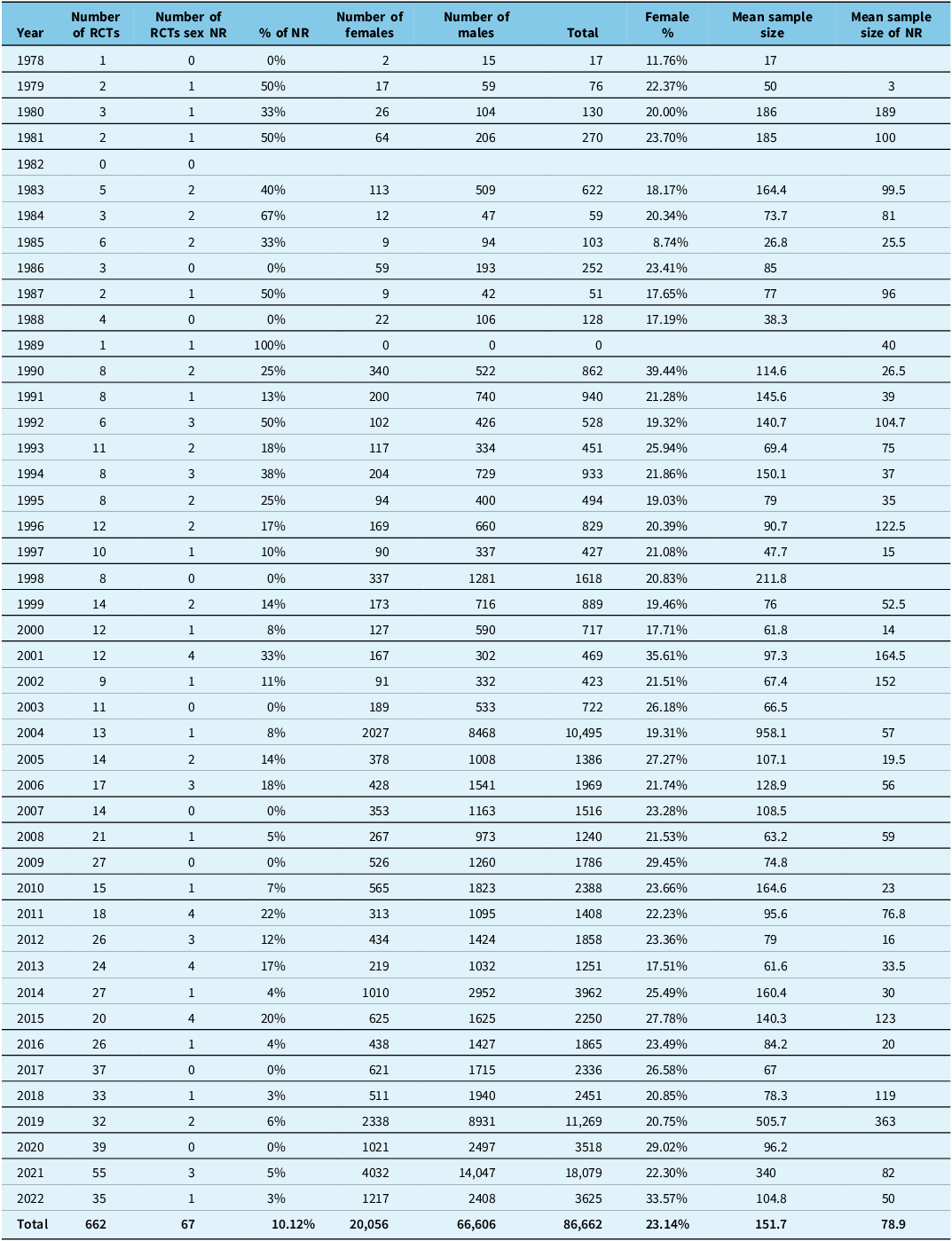
Collectively, the 595 RCTs reporting sex data enrolled 20,056 female and 66,606 male participants, resulting in a total of 86,662 participants for whom sex was reported. For those RCTs that reported the sex of their participants, the mean sample size and proportion of female participants are presented on a yearly basis from 1978 to 2022 in Table 1. This table also presents the number of studies per year that did not report sex data and the associated mean sample size. Table 1 and Figure 2 show that the annual proportion of female participants has increased over time, and the mean value from 1978 to 2022 was 23.14% (±13.6%).
Bar graph depicting the proportion of female participants in randomized controlled trials (RCTs) of interventions for moderate-to-severe traumatic brain injury (TBI) presented by year. *No sex data were reported in the RCTs published in 1989; this year is not represented in the figure.

Proportion of female participants in randomized controlled trials (RCTs) of interventions for moderate-to-severe traumatic brain injury (TBI) presented by year

* NR = Not Reported.
Levene’s test for equality of variances was found to be violated for the present analysis, for both female and male populations. Consequently, a nonparametric test, the Kruskal–Wallis test, was performed. It found a significant difference between the number of male and female participants in TBI RCTs performed between 1978 and 2022 (p < 0.001); there were significantly more male than female participants.
Sample sizes and sex
Further analysis was conducted to compare the mean sample sizes of RCTs that reported sex data with those that did not. Levene’s test for equality of variances was found to be violated for this analysis as well, both for studies reporting and not reporting sex data. Consequently, the Kruskal–Wallis test was performed. It found a significant difference between the mean sample sizes in TBI RCTs that reported sex data and those that did not between the years of 1978 and 2022 (p < 0.001). Sample sizes were significantly larger in those RCTs that did report sex data compared with those that did not.
Female participation over time
The percentage of female participants in RCTs was lower than male participants in the last five decades (Table 1). A linear regression analysis was performed to examine the trend in the percentage of female participants over time. The outliers were removed, and the analysis focused on data since 1990 as the data before that year were very limited, making the data heteroscedastic. The analysis showed a significant positive correlation between the proportion of female participants and time (β = 0.188, t = 4.37, p < 0.001), indicating a small increase in female enrollment over the last three decades (Figure 3).
Linear regression of the proportion of female participants over time.

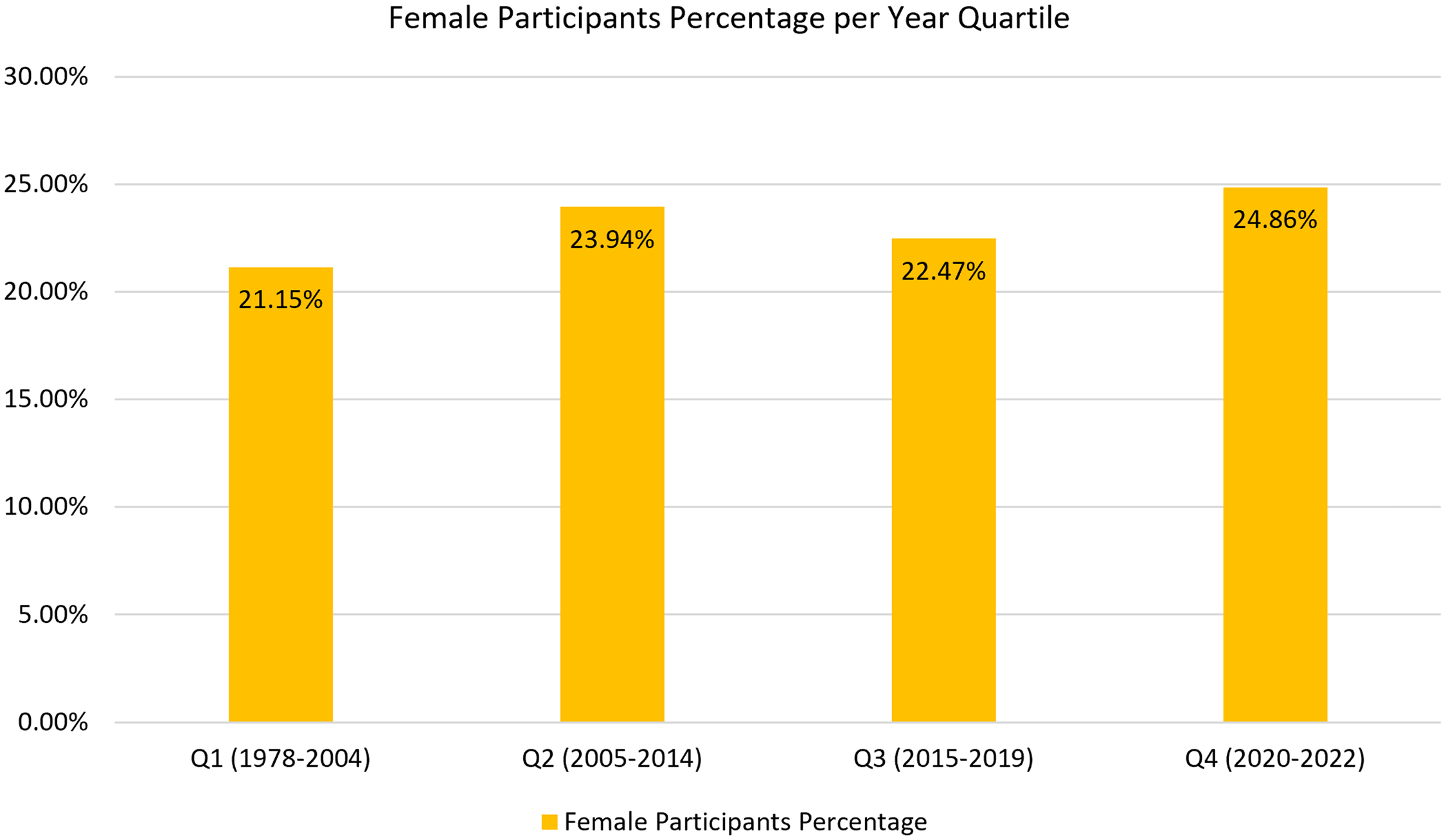
Figure 4 presents the proportion of female participants over time after being divided into four groups (quartiles) containing roughly equal numbers of participants: 4760 female participants from 1978 to 2004 inclusive, 4493 female participants from 2005 to 2014 inclusive, 4533 female participants from 2015 to 2019 inclusive and 6270 female participants from 2020 to 2022 inclusive. There was relative stability in the proportion of female participants studied over time across quartiles, ranging from 21.15% to 24.86%.%. A binomial test was performed to compare the proportions of male and female participants for the RCTs conducted in each quartile time period. The difference in proportions between male and female participants was found to be significant for all four quartiles (p < 0.001); there were significantly more male than female participants.
Bar graph depicting the proportion of female participants in moderate-to-severe traumatic brain injury (TBI) randomized controlled trials over time presented by quartiles.

Sex differences and time post-injury
We divided the RCTs according to time post-injury into acute, subacute and chronic phases (Table 3). Those RCTs categorized as acute studied participants ≤ 1 month post-injury. Those RCTs categorized as subacute studied participants from >1 month to <6 months post-injury, and those categorized as chronic included participants ≥6 months post-injury. Of the 595 RCTs that reported participant sex, the majority of RCTs (n = 287, 48.24%) studied participants in the acute phase post-TBI. Time post-injury was not reported in 124 RCTs (20.84%).
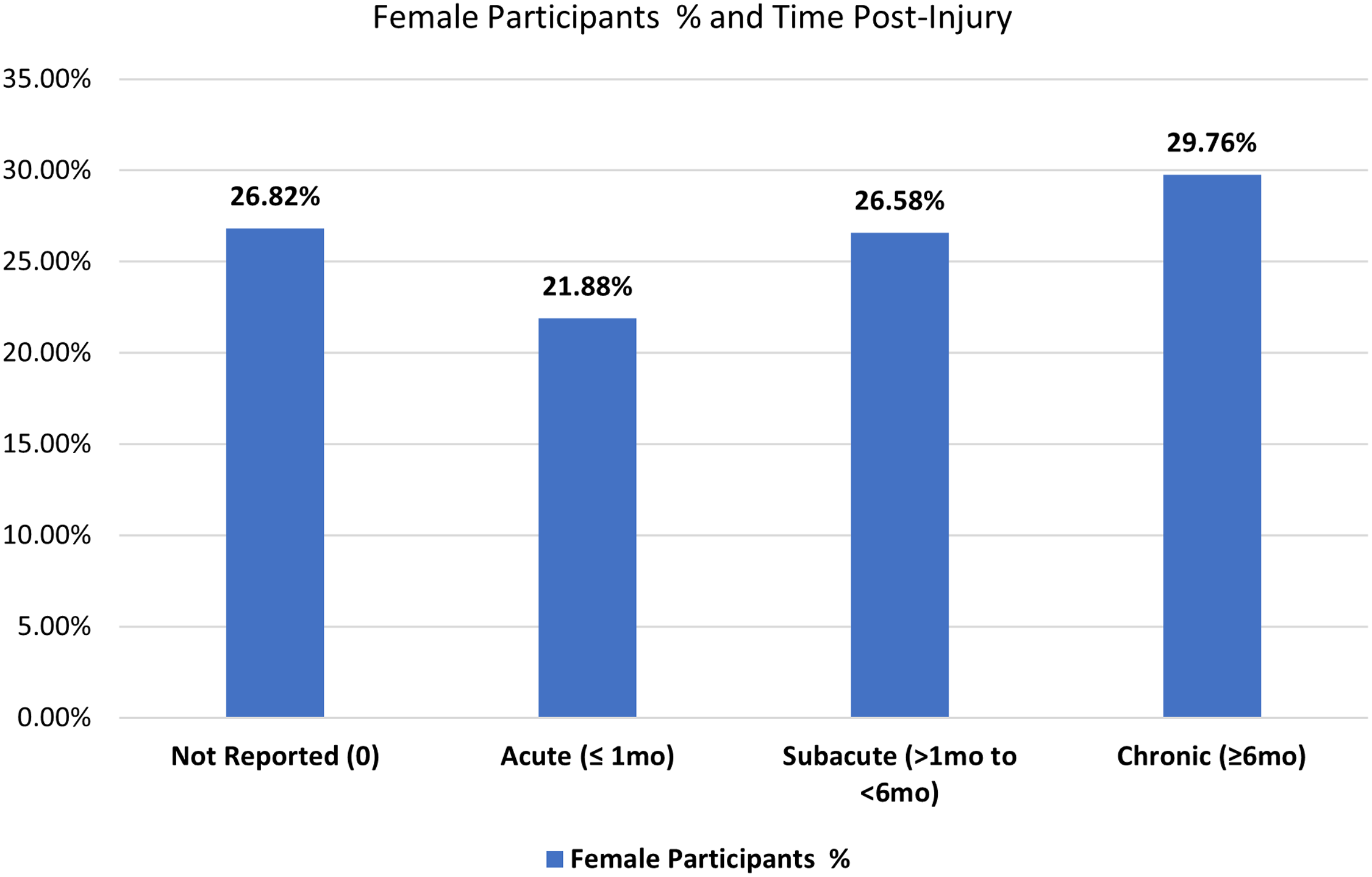
As reported in Table 2 and Figure 5, the proportion of females is higher in RCTs that enrolled participants in the chronic phase (29.76%), whereas the proportion of females is lowest in RCTs conducted during the acute phase post-injury (21.88%). A binomial test was performed to compare the proportion of male and female participants according to time post-injury, and this difference was found to be significant for all groups (p < 0.001); there were significantly more male than female participants in RCTs across all time points post-injury including the acute, subacute and chronic phases.
Bar graph depicting the proportion of female participants in moderate-to-severe traumatic brain injury (TBI) randomized controlled trials presented by time post-injury.

Proportion of female participants in moderate-to-severe traumatic brain injury (TBI) randomized controlled trials (RCTs) presented by time post-injury

Sex differences and area of research focus
We divided RCTs into two groups according to the area of research focus: rehabilitation and medical/surgical management. RCTs were included in the rehabilitation category if they addressed the improvement of functional outcomes, including but not limited to cognition, motor function, emotional, behavioral and community participation. RCTs involving early rehabilitation occurring in critical care were also considered to belong to this group. RCTs were included in the medical/surgical management category if they addressed critical care and interventions to prevent mortality and further neurological damage, including but not limited to surgical interventions, pharmacological therapies, tracheostomy, red blood cell transfusion, temperature regulation management and intracranial pressure management and monitoring. RCTs in the medical/surgical management group often addressed factors that occur almost exclusively in the acute phase post-injury; however, this was not a criterion for categorization.
Of the total 595 RCTs that reported participant sex, 382 (64.2%) belonged to the medical/surgical management group, while only 213 (35.8%) evaluated rehabilitation interventions. As reported in Table 3, there was a lower percentage of female participants in the medical/surgical group of RCTs (22.37%), when compared with the rehabilitation group (28.17%).
Proportion of female participants in moderate-to-severe traumatic brain injury (TBI) randomized controlled trials (RCTs) presented by area of research focus

Discussion
Between 1978 and 2022, 662 RCTs were published on interventions for moderate-to-severe TBI. Of these, 595 (90%) reported data on the sex of the study participants, and 67 RCTs (10.1%) did not. Our analysis showed that, while there is a small but significant positive correlation between the proportion of female participants and time, females represent on average only 23.14% of RCT participants annually and this proportion has remained relatively consistent over time. Numerous studies indicate that 30%–33% of persons with moderate-to-severe TBI are female (2:1 male-to-female ratio); Reference Langlois, Kegler and Butler10,Reference Nguyen, Fiest and McChesney11,Reference Frost, Farrer, Primosch and Hedges14 however, the proportion of female participants in RCTs of persons with moderate-to-severe TBI is only 23.1%, or approximately a 3:1 male-to-female ratio. Based on the published incidence, female participants are underrepresented in TBI interventional RCTs.
Our observation that the enrollment of female participants in RCTs of interventions for moderate-to-severe TBI has seen only a minor upward shift over time requires further study. Underrepresentation of female participants in moderate-to-severe TBI RCTs is likely multifactorial including the lower incidence of TBI in females relative to males, recruitment strategies used for participants with moderate-to-severe TBI, differences in willingness to participate in clinical trials and a broader trend of underrepresentation of female participants in the medical research literature. Reference Daitch, Turjeman and Poran20
There is a complex interplay between intrinsic factors, such as age, genetics and comorbid health conditions, and extrinsic factors, such as social and environmental determinants of health, which contribute to TBI risk and post-injury outcomes. Reference Giordano, Rojas-Valencia, Bhargava and Lifshitz18 Biological sex is one such factor. A higher incidence of TBI has been reported in males, compared with females; a European systematic review reported that while the proportion of males was always greater than that of females, it ranged from 55% to 80%, depending on the country and year being examined. Reference Brazinova, Rehorcikova and Taylor21 Similarly, in the USA, the rate of TBI in males has been found to be nearly twice that of females. Reference Corrigan, Selassie and Orman22 This difference is particularly noticeable among young adult populations. Reference Colantonio, Saverino and Zagorski6 However, the higher proportion of males affected by TBI is not true for all ages. Among persons with TBI aged >75 years, the proportion of females affected has been shown to be greater than that of males. Reference Mauritz, Brazinova, Majdan and Leitgeb23 It is likely that females’ longer life expectancy is a major contributing reason for this finding; however, further research exploring this epidemiological phenomenon and more research on females aging with TBI are still needed to examine research trends and long-term health outcomes in this population. Reference Harris, Colantonio and Bushnik24,Reference Valera, Joseph and Snedaker25
Male individuals are more likely to be hospitalized for a TBI than females, which suggests that male individuals are at a higher risk of sustaining more severe injuries that require hospitalization. Reference Mollayeva and Colantonio26 Concurrently, rates of fatal TBI have been found to be significantly higher among males compared with females. Reference Corrigan, Selassie and Orman22 Males are also more likely to work in high-risk occupations, such as in the construction industry or the military, and are particularly vulnerable to TBI as a result of these exposures; Reference Colantonio, McVittie, Lewko and Yin27 in a study conducted in Ontario, Canada, males were five times more likely to sustain a TBI in the workplace than females. Reference Mollayeva, Mollayeva and Colantonio7 As male patients are more likely to experience moderate-to-severe TBI, this may explain the predominance of male participants in moderate-to-severe TBI RCTs. However, female representation in these studies remains lower than expected by epidemiology alone.
Discrepancies in enrollment in RCTs by sex have also been observed by other authors across multiple fields of study other than moderate-to-severe TBI. Reference Steinberg, Turner and Weeks28 Female sex-related factors, such as the potential for pregnancy and breastfeeding, have long been recognized as contributors to the exclusion of female research participants from clinical trials and remain inadequately addressed. Reference Yakerson15 Numerous studies have shown that female participants continue to be underrepresented in RCTs from other disease groups. For instance, in a systematic review of medicine RCTs published in 2017, Daitch et al. found that the enrollment rate for female participants was 41% across all studies. Reference Daitch, Turjeman and Poran20 In an analysis of RCTs conducted in the USA, those focused on neurological conditions had some of the lowest rates of female participant representation, with a median female enrollment of 46.7% in US government-funded clinical trials. Reference Steinberg, Turner and Weeks28 The underrepresentation of female participants in studies of neurological conditions is also evident in two systematic reviews of RCTs in the stroke population, which reported that the proportion of female participants was 37.4%–38%. Reference Ristvedt19,Reference Melloni, Berger and Wang30 Although these reviews found relatively low rates of female participant enrollment, their male-to-female ratios remain much higher than those in RCTs involving individuals with moderate-to-severe TBI.
TBIs sustained as a result of intimate partner violence (IPV) are often underreported and disproportionally affect females; Reference Colantonio31–Reference Turkstra, Salanki and MacIntyre33 persons injured through IPV may not necessarily have the same access to medical care or maybe more reticent to seek medical assistance than persons with other mechanisms of injury. Reference Colantonio31,Reference Turkstra, Salanki and MacIntyre33 For female individuals who sought medical care for a fracture resulting from IPV, the probability of concurrent TBI was 0.77, suggesting that female individuals may not seek care for IPV-related TBI specifically. Reference Turkstra, Salanki and MacIntyre33 Taken together, these findings and those of this review suggest that addressing the underrepresentation of female participants in TBI RCTs may require novel recruitment strategies.
Many moderate to severe TBI studies rely on recruiting hospitalized inpatients. Reference Peterson, Xu, Daugherty and Breiding34 Because male individuals are more likely to be hospitalized with TBI, this may confer a greater opportunity to males for participation in RCTs. Another possibility is that male individuals may be more willing to participate in research. Although the authors are not aware of evidence of sex differences in volunteer bias for moderate-to-severe TBI, sex is a significant factor in research participation in numerous other areas. Reference Ganguli, Lytle, Reynolds and Dodge35,Reference Robinson, Dayer, Mirichlis, Hasking and Wilson36 Alternatively, there may also be lingering social barriers that favor the recruitment of males over females. Reference Carcel, Harris and Peters29 Other potential reasons for female underrepresentation may be related to cultural factors that discourage or prevent female individuals from participating in trials without the permission from a spouse or male family member. Reference Persampieri37
In our study, the proportion of female participants in moderate-to-severe TBI RCTs did improve significantly over time, but the increase was nevertheless small, even while considering the epidemiology of moderate-to-severe TBI. More equal representation of females and males is critical to ensure the generalizability of research findings and to determine the safety and effectiveness of treatments for the female population. Reference Yakerson15 The greater representation of female participants in RCTs taking place in the chronic phase when compared with the acute phase is intriguing, given that the vast majority of acute phase RCTs are medical/surgical interventions and the great majority of chronic phase RCTs are rehabilitation interventions. This requires further study but may be related to the nature of the intervention, the time when it is delivered or a greater proportion of females entering rehabilitation. At a minimum, the authors urge that research in moderate-to-severe TBI include reporting on demographic data such as sex to further our understanding of the generalizability of results to future patients with TBI, whether male or female.
Limitations
While we acknowledge the impact of gender and intersecting sexual identities, for this review, we considered only biological sex. We were unable to evaluate gender as it was not reported in any of the included studies. Furthermore, our study only considered RCTs of moderate-to-severe TBI so the findings may not be generalizable across the full spectrum of injury severity. We also excluded studies that did not report injury severity, injury etiology or the proportion of participants affected by traumatic versus nontraumatic etiologies.
Conclusion
Of 662 moderate-to-severe TBI RCTs, 595 (90%) reported sex data and represented 86,662 participants. Overall, the average annual proportion of female participants in these studies was 23.14%, and it remained generally stable over time with a small but significant increase in female recruitment. There was a significantly lower proportion of females recruited in RCTs initiated in the acute phase post-injury when compared with RCTs conducted in the chronic phase. The fact that the proportion of female recruitment into TBI RCTs has not changed much over the course of five decades is difficult to explain, and further research investigating the factors at play is needed. The low proportion of female participants limits the generalizability of the existing body of literature as well as our understanding of how best to meet the needs of females who have sustained a moderate-to-severe TBI.
Acknowledgments
The authors would like to acknowledge the valuable contributions of Muskan Sait and Sarvenaz Mehrabi to the preparation of this manuscript.
Author contributions
CFS conducted searches, extracted, analyzed and managed the data and contributed to manuscript writing. HMM contributed to manuscript writing and editing. EAB contributed to manuscript writing and editing. KS contributed to manuscript writing and editing. MB provided overall supervision and contributed to editing and writing. RT conceptualized and led the project, supervised data analysis and extraction and contributed to writing.
Funding statement
Funding was provided by the Ontario Ministry of Health and Long-Term Care through Neurotrauma Pathways and the St Joseph’s Health Care (London) Foundation.
Competing interests
Dr Robert Teasell received support from the Ontario Ministry of Health and Long-Term Care for this project; in the past 36 months, he received grants/support from the Heart and Stroke Foundation of Ontario; he also received payment for expert testimony (Medlegal work for local attorneys) and participated on a safety monitoring board for the DOSE study (osteoporosis drug in Spinal Cord Injury); in the last three years, he received a grant from Abbvie (makers of Botox) for stroke research. Dr Heather M. MacKenzie: Within the past 36 months, she received support from the Academic Medical Organization of Southwestern Ontario, Opportunities Fund (personal payment); Lawson Health Research Institute, Internal Research Fund; Ontario Brain Institute, Craig H. Neilsen Foundation; Ministry of Health of Ontario; and Ontario Neurotrauma Foundation (payments made to institution). Dr Mark Bayley received support from the UHN Foundation (not profit); in the past 36 months, he received grants from the Canadian Institutes of Health Research, Brain Canada Foundation, Ministry of Health Ontario Research Branch, Heart and Stroke Foundation Canada, National Institutes of Health (USA) and National Health and Medical Research Council Australia; he also held a leadership role as chair in Rehabilitation Care Alliance of Ontario (unpaid) and as co-chair of the March of Dimes After Stroke Advisory Committee (unpaid); he received a stipend for leadership role as Medical Director of UHN – Toronto Rehabilitation Institute. Dr Keith Sequeira: No conflict of interest to disclose. Dr Emma A. Bateman: No conflict of interest to disclose. Cecilia Flores-Sandoval: No conflict of interest to disclose. An abstract of the present research had been previously submitted to the World Federation for Neurorehabilitation’s 13th World Congress Conference.
Transparency statement
A protocol was not registered on the International Prospective Register of Systematic Reviews previous to this submission. An initial search was conducted up to June 2021, with an updated search conducted up to and including December 2022. We did not perform Grading of Recommendations Assessment, Development and Evaluation (GRADE) or Cochrane risk of bias.






 Open access

