

Assessing bilingual children in speech and language therapy (SLT) is problematic (Core & Scarpelli, Reference Core and Scarpelli2015; Ebert & Kohnert, Reference Ebert and Kohnert2016; Kritikos, Reference Kritikos2003; Skahan, Watson, & Lof, Reference Skahan, Watson and Lof2007; Winter, Reference Winter2001). This is because their speech and language differs from that of their monolingual peers (Moyer, Reference Moyer1999), and might resemble the speech and language of monolingual children with specific language impairment (SLI; Ebert & Kohnert, Reference Ebert and Kohnert2016). When tested in one language, usually the community language, young bilingual speakers, especially from migrant communities, may score like monolinguals with SLI on a range of language assessment tasks, including those estimating vocabulary size and verbal recall (Umbel, Pearson, Fernández, & Oller, Reference Umbel, Pearson, Fernández and Oller1992; Verhoeven, Steenge, & van Weerdenburg, Reference Verhoeven, Steenge and van Weerdenburg2011), as well as morpho-syntax (Gutiérrez-Clellen, Simon-Cereijido, & Wagner, Reference Gutiérrez-Clellen, Simon-Cereijido and Wagner2008; Orgassa & Weerman, Reference Orgassa and Weerman2008). Thus, typically developing bilinguals might be overdiagnosed with a language delay or disorder, while bilinguals with an actual delay might be underdiagnosed and left without treatment, their problems ascribed to bilingualism. This is also true with speech assessment. Typically developing bilingual children below the age of five may speak differently from their monolingual peers and their speech production might be judged inaccurate and unintelligible (Fabiano-Smith & Goldstein, Reference Fabiano-Smith and Goldstein2010a; Reference Fabiano-Smith and Goldstein2010b; Fabiano-Smith, Oglivie, Maiefski, & Schertz, Reference Fabiano-Smith, Oglivie, Maiefski and Schertz2015). As a result, many speech therapists admit to having problems with diagnosing bilingual children (Kritikos, Reference Kritikos2003; Skahan et al., Reference Skahan, Watson and Lof2007). This is why they critically need tools for assessing bilingual phonology and studies pinpointing what is typical and what can be considered a sign of a speech disorder in the speech of young bilinguals.
Bilingual children’s phonology can be characterized by transfer, acceleration, or deceleration (e.g., Fabiano-Smith & Goldstein, Reference Fabiano-Smith and Goldstein2010a; Paradis & Genesee, Reference Paradis and Genesee1996; Tamburelli, Sanoudaki, Jones, & Sowinska, Reference Tamburelli, Sanoudaki, Jones and Sowinska2014). Transfer involves incorporating an element from one language into another language used by the bilingual. Acceleration means that, thanks to dual language exposure, a certain element of a language emerges earlier in a bilingual child than in a typical monolingual peer. Deceleration occurs when a bilingual acquires a particular element of a language later than a typical monolingual child, due to the simultaneous exposure to two languages (but not due to language impairment; Paradis & Genesee, Reference Paradis and Genesee1996).Footnote 1 While acceleration does not cause problems with misdiagnosis in the SLT setting, both transfer and deceleration might lead to such problems because both result in lower scores on diagnostic tests, thus prompting an inaccurate diagnosis (Dodd, So, & Wei, Reference Dodd, So, Wei, Dodd, Campbell and Worall1996).
In this study we try to disentangle transfer and deceleration in bilingual speech. We focus on L1 speech samples of Polish bilinguals and monolinguals aged 4.7 to 7. We examine the so-called transfer phonological processes (speech modifications resulting from transfer) known to frequently occur in bilingual children, as well as children’s developmental phonological processes (speech modifications typically produced by children acquiring their first language). Developmental phonological processes normally occur in the speech of monolinguals below the age of 7, but if the number of such processes is higher than usual, this indicates a speech delay. Thus, we interpret a higher amount of developmental phonological processes in bilingual speech as a sign of deceleration, based on the assumption that all children in the sample are typically developing. In other words, if bilinguals produced more developmental processes than their monolingual peers, this would be a sign of their phonological deceleration.
In the past, many different measures have been used to test for transfer and deceleration in bilingual speech. We describe the most important ones in the following text. We also justify our use of phonological processes in the current study and show the research gaps. We then consider possible mechanisms for transfer and deceleration in bilingual language development.
HOW TO MEASURE DECELERATION AND TRANSFER AMONG BILINGUAL CHILDREN
The speech of bilingual children can be analyzed in a variety of ways, including analyses of phonetic inventories, phonemic inventories, percentage of consonants/vowels correct (and other accuracy measures), analyses of structural accuracy, prosodic patterns, and phonological processes. All the preceding measures have been used to examine bilingual speech in an informative way, although some are better suited to identify deceleration and/or transfer than others. Later, we discuss three commonly used types of analyses related to the acquisition of segments. We also show how they inform research on deceleration and transfer in bilingual speech.Footnote 2
INVENTORIES
Investigating phonetic inventories involves creating lists of the consonants and vowels that start to emerge in the speech of a given participant, but are not necessarily fully mastered. Examining phonemic inventories entails making lists of the consonants and vowels that the participant has already mastered (Serry & Blamey, Reference Serry and Blamey1999).
The analysis of phonetic inventories has been commonly used to study deceleration in bilingual speech because it shows whether bilinguals start to develop a phoneme earlier or later than their monolingual peers (Fabiano-Smith & Goldstein, Reference Fabiano-Smith and Goldstein2010a). Such studies show little to no difference between the phonetic inventories of monolingual and early bilinguals above the age of 3 (Ballard & Farao, Reference Ballard and Farao2009; Fabiano-Smith & Barlow, Reference Fabiano-Smith and Barlow2010; Gildersleeve-Neumann & Wright, Reference Gildersleeve-Neumann and Wright2010; Goldstein & Washington, Reference Goldstein and Washington2001; Kim, Reference Kim2015; MacLeod, Laukys, & Rvachew, Reference MacLeod, Laukys and Rvachew2011). In other words, bilingual children above the age of 3 do not exhibit deceleration in terms of phonetic inventories. This, however, does not exclude the possibility of phonological deceleration in this population, as captured by different measures, such as accuracy measures and the analysis of phonological processes.
ACCURACY MEASURES
A common accuracy measure is the percentage of consonants/vowels correct (PCC/PVC), where experts transcribe children’s productions and then calculate the ratio of adultlike realizations of vowels/consonants to all the vowels/consonants produced by the child in the speech sample (e.g., Bunta, Fabiano-Smith, Goldstein, & Ingram, Reference Bunta, Fabiano-Smith, Goldstein and Ingram2009; Fabiano-Smith & Goldstein, Reference Fabiano-Smith and Goldstein2010a; Gildersleeve-Neumann, Kester, Davis, & Peña, Reference Gildersleeve-Neumann, Kester, Davis and Pena2008; Kim, Reference Kim2015; Shriberg, Austin, Lewis, McSweeny, & Wilson, Reference Shriberg, Austin, Lewis, McSweeny and Wilson1997). The PCC might also be performed separately for consonants that emerge early, later and late in the course of phonological development (Early- Middle- Late-, or EML analysis – Fabiano-Smith & Goldstein, Reference Fabiano-Smith and Goldstein2010b; Shriberg, Reference Shriberg1993).
Measures of accuracy are sometimes used to investigate deceleration when inventory studies do not show any significant differences between monolinguals and bilinguals. PCC and PVC typically show differences between monolingual and bilingual children, with bilinguals producing more “incorrect” sounds, at least in one of their languages (e.g., Bunta et al., Reference Bunta, Fabiano-Smith, Goldstein and Ingram2009; Fabiano-Smith & Goldstein, Reference Fabiano-Smith and Goldstein2010a; Reference Fabiano-Smith and Goldstein2010b; Gildersleeve-Neumann et al., Reference Gildersleeve-Neumann, Kester, Davis and Pena2008; Gildersleeve-Neumann & Wright, Reference Gildersleeve-Neumann and Wright2010; Goldstein & Bunta, Reference Goldstein and Bunta2011; Kim, Reference Kim2015). The differences between bilinguals and monolinguals in terms of PCC and PCV seem to disappear or significantly diminish after the age of 5 (e.g., Fabiano-Smith & Hoffman, Reference Fabiano-Smith and Hoffman2018; Gildersleeve-Neumann & Wright, Reference Gildersleeve-Neumann and Wright2010; Goldstein, Fabiano, & Washington, Reference Goldstein, Fabiano and Washington2005), but this is not the case for all populations. For instance, Kim (Reference Kim2015) reported that Korean-English bilinguals living in New Zealand had lower accuracy scores in their heritage language (Korean), even after the age of 5. Jamieson (Reference Jamieson1980) notes that while this country experienced a significant influx of migrants over the years, large language communities did not develop there. As a result, incoming migrants have very limited access to L1 input and might experience L1 attrition, including phonological attrition (for cases of phonological attrition see e.g., de Leeuw, Tusha, & Schmid, Reference de Leeuw, Tusha and Schmid2018; Karayayla & Schmid, Reference Karayayla and Schmid2018).
Even though lower PCC/PVC scores in bilinguals are often interpreted as a sign of deceleration, this interpretation might not necessarily be accurate. An “incorrect articulation” of a speech sound might just as well result from transfer (e.g., replacing the sound with another one from the other language). We believe that using gross measures such as PCC/PVC does not allow for distinguishing between deceleration and transfer, although it might be a starting point for more qualitative analyses. For example, experimenters might check which consonants exactly are “incorrectly” produced by bilingual speaker and whether they belong to the Early-, Middle- or Late-occurring category. A problem with a difficult sound that is present in just one language of the bilingual might point to deceleration. Accuracy measures can be also combined with the analysis of phonological processes applied in the bilinguals’ speech, which, as we argue in the following text, is an effective way of studying phonological deceleration in older bilingual children.
DEVELOPMENTAL AND TRANSFER PHONOLOGICAL PROCESSES
Phonological processes are modifications in speech resulting from an articulatory or perceptual difficulty (Dziubalska-Kołaczyk, Reference Dziubalska-Kołaczyk and Fisiak2006; Stampe, Reference Stampe1979). These include substitutions of certain speech sounds with others (e.g., substituting the sound /r/ with /l/), deletions of speech sounds (omitting an articulatorily difficult sound from a word), epentheses (insertions) of additional speech sounds (e.g., inserting vowels in-between consonants in a difficult cluster), and articulatory offshoots in the production of a sound (inaccurate or altered articulation). In many studies, these phenomena are dubbed atypical speech patterns, error patterns, articulatory errors, and so forth. Here, we name them phonological processes because they do not necessarily constitute erroneous or atypical behavior. Excessive or atypical modifications of speech might be a sign of language disorder, but some modifications occur naturally in the productions of children, bilinguals, or even adult monolinguals.
The analysis of phonological processes does not only show whether speech is modified (as is the case with accuracy measures) but also how it is modified, that is what processes exactly are applied. Among the many modifications that might be applied to speech, there are processes resulting from transfer, that is transfer phonological processes, as well as the so-called developmental phonological processes (henceforth referred to as transfer processes and developmental processes, respectively). Transfer processes are speech modifications occurring due to transfer from another language, for instance, substituting an L1 consonant with an L2 consonant. Examples of transfer processes in English-Polish bilinguals speaking Polish include producing Polish consonants with English voice onset time (VOT) patterns, substituting Polish consonants with English ones, and transferring English vowel length distinction into similar Polish vowels (see Table 2). Transfer processes can result from either having one underlying representation for two slightly different sounds in the two languages (Fabiano-Smith et al., Reference Fabiano-Smith, Oglivie, Maiefski and Schertz2015) or from applying an articulatory pattern from one language to another. Transfer processes are known to frequently occur in bilingual migrant children (e.g., Barlow, Reference Barlow2014; Fabiano-Smith & Goldstein, Reference Fabiano-Smith and Goldstein2010a; Fabiano-Smith et al., Reference Fabiano-Smith, Oglivie, Maiefski and Schertz2015; Gildersleeve-Neumann et al., Reference Gildersleeve-Neumann, Kester, Davis and Pena2008; Goldstein & Washington, Reference Goldstein and Washington2001; Holm, Dodd, Stow, & Pert, Reference Holm, Dodd, Stow and Pert1999; Marecka, Wrembel, Zembrzuski, & Otwinowska-Kasztelanic, Reference Marecka, Wrembel, Zembrzuski, Otwinowska-Kasztelanic, Babatsouli and Ingram2015; Prezas, Hodson, & Schommer-Aikins, Reference Prezas, Hodson and Schommer-Aikins2014; Wrembel, Marecka, Szewczyk, & Otwinowska, Reference Wrembel, Marecka, Szewczyk and Otwinowska2019; Zembrzuski et al., 2018). Developmental processes are speech modifications typically produced by children acquiring their first language. In Polish examples of such processes include lisped articulation of sibilants or the mispronunciation of the rhotic sound (see Table 2). These processes constitute a typical and natural part of speech development (Kaczmarek, Reference Kaczmarek1966). However, if a monolingual child applies these processes more extensively than his/her typically developing peers, and late into the course of development, this is considered a sign of speech delay (Shriberg & Kwiatkowski, Reference Shriberg and Kwiatkowski1994). If developmental processes are more frequent in bilinguals, it would constitute strong evidence for bilingual phonological deceleration.
To date, there has only been a handful of papers examining developmental processes in typical bilinguals. This data suggests that bilinguals within migrant communities apply more of these processes than monolingual peers, thus pointing to phonological deceleration (Dodd et al., Reference Dodd, So, Wei, Dodd, Campbell and Worall1996; Gildersleeve-Neumann et al., Reference Gildersleeve-Neumann, Kester, Davis and Pena2008; Holm et al., Reference Holm, Dodd, Stow and Pert1999). However, Goldstein et al. (Reference Goldstein, Fabiano and Washington2005) report that such differences disappear in Spanish-English bilinguals above the age of 5. To date, this is arguably the strongest evidence in the literature on phonological transfer and deceleration in early bilinguals over the age of 3. In the current study we adopt the same methodology. We analyze the transfer and developmental processes in the speech of early bilingual children.
GAPS IN RESEARCH OF BILINGUAL PHONOLOGICAL PROCESSES
Overall, there is clear evidence of phonological transfer between bilingual children’s two languages: the presence of transfer phonological processes in their speech (e.g., Fabiano-Smith & Goldstein, Reference Fabiano-Smith and Goldstein2010a; Gildersleeve-Neumann et al., Reference Gildersleeve-Neumann, Kester, Davis and Pena2008; Goldstein & Washington, Reference Goldstein and Washington2001; Holm et al., Reference Holm, Dodd, Stow and Pert1999; Marecka et al. Reference Marecka, Wrembel, Zembrzuski, Otwinowska-Kasztelanic, Babatsouli and Ingram2015; Prezas et al., Reference Prezas, Hodson and Schommer-Aikins2014; Wrembel et al., Reference Wrembel, Marecka, Szewczyk and Otwinowska2019; Zembrzuski et al., 2018). There is also some evidence of deceleration: while bilingual children above the age of 3, do not differ from monolinguals in phonetic inventories (Ballard & Farao, Reference Ballard and Farao2009; Fabiano-Smith & Barlow, Reference Fabiano-Smith and Barlow2010; Fabiano-Smith & Goldstein, Reference Fabiano-Smith and Goldstein2010a; Gildersleeve-Neumann et al., Reference Gildersleeve-Neumann, Kester, Davis and Pena2008; Gildersleeve-Neumann & Wright, Reference Gildersleeve-Neumann and Wright2010; Goldstein & Washington, Reference Goldstein and Washington2001; Kim, Reference Kim2015; MacLeod et al., Reference MacLeod, Laukys and Rvachew2011), they can apply more developmental processes in their speech.
The preceding conclusions are not strong, however, because studies investigating phonological deceleration in bilingual learners are scarce and suffer from several flaws (for a review, see Hambly, Wren, McLeod, & Roulstone, Reference Hambly, Wren, McLeod and Roulstone2012; Kehoe, Reference Kehoe, Babatsouli and Ingram2015). Firstly, as already pointed out, only a few studies on the topic analyze phonological processes, and the PCC and PVC that are commonly used in research instead do not constitute the most efficient way to tease apart phenomena stemming from deceleration and transfer in the bilingual speech production. Secondly, the vast majority of investigations are either case studies or studies with very small samples. Thirdly, large-scale studies often do not include monolingual controls (Ballard & Farao, Reference Ballard and Farao2009; Goldstein, Bunta, Lange, Rodriguez, & Burrows, Reference Goldstein, Bunta, Lange, Rodriguez and Burrows2010; Prezas et al., Reference Prezas, Hodson and Schommer-Aikins2014), they test the L2 of children with various home languages within one sample (Holm et al., Reference Holm, Dodd, Stow and Pert1999), and sometimes they do not state explicitly whether the L1 or the L2 of participants was being tested (Grech & Dodd, Reference Grech and Dodd2008). Finally, studies often focus on the production of single words instead of longer sentences or spontaneous speech (although see e.g., Bunta et al., Reference Bunta, Fabiano-Smith, Goldstein and Ingram2009), and therefore might paint an overly optimistic picture of bilingual phonological skills. As will be explained later, deceleration in bilinguals might result from larger processing demands relative to monolinguals. Those processing demands are unlikely to affect single-word production to the same extent as spontaneous speech or sentence production, which involve grammatical processing or substantially engage working memory.
Especially needed is research on phonological deceleration in children aged 5 and above. Studies on those populations are still scarce and their results are contradictory (e.g., Fabiano-Smith & Hoffman, Reference Fabiano-Smith and Hoffman2018; Gildersleeve-Neumann & Wright, Reference Gildersleeve-Neumann and Wright2010; Goldstein et al., Reference Goldstein, Fabiano and Washington2005; Kim, Reference Kim2015). Speech delay might impact children’s chances at school, and thus it is critical to establish what is typical and what is atypical in preschool bilinguals.
In this article we try to fill all those gaps and test the phonological deceleration and transfer in the speech of bilingual children above the age of 4.7. We examine transfer and developmental phonological processes and our speech samples contain sentences rather than words. However, we wish to go beyond simply identifying deceleration in the speech of bilingual children. We want also to pinpoint the sources of deceleration in the bilingual speech. To do so, we draw from a theoretical framework of bilingual phonological acquisition called PRIMIR (Processing Rich Information from Multidimensional Interactive Representations).
MECHANISMS OF TRANSFER AND DECELERATION: THE PRIMIR MODEL OF BILINGUAL PHONOLOGICAL ACQUISITION
The bilingual PRIMIR is a model of bilingual phonological acquisition that comprehensively explains the sources of transfer and deceleration in bilingual speech (Curtin, Byers-Heinlein, & Werker, Reference Curtin, Byers-Heinlein and Werker2011; Fabiano-Smith et al., Reference Fabiano-Smith, Oglivie, Maiefski and Schertz2015). The framework postulates the existence of three representational spaces developing during phonological acquisition. The General Perceptual Space stores information about the acoustic features in the speech signal that are encountered by the child. Within this space, children cluster similar sounds together, forming perceptual categories (these are not yet abstract phonemes). The Word Space stores words – that is sequences of speech sounds, associated with a given designate (e.g., “chair” – a wooden object on which people sit). Finally, the Phoneme Space stores abstract contrastive linguistic categories (a.k.a. phonemes) by adapting perceptual categories from the General Perceptual Space, and by analyzing and comparing different words in the Word Space.
According to the PRIMIR, transfer results from clustering information from two languages together within the representational spaces. Bilingual children collect data about both languages within the same spaces (i.e., there is one common General Perceptual Space and one common Word Space for both languages), but they typically cluster the information from those two languages separately. However, if one element (e.g., a phoneme) is very similar across the two languages, bilinguals can cluster together the information about this element from both languages. This can strengthen the representation of the element leading to acceleration: the phonemes that are the same or very similar across the two languages are acquired faster. However, if there are subtle differences between two elements that are clustered together into one category (e.g., Polish /p/ and English /p/, which are similar but have different VOT values), this might lead to transfer (Fabiano-Smith et al., Reference Fabiano-Smith, Oglivie, Maiefski and Schertz2015).
The PRIMIR also identifies two possible sources of phonological deceleration in bilinguals. The first one is that phonemes occurring in just one language of the bilingual child might emerge later in the Phoneme Space. The development of any phoneme within this space starts only when the learner has enough well-established words containing this phoneme within the Word Space. This entails that the development of phonemic categories depends on vocabulary size – the larger the vocabulary, the more exemplars of particular phonemes. The problem is that bilinguals, when tested in just one language, might have smaller vocabularies than their monolingual peers (Bialystok, Luk, Peets, & Yang, Reference Bialystok, Luk, Peets and Yang2010). If they have smaller vocabulary in, for example, their L1, they might not know enough words containing L1-specific phonemes. Therefore, they might experience a delay in the formation of precisely those L1 phonemes.
The second possible source of deceleration is that bilinguals might have more problems accessing their phonological knowledge and representations than monolingual children. This is because speech processing and speech production might require greater cognitive effort from them. In addition to all the other tasks involved in monolingual speech processing and production, bilinguals also need to identify which of the languages is spoken and to suppress the representations in the other language. Therefore, they may have less cognitive resources to focus on appropriate phoneme production or perception in real-life situations. This implies that bilingual children who have similar vocabulary size to their monolingual peers could still exhibit phonological deceleration due to greater processing demands of speech perception and production. Bilingual children who have a smaller vocabulary range than the monolingual peers could experience deceleration due to both smaller phonological inventories and due to increased processing demands.
In this study, we will try to pinpoint the sources of deceleration in bilingual children (underdeveloped representations, processing demands or both) by comparing bilingual children’s performance to two monolingual groups – matched on age and matched on their vocabulary size. If bilingual children have the same vocabulary size as monolingual controls, the phonological representations in both groups should be equally developed. Thus if the bilinguals still show signs of deceleration (i.e., a larger number of developmental processes) in comparison with vocabulary-matched monolingual controls, this will indicate that their phonological deceleration stems from higher processing demands in bilinguals and weaker access to the existing representations. If bilinguals have a larger number of phonological processes in comparison with age-matched but not vocabulary-matched groups, this will indicate that underdeveloped phonological representations are the main source of phonological deceleration in bilinguals.
Additionally, we will test whether the transfer and deceleration mechanisms described in the PRIMIR model operate differently in simultaneous and sequential bilinguals. We ask whether acquiring an L2 slightly later in life limits the process of merging phonological categories and reduces the problems with accessing phonological representations in the L1. In other words, we ask whether the mechanisms resulting in transfer and deceleration affect simultaneous and sequential bilinguals to the same degree.
THE CURRENT STUDY
This study aims to characterize phonological deceleration and transfer in the L1 speech of bilingual Polish-English children born to Polish migrants in the United Kingdom. L1 is understood here as the home language of these participants (i.e., Polish), as opposed to the L2 – the language of the community (i.e., English). We focus on the L1 rather than the L2 (as in the bulk of other research) because previous studies on bilingual language production have shown that in migrant populations the home language might be particularly vulnerable to the influence of the majority language (Bunta et al., Reference Bunta, Fabiano-Smith, Goldstein and Ingram2009; Goldstein & Washington, Reference Goldstein and Washington2001). The combination of languages investigated in the current study is infrequently explored in the literature on phonological acquisition (Hambly et al., Reference Hambly, Wren, McLeod and Roulstone2012), which is why we explain the differences between them in the text that follows.
Polish and English phonological systems differ in terms of consonants, vowels, and word stress patterns. In comparison to English, Polish has more consonants (including 12 sibilants in three different places of articulation; Jassem, Reference Jassem2003) and allows for a much wider range of consonantal clusters (Dobrogowska, Reference Dobrogowska1992). However, its vowel inventory is very limited, with only six vowels, no vowel length distinction and no diphthongs, apart from two nasal diphthongs /ew̃/ and /ow̃/. The two languages also differ in terms of their VOT parameters and prosodic features: for example, the vast majority of Polish words are stressed on the penultimate syllable (Gussmann, Reference Gussmann2007). Polish obstruents in word-final positions are devoiced. Polish consonants are characterized by coarticulatory palatalization when followed by a high front vowel or the semivowel /j/, which does not happen in British English. Polish vowels are not typically reduced in unstressed positions, as is the case in English (Gussmann, Reference Gussmann2007; Jassem, Reference Jassem2003).
Such discrepancies between the Polish and English phonological systems may lead to transfer in the speech production of Polish-English bilingual children (see our earlier analyses of this population: Marecka et al., Reference Marecka, Wrembel, Zembrzuski, Otwinowska-Kasztelanic, Babatsouli and Ingram2015; Wrembel et al., Reference Wrembel, Marecka, Szewczyk and Otwinowska2019; Zembrzuski et al., 2018). Polish-English children raised in the United Kingdom tend to substitute Polish vowels and consonants with their English equivalents, produce atypical VOT patterns in Polish, apply the English process of vowel reduction to Polish vowels in unstressed positions, and fail to apply the obligatory palatalization to Polish consonants preceding high front vowels.
In terms of language development, by the age of 3 Polish monolingual children acquire all vowels and consonants, but they might have problems producing sibilants, the /r/ phoneme, and nasal diphthongs (Demel, Reference Demel1987; Kaczmarek, Reference Kaczmarek1966, Sołtys-Chmielowicz, Reference Sołtys-Chmielowicz1998). According to Polish SLT literature, the most common developmental phonological processes in Polish in 3- to 4-year-olds include substitutions of sibilant sounds, alterations of /r/ and of nasal glides, obstruent devoicing, and velar fronting (Sołtys-Chmielowicz, Reference Sołtys-Chmielowicz1998), as well as a tendency to reduce consonant clusters (Yavaş & Marecka, Reference Yavaş and Marecka2014). In older children (5–7 years of age), these processes may still be present, but they become gradually less frequent, until they eventually stop occurring altogether (Kaczmarek, Reference Kaczmarek1966; Sołtys-Chmielowicz, Reference Sołtys-Chmielowicz1998). If they persist into the later stages of acquisition and/or are very frequent, they usually indicate speech delay (Sołtys-Chmielowicz, Reference Sołtys-Chmielowicz1998). It is safe to assume that a high number of these processes will also be present in Polish-English bilingual children, if they experience phonological deceleration. To the best of our knowledge, there are no studies concerning these processes in the speech production among Polish-English bilinguals.
In this study, we investigated the transfer and developmental processes in 30 bilingual Polish-English migrant children. We operationalized phonological transfer as the number of transfer processes applied in children’s speech (see Wrembel et al., Reference Wrembel, Marecka, Szewczyk and Otwinowska2019). Further, we posited that the higher number of developmental processes in bilingual than in monolingual speech would be a sign of deceleration. An unusually high number of developmental processes indicates speech impairment in the case of monolingual children because it testifies to a delayed acquisition. Because the bilingual children examined here were not linguistically impaired, a higher number of developmental processes in bilingual speech relative to monolingual samples would suggest that phonological deceleration is a normal part of bilingual development. By contrast, a high number of L2-L1 transfer processes in Polish-English children would suggest that transfer is typical for bilingual children’s speech.
We also examined the possible sources of phonological deceleration in children in our group. According to PRIMIR, there are two possible sources of deceleration in bilinguals. The first is that bilingual children might have underdeveloped phonological representations in one of their languages. PRIMIR states that such underdeveloped representations stem from low vocabulary range because vocabulary is crucial for developing phonemes. In other words, this type of deceleration should not occur if the vocabulary size was the same in both groups. To measure this aspect of deceleration we compared the Polish-English bilingual speech samples to those of 30 Polish monolinguals matched to the bilinguals for age and 30 Polish monolinguals matched on vocabulary size. If the underdeveloped phonological representations were the primary source of deceleration in our group of bilinguals, we would see a larger number of developmental processes in the bilingual group than in the age-matched monolinguals who have higher vocabulary scores. However, the differences would disappear in comparison with the second group of monolinguals matched to the bilinguals on vocabulary.
The other source of deceleration might be problems with accessing phonological representations. In this scenario, bilingual children may have developed phonological representations, but experience problems accessing them due to higher processing demands exerted on them during speech production. If processing demands and not phonological representations were the problem behind deceleration, then our bilingual children would have a higher number of developmental processes than both the age-matched and vocabulary-matched monolingual groups.
Furthermore, we want to test bilingual children with different ages of L2 acquisition to see if the amount of the phonological processes will be different in children with earlier and later onset of bilingualism.
To recapitulate, we asked the following research questions:
1. Is the phonology of bilingual children characterized by transfer, as evidenced by transfer phonological processes that do not occur in the speech of monolinguals?
2. Is the phonology of bilingual children characterized by deceleration, as evidenced by a higher number of developmental phonological processes in their speech than in the speech of monolingual controls?
3. Does deceleration stem from processing demands, as evidenced by a higher number of developmental phonological processes in their speech than in the speech of both age-matched and vocabulary-matched controls?
4. Does deceleration stem from underdeveloped phoneme representations, as evidenced by a higher number of developmental phonological processes in the speech of bilinguals than in the speech of age-matched controls, but not vocabulary-matched controls?
5. Does the number of transfer and developmental processes in the L1 of bilingual children depend on the age of their L2 acquisition?
Based on the previous studies, we hypothesized that bilinguals would apply transfer processes in their speech, meaning that their phonology would be characterized by transfer. We also predicted that they would apply more developmental processes than both age-matched and vocabulary-matched controls. This would mean that bilingual speech is characterized by deceleration, and that this deceleration stems not (or not only) from underdeveloped phonological representations, but from problems accessing these representations due to higher processing demands of bilingual speech production. Finally, we predicted that the number of processes would depend on the age of L2 acquisition.
METHOD
PARTICIPANTS
Data from 80 participants were analyzed in the study. All recordings were taken from a database collected within a large-scale Polish project on linguistic and cognitive development of bilingual children (Bi-SLI-PL), carried out by the Faculty of Psychology, University of Warsaw, within the European COST Action IS0804 (see acknowledgments for details). The database contains speech recordings and behavioral data from 173 bilingual children living in the United Kingdom who had at least one Polish parent and from 311 Polish monolingual children. A written parental consent form was obtained for all the children participating in the research before they completed a large battery of language and cognitive tests. We chose the recordings from the sentence repetition task of 30 bilingual children (21 female) following two criteria. First, we chose only those recordings that were of sufficient quality to allow for conducting the perceptual phonetic analyses. Second, we selected the children for whom we had full information concerning the socioeconomic status of the family (SES, as measured in the years of education of the mother), age of L2 acquisition (using a parental questionnaire by Kuś, Otwinowska, Banasik, & Kiebzak-Mandera, Reference Kuś, Otwinowska, Banasik and Kiebzak-Mandera2012, which is a Polish-language version of Questionnaire for Parents of Bilingual Children [PaBiQ; Tuller, Reference Tuller, Armon-Lotem, de Jong and Meir2015]), nonverbal IQ (as measured with the Polish adaptation of Raven’s Coloured Matrices, Raven, Szustrowa, & Jaworowska, 2003), and their Polish receptive vocabulary scores (measured with the Obrazkowy Test Słownikowy-Rozumienie, OTS-R; Haman & Fronczyk, Reference Haman and Fronczyk2012).
All the 30 bilingual participants selected for the study were the children of Polish migrants to the United Kingdom, living in London and Cambridge, exposed to Polish from birth and exposed to English before the age of 5 (mean age of first contact with English was 18.83 months, SD = 17.30 months). Among the children we had both simultaneous and early sequential bilinguals (see Table 1 for range of age of L2 acquisition), but instead of dividing the participants into those two groups, we entered Age of Acquisition as a continuous covariant into the models. All participants had a Polish mother and 20 of them had a Polish father. The age, SES, Raven raw scores, and OTS-R scores (mean from the A and B subtests of the OTS-R) are presented in Table 1.
Mean age, raven scores, SES, and vocabulary scores for the three study groups
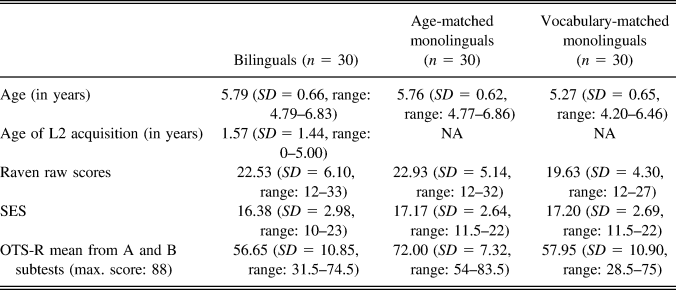
From the 311 monolingual children in the database, we chose 91 for whom the quality of recordings was sufficient to conduct the analyses and for whom we had the information about SES, nonverbal IQ, and Polish vocabulary scores. Then, we algorithmically matched 30 monolingual children (20 female) to the bilinguals on the criteria of age, gender, SES, and Raven scores (age-matched controls; see Table 1 for demographic details). A series of independent t-tests confirmed that the age-matched controls did not differ from the bilinguals on age, SES, and Raven scores. However, the bilinguals scored significantly lower on the scores of the OTSR vocabulary test (t(58) = –6.42, p < .000).
Finally, from the same pool of 91 monolingual children, we algorithmically matched to bilinguals another group of 30 monolinguals (17 female) in terms of their vocabulary size (L1 proficiency), as well as gender, SES, and nonverbal IQ (vocabulary-matched controls; see Table 1 for demographic details). A series of independent t-tests showed that the vocabulary-matched controls did not differ from the bilingual group on vocabulary scores and SES, however, the bilinguals were on average older than the monolinguals (t(58) = –3.07, p = .003) and consequently had higher Raven raw scores (t(58) = 2.13, p = .038).
There was an overlap between the two groups of controls, with 10 children entering both the age-matched and vocabulary-matched controls.
MATERIALS
Selecting speech samples
The samples used for the analysis came from a Polish Sentence Repetition (SRep) task (Banasik, Haman, & Smoczyńska, Reference Banasik, Haman and Smoczyńska2012). While this task was originally designed to test morpho-syntax, it is well-suited for the phonological analyses because (a) it offers comparable output across the participants (all of them produce the same sentences), (b) it allows for the analysis of speech patterns produced in the context of full sentences, and (c) it exerts greater processing demands than single-word production. In the task, the participants were asked to repeat 68 sentences that were prerecorded by two native speakers of Polish and that varied in length and grammatical complexity. The sentences were presented to the children through headphones and the participants’ repetitions were recorded for further analysis on laptops with Rode M3 condenser microphone. The task was performed individually in children’s schools or classroom.
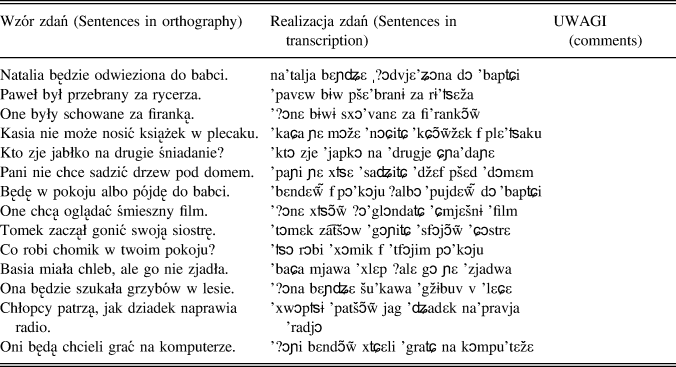
From the set of 68 sentences, we chose 14 sentences that were used for subsequent analyses of developmental and transfer processes in the children’s speech (see also Wrembel et al., Reference Wrembel, Marecka, Szewczyk and Otwinowska2019). First, we selected only those sentences that were short and grammatically simple, that is, they did not contain complicated grammatical structures such as the passive voice or relative clauses, where the children might have made mistakes and thus produce different output. Second, we excluded the sentences that had been frequently omitted or produced incorrectly by the participants. From the remaining set, we chose 14 sentences offering a wide range of phonetic contexts, and especially the ones containing consonantal clusters and difficult consonants (e.g., r, sibilants) that are prone to developmental processes. The list of 14 sentences, as well as diagnostic cards containing transcriptions of these sentences in the International Phonetic Alphabet (presented in Appendix A), were handed to the phonetically trained raters along with the speech recordings of the children.
Creating diagnostic lists
Before we started the analyses, we prepared two diagnostic lists of the most common developmental and transfer processes that can occur in Polish children’s speech in L1. The first list, which contained the developmental processes, was created by enumerating the processes identified in the literature directed at Polish SLT practitioners (Demel, Reference Demel1987; Kaczmarek, Reference Kaczmarek1966; Sołtys-Chmielowicz, Reference Sołtys-Chmielowicz1998, see literature review) and then consulting the resulting list with a Polish SLT practitioner. The list is presented in the first column of Table 2.
Developmental and transfer processes in the Polish speech of bilingual Polish-English children
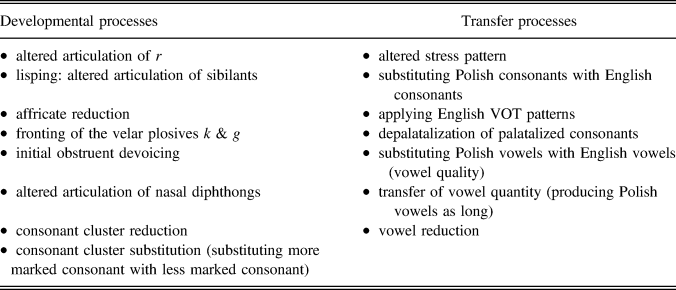
The second list enumerated the processes that are likely to occur in the speech of Polish-English bilingual children as a result of transfer from English. The list was based on previous analyses of a similar participant sample (Marecka et al., Reference Marecka, Wrembel, Zembrzuski, Otwinowska-Kasztelanic, Babatsouli and Ingram2015; Wrembel et al., Reference Wrembel, Marecka, Szewczyk and Otwinowska2019). In those analyses, we identified phonological processes in the speech of bilingual children and of monolingual controls. Then, we checked which of those patterns were more common in the speech of bilinguals than in the speech of monolinguals. Finally, we checked which of the processes could be developmental (e.g., consonant cluster reduction, consonant cluster substitution, and mispronunciation of nasal diphthongs; see the literature review in “The Current Study” section of this paper), by consulting the Polish SLT literature and an SLT practitioner. These processes were removed from the list. The resulting list featured the processes in the Polish speech of bilingual children that likely resulted from transfer from English. It is presented in the second column of Table 2.
PROCEDURE FOR CONDUCTED ANALYSES
Phonological analyses
The typical procedure for analyzing speech involves transcribing speech recordings phonetically or phonemically by trained phoneticians and then performing analyses on the transcribed speech, for example calculating the PCC, PVC, and identifying phonological processes. In the past we applied this method in studies involving single words (Zembrzuski et al., 2018), but we found it impracticable for analyzing whole sentence production in 80 participants. In the current study (as well as some previous studies, see Marecka et al., Reference Marecka, Wrembel, Zembrzuski, Otwinowska-Kasztelanic, Babatsouli and Ingram2015; Wrembel et al., Reference Wrembel, Marecka, Szewczyk and Otwinowska2019) we used a simplified protocol, in which phonetically trained raters did not transcribe the entire utterances. Instead they identified phonological processes in the speech recordings of children, indicated where the processes occurred on specifically designed diagnostic cards (see Appendix A) and marked which process specifically was used .
The diagnostic cards contained 14 sentences to be analyzed, written in standard orthography. The cards contained also phonemic transcriptions of the sentences, as pronounced by two Polish native speakers models featured in the recordings that were played to children in the sentence repetition task. This model transcription was provided by an expert phonologist. The raters were asked to mark the processes on those ready-made transcriptions by underlining a part of the sentence where they occurred. Each rater received one diagnostic card per child participant, along with the two diagnostic lists, a set of instructions, and an Excel sheet to calculate the processes.
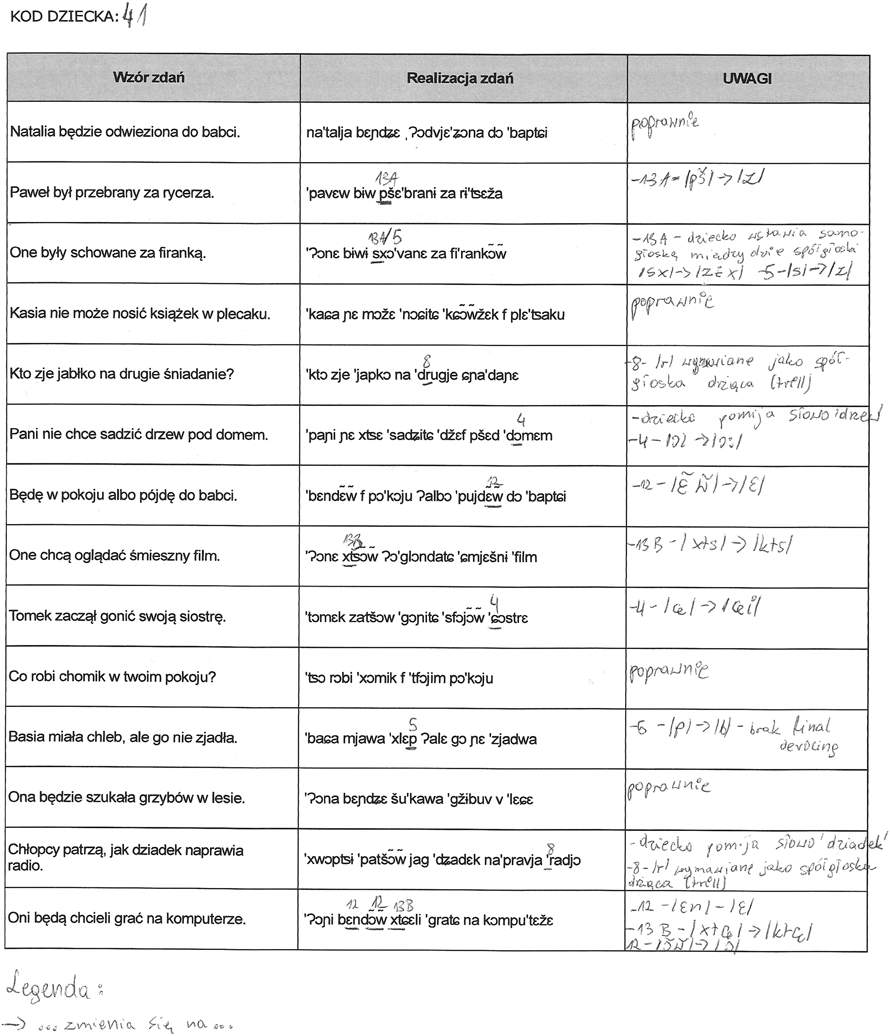
The raters were asked to listen to the sentence repetitions of each child and to underline on the diagnostic card all the parts where the child applied one of the eight developmental processes or one of the seven transfer processes enumerated in the diagnostic lists. The raters were asked to ignore any idiosyncratic processes that were not present on the list. They also received detailed instruction on how to classify the processes so as not to mistakenly mark natural coarticulatory or allophonic processes that might occur in fast speech. Further, in a separate column on the diagnostic card, the raters were asked to transcribe the altered word/syllable or to indicate how exactly the segments were modified and which process was applied. Appendix B shows a partly filled diagnostic card. Following this perceptual analysis for a particular child, each rater calculated (a) the overall number of developmental processes per child and (b) the overall number of transfer processes per child.
Each sample was analyzed in this way by at least two independent, phonetically trained raters, who were native speakers of Polish, and who majored in English linguistics. They had extensive knowledge of both Polish and English phonetics and phonology, including developmental phonology. Interrater reliability was calculated using standardized Cronbach alpha on the total number of developmental processes (α = 0.81) and transfer processes as marked by the raters (α = 0.70). All the analyses were cross-checked by an expert phonetician (one of the authors of the study), who resolved any discrepancies in the ratings. The speech samples were coded and randomized so neither the raters nor the authors cross-checking the analyses knew which samples were produced by the bilinguals and which by the monolinguals.
The number of processes was calculated per whole sample and not per sentence: for example, if the average number of consonant substitutions in the bilingual sample was 5.30, this meant that a bilingual child had on average 5.30 instances of substitutions in the 14 sentences analyzed jointly. Such analyses are much more reliable and informative because larger speech samples contain a wider range of phonetic contexts than single sentences.
STATISTICAL ANALYSIS
The statistical analysis was performed using R. We compared the number of developmental processes employed by the bilingual children separately with age-matched monolingual controls and vocabulary-matched monolingual controls, using Mann-Whitney U test, and we calculated effect sizes r. Then, we conducted the same comparisons for transfer processes. Bonferroni corrections were used to control for Type-I error in multiple comparisons. The nonparametric tests were selected due to a positive skew in the data. Paired comparisons with Bonferroni corrections were chosen over Kruskall-Wallis test, due to the fact that we had 10 monolingual participants that were included in both the vocabulary-matched and the age-matched control groups. As a result, we could not treat the bilingual group, the vocabulary-matched controls and the age-matched controls as three independent levels of the variable “group” in the Kruskall-Wallis test.
Finally, we tested the effects of age and age of L2 acquisition on the number of transfer and developmental processes in the bilingual group. We aimed to establish whether transfer processes disappeared in bilinguals at a certain age, and whether the age of L2 acquisition (i.e., simultaneous vs. sequential bilingualism) influenced this process. Thus, we created two multiple linear regression models – one with model the Overall Number of Transfer Processes and another with the Overall Number of Developmental Processes as the outcome variable. In both models the Age, Age of L2 Acquisition, and the interaction between these two were the predictor variables. The first model met the assumptions for the linear regression. For the model with Developmental Processes, we used a square-root-transformation on the outcome variable to deal with the positive skew of the data to meet all the assumptions. The data and scripts are available at https://osf.io/k4pje/.
RESULTS
PROCESS TYPES IN BILINGUAL AND MONOLINGUAL SAMPLE
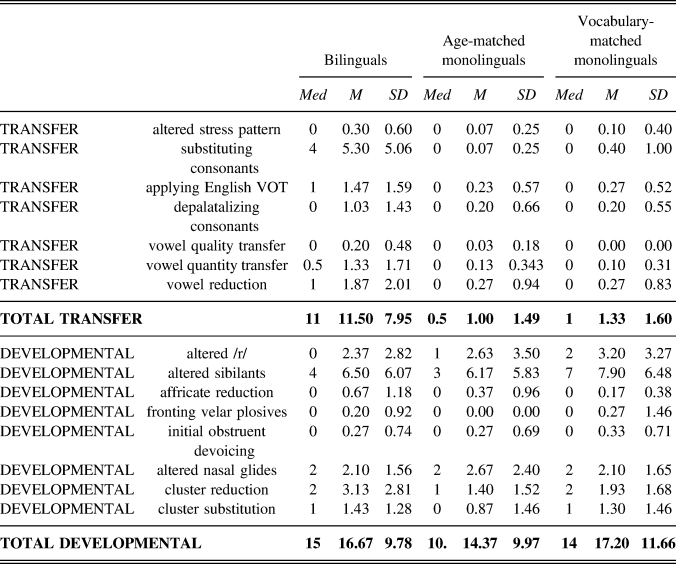
Table 3 shows the number of processes applied by the monolingual and the bilingual groups of children. The table shows that the majority of processes affected consonant production rather than vowel production. Consonant substitution was the most common transfer process in the bilingual group, while sibilant alteration was the most common developmental process in the whole sample. The descriptive data show that transfer processes were prevalent in the bilinguals, while they were practically nonexistent in the monolingual samples. The attested few processes in monolinguals were presumably nonstandard realizations of some singleton sounds, which occur in typical populations (see e.g., the corpus data by Smit, Reference Smit1993), and which might have been interpreted as transfer by the raters. For developmental processes, we see similar patterns across the groups – the prevalence of sibilant alterations, nasal glides alterations, and problems with consonant clusters.
Transfer and developmental processes in the bilingual group and monolingual controls
THE EFFECT OF BILINGUALISM ON THE NUMBER OF DEVELOPMENTAL AND TRANSFER PROCESSES
Figure 1 shows the comparison between the bilingual group and the age-matched monolinguals on the number of developmental and transfer processes. As can be seen from the graph, the two groups differed significantly in the number of transfer processes. The difference in the number of developmental processes between the bilinguals and the age-matched monolinguals was not statistically significant (U = 525, p = 1, r = –0.14). The difference in transfer processes between the bilingual group and the age-matched monolinguals was statistically significant and the effect size was moderate (U = 800.5, p < .001, r = –0.68).
The number of developmental and transfer processes in the bilingual group and the age-matched monolingual controls.
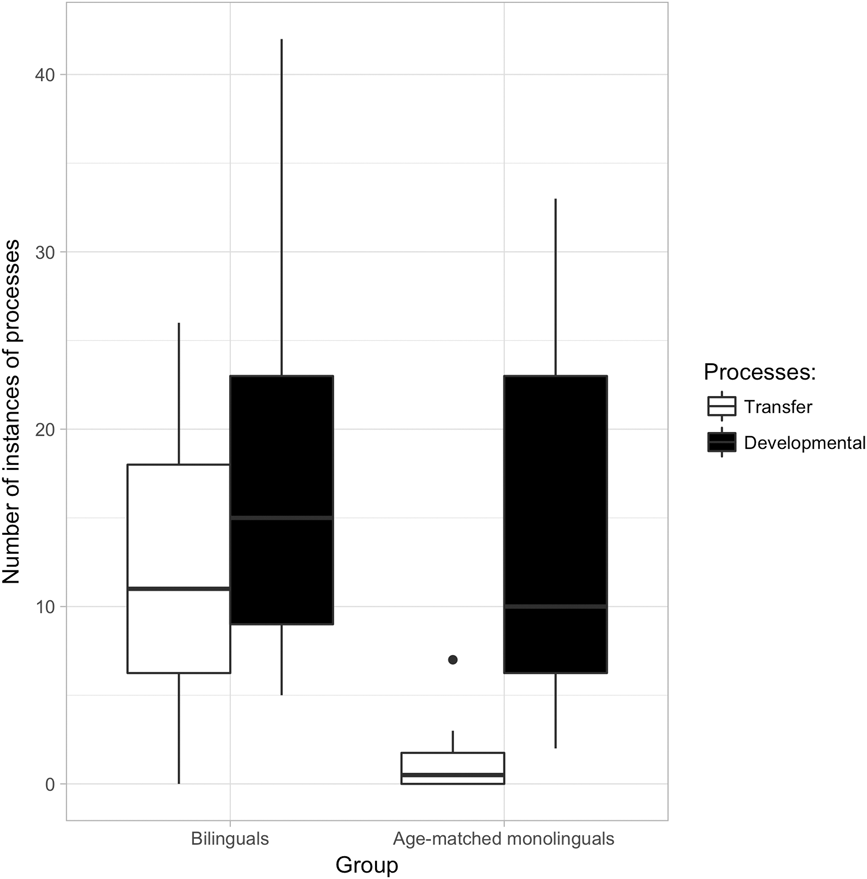
Figure 2 shows the comparisons between the bilinguals and the vocabulary-matched monolinguals. Also here there is a significant difference in the number of transfer (U = 758.5, p < .001, r = –0.65), but not developmental processes (U = 448, p = 1, r = –0.003).
The number of developmental and transfer processes in the bilingual group and the vocabulary-matched monolingual controls.

THE EFFECT OF AGE AND AGE OF L2 ACQUISITION ON THE DEVELOPMENTAL AND TRANSFER PROCESSES IN THE BILINGUAL GROUP
Table 4 presents the results of a linear regression model for the bilingual group, which tested the effects of Age and Age of L2 Acquisition on the number of transfer processes. Neither variable could predict the number of transfer processes in the bilingual group. This suggests that transfer processes in bilinguals that are immersed in their L2 are not directly linked to the children’s age and their age of onset for L2 acquisition.
A linear regression model for the transfer processes for the bilingual group

Note: F(3,26) = 1.62, p = .209, Adj. R 2 = .06
Table 5 presents the results for the transformed number of developmental processes. Also here there was no effect of age of L2 acquisition and no effect of age. The latter result was probably caused by little variation in the age of the participants.
Linear regression model for the developmental processes for the bilingual group

Note: F(3,26) = 1.24, p = .216, Adj. R 2 = .02
DISCUSSION
In this study, we investigated transfer and deceleration in bilingual children’s phonological acquisition – issues that are still far from being well understood (Kehoe, Reference Kehoe, Babatsouli and Ingram2015). Our study focused on the phonological transfer and developmental processes in the L1 Polish speech of typically developing Polish-English bilingual migrant children and comparing them with those in the speech of monolingual children raised in Poland. We compared bilingual performance against two control groups taken from the same monolingual sample, but matched to the bilingual group on different criteria: age or vocabulary size. The purpose of these two types of comparison was to tease apart a possible source of deceleration in bilingual children’s phonology. In accordance with the PRIMIR framework (Curtin et al., Reference Curtin, Byers-Heinlein and Werker2011; Fabiano-Smith et al., Reference Fabiano-Smith, Oglivie, Maiefski and Schertz2015), there are two possible sources of deceleration in bilinguals: (a) increased processing demands of speech production limiting access to phonological representations in a particular language and (b) underdeveloped phoneme representations, resulting from a smaller vocabulary size. If the processing demands were to blame for bilingual phonological deceleration in our group, then bilinguals would have more developmental processes than both the vocabulary-matched controls and age-matched controls. If deceleration stemmed primarily from the underdeveloped phonological representations in this group, we would see the bilingual children applying more developmental processes than the age-matched controls, but not differing from the vocabulary-matched controls.
First and foremost, our data showed no statistically significant differences between the bilinguals and either of the two monolingual groups in the number of the developmental processes. This suggests that phonological deceleration, defined as the higher occurrence of developmental processes, is probably not typical for the Polish-English bilingual children above the age of 4.7 in their L1. In other words, neither of the problems leading to phonological deceleration according to the PRIMIR, that is underdeveloped phonological representations and greater processing demands, seems to affect bilingual children at this age. At the same time, the number of developmental processes in the bilingual group was not influenced by the age of L2 acquisition, that is the onset of bilingualism, suggesting that neither simultaneous nor sequential bilinguals showed any signs of deceleration at this age.
Our study corroborates previous findings showing that bilingual children beyond the age of three have similar phonetic inventories to monolinguals (e.g., Fabiano-Smith & Barlow, Reference Fabiano-Smith and Barlow2010; Fabiano-Smith & Goldstein, Reference Fabiano-Smith and Goldstein2010a; Gildersleeve-Neumann et al., Reference Gildersleeve-Neumann, Kester, Davis and Pena2008; Goldstein & Washington, Reference Goldstein and Washington2001). Studies measuring accuracy and phonological processes report phonological deceleration in bilingual children under the age of 5, but not in older children (e.g., Dodd et al., Reference Dodd, So, Wei, Dodd, Campbell and Worall1996; Fabiano-Smith & Barlow, Reference Fabiano-Smith and Barlow2010; Fabiano-Smith & Goldstein, Reference Fabiano-Smith and Goldstein2010a; Reference Fabiano-Smith and Goldstein2010b; Fabiano-Smith & Hoffman, Reference Fabiano-Smith and Hoffman2018; Goldstein et al., Reference Goldstein, Fabiano and Washington2005; Holm et al., Reference Holm, Dodd, Stow and Pert1999). All these findings suggest that the initial phonological deceleration observed in younger bilingual children disappears over time. The problems with underdeveloped phonological representations (as postulated by the PRIMIR) are presumably resolved once the bilingual child acquires more vocabulary. The problems posed by higher processing demands probably gradually recede as a result of cognitive maturation. It is also important to note that the bilingual children in this study did not receive any kind of speech therapy targeting their L1, which indicates that the receding of phonological deceleration occurs naturally without any intervention. Further, it takes place both in simultaneous and early sequential bilinguals.
From the practical standpoint, these results indicate that the application of a large number of developmental processes by a Polish-English bilingual child over the age of 5 might be a sign of phonological delay (i.e., atypical development or speech impairment), as is the case in monolinguals. A bilingual child at this age who produces more developmental processes than predicted by the monolingual norms might need an SLT intervention. At the same time, it has to be stressed that in our study we were very careful to distinguish between developmental and transfer processes. Despite showing no signs of deceleration, our bilingual participants would probably score lower than monolinguals on gross accuracy measures such as PCC, which are often used to diagnose speech impairment. This is because the bilingual group applied a large number of phonological transfer processes in their speech.
The results demonstrate significant differences between the bilinguals and monolingual controls in the number of transfer processes, indicating that transfer is normal in the population of bilingual children aged 4.7 to 7 and, unlike deceleration, does not disappear with age. The small number of transfer processes in the monolingual data probably denoted rare idiosyncratic processes that sometimes affect single sounds in typical populations (see e.g., Smit, Reference Smit1993). A separate analysis of the transfer processes in the bilingual group showed that their number was not related to the children’s age of L2 acquisition or their age, although the second finding might be related to a limited variability in the age of our participants.
The evidence of transfer in our data is consistent with other studies reporting phonological transfer in the L1 speech of bilingual migrant children (e.g., Fabiano-Smith & Goldstein, Reference Fabiano-Smith and Goldstein2010a; Gildersleeve-Neumann et al., Reference Gildersleeve-Neumann, Kester, Davis and Pena2008; Goldstein & Washington, Reference Goldstein and Washington2001; Holm et al., Reference Holm, Dodd, Stow and Pert1999; Prezas et al., Reference Prezas, Hodson and Schommer-Aikins2014). In particular, Fabiano and Goldstein (2005) showed that transfer in bilingual children does not diminish after the age of 5. All these findings are consistent with the PRIMIR’s assumption that transfer is caused by creating a common phonological representation for two similar sounds in the L1 and L2. Once a phonemic category is established, it might be difficult to change it, which will make transfer stable over time. This is also evident from the literature on adult L2 acquisition (Best & Tyler, 2008). In particular, studies on migrants show that an initial exposure to the L2 leads to enhanced perception and production of L2 phonological categories, however after a few months these categories become fossilized and are not subject to change (e.g., Aoyama et al., Reference Aoyama, Guion, Flege, Yamada and Akahane-Yamada2008). Our results indicate that the same can happen to the shared L1-L2 phonological categories in early bilinguals, leading to transfer processes that are relatively stable over time.
From the clinical standpoint, the presence of transfer processes in our typically developing bilingual sample shows that they should not be treated as a sign of language disorder, but rather as a typical process resulting from the nature of bilingual phonological representation.
LIMITATIONS AND FURTHER DIRECTIONS
The greatest methodological limitation of previously collected data on bilingual development concerns small participant samples. One of the reasons for this is the time and effort required to transcribe speech phonemically and then to analyze those transcriptions. In this study we tried to overcome this problem by using a simplified rating procedure. Instead of transcribing entire utterances, our expert raters identified phonological processes and marked them on specifically designed diagnostic cards. This method, although seemingly less thorough, allowed us to test a much larger participant pool and to employ two monolingual control groups. In the future, it would be beneficial to conduct this analysis alongside a traditional transcription analysis to validate our approach. Further, it would be beneficial to replicate our results on a truly large-scale sample and to establish norms of phonological performance for bilingual migrant children. The latter could not have been accomplished in the current study because we analyzed only 30 bilingual participants.
Further, in our research we managed to tease apart phonological transfer processes from developmental processes with the use of two specially designed diagnostic lists. A future direction would be to create, on the basis of these lists, a standardized diagnostic phonological test that would take into consideration both of these phenomena in the speech of bilingual children.
CONCLUSIONS
In this study, we aimed to disentangle transfer from deceleration in the speech of bilingual migrant children. We focused on transfer and developmental processes (as a sign of deceleration) in the L1 speech of typically developing Polish-English bilingual children aged 4.7–7. On the whole, in terms of developmental processes we did not find any significant differences between the Polish-English bilingual children and their monolingual peers, both age matched and vocabulary matched. This indicates no phonological deceleration in the L1 of this bilingual migrant population. However, the results revealed differences between the bilinguals and monolinguals with respect to phonological transfer processes, which were found to be prevalent in the bilinguals’ speech. In our sample, these processes were present in both simultaneous and early sequential bilinguals. The findings suggest that phonological deceleration in bilinguals recedes after the age of 4.7, while phonological transfer remains a feature of bilingual speech even in older children. Our results have also far-reaching practical implications for the diagnosis of bilingual children. They suggest that, at least in the tested population, phonological transfer patterns are natural for bilingual children, while an increased number of developmental processes with reference to the monolingual norm might be a sign of language delay and may require consultations with a speech and language therapist.
APPENDIX A
DIAGNOSTIC CARD
KOD DZIECKA (Child’s code):
APPENDIX B
FILLED DIAGNOSTIC CARD


 Open access

