

Introduction
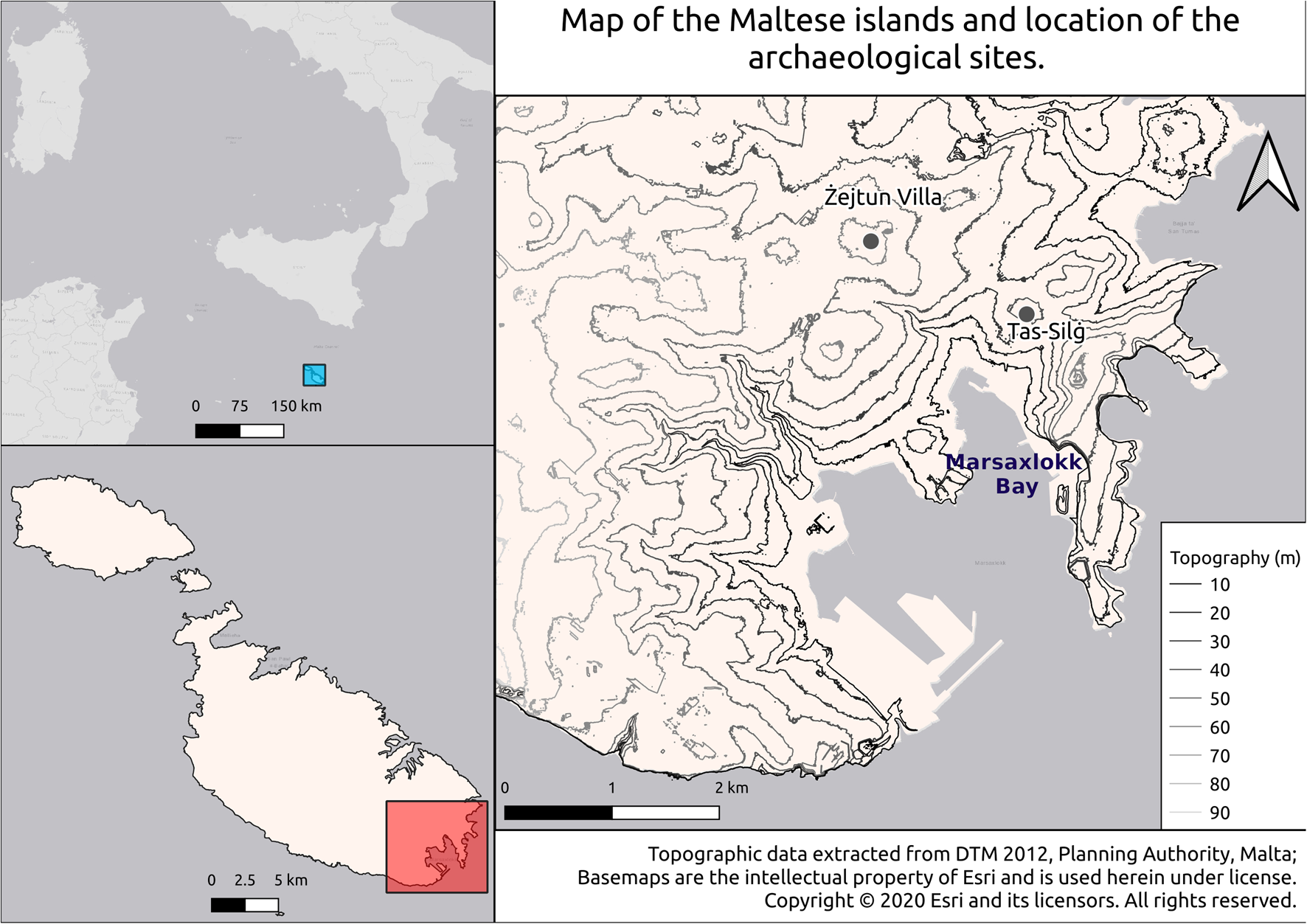
Thanks to their location in the central Mediterranean (Figure 1), the Maltese islands have been described as a crossroad for trade in the classical periods (Bonanno Reference Bonanno2005, 98, 111, 170; Bruno Reference Bruno2009, 222). Shipwrecks (Azzopardi Reference Azzopardi2013; Gambin Reference Gambin2015; Anastasi et al. Reference Anastasi, Capelli, Gambin and Sourisseau2021) and statistical models on sailing (Gal et al. Reference Gal, Saaroni and Cvikel2023) support the idea that Malta was a stopping point in some central Mediterranean routes. To understand the role of Malta in the wider Mediterranean trade of goods, such as pottery vessels or their contents, a thorough understanding of locally manufactured vessels is needed.
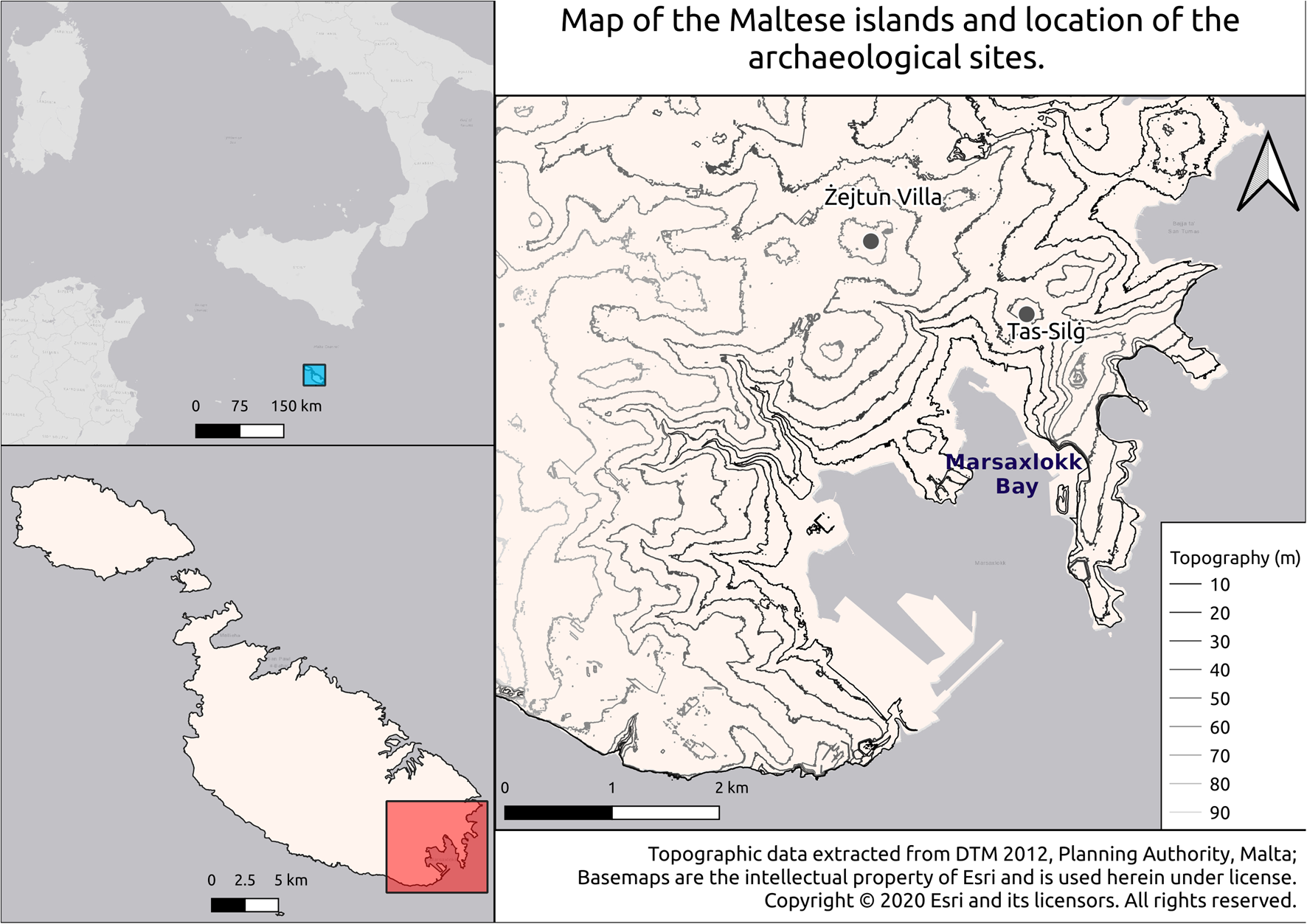
Location of the Maltese islands in the Mediterranean and the two archaeological sites in Malta.
The lack of positively identified and published pottery workshops in Malta precludes the direct study of production processes and the creation of localised reference groups (Anastasi Reference Anastasi2019). The characterisation of pottery fabrics found in local archaeological contexts can still shed light on the production of vessels and how it changed over time and will support future identification of imports (Cuomo Di Caprio Reference Di Caprio2017, 529; Eramo Reference Eramo2020, 164).
This paper aims to address the lack of a local fabric classification based on petrographic and chemical analysis for this time period and comparisons with possible raw materials from the Maltese islands. This study therefore analyses Late Punic–Late Republican (fourth to first century BCE) pottery sherds of coarse ware representative of these phases and excavated from two Maltese archaeological sites: the sanctuary site at Tas-Silġ, Marsaxlokk, and a Roman villa in Żejtun (Figure 1). The primary objective of the research was to characterise the fabrics of sherds considered local macroscopically, and to better understand how and where they could have been made. A classification system for fabrics used for plates, bowls and cooking vessels using typology and macroscopic observations, polarised light microscopy (PLM) and Enegy Dispersive X-Ray Fluorescence (EDXRF) is presented. This paper compares the sherds to clay samples from across the Maltese islands to assess whether a local origin for the groups is possible.
The archaeological contexts
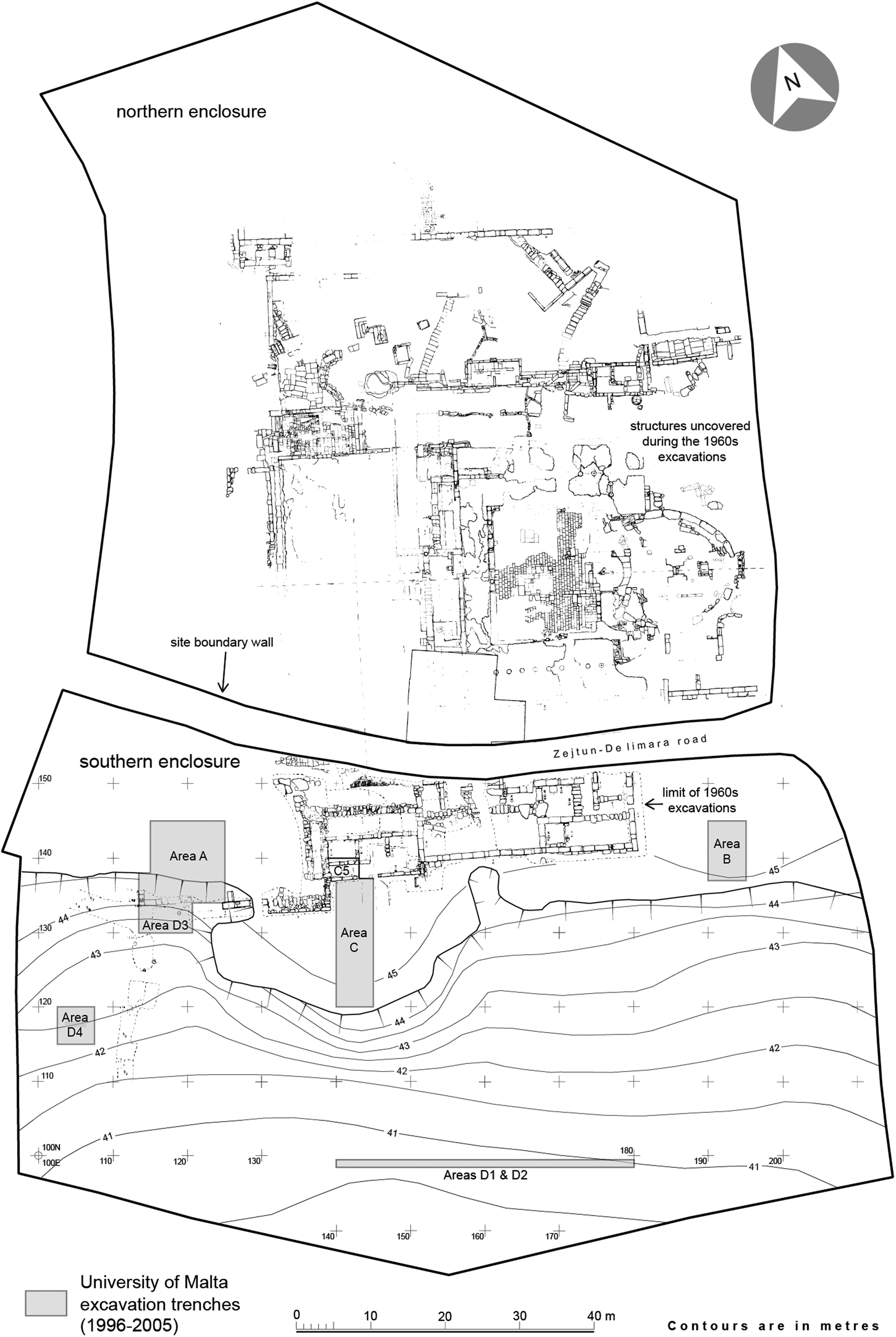
The pottery comes from two multi-period sites, the sanctuary at Tas-Silġ and the Żejtun Villa in southeast Malta (Figure 1; Bonanno et al. Reference Bonanno, Vella, Bonanno and Vella2015, 13, for a plan of Tas-Silġ; Fort et al. Reference Fort2023, 2, for a plan of the Żejtun Villa), both located close to Marsaxlokk, a naturally sheltered harbour thought to be an active port during classical periods (Bruno Reference Bruno2009, 121; Bonanno Reference Bonanno, Cini, Borg, Grima and Cilia2011, 53).
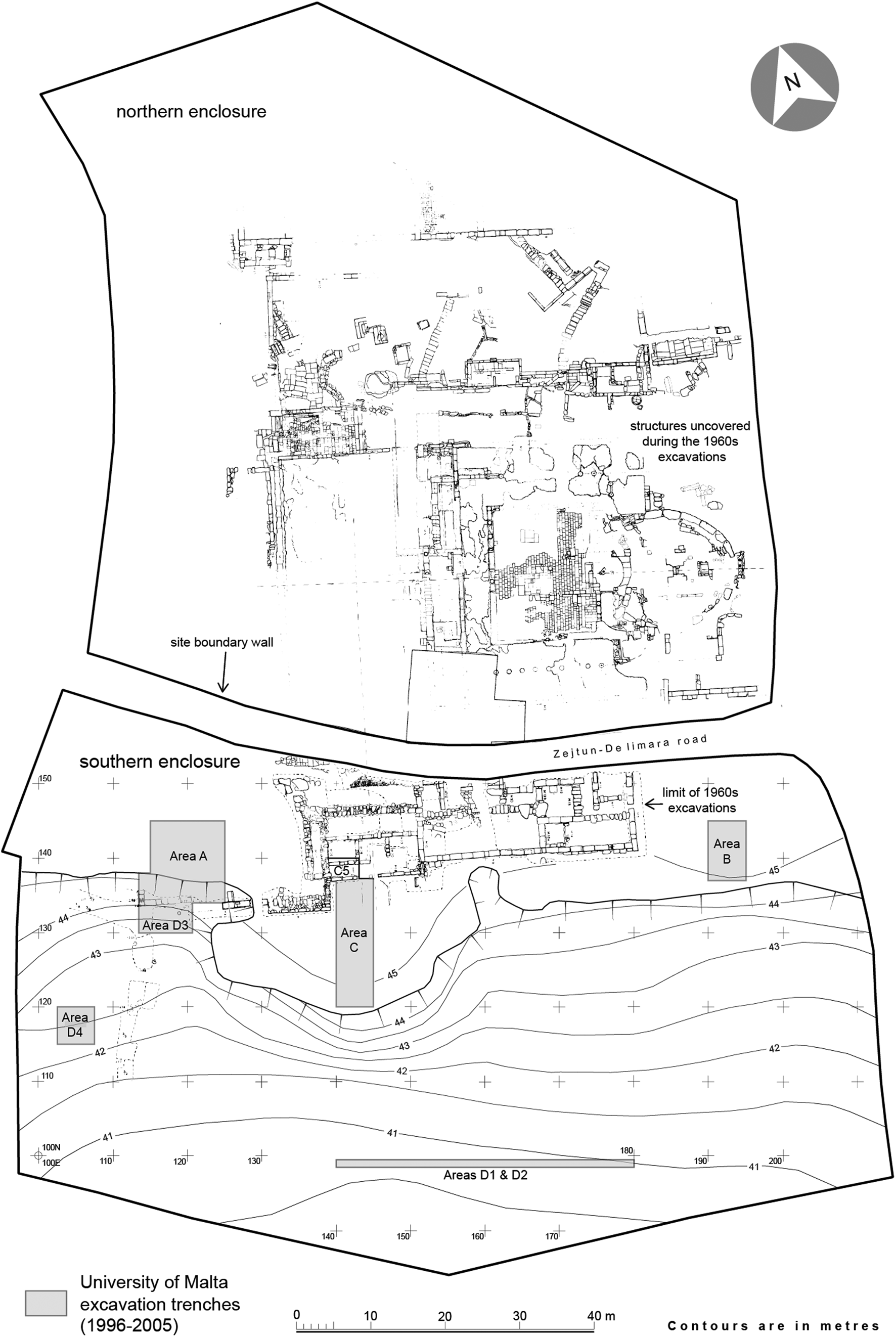
The architecture and finds, such as dedicatory pottery or feasting remains, suggest that Tas-Silġ (Figure 2) was, from at least the fourth century BCE, a temple site dedicated to the goddess Astarte (Amadasi Guzzo Reference Amadasi Guzzo1993, 205; Frendo et al. Reference Frendo, Mizzi, Bonanno and Vella2015, 550). During the Late Republican period, the site underwent further monumentalisation, showing it was still an active religious centre (Vella et al. Reference Vella, Mason, Farrugia, Zammit, Bonanno and Vella2015, 58; Bonzano Reference Bonzano2017, 54). This site might have been the Temple of Juno, mentioned by Cicero in his speeches against Verres (Bonanno Reference Bonanno, Cini, Borg, Grima and Cilia2011, 145).
Site plan of the remains of the ancient sanctuary at Tas-Silġ (after Bonanno et al. Reference Bonanno, Vella, Bonanno and Vella2015, Figure 1.3).
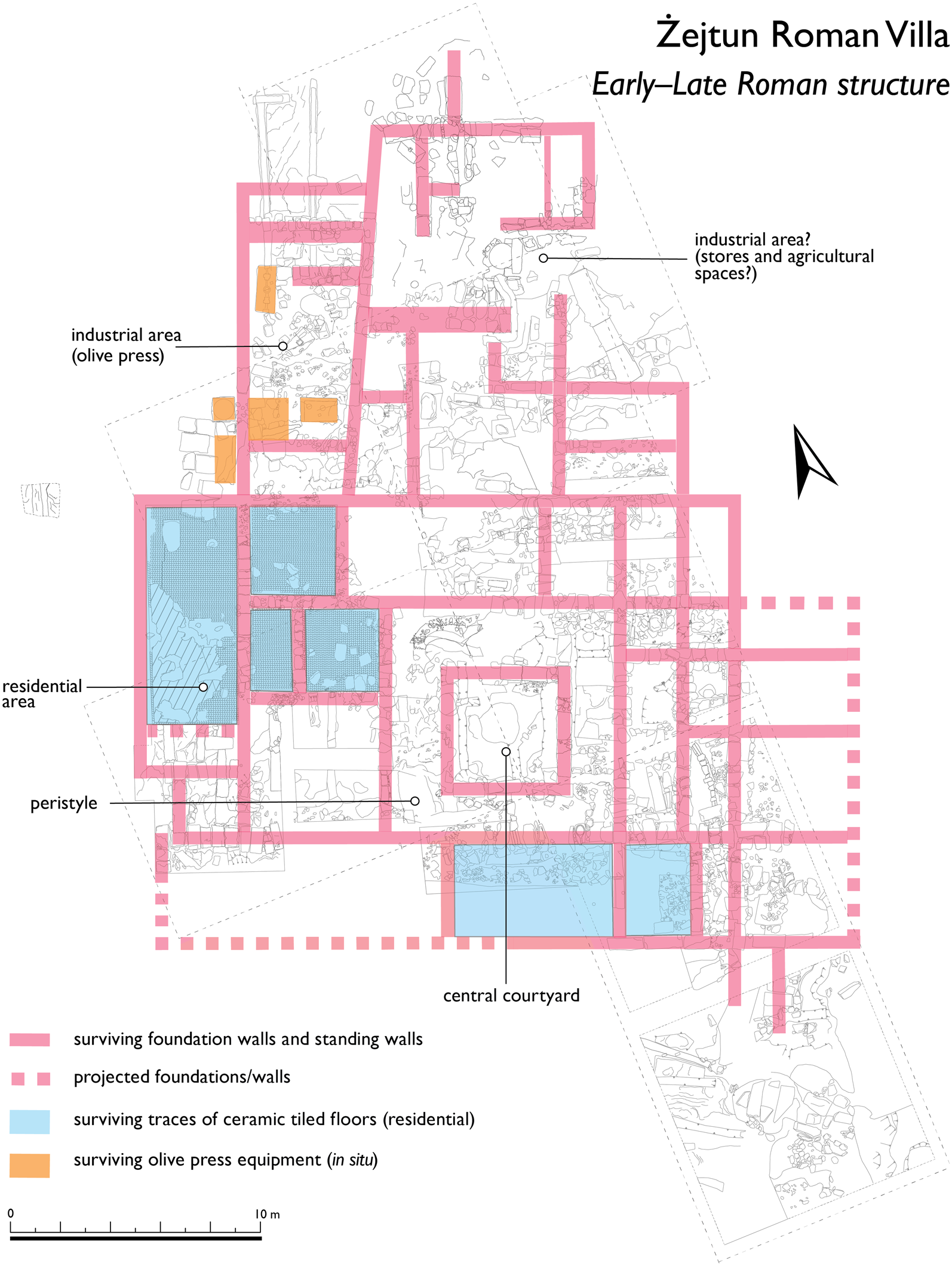
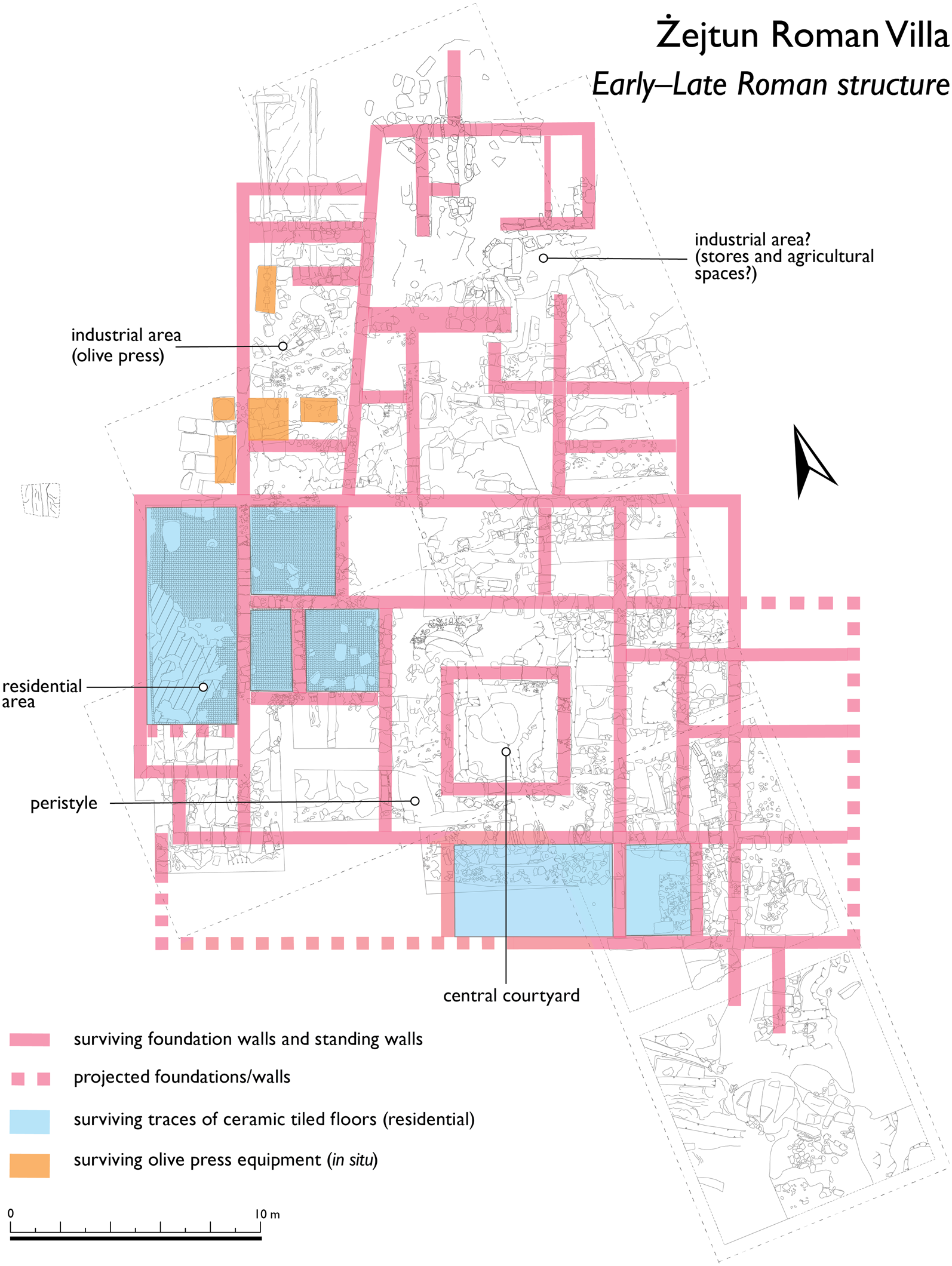
The Żejtun Villa (Figure 3) was a villa rustica and the main structures date back to the Late Republican–Early Imperial Period. An earlier occupation (Punic) is attested by reused ashlar walls, sealed agricultural trenches and pottery (Vella et al. Reference Vella2017, 117; Fort et al. Reference Fort2023). Activities could have included vine cultivation, possibly shifting to olive-oil production, considering the press components in the Imperial Phase villa (Anastasi et al. Reference Anastasi, Betts, Vella and Serracino2022, 10).
Site plan of the Żejtun Villa highlighting the proposed Early–Late Roman structures (after Fort et al. Reference Fort2023, Figure 2).
Late Punic/Late Republican pottery in Malta
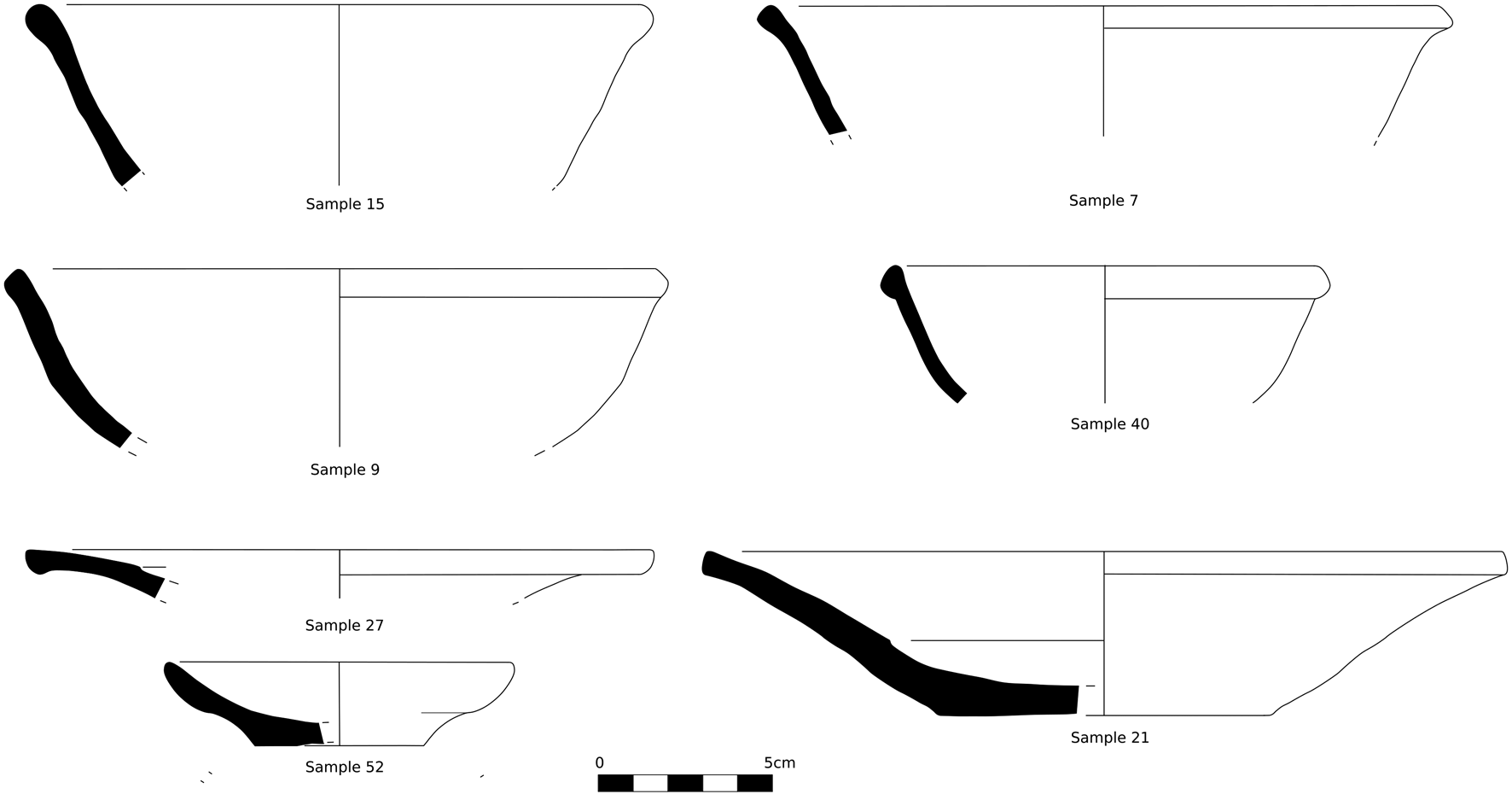
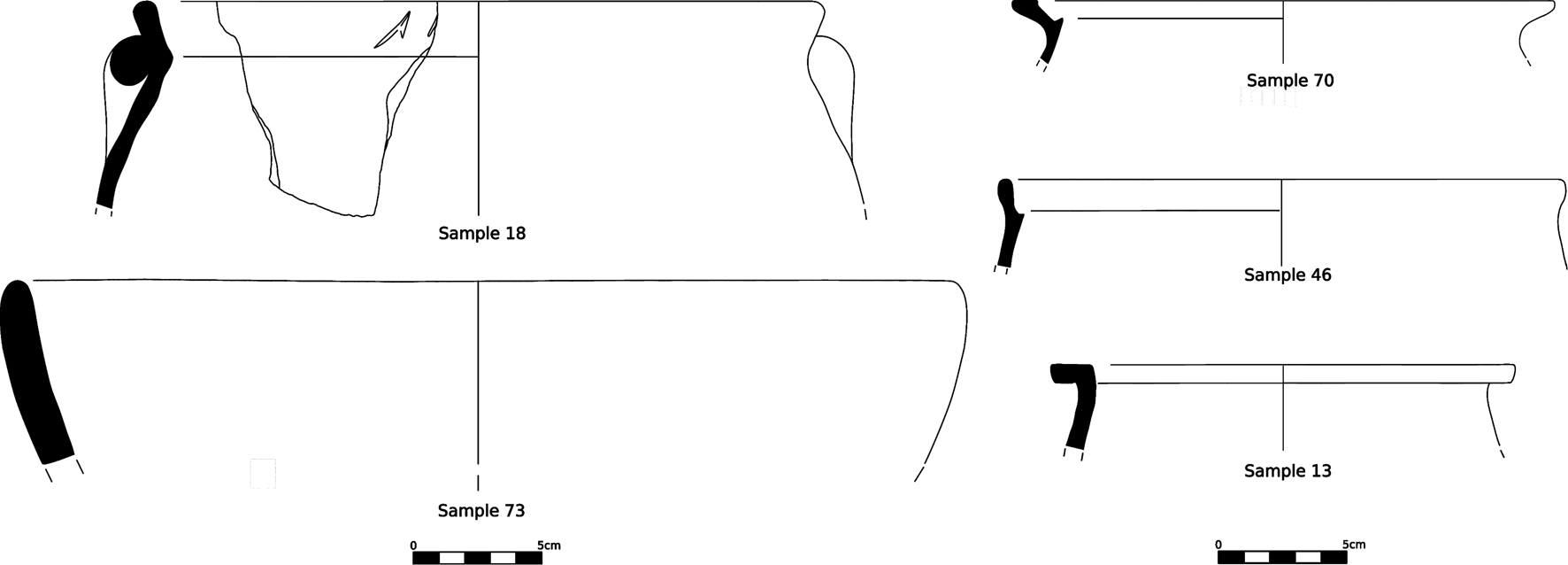
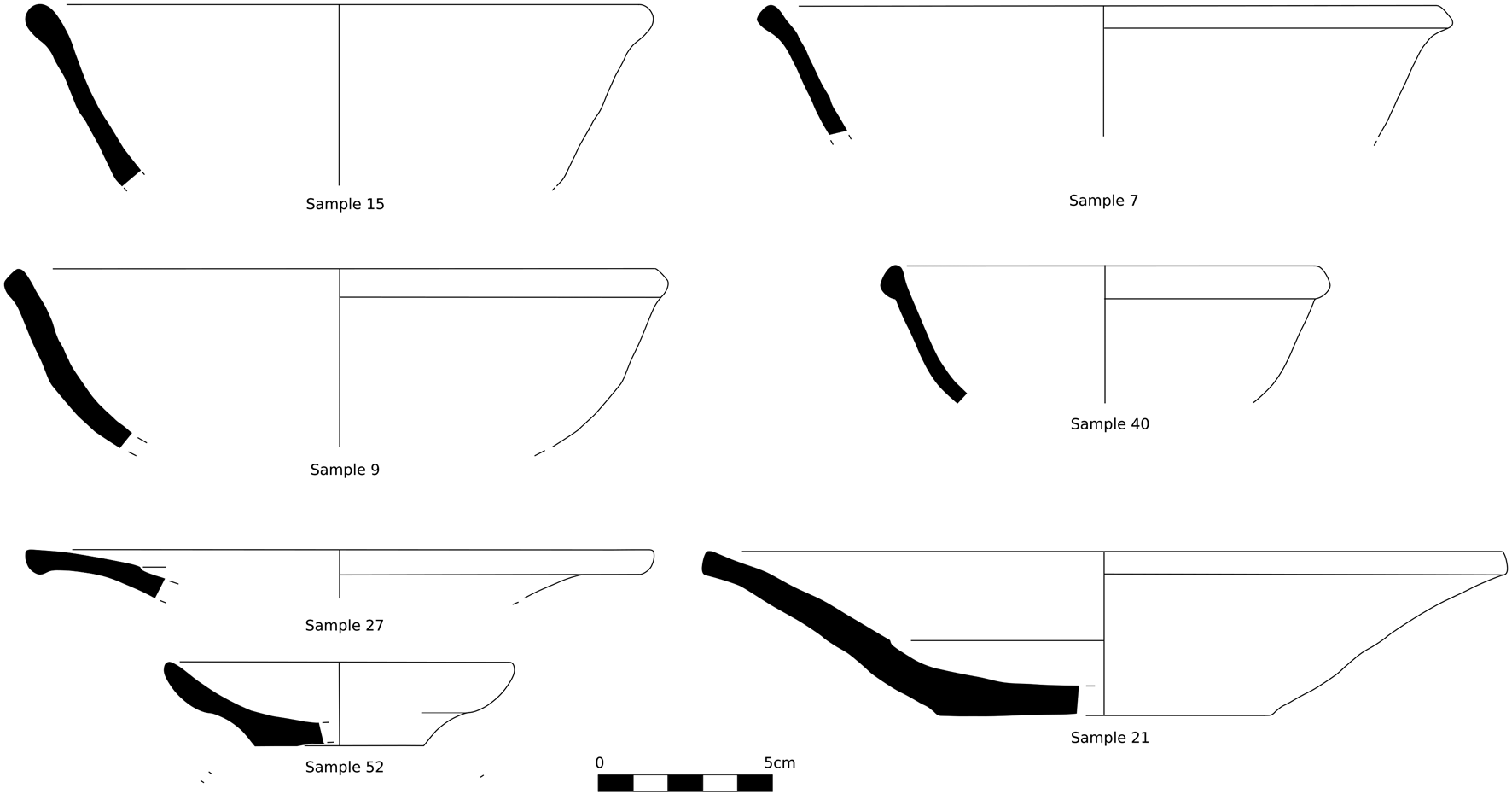
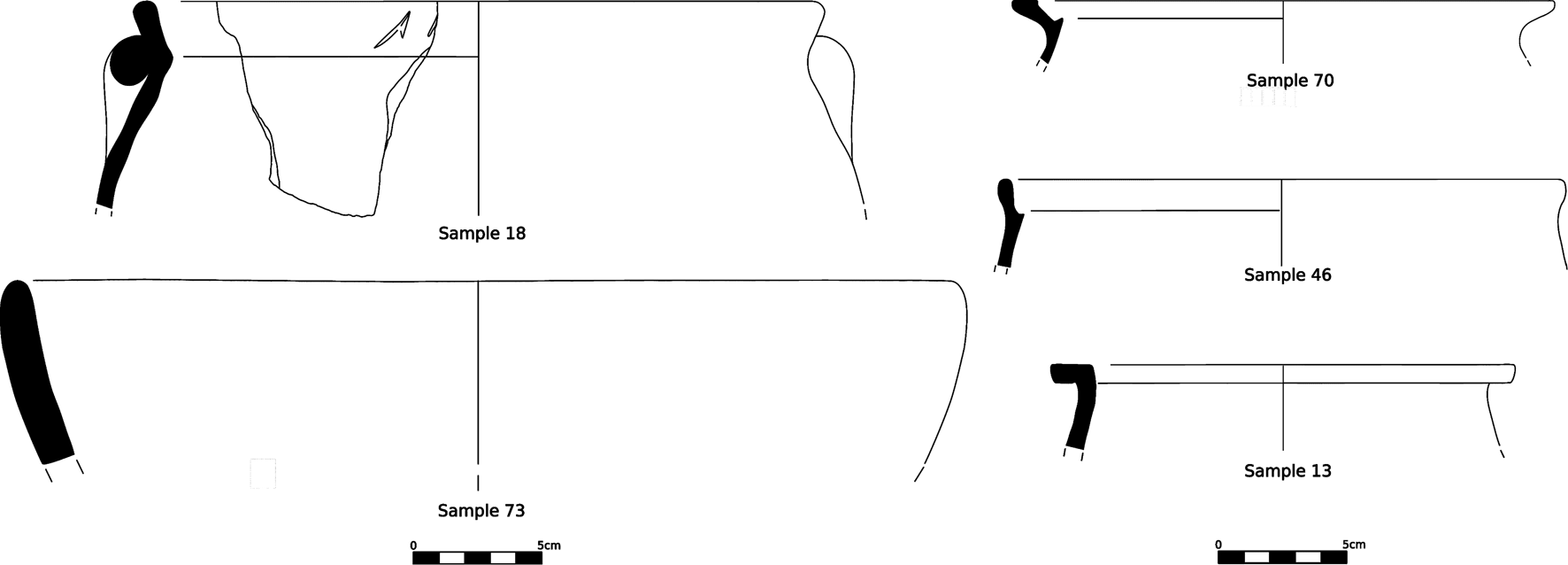
Bowls and plates are the most common pottery shapes found at both sites, followed by cooking vessels, mainly casseroles (Quercia Reference Quercia2005, 342; Notarstefano Reference Notarstefano2012, 121; Vella et al. Reference Vella2017, 125). Plates and bowls had flaring walls and everted rims, or straight walls and triangular rims (Figure 4). Bodies could be ribbed; wiping marks were often visible, and bases were left untreated with concentric marks (Quercia Reference Quercia and Sagona2011, 437; Anastasi Reference Anastasi2019, 35). Casseroles had a rounded or flat rim and a lid locator (Figure 6), and were often burnished inside. The shapes illustrated in Figures 4 and 6 are representative of non-funerary repertoires for the Late Punic–Late Republican period (Quercia Reference Quercia and Sagona2011; Anastasi Reference Anastasi2019). The Tas-Silġ assemblage also comprised miniature plates and bowls (e.g. Figure 4, sample 52), paralleled in tomb contexts (e.g. Vella et al. Reference Vella2003, 3 1002/1; Quercia Reference Quercia and Sagona2011, 444), and interpreted as ritual objects (Anastasi Reference Anastasi2010, 101).
Examples of bowls and plates in the Late Punic–Late Republican period.
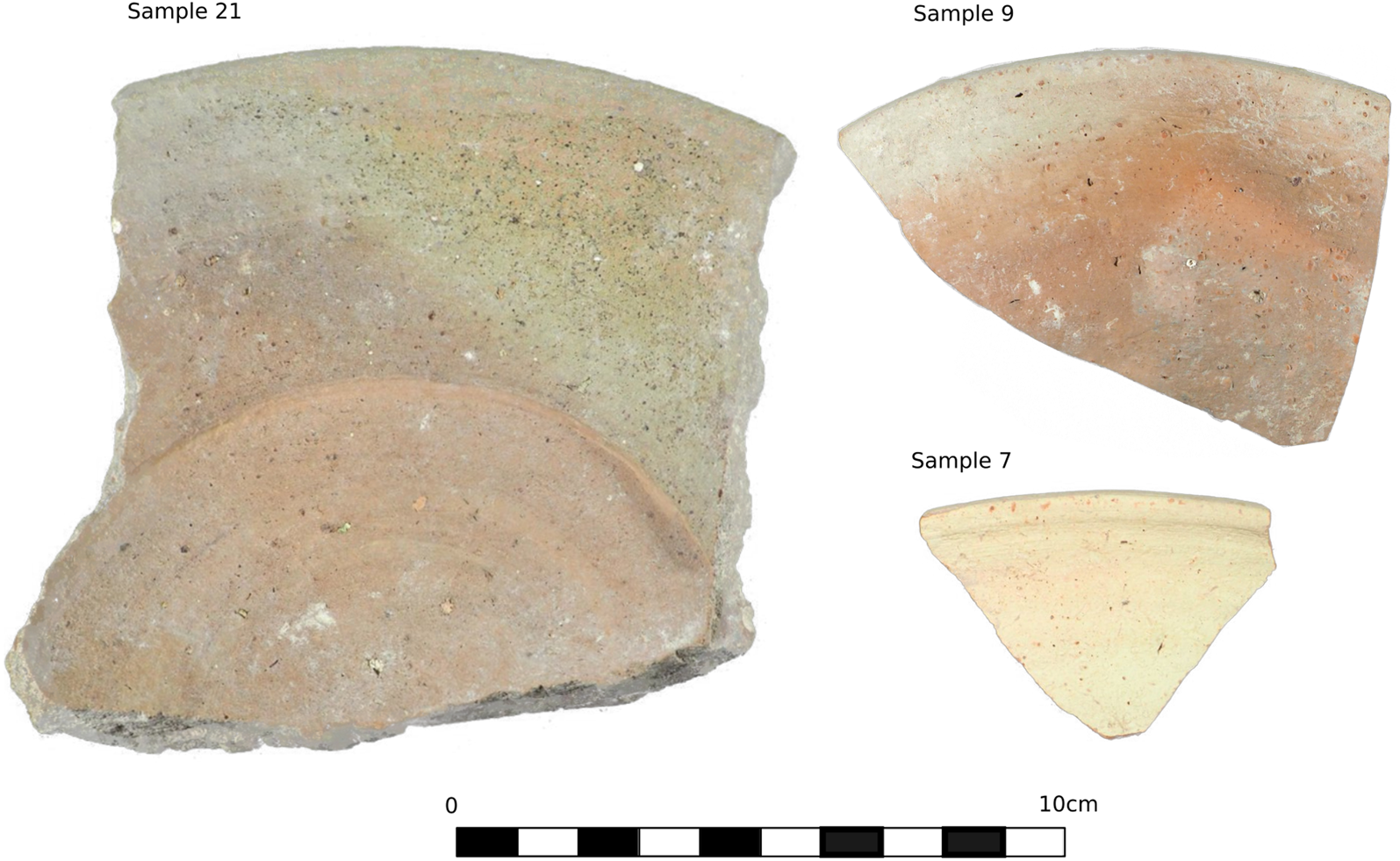
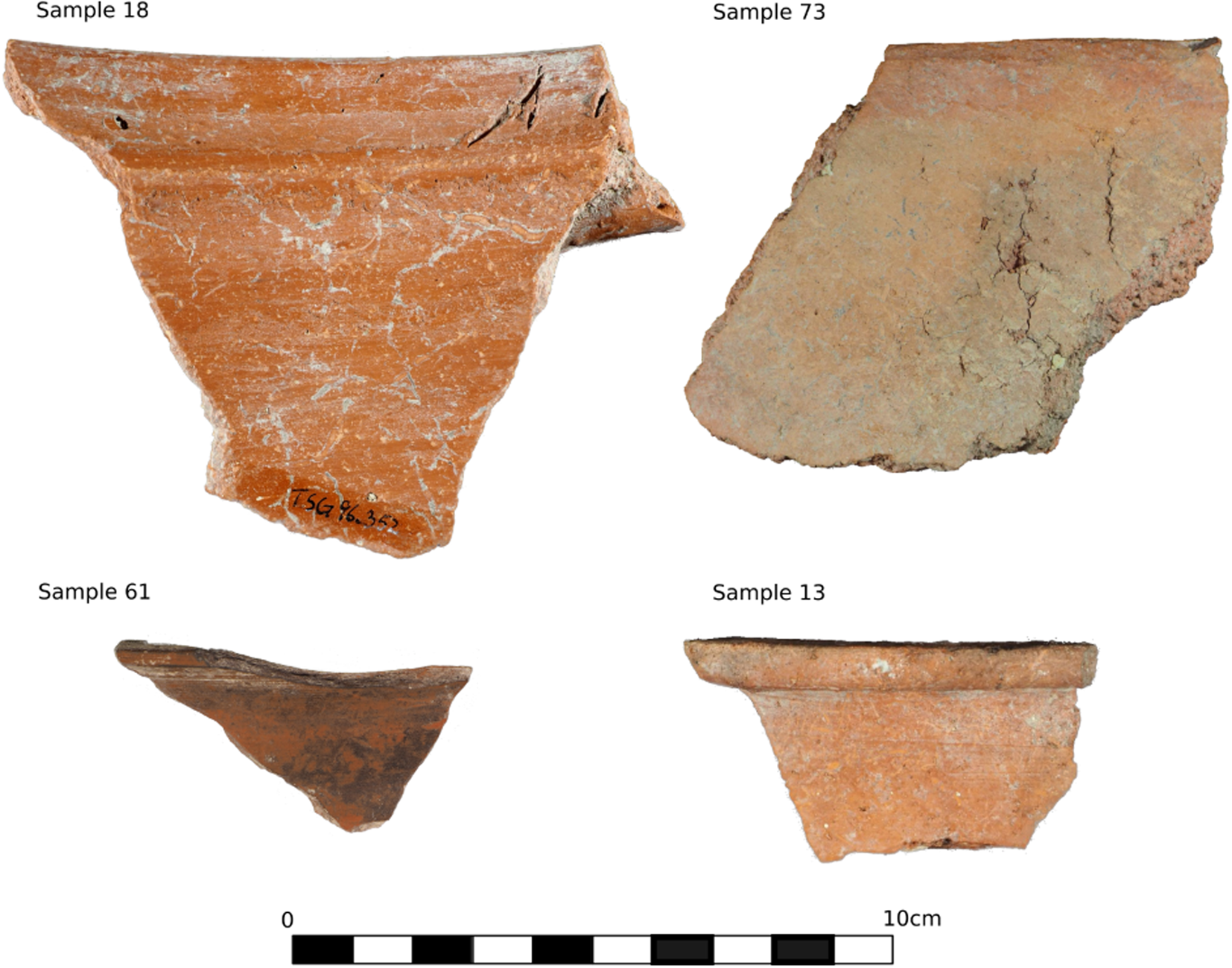
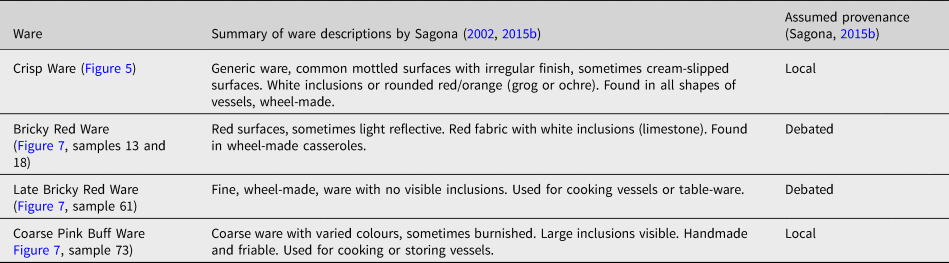
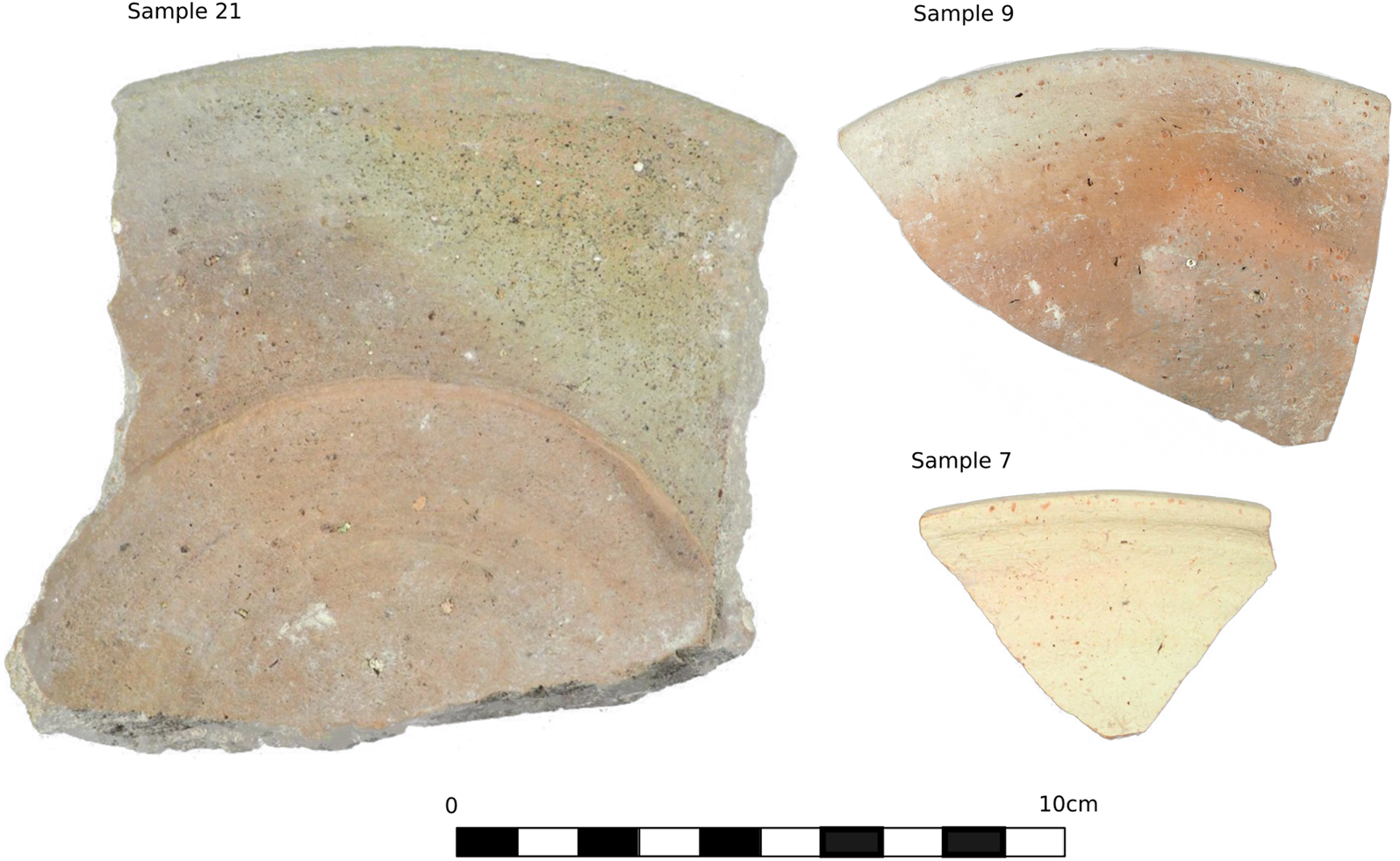
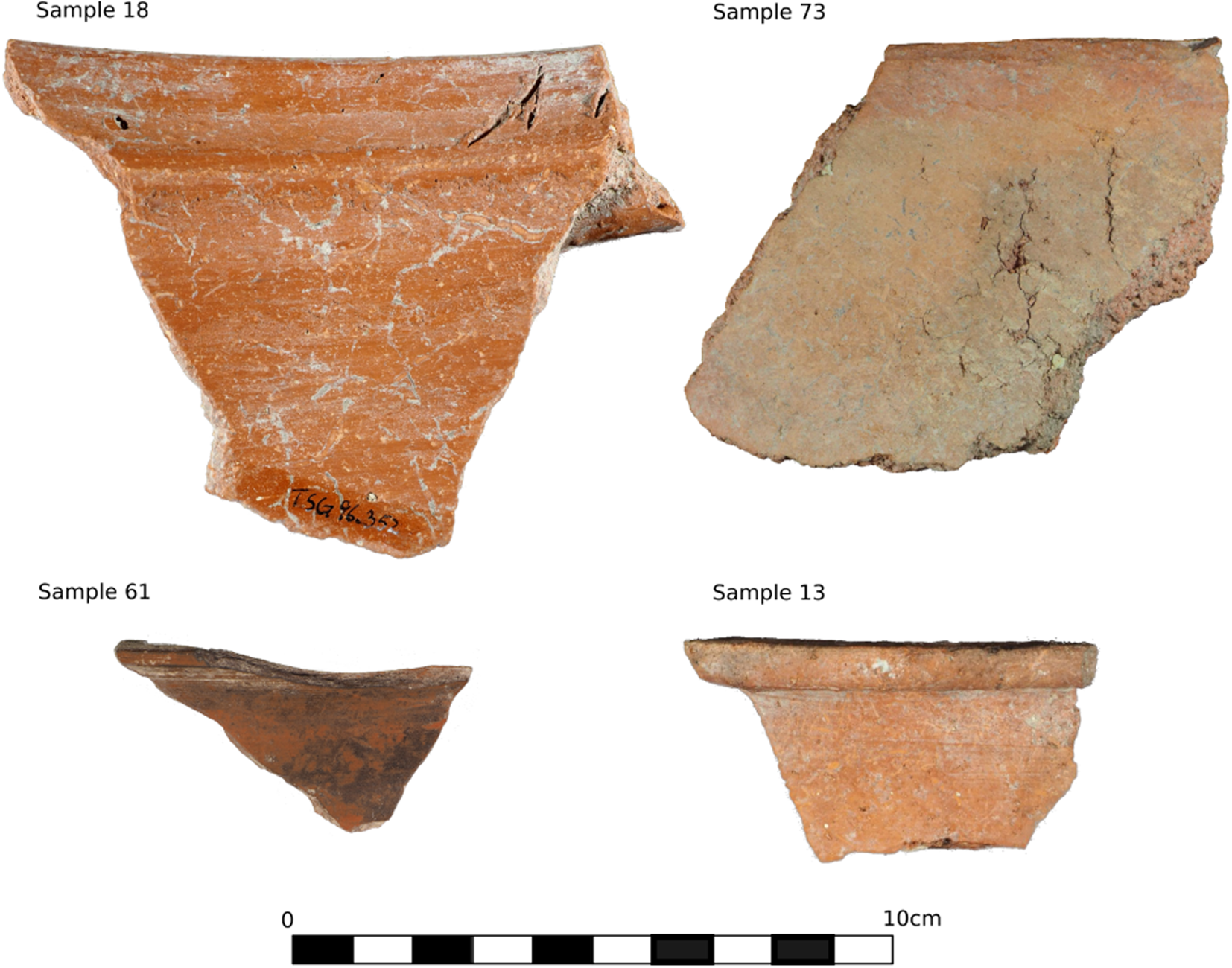
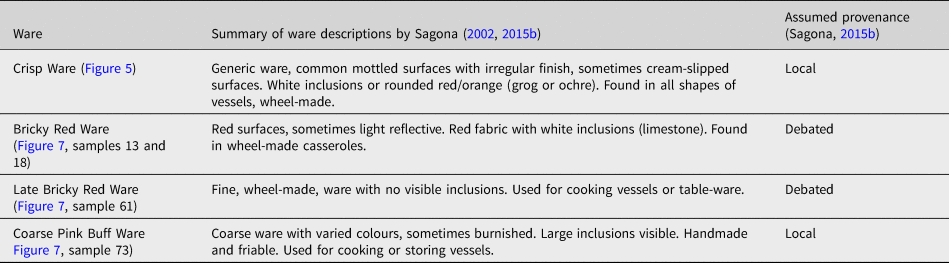
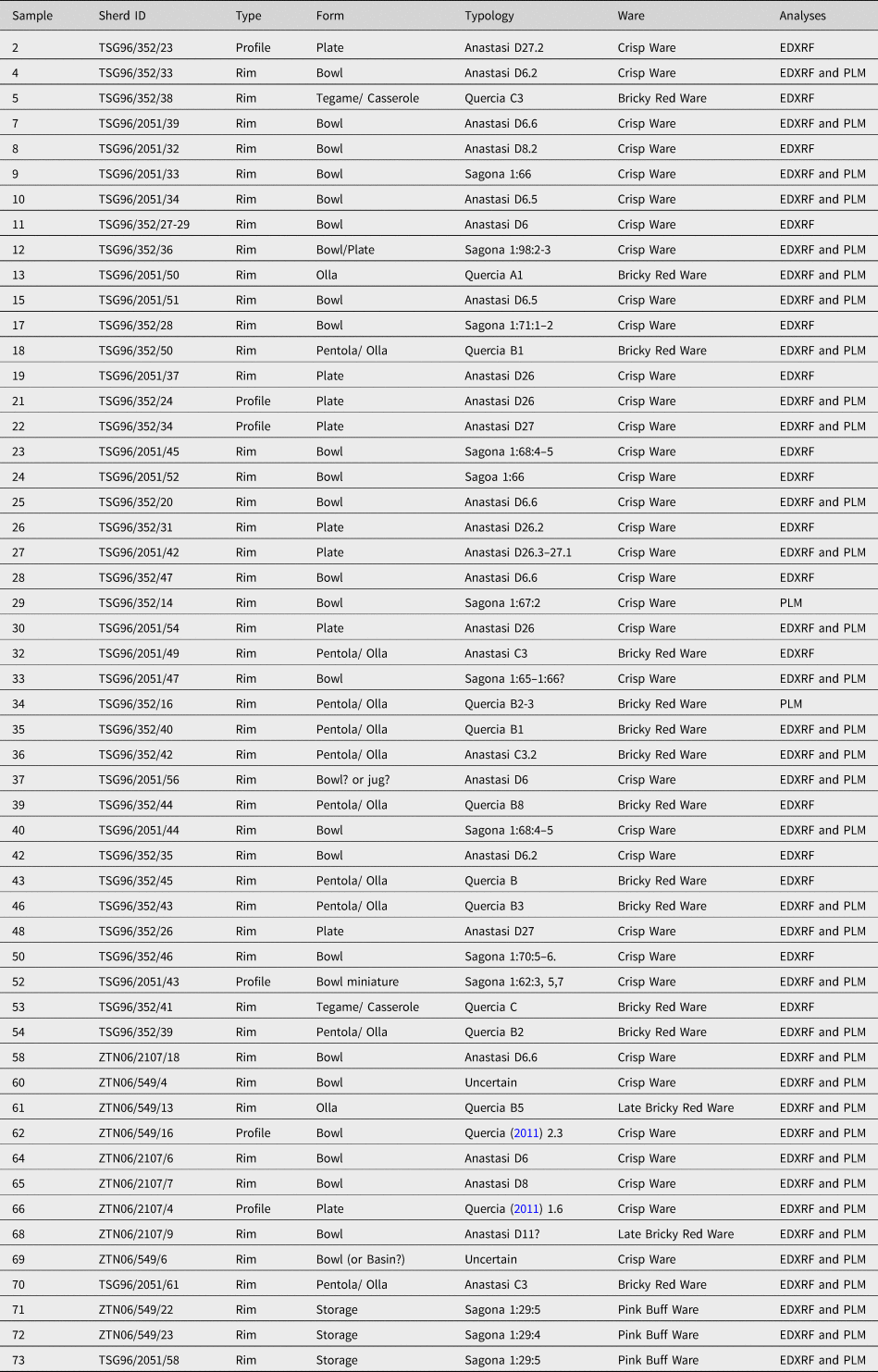
Crisp Ware (Sagona Reference Sagona2002; Sagona Reference Sagona, Bonanno and Vella2015b; Figure 5, Table 1), which encompasses most plates and bowls, has been assumed to be local because of its prevalence. Bricky Red Ware (Figure 7, samples 18 and 13), used specifically for casserole shapes (Quercia Reference Quercia2002, 410), was first interpreted as imported (Sagona Reference Sagona2002, 83). However, dedicatory inscriptions to the Punic goddess Astarte have been found at Tas-Silġ. These were made on Bricky Red Ware casseroles before firing (samples 18 and 34 in this study; Frendo et al. Reference Frendo, Mizzi, Bonanno and Vella2015) which suggests local production intended for the temple (Bonanno et al. Reference Bonanno2000). A local raw material has yet to be proposed.
Photographs of selected samples of bowls and plates.
Samples 13, 18, 46 and 70: Examples of cooking wares in the Late Punic–Late Republican period. Sample 18 is inscribed. The Late Punic ‘LT’ inscriptions were interpreted as an abbreviation for ‘for the offering’ (Frendo et al. Reference Frendo, Mizzi, Bonanno and Vella2015, 546–47). Sample 73: Large open shape.
Photographs of selected cooking wares.
Summaries of Maltese ware descriptions in the work of Sagona (Reference Sagona2002; Reference Sagona, Bonanno and Vella2015b) and her hypotheses of inclusion identification and provenance.
Few characterisation studies exist for Malta's Late Punic–Roman pottery production (Bruno et al. Reference Bruno, Capelli, D'Amico and Tampellini1999; Mommsen et al. Reference Mommsen2006; Schmidt et al. Reference Schmidt and Bechtold2013). This reflects the lack of research on Punic-Roman pottery in Malta until the first comprehensive secondary Roman assemblage was published in 1990 (Blagg et al. Reference Blagg, Bonanno and Luttrell1990; Anastasi Reference Anastasi2019, 2). The lack of typological studies for these periods has been addressed in the last 20 years by Sagona (Reference Sagona2002, Punic funerary), Bruno (Reference Bruno2009, Roman amphorae), Quercia (Reference Quercia2002; Reference Quercia2005; Reference Quercia and Sagona2011, Punic/Roman at Tas-Silġ) and Anastasi (Reference Anastasi2019, who studied three sites dating from the Late Republican period to the fourth century CE). However, typological studies are insufficient to fully understand how and where vessels were made.
Fabrics of two general types of Roman amphorae found at the sites at Tas-Silġ and San Pawl Milqi (Burmarrad, central Malta) were described by Bruno and Capelli (Reference Bruno, Capelli, D'Amico and Tampellini1999) using petrography to assess their provenance, and to create comparative material from Malta. The FACEM database (Schmidt et al. Reference Schmidt and Bechtold2013) also described Punic (sixth–fifth century BCE) amphorae and a few coarse wares from the Żejtun Villa. Only one chemical characterisation study included Late Punic pottery from Tas-Silġ (Mommsen et al. Reference Mommsen2006), where sherds from the Temple period to the third century BCE were analysed using Neutron Activation Analysis (NAA) to assess variations in composition. Finally, two dissertations were written on selected Imperial sherds (Asciak Reference Asciak2019; Grech Reference Grech2019). None of these studies had the opportunity to integrate mineralogical-petrographic and chemical analyses and typology in an interdisciplinary approach, which has since been generally adopted and applied to other periods in Malta (e.g. for the Bronze Age, Tanasi et al. Reference Tanasi, Daniele, Cannavò, Levi, Tanasi and Cardona2020).
Maltese geology and raw materials
Malta has five exposed sedimentary formations dated to the Late Oligocene and Miocene periods (Pedley et al. Reference Pedley and Clarke2002; Scerri Reference Scerri, Gauci and Schembri2019; Chatzimpaloglou et al. Reference Chatzimpaloglou, Schembri, French, Ruffell, Stoddart and French2020). The rock types/formations, in the order of deposition, are: (1) Lower Coralline Limestone (LCL); (2) Globigerina Limestone (GLS); (3) Blue Clays (BC); (4) Greensand (GNS); and (5) Upper Coralline Limestone (UCL). These marine exposures are sometimes overlaid by patches of younger terrestrial deposits of the Pleistocene age (‘Ice Age’ deposits). The BC formation has been considered the primary source of local pottery raw material, as the other formations are limestones and sandstone (Bruno et al. Reference Bruno, Capelli, D'Amico and Tampellini1999, 63; Tanasi et al. Reference Tanasi, Brunelli, Cannavò and Levi2019, 9; Anastasi et al. Reference Anastasi, Capelli, Gambin and Sourisseau2021). The BC formation originated in a change from sedimentation dominated by carbonates to clay-dominated pelites deposited in an open-marine environment (John et al. Reference John, Mutti and Adatte2003). It rests on the Globigerina Limestone and is overlaid by the Upper Coralline Limestone. Different layers are observed within the BC with varying calcium carbonate content (Pedley Reference Pedley1978; John et al. Reference John, Mutti and Adatte2003). The deep marine sediments of the BC unit include abundant planktonic and benthic foraminifera tests and mollusc remains (Pedley et al. Reference Pedley and Clarke2002). This formation, found in Northern and Western Malta and Gozo, is mostly eroded in the southeastern part of Malta (Magri Reference Magri2006, 14).
In the eastern part of Malta, the San Leonardo beds comprise ‘lime mudstones with intercalated clay and karstic surfaces superficially similar to the Qammieħ Beds’ (Pedley Reference Pedley2011, 916). It has recently been argued that these beds were deposited during the Pleistocene period (Scerri Reference Scerri, Gauci and Schembri2019, 46).
Little archaeological and experimental research has been conducted on the variations (e.g., mineralogy, chemistry, coarseness and workability) within and across the BC sources. Terra Rossa soils, locally present in thin layers over the UCL and the GLS, were suggested as another possible material for ceramic production (Bruno Reference Bruno2009, 23; Malone et al. Reference Malone, Brogan, McLaughlin and Malone2020, 742, as a hypothesis for Neolithic pottery), but were not investigated. The classification and diversity of iron-rich soils in the Maltese islands were discussed in Montalto (Reference Montalto2010, 51–52, 126), who highlighted that Terra Rossa was an all-encompassing name for several red iron-rich soils and formation processes.
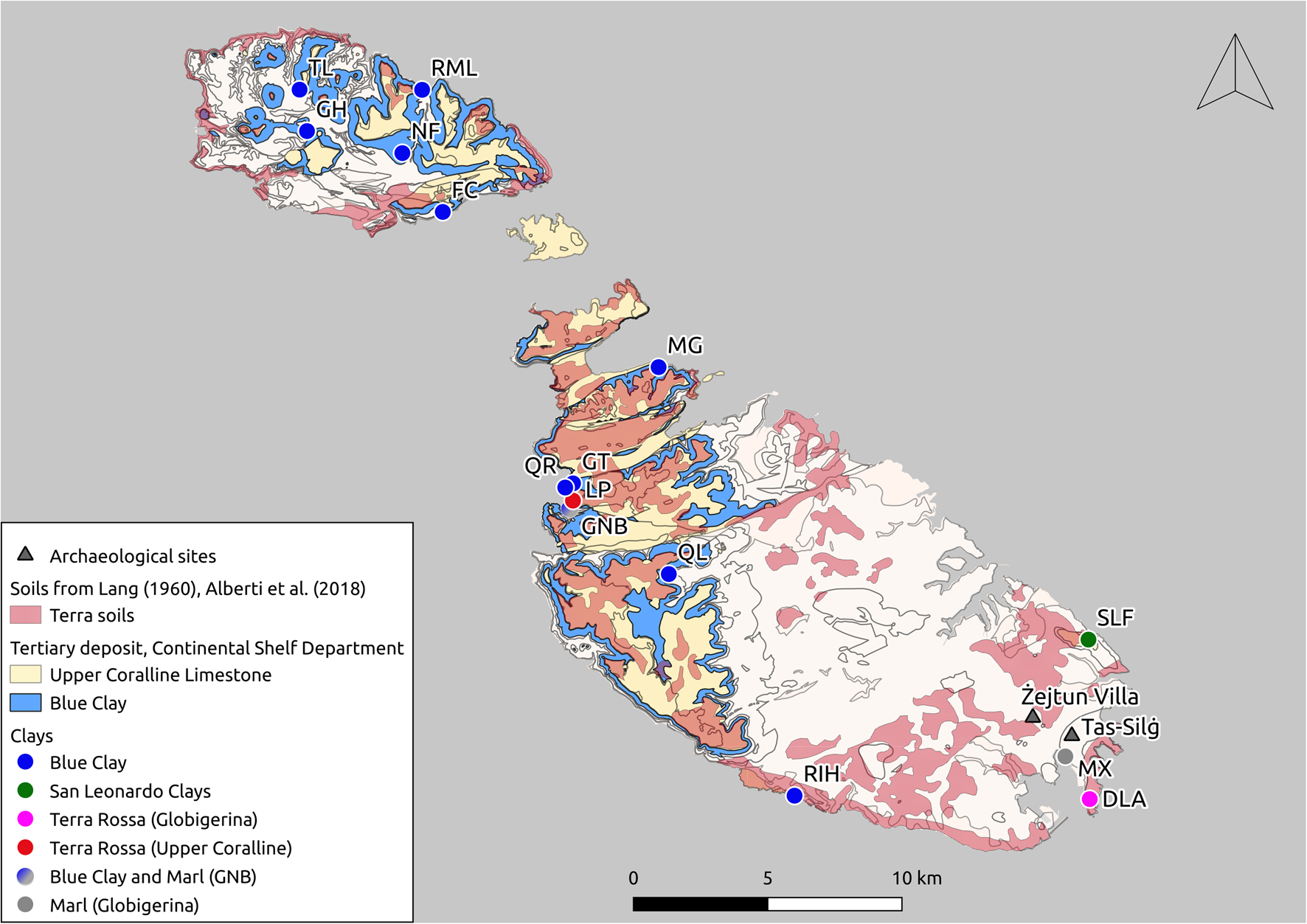
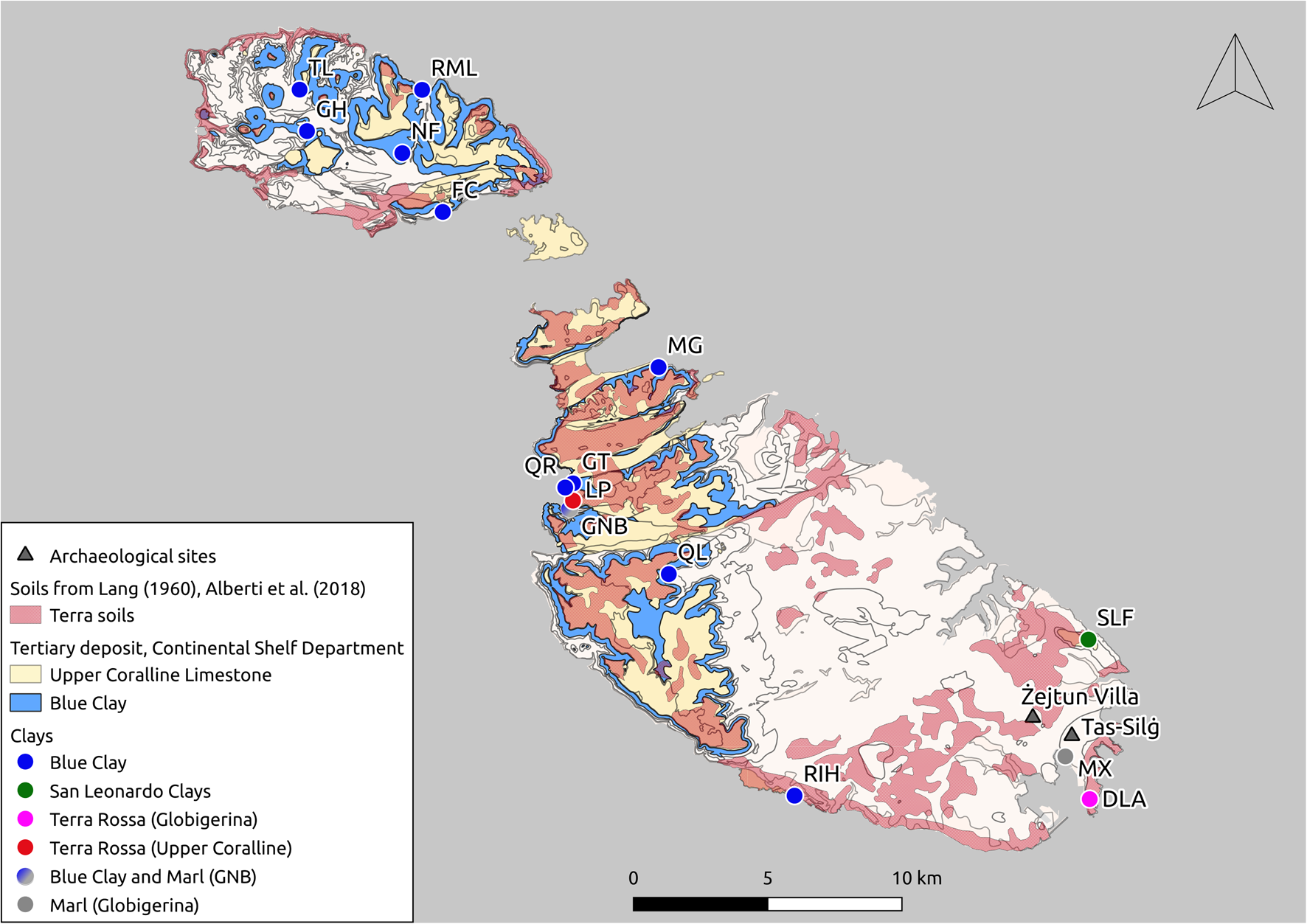
No BC outcrops can be found near the two archaeological sites (Figure 8). Apart from very thin layers of Terra Rossa soils, in that area there are no outcrops of raw materials permitting intensive pottery production. The San Leonardo beds are in the vicinity of the two archaeological sites. How accessible the clay outcrops were in the past remains to be ascertained as the area has been heavily modified by a British fort surrounded by a ditch and terracing in recent history.
Map of the geological samples. Geological data from Continental Shelf Department (Continental Shelf 2022) and Alberti et al. (Reference Alberti, Grima and Vella2018). Upper Coralline Limestone covers parts of the Blue Clay. Terra Rossa soils, as classified by Lang (Reference Lang1960), also include very thin deposits on the Globigerina limestone.
Material and methods
Samples
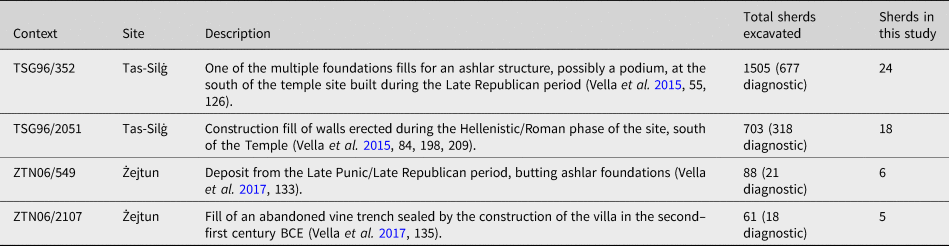
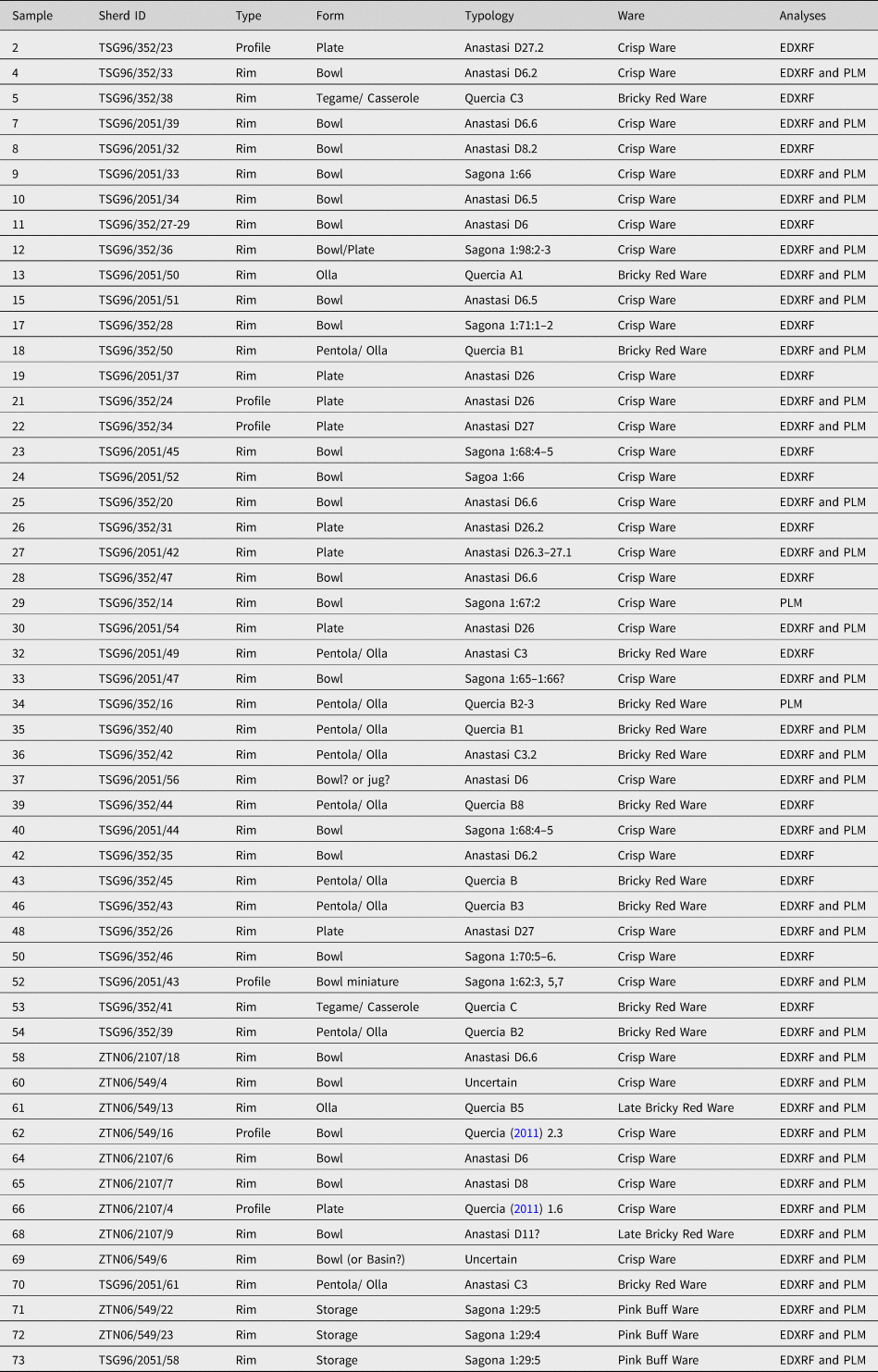
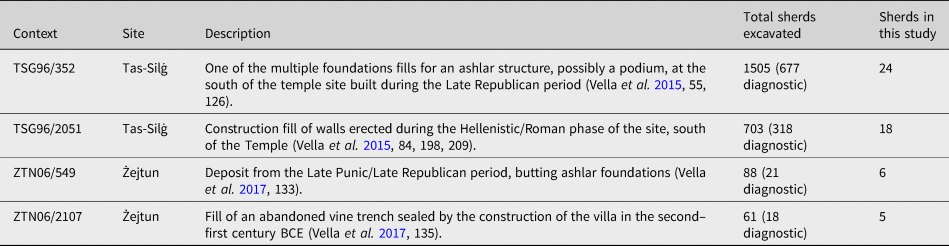
Fifty-three samples (Table 4) were analysed with PLM and/or EDXRF.Footnote 1 Descriptions and photographs are in an open-access online catalogue (Richard-Trémeau et al. Reference Richard-Trémeau, Humann and Betts2023). These sherds are from four stratigraphic assemblages dated from the fourth to the first century BCE (Table 2). The selection of plates, bowls and cooking types dating to the fourth to first century BCE was made using comparative material from previous studies and representative shapes of this period were selected. The sample choice drew upon typological frameworks established by Quercia (Reference Quercia2002; Reference Quercia and Sagona2011), who worked on Tas-Silġ; the broader Roman typology described by Anastasi (Reference Anastasi2019); the extensive classification work of Sagona (Reference Sagona2002; Reference Sagona, Bonanno and Vella2015b) on both funerary material and Tas-Silġ; and Bechtold's work (Reference Bechtold2017) at Żejtun.
Descriptions of contexts from which the samples were extracted. Further details can be found in Vella et al. (Reference Vella, Mason, Farrugia, Zammit, Bonanno and Vella2015) and (2017).
Geological samples were collected from BC hills and slopes (Table S1 in supplementary materials), from at least two elevations for each source. Two red clayey soils are from rock cavities created by the erosion of the UCL at Ta’ Lippija (LP.A and LP.E), Ġnejna. Another red soil was collected in Delimara (DL.A) on Middle Globigerina beds, but this did not exhibit hydroplastic properties. Two samples from the San Leonardo clays and soil samples eroded from the marly interbeds of the Globigerina limestone (MX.A, MX.D, GNB.B, GNB.E) were also included.
Polarised light microscopy
Thirty-seven pottery samples were analysed using PLM (Table 4), selecting sherds representing visual variations in fabric. A cross-section of each sherd, perpendicular to the rim surface, was cut for thin-sectioning. Additionally, experimental briquettes of Ta’ Lippija Terra Rossa were studied in thin sections after firing at 500°C (Figure S2 in supplementary material).
Preliminary EDXRF and data analysis:
Fifty-one pottery samples (Table 4) and 34 geological samples, were analysed with EDXRF. The 51 pottery samples included 35 samples also analysed petrographically. Samples 29 and 34 were not included so as not to compromise the Late Punic inscriptions on the vessels.
List of variables analysed in the multivariate analysis.

List of the samples analysed. Typological comparative material can be found in Quercia (Reference Quercia2002; Reference Quercia and Sagona2011), Anastasi (Reference Anastasi2019) and Sagona (Reference Sagona, Bonanno and Vella2015b). Macroscopic ware classification is based on Sagona's descriptions (Reference Sagona2002; Reference Sagona, Bonanno and Vella2015b). ‘Olla’ and ‘Pentola’ are casseroles /cooking pots described by Quercia (Reference Quercia2002).
The surfaces of the pottery samples were removed using a rotary grinding tool to minimise the effects of surface treatment and contamination on the analysis. At least 5 g of the samples, including the raw materials which were left unrefined, were powdered and dried for 24 hours at 100°C. They were then prepared in sample cups with supporting mylar membranes and inserted into the X-ray chamber flushed with helium. This methodology does not compensate for specific matrix effects (Speakman et al., Reference Speakman, Capelli, Little, Creel, Miller and Iñañez2011; Hunt and Speakman, Reference Hunt and Speakman2015).
The instrument employed was a Bruker S2 Ranger, routinely calibrated using a copper disc standard for energy calibration and a glass standard for detection parameters. Repeatability was assessed by comparing the data from multiple analyses of the same two samples across the data collection phase: sherd sample 21 was analysed 14 times, and the clay sample QL.A (Il-Qolla, Rabat), 12 times (data in Table S3). Silicon dioxide (SiO2) was selected as the matrix for the evaluation method based on the actual prevalence of the oxide in the collected samples. A SiO2 matrix also gave the best fittings, as observed in systematically lower R/R0 values, than for a CaCO3 matrix.
The data obtained were transformed for analysis. Data transformation for sub-compositional data for archaeometric analysis is debated (Glascock Reference Glascock2014; Baxter Reference Baxter2016; Greenacre Reference Greenacre2018; López-García et al. Reference López-García, Argote-Espino and Fačevicová2018). For this preliminary analysis, the data were normalised to 100% (Table S.5 in supplementary material) and logs to base ten were taken. Similar results (multivariate groups) were obtained using the standardisation formula in Baxter and Freestone (Reference Baxter and Freestone2006). Bivariate plots were created from the normalised (not log) data.
A hierarchical cluster analysis (HCA) was carried out on the log data for the sherds using the Average Link method (Drennan Reference Drennan2009, 313).Footnote 2 The data was then explored using Principal Component Analysis (PCA), in which the pottery samples were treated as active individuals, whilst the clay samples were considered supplementary individuals. This means the clay samples can be plotted without affecting the analysis (Lê et al. Reference Lê, Josse and Husson2008). The variables were chosen based on the readings’ repeatability and previous studies (e.g. Rb, Nb, Y, Sr, Pirone et al. Reference Pirone and Tykot2017). Some variables, such as phosphorus or sulphur, were not analysed because they can be influenced by secondary alteration (e.g. Pillay et al. Reference Pillay, Punyadeera, Jacobson and Eriksen2000). Other variables such as sodium and magnesium were excluded because of problems with repeatability of the readings as these are close to the limit of detectability of the instrument used. During the analysis, a few clay samples were removed from the dataset: GNB.B, GNB.E, MX.A, MX.D, MG.B. For example, MX.A, D and GNB.B, E, which are marly interbeds from the Globigerina limestones obscured patterns in PCA and were excluded as possible raw materials for pottery. All readings and datasets are accessible on an online repository (Richard-Trémeau et al. Reference Richard-Trémeau2024).
Creating the fabric groups
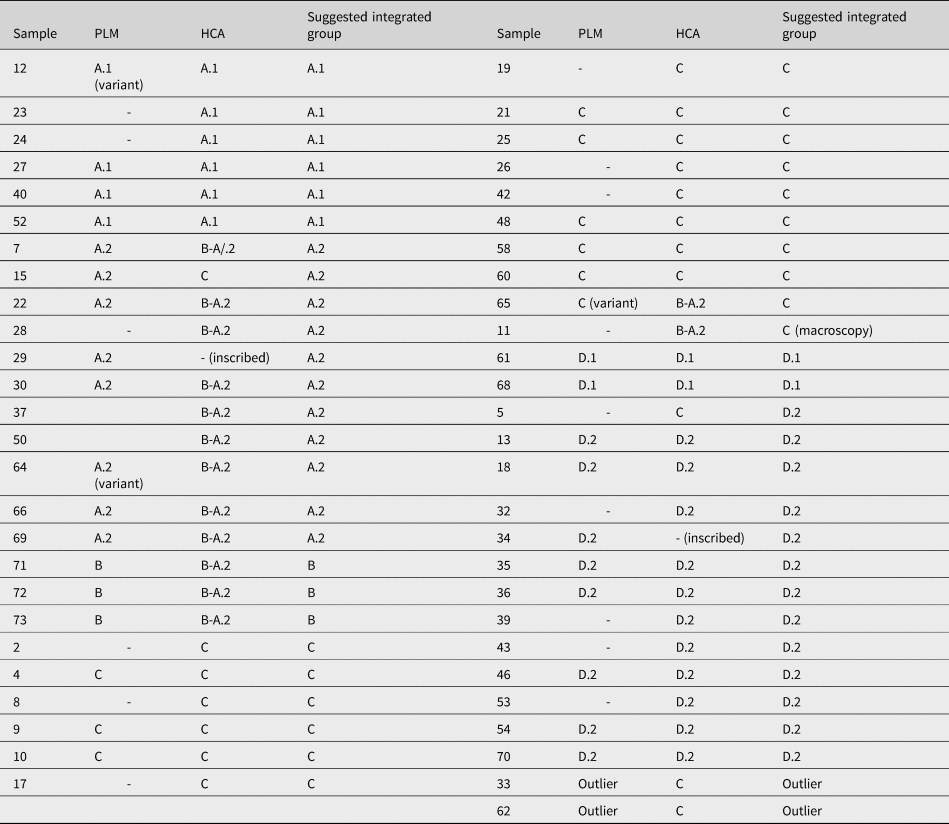
Each methodology (typology, petrography and chemical analysis) was initially carried out independently. The results of these were then compared to understand whether fabric groups identified by each method proved to be similar, and to compile coherent fabric groups identified by joint consideration of all methods. The integration of methods led to a unique classification, with few mismatches, considered the most representative of different raw materials or production techniques. These integrated groups were based on the sherds analysed with both petrography and chemical methods. The classification for the sherds only analysed chemically was then proposed based on visual comparison with the integrated groups and the chemical analysis. Mismatches and dissimilarities which exist between groups are explained in the text. Instead of presenting each method separately, the results presented here are structured following this integrated approach, with the rationale for each group including typological, petrographic and chemical analysis results.
Results
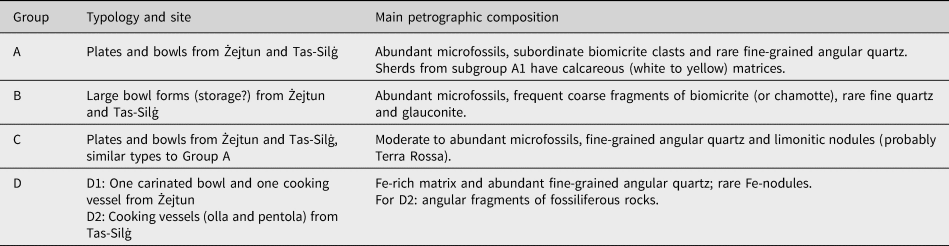
An overview of the results is followed by detailed fabric descriptions of the integrated groups and PCA results. The petrographic analysis combined with the typological classification suggested four major integrated groups (A–D), sometimes further divided into subgroups (Tables 5 and 6). Group D is made of a different raw material from all other groups. These four fabric groups are consistent with typological distinctions: Groups A and C include plates and bowls; Group B includes thick open forms; and Group D is composed of cooking vessels, with one exception, a fine carinated bowl (sample 68).
List of results per analysis.
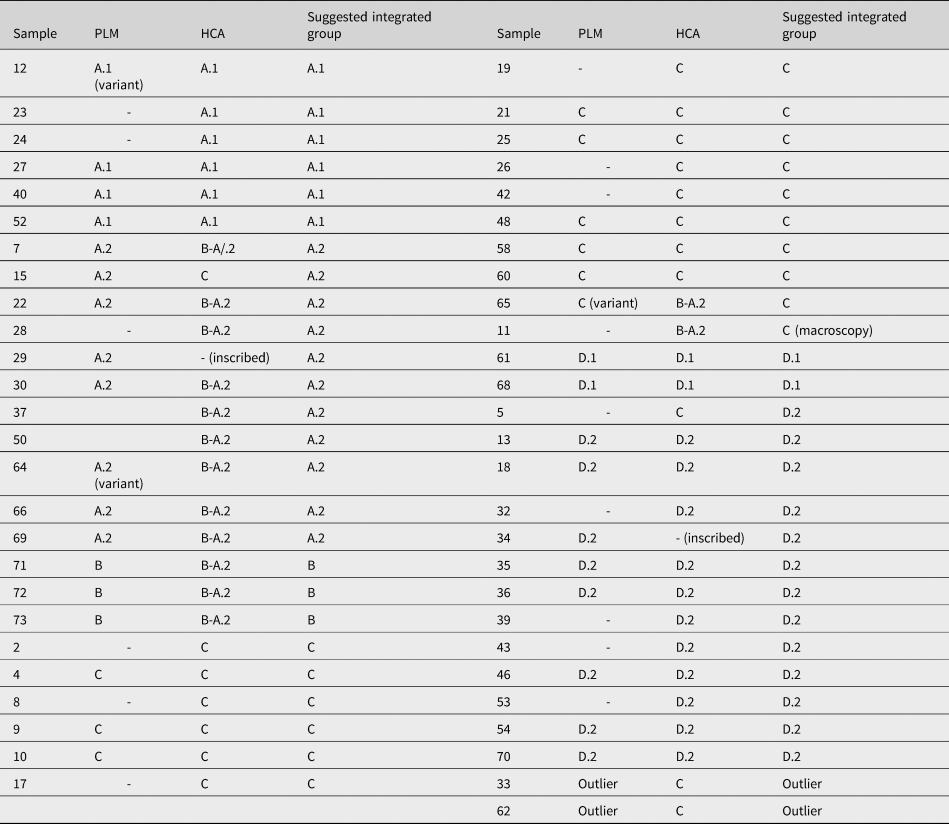
Summary of the main fabric groups with PLM.
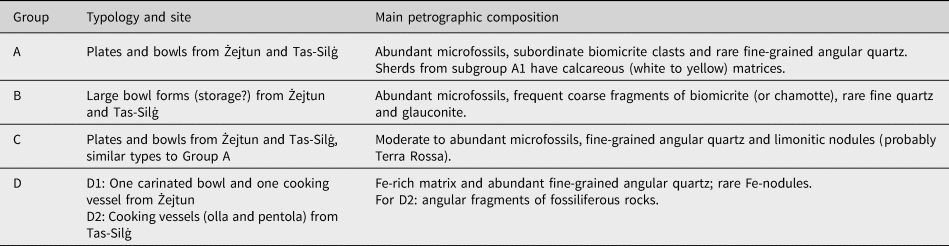
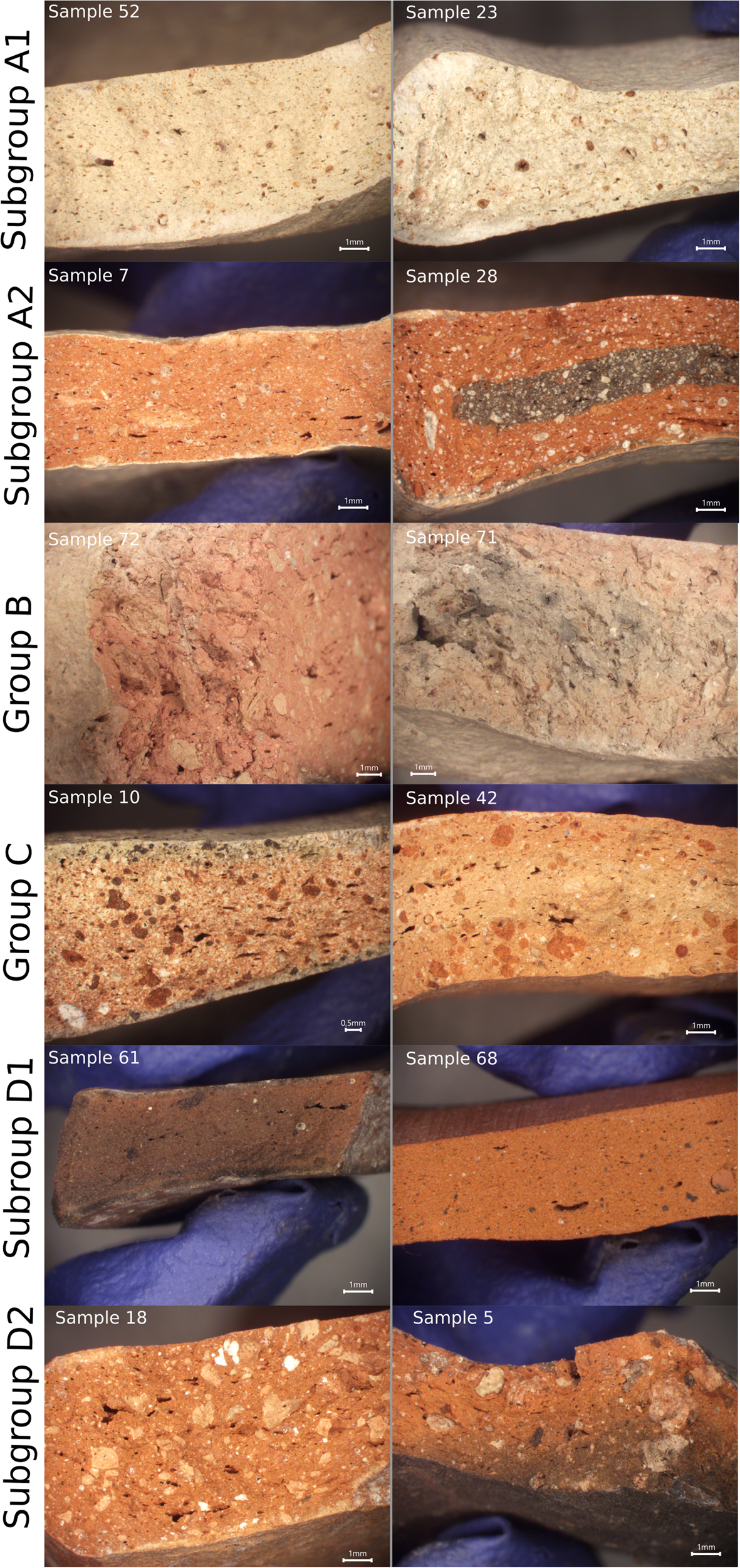
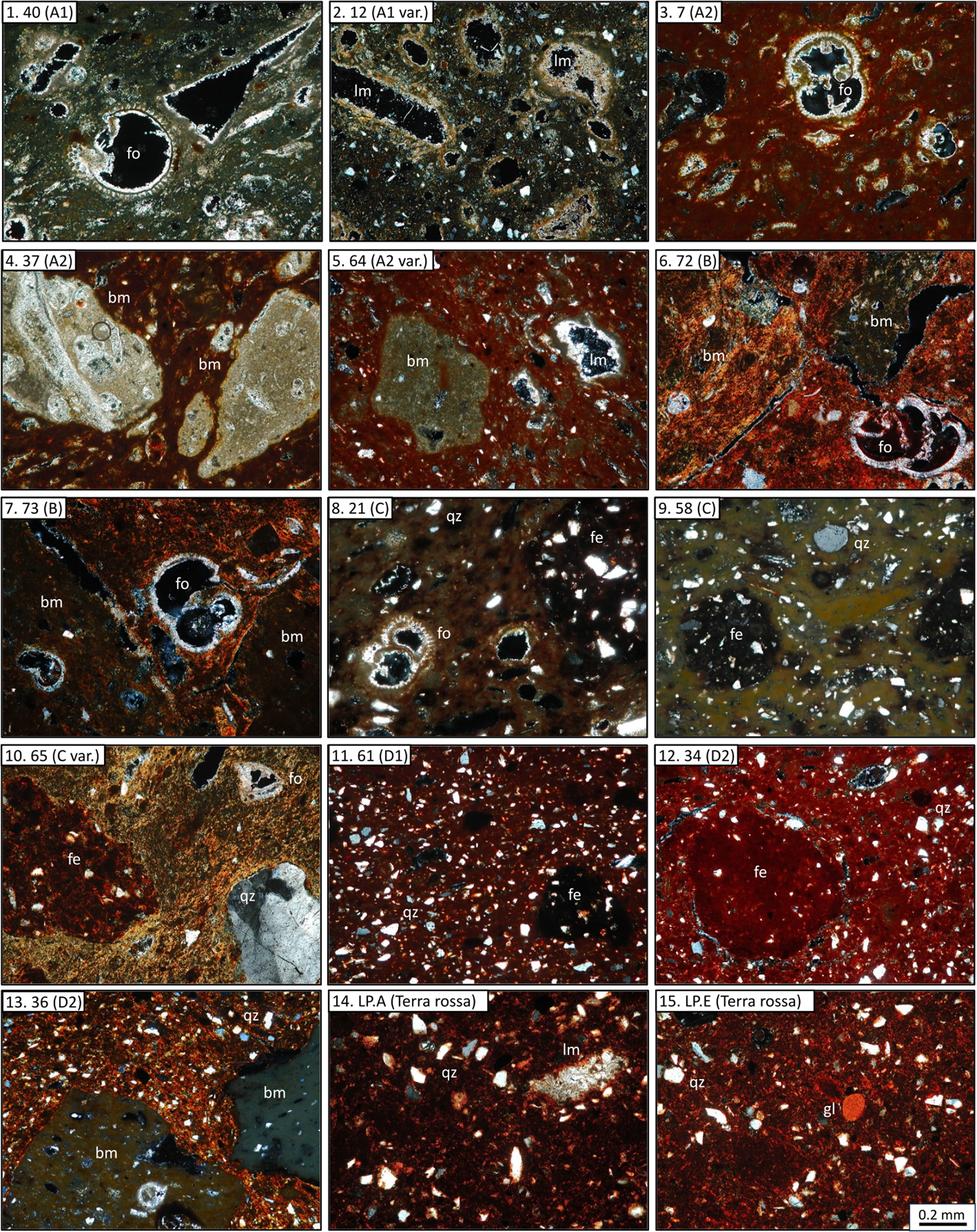
These four groups represent differences in raw material procurement and/or manufacturing methods, and can be distinguished visually (Figure 9), petrographically (Figure 10) and chemically (Figure 12) with only a few mismatches.
Visual aid to classify pottery based on the fresh breaks.
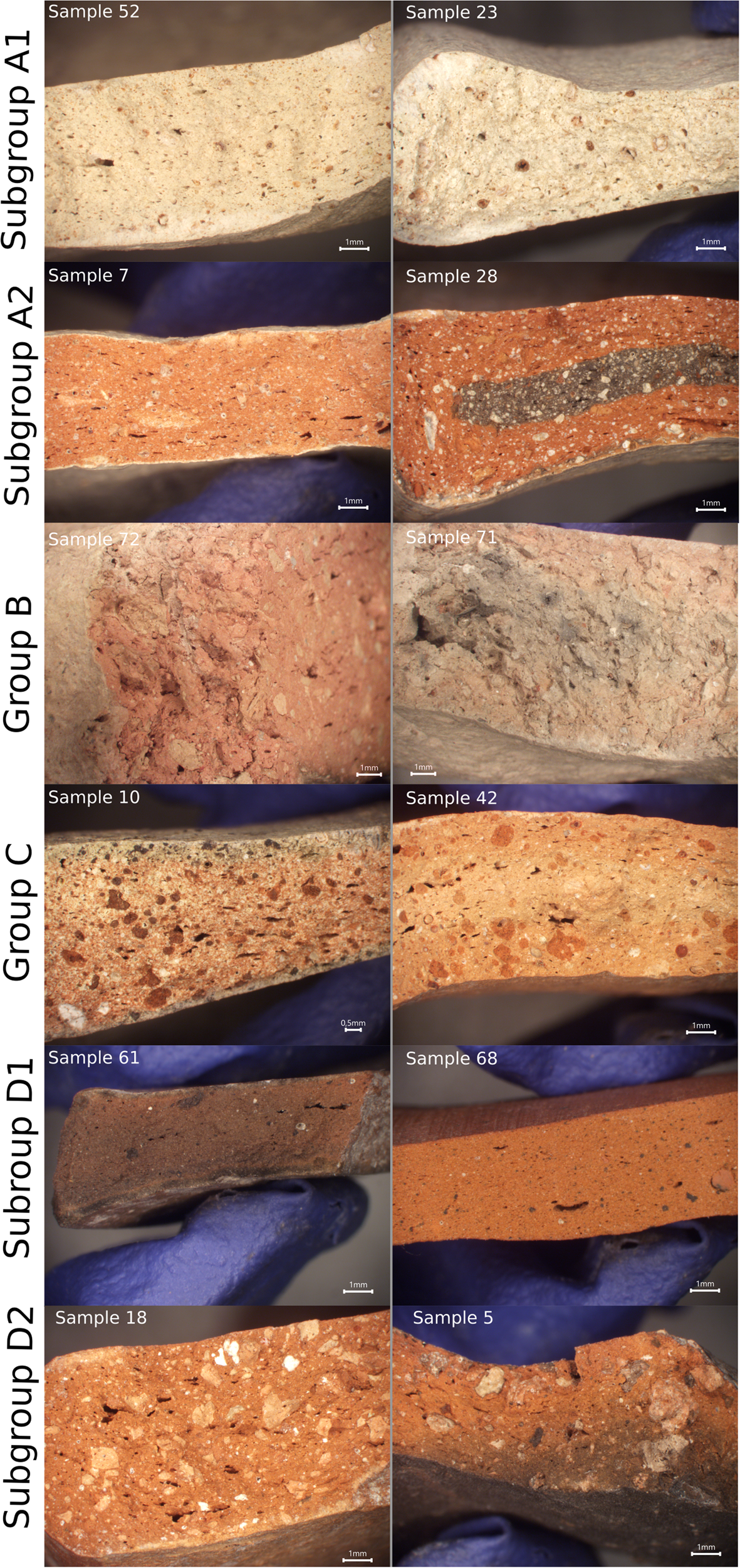
Photomicrographs (XPL) of representative samples of the identified fabrics groups. bm: biomicrite; fe: limonitic nodule; fo: microfossil; gl: glauconite; lm: limestone; qz: quartz.
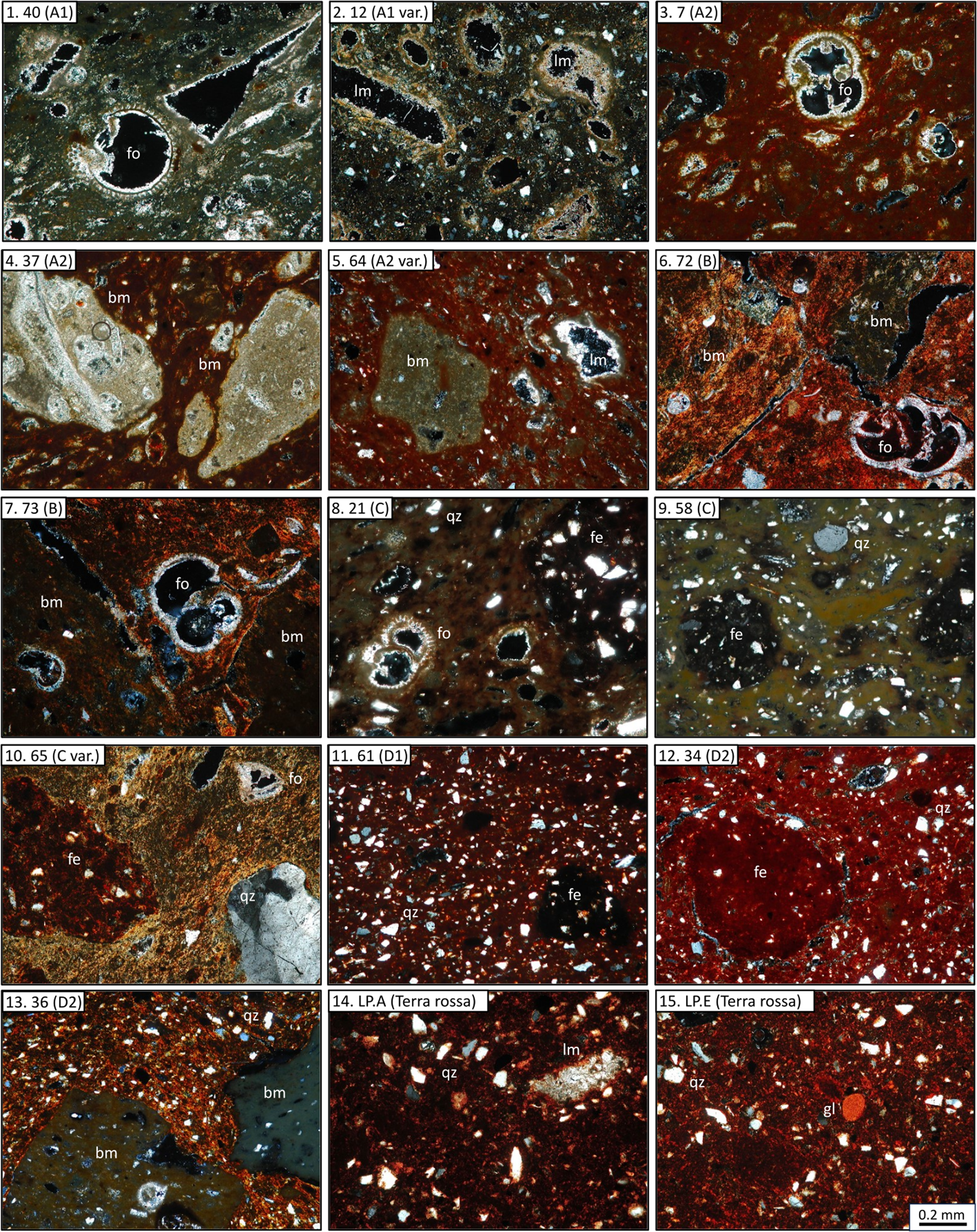
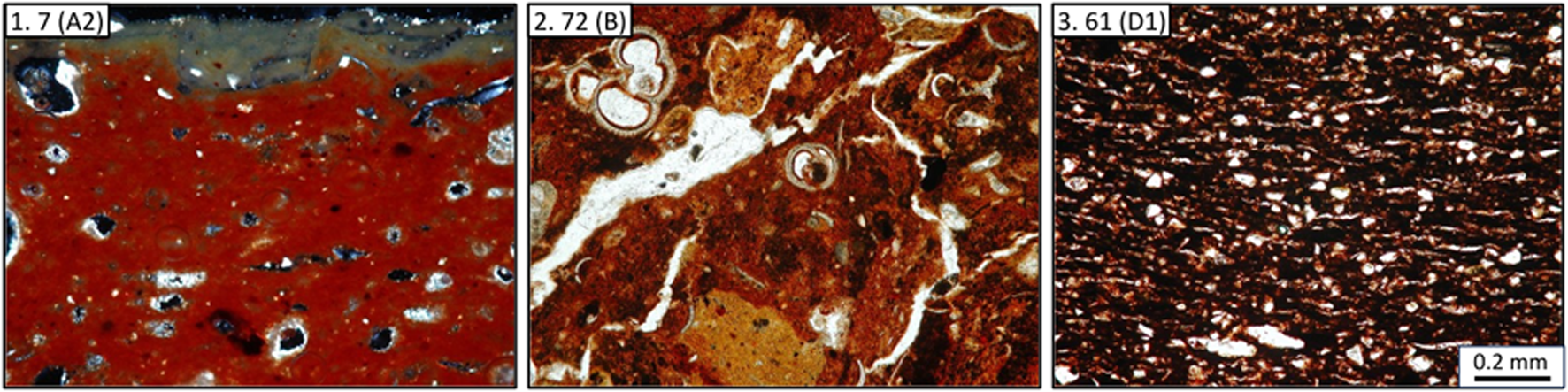
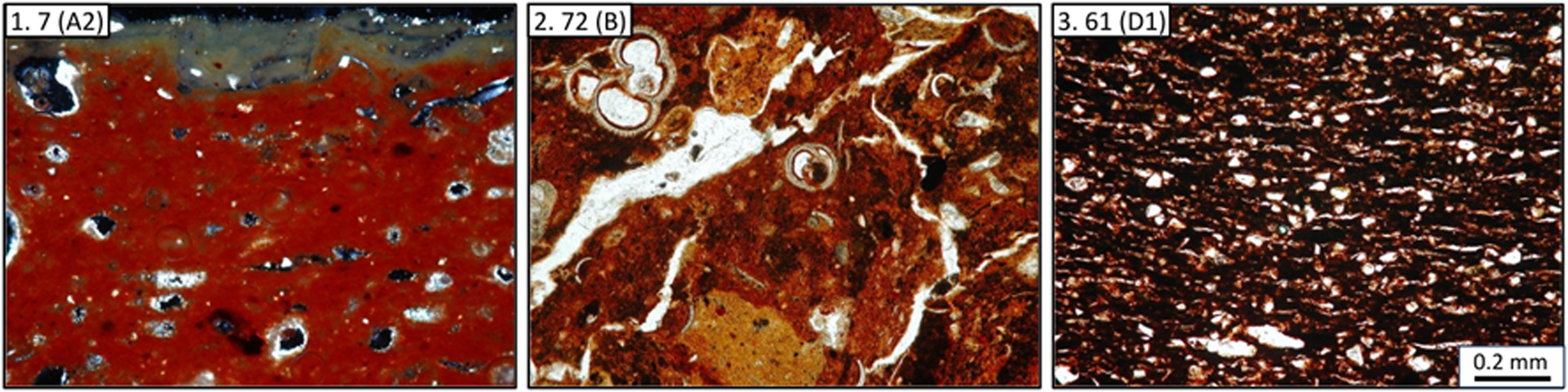
Technological features discussed in the text. Photomicrographs (1: XPL; 2–3: PPL). 1: whitening of the surface on a Fe-rich clay body; 2: irregular voids surrounding angular biomicrite clasts (temper?) shrunk by the firing; 3: planar voids parallel to the surfaces due to the wheel-throwing.
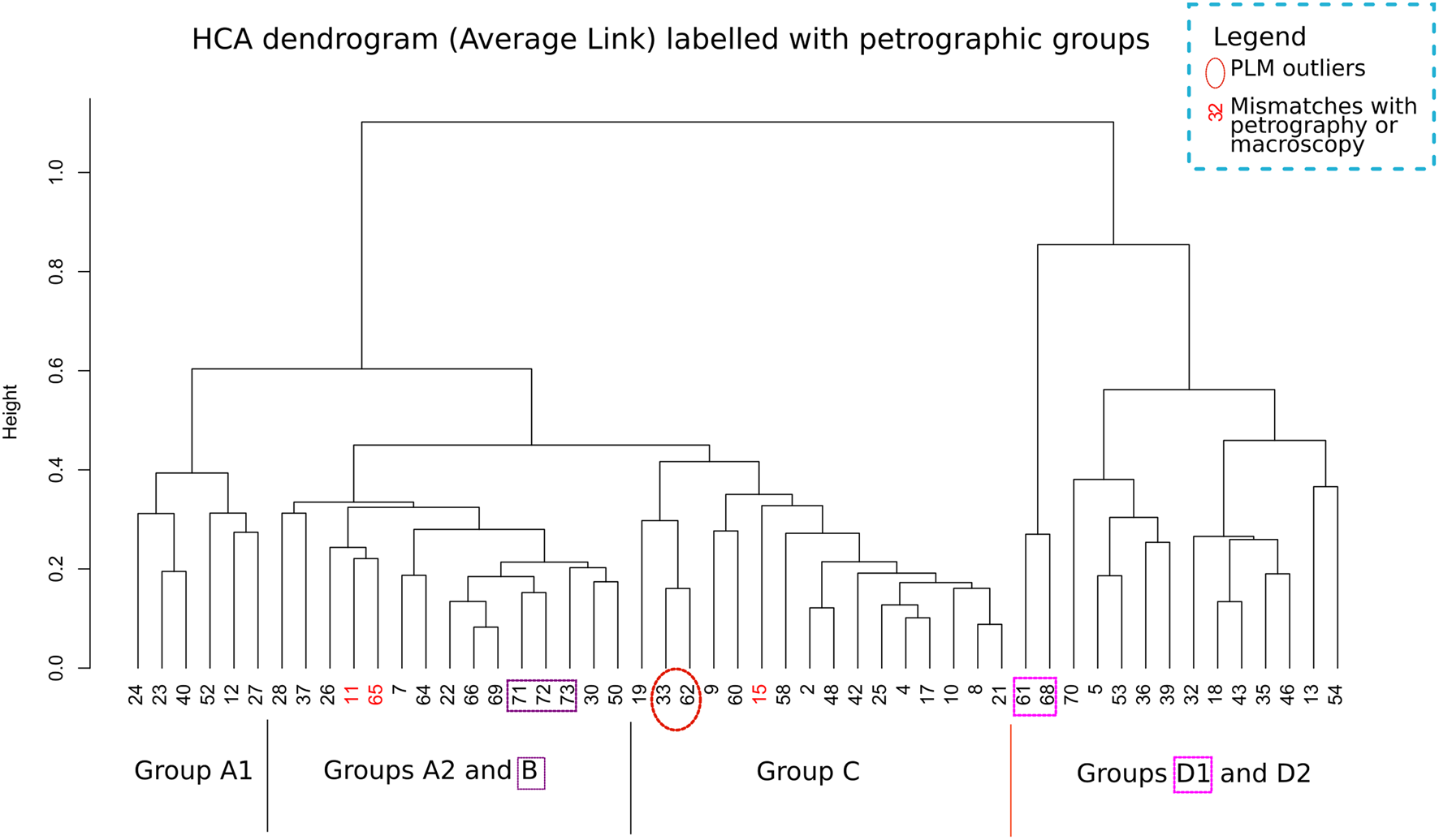
Dendrogram of pottery samples, grouped with the HCA (Average Link) method and labelled with the integrated petro-typological groups.
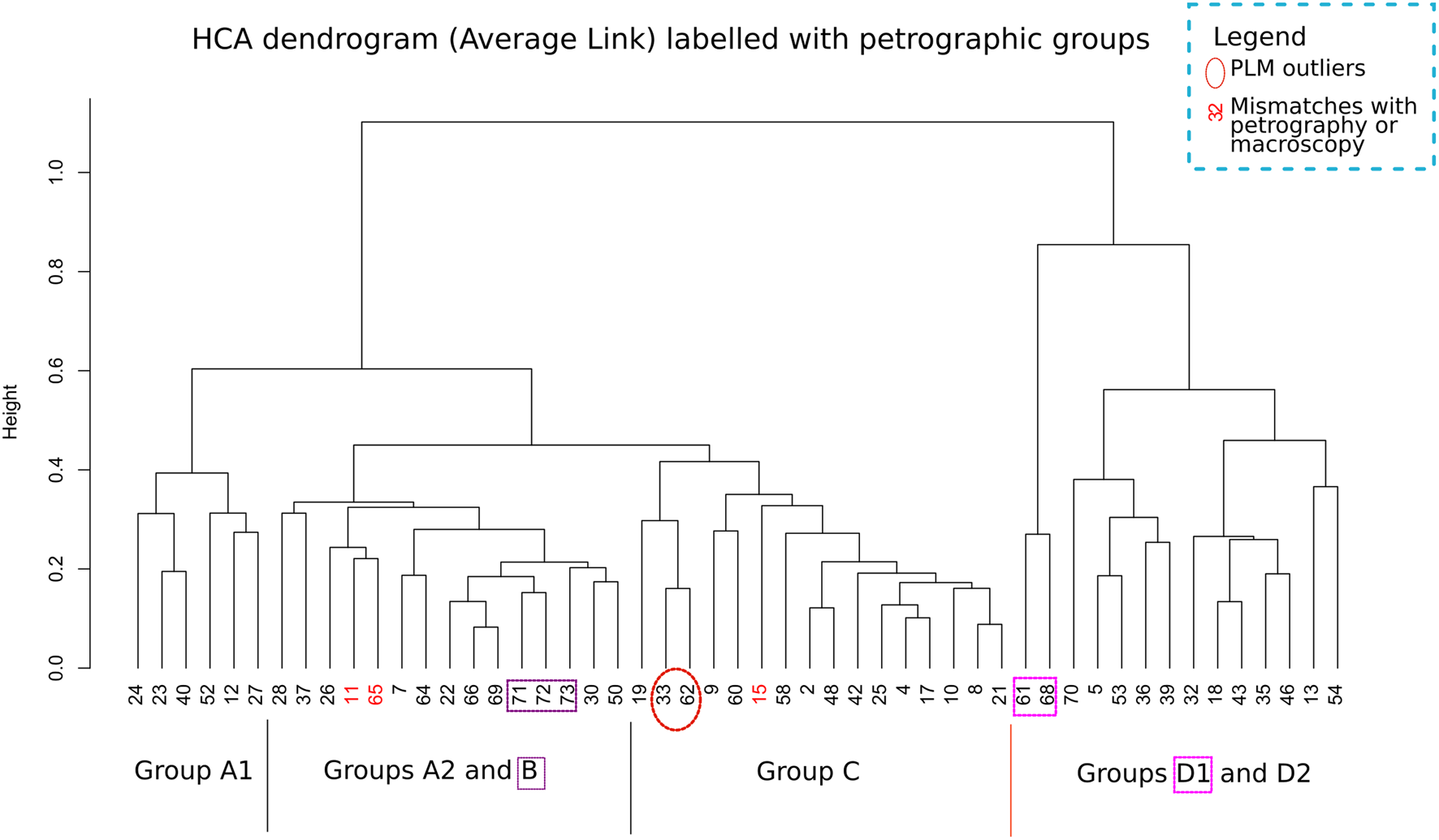
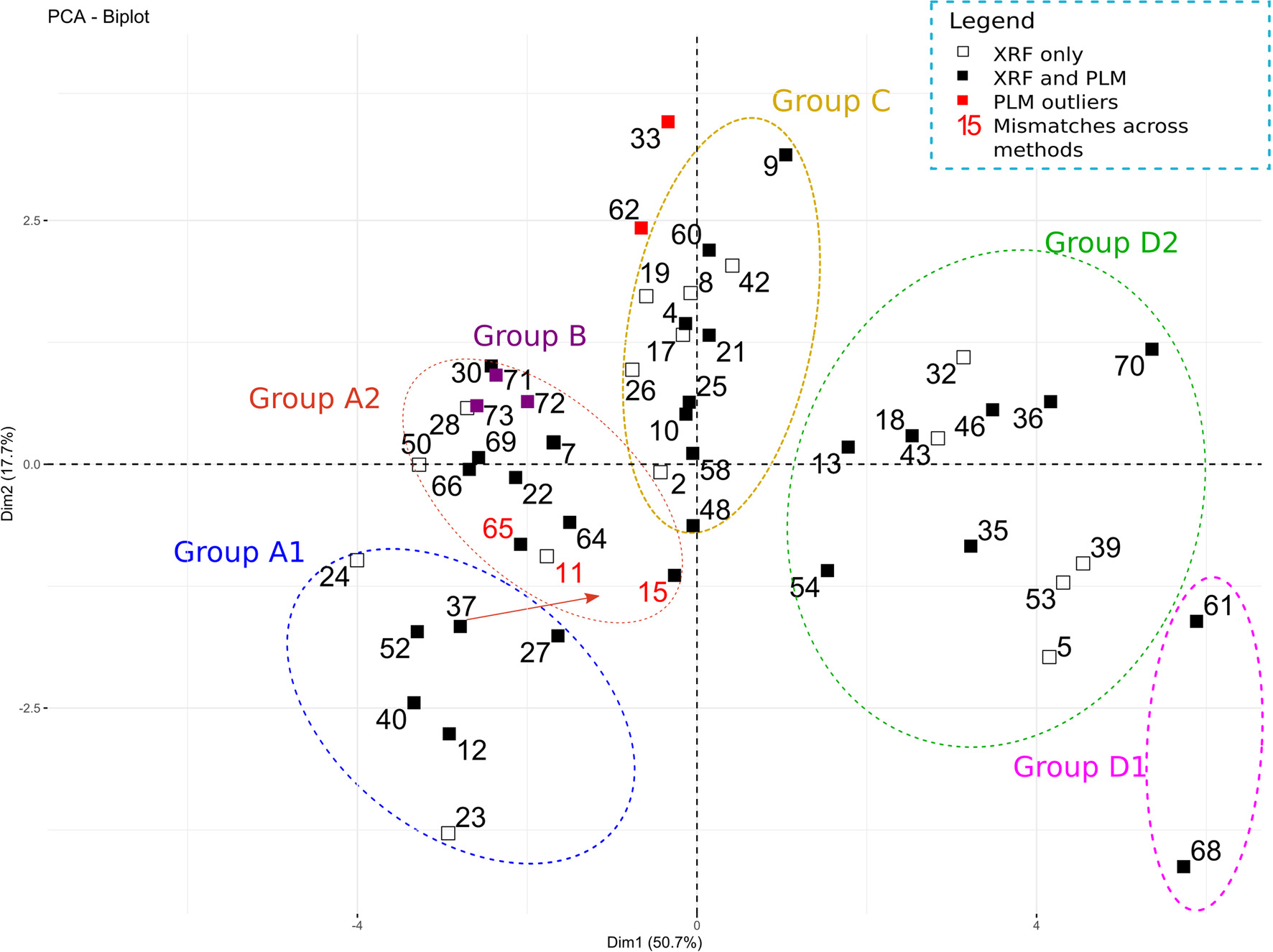
The statistical analysis of the chemical data identified several groups, almost always coincident with petrographical-typological groups (Figure 12, Table 5). The HCA supports that Group D was produced from a different raw material from groups A–C. In the dendrogram labelled with petrographic groups, group A1 (white matrix) clusters separately, probably caused by their calcareous matrix. Groups A2 and B cluster together and are close to Group C. These relationships and the mismatches between the petrographic analysis and the dendrogram are explored further in the fabric descriptions below.
Fabric classification
Fabric Group A (foraminifera and limestone/biomicrite fragments)
Group A includes plates and bowls from both sites (Table 7), and sample 52 is a miniature bowl vessel found at the sanctuary at Tas-Silġ. The plates and bowls in this group (mostly Anastasi D26–27 and Anastasi D6, Figure 4) are common in the Late Punic and Late Republican periods (Anastasi Reference Anastasi2019; Bechtold Reference Bechtold2017; Quercia Reference Quercia and Sagona2011; Sagona Reference Sagona, Bonanno and Vella2015b).
Group A characteristics and group members.

The fabrics (Figure 10.1–5) are characterised by abundant and poorly sorted inclusions, essentially composed of microfossils (planktonic and benthic foraminifera, <0.4 mm), subordinate biomicrite clasts (<1 mm, planktonic foraminifera and rare mollusc fragments) and fine-grained, angular quartz (<0.1 mm). There is no evidence of temper. Two subgroups have been distinguished by considering the Ca/Fe (carbonate/Fe-oxides) ratio in the clay matrix and the frequency of quartz in the groundmass.
Subgroup A1 is distinguishable visually (Figure 9), with a pale yellow-to-white matrix and inclusions barely visible to the naked eye. The fabrics show a Ca-rich matrix (Figure 10.1). The clay is partially vitrified and the inclusions are almost completely dissociated, which suggests firing temperatures (900–950°C) higher than the upper stability limit of calcite (ca. 850°C). Quartz is scarce within this subgroup. Sample 12 (buff, partially oxidised) varies slightly from A1 as it has frequent fine quartz (Figure 10.2).
Subgroup A2 has varied matrix colour, mostly orange with sometimes a reduced core and white to yellow main inclusions (Figure 9). This subgroup is distinguished from A1 by a Ca, Fe-rich clay matrix and rare Fe-oxides and limonitic nodules (Figure 10.3–4). Amphistegina was identified in samples 22, 30, 37 and 66, and relics of echinoids and calcareous worms in samples 30 (together with fragments of bivalves) and 69. Gastropods were observed in samples 66 and 69. Samples 22 and 66 have more abundant fragments of biomicrite than the rest of the samples.
Subgroup A2 is quite homogeneous, but a wide range of firing temperatures/conditions and slight variations in the Ca/Fe ratio account for the macroscopic differences (i.e. colour and carbonate dissociation) between sherds (Table 8). Samples 15 (with rather well-preserved inclusions) and 66 (with almost completely dissociated inclusions) are buff in colour due to only partial oxidation of Fe. The whitening of surfaces (Figure 11.1) and/or the whole matrix could be related to high firing temperatures used for calcareous clays (Molera et al. Reference Molera, Pradell and Vendrell-Saz1998, 198–99).
Proposed firing regimes based on petrographic and macroscopic observations for the sherds analysed with PLM.

Sample 64 (red-orange, well oxidised, Figure 10.5) varies from the rest of the group by the moderate quantity of fine-grained quartz in the groundmass. It also has echinoid remains and biomicrite inclusions.
The two subgroups (A1 and A2) were observed in the EDXRF results. All A1 samples cluster together, as did most A2 samples, apart from sample 15. A1 is particularly distinguishable and classified as a separate group using HCA, most likely due to CaO content in the matrix (Figures 10–13).
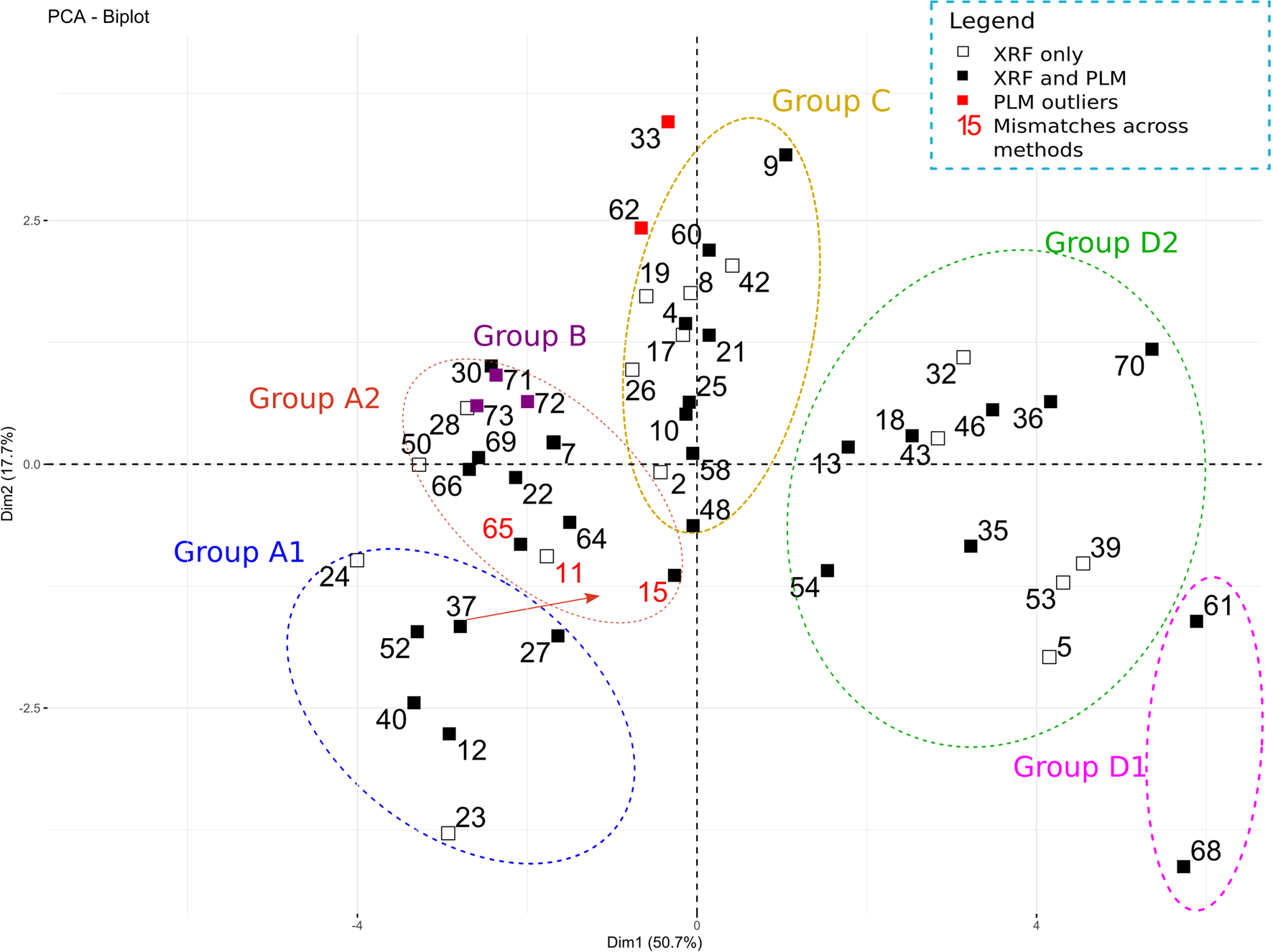
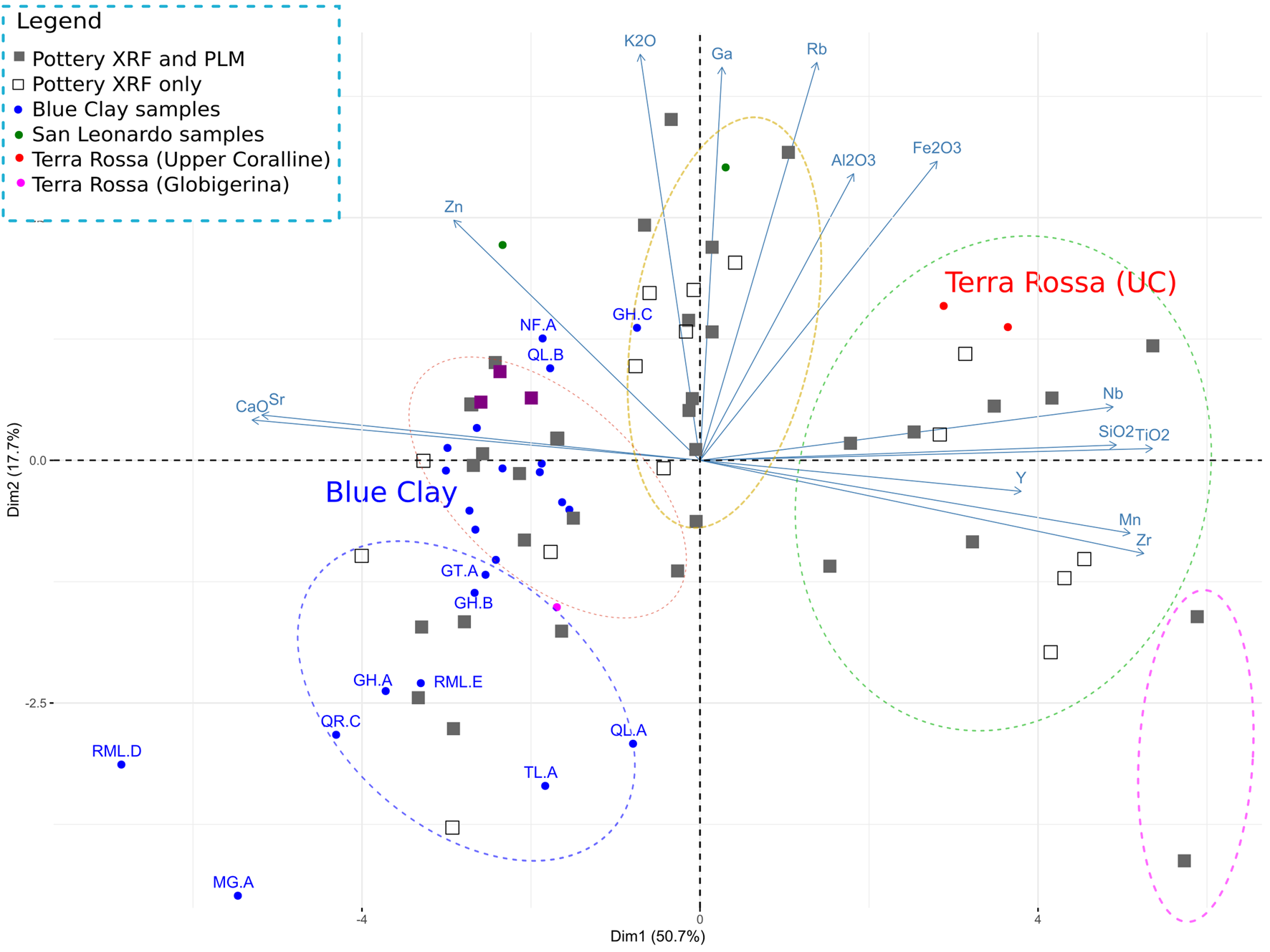
Scatterplot of PC1 and PC2 of pottery, labelled manually with the petrographic groups for visualisation.
Fabric Group B (microfossils and biomicrite temper)
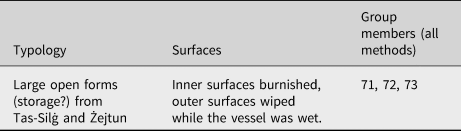
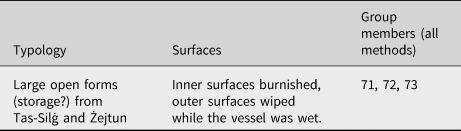
Samples 71–73 (Table 9) are large (20 to 35 cm diameter) handmade open vessels with thick walls (up to 1.5 cm, Figure 6, Sample 73). The visible, large, irregular voids support the forming method. In multivariate analysis (Figure 12), Group B is not differentiated from Group A, which suggests similar raw materials.
Group B characteristics and group members.
Two distinct components characterise Group B (Figure 9):
(i) a Ca-, Fe-rich clay including moderately abundant, poorly sorted microfossils (Figure 10.6–7), with very rare fine-grained quartz and glauconite pellets (> 0.1 mm). The microfossils include planktonic and benthic foraminifera, rarer gastropods and fragments of calcareous worms and bivalves, up to 0.6 mm, generally < 0.3 mm.
(ii) frequent, angular, coarse fragments of probable biomicrite (up to 2–3 mm, Figure 10.6–7). Their good sorting suggests these inclusions could have been added by the potter, which is also supported by the fact that the walls of the vessels are thick. It is also possible that these are chamotte fragments rather than biomicrite. However, the fragments shrank during firing (Figure 11.2), meaning they were not inert, as would be expected of crushed pottery.
The fossils are well preserved (apparent firing T <850°C). Samples 73 and 72 are relatively well oxidised, and 72 has a bleached surface, while sample 71 has a reduced core.
Fabric Group C (foraminifera, quartz and Terra Rossa nodules)
This group (Table 10) comprises plates and bowls from both archaeological sites with no significant differences in typology from Group A. However, unlike Group A, abundant coarse red/black inclusions are visible even with the naked eye (Figure 9).
Group C characteristics and group members.

The clay matrix is Ca-rich with a subordinate Fe-rich component (Figure 10.8–9). The inclusions are poorly sorted and moderately to significantly abundant. They are principally composed of microfossils (planktonic and benthic foraminifera, generally <0.3 mm, mainly globigerinids, with rarer Amphistegina, echinoids, calcareous worms, ostracods, bivalves, gastropods), fine-grained quartz in the groundmass (<0.1 mm and angular, very occasionally up to 0.3 mm and subrounded) and limonitic nodules (up to 1 mm or rarely 2 mm) with frequent fine-grained inclusions (mainly quartz). These nodules share similarities with the experimental briquettes made of Terra Rossa and fired at 500°C, and with the matrix of Group D (Figure 10.14–15).
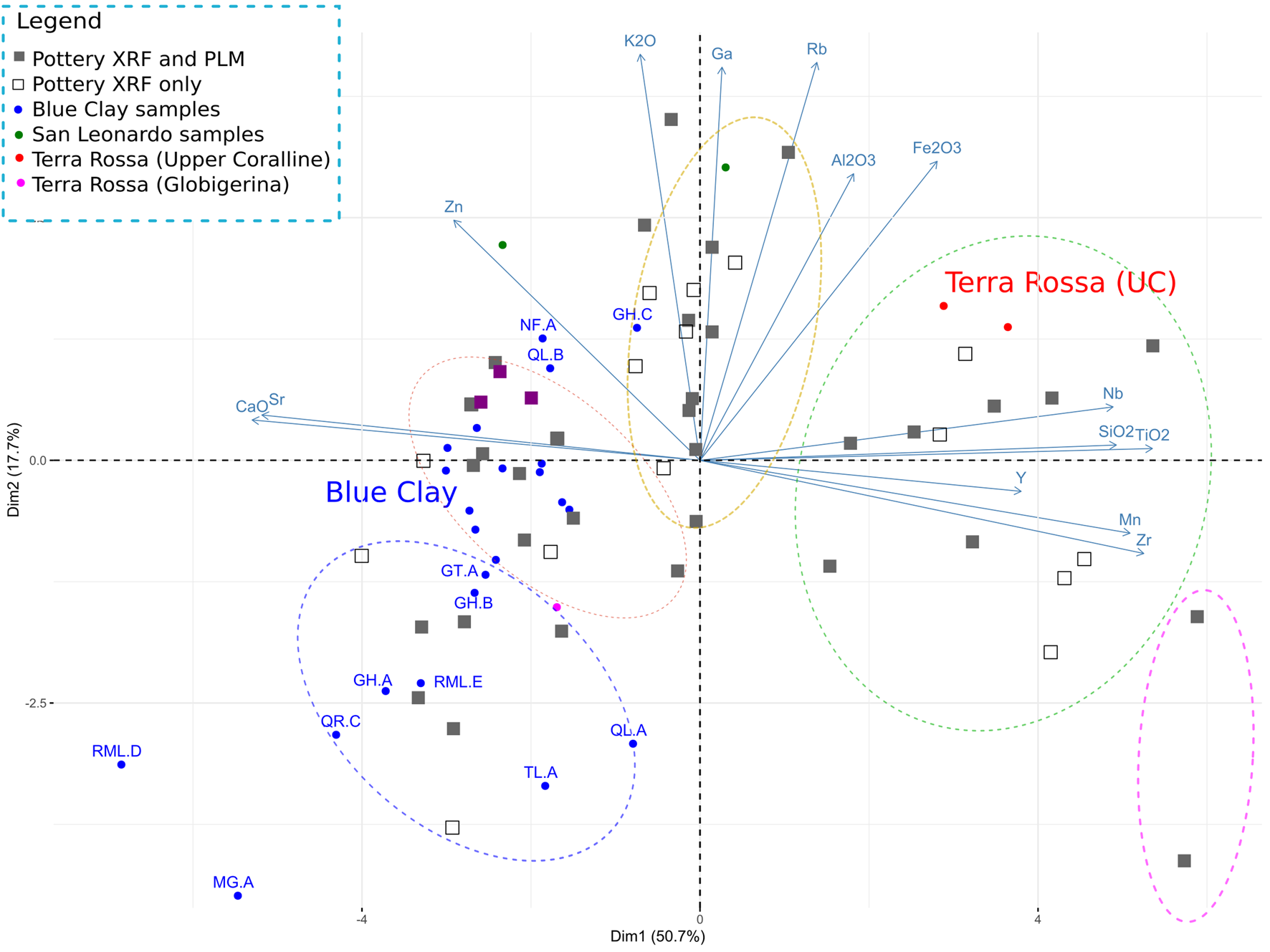
Scatterplot of PC1 and PC2 of pottery, labelled manually with the petrographic groups for visualisation. Possible raw materials are added to the analysis as supplementary individuals (Lê et al. Reference Lê, Josse and Husson2008). A plot for the raw materials only is available as supplementary material (Figure S1 supplementary material).
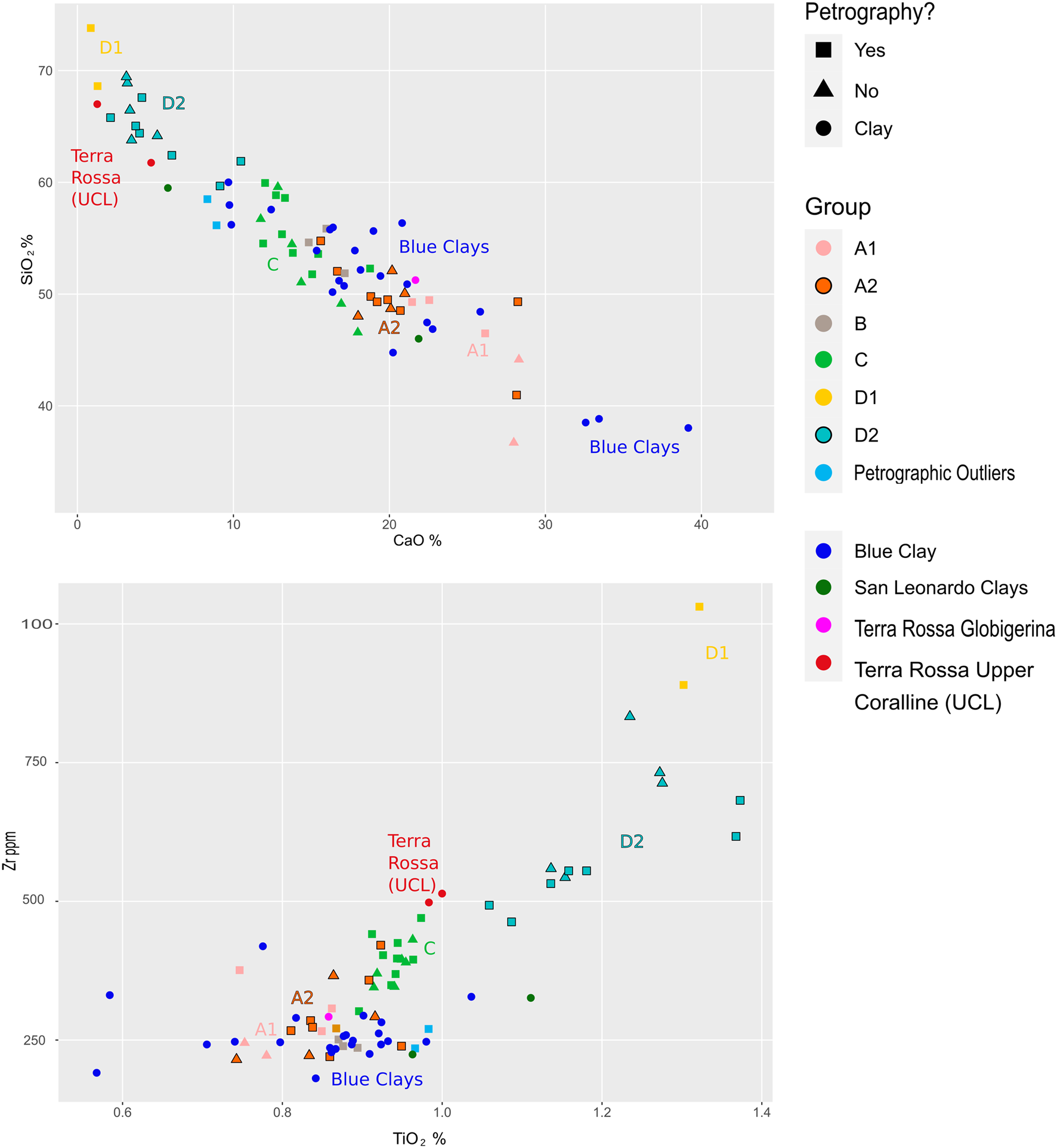
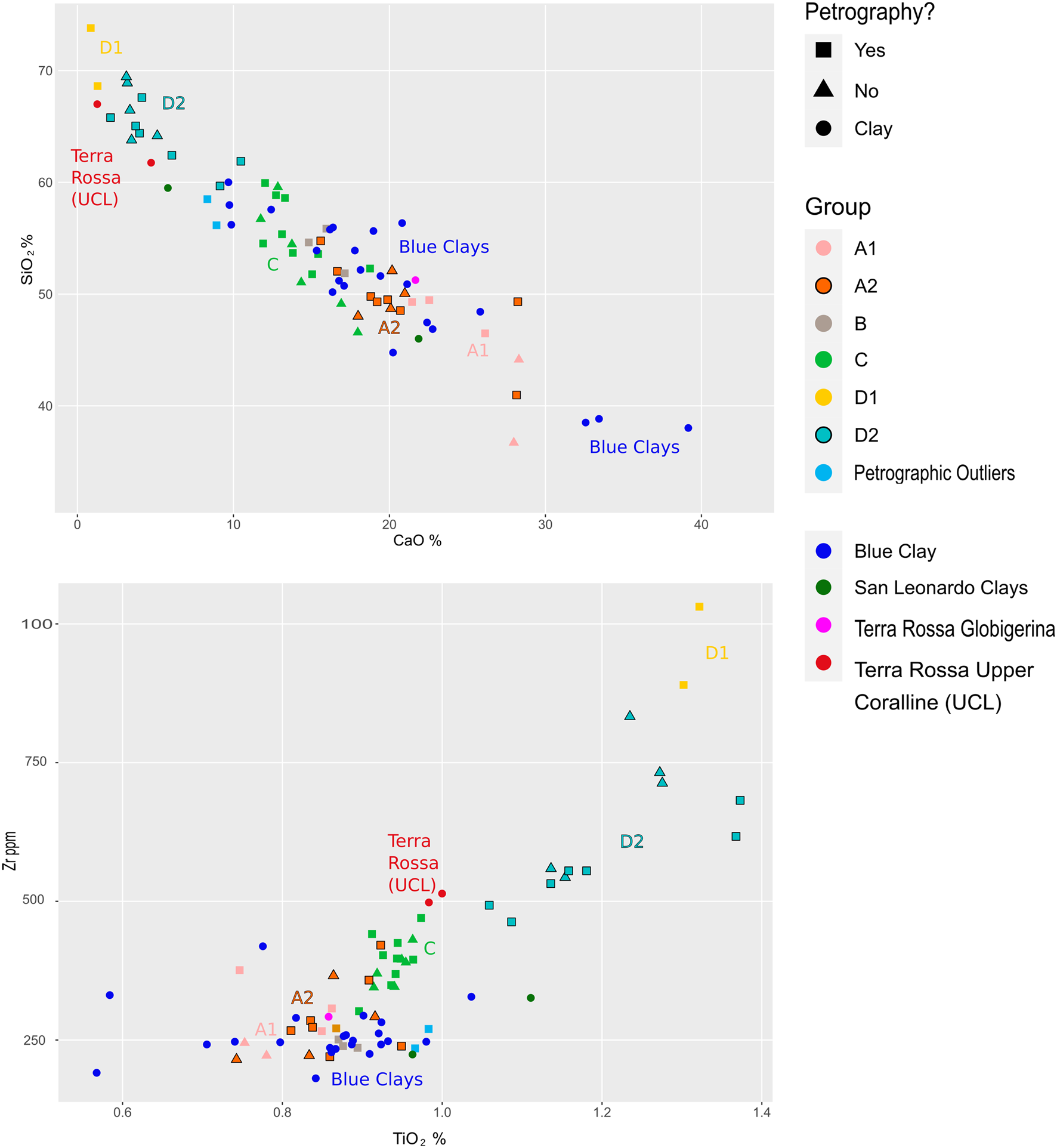
Scatterplots of selected elements, labelled with major groups.
Fine-grained (<0.1 mm) glauconite pellets and volcanic components (biotite, feldspar and trachyte fragments) are occasional in a few samples.Footnote 3 Several large, angular biomicrite clasts (<2 mm) containing planktonic foraminifera were observed in sample 48, whereas sample 58 is particularly rich in fine quartz. Like Group A (A1–A2), the macroscopic differences mainly depend on the variable firing conditions (Table 11).
Proposed firing regimes based on petrographic and macroscopic observations for the sherds analysed with PLM.

Group D characteristics and group members.

Having less quartz, sample 65 (Figure 10.10) varies from the group. This Żejtun Villa vessel classifies chemically with Group A. Sample 11, not analysed with petrography, additionally classifies with Group A despite having similar inclusions.
Fabric Group D (Fe-rich matrix and fine quartz)
Group D is easily distinguishable from the previous ones because of the Fe-rich clay matrix and the abundant inclusions of fine-grained (<0.1 mm), angular quartz (Figure 10.11–13). The paste is generally completely oxidised in cross-section (with red or red-orange macroscopic colour, Figure 9), except for samples 34 and 35, which show a brownish-grey core.
The matrices of both groups share similarities; technologically, however, two subgroups can be identified (Table 12). Subgroup D1 includes a fine cooking vessel (Quercia Reference Quercia2002 B5; Anastasi Reference Anastasi2019, C3) and a fine-carried bowl from the Żejtun Villa. A fine matrix characterises this subgroup (Figure 10.11). Abundant quartz is associated with a few Fe-rich pure clay and limonitic nodules (occasionally up to 1 mm) and, in the groundmass, rare microfossils (dissociated), glauconitic pellets, mica and heavy minerals (in particular epidote). The matrix and the nodules are semi-vitrified due to rather high firing temperatures. Frequent planar voids parallel to the surfaces could point to the wheel-throwing of the vessels (Figure 11.3).
Subgroup D2 includes casseroles (Quercia Reference Quercia2002, mostly types B2–3) from the site of Tas-Silġ (Figure 6). D2 has less abundant fine quartz than D1 but also contains frequent, angular fragments of fossiliferous (planktonic foraminifera-rich) rocks (claystone, marl, rare limestone /biomicrite, except for sample 54), generally rather coarse (up to 1–2 mm), except for samples 34 and 46 (<1 mm), associated with rarer pure Fe-rich clay (claystone) and limonitic (Terra Rossa) nodules (Figure 10.12–13). These inclusions could be a temper made of sedimentary rocks, although chamotte cannot be fully excluded. Microfossils (<0.2–0.4 mm) and glauconite pellets are present in the groundmass in minor quantities. Occasional fine-grained (<0.1 mm) volcanic elements (trachyte, biotite, plagioclase, clinopyroxene) were identified in a few samples (nos 36, 54, 46). The firing conditions vary (Table 13).
Proposed firing regimes based on petrographic and macroscopic observations for the sherds analysed with PLM.

Chemically, D1 and D2 are distinguishable from the other groups in the HCA (Figure 12), suggesting a fully different raw material to Groups A–C. The subgroups (D1–D2) are also distinguishable through the HCA.
Petrographic outliers
Two sherds were not classified with the fabric groups. Future studies might determine whether they are variants of existing groups or from a different provenance. Both of these classify chemically with Group C but do not share petrographic or macroscopic characteristics.
Sample 33 has a well-oxidised Fe-rich matrix, with scarce, silty quartz, moderately abundant coarser inclusions consisting of angular fragments of biomicrite with planktonic foraminifera (up to 1.5 mm), limonitic (Terra Rossa) nodules, rarer claystone and limestone fragments (<1 mm) and partially dissociated microfossils (foraminifera, <0.3 mm). The presence of biomicrite is similar to Group B, and that of fine quartz to Group D.
Sample 62 differs from all studied samples. The Fe, Ca-rich clay matrix, optically active with high birefringence, is pure. The aplastic inclusions are moderately abundant and sorted, and are angular to subangular fragments of fossiliferous micrite, marl and claystone (up to 1 mm, mainly <0.5 mm), associated with completely dissociated microfossils (<0.3 mm, planktonic and benthic foraminifera, rare calcareous worms) and rare glauconite pellets. Irregular voids are rather frequent. As the clayey component is poorly vitrified, and secondary carbonates are rather frequent around the voids, it cannot be excluded that calcareous microfossils were not decomposed by high temperatures but by acidic waters in the ground after burial of the vessel.
PCA results and comparison with raw materials
This last section presents the results of PCA and the chemical and petrographic comparisons with raw materials from Malta. The PCA eigenvalues, percentage of variance and variable correlations to the first five dimensions can be found in Supplementary Material (S4). Strong correlations for PC1 are CaO, SiO2, TiO2, Sr, Y, Zr, Mn and Nb, and PC2, K2O, Ga and Rb. The integrated fabric groups summarised above are visualised in Figure 13.
Petrographically, Groups A and B have sedimentary components compatible with clays of marine origin, possibly collected locally and untreated. When adding the clays as supplementary individuals in the PCA (Figure 14), the bulk of the Blue Clay samples are close in composition to Groups A and B. The temper of Group B must also be consistent in composition with Blue Clay. The variations between the Blue Clay samples do not follow a pattern by clay source (Figure S1 supplementary material), and it is impossible with the current analysis to associate precise Blue Clay sources with specific pottery samples.
Except for a sample from Gelmus Hill (Gozo) collected close to the Greensand layer, Blue Clay samples do not cluster well with Group C. This might be caused by the limonitic nodules, which share similarities with the Terra Rossa experimental samples (10.8–9, Figures 10.14–15). Although chemical analysis could suggest that these vessels are not made of local Blue Clay, it is unlikely they have a fully different provenance to Group A, considering the similarities in typology and surface treatment. The samples from San Leonardo clays plot close to this group; however, no limonitic nodules were observed macroscopically in the clay. In the clay sources sampled, there were no obvious samples where Terra Rossa was mixed with Blue Clays, as exhibited by the fabrics of Group C. Locations where Terra Rossa mixes naturally with Blue Clay or are close enough to be collected together have yet to be identified. In this case, the intentional modification of the raw material by adding Terra Rossa soils to the clays should be considered.
Petrographically and chemically, Group D shares similarities with the Terra Rossa clays outcropping the Upper Coralline Limestone (LP.A and LP.E; Figures 8.11–15, 12, 13). The briquettes from Ta'Lippija (Ġnejna), fired at 500°C (Figure 10.14–15), show a fine fabric (without coarse sedimentary rock fragments) with moderately abundant fine quartz inclusions, with accessory fossils and glauconite, which is relatively similar to the groundmass of subgroup D2 (Figure 10.12–13). The main difference is the presence of several coarse fragments of molluscs, bryozoans and red algae (especially in LP.A1) derived from the Coralline limestone outcropping below the sampled Terra Rossa layer. In the PCA with supplementary clays, Terra Rossa plotted close to several samples from Group D, such as 32 and 46. It cannot be assumed that all samples of Group D are made of Terra Rossa (Upper Coralline) from the Maltese islands since only Ta'Lippija soils have been analysed. Group D does not group with the Terra Rossa from Globigerina Limestone (Figure 14) from Delimara, which has a similar composition to the Blue Clays. The compositional variations within the Terra Rossa need to be explored further.
A few elements are already discriminating when plotted in scatterplots. In Figure 15, the scatterplot SiO2–CaO shows that the proportions of these two major oxides can be used to differentiate, to some extent, between the petrographic groups and raw materials. TiO2 and Zr also seem to discriminate and could be associated with quartz.
Summary and discussion
Groups A and C, used for plates and bowls, are probably made of untreated local Blue Clays. Group C has Terra Rossa nodules within the fabric, which are either naturally present within an unknown Blue Clay source or were added by the potter. Group B was used for coarse and large open forms and is chemically indistinguishable from Group A, based on the analysed variables, and the bulk of the Blue Clay samples. Group D would have been made with a different raw material, close to the Terra Rossa soils in composition. Two subgroups were identified: a wheel-made fine group (D1); and a coarser tempered group used for cooking vessels (D2).
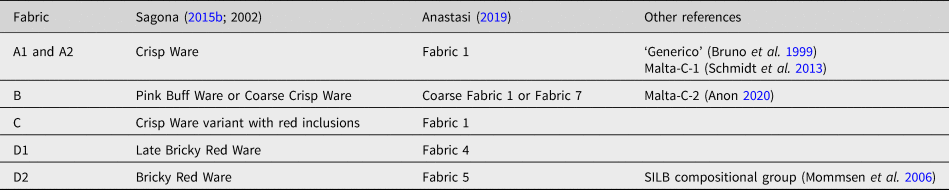
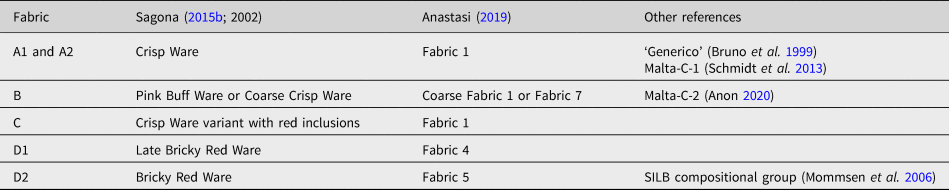
Groups A, B and D1–2 were identified in previous macroscopic research (Table 14). Group A fits Sagona's Crisp Ware (Reference Sagona2002; Reference Sagona, Bonanno and Vella2015b), the main coarse ware across the Maltese islands in the Punic–Roman periods. It is also similar to Anastasi's Fabric 1 (Reference Anastasi2019, 35), found across the local classical period. From a previous fabric study, Group A could be similar to the petrographic generic group (Generico) described by Bruno and Capelli for Roman amphorae (1999) and Malta-C-1 for Punic pottery (Schmidt et al. Reference Schmidt and Bechtold2013). Group B is similar in description to the Pink Buff Ware (Sagona Reference Sagona2002, 82) or a coarser version of Crisp Ware, described as coarse and tempered, coherent with what is found in this study.
Fabric groups compared with previous studies.
Fabric C had not been explored as a discrete fabric group in previous literature, although Sagona mentioned a variant of the Crisp Ware with ochre or grog particles (Reference Sagona2002, 83; Reference Sagona, Bonanno and Vella2015b, 50). Fabric C could be associated with different sources of raw materials, different production methods (raw material mixing) or possibly chronological differences. Indeed, Bechtold, who looked at a wider selection of contexts from the Żejtun Villa (Reference Vella2017, 124–25), suggested that the main facies for the second/first century BCE have red and black inclusions, possibly similar to the Terra Rossa nodules observed in this study and not found commonly in earlier periods.
Group D1 fits the descriptions of Late Bricky Red Ware (Sagona Reference Sagona, Bonanno and Vella2015b; Anastasi Reference Anastasi2019 Fabric 4), a fine, wheel-turned red fabric found more frequently in the imperial Roman period. This fabric has macroscopic similarities with the later ARS (African Red Slip) fabrics (e.g. Hasenzagl et al. Reference Hasenzagl and Capelli2020; Hasenzagl et al. Reference Hasenzagl and Capelli2021). Group D2 includes only casseroles appearing in Malta during the Punic period (Quercia Reference Quercia2002). The Terra Rossa soils located on the Maltese islands have the potential to have been a source for these cooking vessels. Based on these results, a specialised strategy of raw-material procurement (description in Albero Santacreu Reference Albero Santacreu2014, 245) could have been adopted for making these casserole shapes during the Late Punic–Late Republican Period in Malta. This would involve selecting raw materials for different vessel functions based on, for example, technological requirements for cooking vessels (Degryse et al. Reference Degryse, Braekmans and Hunt2017, 257; Müller Reference Müller and Hunt2017, 617–18). The technical knowledge of using red, clayey soil could also have developed through contact, copying of objects in circulation or itinerant craftspeople in the Punic Mediterranean. The latter hypothesis was suggested by Sagona (in Bonanno et al. Reference Bonanno2000, 95). The use of Terra Rossa soils to make cooking vessels was described elsewhere in the Mediterranean, for example, in Punic Libya (Swift Reference Swift2018), Phoenician Cyprus (Waiman-Barak et al. Reference Waiman-Barak, Georgiadou and Gilboa2021) and in the Levant across archaeological periods (Vokaer Reference Vokaer2010; Ben-Shlomo Reference Ben-Shlomo2019).
Glauconite-rich fabrics, as described in Bruno and Capelli (Reference Bruno, Capelli, D'Amico and Tampellini1999), were not found in these assemblages, although glauconite grains were sporadically observed across samples. These are typical of marine sediments, of which Maltese geological layers are made (Basso et al. Reference Basso, Capelli, Riccardi and Cabella2008). Anastasi (Reference Anastasi2019, 35) pointed out that this fabric has been used for forms dated to the late first century BCE onwards. This could explain why these were absent from the earlier forms of this assemblage.
A few observations can be made on the technological processes used for making the vessels presented in this study. There is no petrographic evidence for wheel-throwing except for Group D1. This contradicts the macroscopic evidence, where concentric marks, often interpreted as string marks (Roux Reference Roux2019, 179), were observed on the bases of the bowl and plate. Using the wheel does not systematically leave diagnostic traces within the fabric, particularly in rims, which can be re-modelled by the potter (Thér et al. Reference Thér and Toms2016). Plates and bowls could have been finished on a rotary device (e.g. turntable) but not thrown (Courty et al. Reference Courty and Roux1995; Thér et al. Reference Thér and Toms2016; Roux Reference Roux2019). For the cooking vessels and large bowl forms in this study, the use of a wheel is not indicated.
There was no evidence of cream or grey slip on plates or bowls, as noted in previous studies (Quercia Reference Quercia and Sagona2011, 434; Sagona Reference Sagona2015a, 244), and instead, the cream colour on the surfaces was probably caused by high temperatures. Uneven cream skins were presumably obtained unintentionally through firing, a phenomenon which has been studied for calcareous clays fired at temperatures of about 950°C (Molera et al. Reference Molera, Pradell and Vendrell-Saz1998, 198–99). This phenomenon could also be caused when using brackish water, a common process in Tunisia (Peacock Reference Peacock, Fulford and Peacock1984; Von der Crone et al. Reference Von der Crone, Maggetti, Jerem and Biro2002). Generally, in this study, firing was unstandardised, either because of a lack of means or the need to have homogeneously fired vessels. For Tas-Silġ, it had been suggested that the vessels were discarded after use as one-off products, which could explain a lack of investment (time, skills and equipment) in the manufacture of vessels (Sagona Reference Sagona, Bonanno and Vella2015b, 44).
To conclude, this paper has presented an integrated four-group classification for open forms, including bowls and plates (A, C) and cooking vessels (D) from the sites of Tas-Silġ sanctuary and the Żejtun Villa dating to the Late Punic–Late Republican period. This study has additionally demonstrated that raw materials found in the Maltese islands share similarities with these pottery groups. This new classification should be tested in archaeological sites across the Maltese islands and larger assemblages. Future research must compare these vessels with other sites across the islands, with different typologies and chronologies, to understand how technology varies across space, time and archaeological contexts. Moreover, comparisons with imports and possible sources across the central Mediterranean are needed while analysing more local sources of clays. More research is needed on the chemical variations of the soils across the Maltese islands, especially Terra Rossa, and their workability for making usable vessels.
Conflict of interest
All of the authors declare themselves free of conflicts of interest.
Acknowledgements
We thank the multiple departments from the University of Malta who have made this interdisciplinary study happen. Thank you to the staff of the Department of Metallurgy and Materials Engineering, including Mary-Grace Micallef, Noel Tonna, James Camilleri, Nicholas Gingell, Daniel Dimech and Daniel Vella. Thank you to Massimo Sbrana and his laboratory for preparing the samples for thin sections. Thank you to Gianmarco Alberti from the Department of Criminology for suggesting using the R package FactoMiner and making his data accessible. Thanks also to the Department of Chemistry for letting us use their space and equipment, and the staff at the Department of Biology, such as Sandro Lanfranco, Marija Mangion, Andrew Scicluna, Stephanie Conti, for being available, helpful and trusting us with equipment. We would like to thank the Superintendence of Cultural Heritage, Malta, for permitting us to sample the vessels, Heritage Malta, particularly Matthew Grima, for helping with methodology development (EDXRF) and Samantha Debono. Thank you to the staff of the Department of Classics and Archaeology, particularly the scientific support of Maria Vella and the administrative support of Louisa Borg; and also to Nicholas Vella, Huw Groucutt and Sophie Briffa (Department of Metallurgy and Materials Engineering) for their feedback on the original work. Finally, thanks also to the students of the same department for giving many hours of volunteering: Nigel, Thornton, Meadow, Imanuel and Andrew from the University of Malta; Kellian and Alycia from the University of Edinburgh. Thank you to Jakob Piel for helping with the EDXRF analysis. Thank you to Maria-Pia Aquilina and Miguel Bozza for proofreading drafts.
Supplementary material
The supplementary material for this study includes:
• the list and descriptions of the geological samples used for this study;
• the description of the manufacture of the Terra Rossa briquettes;
• the validation results for the XRF analysis on the selected variables;
• the results of the PCA, such as the eigenvalues and percentage of variance per principle component and the correlation coefficients between the first five PCs and the variables;
• the normalised dataset used in this study (unlogged).
The supplementary material for this article can be found at https://doi.org/10.1017/lis.2024.7.
Data availability statement
The thin-section collection will be available to study at the Department of Classics and Archaeology, University of Malta. The catalogue of the sherds with photographs and drawings of each sherd, as well as descriptions, will be available on Zenodo (Richard-Trémeau et al. Reference Richard-Trémeau, Humann and Betts2023). The full raw data from the chemical analysis is available online (Richard-Trémeau et al. Reference Richard-Trémeau2024). Sections of the R-codes for the analysis can be made available by emailing the corresponding author.
The MA dissertation on which this paper is partly based is accessible as open access provided by the University of Malta (Richard-Trémeau Reference Richard-Trémeau2023). The BSc dissertation looking at samples 71, 72, 73 and other handmade samples can be made accessible upon request.
Funding
This paper is part of the Compiling Fabric Identity for Pottery from Maltese Sites (CoFIPoMS) project, funded by the University of Malta Research Excellence Fund. This research would also not have been possible without the equipment, methodology and network created by the MaltaPot project. The MaltaPot project was funded by the European Union's Horizon 2020 research and Marie Skłodowska-Curie grant agreement No. 795633.









 Open access

