





Introduction
There are some important studies on the evolution of consumer cooperativism from the mid-nineteenth century onwards, but European historiography has made little progress with regard to the quantification of the social impact of these organizations. General works offer valuable insight into the evolution, social orientation, and organizational changes of cooperatives, but pay little attention to the effect of cooperatives on living standards, even in Great Britain, which is the best-known case.Footnote 2 Purvis, for instance, analyses the conflicts between British consumer cooperativism and shopkeepers,Footnote 3 and Gurney, taking the Co-operative Wholesale Society (CWS) as a reference, focuses on the cooperatives’ problems in adapting to changes in demand, the internal problems derived from their growth, and their difficult relationship with syndicalism and the labour movement. Gurney's main conclusion is that the English cooperative movement emerged weaker from the interwar period owing to its inability to adapt to new consumer preferences, the stiff competition posed by capitalist societies, and their own internal conflicts.Footnote 4
Concerning food retailing, most studies deal with the issue by taking a firm-based approach: for instance, the impact of consumer cooperatives on the modernization of distribution chains and their unequal response to new forms of trade competition. Important contributions in this regard are those by Shaw and Alexander; Ekberg; Kramper; and Balnave and Patmore.Footnote 5 They analyse, for different countries, aspects such as the creation of federations and the centralized buying of goods, and the development of cooperatives to improve food distribution in order to ensure the loyalty of members. Also of note are the studies by Zamagni, Battilani, and Menzani on the emergence of groups of cooperatives as umbrella organizations in Italy,Footnote 6 and Hilson's analysis of the Scandinavian model for the integration of consumers and producers as a middle ground between capitalism and socialism.Footnote 7
Other key aspects that have received less attention are financial, welfare, cultural, educational, and housing services provided by cooperatives,Footnote 8 and the cooperatives’ role in the emergence of new consumption patterns.Footnote 9 There are some case studies of the above aspects, and these focus on the products distributed during different periods and in different countries. These studies examine the sort of products that consumer cooperatives sold and the impact of these on the living standards and consumption patterns of the European working classes, although no quantitative estimates are offered.Footnote 10 The role of women in these institutions for collective action has also been addressed in various works.Footnote 11
It is therefore necessary to try to quantify how consumer cooperatives might have contributed to improving the lot of the European working classes from the mid-nineteenth century onwards. Most consumer cooperatives in Europe followed the Rochdale model:Footnote 12 they sold various products, especially food, but also carried out certain activities that had a considerable impact on the living standards of their members (for instance, providing benefits and organizing sanitary, educational, and cultural activities).Footnote 13 On the eve of World War I, these organizations had nearly 25 million members, and their prestige was such that the idea of a “Co-operative Commonwealth” was floated as an alternative to individualistic capitalism.Footnote 14 These organizations have been analysed from different perspectives, but their impact on the living standards of the working classes has been somewhat neglected. Currently, some scholars, such as Watts, regard them as the most successful worker-led alternative to capitalism.Footnote 15
This work aims to improve our understanding of the factors that might have contributed to an improvement in living standards in Europe from the mid-nineteenth century onwards, with a focus on the social economy and the activities undertaken by consumer cooperatives. We shall quantify their social impact by examining the data pertaining to a number of them, especially in Barcelona,Footnote 16 an industrial centre in which these organizations were more popular than anywhere else in Spain. Barcelona was the powerhouse of the Spanish textile industry, accounting for over eighty per cent of the sector in the early twentieth century.Footnote 17 In fact, the province was the country's leading industrial centre, and 58.6 per cent of its working population was engaged in industrial production in 1930, compared to 27.2 per cent at the national level.Footnote 18 In that year, 74.2 per cent of the province's population was urban in nature, compared with a national average of 37.1 per cent, and its capital was the most populous city in the country, with nearly one million inhabitants.Footnote 19 As such, Barcelona was Spain's main urban centre, comparable with other European urban areas in which consumer cooperativism also underwent substantial growth. Barcelona is therefore representative of other industrial areas in SpainFootnote 20 and Europe, with an organized working class used to develop collective action institutions with which to address the social consequences of industrialization. This case study will enable us to present a few hypotheses and results that can be of application in other European industrial regions, especially concerning the role played by the social economy in the living standards of the working classes during industrialization.
We shall try to move further using the data from thirty-five consumption cooperatives in Barcelona (30) and the nearby province of Girona (5) between 1890 and 1935 (see Table A1, Appendix).Footnote 21 In Spain, consumer cooperatives developed slowly, but Barcelona was something of an exception. Between 1910 and 1915, barely one per cent of Spaniards benefited from these cooperatives, while in Catalonia they reached nearly ten per cent of the population, and as much as forty per cent in some municipalities (Palafrugell, Sant Feliu de Guixols).Footnote 22 It is also likely that their reach grew even more in later years, given that, in some municipalities in the province of Barcelona (Manlleu, Sant Vicenç de Torelló, Roda de Ter, Santa María de Corcó, and Rubí), consumer cooperatives reached between twenty and thirty-five per cent of the population between 1924 and 1935.Footnote 23
The text is divided into four sections, the first of which deals with the evolution of consumer cooperativism in Europe between the mid-nineteenth century and World War II. The following two sections focus on consumer cooperatives in Barcelona and suggest three indicators to gauge their impact on living standards: food supply and nutrition; living costs; and cultural, economic, and welfare activities.
Consumer cooperatives in Europe: Historical background
One of the most significant actions by the European labour movement in the mid-nineteenth century was to create consumer cooperatives. This does not mean that these institutions were always organized by labour organizations, or that they were always successful. Like workers’ mutual insurance organizations, consumer cooperativism was most intense in industrialized urban regions, and the impulse behind the creation of cooperatives, at least at the beginning, came in the form of reformist members of the bourgeoisie who wanted to stifle the new social conflicts generated by market society. They referred to these incipient conflicts as “the social question”, and they argued that the solution was for the masses to have access to goods and services that the new market society and the state were not capable of supplying, in particular basic foods (free from the usual frauds) and a wide array of educational, cultural, and welfare services (sick pay, unemployment and death benefits, retirement and widowhood pensions), the lack of which bred social discontent.Footnote 24
Like other mutual organizations, consumer cooperatives emerged in Great Britain in the mid-nineteenth centuryFootnote 25 and expanded later to the rest of the continent, in the wake of industrialization and the labour organizations’ change in attitude towards them. Initially, labour organizations were reluctant to lend their support to cooperatives because they believed that they contributed to the exploitation of workers, but, later, in light of their popularity, they encouraged them wholeheartedly.Footnote 26
Figure 1 illustrates the process in several countries from 1900 to 1941 and presents the estimated social impact of cooperatives in these years and in 1914, as well as total population figures. We assume that all members were male heads of households.Footnote 27 The relatives of members would also have benefited directly from the cooperatives.
Social impact of consumer cooperatives in Europe, 1900–1941, as proportion of the population who were members of a cooperative and their relatives, assuming four-person households of which only one person was a member.
Sources: 1900: Cole, A Century of Co-operation, p. 371; H. Handschin, Der Verband Schweiz. Konsumvereine (VSK), 1890–1953 (Basel, 1954), p. 355; R. Blaich, “The Consumer Co-operatives in Austria”, in Brazda and Schediwy, Consumer Co-operatives in a Changing World, pp. 900–1021, 906; E. Furlough, Consumer Cooperation in France: The Politics of Consumption: 1834–1930 (Ithaca, 1991), p. 76; J. Brazda, “The Consumer Co-Operatives in Germany”, in Brazda and Schediwy, Consumer Co-operatives in a Changing World, pp. 141–226, 149; R. Schediwy, “The Consumer Co-Operatives in Sweden”, in Brazda and Schediwy, Consumer Co-operatives in a Changing World, pp. 230–339, 239; R. Schediwy, “The Consumer Co-operatives in Finland”, in Brazda and Schediwy, Consumer Co-operatives in a Changing World, pp. 573–670, 585; 1914: Gide, Consumers’ Co-operative Societies, p. 49; 1937–1941: International Labour Office, Co-operative Organisations and Post-War Relief, p. 105; population data: A. Maddison, The World Economy (Paris, 2006).
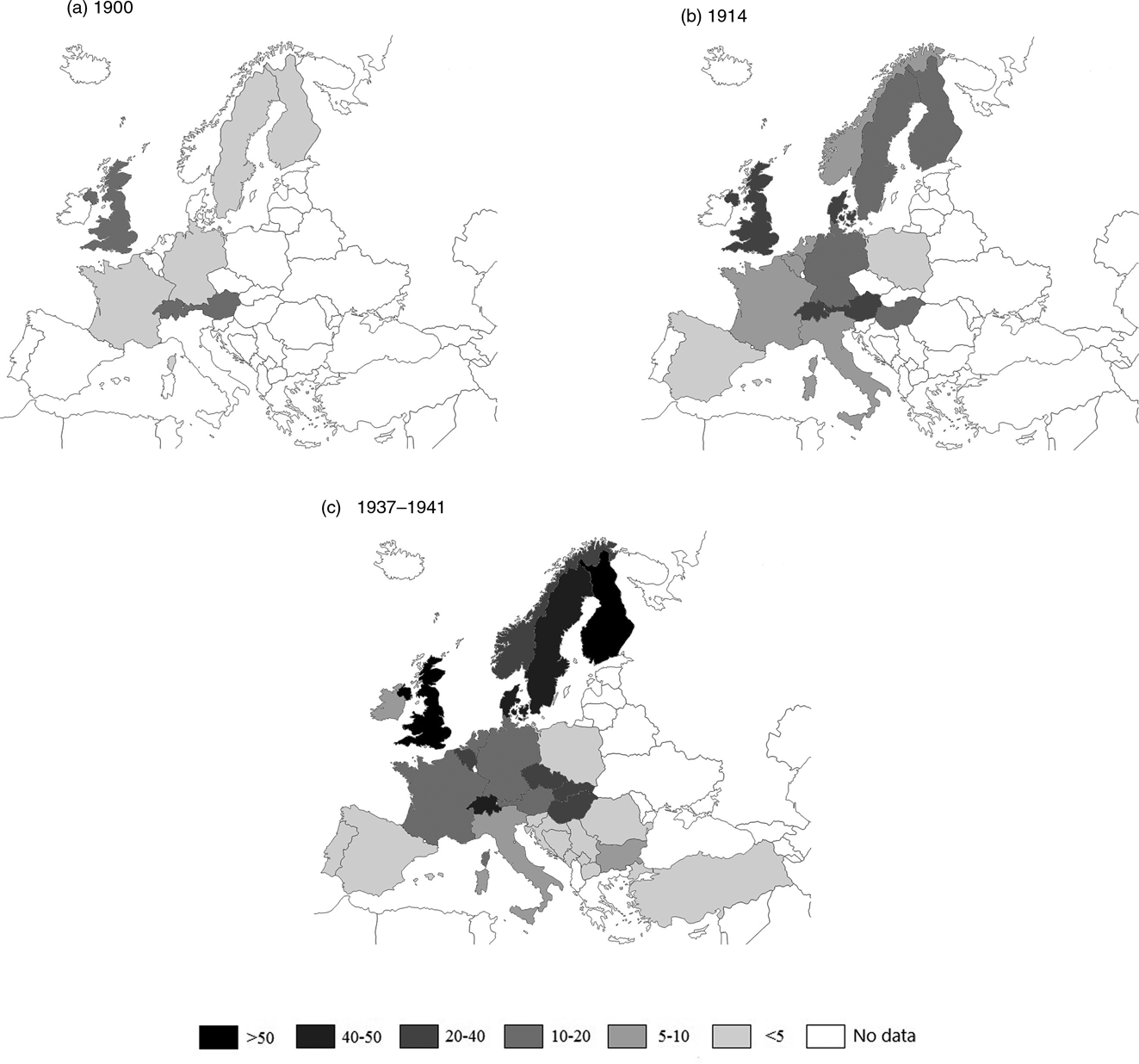
In 1900, consumer cooperatives were a significant phenomenon only in Great Britain,Footnote 28 but the phenomenon spread widely afterwards and it became relevant in some countries prior to World War I. At this time, approximately twenty-five per cent of the British, Swiss, Danish, and Austrian populations benefited from the services provided by consumer cooperatives: twelve per cent in Germany, Sweden, and Finland; eight per cent in France, Italy, and Belgium; and six per cent in Norway and the Netherlands. In addition to this expansion, wider initiatives began to emerge, such as the International Cooperative Alliance (ICA), which was created in 1895.
During the following years, the scarcity of consumption goods caused by World War I and the economic instability of the interwar period increased the prestige and appeal of consumer cooperatives. If in 1914 they had 7 or 8 million members in Europe, by 1922 their membership had soared to 10 million, and by 1930 to 20 million.Footnote 29 Between 1910 and 1920, membership in Great Britain increased from 2.5 to 4.5 million – impacting approximately forty per cent of the population.Footnote 30 The expansion of cooperativism was also significant in Germany, France, Austria, Switzerland, Scandinavia, and Italy, in what has been labelled “the post-war spring of cooperativism”.Footnote 31
The pace of growth was especially uneven during the interwar period. In Germany, Austria, and Italy, National Socialists and fascists replaced these institutions with government-controlled ones, leading to a drop in the number of members. In other countries, however, the movement continued to grow quickly. In Great Britain, around 1940, cooperatives had almost 9 million members, impacting close to seventy per cent of the population. In Finland, the impact of cooperatives was similar to that in Great Britain; in Switzerland, Sweden, and Denmark they reached over forty per cent of the population.Footnote 32 It is likely that in some of these countries, the impact of cooperatives was even greater because agrarian cooperatives were well developed, and many of these also acted as consumer cooperatives.Footnote 33 For this reason, the International Labour Office estimated that 5 million should be added to the official tally of 20 million members before World War II.Footnote 34
In short, by 1940 these organizations played an important role in Northern and Central Europe, and their activities reached between 80 and 100 million Europeans. This was a significant proportion of the population, and it is important that we reach a better understanding of how they affected the living conditions of their members.
In the following section, we shall focus on five cooperatives in the province of Barcelona and examine their impact on the diet and nutrition of their members’ households.
Food consumption and nutrition
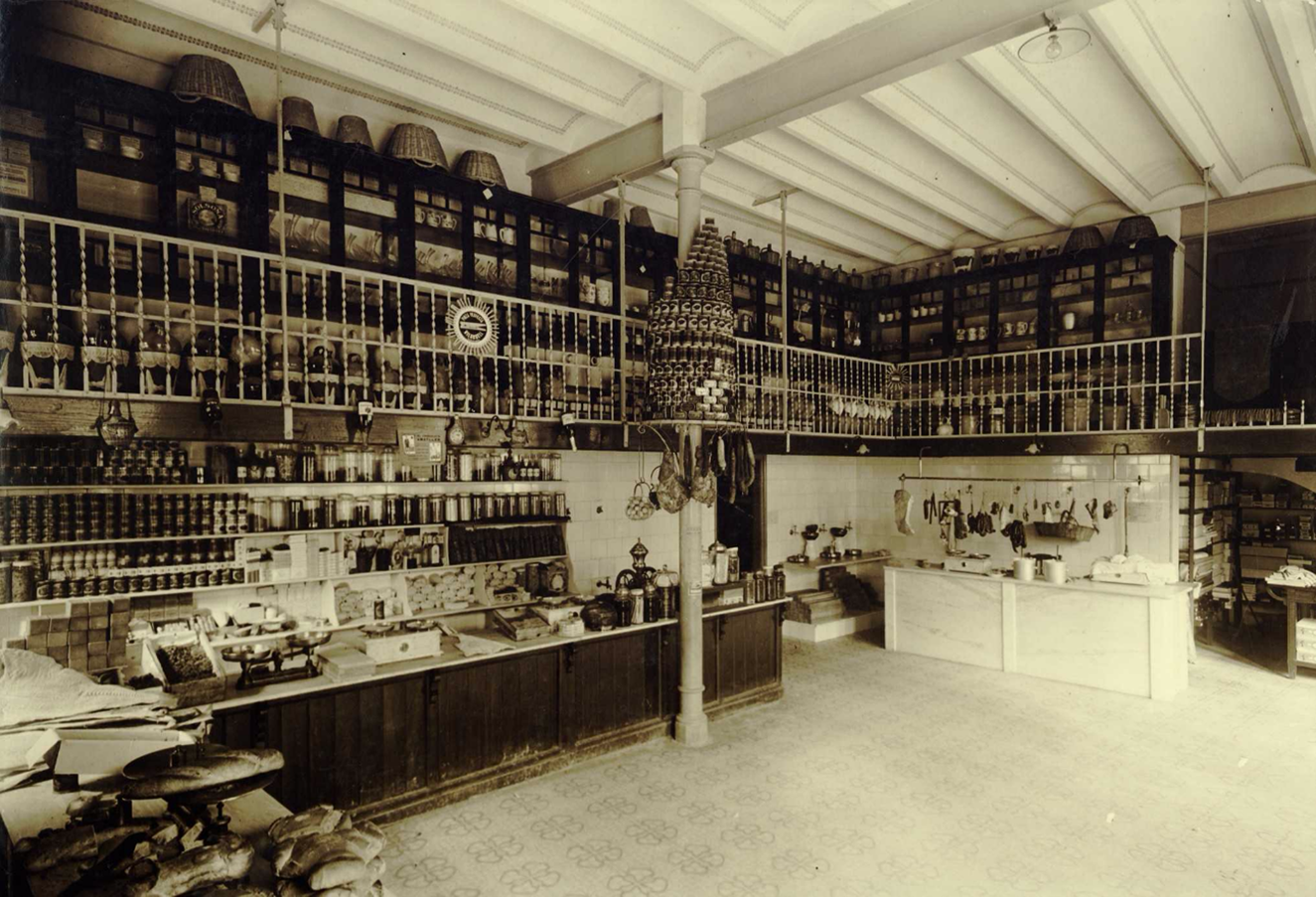
Previous studies suggest that, between 1898 and 1935, consumer cooperatives in Barcelona mostly stocked bread, flour, wheat, rice, legumes, olive oil, wine, pasta for soups, pork fat, and sugar; a few also sold eggs and salted fish (cod and herring). Later, they also began stocking coffee, chocolate, cold meats, and tinned food, i.e. energy-rich and easily stored foodstuffs (Figure 2), the commercialization of which did not demand complex infrastructures or specialized vendors. Fresh fish, meat, milk, fruit, and vegetables were sold only rarely.Footnote 35
Grocery store of Cooperative La Flor de Mayo (branch no. 6) (Barcelona, Spain), 1923.
Arxiu Nacional de Catalunya, ANC2–100–N–38, Sociedad Cooperativa Obrera de Ahorro y Consumo La Flor de Mayo.
The data compiled from five cooperatives in the province of Barcelona with an aggregate membership of 203 in 1902 allow us to move further. The data are detailed, and precise estimates can be made of household-consumption figures.Footnote 36 In all cases, members were forbidden from buying elsewhere the products that the cooperatives sold, and there were important incentives in place to ensure this, as we shall see in the final section.
It is likely that members also consumed products purchased elsewhere, especially those products the cooperative did not offer. The problem this presents is not easy to resolve, and common to all the diets of the period analysed in the literature. Apparent consumption diets did not take into account food waste, the unequal distribution of food, and self-supply, which was probably significant during this period. Hospital diets do not consider food brought from outside. In addition, it is unclear to what extent diets described in the primary sources, such as medical topographies, were representative of the working population as a whole. Although these sources provide valuable information on environmental, nutritional, and medical conditions during this period, their observations concerning diets are subjective and based on personal observation, which they extrapolated to encompass wide social groups, rather than systematic surveys.
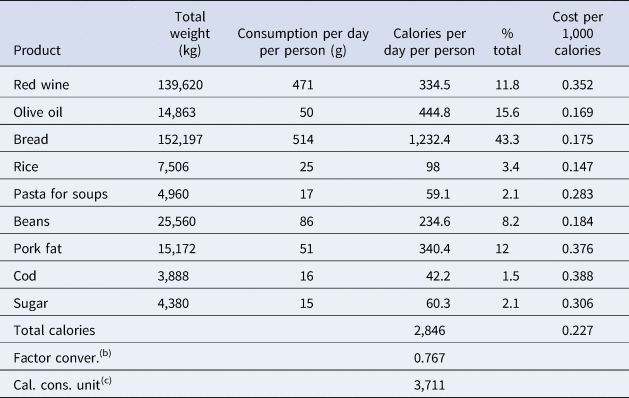
Table 1 presents the foodstuffs on offer, the quantities in which they were sold, and the daily consumption per member and household, based on an average family of four members (father, mother, and two children under fifteen; a total of 812 people).Footnote 37 For the conversion of kilograms into calories, we used the coefficients published by Base de Datos Española de Composición de Alimentos (BEDCA),Footnote 38 which takes into consideration the non-edible percentage of each foodstuff.Footnote 39 The lack of contemporaneous estimates forces us to use current estimates, even if this could affect the results somewhat. This methodology is widely followed by studies on nutrient intake in the past.Footnote 40
Consumption structure based on the products supplied by consumer cooperatives in Barcelona in the early twentieth century.(a)
Notes:
(a) This includes data from La Mataronense (Mataró, Barcelona; 23 members), La Puertorriqueña (Mataró, Barcelona; 13 members), La Obrera Tianesa (Tiana, Barcelona; 95 members), La Unión (Premià de Mar, Barcelona; 37 members), and La Económica Masnouense (El Masnou, Barcelona; 38 members).
(b) An example of the calculation of the factor for converting to consumption per equivalent adult male can be found in Floud et al., The Changing Body, p. 46.
(c) Calories per consuming unit, or consumption per equivalent adult male aged 20–39 (consumption per capita divided by factor for converting consumption per equivalent adult male). See text.
Sources: Revista Cooperativa Catalana, 49 (May 1903), p. 202; Base de Datos Española de Composición de Alimentos (BEDCA). Available at: http://www.bedca.net/bdpub/index.php; last accessed 4 August 2021; Spanish population structure data, 1900: Dirección General de Instituto Geográfico y Estadístico, Censo de la población de España (Madrid, 1913); price data: Ayuntamiento de Barcelona, Anuario Estadístico de la Ciudad de Barcelona (Barcelona, 1902), pp. 528–530.
The dietary needs of all household members were not identical, however, and food would be unevenly distributed according to sex, age, height, weight, and activity.Footnote 41 Some studies have demonstrated that this was, in fact, the case, and that Spanish women and children were not as well fed as adult males.Footnote 42 In addition, we must bear in mind that the working classes were often forced to take physically demanding jobs, and men working moderately or highly demanding jobs needed between 2,800 and 3,500 calories per day, which was far above average.Footnote 43 Most members of consumer cooperatives fitted this profile,Footnote 44 and so, to standardize calorific intake by age and sex, calories per capita must be normalized to that of adult males aged 20–39, the “calories per consuming unit” method.
Some conclusions can be drawn from Table 1. First, it confirms what we already know concerning the sort of products sold by these cooperatives. The cooperatives we are examining retailed only basic products (but not all of them). They specialized in bread, legumes, rice, pasta for soups, olive oil, cod, wine, sugar, and pork fat. Second, these products met their members’ calorific needs. Considering daily consumption figures, the average calorific intake of a four-member household would be 2,846 calories, which is significantly higher than the published estimates for Spain in the early twentieth century (2,404 on average).Footnote 45 Finally, it is significant that cooperatives met the calorific needs of adult males aged 20–39. Calories per consuming unit rise to 3,711 per day, which is above the maximum requirement for males in highly demanding jobs. Allen's method,Footnote 46 which estimates that the consumption of five-member households was equivalent to that of three adult males, leads to a similar conclusion (using this method, the daily intake of adult males would be 3,795 calories).
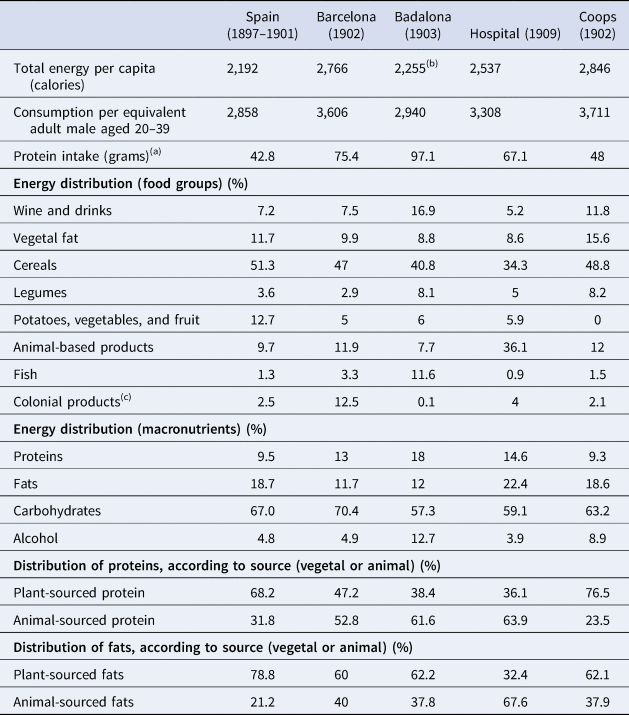
Tables 2 and 3 provide further information. They compare macro- and micronutrient consumption based on the products supplied by cooperatives and four model diets for the early twentieth century. The first two diet estimates are based on apparent consumption figures for a wide array of products, some of which were rarely accessible to the working classes (fruit, vegetables, poultry, milk, fresh fish, chocolate). The first one refers to Spain in general and was elaborated by Simpson using agricultural production and foreign trade data for 1897–1901.Footnote 47 The second considers the products that entered Barcelona daily, according to the city council's records for 1902, and Nicolau and Pujol-Andreu's estimates of animal-based product consumption during this period.Footnote 48 The other two model diets are real-consumption estimates. One reflects the diet of a labourer in Badalona, an industrial city near Barcelona, and was developed by a prestigious local doctor in 1903.Footnote 49 The final one is based on the average diet in Barcelona's main hospital (Hospital Clínico), and it takes into consideration the hospital purchases of food and the number of patients and carers in 1909.Footnote 50 In order to homogenize the data, we use the same cal/kg coefficients used for cooperatives (BEDCA database) and the minimum recommended micronutrient intake suggested by Moreiras and others,Footnote 51 taking into consideration the age and gender structure of the population for the national averages.Footnote 52
Calorific intake and distribution in terms of food groups and macronutrients in the early twentieth century.
Notes:
(a) Maximum biological value proteins have been estimated for all food groups and diets, based on data provided by FAO.
(b) This diet corresponds to that of an average worker for the period, and so is a reflection of the consumption by an average male worker performing moderate or heavy physical labour. If the factor for converting to consumption per equivalent adult male presented in Table 1 is applied, we can estimate total energy consumed per capita at a national level.
(c) Sugar, coffee, chocolate.
Sources: Spain (1897–1901): Simpson, “La producción agraria y el consumo español”, pp. 366–367; Barcelona (1902): Ayuntamiento de Barcelona, Anuario Estadístico de la Ciudad de Barcelona (Barcelona, 1902), p. 527, Pujol-Andreu and Nicolau, “El consumo de proteínas animales en Barcelona”, pp. 110, 113, 117; Hospital Clínico (Barcelona) (1909): elaborated by Roser Nicolau after Ayuntamiento de Barcelona, Anuario Estadístico de la Ciudad de Barcelona (Barcelona, 1906–1923); Badalona (1903): Tuixans i Pedragosa, Apuntes topográficos-médicos de Badalona, pp. 58–59; Cooperatives (1902): Revista Cooperativa Catalana, 49 (May 1903), p. 202; Base de Datos Española de Composición de Alimentos (BEDCA); data to calculate the factor for converting consumption per equivalent adult male: Floud et al., The Changing Body, p. 46; data on the maximum biological value of proteins: Food and Agriculture Organization of the United Nations (FAO), Amino-acid Content of Foods and Biological Data on Proteins (Rome, 1981).
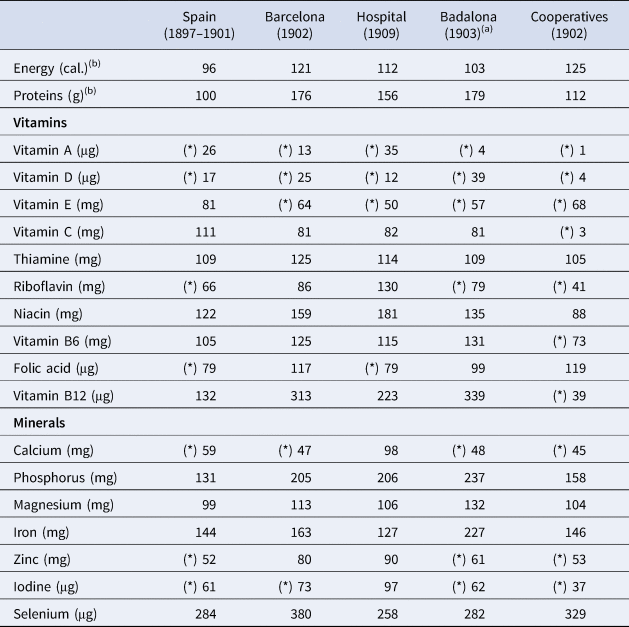
Energy, protein, and micronutrient consumption in the early twentieth century compared with the recommended dietary allowance (RDA = 100).
Notes:
(*) Micronutrient intake below eighty per cent of recommended amount.
(a) Since this diet refers to an adult male labourer, the recommended dietary allowances used are not those established for the population in general for 1900, but those established for males aged ten or above.
(b) The minimum energy and protein requirements for the Spanish population in 1900, taking into account gender, age, birth rate, height, and environmental conditions, were 2,274 calories and 42.9 grams per day.
Sources: See Table 2; recommended dietary allowance (calories and proteins): Cussó et al., “Estado nutritivo de la población Española”, pp. 11–18, 14; recommended dietary allowance (micronutrients): Moreiras et al., Tablas de composición de alimentos; Spanish population structure data, 1900: Dirección General de Instituto Geográfico y Estadístico, Censo de la población de España.
Based on all these estimates, it can be safely argued that the calorie and protein intake demands of cooperative members and their households were met (see protein and calorie figures in Table 3). In terms of calorie intake, a diet based on the foodstuffs sold by cooperatives was sufficient to provide well over the number of calories reflected in the model diets, considering both the consumption per capita of four-member households and the consumption per capita of adult males (in this case, the figure clearly outstrips the 3,500 kcal/day maximum threshold established for heavy labour). On the other hand, in terms of the structure of macronutrient consumption all diets were very similar. As was the case for all the other diets, a diet based on the products sold by cooperatives had the following characteristics: a) most of the calorie intake came from the consumption of cereals (mainly bread; 48.8 per cent), vegetal fats (mainly olive oil; 15.6 per cent), wine (11.8 per cent), and pork fat (animal-based products; 12 per cent); and b) protein and fat intake came mainly from the consumption of vegetal products (76.5 and 62.1 per cent of total intake, respectively). Only in the diet provided by Hospital Clínico was the calorie, protein, and fat intake based mostly on the consumption of animal-based products, as hospital diets were heavily based on meat, milk, and eggs. This sort of diet must have been common in most hospitals.
This does not mean that the food sold by cooperatives provided a balanced diet. This is reflected in Table 3, which presents the excesses and shortcomings of cooperative diets and the four model diets in terms of micronutrient intake, using the average demand of the Spanish population in 1900. Although the products sold by cooperatives met the calorie and protein demands, in terms of micronutrients they fell way short of minimum requirements. Although this applies to all the model diets under consideration, the shortcomings of cooperative diets in this regard seem especially acute; the deficit in terms of vitamins (fruit and vegetables) and minerals such as calcium (milk and eggs) was especially severe. In contrast, cooperative diets were rich in highly calorific food, such as wine, vegetal fat (olive oil), and animal fat (pork fat). All diets are similar in terms of cereal and fish (mostly salted cod) consumption. It is thus reasonable to presume that cooperative members did not exclusively base their diet on the products they purchased from the organization – although the consumption of products purchased elsewhere probably fell short of the recommended minimum, a phenomenon seen in the case of most of the population. In the early twentieth century, many micronutrients had yet to be identified, and some foodstuffs that were key in this regard, such as fresh fish, milk, fruit, and vegetables, were consumed only rarely by most of the population.Footnote 53
Apparent consumption-based diets are somewhat more balanced, but we should realize that they were estimated based on supply, and they ignore product loss and income and gender inequality. These diets cover micronutrient intake requirements better than the cooperative diet, but they still fall short of minimum requirements for some vitamins (owing to low fruit and vegetable consumption), calcium and zinc (owing to low milk consumption), and iodine (owing to low fish consumption). These shortcomings are shared by all the diets analysed. At any rate, apparent consumption-based diets do not represent the real diet of the working classes, as clearly reflected by the comparison with our other model diets.
The diet from Hospital Clínico must also be used with caution because the number of animal-based products included was clearly anomalous: it is the only one of the diets examined to reach the minimum requirements in terms of calcium intake. This makes sense considering that, at the time, milk was regarded more as medicine than food.Footnote 54 Recent works have demonstrated that, in the second half of the nineteenth century, barely six per cent of the population of Barcelona drank cow's or goat's milk, so it seems fairly safe to suggest that it was excluded from the diet of the working classes.Footnote 55
The model diet that corresponds closest to that of the working classes of Badalona is similar in many ways to the cooperative diet, which suggests that it is much closer to the real diet of these population groups than the diets based on apparent- and hospital-consumption data. In addition, it is based not on averages, but directly reflects the diet of real labourers. In this case, we must note the high levels of fish and alcohol (wine) consumption, which may be extrapolated to low-income groups in general during this period.Footnote 56 Compared with adult male consumption equivalents, this diet is among the most hypocaloric for population groups faced with high physical demands, suggesting that the average diet for the working classes was insufficient, and that the hypercaloric foods sold by cooperatives may have contributed to mitigating this problem.
In conclusion, the diets offered by the consumer cooperatives were unbalanced but met the calorific needs of their members (low-income, manual workers with highly demanding jobs) with the basic products that they provided, which were affordable and easy to store.
Cost of living, benefits, and other cooperative services
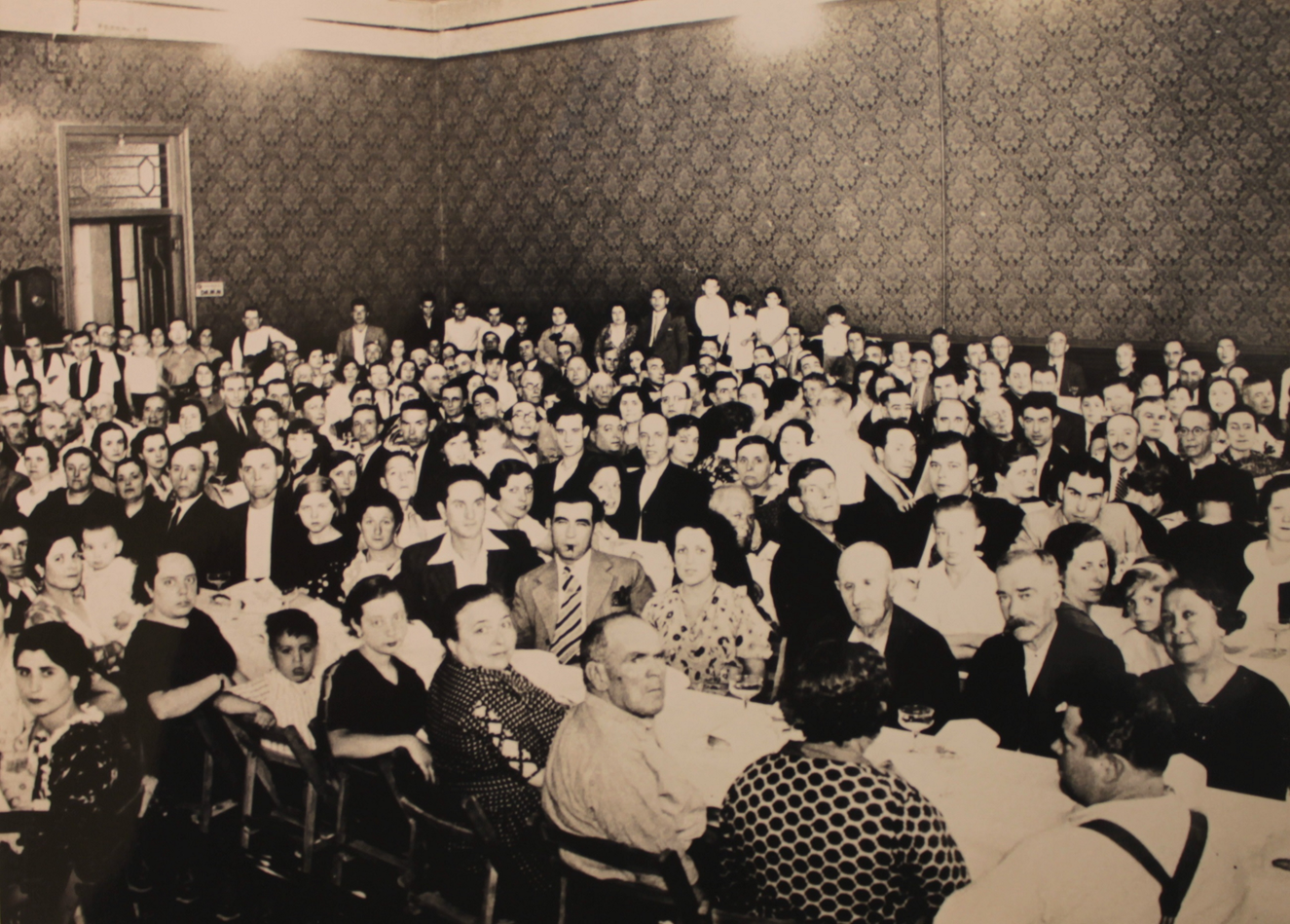
The services provided by consumer cooperatives were not limited to food; they also contributed to improving the living standards and material well-being of their members. To quantify this, this section will analyse the living costs of member families, as well as the financial advantages of membership, in terms both of hard cash and of social, educational, and cultural services (Figure 3).Footnote 57
Fraternity meeting held at the headquarters of Cooperative La Flor de Mayo (Barcelona, Spain), 7 July 1935.
AMB, Sección Sant Martí de Provençals, Cooperativa La Flor de Mayo, I.1 ACT (FLO).
Most Catalonian consumer cooperatives followed the Rochdale model: they sold their products at market price and paid dividends to their members.Footnote 58 However, the differences in the diets described above also involved differences in prices. That is, the advantages of membership were related not so much to the cost of the shopping basket but to the fact that members would have access to a calorie-rich diet appropriate for the high energy demands faced by manual labourers. The cost of the five model diets used has been calculated based on price information in Barcelona's municipal records for 1902.Footnote 59 We have used a single source to avoid price differences during different periods. The diet corresponding to adult labourers in Badalona has not been considered because it does not reflect the whole household.
We have also calculated the daily cost of living per person (food, clothes and shoes, hygiene, fuel, and housing). According to Maluquer de Motes, food accounted for 65.7 per cent of daily expenses in Spain during this period.Footnote 60 Multiplying this by 365 gives the annual cost of living per person; multiplying this by three gives the cost of living per household. We assume the two children in the four-member average household would require as much as one adult.Footnote 61
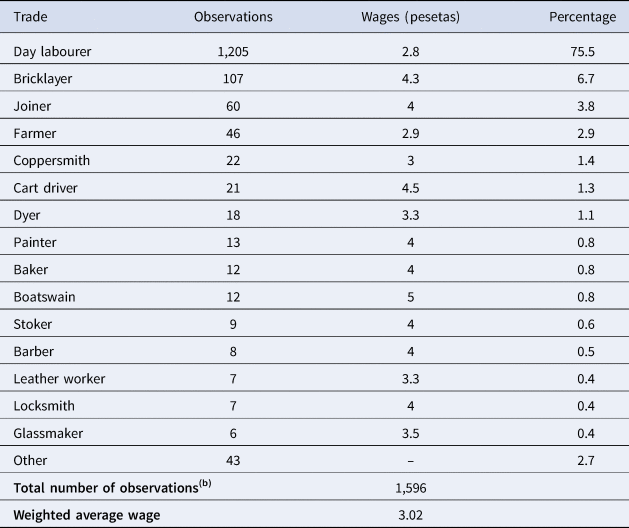
Income is a problematic variable. Following other authors, it was assumed that most of the family income was earned by the male household head.Footnote 62 The average wages of cooperative members has been estimated based on the socio-professional profile of the members of five cooperatives from Barcelona and the price information in the municipal records for 1902. Based on over 1,500 entries, the average daily wage has been established as 3.02 pesetas (Table 4). The number of working days is also problematic. Official sources suggest that the working week comprised five days,Footnote 63 confirming a recent estimate of 280 working days per year in the construction sector; this estimate will be used,Footnote 64 following Allen's standard.Footnote 65 This gives an aggregate income of 845.6 pesetas per year. Based on this, the well-being rate has been calculated (daily wage divided by living costs) for both individuals and households.
Socio-professional profile and wages of cooperative members in Barcelona,(a) 1894–1938.
Notes:
(a) The cooperatives examined include: La Vanguardia Obrera (Barcelona), La Formiga Martinenca (Barcelona), La Unió de Cooperadors de Súria (Súria, Barcelona), La Artesana (Barcelona), Pau i Justícia (Barcelona), and El Respeto Mutuo (L'Hospitalet de Llobregat, Barcelona).
(b) During the period under consideration, these cooperatives had a total of 2,688 members, but occupational data are available on only 2,015. On the other hand, the public records do not always contain the necessary information concerning wages; therefore, only 1,249 entries could be used, comprising 62 per cent of members whose occupation is known, and 46.5 per cent of the total membership.
Sources: Ayuntamiento de Barcelona, Anuario Estadístico de la Ciudad de Barcelona, (Barcelona, 1902), pp. 557–562; Registro de Socios, 1894–1930, Archivo de la Fundació Roca i Galés, La Vanguardia Obrera; Registro de socios, 1904–1937, AMB, Archivo Sección Sant Martí de Provençals, Cooperativa La Formiga Martinenca, AMDSM3–190; Registro de Socios, 1916–1938, Archivo Municipal de Súria, Unió de Cooperadors de Súria; Registro de Socios, 1902–1937, AMB, Sección Sant Martí de Provençals, Cooperativa La Artesana; Registro de socios, 1900–1934, AMB, Sección Sant Martí de Provençals, Cooperativa Pau i Justícia, AMDSM3–191; Registro de socios, 1911–1937, Archivo Municipal de L'Hospitalet de Llobregat, Cooperativa El Respeto Mutuo, fondo núm. 505, caja 5.
The results are presented in Table 5. The cooperative diet is the cheapest of all our model diets – not because cooperatives undercut prices, but because of the structure of the diet, which was largely made up of low-cost, highly calorific products. As such, the cost of this diet per 1,000 calories was significantly lower than that of the other diets. This especially applies to bread, legumes, and olive oil, which were typical low-cost sources of proteins in Mediterranean Europe (see final column in Table 1). Concerning the welfare ratio, the cooperative diet yielded the highest values. Obviously, workers who were not cooperative members could access a similar diet at comparable prices. Cooperatives sold basic products that could be purchased by any retailer. However, the cooperative diet provided high calorie intake at low cost owing to the diet's own structure, while protecting cooperative members from one of the most widespread problems of this period: the adulteration of food in the market.Footnote 66 More research is needed to ascertain if other geographical factors might also have played a role in this, and it is plausible to think that working-class neighbourhoods in which consumer cooperatives operated had worse food and basic household products distribution networks than other urban areas. In addition, as we shall see below, associates enjoyed important advantages over non-associates, such as the distribution of dividends and access to social and cultural services.

It can therefore be argued that cooperatives helped the working classes to maintain reasonably good living standards by distributing basic products. The resulting diet was not balanced, but met calorific demands and was affordable. It is interesting that they specialized in, inter alia, wine and olive oil, which, according to Nicolau and Pujol-Andreu, were comparatively cheaper in Barcelona than in other Spanish regions.Footnote 67 In contrast, they did not specialize in legumes, fruit, and vegetables, which were comparatively expensive in the city. It seems natural to think that these organizations would offer cheaper prices to their members, but, in fact, these cooperatives operated not by undercutting prices but by focusing on offering basic low-cost, easily stored products that allowed their members to meet their households’ basic calorific needs. Profits were made on all products sold,Footnote 68 but the profit margin was smaller on low-cost products (wine, olive oil, cereal, legumes, cod, pork fat, and lard) than on non-basic products, such as animal-based products, coffee, chocolate, and spices.Footnote 69
To conclude this analysis, we must examine how members used cooperatives and what benefits they obtained from them, in terms of both income and welfare. One should note that some of these organizations, especially the largest ones, forced their members to make their purchases from them, and imposed sanctions on those who did not. In smaller and newer cooperatives, in contrast, the only condition for membership was a minimum annual spend.Footnote 70
In order to examine this issue, we have studied the records of the three cooperatives for which full chronological series exist: El Reloj (Barcelona); La Vanguardia Obrera (Barcelona); and Respeto Mutuo (L'Hospitalet de Llobregat, Barcelona). Figure 4 presents the average annual consumption by the members of these three cooperatives, as well as the average dividend paid, in both current and constant pesetas. For El Reloj, the data cover 1891 to 1919, for La Vanguardia Obrera 1909 to 1930, and for El Respeto Mutuo 1917 to 1935. In the periods for which there are data for more than one cooperative, the average is used. The average spending of members of cooperative El Reloj was 940 pesetas per year at the end of the nineteenth century, which is not far off our total annual income estimates presented in Table 5, based on the daily wages in Table 4 and on the total household living costs for cooperative diets. This suggests that cooperative members purchased most of their food from the cooperatives.
Consumption and dividend averages for the members of Cooperativa El Reloj, La Vanguardia Obrera, and El Respeto Mutuo, 1891–1935, using both current and constant pesetas from 1913 (three-year averages).
Sources: Libro para las cuentas generales, 1891–1920, Archivo Nacional de Catalunya, Cooperativa El Reloj, ANC2–103; Libros de capital social, 1917–1935, Archivo Municipal de L'Hospitalet de Llobregat, Cooperativa El Respeto Mutuo, fondo núm.505, cajas 6, 7, 8; Estado de Cuentas, 1909–1933, Archivo del Gobierno Civil de la Provincia de Barcelona, La Vanguardia Obrera; data deflated by the Maluquer de Motes Consumer Price Index. Maluquer de Motes, “Consumo y precios”, in Carreras and Tafunell, Estadísticas históricas de España, pp. 1247–1296, 1290–1291.
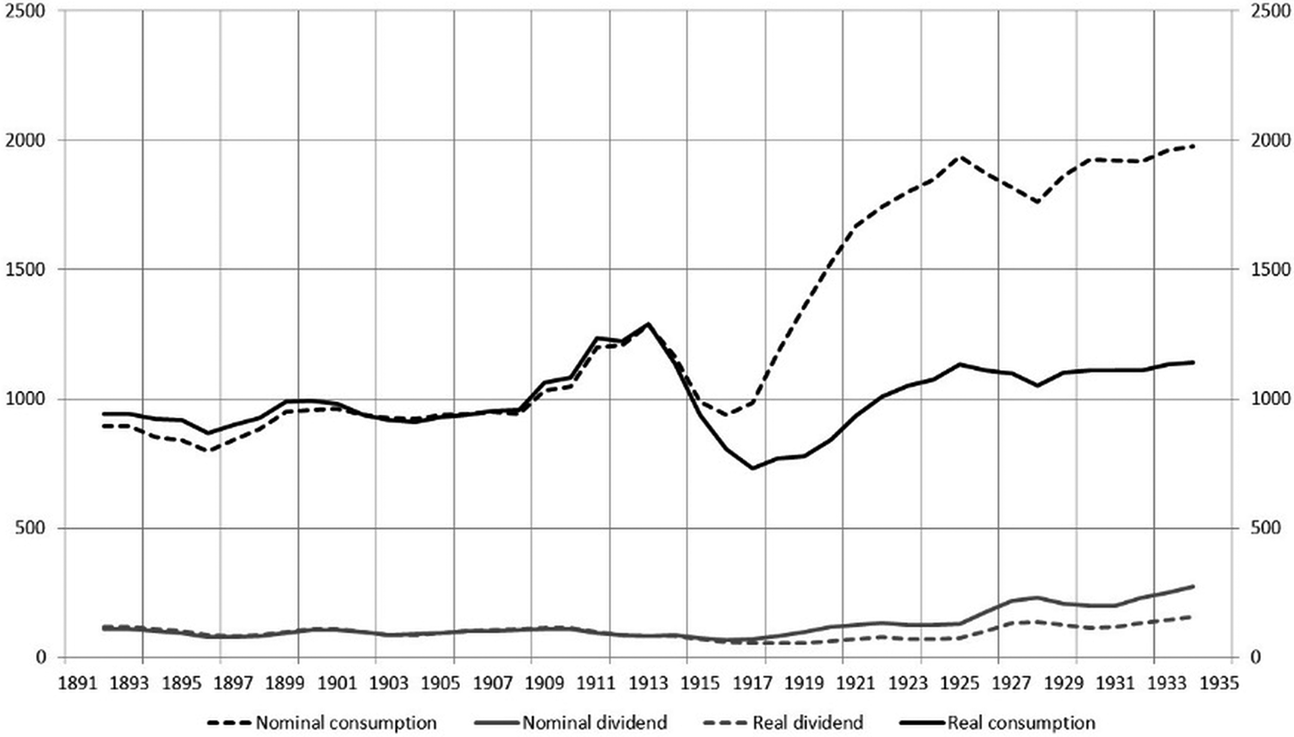
By observing the long-term evolution, we see that consumption levels remained fairly stable between the late nineteenth century and World War I, with little difference between real consumption and final consumption (as a result of almost non-existent inflation). This allowed cooperative members to maintain their living standards. Things changed with the outbreak of World War I. Although Spain remained neutral during the war, it was not free from the inflationary processes that overtook the continent and undermined the purchasing power and living standards of the working classes. Consumption and profits plummeted, and did not recover to pre-war levels until the 1920s.
The advantages of cooperative membership lay not in lower prices, but in the basic principle of the Rochdale model: members obtained benefits proportional to their purchases (what British cooperative members called the “divi”). By purchasing products from the organization, a member was given credit to spend on basic products in the following period; this essentially amounted to an extra form of income that could be spent only at the cooperative. Not only was the cooperative diet cheaper, it was also partially funded by membership and consumption, thus increasing workers’ purchasing power and living standards.
What did this mean for the average cooperative member and his family? If a wage worker who was a member of cooperative El Reloj in 1900 had an average annual income of 845.6 pesetas (tables 4 and 5), and the average dividend paid by this society was 105.4 pesetas, the family's annual budget would have been 951 pesetas, i.e. a 12.5 per cent increase, covering most of the family's expenses of 1,083.3 pesetas, as calculated in Table 5 on the basis of the cooperative diet or the 957.3 pesetas that members consumed on average during that year, on food, clothes, shoes, and fuel (see Figure 4). This was in addition to the wife's potential income.
Not all cooperatives distributed the same proportion of their profits in dividends. As pointed out by WattsFootnote 71 for the Scottish case, various models existed: one in the area of Edinburgh, mostly open to tertiary-sector employees, was characterized by less solidarity, higher dividends, and competition between cooperatives. In the terminology of neoclassical cooperative theory, these cooperatives were dominated by the free-rider behaviour of opportunistic members who were concerned only with maximizing their personal gain.Footnote 72 Under the other model, which prevailed in Glasgow's industrial areas, the membership were more committed to the cooperatives’ ends: dividends were lower, but the educational, medical, and welfare services provided by the organizations were more varied.
Generally, cooperatives in Barcelona followed the second model, which is unsurprising given the industrial character of the area, where the textile sector was predominant. In 1912, there were eighty-one consumer cooperatives in Barcelona, nearly half of which distributed all or nearly all their profits (between eighty and 100 per cent) in the form of dividends. Nearly fifteen per cent of cooperatives distributed between sixty and sixty-five per cent of profits as dividends, and nearly twenty-five per cent of cooperatives between twenty and fifty per cent. Only eleven (13.6 per cent) cooperatives refrained from distributing dividends and put all profits into collective funds.Footnote 73
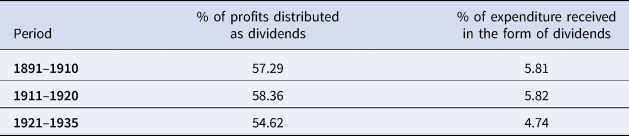
Smaller and newer cooperatives provided their members with few services, and distributed a large proportion of profits as dividends.Footnote 74 As these organizations grew, the distribution of dividends decreased and the provision of services such as sick pay, retirement pensions, and maternity leave (which neither the state, nor the market covered)Footnote 75 became increasingly important. They also operated as strike funds and provided educational and cultural services, such as theatre and cafes. Table 6 presents the average percentage of profits that a sample of cooperatives from Barcelona distributed as dividends, as well as the equivalence in basic products for members. We have established three periods: eleven cooperatives are examined for the first, and thirteen for the other two. The results indicate that, initially, approximately sixty per cent of profits were distributed as dividends, and that this percentage consistently decreased as the organizations consolidated. Meanwhile, initially, members received dividends of approximately six per cent, but this shrank to less than five per cent in the 1920s and 1930s. Although the cooperatives in Barcelona never came close to Watts’ Scottish cooperatives (between nine and fifteen per cent during the same period),Footnote 76 the increase in purchasing power was still significant.
Average profits distributed as dividends and percentage of individual expenditure received as dividends, 1891–1935.
Sources: Revista Cooperativa Catalana (1899–1905), La Económica Masnouense, La Central; El Cooperador Cooperativista (1905–1911), La Mercantil, La Equitativa, La Protectora Obrera, La Instructiva; El Cooperatista (1911–1915), La Obrera Andresense, La Moralidad Obrera, La Económica Bagurense, La Casa del Pueblo, La Constancia Sagrense, La Manresana; Cooperatismo (1915–1920), La Flor de Mayo, La Constancia Sagrense, La Manresana; Acción Cooperatista (1920–1935), La Constancia Sagrense, La Igualadina, La Hormiga, La Moral, La Puertorriqueña, La Económica, La Regeneradora Villanovesa; Estado de Cuentas, 1903, Archivo del Gobierno Civil de la Provincia de Barcelona [hereafter, AGCB], La Atrevida Martinense; Estado de Cuentas, 1909–1933, AGCB, La Vanguardia Obrera; Estado de Cuentas, 1914–1924, AGCB, La Fraternidad; Estado de Cuentas, 1904–1909, AGCB, La Igualitaria; Libro para las cuentas generales, 1891–1920, Archivo Nacional de Catalunya, Cooperativa El Reloj, ANC2-103; Inventarios y balances,1905–1935, Archivo Nacional de Catalunya, Cooperativa La Rubinenca, 1–88, 14.2 (1); Libros de capital social, 1917–1935, Archivo Municipal de L'Hospitalet de Llobregat, Cooperativa El Respeto Mutuo, fondo núm.505, cajas 6, 7, 8; Inventarios y balances, 1916–1935, AMB, Sección Sant Martí de Provençals, Cooperativa Pau i Justícia, AMDSM3–191.
When the percentage of profits distributed as dividends decreased, the cooperatives allocated increasingly large amounts to collective funds for education, sick and disability pay, maternity leave, and retirement pensions. There is consensus that these programmes were one of the cooperatives’ most significant contributions to the welfare of the working classes. Robertson also emphasized that British consumer cooperatives even became a source of credit during times of hardship.Footnote 77 The percentage of profits allocated to each of these purposes varied from cooperative to cooperative, and Barcelona is no exception. Tables 7 and 8 present the welfare-related activity of a cooperative for 1909–1933. La Vanguardia Obrera began by distributing over sixty per cent of its profits as dividends, a percentage that had been reduced by half by the 1930s, as the funds allocated to education, sick and disability pay, retirement pensions, and reserves, as well as other purposes, such as covering transactions, increased. A similar trend may be detected in English cooperativism, for instance with the Lincoln Equitable Co-operative Industrial Society studied by Jackson,Footnote 78 which, in 1870, distributed 85.9 per cent of its profits as dividends, but only 63.5 per cent in 1900 and 38.1 per cent in 1920.
Distribution of profits of Cooperativa La Vanguardia Obrera, 1909–1933 (%).

Sources: Estado de Cuentas, 1909–1933, Archivo del Gobierno Civil de la Provincia de Barcelona, la Vanguardia Obrera.
Social expenditure of Cooperativa La Vanguardia Obrera, 1913–1927.

Notes: (a) current pesetas; (b) constant pesetas, 1913.
Sources: Estado de Cuentas, 1913–1933, Archivo del Gobierno Civil de la Provincia de Barcelona, la Vanguardia Obrera; data on average price per day and average quantity received (illness) deflated by the Maluquer de Motes Consumer Price Index; J. Maluquer de Motes, “Consumo y precios”, in Carreras and Tafunell, Estadísticas históricas de España, pp. 1247–1296, 1290–1291.
The impact of this welfare activity was considerable, and tended to grow over time. During the 1920s, it reached an average of twenty-two per cent of the cooperative's nearly 300 members; the number of days’ sick pay received per member also grew. Old-age pensions were paid nearly all year round, and death benefits were fixed at 100 pesetas. It is obvious that members could not live on just their sick pay or old-age pension, especially given that the amounts paid remained stable despite the postwar inflation, but when they could not work this form of income alleviated their plight to some extent.
Conclusion
We have tried to emphasize the role played by social economy and institutions for collective action, such as consumer cooperatives, in the evolution of the living standards of the working classes during industrialization in the nineteenth and twentieth centuries. They made food more accessible to the working classes and provided welfare services not provided by either the state or the market.
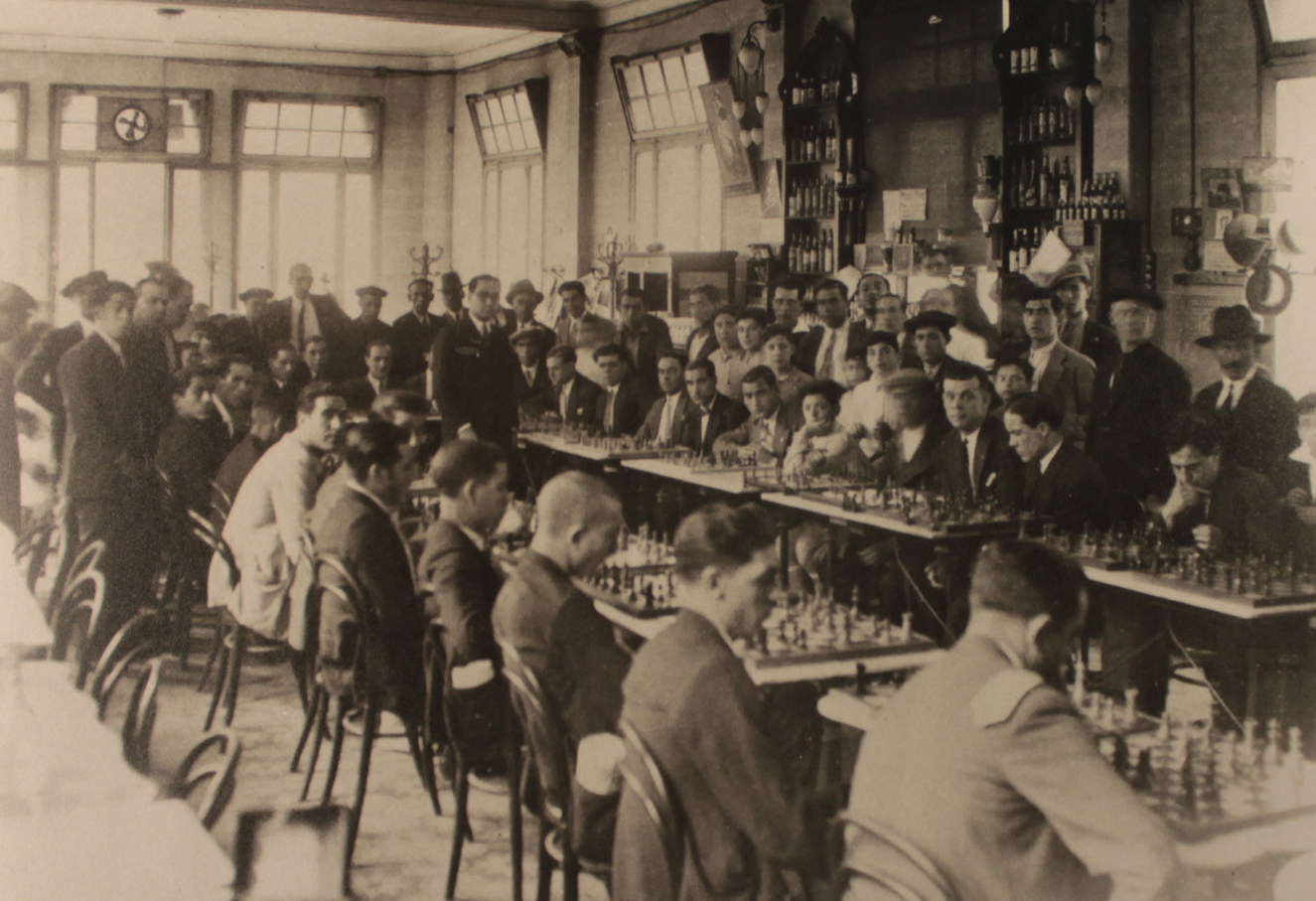
European consumer cooperatives, which were mostly oriented towards the working classes, became widespread in such countries as Great Britain, Switzerland, Germany, France, and Italy, as well as in Scandinavia. Their impact on living standards was substantial; they made basic products and services (food, clothing, shoes, hygienic products, housing) more accessible, while providing welfare and educational, recreational, and cultural services (Figure 5). The present article aimed to quantify this impact based on the example of Barcelona, the heart of the Spanish textile industry.
Simultaneous chess game at Cooperative La Constancia (Barcelona, Spain), c.1930.
AMB, Sección Sant Martí de Provençals, I.1.1 (CONS), Cooperativa La Constancia.
Our first conclusion is that consumer cooperatives met their members’ calorific needs – although their diet was unbalanced – through affordable and easily stored basic products. Cereals (bread), wine, vegetal fat (olive oil), and animal fat (pork fat) were the basis of an unbalanced diet that did not meet many basic nutritional requirements (vitamins and minerals), but which did meet the calorific needs even of workers carrying out physically demanding jobs.
These cooperatives followed the Rochdale model: they sold their products at market prices and distributed their profits as dividends (calculated as a proportion of the members’ spend), allowing members to cover between five and ten per cent of their expenses through the receipt of these dividends. The advantage of membership was not cheaper prices, but the dividends and the structure of the diet that the cooperative offered: low-cost, highly calorific products that fitted well with the purchasing power and energy needs of manual labourers. This allowed members to maintain reasonable living standards while enjoying services that would have been otherwise unobtainable: education; culture; leisure (theatres, cafes); sick pay; maternity leave; disability pay; credit; and strike funds.
The role of consumer cooperatives deserves more attention than it has received to date because they hold one of the keys to understanding the living standards of low-income social groups in Europe during the second half of the nineteenth century and the opening decades of the twentieth. Future research should examine this issue further, for instance by focusing on similar organizations in other countries, comparing data, and reaching more general conclusions. It would also be interesting to investigate the role played by these collective action institutions in the changes undergone in dietary habits among the working classes within the framework of the European nutritional transition; consumption cooperatives may have facilitated access to new foodstuffs, contributing to their dissemination among low-income social groups. Another issue that should be studied further is the policies followed by these institutions during periods of high inflation – whether, for instance, they used their pricing policies to buffer the impact of rising prices upon the working classes. We also need to study the welfare services provided by these institutions in more detail, and what sort of impact these had on the lives of their members.
Supplementary material
The supplementary material for this article can be found at https://doi.org/10.1017/S0020859021000481
Acknowledgements
This work was supported by the Ministerio de Ciencia e Innovación (Spain), Projects HAR2016-76814-C2-1-P, PID2019-109336GB-I00 and PID2020-113793GB-I00 (AEI/FEDER, EU), and by Generalitat Valenciana (Spain) (Project PROMETEO/2020/083). We are grateful to Salvador Calatayud for his comments and suggestions. An earlier version of this work was presented at the Spanish Economic History Association Conference, held at the Universidad de Salamanca (Spain) in September 2017, and at the Economic and Social History Seminar (online), organized by the Universidad de la República (Uruguay) in July 2020. The authors would like to thank the participants for their comments and suggestions. This article has also benefited from the comments of the journal's editor and referees. All errors remain our own.


 Open access

