


International transformation to a recovery paradigm in mental health has involved major policy reform in high-income countries, including the UK and Canada.Reference Adams, Daniels and Compagni1 In Quebec, the 2005–2015 mental health reform2 defined recovery as personal empowerment, community integration and the inclusion of patients in decision-making. The reform aimed to create a well-integrated mental health system oriented towards recovery by strengthening primary care and out-patient services, and promoting various institutional links and partnerships among local service networks made up of diversified primary and specialised healthcare organisations. This major reform of the Quebec mental health system provided the backdrop for the study.
Recovery-oriented care
A number of structural elements and clinical best practices introduced in Quebec have been identified in other policy documents, and in research studies, as relevant to the ultimate goal of promoting personal recovery among mental health patients. Key elements include integrated service networks,Reference Fleury3 shared-care initiatives involving the transfer of expertise from psychiatrists to primary care providersReference Fleury, Grenier, Vallée, Aubé, Farand and Bamvita4 and community-based services offering better patient–service provider collaboration including individualised treatment planning.Reference Stanhope, Ingoglia, Schmelter and Marcus5 The Quebec reform also implemented known recovery-oriented best practices, such as strengths-based approaches, illness self-management and stepped care,Reference Menear and Briand6 while also promoting patient evaluation and feedback mechanisms,Reference Marshall, Oades and Crowe7 recovery education and training for mental health professionals,Reference Salgado, Deane, Crowe and Oades8 and more adequate funding.Reference Salkever, Gibbons and Ran9
Support for multidisciplinary teams, and greater collaboration between mental health teams working in specialised mental health services and primary care settings, was a particular focus of the Quebec reform, and a policy interest shared by other countries, including the UK, for advancing recovery-oriented services. Well-resourced multidisciplinary teams that promote collaborative relationships over hierarchy and conflict have been shown to support the well-being and morale of mental health professionals and to meet the medical and psychosocial needs of individuals with mental disorders.Reference Malinovsky, Lehrer, Silverstein, Shankman, O'Brien and Samuelson10 Yet, tensions also arise in teams where a culture of recovery challenges the longstanding leadership of mental health professionals, notably psychiatrists and physicians accustomed to working from a medical-model perspective where they enjoy high status;Reference Maddock11 tensions also occur when mental health professionals in multidisciplinary teams seek to retain their distinct professional roles in working with patients.Reference Supper, Catala, Lustman, Chemla, Bourgueil and Letrilliart12
Existing research into recovery-oriented care
A relatively small body of research has assessed mental health services in terms of recovery-oriented care. Studies have explored connections between socioprofessional characteristics of mental health clinicians, their working environments and recovery orientation; greater age, more professional experience and higher educational level related to recovery-oriented care.Reference McLoughlin and Fitzpatrick13–Reference Brown, Mahoney, Adams, Felton and Pareja15 Professionals working in community-based services rated recovery orientation higher than their counterparts in hospital settings, even while controlling for age, civil status, education and job tenure.Reference Salyers, Tsai and Stultz16 Regarding working conditions and job satisfaction, mental health professionals with lower job satisfaction scores expressed as emotional exhaustion and ‘depersonalisation’ (i.e. negative attitudes towards patients) produced lower scores on recovery-oriented care; whereas greater job and personal satisfaction produced higher scores.Reference Osborn and Stein14, Reference Kraus and Stein17 Organisational-level relationships were identified between strong leadership, larger budgets, and the perceived recovery orientation of services among mental health professionals,Reference Brown, Mahoney, Adams, Felton and Pareja15 some of whom reported barriers to recovery implementation emanating from top-down organisational approaches, inadequate change management, staff resistance, deterioration in provider-manager relations and insufficient resources.Reference Hungerford and Kench18
Only three known studies have assessed teamwork, defined as ‘the set of interrelated behaviors and actions that occur among team members while performing a task’Reference Salas, Burke and Cannon-Bowers19 in relation to recovery-oriented care. Teamwork was identified as a facilitator for organisational transformation to recovery in an implementation study.Reference Pascaris, Shields and Wolf20 A literature and policy review assessed challenges affecting multidisciplinary mental health teams responsible for developing individualised service plans for patients.Reference McHugh and Byrne21 In another study, mental health professionals rated early intervention teams as more recovery-oriented than adult mental health teams; and patient assessments revealed for the first time a strong association between recovery-oriented care provided by a team and their own personal recovery.Reference Leamy, Clarke, Le Boutillier, Bird, Choudhury and MacPherson22
This incipient research points to a critical gap in knowledge: how the actual workings of mental health teams may relate to recovery-oriented care is virtually unknown. More specifically, team effectiveness depends on team processes (for example conditions such as knowledge-sharing and collaboration) and team-emergent states (for example motivation, cognition or emotions among team members, such as trust).Reference Salas, Burke and Cannon-Bowers19 These and other variables related to team effectiveness need to be investigated in association with recovery-oriented care. Moreover, we have very little understanding of how the larger organisational environment, or interactions between teams and mental health organisations, may inform the perceptions of mental health professionals regarding the recovery orientation of their work. The use of standardised assessment tools, which are known to improve team effectiveness,Reference Lemieux-Charles and McGuire23 presents yet another line of inquiry for better understanding recovery-oriented care.
Study aims
The aim of this study was to identify and test a comprehensive range of variables related to professional characteristics, team characteristics, team processes, team-emergent states and organisational environment, most not previously examined, for associations with recovery-oriented care. The study also expands on previous research by developing a multidimensional conceptual framework rooted in both organisational science and clinical mental health practice. Based on theory and research related to recovery, and to team effectiveness, and given the strong focus on both elements in the Quebec mental health reform, we hypothesised that perceived recovery-oriented care among mental health professionals would be associated with: (a) out-patient (community or primary care) versus in-patient (hospital) settings; (b) team effectiveness, viewed in terms of multiple team processes (collaboration, knowledge-sharing, etc)Reference Maynard24 and team-emergent states (commitment to team, trust, etc);Reference Mathieu, Maynard, Rapp and Gilson25 (c) greater service integration reflected in the frequency of team interactions with other organisations (for example community organisations, general practitioners (GPs)); and (d) the implementation of recovery best practices (for example illness self-management, stepped care) and standardised assessment tools (for example patient satisfaction, mental health/addiction evaluations).
Method
Study design, sample and data collection
This was a cross-sectional, multisite study. The setting included four local mental health service networks representing different geographic areas (urban and semi-urban), with or without a public psychiatric hospital and departments of psychiatry in general hospitals. Network populations ranged from 135 000 to 300 000 inhabitants. Each network also included multidisciplinary primary care teams staffed by GPs, allied health professionals and psychiatrists involved in shared-care and community organisations offering services such as crisis centres, day centres, rehabilitation programmes and self-help groups for mental health patients and families. Private medical clinics were also available.
Study participants were mental health professionals and managers employed in community-based or in-patient mental health services, or in primary care. To be eligible for the study, participants had to work in a multidisciplinary team consisting of three or more professionals from at least two disciplines in one of the four selected networks. All mental health professionals working in primary care or specialised mental health services who met these conditions, and their managers, were invited to participate.
Data collection occurred between October 2013 and June 2014. A total of 466 mental health professionals representing 49 mental health teams were invited to participate. Professionals completed a 222-item questionnaire that brought together 18 standardised scales covering multidimensional aspects of team effectiveness, with 9 separate questions on participant socioprofessional characteristics. Managers of the mental health professionals (n = 49) were also invited to participate in the study; they completed a separate questionnaire on: (a) patient profiles, (b) team composition, (c) use of recovery best practices, (d) use of evaluation procedures, (e) use of integration strategies, and (f) frequency and satisfaction with organisational and network interactions. Managers provided administrative information, but were not asked to evaluate recovery orientation. Questionnaires for mental health professionals and managers took 45 and 120 min, respectively, to complete. A 12-member research advisory committee assisted with selection of the networks, recruitment and validation of the instruments; they also facilitated data collection. The research ethics board of a mental health university institute approved the research protocol.
Conceptual framework, variables and instruments
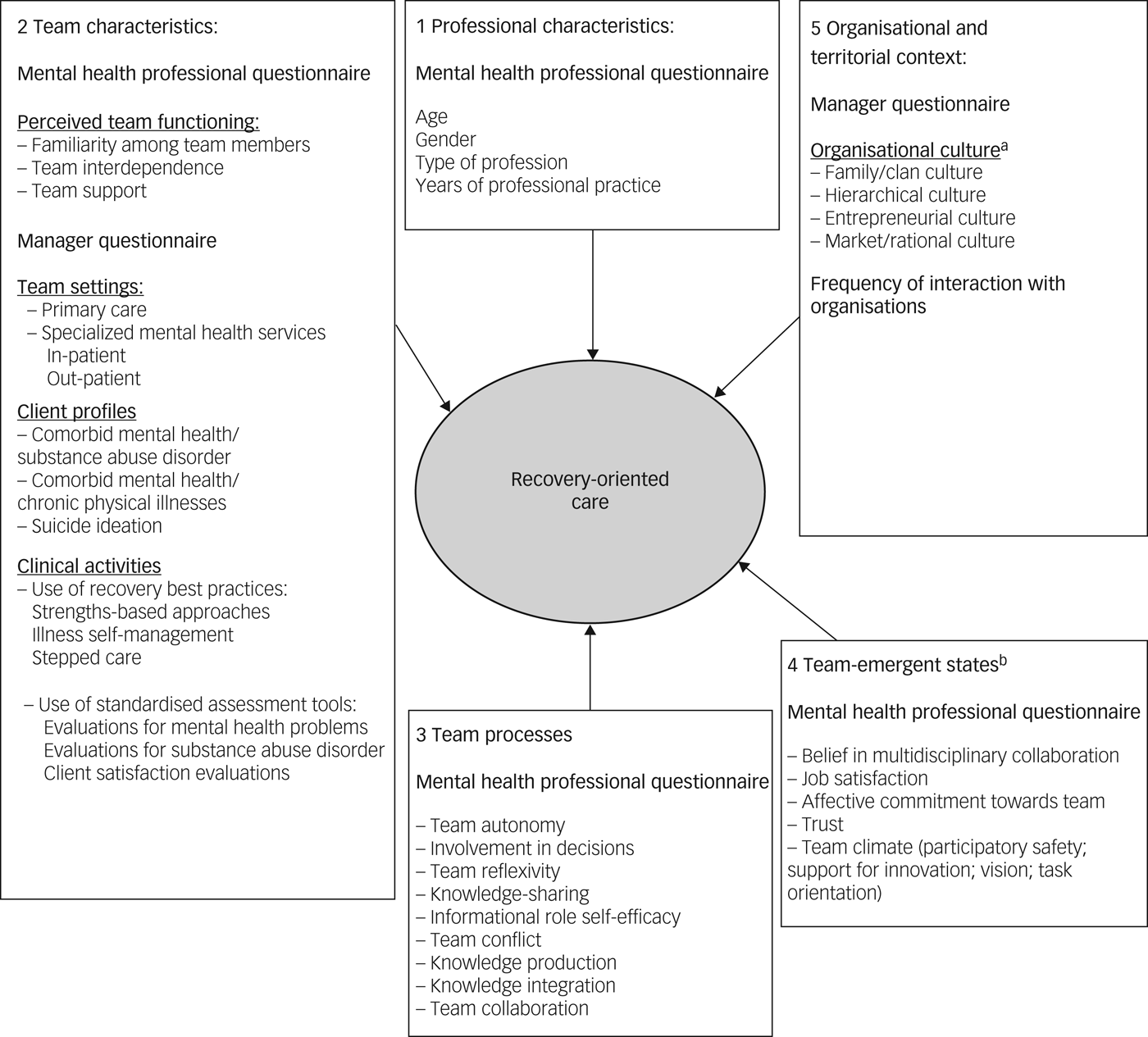
The conceptual framework for the study was adapted from the well-known input–mediator–output–input (IMOI) team performance modelReference Ilgen, Hollenbeck, Johnson and Jundt26 originating in occupational psychology (Fig. 1). Independent variables were organised within five conceptual blocks: professional characteristics, team characteristics, team processes, team-emergent states and organisational and territorial context. The IMOI model conceptualises individual variables (such as age, gender, profession) as nested within team-level variables (such as setting, composition), and, in turn, within the organisational context (such as structure, culture, interactions).Reference Mathieu, Maynard, Rapp and Gilson25 The variables are viewed as so many inputs affecting team processes (actions directed at accomplishing tasks) and team-emergent states (cognitive, motivational or affective mediators), with implications for the ability of team members to work together and produce desired results.
Conceptual framework.
The dependent variable, recovery-oriented care, was measured with the Recovery Self-Assessment Scale (RSA) developed by O'Connell et al.Reference O'Connell, Tondora, Croog, Evans and Davidson28 The RSA is a 32-item instrument based on six domains of recovery orientation: promoting life goals, consumer involvement, diversity of treatment options, consumer choice, individually tailored services and inviting environment, with scoring on a five-point Likert scale. Multiple versions of the RSA are available including the version for service providers and administrators used with mental health professionals in this study. The RSA has demonstrated good internal consistency, test–retest reliability, and convergent and discriminant validity;Reference Salyers, Tsai and Stultz16, Reference O'Connell, Tondora, Croog, Evans and Davidson28, Reference Rosenberg, Svedberg and Schon29 it is the most widely used instrument for assessing the recovery orientation of mental health services.Reference Williams, Leamy, Bird, Harding, Larsen and Le Boutillier30 Mental health professionals were invited to respond to questions on the RSA in terms of the care provided by their respective teams. Details on the RSA and the other 17 standardised instruments used to measure independent variables in the study, including their reliability measures, are presented in Table 1.
Description of standardised instruments included in the study

Data analysis
Since missing values were fewer than 5%, they were replaced by the variable means. Normality assumptions were assessed for the dependent variable, recovery-oriented care, which was found to be normally distributed. Bivariate and multivariate analyses were conducted using multilevel mixed-effects linear regression to account for both fixed effects and random effects for clustering at the team level. The Akaike Information Criterion (AIC) was used to compare multiple linear regression models. Forward selection was performed for the mode selection based on the variables identified as significant (with alpha set at 0.10) in the bivariate analyses. The model with the smallest AIC was chosen for the multivariable analysis. Stata version 15 was used to conduct the analyses.
Ethics approval and consent to participate
All procedures performed in this study involving human participants were in accordance with the ethical standards of the institutional committee and with the 1964 Helsinki declaration and its later amendments or comparable ethical standards. Informed consent was obtained from all participants, each of whom signed a consent form. The multisite study protocol and consent form were approved by the Ethics Board of the Douglas Mental Health University Institute: MP-IUSMD-11-037.
Results
Of the 466 professionals invited to the study, 315 (67.60%) from 49 teams participated. There were no significant differences between participants and non-participants on distributions for team setting (χ2(1,n = 466) = 0.79; P = 0.68), or gender (χ2 (1,n = 466) = 0.03; P = 0.87). Mean age was 43 years and the mean tenure on teams was 3 years. Women outnumbered men by more than two to one (70% v. 30%). In total, 56% worked in out-patient mental health services; 32% in primary care and 12% in in-patient mental health services.
Regarding managers, 41 of 49 (84%) participated in the study. Their mean age was 44 years, and 71% (n = 29) were women; 63% (n = 26) worked in specialised mental health services and 37% (n = 15) in primary care, with an average seniority of 4 years. Comparison analyses revealed no differences between respondent and non-respondent managers on gender (Pearson χ2 = 0.966; d.f. = 1; Fisher's exact test two-sided P = 0.663) or team setting (Pearson χ2 = 1.861; d.f. = 2; Fisher's exact test two-sided P = 0.245).
Analyses were conducted for 312 participants from 47 teams, after 3 participants from two teams were eliminated because of small team size (n < 3, and a mean of 6.64 observations per team (range 3–16)). There was an effect of clustering at the team level (intraclass correlation coefficient 15.00%, 95% CI 6.56–30.62). The dependent variable, recovery-oriented care, had a mean score of 3.64 (range: 1.54–4.89, s.d. = 0.49) and was normally distributed (Skewness: −0.50; Kurtosis: 4.20).
Variables significantly associated with recovery-oriented care in the bivariate analysis (Table 2), were used to build the multiple linear regression model (Table 3). Eleven variables were identified in the multiple regression model as significantly and positively related to recovery-oriented care. They included five variables from the team characteristics block: the two team settings variables (primary care versus in-patient mental health services; and out-patient mental health services versus in-patient mental health services), which confirms our first hypothesis, and three other team characteristics variables: team interdependence, team support and individuals with suicide ideation. Variables from the team processes block included knowledge-sharing, and team reflexivity, which was marginally associated with the dependent variable. Within team-emergent states, belief in multidisciplinary collaboration, trust and vision, a subset of team climate, emerged as associated with recovery-oriented care, confirming our second hypothesis. Finally, under organisational and territorial context, frequency of interaction with other organisations was associated with recovery-oriented care, which seems to confirm our third hypothesis.
Bivariate analyses with recovery-oriented care (n = 312)
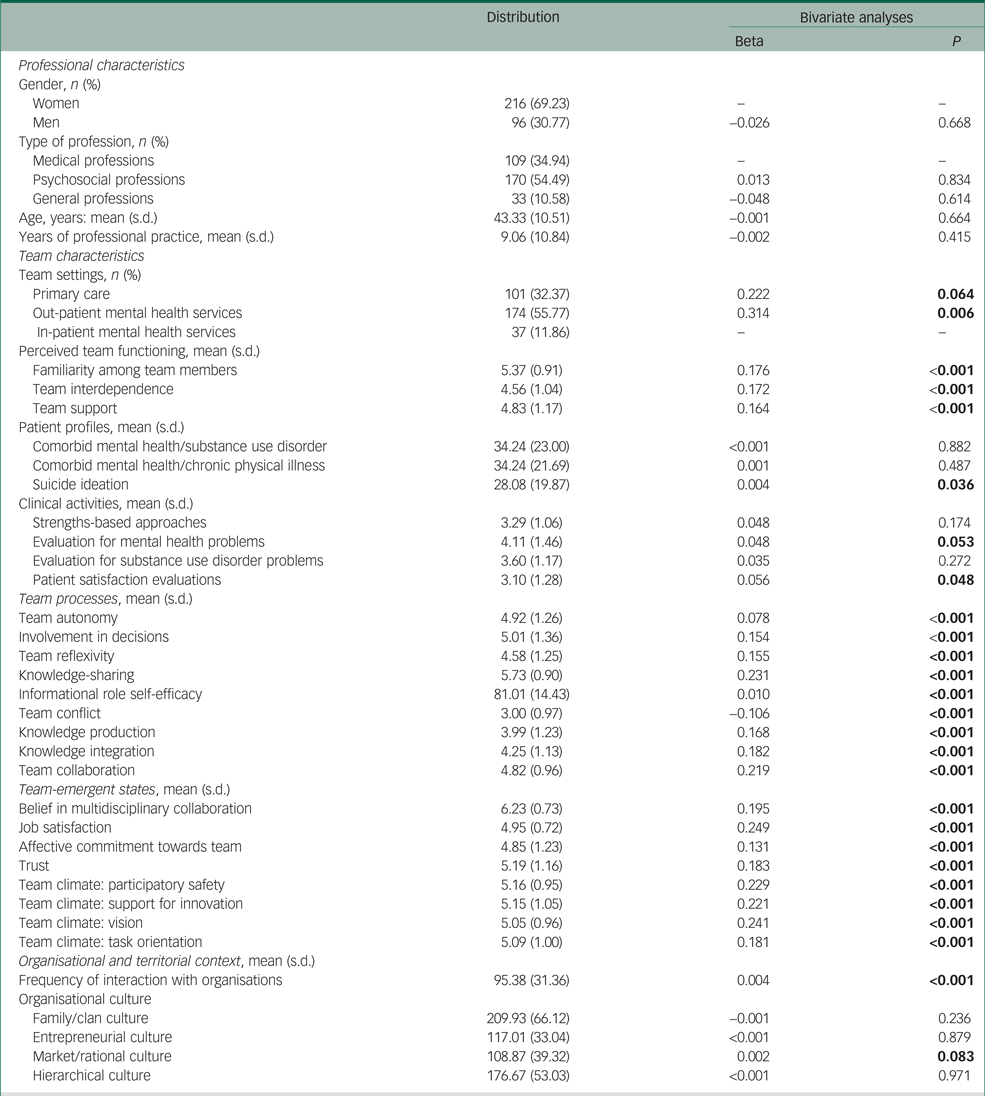
Results in bold are significant.
Multiple linear regression model

Results in bold are significant.
Discussion
Main findings
This study identified 11 variables in relation to recovery-oriented care in mental health services across four of the five conceptual blocks in our adapted IMOI framework, as follows: team characteristics (5 variables), team processes (2 variables), team emergent states (3 variables), and organisational and territorial context (1 variable). Only the provider characteristics block failed to produce significant findings, likely as a result of the effects of introducing a large number of team processes and team-emergent states variables into the model. We may presume that team processes and team-emergent states were linked to recovery-oriented care by a shorter causal chain than provider characteristics, and that they had a more direct influence.Reference Chiocchio45 Results for the global score on recovery-oriented care (mean: 3.6, s.d. = 0.49) were comparable with those obtained by the authors of the RSA,Reference O'Connell, Tondora, Croog, Evans and Davidson28 and nearly identical to results reported in Leamy et al,Reference Leamy, Clarke, Le Boutillier, Bird, Choudhury and MacPherson22 which evaluated recovery orientation among different types of teams.
Community care
Our first hypothesis, that mental health professionals working in primary care or in out-patient mental health services would rate recovery-oriented care in their services higher than professionals working in in-patient (hospital) settings, was confirmed. This result reaffirms the basic recovery principle that mental health services should be anchored in the community, and lends particular support to studies suggesting that primary care or out-patient mental health services are more normalising, or less stigmatising, for patients,Reference Dale and Lee46 as well as for professionals. By contrast, professionals whose experience with mental health patients occurs largely in in-patient settings may overlook, or even disavow, the possibility of recovery.Reference Kidd, McKenzie, Collins, Clark, Costa and Mihalakakos47 Another explanation for this finding may be that in-patient mental health services lack the biopsychosocial approach characteristic of community-level services such as primary care, especially in treating mental health patients whose risk factors for comorbid substance use disorders, as well as physical morbidity and mortality, are very high.
Team support
Financial and material support, key components of team support, is another positive factor in recovery-oriented services, and was found to be associated with larger per capita budgets.Reference Brown, Mahoney, Adams, Felton and Pareja15 This stands to reason, as recovery practices are highly individualised, labour intensive and complex in terms of service delivery. The preponderance of financial and material components in the team support variable (team characteristics), confirms this and indirectly supports the contention that insufficient financial resources impede recovery implementation in mental health systems.Reference Hungerford and Kench18 However, ‘human’ or clinical support, the fourth element in the team support measure, was also crucial. Research confirms that clinical supervision plays a major role in controlling dimensions related to the work environment, such as interpersonal relationships within teams, the integration of good practices and other innovations that help alleviate the stress of frequent patient interactions, and protect mental health professionals against burnout.Reference Webster and Hackett48
Team interdependence
To our knowledge, studies to date have not assessed the relationship between team interdependence and recovery-oriented care; yet the positive association identified in this study seems reasonable. A high level of interdependence among mental health professionals working as team members positively influences team effectiveness,Reference Mathieu, Maynard, Rapp and Gilson25 which should have a bearing on their capacity to deliver recovery-oriented care. Interdependence is particularly important in mental health teams, which require mental health professionals to collaborate in a multitude of tasks.Reference Markon, Chiocchio and Fleury49 Mental health professionals also need to transcend the boundaries of their disciplines in order to provide person-centred biopsychosocial services and integrated care.Reference McHugh and Byrne21
Knowledge sharing and reflexivity in teams
Our second hypothesis on a possible association between favourable aspects of team processes and emergent states and recovery-oriented care was also confirmed. Concerning knowledge-sharing and reflexivity in teams (team processes), and recovery-oriented care, our results partially support those of a recent study,Reference Körner, Lippenberger, Becker, Reichler, Müller and Zimmerman50 which found that knowledge integration was significantly related to patient-centred services in teams; knowledge-sharing was, in turn, a necessary first step before undertaking knowledge integration. Reflexivity, or ‘the extent to which team members overtly reflect upon the group's objectives, strategies, and processes and adapt them to current or anticipated endogenous or environmental circumstances’Reference De Dreu34 was associated with team learning. Moreover, studies indicate that reflexivity and knowledge-sharing are both associated with team interdependence.Reference De Dreu34
Trust and shared vision and beliefs
Similar to our finding on trust (team emergent states) and recovery-oriented care, other research has demonstrated that mutual trust is a significant protective factor against emotional exhaustion, depersonalisation and burnout among mental health professionals, factors inversely related to recovery orientation.Reference Kraus and Stein17 Furthermore, vision refers to grand objectives that heighten motivation among team members.Reference Anderson and West44 The higher the vision, the more professionals generally strive to achieve their objectives. Not surprisingly, a clear and shared vision focused on recovery orientation favours the implementation of relevant values and practices.Reference Hülsheger, Anderson and Salgado51 Finally, a strong facilitating factor in multidisciplinary collaboration involves a belief in its accrued benefits for various professionals and their patients.Reference Supper, Catala, Lustman, Chemla, Bourgueil and Letrilliart12
Interaction between mental health teams and other organisations
Our third hypothesis on the value of frequent interaction between mental health teams and other organisations for recovery-oriented care was confirmed. Such interactions allow mental health teams to influence the values and skills of their organisational partners, facilitating the diffusion of a recovery approach to local service networks.Reference McLoughlin and Fitzpatrick13, Reference Pascaris, Shields and Wolf20 The inability of single teams to provide the full range of services essential to patient recovery underscores the importance of interorganisational interactions from a shared recovery perspective.Reference Pascaris, Shields and Wolf20 By the same token, the lack of collaboration among health providers emerged as an important barrier to the integration of recovery-oriented care.Reference Hungerford and Kench18
In Quebec, the nature of collaboration between public and community organisations reflects a systems-focused management style that seems to auger well for implementing a recovery orientation in services. The 2005 mental health reform mandated greater integration within local service networks, and a more comprehensive response to patient needs, particularly increased collaboration between public and community organisations. Among public organisations, for example, addiction rehabilitation centres are working increasingly with mental health teams in response to the needs of individuals with co-occurring disorders. Other integration strategies include cross training, service agreements and deployment of addiction liaison nurses in hospital emergency rooms to ensure more timely and appropriate patient referral.Reference Fleury, Grenier, Vallée, Aubé, Farand and Bamvita4 Community organisations play another crucial role, providing a normalising context for the delivery of primary healthcare services to deinstitutionalised individuals, while addressing their basic subsistence needs for housing, employment and food. Community organisations promote personal empowerment, mutual help and the creation of social networks.
Use of standardised assessment tools
Our fourth hypothesis proposed a relationship between the implementation of recovery best practices and standardised assessment tools and recovery-oriented care. Surprisingly, no results emerged in the model for the various recovery-oriented best practices and standardised assessment tools tested. We might presume that further work was still needed in the networks to more fully integrate these measures, at the time the research was conducted. Another study has critiqued the Quebec reform for focusing on structural changes, without providing sufficient guidelines on the use of clinical approaches or standardised assessment tools,Reference Thiebaut, Farand and Fleury52 which may explain why they were perhaps underused or took longer than expected to implement in services.
Suicidal ideation and 24 h crisis services
Finally, a significant finding emerged outside of the four study hypotheses, namely the positive relationship between higher proportions of individuals with suicide ideation on case-loads (team characteristics) and recovery-oriented care. This finding is not surprising, as mental health professionals working within a recovery philosophy expect to provide intensive, personalised service adapted to the needs, and uneven recovery process, of individuals with suicide ideation. As well, mental health professionals in Quebec working with patients who were suicidal were able to avail themselves of additional support from the 24 h crisis services offered by community organisations. Relationships between mental health professionals working in Quebec mental health teams and the staff from community crisis services were found to be particularly strong,Reference Fleury, Grenier and Robitaille53 suggesting that crisis services have benefits for service providers as well as clients. The availability of 24 h crisis services is viewed as an important element in recovery-oriented care.Reference Foster54
Limitations
This study had limitations that should be acknowledged. First, as this is a cross-sectional study, causal inferences about the findings cannot be made. Second, the study measured provider perceptions of recovery-oriented care, without making links between recovery-oriented care and patient outcomes in terms of their personal recovery. Third, the results of this study based on data from four Quebec regions need to be replicated in other settings, and the perspectives of patients sought.
Implications
This study was the first to test a comprehensive set of variables related to team characteristics, processes, team-emergent states and interorganisational relationships for associations with recovery-oriented care from the perspectives of mental health professionals. The findings coincide with an incipient, but promising, body of research on provider issues in relation to recovery-oriented care. The study is original in focusing attention on team effectiveness as a topic of concern for the recovery field, where patient issues and outcomes have tended to take precedence over work-related conditions affecting those responsible for service delivery. Future research should continue to focus on team and provider effectiveness, within the wider operational environment in mental health systems, as an important pathway for realising conditions more favourable to mental health recovery.
Findings confirm the greater recovery orientation of primary care and out-patient mental health services over in-patient mental health services, and the importance of building relationships among mental health professionals working in various public and community organisations within local service networks. The study suggests that primary care services and mental health out-patient services should be strengthened in response to the needs of mental health professionals aiming to provide effective biopsychosocial services for mental health patients living in the community, particularly indviduals with suicide ideation. Greater integration between primary care and specialised mental health services may also support enhanced recovery orientation in teams, as occurred in the collaboration between mental health teams and community organisations in this study. Team managers should foster the diffusion of a clear and shared vision of recovery, as well as the flexibility and openness needed to support mental health recovery among patients. Other findings established the significance of knowledge-sharing, reflexivity, interdependence, support and trust as attributes of teams that support greater recovery-oriented care.
Our study suggests that mental health decision-makers should focus on optimising team processes and team-emergent states for enhancing recovery-oriented care in mental health teams. Financial, material and human resources must also be adequate to support team working conditions favourable to recovery-oriented care, as well as good clinical supervision. Stable team composition may facilitate the creation of trust among team members; and a clear vision favours implementation of innovative recovery-based practices. Finally, teams would be further strengthened if mental health professionals were better trained and supported to adopt recovery best practices and to make use of standardised assessment tools that reflect a recovery approach to service delivery.
Funding
This study was funded by the Fonds de la recherche en santé du Québec (FRSQ), grant number 22367 and the Prends soin de toi Program.
Acknowledgements
We would like to thank the funding agencies cited above for their support, as well as the individuals who participated in this research, our research advisory committee, network respondents; and many thanks to Denise Aubé, and François Chiocchio for their valuable assistance.


 Open access


eLetters
No eLetters have been published for this article.