


Overweight (including obesity) is a major problem for public health. It is associated with many chronic diseases, such as CVD and diabetes mellitus( 1 ). Since 1980 the prevalence of overweight had increased worldwide, also in the Netherlands( Reference Gast, Frenken and van Leest 2 ). Migration to a Western culture seems to enlarge the risk of overweight( Reference Salmond, Prior and Wessen 3 , Reference Sundquist and Johansson 4 ). Migrants from non-Western countries form an increasing proportion of the populations of many European countries. In the Netherlands, the major non-Western migrant groups originate from Turkey, Morocco and Surinam (each 2 % of the total population). Most of them live in the four major cities( Reference Nicolaas, Wobma and Ooijevaar 5 ). The prevalence of overweight and obesity is high among Turkish, Moroccan and Surinamese migrants of the first generation (i.e. those who were born in the country of origin), in particular among women( Reference Brussaard, van Erp-Baart and Brants 6 – Reference Ujcic-Voortman, Bos and Baan 13 ). Possible underlying mechanisms are changes in lifestyle that result from the process of migration combined with the socio-cultural norms among non-Western migrants on food intake, physical activity patterns and perceptions regarding body weight( Reference Nicolaou, Benjelloun and Stronks 14 ). However, it is not clear how overweight prevalence develops in their offspring (i.e. the second generation), while the number of young second-generation migrants from Turkey, Morocco and Surinam will form an increasing part of the Dutch population in the future( 15 ). We expect the overweight prevalence among second-generation migrants to converge to that of the host population since this generation has not been through the process of migration and will be more likely to adopt the attitudes and norms of the host population. Previously, a converging trend was shown among young second-generation Turkish and Moroccan women, but a diverging trend was found in second-generation Turkish men( Reference Hosper, Nierkens and Nicolaou 16 ). To our knowledge, no previous study on overweight development among second-generation Surinamese migrants has been done.
Our study investigates the prevalence of overweight among second-generation Turkish, Moroccan and Surinamese migrants aged 16–34 years in order to identify future risk groups. Our main research questions were:
-
1. Does the prevalence of overweight and obesity differ between second-generation Turkish, Moroccan and Surinamese migrants and their ethnic Dutch peers?
-
2. Does the prevalence of overweight and obesity differ between second- and first-generation migrants?
We also studied whether sociodemographic and socio-economic factors could explain differences in overweight prevalence.
Methods
Data collection and participants
Data for the present study were collected as part of a general health questionnaire in 2008 in the four major cities of the Netherlands: Amsterdam, The Hague, Rotterdam and Utrecht. A sample of 42 686 non-institutionalised residents aged 16 years and over was drawn from the municipal population registers. The total response rate was 49 % (Dutch: 57 %; Turkish: 41 %; Moroccan: 30 %; Surinamese: 40 %). Respondents filled out a questionnaire on paper (85 %) or on the Internet (15 %). A trained interviewer helped nine respondents (0·2 %) to fill out the questionnaire. For our study we analysed data from second-generation Surinamese (n 230), Turkish (n 203) and Moroccan (n 172) respondents and compared them with their ethnic Dutch peers (n 3615). We also compared them with first-generation Surinamese (n 139), Turkish (n 241) and Moroccan (n 187) respondents. Analyses were limited to respondents aged 16–34 years in both the first and second generation, because of the low number of second-generation Turks, Moroccans and Surinamese over 35 years of age in the Netherlands( 15 ). Respondents without data on body weight and/or height were excluded from the analyses (n 137).
Participants received written information about the health survey. The study protocol was approved by the Medical Ethical Committee of the Academic Medical Centre, University of Amsterdam, the Netherlands.
Measurements
Overweight was defined as BMI≥25·0 kg/m2 and obesity as BMI≥30·0 kg/m2, with BMI calculated from self-reported weight and height. Demographic characteristics included sex, age and marital status (whether or not married or cohabiting). Socio-economic position included level of education completed (four levels: primary school or less; low vocational education; intermediate vocational education; high vocational education and university), financial situation (whether or not able to manage on the household income) and employment status (whether or not employed/student). Respondents who had not yet completed their education were categorised in this (uncompleted) level of education. Ethnic origin was based on the respondent's country of birth and the country of birth of the respondent's parents. Participants born in Turkey, Morocco or Surinam were classified as first-generation migrants, unless both parents were born in the Netherlands. Second-generation migrants were born in the Netherlands and had at least one parent born abroad.
Statistical analysis
First, means and prevalence rates of several background characteristics, overweight and obesity were calculated. Second, using a logistic regression model we tested differences in overweight and obesity of second-generation migrants v. the ethnic Dutch and first-generation migrants (model 1). Age was added in model 2 and educational level in model 3. The analyses were stratified for sex because of the large differences in overweight prevalence between men and women. We analysed data using the statistical software package SPSS version 17·0.
Results
Sample characteristics
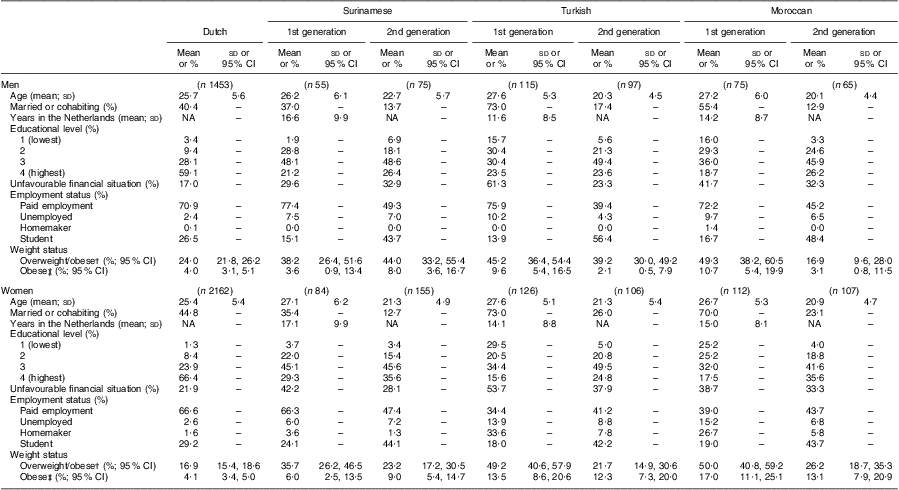
Table 1 shows the sociodemographic characteristics as well as the prevalence of overweight and obesity among the study population. Second-generation migrant groups were on average younger and less often married or cohabiting compared with the ethnic Dutch and first-generation migrants. About a quarter of the second-generation migrants had a low education (level 1 and 2), whereas this applied to about one out of ten Dutch respondents and to 25–50 % of the first generation. Unemployment and being a homemaker were more prevalent among second-generation migrants than among the Dutch. Highest numbers of unemployment and being a homemaker were found among Turks and Moroccans of the first generation. The prevalence of an unfavourable household financial situation varied from 17 % in Dutch men to 61 % in Turkish women of the first generation.
Crude characteristics of the study population by sex and ethnic group; respondents (aged 16 years and over) to a cross-sectional postal and online health survey, four major Dutch cities, 2008
NA, not applicable.
†Overweight/obese: BMI≥25·0 kg/m2.
‡Obese: BMI≥30·0 kg/m2.
Among second-generation migrants, the prevalence of overweight (including obesity) was highest among Surinamese men (44 %) and Turkish men (39 %) and lowest in Moroccan men (17 %). Obesity rates varied from 2 % among Turkish men to 13 % among Moroccan women. In first-generation migrants, the prevalence of overweight ranged from 36 % in Surinamese women to 50 % in Moroccan women, while the obesity prevalence varied from 4 % in Surinamese men to 17 % in Moroccan women. Obesity was reported by 4 % of the Dutch participants and overweight by 24 % of Dutch men and 17 % of Dutch women.
Ethnic differences in overweight and obesity
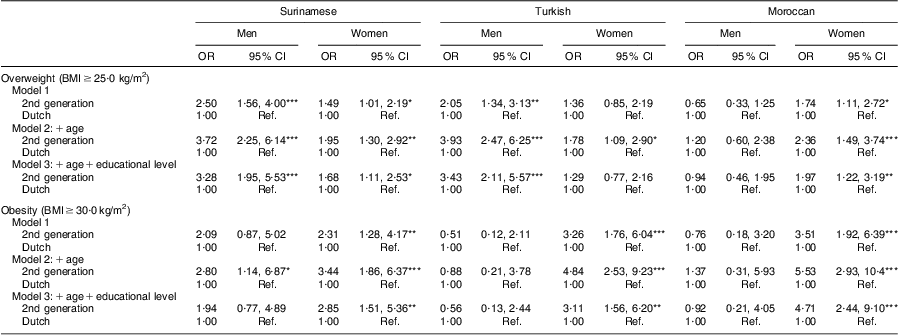
The combined overweight and obesity prevalence (hereafter referred to as ‘overweight’) in second-generation Turkish women and Moroccan men was similar to the Dutch figures. In second-generation Surinamese, Turkish men and Moroccan women, the prevalence of overweight was higher than among the Dutch (Table 2). The addition of age to the model increased the differences. Controlling for educational level attenuated ethnic differences in overweight. However, overweight was still more prevalent among second-generation Surinamese men and women, Turkish men and Moroccan women than among the Dutch. Table 2 also gives the results of the analyses for obesity only (BMI≥30·0 kg/m2). No differences in obesity prevalence were found for second-generation migrant men aged 16–34 years compared with Dutch men. Migrant women of the second generation were more often obese than Dutch women. Controlling for age increased the ethnic differences in obesity among women, while these were reduced by adding level of education to the model. In both men and women, there was no significant interaction between educational level and ethnicity. This means that in all ethnic groups the lowest educated were at highest risk of being overweight or obese.
Differences in overweight and obesity prevalence of 16–34-year-old second-generation migrants v. ethnic Dutch, four major Dutch cities, 2008 (odds ratios and 95 % confidence intervals)
Ref., referent category.
*P < 0·05, **P < 0·01, ***P < 0·000.
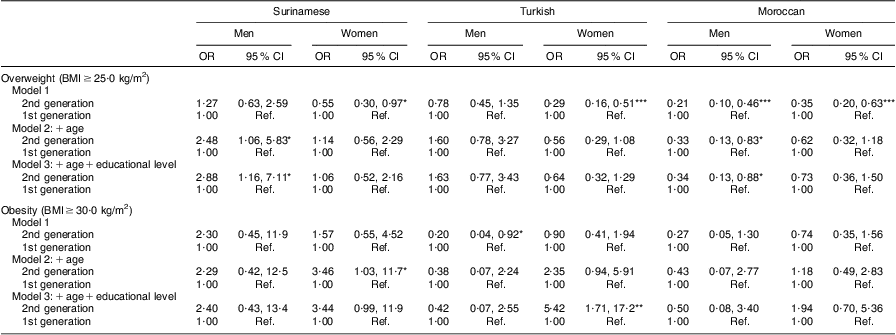
We also studied differences in overweight between second- and first-generation migrants. In all subgroups, except for Surinamese men, second-generation migrants seemed to have lower levels of overweight than the first generation (Table 3). After controlling for age, differences between the second and first generation were statistically significant only among Surinamese (OR = 2·48; 95 % CI 1·06, 5·83) and Moroccan men (OR = 0·33; 95 % CI 0·13, 0·83). Obesity prevalence in second-generation migrants did not differ from first-generation migrants, except for second-generation Turkish men who less often reported obesity than first generation (Table 3). After controlling for age, differences in obesity between the second- and first-generation Surinamese women were statistically significant. In general, adding educational level to the model did not influence the differences in overweight and obesity between second- and first-generation migrants. Only the difference in obesity prevalence between second- and first-generation Turkish women increased after controlling for educational level.
Differences in overweight and obesity prevalence of 16–34-year-old second-generation migrants v. first-generation migrants, four major Dutch cities, 2008 (odds ratios and 95 % confidence intervals)
Ref., referent category.
*P < 0·05, **P < 0·01, ***P < 0·000.
Discussion
We showed that after controlling for age, overweight is more prevalent in most young second-generation non-Western migrant groups in comparison to the Dutch population, except for Moroccan men. Obesity rates among second-generation non-Western migrant young Turkish and Moroccan men were similar to those among the Dutch. However, second-generation non-Western migrant young women and Surinamese men were more often obese than their Dutch peers. Differences in the overweight prevalence between second- and first-generation non-Western migrants were present only among Surinamese and Moroccan men, with a higher overweight prevalence in second-generation Surinamese men and a lower prevalence in second-generation Moroccan men compared with the first generation. The higher prevalence of overweight and obesity among second-generation migrants compared with the ethnic Dutch was partly explained by their lower level of education.
As we found a higher overweight prevalence in most second-generation Turkish, Moroccan and Surinamese migrant subgroups compared with the ethnic Dutch population and a similar prevalence as among the first generation, our study does not support the hypothesis of convergence of the overweight prevalence of second-generation migrants towards the host population. Apparently, the overweight differences between second- and first-generation migrants in the Netherlands are more diverse than previously found( Reference Hosper, Nierkens and Nicolaou 16 ). This corresponds to earlier studies in the USA that have shown a variable association between acculturation and BMI depending on ethnic background and gender( Reference Hazuda, Haffner and Stern 17 – Reference Sanghavi Goel, McCarthy and Philips 20 ). A possible explanation for the high overweight levels among second-generation migrants may lie in differences in lifestyle, including diet and physical activity, as well as other socio-cultural factors. Migrant groups in the Netherlands place great value in their traditional food cultures. Given an environment of abundance, this may lead to overeating and overweight development( Reference Nicolaou, Doak and Dam 21 ). The influence of age and educational level on overweight in migrants was found earlier. In contrast to earlier studies, marital status, financial situation and employment status did not add to the explanation of ethnic differences in overweight (results not presented)( Reference Cornelisse-Vermaat and Maassen van den Brink 9 , Reference Ujcic-Voortman, Bos and Baan 13 , Reference Hosper, Nierkens and Nicolaou 16 ).
Strengths and limitations
Our study offered a new comparison of young second-generation migrant groups, giving additional insight into ethnic health inequalities. We had the unique opportunity to study data on overweight among a large sample of second-generation non-Western migrant groups from the four major cities in the Netherlands. In particular, data on overweight among young second-generation Surinamese have not previously been studied. The study has some limitations. First, data collection resulted in a fairly low response rate of 50 %, which was lower among 16–34-year-old migrants (33 %). This might negatively influence the validity of our study, although large-scale survey research among the migrant population in the Netherlands usually results in response rates of this value. Nevertheless, selection bias might have influenced the external validity. Second, BMI was based on self-reports which often results in an underestimation of body weight and an overestimation of body height. Consequently, the true prevalence of overweight in our study population was presumably higher than shown herein. Some previous studies have shown ethnic differences in underestimation of body weight and height( Reference Valkengoed, Nicolaou and Stronks 12 , Reference Gillum and Sempos 22 – Reference Dijkshoorn, Ujcic-Voortman and Viet 24 ). For example, it was shown that the accuracy of self-reports was smaller among Turkish and Moroccan women than among Dutch women. In Turkish and Moroccan men, no ethnic differences in underestimation of body weight and height were found, while in the Surinamese discrepancies between measurements and self-reports were smaller than in the Dutch. Therefore, the true differences in overweight between second-generation migrants and the ethnic Dutch may be larger among Turkish and Moroccan women and smaller among Surinamese men and women than reported in our study. Third, our results might not apply to all individuals within a migrant group, because of heterogeneity within the group. In particular the Surinamese group consists of a mix of ethnicities with 36 % being Hindustani-Surinamese (originally from the Indian subcontinent), 41 % African-Surinamese (predominantly of African origin) and 23 % having another or mixed background( Reference Choenni and Harmsen 25 ). In our data set we could not differentiate between these Surinamese subgroups, while a previous study demonstrated differences in overweight prevalence between African-Surinamese and South Asian-Surinamese women( Reference Nicolaou, van Valkengoed and Doak 26 ). Finally, the educational level of young people may not reflect their socio-economic position, as they might not have finished their education yet. For those people who were still following a course of study we augmented the highest level of education attained. Our assumption that this would be their final education level may nevertheless be false, which might have resulted in an over-representation of higher educational levels.
Implications and conclusions
The high prevalence of overweight and obesity in migrant origin groups poses a major risk for chronic diseases, including type 2 diabetes, hypertension, CVD and cancer( 1 ). Not only first-generation migrants are at risk, but also most second-generation migrant groups have higher overweight and obesity rates than the ethnic Dutch. Our study did not show a converging trend for overweight among second-generation migrants towards the Dutch host population. In all groups, overweight and obesity levels rise strongly with increasing age and lower educated groups are at higher risk of having overweight and obesity. Public health policies aimed at reducing overweight should therefore not ignore second-generation migrants, particularly those with a lower education level. Cultural factors and barriers should be considered when developing overweight prevention programmes for migrant groups, e.g. the fact that among migrant groups food plays a central role in expressing hospitality, which may result in a social context where food is abundant and difficult to refuse( Reference Nicolaou, Doak and Dam 21 ).
Acknowledgements
Sources of funding: This work was supported by the Municipality of Amsterdam, the Public Health Service of Amsterdam, the Municipality of Rotterdam, the Municipality of The Hague, the Public Health Service of The Hague and the Municipality of Utrecht. The Municipality of Amsterdam, the Public Health Service of Amsterdam, the Municipality of Rotterdam, the Municipality of The Hague, the Public Health Service of The Hague and the Municipality of Utrecht had no role in the design, analysis or writing of this article. Conflicts of interest: There are no conflicts of interest to declare. Authors’ contributions: H.D. was the main researcher. H.D., J.K.U.-V., A.J.B.-N., G.M.S. and M.P.H.B. designed the health survey and coordinated the data collection. All authors contributed to the interpretation of results. H.D., M.N. and J.K.U.-V. drafted the manuscript and all authors critically reviewed it for scientific content and approved the final version.



