



Appropriate complementary feeding practices are crucial to the health and growth of a child during the first 2 years of life( Reference Kabir, Khanam and Agho 1 ), a period usually regarded as the ‘critical window’ for the promotion of optimal growth, health and development of a child( 2 ). Globally, poor complementary feeding has been identified as a risk factor for stunting( Reference Bhutta, Das and Rizvi 3 ). Moreover, most suboptimal length-for-age growths among children have been found to occur during the complementary feeding period (6–24 months)( Reference Dewey and Huffman 4 , Reference Victora, de Onis and Hallal 5 ). The WHO recognises the important role that complementary feeding plays in the optimal growth, development and good health of young children aged 6–23 months and therefore recommends that all children should be exclusively breast-fed for the first 6 months, after which they should be given nutritionally safe and adequate complementary foods while still being breast-fed until they are aged 2 years or even older( 6 ).
Despite the recommendation of the WHO, complementary feeding practices among children in many low-income and middle-income countries are still inappropriate, resulting in malnutrition which may result in morbidity or mortality among children in these countries( 7 ). In The Gambia, only 54 % of breast-feeding children aged 6–8 months received complementary foods in 2013; and only 8 % of children aged 6–23 months were fed according to the WHO recommendations( 8 ), which require children to be fed with solid, semi-solid or soft foods, alongside breast milk, when they attain the age of 6 months and children to have minimum dietary diversity, minimum meal frequency and minimum acceptable diet. Definitions of these indicators are given in a subsequent section of the present paper.
In The Gambia, about 60 % of the population lives below the poverty line and poor child health remains a serious public health challenge. For example, infant and under-5 mortality rates remain high, although a slight improvement has been observed since 2000( 9 ). Furthermore, a high maternal mortality ratio is observed in the country. Although access to health facilities is relatively good, poor quality of services reduces the effectiveness of the health system. This notwithstanding, immunisation coverage among children is expanding.
In The Gambia, the diet is largely based on cereals, mainly rice and millet and, to a lesser extent, sorghum, maize and wheat. These staples are complemented by vegetables, milk, fish and groundnuts. The share of most micronutrient- and protein-rich foods in the dietary energy supply has not increased while that of vegetable oils and sweeteners has increased substantially( 9 ). Through efficient promotion programmes, young child feeding practices have improved. Efforts are being made to encourage early initiation of breast-feeding, exclusive breast-feeding up to 6 months of age and appropriate complementary feeding practices. Among pre-school children, malnutrition remains a public health problem. More than 25 % of the under-5 children in The Gambia are affected by chronic malnutrition, a prevalence which has slightly increased over recent years( 9 ).
There have been extensive studies on inappropriate complementary feeding practices in low- and middle-income countries( Reference Joshi, Agho and Dibley 10 – Reference Patel, Pusdekar and Badhoniya 15 ). These studies examined the association of some sociodemographic factors with inappropriate complementary feeding practices, making use of the four complementary feeding indicators developed by the WHO( 16 ). However, population-attributable risk (PAR) proportions adjusted for independent predictors of inappropriate complementary feeding practices were not considered in these studies. PAR proportions provide numbers of populations that are attributable to particular independent predictors of inappropriate complementary feeding practices. As a result, the current study estimated the adjusted PAR proportions to measure inappropriate complementary feeding indicators which are attributable to each significant independent covariate in The Gambia. Our study adapted and modified Mosley and Chen’s analytical framework for the study of child survival in developing countries( Reference Mosley and Chen 17 ). The framework, which incorporates both social and biological factors that may be associated with the survival of an infant, represents a conceptual framework that can allow the estimation of PAR of factors associated with inappropriate complementary feeding practices in The Gambia at three different levels, namely individual-, household- and community-level factors. The main aim of our study was twofold: (i) to determine the sociodemographic factors associated with poor complementary feeding, not meeting the minimum dietary diversity, not meeting the minimum meal frequency and not meeting the minimum acceptable diet criteria among children; and (ii) to estimate the burden of poor complementary feeding indicators attributable to risk factors in The Gambia. Past studies have associated children aged 6–11 months, rural dwelling, lack of maternal education, home delivery of babies, household poverty and lack of access to the mass media with inappropriate complementary feeding practices( Reference Kabir, Khanam and Agho 1 , Reference Joshi, Agho and Dibley 10 – Reference Iqbal, Mansura and Kingsley 12 ). We therefore hypothesised that not meeting the WHO complementary feeding recommendations for children would be associated with younger children (6–11 months), living in rural areas, lower maternal educational attainment, coming from poorer families, home delivery and poorer maternal access to the mass media. Findings from our study would be useful to public health practitioners, policy makers and other stakeholders in monitoring and designing programmes and community-based interventions aimed at improving complementary feeding practices in The Gambia.
Methods
The source of data for the current study was the Demographic and Health Survey of The Gambia (GDHS) 2013( 8 ). This nationally representative survey was carried out by The Gambia Bureau of Statistics and was funded by the Government of The Gambia, the US Agency for International Development, the United Nations Population Fund, the United Nations Development Programme, UNICEF, the Joint United Nations Programme on HIV/AIDS, the WHO and the Global Fund. Technical assistance was provided by ICF International through its Demographic and Health Survey programme, which is designed to collect data on fertility, family planning, maternal and child health, maternal mortality and domestic violence.
The survey included a nationally representative sample and was designed to produce estimates of the major survey variables at the national, urban and rural areas, and local government area levels (Banjul municipality, Kanifing municipality, Brikama, Mansakonko, Kerewan, Kuntaur, Janjanbureh, and Basse). A two-stage stratified sampling of household was carried out. A total of 10 233 women aged 15–49 years were successfully interviewed from sampled households, yielding a response rate of 92 %. A women’s questionnaire was used to gather information regarding maternal and childcare practices including infant feeding, reproduction and application of family planning methods. Sociodemographic data for all household members were recorded on a household questionnaire. Details of sampling and data collection procedure have been described elsewhere( 8 ). The current analyses were restricted to the youngest living child aged 6–23 months, living with the respondent (ever-married women aged 15–49 years), yielding a weighted total of 2362 children.
Study variables
Dependent variables
The main dependent variables in the current study were the inadequacy of the WHO’s four complementary feeding indicators( 16 ). The indicators are defined as follows:
-
1. Introduction of solid, semi-solid or soft foods. This is defined as the proportion of infants aged 6–8 months who receive solid, semi-solid or soft foods.
-
2. Minimum dietary diversity. This is defined as the proportion of children aged 6–23 months who receive foods from four or more of the seven food groups. The food groups are: (i) grains, roots and tubers; (ii) legumes and nuts; (iii) dairy products; (iv) flesh foods; (v) eggs; (vi) vitamin-A-rich fruits and vegetables; and (vii) other fruits and vegetables.
-
3. Minimum meal frequency. This is defined as the proportion of breast-fed and non-breast-fed children aged 6–23 months who receive solid, semi-solid or soft foods (including milk feeds for non-breast-fed children) the minimum number of times or more in the previous day. The minimum number of times was defined as 2 times for breast-fed infants aged 6–8 months, 3 times for breast-fed children aged 9–23 months, and 4 times for non-breast-fed children aged 6–23 months.
-
4. Minimum acceptable diet. This is defined as the proportion of children aged 6–23 months who receive both minimum dietary diversity and minimum meal frequency( 16 ).
Independent variables
Mosley and Chen’s conceptual framework( Reference Mosley and Chen 17 ) was used as a basis for selecting the independent variables in the present study, which were categorised into individual-, household- and community-level factors. The Mosley and Chen model is a framework used to analyse child survival in developing countries. It was proposed in 1984 by Mosley and Chen, and incorporates both social and biological factors that may be associated with an infant’s survival. Details of this model may be found elsewhere( Reference Mosley and Chen 17 ). The individual-level variables included all relevant attributes of the child and his/her parents, such as maternal work status, parents’ level of education, father’s occupation, mother’s marital status, mother’s age, child’s age, child’s gender, mother’s access to health-care services, place of delivery, type of delivery assistance, mode of delivery, birth order of the child, preceding birth interval, number of antenatal clinic visits by mother, number of postnatal check-ups by mother, mother’s access to the print media, mother’s access to the radio and mother’s access to television. Considering the practical importance of having narrower age intervals in the younger age than the older within the sample, child’s age was re-categorised into 6–11 months, 12–17 months and 18–23 months. Information about the child was given by the mother. This was based on a 24 h recall. The size of the baby at birth as perceived by the mother was used as a proxy for birth weight( Reference Channon 18 ). This variable was used to represent the birth weight, since some mothers delivered their babies outside a health facility and did not receive any health care in the first 2 d( 8 ). The perceived size of the baby was categorised into ‘small’, ‘average’ and ‘large’. Acute respiratory infection was defined as a condition of experiencing symptoms of cough accompanied by short, rapid breathing during the 2 weeks prior to the survey. It was categorised into ‘No’ for not having the disease and ‘Yes’ for having the disease. A child was considered to have contracted diarrhoea if he/she had watery or blood and mucus stool in the 2 weeks preceding the survey. Diarrhoea was categorised into ‘No’ for not having the disease and ‘Yes’ for having the disease.
Household-level factors were categorised into a household wealth index. The household wealth index was the sum of the weighted scores for each item and was used in the analyses as a continuous variable. Household-level variables were made up of source of drinking-water and household wealth index. This index was created by applying a principal components analysis( Reference Filmer and Pritchett 19 ) to estimate the weights for the index based on acquired information about various household assets including ownership of various means of transport and other durable household goods. Household facilities and assets of respondents were assigned with weights. The facilities and assets included were those that were featured in the GDHS 2013 data, namely television, radio, refrigerator, car, bicycle, motorcycle, source of drinking-water, type of toilet facility, electricity and type of building materials used in the place of dwelling.
In the GDHS 2013, the household wealth index was divided into five categories (quintiles) and each household was assigned to one of these categories. In the present study, we re-categorised the household wealth index to showcase the bottom 40 % of the households, referred to as the poor households, the next 40 % as the middle-class households, and the top 20 % as rich households. Community-level variables consisted of type of residence (urban/rural) and geographical region. Geographical region refers to the eight administrative regions in The Gambia. These regions are: Banjul, Kanifing, Brikama, Mansakonko, Kerewan, Kuntaur, Janjanbureh and Basse.
Data analysis
All statistical analyses were performed utilizing the statistical software package Stata version 13.0. Cluster sampling design and sampling weights were adjusted for with the Stata ‘svy’ commands. Generalised linear latent and mixed models (GLLAM) with the logit link and binomial family described by Rabe-Hesketh and Skrondal( Reference Rabe‐Hesketh and Skrondal 20 ) were used to determine the relationships between study dependent factors and independent factors, starting with crude estimates for each independent factor. Adjusting for confounding factors, a multivariable analysis was conducted.
Multivariable modelling similar to that of Victora et al.( Reference Victora, Huttly and Fuchs 21 ) was adopted for the analyses. This means each of the level factors (individual-, household- and community-level factors) was entered progressively into the model to assess their relationship with the study outcomes. We retained and reported only those factors that were statistically significant (5 % significance level) with the study outcomes in the final model. The OR and 95 % CI estimated measure the magnitude of risk related to the study outcomes by each of the significant factors.
Using an approach similar to the one by Stafford et al.( Reference Stafford, Schluter and Wilson Andrew 22 ), we estimated the adjusted PAR proportions and their 95 % CI. The adjusted PAR estimates were used to measure inappropriate complementary feeding practices attributable to each independent risk factor retained in the final multivariable GLLAM model. The extrapolated total risk was obtained based on PAR proportions and yearly estimated number of children aged 6–23 months (using GDHS 2013 and the estimated general population).
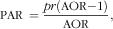
To estimate the contribution of each risk factor to the total risk for inadequacy of the complementary feeding indicators within the period of the survey, the PAR was calculated for the significant risk factors. The PAR and corresponding 95 % CI were obtained by utilising the following equation, similar to that employed by Stafford et al.( Reference Stafford, Schluter and Wilson Andrew 22 , Reference Ezeh, Agho and Dibley 23 ):
 $${\rm PAR}\,=\, {{pr({\rm AOR}{\minus}1)} \over {{\rm AOR}}},$$
where pr is the proportion of the population exposed to the risk factors and AOR is the adjusted odds ratio for inadequacy of the complementary feeding indicators.
Results
Characteristics of the sample
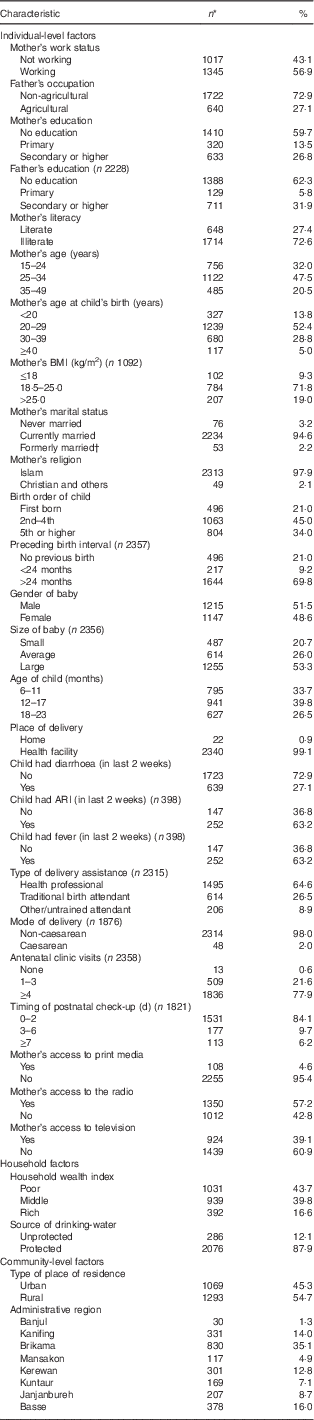
Table 1 presents the distribution of the individual-, household- and community-level characteristics for the weighted total of 2362 children aged 6–23 months. While the majority of mothers had no schooling, about 60 % were in paid employment. More than half (52·4 %) of the mothers were aged 20–29 years when they delivered their babies. About 95 % of the mothers were currently married and belonged to the Islamic faith. Male and female children were almost equally represented (51·5 and 48·6 %, respectively). Most children (about 65 %) were delivered by health professionals and almost all of them not by caesarean section. While most mothers (77·9 %) had four or more antenatal clinic visits, the majority of them (84·1 %) did not have more than two postnatal clinic visits. The majority of mothers had limited or no access to print media and television (95 and 61 %, respectively), while more than 55 % had access to the radio. Only 17 % of mothers belonged to rich households and 88 % of households had access to potable water. There were more mothers who lived in rural areas than those who lived in urban areas (55 and 45 %, respectively). Only a small proportion of mothers (1·3 %) lived in the Banjul region.
Individual-, household- and community-level characteristics of children aged 6–23 months and their parents, The Gambia, 2013 (n 2362)
ARI, Acute respiratory infection.
* Weighted total was 2362 unless stated otherwise within parentheses.
† Includes divorced, separated and widowed.
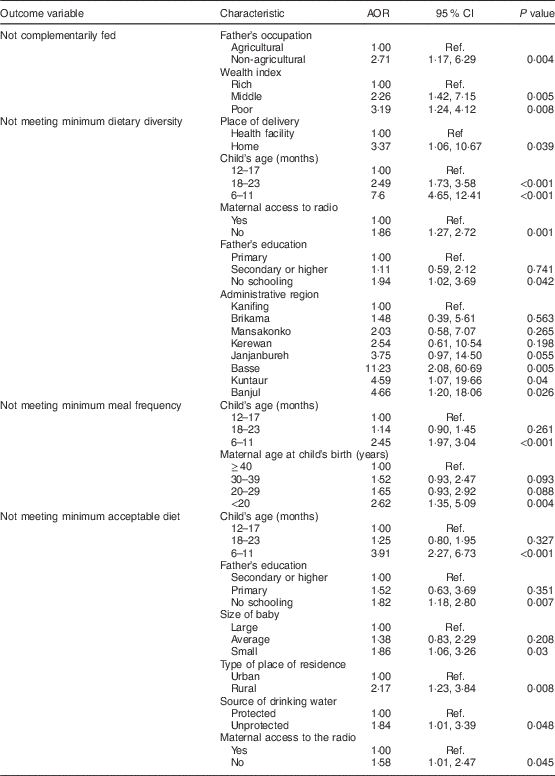
Table 2 presents the OR of the dependent variables in the current study. The multivariate analysis showed that children from poor households (OR=3·19; 95 % CI 1·24, 4·12) had higher odds of not meeting the requirement for introduction of solid, semi-solid or soft foods compared with those from rich households. The odds of not meeting the requirement for introduction of solid, semi-solid or soft foods increased significantly among children whose fathers were not employed in an agricultural industry (OR=2·71; 95 % CI 1·17, 6·29).
Multiple logistic regression modelling of a child not currently receiving adequate complementary feeding, The Gambia, 2013
AOR, adjusted OR; Ref., reference category.
Factors that had higher odds of not meeting the requirement for minimum dietary diversity included children who were delivered at home, children of the youngest age bracket (6–11 months), children whose fathers had no schooling and those who resided in the Basse region of The Gambia.
The odds of not meeting the minimum acceptable diet criterion were significantly higher among children of the youngest age bracket (6–11 months), children whose fathers did not have any schooling, children who were perceived to be small at birth, rural children, children from households with unprotected drinking-water sources and children whose mothers had no access to the radio.
Factors associated with not meeting the requirements for minimum meal frequency included children of the youngest age bracket (6–11 months) and those whose mothers were aged less than 20 years when they were born.
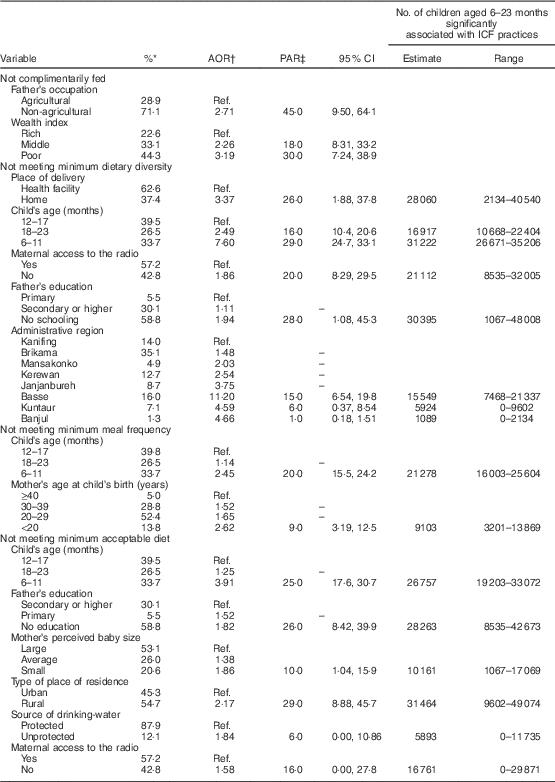
Adjusted PAR estimates (Table 3) showed that inadequacy of the three complementary feeding indicators was attributable to infants who were aged between 6 and 11 months (PAR=0·20; 95 % CI 0·16, 0·24 for not meeting minimum meal frequency; PAR=0·25; CI 0·18, 0·31 for not meeting minimum acceptable diet; PAR=0·29; 95 % CI 0·25, 0·33 for not meeting minimum dietary diversity). Outcomes in the present study also indicated that inappropriate complementary feeding practices were attributed to infants whose mothers were aged less than 20 years at the time of their birth (PAR=0·09; 95 % CI 0·03, 0·13 for not meeting the minimum meal frequency criterion), living in a rural area (PAR=0·29; 95 % CI 0·09, 0·46 for not meeting the minimum acceptable diet criterion) and infants delivered at home (PAR=0·26, 95 % CI 0·02, 0·38 for not meeting the requirement for minimum dietary diversity).
Estimated population-attributable risk (PAR) and projected number of infants for each of the factors significantly associated with inappropriate child feeding (ICF) practices in The Gambia, 2013
AOR, adjusted OR; –, PAR was not obtained because factors were not significantly associated with ICF practices; Ref., reference category.
* Weighted proportion of infants who had ICF between 6 and 23 months. Proportion varies between groups due to missing values.
† Adjusted independent variables were: place of residence, administrative region, source of drinking-water, household wealth index, mother’s characteristics (education, antenatal clinic visit, religion, literacy, working status, age, BMI, marital status, access to radio, access to television, access to print media), father’s characteristics (education, occupation), child’s gender, age of child, place of delivery, delivery assistance, mode of delivery, child’s body size at birth, birth order, preceding birth interval, child had diarrhoea, fever or acute respiratory infection.
‡ PAR was obtained using a formula similar to that described by Stafford et al.( Reference Stafford, Schluter and Wilson Andrew 22 ) and Ezeh et al.( Reference Ezeh, Agho and Dibley 23 ): PAR=[pr(AOR – 1)/AOR], where pr is the proportion of the population exposed to the risk factors derived based on the estimated number of children (6–23 months) using the Demographic and Health Survey of The Gambia 2013 and the estimated general population.
Discussion
The current study, which used the first and most recent nationally representative survey data for The Gambia and the WHO complementary feeding indicators to analyse complementary feeding in The Gambia, revealed that the key factors associated with inappropriate complementary feeding included children of the youngest age group (6–11 months), children whose parents had no schooling, children whose mothers had no access to the radio, children from rural areas and those from poor households. The study presents the OR, which indicate the likelihood of association between each of the potential determinants and the each of the complementary feeding indicators. A higher OR is an indication of a higher association. Additionally, the study presents the PAR, which indicate the number in the population that is attributable to not meeting the requirement for each of the complementary feeding indicators.
The PAR estimates obtained in the current study showed that children of the youngest age bracket (6–11 months) were possibly associated with 31 222, 21 278 and 26 757 infants not meeting the requirements for minimum dietary diversity, minimum meal frequency and minimum acceptable diet, respectively. The finding may be attributed to mothers perceiving their children to be ‘too young’ to be given foods other than breast milk. Such mothers should be encouraged through community-level interventions to offer their young children complementary foods when they attain the age of 6 months. This finding is consistent with findings from recent studies in some Francophone( Reference Issaka, Agho and Page 24 ) and Anglophone( Reference Issaka, Agho and Page 25 ) West African countries. Previous studies in Bangladesh( Reference Iqbal, Mansura and Kingsley 12 ), India( Reference Patel, Pusdekar and Badhoniya 15 ) and Tanzania( Reference Victor, Baines and Agho 26 ) showed similar findings.
The current study is similar to several other previous studies, as such studies also examined factors associated with inappropriate complementary feeding practices in the various countries. However, the difference and the novelty aspect of our study is that it provides numbers of populations that are attributable to particular independent predictors of inappropriate complementary feeding practices. This would give public health professionals and other stakeholders a sense of numbers when implementing interventions to tackle problems of infant and young child feeding practices. The study also provides the approximate sample size required for future cross-sectional studies aimed at improving child health in The Gambia.
In the present study, we found that children whose fathers had no schooling were significantly more likely not to meet the requirements for minimum dietary diversity and minimum acceptable diet. We estimated that 30 395 and 28 263 children whose fathers had no schooling could be attributed to not meeting the requirements for minimum dietary diversity and minimum acceptable diet, respectively. This finding is consistent with findings from a previous study in Bangladesh( Reference Kabir, Khanam and Agho 1 ), in which children whose mothers had no formal education were twice as likely not to meet the minimum dietary diversity requirement, compared with those whose mothers had higher levels of education. Additionally, a previous study in Indonesia( Reference Ng, Dibley and Agho 14 ) found that mothers with no schooling were significantly associated with inadequate complementary feeding practices. Similar findings have been found in Uganda( Reference Fadnes, Engebretsen and Wamani 27 ) and Pakistan( Reference Liaqat, Rizvi and Qayyum 28 ). These findings highlight the significant role that parental education plays in meeting the requirements for appropriate child feeding practices. Interventions to increase awareness of nutrition and appropriate child feeding practices should target parents with no schooling or those with low levels of education.
Our study also found that children who were born at home were significantly less likely to receive adequate dietary diversity compared with those who were born at a health facility, which is consistent with findings from previous studies in Indonesia( Reference Ng, Dibley and Agho 14 ) and Bangladesh( Reference Kabir, Khanam and Agho 1 ). Our study estimated that 28 060 children who were born at home could be attributed to inadequate dietary diversity. This finding may be due to the fact that mothers whose babies were delivered at a health facility may have had good contacts with health workers through antenatal care services and might have received information and support on appropriate child feeding practices through such services( Reference Kramer, Guo and Platt 29 – Reference Berti, Krasevec and FitzGerald 31 ).
We also found that children whose fathers worked in an agriculture-related industry were positively associated with introduction of solid, semi-solid or soft food, consistent with a study in India( Reference Patel, Pusdekar and Badhoniya 15 ). This finding may be attributed to the fact that households where fathers worked in an agricultural sector may have better food security compared with those where fathers worked in a non-agricultural sector. The agriculture industry encompasses food and cash crop cultivation as well as livestock production. This sector drives food availability and access by interacting with other contextual conditions such as the environment and political economy. Similarly, food systems underlie nutritional outcomes through food processing, markets and food safety pathways. Numerous past studies have revealed the relationships between agriculture, food systems and nutrition, although few have focused on impact pathways during the complementary feeding period( Reference Berti, Krasevec and FitzGerald 31 – Reference Masset, Haddad and Cornelius 34 ).
Children who were perceived to be small at birth by their mothers were found to be a predictor of inadequate acceptable diet, consistent with a past study in Ghana( Reference Issaka, Agho and Burns 11 ) where mothers who perceived the size of their babies to be smaller than average were found to be more likely not to meet the minimum dietary diversity requirement. It was estimated that about 10 161 children who were perceived to be small when they were born could be attributed to inadequate acceptable diet. Perceived size of a baby has been found to be a proxy to the mean birth weight of a baby( Reference Filmer and Pritchett 19 ). The likelihood of such small children not meeting the requirement for adequate complementary feeding may be due to the fact their mothers considered them to be ‘too small’ to be given solid foods.
We further tested for association of some household-level factors with inappropriate complementary feeding and found that children whose mothers had no access to the radio were significantly less likely to meet the requirements for minimum dietary diversity and minimum acceptable diet. About 16 761 and 21 112 children whose mothers did not have access to the radio were estimated to be attributed to inadequate acceptable diet and dietary diversity, respectively. This is consistent with findings from past studies that the mass media is an effective intervention tool for improving complementary feeding practices( Reference Monterrosa, Frongillo and de Cossío 35 – Reference Bonvecchio, Pelto and Escalante 37 ). Additionally, our finding is consistent with findings from a recent study( Reference Issaka, Agho and Page 25 ) in which Sierra Leonean mothers’ limited access to the radio was significantly associated with inadequate complementary feeding practices. Nigerian children whose mothers had limited or no access to newspapers/magazines were found to be significantly less likely to receive adequate complementary feeding( Reference Issaka, Agho and Page 25 ). In another recent study( Reference Issaka, Agho and Page 24 ), children in Burkina Faso whose mothers had limited or no access to the television were found to be significantly less likely to meet the requirement for introducing solid, semi-solid or soft foods. A past study in India( Reference Patel, Pusdekar and Badhoniya 15 ) found that there was a significantly high likelihood of not meeting the requirement for minimum acceptable diet among children whose mothers had limited access to mass media. These findings highlight the crucial role that could be played by the mass media in promoting adequate complementary feeding practices among young children in The Gambia. If Gambian women have access to radio and television, they can benefit from health and child nutrition programmes when such programmes are aired through such media. In an effort to promote optimal infant and young child feeding in The Gambia, the National Nutrition Agency developed and aired radio and television spots on infant and young child feeding( 38 ). The Gambian Government and other stakeholders should therefore consider making the prices of radios and televisions affordable to Gambian mothers. Additionally, consistent with results from previous studies( Reference Kabir, Khanam and Agho 1 , Reference Ng, Dibley and Agho 14 , Reference Patel, Pusdekar and Badhoniya 15 ), we found household poverty to be negatively associated with introduction of solid, semi-solid or soft foods.
Additionally, we tested for the association of some community-level factors with inappropriate complementary feeding and found that children born in rural areas had significantly higher odds of not meeting the requirement for minimum acceptable diet, compared with their urban counterparts, consistent with findings from a past study on rural–urban residence involving thirty-six developing countries( Reference Smith, Ruel and Ndiaye 39 ). This finding may be attributed to the availability of better socio-economic facilities (mother’s education and status, access to better health facilities and household wealth) and the nutritional status of a child. It was estimated that about 31 464 children who lived in rural areas were attributed to inadequate acceptable diet. In The Gambia, any community member can correct any child or commandeer it for any reasonable help( 40 ). Therefore, appropriate child feeding (such as meeting the requirement for minimum acceptable diet) intervention programmes should be community-based.
We found that children from the Basse region of Gambia had significantly higher odds of not meeting the requirement for minimum dietary diversity, consistent with findings from past studies( Reference Kabir, Khanam and Agho 1 , Reference Patel, Pusdekar and Badhoniya 15 , Reference Senarath, Godakandage and Jayawickrama 41 ) in which inadequate complementary feeding practices have found to be significantly associated with children from specific geographic/administrative regions. This finding may highlight the limited access to the determinants of adequate child feeding practices such as appropriate health-care facilities, mother’s education and household wealth in the region. Stakeholders should therefore focus on these determinants in this region.
The main strengths of our study were the large nationally representative survey sample, the comprehensive data on complementary feeding indicators and the appropriate adjustments for sampling design made use of in the analyses. The study was, however, limited in a number of ways. First, the complementary feeding indicators were based on a 24 h recall by mothers, which is prone to recall bias. Second, there were limited variables available for measuring household- and community-level factors. Third, due to its cross-sectional design, we could not establish causal factors for inadequate complementary feeding.
Conclusion
Despite the limitations of our study, the reported findings make a contribution to appropriate young child feeding in a low-income country such as The Gambia.
Our findings suggest that addressing inappropriate complementary feeding in The Gambia should involve community-based interventions which should target the sociodemographic factors that impact negatively on young child feeding practices, such as young children, lack of formal education for parents and limited access to the mass media.
Acknowledgements
Acknowledgements: The authors thank ICF Macro for making the GDHS 2013 data set available. Financial support: This research received no specific grant from any funding agency in the public, commercial or not-for-profit sectors. Conflict of interest: The authors declare no conflict of interest. Authorship: A.I.I. and K.E.A designed the study and performed the analysis; A.I.I. prepared the manuscript; K.E.A. and A.M.N.R provided advice on the study design, data analysis and revision of the final manuscript. All authors read and approved the manuscript. Ethics of human subject participation: Not applicable.



