




A personal prologue
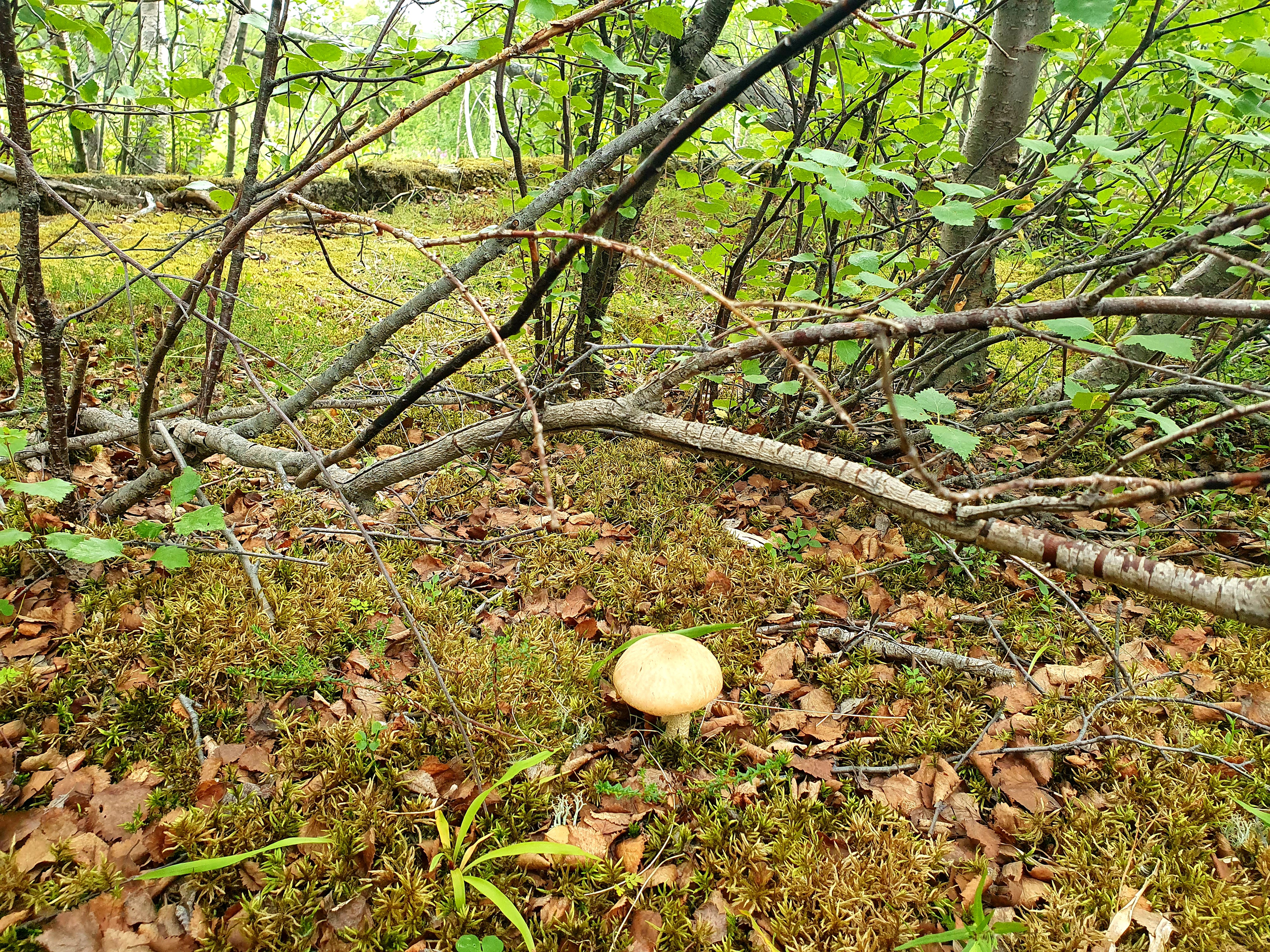
It was 1 August 2020 in Sør-Varanger, Norway, and I was conducting fieldwork for what would later become my PhD dissertation (Venovcevs Reference Venovcevs2023b). Or rather, at that exact moment, I was looking for mushrooms to bring to dinner with a friend. The foray was not going well. The woods were unfamiliar and after several hours, I had little to show for my effort. That is when I saw it – a brown-capped bolete, Leccinum scabrum, poking out of the ground. It was a good edible – young, meaty, enough to introduce my friend to the wonders of wild foraging. Yet there was something peculiar about this mushroom – it was growing right in the middle of a concrete foundation of a German World War II barrack (Figure 1).
Leccinum scabrum within a concrete foundation for German WWII barracks (the footing visible in the upper left), 1 August 2020. Photo by the author.

Figure 1. Long description
A mushroom with a light brown cap and white stem grows on a mossy forest floor covered with fallen leaves and branches. The background features green foliage and trees, with a concrete foundation from a German World War 2 barracks visible in the upper left corner.
The barrack dated back to a time when this region of northeastern Norway was a rear supply area for nearly 70,000 German and Austrian troops fighting on the Arctic front against the Soviet Union. Their presence, along with a scorched-earth retreat from the Red Army in October 1944, left a heavy heritage in the region. These consist of up to 4,325 bunkers, barracks, artillery positions, storage depots and their associated artefacts such as glass bottles, tin cans, shell casings, bullets and barbed wire (Farstadvoll Reference Farstadvoll2022, Reference Farstadvoll, Olsen, Farstadvoll and Godin2025; Farstadvoll et al. Reference Farstadvoll, Figenschau and Olsen2020; Kosnes and Siira Reference Kosnes and Siira2015, Reference Kosnes and Siira2020; Sør-Varanger Kommune 2023). Yet, among this legacy of war and conflict was a mushroom – the sporing bodyFootnote 1 of an unseen underground network of a mycorrhizal fungus that had found a home in the concrete remains. I was reminded of the story of a matsutake mushroom being the first living thing to emerge after the destruction of Hiroshima by an atomic bomb (Tsing Reference Tsing2015, 3), a pertinent reminder of the pioneering power of fungi even in the face of total annihilation.
I left that mushroom where I found it. Not because I was worried about ingesting potentially harmful levels of toxic chemicals – which certainly should have been a consideration (Broomandi et al. Reference Broomandi, Guney, Kim and Karaca2020) – but rather out of the desire to see the fungus develop and grow unhindered. As it was – in a sense – slowly dissolving the dark, difficult human heritage (Macdonald Reference Macdonald2009) for a multispecies future.
Fungi for a multispecies archaeology
The chance encounter with that mushroom stayed with me – piquing my curiosity about the subsurface world the mushroom was enmeshed in. What was the mushroom’s subsurface relation to the World War II ruins? What other fungal organisms had found a home there? What were those ruins to the fungi, and what can archaeological attention to fungi reveal about the human past and its role in the present?
My feeling of wonder was also situated within the recent growing shift towards a multispecies archaeology (Birch Reference Birch2018b), one that moves away from the position of human novelty in the past and towards an archaeology where ‘we frame ourselves as one actor among others in the long march of time’ (Birch Reference Birch and Birch2018a, 2). Echoing these sentiments, recent work on heritage ecology (Bangstad and Pétursdóttir Reference Bangstad and Pétursdóttir2021b) has attempted ‘to exfoliate the binaries of culture and nature, human and non-human and make room for the appreciation that heritage phenomena are entangled in more-than-human material and environmental processes’ (Bangstad and Pétursdóttir Reference Bangstad, Pétursdóttir, Bangstad and Pétursdóttir2021a, 5). This attention to heritage as an environmental process also takes account of the ‘heritage biota’ (Viles and Cutler Reference Viles and Cutler2012, 2407) living within and upon the vestiges of the human past.
While such work has been instrumental in flattening the discussion on the roles of humans and non-humans within heritage spaces, fungi have been slow in entering the discussion. Some theoretical groundwork has been done. This includes discussions on the importance of fungi for the heritage ‘nutrient-scape’, whereby the past offers material for fungal metabolisation from which unique anthropogenic fungal ecologies emerge (Farstadvoll Reference Farstadvoll, Bangstad and Pétursdóttir2021, 333–36), as well as reflections on how lichens create ‘multispecies art’ on rock art sites (Alberti and Fowles Reference Alberti, Fowles and Birch2018, 150; Pettigrew et al. Reference Pettigrew, Callistemon, Weiler, Gorbushina, Krumbein and Weiler2010) and utilise cemeteries to create spaces of ecological refugia and biodiversity (Pringle Reference Pringle, Tsing, Bubandt, Gan and Swanson2017; Smykowski and Stobiecka Reference Smykowski and Stobiecka2022, 347–53).
Beyond these few exceptions, there has been a general dearth of discussion on the role of fungi within archaeology. This can be attributed to two reasons. The first, as I discuss in the section below, comes from the difficulty of identifying fungi in the archaeological record. While some studies have been done, within archaeological literature there is an issue of ‘missing mushrooms’ (O’Regan et al. Reference O’Regan, Lamb and Wilkinson2016), both in diets and in preservation. The second reason is the general mycophobia within heritage stemming from the fact that whenever fungi are found growing on heritage sites, they are often growing on something which archaeologists and other heritage practitioners do not want them to grow on. Fungi are, in part, decomposers, and when they enter heritage institutions, they are often seen and treated as a threat to historic buildings, monuments and conservation spaces (Bastholm et al. Reference Bastholm, Madsen, Andersen, Frisvad and Richter2022; Broda and Hill Reference Broda and Hill2021; Kwaśna and Kuberka Reference Kwaśna and Kuberka2020; Ortiz et al. Reference Ortiz, Parraga, Navarrete, Carrasco, de la Vega, Ortiz, Herrera, Jurgens, Held and Blanchette2014; Sterflinger Reference Sterflinger2010; Sterflinger and Piñar Reference Sterflinger and Piñar2013). While some saprotrophic fungi can indeed be a threat to heritage, the human and chemical labour to forestall decay has been increasingly questioned as untenable (Bangstad Reference Bangstad2022; DeSilvey Reference DeSilvey2017), and more fungi-friendly museum approaches that acknowledge decay as a natural process have been proposed (Grünfeld et al. Reference Grünfeld, Bencard and Whiteley2023; Grünfeld and DeSilvey Reference Grünfeld, DeSilvey, Samuel and Sattler2022).
My argument here echoes these sentiments in taking fungi seriously for what they are and what they can offer archaeology and heritage studies. It is necessary to consider the role of fungi in a multispecies past both for fungi’s role in decomposition and for their role in symbiosis. As decomposers, fungi literally live in remnants of the past, digest them and turn them into substrates for plants and animals. Fungi are future makers par excellence (cf. Harrison Reference Harrison, Harrison, DeSilvey, Holtorf, Macdonald, Bartolini, Breithoff, Fredheim, Lyons, May, Morgan and Penrose2020). Meanwhile, as symbionts within multispecies communication networks, fungi help challenge notions of human exceptionalism by drawing attention to the mutualism that exists in all heritage ecologies within and outside of human participation. Furthermore, as ecological keystone species (Niego et al. Reference Niego, Rapior, Thongklang, Raspé, Hyde and Mortimer2023), fungi underpin the biodiversity of most, if not all, future life that comes in the aftermath of anthropogenic ruination.
To address this dearth of fungi within heritage discourse and to highlight fungi as another powerful source of data for archaeological investigation, I advocate for the potential and the necessity of a ‘mushroom archaeology’ to explore human–fungi relations in the distant past and in the ruins of the present. This is not an entirely novel position. Some research from archaeology and ethnomycology has shown the long-lasting relationships humans have had with fungi. Meanwhile, the work within the ‘fungal turn’ of social sciences and humanities has laid out the groundwork for this subdiscipline. To facilitate this exploration, I return to the German World War II ruins in Sør-Varanger municipality and collaborate with Miraculix, Sør-Varanger Sopp- og Nyttevekstforening (‘Sør-Varanger Mushroom and Beneficial Plant Society’), a local citizen science group, who were responsible for the collection and identification of the mushrooms. Together, we explore the unique anthropogenic fungal ecologies in places of conflict ruins to show the sort of interdisciplinary research that is needed to reveal the global connections and local interactions of fungi within heritage spaces.
In doing so, I also contribute to discussions within citizen science in archaeology (see Milek Reference Milek2018; Smith Reference Smith2014; Tauginienė et al. Reference Tauginienė, Butkevičienė, Vohland, Heinisch, Daskolia, Suškevičs, Portela, Balázs and Prūse2020) whilst using a traditional citizen science topic – fungi (see Heilmann-Clausen et al. Reference Heilmann-Clausen, Bruun, Ejrnæs, Frøslev, Læssøe and Petersen2019 as an example from conservation) – to expand our knowledge of heritage ecologies. Thereby, this work adopts an open environment for archaeological research advocated by Karen Milek (Reference Milek2018) where a flattened research design allows for mutual learning and balanced collaboration. Furthermore, in the choice of case study, the work is situated within discussions of the ecolocial values of post-conflict ruins – so called ‘collateral values’ (Lookingbill and Smallwood Reference Lookingbill and Smallwood2019). While militarised ecologies are not without criticism (Havlick Reference Havlick2007, Reference Havlick, Lookingbill and Smallwood2019), conflicts redistribute people, materials and species, creating new ecologies that persist for much longer than the fleeting temporalities of historical events (Bartolini Reference Bartolini2015; Breithoff Reference Breithoff2020; Farstadvoll Reference Farstadvoll2022, Reference Farstadvoll, Olsen, Farstadvoll and Godin2025; Figenschau Reference Figenschau, Bangstad and Pétursdóttir2022). Understanding the role of fungi in these spaces expands our gaze to the world beneath our feet and into the soils to witness how legacies of conflict continue, change and spread long after destruction.
My choice in Sør-Varanger as a case study comes partially as happenstantial – resulting from my encounter with the brown-capped bolete in Sør-Varanger in 2020. However, it is also situated within my own knowledge and familiarity with the area, the people and the history there (Venovcevs Reference Venovcevs2023b). It also builds upon the years of historical and archaeological research on World War II ruins in the area (Farstadvoll Reference Farstadvoll, Olsen, Farstadvoll and Godin2025; Farstadvoll et al. Reference Farstadvoll, Figenschau and Olsen2020; Farstadvoll and Nilsen Reference Farstadvoll and Nilsen2020; Figenschau Reference Figenschau, Bangstad and Pétursdóttir2022; Kosnes and Siira Reference Kosnes and Siira2015, Reference Kosnes and Siira2020).
Given this work and the recent developments within the fungal turn, I suggest four principles to guide mushroom archaeology into the future:
-
1. Fungi have always played a role in human societies.
-
2. A mushroom is more than a metaphor.
-
3. Fungal research is inherently distributed, necessarily interdisciplinary.
-
4. Fungal distributions are global, mushrooms are local.
I discuss these in turn.
Fungi have always played a role in human societies
Before delving into a relatively contemporary example of fungi in World War II ruins in Sør-Varanger, it is important to highlight the fact that fungi have always played a role in human societies. When preservation allows, these can be studied archaeologically to great effect.
Human-fungal interactions can be seen indirectly in the archaeological record in the production of alcohol, bread, and cheese as far back as 7,000, 3,200 and 4,000 years ago, respectively (Dietler Reference Dietler2006; Maixner et al. Reference Maixner, Sarhan, Huang, Tett, Schoenafinger, Zingale, Blanco-Miguez, Manghi, Cemper-Kiesslich, Rosendahl, Kusebauch, Morrone, Hoopmann, Rota-Stabelli, Rattei, Moritz, Oeggl, Segata, Zink, Reschreiter and Kowarik2021; Samuel Reference Samuel1996; Shevchenko et al. Reference Shevchenko, Yang, Knaust, Thomas, Jiang, Lu, Wang and Shevchenko2014). Recent advances in genomic and proteomic technologies have been particularly revolutionary in this regard, allowing scientists to sequence trace residues, soils and faeces cheaply and easily (Warinner Reference Warinner2022).
In addition to helping to produce food, fungi in the past had many other uses. Famously, Ötzi ‘the Iceman’ carried two fungal polypores – a Piptoporus betulinus (birch polypore) and a Fomes fomentarius (tinder polypore) – likely for medicinal and fire-starting purposes (Peintner et al. Reference Peintner, Pöder and Pümpel1998). Polypores have also been found in similarly well-preserved settings such as waterlogged contexts like the Mesolithic site of Star Carr in the UK and the Neolithic settlement of La Draga in Spain (Berihuete-Azorin et al. Reference Berihuete-Azorin, Girbal, Pique, Palomo and Terradas2018; Piqué et al. Reference Piqué, Revelles, Berihuete-Azorín, Girbal Lladó, Palomo and Terradas2020; Robson Reference Robson, Milner, Conneller and Taylor2018, see especially pages 439–444 for a review of polypores on Mesolithic sites). Meanwhile, written and oral histories within historical ethnomycology have documented the use of polypores as medicine, tinder, insect repellents, material culture, perfume and spice in the early modern and modern periods (Magnani Reference Magnani2016; Svanberg Reference Svanberg2018; Yamin-Pasternak Reference Yamin-Pasternak, Hunn, Turner, Pearsall and Anderson2011). Beyond utilitarian values, fungi lived and responded to humans either as part of ‘symbiotic architectures’ (Lucas Reference Lucas and Birch2018) or as moulds, pests and parasites.
This latter characteristic meant that members of the Kingdom Fungi have not always been seen or treated in a positive light. Documented responses and treatment of fungal infection in buildings are at least as old as the Bible, with the book of Leviticus in the Old Testament prescribing detailed instructions on how to treat the ‘leprosy’ of houses (King James Version 1987, Lev. 14, 33–57). Meanwhile, as pointed out in a classic text by Valentina Pavlovna Wasson and R. Gordon Wasson, societies can be roughly divided into mycophylic (mushroom-loving) or mycophobic (mushroom-fearing) cultures (Wasson and Wasson Reference Wasson and Wasson1957). These concepts do not necessarily have to be totalising and dichotomous but rather serve as conceptual tools to highlight general cultural attitudes towards fungi. It is also important to acknowledge that the concept of ‘fungi’ comes from our own Western Linnaean ways of classifying species that are not shared by other cultures; the Māori, for example, do not have a separate word for ‘fungi’ (Pouliot Reference Pouliot2023, 61–2). Likewise, these attitudes need not be static over time as research has shown that mushroom consumption is a relatively recent phenomenon in nations long assumed to be mycophylic, including Sweden (Svanberg and Lindh Reference Svanberg and Lindh2019, 31727; Svanberg Reference Svanberg2012), Finland (Zilliacus Reference Zilliacus1993) and Poland (Kotowski Reference Kotowski2019). Such attitudes, however, may not be universal as alternative perceptions and uses of fungi could, for example, have existed in peasant societies, Indigenous cultures and prehistory. Therefore, it is necessary for archaeological investigations to understand the varied and nuanced approaches people have had toward fungi.
Thus, the archaeological and historical evidence highlights the fact that humans have lived, used and negotiated around various types of fungi for thousands of years, underscoring the longue durée of fungi as humans’ – sometimes wanted, sometimes unwanted – companion species (Tsing Reference Tsing2012 following Haraway Reference Haraway2003). Unsurprisingly, extracting fungi from the archaeological record has so far proven difficult. Preservation is a major issue. Apart from frozen, waterlogged or burned (Moskal-del Hoyo et al. Reference Moskal-del Hoyo, Wachowiak and Blanchette2010) conditions, fungal sporing bodies do not readily survive. Sometimes fungi can be studied by proxy through vessel type (e.g. brewing, baking, cheese making), but the direct consumption of fungi is hard to determine, though suggestions have been made for the use of stable isotope analysis (O’Regan et al. Reference O’Regan, Lamb and Wilkinson2016).
Additionally, more attention should be given to fungal spores in archaeological contexts as they remain largely overlooked in palynology studies. While the presence of fungal spores may appear accidental, most spores do not travel far from the sporing body. Contemporary household dust, for example, can be traced within an accuracy of 50 to 100 kilometres based on the fungi that grow on them and can act as proxies to identify species that fungi rely on (Barberán, et al. Reference Barberán, Dunn, Reich, Pacifici, Laber, Menninger, Morton, Henley, Leff, Miller and Fierer2015a; Barberán et al. Reference Barberán, Ladau, Leff, Pollard, Menninger, Dunn and Fierer2015b; Grantham et al. Reference Grantham, Reich, Pacifici, Laber, Menninger, Henley, Barberan, Leff, Fierer and Dunn2015). Therefore, fungal spores hold promise as another, previously overlooked, source of archaeological data to reconstruct paleoenvironments, especially regarding the changes human domestic environments experienced during urbanisation (Barberán et al. Reference Barberán, Dunn, Reich, Pacifici, Laber, Menninger, Morton, Henley, Leff, Miller and Fierer2015a; Barberán et al. Reference Barberán, Ladau, Leff, Pollard, Menninger, Dunn and Fierer2015b; Martin-Sanchez et al. Reference Martin-Sanchez, Estensmo, Morgado, Maurice, Engh, Skrede and Kauserud2021). Thus, plenty of unresolved questions remain for archaeologists to assess human-fungal interactions in the deep past.
At the same time, human activities in the past can impact fungal ecologies in the present. These can be seen both as additional proxies for understanding past land use and valued as unique members of anthropogenic environments. Examples include former grazing areas where coprophilous and saprotrophic fungi thrive long after grazing has discontinued (Cugny et al. Reference Cugny, Mazier and Galop2010; Tervonen et al. Reference Tervonen, Oldén, Taskinen and Halme2022) and charcoal hearths whose prehistoric physical and chemical alterations and buried carbon-rich archaeological layers allow for unique bacterial and fungal communities in the present (Garcia-Barreda et al. Reference Garcia-Barreda, Molina-Grau, Forcadell, Sanchez and Reyna2017; Siles et al. Reference Siles, Öhlinger, Cajthaml, Kistler and Margesin2018). I will return to the question of unique fungal ecologies below in the exploration of conflict ruins in Sør-Varanger.
A mushroom is more than a metaphor
Despite the promising work in reconstructing the lives and roles of fungi in past societies, there have at times also been moves within the social sciences and humanities to lump all fungi into a broad metaphorical category, ignoring the fact that fungi are a large kingdom within the tree of life. Fungi are as diverse as flora and fauna, with each species providing its own unique connections and affordances.
Within the last decade there has been a so-called ‘fungal turn’ (alternatively called a ‘mushroom turn’) within social sciences, humanities, arts and public consciousness (Hathaway Reference Hathaway2022, 196; Landecker Reference Landecker, Faier and Hathaway2021, viii; Pouliot Reference Pouliot2023, 7–8), which mirrored and branched out of the ‘microbial turn’ and its interest in the unseen social worlds of bacteria (Brives and Zimmer Reference Brives and Zimmer2021; Paxson and Helmreich Reference Paxson and Helmreich2014; for its implications for archaeology see Warinner Reference Warinner2022), causing considerable excitement. In recent years, fungi have featured prominently in popular science literature (Pollan Reference Pollan2021; Sheldrake Reference Sheldrake2020), conservation initiatives (Heilmann-Clausen et al. Reference Heilmann-Clausen, Bruun, Ejrnæs, Frøslev, Læssøe and Petersen2019; SPUN 2023), culinary trends (Fisher Reference Fisher2021; Krawiec Reference Krawiec2021) and even hit TV series and video games (Mazin Reference Mazin, Druckmann, Straley, Mazin and Pierce2023). Within scholarly research, Susanne Simard’s ‘wood wide web’ captured the public and academic imagination by revealing forest interconnectivity (Simard et al. Reference Simard, Perry, Jones, Myrold, Durall and Molina1997) while Anna Tsing (Reference Tsing2015) highlighted how fungi can be studied within social sciences and humanities.
The possibilities of thinking with fungi are particularly noteworthy. As asserted by Hannah Landecker in the foreword to Matsutake Worlds, ‘A fungal turn takes everything with it’ (2021, viii). Fungi shift thinking from isolation to interconnection (Landecker Reference Landecker, Faier and Hathaway2021, viii–ix), challenge the traditional ethnographic practices of lone scholars looking at single human culture groups (Faier Reference Faier, Faier and Hathaway2021, 5) and expand human sensibilities through smells (Inoue Reference Inoue, Faier and Hathaway2021), atmospheres (Choy Reference Choy, Faier and Hathaway2021) and temporalities (Satsuka Reference Satsuka, Faier and Hathaway2021). In philosophy, fungi have been used to highlight the muddled boundaries between biological and phenomenal individuals when sporing bodies can contain nuclei from more than one genetic individual (Molter Reference Molter2017). Meanwhile, attention to ‘mycopoetry’ in ecological literature expands the diversity of ways in which humans perceive fungi and fungal relations (Ryan Reference Ryan2013).
This mycelial thinking mirrors and expands upon the rhizomatic thinking promulgated earlier by Deleuze and Guattari (Reference Deleuze and Guattari2004) – an approach toward thinking about endless multiplicities connected horizontally across barriers and boundaries. Rhizomatic thinking has paved the way for thinking through lines of connection, relation, transformation and becoming. It has been an inspiration to people working within the fungal turn (Choy et al. Reference Choy, Faier, Hathaway, Inoue, Satsuka and Tsing2009a, 384). Tim Ingold, however, who has been greatly influenced by mycology in his own work from his mycologist father (Ingold Reference Ingold2016, 7), argues that the rhizome metaphor does not go far enough. Instead, he prefers the fungal mycelium as a better metaphor drawing on fungi’s symbiotic, nourishing and mutually supportive properties through which to understand lived relations. This comes across most strongly in his 2003 article and his conception of ‘fungal persons’ that seeks to reframe people as webs of social and ecological interactions in which it is impossible to state where the self ends and the environment begins within a web of non-hierarchical interactions (Ingold Reference Ingold, Sanga and Ortalli2003, 302–8). These theoretical deliberations underscore the fact that mushrooms are ‘good to think with’ (Tsing Reference Tsing2015), illustrated most recently in a book by Sarah Rich (Reference Rich2023), which draws lessons from mushrooms for a broad range of themes such as theology, foraging, kinship, ecology, salvation and magic.
In perhaps the most widely read monograph on fungi, The Mushroom at the End of the World, Anna Tsing lays out the ‘possibilities of coexistence within environmental disturbance’ (Reference Tsing2015, 4). There, she follows the matsutake commodity chains from the industrially destroyed forests and the people who pick the matsutake within them to the buyers and traders who ship the mushrooms for the lucrative Japanese market. Tsing tracks the matsutake through its social, ecological and economic permutations. However, in studying the global entanglements of the matsutake within capitalism, mushrooms in Tsing’s narrative become disarticulated from place as soon as they are picked. The matsutake then stop being matsutake and become capitalist commodities, vanishing into the world of transaction and trade. Even the ‘capitalist ruins’ in which the matsutake grow fade into the background as a backdrop to the multispecies drama that unfolds within them.
The works of Ingold, Rich and Tsing thus highlight a caveat regarding social scientists and humanities scholars working within the fungal turn. While mushrooms might be deeply inspiring for theoretical development, the excitement for what mushrooms are or can be – subterranean, entangled, symbiotic, reciprocal, rhizomatic, queer, magical and transnational – can make the specificity of individual fungal species disappear into metaphors. Although mushroom metaphors are not problematic in themselves, preoccupation with the metaphorical can compress an entire biological kingdom into an analytic shorthand, hiding the properties, characteristics and agencies of individual fungal species. For comparison, think how it would look if we were doing the same thing with plants – from lake-dwelling algae, to redwood trees, to the common garden radish.
To start exploring the specificities of fungal species within heritage spaces, in February 2023, I started working with Miraculix, Sør-Varanger sopp- og nyttevekstforening (‘Sør-Varanger mushroom and useful plant society’). Miraculix is a citizen science group composed of a core of six people and a membership of approximately 60 active individuals. Like many citizen science societies, they are regular people interested in their local environment (in this case fungi and plants), and they have deep lived experience of being from Sør-Varanger, a 3,971 km2 municipality in the northeastern corner of Norway. As such, they are familiar with the specificities of local history, including the massive amount of World War II remains (Kosnes and Siira Reference Kosnes and Siira2015, Reference Kosnes and Siira2020) and the over 50 plant species that were accidentally introduced into the region by the occupation (Alm Reference Alm2012; Alm et al. Reference Alm, Often and Piirainen2001; Vorren Reference Vorren1968).
These conflict-introduced plant species, so-called ‘polemochores’ – from ‘polemos’, war, and ‘chorein’, to spread (Mannerkorpi Reference Mannerkorpi1944) – can be seen as a growing and evolving type of more-than-human conflict heritage that comes as an aftermath of industrialised war. While theoretically hundreds of species were introduced, with seeds of various plants accidentally transported from central Europe often as part of fodder for the horses, only a few dozen managed to acclimatise themselves to the northern conditions of Arctic Norway. They persist into the present around former military installations (Alm Reference Alm2012; Alm et al. Reference Alm, Often and Piirainen2001; Vorren Reference Vorren1968) – a living and lived-with heritage that continues 80 years after the occupation (Farstadvoll Reference Farstadvoll, Olsen, Farstadvoll and Godin2025, 254–55).
My research with Miraculix consisted of two goals: Identify potentially unique fungal species that were introduced as part of the occupation (‘polemochore fungi’) and, more broadly, explore the varieties of fungi that grow in World War II ruins to understand the unique fungal ecologies produced by ruination (‘ruderal fungi’). Building on the work of Stein Farstadvoll’s ‘nutrient-scape’ (Farstadvoll Reference Farstadvoll, Bangstad and Pétursdóttir2021, 336), ecosystems around ruins can be conceived of as artefactsFootnote 2 – reflective of and responsive to landscape alterations, and material things left in the wake of human use and disuse. Recent work has highlighted the important role that ruderal plants play in colonising recent ruins, blurring nature-culture distinctions and opening discussions for meaning-making within disintegration and loss of a heritage that is co-created and emergent (Bangstad Reference Bangstad, Bangstad and Pétursdóttir2021; Bartolini and DeSilvey Reference Bartolini and DeSilvey2020; DeSilvey Reference DeSilvey, Harrison and Sterling2020). Such processes cannot take place without an understanding of ruderal fungi that often come first to start metabolising and reworking disused human spaces.
The search for polemochore and ruderal fungi required Miraculix and me to be attentive to and familiar with the species that grew within ruins as well as to the ruins themselves. In preparation for my fieldwork with Miraculix, I surveyed the local literature published on the subject of war remains (Kosnes and Siira Reference Kosnes and Siira2015, 202; Sør-Varanger Kommune 2023), examined aerial photos of the area from 1946, visited the local archives at the Borderland Museum in Kirkenes to retrieve hand-drawn unpublished maps of many of the World War II installations and went out with one of the local history enthusiasts. However, in an interesting turn of events and much unlike Miraculix members who were very engaged with working between mycology and heritage, the local history society was disinterested in the project because ‘they were not really into mushrooms’ (personal communication, February 2023). Therefore, Miraculix members and I had to rely more on the written information on the war ruins and focus on the fungi themselves.
As I discuss later, the fungi that we sought were not the prized mycorrhizal species cherished by mushroom foragers in old-growth forests. Rather, they tended to be either unremarkable common species tolerant of disturbance or difficult-to-identify fungi – some of which were never found in Sør-Varanger previously. They could not simply be relegated to the broad descriptor of ‘mushrooms’ but called for identification to understand their role within the limestone-enriched soils and introduced plant species growing around concrete barracks, stables, bunkers, hospitals and trenches dating from World War II.
Fungal research is inherently distributed, necessarily interdisciplinary
As exemplified best by the Matsutake Worlds Research Group, a group of anthropologists who have explored matsutake mushrooms as social objects (Choy et al. Reference Choy, Faier, Hathaway, Inoue, Satsuka and Tsing2009a, Reference Choy, Faier, Hathaway, Inoue, Satsuka, Tsing and Falzon2009b; Hathaway Reference Hathaway2022; Tsing Reference Tsing2015), fungal research requires interdisciplinary approaches that involve mycologists, botanists, soil scientists, social scientists, citizen scientists and artists, among others. Their work highlights how fungi are multisited and multidisciplinary, growing within unseen and unknown underground networks, crossing borders and boundaries, and challenging notions of individuality. Fungi vary season to season, year to year and place to place, requiring multisited studies and frequent site revisits to understand their distributions.
Interdisciplinarity of mushroom research articulates well with archaeology, which has often relied on the methods and participation of other disciplines. What is perhaps less common within archaeology is the participation of citizen scientists in field research to capture the spatial variability of sites. While community archaeology has a long tradition, especially within Indigenous archaeology (for some examples, see Atalay Reference Atalay2019; Davies Reference Davies2020; Kelvin et al. Reference Kelvin, Gilheany, Flowers, Edmunds, Frieda, Igloliorte, Lucy and Piercy2020; Rankin and Gaulton Reference Rankin and Gaulton2021), involvement of lay people for data collection for archaeological projects is still considered generally rare (Smith Reference Smith2014; Milek Reference Milek2018). Engaging in citizen science through archaeology serves to enhance archaeology’s deep traditions of interdisciplinary work by opening archaeological practice toward democratic research design, data collection and analysis (Milek Reference Milek2018, 37–43).
My work with Miraculix responded to the calls for greater community involvement by blending mycological citizen science with otherwise traditional archaeological survey approaches. Both sides brought something to the collaboration – me with my archaeological training, knowledge and expertise, and Miraculix with their local knowledge of the area and the plants and fungi that grow within it. While Miraculix members are ‘citizens’ – i.e. not university-educated mycologists – their knowledge of the local fungi is extensive, and almost all members of the core group were trained mushroom control experts from Norges sopp- og nyttevekstforbund (‘Norway’s Mushroom and Useful Plant Union’). As such, research was flat. All of us brought something to the project, decided on places we should visit, offered interpretations of why specific mushrooms were growing there and published our own results in our preferred formats with consultation from the other parties (Karlsen and Moe Reference Karlsen and Moe2024). By treating Miraculix as fellow collaborators instead of passive data collectors and working with their questions, concerns and contextual knowledge, we adopted a democratic science approach to our investigation (Strasser et al. Reference Strasser, Baudry, Mahr, Sanchez and Tancoigne2019).
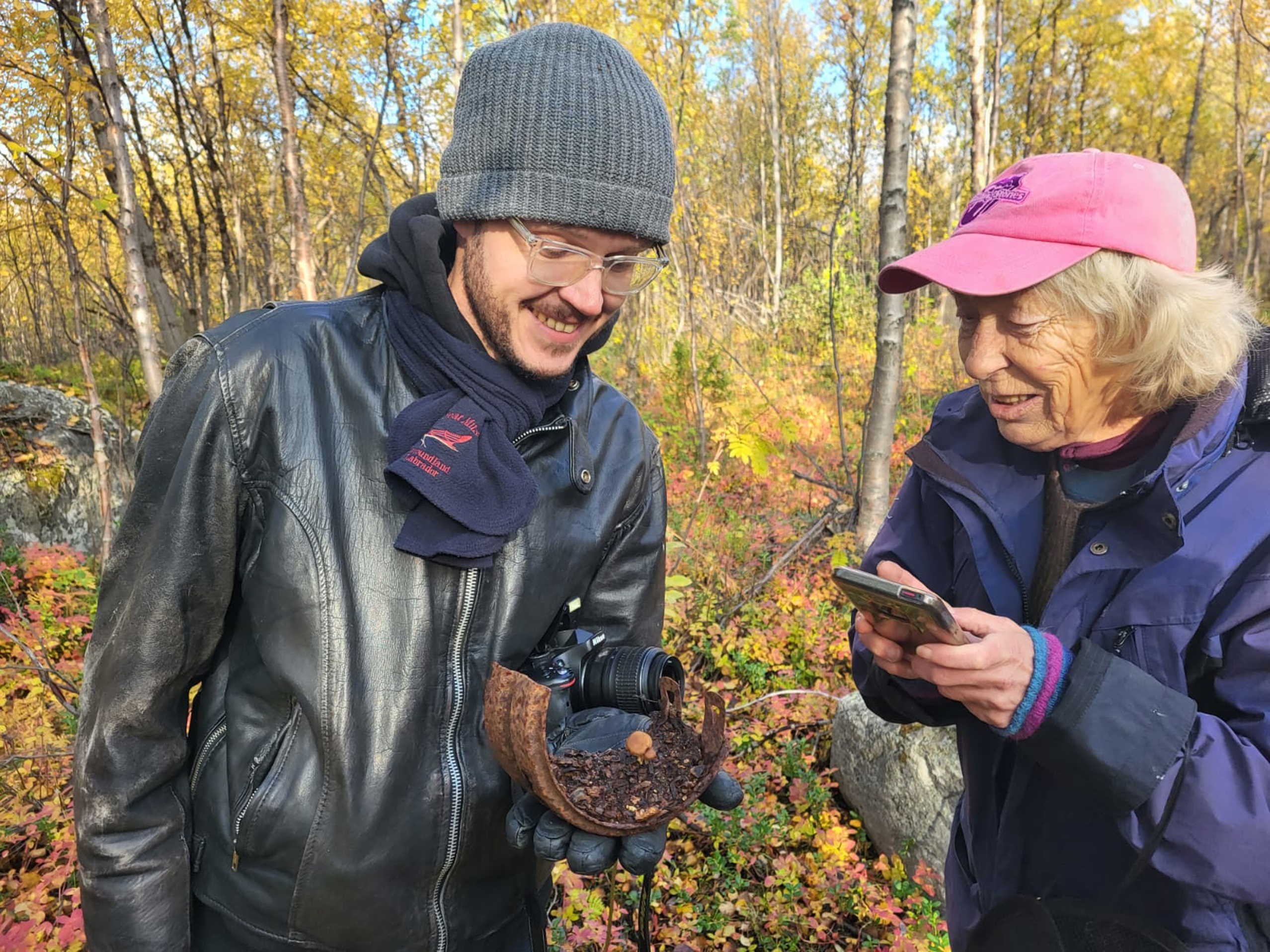
Within this framework, my time on site was limited relative to Miraculix members. I was on site in Sør-Varanger for a total of four weeks in May and September–October of 2023 and, briefly, in August 2024. My fieldwork consisted of site visits to World War II installations with and without Miraculix members (Figure 2). By myself, I photographically documented World War II installations and noted the mushrooms that grew within them. When I was working alongside Miraculix, I also conducted interviews, gauged their attitudes towards the ecological values of ruins, and learned about local fungal species.
The author with one of the members of Miraculix, Irene Karlsen, looking at a mushroom from the genus Inocybe growing on an unidentified iron interconnector in a former German ammunition storage area, 21 September 2023. Photo by Ursula Münster.

Figure 2. Long description
A man wearing a gray beanie and glasses, and a woman wearing a pink cap and a blue jacket, stand in a forest with autumn foliage. The man holds a camera and a mushroom from the genus Inocybe, while the woman looks at a smartphone. They appear to be studying the mushroom, which is growing on an unidentified iron interconnector in a former German ammunition storage area.
Outside of my fieldwork, Miraculix members independently went out and documented fungi within World War II ruins and continue to do so without my personal involvement, given their own interests and research questions. One of the more interesting aspects in conducting this work alongside them has been that members of this group previously had little interest in World War II heritage in Sør-Varanger. It was not until this project that they started to appreciate these remains through an ecological lens. It can be suggested that similar interdisciplinary citizen science projects would be able to connect with communities that have previously felt disinterested in engaging with their local heritage.
Interdisciplinary work between archaeology and mycological citizen science also led to a productive mediation of methodological approaches. One of these adjustments was to pay attention to smells. Archaeology is an ocular-centric discipline (Thomas Reference Thomas, Thomas and Jorge2009). While sight is also important in mycology, Miraculix members regularly brought mushrooms right up to their noses to identify them through their smells. Most fungi were thus identified through a combination of visual macro analysis and smell. Rarer mushrooms were collected and analysed at home through spore prints and microscope analysis.
The survey approaches between Miraculix and I also differed. I stuck to evenly spaced transects common within archaeology and documented each clump of sporing bodies with a handheld Global Navigation Satellite Systems (GNSS) receiver (GARMIN GPSmap 62sc) – avoiding mapping individual sporing bodies due to uncertainties of ‘mushroom individuality’ (Molter Reference Molter2017) – i.e. it being impossible to correlate sporing bodies with individual fungal individuals. Meanwhile, Miraculix preferred a coarser survey, recording a point every 10–20 metres and documenting all sporing bodies within its vicinity. Combined, these results reveal an understanding of fungi at two different scales – the finer scale of an archaeological feature and the coarser scale of an area around the feature. In total, 18 places were visited by me, Miraculix members, or us together during the 2023 field season. Extensive mushroom surveys were not carried out in 2024, given that a drought in northern Norway led to a very poor mushroom season. However, work is ongoing, and further surveys are planned in the future – including with local mushroom societies in northern Finland, a place that also saw large concentrations of German troops during World War II (Seitsonen Reference Seitsonen2021). Thus, tracking fungi through time and space will allow us to better understand how fungi in northern Europe have been inadvertently spread by conflict and continue to persist as localised, ongoing fungal post-conflict heritage ecologies.
Fungal distribution is global, mushrooms are local
As illustrated by previous work done on matsutake, mushrooms can cross borders, cultural groups and economic systems and require geographically dispersed, deeply interdisciplinary and multiyear research to account for global connections (best exemplified by Tsing Reference Tsing2015). Nevertheless, fungi grow in and interact with particular places, societies, chronologies and things – those things being trees, soils and human-made/altered objects.
To situate fungi in place, Michael Hathaway approaches matsutake as ‘world-makers’. By this, he argues that matsutake and other fungi make the world in physical, chemical and sociocultural ways through breaking down rocks and inorganic materials, forming partnerships with trees and entangling with the lives and livelihoods of human and non-human animals (Hathaway Reference Hathaway2022). By exploring the fungal umwelt (Uexküll Reference Uexküll2010), Hathaway sought to comprehend how the fungi interpret and communicate with the world around them (Hathaway Reference Hathaway2022, 74–101). While matsutake’s reach is global, for instance, with the Tibetan and Yi peoples of China collecting the mushrooms for the Japanese market, Hathaway’s ethnography is inherently place-based in showing how fungi interact with the world within and outside of human participation. The place-based world-making of fungi resonates with archaeology as it opens questions about how fungi may interact with discarded human-made things to create post-human places and webs of sociability (for some examples, see Farstadvoll Reference Farstadvoll2022; Pétursdóttir Reference Pétursdóttir2020).
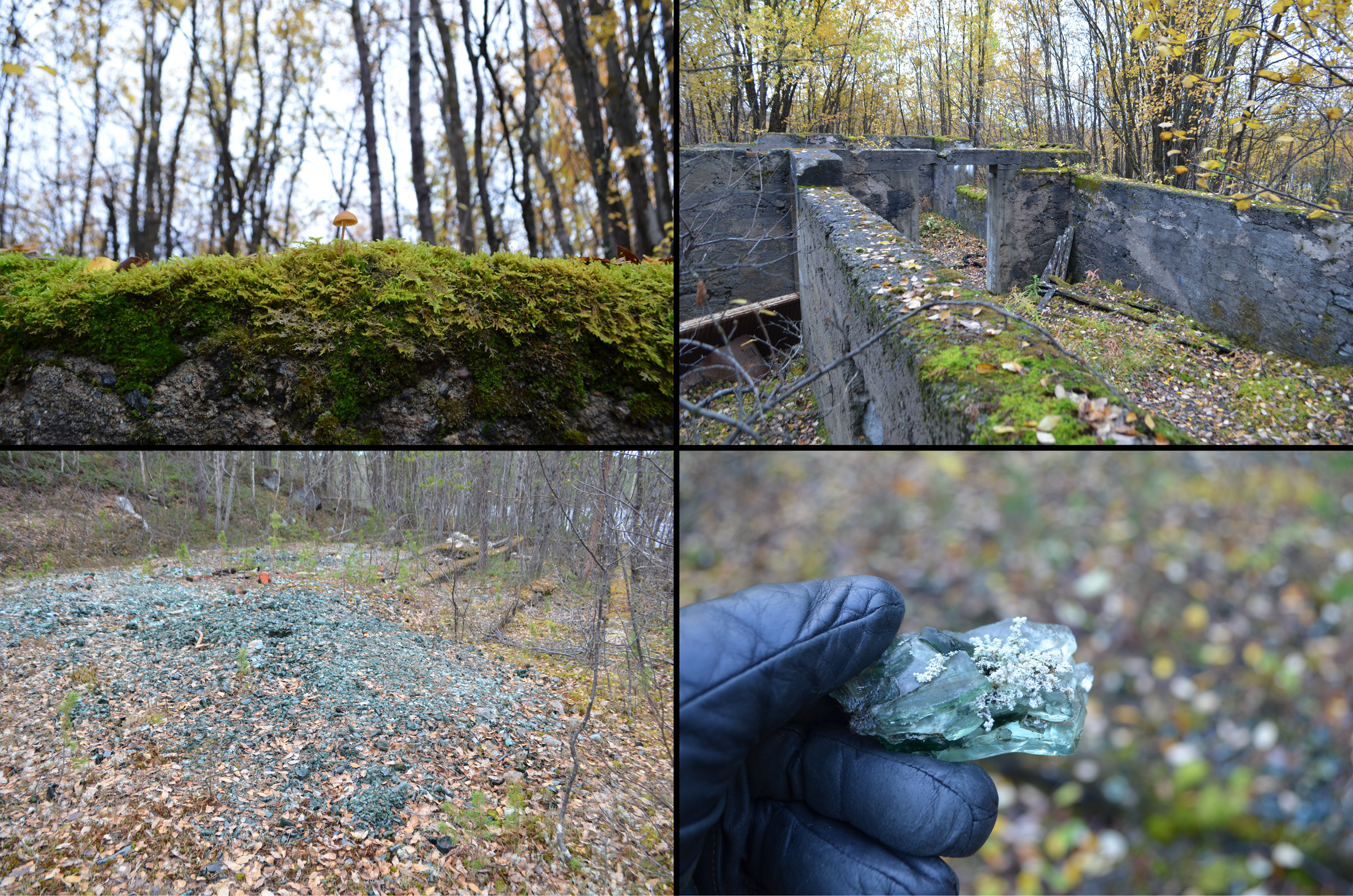
In the present case study of Sør-Varanger, the thing that fungi interacts with is a post-conflict landscape consisting of at least 4,325 durable monuments (Sør-Varanger Kommune 2023), masses of burnt and discarded military supplies (Farstadvoll Reference Farstadvoll2022, Reference Farstadvoll, Olsen, Farstadvoll and Godin2025) and thousands of cubic meters of transformed and contaminated soil strata (Figure 3). This material has certain affordances that create unique heritage microclimates. Concrete, for example, is made from limestone that, upon disintegration, turns the soil more basic – which is favourable to fungi. Other fungi respond well to the presence of heavy metals. However, one should be cautious not to jump to the conclusion that fungi are remediating the toxicants out of these places. If anything, fungi can serve as agents of redistribution of ‘toxic heritage’ (Kryder-Reid and May Reference Kryder-Reid and May2023) – pulling toxicants out of the soils and into the plants, insects and animals (Hansen et al. Reference Hansen, Nost, Heimstad, Evenset, Dudarev, Rautio, Myllynen, Dushkina, Jagodic, Christensen, Anda, Brustad and Sandanger2017; Paul Eric Aspholm personal communication, February 2023). As such, the role of fungi within post-conflict ecologies requires both a careful tally of the sorts of fungi that are there as well as a clearer understanding of the chemical, geographical and temporal interactions.
Top left, an Inocybe genus mushroom growing atop a concrete wall from a World War II building in Verigas, Sør-Varanger, 25 September 2023. Top right, one of the many concrete ruins at Verigas, Sør-Varanger – one of the major transport and ordnance hubs for German troops (Kosnes and Siira Reference Kosnes and Siira2020, 69–71) and a location where polemochore plants were found previously, 25 September 2023. Bottom left, concrete foundations and a field of crushed and melted glass from the German scorched-earth retreat in 1944 at Ørnevatnet, Sør-Varanger – a major ammunition and supply yard (Kosnes and Siira Reference Kosnes and Siira2020, 21–24), 19 May 2023. Bottom right, lichen growing on crushed and melted bottle glass at Ørnevatnet, Sør-Varanger, 21 September 2023. Photos by the author.

Figure 3. Long description
The image consists of four photos. Top left, a mushroom from the Inocybe genus grows on a concrete wall from a World War II building in Verigas, Sør-Varanger. Top right, a concrete ruin at Verigas, Sør-Varanger, which was a significant transport and ordnance hub for German troops. Bottom left, concrete foundations and a field of crushed and melted glass from the German scorched-earth retreat in 1944 at Ørnevatnet, Sør-Varanger, a major ammunition and supply yard. Bottom right, lichen growing on crushed and melted bottle glass at Ørnevatnet, Sør-Varanger.
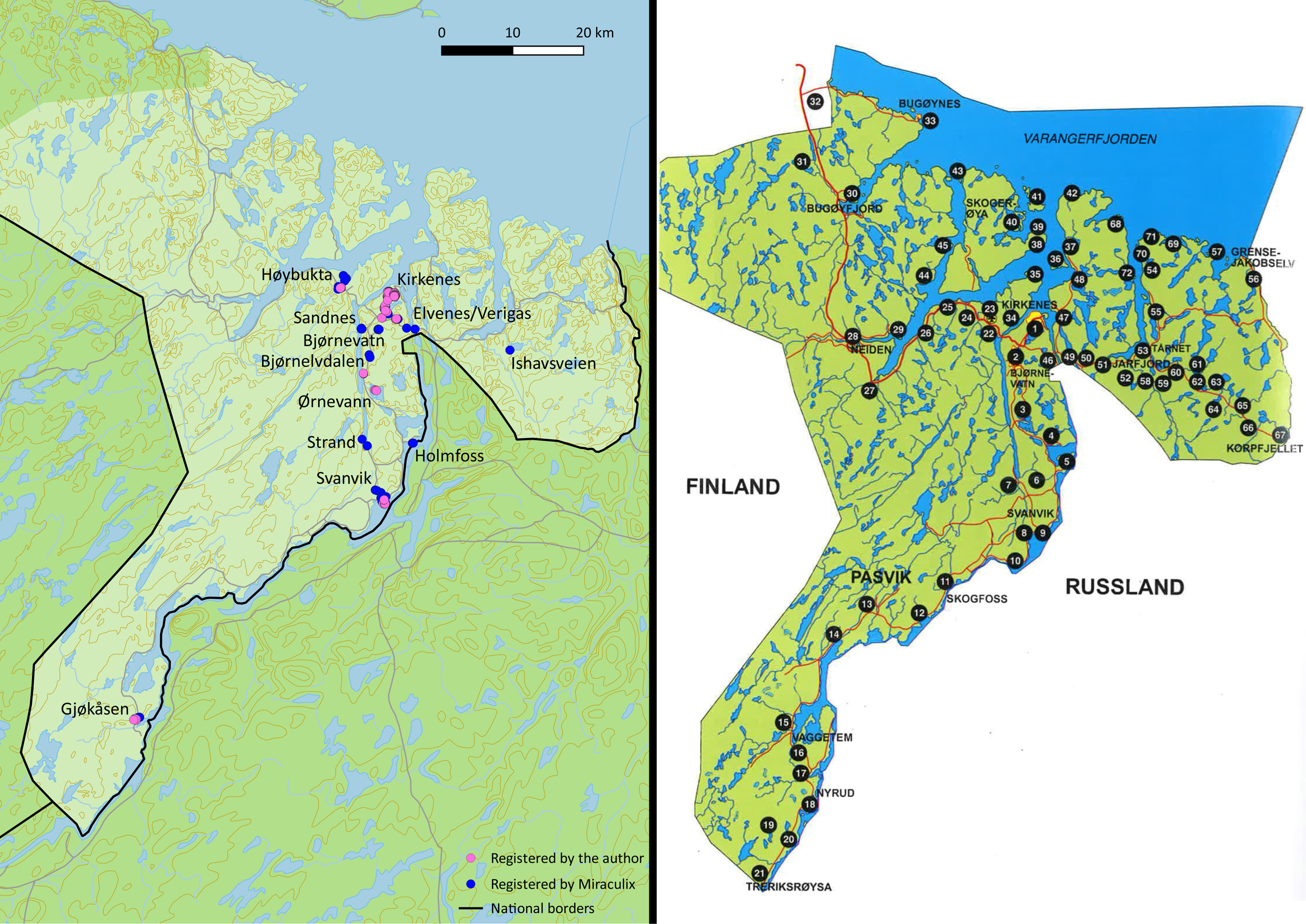
To begin to understand these fungal interactions, during the 2023 field season in Sør-Varanger, Miraculix recorded 671 observations of 163 unique fungal species (Karlsen and Moe Reference Karlsen and Moe2023) while I recorded 435 observations of 51 unique fungal species (Figure 4). The most common species were from the genus Amanita, Lactarius, Russula, Cortinarius, Leccinum and Inocybe. These species are some of the ruderal fungi that are best adapted to move into areas of human disturbance. Amanita muscaria, for example, is well suited to forming mycorrhizal relationships with a broad variety of tree species, making it a very pretty but also notoriously invasive species worldwide (Pouliot Reference Pouliot2023, 174–78). Amanita muscaria, along with species from the Lactarius and Russula genera, are known for being early ectomycorrhizal colonisers, symbiotic with early-coloniser plants such as willows and birches and well adapted to growing in nutrient-poor conditions associated with recent human disturbance (Kałucka and Jagodziński Reference Kałucka and Jagodziński2016, 97–8). Lactarius favour the wet ground conditions of concrete foundations. Leccinum genus species (boletes) also seem to find a home within conflict ruins, as evidenced by our 2023 field season results and my initial encounter with the brown bolete in 2020. However, this is as much a feature of the ruins as it is of the forest that grew around it. Leccinum fungi are symbiotic with deciduous trees such as birches that tend to dominate the near-coastal forests of Sør-Varanger.
Left, registered fungal finds by the author and Miraculix in the fall 2023 field season, with the names of locations surveyed (map by the author). Right, map of all German military installations in Sør-Varanger (map from Kosnes and Siira Reference Kosnes and Siira2020, 138).

Figure 4. Long description
The left map displays registered fungal finds by the author and Miraculix during the fall 2023 field season. It highlights various locations surveyed, including Høybukta, Sandnes, Bjørnevatn, Bjørnelydalen, Ørnevann, Strand, Svanvik, Holmfoss, and Gjøkåsen. The map also marks national borders and uses different colors to indicate registered findings. The right map shows all German military installations in Sør-Varanger, with specific locations such as Bugøynes, Skogfoss, Pasvik, and Korpfjell. Both maps provide detailed geographic information relevant to their respective studies.
Most work seems to be needed around the Inocybe species and other little brown mushrooms that constantly challenged us during our field work. These small, numerous, non-descriptive fungi were everywhere around concrete World War II ruins. While numerous, they appear uninteresting and inconspicuous to human eyes, making them easy to miss, misidentify and ignore. By being lumped into a broad category, we overlook the stories they might be telling us about their symbiosis, decomposition and the journeys that they took to get to the places where we encounter them (Figure 3). However, they were incredibly common on the concrete walls and foundations of World War II ruins – living directly off and helping to breakdown the physical remains of this difficult heritage (MacDonald Reference Macdonald2009) that has lain neglected in the forests around Sør-Varanger. The ubiquity and anonymity of Inocybe fungi call out for more interdisciplinary collaboration with mycologists who specialise in these little brown fungi to help reveal the breadth of interactions found within ruins.
While most of the fungi identified in 2023 were native, a few offer tantalising suggestions that fungi could also have been spread by conflict. Nine fungal species found around German World War II installations have been rarely, if ever, found elsewhere in Sør-Varanger municipality, northern Norway or adjacent areas in Finland.Footnote 3 These include Stropharia pseudocyanea, Cortinarius cruentiphyllus, Xanthoporus syringae, Lepiota castanea, Cystodermella adnotifolia, Agaricus dulcidulus, Lycoperdon utriforme, Cytidia salicina and Agaricus arvensis (Karlsen and Moe Reference Karlsen and Moe2024). Looking at the distribution of these fungi within the national species registries of Norway, Finland and the wider world reveals their more southern origins. This suggests that they could have accidentally been brought with the occupation. Such a hypothesis is hard to prove. Mycogeography – reconstructing the distribution and spread of fungal species – is often difficult given the lack of historic records and poor documentation. There is little pre-war documentation of fungi in Sør-Varanger, and the designation of certain species as polemochores could be rejected if additional specimens are found in areas that have not been impacted by military activity. At this point, this hypothesis rests on the knowledge of Miraculix members, who have many years of local, firsthand experience with fungi in the region.
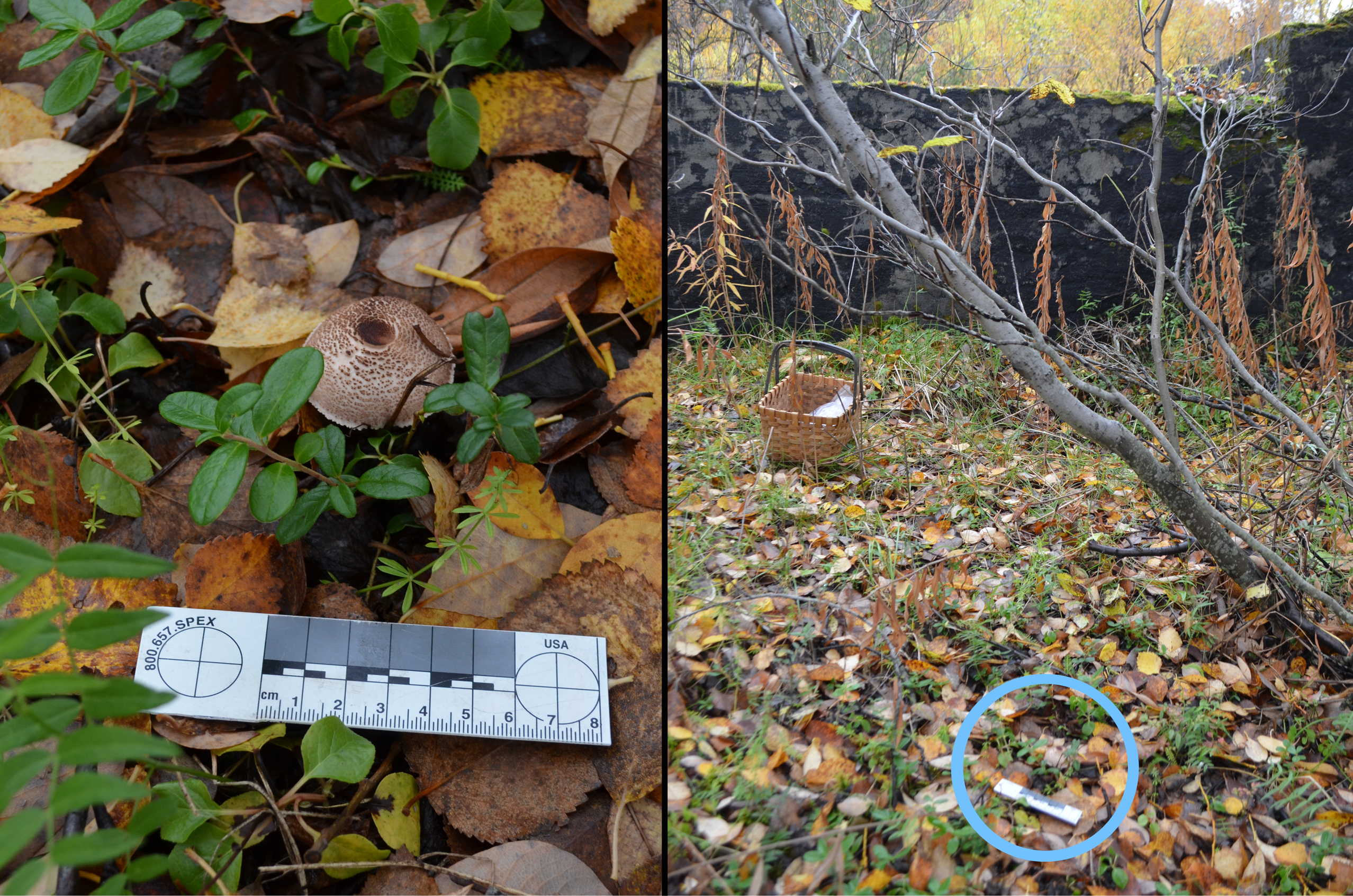
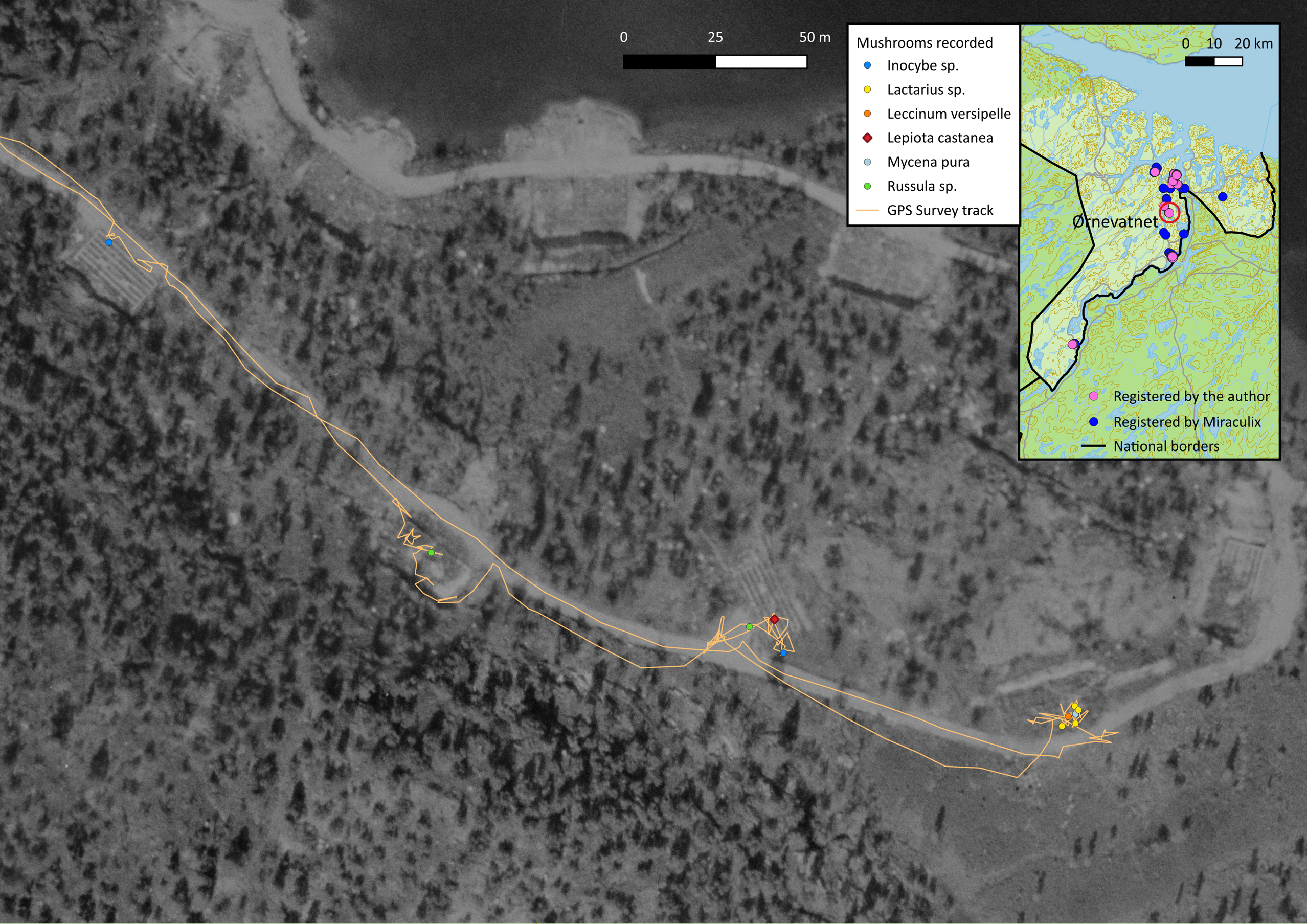
While out working with Miraculix, I found one of these suspected polemochore fungi firsthand in an area where the German forces kept up to 1,000 horses and is today known for containing several species of polemochore plants. It was a Lepiota castanea whose sporing body protruded near a concrete foundation of a World War II ruin (Figure 5). The only other place in Sør-Varanger where it was found was inside a foundation of a military storage building over 10 kilometres away (Figure 6). The next closest place was 450 kilometres away in north-central Finland. While this could be a coincidence and Lepiota castanea could theoretically be found outside of World War II ruins, there clearly was something in the soil of the ruins that made it favourable for the spores to propagate and produce sporing bodies.
Lepiota castanea (left) and its proximity to a World War II ruin (right), 25 September 2023. Photos by the author.

Figure 5. Long description
The left image features a close-up of a mushroom with a brown cap and a textured surface, surrounded by fallen leaves and green plants. A ruler with centimeter markings is placed next to the mushroom for scale. The right image shows a basket placed on the ground near a World War II ruin, with a tree branch extending into the frame and a stone wall in the background. The ground is covered with fallen leaves and small plants.
Ruins of the German provision base at Ørnevatnet, Sør-Varanger. Base imagery is 1946 orthophotography, GPS points are the result of a 2023 mushroom visit – note the Lepiota castanea, a possible polymochore, as a red square dot (map by the author).

Figure 6. Long description
The map displays the ruins of a German provision base at Ørnevatnet in Sør-Varanger, Norway. The base imagery is from 1946 orthophotography, and GPS points mark locations from a 2023 mushroom survey. Notable is the Lepiota castanea, a possible polymochore, indicated by a red square dot. The map highlights the historical significance of the area, which was a supply base for German and Austrian troops during World War 2. The survey points show the presence of various mushroom species in the region, including the Lepiota castanea, which thrives in the concrete ruins.
This is all to say that looking at fungi presents new ways of noticing the emerging and unintended ecologies within post-conflict ruins – ecologies that blend the local and the global, the old and the emergent. If fungi are indeed ‘world makers’ (Hathaway Reference Hathaway2022), looking at fungi in ruins makes such world-making literal: the physical and material disintegration of anthropogenic materials to make new post-human worlds. To put it another way, as fungi move us from anthropogenic to mycogenic thinking (Landecker Reference Landecker, Faier and Hathaway2021, ix), fungi in archaeology and heritage shift us from anthropogenic ruins to mycogenic ruins that, in turn, offer plenty of substrates to nourish fungi and the worlds that they create.
Ultimately, if archaeologists are to take the ‘mushroom turn’ seriously, they need to accept that the remnants of the past can, at times, be considered delicious (at least for some fungi).
Conclusion – the future of mushroom archaeology
In this article I have argued for a mushroom archaeology by highlighting the work already done within archaeology, the ongoing ‘fungal turn’ in social sciences and humanities and my own research on the mycogenic World War II ruins in northeastern Norway carried out alongside a local mycological citizen science group. The principles I used to guide my argument are by no means meant to be prescriptive, as such positions invite polemics. Rather, they are meant to connect, enrich, share, communicate and build upon the work that has already been done.
Going forward, mushroom archaeology offers rich potential to understand fungi both in the past and within the traces of the past in the present. More work remains to be done in identifying fungi in past contexts, such as tracing their consumption, use and presence in prehistoric societies. In certain conditions and certain contexts, sporing bodies or, more often, fungal spores survive. In lieu of direct evidence, material culture, residue analysis and written records can provide information on the ways humans have lived with fungi. Taking fungi seriously offers yet another powerful dataset for archaeologists to understand and interpret the past and the human-environmental interactions within it.
Meanwhile, attention to fungi within the ruins of the present helps address important questions on their ecological afterlives, where things become unintentional ecosystems with their local affordances and global connections. The case study on the mycogenic ruins of World War II has thus far revealed three things. The first speaks to the composition of the soil as created by an accumulation of traces of the past mediated through fungi and their ability to break things down. Rather than being mere containers of archaeological stuff, soils everywhere are living environments created through human use and disuse (Graham et al. Reference Graham, Evans, Macphail, Stegemann and Glanville-Wallis2023; Tironi et al. Reference Tironi, Kearnes, Krzywoszynska, Granjou, Francisco Salazar, Francisco Salazar, Granjou, Kearnes, Krzywoszynska and Tironi2020). Fungi, as species living in soil, reflect that past and help create and transform it as part of their consumption of anthropogenic and non-anthropogenic matter for their sustenance. This is not always innocent, as the toxic heritage of soil contamination can be spread wider through the actions of fungi within their environment.
The second point relates to the mass movement and mass production as practiced within modern industrialised mass conflict. Much like plants and material culture (Breithoff Reference Breithoff2020; González-Ruibal Reference González-Ruibal2012), fungi can be spread by war to form transnational connections and unique post-conflict ecologies. These polemochore fungi weave global connections to distant places and show the transformational power behind the movement of men and materiel during, but not limited to, war. We need to take the movements of fungi within archaeology as seriously as we do the movements of people and things, since fungi persist on completely different chronological timeframes. Instead of lingering conspicuously in the landscape like objects, fungi remain mostly inconspicuous while transforming subterranean environments. They become visible only for a few months each year as sporing bodies before disappearing for another year or more. Paying attention to fungi within post-conflict ecologies showcases the prolonged, kairotic (Farstadvoll Reference Farstadvoll2019, 183) afterlives of conflict and devastation that appear on the surface after each autumn drizzle.
The final point speaks to stories of ‘world making’ (Hathaway Reference Hathaway2022) and ‘life in ruins’ (Tsing Reference Tsing2015) that go beyond the global interconnections of one or a few choice fungal species. Ruins are multispecies, more-than-human assemblages whose members are suited to survive in disturbance. When it comes to conflict heritage explored in the case study here, the power of fungi to decompose matter offers another way to deal with difficult heritage (Macdonald Reference Macdonald2009). Until recently, war ruins in Sør-Varanger had no formal protection or recognition of their value (Farstadvoll et al. Reference Farstadvoll, Figenschau and Olsen2020; Farstadvoll and Nilsen Reference Farstadvoll and Nilsen2020; Sør-Varanger Kommune 2023), representing something complicated and not conducive to easy heritage storytelling (Macdonald Reference Macdonald2009, 290). Considering this lack of action, fungi moved into the ruins and started to break the past down. This decomposition is far from complete, but the ecological potential of ruins has added to the biodiversity of the region – something that has recently been partially accounted for by noting polemochore plants in the recent war monuments plan by the Sør-Varanger municipality (Sør-Varanger Kommune 2023, 46). As such, fungi need to be considered to wholistically understand these post-conflict ecologies and the biological and material processes that take place within them. World-making ultimately happens in place and deals with things, and archaeology, as – at least in part – a ‘discipline of things’ (Olsen et al. Reference Olsen, Shanks, Webmoor and Witmore2012), is uniquely situated to understand these fungal-thing interactions within the traces of the human past. By doing so, we can better engage our publics and peers by highlighting the ecological potential of the past in the present, as seen by the actions of the tiniest species found growing beneath our feet.

 Open access

