


Energy-dense foods are foods generally high in energy but with a low nutrient content( Reference Kant 1 ). The consequences of the consumption of this type of foods on health have been studied through different components. Some studies have focused more on foods high in sugar such as sugar-sweetened beverages( Reference Gibson 2 – Reference Forshee, Anderson and Storey 4 ), candies( Reference O'Neil, Fulgoni and Nicklas 5 , Reference Robyn, Robert and John 6 ), confectionery( Reference Moore, Carter and van Goozen 7 ) and chocolates( Reference Khawaja, Gaziano and Djousse 8 – Reference Listl 10 ). Others have been more interested in foods with a high fat content such as snacks( Reference Roblin 11 ) and fast foods( Reference Rosenheck 12 , Reference Bowman, Gortmaker and Ebbeling 13 ). The per capita daily energy contribution from sugar-sweetened beverages in US children aged 2–5 years increased from 448 kJ (107 kcal) in 1988–94 to 519 kJ (124 kcal) in 1999–2004( Reference Wang, Bleich and Gortmaker 14 ). Snacking has also increased in US children( Reference Piernas and Popkin 15 ). Compared with children of other age groups, children aged 2–6 years consumed the highest amount of daily snacks and showed the largest increase in intake from 1977 to 2006 (approximately an increase of 1·41 events)( Reference Piernas and Popkin 15 ). In Europe, the daily consumption of soft drinks ranges from 10 % (Finland) to 40 % (Bulgaria) in school-aged children. Almost one-third of children eat sweets or chocolates on a daily basis( 16 ). In a national survey carried out in 1997/1998 among British children aged 4–6 years, 80 % of children were found to consume foods such as savoury snacks, potato chips and confectionery at least once a week( Reference Gregory, Lowe and Bates 17 ). In Portugal, among school-aged children, the daily consumption of soft drinks was observed in 21 % of girls and 30 % of boys and sweets were consumed daily by 20 % overall( 16 , 18 ).
Previous studies have highlighted the adverse health effects of the consumption of energy-dense food in both children and adults, particularly on body weight( Reference Rosenheck 12 , Reference Malik, Schulze and Hu 19 – Reference Johnson, Mander and Jones 22 ). The consumption of energy-dense foods also seems to have an adverse effect on the overall diet quality in children. A study( Reference Bowman, Gortmaker and Ebbeling 13 ) conducted among children and adolescents in a national household survey in the USA has found that children who ate fast foods, compared with those who did not, had a significantly higher intake of total energy, total fat, saturated fat, added sugars and sugar-sweetened beverages and a significantly lower intake of dietary fibre, milk, fruit and starchy vegetables. Other studies( Reference Farris, Nicklas and Myers 23 , Reference Forshee and Storey 24 ) have found an association between increasing intake of added sugars and decreasing intake of some nutrients, such as protein, fat, vitamins A and E and folate. Moreover, higher consumption of sugar-sweetened beverages has been shown to be negatively associated with diet quality in children and adolescents( Reference Libuda, Alexy and Buyken 25 , Reference Frary, Johnson and Wang 26 ). Lower diet quality scores have been reported to be associated with increased disease risk and all-cause mortality rates in adulthood( Reference Wirt and Collins 27 ). Most of these studies had used a cross-sectional approach to study the association between the consumption of presumed less-healthy foods and the diet quality of children( Reference Bowman, Gortmaker and Ebbeling 13 , Reference Farris, Nicklas and Myers 23 , Reference Forshee and Storey 24 , Reference Frary, Johnson and Wang 26 , Reference Collison, Zaidi and Subhani 28 , Reference French, Story and Neumark-Sztainer 29 ). The use of a longitudinal analysis among young preschool children has been less explored( Reference Libuda, Alexy and Buyken 25 , Reference Coulthard, Harris and Emmett 30 , Reference Marshall, Eichenberger Gilmore and Broffitt 31 ).
The aim of the present study was to evaluate the prospective association between the consumption of less-healthy foods at 2 years of age and the consumption of foods at 4 years of age. The relationship between the consumption of energy-dense foods at 2 years of age and the consumption of similar food groups and diet quality at 4 years of age was explored.
Methods
Subjects
The present study is based on the prospective population-based birth cohort Generation XXI, which has been described elsewhere( Reference Alves, Lunet and Correia 32 – Reference Akbar, Anal and Ansari 34 ). Generation XXI recruited newborns and their mothers during 2005–6 at five level III maternity units of Porto. Of the invited mothers, 91·4 % agreed to participate. A total of 8647 children and 8495 mothers were enrolled at baseline. At 2 years of age, a subsample of 855 children was re-evaluated (April–August 2007 and January 2008). In 2009/2011, all the children (at 4–5 years of age) and their mothers were invited to attend the first follow-up session of the entire cohort. During this evaluation period, the participants were invited to participate in an interview and a physical examination, with 86 % of the children being re-evaluated at 4–5 years of age.
Data obtained from 708 singleton children and their mothers evaluated at both 2 years of age (25 (sd 3·5) months) and 4 years of age (49 (sd 7·2) months) were analysed.
Data collection
Data, at both 2 and 4–5 years of age, were collected by trained interviewers in face-to-face interviews, through structured questionnaires including information on parents' sociodemographic characteristics and children's health status and behavioural characteristics.
Dietary intake
Information on dietary intake at 2 and 4–5 years of age was collected using a FFQ, which the main carer (usually the mother) answered in a face-to-face interview. At 2 years of age, the FFQ queried about the current frequency of consumption of seventeen food items not usually consumed on a daily basis (e.g. crisps, cakes and burgers). A total of six response options were available: ‘every day’; ‘3–6 times per week’; ‘1–2 times per week’; ‘1–3 times per month’; ‘less than once a month’; ‘never’. At 4–5 years of age, the FFQ queried about the frequency of intake of thirty-five food items. For each food item, the parents or carers were asked as to how many times, on average, their children had consumed these food items during the previous 6 months. The nine frequency responses were as follows: ‘4 or more times per d’; ‘2–3 times per d’; ‘1 time per d’; ‘5–6 times per week’; ‘2–4 times per week’; ‘1 time per week’; ‘1–3 times per month’; ‘less than once a month’; ‘never’. Daily frequencies of consumption were calculated using both the questionnaires (e.g. 3–6 times per week was converted into a mean of 4·5 times per week, meaning 4·5/7 d = 0·6423 times per d).
At 2 and 4 years of age, four similar energy-dense food groups were created, including only foods comparable at both ages: soft drinks (sweetened carbonated drinks and other sweetened drinks, including diet drinks); salty snacks (crisps, pizzas and burgers); cakes (creamy cakes, not creamy cakes and sweet pastries); sweets (chocolates and candies). At both ages, the sample median consumption of energy-dense food groups was used to create dichotomic variables: consumption lower than the median v. consumption higher or equal to the median. At 2 years of age, in addition to the median consumption, tertiles of consumption of energy-dense foods were obtained.
At 2 and 4 years, the carers were asked to complete 2 and 3 d food records, respectively. Pearson's correlation coefficients were calculated for key groups comparing the responses from the FFQ and those from the food records at both ages, to assess the validation of the FFQ. A weak-to-moderate correlation was found for most of the food groups evaluated (data not shown). With the exception of sweets (r 0·531), a weak correlation was found at 2 years of age.
Healthy eating index
Based on dietary recommendations for children proposed by the World Health Organization( 35 ), a healthy eating index was developed at 4 years of age, including only data of foods and not those on nutrient content. This index comprises seven food groups: fruit and vegetables (vegetable soup, raw and cooked vegetables and fruit); dairy foods (semi-skimmed milk, skimmed milk, cheese and yogurts); red meat and meat products (pork, beef, veal, goat, processed meats and savoury pastries); white meat and fish (rabbit, poultry, eggs and fish); soft drinks (sweetened carbonated drinks and other sweetened drinks, including diet drinks); salty snacks (crisps, pizzas and burgers); sweet snacks (cakes, sweet pastries, chocolates and candies). For each food group, quartiles of consumption were calculated, and a score ranging from 1 to 4 was assigned. For ‘healthy foods’ such as fruit, vegetables, white meat and fish, and dairy foods, the lowest quartile of consumption was assigned a score of 1, intermediate quartiles were given the scores 2 and 3, and the highest quartile was given a score of 4. The food groups that are not recommended for a healthy diet such as soft drinks and salty and sweet snacks were scored in the reverse direction with the highest quartile of consumption receiving the lowest score. The possible range score of the final index is 7–28. Overall, a higher score represents a better diet at 4 years of age. The final score was stratified by the median score of 17.
Covariables
Variables collected at the 4–5-year follow-up evaluation and used for the present analysis include the following: maternal age and education (as continuous variables); child's siblings (none, younger or older); child's current carer (family/babysitter or kindergarten/school); child's sex. The weight and height of children were measured by a team of experienced investigators. Weight was measured in light clothing and without shoes using a digital scale and was recorded to the nearest 0·1 kg. Height was measured as the distance from the top of the head to the bottom of the feet without shoes using a fixed stadiometer to the nearest 0·1 cm. The BMI of children was defined as weight in kg divided by height in m2. This continuous variable was then categorised using specific cut-offs for sex and age specified by the WHO( 36 ) and re-categorised into underweight/normal (BMI < 2 sd) and overweight/obese (BMI ≥ 2 sd).
Ethical approval
The project Generation XXI was conducted according to the guidelines laid down in the Declaration of Helsinki, and all procedures involving human subjects were approved by the Ethical Committee of São João Hospital/University of Porto Medical School. The project was approved by the Portuguese Authority of Data Protection. Legal representatives of each participant were informed about the benefits and potential discomfort, and written informed consent was obtained for the collection of information at baseline and follow-up evaluations.
Statistical analyses
Mean values with standard deviations and frequency differences were compared using Student's t test and χ2 test, respectively.
Associations between consumption at 2 years of age and that at 4 years of age were estimated by crude and adjusted incidence rate ratios (IRR) and respective 95 % CI, using Poisson regression. The models were adjusted for maternal age and education in years (as continuous variables), child's siblings (none, younger or older), child's current carer (family/babysitter or kindergarten/school) and child's BMI (underweight/normal or overweight/obese). The total person-time at risk was calculated, and the log of person-months (mean = 24 months) was included as the offset variable. A potential interaction effect of maternal education levels on the association between the consumption of energy-dense foods at 2 years of age and the healthy eating index at 4 years of age was also assessed, by including an interaction term in the final models. The analyses were conducted using the SPSS 20.0 software (SPSS Inc., 2011).
Results
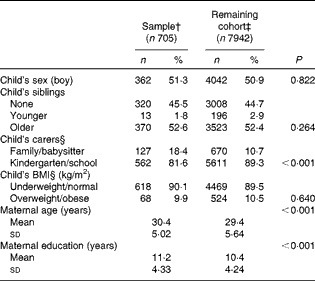
In Table 1, the characteristics of eligible participants are compared with those of the remaining cohort evaluated at baseline. In the present study, mothers were slightly more educated (11·2 (sd 4·33) v. 10·4 (sd 4·24) years, P< 0·001) and older (30·4 (sd 5·02) v. 29·4 (sd 5·64) years, P< 0·001) than the remaining mothers evaluated at baseline. In the study sample, more children were being taken care of by family or babysitter (18·4 v. 10·7 %, P< 0·001). No significant differences were found concerning child's sex and BMI and child's siblings.
Comparison between characteristics of eligible participants and those of the remaining cohort evaluated at baseline* (Number of participants and percentages; mean values and standard deviations)
* For each variable, the total may not add to 705/7942 due to missing data.
† Children evaluated at 2 and 4 years of age.
‡ Cohort evaluated at baseline.
§ Characteristics evaluated in the follow-up evaluation at 4–5 years of age (n 6753).
Fig. 1 shows the proportion of children consuming each energy-dense food group at least once a week at 2 and 4 years of age. Most children were consuming sweets (92·0 %) and soft drinks (63·2 %) at least once a week at 4 years of age. Cakes and salty snacks were least consumed at both ages. Among those who had already been consuming these foods at least once a week at 2 years of age, the percentage of consumers at 4 years of age was 97·4, 87·8, 63·8 and 72 % for sweets, soft drinks, cakes and salty snacks, respectively.
Proportion of children consuming energy-dense foods at least once a week at 2 and 4 years of age.  , 2 years (all sample);
  , 4 years (all sample);
  , 4 years (among those who consumed ≥ 1/week at 2 years).

Table 2 summarises the crude and adjusted associations between the consumption of energy-dense foods at 2 years of age and that at 4 years of age. Overall, higher consumption at 2 years of age was positively associated with higher consumption of the same foods at 4 years of age. The strongest effect was found for soft drinks (third v. first tertile: IRR = 3·33, 95 % CI 2·36, 4·70).
Associations between the consumption of energy-dense foods at 2 years of age and the consumption of similar foods at 4 years of age (Incidence rate ratios (IRR) and 95 % confidence intervals)
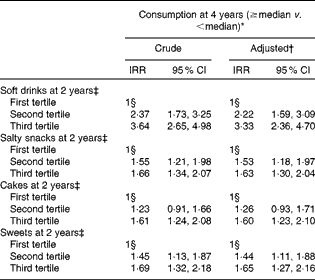
* Median of consumption at 4 years of age: soft drinks – 1·5 times per week; salty snacks – 0·9 times per week; cakes – 1 time per week; sweets – 6 times per week.
† Adjusted for maternal age and education, child's siblings, child's carer and child's BMI.
‡ Tertiles of consumption at 2 years of age: soft drinks – first tertile (0 times per week), second tertile (>0–1·5 times per week), and third tertile (>1·5 times per week); salty snacks – first tertile ( ≤ 0·1 times per week), second tertile (>0·1–0·5 times per week), and third tertile (>0·5 times per week); cakes – first tertile ( ≤ 0·1 times per week), second tertile (>0·1–0·6 times per week), and third tertile (>0·6 times per week); sweets – first tertile ( ≤ 0·5 times per week), second tertile (>0·5–2·0 times per week), and third tertile (>2·0 per week).
§ Reference class.
Table 3 presents the associations between the consumption of energy-dense foods at 2 years of age and the consumption of the remaining food groups included in the healthy eating index at 4 years of age. The final index of the study sample ranged from 7 to 25. After adjustment, a higher intake of soft drinks (IRR = 0·74, 95 % CI 0·58, 0·95), salty snacks (IRR = 0·80, 95 % CI 0·65, 1·00) and sweets (IRR = 0·73, 95 % CI 0·58, 0·91) at 2 years of age was inversely associated with the intake of fruit and vegetables at 4 years of age. No significant associations with dairy foods, red meat and meat products, and white meat and fish were found. An increasing frequency of consumption of any energy-dense food was significantly associated with a lower intake of fruit and vegetables (weekly v. monthly: IRR = 0·77, 95 % CI 0·59, 0·99; daily v. monthly: IRR = 0·61, 95 % CI 0·44, 0·83). A significant crude association was found between the consumption of energy-dense foods and the intake of red meat and meat products (IRR = 1·50, 95 % CI 1·09, 2·06); however, after adjustment, the association did not remain statistically significant.
Associations between the consumption of energy-dense foods at 2 years of age and the consumption of different food groups at 4 years of age (Incidence rate ratios (IRR) and 95 % confidence intervals)

* Median of consumption: fruit and vegetables – 5 times per d; dairy foods – 3·5 times per d; fatty meat and meat products – 11·5 times per week; lean meat and fish – 1·3 times per d.
† Adjusted for maternal age and education, child's siblings, child's carer and child's BMI.
‡ Median of consumption: soft drinks 0·5 times per week; salty snacks 0·2 times per week; cakes 0·5 times per week; sweets 1·0 time per week.
§ Reference class.
∥ Includes soft drinks, salty snacks, cakes and sweets. Sample size by categories of consumption: < 1 time per week (n 147); weekly (n 339); daily (n 214).
In the multivariate analysis, higher consumption of each of the energy-dense foods, except cakes, at 2 years of age was significantly associated with a lower score in the healthy eating index at 4 years of age. Weekly and daily consumption of any energy-dense food was associated with a worse diet quality, compared with less frequent consumption (IRR = 0·75, 95 % CI 0·58, 0·96; IRR = 0·56, 95 % CI 0·41, 0·77, respectively) (Table 4). The potential modifying effect of maternal education was tested using an interaction term in the final model, and no significant interaction effect was observed (P>0·05).
Associations between the consumption of energy-dense foods at 2 years of age and the healthy eating index at 4 years of age (Incidence rate ratios (IRR) and 95 % confidence intervals)

* Median = 17, ranging from 7 to 25.
† Adjusted for maternal age and education, child's siblings, child's carer and child's BMI.
‡ Median of consumption: soft drinks 0·5 times per week; salty snacks 0·2 times per week; cakes 0·5 times per week; sweets 1·0 time per week.
§ Reference class.
∥ Includes soft drinks, salty snacks, cakes and sweets. Sample size by categories of consumption: < 1 time per week (n 147); weekly (n 339); daily (n 214).
Discussion
The present study shows that the consumption of energy-dense foods at 2 years of age is independently associated with higher consumption of these foods later and is related to a poorer diet quality at 4 years of age.
Children consuming soft drinks more often at 2 years of age were approximately three times more likely to consume soft drinks at 4 years of age, and this was the strongest association found. This finding raises concern, as sugar-sweetened beverages have been reported to be significantly associated with childhood obesity due to both a high glycaemic index and a weak compensatory response to beverages( Reference Ludwig, Peterson and Gortmaker 37 ). On the other hand, salty snacks, cakes and sweets are high-energy-dense foods with a high glycaemic index and a low fibre content( Reference Ebbeling, Pawlak and Ludwig 38 ). These dietary factors may also increase energy intake, hence promoting a positive energy balance and increasing obesity risk. Decreasing energy density of foods along with other strategies may lead to sustained decreases in energy intake( Reference Rolls, Roe and Meengs 39 ).
The consumption of energy-dense foods might have a diluting effect on nutrient intake and total diet quality if they displace nutrient-dense foods such as milk and fruit( Reference Vartanian, Schwartz and Brownell 40 , Reference Paeratakul, Ferdinand and Champagne 41 ). In the present study, increased consumption of soft drinks, salty snacks (including fast foods) and sweets at an early stage was found to be associated with lower consumption of fruit and vegetables later in life. Fruit and vegetables have a low glycaemic index( Reference Foster-Powell, Holt and Brand-Miller 42 ) and a high fibre content, which per se may protect against excessive weight gain( Reference Ludwig, Pereira and Kroenke 43 ). Consistent scientific evidence from epidemiological studies, such as case–control and prospective studies, support an inverse relationship between dietary consumption of fruit and vegetables and CVD( Reference Bazzano, Serdula and Liu 44 – Reference Dauchet, Amouyel and Hercberg 46 ). Moreover, the WHO has highlighted the potential for the consumption of fruit and vegetables to reduce the risk of type 2 diabetes mellitus and to help to achieve or maintain a healthy body weight( Reference Key 47 ). Previous studies( Reference Bowman, Gortmaker and Ebbeling 13 , Reference Marshall, Eichenberger Gilmore and Broffitt 31 , Reference Vartanian, Schwartz and Brownell 40 ), mostly conducted among school-aged children and adolescents, have found an inverse association between the consumption of energy-dense foods, mainly soft drinks, and the consumption of dairy foods. This relationship could be partially explained by the replacement of milk and milk products by soft drinks. However, in the present study, the consumption of energy-dense foods at 2 years of age was found to be not significantly associated with the consumption of dairy foods at 4 years of age. The reason for this may be that dairy foods are mainly consumed at breakfast (data not shown) and the prevalence of skipping breakfast is low among these children (4 %). On the other hand, this replacement of dairy foods by soft drinks may be more likely later in life and not at such young ages( Reference Akbar, Anal and Ansari 34 ).
The main finding of the present study was the association of high consumption of energy-dense foods at young ages with lower scores in healthy eating index 2 years later, particularly through lower consumption of fruit and vegetables. Decreased diet quality scores were found to be consistently associated with higher rates of all-cause mortality and rates and mortality of select diseases (e.g. CVD and cancer) in adulthood( Reference Wirt and Collins 27 ). A pattern of high consumption of energy-dense food could also contribute, per se, to worst future health outcomes, namely obesity, as has been suggested in previous studies( Reference Johnson, Mander and Jones 21 , Reference Johnson, Mander and Jones 22 ). Claims that energy-dense nutrient-poor foods can be part of a healthful diet( Reference Nitzke and Freeland-Graves 48 ) should be discouraged.
Moreover, special attention should be given to the role of a carer in the establishment of a child's dietary patterns. At the age range focused upon in the present study, children do not shop for foods themselves; therefore; their eating patterns are reflective of the food shopping and nutrition knowledge of the carers. Thus, there is a great need for intervention from the carers, as they have the main responsibility for the eating habits of children.
A major strength of the present study is the use of a prospective approach to evaluate the association between poor food habits early in life and dietary habits a few years later. It used a sample of children from a population-based cohort, with characteristics similar to those of the remaining cohort. Only a few not relevant differences were found, such as maternal age and education, and these were controlled for in the adjusted analysis.
The accurate assessment of dietary intake in children is a challenge in epidemiological studies, and the use of parents as proxy reporters of their children's food consumption patterns is consensual. Dietary information reported by parents or carers at both ages could be biased, since they might not be always aware of all the foods eaten by the children when they are being taken care of by others. However, at this early stage of life, this is less likely to occur. A social desirability bias regarding food intake could be present, as dietary intake data were collected through face-to-face interviews. Data on consumption recorded could reflect attitudes about what should be consumed as opposed to what was really consumed. If lower intakes of ‘unhealthy’ foods and/or higher intakes of ‘healthy’ foods have been reported, our associations could be underestimated.
The weak correlation found between 2 d food record and FFQ at 2 years of age could be the result of a low intake of these types of foods at this age, and a 2 d food record might not be a good method to validate extremely low intakes. Compared with food records, the FFQ seems to have overestimated the consumption at both ages, and as we did not expect to have a differential error, this would not compromise the conclusions of the present study regarding the associations found.
The application of a healthy eating index to summarise the overall diet quality represents a complementary approach to the study of single foods and accounts for cumulative and interactive effects of nutrients and foods and thus may provide a more comprehensive approach.
In conclusion, the consumption of energy-dense foods at young ages is associated with the diet quality of children, particularly in relation to the adequate consumption of fruit and vegetables.
As dietary habits of childhood might persist into adulthood, the present results suggest that the consumption of energy-dense nutrient-poor foods should be limited in childhood in order to prevent lifelong adverse effects on the diet quality of children.
Acknowledgements
The authors thank all the members of the research team and the staff of Generation XXI for their essential and generous assistance.
Generation XXI has been funded by the Operational Health Program – XXI Health, Community support framework III (co-funded by Feder), Administração Regional de Saúde do Norte, Fundação Calouste Gulbenkian and Fundação para a Ciência e Tecnologia (FCT – PTDC/SAU-ESA/108577/2008). These funders had no role in the design and analysis of the study or in the writing of this article.
The authors' contributions are as follows: S. V. was responsible for the analysis and interpretation of the data and wrote the first draft of the paper; A. O. and C. L. were also responsible for the analysis and interpretation of the data. All authors contributed to the concept and design of the study and paper review.
None of the authors has any conflicts of interest to declare.



