

Sixteenth-century China saw a striking increase in cases of cross-border captivity in terms of both volume and frequency. We know this because officials at the borders of the Ming Empire routinely recorded the number of captives seized as evidence of “barbaric” brutality. Beyond noting proof of foreign infringement, however, record keepers showed little interest in the fate of the captives themselves, as if the act of capture served no purpose other than to intimidate and injure. Their indifference toward what became of captives, this article will demonstrate, has obscured the crucial role of labor markets in Ming China’s colonization of the southwest highlands.
My investigation is deeply informed by the Zomia thesis of James C. Scott, who placed cross-border captivity at the center of processes of state formation and de-formation, particularly within the context of the highlands of mainland Southeast Asia.Footnote 1 Scott’s emphasis on population flow—whether by migration, forced capture, or enslavement—allowed him to turn the age-old civilization narrative on its head. Central to his analysis are two connected trajectories: first, the movement of populations from the highlands to lowland valleys through forms of captivity and slavery in aid of state formation; and second, the flight from the lowlands into the wild and mountainous Zomia to escape exploitation, with those “fugitives” opting for statelessness in what amounted to a collective political choice. For Scott, the choice to remain “illegible” shaped every aspect of highland life, from “the agriculture of escape” to its fractured social structure and even the prevalence of illiteracy. Foregrounding highlanders’ deliberate insistence on state evasion effectively counters the traditional Chinese rhetoric of Sinicization that assumed the exact opposite: that Chinese civilization held a universal appeal for ethnic groups beyond its immediate zone of control.Footnote 2 Instead, Scott exposes the superficiality of such civilizing discourses and argues that the so-called barbarians left the pale of civilization of their own volition, choosing to evade the gaze of empire. Rather than passively awaiting civilization, the “voiceless” barbarians, it turns out, were masters of the “art of not being governed.”Footnote 3
Zomia in the Southeast Asian Massif
Source: Jean Michaud, “Editorial – Zomia and Beyond,” Journal of Global History 5, no. 2 (2010): 187–214, here p. 215. Michaud’s article contains a discussion of different approaches to the extent and definition of Zomia.

Figure 1 Long description
The map illustrates the Southeast Asian Massif, focusing on the region known as Zomia. It includes countries such as China, India, Burma, Thailand, Laos, Vietnam, and Cambodia, with specific provinces and states labeled within these countries. The map uses color shading to differentiate between the Himalayan Massif, SEA Massif, and 500 meter elevation areas. Key rivers such as the Brahmaputra, Irrawaddy, Salween, Mekong, and Hong He are marked. International and provincial borders are outlined, and a legend is provided to explain the color coding and symbols used.
This argument, ironically, is at once empowering and compromising. Scott’s characterization of highlanders as inherently inclined toward anarchy suggests that their only viable option was geographical dispersion, which raises a fundamental question: Why could mountain populations not pursue state-building?Footnote 4 If they had opted for this route, how might a predatory form of resistance have manifested within Zomia’s unique ecological context, marked by its rugged terrain and scattered settlements?
The study of captivity in the sixteenth-century Ming highlands offers a compelling prism through which to explore these questions. Occupying the upland regions that today form southern Sichuan and northern Guizhou, these mountain “anarchists” in fact embarked on a process of aggressive state-building that dominated frontier politics. Far from the illiterate and state-evading populations described by Scott, hill people actively imported imperial statecraft and agricultural technology to fuel their expansionist impulses. With that came the assertive acquisition of Ming subjects, whether through willing migration or forced capture. In the sparsely populated highlands, the battle against Ming imperial expansion effectively boiled down to competition over labor.
These findings, as I will show, elevate the history of captivity in the Ming highlands beyond an empirical quibble to Scott’s thesis. In particular, they introduce a crucial analytical dimension absent in current scholarship: labor. For even among hill people whose state-building was less pronounced than that of lowland regions under close Ming control, captivity, enslavement, and migration mattered. After all, people were not just providers of manual labor, but also repositories of knowledge, skills, and social connections—all critical assets in regime-building and competition. And just like a manual workforce, these less-considered forms of labor—intellectual, military, skilled, relational, and reproductive—could also be acquired through capture. An expanded lens of labor thus allows for a more capacious notion of hill people’s agency than the either-or choice between escape and surrender. As this article will demonstrate, hill peoples not only constructed new regimes using acquired labor but also leveraged their military skills by serving as mercenaries for rival powers.
The framework of the labor economy, I argue, more effectively captures the multilateral dynamic of Ming Zomia than an analysis grounded in nebulous sentiments such as an affinity with Chinese culture or aversion to it.Footnote 5 Rather than reflecting a binary opposition between Sinicization and state evasion, the choices made by Ming highlanders were informed by an active economy of labor acquisition that they had come to adeptly navigate to their advantage. Central to this economy were two interconnected forms of labor acquisition—capture and recruited talent. The distinction between these categories was fluid, shaped by the prevailing currents of demand and supply. In times of need, captives could leverage their knowledge and skills for upward mobility. The intense competition between the Ming state and the Zomia regimes fostered a vibrant marketplace for labor and talent, leading to instances where many individuals recorded as “captives” in Ming documents were, in fact, willing collaborators seeking opportunities for advancement. Just as it is reductive to cast highland communities as inherently anarchistic, it is equally problematic to impose rigid distinctions between coercion and consent. By foregrounding cross-border labor exchange, we can navigate beyond the elusive realm of historical actors’ intentionality and instead arrive at a more nuanced understanding of the political, economic, and social logics underlying Ming colonial expansion into Zomia.
Two Case Studies: A New Polity and an Old Lordship
Two unique factors deeply conditioned how this labor economy operated in Ming Zomia. First, while the Southeast Asian highlands faced a persistent labor shortage, the Ming Empire had the opposite problem: a demographic surplus.Footnote 6 Overpopulation in the Ming heartland fueled a steady influx of settlers into frontier regions. This demographic pressure meant that the Ming, essentially a valley regime, did not need to rely on capture and enslavement to sustain agricultural production. Instead, hunger for arable land drove settlers into new areas, displacing indigenous populations into more remote upland regions. To counter this encroachment, highland communities increasingly turned to practices of capture and enslavement—not only to augment their labor force but also to acquire the skills and knowledge necessary to compete with lowland regimes. Second, Chinese empires had historically wielded indirect rule in the southwest highlands by enfeoffing indigenous lords as tusi 土司 (tributary chieftains). This arrangement provided a degree of semi-autonomy that fostered a diverse array of political traditions. I argue that these traditions offered concrete alternatives to state evasion when indigenous communities came under pressure from Ming expansion.Footnote 7
Together, these factors—demographic asymmetry and political decentralization—rendered the labor economy within Ming Zomia an intricate interplay between demographic pressures and political strategies. In what follows, I will present two case studies, each highlighting one of the factors that distinguished Ming Zomia. At first glance, the two cases could not be more different: one a newly emerged hill regime, the other with a long pedigree of local rulership. Duzhang 都掌 was a stateless hill polity that embarked on state-building in the sixteenth century, largely in reaction to the colonizing ambition of its Ming neighbor. Bozhou 播州, meanwhile, was established in 876, five centuries before the start of the Ming Empire in 1368, and developed such a sophisticated culture that the Ming eventually had to “barbarize” it after defeating it in a war.
The story of Duzhang opens like a direct quote from Scott’s Zomia narrative: it was initially comprised of numerous non-hierarchical tribal groups (estimated in the hundreds) that evaded Ming state control in inaccessible pockets of the mountain landscape. However, in response to waves of Chinese settlers in the fifteenth and sixteenth centuries, Duzhang diverged from the Zomia playbook and undertook a process of active regime-building and territorial expansion, for which aggressive raiding of Ming settlements proved essential. Duzhang took animals and people to obtain not only agricultural labor but also capital from the sale of captives. I will trace Duzhang’s development and argue that capture and migration—of people from both Han and non-Han groups—played a key role in its new-found imperial ambition.
Location of Duzhang and Bozhou
Source: detail from figure 1 above.

Figure 2 Long description
The map shows a detailed view of southwestern China, highlighting the locations of Duzhang and Bozhou. Duzhang is marked in Sichuan province, while Bozhou is located in Guizhou province. The map includes surrounding regions such as Yunnan, Guangxi, and parts of Burma, Laos, and Vietnam. The color gradient indicates varying geographic or climatic zones, with Duzhang and Bozhou specifically circled for emphasis.
Cases like Duzhang, however, represent only part of the state-building trend in the sixteenth-century Ming highlands. The Bozhou tusi was rich not only in resources such as timber but also in political traditions established long before the founding of the Ming dynasty. From the perspective of Bozhou’s rulers, the Ming state was a latecomer with a patchy presence in the region, mostly along the newly developed postal routes connecting courier stations, military garrisons, and colonies to the empire’s heartland. More importantly, Chinese emperors’ hold on Bozhou’s domains across the various dynasties had been at best superficial, if not merely nominal. Locals were used to being ruled by their tusi. Here, the imperial expansion that required justification was that of the Ming.
In fact, beneath the thin veneer of Ming rule, Bozhou’s civilizational legitimacy was recognized by many Han-Chinese defectors, including some members of the educated elites who moved across the border for a better political career than was possible in the heartland, where civil service exams were becoming increasingly competitive.Footnote 8 The Ming, as a result, found it difficult to prevent the hemorrhaging of talent into Bozhou territory or to convincingly dismiss it as an act of “self-barbarization.” Faced with this dilemma, the imperial court in Beijing found litigation a potent tool to curtail the power and prerogatives of the tusi. In other words, by encouraging Bozhou subjects to lodge legal grievances against their tusi overlords, the Ming effectively fomented internal discord and dissent, thereby undermining Bozhou’s stability. This strategy significantly weakened Bozhou prior to the outbreak of full-scale warfare in 1599. The war put an end not only to Bozhou’s seven centuries of virtually autonomous rule, but also to its prestige in the Ming cultural universe. Once revered as descendants of high-ranking Han-Chinese officials, after the war Bozhou’s people were ethnicized into “indigenous barbarians.” This dramatic reversal exposes the designation of a group as fan 番 (barbarian) as not only culturally biased but also politically engineered.
While hill people in Ming Zomia exhibited no aversion to state-building, non-stateness did remain an option. This was most notably the case of the Miao, whose presence traverses both of my main case studies. Known for their military prowess, the Miao became de facto mercenaries, working for the highest bidder in the area. Their non-stateness liberated them from any political allegiance, and this “free-agent” status earned them great benefits in a competitive environment. Hired by Duzhang to fight the Ming troops, these Miao soldiers forged such a reputation that a few decades later, in the war between the Ming and Bozhou, both sides competed for their services. The Ming, flush with silver from the New World, lured them with payment in cash. The Bozhou tusi, on the other hand, promised them land and women confiscated from his own subjects. Instead of straightforward state evasion, then, the Miao worked closely with various polities and took advantage of their rivalry. Their political savvy offers an alternative explanation for their geographical dispersion: it was not the outcome of efforts to escape the gaze of the empire, but rather shaped by their mercenary careers.
Taken together, my two case studies invite a richer appreciation of the diverse motivations and actions of historical actors, both indigenes and new settlers. During the sixteenth century, when a greater number of Chinese settlers arrived with the support of a powerful regime, the options available to Zomia peoples were not just assimilation, rebellion, or flight. Regime-building was one real and attainable alternative, and since these polities were competing with the Ming Empire for labor and talent, a new space of political options opened up for both indigenes and Ming subjects, including educated literati with expertise in statecraft. They could choose to flee from one side of the border to the other, or to stay and collaborate after being captured by force. Or, if they had a talent for warfare like the Miao, they could work as mercenaries and bargain with rival regimes.
When viewed through the lens of captivity, the story that emerges is still one of how people moved around and made choices in a hostile terrain. However, the analytical anchor shifts from anarchy and state evasion to the labor market and human trafficking of all kinds: agricultural (farmers), skilled (artisans), military (the Miao), reproductive (women), and statecraft (literati). This new focus sheds light on niches in history heretofore overshadowed by sweeping narratives of empire and civilization, allowing people who left little trace in historical records a far more capacious degree of agency than a binary choice between submission and escape. The benefits of this broadened view of historical agency are not only methodological. As I will show in my conclusion, it also allows historians to escape a teleological view of Ming colonial expansion into Zomia.
Duzhang: Captivity and Regime-Building
Duzhang’s expansion in the sixteenth century relied on captivity. It repeatedly raided the six neighboring counties to capture hundreds of thousands of prisoners, Han as well as Miao, and harness their labor. This labor was not only manual and forced, however. Duzhang also allowed skilled captives to integrate the community and even rise up its ranks, radically altering the regime’s power structure. As a result, it became highly composite in its ethnic makeup.
In Forbidden Darkness
The first reference to Duzhang occurs in an eleventh-century historical text, which names it as a county that faced attacks from powerful indigenous groups in the year 677.Footnote 9 By the late eleventh century, the Chinese government began recognizing Duzhang as an alliance comprising “nineteen surnames,” although discrepancies in the records suggest that this configuration could fluctuate. The groups associated with the name Duzhang gradually asserted dominance in the region, culminating in their receipt of official titles as native chieftains from the Mongol Yuan dynasty in 1270.Footnote 10 Although we know little about its ethnic composition, it is evident that Duzhang consistently maintained autonomy vis-à-vis whatever regime held power in China proper—that is, until the advent of the Ming dynasty.
Following the Mongol withdrawal, Duzhang and numerous non-Han groups in the southwest pledged their allegiance to the newly established Ming dynasty. However, unlike many of its neighbors, who received tusi titles and enjoyed relative autonomy, Duzhang was subjected to direct Ming administration, likely because its decentralized leadership structure prevented the appointment of a proxy chieftain. This departure from the norm, typically reserved for areas predominantly inhabited by the Han majority, brought significant challenges to the people of Duzhang, who were now liable for taxation. The incorporation into the empire proved so disruptive that it set the stage for a conflict spanning over two centuries.
In this reorganization, Duzhang’s territory was divided into ten xiang 鄉 (districts), each with a registered population subject to taxation. These xiang, of which six were located in the mountains and four in the river valley, all came under the jurisdiction of Rong County 戎縣 in Sichuan.Footnote 11 The explicit differences in the names given to mountain districts and those in the valley suggest that Ming officials were fully aware of how terrain affected their efforts to govern.Footnote 12 The communities on the plain were deemed easier to control, for “the flat terrain allows no space to escape and hide” (pingyan butao wusuo ni 平衍逋逃無所匿). In contrast, those living in the mountains took up residence in deep pockets of isolated territory, terrain so forbidding that it “eludes all attempts at full understanding” (jiao ao bu ke qong jie 窔奧不可窮詰).Footnote 13 This prohibitive obscurity seems to correspond to what Scott identified as the classic feature of Zomia anarchy: non-state peoples working to stay out of the gaze of powerful valley states, in this case the Ming, who in turn perceived such invisibility as a threat.
Ming officials observed the non-hierarchical, stateless political structure of Duzhang as a vast network consisting of hundreds of tribes, another characteristic that Scott associated with Zomia. These groups collectively maintained a defensive military fortress in Xingwen 興文 (Sichuan province), so well placed in the high mountains that it was widely believed to be impenetrable. The fortress was originally known as Jiuxing 九姓 (Nine Surnames), likely in reference to the nearby Jiuxing zhangguan si 九姓長官司 (Office of the Indigenous Chief of the Nine Surnames). Yet the acephalous nature of this formation and its ability to splinter off and build collateral polities so impressed Ming observers that they began to call the fortress Jiu si 九絲 (Nine Silks), symbolizing the intricate and interwoven nature of the tribes, akin to the complexity of silk threads.Footnote 14
The Ming’s incorporation of Duzhang did not proceed smoothly. As early as 1394, uprisings of varying magnitudes were erupting regularly, with major conflicts arising almost every decade thereafter. Initially, these local disturbances were ambiguously labeled as banditry in the Ming sources. However, in 1449 an official native to the region was dispatched to investigate. His proficiency in local dialects enabled him to identify the root cause behind the recurrent rebellions: the imposition of taxation following Duzhang’s formal incorporation into the Ming state.Footnote 15
The resentment over taxation appears to have escalated over time. In 1439, the Ming regional military commissioner Wang Gao 王杲 brokered a truce between local Han elders and non-Han headmen (Han Yi xianglao 漢夷鄉老) in Rong County. In accordance with local customs, stones were buried to seal the oath. However, in 1450 yet another conflict broke out between Han and non-Han residents, with the latter claiming that “Han people sent out officials each year to villages, collecting rice as taxes and reducing us to misery. We are compelled to seek revenge.” They strung the acting official up on a tree, before killing him and burning down the county offices.Footnote 16
The hostilities grew so intense that in 1464 Zhou Hongmo 周洪謨 (1420–1492), a Gong native and at that moment reader-in-waiting at the Hanlin Academy (Hanlin shidu 翰林侍讀), proposed to revert civil governance to indigenous rule:
Barbarians already have their own chieftains. I propose to select barbarians of good reputation and grant them the title of zhangguan si 長官司 (chief officer), who would be subject to the prefect of Xuzhou 敘州 while ruling over the tribal peoples. Han residents would remain under the jurisdiction of civil service officials.Footnote 17
The court in Beijing approved Zhou’s proposal and sent chief investigating censor Wang Hao 汪浩 (1417–1473) and commissioner-in-chief Rui Cheng 芮成 to execute these changes. The local population was reported to be thrilled at the prospect of self-rule and all appeared to proceed according to plan.Footnote 18
However, just as the seals for new tusi appointments were being minted in Beijing, Wang Hao made a radical move. He used a ruse to lure the indigenous headmen out of the hills and massacred all 270 of them. The ambush and slaughter shook Duzhang and provoked immediate retaliation. The surviving men feigned surrender to Ming officers and then, when their guard was down, killed over five thousand Ming soldiers and continued to raid and slaughter troops along the river, proclaiming their desire to eat the flesh of Wang Hao. In his panic, Wang sent fake declarations of victory to the court while intimidating local magistrates to prevent them from reporting the truth. Needless to say, the chaos halted the proposed conversion back to indirect rule. In 1467, the Ming court sent in an army that forced the Duzhang into the mountains and starved them into submission.Footnote 19
Wang Hao’s staunch opposition to the idea of separate administrations for the Han and Duzhang populations stemmed from a combination of personal ambition and external influence. Following the military suppression, he faced accusations of deliberately instigating conflict to secure personal accolades.Footnote 20 Although he was cleared of wrongdoing in the initial investigation, subsequent scrutiny revealed evidence of corruption and abuse of power. As a result, Wang Hao was stripped of his official titles and banished from the region.Footnote 21 His downfall was so striking that the Imperial Instructions issued by Emperor Xianzong highlighted it as an example of greedy and unscrupulous officials.Footnote 22
While the court in Beijing viewed Wang Hao’s greed as a classic manifestation of human weakness, local gazetteers offered a very different perspective. They suggested that his avarice was not merely a product of personal frailty but rather guided by a specific agenda. Swayed by the persuasive rhetoric of local Han settlers, who regarded indirect rule as detrimental to their interests, Wang Hao was said to have succumbed to their “sweet words” and deliberately sabotaged the restoration of indigenous governance.Footnote 23
What, then, was at stake for Han settlers? Although Duzhang initially practiced slash-and-burn agriculture, or swidden, the population’s primary source of income began to shift at the turn of the fifteenth century. By 1435, the majority had moved to settled farming, although this change in agricultural production did not affect the political structure, which remained divided among hundreds of concomitant leaders.Footnote 24 The vast swaths of arable land farmed by the people of Duzhang soon became a target for Han settlers, as well as for other ethnic groups migrating from elsewhere. For example, in 1480 a war broke out between Duzhang and the White Luoluos (Bai Luoluo 白玀玀), politically acephalous “barbarians” fleeing from Guangxi by the thousand. This exodus of non-Han groups may well have been triggered by the battle of Great Vine Gorge in 1465, another example of the Ming’s brutal suppression and dispersion of indigenous populations. The influx of new non-Han groups into Duzhang escalated the competition over land and resources even further.Footnote 25
The motivations for the attempted land grab involving Wang Hao were revealed most clearly when, in 1467, immediately following the Ming’s military suppression of Duzhang, the commander-in-chief proposed to carve up the conquered land and place it under state control.Footnote 26 In other words, had it not been for Wang Hao’s obstruction, once the court had implemented Zhou Hongmo’s proposal for separate administrations, Han settlers would have lost access to the land under indigenous rule. All the intricate schemes, deception, and carnage were, in fact, committed over the competition for arable land.
The war left an enduring scar on Duzhang’s collective memory. Although the indigenous populations left no textual records, their grievance against the Ming state’s encroachment continued to circulate in the form of folklore well into the twentieth century.Footnote 27 In the 1980s, the county offices of Gong 珙 and Xingwen 興文 published a series of collections of folklore relating to Duzhang and containing an astonishing number of details confirmed in contemporary Ming sources. Five centuries after the events, in the tale of the “City of Jiusi” (Jiusi cheng 九絲城), locals still remembered a brutal Ming emperor who massacred their ancestors and drove them out of their fertile homeland into the deep mountains. The narrative echoes the common theme of migration and escape observed by Scott in Zomia folklore. At the same time, it tells that story through a lens unique to Duzhang, presenting the encounter between the Ming and local peoples as fraught and filled with deception.Footnote 28
The mystery of why the Ming emperor was so harsh at Duzhang plays a central role in this folktale. The anonymous storyteller claims that it was because the people spoke a different dialect and refused to pay taxes. This was not, however, unusual: Ming subjects spoke a wide range of dialects and many resisted taxation from time to time. Yet when it is placed in context, the metonymic meaning of the folklore narrative begins to emerge. Duzhang’s grievance against taxation was, in effect, a rejection of what that taxation represented: Ming direct rule. In the policy battle over direct rule, dialects were cited as the principal argument for separate administrations. As Zhou Hongmo explained:
The imperial court appointed rotating bureaucrats who were not familiar with the languages of the indigenous peoples and failed to appreciate their situations. As a result, their subordinates acted harshly and oppressively, provoking rebellion among the local population.Footnote 29
The language barrier allowed for official abuse, ultimately rendering direct rule untenable. Zhou’s emphasis on communication failure, rather than inherent ethnic difference, is striking. Indeed, in this competition over arable land, economic interests overrode ethnic differences, blurring the divide between Han and non-Han. As I will show in what follows, between the fifteenth and sixteenth centuries indigenes and migrants allied and fought along lines defined instead by economic interests, religious affiliations, or Ming military power.
A Trans-Ethnic Alliance
Of all the newcomers to Duzhang, Han settlers appeared the most aggressive, and they had the backing of Ming military forces. Their dominance might well have pushed non-Han groups to band together, with pressure from Han settlers outweighing the tensions between non-Han populations. In 1514 another uprising broke out, this time under the banner of a new faith that united different groups of Bo 僰, Yi 羿, Miao 苗, and Luo 猓. The leader, Pu Fa’e 普法惡, claimed that his son was the reincarnation of Maitreya and called himself “Barbarian Lord.” His charisma drew force from his impressive multicultural literacy: Pu was well-versed in the Chinese language as well as Taoist magic and charms.Footnote 30 He fits the profile of the millenarian prophets, as described by Scott, who united different ethnicities with common cause to resist the encroachment of the Ming state.Footnote 31
Very little was documented about the religious content of this new faith—even its name has been lost to scholars—and the Chinese sources of course reflect an outside perspective. As far as Ming observers were concerned, the cult seemed to arise for the sole purpose of combating the empire’s soldiers. Its leader distributed amulets purporting to protect their holders: armed with this magic power, devotees only had to pull out their swords and Ming soldiers’ heads would fall. Adherents also received flags said to be capable of striking down a whole army.Footnote 32
Why did the Ming military incite so much anger and fear? Their presence on the frontier was not just about peacekeeping, but also served to form agricultural colonies. The empire’s institutional design aimed to create self-sufficient military settlements along its borders to minimize the logistical burden on the state. This meant that the military itself was regularly involved in land disputes, not just between Han settlers and indigenes but also among different groups of Han settlers. The army’s heavy stake in landholding also prevented the Ming state from fairly arbitrating such disputes, undermining the court’s authority in the eyes of the local populations.
The final straw came at the end of 1515, when local upland people—now going by the name of yibu 夷部 (barbaric alliance), probably due to their unification under a common faith leader—clashed over a piece of land with Su Heng 蘇衡, a Han-Chinese refugee who had been forced out of his hometown and was looking to resettle on the frontier. Despite repeated lawsuits, the dispute remained unsettled. Pu Fa’e took advantage of popular anger, inciting non-Han groups to seek revenge in a carnage that ended up killing hundreds of Han settlers. This outbreak of violence led all non-Han groups in the region to rebel, with hundreds of thousands attacking garrisons and cities, raiding properties, killing settlers, burning their houses and fields, and “usurping” imperial titles.Footnote 33
Originating in an unresolved land dispute, the conflict persisted for over two years despite attempts by the indigenes to reconcile with the Ming. Once again, their overtures were sabotaged by local Chinese when a group of militia killed the surrendering chieftain Ah Gao 阿告, who had taken over after Pu Fa’e was killed in battle. The murder may have been motivated by financial and reputational rewards: killing an enemy leader was far more prestigious than accepting his surrender.Footnote 34 But it is equally possible that the local militia saw a truce with indigenes as against their interests. Shortly after the death of Ah Gao, they imposed a steep hike in land taxes and seized land from those who had surrendered, giving it to unspecified “others.” The beneficiaries were clearly their allies, though it remains unclear whether they were Han or non-Han. We do know, however, that the lands seized included those of Han settlers. One such individual, a newly arrived migrant named Xie Wenyi 謝文義, rallied his fellow victims and instigated a rebellion of two thousand people, a grouping that likely included both Han and non-Han farmers who had lost land to the militia faction.Footnote 35
Up to this point, the seizure of land had dominated local politics and conflict. Newly arrived Han and non-Han settlers, working as tenants for the Duzhang, literally lost ground to Ming settlers backed by the military. In response, they banded together across ethnic divides, forming a hybrid political alliance around a millenarian religious figure. The downfall of Pu Fa’e, however, marks the point where events diverge from Scott’s Zomia playbook. The hybrid alliance continued, and Duzhang escalated into formal regime-building, this time without any religious affiliation. This radical change of direction intensified regional skirmishes into a full-out war with the Ming.Footnote 36
Throughout the 1540s, the region saw land grabbing give way to the seizing of humans. Duzhang openly provoked the Ming, attacking local offices and kidnapping literati and officials. Its expansion took in wide swaths of land along with a high volume of captives, and the empire responded with increasing violence. In 1573, the Ming launched a major military campaign, pitting an army of 140,000 against an enemy estimated at only around 20,000. Even with an absolute advantage in both manpower and weaponry, including Portuguese harquebus (Yiwu bing huochong 義烏兵火銃), it took the Ming six months to conquer Duzhang. But their investment brought a rich return: more than 200,000 mu 畝of fertile land (around 13,500 hectares) came under Ming jurisdiction.Footnote 37 Through a strict policy of forced assimilation, the Duzhang ceased to exist in official documents from this point on, although even today there are groups who claim to be their descendants.Footnote 38
Such a dramatic escalation of military force meant that Ming administrators had to justify an expensive war to the Beijing court. Frontier officials such as Zeng Xingwu 曾省吾 (governor-in-chief of Sichuan) and Yu He 於鶴 (magistrate of Chengdu County) were acutely aware that Duzhang had undergone a radical transformation during their time in office. The turning point, as far as they could see, was marked by a large influx of people, both captives and immigrants. They were especially troubled by the massive flow of Ming subjects into Duzhang: helped by numerous Han-Chinese defectors, Yu He remarked, “today’s Du barbarians are no longer what they were in the past.”Footnote 39 He continued:
In recent years, [Duzhang’s] offspring have been increasing day by day, and so too have its captives multiplied. They have eroded [our] territory daily and controlled a wider and wider swath of land. [Ming] fugitives have also been gathering by the day, and in this way too their faction has flourished. Their knowledge becomes more cunning by the day and their schemes deepen.
The “knowledge” introduced by Ming defectors raised particular concerns, the most acute of which related to the articulation of Duzhang’s political ambition. For instance, during the early years of the Wanli reign (1572–1620), a Duzhang leader named Ah Gou 阿苟 reportedly donned the python robes typically reserved for Ming high officials and nobles. He conducted himself according to imperial protocol, being shaded by a grand canopy and transported in a carriage drawn by four horses, accompanied by drums and pipes lining the roadside.Footnote 40 Such meticulously executed imperial rituals required expertise. Unlike Pu Fa’e, there is no mention in the sources that Ah Gou was bicultural, indicating that he likely acquired such knowledge through his Chinese advisers. These displays may not have signaled Duzhang’s Sinicization so much as its strategic adoption of Han governing techniques to attract more Ming subjects across the border. Instead of evading the imperial gaze, Duzhang met it head-on. The proliferation of self-proclaimed “kings” and their deliberate appropriation of Ming imperial symbols—a highly legible form of political defiance—served as a public assertion of sovereignty and a direct challenge to the Ming state.
The influx of Han Chinese resulted from a mixture of captivity—both civilians and educated literati—and willing collaboration. Official reports on Han defectors point to wanted bandits, military delinquents (probably escaping their military corvée service), and civilians from the interior who fled into Duzhang territory.Footnote 41 Their numbers were significant: at the end of the Duzhang campaign, “barbarians” accounted for only half of the war captives seized by Ming soldiers—the rest were all Han Chinese.Footnote 42 These people had been drawn to Duzhang by various prospects of upward mobility, including land, jobs, and even power.
As Zeng Xingwu remarked, “recently Han criminals all fled into Duzhang territory and the clever ones rose to be chief advisers.”Footnote 43 For frontier officials, the influx of Han-Chinese talent came to define the Duzhang they were combating during the mid-sixteenth century. The most famous Han defectors (or, as the Ming called them, “criminals in exile”) were Fang San 方三 and Ah Yao 阿么兒, portrayed in different Ming sources as either bandits-at-large and escaped prisoners, or as simple civilians. These two identities were not necessarily mutually exclusive: scholars have long argued that banditry in effect provided off-season employment for peasants in impoverished regions.Footnote 44 In any case, the martial prowess of these two individuals earned them respect from local populations and, as “adoptees” (yizi 義子), they ascended to leadership positions through new kinship relations.Footnote 45 In local legends, however, the Han identity of Fang San has disappeared, along with other aspects of the historical figure—he has become the youngest sister of Ah Da 阿大 and Ah Er 阿二, self-proclaimed kings like Ah Gou.Footnote 46 While the exact rationale behind the alteration is unclear, it is interesting that in both kinds of narrative, whether administrative sources or folklore traditions, kinship emerges as a fundamental avenue for inter-ethnic collaboration.
What happened to the less well-educated Chinese captives? Duzhang’s expansion was not simply built on absorbing Han defectors into its leadership, although this may explain the shifting style of governance (including the incorporation of more Chinese rituals). As Duzhang actively sought to increase its agricultural base, it needed labor, land, and money, all of which could be acquired through raids to seize captives. As Zeng Xingwu observed, the expansion of Duzhang involved a two-pronged approach: “They farmed hard within their territory while frequently raiding outside it.”Footnote 47
At the peak of its growth, Duzhang carried out wholesale captures of village populations. Feng Chengneng 馮成能, administrative commissioner of Sichuan province (Sichuan buzhengshi 四川布政使), described the “barbarization” of his jurisdiction in the following way: “over an area of hundreds of li 里, gentry men and women were captured, deprived of their civilized customs, and turned into barbarians.”Footnote 48 If met with fierce resistance, Duzhang troops would slay the entire community and only spare the youth. For example, in 1571, when Ah Da and Ah Er led thousands of men in a raid on Changning County, villagers built a fortress in defense. Following their defeat, all 350 were slaughtered, apart from about thirty or forty youngsters who were kept alive and taken to Duzhang.Footnote 49 In most of the official reports, however, the capture seems to have been indiscriminate. In a raid on Jiangan, according to Zeng’s correspondence with a cabinet official, more than 1,700 men and women were taken and all the settlements burned down. The loss was so catastrophic that local officials were too scared to send a report to Beijing.Footnote 50 Zeng’s personal correspondence also contains accounts of his interviews with Han captives recovered during the campaign against Duzhang, many of whom said the raids often took six or seven hundred residents at a time.Footnote 51
This take-all approach toward capturing Han people proved damaging to the morale of those left behind. If a whole community was destroyed and captured, there was little point in resisting. Han settlers in the region began to see the Ming as a lost cause and “barbarization” as inevitable, leading many to surrender of their own accord. Zeng believed that this was why, in his time, Duzhang’s population witnessed a sharp surge—not from biological reproduction, but through forced capture and voluntary surrender.Footnote 52 Here, of course, the reports from Ming observers are by nature biased. As observed above, plenty of Chinese settlers held grudges against the Ming military and officials, whose behavior was just as predatory, if not more so, than that of Duzhang. Indeed, Ming officials admitted that “under the threat of Duzhang, Ming civilians fled into their territory and fought Ming soldiers alongside them.”Footnote 53 This behavior points to a deeper level of trans-ethnic alliance, in which some Han migrants had a stake in the survival of the Duzhang regime. Whatever the incentive behind the willing submission of Ming subjects, it is clear that the empire faced a debilitating loss of its frontier population.
What did Duzhang do with so many Han-Chinese captives? In addition to exploiting the talent and knowledge of the most capable ones, who were rewarded with upward mobility, Duzhang also used its Chinese captives to supplement much-needed agricultural labor, ensuring a stable food supply.Footnote 54 The least fortunate were transformed into financial capital via one of two routes. Some had their hair cut off and their teeth pulled out before being sold on to other indigenous tribes.Footnote 55 Through this kind of physical alteration (which also included tattoos and piercings), or even simply a change of clothes, Ming Chinese subjects were turned into members of an “alien tribe” (Yizu 異族). Such ethnic or group markers could be more easily manipulated than racialized features such as skin color. As was common practice among Mongols in the north and pirates along the coasts, Duzhang would send these newly fashioned “barbarians” to the frontlines to bear the brunt of Ming military attacks. In short, they became cannon fodder.Footnote 56 While this kind of physical marking might have facilitated the assimilation of Han captives, it also allowed them to be “cashed in” by Ming soldiers for military bounty. This second form of captive trafficking was common at the margins of the empire (including its coastal and northwestern frontiers): the military reward system monetized captives and led to frequent fraud, in which Ming soldiers turned in marked Han captives as barbarians to redeem cash payments.Footnote 57
Human labor could also be monetized in other ways, most notably through the hiring of Miao soldiers known for their military valor. Official reports estimated that there were between five and six hundred Miao soldiers working for Duzhang.Footnote 58 Ming officials had a rather foggy understanding of this alliance: some stated that they were in the pay of the Duzhang while others believed they were forced into collaboration.Footnote 59 In the same period, the Ming themselves had also started hiring Miao soldiers to participate in anti-pirate campaigns on the coasts, a practice that possibly extended with Miao migration into southern Sichuan, bringing with it a new form of labor market.Footnote 60 As I will discuss further below, the race to recruit these mercenaries would become even more intense in the Bozhou campaign when both sides competed for their services.
These wide-ranging forms of labor acquisition (hire, capture, and migration) rendered the Duzhang regime highly composite, a characteristic still apparent in folklore centuries later. In the legends collected in the 1980s, Duzhang’s fraternity with its Han and Miao allies in the sixteenth-century conflict features prominently, with astonishing historical detail. Virtually all the names of Han defectors cited in the tales can be verified in Ming official documents, with the gender and ethnic transformation of Fang San the sole significant alteration. Yet although stories about the 1573 war are dotted with references to its Miao and Han “brothers,” Duzhang’s relationship with the latter group was far more complicated. The folktales, while acknowledging that Han Chinese lent significant help to their Duzhang “brothers,” primarily attributed the defeat and ultimate extinction of the polity to the betrayal of its Han collaborators.Footnote 61 “The War of Jiusi” (Jiusi zhizhan 九絲之戰), for example, put the blame on Liu Xiang 劉祥, who had been generously taken in by the leader of the Duzhang and even offered the hand of his youngest sister Ah San. However, on their wedding night Liu Xiang sent a coded message calling the Ming army to attack. Since most Duzhang people were too drunk to resist, the invincible fortress fell to the hands of Ming soldiers.Footnote 62
Folklore also preserves traces of other complicated inter-ethnic relationships. The Luoluo, for instance, had fought a major war against Duzhang in the late fifteenth century, and once again sided with the Ming during the campaign of 1573.Footnote 63 In the story of the “Nine Seals and Nine Lamps” (Jiu keyin he jiu zhandeng 九顆印和九盞燈), a man named You Qili 游七里 (You was a common Luoluo surname) bullies Bo worker Ah Mo 阿墨, going so far as to kill his father. Interestingly, when Ah Mo’s fellow Bo workers decide to take revenge, a Han worker named Gou Wenzhong 苟文仲 joins the band.Footnote 64 While this complicated relationship can no doubt be linked to the history of hostility between Luoluo and Bo, it is fascinating that in this vernacular context it is presented as being less about ethnic solidarity than social positionality. The alliances and hostility between groups were based more on social roles (enslaved, captives, tenants) than on ethnic identity, which, as the practice of altering captives’ appearance to obtain rewards suggests, could be superficial and easily altered.
In every way, Duzhang’s pursuit of power was dictated by its acquisition of labor. The political superstructure that we call the state was first and foremost defined by the community that underpinned its power and wealth. To form a new state required a broader range of labor, knowledge, and skills, which had to be acquired through either voluntary migration, coerced capture, or material compensation. The new Duzhang state was made possible through the aggregation of a new labor force that transcended fluid ethnic boundaries and included Han, Miao, and Luoluo. The same was true in the case of Bozhou, where ethnogenesis took place after a war with the Ming, rather than before. The so-called “barbaric kingdom” on which the Ming state claimed to be waging war was in fact a hybrid regime created through a nexus of migration, capture, and trafficking.
Bozhou: A Barbarianized Civilization
Population flow took a different form in Bozhou, southeast of where the Duzhang were based. Like Duzhang, Bozhou ceased to exist as a polity at the end of the Ming era, with its people dismissed as barbarians. However, their story began on a very different note: instead of an “invisible” mountain polity, Bozhou was a glittering kingdom with recognized cultural and civilizational legitimacy. Captivity was not crucial to Bozhou’s expansion; instead, it was the prosperity and openness of Bozhou rule that drew many Han migrants to its territory.
A Glittering Palace
The difference between Bozhou and the mysterious mountain dwellers of Duzhang is best illustrated by a novel published in Sichuan immediately after the Ming’s war against the rebellious Bozhou tusi Yang Yinglong 楊應龍 in 1600. After amassing 240,000 troops in a strikingly short time, the Ming state won its last major military victory before the empire fell apart. The impressive military operation left a rich mine of documents by its leading generals and officials. Yet the novel in question, published under the pseudonym Xuan Zhen Zi and titled the Story of the Triumphant War Conquering Bozhou (Zheng Bo zoujie zhuan 征播奏捷傳), offers a unique vantage point. Written just after the war in colloquial dialect rather than the classical Chinese of official documents, it was probably printed at Wangxian Rock in Wu Gorge 巫峽望仙岩. With the printing house located on a crucial military route leading to Bozhou, the authors and publishers would have had ample access to first-hand local information. While the novel is full of fantastical plots, it also adapted copious court documents to augment its authenticity, presenting a narrative with an uneasy blend of the official and the vernacular.Footnote 65
The novel opens with a brief description of the wealth of Bozhou as second only to that of the Ming emperor. The protagonist, the tusi Yang Yinglong, enters the story announcing his desire for a residence suited to his power and status: “A grand palace covered with colored glaze” (liuli dadian 琉璃大殿). Although the novel depicts the palace as being built extremely quickly, there is no evidence of such ostentatious architecture in the historical records, including the official indictment in which officials sought to bring as many charges against Yang Yinglong as possible.Footnote 66 It is thus safe to consider the building as a narrative device.Footnote 67 Indeed, the image of a translucent, glittering palace firmly anchors this story of imperial ambition in a vision of material splendor. At the same time, the fictitious palace brings a significant twist to the Zomia thesis. It embodies a clear rejection of invisibility, a gesture so defiant that, according to the novelist, the Ming was obliged to respond with military force—a costly move that the court had largely sought to avoid.
Opening with such an image of vanity also serves the purported objective of the novel: the delivery of a moral lesson to the general public. In the postscript, the author openly acknowledges his liberal manipulation of reality but justifies it as a means to a higher end, a clear illustration of virtue and vice.Footnote 68 In the service of this moral mission, literary embellishment—even outright fabrication—was not considered a defect but rather an intentional and permissible strategy.
The image of Yang Yinglong’s palace stood as a conspicuous violation of sumptuary laws that the Ming state held sacred. It symbolized his moral corruption and justified the war undertaken by the Ming and the destruction of Bozhou’s tusi to a broad reading public. The novel is also a testament to a monumental change that had taken place in Ming politics since the mid-sixteenth century, when war and court affairs were considered the sole prerogative of the ruling elites.Footnote 69 By the early seventeenth century, a burgeoning reading public increasingly demanded access to such state affairs, and publishers happily obliged with accessible narratives in vernacular language. Although several novels and dramas appear to have emerged in the aftermath of the Bozhou campaign, only the Story of the Triumphant War Conquering Bozhou has survived.Footnote 70
Another detail of the imaginary palace deserves our attention. Building such a grand structure would have required money and skilled labor. Since Yang’s wealth was said to rival that of the Ming emperor, one would imagine that funds would not be in short supply. But labor, especially the skilled labor needed for such sophisticated architecture, could be more difficult to acquire in border territory. However, while the narrator goes out of his way to describe Yang’s raiding of nearby areas to raise money for his architectural folly, presumably to reinforce the moral lesson to readers, the actual element of difficulty—skilled labor—is depicted as readily available. With a snap of his fingers, he instantly amasses a group of highly specialized artisans:
After his announcement, Yinglong sent Zhao Shideng to settle a date to start the construction and immediately called in craftsmen on duty. Artisans of various specialties were summoned: skilled craftsmen (gongshi jiang 工師匠), a master of mud and water, a mason, a master of earthworks (tugong jiang 土工匠), a brick and tile maker, a palace carver, a tinsmith, a jade crusher, a goldsmith, a beading master, a scissor sharpener, a carpenter, a saw master, a stone mason, a lacquer maker, a commercial painter, a silversmith, an ironsmith, a coppersmith, a bamboo-split weaver, a rattan weaver. These artisans came together, planning their construction on an auspicious date, and soon finished the Grand Palace of Lazurite. The palace looks splendid and well polished, a sight very different from civilian residences.Footnote 71
This fictionalized scenario reflects a real question that occupied officials at the time. How did a “land of barbarians,” as it was branded by the Ming authorities, possess such a deep pool of skills? In the eyes of the Ming court, that was exactly the problem. Since as early as 1487, officials had noticed a continuous flow of Ming subjects into Bozhou territory and had started legal intervention, in a clash to which I will return in more detail below.Footnote 72
The Yangs of Bozhou traced their enfeoffment back to 725, six centuries before the rise of the Ming, making them a far cry from anonymous barbarians fighting their way into power.Footnote 73 The Yangs had seen the rise and fall of the Tang (618–907), Song (960–1279), and Mongol Yuan (1271–1368) empires and adjusted to their diverse ruling styles with great success. As soon as the Ming consolidated its control of the region, the Yangs were quick to identify the kind of cultural legibility most comprehensible to the new regime. Even on the remote edge of the empire, with no obvious connection to the cultural elites in Jiangnan, they were able to secure an endorsement from Song Lian 宋濂 (1310–1381), a leading scholar and right-hand man to the founding father of the Ming dynasty, despite a humble background as an illiterate peasant. Song Lian produced a preface to the Yang family genealogy that connected the Yangs of Bozhou to the influential Yang military family famous under the Song. The actual ties between the two were tenuous at best, but the underlying intention was unmistakable: to place the Bozhou tusi on the cultural map of Ming literati at the imperial center. The Bozhou rulers’ adept navigation of Han-Chinese political norms—and their ability to acquire and deploy cultural capital—shaped the terms on which Ming officials were compelled to engage with this sophisticated frontier polity. The Ming state adopted a markedly different posture toward the Bozhou chieftains compared to other tusi domains across the southwest, privileging legal frameworks and bureaucratic procedure in their interactions.
Where the Law Can Reach
A mid-Ming era document offers us a clear view of this kind of legalist intervention: the Memorial of the Investigation and Resolution of Bozhou Affairs (Kanchu Bozhou shiqing shu 勘處播州事情疏), a report by investigating censor He Qiaoxin 何喬新 (1427–1502).Footnote 74 Its author was delegated to Bozhou in 1486 to investigate the fraternal rivalry between Yang You 楊友 and Yang Ai 楊愛. The eldest son of the tusi but born to a concubine, Yang You was destined to forfeit the title to his younger, legitimate sibling. To make up for this loss, their father Yang Hui 楊輝, who had supported the Ming’s successful military campaign against Duzhang near the Daba Mountains 大壩山 in 1474, realized that he could expand into the region recently cleared by the Ming troops and set up a new pacification office in Kaili (Kaili anfu si 凱里安撫司) to be run by Yang You.Footnote 75 In 1476, Yang Hui thus fabricated a Miao rebellion and used a Ming military force to crush existing Miao settlements, attributing this “success” to Yang You. This manufactured the impression in the imperial court that Yang You had “pacified” a Miao uprising and should therefore be entrusted with the duty of guarding the chaotic Ming-Miao frontier.Footnote 76
However, Yang Hui’s solution to the dispute only begot more infighting between the brothers, who both solicited their allies in the Ming Sichuan administration to present their accusations in Beijing. At the same time, the displaced Miao sought to fight their way back into their former territories. Between 1476 and 1486, local officials submitted numerous memorials to Beijing, requesting military support in pacifying the Miao region.Footnote 77
Yang Hui died in 1483 with the succession crisis ongoing, dealing a major blow to the Bozhou Yang family’s political clout. His death was reportedly commemorated with more than a thousand eulogies from local gentry, an indication of his wide social network among the governing elite.Footnote 78 Neither Yang You nor Yang Ai possessed such political capital, and their continued conflict eventually provoked suspicion from Beijing. In 1485, the imperial court sent two officials to Guizhou, the investigating censor Deng Yang 鄧庠 (1447–1524) and the vice director of the ministry of war Fei Xuan 費瑄 (1435–1498) to inspect the unruly Miao. Sure enough, they found no uprisings.
In fact, contrary to what local military officers had reported, the court inspectors found that the Miao were victims of Yang’s aggression and eager to pledge loyalty to the Ming. The collusion between tusi and high-ranking military officers presented a grave concern to the court and needed to be investigated further. Beijing was right to be worried: the issue would only grow deeper over the next century, as military garrisons underwent a process that Michael Szonyi has called “localization.”Footnote 79 In short, men of hereditary military families serving as soldiers were allowed to bring their families to their postings and began to put down deep local roots. For civilian officials, the challenge of maneuvering between Han-Chinese and indigenous populations thus hinged on military officers who, although they represented the empire’s interests in the borderlands, were also native to the region and had close ties to the local power structure. These ties could lead them to collude with chieftains to the detriment of Han-Chinese settlers and the Ming state.
In 1486, less than a year after the first round of investigations found in favor of the Miao and punished the military officers involved, the court sent a second team of officials, headed by He Qiaoxin, to Guizhou to look into the feud between Yang You and Yang Ai, who were each accusing the other of subversion (for example, Yang You accused Yang Ai of claiming to be the Southern Emperor). He eventually found in favor of Yang Ai, who was the reigning tusi despite being the less favored son of Yang Hui, thereby preempting a potential civil war. The success of de-escalating a succession dispute through legal suits reinforced the court’s faith that affairs in Bozhou could be settled through legal procedures.
During his investigation, He became troubled by the tusi establishment as a whole and delivered far more than his original mission required: his memorial represents a lengthy document citing more than a hundred legal infractions by the two brothers.Footnote 80 This painstaking effort to construct a legal indictment of the Yangs was significant far beyond the internal power struggle of the Bozhou tusi. After all, while tusi pled political submission to the Ming court, the actual mechanism of their subordination had never been specified, let alone codified.Footnote 81 The cases reported by He thus offer a glimpse of the intricate notion of imperial sovereignty in early modern China. From the Ming perspective, two issues lay at the heart of the Yangs’ legal misconduct: their abuse of Bozhou subjects (beatings, enslavement, murder, etc.) and their encroachment on Ming economic interests (defaulting on tax payments, smuggling, unlawful mining and lumbering, etc.). The state’s vigilant gaze over the human and natural resources in Bozhou was consistent and persistent. He cited violations going back to the 1420s, suggesting that local government had kept regular records concerning these problems. In other words, the “legibility” and governability of the Bozhou tusi were rendered in legal terms.Footnote 82
He’s inventory of legal misconduct by the Bozhou tusi exhibits a distinct focus on the harboring of illegal migrants. This sets Bozhou clearly apart from the case of Duzhang. Instead of individuals being forced into captivity at the hands of a tribal power, here the Ming state was faced primarily with its subjects fleeing imperial jurisdiction of their own volition. The Ming thus began by curtailing the Bozhou chieftains’ authority over the bodies of their subjects. The earliest documented infraction by the Yangs concerned the purchase of indigenous men (tumi 土民), who were subsequently castrated as eunuchs and placed in household service. Since being served by castrated men was deemed to be the exclusive prerogative of the emperor, the tusi’s action constituted a significant legal usurpation of imperial power, mutilating the bodies of his subjects in order to mimic royal service.
Most notably, He asserts that these purchased individuals were fully cognizant of the legal prohibitions they were contravening, yet nonetheless chose to reside in the Yang household, thereby rendering themselves complicit in the offense.Footnote 83 This presumption of legal consciousness runs throughout his memorial and is extended not only to the chieftains but also to their subordinate subjects. While this rhetorical move served to strengthen He’s legal case against the Yangs, it simultaneously belied the “barbarian” trope so deeply embedded in Ming official discourse. Rather than portraying Bozhou as a space of uncivilized wildness, He’s memorial implicitly acknowledges it as a juridically legible domain, and thereby on a par with the Ming imperial institution.
One of the primary focuses of the Ming’s extended legal regulation was labor. For example, one of Yang Hui’s headmen was accused of embezzling from the courier office and coercing a man from a courier household into servitude. Additionally, the headman’s brother was said to have compelled the daughter of a stableman at the courier station to work at his residence, from which she later escaped. Although slavery had long been current among Bozhou’s indigenous populations, particularly the Yi group, Ming law now imposed stringent restrictions on such practices. The Ming also extended legal protection to incoming settlers. In 1480, Yang You was accused of seizing land and fishponds from indigenes as well as from Han settlers beyond Bozhou’s jurisdiction. Yang You was deemed to be at fault because those involved were registered outside of Bozhou.
The lawsuits listed by He introduced new concepts of legal rights to Bozhou, and, in so doing, fundamentally altered the dynamics of local politics. One detail in the last case cited above is particularly revealing. Given that most of Yang You’s aggressions met with no resistance and were likely considered customary, it is striking that when he appropriated paddies from a Han migrant, Yuan Erbao 袁二保, the latter threatened to sue him at the local government office. The mere threat of a lawsuit was sufficient to compel Yang You to return part of the property to Yuan.Footnote 84 If, for regular civilians, the threat of a lawsuit might offer some protection against the all-powerful tusi, it is not hard to imagine how it might encourage a headman to challenge his chieftain’s authority. Moreover, the Ming legal apparatus introduced not just the knowledge but also the technology of litigation. In the succession battle with his brother, Yang You was advised to revise his initial complaint against Yang Ai, because “these allegations are not enough to rouse the court’s suspicion. It would be better to fabricate deceitful speeches and poems that expose his seditious intents.”Footnote 85
Indeed, what ultimately triggered the conflict that led to the final all-out war between the Ming and Bozhou in 1599, more than a century after He’s report, was a lawsuit brought by the “petitioning people of seven surnames” (zoumin qixing 奏民七姓), once the staunchest supporters of Yang suzerainty in Bozhou. The Ming’s relentless legal incursions had progressively armed this alliance with the very weapons they needed to turn against their master. Yang’s aggressive consolidation of power after he assumed the role of tusi in 1573 prompted his headmen to seek legal recourse from the Ming court. This lawsuit was the culmination of the Ming’s strategy, pursued over two centuries, to weaken Bozhou’s chieftains through law rather than force. Faced with the stark reality of impending prosecution, Yang found himself left with no choice but to wage an all-out war against the Ming, thereby bringing an end to his family’s seven-century reign over Bozhou.Footnote 86
Accidental Ethnogenesis
The use of the law nevertheless proved to be a double-edged sword, as the Ming’s legal interventions brought with them an unintended consequence. In an ironic turn, the empire’s commitment to a legalistic approach constrained its actions during the postwar resettlement process. The declaration of victory over Bozhou in 1601 was followed by a frenzy of land seizures, reminiscent of the aftermath of the war against Duzhang in 1573. In that earlier case, the widespread appropriation of Duzhang’s farmland by Sichuan gentry had raised significant alarm in the capital. Grand secretary Zhang Juzheng 張居正 (1525–1582) voiced concerns that such unregulated plundering would generate long-term instability and potentially incite future rebellion. In response, the state pursued a policy of complete assimilation, seeking to eradicate all residual traces of Duzhang’s distinct identity.Footnote 87
In Bozhou, however, the Ming state had cultivated such a deeply entrenched legalistic culture that it appeared bound by its own principles. The local population’s awareness of their legal rights further constrained the state’s options. Rather than imposing forced assimilation, officials declared that the Ming would recognize the legal entitlement of Bozhou subjects to claim their share of the land.Footnote 88 The challenge was not political but technical: How could officials verify the identity of legitimate claimants? No clear physical markers distinguished them from Han settlers or other tribal groups equally eager to acquire fertile Bozhou land. Fortunately, Bozhou subjects shared a distinctive dialect known as Yang Bao yu 楊保語, which Ming officials used as a linguistic tool to authenticate identities and validate land claims. Some scholars argue that this dialect community later gave rise to an ethnic group known as Yang Huang 佯僙, which was officially recognized in 1990 as the Maonan zu 毛南族—one of the fifty-six official ethnic groups in the People’s Republic of China.Footnote 89 In this sense, the Ming’s administrative classification may have inadvertently contributed to an early stage of the Maonan’s ethnogenesis. The emergence of a new ethnic designation, Yang Bao zi 楊保子, in the early seventeenth century marked a significant departure from the earlier Ming recognition of the Bozhou Yang lineage as part of a prestigious Chinese pedigree. This process of “ethnicizing the other” was not unique to Bozhou; similar dynamics were at play at the other frontiers of the empire. In the north, for instance, frontier officials increasingly marginalized Sinicized Mongols,Footnote 90 a development that coincided with a similar pattern of out-migration from Ming territory across the Great Wall.
This transition was not abrupt. The Yangs’ standing within the Ming’s civilizational order had already begun to erode by 1487, when He Qiaoxin submitted his report concerning Bozhou’s succession dispute. While He explicitly acknowledged that the Yangs were descendants of Yang Duan—who had migrated from Taiyuan, a city firmly located within the cultural heartland of China—he appended a critical caveat: despite the Yangs’ admiration for Chinese culture, their crude manners and violent disposition evidenced a descent into barbarian customs.Footnote 91 This rhetorical evocation of de-Sinicization was not unfamiliar to Ming elites. He’s depiction of Bozhou bore a striking resemblance to the observations of Tian Rucheng 田汝成 (1503–1557), who, in his travels as a Ming official through southwest China during the mid-sixteenth century, remarked on groups such as the Songjia 宋家 (Song family) and Caijia 蔡家 (Cai family). Though originally Han migrants in antiquity, these groups had, over time, become assimilated into the manyi 蠻夷—a generic designation for non-Han “barbarians.”Footnote 92 From this perspective, the boundary between “Chinese” and “barbarian” was not automatically linked to blood, but rather a contest between different cultures and customs. However, unlike the Songjia or Caijia, whose “barbarization” was understood as a long-completed historical process, Bozhou’s transformation was still unfolding during the Ming dynasty. This dynamic culminated in the discourse dominant during the war of the 1590s, when the commanding general Li Hualong 李化龍 publicly declared that “the rebel Yang Yinglong was originally of barbarian stock, yet for generations his family held Han-Chinese official positions. He was adorned with our robes and cap, and guarded his ‘titled’ or enfeoffed land.”Footnote 93 The statement marked the conclusion of a discursive trajectory in which the Bozhou chieftains, once seen as genealogically Chinese, were increasingly cast as alien subjects, no longer deemed worthy of the power and prestige conferred by China’s civilizing embrace.
However, this depiction of the newly ethnicized Bozhou Yangs as “other” belies the highly hybrid nature of the Bozhou regime itself, which was characterized by the increasing presence of Han advisers and settlers. As noted above, the Ming state had long been concerned with the captives flowing into Bozhou, but above all with the willing migration and voluntary surrender of Ming subjects.Footnote 94 He recounts that, in 1478, one Liang Yuan 梁元, attempting to escape the onerous Ming corvée levy at the courier station in Wujiang 烏江, fled with his family from his registered residence and became an ironsmith in the tusi territory. The ease with which this relocation took place indicates that Liang’s expertise was in demand, and such demand may well have motivated other skilled Ming subjects to seek refuge in Bozhou. The frequent legal engagements with the Ming meant that Bozhou needed to secure skilled labor proficient in the Chinese language and bureaucratic practices—even by force. He reported that, due to the unfamiliarity of his own subjects with administrative formalities, Yang Ai had resorted to coercively acquiring a clerk from a nearby Ming office.Footnote 95 The demand for this kind of labor extended beyond clerical tasks. Bozhou chieftains, like their Duzhang counterparts in the mid-sixteenth century, employed educated Han Chinese as political advisers.
While the Ming court was concerned with the drain of talent, the control of people and their movement was a preoccupation also shared by Bozhou’s rulers. When Yang Yinglong finally declared total war against the Ming in 1599 (prompting official recognition of Bozhou as an enemy state, diguo 敵國), he did so by crossing the political border to catch runaway slaves (yujie zhuona taonu 越界捉拿逃奴) and declared absolute ownership of his people.Footnote 96 Yang’s act of war was as pragmatic as it was symbolic: in a single move, he staked out the geographic reach of his sovereignty while also meeting his pressing need for manpower for the impending conflict.
During the war that followed, the Ming commanding general Li Hualong made a public call for former Ming subjects in Bozhou to surrender. In his appeal, he referred to Han defectors as “sojourners in Bozhou” and divided them into five main categories: merchants (jingshang 經商), fugitives (bizui 避罪), captives (beilüe 被掠), hired workers (yonggong 傭工), and “touring/traveling scholars” (youxue 遊學, literally “those who study while traveling”).Footnote 97 The latter category, referring to educated men on the road, was used for lack of a better term but avoided labelling them as outright traitors for straying to the enemy side rather than serving the Ming government. On the most fundamental level, regime-building was about labor acquisition, a reality that Yang Yinglong and his contemporaries fully grasped. It is no accident that the narrator of the Story of the Triumphant War Conquering Bozhou expended just as much effort—if not more—depicting the extensive roster of skilled workers under Yang Yinglong’s command as he did describing the fictive, glittering palace itself.
But what drove the exodus beyond the pale of Chinese civilization? At this time, in the Ming Empire proper, youxue referred to men of letters who spent a long time preparing to pass the civil service exam and, in the interval, sought patronage from officials or merchants, or even tried to make a living in commercial publishing. It is thus conceivable that these literati migrated in search of better career prospects in tusi territories such as Bozhou. In fact, the leeching of talent across its borders was a phenomenon at all the margins of the Ming Empire. Chinese literati worked for Mongol Khans in the north and for pirates along the southeastern coast. In crossing the border, these migrants transplanted Chinese imperial ideology and statecraft to “barbaric lands.” Witnessing the reversal of the Sinicization paradigm, Ming frontier officials warned that the gravest security concern lay not with so-called barbarians, but with Han Chinese traversing the border and working for the other side.Footnote 98
Once again, this finding encourages us to broaden our view of Zomia state formation, which was fueled by both labor acquisition and the recruitment of skilled individuals. Especially when state formation took place in juxtaposition with a more developed regime, such as the Ming Empire, the process called not just for manual labor but also for the transfer of knowledge and technology. To that end, capture or enslavement were necessary tools, but so was the solicitation of migrants in possession of target skills. The boom of the market for labor and talent just across its borders must have made the Ming state all the more apprehensive of what it regarded as “other.” By the late sixteenth century, the ongoing outflow of skills and labor had escalated this anxiety into open hostility, explaining the concerted effort to barbarianize Bozhou and to reassert the insurmountable barrier between hua 華 (Chinese civilization) and yi 夷 (foreign barbarianism).
Transforming Political Crime into Sexual Transgression
Despite the prominence of traveling scholars, Ming officials remained silent on the incentives that drove them to migrate across borders. Their reserve was perhaps due to political concerns: to call out these defectors would in effect be to admit the Middle Kingdom’s inadequacy. In contrast to the official reticence, the Story of the Triumphant War Conquering Bozhou’s candor is striking. As mentioned above, this novel was narrated from a local point of view—that of Han Chinese living near the frontier. While Beijing could conveniently dismiss Han defectors, the large number of Han collaborators in Bozhou had to be a well-known fact in Sichuan and not something the author of the novel could easily ignore. The work contains a scene depicting, in painstaking detail, Yang Yinglong’s public campaign to recruit soldiers, commanders, and advisers in preparation for full-scale war against the Ming. A gigantic board was erected, listing ten sought-after profiles: ministers, combat fighters, martial artists, astronomers, military experts, geologists, medical physicians, local dialect specialists (who could understand and translate for indigenes), a speed walker able to deliver information across two hundred li per day, shrewd diviners, and accountants proficient in mathematics. After a detailed description of the gathering of skills and talents, however, the story makes a sudden shift in tone: “because of this open call for talent, a huge crowd of bandits swarmed to Bozhou, terrorizing locals and raping women.”Footnote 99
The proximity between political transgression and sexual transgression runs throughout the Story of the Triumphant War Conquering Bozhou. The narrator asks, on behalf of the audience, “Who are those subjects who transferred their allegiance?” (guifu zhe 歸附者). The first to be named is Huang Qi 黃七, a knowledgeable student and able strategist expelled from Jiaxing 嘉興 prefect school for a sexual offense. The novel recounts that, looking to start a new life, he invited his former classmate Sun Shitai 孫時泰 to travel to western Sichuan, where they opened a fortunetelling and medicine shop before a salt merchant, Hu Rong 胡榮, encouraged them to try their luck across the border in Yang Yinglong’s camp. On arrival they found a huge crowd—like swarming ants—responding to the recruitment call.Footnote 100 Each applicant registered his name for a formal interview with Yang Yinglong (called an “audience” in another usurpation of Ming imperial privilege), and those with impressive talent and knowledge were appointed as advisers on the spot.
This scene recalls the Altan Khan (1507–1582), the Mongol leader who worked to create farming settlements on the steppe after the Ming court repeatedly rejected his requests to trade. During the 1550s, the Altan Khan began to accept White Lotus religious refugees, led by Qiu Fu 丘富, and to place them in high positions of power. His Mongolian biographer boasted about the endless line of Ming subjects crossing the border, eager to surrender to his rule. In particular, the Khan sought out well-educated Ming talent to help him develop a new regime. His tent was emblazoned with large characters stating that “exam candidates and holders of a civil service degree (juren 舉人 and shengyuan 生員) will be greeted with rich rewards.” As a result, the biographer recounts, cunning frontier residents with the slightest education would falsely claim to hold degrees. Every day, so many impostors came to the Khan’s tent that they stumbled over one another’s feet. The Khan put Qiu Fu in charge of interviewing these defectors, with the following instructions: “as for those who are capable, we will make them lead our cavalry; otherwise, they will be granted uncultivated land to farm.”Footnote 101
Five decades later, the Story of the Triumphant War Conquering Bozhou depicted a similar scene (perhaps partially based on reality) playing out in southwest China, as educated men left the Middle Kingdom to line up for jobs in a rival regime. The author confronted the issue of Ming defectors with few reservations, probed their incentives, and found answers in their hunger for opportunities. Nevertheless, despite his generally positive portrayal of these Chinese migrants’ talent and valor, he goes to great lengths to single out two men, both of whom had committed sexual crimes, as the leaders of groups who had crossed over to serve the other side. In other words, he implies that these educated Han defectors were attracted to Bozhou not just for its splendid wealth and prosperity, but also for the refuge that it offered to individuals compelled to flee their homeland because of their failure to control their sexual desire. In much the same way, the novel narrates the downfall of Yang Yinglong through his failure to resist the basest of sexual impulses. Overall, the text relates Bozhou’s political transgressions through multiple layers of sexual aggression: Han-Chinese collaborators are identified as sex offenders, Bozhou soldiers rape and capture the wives and daughters of the headmen (zoumin 奏民) who sued Yang Yinglong in the Beijing court, and female captives are subjected to sexual torture. Taken together, its treatment of sexual themes becomes a morality tale of life on the borders of empire.
The novel’s emphasis on sexuality might be par for the course for a commercial press that looked to sensationalize frontier warfare to boost sales. However, I would argue that the easy slippage from political transgression to sexual aggression also reflects the perennial tension of a frontier zone with a high male-to-female population ratio. This is especially clear when it comes to the second wave of Yang Yinglong’s recruitment campaign: Miao mercenaries. If he was to win a war against the Ming, the tusi needed to recruit soldiers in place of his own rebelling subjects, and the Miao, as renowned fighters, were the natural candidates. Yet even as he levied a special land tax to raise funds to recruit these fighters,Footnote 102 Ming officials were racing to enlist the same soldiers with generous cash payments. In the late sixteenth century, the Ming state was so flush with the global silver flow that Yang Yinglong could not possibly compete with it. The question was, then, what could he offer to outbid the Ming?
In the Story of the Triumphant War Conquering Bozhou, Yang Yinglong’s fundraising effort is given a different spin. The novel describes how, after a successful attack, his son brought back more than a thousand female captives, who were subsequently offered as prostitutes to tribal chieftains to supplement his military expenses.Footnote 103 This scandalous, if fictional, trafficking of women was obviously intended to outrage Ming readers. But although it was presented as a prime example of Bozhou barbarianism, the author was in fact drawing on Ming military practices: during the war, commanding general Li Hualong issued an official announcement that all captives would be sold “as per earlier precedents” to raise funds for military rewards.Footnote 104 To secure the state monopoly on the sale of female captives, he gave strict orders that soldiers who took personal captives during raids or smuggled women out of camps would face the death penalty.Footnote 105 Li’s suspicion was not unfounded: Ming soldiers had long been known to capture indigenous people and sell them in Sichuan.Footnote 106
The fact that Ming soldiers engaged in such trafficking certainly did not exonerate Yang Yinglong, who also took a vast number of women as captives—only, unlike the Ming, he did not opt to monetize this traffic directly. Instead, he promised female captives, along with land confiscated from headmen who surrendered to the Ming, to Miao soldiers who joined his cause. However, the demand for new recruits was so strong that, to ensure a supply of fighters, he had to encroach onto neighboring Ming territory and even prey on his own subjects in Bozhou. Chinese settlers were robbed and Bozhou subjects’ wealth was confiscated, all with the goal of recruiting and retaining Miao fighters.Footnote 107
In his call for the Miao to surrender in 1600, Li Hualong took full advantage of the grief of dispossessed Bozhou residents, announcing:
[You] are all good people from a long line of Bozhou ancestors, [but] now your graves have been exhumed, ashes scattered, women raped, land gifted to Miao, and wives and daughters married off to others. [… The Ming] government will restore justice for you.Footnote 108
Li also sought to sabotage Yang’s fresh bond with his Miao soldiers:
When Yang Yinglong recruited you, he only said that you would serve as his soldiers, either to fight for the Ming court or against rival tusi for revenge. He never said it would be about rebelling against the Ming court. He deceived you into his service, giving you other people’s land to farm and other people’s wives to live with.Footnote 109
A few decades after the Duzhang campaign, Miao soldiers had become the most coveted mercenaries in the southwest. Despite the Ming’s rich cash reserves,Footnote 110 Yang Yinglong’s success in swiftly amassing a huge Miao army suggests that the promise of women and land in this frontier setting held more appeal to Miao soldiers than silver.Footnote 111
In this competition over mercenaries, the Miao emerge as neither evasive anarchists, as in Scott’s Zomia thesis, nor uncultured barbarians, as they were cast by the Ming state. Instead, they can be understood as settlers seeking to build families and farm, leveraging their best asset, their reputation for military valor, to achieve these goals. The labor market radically redefined social relationships within frontier society, enabling locals—whether Miao or Han Chinese—to offer their services to the highest bidder without being tied to specific ruling regimes. The essential place of labor in regime-building of all kinds facilitated a realm of mobility that transcended the ostensibly rigid dichotomy between the Han Chinese and the so-called barbarians.
The lens of the labor market also sheds new light on the Ming’s expansion into Zomia. Just like indigenous regime-building, this aggression—whether through legal encroachment, settler land grabs, or military confrontation—also had to be fueled by labor of all kinds: military, agricultural, intellectual, and even reproductive. As seen in both Duzhang and Bozhou, the restricted talent pool in the frontier lands meant that some of these demands had to be met through coercion, while others were satisfied through market competition. Although the rivalry in Ming Zomia may have originated in political ambitions, its outcome was ultimately shaped by the competition to acquire labor resources.
A New View of the Ming Colonization of Zomia
By way of conclusion, let us return to the central questions posed at the outset. Why did the sixteenth century witness a surge in cross-border captivity and migration, and what insights does this phenomenon offer into the history of the Ming Empire?
Scott saw in captivity a source of the agency that drove highlanders to resist state formation. While his thesis of anarchy compellingly challenges the Ming state’s own civilizational narrative—rooted in the presumed appeal of Chinese cultural and political authority—it nonetheless privileges one end of the spectrum of situations in Zomia. Ample evidence from Ming China complicates this portrayal. While some highlanders undoubtedly sought refuge in the “illegible” mountain peripheries, many others actively engaged with the Ming imperial order. Highlanders harbored no inherent aversion to state formation; instead, they responded to the pressures and opportunities of imperial expansion with remarkable adaptability and innovation.
To contend with established lowland regimes such as Ming China, highland polities quickly recognized the strategic value of labor and knowledge, resources best obtained through the acquisition of people, whether voluntary or coerced. In both Duzhang and Bozhou, as we have seen, captivity, migration, and human trafficking were not mere byproducts of conflict but instrumental to frontier state-building. The intensity of this regional competition gave rise to a thriving trans-border labor market, reshaping the dynamics of border politics. This perspective also invites a reconsideration of the Miao, often held up as the archetypal stateless people in Chinese Zomia. Rather than viewing their fragmented social structure as a conscious rejection of state formation, it may be more accurate to understand it as the outcome of overlapping, and often conflicting, mercenary alliances—a form of political engagement that was both pragmatic and transactional within the volatile borderlands of the Ming world.
Taken together, the economy of labor offers a far more capacious and analytically productive lens through which to understand the dynamics of Ming frontier societies than reductive explanations grounded in singular motives—whether an inherent attraction to Chinese civilization or a principled aversion to state formation. Highlanders emerge not as passive recipients of external pressures but as cogent political actors, keenly aware of the value of their labor and strategically responsive to shifting demands, irrespective of the regime from which those demands originated. This labor-driven mobility gave rise to hybrid regimes such as Duzhang and Bozhou, which thrived at the intersection of imperial expansion, local ambition, and trans-frontier exchange.
This analysis opens a new window onto Ming China’s colonial expansion into Zomia. Of course, the story told here does not change what happened in the long run: Chinese Zomia was gradually absorbed under imperial rule, a process largely completed by the eighteenth century.Footnote 112 While imperial rhetoric cast this incorporation as a civilizing mission, the reality on the ground was far more fraught, marked by military violence and cultural ethnicization, both clearly exemplified in the cases of Duzhang and Bozhou. However, by foregrounding labor acquisition as an analytical frame, we can move beyond a teleological reading of frontier incorporation and recover a historical moment in which colonization was not yet a foregone conclusion. Rather than a consistent or coherent expansionist vision, the Ming state pursued an improvised, ad hoc approach to frontier governance. Early in the dynasty, the court integrated key strategic nodes—such as Duzhang—into the formal bureaucratic apparatus. Yet when the costs of direct administration proved prohibitive, the imperial court was also willing to revert to indirect rule by local chieftains. At the same time, the Ming experimented with alternative modes of control, such as the assertive legal interventions observed in Bozhou. These varied strategies reflected not a singular colonial logic but a pragmatic and evolving response to the shifting realities of labor, power, and resistance along the imperial periphery.
It was in this moment of fluidity that the Ming state found itself in direct competition with emergent indigenous regimes along its southwestern frontier. Both sides understood that success in this contest hinged on the ability to secure labor and skills in the sparsely populated highlands. The fierce competition for human resources drove up migration and, in turn, gave rise to hybrid regimes such as Bozhou and Duzhang. These polities derived significant political and economic clout from their incorporation of Ming captives and migrants, to the extent that they destabilized the official Ming narrative of “barbarians” passively awaiting Sinicization. Indeed, it was only after the Ming military dismantled these hybrid regimes that groups such as the indigenous populations of Bozhou were fully refigured as ethnically distinct “barbarians” in imperial discourse.
In the final analysis, what became “illegible” in Ming Zomia was not the presence of anarchic refugees escaping the state—as Scott’s thesis suggests—but the memory of this hybrid moment: a volatile and dynamic interregnum when cross-border migration blurred the lines between empire and periphery, civilization and barbarism, ruler and ruled.
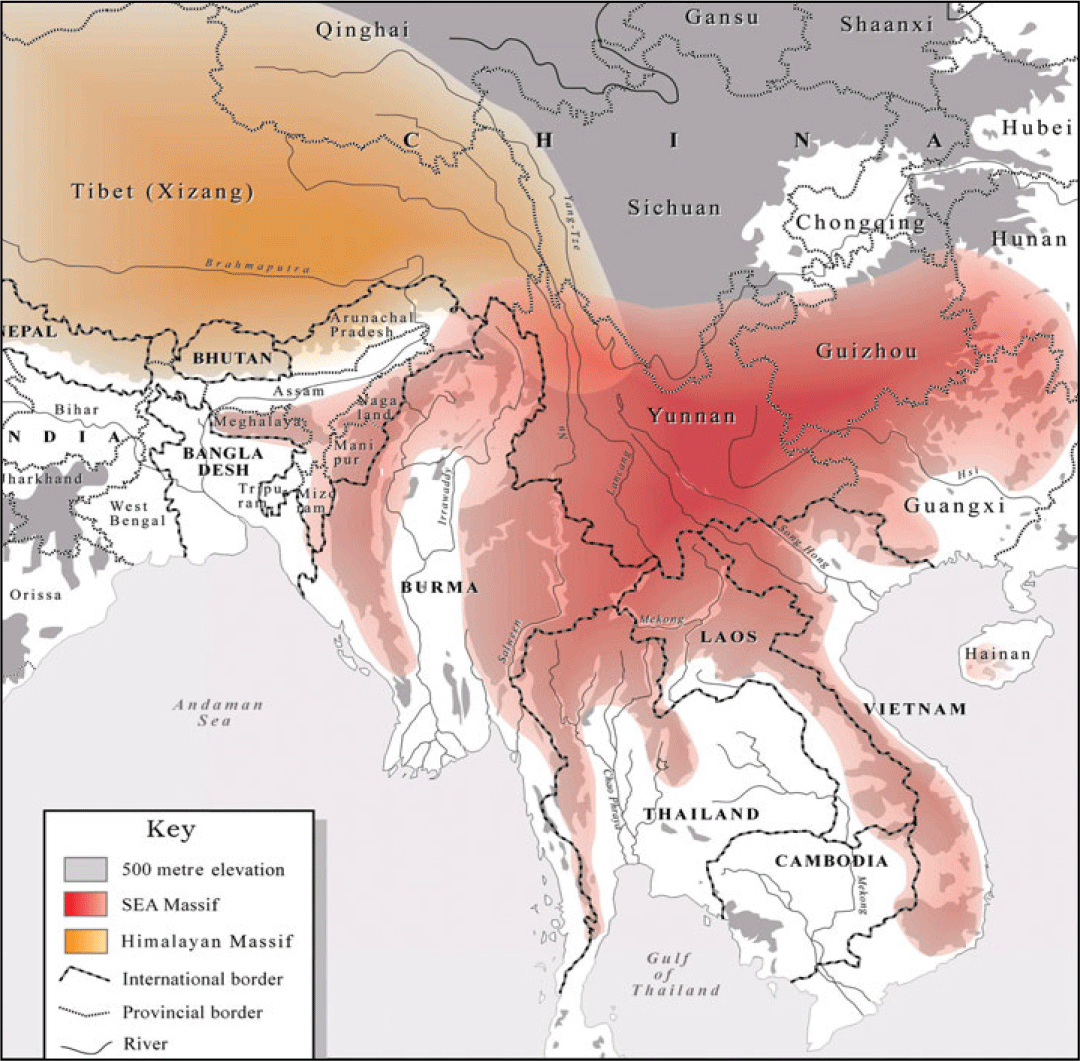
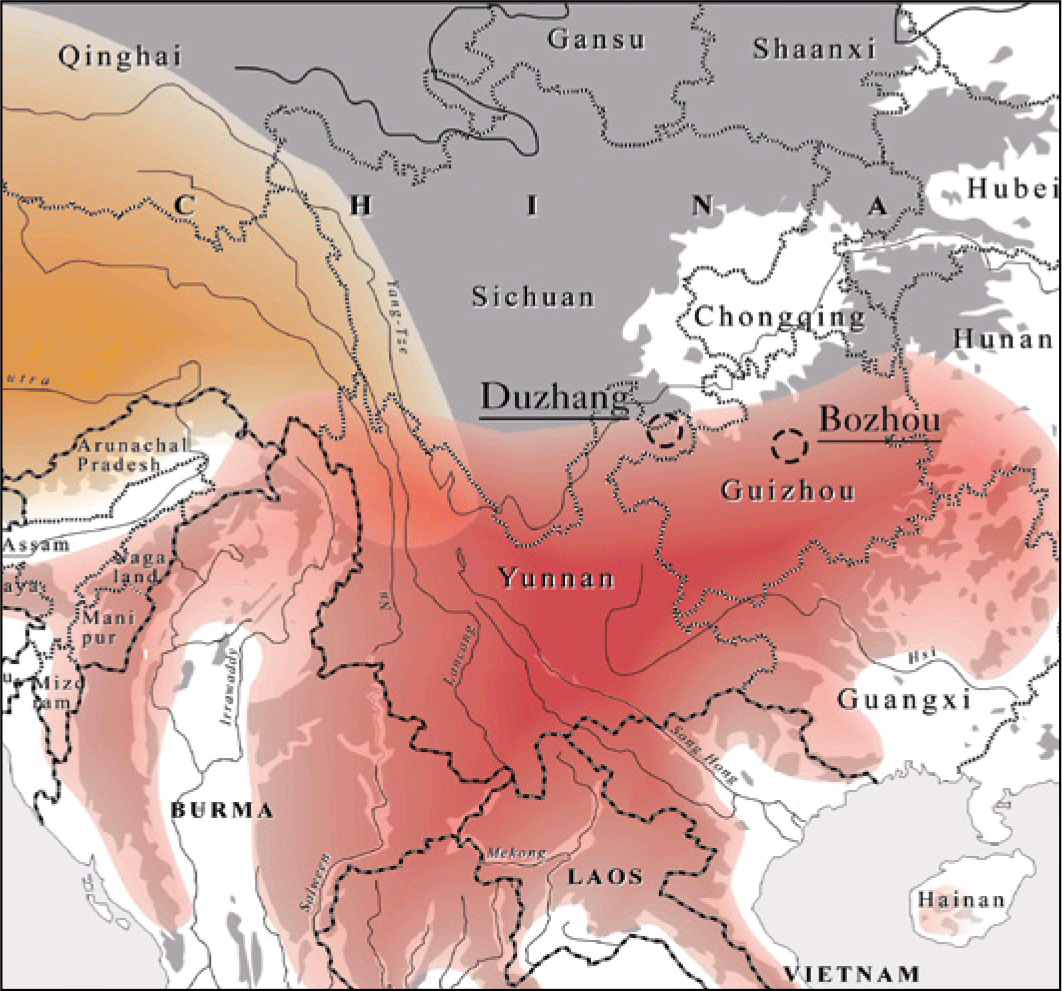

 Open access

