



Childhood obesity remains a global public health issue( Reference Lobstein, Jackson-Leach and Moodie 1 ). A target of obesity interventions is the promotion of healthy lifestyle changes, including diet, physical activity and sedentary behaviour of children. Given that parents are influential in modelling eating behaviours( Reference Johannsen, Johannsen and Specker 2 ) and physical activity for their children, parents’ active participation is important in effective childhood obesity interventions. The perception that their child is overweight or obese should be an important step for parents to act in their child’s weight-management programme( Reference Davidson and Vidgen 3 ). However, previous studies have affirmed that large proportions of parents fail to recognize that their child is overweight or obese( Reference Regber, Novak and Eiben 4 – Reference Lundahl, Kidwell and Nelson 7 ). For instance, a meta-analysis showed that half of parents underestimated the overweight/obese status of their child( Reference Lundahl, Kidwell and Nelson 7 ). The correlates of parental misperception of child weight include child’s age( Reference Rietmeijer-Mentink, Paulis and van Middelkoop 6 – Reference Hudson, McGloin and McConnon 8 ), gender( Reference Lundahl, Kidwell and Nelson 7 – Reference Aljunaibi, Abdulle and Nagelkerke 10 ), ethnicity( Reference de Hoog, Stronks and van Eijsden 11 ), BMI( Reference Lundahl, Kidwell and Nelson 7 , Reference Aljunaibi, Abdulle and Nagelkerke 10 , Reference Remmers, van Grieken and Renders 12 ), parental education level( Reference Remmers, van Grieken and Renders 12 ), parental weight status( Reference Lundahl, Kidwell and Nelson 7 – Reference Manios, Moschonis and Karatzi 9 ) and socio-economic status( Reference de Hoog, Stronks and van Eijsden 11 ), which indicates that the extent of this misperception varies in different populations.
Given that parental underestimation of their child’s weight is prevalent, it is important to determine whether this underestimation affects weight-related parenting behaviours and child behaviours, thus influencing the child’s weight status. However, a few studies have found controversial results on the association of parental perception with parenting behaviours or child behaviours( Reference Remmers, van Grieken and Renders 12 – Reference Almoosawi, Jones and Parkinson 14 ). A study of 482 overweight pre-school children and their mothers in Kuwait found that the mothers’ accurate perception of their child’s weight was associated with their plans to control the weight of their pre-school child( Reference Al-Qaoud, Al-Shami and Prakash 13 ). Another study in the UK targeting 361 children aged 6–8 years and their parents reported that the children whose weight status was misperceived by their parents tended to get a lower score on a ‘healthy’ dietary pattern than those who were correctly perceived( Reference Almoosawi, Jones and Parkinson 14 ). However, a study consisting of 783 overweight and obese 5-year-old children and their parents in the Netherlands demonstrated that parental misperception of the weight of their child was not associated with their intention to improve weight-related behaviours of their child or with the child meeting the guidelines for these behaviours( Reference Remmers, van Grieken and Renders 12 ). Considering the crucial role of parents in family-based obesity interventions( Reference Magarey, Perry and Baur 15 ), the unclear relationship between parental perception and weight-related parenting behaviours or child behaviours should be explored.
Only a few studies with a small sample size( Reference Chen, Binns and Maycock 16 – Reference Wen and Hui 18 ) have reported Chinese parents’ perception of their child’s weight, which may be distinct from those in Western countries due to different ethnicities, socio-economic status and cultural contexts. A survey of children aged 6–18 years showed that 72 % of mothers underestimated the overweight status of their child( Reference Yao and Hillemeier 17 ). Furthermore, only one study examining the relationship between parental perceptions and parenting behaviours in adolescents suggested that parents with correct perception were more likely to monitor the diet and physical activity of their child and gave more positive reinforcement for manifesting healthy behaviours than those who were wrong perceivers( Reference Wen and Hui 18 ). The related situation in Chinese primary-school children is still unknown, the parents of whom might play even more important roles in modelling the child’s behaviours in the family. Using a national large sample, our study aimed to investigate parental perception of their child’s weight and its demographic correlates, and to examine the associations between parental perception and weight-related parenting behaviours and child behaviours among Chinese children.
Methods
Study design and participants
The present study was a baseline survey of a multicentre school-based obesity intervention programme among Chinese children (trial registration number: NCT02343588)( 19 , Reference Chen, Ma and Ma 20 ) conducted between September and November 2013. The protocol of the study was reviewed and approved by the Ethics Committee of Peking University. All participating children and their parents signed informed consent forms.
Multistage random cluster sampling was applied in the recruitment. First, seven provinces in China (i.e. Liaoning, Tianjin, Ningxia, Shanghai, Chongqing, Hunan and Guangdong) were selected using the judgement sampling method. Second, schools were stratified by district and school size and then twelve to seventeen primary and secondary schools were randomly selected through the probability-proportional-to-size sampling method in each of the selected provinces. With the agreement of the principals, all students in grades 1–5, 7–8 and 10–11 were invited to participate (students in grades 6, 9 and 12 were not contacted due to study load). In total, 65 347 students from fifty primary schools and forty-five secondary schools and their parents participated in the study. We excluded students with age <6 years (n 193) or ≥18 years (n 346), those who lacked data about BMI (n 2291) or parental perception of child weight (n 10 696), and those whose parent questionnaire was not filled out by the parents (n 4404). Finally, 47 417 students and their parents were included in the sample for analyses. No significant difference was observed in child age or gender between those in the analytic sample and those who were excluded.
Measurements
Standardized questionnaires were used to measure sociodemographic characteristics, perception of weight status from parents and child, weight-related parenting behaviours and child weight-related behaviours. All questionnaires were delivered in class by trained investigators and were filled out by both parents and children. The questionnaires had been piloted and revised before the study, being found to be sufficiently reliable and acceptable to the children and their parents( Reference Chen, Ma and Ma 20 ).
Sociodemographic characteristics
Child birth date, gender, parental education level, current height (in centimetres), current weight (in kilograms) and monthly family income were evaluated in the questionnaires. BMI was calculated as weight (in kilograms) divided by the square of height (in metres). Parental underweight, overweight and obesity were defined using the Chinese criteria for adults( Reference Chen and Lu 21 ) as BMI <18·5 kg/m2, BMI ≥24 but <28 kg/m2 and BMI ≥28 kg/m2, respectively.
Perception of weight status from parent and child
Parental perception of child weight was assessed by asking: ‘How do you feel about current weight status of your child?’ (‘thin’, ‘about the right weight’ or ‘fat’). The responses were explained as perceived underweight (‘thin’), healthy weight (‘about the right weight’) and overweight (‘fat’). Child self-perception of weight status was assessed by asking: ‘How do you feel about your current weight status?’ (‘very thin’, ‘rather thin’, ‘average’, ‘rather fat’ or ‘very fat’). The responses were explained as perceived underweight (‘very thin’ or ‘rather thin’), healthy weight (‘average’) and overweight (‘very fat’ or ‘rather fat’). Parental and child perceptions were compared with the child’s actual weight status to define underestimation, accurate estimation and overestimation of child weight.
Weight-related parenting behaviours
Parents responded to the following questions: (i) ‘Did you prepare breakfast for your child in the past week?’; (ii) ‘Did you store soft drinks (e.g. cola and juice) at home in the past week?’; (iii) ‘Did you buy soft drinks for your child in the past week?’; (iv) ‘Did you restrict exercise time of your child such that he/she had more time for homework or other important things in the past week?’; (v) ‘Did you set apart exercise time for your child in the past week?’; and (vi) ‘Did you restrict screen time of your child in the past week?’ The response options were ‘never’, ‘seldom’, ‘sometimes’, ‘often’ and ‘always’ for questions (i) to (v), and ‘yes’ or ‘no’ for question (vi). Parents also reported daily time of exercise with their child over the past week.
Child’s weight-related behaviours
Dietary intake, screen time, homework time and physical activity in the past seven consecutive days were evaluated using the questionnaires. The children reported the frequency (days) and amount (servings) of fruits, vegetables, meat products and soft drinks; and frequency (days or times) of breakfast, high-energy snack (e.g. chocolates and candies), fried food (e.g. fried chicken and fried pancake) and Western fast food (e.g. KFC and McDonald’s) consumption. The mean daily intakes of fruits, vegetables, meat products and soft drinks were calculated by the formula: mean daily intake=[days×(amount in each of those days)]/7. Screen time was assessed by summarizing the daily time of viewing television and using computers. Homework time was assessed by asking daily time of doing work after school. Moderate-to-vigorous physical activity (MVPA) was measured by summarizing the daily time of vigorous (e.g. running and basketball) and moderate (e.g. cycling and badminton) physical activities.
Child’s actual weight status
The children’s height (in centimetres) and weight (in kilograms) were measured by trained technicians in a standardized procedure. Height was measured using a portable stadiometer (Yilian TZG, China), whereas weight was measured using a lever scale (Hengxing RGT-140, China). BMI was calculated and the age- and gender-specific cut-offs of BMI for malnutrition( 22 ) and overweight (including obesity)( 23 ) of Chinese children were used for the classification of weight status. Given that the Chinese criteria for overweight( 23 ) do not include cut-offs for children aged 6 years, we used the WHO standards( 24 ) to define overweight for this population. BMI Z-score of the children was calculated using the WHO standards( Reference de Onis, Onyango and Borghi 25 ).
Statistical analysis
All statistical analyses were performed using the statistical software package IBM SPSS Statistics version 19.0. The continuous and categorical variables were presented as mean and standard deviation, and as number and percentage, respectively. Differences in demographic variables between boys and girls were evaluated via Pearson χ 2 tests. Correlates of parental underestimation of child weight (v. accurate perception) were assessed through binary logistic regression analysis, adjusting for child’s age, gender, BMI Z-score, area, parental education level, monthly family income, parental weight status, region and school. For children of healthy weight, those who were overestimated by parents were excluded in the regression analyses. Binary logistic regression analyses were performed to evaluate the associations of parental perception of child weight with weight-related parenting behaviours and child behaviours, adjusting for child’s age, gender, region and school. A two-tailed P<0·05 was considered statistically significant in all analyses.
Results
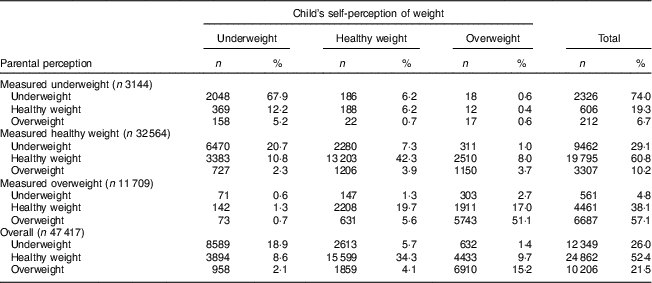
The present study included 47 417 children aged 6–17 years (49·4 % girls) and their parents. Table 1 presents the characteristics of the participants. The prevalence of underweight and overweight (including obesity) was 6·6 and 24·7 %, respectively. Overall, 30·5 % of the parents underestimated and 8·7 % overestimated the weight status of their child. Parental underestimation was prevalent among healthy-weight (29·1 %) and overweight children (42·9 %). The weight of the boys was more likely to be underestimated than that of the girls (35·8 v. 25·1 %, P<0·001). Only 68·4 % of the children had concordant perceptions with their parents, and 46·2 % of both children and parents had accurate assessment of the child’s weight. The parents provided slightly more accurate assessment than the children themselves (60·8 v. 59·8 %, P<0·001; Table 2). The proportion of parental underestimation decreased and the proportion of accurate estimation increased for children in the higher age group (P trend<0·001; see online supplementary material, Supplemental Fig. 1). When using the WHO standards for underweight and overweight( 24 ) in all children, the prevalence of underweight and overweight (including obesity) was 2·9 and 26·9 %, respectively, and 34·8 % of the parents underestimated and 7·4 % overestimated the weight of their child (Supplemental Table 1).
Sociodemographic characteristics of the study population of children aged 6–17 years and their parents (n 47 417) from seven provinces in China, September–November 2013
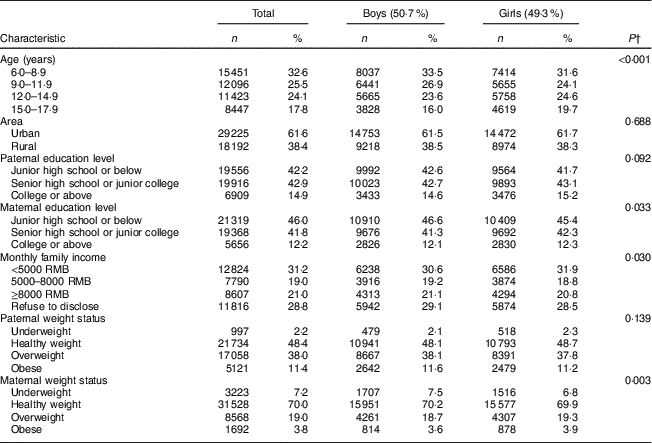
† Differences in characteristic variables between boys and girls were evaluated using Pearson χ 2 tests; P<0·05 indicates significance.
Parental perception of their child’s weight by the child’s self-perception and measured weight status; children aged 6–17 years and their parents (n 47 417) from seven provinces in China, September–November 2013
For both healthy-weight and overweight children respectively, older age (adjusted OR (AOR)=0·90, 95 % CI 0·88, 0·92 and AOR=0·76, 95 % CI 0·74, 0·79), girls (v. boys, AOR=0·40, 95 % CI 0·38, 0·42 and AOR=0·38, 95 % CI 0·34, 0·41) and higher BMI Z-score (AOR=0·19, 95 % CI 0·18, 0·20 and AOR=0·18, 95 % CI 0·16, 0·20) were negatively associated with parental underestimation of their child’s weight. Furthermore, healthy-weight children were more likely to be underestimated if their respective mothers were underweight (AOR=1·15, 95 % CI 1·03, 1·27; Table 3).
Correlates of parental underestimation of their child’s weight (v. accurate estimation); children aged 6–17 years and their parents (n 47 417) from seven provinces in China, September–November 2013
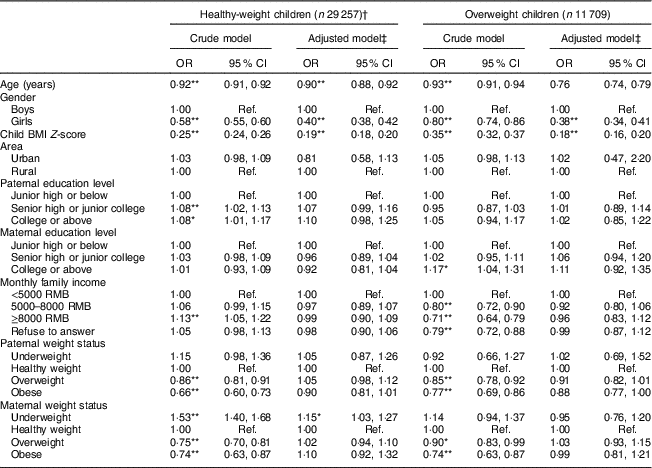
Ref., referent category.
OR and 95 % CI were derived from binary logistic regression analysis.
*P<0·05, ** P<0·01.
† Healthy-weight children who were overestimated by parents are excluded from the analysis (n 3684, 10·3 % of healthy-weight children).
‡ Adjusted for each other, region and school.
Table 4 shows the associations between parental perception of child weight and weight-related parenting behaviours. In total, a large majority of the parents reported that they prepared breakfast for their child (90·0 %) and restricted their screen time (92·4 %). Over half of the parents bought soft drinks for their child (55·9 %) and nearly one-third stored soft drinks at home (31·1 %). Of the parents, 56·3 % never or seldom restricted exercise time of their child. A substantial proportion of the parents set apart exercise time for their child (81·1 %) and 57·1 % of parents exercised with their child over the past week. Parental perception that their child was of healthy weight, regardless of the actual weight status, was positively associated with exercising with the child and setting apart the child’s exercise time. For underweight children, parental overestimation was negatively associated with buying soft drinks for the child. For healthy-weight children, accurate parental perception was positively associated with parents preparing breakfast for the child and restricting their screen time and negatively associated with storing soft drinks at home. For overweight children, parental underestimation was positively associated with parents preparing breakfast for them.
Associations between parental perception of their child’s weight and weight-related parenting behaviours; children aged 6–17 years and their parents (n 47 417) from seven provinces in China, September–November 2013
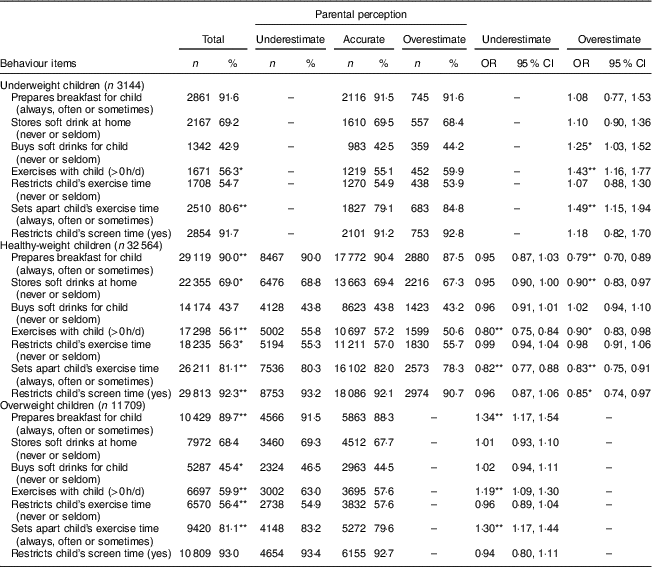
Differences in behaviour items between parental perception groups were evaluated using Pearson χ 2 tests.
OR and 95 % CI were derived from binary logistic regression analysis, in which the dependent variable is the single behaviour item. Both underestimation and overestimation groups are compared with the accurate estimation group, while adjusting for age, gender, region and school.
* P<0·05, ** P<0·01.
The majority of the children consumed ≤1 serving meat products/d (73·1 %), had breakfast every day (84·8 %), and spent ≤2 h/d on screen time (77·2 %) and ≤2 h/d on homework time (66·8 %). But only a minority of children consumed ≥2 servings fruits/d (25·6 %), ≥3 servings vegetables/d (19·6 %) or accomplished ≥1 h MVPA/d (31·2 %). A substantial proportion of children consumed soft drinks (33·9 %), high-energy snacks (25·5 %), fried food (43·0 %) and Western fast foods (51·9 %). Parental accurate estimation of healthy-weight children was positively associated with the child consuming ≥2 servings fruits/d and ≤1 serving meat products/d, having breakfast every day, avoiding fried food, accomplishing ≥1 h MVPA/d and spending ≤2 h/d on screen time and ≤2 h/d on homework time. In addition, parental underestimation of overweight children was positively associated with the child consuming ≤1 serving meat products/d, avoiding soft drinks and spending ≤2 h/d on screen time, but negatively associated with avoiding Western fast foods (Table 5).
Associations between parental perception of their child’s weight and the child’s weight-related behaviours; children aged 6–17 years and their parents (n 47 417) from seven provinces in China, September–November 2013
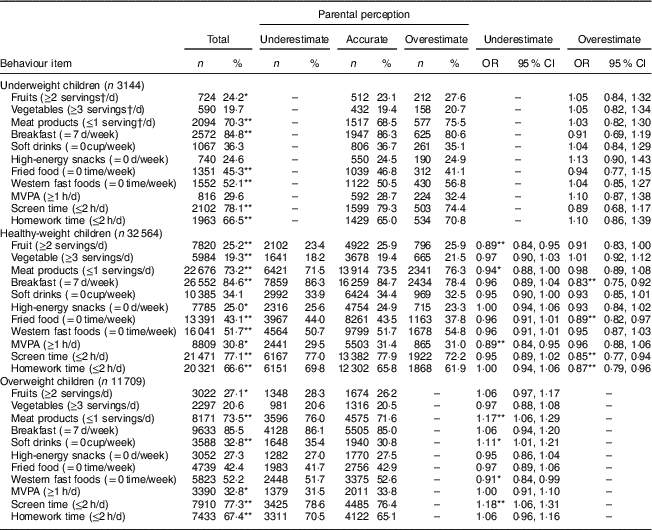
MVPA, moderate-to-vigorous physical activity.
Differences in behaviour items between parental perception groups were evaluated using Pearson χ 2 tests.
OR and 95 % CI were derived from binary logistic regression analysis, in which the dependent variable is the single behaviour item. Both underestimation and overestimation groups are compared with the accurate estimation group, adjusting for age, gender, region and school.
* P<0·05, ** P<0·01.
† A serving of fruit or vegetable is equivalent to 100 g, whereas a serving of meat product is equivalent to 75 g.
Discussion
The current national study indicated that nearly 40 % of school-aged children and adolescents had their weight status misperceived by their parents, among which underestimation was much more prominent than overestimation. Higher probabilities of parental underestimation were found for younger children, boys and children with a lower BMI Z-score. The parents who perceived their child as having a healthy weight, whether accurately or not, tended to behave better on certain weight-related parenting behaviours. Moreover, the children who were perceived as having a healthy weight were more likely to behave healthily on certain weight-related behaviours.
Only 60·8 % of Chinese parents accurately perceived their child’s weight, which was lower than the percentage in a representative sample of US children (74 %)( Reference Chen, Lemon and Pagoto 5 ), indicating that Chinese parents should improve in identifying the weight of their child. Specifically, approximately 43 % of the parents failed to recognize the overweight status of their child, although this value is lower than the estimated percentages from two meta-analyses (51 and 62 %, respectively)( Reference Rietmeijer-Mentink, Paulis and van Middelkoop 6 , Reference Lundahl, Kidwell and Nelson 7 ) and previous studies of Chinese children (89 and 72 %, respectively)( Reference Chen, Binns and Maycock 16 , Reference Yao and Hillemeier 17 ). A traditional belief exists in China that being fat reflects affluence, which may have led Chinese mothers to consider that being overweight is not a big health issue( Reference Chen, Binns and Maycock 16 ). Furthermore, the epidemic of overweight in Chinese children may have ‘normalized’ this health condition and contributed to parents’ inability to recognize that their child is overweight( Reference Chen, Binns and Maycock 16 ). Parental unawareness of their child’s overweight status draws attention since it may pose barriers for parents to take measures to address the problem. Moreover, parental underestimation may influence overweight children’s self-assessment of their weight, as well as their desire to lose weight and improve their lifestyle( Reference Huang, Donohue and Becerra 26 ). In addition, a substantial proportion (29 %) of parents underestimated the healthy-weight status of their child, which is much higher than the percentages in a meta-analysis (14 %)( Reference Lundahl, Kidwell and Nelson 7 ) and a US study (10 %)( Reference Chen, Lemon and Pagoto 5 ). Parental underestimation of healthy-weight children also warrants attention, because this may lead parents to encourage their child to consume extra food to facilitate weight gain, thereby elevating the child’s risk of future obesity( Reference Tschamler, Conn and Cook 27 ). We observed a similar distribution in weight perception between the children themselves and their parents (approximately 68 % of children received concordant perceptions), indicating that weight perception from parents and children were closely related, which was supported by previous studies( Reference Wen and Hui 18 , Reference Huang, Donohue and Becerra 26 ). Interventions targeting either parental or self-perception of child weight should take the potential interaction into account.
When assessing the correlates of parental underestimation, we found that parents were more likely to underestimate the weight status of younger children, which was supported by other studies( Reference Rietmeijer-Mentink, Paulis and van Middelkoop 6 – Reference Hudson, McGloin and McConnon 8 ). A possible explanation is that weight increase in younger children indicates good nutrition and parents believe that their child could grow out of the excess weight condition. In a qualitative study, low-income mothers described overweight pre-school children as ‘thick’ or ‘solid’ and tended to not believe that the children were overweight so long as they were physically active and had a good appetite( Reference Jain, Sherman and Chamberlin 28 ). Another study also demonstrated that parents tended to normalize their pre-school child’s excess body weight as ‘toddler pudge’ or ‘cute baby fat’( Reference Eli, Howell and Fisher 29 ). Considering that overweight in early childhood can persist into later life( Reference Singh, Mulder and Twisk 30 ), early identification of overweight may present crucial opportunities for obesity prevention and intervention.
Furthermore, parents were more likely to underestimate the weight of boys than of girls, which was consistent with some( Reference Lundahl, Kidwell and Nelson 7 , Reference Li, Lei and Wen 31 ) but not all literature( Reference Remmers, van Grieken and Renders 12 ). Although this trend may be affected by gender difference in body composition( Reference Karlsson, Kullberg and Stokland 32 ), it is more possible to be explained by differential social norms about the ideal body size for boys and girls. Healthy-weight girls tend to be perceived as having a healthy weight or even slightly overweight according to the social desire for slimness, whereas healthy-weight boys may be considered thin because the expectation for boys is that they should be big and strong( Reference Lundahl, Kidwell and Nelson 7 ). Boys perceived as underweight may be encouraged to eat a substantial amount of food to gain a larger body size, placing them at a higher risk of being overweight.
Parents tend to be most influential in shaping the lifestyle of their child, especially their eating behaviours and determining what food is available for them. In our study, it was noticed that over half of the parents bought soft drinks for their child and that nearly one-third stored soft drinks at home. Given that the consumption of sugar-sweetened beverages has been proved to be positively associated with obesity( Reference Malik, Popkin and Bray 33 ), Chinese parents should be educated about the harmfulness of soft drinks.
Although parents’ awareness of their child’s weight is suggested to be an important first step for the child’s enrolment in an obesity management programme( Reference Davidson and Vidgen 3 ), the relationship between parental perception of child weight and weight-related parenting behaviours was seldom discussed( Reference Remmers, van Grieken and Renders 12 , Reference Al-Qaoud, Al-Shami and Prakash 13 , Reference Wen and Hui 18 ). Contrary to popular belief, we found that parents who accurately recognized that their child was overweight were less likely to prepare breakfast for them, exercise with them and set apart exercise time for them. Similarly, parents who misperceived their healthy-weight child as being overweight were less likely to prepare breakfast for them, exercise with them, set apart exercise time for them and restrict their screen time, but were more likely to store soft drinks for them. These results imply that parental recognition that their child is overweight, accurate or not, may be an insufficient motivation to change parenting behaviours regarding their child’s weight. Alternatively, those who accurately perceived their child’s overweight status may have improved their weight-related parenting behaviours, but the changes were too slight to be detected. Jaballas et al. reported that 40 % of parents who considered their child as overweight believed that overweight was a condition that would be outgrown( Reference Jaballas, Clark-Ott and Clasen 34 ). Psychological factors such as belief and confidence may also mediate in the association between the perception and implementation of behaviours. Parents who perceive their child as overweight may lack intention to improve their child’s weight or do not believe that they can change it through effort. Another possible explanation is that an accurate identification of their child being overweight is not a prerequisite for parents to improve weight-related health behaviours, which may likely be universal to all parents (i.e. most parents want their child to be healthy)( Reference Remmers, van Grieken and Renders 12 ). Thus, more research is warranted to clarify the associations between parental perception and weight-related parenting behaviours and to explore the potential barriers.
Regarding the child’s weight-related behaviours, overweight children who were accurately recognized by parents tended to consume more meat products, soft drinks and spend more screen time than those who were underestimated by parents. In addition, children of healthy weight but wrongly considered overweight were more likely to skip breakfast, consume fried food, and spend more screen and homework time. A hypothesis is that children who are perceived by parents as overweight may have certain undesirable behavioural characteristics themselves, such as consuming more meat and fried food. A qualitative study by Jain et al. revealed that children were not believed to be overweight by their mother if they were active and had a healthy diet( Reference Jain, Sherman and Chamberlin 28 ). Furthermore, two longitudinal studies in Dutch and Australian children showed that parental identification of their child being overweight was not protective against further weight gain( Reference Gerards, Gubbels and Dagnelie 35 , Reference Robinson and Sutin 36 ). An important gap exists between parental recognition of their child’s overweight/obesity and improvement in weight-related parenting behaviours or child behaviours. This implies that health education targeting parents to correctly identify their child’s overweight or obesity alone is not sufficient to improve parenting behaviours and child behaviours. Therefore, future obesity intervention involving parents should motivate them on how to promote healthy behaviours of their children or directly engage children in healthy diet and exercise with the involvement of their parents. Although parents hold responsibility of lifestyle guidance for their child, the wider environment beyond the family can still weaken parental influences. Digital marketing techniques using social networking software and mobile phone apps give food and beverage industries access to children without parental oversight( 37 ).
From another point of view, parental underestimation of healthy-weight children was negatively associated with the children consuming more fruits and less meat products and taking more MVPA. This should be taken into consideration, since less fruit and more meat intake and shorter time of MVPA might lead to higher obesity risk. Yet, given the current cross-sectional design, additional research using longitudinal data is needed to provide better insight into the influence of parental perception of their child’s weight on the child’s weight-related behaviours over time.
The current study presents two strengths. First, we investigated parental perception of child’s weight in a large national sample in Chinese children. Second, we examined parental perception of child’s weight in relation to both weight-related parenting behaviours and child’s behaviours, which has been investigated only in very limited studies. Since a considerable proportion of parents misperceived their child’s actual weight, it makes sense to examine the relationship between parental misperception and parenting behaviours and child’s behaviours that could impact child’s weight. Nevertheless, limitations should be considered when interpreting the findings. First, the cross-sectional design determines that one should be very careful when examining the directionality of associations between parental misperception and weight-related parenting behaviours or child behaviours. Second, children’s weight-related behaviours were measured with questionnaires, which might lead to information bias.
Conclusion
Parental underestimation of child’s weight was prominent among healthy-weight and overweight Chinese children. Higher probabilities of parental underestimation were found among younger children, boys and children with a lower BMI Z-score. Parents’ correct recognition that their child was overweight did not appear to translate into healthier changes in weight-related parenting behaviours or the child’s behaviours. Future obesity intervention involving parents should motivate them on how to promote their child’s healthy behaviours or directly engage the child in healthy diet and exercise with parents’ involvement.
Acknowledgements
Acknowledgements: The authors acknowledge the Guangzhou Health Care Clinics of Middle and Primary Schools for their contribution in the data collection. They also thank the participants in the survey and the postgraduates for conducting the questionnaire survey. Financial support: This work was supported by Guangdong Science and Technology Program (No. 2016-A020225002), Guangdong Natural Science Fund (No. 2015A030313093) and the Research Special Fund for Public Welfare of Health from the Ministry of Health, People’s Republic of China (No. 201202010). The funders had no role in the design, analysis or writing of this article. Conflict of interest: The authors declare that they have no competing interests. Authorship: J.J. and J.M. supervised the study. T.Z. and L.M. performed the data collection. T.Z. analysed the data and drafted the manuscript. L.C. guided the analysis and interpretation of data and critically revised the manuscript. Y.C. designed the study, provided suggestions in the analysis and approved the final manuscript. All authors read and approved the submission of the final manuscript. Ethics of human subject participation: This study was conducted according to the guidelines laid down in the Declaration of Helsinki and all procedures involving human subjects were approved by the Ethics Committee of Peking University. Written informed consent was obtained from all subjects.
Supplementary Material
To view supplementary material for this article, please visit https://doi.org/10.1017/S136898001800006X



