

In the Great Basin of North America, ethnographers studying small-scale hunter-gatherers observed the immense significance of perishable material culture throughout a person's lifetime: from carrying infants in cradleboards, to food acquisition and processing in baskets, to trapping small game using snares and nets, to transporting households with burden baskets, to protecting from the cold weather with rabbit-skin blankets, to boiling food for weaning and the elderly, and finally, to honoring their dead through inclusion in burials. The presence of archaeological forms of these materials establishes their great antiquity. Perishable artifacts are frequently excluded from in-depth artifact analyses because of preservation bias and small sample sizes; however, in dry caves and rockshelters, these materials are often well preserved. The Great Salt Lake (GSL) Desert in the eastern Great Basin has excellent preservation of basketry and cordage dating to the late Holocene (beginning ~4400 cal BP), which can be used to characterize subsistence strategies and craft traditions. This study focuses on late Holocene–aged cordage and coiled basketry from 10 dry caves and rockshelters in the GSL Desert associated primarily with hunter-gatherers, applying an analytical approach that focuses on reconstructing technological organization and the chaîne opératoire of materials to explore potential patterns of variation between sites.
Through this analysis, some utilitarian aspects of cordage and basketry—such as final form and use wear—indicate the objects’ intended use as a subsistence tool; however, trends in technological-stylistic traits, such as spin direction and work direction, imply a regional social connection. These observed patterns of variability in the manufacturing methods of perishable artifacts between sites potentially indicate trends in site function and gendered-craft enculturation. This fine-grained analysis of perishable artifacts demonstrates the value of reanalyzing curated museum collections to help reconstruct past peoples’ lives, an increasingly advocated approach to archaeological studies.
Ethnographic Analogy, Gendered Craft Production, and Chaîne Opératoire
It is assumed here that prehistoric hunter-gatherer groups of the Great Basin practiced lifeways similar to ethnohistoric hunter-gatherers in arid environments (Hitchcock and Biesele Reference Hitchcock, Biesele, Schweitzer, Biesele and Hitchcock2000), although colonialism, population movement, displacement, a market economy, observer bias particularly toward gender, and internal technological developments have certainly influenced ethnohistoric populations (Clark Reference Clark and Schlanger2002; Gould and Watson Reference Gould and Watson1982; Kehoe Reference Kehoe and Bolger2013). With these caveats, the application of ethnographic analogy to direct archaeological inquiry is justified when prehistoric and ethnohistoric populations share a similar geography and economy, such as in hunter-gatherer communities in the Great Basin (Watson and Kennedy Reference Watson, Kennedy, Gero and Conkey1991; Wylie Reference Wylie1985). Hunter-gatherers frequently are defined according to their multilevel sociality, in which social organization and membership is considered a fluid boundary, with social hierarchy ranging from nuclear families to a collection of bands, which can affect cultural development and maintenance, as well as cooperation and innovation (Migliano et al. Reference Migliano, Battiston, Viguler, Page, Dyble, Schlaepfer and Smith2020; Weissner Reference Weissner1983).
Historic hunter-gatherers in proximity to the Bonneville Basin in the eastern Great Basin included the Goshute, Shoshone, Southern Paiute, and the Ute (Chamberlin Reference Chamberlin1913; Malouf Reference Malouf1940; Steward Reference Steward1938). These peoples spoke related Uto-Aztecan languages, practicing mobility reflective of environmental variability, maintaining egalitarian flexible group sizes from family level to larger seasonal communities of connected families, and emphasizing loose divisions of labor according to gender (Malouf Reference Malouf1940; Service Reference Service1962; Steward Reference Steward1938). Characterizations of isolated hunter-gatherers depending on wild resources lack nuance, because foraging lifeways are best viewed on a spectrum when neighbors practice other subsistence strategies, such as farming (Kelly Reference Kelly2013). Defining the parameters of subsistence is important in eastern Great Basin models, driving debates over the presence of late Holocene Fremont farmers alongside hunter-gatherers (Grayson Reference Grayson2011). The presence of domesticates in hunter-gatherer-attributed sites, wild foods in farming-village sites, and decadal variability in reliance on wild or domestic foods has challenged traditional archaeological categorization and the identity of past peoples; however, recent studies embrace this adaptive diversity across the hunter-gatherer foraging spectrum (Coltrain and Leavitt Reference Coltrain and Leavitt2002; Kelly Reference Kelly2013; Roth Reference Roth, Roth and McBrinn2016).
Perishable materials are especially well suited for discussing subsistence activities in small-scale mobile populations (Herzog and Lawlor Reference Herzog and Lawlor2016). They also are valuable markers of gender identity in North American Indigenous populations because basketry is a highly skilled craft commonly attributed to feminine activities (Senior Reference Senior, Donald and Hurcombe2000), and the construction of cordage used for hunting and blankets in the Desert West are often considered masculine activities. Surprise Valley Paiutes categorized tasks as gendered, although the gender identity of the individual did not restrict the practice of those tasks: for example, although making nets and hunting activities were considered masculine activities, women sometimes made cordage for those items, and women participated in communal and intermittent small-game hunting (Kelly Reference Kelly1932). Conversely, sewing and basketry manufacture were considered feminine, but men would sew quivers and rabbit-skin blankets. Recent archaeological work in the Desert West highlights perishable artifacts in the context of gender. Coltrain and Janetski (Reference Coltrain and Janetski2019) discuss how gender-restricted mobility may have led to fluid socioeconomic relationships between Basketmaker II and Great Basin hunter-gatherers, reinforced through intermarriage. Yanicki (Reference Yanicki2019) emphasizes Great Basin women mediating open social boundaries among Ancestral Dene and generalist Fremont populations for the purpose of exchanging labor for hide processing. In her regional cordage survey, Leach (Reference Leach2018) concludes that southwestern women most commonly made rabbit-skin blanket cordage, whereas in the Great Basin, men did. Ruth Jolie (Reference Jolie2014) demonstrates that gendered crafts may vary as power dynamics change; for example, repositioning yarn production from feminine household contexts to masculine performative/religious contexts in Puebloan groups after approximately 850 cal BP may represent changes in women's status. These studies illustrate new approaches to notions of gender identity in the context of subsistence and the research potential of perishable materials.
Textile researchers have emphasized the chaîne opératoire approach to analyzing technological-organization as a holistic and quantifiable way to contextualize the use life of artifacts and the economic and social contexts in which an object was manufactured and used (Bongers et al. Reference Bongers, O'Shea and Farahani2018; Hurcombe Reference Hurcombe, Beugnier and Crombe2007, Reference Hurcombe2014; Leach Reference Leach2018; Strand Reference Strand2012). A value of chaîne opératoire is its potential to inform on craft traditions and intersections between boundaries and economic and social scales of identity. Here, chaîne opératoire is a series of decision-making stages, including resource acquisition, preparation, construction, and use/repair (Coe Reference Coe2021), which for perishable artifacts are reconstructed from observations by ethnobotanists, ethnographers, historians, and Indigenous artisans in the Desert West and California (Anderson Reference Anderson2005; Chamberlin Reference Chamberlin1911; Dean et al. Reference Dean, Ratcheson, Finger, Daus and Bates2004; Dick-Bissonnette Reference Dick-Bissonnette and Howard2003; Farmer Reference Farmer2012; Fowler Reference Fowler, Minnis and Elisens2000; Fulkerson Reference Fulkerson1995; Kelly Reference Kelly1932; Rhode Reference Rhode2002; Steward Reference Steward1938; Weltfish Reference Weltfish1932; Wheat Reference Wheat1967). Because basketry and cordage are constructed additively, each component may reflect decisions made by artisans when creating an object, revealing cultural patterning. These decisions are exhibited through technological-stylistic traits, associated with motor habits acquired through enculturation (Lechtman Reference Lechtman, Lechtman and Merrill1977; Lemonnier Reference Lemonnier1986; McBrinn Reference McBrinn, Webster and McBrinn2008), and the manufacturing process (chaîne opératoire) of artifacts may be a distinguishing characteristic of social groups and learning processes, potentially informing on gender, rank, or familial identity. For the present study, defining an attribute that is essential to the utilitarian application of the artifact to subsistence and/or associated with decisions made within an enculturative context is a quantifiable way to integrate statistical measures to compare site function and craft traditions (Coe Reference Coe2021).
Decision-Making Stages of Cordage Manufacture
Plant acquisition was a decision made by cordage manufacturers based on intended final function: fine bast fibers from milkweed (Asclepias sp.), dogbane (Apocynum sp.), nettle (Urtica dioica), and prairie flax (Linum lewisii) were heavily processed and strong, and they were suited for making nets, traps, and rabbit-skin blankets (Wheat Reference Wheat1967; see Lawlor [Reference Lawlor2020] for fiber strength measures). Conversely, coarse bark fibers from sagebrush (Artemisia sp.), juniper/cedar (Juniperus sp.), and cliffrose (Purshia stansburiana) were often more expediently processed, and they were generally weaker and ill-suited for nets and traps (Haas Reference Haas2001), with exceptions (see Frison et al. Reference Frison, Andrews, Adovasio, Carlisle and Edgar1986; Sundstrom and Walker Reference Sundstrom and Walker2021). Raw material itself has cultural significance within a community of cordage makers and users because of potential rules shaping harvesting rights or division of labor for the preparation process (Turner and Reid Reference Turner and Reid2022). Preparing fibers would have required decisions based on the proposed function of cordage, following a standardized method of isolating fibers.
Spinning plies by rolling loose fibers either up or down the thigh or by hand twisting, then reversing the spin to combine multiple plies, yields equally functional cordage, regardless of the starting method (Wheat Reference Wheat1967). Initial spin direction describes the diagonal slant of fibers when oriented vertically as conforming to the center portion of a letter S or Z. This technological-stylistic trait is associated with a passive decision embedded in enculturation and motor habits (McBrinn Reference McBrinn, Webster and McBrinn2008; Minar Reference Minar2001). Ethnographers in the Great Basin recorded a division of labor in manufacturing methodology based on the intended use of cordage, with men most frequently making Apocynum sp. and Asclepias sp. nets (Kelly Reference Kelly1932; Knack and Stewart Reference Knack and Stewart1984; Malouf Reference Malouf1940; Smith Reference Smith1974; Steward Reference Steward1938), which were predominantly Z-spun S-twist among the Southern Paiute (Fowler and Matley Reference Fowler and Matley1979) and Goshute (Malouf Reference Malouf1940). This division is potentially seen in the construction stage of archaeological specimens (Leach Reference Leach2018). Finally, the use/repair stage of cordage is most visible through completed forms, but the knots retained—such as sheet bends on nets or nooses on snares—may also indicate use (Emery Reference Emery1966); however, knots are also potentially culturally patterned (Goldberg Reference Goldberg2020). The high value of nets is indicated by their repairs and maintenance, and many fragments found in archaeological assemblages were likely generated by repairs.
Decision-Making Stages of Basketry Manufacture
For basketry, stands of willow (Salix sp.), sumac (Rhus sp.), and serviceberry (Amelanchier sp.) were actively managed through burning, coppicing, and pruning to encourage the growth of stems, which were acquired based on a preferred size and straightness, among other considerations (Fowler Reference Fowler, Minnis and Elisens2000, Reference Fowler, Reitz, Scudder and Margaret Scarry2008; Fulkerson Reference Fulkerson1995). The stitch and rod elements in coiled basketry were prepared by removing the bark, soaking or drying stems, then splitting and sizing them (Dean et al. Reference Dean, Ratcheson, Finger, Daus and Bates2004; Kelly Reference Kelly1932; Malouf Reference Malouf1940; Wheat Reference Wheat1967). In the construction stage, a weaver may have included a bundle in the foundation to create a watertight basket (Adovasio Reference Adovasio1970; Adovasio et al. Reference Adovasio, Pedler and Illingworth2002), as is common in the eastern Great Basin (Herzog and Lawlor Reference Herzog and Lawlor2016); however, foundations without bundles and twined basketry may also be watertight, especially if pitched (Dean et al. Reference Dean, Ratcheson, Finger, Daus and Bates2004; Fowler and Dawson Reference Fowler, Dawson and D'Azevedo1986). The quantity of rods in the foundation controlled the wall thickness, and the arrangement of rods in stacked or triangular configurations influenced manufacturing speed (Adovasio Reference Adovasio2010; Price Reference Price1952). Although basket makers were conversant in multiple manufacturing styles, preference for some styles over others have been used to distinguish social groups (Morris and Burgh Reference Morris and Burgh1941).
Other construction traits are work surface, work direction, and stitch treatment. Work surface describes whether the awl was inserted on the concave or convex face (Adovasio Reference Adovasio2010; Morris and Burgh Reference Morris and Burgh1941). There may be an indirect correlation between work surface and use: it is physically easier to manipulate an awl from the outside of a small basket, whereas convenience is less of a consideration when making a tray or large basket (Adovasio Reference Adovasio2010; Fowler and Dawson Reference Fowler, Dawson and D'Azevedo1986; Kelly Reference Kelly1932; Malouf Reference Malouf1940). Work surface may also have shifted throughout manufacture, as in Basketmaker assemblages (Weltfish Reference Weltfish1932). When referring to work direction, the craftsperson inserted stitches to the left or right of the previous stitch. The resulting stitch slant is socially directed, but it is an unconscious decision (Adovasio Reference Adovasio2010), and ethnographic comparisons demonstrated that craft traditions were expressed through this trait (Kelly Reference Kelly1932; Weltfish Reference Weltfish1932). Likewise, splitting stitches when inserting the awl is a technique potentially reflecting enculturation, and intertribal variation was noted in the location of split stitches (Malouf Reference Malouf1940; Weltfish Reference Weltfish1930).
The final stage of the chaîne opératoire, use/repair, may be addressed through use wear. Burning on the basket interior may be evidence of plant roasting or perhaps stone boiling (Burrillo Reference Burrillo2015; Herzog and Lawlor Reference Herzog and Lawlor2016; Morris and Burgh Reference Morris and Burgh1941). Like nets, basketry was a time-intensive and valuable tool, and it was frequently repaired and repurposed until no longer functional (Dean et al. Reference Dean, Ratcheson, Finger, Daus and Bates2004).
Geographical and Archaeological Context
The Bonneville Basin is located principally in Utah and eastern Nevada in the eastern Great Basin (Figure 1). It was formed by Pleistocene Lake Bonneville; through periods of filling and draining, the lake waters carved out caves and rockshelters along its shorelines, leaving behind the Great Salt Lake, the Great Salt Lake Desert, flat-floored valleys with north-to-south trending mountain ranges, and a mosaic of ecosystems after draining to modern levels by approximately 11,600 cal BP (Benson et al. Reference Benson, Lund, Smoot, Rhode, Spencer, Verosub, Louderback, Johnson, Rye and Negrini2011). Humans have lived in the basin since the late Pleistocene, but during the late Holocene beginning around approximately 4400 cal BP, there was an expansion of human occupation, which is attributed to increased population size and density (Grayson Reference Grayson2011). The late Holocene was marked by fluctuations in aridity and temperature, and hunter-gatherer activities appear to reflect these shifts by increasingly incorporating communal subsistence (Hildebrandt and McGuire Reference Hildebrandt and McGuire2003), developing specialized resource-procurement strategies (Bettinger Reference Bettinger2015; Janetski Reference Janetski1979) and increased regional and long-distance trade for occasional domesticates and turquoise from the Southwest as well as shell from the Pacific (Janetski Reference Janetski2002). This period also marks demographic shifts: the appearance of Fremont farmers, Ancestral Dene big-game hunters, and later, the expansion of the Numic language and cultural materials all influenced local hunter-gatherers’ lifeways. This time period, geographic setting, and excellent preservation of organic material culture make the Great Salt Lake (GSL) Desert a prime context for studies of hunter-gatherer cultural variability, especially as it relates to activities attributed to the community and gender.
Location of the GSL Desert and sites referred to in text.

The GSL Desert became the subject of major systematic survey projects beginning in the 1930s. Heizer documented cave and rockshelter sites near Wendover (Taylor Reference Taylor1939), and a few systematic excavation projects around the GSL followed (Enger Reference Enger1942; Steward Reference Steward1937). The catalog of small cave and rockshelter sites grew after the establishment of Jennings's Statewide Archaeological Survey in 1949 (Gunnerson Reference Gunnerson1959), and Rudy (Reference Rudy1953) attempted to synthesize Heizer's survey work with varying success. Subsequent surveys recorded well-preserved archaeological materials and intact deposits (Aikens Reference Aikens1970; Dalley and Berry Reference Dalley and Berry1977; Jennings Reference Jennings1957). Most of the materials collected through these investigations are currently managed by the Natural History Museum of Utah (NHMU). Despite this flurry of GSL Desert archaeology and its influences on archaeologists’ interpretations of chronology and prehistoric lifeways in the Great Basin, many of these collections have not been reanalyzed since they were formally reported—although materials from the multicomponent Hogup Cave and Danger Cave sites have been the subject of recent studies (Byers and Hill Reference Byers and Hill2009; Grayson Reference Grayson1988; Herzog and Lawlor Reference Herzog and Lawlor2016).
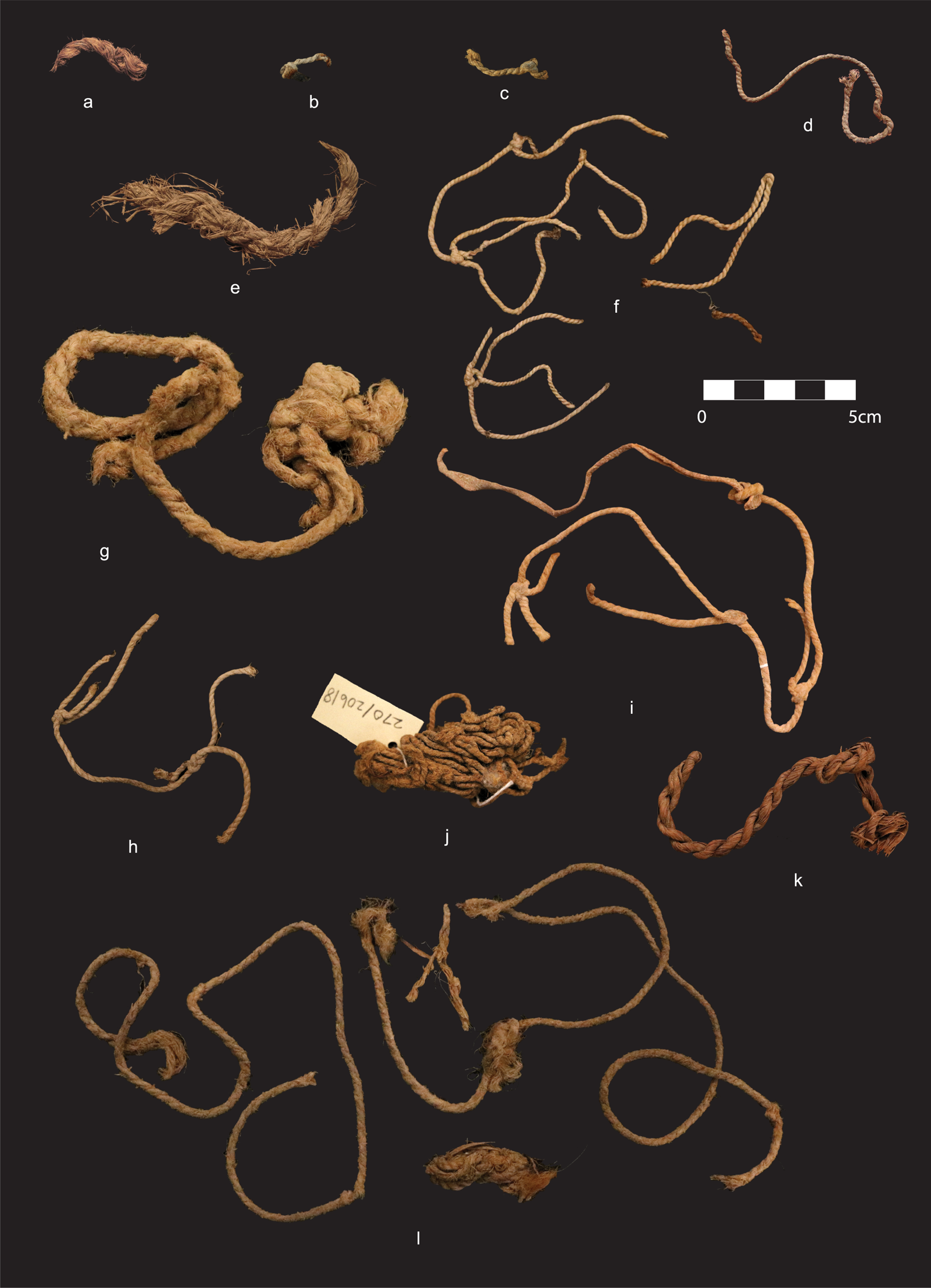
I focused on perishable artifacts from 10 sites in the GSL Desert with excellent preservation and recorded provenience, assigning occupations broadly to the late Holocene through associated radiocarbon dating or time-diagnostic projectile points (Coe Reference Coe2020). These sites are part of Adovasio's (Reference Adovasio1970) Eastern Basin Basketry Region, and they include Bonneville Estates Rockshelter (BER; CRNV-11-4893), Four Siblings Rockshelter (FSR; CRNV-11-7736) (including Little Sister East Rockshelter [LSER] and Big Brother West Rockshelter [BBWR]), Danger Cave (DC; 42TO13), Thermal Point (TP; 42TO32), Crab Cave (CC; 42JB8), Juke Box Cave (JBC; 42TO20), Hogup Cave (HC; 42BO36), Swallow Shelter (SS; 42BO268), Tube Cave (TC; 42BO184), and Remnant Cave (RC; 42BO365; Table 1). These range from large multicomponent sites (BER, DC, HC, and JBC) to smaller-scale test excavations (TP, CC, SS, TC, RC, FSR). Late Holocene–aged cultural materials include projectile points, pottery, worked bone, beads, and perishable artifacts such as wood, twined and coiled basketry, nets, and cordage. This comparative analysis focused on cordage (Figure 2) and coiled basketry (Figure 3).
Summary of Assemblages.

Notes: See Coe (Reference Coe2020) for excavation histories and table of radiocarbon dates and provenience. Dates calibrated using Calib 4.4 IntCal20 at 2σ. I assumed a “short chronology” (after 3200 cal BP) for Elko series points, reflecting interpretations by past excavators; however, a “long chronology” has been identified in the eastern Great Basin (8000–500 cal BP; Keene Reference Keene2018; Smith et al. Reference Smith, Barker, Hattori, Raymond and Goebel2013).
a Age based on photographs of diagnostic points analyzed by this author after Thomas (Reference Thomas1981), and known ages for those point styles.
b Age based on chronology of diagnostic projectile points identified in original report by Dalley and Berry (Reference Dalley and Berry1977).
c Date from disturbed hearth in Stratum 2, but most material is from Stratum 3.
d Age based on chronology of diagnostic projectile points identified in original report by Madsen (Reference Madsen, Madsen and Fike1982).
e Age based on diagnostic point identified in original thesis by Price (Reference Price1952).
f Due to concerns about mixed deposits in Stratum 8 (Martin et al. Reference Martin, Coltrain and Codding2017), all Stratum 8 material is excluded except for four baskets in a dated context.
g All cordage data from Aikens (Reference Aikens1970).
h All cordage data from Jennings (Reference Jennings1957).
Sample of analyzed cordage: (a) FSR 7736E-67; (b) BER 25665; (c) BER 9133a; (d) FSR 7736E-127; (e) FSR 7736E-223; (f) SS 217-20; (g) RC 33-1; (h) RC 81-46-2; (i) JBC 22132-8; (j) JBC 21955-4; TC 15-46; TC 15-43. (Color online)
Sample of analyzed basketry (see Table 1 for acronyms used in text): (a) BER 2341; (b) BER 10039; (c) BER 10682; (d) SS 279-2; (e) DC 22996; (f) HC 649-42; (g) HC 48-619; (h) DC ar59037; (i) DC 22995-3; (j) HC 60-1; (k) HC 131-75; (l) RC 24-111; (m) RC 40-76; (n) JBC 22335-1; (o) JBC 22102-1; (p) CC 78.27.7.2; (q) TP 22756-3; (r) TP 22763-1; (s) RC 184-2-42. (Color online)

Methods
This analysis follows techniques described in Adovasio (Reference Adovasio2010), Emery (Reference Emery1966), and Edward Jolie (Reference Jolie, Sutton and Arkush2019). Measurements were taken using digital calipers with 0.1 mm precision and a handheld goniometer. I analyzed the BER and FSR assemblages at the Department of Anthropology at Texas A&M University. Assemblages from the other sites were analyzed at the NHMU. Because cordage from DC and HC were unavailable for reanalysis, data reported here derive from published monographs (Aikens Reference Aikens1970; Jennings Reference Jennings1957).
For the purpose of regional statistical comparison of short-term hunter-gatherer sites, attributes are designated as utilitarian traits or technological-stylistic traits. However, I recognize that this is reductive, given that manufacturing decisions concerning some utilitarian or technological-stylistic traits depend on decisions concerning other traits. For example, work surface may relate to use because it may indicate whether a basket was wide or narrow, but it may also be the result of enculturation and muscle memory, which may also be seen in a separate trait: work direction. Similarly, in cordage, whereas the plant material may be considered a utilitarian trait because the strength of the fiber directs its use, the social identity of the manufacturer may be reflected in the technological-stylistic trait spin direction. With this caveat, utilitarian traits in cordage are raw material (coarse or fine) and knot-type, because both may reflect how that cord was potentially used. The primary cordage technological-stylistic trait is spin direction, but it may appear alongside utilitarian attributes. Initial spin rather than final spin was recorded to incorporate single-ply cordage, and only one ply from multi-ply cords was used in statistical comparison. Utilitarian traits in basketry are (1) form (flat tray or narrow bowl), (2) foundation (whether a bundle is present), and (3) use wear. Technological-stylistic basketry traits are (1) work direction, (2) stitch engagement, and potentially (3) three-rod foundation, although three-rod foundation may also have a utilitarian association. To reiterate, utilitarian traits are also embedded within social learning and may show trends on regional and/or community scale (Jolie Reference Jolie2018). Here, these traits are framed in dichotomous terms to distinguish between objects as subsistence tools and objects as unconscious markers of group identity to aid in statistical comparison.
Attributes recorded are nominal and continuous data that seek to characterize morphology as well as technological organization, utility, and technological style (Table 2). All statistics were computed using MYSTAT 12.02. Nominal data were compared using Fisher's exact tests (Shennan Reference Shennan1997). For metric data, significance was measured using Mann-Whitney U and Kruskal-Wallis H tests. F-tests were used to compare coefficients of variation (CV), and Shapiro-Wilk tests were used to test normality of distribution. Statistical comparison of materials was achieved by treating all late Holocene strata from the 10 sites as a single chronological unit to circumvent some issues of dating, provenience, and small sample sizes. This analytical approach is a common practice when there are sample size and dating restrictions, although it risks flattening temporal variability and cultural scales (Kelly Reference Kelly, Widlok and Dores Cruz2022). I assumed that all cordage and basketry measured here represent independent artifacts, although there may be redundancies, given their fragmentary nature. Following standard practice, alpha was set at 0.05 for rejection of the null hypothesis. When two types of attributes overlapped, as in foundation and work surface, statistical tests were measured on both sets of traits. Sample sizes of assemblages are often uneven, which may affect showing true interassemblage variation. To address the flexible mobility and group size of hunter-gatherers, I sought to determine whether individual sites clustered together to reflect similarity in measured attributes, especially in the case of presence/absence data or when comparing two categorical attributes. Sites appeared to group together repeatedly based upon similarity of specific attributes, so these attributes were further explored by testing the relationships of multiple attributes and whether these observed site groupings were statistically independent groups. Hierarchical cluster analyses were conducted to confirm observed regional trends.
Variables and Attributes Analyzed per Material Class.

Note: Variables in bold are statistically significant and are focused on in the text.
Cordage Results
For cordage, nine attributes were recorded (Table 2), but five (twist method, number of plies, angle of twist, twists per cm, and length) showed either no or limited statistical patterning, and this suggests a shared practice across sites (Coe Reference Coe2020). The attributes focused on here showed regional variation and include initial spin direction, raw material/texture, diameter, and knots associated with these attributes. Additional information concerning all the recorded attributes can be found in Coe (Reference Coe2020).
Initial Spin Direction, Material Type/Texture, Diameter, and Knots
Most cords are two-ply with internally consistent final twist directions and plant characterizations, with one exception: at RC, a three-ply cord has a mix of S- and Z-spin. Regionally, there is a dominance of initial Z-spin cordage (63%), but S-spin cordage is not rare (38%). When compared site by site, some (RC, JBC, and DC) were dominated by S-spin cordage (52%–57%), some (SS, CC, and HC) were dominated by Z-spin (80%–89%), and others (TC, TP, BER, FSR) have a more equal representation of both spin directions but still a Z-spin preference (58%–72% Z-spin).
Most cordage was made from plant fibers, with some exceptions: six sites have twisted rabbit-skin fragments (SS, JBC, CC, BER, DC, and HC), and seven sites have cordage made from faunal materials such as sinew and hide (SS, TC, JBC, FSR, BER, DC, and HC). At JBC, there is a composite plant/animal cord, whereas at SS, there is a cord of various plants. Cordage diameter is correlated with fiber type, with coarse material yielding thicker cords, and fine fibers yielding thinner cords. Most cordage was made using fine fibers (70%). JBC has the most equal proportion of coarse and fine fiber, and TC has the lowest percentage of coarse fiber (14%). Fauna, principally in the form of twisted hide, occurs at lower proportions (15%), except at CC, where fauna cordage dominates (80%), and SS and BER have the next-highest percentages (19% and 26%, respectively).
Cordage was typically Z-spin (Figure 4, top); however, when comparing plant fiber, there is added complexity. Fine cordage is more commonly Z-spin (68%), whereas coarse cordage is almost equally Z- and S-spin (48%; p = 0.0123, N = 84). At RC, TC, JBC, and FSR, the proportions of S- and Z-spin fine cordage are nearly equal (50%–54% Z-spin fine). Across the total assemblage, coarse fiber is almost equally S- and Z-spin (52% S-spin), although this trend varies site by site: coarse material at BER, SS, TC, and FSR is dominated by Z-spin cordage (67%–100%). At RC, JBC, TP, and CC, coarse cordage is more commonly S-spin (63%–100%). Twisted faunal cordage is most frequently Z-spin (70%).
Cordage plant material: (top) cordage initial spin direction by plant material; most fine fiber is Z-spin, whereas coarse material is more equally distributed across S- and Z-spin; (bottom) knot function and plant texture; specialized knots for traps are more frequently on fine fibers, and generalized knots are more frequently on coarse fibers.

When comparing cordage diameters (Figure 5) according to texture and spin direction, Z-spin fine cordage on average has a smaller diameter than S-spin fine cordage (U = 907; Z = −2.40371; p = 0.0164). An F-test indicates that there is a difference between CV of fine Z- and S-spin, although the data are not normally distributed and there are outliers (F75,33 = 4.646; p = 0.00001). When outliers are removed from the BER, SS, RC, JBC, and TC assemblages, Z-spin cordage has a smaller standard deviation (0.559 mm) than S-spin cordage (1.12 mm; F69,32 = 0.249, p = 0.000001). When coarse material is compared within spin direction, there is a difference, but the data are not normally distributed (F15,24 = 0.2763, p = 0.01256). When an outlier from SS is removed, there is no measurable difference (F15,22 = 1.215, p = 0.661933). Fine cordage is consistently tightly twisted, and an F-test shows that the CVs are not statistically different when comparing fine Z- and S-spin angles (F69,32 = 0.758, p = 0.3358), excluding the outliers identified in the F-test of diameter. Coarse cordage twist angle is not measurably different when compared according to spin direction (F15,23 = 1.4359, p = 0.4228), although Z-spin coarse cordage is not quite normally distributed according to a Shapiro-Wilk test (W = 0.886035, SD = 7.609, p = 0.0465; Figure 5).
Cordage diameter. When cordage diameter, plant texture, and spin direction are compared and outliers excluded, (a) Z-spin fine cordage diameters are on average smaller than (c) S-spin fine cordage. Coarse cordage diameter is not statistically different on average or CV between (b) Z-spin or (d) S-spin direction.

The 66 cordage specimens with knots (Figure 4, bottom) are mostly made from fine fibers (59%). Fine cordage is most commonly associated with sheet-bend and more complex knots, such as girth hitches, nooses, and slipknots (62%) associated with specialized tools such as nets and traps, whereas coarse cordage rarely has sheet-bend/complex knots (15%; p = 0.0002, N = 66). Coarse cordage more commonly has overhand knots (85%), and both spin directions have similar proportions of overhand and specialized knots (p = 0.8033, N = 65).
Cordage Comparative Groupings
Site-by-site univariate analyses point to an interaction between spin direction and utilitarian traits, which is expected given that technological style is the unconscious expression of learned manufacturing processes. Therefore, although spin direction is a technological-stylistic attribute, it is included in some of the following tests of utilitarian traits. Two types of groups of synthetic variables were created and tested: Technological-Stylistic Cordage Group (SCG), defined as sites sharing similar spin direction trends; and Utilitarian Cordage Group (UCG), defined by similar trends of raw material and knot type (Figure 6; Supplemental Table 1).
Cluster analyses: (top) results of cluster analysis of cordage utilitarian and technological-stylistic attributes: (left) utilitarian traits are regionally similar; there were no knots at FSR, most CC cordage was faunal, and DC and HC were excluded; (right) technological-stylistic groups; DC and HC were excluded, and CC cordage is predominantly unspun faunal material; (bottom) cluster analyses isolating spin direction and cordage function: (left) Z-spin cordage for specialized cordage; (right) no real technological-stylistic difference in generalized cordage.

Two stylistic groups were created: SCG1 (BER, SS, TP, and HC), which are 69%–89% Z-spin (N = 267); and SCG2 (RC, TC, JBC, FSR, and DC), which are 43%–60% Z-spin (N = 293; p = 0.0001, N = 560; Supplemental Table 1). At SCG1 sites, fine cordage is most commonly Z-spin (84%), but at SCG2 sites, S-spin fine cordage is also common (47%; p = 0.0004, N = 123). At SCG1 sites, coarse material is more commonly Z-spin (71%), whereas at SCG2 sites, coarse material is more commonly S-spin (62%; p = 0.0397, N = 54).
Although coarse and fine cordage varied based on cordage use as either specialized (fine cordage suitable for nets/traps) or generalized (coarse cordage unsuitable for nets/traps), no delineated utilitarian groups were successfully created because fine cordage dominates all sites except JBC and CC. Although Z-spin direction and fine material coincide, and specialized knots are usually on fine fibers, spin direction and knot type are unrelated when comparing SCG (p = 1.000, N = 65; Figure 4, bottom; Supplemental Table 1).
Cordage Results Summary
The attributes with the most pertinent patterning were spin direction, plant texture, diameter, and knots. Excluding CC, cordage types—when compared according to utilitarian characteristics—were similar in application. Fine plants were consistently used for specialized nets and traps, and coarse plants were used for more generalized activities. Although sites do not vary significantly according to utilitarian characteristics, when both types of characteristics are compared, some trends are observed: Z-spin specimens are more commonly fine, specialized cordage, but at some sites (RC, TC, JBC, and FSR), S-spin specimens are also commonly found on specialized cordage. When coarse material is compared according to technological style, there is no significant regional difference.
Coiled Basketry Results
For coiled basketry, 13 attributes were recorded (Table 2), but eight attributes (foundation spacing, foundation element measurements, stitch alignment, stitch engagement, stitch width, stitches per cm, stitch gap, and form) showed either no or limited variability across sites, suggesting a shared regional practice (Coe Reference Coe2020). The attributes presented here showed variation and include work direction, foundation type, stitch type, use wear, and work surface. Most of the basketry is rigid, close coiled, and undecorated. Baskets are primarily wall fragments, but eight fragments from BER, CC, TP, HC, and DC have self-rims, and one BER basket has a false-braid rim. The single basket from CC is reinforced with a leather strip. The 13 centers from BER, RC, JBC, HC, and DC are all normal, reinforced and unreinforced, with narrow apertures. Stitches are generally split or unsplit and interlocking, with three examples of intricate stitches from SS.
Work Surface, Work Direction, Use Wear, Foundation, and Stitches
The fragmentary nature of specimens (Figure 7) made the identification of work surfaces impossible on 35 (26%) baskets. The rest of the assemblage shows regional variation, with BER, HC, and TC dominated by concave work surfaces (57%–100%); DC, RC, TP, and JBC dominated by convex work surfaces (57%–75%); and SS represented by an equal proportion of both types. Form was mostly indeterminate, but when identifiable, trays were disproportionately associated with concave work surfaces (64%), whereas other baskets more frequently had convex work surfaces (100%; p = 0.0013, N = 32).
Basketry work direction and work surface. Left-to-right work direction was mostly associated with concave work surfaces, but right-to-left is made on concave and convex work surfaces.

Most baskets (84%) were manufactured with a right-to-left work direction (Figure 7), but interassemblage variability occurs: BER, SS, RC, TC, HC, and DC are made 75%–100% right to left, whereas TP and CC are made 75%–100% left to right. When comparing work direction and work surface, right-to-left work direction was equally on both work surfaces (43% and 57%, respectively), whereas left-to-right work direction was more associated with concave work surfaces (67%; p = 0.0289, N = 95). At BER, TC, and HC, right-to-left work direction was common on baskets with concave work surfaces (55%–100%), whereas at SS and RC, right-to-left work direction was evenly distributed across both concave and convex work surfaces. At JBC, TP, and DC, right-to-left work direction was more frequently on baskets with convex work surfaces (70%–100%).
Including bundles in foundations is also regionally variable. At BER, JBC, RC, TC, and HC, more than 63% of basket foundations have bundles, whereas at SS, TP, and DC, less than 44% of baskets have bundles. When rod type is compared (half-rod versus whole-rod), most baskets are half-rod foundation (56%). BER, TC, JBC, and HC baskets more frequently have half-rod foundations, whereas at SS, TP, RC, and DC, baskets more frequently have whole-rod foundations. Half-rod foundations frequently have bundles (88%), whereas whole-rod foundations less frequently have bundles (18%; p = 0.0001; N = 75). Another foundation type—three-rod bunched foundation—represents 26% of the total basketry assemblage. CC, BER, TC, JBC, TP, HC, and DC have the lowest proportions (0%–31%), whereas SS and RC frequently have three-rod foundations (~60%). Most baskets with three-rod foundations have a right-to-left work direction (80%); however, there is no statistical relationship when comparing work direction and three-rod and half-rod foundations (p = 0.1656; N = 93), or three-rod and whole-rod foundations (p = 0.1970, N = 39).
At BER, SS, RC, TC, CC, and TP, stitches are less frequently intentionally split (0%–50%) than at HC, DC, and JBC (63%–75%). Split stitches are found on work, nonwork, or both work surfaces almost evenly, but there is intersite variability: at BER and RC, split stitches are usually on the nonwork surface; at TC, JBC, and TP, there are no split stitches on nonwork surfaces; and at SS, HC, and DC, split stitches are nearly evenly distributed across both surfaces. Noninterlocking stitches are the most common stitch engagement method (74%), and TP and CC are the only sites where interlocking stitches represent the majority type (88%). Although right-to-left work direction is most common, interlocking stitches in greater proportions are made left to right: interlocking stitches are 34% left to right, whereas only 8% of noninterlocking stitches are left to right (p = 0.0006, N = 125). There is no association between stitch engagement and work surface (p = 0.6482, N = 99).
Use wear is not mutually exclusive, and some baskets were multifunctional (Figure 8). The most common wear was burning (34%), potentially indicating use as parching trays or for stone boiling. Rod-and-bundle and rod-without-bundle foundations were commonly associated with burning (49%), but burning is infrequent on three-rod foundations (19%; p = 0.0509, N = 98). Many baskets are stained (31%) and/or abraded (33%). Pitch, for waterproofing, was present on five baskets from DC. The cordage and stitches repairing damage to baskets at BER, SS, HC, and DC—and reinforced leather strip at CC—are attempts to extend use lives of baskets.
Basketry use wear. Each graph shows the percentage of an independent variable of use wear across the subassemblage. Baskets frequently exhibit more than one type of use.

Basketry Comparative Groupings
Because uneven sample sizes may affect determination of variation, sites were grouped to reflect attribute similarities noted during analysis, then statistically tested (Figure 9). Two types of synthetic groups were created using attribute type: Utilitarian Basketry Group (UBG) is defined as sites with similar trends in basket form, use wear, and bundled foundation; Technological-Stylistic Basketry Group (SBG) is defined by similarity in work direction, stitch sewing method, and engagement with the foundation. When two types of attributes overlapped, as in foundation (half-rod versus three-rod) and work surface (work direction and split stitches), statistical tests were measured on both sets of groups (Supplemental Table 2). Cluster analyses confirmed these groups.
Cluster analyses of basketry attributes: (left) utilitarian traits; (right) technological-stylistic traits.

In UBG1 (BER, HC, and TC), most baskets were made on the concave surface (58%–100%), whereas in UBG2 (SS, RC, JBC, TP, and DC), most baskets were made on the convex surface (50%–68%; p = 0.0089, N = 99). Most baskets were worked right to left, except at TP and CC. Stylistic group comparison shows no difference between sites (p = 0.0738, N = 153). When comparing work direction and work surface, there was a significant difference (p = 0.0069). In SBG1, right-to-left work direction is more commonly on baskets with concave work surfaces (59%), whereas in SBG2, right-to-left work directions more frequently have convex work surfaces (71%). At all sites, left-to-right work directions were most frequently on concave work surfaces, and there is no difference between stylistic or functional groups (p = 1.000; p = 1.000).
In UBG1, most baskets have bundled foundations (70%); in UBG2, there are fewer bundled baskets (32%; p = 0.0001, N = 135). I tested both group types when comparing three-rod foundation, because whereas half-rod bundle foundation can be assigned to a utilitarian category (watertight basketry), three-rod foundation is not clearly associated with any specific function. Relationship according to UBG was not demonstrated (p = 0.5378, N = 90), but there was a measurable relationship in SBG (p = 0.0366), with SBG1 sites having fewer three-rod foundation baskets (21%) than SBG2 sites (43%). Therefore, three-rod foundation may be predominantly a technological-stylistic trait, but this does not preclude a utilitarian purpose. According to UBG, there was no regional difference in how baskets were used (p = 0.3696, N = 135), reflecting the multifunctionality of a half-rod-and-bundle foundation. When comparing SBG (i.e., sites with variable proportions of three-rod basketry), SBG1 baskets were more frequently burned (39%) than SBG2 baskets (11%; p = 0.0036).
Split stitches were more common in SBG1 sites (BER, RC, JBC, HC, and DC; 63%) than in SBG2 sites (SS, TP, CC, and TC; 39%; p = 0.0402, N = 135). The presence/absence of split stitches does not affect functionality, and a comparison of UBG supports this (p = 1.000). However, when split stitches were compared according to work surface, there was group distinction: UBG1 sites (BER, TC, and HC) are more commonly split on the nonwork surface (58%), whereas UBG2 sites (SS, RC, JBC, TP, DC, and CC) have few baskets with split stitches on the nonwork surface (30%; p = 0.0542). The two stylistic groups are maintained with this analysis, with SBG1 baskets less frequently having interlocking stitches (19%), and SBG2 baskets having more interlocking stitches (62%; p = 0.0001, N = 128).
Basketry Results Summary
Basketry utilitarian and technological-stylistic traits are related. Use wear indicates that baskets throughout the region were multifunctional subsistence tools. The utilitarian traits (work surface, form, foundations, and use wear) illustrate regional variability in activities and manufacturing methods related to plant parching and water handling. The technological-stylistic traits (work direction, three-rod foundation, and stitch type) also show regional trends indicative of craft-manufacturing variability. Although work surface and use wear are considered utilitarian traits, both of these attributes are also associated with technological-stylistic trends.
Chaîne Opératoire and Gendered Craft Production in the Great Salt Lake Desert
Chaîne Opératoire
When the two craft traditions are compared according to group designation, there is little overlap between manufacturing methods (Figure 10). This is not surprising, given that crafts are associated with different activities, and they are manufactured and used within separate but overlapping social contexts. Ethnographers observed that these crafts are gendered, and these independent trajectories reflect enculturation. Malouf's (Reference Malouf1940) Goshute ethnography references a gendered division of labor and ownership of tools, in which men were responsible for manufacturing and repairing netting and all other hunting tools, and women made baskets. The chaîne opératoire approach of characterizing the use lives of artifacts is a way to discuss the observed regional trends in cordage and basketry and to tease apart the intersections of gender identity in social and economic contexts in the GSL Desert.
Cordage technological-stylistic groups (SCG), basketry technological-stylistic groups (SBG), and basketry utilitarian groups (UBG) across the GSL Desert, based on similarities of technological-stylistic and utilitarian traits. CC is mostly faunal cordage.

For example, most sites have a majority of fine, tightly twisted, two-plied cordage. Most cordage is Z-spin, and typically, Z-spin is on fine cordage with little variability in diameter, suggesting a regional conformity in manufacturing methods, as observed elsewhere (Haas Reference Haas2001, Reference Haas2006). S-spin is sometimes on fine cordage but with limited consistency in average diameters, indicating less regional conformity. Sheet-bend/specialized knots for nets and traps were commonly on fine cordage, whereas coarse cordage more frequently had overhand knots. Although fine cordage may be used for specialized tasks, the variability in spin directions may be an expression of different traditions of gendered tasks (Goff Reference Goff2010; Leach Reference Leach2018). If the gendered division of labor observed historically was also practiced archaeologically, men making nets may have been spinning plies by rolling fibers up the thigh (Z-spin), and women may have had less standardization in how they plied fibers for other tools. Although most cordage is fine, coarse cordage was also present at most sites, illustrating a diversity of activities. Nets were repaired when damaged, and the many fine cordage fragments may represent the repair stage of the chaîne opératoire. Coarse cordage, often more expediently made, was used in more generalized tasks (as Haas [Reference Haas2001] observed elsewhere), resulting in disposing broken tools rather than maintaining them. This differential treatment of the materials provides further support for a greater restriction of craft tradition for nets.
Another example—this time from baskets—is that the dominance of right-to-left work direction is largely homogeneous across the GSL Desert, but when work direction was analyzed alongside other utilitarian and technological-stylistic traits, a multiscalar relationship between these attributes is revealed. Most sites include both work directions, indicating some regional variation in basketry craft learning, although most women worked right to left. Work direction is not predictive of foundation or form, but right-to-left work direction was more common on baskets made on the concave surface at BER, HC, and TC, whereas right-to-left work direction on convex work surfaces was more common at the other sites. Left-to-right-worked baskets more commonly have concave work surfaces. The reduced conformity of tray and large basket manufacture is contrasted with that of other baskets worked on the outside, which may indicate distinct craft histories of parching trays and smaller baskets, although the lack of completed baskets inhibits testing this speculation.
Regional Interpretations
I have used a synchronic approach to address regional rather than temporal patterns when comparing poorly dated materials, highlighting unconscious traits to measure manufacturing methods. These sites were likely occupied by culturally related mobile hunter-gatherers, as was observed historically in the GSL Desert (Kelly Reference Kelly1932; Steward Reference Steward1938). Therefore, the assemblages are likely the accumulation of activities of a networked community. Cordage potentially used for nets in this analysis and others (Connolly et al. Reference Connolly, Kallenbach, Barker and McCabe2017) reveal a regional craft conformity in the material used, number of plies, and diameters, as well as technological-stylistic traits. When compared with a previous diachronic analysis of BER cordage, these trends were evidently maintained since the early Holocene (after ~10,500 cal BP; Coe Reference Coe2021), potentially indicating a continuous local population of hunter-gatherers. The regional fine cordage craft conformity is contrasted with the relative diversity of basketry manufacturing styles. Both crafts are gendered materials, so these patterns may reveal divergent trends in masculine (netting) and feminine (basketry) traditions. Given the limitations on chronology, it is currently impossible to know whether observed patterns are synchronic, diachronic, or a combination of the two. For this reason, each possibility is considered.
Observed synchronic patterns might indicate multiple, contemporaneous craft traditions. The site groups identified through comparative analyses yielded different combinations of sites, potentially reflecting separate economic and social contexts for how these cultural materials were made and used. For instance, DC and JBC are in closer proximity to wetland resources than SS, which may influence activities practiced there. DC has a larger assemblage than TC, potentially representing a larger and more diverse group of people than smaller, seasonal sites. These patterns may also be influenced by social processes observed in hunter-gatherer societies, such as rules directing familial identity and marriage partners, postmarital residence norms, restrictions in land-use rights, social traditions directing seasonal or task-based mobility, ideological associations with locations and landmarks, distinct ethnic histories, or other cultural practices not immediately visible here. For example, in her study comparing late Archaic southwestern sandals, projectile points, and cordage, McBrinn (Reference McBrinn, Webster and McBrinn2008) suggests that differential synchronic trends between artifact classes resulted from marriage restrictions that maintained boundaries between some craft traditions and not others. Similarly, in the present study, the two crafts reveal different levels of acceptance of other ways of doing something, in which specialized cordage is restricted from change, and basketry is more flexible, potentially as a result of kinship traditions.
Alternatively, observed patterns could reflect a palimpsest of diachronic variation, appearing as a result of time averaging. This conflation of all cultural periods into one late Holocene cultural component has likely muted internal variation between social groups, potentially distorting or even introducing patterns in the transmission of cultural traits (Miller-Atkins and Premo Reference Miller-Atkins and Premo2018). By comparing artifact traits in the context of chaîne opératoire and social organization—such as gender and kinship—there is good support that these trends between artifact classes are embedded in enculturation rather than random products of the comparative analysis. However, the patterns of variation between groups of sites, despite being occupied by generations of mobile hunter-gatherers with flexible group sizes, may potentially be a product of time averaging. The differences between basketry groups may represent a shift in basketry manufacturing styles alongside shifts in site usage or popularity over time, rather than contemporaneous variability. A better refinement of the chronology of these sites to narrow the span of time being averaged is the best way to test whether these trends are “real” or introduced by the analytical methods.
In reality, the observed patterning likely reflects a combination of synchronic and diachronic behaviors. The lack of diachronic change in fine cordage potentially used for netting when compared regionally (Coe Reference Coe2021) shows a conservativeness in how the tool was manufactured through the historic period (Fowler and Matley Reference Fowler and Matley1979; Malouf Reference Malouf1940). Netting's status as a gendered artifact class must also be considered as part of this restriction, as should the feminine-gendered status of basketry playing some part in the accepted diversity of basket manufacturing styles regionally and diachronically. There is likely contemporaneous variability in basketry manufacturing traits—such as work direction, work surface, and foundation types—as is observed in the well-dated BER assemblage (Coe Reference Coe2021), and simultaneously, some shifts in the ways that baskets were made over time. Parching trays and nets are reported across the Desert West throughout the Holocene, and both tools are associated with a communal subsistence strategy. Among nets, there is standardization, but parching trays vary in the early stages of manufacture. A geographical craft boundary in cordage used for netting (Connolly et al. Reference Connolly, Kallenbach, Barker and McCabe2017) and blankets/robes (Leach Reference Leach2018) has been observed across the Desert West, but a regional comparison of parching trays may reveal a craft tradition whose boundary is more fluid between the GSL Desert and elsewhere during the late Holocene.
Conclusion
Cordage and coiled basketry from 10 sites in the GSL Desert reinforce the importance of mobiliary material culture in hunter-gathers’ lives in the late Holocene. Perishable artifacts served a vital role in plant processing and cooking, storage, and procuring small game. Statistical comparison indicates evidence for standardized methods of tool manufacture that influence how the artifacts were used. The differential relationship between site assemblages when compared according to chaîne opératoire and categorical distinction of attributes reemphasizes the complex nature of perishable artifacts as both utilitarian and cultural objects. This incongruity of site similarity depending on elements of tool manufacture may point to differential trends in gendered craft traditions. Whereas basketry is commonly discussed in the context of “women's work,” other perishable tools for small-game trapping are less commonly discussed in this context, despite regional historical evidence emphasizing net making as a masculine craft.
Perishable artifacts represent expressions of a dynamic cultural landscape within a bounded geographical landscape. Future comparisons of curated perishable artifacts from the broader region, as well as a better refined chronology of these late Holocene objects, can further address the flexibility or inflexibility of geographic and cultural boundaries in the Desert West that were potentially influenced by kinship practices. Future analyses of the material should emphasize dating cultural materials directly to provide better context for occupations in the GSL Desert. This study demonstrates new approaches to perishable artifact analysis and shows the value of returning to curated collections, beyond applications to the Desert West.
Acknowledgments
This article is adapted from my doctoral dissertation, which has benefited from comments by my committee chair, Ted Goebel, and members Suzanne Eckert, Maxine McBrinn, Kelly Graf, and Angela Pulley Hudson. Glenna Nielsen-Grimm, Anthropology Collections manager at the Natural History Museum of Utah, generously granted access to collections.
Funding Statement
This project was funded by a TAMU College of Liberal Arts writing fellowship and research grants through the TAMU Department of Anthropology and the Center for the Study of the First Americans.
Data Availability Statement
All data are available in Coe (Reference Coe2020), which can be accessed through Texas A&M University OAKTrust at https://hdl.handle.net/1969.1/192678.
Competing Interests
The author declares none.
Supplemental Material
The supplemental material for this article can be found at https://doi.org/10.1017/aaq.2023.33.
Supplemental Table 1. Cordage Attributes According to Presence/Absence and Group Assignment of Sites According to Stylistic Traits.
Supplemental Table 2. Basketry Attributes According to Presence/Absence and Group Assignment of Sites.


 Open access

