



Since 1980, global obesity has doubled, and in 2014, more than 1·9 billion adults were overweight( 1 ). Obesity increases the risk of diabetes, hypertension and CVD( Reference Reaven 2 ), and is therefore an important public health issue. Although an imbalance between energy intake and expenditure is the primary cause of weight gain and obesity( Reference Redman, Johannsen and Ravussin 3 ), psychological stress might contribute to obesity through behavioural changes such as overeating or lack of activity that may favour weight gain( Reference Yau and Potenza 4 ), as well as due to changes in hormones regulating the appetite and metabolism( Reference Spencer and Tilbrook 5 ).
Job strain is an increasing form of stress in many industrial countries( 6 – 8 ). In his demand/control model, Karasek defines job strain as high psychological demands, combined with low decision latitude (control). The demand dimension consists of the degrees of excessive workload and need to work fast. Decision latitude refers to the freedom to make own decisions and skill discretion( Reference Karasek and Theorell 9 ).
Findings from observational studies on the association between job strain and obesity are inconsistent. In a recent review of prospective cohort studies, two of four studies showed significant associations between job strain and increased weight gain in women, but not in men. In four cohorts examining the relationship to obesity, pooled results from men and women showed no association to job strain measured at baseline, but increased risk of obesity at follow-up after 4 years was observed in individuals who developed job strain over the same period( Reference Kivimaki, Singh-Manoux and Nyberg 10 ). Only few studies have had the design and power to prospectively examine if changes in job strain may be associated with subsequent changes in weight measured at a second follow-up. Results from the few existing longitudinal studies are mixed and difficult to compare. Studies differ in their number of included subjects, follow-up time and whether information on job strain was obtained prospectively or retrospectively( Reference Lallukka, Sarlio-Lahteenkorva and Kaila-Kangas 11 , Reference Nyberg, Heikkila and Fransson 12 ), or only provided information on sustained job strain and not strain alterations( Reference Brunner, Chandola and Marmot 13 ). Therefore the objective of the current study was to assess whether an increase in job strain over time, in an otherwise homogeneous sample of female Danish nurses, was associated with subsequent gain in body weight. We hypothesized that prolonged job strain as well as an increased job-strain level would be associated with larger weight gain compared with sustained low job strain or decrease in job-strain level.
Methods
Study population
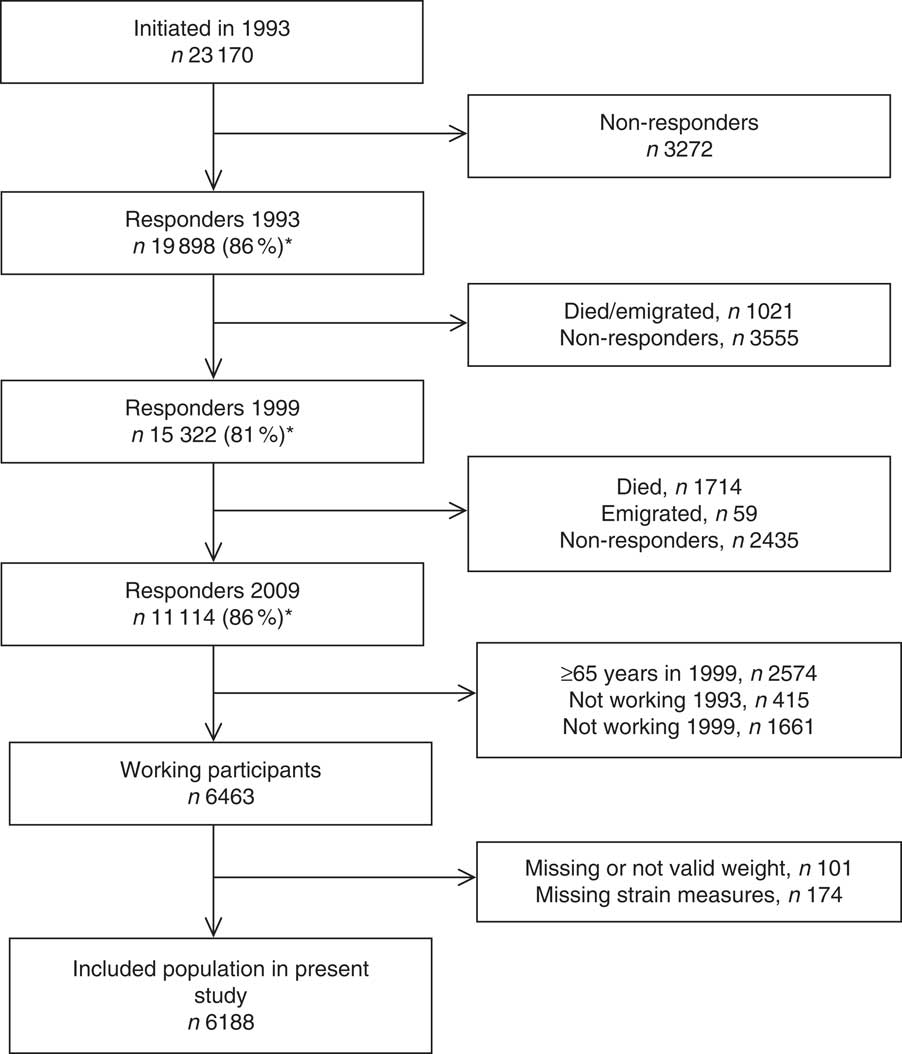
The Danish Nurse Cohort was established in 1993. The study was approved by the Scientific Ethical Committee of Copenhagen and the Danish Data Protection Agency. All female Danish nurses over 44 years of age, who were members of the Danish Nurses’ Association, were invited to take part in the cohort (n 23 170; Fig. 1). Information on health, socio-economic status, working conditions and lifestyle factors were collected by questionnaires in 1993, 1999 and 2009. At baseline, 19 898 participated; in the 1999 follow-up, 15 322 of the 18 877 re-invited nurses participated; and in the last follow-up in 2009, 12 955 nurses were still alive and in the country, out of which 11 114 participated( Reference Hundrup, Simonsen and Jorgensen 14 ). We included a sub-sample of the cohort in the present study, consisting of all nurses who had not reached the retirement age of 65 years in 1999, and were employed in both 1993 and 1999. Since 275 had missing values on weight or job strain, a total of 6188 nurses were included in the present study.
Flowchart of participants from the Danish Nurse Cohort included in the present study. *Percentage of the invited/re-invited nurses participating in the given follow-up
Measures and confounders
The outcome measure, weight gain, was calculated based on self-reported body weight at baseline and the two follow-ups in 1999 and 2009.
Exposure of job strain (i.e. job demands and job control) in 1993 and 1999 was obtained by two questions measuring demands (job busyness and speed) and one question measuring control (job influence). (i) Busyness: ‘How often are you so busy, that you find it hard to achieve your tasks?’ The answer was given on a 6-point scale as: ‘never’, ‘rarely’, ‘sometimes’, ‘often’, ‘almost always’ or ‘irrelevant’. Data were analysed in three categories where ‘never’ and ‘rarely’ were analysed as ‘rarely’, while ‘often’ and ‘almost always’ were analysed as ‘often’. (ii) Job speed: ‘How is the work speed or work load at your job?’ The possible answers were: ‘much too high’, ‘little too high’, ‘suitable’, ‘little too low’, ‘much too low’ or ‘irrelevant’. The two high speed categories were joined as one, and so were the three lower speed categories. (iii) Job influence: ‘How high is your ordinary influence on organizing your daily work?’ The possible answers were: ‘high’, ‘some’, ‘very low’, ‘none’ or ‘irrelevant’. The two low categories were analysed as one, as well as the two highest. The merging of job-strain categories provides more power in the analyses and the use of fewer categories is frequent in previous studies examining job strain( Reference Lallukka, Sarlio-Lahteenkorva and Kaila-Kangas 11 , Reference Nyberg, Heikkila and Fransson 12 , Reference Overgaard, Gamborg and Gyntelberg 15 ).
While the question on influence refers to the control element of job strain, the questions on speed and busyness refer to the demand element. The division into influence, busyness and speed corresponds to previous literature( Reference Overgaard, Gamborg and Gyntelberg 15 , Reference Gram Quist, Christensen and Christensen 16 ). Previous studies have shown different associations between weight gain and the demand and control elements of job strain respectively( Reference Solovieva, Lallukka and Virtanen 17 ), and we therefore chose to analyse the associations separately.
Confounders included in the study were baseline age, self-reported working hours per week, primarily working night shifts v. other shifts, weekly units of alcohol consumption, smoking status (current v. ex. v. never) and 1999 BMI, calculated from self-reported weight/height2 (underweight BMI<18·5 kg/m2 v. normal weight BMI=18·5–25·0 kg/m2 v. overweight BMI=25·0–29·9 kg/m2 v. obesity BMI≥30·0 kg/m2).
Statistical analyses
Baseline descriptive analyses were compared by level of job strain using the χ 2 test for categorical variables and one-way ANOVA for continuous variables. They were presented as percentages or means and standard deviations. ANOVA was used to assess the unadjusted associations between job strain and weight gain as means and standard errors. ANCOVA were used for the adjusted analyses. Age, working hours per week and alcohol consumption were included as continuous predictor variables, and BMI, smoking status, night shift and the three job-strain measures as categorical variables. Interactions were tested and then removed from the model, as no interactions were found. The main effects of job strain were reported as P values from the F tests. Pairwise comparisons were made between groups of job busyness, speed and influence. For busyness, which was measured in three groups, trend tests were performed across groups.
The statistical analyses were conducted in the statistical software package IBM SPSS Statistics version 22.0.0.0.
Results
During the 16-year follow-up from 1993 to 2009, mean weight gain was 3·2 kg ranging from −46·0 to 45·3 kg, and 11·0 % of the nurses gained more than 10 kg. Between the two follow-up examinations, 1999 to 2009, the mean weight gain was 0·4 kg with 3·4 % of the nurses gaining more than 10 kg. Baseline characteristics according to job busyness, speed and influence are presented in Table 1. Nurses who often felt busy in their job were slightly younger and with a higher BMI compared with those who felt rarely busy. They also more often experienced high job speed and low job influence. Compared with nurses with lower job speed, those with the highest job speed had a higher BMI and lower influence. Nurses with higher influence tended to report feeling busier. Number of working hours, alcohol intake, exercise and smoking were similar within levels of all three job-strain elements. There was no interaction between job strain and age, BMI, smoking or alcohol in any of the models.
Baseline characteristics by levels of job busyness, speed and influence (data from the Danish Nurse Cohort, 1993)
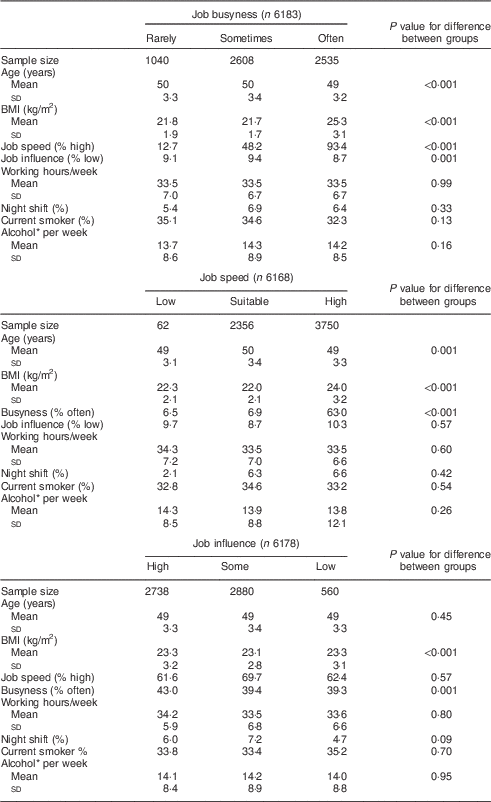
* Units of alcohol containing 12 g each.
Busyness in job
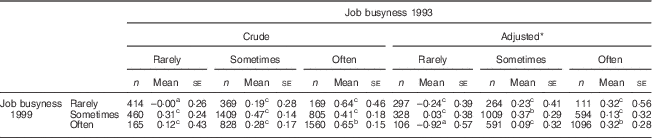
Table 2 shows the crude and adjusted pairwise comparisons in mean 10-year weight changes between 1999 and 2009, associated with alterations in preceding busyness levels between 1993 and 1999.
Crude and adjusted mean weight change in kilograms from 1999 to 2009 associated with job busyness from 1993 to 1999 (data from the Danish Nurse Cohort, 1993, 1999 and 2009)
a,bMean values within the table with a superscript a were significantly different from mean values with a superscript b (P<0.05).
cMean values within the table with a superscript c did not differ from any of the other means in the table.
* Adjusted for baseline age, weekly working hours, night shift, smoking, alcohol and 1999 BMI.
Trend tests were performed across the busyness groups from Table 2. Associations in the trends were essentially similar but increased slightly after adjustment for age, smoking, alcohol, BMI, night shift and weekly working hours.
In the adjusted analysis, a linear direct trend in 10-year weight development was seen in individuals who were often busy in 1999 between those who were rarely v. sometimes. v. often busy in 1993 (P=0·03), with the largest weight gain in individuals with sustained high busyness in both years.
Job speed
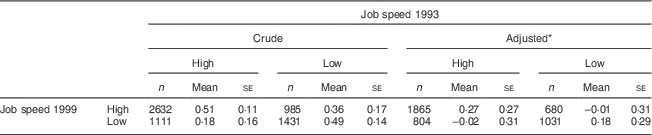
Weight gain did not depend on whether job speed was increased, decreased or sustained in either crude (P=0·35) or fully adjusted analyses (P=0·50; Table 3).
Crude and adjusted mean weight change in kilograms from 1999 to 2009 associated with job speed from 1993 to 1999 (data from the Danish Nurse Cohort, 1993, 1999 and 2009)
* Adjusted for baseline age, weekly working hours, night shift, smoking, alcohol and 1999 BMI.
Job influence
Table 4 shows crude and adjusted 10-year weight changes between 1999 and 2009, associated with change in job influence between 1993 and 1999. Adjusting for baseline age, night shift, weekly working hours, smoking, alcohol and BMI attained in 1999 made the associations stronger. In the adjusted analysis, nurses who lost job influence between 1993 and 1999 gained more weight between 1999 and 2009 than those with a sustained high influence (P=0·003). Loss of influence was also associated with larger subsequent weight gain than a continuous lack of influence (P=0·01) and an increased influence (P=0·02).
Crude and adjusted mean weight change in kilograms from 1999 to 2009 associated with job influence from 1993 to 1999 (data from the Danish Nurse Cohort, 1993, 1999 and 2009)
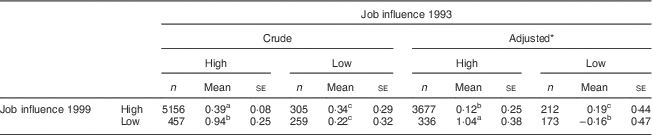
a,bMean values within the table with a superscript a were significantly different from mean values with a superscript b (P<0·05). cMean values within the table with a superscript c did not differ from any of the other means in the table
* Adjusted for baseline age, weekly working hours, night shift, smoking, alcohol and 1999 BMI.
Overall job strain
Change in job strain, as a pooled estimate of combined low influence with high job speed and busyness, was not differentially related to weight gain whether job-strain was sustained high, low, decreased or increased (data not shown).
Discussion
In this cohort of female Danish nurses, we found that both prolonged busyness during 6 years and a decrease in influence were associated with subsequent 10-year gain in body weight, while change in job speed was not. In particular, we found that a decreased influence over the 6-year period led to the most substantial weight gain over the subsequent 10 years. This finding is consistent with the results reported by Nyberg et al.( Reference Nyberg, Heikkila and Fransson 12 ), who showed an increased risk of obesity subsequent to an increase in job strain. However, in that study, strain was a pooled estimate of both demand (i.e. busyness and speed) and control (i.e. influence). Therefore, the influence of the single job-strain elements could not be separated. This would seem important, as our data suggest different associations with subsequent weight development that may be masked when pooled estimates are used. In a Japanese study( Reference Ishizaki, Nakagawa and Morikawa 18 ), analyses were stratified by the three job-strain elements, but the study did not find that job strain or influence was related to weight gain. However, that study examined the association between change in job-strain elements and weight gain over the same time period; hence, the analytic design was essentially cross-sectional despite the prospective nature of the data.
We found that a sustained feeling of being often busy was associated with a subsequent larger 10-year weight gain than an increased feeling of busyness. A decrease in busyness did, however, lead to a larger weight gain than an increase in busyness. These findings are in contrast to a Finnish study( Reference Lallukka, Sarlio-Lahteenkorva and Kaila-Kangas 11 ) where no associations were seen between either increased or decreased mental strain and subsequent weight change at 28-year follow-up. However, those results were based on analysis of a sample of seventy-seven women only and therefore that study may not have had sufficient power to demonstrate any associations.
Our trend tests related to busyness revealed that level of busyness at baseline and a sustained feeling of busyness, rather than changes in busyness, were crucial to the subsequent 10-year weight gain from 1999 to 2009. When busyness was rare at baseline, the nurses did not gain weight regardless of the subsequent alterations in level of busyness until 1999. These results suggest that a history of high busyness establishes a future sensitivity to increased weight gain.
By contrast, we did not find that changes in job speed were associated with subsequent weight gain. This finding corresponds to those of Ishizaki et al.( Reference Ishizaki, Nakagawa and Morikawa 18 ) and Brunner et al.( Reference Brunner, Chandola and Marmot 13 ). In the Whitehall II study( Reference Brunner, Chandola and Marmot 13 ), the odds for obesity following sustained high job demands were not significant either. However, crude analyses of their stratified results were presented and only the pooled estimates of job strain were controlled for confounders. Conversely, the longitudinal Finnish study showed an increased risk of weight gain in women when job speed increased, compared with sustained or decreased over 10 years( Reference Lallukka, Sarlio-Lahteenkorva and Kaila-Kangas 11 ). However, these results examined associations between changes in job strain and weight gain over the same time period, and therefore resembled a cross-sectional design. In a 28-year prospective follow-up of the same study participants, where weight gain was measured following change in job strain, job strain was reported as a combination of pace and mental strain, making comparison to our results difficult. Also, in that study, women were younger (mean age 28 years) and developed a substantial mean weight gain of 12 kg during follow-up, therefore results were not directly comparable to ours.
Our sub-analyses with changes in job strain as a pooled estimate did not reveal differences in subsequent weight gain. These findings suggest that the three elements constituting job strain may have opposing effects that cancel out pooled effects and that the elements need to be examined separately.
Strengths in the present study are the prospective gathering of data with two follow-ups, which enables a truly longitudinal design, and information on several relevant potential confounders.
A limitation of the present study is the measure of job strain by three items only, instead of applying the full fifteen items from the demand/control model( Reference Karasek and Theorell 9 ). Work-related stress has been found to be the major source of stress in adults( 7 ) and the demand/control model of job strain suggests that work-related demands and lack of control are stressors resulting in a physiological arousal and stress response( Reference Karasek and Theorell 9 ). Indeed, higher job strain has been shown to be associated to higher levels of the stress-induced hormone cortisol( Reference Maina, Palmas and Bovenzi 19 ), which, in animal experiments, has been found to predispose to obesity, particularly central obesity( Reference Shively, Register and Clarkson 20 ). Unfortunately, we did not have longitudinal information on changes in central fat distribution. Hence we are unable to distinguish between general and abdominal weight gain.
The restriction to nurses only can be considered both a limitation and a strength. Nurses tend to have a healthier lifestyle than the general population, which may limit generalizability. However, even if Danish nurses smoke less and are more physically active than the general population, previous studies have found that they are essentially similar to other Danish women with the same socio-economic status in relation to BMI and obesity( Reference Friis, Ekholm and Hundrup 21 ). The degree of overweight among the Danish nurses at baseline was also similar to the degree of overweight among 7965 female British civil servants in the Whitehall study( Reference Brunner, Chandola and Marmot 13 , Reference Kivimaki, Head and Ferrie 22 ). Since lower occupational status is linked to higher BMI and lower job influence( Reference Brunner, Chandola and Marmot 13 ), the homogeneous socio-economic status in our study may be considered a strength, eliminating the possible confounding effect from socio-economic positioning. However, caution should still be taken in generalizing the results to other social classes. The purely female study population restricts us from drawing conclusions about influences of preceding change in job strain and subsequent weight development among males, as some previous studies have documented gender differences in the association between job strain and obesity( Reference Lallukka, Sarlio-Lahteenkorva and Kaila-Kangas 11 , Reference Marchand, Beauregard and Blanc 23 ).
Another limitation to the present study is related to the fact that weight was self-reported. A random reporting bias would have attenuated our observed associations, therefore the robust observed significant associations suggest that our results are valid. However, particularly obese nurses may have under-reported their weights( Reference Ng, Korda and Clements 24 ), which may potentially also have attenuated the observed associations. Hence, it is unlikely that reporting bias has led to spurious associations; rather, associations between increases in work strain and subsequent gain in weight were likely to be stronger than those observed. The fact that an increase in job strain, measured as loss of influence, was associated with subsequent weight gain among both lean and obese women added further to the validity of our findings, and is in accordance with results from a previous study( Reference Kivimaki, Head and Ferrie 22 ). We did not have information on nutrient intake during the study period, which prevents us from assessing whether following weight gain may have been mediated through an increased energy intake. However, whether a potential weight gain following an increase in job strain was caused by changes in energy intake and/or hormones, it is still important to continue the focus on nutritional policies promoting a healthy diet and aiming at improving public health through better nutrition. Due to increasing job strain seen in many populations across the globe, job strain will likely affect an increasing number of people. As the association between job strain and obesity may be mediated by dietary intake, the hazardous impact of increased strain on obesity development found herein is potentially of more general nature, and if job strain is generally increasing as suggested by some( 6 – 8 ), our findings may thus be expected to impact negatively on the worldwide obesity epidemic. However, as job strain is modifiable through changes at the workplace or by economic reforms, political action to reduce job strain may have to be taken.
Furthermore, job strain has previously been shown also to increase the risk of CVD and diabetes( Reference Toren, Schioler and Giang 25 , Reference Nyberg, Fransson and Heikkila 26 ), further emphasizing the need for reducing job strain.
Conclusion
In conclusion, women with persistent high busyness or increasing stress in the form of lost influence in their work seem to subsequently gain more weight than women with preceding low or decreased work stress. In particular, loss of job influence, or an initial as well as a sustained burden of busyness, seem strong predictors of subsequent weight gain, while changes in preceding job speed did not seem to independently influence subsequent weight gain.
Acknowledgements
Acknowledgements: The authors thank the Steering Group of the Danish Nurse Cohort for giving us access to the data and Birgitte Marie Skogstad for proofreading the final manuscript. Financial support: This research received no specific grant from any funding agency in the public, commercial or not-for-profit sectors. Conflict of interest: The authors declare that they have no conflict of interest. Authorship: B.L.H. formulated the research question, designed the study, provided feedback during the study process and revised the manuscript. G.K.V. conducted the analyses and wrote the first draft of the article. A.C.K. provided feedback during the study process and revised the manuscript. Ethics of human subject participation: The study was approved by the Scientific Ethical Committee of Copenhagen and the Danish Data Protection Agency.



