



The role of diet in the development of chronic diseases is well documented( Reference Panagiotakos, Chrysohoou and Pitsavos 1 , Reference Schols 2 ). Formulating appropriate food-based dietary recommendations for the general public requires a better understanding of dietary habits and their diversity( 3 ). Dietary pattern analysis defined by principal components is a complementary approach to more traditional analyses. Such an analysis represents a complex set of highly correlated dietary components in a factor (dietary pattern) that is representative of the characteristics of all its constituent food groups and their synergistic or antagonistic effects, rather than focusing on a single nutrient or food group in relation to health outcomes( Reference Hu 4 , Reference Hu, Rimm and Stampfer 5 ). Dietary patterns are likely to vary according to gender, socio-economic status (SES) and ethnicity( Reference Nicklas, Webber and Thompson 6 , Reference Yang, Kerver and Song 7 ). As Gilbert and Khokhar( Reference Gilbert and Khokhar 8 ) pointed out, in ethnic populations, dietary habits are affected by various factors, including food availability, food beliefs, health status, dietary laws and religious beliefs, cultural norms, income level and occupational status, as well as demographic factors such as birthplace and age. In a given environment with defined food availability, ethnicity and SES are two major determinants of dietary pattern( Reference Rezazadeh, Rashidkhani and Omidvar 9 ). Studies have suggested an attenuation of geographical differences in dietary behaviours( Reference Huijbregts, Feskens and Räsänen 10 ) and the strong contribution of socio-economic factors( Reference Marmot, Stansfeld and Patel 11 , Reference Margetts, Thompson and Speller 12 ).
Iran is a multi-ethnic country experiencing an accelerated nutrition and health transition( Reference Azizi, Azadbakht and Mirmiran 13 ). Meanwhile, the present knowledge of various features of Iranian ethnic groups in terms of their health status and dietary habits is limited. To our knowledge, no studies have assessed the dietary habits of various Iranian ethnicities and factors contributing to the food habits of each ethnicity.
West Azerbaijan Province, located in the north-west of Iran and close to Turkey and Iraqi Kurdistan, includes a heterogeneous population in terms of ethnicities (including Azeris (76·2 %), Kurds (21·7 %), Persians (0·8 %) and others (1·4 %)) and religions (Shiite, Sunni, Christian and Assyrian)( 14 ). Urmia, as the capital city of the province, has a diverse ethnic composition too( Reference Hosseini 15 ); from which Azeri Turks and Kurds are the major ethnic groups. Urmia city has not been recognized as a metropolitan city yet and has not been much affected by acculturation; therefore, it provides a relatively appropriate environment in which to study the actual dietary behaviours and lifestyles and their relationships with SES of the resident ethnic groups. Therefore, the present study aimed to investigate the major dietary patterns and their possible association with SES, food insecurity and lifestyle factors in two Iranian ethnic groups living in Urmia.
Methods
Participants
The current cross-sectional study was part of a larger project entitled ‘Designing and testing of a multilevel model to explain the effects of neighbourhood, household and individual levels on anthropometric factors in men and women living in the city of Urmia’ funded by the National Nutrition and Food Technology Research Institute. The sample size of the main study was 723 (445 (61·5 %) Azeri Turks and 278 (38·5 %) Kurds).Footnote * In order to conduct the current research to explore major dietary patterns and their socio-economic correlates, a power analysis based on previous research on Iranians( Reference Mohammadi 17 ) approved that the aforementioned sample size was sufficient to detect similar results (power ~ 90 %). Samples were selected by a combination of cluster, random and systematic sampling methods. Samples were selected from all four geographical zones (north, south, east and west) of Urmia. Health centres (clusters) were randomly selected based on population size at each zone. At each centre, a systematic random sampling approach was used to select households from the routine data registry, weighting by the population size at each centre. In each centre, the first household of each cluster was selected from routine data registry of the centre. Then the rest of the households in the cluster of ten were selected from both sides of the first household’s home address (five households from the right and four from the left side of that house), despite being registered or not in the health centres. Two members of the household (one man and one woman) were interviewed by trained local nutritionists who were fluent in Turkish and Kurdish. Women interviewees substituted uncooperative male respondents for some households. The response rate was approximately 80 % within the cases. The inclusion criteria were current residency in Urmia, belonging to either Azeri or Kurd ethnic group, not currently pregnant or lactating, and no history of endocrine or metabolic disorders. Individuals who had left >50 % of food items on the FFQ blank or those who misreported energy intake based on the Goldberg et al.( Reference Goldberg, Black and Jebb 18 ) method were excluded from the study.
Pilot study
A pilot study was carried out on thirty individuals who were not subsequently included in the main study. The aim of the pilot study was to minimize errors and biases in data collection. During this step, the interviewers were trained and their interview skills were improved. Additionally, necessary modifications in the questionnaire were applied. Furthermore, viability of the study and cooperation of the participants were assessed.
Assessment of dietary intake
Data on dietary intake over a year were collected with a semi-quantitative 168-item FFQ. The FFQ was a Willett-format questionnaire modified based on Iranian food items and it was used to obtain information on dietary intake over a 1-year period( Reference Willett, Sampson and Stampfer 19 ). It included a list of foods (with standard serving sizes) commonly consumed by Iranians. Individuals were requested to report their frequency of consumption of a given serving of each food item, during the past year, on a daily, weekly, monthly or yearly basis. Validity and reproducibility of this FFQ have been reported( Reference Esfahani, Asghari and Mirmiran 20 , Reference Mirmiran, Hosseini Esfahani and Mehrabi 21 ) and approved for the Iranian population( Reference Asghari, Rezazadeh and Hosseini-Esfahani 22 ). However, taking into account that our studied population included two Iranian ethnic groups, content validity of the FFQ was also assessed by five local nutrition experts in the nutrition department of Urmia University of Medical Sciences. Based on their recommendations, eight commonly consumed food items including ash (a thick soup), dolma (stuffed grape, cabbage or other vegetable leaves), kofte (meatballs), khagineh (traditional pancake), walnut & carrot halva (traditional sweet), herbal beverages (pussy willow and lemon balm) and turkey were added to the FFQ food list. After converting the reported frequency of each food item to its daily intake value, portion sizes of consumed foods were converted to grams using household measures( Reference Lopez-Garcia, Schulze and Fung 23 ). In the next step, food items were categorized into thirty-three predefined food groups. Food grouping was performed based on previous studies( Reference Asghari, Rezazadeh and Hosseini-Esfahani 22 , Reference Esmaillzadeh and Azadbakht 24 , Reference Rezazadeh and Rashidkhani 25 ). In addition, some food items that were indicative of distinct dietary patterns in the studied population such as traditional foods (e.g. kofte, dolma, khagineh) were grouped separately.
Assessment of demographic and socio-economic characteristics
Demographic (age, gender, duration of residence in Urmia, marital status, household size, number of children) and socio-economic (educational status, occupation, total income/capita, total expenses/capita, household economic status) characteristics were collected by questionnaire. Occupation was categorized into five levels: (i) unemployed and/or housewife; (ii) job category 1 (labourer, farmer, rancher); (iii) job category 2 (self-employed, shopkeeper); (iv) job category 3 (teacher, serviceman, government employee, trooper); and (v) job category 4 (employer, industrialist, business owner, manager, doctor, lawyer, pilot, university professor). Household economic status was defined by scoring household assets based on their economic value according to a previous study( Reference Eini-Zainab 26 ) and computing the total score. The total score was categorized into tertiles (T) and T1, T2 and T3 were labelled as low, middle and high SES, respectively.
Food security status
Household food security was measured using a locally adapted Household Food Insecurity Access Scale (HFIAS)( Reference Wunderlich and Norwood 27 ). The scale consisted of nine items with four frequency options that classified households into secure, mildly insecure, moderately insecure and severely insecure (food insecurity) categories. Validity of the HFIAS in the Iranian population has been confirmed previously( Reference Mohammadi, Omidvar and Houshiar-Rad 28 ). All data were collected through face-to-face interviews with heads of households or their spouses at their home.
Statistical methods
Data were analysed using the statistical software package SPSS Version 16.0. Principal components analysis was used to identify major dietary patterns based on the thirty-three predefined food groups. Factors with eigenvalues ≥1·0 were retained. Selection of the factors was based on the inflection of the scree test and interpretability. Varimax rotation was applied as a solution to obtain an orthogonal rotation to simplify the factor structure and render it more easily interpretable. The derived factors were labelled on the basis of interpretation of the data and the earlier literature. The factor score for each pattern was calculated by summing intakes of food groups weighted by the factor loading( Reference Kim and Mueller 29 ) and each individual received a factor score for each identified pattern.
To compare general characteristics of the two ethnic groups across tertiles of identified dietary patterns, one-way ANOVA and χ 2 tests were used wherever applicable. In both ethnic groups, the relationship between demographic, socio-economic and lifestyle variables and adherence to each dietary pattern was assessed by ANCOVA. Data were simultaneously adjusted for all variables (demographic, socio-economic, lifestyle), energy intake (kJ/d) and BMI. P<0·05 was considered as significant.
Results
Data were analysed for 695 participants. Twenty (3·8 %) individuals (twelve Azeri Turks and eight Kurds) were excluded due to misreporting of energy intake and eight (1·1 %) individuals (three Azeri Turks and five Kurds) were excluded due to incomplete FFQ (>50 % of items blank).
Three major dietary patterns were extracted through factor analysis: (i) ‘Traditional High SES’ (THS), with high loadings for fruit and natural juice, cabbage, dark green leafy vegetables, dairy products, dried and canned fruits, other vegetables, olives and nuts, traditional herbal infusions, khagineh, dolma, ash and pickles; (ii) ‘Transitional’, with high loadings for fast foods, red meat and organ meat, kebab, salty snacks, sauces (ketchup and mayonnaise), sweetened drinks, sweets and confectionery, poultry, fish and shrimp, seeds and coffee; and (iii) ‘Traditional Low SES’ (TLS), with high loadings for tea, refined grains, potatoes, whole grains, hydrogenated oils and animal fat, abgoosht (a traditional stew), salt, vegetable oil, eggs and legumes (Table 1).
Factor loading matrix for the major dietary patterns identified using FFQ data among two Iranian ethnic groups living in Urmia, Iran

SES, socio-economic status.
Values<0·20 were excluded for simplicity.
Total variance explained by three factors: 22·6 % (‘Traditional Higher SES’, ‘Transitional’ and ‘Traditional Lower SES’ explained 10·3, 6·3 and 6·0 % of the total variance, respectively).
Taken together, a higher percentage of Azeri Turks (40·5 %) and a lower percentage of Kurds (23·6 %) were in the highest intake tertile of the THS dietary pattern (P=0·00). In contrast, a higher percentage of Kurds (37·9 %) were at the highest intake tertile, while 36·0 % of Azaris were in the lowest intake tertile of the TLS dietary pattern (P=0·01). The distributions of the two ethnic groups across tertiles of the ‘Transitional’ dietary pattern were not significantly different.
The ‘Traditional High Socio-economic Status’ dietary pattern
As shown in Table 2, among Azeri participants, a greater percentage of those in the highest tertile of the THS dietary pattern were women, non-smokers, from middle- and high-SES households who were either food secure or with mild food insecurity. Those in the middle tertile of the THS dietary pattern had higher per capita income and expenses. Among Kurds, those categorized in the highest tertile of the THS dietary pattern had higher per capita income and expenses than those in lower tertiles.
Major characteristics of study participants according to tertiles of the ‘Traditional Higher SES’ dietary pattern and ethnic group, Urmia, Iran
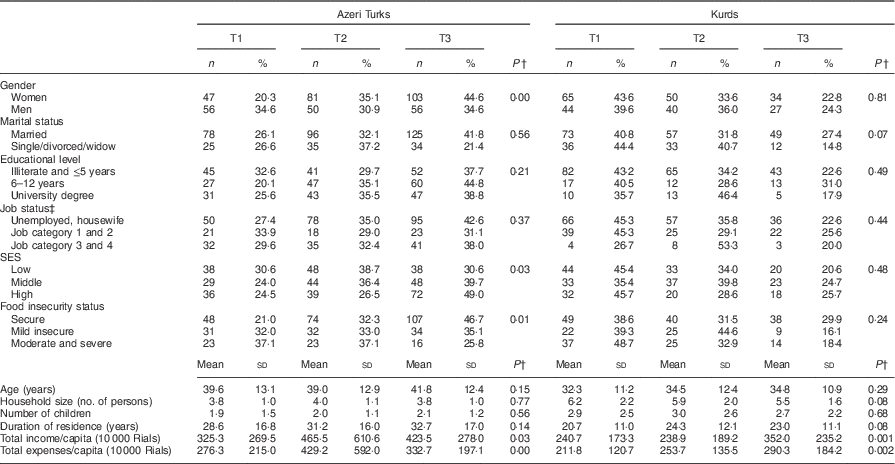
SES, socio-economic status; T, tertile (T1=low, T2=middle; T3=high).
† P values were calculated by one-way ANOVA and the χ 2 test where appropriate.
‡ Job category 1=labourer, farmer, rancher; job category 2=self-employed, shopkeeper; job category 3=teacher, serviceman, government employee, trooper; job category 4=employer, industrialist, business owner, manager, doctor, lawyer, pilot, university professor.
The ‘Transitional’ dietary pattern
Azeri individuals in the highest tertile of the ‘Transitional’ dietary pattern were younger, not married, had a lower duration of residence in Urmia and fewer children than those in lower tertiles. Further, more in this tertile, v. lower tertiles, had 6–12 years of education or a university degree and lived in food-secure households. Among Kurds, individuals in the highest tertile of the ‘Transitional’ dietary pattern tended to be younger, not married and with fewer children, higher income and expenses per capita, in food-secure households and with 6–12 years of education or a university degree (Table 3).
Major characteristics of study participants according to tertiles of the ‘Transitional’ dietary pattern and ethnic group, Urmia, Iran

SES, socio-economic status; T, tertile (T1=low, T2=middle; T3=high).
† P values were calculated by one-way ANOVA and the χ 2 test where appropriate.
‡ Job category 1=labourer, farmer, rancher; job category 2=self-employed, shopkeeper; job category 3=teacher, serviceman, government employee, trooper; job category 4=employer, industrialist, business owner, manager, doctor, lawyer, pilot, university professor.
The ‘Traditional Low Socio-economic Status’ dietary pattern
Among Azeri Turks, more men and those working in job categories 1 and 2 were categorized in the highest v. the lower tertiles of the TLS dietary pattern. Kurds in the highest tertile of the TLS dietary pattern were also more likely to be employed in the job categories 1 and 2, with lower per capita income and expenses relative to those in lower tertiles of the TLS dietary pattern (Table 4).
Major characteristics of study participants according to tertiles of the ‘Traditional Lower SES’ dietary pattern and ethnic group, Urmia, Iran

SES, socio-economic status; T, tertile (T1=low, T2=middle; T3=high).
† P values were calculated by one-way ANOVA and the χ 2 test where appropriate.
‡ Job category 1=labourer, farmer, rancher; job category 2=self-employed, shopkeeper; job category 3=teacher, serviceman, government employee, trooper; job category 4=employer, industrialist, business owner, manager, doctor, lawyer, pilot, university professor.
Factors associated with adherence to the three dietary patterns
After adjusting for confounders and all variables in the model, the THS dietary pattern was positively associated with age, intermediate and university degrees (relative to illiteracy and primary education) and negatively associated with moderate or severe food insecurity (relative to food secure). Among Kurds, the THS dietary pattern was positively associated with age and was more common among women than men (Table 5). On the other hand, the ‘Transitional’ dietary pattern was positively associated with employment (relative to being a housewife or unemployed) and negatively associated with age and mild, moderate or severe food insecurity (v. food secure) among Azeri Turks. Among Kurds, the THS dietary pattern was more common among men and negatively associated with age, being married, and mild, moderate or severe food insecurity. Finally, the TLS dietary pattern was more common among men, positively associated with mild, moderate or severe food insecurity, and negatively associated with intermediate or university education in Azeri Turks. The TLS dietary pattern was positively associated with being married and negatively associated with household income per capita in Kurds.
Factors associated with adherence to the major dietary patterns according to ethnicity among two Iranian ethnic groups living in Urmia, Iran

SES, socio-economic status; B, regression coefficient (a positive coefficient implies a higher adherence to the pattern); Ref., reference category.
Data were adjusted for all variables shown in the table (demographic, socio-economic, lifestyle variables) and energy intake (kJ/d).
Values were significantly different compared with the reference group of the listed variables: *P<0·05, **P<0·01, ***P<0·001.
Discussion
To our knowledge, the present study is the first conducted among Iranian ethnic groups to define their major dietary patterns and to discover their probable association with SES and food insecurity. Most previous studies on Iranian dietary patterns were done with residents of the capital city, Tehran, without considering ethnicity. In the present study, three major dietary patterns were identified in a representative sample of Azeri and Kurd ethnic groups living in Urmia city. Two reflected traditional eating patterns; however, the third dietary pattern was a transitional pattern that represented evidence of acculturation towards Westernized dietary habits. These dietary patterns were associated with significant differences in SES and food insecurity status.
In the present study, the first extracted factor, the THS dietary pattern, explained the greatest percentage of variance. This pattern was named the ‘Traditional High SES’ due to the fact that food items loading highly on the factor included traditional healthy foods, including ash (usually containing green leafy vegetables and legumes) and dolma (prepared with vegetables) and traditional herbal beverages (pussy willow and lemon balm) that are abundantly cultivated in this region and are believed to have health benefits, but tend to be more expensive than other staple foods. Adherence to the THS dietary pattern was more common in Azeri participants compared with Kurds, but it was associated with SES among both groups. Azeri Turks are the main ethnic group in this city and have a longer duration of residence in Urmia, as well as higher SES relative to the Kurds living there. Previous reports have shown that the Kurds, who are immigrants from Kurdistan, the neighbouring province to West Azerbaijan, have lower social and economic status than Turks and a higher sense of social discrimination( Reference Hosseini 15 ). Interestingly, age was positively associated with the THS dietary pattern in Kurds, representing likely acculturation to Turk dietary habits. This dietary pattern has a healthy nature; it is relatively comparable to the ‘healthy’ or ‘prudent’ dietary pattern reported in previous studies on the Iranian population( Reference Jafarabadi, Ghazizahedi and Mohajeri 30 – Reference Mohammadifard, Sarrafzadegan and Nouri 34 ) and in other countries( Reference Arruda, da Silva and Kac 35 – Reference Naja, Nasreddine and Itani 39 ).
In contrast to the THS dietary pattern, another factor was based on traditional foods, but was labelled as ‘Traditional Low SES’. The TLS dietary pattern contained foods that tend to be consumed more by lower-SES groups, including a high-fat traditional stew (abgoosht), all kinds of fats, refined grains, salt, as well as a few healthy food items such as whole grains and legumes. This dietary pattern consisted of energy-dense, low-cost foods and its constituent food groups are similar to those in the ‘Iranian’ dietary pattern previously described in Tehrani female teachers( Reference Esmaillzadeh and Azadbakht 24 ) and, to some extent, the ‘Traditional’ dietary pattern described in people from five metropolitan areas or central regions in Iran( Reference Jafarabadi, Ghazizahedi and Mohajeri 30 ) and in the Tehran Lipid and Glucose Study( Reference Asghari, Rezazadeh and Hosseini-Esfahani 22 , Reference Mirmiran, Hosseini-Esfahani and Jazayeri 40 ). Although more Kurdish and fewer Azeri participants were in the top tertile of this dietary pattern, lower SES appeared to be the main determining factor influencing the tendency of people to consume this low-nutrient-quality dietary pattern in both ethnic groups. This dietary pattern was followed mainly by low-educated Azeri Turks in food-insecure households and Kurdish married men living in low-income families. In line with our findings, Tehrani teachers( Reference Esmaillzadeh and Azadbakht 24 ) in the highest quintile of an ‘Iranian’ dietary pattern similar to our TLS dietary pattern had lower SES. Generally speaking, there is an inverse relationship between SES and energy density of consumed foods( Reference Cunha, Sichieri and de Almeida 41 ); low-income people have restricted food choices, purchase poor-quality foods in terms of micronutrients( Reference Gilbert and Khokhar 8 ) and consume higher energy-dense food items high in fats and carbohydrates( Reference Drewnowski and Specter 42 ).
The third dietary pattern was named ‘Transitional’. This pattern was very similar to ‘Western’ dietary patterns introduced in previous studies in Iran( Reference Mirmiran, Hosseini Esfahani and Mehrabi 21 , Reference Esmaillzadeh and Azadbakht 24 , Reference Jafarabadi, Ghazizahedi and Mohajeri 30 , Reference Mohammadifard, Sarrafzadegan and Nouri 34 , Reference Mirmiran, Hosseini-Esfahani and Jazayeri 40 ), as well as other Western and European nations( Reference Richter, Heidemann and Schulze 37 , Reference Brenner, Boucher and Kreiger 38 , Reference Gimeno, Andreoni and Ferreira 43 – Reference Sánchez-Villegas, Delgado-Rodriguez and Martínez-González 46 ). This dietary pattern was highly consumed by higher-educated younger participants living in food-secure households in both ethnic groups. The distribution across tertiles of this dietary pattern did not differ by ethnicity. This pattern was highly loaded with high-protein food items, including red and organ meats, fast food, kebab, poultry, fish and shrimp. These are expensive food items in Iran; therefore, it is not surprising that this dietary pattern was consumed mainly by prosperous and food-secure households. Consistent with our findings, Tehrani teachers in the highest quintile of the ‘Western’ dietary pattern were more likely to have higher SES( Reference Esmaillzadeh and Azadbakht 24 ). Also, the ‘Western’ dietary pattern among Haitians living in Canada was associated with higher SES( Reference Desilets, Rivard and Shatenstein 47 ). Furthermore, among low-income adults living in Rio de Janeiro, lower household food insecurity and higher monthly per capita family income were positively associated with adherence to a ‘Western’ dietary pattern( Reference Cunha, Sichieri and de Almeida 41 ).
Further, our findings are in accordance with several studies that have shown ‘Western’-type dietary patterns to be followed more by younger individuals( Reference Jafarabadi, Ghazizahedi and Mohajeri 30 , Reference Sánchez-Villegas, Delgado-Rodriguez and Martínez-González 46 – Reference Northstone, Smith and Cribb 49 ). This may reflect acculturation to Western and/or urbanized eating habits and departure from traditional dietary habits( Reference Ghassemi, Harrison and Mohammad 50 ) to a more modern and convenient dietary pattern mainly by younger generations. As noted by Gilbert and Khokhar( Reference Gilbert and Khokhar 8 ), younger generations tend to change their eating habits by including fast foods, as they are seen to be convenient and reflective of independence. In contrast, older age has been shown to be associated with healthier traditional diets in many studies, as in our study, where it was associated with the THS dietary pattern( Reference Esmaillzadeh and Azadbakht 24 , Reference Vengiau, Umezaki and Phuanukoonnon 51 , Reference Abu-Saad, Murad and Lubin 52 ). Azeris who were employed, regardless of their job level and Kurds who were single (v. married) were most likely to consume the ‘Transitional’ dietary pattern.
In the present study, gender was an important demographic factor related with adherence to a distinct dietary pattern among Kurds. Kurdish women were more likely to follow the THS while Kurdish men were more likely to follow the ‘Transitional’ or TLS dietary pattern. This suggests that Kurdish women pay more attention to healthy eating regardless of their SES and other demographic characteristics. Although, in Azeris, adherence to the THS and ‘Transitional’ dietary patterns did not differ significantly by gender, the TLS was mostly followed by men, as seen in Kurds. This suggests that Azeri women in lower-SES groups may have healthier eating habits as compared with men. These findings are in agreement with previous studies suggesting that women tend to adhere to healthier dietary patterns than men( Reference Brenner, Boucher and Kreiger 38 , Reference Naja, Nasreddine and Itani 39 , Reference Gimeno, Andreoni and Ferreira 43 , Reference Northstone, Smith and Cribb 49 , Reference Newby and Tucker 53 ).
The present study has some limitations. First, the 80 % response rate may pose response bias. One should take caution when generalizing the results to the studied population. Second, causality cannot be assigned to the associations observed herein due to the cross-sectional nature of the data. Explaining these relationships will require longitudinal studies that make the investigation of temporal sequences of events possible. Third, in assessing dietary intakes by FFQ some limitations, such as under-reporting of usual intake or invalid reporting due to social desirability bias, should be considered( Reference Kerver, Yang and Bianchi 54 ). Fourth, dietary pattern analysis involves several subjective or arbitrary decisions in categorizing food items into a certain food group, selecting the number of factors by various methods (eigenvalues, scree plots and interpretability) and finally in labelling of the extracted factors that may have an influence on the final content of the dietary patterns in the present study( Reference Hu 4 ).
Conclusion
Findings suggest that despite differences observed between the two studied ethnic groups in their tendency to consume a distinct dietary pattern (the THS dietary pattern in Azeri Turks and the TLS dietary pattern in Kurds), low SES and household food security level can affect the quality of their dietary patterns and this effect may be stronger than their cultural background. The ‘Transitional’ dietary pattern, however, appeared to be less affected by ethnicity and mostly influenced by the age of participants (younger generation). In general, findings emphasize the higher importance of social factors as compared with ethnic and biological factors in adhering to a high- or low-quality dietary pattern. In other words, understanding and interpreting determinants of dietary pattern(s) and food security in the multi-cultural context of Iran is dependent on considering socio-economic and political factors at micro and macro levels and their implications on ethnic groups’ behaviours. The identified socio-economic barriers should be addressed in the design and administration of interventions to promote the adoption of healthier dietary choices in different ethnic groups.
Acknowledgements
Acknowledgements: The authors would like to thank the people who participated in this study. Also, they appreciate Dr Katherine Tucker for her special support in reviewing and English editing the manuscript. Financial support: This study was supported by National Nutrition and Food Technology Research Institute (NNFTRI) (grant number 501) for funding the study. The NNFTRI had no role in the design, analysis or writing of this article. Conflict of interest: None of authors had a financial interest or professional affiliation that compromised the scientific integrity of this work. Authorship: N.O., A.R., M.G.-T. and R.M. formulated research questions and designed the study; A.R. collected data in the field; N.O. and A.R. analysed data and prepared the manuscript; H.E.-Z. and R.M. supervised statistical analysis; N.O., M.G.-T., R.M., S.G. and S.N.-S. supervised the study. This article resulted from the dissertation of A.R. as a PhD candidate in nutrition sciences. Ethics of human subject participation: This study was conducted according to the guidelines laid down in the Declaration of Helsinki and all procedures involving human subjects were approved by the Ethical Committees of the NNFTRI and the Faculty of Nutrition Sciences and Food Technology, Shahid Beheshti University of Medical Sciences. Written informed consent was obtained from all participants.



