


1. Introduction
In the year 1300, legislation for the seigneurie of Lallaing in the county of Hainaut in the southern Low Countries prescribed that all inhabitants had to bake in the lord’s oven, for a fee. Two hundred years later, in 1506, the situation had changed significantly. Because of ‘great inconveniences … for a long time’, subjects were now allowed, by ‘seigneurial grace’, to bake their bread at home or anywhere they wished, for a fixed sum to be paid twice a year. Innkeepers and others selling wine and beer still had to purchase their bread from the seigneurial baker, provided that he delivered ‘good, honest bread’ of the right size.Footnote 1
The obligation to bake in the seigneurial oven, in exchange for the payment of a fee, is a classic example of a seigneurial monopoly or banality (banalité). Historical literature usually emphasizes the compulsive character of banalities, at the subjects’ expense. However, as this example illustrates, village inhabitants often succeeded in shaping conditions concerning essential village facilities, such as ovens and mills, to fit their demands. While lords aimed to capitalize on their prerogatives, village communities strove for optimal circumstances for the production of their daily beer and bread. Hainaut’s legislative sources from the twelfth to the sixteenth century reveal ongoing negotiations over that period of 400 years. Based on these, this article offers a first integrative approach to seigneurial monopolies as topics of interplay between peasants and lords. It reveals how processes of negotiation shaped the evolution of seigneurial monopolies both before and after the demographic and economic crisis caused by the Black Death from the mid-fourteenth century onwards.
Throughout the medieval and early modern period, most of Europe was governed at the local level through an institution which is usually referred to as lordship, seigneury or manor in England. Its distinguishing feature was that a lord, lady or ecclesiastical institution exercised certain rights over a specific territory and its population. The nature of such rights depended highly upon time and location but typically entailed administering justice and levying all sorts of taxes. Seigneurial monopolies on breweries, ovens and mills were based on economic considerations but also held high symbolic value by being related to lordly claims on soil, water and air.Footnote 2 From the local population’s point of view, these were essential resources. Bread and alcoholic beverages were the mainstay of medieval diets, from the clergy to the peasantry.Footnote 3 Facilities for their production were therefore of crucial concern for a medieval community. Seigneurial monopolies thus stood at the crossroad of lordly income and status, on the one hand, and the rural population’s daily survival and well-being, on the other.
The seigneurial milling monopoly, which appears in the sources from the early twelfth century onwards and persisted in certain regions of Europe until the eighteenth century, has thus far been considered mainly from the perspective of seigneurial power and income.Footnote 4 Marc Bloch characterized the milling monopoly as a typical bone of contention between lords wishing to increase their revenues through the implementation of technical innovations, followed by enforced monopolization, while obstinate peasants preferred to adhere to the old ways. His argument was based to a large extent on seigneurial wars against handmills for grinding corn at home.Footnote 5 This view was nuanced by Richard Holt, who argued that, although power disputes between lords and peasants in England sometimes centred on mills as symbols of seigneurial oppression, they were actually about personal freedom since, in contrast with France, the suit of mill was linked to subjects’ villein status. With freedom of choice, many peasants preferred to use watermills and windmills.Footnote 6 Domestic rotating handmills, which remained ubiquitous throughout the medieval period, offered an alternative to seigneurial milling, but were also extremely time and labour-consuming.Footnote 7 The seigneurial monopoly was enforced by policing and by fines for milling at competing mills, but the limited number of recorded violations in England suggests that seigneurial coercion was not as strong as had been presumed. In all likelihood, the suit of mill was not essential for profitability since enough peasants came to the seigneurial mill out of their free will. After 1350, recorded mill suit violations dropped even further, indicating that the reduced demand and falling rates caused by depopulation after the Black Death did not induce a seigneurial reaction of more rigorous mill suit enforcement, as is often assumed.Footnote 8 Instead of enforcing their monopoly, many lords opted for a more pragmatic and realistic approach, based on their subjects’ freedom of choice.Footnote 9 Still, mills remained a perquisite of lordship, and not only for economic reasons. By the late fourteenth century, mill ownership was still considered a hallmark of lordly status.Footnote 10
Other seigneurial monopolies have received far less historical attention, although in some regions they were more persistent. Around Lyon, mandatory seigneurial milling had largely disappeared by the fourteenth century, but lords still strove to maintain their monopoly on ovens and grape presses. The latter were large leverage presses made of wooden beams with a stone counterweight, which extracted juice for wine production from grapes by a repetitive up-and-down movement. At least in some regions of Europe, this expensive equipment was preferred over bare feet crushing of grapes.Footnote 11 Ovens were less profitable than mills, but the seigneurial income generated by them could still be significant, as in some north-east Iberian towns.Footnote 12 For brewing, strong regional differences can be observed, possibly in concordance with the scale of brewing techniques. Until the introduction of continental beer and the accompanying new technologies from 1400 onwards, ale brewing in England was mostly a small-scale local business performed by women. In contrast with continental Europe, brewing was not a seigneurial monopoly but was taxed by lords demanding a batch of each brew.Footnote 13
The influence of subjects on both daily operation and long-term economic development of the seigneurie has recently become increasingly evident.Footnote 14 Yet, as in other fields of medieval history, the perspective of the rural majority as driver or obstructor of societal and economic change still lags behind.Footnote 15 Although the operation of facilities for the production of the daily beer and bread must have been high on the peasantry’s agenda, still little is known of how these were influenced by their agency. Regarding the southern Low Countries, different possible perspectives have been sketched. In twelfth–thirteenth century Picardy, milling conflicts initially emerged mainly from the population’s resistance, but later from lords contesting the emergence of competing nearby mills as well. Robert Fossier has suggested that collective dependence on the local mill and seigneurial authority over it may have induced solidarity amongst its users.Footnote 16 On the other hand, he has argued that seigneurial mills mainly served the economic interest of the more prosperous peasants, by reducing costs, time and labour, while milling fees may have weighed heavily on the shoulders of the poor.Footnote 17 Léopold Génicot has stressed how Namur’s late medieval customs illustrated the peasantry’s annoyance with and resistance to every aspect of seigneurial milling. Based on his description, freedom of choice comes across as a key issue.Footnote 18
Less is known on seigneurial baking and brewing, the two other classical examples of seigneurial monopolies or banalités.Footnote 19 In Flanders, seigneurial ovens had already disappeared by the late medieval period.Footnote 20 In other south Netherlandish principalities they were absent or rare.Footnote 21 Picardy’s rare seigneurial legislation on ovens has been described as being aimed mainly at restricting seigneurial rights, while reflecting a general distrust towards seigneurial bakers.Footnote 22 In Namur, seigneurial ovens may have been rare, but continued to exist until the fifteenth century in certain locations, sometimes in combination with a village baker. Génicot already wondered whether seigneurial ovens in villages which had obtained freedoms and rights (franchises) may not be considered a commodity rather than an obligation.Footnote 23 Finally, seigneurial brewing is thought to have evolved in a diversity of ways.Footnote 24 Although lordly monopolies appear as a two-sided coin from all of this, rather than as outright seigneurial exploitation, whether and how the peasantry may have succeeded in defending its interests remains far from clear. So far, a more general consideration of how peasants may have influenced the development of different seigneurial monopolies is lacking, especially in a long-term perspective.
Owing to its rich legislative source material, the county of Hainaut in the southern Low Countries is particularly suitable for a diachronic approach to this subject matter. This fertile principality had an intensive regional grain economy, while also exporting grain to neighbouring regions.Footnote 25 Its dense network of seigneuries remained relatively stable from the thirteenth century onwards.Footnote 26 During this period, crucial evolutions took place within seigneuries, including the gradual disappearance of serfdom.Footnote 27 As in other parts of the Low Countries, the Black Death had a strong impact on society and economy from 1349 onwards.Footnote 28 The example of Lallaing, which this article started with, suggests that seigneurial monopolies were also strongly affected. Nonetheless, some of these are known to have persisted until the end of the eighteenth century.Footnote 29 Hainaut’s corpus of local seigneurial legislation is particularly suitable for studying long-term developments. Based on these sources, the present article offers a first integrative approach to different types of seigneurial monopoly as topics of negotiation between peasants and lords over a long period of time, from 1150 until 1550. It reveals how peasants’ priorities shaped regulations pertaining to seigneurial monopolies at the local level throughout this period. After a short introduction to the source material, this article starts by establishing that by the twelfth century the banality on brewing had already largely disappeared in Hainaut (Section 2). It then goes on to demonstrate how ongoing processes of negotiation between village inhabitants and lords both before (Section 3) and after (Section 4) the mid-fourteenth-century crisis caused by the Black Death influenced the nature of seigneurial brewing and baking. Its central conclusion (Section 5) is that, in the long run, lordly monopolies survived only as long as both parties benefitted.
2. Legislative sources on seigneurial mills, ovens and breweries
Medieval Hainaut was covered by more than 400 seigneuries. While many seigneuries comprised a single village or small town, some villages were split up into several seigneurial jurisdictions, or the reverse: several villages were part of one seigneurie.Footnote 30 In Hainaut’s scholarly literature, written forms of local seigneurial legislation are usually referred to as ‘legislative charters’ (chartes-lois). Owing to the 1940 fire in Mons’ archive, much of the original source material has been destroyed, but the surviving edited material makes it possible to observe long-term trends in this highly significant corpus.Footnote 31
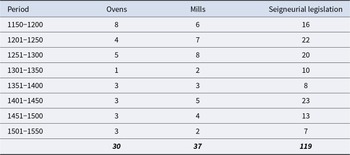
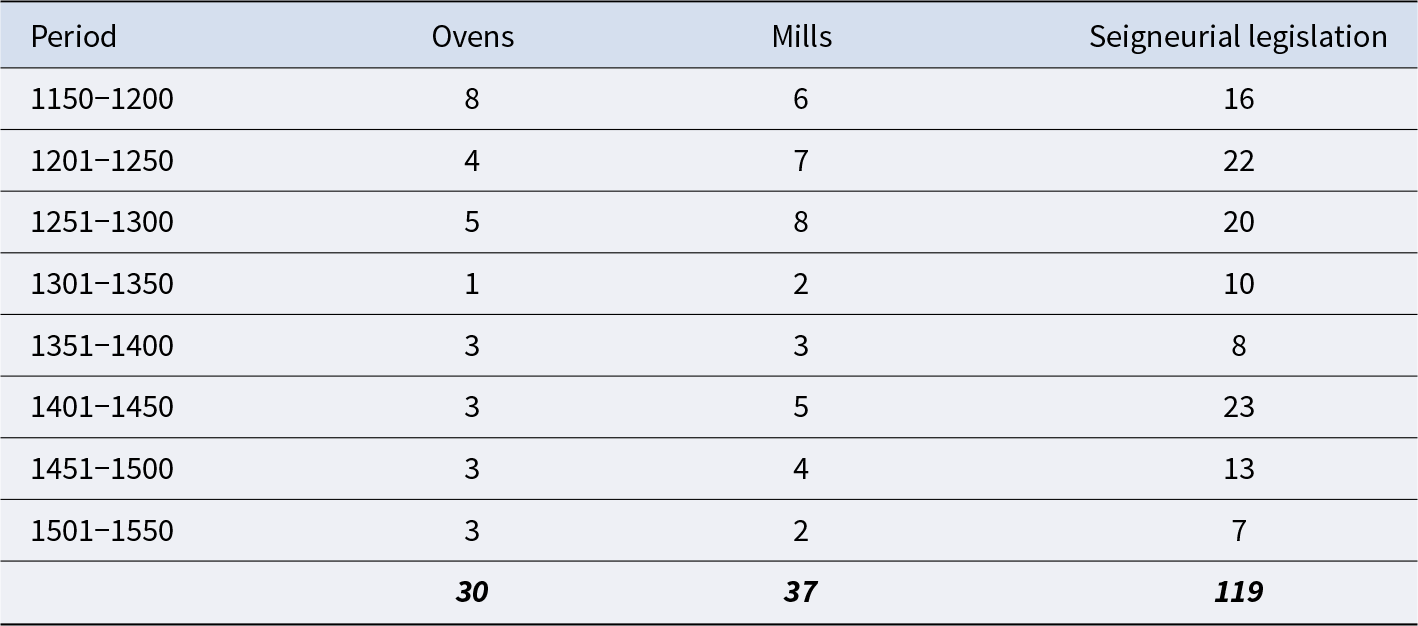
Owing to demographic and economic developments, written forms of seigneurial legislation, which often resulted from power conflicts between the different stakeholders involved, peaked in two periods: first during the thirteenth century and again at the beginning of the fifteenth (Table 1). During the twelfth to thirteenth century, a period of population growth and agricultural expansion through land reclamation and foundation of new villages, lords tried to attract or retain inhabitants, which strengthened the position of peasantries and contributed to their autonomy.Footnote 32 During the post-1349 period of demographic and agricultural recovery, peasants again held a strong bargaining position owing to the wide availability of land and work, which induced seigneurial concessions.Footnote 33 During both periods, lords aimed at attracting or retaining people within their seigneuries, upon which their level of income and status depended, through legislative adjustments.Footnote 34 During the twelfth–thirteenth century, subjects often managed to profit from conflicts between competing lords claiming seigneurial rights and the accompanying revenues, while during the late medieval period, when the seigneurial landscape had stabilized, conflicts tended to evolve around specific local issues.Footnote 35 By this time, legislation was modelled to a high extent after that of Hainaut’s head towns Mons and Valenciennes, but remained diverse in local detail.Footnote 36 While local customs continued to be proclaimed orally before the community once or twice a year, conflicts usually resulted in formal recording in writing. Whether law codification primarily reflected increasing emancipation of peasants’ rights by limiting seigneurial arbitrariness or worked to the advantage of lords by immortalizing seigneurial benefits remains a subject of debate.Footnote 37
Clauses on ovens and mills in local seigneurial legislation (Hainaut, 1150–1550)
Since outcomes of power conflicts depended on local geographic, demographic, political and economic circumstances, seigneurial legislation was never identical from one village to the next. Despite general developments in format, style and wording between the first and second period, there is a remarkable degree of continuity in overall subject matter throughout the 400-year period. The broad range of subjects covered included not only seigneurial prerogatives, taxes and fines but also local government, property and inheritance, food and agriculture and many other aspects of daily village life.Footnote 38
Seigneurial monopolies were solely a matter of local legislation. The topic was excluded from general legislation emanating from Hainaut’s major towns, for instance on out-burghership. Acquiring this status implied that individual village inhabitants fell under the jurisdiction of a town, against payment.Footnote 39 In 1356, when the count of Hainaut renewed the liberties of the town of Ath, including its statutes regarding out-burghership, it was stated explicitly that residents of surrounding seigneuries who had acquired the status of out-burgher were not liberated from a number of seigneurial demands, including obligatory baking and grinding in seigneurial ovens and mills.Footnote 40 Lordly monopolies were not covered by head town legislation either. Seigneurial grinding, baking and brewing monopolies do not appear as a topic in a register of 95 seigneurial laws based on the Law of Mons as head town (1396–1426). The local laws in this register cover a broad range of subjects, such as conflicts and violence, animals and common grounds, maintenance and property rights, beverage inspection, sizes and weights, gambling and brothels, butchers and bakers, robbery, fishing rights and local government. Each law contains a unique subset of 54 standard provisions, recorded in varying order and with minor but sometimes significant varieties. These refer to quality and inspection of bread and beer, as well as village brewing, but not to seigneurial mills, ovens or breweries.Footnote 41 Legislation on seigneurial monopolies was thus established exclusively within the local context.
Somewhat surprisingly, from the earliest period onwards seigneurial breweries have left only rare traces in Hainaut’s legislative sources. While these were partly outsourced to private individuals, against a yearly payment, their use had ceased to be obligatory from early on.Footnote 42 From as early as the twelfth century onwards, village inhabitants were allowed to start their own breweries, against an in-kind tax consisting of part of the product.Footnote 43 In the villages of Prisches (1158) and Trélon (1162), anyone could start a brewery, while seigneurial brewing was mentioned only as an option: ‘if however the lord wishes to start a brewery, he is free to do so’.Footnote 44 In Le Favril (1174), every subject was free to brew as well.Footnote 45 In La Flamengrie (1268), the rate for homebrewing was significantly higher than elsewhere. Here, conditions regarding different seigneurial monopolies had been played out against each other: anyone was allowed to possess an oven, brewery or handmill, without any payment being required for home ovens and mills, but a fixed volume of each brew had to be paid to the lord and an additional one to the village priest.Footnote 46 Village brewing was thus a local business, perhaps performed by women, as was the case in England.Footnote 47
From the mid-fourteenth century onwards, some lords may still have exploited breweries, but these were no longer a topic of seigneurial legislation. Apparently, villages could manage well without them, either by producing beer themselves or by importing it from elsewhere, while beer consumption generated seigneurial income in other ways. Local brewing was taxed through a mandatory inspection of beer quality, for instance in almost all 104 seigneuries in Mons’ head town register.Footnote 48 While brewing itself had thus ceased to be a seigneurial privilege, producing, importing and selling beer (and wine) was subject to taxation and negotiation. For alcoholic beverages, the interface where societal and seigneurial demands met had moved early from production to quality control.
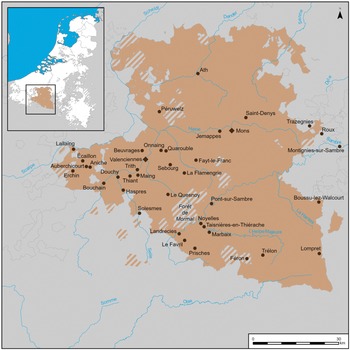
Since in Hainaut seigneurial monopolies on brewing had thus already ceased to be relevant by the twelfth century, this article will focus on seigneurial ovens and mills as topics of local negotiation. The evolution of local legislation pertaining to these seigneurial monopolies will be followed, based on a corpus of 119 local laws from the mid-twelfth until the mid-sixteenth century (Table 1).Footnote 49 Out of these, 30 contain clauses on seigneurial ovens and 37 on seigneurial mills. These include both small and major, and lay as well as ecclesiastical lordships. The locations discussed in this article are indicated in Figure 1. Based on fourteenth to sixteenth-century hearth counts, as published by Arnould, the estimated number of inhabitants of each of the the towns and villages mentioned in this article was fewer than 500 (100 hearths or fewer), with the exception of bonne ville (good town) Landrecies (approximately 900 inhabitants), le Quesnoy (approximately 2,250), which was one of the main residences of the counts of Hainaut, and the main towns Mons and Valenciennes (13,500).Footnote 50 For some seigneuries, such as the prominent seigneurie of Lallaing, legislation has been preserved from different time periods so that a local development in time can be observed directly, but mostly this is not the case. Some laws contain clauses on both ovens and mills, while others refer only to one or the other. Seigneurial mills are better represented than ovens, but the difference is not as spectacular as one might expect based on the abundance of historical literature on milling and the near absence on the subject of seigneurial ovens. More importantly, both are distributed more or less equally in relation to the total number of available sources throughout the entire period.
The county of Hainaut, fifteenth–sixteenth century; locations mentioned in this article are indicated.

Since mills and ovens are considered hallmarks of seigneurial power, it is notable that, from the beginning, these appear in only a minority of the local legislative texts. One possible explanation – that in most locations these monopolies had already lost their relevance by the twelfth century – seems somewhat unlikely since this period is considered the heyday of lordship. Another possible explanation is that ovens and mills were communally owned from an early period onwards, as has been attested for certain locations in France.Footnote 51 However, communal ownership does not emerge from Hainaut’s sources. Since, especially during the early period, disputed matters were usually recorded in writing, the most likely explanation may be that the topic was not as controversial as has often been assumed. The present study does not aim to present a definite answer to this issue but focusses instead on the non-negligible number of laws which did refer to these seigneurial monopolies, aiming to observe diachronically how legislation was kneaded and shaped locally to serve the interests of both subjects and lords.
3. Seigneurial mills and ovens before c. 1350
Medieval Hainaut was covered by hundreds of mills.Footnote 52 Its undulating landscape with a high number of rivers and streams was mostly ideal for watermills, which are mentioned in the sources from the ninth century onwards. In addition, windmills appeared around the year 1200.Footnote 53 Seigneurial legislation often refers to mills in the plural.Footnote 54 Sometimes there were indeed several mills per seigneurie, while in other cases a single mill served more than one village, likely depending upon population density, as well as the mill’s capacity. Under favourable circumstances, mills could create high revenue, but the costs of construction and maintenance were also significant. Technological innovations, for instance in more efficient overshot waterwheel mills which appeared from the thirteenth century onwards, demanded capital injections for water canalization, mill ponds and sluices to ensure a stable water supply.Footnote 55 Apart from such initial investments, which included the purchase and transport of wood, millstones and ironwork, there were the ongoing costs of maintenance, repair and operation. Seigneurial yields were generated by multure rates, that is, the in-kind fee to be paid for grinding. Rates varied locally, sometimes depended upon the time of the year and could differ for professional bakers, but were usually in the order of one-twentieth of what was ground. Quantitative evidence on how costs and investments levelled out against income generated is rare for the early period. However, conflicts on ownership, the frequent occurrence of co-ownership (which also reduced individual financial risks such as wartime destruction), as well as the expenditures themselves all point to the high value of mills from the ninth century onwards.Footnote 56 Incidentally, transport and operation costs were met by compulsory labour (corvées), as in Montignies-sur-Sambre (1253), where burgesses (boriois) were required to work at the mill’s lock for two days in June each year.Footnote 57 Based on information from the count’s domains, mills were amongst the most profitable seigneurial assets in the pre-fourteenth-century period.Footnote 58
As already mentioned in the introduction, it is usually assumed that milling conflicts centred on peasants possessing handmills, and lords claiming and exercising the right to confiscate or destroy these, which would reflect general resistance against seigneurial milling. However, in many cases, subjects were opposed not to using the seigneurial mill as such but to the absolute ban against grinding at home. What they actually demanded was the possibility to grind part of their corn at home, for instance during periods of drought, or when the seigneurial mill could not be used for other reasons.Footnote 59 In twelfth–thirteenth century Hainaut, inhabitants of Le Favril (1174) and La Flamengrie (1268–1293) obtained the right to possess handmills: ‘It will be allowed to each burgess of the village, if he wishes so, to have his own handmill’.Footnote 60 In La Flamengrie, it was added that no fee was attached to this liberty.Footnote 61 Still, in both cases, seigneurial mills remained in operation as well; in La Flamengrie they were explicitly referred to as banal mills (moulins banaules). This implied that peasants were obliged to grind their corn there, in exchange for a fee. In this case, it remains unclear how the freedom of owning a handmill worked out in combination with the duty to grind at the seigneurial mill, but legal stipulations from other locations shed light on this. Inhabitants of Le Quesnoy (before 1180) had to grind their corn in the count of Hainaut’s mills. If upon grinding elsewhere they were caught before re-entering the town, their bag of flour was confiscated. However, if they had waited for their turn at the seigneurial mill for a day and night, they were allowed to go elsewhere.Footnote 62 Similar conditions applied in other locations.Footnote 63 In Landrecies (1196–1337), it was specified that this might happen owing to insufficient water supply.Footnote 64 The ideal scenario from the inhabitant’s point of view, of having a seigneurial mill nearby, while also being able to grind at home or elsewhere if circumstances demanded, was thus realized, at least in some locations.
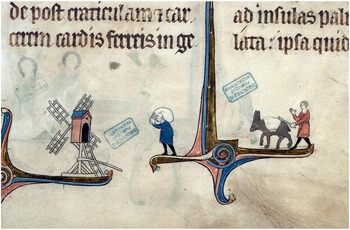
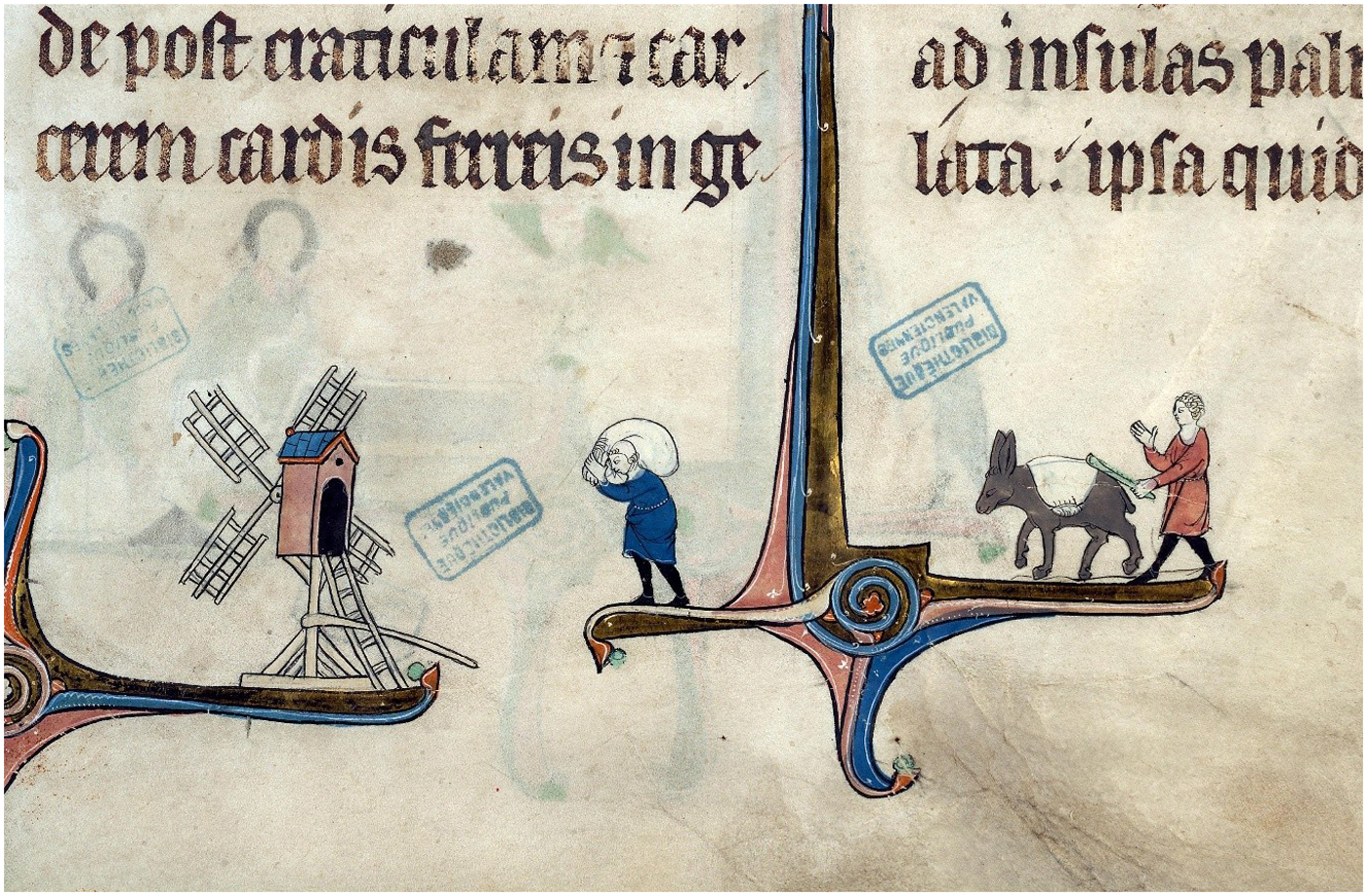
In return for supplying basic infrastructure, lords claimed in-kind or financial compensation. Since this was the crucial point from the seigneurial point of view, it is the sole aspect mentioned in some of the early legislative texts.Footnote 65 Nonetheless, the height of these rates does not appear to have been a major source of conflict. Seigneurial prerogatives were guarded, for instance by a prohibition to build any installation in the river that ran through a village without permission.Footnote 66 Fines for grinding elsewhere, usually confiscation of the flour and the bag in which it was transported (Figure 2), sometimes with an additional sum, added to the seigneurial income.Footnote 67 According to Onnaing and Quarouble’s law (1248), fees were ‘according to the land’s custom’ (l’usage dou païs), without further specification.Footnote 68 Milling fees were not quantified in any of the local seigneurial charters from this period, but varied between one-eighteenth and one-twenty-seventh (6 and 4 per cent) for mills in the count of Hainaut’s domains. In some locations, the fee was higher between harvest time and Christmas than during the rest of the year, thus taking dwindling supplies into account.Footnote 69 Although information is scarce for this period, it suggests that disputes centred not so much on fees, the possession of handmills or grinding elsewhere as mainly on how seigneurial mills were operated.
Transport of grain to a mill, 1275–1299 (Valenciennes, Bibliothèque Municipale, MS 838, fo 55).
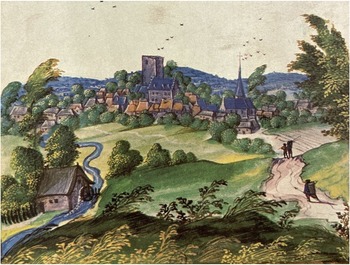
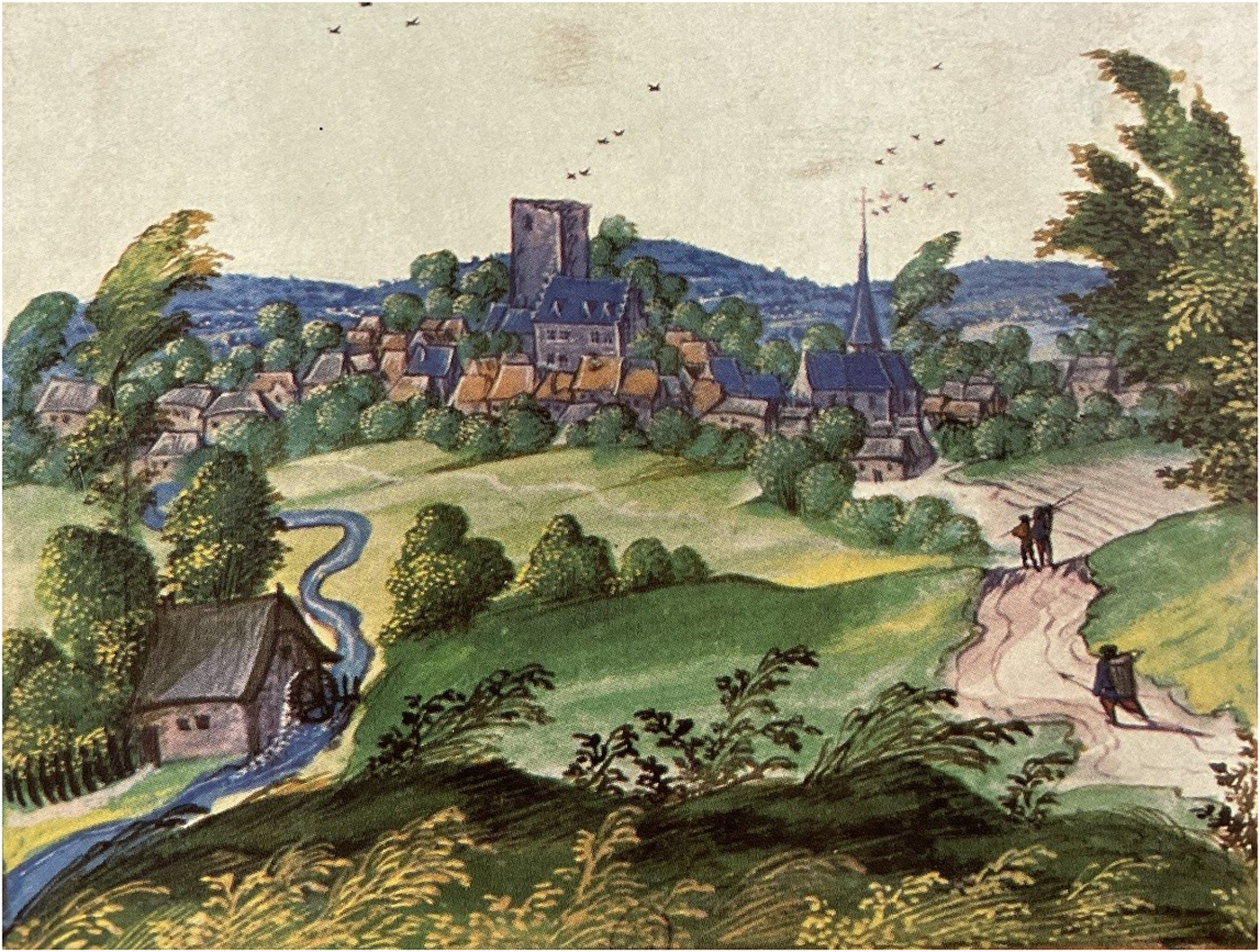
Through the nature of their job and their social position, millers were prone to constant suspicion. They lived on village outskirts, where most mills were located (Figure 3), and were outsiders in other respects as well. As seigneurial servants, they were sometimes exempt from general taxes.Footnote 70 Economically, they belonged to the village elite.Footnote 71 For their clients, it was hard to check whether millers did not detain more flour than was due.Footnote 72 The general suspicion was not unfounded: sources on criminal cases in the late medieval Low Countries reveal many cases of theft from mills, not only by millers themselves but also by the poor and by habitual thieves.Footnote 73 Regulations on seigneurial milling reflect distrust towards millers in several ways. In the land of Saint-Humbert (1245), which included the villages of Noyelles, Taisnières-en-Thiérache and Marbaix, millers were not allowed to keep their pigs inside the mill, presumably because these might either eat or befoul the grain and flour.Footnote 74 In Landrecies, the miller was not allowed to demand flour from anyone. This should likely be read as a prohibition to demand more than the regular milling fee, as was stated explicitly for the seigneurial baker in the same location. Perhaps the miller had fraudulently asked clients to pay extra for being served quickly, since it was also stated that, except for the local priest and mayor who had the privilege of being helped immediately upon their arrival, clients had to be helped on a first come, first served base.Footnote 75
Watermill near Gosselies, c. 1600 (source: Albums de Croÿ 15,planche151).
The office had been hereditary, but from the thirteenth century onwards seigneurial millers were appointed annually, which allowed for stronger control by the community.Footnote 76 The procedure reflected the importance of this position for the local community. In Montignies-sur-Sambre (1253), the miller had to lay down his task each year in the middle of summer together with other seigneurial servants, including the village mayor, in the presence of the local aldermen. The lord designated successors and took their oath, according to the aldermen’s instructions, while they decided upon what an additional person had to have and do at the mill.Footnote 77 This may be an early example of an additional officer being appointed to check on the mill and its operation on the population’s behalf, as in Trazegnies’ (1220) where the lord was not allowed to appoint a mill guard (molendino custodem) without the consent of the mayor, aldermen and unspecified others who also held rights to the mill (participii).Footnote 78 In Jemappes, tenants nominated three candidates from which the chapter of St-Waudru, which held the seigneurial rights, selected one.Footnote 79 Residents thus obtained several forms of control over the seigneurial miller and his job performance.
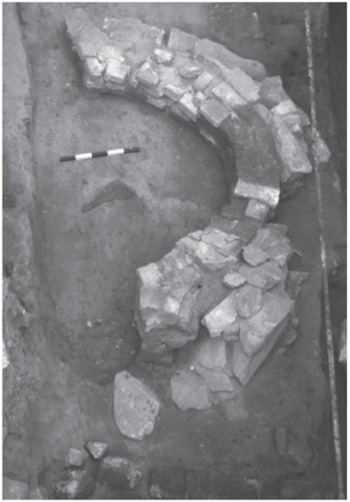
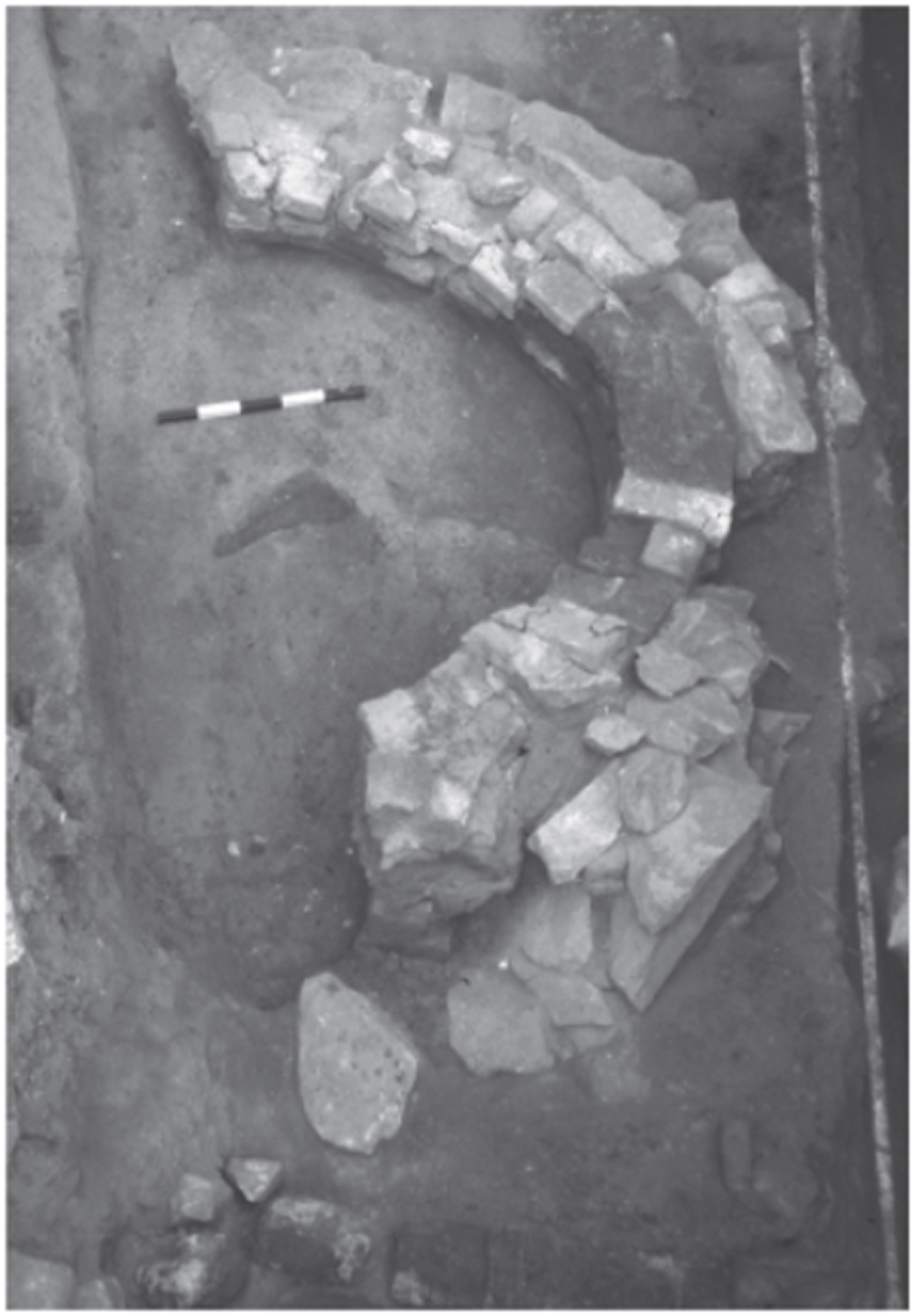
Possible advantages of seigneurial baking from the peasantry’s perspective have hardly been discussed in historical literature. These are perhaps not obvious, since investments and maintenance costs were less significant than for milling.Footnote 80 However, from an economy of scale and efficiency perspective it makes perfect sense that inhabitants preferred having access to general baking facilities over doing all their baking at home. Since bread made out a significant part of the daily energy intake (35–45 per cent even for monks), baking for one’s household was a time-consuming task requiring a sizeable oven and a steady supply of fuel. Departing from a conservative estimation of two breads per person per day and a family size of four already mounts up to 56 breads per household per week.Footnote 81 Baking in larger quantities in a sizeable oven saved fuel, time and effort, and thereby costs (Figure 4).Footnote 82
Remains of a fourteenth-century bread oven, Castle Gaasbeek, Duchy of Brabant; inner/outer diameter c. 1.5/2.86 metre.
As with milling, it was therefore not so much the obligatory use of the seigneurial oven which caused resistance as the prohibition to bake elsewhere. In Thiant (1174), tenants were not allowed to build an oven.Footnote 83 However, in several other locations villagers obtained the freedom to bake at home during the second half of the twelfth century, under varying conditions. In Prisches (1158), it was simply stated that everybody was free to have an oven.Footnote 84 Nearby Le Favril (1174) held a comparable clause. By contrast, in Trélon (1162), which adopted much of Prisches law, the seigneurial monopoly on ovens (furnos bannales) was retained.Footnote 85 In the region around Valenciennes, the laws of Haspres (1176) and Solesmes (1202) mentioned seigneurial ovens, while inhabitants of La Flamengrie (1268) were free to have their own, without a fee.Footnote 86 Residents of Trazegnies (1220), located just across the border in the Duchy of Brabant, could evade the obligation to use the seigneurial oven individually, by paying a yearly sum which depended upon their financial capacity.Footnote 87 In Onnaing and Quaroubles, everybody was allowed to have an oven for their personal use, and the local baker for commercial purposes. However, those not possessing an oven (presumably the less-well-off) were obliged to use the seigneurial facility, against payment of one bread per 30 (3 per cent), as well as a contribution to the costs of fuel.Footnote 88 This was a common rate. Baking fees, when specified, varied between one-twentieth and one-thirtieth, sometimes depending upon whether or not fuel was included.Footnote 89 As with milling, seigneurial rates do not emerge as a major source of friction.
By contrast, the seigneurial baker’s job performance, like that of the miller, was subject to scrutiny. Seigneurial bakers received part of the oven revenue, usually between a quarter and one-third, as their income.Footnote 90 In Landrecies (1196), it was stated that, like the miller, the baker was not allowed to demand more than the lawful amount as his fee.Footnote 91 Also like mills, seigneurial ovens may have been prone to theft, or possibly rebellion: in Trazegnies, it was specified that a house with two rooms, secured with locks and keys, had to be built above the seigneurial oven.Footnote 92
Seigneurial demands went hand-in-hand with explicitly stated obligations. In Lallaing, the lord had to appoint a reliable baker, who needed to be present and punctual if anyone, man or woman, wanted to bake. Villagers would bring their own fuel. The baker had to bake a full oven or, if necessary, a half-full one, against an in-kind fee of one loaf of bread per 28 (3.5 per cent).Footnote 93 Societal demands are also reflected in the outcome of a conflict on an oven near Sebourg (1246), owned by two abbeys. Through ecclesiastical mediation, it was established that the baker was to be appointed and dismissed, if necessary, by representatives of both abbeys. However, since leaving the position vacant for long would cause inconvenience, it was decided that the representative of either one of the two monasteries was allowed to act alone when the other was absent.Footnote 94 Being sworn in on a yearly basis was a public event, which implied obligations to the community and social control, as was stressed, for instance, in Onnaing and Quarouble, where the baker had to provide fuel and loyally look after ‘the good people’s possessions’ while fetching and bringing dough and bread, against the fixed rate. If, after being sworn in, he transgressed the rules, the lord had to make him correct his faults.Footnote 95
The locally negotiated character of seigneurial baking monopolies during the early period is perhaps most convincingly illustrated by conditions applying to 14 ovens, situated across the county of Hainaut, which are registered in a cartulary of the count of Hainaut’s income from his domains (1265–1286). For most of these, only fees, costs and revenues are specified. For instance, in Bouchain, the oven had to be heated three times a year at the count’s expense, no doubt during the major feast days, while in Erchin the count was to receive a lamb and a sum of money (1 pound) at Easter and two capons and 1 pound at Christmas.Footnote 96 Tellingly, the only two ovens which were referred to as banorial ovens (four à ban) had more comprehensive conditions. In Aniche, no other ovens were allowed, and the count’s oven had to be of a certain size. The baker, who was appointed by the count at his expense (one-third of the oven’s revenue), was allowed to demand a higher fee if he transported dough to the oven.Footnote 97 In Pont-sur-Sambre, the banorial character had been abolished, owing to resistance from the population. As a compensation, a fixed tax in money of 10 pound per year had been established, since ‘people make little use of the oven … everyone bakes at home as they like and does not give more than they want’.Footnote 98 This illustrates that, at the end of the thirteenth century, even the count of Hainaut’s seigneurial baking monopolies in his domains could be maintained only when and where local demands were being met.
4. Ongoing exchange of interests, c. 1350–1550
Despite demographic and social devastation caused by the plague, the overall content of seigneurial legislation remained remarkably constant from 1349 onwards. Instead of a drastic alteration, the nature of the legislation changed only in that it became excessively detailed. As a result of recurring disease outbreaks and wars, mills were often temporarily out of operation or had to be rebuilt after destruction. The overall revenue generated by mills, which increased incessantly until the beginning of the fifteenth century in parallel with the total number of mills, dropped from the 1420s onwards but gradually recovered during the second half of that century. Many factors influenced this, including mills being temporarily out of operation owing to demographic disaster caused by the plague, or by storms, which regularly damaged windmills. Wartime destruction caused by power conflicts within Hainaut’s princely dynasty, which peaked in the 1420s, may have had an even more devastating effect. Nonetheless, and with local outcomes differing, overall and in the long term lordly milling revenues still exceeded costs. Like in the previous period, mills were amongst the count of Hainaut’s most valuable domanial resources, generating an impressive quarter to one-third of the income derived from them. Part of the maintenance costs, in this case the transport of construction wood from the domanial forests, was still covered by compulsory labour (corvées).Footnote 99 At the same time, the extremely detailed character of terms and conditions from the fourteenth century onwards points to meticulous negotiations between lords aiming to retain prerogatives and peasants aiming for acceptable conditions. Sebourg’s fourteenth-century customs, for instance, contain eight extremely detailed clauses on milling. These relate to sizes, measures and equipment to be used, the order in which people were to be served and how the miller had to perform his task. The milling fee was not specified.Footnote 100 Regarding the fine for grinding elsewhere, it was stated:
‘No man, whoever he is, can go to another mill … unless the grain has been at the mill of Sebourg for one night, against a fine of 10 sous, and bag and flour confiscated. From which the lord receives the 10 sous and the arresting officer (sergeant) the bag and flour. And it can only be taken until the dough is being knead’.Footnote 101
The latter points at resistance against seigneurial policing officers following people into their homes to confiscate ‘illegitimately’ produced dough. Other laws from the period are not always this detailed but are similar in their overall content. Local differences include the waiting time before the grain was allowed to be ground elsewhere, which varied between one and three days, and the categories of people that were given priority at the mill. The in-kind milling fee also varied significantly, between one-twenty-seventh and one-sixteenth (4 and 6 per cent) of the wheat or flour.Footnote 102
Whose turn it was to be served at the mill remained an issue. Although ‘first come, first served’ remained the preferred mode of operation, prominent village inhabitants sometimes still held a privilege for being served directly upon their arrival.Footnote 103 Clauses on the use of the mill by strangers – that is, people from outside the seigneurie – point to a conflict of interests between lords pursuing maximum profitability by allowing outsiders to grind and peasants claiming the mill solely for local use. Sebourg’s detailed regulations reflect tensions, if not outright conflict, surrounding whose rightful turn it was to be helped at the mill. The outcome was clearly a compromise: the lord himself and strangers were given priority, but if the latter had kept the mill occupied for a whole day, inhabitants’ corn that was already at the mill had to be ground on the next. In addition, the interests of wealthier farmers were being met: if a man or a woman sent a servant to the mill with a quantity of grain, they would keep their place in line for the rest of the day, based on when the first quantity had been brought in.Footnote 104 In Fayt-le-Franc (1523), a different type of compromise was reached, with two inhabitants preceding every non-resident.Footnote 105 In other villages, the local peasantry obtained the upper hand: inhabitants’ corn simply had to be ground first.Footnote 106 In Lompret (1514), subjects of the seigneurie also had priority over all others, but here women, who often transported corn to the mill, had been most successful in making their voice heard: if a woman was pregnant, she had to be given priority over seigneurial subjects and all others.Footnote 107
Besides continuing emphasis on the use of correct measurements and proper materials, and fines for millers fiddling with quantities, checks and balances on millers performing their job properly and honestly increasingly included different forms of community control.Footnote 108 In Boussu-lez-Walcourt (1458), the miller took his oath before the local administrators (mayor, aldermen and jurors) and had to ‘maintain a loving relation with the good people’.Footnote 109 In Trith and Maing (1379–1380), a wise man (preudomme), elected by the inhabitants and sworn in by the mayor, was installed in both mills in order to assist in their operation, collect payments and watch over everyone’s rights. People could pay him in flour, but on a strictly voluntary basis.Footnote 110 In Roux (1461), the lord had to nominate a wise man of good reputation as miller, on a fixed day in the middle of the summer, and publicly present the measuring instruments. The miller had to swear before the mayor and aldermen to watch over grain and flour stored at the mill, and whose turn it was. In addition, subjects could appoint an officer (fariniaul) at their own expense, who collected the milling fee, kept an eye on whose turn it was and reported to the mayor and aldermen on defects to the mill and faults committed by the miller.Footnote 111 Subjects thus obtained partial control over the daily operation of seigneurial mills.
From the late fourteenth century onwards, the local population’s demand to have a well-functioning seigneurial mill at its disposal increasingly resulted in milling, or certain aspects of it, being formulated as a seigneurial duty rather than a prerogative. The customs of Trith and Maing (1379–1380) stated that the count, who owned two local mills, had to provide an adequate number of good millers and maintain both mills, as well as the necessary accompanying equipment, in good working order, at his costs. The milling fee was one-twentieth (5 per cent), provided that there was adequate measuring material. He had to provide different types of basket and could permit grinding by people from outside the villages, provided that both mills were working properly and villagers could use the second mill.Footnote 112 The peasantry’s bargaining position lay in playing off different aspects of seigneurial power against each other, as in Féron (1447), where they underlined their demands by refusing to pay taxes until the seigneurial mill was functioning properly.Footnote 113
The give-and-take nature of the legislative process also emerges from Fayt-le-Franc’s customs (1523), which confirmed the peasantry’s right to have their grain grounded immediately upon arrival, against different rates before and after harvest time, while at Christmas, Easter and Pentecost, a portion could be ground free of costs, for festive baking. This text is exceptional in stating explicitly that the agreed conditions were the outcome of a conflict, with inhabitants claiming their ‘ancient rights and warranties’ and the lord wishing to ‘comfort and multiply’ them ‘in peace and order’.Footnote 114 Tellingly, milling conditions here had become textually interwoven with another common topic of discord: the use of the common grounds. In the middle of milling conditions, the peasantry’s continued usage rights were confirmed, which points to an exchange of demands regarding both subject-matters:
That all our millers at the start of their lease term have to swear an oath in the hands of the law.Footnote 115 That all burghesses and residents of Fay will retain the enjoyment and possession of the common grounds, as they have been accustomed. And that the use of our mill remains obligatory (à bans) for our inhabitants, that they cannot grind elsewhere, if there is no fault or necessity, against a fine.Footnote 116
In Trith and Maing, a trade-off between different types of seigneurial demand had also taken place: here, plough owners performing obligatory labour (corvée) on the count’s fields could grind a portion of grain for free during the major feast days.Footnote 117
Like with milling, the continuing process of mutual demands and concessions resulted in hyper-regulation on seigneurial baking from the mid-fourteenth century onwards. Sebourg’s legislation on its three seigneurial ovens was even lengthier than that on milling. This was partly owing to the fact that conditions for one of these, the revenues of which were shared between the local lord and an abbey, differed from those for the other two.Footnote 118 Concerning the former, apart from the baker’s duty to help his clients punctually, the fee of one bread to be paid for every 72 baked (1.4 per cent), and sizes and measures to be used, it was specified that the fixed fee applied to different kinds of bread, pie or pastry for human consumption, while the fee for baking animal bread was voluntary. The baker was to bake upon demand, even if the oven was not full. Afterwards, he was to display the bread, count with his stick till 72, and then take the bread upon which it rested, whether big or small. Alternatively, he could say: ‘I do not want to count your bread, I trust you to do so, count it’.Footnote 119 Clients were to bring their own fuel and could take home any remaining charcoal or ashes. The fee of one in 72 indicates that clients of the oven baked in large quantities. Although it is possible that this oven was used by professional bakers, the text does not allude to this in any way. Clients are simply referred to as ‘a man or a woman’. In fact, if baking was done once a week, 72 breads would amount to 2.5 breads per person per day for a four-member household, which, based on what is known about peasant diets, seems a reasonable quantity.Footnote 120
That is not to say that commercial bakers did not exist. Being subject to regulation, like beer, wine and meat, the sale of bread was mentioned in some locations from the thirteenth century onwards. Presumably, commercial baking replaced seigneurial baking monopolies in most places in the long run, but during the period discussed here, they existed side by side (Solesmes, 1202). Commercial bakers were sometimes permitted to use their own oven instead of the seigneurial one (Onnaing and Quaroubles, 1248). By contrast, as mentioned in the introduction, the seigneurial oven could be designated explicitly for baking for commercial purposes, allowing lords to profit from this, as in 1506 Lallaing.Footnote 121 The interaction between seigneurial and commercial baking thus seems to have been diverse.
For those using the seigneurial oven, transport was an issue. In many locations people brought kneaded dough to the oven and fetched their bread themselves, at an agreed and announced time.Footnote 122 However, in Trith and Maing (1379–1380) the count’s bakers had to have good horses and carriages at their disposal for fetching and delivering dough and bread. This service did not come for free: the baker was explicitly not allowed to charge extra if people helped him with carrying, loading and unloading dough and bread, which suggests that he usually did. Again, tensions and distrust as reflected in the regulation focussed on the baker, who had to count and take his share honestly, take the dough honestly, keep his oath, bring the dough to the oven and bake for everyone as he should.Footnote 123
Varying between one in 72 and one-twentieth (1.4 and 5 per cent), seigneurial baking fees did not differ significantly from what had been customary during the earlier period.Footnote 124 Within this range, the degree of local variety remained high, with ovens in neighbouring villages under the same lord charging different rates. Sometimes additional fees were charged by the baker himself. In Trith, where the established lordly fee was one in 25 (4 per cent), a ‘favourable’ and ‘reasonable’ rate to which the people agreed was negotiated between the baker and his clients each year, since ‘everybody wants to bake at a reasonable price’. For Maing’s oven, the regular rate was one in 37 (2.7 per cent), but here the baker could demand the necessary amount of fuel, ‘loyally and following his oath’. However, if ‘the good people’ helped him to carry dough and bread to and from the oven, he was not allowed to do so.Footnote 125 In Lompret (1514), the rate depended upon the type of bread.Footnote 126 While the seigneurial rate thus seems to have been set in stone, all kinds of secondary conditions were open to negotiation.
The few seigneuries which allow for following a local development in time point to a gradual rather than a sudden fade-out of obligatory seigneurial baking. As mentioned in the opening paragraph of this article, the duty to use the seigneurial oven was firmly stated in the seigneury of Lallaing in the year 1300, albeit under explicit conditions.Footnote 127 Two hundred years later, in 1506, inhabitants were allowed to do their baking anywhere they wanted, albeit against payment of an annual fee and solely for their own household. Bread sold in taverns and inns still had to be delivered by the seigneurial baker, who was fined in case he did not perform his duties satisfactorily.Footnote 128 In Saint-Denys, the seigneurial baking system also fell into disuse gradually: in the mid-fourteenth century the ecclesiastical lord had to provide two baking ovens, but in 1430 the seigneurial oven had ‘long been abandoned’ and in 1654 it was not even mentioned anymore.Footnote 129 In Boussu-lez-Walcourt, the seigneurial oven had ‘long been in ruins’ in 1455, but, probably hoping for better times or financial compensation, the lord was not yet ready to let go of his claim: inhabitants would still be obliged to do their baking there ‘if it would please the lord’ to repair it.Footnote 130 In Beuvrages (1473–1474), the freedom which inhabitants had obtained to use their own oven, against a yearly fee, was also phrased as retractable: within 15 days after a public announcement that the seigneurial oven had been rebuilt, it would again be obligatory to do all baking there, against a fee.Footnote 131 Whether seigneurial ovens ever actually returned after having fallen into disuse is unknown. However, the fact that some lords still tried to hold on to their baking monopoly at the end of the fifteenth century signifies that it had brought them something, despite all the hassle. The same goes for their subjects, at least in certain locations: providing an oven (four à ban) was still articulated as a seigneurial duty in Lompret as late as in 1514.Footnote 132
As already observed for milling, bargaining is sometimes textually signposted by seigneurial claims being sandwiched between the peasantry’s demands, like in Sebourg’s customs, starting with the peasantry’s point of view: the lord had to appoint proficient bakers, which, if anyone complained, he had to replace, with the agreement of the ‘good people’ using the oven. This is followed by a seigneurial claim: it was not allowed to have other ovens without seigneurial permission, except for those already in place for baking pies and pastry. Otherwise, if anyone was caught having baked elsewhere, a fine would fill the lord’s pocket, while his sergeant was allowed to keep the confiscated goods. Finally, this was balanced out to some extent by what could have been propagated as seigneurial goodwill but was phrased again as a lordly obligation: during the three major feasts, Easter, Pentecost and Christmas, bread had to be baked well, in an adequately heated oven, at the lord’s expense. Naturally, it was spelt out how the baker had to act when on such festive occasions the oven became overloaded.Footnote 133
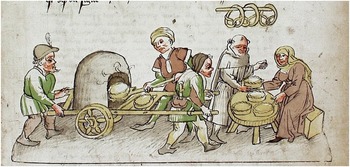
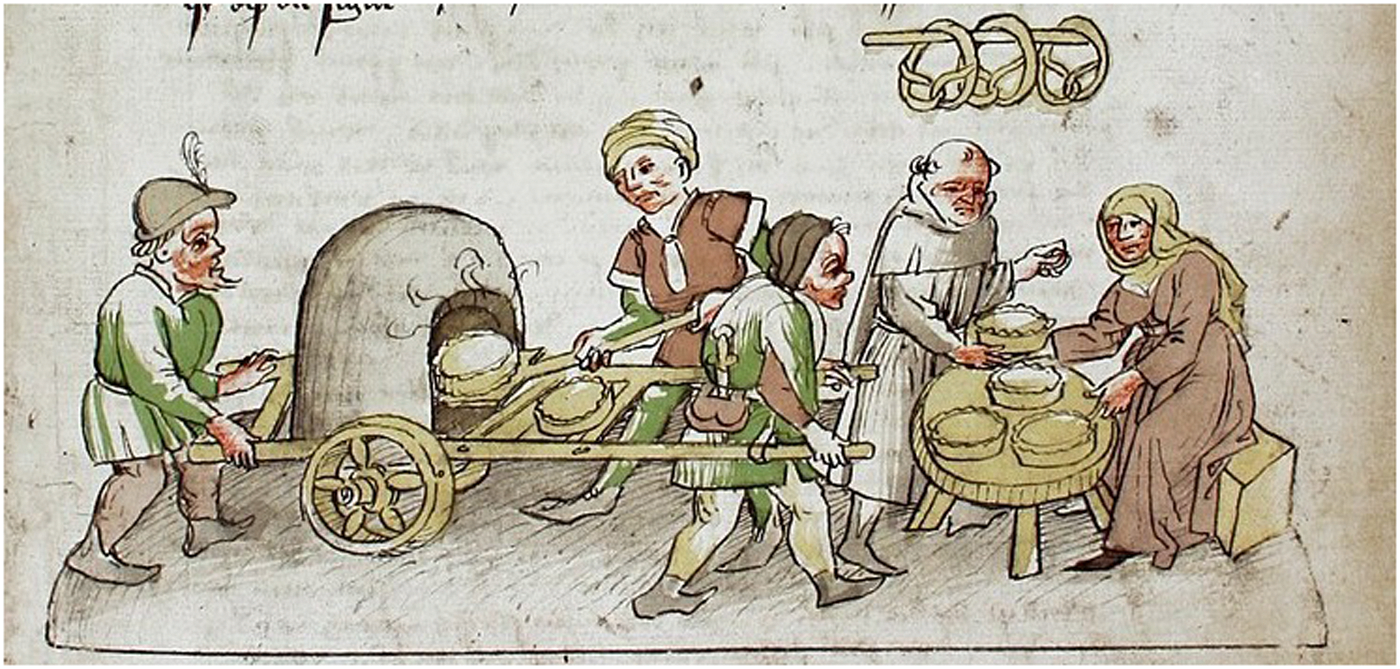
In other locations, baking in the seigneurial oven on the major feast days was a paid duty rather than a free ride. In Douchy (1447), negotiations had resulted in the obligation to grind at the seigneurial mill (if it was in good working order) and bake at the seigneurial oven, but all inhabitants were allowed to possess a home oven for baking pies and pastries as much as they liked, except on the major feast days.Footnote 134 In Lompret (1514), inhabitants were allowed to have an oven, but only if it was built against the back wall of their chimney, which may have been a safety measure against fire hazards.Footnote 135 A salary had to be paid to the seigneurial baker when he baked their pies, obligatorily, during the three main holidays, which presumably meant that, here as well, it was allowed to do this type of baking elsewhere during the rest of the year.Footnote 136 In Écaillon (1451), inhabitants were free to bake pies and pastry for their own use, in exchange for which a capon had to be presented to the lord at Christmas each year.Footnote 137 Lower temperatures are usually required for pastry baking than for baking bread, which likely made it easier to do this type of baking at home (or in a transportable oven, Figure 5), while it was also less of a day-to-day necessity.
Pastry baking in a transportable oven (Richental chronic, Konstanz, Rosgarten Museum, Ms 1, fo 23 r).
By the late medieval period, the lordly right to destroy home ovens had become hypothetical and negotiable, as in Beuvrages, where, if the seigneurial oven were to become fully operable again, inhabitants themselves were to destroy their home ovens within 15 days after this had been announced, unless seigneurial permission had been obtained, no doubt against financial compensation.Footnote 138 In Auberchicourt’s 1434 charter, even a general expression signifying the arbitrary nature of seigneurial power, ‘whenever it pleased him’, here referring to the seigneurial right to destroy home ovens, was counterbalanced ‘provided there is a sworn baker who does his duty in serving the good people’.Footnote 139 Seigneurial power displays had thus become embedded by conditions before finally being abolished, in exchange for payment: in 1514, Auberchicourt’s population obtained permission to bake wherever they wanted and to possess large or small ovens at home, according to their own insight, against a yearly fee per household.Footnote 140
5. Conclusion: seigneurial monopolies as a topic of local negotiation
Hainaut’s legislative sources reveal continuous horse-trading between subjects and lords on seigneurial monopolies throughout a period of 400 years (twelfth–sixteenth centuries). Conflicts on the obligatory use of seigneurial ovens and mills centred not on the degree of seigneurial surplus extraction, which remained more or less constant, but on conditions for the use and management of these essential village infrastructures. As a result of the claims and demands of both parties, legislation was continuously adjusted and became extremely detailed from the fourteenth century onwards.Footnote 141 Despite a rich variety in detail, which reflects conflicts being resolved and conditions set at the local level, the continuity in overall subject matter throughout this long period of time is remarkable. The continual adjustments of legislation discussed here may be considered as a concrete example of what has recently been labelled ‘ordinary politics’.Footnote 142 This contribution illustrates that such local interactions, aimed primarily at solving everyday problems, had earlier roots than the fourteenth century. As has also been argued for an Italian urban context, rural legislation on seigneurial monopolies continued to change gradually, by building on existing local practices, rather than the mid-fourteenth-century pandemic onset acting as a watershed moment of change.Footnote 143
While it has long been known that seigneurial prerogatives were rarely abolished without some form of financial compensation, this contribution adds that the opposite is also true: lords often had to offer something in return for maintaining their prerogatives. The this-for-that character of legislation on seigneurial monopolies, which is most evident from the fourteenth century onwards, illustrates the peasantry’s strong bargaining position. This not only nuances the general notion of the enforced nature of seigneurial monopolies linked to surplus extraction but actually turns it upside down as well. Especially from the late fourteenth century onwards, providing essential village infrastructure was increasingly expressed in local legislative texts as the peasantry’s demand. As a result, seigneurial monopolies disappeared not only when there were economic alternatives for lords but also where there was no longer a strong societal need for them. Benefits to both village community and lord were the main prerequisite for continuity.
For milling, this may be in line with the situation in England, where seigneurial milling was less coercive than has been assumed in the past, as discussed in the introduction to this article. It also chimes with Fossier’s observation for Picardy (northern France) that collective dependence on the seigneurial mill may have induced solidarity. Negotiations of the type described in this article must have required some form of collective organization at the village level. Fossier’s argument that baking, in contrast with milling, could easily be done at home, since construction and maintenance costs were low, is less convincing.Footnote 144 It underestimates the large-scale and labour-intensive nature of baking, as well as the costs of fuel to reach the necessary high temperatures, in a society where bread was a main constituent of the daily diet. As was the case with other village officials, communal control on seigneurial millers and bakers not only reflects distrust but also points to the essential nature of certain tasks for the village community.Footnote 145 On the whole, it seems likely that in locations without a seigneurial oven, village bakers performed this task, as was also the case with brewing.
From the subject’s point of view, the advantage of production processes for the daily food and drink such as baking and grinding being organized as seigneurial facilities lay in efficiency and economy of scale. Negotiations were aimed at having advantages in daily life surpass the nuisance of seigneurial demands. As with other aspects of seigneurial government, it is likely that village elites managed to guard their own interests, while referring to a broader common good.Footnote 146 To what extent this worked out in favour of the whole population, including the poor, remains a highly relevant question, especially in view of the increasing economic inequality during the late medieval period.Footnote 147 How seigneurial monopolies in general afflicted the poor is hard to judge. On the one hand, seigneurial fees may have weighed most heavily on the shoulders of those who could not afford to own a home oven or handmill. On the other, it may be assumed that the poorest part of the population, including those with a very small plot of land and the landless, did not cultivate and could not afford to buy sufficient amounts of grain for grinding and baking in substantial quantities, or not throughout the year. This category of people may have bought their bread when they could afford it, or literally earnt it by performing labour, and were thus less burdened directly by seigneurial monopolies.
In this respect it is relevant to note that this contribution also illustrates that, in daily life, subjects had little or no direct dealings with their mostly absentee lords. What mattered was the relationship with the persons they depended upon on a daily basis: in this case, seigneurial millers and bakers, who, although outsiders in some respects, were also members of the economic village elite.Footnote 148 Increasingly detailed levels of regulation reflect local power struggles, not only between peasants and their often faraway lords but also, and perhaps even primarily, between different social categories within the village community.
Acknowledgement
The author would like to thank her colleaugues of the ‘Lordship and Agrarian Capitalism in the Low Countries, c. 1350–1650’ project for inspiring her to write this paper and for critically discussing an earlier version.
Competing interests
The author declares none.