


Today, nutritional trends (slow nutrition, raw nutrition, vegetable nutrition, organic nutrition, etc.) are changing rapidly(Reference Boland, Rae and Verijken1–Reference Muharemovic, Taboul and Hakansson5). Publications on the health effects of nutrition, television programmes and social media platforms guide changes in nutritional habits and motivate new nutritional trends(Reference Abbar, Mejova and Weber6–Reference Roudsari, Vedadhir and Amiri9). The common goal of many nutritional trends is to ensure that people are physically and mentally healthy(10–Reference Pandit-Agrawal, Khadilkar and Chiplonkar12). One of the most important conditions for healthy and balanced nutrition is the daily amount of protein that should be consumed per person(Reference Millward13). Red meat is an important source of animal protein, as well as the vitamins, minerals, antioxidants and nutrients that are essential for human nutrition and health(Reference Matina, Stefanos and Demosthenes14–Reference O’Connor and Campbell16). There have been differences in the opinions of specialist doctors in printed and visual media over recent years about the consumption of red meat, and this affects people’s attitudes towards red meat(Reference Apostolidis and McLeay17–Reference Grunert19). The effects of red meat and processed red meat products on human health have become a globally controversial issue. These discussions have been motivated by WHO’s report, ‘Questions and Answers on the Carcinogenicity of Red Meat and Red Meat Consumption’, published in October 2015(20).
The purpose of this study is to determine the red meat consumption behaviours of healthcare professionals who are conscious about the complications that may arise in the case of a lack of red meat, or an excess of red meat. Healthcare professionals have an important and reliable role for public health in terms of nutrition because of their professional knowledge. As a matter of fact, there are many studies on nutrition that have been conducted in different countries and reveal the attitudes, knowledge levels and confidence of healthcare professionals in giving advice to patients regarding nutrition(Reference Hankey, Eley, Leslie and Hunter21–Reference Hoppe and Ogden26). The common results of the studies are that healthcare professionals have general knowledge about nutrition and they pay attention to their own nutrition.
This study investigates cattle and sheep meat, which make up a large proportion of red meat consumption(Reference Tunç27–Reference Uzmay and Çınar30) in Turkey. The research was carried out in the province of İzmir where most healthcare personnel are located(31). İzmir is situated in the west of Turkey, and it is the third biggest city in the country in terms of population and economic indicators(32). The interviews were held with specialist doctors, doctors, dentists, pharmacists and nurses(31,Reference Eylemer and Memisoglu33) because they comprise 65·8 % of the total healthcare professionals working in İzmir,
The hypotheses of this research are as follows.
H1: Health education affects the consumption of red meat and processed red meat products.
H2: WHO’s report on red meat and processed red meat products reflects the behaviour of healthcare professionals.
Method
The primary data of the study were collected with an appropriately prepared questionnaire. A five-point Likert scale was used to measure the attitudes and behaviours of healthcare professionals regarding red meat consumption. The Likert scale is a method that is used to allow the individual to express how much they agree or disagree with a particular statement(Reference Joshi, Kale and Chandel34,Reference Niyaz and Demirbaş35) . A series of statements were read to the consumers from the questionnaire form and their opinions about these statements were measured through the following answers: ‘strongly agree’ / ‘agree’ / ‘undecided’ / ‘disagree’ / ‘strongly disagree’. The reliability of the scale used in this study was tested with Cronbach’s Alpha Reliability Coefficient. The Cronbach Alpha coefficient for the Likert scales used in this study was 0·821. The coefficient obtained shows that the survey questions have high reliability(Reference Tavakol and Dennick36). Sample size was calculated using the proportional sample size formula(Reference Newbold37) shown below:
 $$ n = \left[ {N\,p\,\left( {1 - p} \right)} \right]\,/\,[\left( {N - 1} \right)\,\sigma {p_x}^2 + p\,\left( {1 - p} \right)]$$
where n = the number of healthcare professionals surveyed (sample size),
N = the total number of healthcare professionals in İzmir (19 751),
σp x2 = variance (σp x = 1·96 for α = 0·05),
p = the proportion of healthcare professionals who consume red meat (50 %).
It was not possible to make a prediction about the consumption or non-consumption of red meat as there has been no similar work done to determine the red meat consumption behaviours of healthcare professionals. For this reason, the p value was taken to be 50 % in order to arrive at a maximum sample size for the study. With this approach, the calculated sample size was 149 with 8 % type I error and a 95 % level of CI. A number of questionnaires were distributed among the occupational subgroups so that the proportional contributions of the subgroups were taken into account within the totals for the health occupational groups. The survey was conducted in 2016 through face to face interviews with forty-three specialist doctors, sixteen doctors, twelve dentists, sixty-four nurses and fourteen pharmacists. For the identified subgroups, the healthcare professionals to be surveyed were randomly selected.
Whether there were differences between groups in terms of the demographic characteristics and their consumption decisions was determined by using Chi-square analysis(Reference Malhotra38) for intermittent variables. In these analyses, the principle that the expected count of the cells should not be less than 1 and that cell numbers which have an expected count less than 5 should not be over 20·0 % of total cells was taken into consideration. The variables showing significant differences are given in the tables. Whether there is any difference between the sub-groups of healthcare in terms of consumption of red meat and processed red meat is tested by Chi-square analysis. For the significant results obtained by the Chi-Square analysis, Coefficient of Contingency (CC) was used to test the degree of dependence or relationship between the variables studied. CC is rated at 0–1, and the ratio of the relationship becomes stronger as it approaches 1(Reference Spiegel, Schiller and Srinivasan39).
Results
Read meat consumption
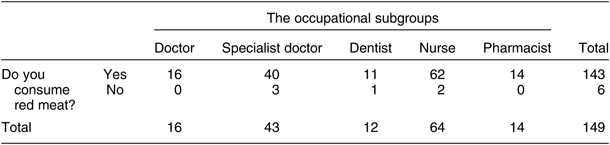
Only six of the surveyed people do not consume red meat. These six people who do not consume red meat are women and vegeterians. The distribution of red meat consumption by the occupational subgroups is given in Table 1. According to the table, three of those who do not consume red meat are specialist doctors, two are nurses and one is a dentist. In the decision not to consume red meat, it was determined that red meat having high cholesterol, hormones, residue, and a lack of taste were important factors, according to the five-point Likert scale average (3·83). Of the 143 people consuming red meat, 54 % consume red meat because they like the taste. Other reasons for consumption of red meat according to the five-point Likert scale average were consumption habits (3·88), the necessity for balanced nutrition (3·80) and the high protein content (3·77).
Red meat consumption by the occupational subgroups
According to the results, red-meat eaters consume an average of 3·65 kg of red meat per month. This amount was published by the OECD for 2016; the per capita annual amounts of beef and veal (6·5 kg), and sheep meat (1·7 kg), are above the average consumption rate worldwide(40). This amount of consumption is also more than the average for Turkey according to annual beef and veal (8·4 kg) and sheep meat (4·1 kg) consumption figures. This finding can be explained by the higher than average monthly income of healthcare professionals in Turkey.
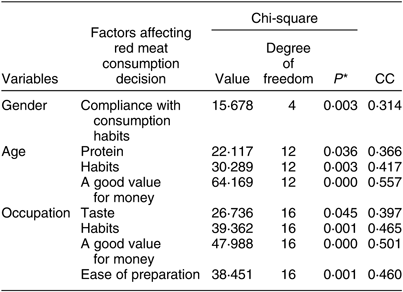
Whether there is a difference between the consumption of red meat and some characteristics of the consumers is examined by Chi-square analysis. According to the results of the analysis, ‘Compliance with consumption habits’, ‘Protein’, ‘A good value for money’ ‘Taste’ and ‘Ease of preparation’ variables are not independent from gender, age and occupation (Table 2). According to the Coefficients of Contingency, it is seen that the factor ‘A good value for money’ for age and occupation has an effect on the red meat consumption decision. The same factor is very important for the decision regarding red meat consumption of consumers in the first age group (18–29 years).
Factors affecting red meat consumption by gender, age and occupation
CC: Coefficient of Contingency.
* P < 0·05 (significant).
When the factors affecting the consumption of red meat are examined in terms of the occupational subgroups, it is seen that the factor coded as ‘A good value for money’ on the red meat consumption decision of nurses is more significant than for the other occupational groups. It is thought that the lower monthly income of the nurses in the occupational groups is important for this result.
Of the red meat purchased by healthcare professionals, 73 % is veal. This is followed by lamb at 19 % and sheep meat at 7 %.
Red meat is sold at the retail stage in different forms. Most of the consumers who participated in the survey buy red meat as ground meat. This is followed by sliced meat and a tenderloin or chop. The least preferred type of red meat purchased by consumers is offal.
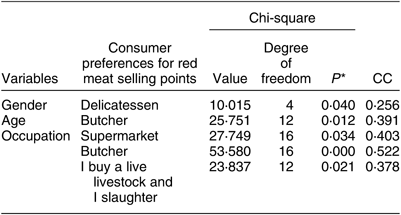
The most common place to buy red meat is the butchers. The reliability factor is very important for consumers when choosing where to buy red meat. They prefer to buy red meat from a butcher who they know and trust. According to the results of Chi-Square Analysis, there was a difference between the gender, age and occupation of the consumers in terms of the preferred red meat selling points (Table 3). Specialist doctors and nurses prefer to buy red meat from butchers more often than the other occupational subgroups. Similarly, the relationship between age and the choice of butchers was significant, and the dependency coefficient was found to be (0·391).
Consumer preferences for red meat selling points by gender, age and occupation
CC: Coefficient of Contingency.
* P < 0·05 (significant).
Compliance on the WHO report
WHO classified the consumption of red meat in the report that it published in October 2015 in Group 2A(20). According to the International Agency for Research on Cancer (IARC), classification Group 2A includes probable carcinogenic agents in humans(41). The IARC classification describes the strength of the scientific evidence about an agent being a cause of cancer rather than assessing the level of risk. In the case of red meat, the classification is based on limited evidence from epidemiological studies showing positive associations between eating red meat and developing colorectal cancer, as well as strong mechanistic evidence. Limited evidence means that a positive association has been observed between exposure to the agent and cancer but that other explanations for the observations (technically termed chance, bias or confounding) cannot be ruled out(20).
In this survey, healthcare professionals who participated were asked whether they accepted the views expressed by the WHO. Table 4 shows the scale averages and standard deviations of the degrees of affirmation of these statements. According to the results, the response of healthcare professionals to the statement about ‘red meat consumption is carcinogenic’ results in a 1·50 scale average and the lowest score. The number of healthcare professionals who stated that they ‘strongly disagree’ with this was 66·4 %. None of the consumers stated that they ‘strongly agree’ with this statement. The responses of healthcare professionals to the statement about ‘carcinogenic red meat consumption’ show that healthcare professionals do not agree with the WHO classification. The second statement with the lowest level of agreement was ‘frequent consumption of red meat negatively affects cardiovascular health’ with a mean of 2·08. For this statement, 44·8 % stated that they ‘strongly disagree’, 21 % said that they ‘disagree’ and only 4·2 % ‘strongly agree’. The highest scale average (3·55) corresponds to the statement ‘consumption of processed red meat is carcinogenic’.
The opinions of healthcare professionals on some expressions about red meat
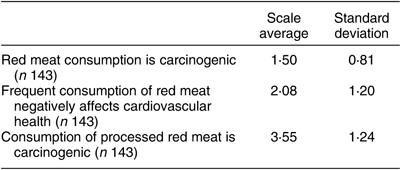
1: Strongly agree 2: agree 3: undecided 4: disagree 5: strongly disagree.
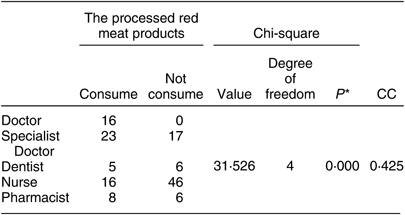
Of the 143 healthcare professionals who participated in the survey and consumed red meat, 52·8 % did not consume processed red meat products. In processed red meat consumption, unlike red meat consumption rates, consumption and non-consumption rates are close to each other. The results of the Chi-Square Analysis performed to determine whether there is a difference between the occupational subgroups and the consumption of the processed red meat products is shown in Table 5. According to the results of the analysis, the dependency coefficient for the relationship between the occupational subgroups and the consumption of the processed red meat products was 0·425.
Consumption of the processed red meat products by the occupational subgroups
CC: Coefficient of Contingency.
* P < 0·05 (significant).
When examined by gender, 64·3 % of the women did not consume processed red meat products, while in males this figure was 26·7 %. When examined by the sub-occupational groups, it was determined that 74·2 % of nurses consumed the fewest processed red meat products. This result can be explained by the fact that nurses are the group with the lowest monthly income level among the professional subgroups.
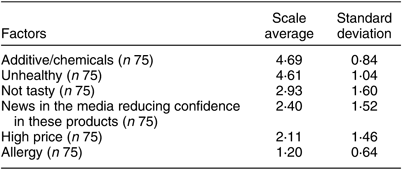
Seventy-five of the healthcare professionals interviewed in the survey do not consume processed meat products. Factors affecting their decision not to consume processed red meat products are shown in Table 6 by using the five-point Likert scale averages. Factors affecting healthcare professionals’ decision not to eat processed red meat products are the additives/chemicals (4·69) and it being unhealthy (4·61).
Factors affecting the decision not to consume processed red meat products
1: Strongly agree 2: agree 3: undecided 4: disagree 5: strongly disagree.
Consumption of processed red meat is classified in Group 1 by WHO. Group 1 includes carcinogenic agents for humans(41). Of the 143 healthcare professionals, 24·5 % said that they ‘strongly agree’ and 38·5 % of them ‘agree’ with the statement ‘processed red meat consumption is a carcinogen’.
Again, this statement resulted in the highest level of agreement among healthcare professionals with a 3·55 scale average. It was seen that the opinions of the healthcare professionals participating in the survey regarding the processed red meat products and the consumption behaviour of these products are in line with the WHO classification that accepted processed red meat as a carcinogen.
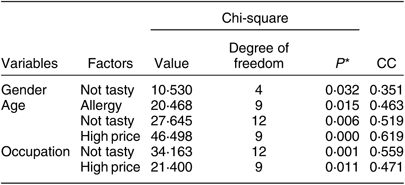
The factors that affect the decision of those who do not consume processed red meat products and the differences that are significant by gender, age and the occupational subgroups are shown in Table 7. According to the results of the analysis, ‘not tasty’ and ‘high price’ factors are the most important factors affecting the purchase decision in terms of age and occupation variables. When the results were evaluated in terms of the occupational subgroups, it was found that ‘high price’ had the most effect on the nurse group.
Factors affecting the decision not to consume processed red meat products by gender, age and occupation
CC: Coefficient of Contingency.
* P < 0·05 (significant).
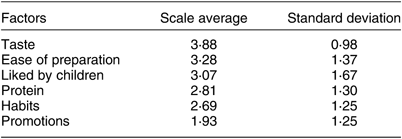
Factors affecting the consumption decision of sixty-eight (47·6 %) consumers who consumed processed red meat products are shown in Table 8 according to the scale average. The most important factors affecting the decision to consume processed red meat products are taste (3·88), ease of preparation (3·28) and liked by children (3·07).
Factors affecting the consumption decision for processed red meat products
The most commonly consumed processed red meat product is beef sausage with an average scale score of 2·84. This is followed by doner kebab (meat on spit) (2·13), veal sausage (1·73) and bacon (1·67). Of those who consume processed red meat products, 94·1 % pay attention to whether they are packaged when buying the products.
Discussion
The majority (96 %) of the healthcare professionals participating in the survey consume red meat. In the sample, there are six people who do not consume red meat. All those who do not consume meat are women. This result agrees with the results of previous studies on red meat consumption(Reference Radman, Camanzı and Kolega42–Reference Kızılaslan and Nalinci44). The fact that the factor coded as ‘a good value for my Money’ on the red meat consumption decision of nurses, with the lowest monthly income in the occupational subgroups, indicates that income level significantly affects the consumption of red meat. Another important finding is that reliability is very important in the choice of red meat buying point. Factors that affect the decision of those who do not consume processed red meat products are ‘additive/chemical’ and ‘unhealthy’.
The consequences of this research, in terms of breaking down prejudices and overcoming the anxieties of those who do not consume red meat are important, because these people are concerned with their health. In fact, the research results showed that health-educated consumers consumed red meat, but they are more careful in their consumption of processed red meat products. This result is in line with the WHO report. The findings obtained reveal the importance of the consumption amount, and the processing and cooking methods(Reference Reartes, Di Paola Naranjo and Eynard45) of red meat – as well as many other foods in terms of health.
Another consequence of this research is that children like these products and people’s habits are key in their consumption decisions about processed red meat products. The importance of consuming red meat is extremely clear for health and especially for children’s development. However, the consumption habits of young individuals in the family will affect their health throughout their entire lives(Reference Kersting, Alexy, Schürmann, Biesalski and Black46–Reference Branen and Fletcher49). All consumers should be informed about the importance of avoiding an unbalanced diet and instead aiming for healthy and balanced nutrition, and also be informed of the importance of the nourishing natural products in all food items, not just red meat. In addition, all consumers, irrespective of education level, should be given information about choosing fewer processed foods and about healthier options. This information should be given specifically to children and young people as they are developing, by educational programmes, families and in schools(Reference Hawkes50–Reference Ambrosini, Oddy and Robinson53). Adequate information provided through the internet and public spots(Reference Bowen, Wendy and Shirley54,Reference Story, Kaphingst and Robinson-O’Brien55) can be one of the easiest and cheapest ways to create healthy nutritional awareness in all sections of the community.
Conclusion
Nutritional habits are very important for public health. Healthcare professionals are the ones who evaluate the impact of nutrition on physical and mental health. They carry out their duties on the basis of their education and the continuity of the provision of health services in line with the knowledge and skills they have gained. The knowledge and skills of healthcare professionals, their approaches and recommendations within the framework of preventive medicine activities are of vital importance for public health.
Protein intake for the healthy and balanced nutrition of children and young people is a prerequisite for creating healthy societies. It is well known that red meat is an important source of animal protein. However, many different information sources, especially the media, provide different information about the relationship between red meat consumption and health. This study shows that the consumption of red meat and processed red meat products by healthcare professionals – the most competent group in health and nutrition – is in line with the WHO report. This finding contains an important message and recommendation which should be passed on to the public regarding consumption of red meat and processed red meat products. The findings can be a guide for the public health policies and for raising awareness about healthy eating options. In addition, the findings of this study may be a control group for red meat consumption behaviour studies in the future and may allow comparisons.
Acknowledgements
Acknowledgements: The authors thank all the healthcare professionals who have given their precious time during the fieldwork and patiently answered the questions and sincerely responded. Financial support: This work was supported by the Ege University Scientific Research Projects Coordination (Project No: 2015-ZRF-047). Conflict of interest: None. Authorship: We worked together with N.D. in this study which I am responsible author. Also she is supervisor in my master course and ongoing PhD process. She has numerous national and international notifications and articles in the areas of food safety and food economics. N.D. teaches at university in these fields. This work contains a section from O.S.A.’s completed master thesis. The questionnaire form was designed and analysed together. Fieldwork was done by O.S.A. The Turkish language of this study was written together and translated by N.D. into English. It was send to a native speaker for proofreading by O.S.A., who can offer the paper showing that this work is edited by a native English speaker, if requested. Ethics of human subject participation:This study was conducted according to guidelines laid down in the Declaration of Helsinki and all procedures involving human subjects were approved by the Ege University. Verbal consent was witnessed and formally recorded.



