




Introduction
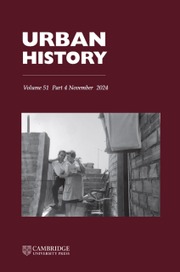
On a sunny autumn day in 2024, a creative workshop was held in the courtyard of a residential block in Visaginas, where elderly participants gathered to enjoy tea and biscuits. While browsing through family albums, they shared memories of receiving the keys to their apartments in the town’s first building, a pivotal event that took place nearly 50 years ago. Meanwhile, several local young adults in their 20s, equipped with professional cameras, were capturing portraits of the khrushchevka – a mass-produced five-storey building common throughout the former Soviet Union. Organized by a local non-governmental organization, this community-engagement event served to performatively reaffirm the heritage value of this standardized building, which is commemorated by a plaque mounted on the wall: ‘In April 1977, the first inhabitants of the energy town moved into this house.’ Another notable feature of this otherwise unremarkable structure is the wall-mounted loudspeaker, a subtle reminder that the town was designed to serve the needs of a specific industry – the nuclear sector – and as such was subject to particular safety requirements. The workshop, which encouraged intergenerational dialogue and collective meaning-making, is part of the ongoing, nearly five-decade-long negotiation of the nuclear town’s identity as a heritage site. This process is the central focus of this article.
The nuclear town of Visaginas, formerly known as Sniečkus during the Soviet era,Footnote 1 was established to house the workforce of the Ignalina Nuclear Power Plant (INPP), which operated in Lithuania from 1983 until its closure in 2009 and is currently undergoing decommissioning. The plant not only generated electricity but industrialized and urbanized a remote, densely forested region within the then Soviet Socialist Republic of Lithuania. Built from scratch, the new settlement was part of the urbanization projects promoted by late Soviet industry, which, although standardized and replicable, enjoyed modern infrastructure and better living conditions, thus materializing a kind of Soviet socialist dream.Footnote 2 The town’s construction involved a diverse, multinational workforce drawn from across the Soviet Union, with a particular emphasis on nuclear power specialists from the Ministry of Medium Machine Building (Minsredmash) network and other nuclear sites, including closed cities. Unlike the off-map cities, which historically arose from the spatial and social legacies of the Gulag system,Footnote 3 Sniečkus was an open settlement.Footnote 4 Nonetheless, the town remained somewhat isolated, far from large urban centres and with only 7.7 per cent of Lithuanian residents as of 1989.Footnote 5 Originally created for a mobile workforce, it became an ‘ethnic, professional, and social exclave’, with the highest percentage of foreign-born, Russian-speaking residents in Lithuania.Footnote 6 In this context, the aforementioned creative engagement with the khrushchevka pertains not only to the material remnants of standardized Soviet architecture but also to the dissonant legacy of the atomic town, a project imposed by central authorities with minimal involvement of Lithuanian local authorities and now regarded as a manifestation of Soviet nuclear colonialism.Footnote 7
This article adopts a cultural heritage approach to nuclear urbanity,Footnote 8 conceptualized as a distinct variant of Soviet industrial urbanism characterized by an exclave socio-spatial condition.Footnote 9 Visaginas, disembedded from its surroundings and designed as a node within a strategic military/civil nuclear power network, also functioned as an inhabited space with a particular colonial social dynamic. By employing a heritage perspective, this article facilitates the connection between the built environment and its inhabitants, something that is often analysed separately within studies of socialist urbanism.Footnote 10 This article presents a locally grounded perspective on Soviet industrial urbanism as heritage, highlighting that heritage-making is a dynamic process of community building and future negotiation.Footnote 11 We explore how various institutional actors, social groups and individuals have interpreted the nuclear town and its history, addressing both contemporary needs and future concerns, from the settlement’s early years to its decommissioning. Tracing both formal and informal heritage-making activities – such as memorials, museums, books, press reports, public debates and creative projects – will let us analyse how the historization of the atomic town has been employed to negotiate social and political issues related to identity and sense of place. Drawing on critical heritage studies, we argue that heritage and identity are linked not only through celebratory, identity-affirming forms but also through the dissonance inherent in any engagement with the past, which shapes the dynamics of different groups in heritage-making. In the case of colonial-born urbanity, the concept of dissonant heritage is especially pertinent, as it approaches heritage-making as a political process of negotiation, mediation and regulation of identities, conflicts and power relations.Footnote 12
This article critically examines the common association of industrial urban heritage with deindustrialization. In contrast to Western contexts, industrial heritage in the Soviet Union did not emerge as a response to deindustrialization; instead, it functioned as an ideological instrument to underscore the significance of industry in Soviet identity. Julie Deschepper asserts that the concept of ‘heritage extension’, which allowed newly constructed buildings to be treated as heritagizable, originated with regional specialists – such as those promoting Ural industry – but was quickly co-opted for political purposes.Footnote 13 Soviet heritage theory posited that the value of new, even standardized architecture lay in its embodiment of Sovietness rather than in antiquity or uniqueness. This form of ‘presentism’ is evident in Visaginas, where propaganda and the preservation of the recent past converge. Unlike earlier studies on the heritage and tourism of this nuclear town, which focus on the post-2000s period marked by the shutdown of both reactors at the INPP, leading to socio-economic instability, outmigration and rising unemployment,Footnote 14 this article argues that the heritagization of nuclear urbanity began well before the transition period and was an integral part of the settlement’s construction from its inception.
This article employs archival, media and policy documentary research, alongside ethnographic fieldwork with local memory activists, to explore the initial forms of memorialization of the atomic town and the evolving tensions surrounding memory, as well as recent instances of the use and reuse of the past. Visaginas today is inhabited by three distinct demographic groups: the senior generation (60+) of the first inhabitants; the middle generation (40–60); and the youngest (20–40), each with distinct economic activities, cultural capital and identities.Footnote 15 The first two cohorts are linked to the nuclear power plant’s operation, while the formative years of the third generation are more closely connected to the post-production phase. However, demographic factors alone are insufficient for understanding the negotiation of local identity in this context; ethnic and professional belonging also significantly influence how the past is remembered. Different generational cohorts often intersect in memory-based initiatives, as illustrated by the aforementioned workshop. We argue that the ways in which various actors engage with nuclear urbanity as heritage are deeply connected to the fact that memorialization was integral to the town’s construction from its inception. The ideological heritage canon established during the Soviet era, designed to render settlers as a local community, continues to be employed by various societal groups – whether to preserve, challenge, creatively appropriate or commodify this canon.
The peculiarities of nuclear urbanism
The construction of the new settlement situated seven kilometres from the site of the future nuclear power plant – then planned to host the most powerful RBMK-1500 reactors – began in 1974. The nuclear complex was situated in the sparsely populated, forested region of north-eastern Lithuania, necessitating the demolition of several villages and up to 200 farmhouses.Footnote 16 The town’s urban form, spatial organization and social dynamics were shaped by its governing authority, which, unlike other Soviet nuclear energy towns overseen by the Ministry of Energy and Electrification, was managed by the military Minsredmash, responsible for experimental nuclear reactors.Footnote 17 This military affiliation contributed to the ‘exclave’ nature of the new settlement, as it was not subject to the local Lithuanian communist government. Instead, it was integrated into a tightly controlled, well-funded network of nuclear sites, facilitating the movement of both material and human resources within a highly supervised, insulated system.Footnote 18
The design of the new nuclear settlement was undertaken by the All-Union Research and Design Institute of Energy Technologies (VNIPIET), a subsidiary of Minsredmash, following the model of other nuclear cities. As typical for such projects, the settlement was constructed from scratch based on a predetermined master plan that did not accommodate organic urban growth. The planning approach employed was that of micro-districts, organizing residential areas into circular neighbourhoods, with public facilities centrally located and surrounded by residential buildings and outer streets.Footnote 19 Consistent with the design principles of other atomic towns, which were often situated in scenic natural settings, one of the central planning objectives was to preserve the natural environment. This resulted in the creation of an ‘urban forest’ within a pine forest along the shores of a lake.Footnote 20 Three micro-districts were developed in alignment with the nuclear plant’s power units, but further urban development was halted when construction of the third reactor was cancelled in the late 1980s.
Visaginas, however, should not be viewed merely as the product of Soviet top-down urban planning templates, but rather as the result of negotiations between national/local planners and central VNIPIET authorities. The urban form of the new settlement was shaped not only by Leningrad-based architects who designed the master plan and residential structures, but also by Lithuanian architects commissioned to design distinctive public facilities. Elements inspired by Lithuanian architectural traditions, such as smaller-scale semi-enclosed courtyards and adaptations to the natural terrain, were incorporated into the design. VNIPIET, meanwhile, was granted considerable latitude to experiment, as evidenced by the diversity in housing configurations (over 14 distinct types), the balance between prefabricated and brick structures and the inclusion of connecting brick pergolas and extensions.Footnote 21 Consequently, Visaginas’ urban form and spatial organization embody both the characteristics of a typical Soviet industrial city (a top-down planning model) and those of a more modern, smaller-scale nuclear urbanism associated with Minsredmash,Footnote 22 evoking the concept of ‘a science city’.Footnote 23
The nuclear complex was constructed through the All-Union Shock Construction Project, which mobilized tens of thousands of workers from various Soviet republics, including military construction battalions, leading to significant challenges for the local population.Footnote 24 A strong professional identity and a sense of pride, expressed through the self-designation of ‘first-builders’ or pervostroiteli, united the town’s construction workers and nuclear specialists, many of whom were transferred from other sites under the Minsredmash. From there, this community also brought higher standards of living, which were different from those of an average Soviet city. The superior quality of the urban environment, coupled with enhanced welfare infrastructure, higher wages and other privileges, fostered solidarity and a unique sense of belonging among this transient workforce. As Siarhei Liubimau argues, the social dynamics of the atomic town – characterized by an exclave form of sociality – further shaped the residents’ deep emotional connection to the urban space, based on the perception that they had constructed it for themselves ‘with love’ and regarded the town as a collective public good.Footnote 25
Chronicling the town of the future
The construction of the settlement commenced with the unveiling of a foundation stone inscribed with ‘A town of nuclear energy workers will be built here’, further solidifying the professional identity of the incoming community within a foreign environment. In 1975, a ceremony – featuring speeches by Lithuanian communist authorities that had been meticulously approved by MinsredmashFootnote 26 – marked the commencement of a shared temporality among the newcomers, shaped by the future town’s novelty rather than by local ties or historical continuity. Instead of aligning with the national Lithuanian context, a transnational professional identity was embedded in various urban features that signalled a ‘nuclear’ way of living, including the newspapers Mirnyi atom (Peaceful Atom) and Energetikas (Energy Worker), the street name Energetikų (Energy Workers), an emblem featuring acrobats shaped like atoms, a Geiger counter at the city centre and playground designs resembling the INPP chimneys. The urban/nuclear entanglements also manifested in more mundane features such as the aforementioned loudspeakers on residential buildings and the highly visible, large pipelines used by the INPP to supply heat to the town.
The sense of community and urban ownership among the newcomers was initially shaped by local media, which were owned by the Western Construction Board, the construction contractor under Minsredmash.Footnote 27 In 1981, two years before the completion of the first nuclear unit, the editorial board of the weekly Energetikas launched two competitions aimed at promoting written and photographic documentation of the town’s construction. These initiatives sought to engage construction workers as ‘people’s correspondents’ in shaping proletarian ideals.Footnote 28 The majority of the submitted essays focused on distinguished workers who served as role models. These essays resembled typical Soviet newspaper articles, often featuring biographical portraits of workers or essays on exemplary brigades, emphasizing their significant contributions to the construction effort. The second competition, ‘Lens Chronicler’, invited both amateur and professional photographers to capture images of workers, significant construction milestones and everyday life in the town, thereby accumulating a visual archive for future reference. The term ‘chronicler’ in the competition’s title was deliberate, as photography was viewed as a powerful medium of commemoration. In the words of Energetikas’ editors, ‘every photograph telling the story of the construction of the INPP and the young town of Sniečkus, of the hardworking collectives of construction workers and assemblers, would eventually become a beautiful chronicle of the builders of Lithuania’s energy giant’.Footnote 29 One of the competition’s winners was Vasily Chupachenko, an English teacher and photographer who had come to Sniečkus from the closed city of Tomsk-7. He was personally invested in documenting the construction of the town and the plant, as visual documentation had been restricted in the off-map city.Footnote 30 Today, his archive – characterized by romanticized depictions of industrial construction set against natural landscapes and representations of joyful life in the young city – constitutes the core of the Visaginas City Museum’s photographic collection.
In addition to the promotion of heroic labour, the Soviet practice of heritage ‘presentism’ was apparent in the local media’s efforts to chronicle the new town’s emergence, reflecting an unshakable confidence in the unfolding construction’s future heritage value.Footnote 31 As one editorial in Energetikas remarked, the present rapidly becomes the past, referencing a mere six-year period: ‘More and more time is passing since the start of construction, which has now become a historic date for the team of the Western Construction Board. Only photographs and eyewitnesses can recreate for future generations the episodes of the construction phases, the hardships that the pioneers had to endure and the joys of their work victories.’Footnote 32 The periodical not only invited residents of the new town to contribute to collective memory by sharing their personal recollections and photographs but also provided guidance on how to select key objects and events to be preserved, such as the opening of the first school, the first day at the first kindergarten, the first housewarming and other significant ‘firsts’. This emphasis on such milestones at the local level aligns with the early stages of the broader development of nuclear cultural heritage, which focused on commemorating the most significant and pioneering achievements, such as the bombs and reactors.Footnote 33
Local media initiatives represent some of the earliest efforts to systematically document the history of the town and the plant, driven by the goal of preserving the heroic narrative of constructing a new Soviet city. By involving residents in the documentation process, these propaganda campaigns not only fostered a sense of shared memory but also helped cultivate an attachment to the new place, which was essential for uniting diverse societal groups within the town. Initially, the newcomers’ sense of place was both spatially and temporally confined, focusing solely on the novelty of the urban-industrial development and overlooking the national context and history in which it was situated. This colonial approach, in turn, served to bond the settlers’ community, while the memory initiatives promoted by the media also played a role in helping the mobile workforce endure the challenging conditions on the construction site.
Museumification of the nuclear town
The first museum in the nuclear settlement still under construction, opened in 1986 as part of the local school, reflects another example of Soviet heritage ‘presentism’, wherein local area studies (or kraevedenie) were utilized to reinforce Soviet ideals of patriotism and internationalism by connecting the pre-Soviet past with the Soviet present. Similar school museums were established across Lithuania; however, in this instance, it was the descendants of the settlers, guided by their locally born Lithuanian language teacher, who endeavoured to integrate their new urban environment into the local historical narrative. The museum’s focus was on local history, encouraging grassroots participation in the production of knowledge, while also serving as a tool for Soviet cultural continuity.Footnote 34 Through its exhibitions, which included objects from Lithuanian ethnography such as a loom, a spinning wheel and peasant folk costumes, the museum sought to connect the pre-industrial history of the Aukštaitija region with more recent historical events, including relics from World War II and the town’s construction.Footnote 35 The display of photographs showing tall cranes above standard mass housing blocks added a layer of industrial urbanism to the rural heritage. This otherwise conventional Soviet museum of local lore encapsulated conflicting interests within the framework of nuclear colonialism.Footnote 36 For the Lithuanian-born museum head, and likely for many other members of the Lithuanian minority in the atomic town, the museum functioned as a tool for preserving ethnic identity.Footnote 37 Conversely, for the newcomers, it offered a platform to integrate themselves into a foreign historical and local context.
Similarly, the Public Museum of the History of the Sniečkus Settlement, established in 1987, exemplifies the tension between Soviet ideology and different local interests. The museum, named after Antanas Sniečkus, the leader of the Lithuanian Communist Party, sought to link the settlement to the broader national context of Soviet Lithuania through the political figure who had authorized the construction of the INPP.Footnote 38 The museum’s exhibits – focused primarily on Sniečkus’ life and career, as well as the industrial and urban construction – demonstrated a clear top-down influence in shaping the town’s identity through its association with Soviet political power. However, the museum’s portrayal of the town’s construction and everyday life – through the idealized photographic imagery by aforementioned Chupachenko, along with the display of a large, wall-mounted model of the 1970s urban master plan – was designed to strengthen the town builders’ sense of attachment to the place.
Although a substantial portion of the museum’s exhibits focused on the political figure,Footnote 39 the institution was regarded as a historical museum of the settlement by the settlers.Footnote 40 Local media have lauded the museum as a significant act of commemoration for both the town and the plant, viewing it as an initial step toward the establishment of a larger, more expansive museum. This future institution was anticipated to evolve in tandem with the town’s development: ‘The museum’s exhibition is not yet extensive, nor is the history of the relatively young town itself.’Footnote 41 Integrated within the widely visited public library, the museum was locally well known, with schoolchildren – guided by their teachers – constituting the primary visitors and showing particular interest in a visually appealing model of their town’s master plan.Footnote 42 It is noteworthy that the establishment of the museum, which served both to ideologically ground the town’s name and to answer the memorialization aspirations of the newcomers, was driven by the pragmatic interests of the local Communist Party leader and the head of the library, both ethnic Lithuanians, who merely sought to restore the library’s facilities.Footnote 43
These initial instances of museumification sought to link the imposed industrial urban structure with the local pre-industrial past and the national context of Soviet Lithuania. The top-down initiative, in conjunction with bottom-up efforts, engaged the interests of ethnically diverse actors – local Lithuanians and Russian-speaking newcomers – who, alongside the goals of the governing bodies, such as the nuclear power plant and local communist authorities, participated in shaping the town’s identity. The first museums, alongside celebrating heroic industrialization, also reflect the early negotiation of the town’s identity, navigating between rural and industrial narratives.
Competing memories of the place
The Chornobyl disaster, followed by environmental protests against the INPP, which featured reactors of the same design, marked a pivotal moment in the development of the Sniečkus settlement. The anti-nuclear protests effectively halted the construction of units 3 and 4 of the power plant, which in turn curtailed the expansion of the town. Originally planned to house 70,000 residents, the population stagnated at around 34,000.Footnote 44 In the broader context of Lithuania’s national mobilization against Soviet rule, diverse forms of individual and collective self-identification emerged among the inhabitants of the enclave-like town, often articulated along ethnic lines. Among these, a minority of ethnic Lithuanians began to engage with local pre-Soviet heritage as a means of publicly asserting their national identity. This included efforts such as the restoration of the monument to Lithuanian Grand Duke Vytautas the Great, a nationally significant symbol linking modern Lithuania to the great medieval state, which was demolished in the nearby village during the Soviet era.Footnote 45 In contrast, the predominant segment of the Russian-speaking population expressed scepticism regarding Lithuania’s ongoing political reforms, while simultaneously seeking to assert their identity as ‘builders, not occupiers’.Footnote 46 Tensions between the town’s Russian-speaking community and the broader national context culminated in 1990, shortly after Lithuania’s declaration of independence. At that time, workers at the INPP sent an open letter to Soviet President Mikhail Gorbachev, petitioning for the political separation of the town from Lithuania and its reunification with the USSR. The plant officially came under Lithuanian jurisdiction in September 1991, marking the end of the political standoff and the beginning of a gradual process in which residents started to redefine their relationship with the country beyond the borders of their town.Footnote 47
The political shift altered the status of the local population, transforming them from the dominant nationality to an ethnic minority, while the ethnic Lithuanian minority emerged as representatives of the titular nation within the atomic town. In this context, heritage-making became a way to cope with the fundamental political alteration and stabilize the identities of the various groups, while expressing loyalty to the Lithuanian state. Negotiations regarding the history of the nuclear town gained renewed momentum following the closure of the Public Museum of the History of the Sniečkus Settlement, which had become obsolete after the town’s name was changed in 1992. Rasa Baločkaitė’s critical analysis of memory practices in Visaginas reveals that the local administration initially sought to construct loyalty to the new Lithuanian state by positioning the town as ‘more Lithuanian than Lithuanians themselves’.Footnote 48 This approach involved re-contextualizing the Soviet-imposed nuclear town within a narrative of Lithuanian national history, emphasizing its pre-Soviet, pre-nuclear origins while suppressing its industrial genesis. The shift from industrial to rural heritage narratives thus reflected a deliberate attempt to manage dissonant heritage, positioning the settlement’s identity within the national project of reclaiming a pre-Soviet Lithuanian past.
In the early 1990s, a Lithuanian historian who had relocated to Visaginas from Vilnius, with the support of the local municipality, began collecting oral histories and artefacts from the surrounding villages.Footnote 49 His archive was intended for presentation at the newly established Visaginas Regional Museum, with a focus on rural ethnography and ‘folk culture’s authenticity’. The proposed ethnographic museum was to be housed in a small cinema hall, which was to be converted into a simulation of a traditional wooden house interior. However, the idea was met with scepticism and caution. On 1 April 1996, a local newspaper published a satirical piece mocking the concept of the ethnographic museum, stating, ‘The first exhibit was unveiled: a bed on which a villager from ŠulčipulkiaiFootnote 50 slept 300 years ago. A search for the mummy is underway.’ This use of humour served to highlight the dissonance of heritage sentiments within the multiethnic population of the atomic town, reflecting its residents’ uncertainty regarding which aspects of the past should be publicly remembered.
Since the mid-1990s, the development of the regional museum has been marked by turbulence and inconsistency, stemming from shifting political contexts, changes in facilities and ownership, as well as limited financial resources and staff. Despite these challenges, the museum was consistently regarded as a valuable institution, particularly following the shutdown of the nuclear reactors in 2004 and 2009, which prompted a search for a new identity for the town. The Visaginas Strategic Development Plan for 2004–09 initially proposed a virtual museum focused on the local history of the region and its arts, which was later expanded to include a museum dedicated to renewable energy and the energy industry, and an outdoor village museum highlighting the town’s ethnic cultures. Although none of the initial proposals were realized, the ongoing discourse and other self-representational materials from the period indicate a deliberate selection between rural and industrial heritage as key resources for shaping a new urban identity at the municipal level. Middle-ground actors typically prioritized the rural, specifically Lithuanian, heritage, distancing themselves from the town’s industrial origins in an effort to construct a new identity for Visaginas as a ‘green and young town’ characterized by well-balanced architecture.Footnote 51
Different histories of the town
In the 1990s, another Lithuanian historian arrived in Visaginas, adding his voice to the growing body of research into the town’s past. Working within the municipality, Algirdas Kavaliauskas authored several comprehensive books that chronicled local history from its prehistoric roots to its modern-day status.Footnote 52 His work was grounded in original research, archival materials and oral testimonies. On one hand, the books serve a significant function in familiarizing readers with the history of the town and its power station. On the other hand, they have provoked controversy among residents due to the heritage dissonance they address, including the involvement of military labourers in construction, crimes at the construction site, substandard living conditions, workplace accidents and ethnic tensions. Kavaliauskas presented a diverse array of narratives, both challenging and reinforcing the heroic accounts of the construction period upheld by the builders of the town.
The public acknowledgment of dissonance inherent in the nuclear town’s heritage triggered the consolidation of the first-builders, known as pervostroiteli, as a community of memory, resulting in the establishment of the Visaginas Builders’ Club in 2001. The club brought together residents from various professions who were the first to arrive in the 1970s and early 1980s for the construction of the town and the INPP. The organization was particularly concerned with preserving history for future generations and commemorating the builders. In response to the history books mentioned above, members of the club started publishing their memories in the local newspaper Sugardas, and a few years later they were collected and published as a book of memories called Memory of a Heart (2004).Footnote 53 This book, which features over 60 personal accounts, serves as a literary monument to the builders, capturing both their triumphs and struggles. In a similar vein, Boris Tarasov’s Lithuanian Phenomenon (2006) provided a detailed chronology of the INPP’s construction and biographical sketches of its builders.Footnote 54 Both works reinforced the narrative of the town and its power plant as symbols of ‘the friendship of nations’, a theme heavily promoted by Soviet propaganda and early memorialization practices in the 1980s.
While the first-generation builders were largely united in their desire to preserve their collective memory, they were also divided by emerging interest groups. Retired INPP specialists, for example, formed their own association in 2018, focusing on issues such as health, ecology, energy and heritage. One of the association’s key figures became an active proponent of heritage preservation. Since 2020, he has been involved in the development of a Visaginas museum, inspired by the Leningrad Nuclear Power Plant Museum. His vision included a three-part museum: a city museum, an INPP museum within the simulator and a public memorial. This nuclear veteran also won first place in the 2021 competition for the memorial site concept. He stressed that such a memorial was vital for both the residents and future generations, allowing people to connect with the industrial past that had shaped their lives: ‘The memorial is natural and necessary for Visaginas…People still live in Visaginas, for descendants, but also for current residents. When they go and see their “breadwinner”, so to speak, with whom they have lived and worked all their lives, it will warm their souls.’Footnote 55 Despite this, the Visaginas municipality has yet to commit to realizing the memorial, and the project remains unfulfilled.
The shifting priorities of the INPP after 2010 further complicated the situation. Following the closure of the second reactor and the departure of the long-time director, the plant’s focus shifted exclusively to decommissioning and waste management, with little attention given to preserving its heritage.Footnote 56 As a result, significant artefacts, such as the control panel from the first reactor, were disposed of as ordinary materials through public auction.Footnote 57 Nevertheless, staff at the INPP Information Centre have effectively preserved some nuclear artefacts, including corporate badges, work instructions and employees’ personal belongings. These materials were recently transferred to the town’s museum. However, due to the facility’s high-security nature, there are significant limitations on what can be preserved and made accessible to the public.
The emergence of diverse perspectives on the construction of the plant and its settlement, particularly the articulation of the dissonance inherent in the Soviet colonial project, played a crucial role in mobilizing members of the first generation into the pervostroiteli as a community of memory. In contrast to municipal efforts to reinterpret the nuclear town by distancing it from its industrial, specifically Soviet, origins, the local nuclear community sought to reaffirm Visaginas’ nuclear heritage. In this context, heritage-making from below served as a means to assert professional identity, a crucial element for both nuclear professionals and first-builders during a period of change, while simultaneously reproducing Soviet narratives of ‘heroic construction’.
Remembering a difficult past
The first generation of town builders typically frame their heritage as an exclusively positive element, necessary for affirming a fragile collective identity in the context of political transformation. Consequently, their narratives tend to resist critical perspectives on the nuclear industry and its history, interpreting such critiques as attacks on cherished collective memories.Footnote 58 In response to negative portrayals in the national media,Footnote 59 the community has developed a sensitivity to external criticism, often refraining from engaging in internal critical reflection. Even deeply painful or difficult personal experiences are frequently silenced or minimized in order to preserve a cohesive and affirmative historical narrative.
The effort to construct an exclusively positive heritage narrative – one that suppresses elements of dissonance – is exemplified by the commemorative practices surrounding the Chornobyl disaster clean-up, in which more than 600 liquidators from Sniečkus participated. Actively commemorated by the Chornobyl Liquidators’ Association since 1993, this legacy is formally honoured each year on 26 April. In 2010, a dedicated memorial stone was erected, uniting the histories of town builders, INPP veterans and Chornobyl liquidators under a shared narrative inscribed in both Lithuanian and Russian. Before this official site, commemorative gatherings were held at a different location, by the Pyramid of Power (1995), a controversial sculpture by Lithuanian artist Vytautas Nalivaika featuring distorted human faces. Initially interpreted by some as a critique of (Soviet) state authority and hypocrisy, the sculpture was reappropriated by the former liquidators as a Chornobyl memorial. However, its unsettling imagery sparked public discomfort and misinterpretation, ultimately leading to its removal.Footnote 60 The conflicting interpretations of these memory sites underscore the tensions inherent in negotiating dissonant heritage within a local community.
The first generation of Visaginas residents express strong emotional attachments to the place and actively seek to preserve their historical perspective. As a local educator, whose parents worked at the INPP until retirement, noted: ‘They experienced nuclearity all through their work, blood, sweat…This is their life, the air they breathed for many, many years. You can’t simply erase it from your life.’Footnote 61 Participating in community clubs, commemorating significant dates and advocating for the preservation of the town through museumification contribute to a sense of belonging and validation among town builders and nuclear veterans. Nevertheless, a pervasive feeling of marginalization endures. As one member of the Builders’ Club remarked during an interview: ‘I don’t think my memoirs are useful or valuable to anyone…It seems to me that nobody needs it.’Footnote 62 This statement encapsulates a bitter sentiment that reflects the pervasive sense of neglect and marginalization among the nuclear community.
Reimagining nuclear heritage
Despite the sense of marginalization experienced by the first generation, the selective narratives of nuclear heritage they construct, whether directly or indirectly, form the basis for the contemporary cultural reuse of the nuclear past. In this context, dissonance is neither explicitly articulated nor critically examined. The past decade, particularly following the airing of the highly popular HBO series Chernobyl (2019), which was filmed at the INPP and sparked international tourism, can be characterized by the commodification of nuclear heritage for tourism purposes. This shift has been largely driven by the middle and younger generations, originating from the ethnically diverse local population, including Russian-speaking newcomers and Lithuanians. While the town’s builders seek to affirm their identity as the city’s founders, new actors are actively developing alternative narratives focused on the town’s economic competitiveness and cultural appeal, while sidelining the ideological elements of Soviet nuclear colonialism.
When the INPP was closed, the municipality of Visaginas played a crucial role in shaping the official memory landscape. The municipality continued to reshape the museum project within its strategic development plans, which, after a prolonged period of indecision and negotiation, culminated in the opening of Visaginas City Museum in August 2024.Footnote 63 The inaugural exhibition, developed in close collaboration with the local community – including the first-builders – emphasized an industrial rather than earlier rural history, centring primarily on the town’s inhabitants and their collective memory. In addition to chronicling the history of the INPP and the everyday lives of residents in the nuclear town, the exhibition engaged with the difficult heritage of the Chornobyl disaster, presenting personal belongings and written memories of the members of the Chornobyl liquidators club. However, this part of the exhibition, like the story of the Chornobyl memorial mentioned above, emphasized heroic narratives of sacrificial work while largely avoiding a critical engagement with the causes of the nuclear catastrophe. The museum, currently housed in temporary premises within a gymnasium building and staffed by a small team, is considered a pilot project, primarily oriented towards local audiences rather than tourists.Footnote 64 According to the latest strategic development plan, another museum-educational energy centre is planned for the INPP control room simulator, aimed at preserving and presenting both the material and intangible heritage of the region, including nuclear technology. This new momentum in museumification projects is linked to the increasing presence of the middle generation in local government, which views tourism – particularly nuclear tourism – as a key development strategy for the decommissioned city.Footnote 65 This shift is also influenced by various international creative and research projects conducted in Visaginas since 2015, which have emphasized the significance of nuclear cultural heritage.Footnote 66
Emerging independent cultural producers, primarily from the youngest generation, are creatively reappropriating the legacy of Soviet nuclear town planning and construction. A notable example is the public company ‘Urban Stories’, founded by the co-author of this article, Oksana Denisenko. This organization is dedicated to preserving and communicating the specifics of nuclear urbanism, including its standardized mass housing architecture. The town’s distinctive urban landscape, a result of negotiations between the central VNIPIET and Lithuanian architects during the construction, is characterized by a variety of building types and materials. To showcase the diversity of replicable Soviet architecture, including typical khrushchevkas, ‘Urban Stories’ has created a digital archive of Visaginas’ architecture, presenting the material legacy of nuclear urbanity as a de-ideologized catalogue of standardized socialist mass housing and as a contemporary portrait of the built environment.Footnote 67 The organization has also initiated and supported the preservation of informal inscriptions on pavements left by military groups, built alternative memorial signs to mark instances of former nuclear ways of living, such as the famous acrobatics school, and designed cultural tourism routes. Alternative walking tours highlight the peculiarities of socialist urban planning, the specificity of the ‘urban forest’, the nuclear aesthetics of playgrounds and the egalitarian design of urban structures, which lack private, enclosed spaces. The organization aims to give voice to local nuclear communities and foster intergenerational memory through initiatives such as a creative workshop centred on the first apartment building discussed in the article’s introduction and the ‘First-hand Stories’ tour series, which features encounters with first-generation residents from diverse professional backgrounds.Footnote 68
The voices of town builders and nuclear specialists, along with the unique material environment of the atomic town, are also actively translated into the tourist experience. Similar to ‘Urban Stories’, ‘LitWild’, a local tourism agency founded in 2018 that specializes in eco-tours around Visaginas, has integrated the urban nuclear heritage into its offerings. The former training simulator for the second unit control panel of the INPP has been repurposed as a tourist attraction, with guided tours led by former simulator specialists who were directly involved in its creation and management. Here, both infrastructure and authentic knowledge serve as legacies of the nuclear past. ‘LitWild’ has also introduced the ‘Atomic Tour’, which includes fat bike excursions to the INPP industrial zone and boat tours on Lake Drūkšiai, where the power plant is located.Footnote 69 This performative ‘nuclearity’ for the tourist experiences has become an economic lifeline following prolonged economic stagnation. Municipality and entrepreneurs use nuclear heritage from below, based on celebratory narratives of local nuclear communities, to instrumentalize the past for regional regeneration and economic benefit.
Conclusions
This article has explored socialist industrial urbanism as a form of ‘presentism’ of Soviet heritage, in which multiple temporalities are entangled alongside goals of propaganda and preservation. The satellite settlement of the Ignalina Nuclear Power Plant, an example of Soviet nuclear colonialism, was not merely a town of the future but also a materialization of a heritagizable urbanism, despite its standardized nature, with a replicable khrushchevka at its core. Heritage-making of the nascent urbanity functioned both as a tool of Soviet propaganda promoting industrial heroism and as a mechanism through which various societal groups negotiated the identity of the emerging urban formation and their roles within it. Early practices of memorialization played a pivotal role in turning the new settlers, who shared a common professional identity yet lacked ties to a specific place, into a local community. The heritagization of the atomic settlement was also significant for other groups: for the local government, it provided a means to connect the imposed urban development to the broader national context, while for ethnic Lithuanians in the cultural sphere, it offered a way to maintain a pre-colonial, rural identity through ethnographic narratives.
The dissonance of atomic heritage was brought to the forefront in the context of the political transformations of the 1990s and 2000s, when professional and local identities were renegotiated in relation to loyalty to the newly independent Lithuanian state. Amid de-Sovietization, alternative perspectives emerged, challenging the previously established narrative of the atomic town as a symbol of heroic industrialization and exposing its colonial dimensions. The tensions surrounding memory, particularly between middle-ground and grassroots actors, as well as between ethnic Lithuanians and Russian-speaking newcomers, transformed a generation of town builders and nuclear specialists into a community of memory. This community used heritage to reaffirm professional identity and navigate profound societal changes. The ideological memory canon, once encapsulated in the epigraph of the first memoir book by pervostroiteli, ‘Not everyone is allowed to live so generously: to build the town for the memory of people’,Footnote 70 was now contested by other local groups. While the town builders continued to uphold celebratory accounts of nuclear urbanism, municipal actors, including ethnic Lithuanians, increasingly sought to reinterpret the town’s narrative by replacing its industrial, Soviet context with a focus on national, pre-industrial roots.
Presently, the dissonance no longer appears to be an active issue in the heritage practices of a nuclear town undergoing decommissioning. At both the municipal and entrepreneurial levels, now primarily driven by the middle and younger generations, there is a widespread recognition of the town’s nuclear industrial past as a valuable resource for its regeneration. New actors directly incorporate celebratory heritage narratives from town builders and nuclear veterans into their products, neither reinforcing nor dismantling these narratives, but rather reappropriating them to serve new purposes, such as leveraging the past for economic development. The concept of ‘nuclearity’ is strategically utilized by the emerging tourism sector, which draws on stereotypes and clichés associated with the nuclear power plant and the atomic town to attract visitors.
The ‘presentism’ of Soviet heritage, characteristic of ‘showcase’ industrial urban projects, meant that it left behind not only material remnants but also an enduring infrastructure of social memory and urban imagery that could easily be recontextualized for alternative purposes within new frameworks, such as tourism in a market-driven economy. The early transformation of nuclear urbanity into heritage, although later renegotiated by various actors, played a pivotal role in the sedimentation of the nuclear industrial, rather than the rural pre-industrial heritage discourse. As a result, the current cultural repurposing of the atomic town remains framed within the discourse of an extraordinary industrial urban project in the midst of a pristine nature. Difficult issues that challenge the celebratory accounts of nuclear urbanism, such as colonial land appropriation, military labour, ethnic tensions and environmental impacts, remain unaddressed.
Acknowledgments
We thank our respondents for sharing their experiences and memories with us. We are grateful to Eglė Rindzevičiūtė, Anna Storm, and the NuSPACES project participants for their generous insights during the course of this research. Special thanks to Victoria Fomina and the anonymous reviewer for their valuable feedback and editorial guidance.
Funding statement
This research has received funding from the Research Council of Lithuania (LMTLT), agreement No S-JPIKP-21-1, in the framework of Joint Programming Initiative for Cultural Heritage and Global Change: A Challenge for Europe.

 Open access

