

Introduction
By the year 2050, there will be more people over 60 years of age worldwide than children (Lunenfeld Reference Lunenfeld2008). In South Africa, whilst the growth rate may not be as rapid as the developed world, this population is also on the increase. This was confirmed by the latest South African census which found that the percentage of the population aged 60 years had risen from 7 per cent in 1996 to 8 per cent in 2011 (Statistics South Africa 2012). This constituted an increase from 2.8 million to 4.1 million individuals.
Senescence is closely related to increased chronic impairments resulting in disabilities (Lopez et al. Reference Lopez, Mathers, Ezzati, Jamison and Murray2006; North and Sinclair Reference North and Sinclair2012). Participation in regular exercise drastically reduces the risk of disabilities while producing significant physical and psychological health benefits (Daley and Spinks Reference Daley and Spinks2000). A structured plan of enhanced physical activity has been shown to improve health and quality of life in the older population and these in turn impact preservation of functional capacity and subsequently reduce medical management costs (Duthie and Malone Reference Duthie and Malone2007).
Despite these benefits, a high percentage of older adults in South Africa continue to lead a sedentary lifestyle. This high prevalence of physical inactivity, in terms of attributable deaths, ranks ninth compared to other risk factors (Joubert et al. Reference Joubert, Norman, Lambert, Groenewald, Schneider, Bull and Bradshaw2007). Insufficient levels of physical activity have been shown to cause a physical decline that will eventually lead to functional limitations in basic tasks such as lifting, stooping, walking or climbing stairs – all of which are daily requirements of independent functioning (Rikli Reference Rikli2005). While the need and development of age-appropriate tools to evaluate the physiological attributes (strength, endurance, flexibility, agility and balance) required in performing activities of daily living have been explored to a certain degree, the effects of frequency of exercise also require further investigation (Marques et al. Reference Marques, Rosa, Soares, Santos, Mota and Carvalho2011; Wilkin and Haddock Reference Wilkin and Haddock2011). Significant strength improvements were noted in older adults following participation in a strength training programme twice a week for 12 weeks (Brown and Holloszy Reference Brown and Holloszy1993). Wolfson et al. (Reference Wolfson, Whipple, Derby, Judge, King, Amerman and Smyers1996) reported improvements in dynamic balance following participation in a training programme three times a week for 12 weeks (Wolfson et al. Reference Wolfson, Whipple, Derby, Judge, King, Amerman and Smyers1996). Other studies demonstrate that exercise conducted two or more times a week can provide adequate improvements (Chin A Paw et al. Reference Chin, van Poppel, Twisk and van Mechelen2004; Paw et al. Reference Paw, Marijke, van Poppel, Twisk and van Mechelen2006). However, very few efforts have been made to establish how frequently those who are 60 years and older should exercise to gain improvements in functional fitness levels (Nakamura et al. Reference Nakamura, Tanaka, Yabushita, Sakai and Shigematsu2007).
There is no evidence in South Africa to date evaluating structured exercise programmes for older populations residing in aged care facilities. The aim of this study was to assess the effect of frequency of a structured exercise programme developed specifically for individuals who are 60 years and older, and reside at aged care facilities, on functional fitness levels.
Methods
Design
An experimental research design approach was used to compare the effects of a 12-week group exercise programme on two groups of participants.
Population
The population was all persons 60 years and older permanently residing in aged care facilities in the eThekwini municipality.
Sampling strategy
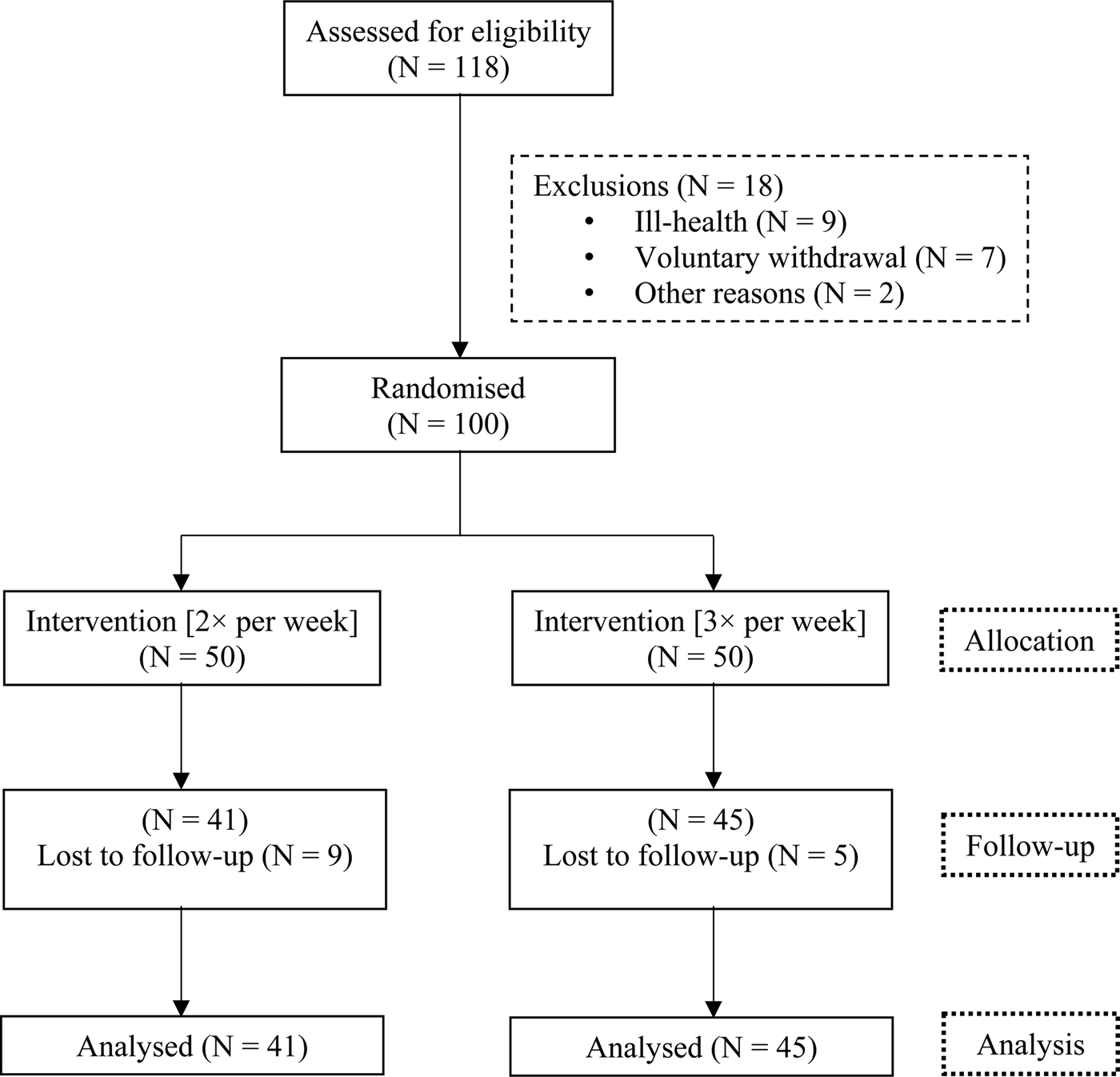
A listing of all aged care facilities located within a 20–30 kilometre radius of the Durban Central Business District was obtained from the Department of Social Development. Five aged care facilities were randomly selected. Volunteers meeting the study's inclusion/exclusion criteria were invited to a pre-selection screening process to determine eligibility, after which all eligible participants were invited on to the programme. No formal sample size was calculated at the start of the study. There were no results from previous studies in this context to guide the sample size. However, in accordance with the performance of group exercise, a conservative number of not more than 20 participants is considered effective for monitoring changes during group exercise sessions (Armitage-Johnson Reference Armitage-Johnson1994). In this regard, a quota of 20 participants per site was considered maximum. In the event that numbers were in excess of this quota, simple random sampling using the fishbowl technique (Brink, Van der Walt and Van Rensburg Reference Brink, Van der Walt and Van Rensburg2012) was used to identify 20 participants (Figure 1). Thereafter, every participant randomly selected a number from 1 to 20 to determine participation in either Group 1 or Group 2. Systemic sampling was used to identify ten participants for Group 1 (all odd numbers) and ten participants for Group 2 (all even numbers).
Participant selection and testing process.
Intervention procedure and data collection
The study protocol was approved by the University of KwaZulu-Natal (UKZN) Biomedical Research Ethics Committee (BE 080/14). Functional fitness levels were assessed prior to the intervention to establish a baseline, and within 48 hours after the intervention to determine the effect of the intervention. The evaluation of functional fitness levels was conducted using the Senior Functional Test (Rikli and Jones Reference Rikli and Jones2012). The Senior Functional Test was found to be an effective tool when testing functional fitness levels in this population. Its uniqueness is that it is comprehensive, i.e. it includes all physiological parameters needed to perform common everyday activities, it provides continuous-scale measures and is suitable enough to be used in a community setting. The battery included the following test components; arm curl, chair stand, back scratch, chair sit and reach, six-minute walk and eight foot up and go test, which evaluated upper and lower body strength and flexibility, aerobic endurance, agility and dynamic balance, respectively. Group 1 received the exercise intervention programme three times a week for 12 weeks, while group 2 received the same intervention but only twice a week (Table 1). Participants completed each exercise session as a group at the same time, under the guidance of an instructor. The exercise intervention was implemented and follow-up assessments were conducted immediately after the 12-week programme had ended, at each of the five facilities. Exercises began at a low intensity and increased in intensity, volume and duration. Participants were further encouraged to discontinue exercise and seek medical intervention should they experience major warning signs/symptoms such as chest pain, palpitations or light-headedness. The desired intensity of exercise was determined using the Borg Category-Ratio-10 (CR-10) scale (Eston Reference Eston2012). An explanation of this rating scale was provided to participants prior to the intervention to ensure proper understanding and maintenance of exercise intensity. Table 1 reflects the intervention programme as well as the progression of exercises. A combined programme of strength, endurance and balance activities was used, while intensity and volume progressed every four weeks. Each exercise session began with a warm-up and concluded with a cool-down. The warm-up was dynamic in nature and included both joint mobility and balance exercises. The cool-down included slow rhythmic movements and static stretches of the major muscle groups of the body. Endurance training included drills that stressed the cardiovascular system, such as weaving between cones, stepping up and over an aerobic step, shuttle walks, high knees and butt kicks. Intensity was progressed by increasing the step height and time of endurance activity. Resistance training involved movement of the upper and lower extremity large muscle groups using body weight, dumbbells and resistive exercise training bands. Increments in weight began from the lightest and increased progressively according to tolerance levels of participants over each phase.
Exercise intervention programme
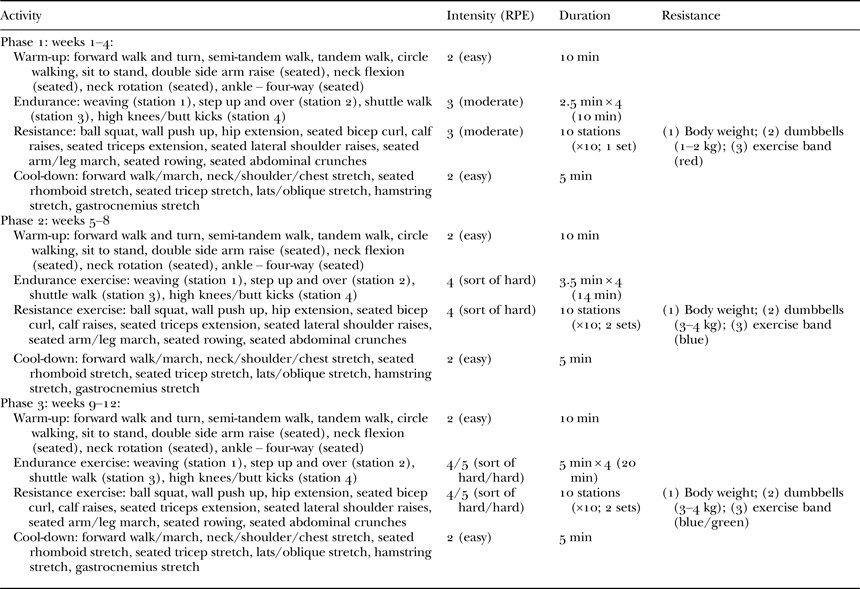
Notes: RPE: rating of perceived exertion. min: minute. kg: kilogram.
Statistical analysis
Data were analysed using the Statistical Package for Social Science version 20.1. A value of p < 0.05 was considered to be statistically important. The Kolmogorov–Smirnov test was used to test for normality of baseline and follow-up data. A paired t-test and Wilcoxon matched-pair signed rank test were used to analyse normally distributed and non-parametric data, respectively. Chi-square tests were used to analyse nominal and order (categorical) data. Analysis of covariance (ANCOVA) was performed to detect differences in baseline measures between groups. To emphasise clinical significance Cohen's d effect sizes (ES) were also calculated, with the magnitude of the standardised effects interpreted using thresholds of 0.0–0.2 (trivial), 0.2–0.6 (small), 0.6–1.2 (moderate) and >1.2 (large), respectively (Hopkins et al. Reference Hopkins, Marshall, Batterham and Hanin2009).
Results
Demographic profile
A total of 118 participants were tested as a baseline but this number was reduced to 86 patients with valid results for the follow-up. The main reason for the decrease in number was due to ill-health through various stages of the intervention, with ailments ranging from common influenza to both acute and chronic respiratory conditions, which prevented some participants from sustaining exercise over the 12-week period. Other factors included the withdrawal of participants at various stages throughout the duration of the study. The mean age and standard deviation of the group was 72.87 ± 7.54 years, respectively. Of the 86 participants tested, 79.9 per cent were female while 22.1 per cent were male, representing a greater ratio of females to males (4:1). The South African National Consensus of 2011 reiterates this disparity by reporting a 5.02 per cent difference in ratio, in favour of females versus males in this population.
The racial composition of the sample indicates that nearly three-quarters of the patients were of South African Indian origin (74%). Whites and ColouredsFootnote 1 represented 14 and 11 per cent, respectively, while Blacks accounted for the smallest grouping in the sample at 1 per cent. While this composition may not be reflective of the current demographic trends in the province of KwaZulu-Natal or South Africa, all five old-age homes used in the study were located in predominately Indian areas within the KwaZulu-Natal municipality.
Training frequency
The effect of frequency of exercise (between both groups of participants) on each variable was tested using multivariate analysis (Table 2). The magnitude of the standardised effect showed very little significant difference between both groups for most variables. The arm curl (right and left), as well as the chair sit and reach tests were the only variables demonstrating a moderate to large effect, with the other variables demonstrating small and trivial effects. ANCOVA was also performed to detect any differences at baseline that could account for the differences in the response to training frequency between both groups (Table 3). No statistical significance was noted. This suggests that training three times a week may have no added benefit for improving functional fitness levels compared with training twice a week in this population.
Multivariate analysis and effect sizes of both study groups before and after intervention
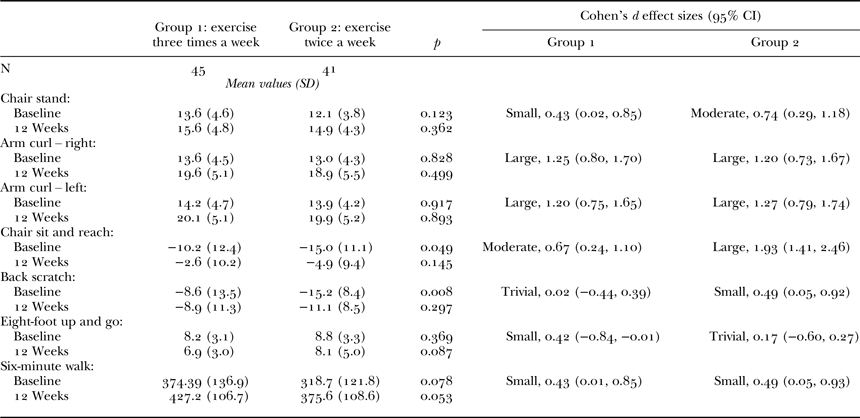
Notes: CI: confidence level. SD: standard deviation.
Differences at baseline in response to training frequency (ANCOVA)
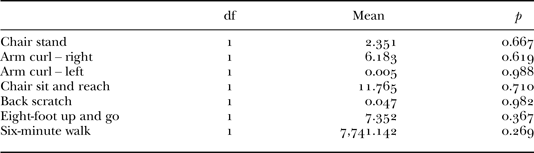
Notes: ANCOVA: analysis of covariance. df: degrees of freedom.
Functional fitness measures
All the variables satisfied the condition for normality except the chair sit and reach, and the eight-foot up and go tests, respectively.
There were significant improvements over time for five of the six pairings (Table 2). These were the chair stand, arm curls (for both right and left arms), chair sit and reach, back scratch and six-minute walk tests, respectively (p ˂ 0.05). Further inspection of the mean and standard deviation values indicated increases in all but one of the functional fitness measures post-intervention, i.e. the eight-foot up and go test. Increases in chair stand, arm curls, chair sit and reach, back scratch and six-minute walk measures demonstrated improvements in upper and lower body strength, upper and lower body flexibility, and aerobic endurance in this population following the intervention of 12 weeks of group exercise. However, no increase in the eight-foot up and go scores were noted, which suggested no improvement in participant's agility and dynamic balance following the intervention.
Discussion
The primary finding of the study was that there was no significant difference in functional fitness training two times versus three times a week. Both training frequencies resulted in increases in functional fitness levels.
Upper and lower body strength was evaluated using the arm curl (for both left and right hand) and 30-second chair stand tests, respectively. This study found that both upper and lower body strength had improved following the 12-week intervention programme. Sustaining optimal strength levels, both in upper and lower body, is imperative, especially in older adults, for preserving physical function, preventing chronic diseases and performing activities of daily living. Many common tasks such as hand gripping, lifting and transferring rely heavily on upper body strength (Forrest, Zmuda and Cauley Reference Forrest, Zmuda and Cauley2006). The evaluation and maintenance of upper and lower body strength is critical in preventing and delaying the onset of disability, frailty and dependency during the ageing process. Studies have clearly indicated that improvements in upper and lower body strength are an essential factor in maintaining functional ability in later years (Garatachea et al. Reference Garatachea, Molinero, Martínez-García, Jiménez-Jiménez, González-Gallego and Márquez2009; Paterson and Warburton Reference Paterson and Warburton2010). This study showed similar improvements to DiBrezzo et al. (Reference DiBrezzo, Shadden, Raybon and Powers2005) who reported an increase in upper and lower body strength following a ten-week exercise programme, with strengthening exercises on every alternate day, suggesting that strengthening of both anterior and posterior muscles of the lower extremity may improve dynamic balance and agility (DiBrezzo et al. Reference DiBrezzo, Shadden, Raybon and Powers2005).
Measures of upper and lower body flexibility were evaluated using the back scratch, and chair sit and reach tests, respectively. The results indicate that there was a significant improvement in flexibility post-intervention. Flexibility is a fundamental capacity within the ageing process (Gremeaux et al. Reference Gremeaux, Gayda, Lepers, Sosner, Juneau and Nigam2012). The development of musculoskeletal impairments together with the progression of disabilities in the older adult is associated with decreases in flexibility (Holland et al. Reference Holland, Tanaka, Shigematsu and Nakagaichi2002). Fatouros et al. (Reference Fatouros, Taxildaris, Tokmakidis, Kalapotharakos, Aggelousis, Athanasopoulos and Katrabasas2002) explained that declines in flexibility are related to the deterioration of functional ability and health status, which in turn leads to dysfunction and the inability to perform everyday activities such as getting up from a chair or bed, walking and climbing stairs (Fatouros et al. Reference Fatouros, Taxildaris, Tokmakidis, Kalapotharakos, Aggelousis, Athanasopoulos and Katrabasas2002). Wilkin and Haddock (Reference Wilkin and Haddock2011) further suggested that individuals who maintain higher levels of muscular strength and flexibility seldom participate in long-term health-care programmes (Wilkin and Haddock Reference Wilkin and Haddock2011). Additional studies further reported an association between decreases in flexibility and the frequency of falls in this population (Barker et al. Reference Barker, Talevski, Bohensky, Brand, Cameron and Morello2015; Karlsson et al. Reference Karlsson, Magnusson, Von Schewelov and Rosengren2013; Milanović et al. Reference Milanović, Pantelić, Trajković, Sporiš, Kostić and James2013).
Agility and dynamic balance was assessed using the eight-foot up and go test. The results indicate that there was no improvement in agility and dynamic balance following the intervention programme, which is in contrast to other reviewed studies of this nature (Brito et al. Reference Brito, Neto, Helena and Deslandes2014). Agility and balance are critical in performing a vast array of common mobility tasks. These include walking, climbing stairs and effecting quick movements to avoid hazardous obstacles, going to the bathroom, to get on and off private and public transport vehicles, to cross the street, or to answer the telephone or the door. Though there are few studies related to the parameters of agility and dynamic balance related to age, the results of some have shown that this component decreases with increasing age (Toraman, Erman and Agyar Reference Toraman, Erman and Agyar2004). Findings suggest agility and dynamic balance is best improved and the risk of falling reduced if specific balance and co-ordination activities are included in exercise programmes, together with strength, flexibility and aerobic activities (Correa Bautista et al. Reference Correa Bautista, Gámez Martínez, Ibáñez Pinilla and Rodríguez Daza2011). Evidence indicates that performances in the eight-foot up and go test can discriminate among various functional categories in this population, and is reactive to changes that can result from increased levels of physical activity (Alexander et al. Reference Alexander, Gross, Medell and Hofmeyer2001). In this regard, Miotto et al. (Reference Miotto, Chodzko-Zajko, Reich and Supler1999) found that physically active individuals who are 60 years and older performed faster (4.9 seconds) than their sedentary counterparts (5.7 seconds) in the eight-foot up and go scores (Miotto et al. Reference Miotto, Chodzko-Zajko, Reich and Supler1999). Other studies similarly reported the average eight-foot up and go scores to be considerably faster in a highly active group than those of a low active group (Rikli and Jones Reference Rikli and Jones1999). In a study conducted by Liu-Ambrose et al. (Reference Liu-Ambrose, Khan, Eng, Janssen, Lord and Mckay2004), resistance training and agility training significantly reduced fall risk scores by 57 and 48 per cent, respectively, following a 25-week intervention programme (Liu-Ambrose et al. Reference Liu-Ambrose, Khan, Eng, Janssen, Lord and Mckay2004). These findings could suggest three different explanations why there were no improvements in agility and dynamic balance in the present study. Firstly, the 12-week intervention programme may not be sufficient to provide improvements in balance and agility levels; secondly, the sample population used in this study may not have been at an adequately high enough physical activity level; and thirdly, the proprioceptive activities used in the intervention may not have been of a sufficient level needed to improve balance and agility measures satisfactorily in those 60 years and older.
Aerobic capacity was evaluated using the six-minute walk test. The results indicate a significant improvement in aerobic capacity following the intervention protocol. The average distance covered in six minutes increased from 348.40 metres prior to the intervention to 402.38 metres post-intervention. Declines in aerobic capacity occur throughout the lifespan, accelerating much faster in later years. The rate of decline in aerobic capacity appears to decline by a rate of 5–15 per cent per decade (Hollenberg et al. Reference Hollenberg, Yang, Haight and Tager2006; Weiss et al. Reference Weiss, Spina, Holloszy and Ehsani2006). This age-related decline in aerobic capacity has the potential to predispose individuals who are 60 years and older to common comorbidities such as pulmonary, cardiac and peripheral arterial diseases, while aerobic-type activities have been shown to exert beneficial effects on blood pressure, lipids, glucose tolerance, bone density, depression and quality of life (Fleg Reference Fleg2012; Maguire and Slater Reference Maguire and Slater2013). Reference equations and tables are often used to predict the six-minute walk test distance in healthy subjects over the age of 60 years, with the gender, age, weight and height of participants often explaining the large proportion of variability in the distances covered (Hulens et al. Reference Hulens, Vansant, Claessens, Lysens and Muls2003). However, progressing age is supplemented by an increase in pathologies and ‘apparently healthy’ older citizens can present a larger diversity when it comes to health status. This infers that exercise capacity and the risk for complications during exercise may not necessarily be the same for each person, especially those who consider themselves capable of performing physical activity (Izaks and Westendorp Reference Izaks and Westendorp2003). Ideally, the exercise programme should be tailor-made for each individual, taking into account all facets of the individual's health condition. However, the influence of health status to the variability of distance covered in the six-minute walk test has yet to be meticulously and extensively described (Bautmans, Lambert and Mets Reference Bautmans, Lambert and Mets2004).
When comparing both groups of participants, the results indicate no significant difference in functional fitness levels between group 1 (exercise undertaken three times a week) and group 2 (exercise undertaken twice a week). Although a statistically significant difference was observed in the back scratch test (p < 0.05), the findings reveal only a trivial to small magnitude of effect. Stiggelbout et al. (Reference Stiggelbout, Popkema, Hopman-Rock, De Greef and Van Mechelen2004) suggested that although group exercise was well suited to this population, participation only twice a week without additional regular physical exercise did not provide the stimulus needed to bring about improvements in functional fitness levels (Stiggelbout et al. Reference Stiggelbout, Popkema, Hopman-Rock, De Greef and Van Mechelen2004). Similar findings reported that participation in exercise programmes twice a week was insufficient for this population, while others suggested that older women who participated in an exercise programme three times a week gained greater functional fitness benefits than those who exercised less frequently (Nakamura et al. Reference Nakamura, Tanaka, Yabushita, Sakai and Shigematsu2007; Puggaard Reference Puggaard2003). In contrast, the present study has shown that improvements in functional fitness levels may not necessarily be achieved with a greater frequency of participation in group exercise programmes. The results indicate that participation just twice a week can provide the required dosage deemed necessary to elicit improvements in functional fitness levels in persons who are 60 years and older.
Conclusion
The results demonstrated that 12 weeks of progressive, multifaceted group exercise increased strength, flexibility and aerobic endurance levels in individuals who are 60 years of age and older. This study concurs with similar research studies demonstrating the importance of physical activity in improving functional fitness levels in the elderly, and thus their overall health. The intervention programme is a viable option that can be easily implemented in any facility that provides care for the older adult. It has a low operational cost, easy applicability and can be performed by many individuals across different fitness levels at the same time. Finally, the study demonstrated that participation in a group exercise programme twice a week was an adequate dose to improve overall functional fitness levels in this population, with an extra session a week adding no further improvement.
Acknowledgement
The University of KwaZulu-Natal, College of Health Sciences supported the study.



