

Archaeological field schools are a critical component of undergraduate and graduate student training and professional development, particularly for individuals pursuing field-based employment (Heath-Stout and Hannigan Reference Heath-Stout and Hannigan2020; Morrison Reference Morrison2012; Warner et al. Reference Warner, Eichner and Campbell2024). For students pursuing careers in archaeology, completing a field school demonstrates to prospective employers and graduate programs that they are prepared to practice in the field. Field schools or field experience are also a requirement of federal, state, and local agencies to receive a “qualified archaeologist” designation, which allows individuals to conduct research and obtain permits. For example, in Oregon (ORS 390.235), the State Historic Preservation Office requires qualified archaeologists to have at least “twelve weeks of supervised experience in basic archaeological field research, including both survey and excavation” (State Historic Preservation Office 2025). The Secretary of the Interior’s Standards and Guidelines for Archeology and Historic Preservation require “at least four months of supervised field and analytic experience in general North American archeology” (US National Park Service 2020). Often, it is expected that this experience will be gained partially through a field school, supervised fieldwork, or a practical equivalent.
The importance of field schools is highlighted by those who describe them as a “rite of passage” for what some consider the discipline’s defining activity, fieldwork (Walker and Saitta Reference Walker and Saitta2002). Fieldwork in archaeology has historically been associated with excavation (Dean Reference Dean2019; Everill Reference Everill2007; Perry Reference Perry2004), although field schools and their curricula are highly diverse, providing students with technical, methodological, cultural, and ethical knowledge that includes, but is not limited to, excavation (Connell Reference Connell2012; Gonzalez and Edwards Reference Gonzalez and Edwards2020; Kansa et al. Reference Kansa, Reifschneider, Byram, Gonzalez, Hastorf, Lightfoot and Tripcevich2024; Lightfoot Reference Lightfoot2009; Rahemtulla Reference Rahemtulla2020; Smith et al. Reference Smith, Jackson, Ralph, Brown, Rankin and Community2021; Warner et al. Reference Warner, Eichner and Campbell2024). The landscape of field schools is changing rapidly owing to shifting priorities in the field and the growing nature of collaborative and Indigenous archaeological research (Cipolla and Quinn Reference Cipolla and Quinn2016; Cipolla et al. Reference Cipolla, Quinn and Levy2019; Gonzalez and Edwards Reference Gonzalez and Edwards2020; Lightfoot Reference Lightfoot and Silliman2008, Reference Lightfoot2009; Lightfoot and Gonzalez Reference Lightfoot and Gonzalez2018; Lightfoot et al. Reference Lightfoot, Grone and Sanchez2025; Morris Reference Morris2014; Supernant et al. 2020).
Many field schools today reinforce the importance of fieldwork, pedestrian surveys, and experience in archaeological excavation for student professionalization and training. Others are also including collaboration with Indigenous peoples, descendant communities, and stakeholders; landscape-scale surveys and integrative cultural resource surveys; understanding the contributing elements of a cultural landscape; identifying cultural sites and culturally significant biotic and abiotic resources; defining site boundaries; diagnosing site constituents; employing low-impact methodologies and high-precision digital mapping; and understanding both surface and subsurface features, among other considerations (Apodaca and Sigona Reference Apodaca and Sigona2023; Apodaca et al. Reference Apodaca, Sanchez, Sigona, Grone, Lopez and Lightfoot2024; Lightfoot et al. Reference Lightfoot, Grone and Sanchez2025; Lopez et al. Reference Lopez, Rodriguez, Glowa, Lightfoot, Grone and Sanchez2025; Sigona et al. Reference Sigona, Apodaca and Lopez2021). The Indigenous Archaeology Field Methods Program, the focus of this article, contributes to the growing number of collaborative archaeological field schools that incorporate the full collaboration and participation of Indigenous peoples in conducting fieldwork on ancestral lands, informed by Tribal epistemologies and cultural heritage priorities.
This article highlights an example of a collaborative archaeological field school developed by, with, and for the Amah Mutsun Tribal Band, the Amah Mutsun Land Trust, and the University of Oregon (Apodaca et al. Reference Apodaca, Sanchez, Sigona, Grone, Lopez and Lightfoot2024; Sanchez Reference Sanchez2024). For nearly two decades, the Amah Mutsun Tribal Band has engaged in collaborative archaeological research with universities (Lightfoot et al. Reference Lightfoot, Grone and Sanchez2025). We document the development of Amah Mutsun Tribal Band field methodologies that aim to fully capture all cultural resources through a Tribal landscape lens, including “low-impact” and integrative data collection methods, as well as Tribal engagement in archaeological field schools. We document the long-term use of collaborative field schools to train the next generation of Tribal and non-Tribal archaeologists in archaeological field methods and collaborative research practices with, for, and by Indigenous communities (Apodaca and Sigona Reference Apodaca and Sigona2023; Apodaca et al. Reference Apodaca, Sanchez, Sigona, Grone, Lopez and Lightfoot2024; Cuthrell et al. Reference Cuthrell, Hylkema and Collins2013; Hylkema and Cuthrell Reference Cuthrell2013; Lightfoot and Lopez Reference Lightfoot and Lopez2013; Lopez Reference Lopez2013a; Sanchez et al. Reference Sanchez, Grone, Apodaca, Byram, Lopez and Jewett2021; Sigona et al. Reference Sigona, Apodaca and Lopez2021).
Background
Collaborative Archaeology
Collaborative archaeology in North America is a growing subfield of archaeology (Lightfoot Reference Lightfoot and Silliman2008; Montgomery and Fryer Reference Montgomery and Fryer2023; Wright Reference Wright2022). Currently, the practice of collaborative archaeology is unevenly applied compared with traditional archaeological approaches. While traditional archaeological research in an academic context is developed by the investigator based on their research interests, curiosities, and discipline-specific themes, collaborative research centers on mutual interests that often decenter academic concerns alone (Atalay Reference Atalay2006, Reference Atalay2007; Lightfoot Reference Lightfoot and Silliman2008; Montgomery and Supernant Reference Montgomery and Supernant2022). It is important to note that consultation with descendant communities is not collaboration but rather a state and federal requirement for archaeological permitting. This is what some scholars refer to as “legislated ethics” (Watkins Reference Watkins2000). Collaboration and consultation are not synonymous; collaborative archaeology is a unique subfield and practice within archaeology. Collaborative archaeology research programs often have community-specific deliverables and/or tangible outcomes for research partners beyond academia.
Collaborative archaeology moves beyond legally mandated consultation and actively works to build relationships and jointly develop participatory research projects (Atalay Reference Atalay2006, Reference Atalay2012; Colwell-Chanthaphonh and Ferguson Reference Colwell-Chanthaphonh and Ferguson2010; Lightfoot Reference Lightfoot2005a, Reference Lightfoot and Silliman2008; Nicholas et al. Reference Nicholas, Roberts, Schaepe, Watkins, Leader-Elliot and Rowley2011; Supernant and Warrick Reference Supernant and Warrick2014; Watkins Reference Watkins2000). In our experience of conducting collaborative research with and for Native Californian Tribes, we have found that collaborative research builds on individual and collective strengths and interests, while also enhancing the capacity of all project members. An example of this kind of deliverable is high-resolution information on archaeobotanical materials contained in sites that Tribes have identified as a priority for contemporary plant restoration projects (see Apodaca and Sigona Reference Apodaca and Sigona2023; Apodaca et al. Reference Apodaca, Sanchez, Sigona, Grone, Lopez and Lightfoot2024; Sigona et al. Reference Sigona, Apodaca and Lopez2021).
Within North America, collaborative archaeology developed in the late 1990s and early 2000s (Lightfoot Reference Lightfoot2005a, Reference Lightfoot and Silliman2008; Lopez Reference Lopez2013a; Lopez et al. Reference Lopez, Rodriguez, Glowa, Lightfoot, Grone and Sanchez2025; Nicholas and Andrews Reference Nicholas, Andrews, Nicholas and Andrews1997; Smith Reference Smith1999; Watkins Reference Watkins2000). While the field of collaborative archaeology is developing and being implemented globally with diverse Indigenous peoples and other descendant communities, training opportunities for students and other practitioners interested in these approaches are still limited. Therefore, while there are growing calls for and interest in collaborative and decolonizing scholarship approaches, the majority of archaeology students may not engage with these issues, even in the classroom, let alone in the field. However, we recognize a growing pattern in collaborative field schools and training opportunities (Cipolla and Quinn Reference Cipolla and Quinn2016; Gonzalez and Edwards Reference Gonzalez and Edwards2020; Kansa et al. Reference Kansa, Reifschneider, Byram, Gonzalez, Hastorf, Lightfoot and Tripcevich2024; Lightfoot Reference Lightfoot and Silliman2008, Reference Lightfoot2009; Lightfoot and Gonzalez Reference Lightfoot and Gonzalez2018; Lima et al. Reference Lima, Labra, McElroy, Kāwika Tengan and Bayman2019; Newsom et al. Reference Newsom, Schmitt and Cole-Will2024; Rahemtulla Reference Rahemtulla2020; Sanchez et al. Reference Sanchez, Grone, Apodaca, Byram, Lopez and Jewett2021; Sigona and Apodaca Reference Sigona and Apodaca2024; Smith et al. Reference Smith, Jackson, Ralph, Brown, Rankin and Community2021).
Archaeologists implementing collaborative research protocols acknowledge the multiplicity of frameworks and approaches that arises from incorporating diverse perspectives at all stages of the research process, resulting in various forms of Indigenous and collaborative archaeologies (Apodaca et al. Reference Apodaca, Sanchez, Sigona, Grone, Lopez and Lightfoot2024; Atalay Reference Atalay2006, Reference Atalay2007; Croes Reference Croes2010; Ngandali and Craig Reference Ngandali and Craig2023; Nicholas Reference Nicholas2010; Sanchez et al. Reference Sanchez, Apodaca, Gonzalez, Gonzalez, Nason, Herthel and Nason2024; Silliman Reference Silliman2008; Smith and Jackson Reference Smith and Jackson2006; Supernant et al. Reference Supernant, Baxter and Atalay2020). While particulars of an Indigenous and collaborative archaeology project vary, based on local and regional histories, local impressions of the utility and impacts of anthropology, community capacity, and priorities, collaborative and Indigenous archaeologies share various similarities in practice. These shared components within collaborative research are (1) co-creation of research questions with collaborative partners, (2) formalization of agreements regarding culturally appropriate field and laboratory methods, (3) review and approval process of destructive analyses, (4) co-interpretation of data, (5) development of public engagement and education initiatives, and (6) shared authorship of academic manuscripts and recognition of individual contributions. Through these initiatives of co-creating research projects, emphasizing trust-building, mutual respect, power-sharing, and reciprocity, archaeological research offers the opportunity to be relevant to Indigenous peoples while making significant contributions to anthropological issues.
The Impact of Collaborative Archaeology on Contemporary Practice
While there have been growing calls to integrate collaborative approaches to archaeological research, training, and practice, recent research demonstrates that significant work remains to be done to advance collaborative studies within the discipline. Despite the growing number of edited volumes (Dillian et al. Reference Dillian, Clary and Bello2025; Leondorf Reference Leondorf2026; Lightfoot et al. Reference Lightfoot, Grone and Sanchez2025; Nicholas and Watkins Reference Nicholas and Watkins2024; Van Alst and Gover Reference Alst, Emily and Gover2024) that highlight the growth and development of this approach, Wright (Reference Wright2022) has demonstrated that we do not see collaborative approaches highlighted in top peer review journals. Critically, Wright (Reference Wright2022) reviewed publishing trends for collaborative and community-based research in eight peer-reviewed archaeology journals from 2012 to 2021, capturing the decade following Atalay’s (Reference Atalay2012) influential book Community-Based Archaeology.
Out of 3,345 articles, Wright (Reference Wright2022) finds that collaborative and community-based research represents only 1% of the original research articles published between 2012 and 2021. While some journals, such as Historical Archaeology, had 4.7% of their publications that included community-based approaches, others, including Antiquity, the Journal of Anthropological Archaeology, and the Journal of Archaeological Method and Theory, had ranges from 0.0% to 0.3%. Therefore, while collaborative archaeology has been lauded as a significant contribution to the discipline of archaeology, its full impact has yet to be fully realized. Wright (Reference Wright2022) argues that structural changes are needed to increase the visibility and thereby the potential adoption of community-based participatory research approaches (see Montgomery and Fryer Reference Montgomery and Fryer2023). Wright states:
Of course, these efforts present their own challenges. It is possible, for example, that manuscripts espousing community-based approaches may be rejected by reviewers with different priorities and points-of-view, which might understandably discourage authors—particularly early career researchers seeking academic employment and tenure—from submitting to “mainstream” journals. To address this specific challenge, researchers in secure or tenured positions have a responsibility to pave the way for our more vulnerable colleagues, and to create a more inclusive publishing landscape for the students we train to embrace community-based approaches [Reference Wright2022:286–287].
We agree with Wright (Reference Wright2022) that change is necessary within journals, editorial boards, peer-review systems, granting agencies, research institutions, and tenure and promotion guidelines to support and recognize the contributions and value of collaborative archaeology (Alperin et al. Reference Alperin, Muñoz Nieves, Schimanski, Fischman, Niles and McKiernan2019; Bennett and Khanna Reference Bennett and Khanna2010; Diggs et al. Reference Diggs, Garrison-Wade, Estrada and Galindo2009; Gu Reference Helen2023; Nyden Reference Nyden2003). We believe that teaching collaborative and community-based approaches on and off campus, especially during field-school training, will help the next generation of scholars recognize the importance of this subfield of archaeology. For example, one of the authors has developed a course entitled “Decolonizing Archaeology” that has been taught at graduate and undergraduate levels. This course has played a crucial role in undergraduate training related to Indigenous and collaborative approaches in archaeology.
Amah Mutsun Tribal Band
The Amah Mutsun Tribal Band are the descendants of the Indigenous peoples who were forcibly removed from their traditional territories in present-day San Mateo, Santa Cruz, San Benito, Santa Clara, and Monterey Counties. The ancestors of the Amah Mutsun Tribal Band were taken to Mission San Juan Bautista and Mission Santa Cruz (Figure 1). Since time immemorial, the Amah Mutsun Tribal Band’s ancestors have accumulated knowledge of human–environmental relationships in central California (Lopez Reference Lopez2013a). However, because of Spanish missionization (1769–1821), which forcibly suppressed Indigenous cultural practices and eroded Tribal culture, Tribal knowledge was altered, and many traditions were lost. Furthering these changes were the seven missions established within the Central California Coast between 1770 and 1797 and Spanish laws prohibiting Indigenous burning practices (Levy Reference Levy, Heizer and Sturtevant1978; Lopez Reference Lopez2013a). Underpinning the motivations for colonizing coastal California were the foundations of the 1493 Papal Bull, the Doctrine of Discovery, which provided Spanish agents with the moral and legal ability to dehumanize Native Americans and take possession of their lands. In the eyes of the Catholic church, non-Christians possessed no inherent human rights (Brew Reference Brew2014; Greenberg Reference Greenberg2016).
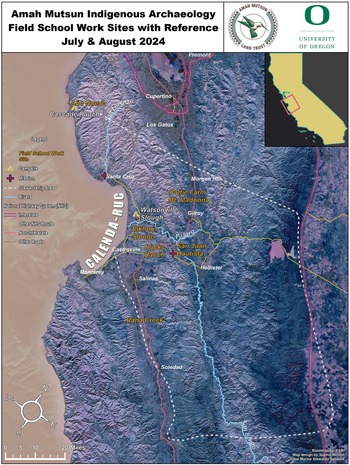
Overview map of the 2024 Indigenous Archaeology Field Methods Program with the locations of summer fieldwork.

Figure 1 Long description
The map shows the Amah Mutsun Indigenous Archaeology Field School work sites in California for July and August 2024. It includes locations such as Cupertino, Los Gatos, Morgan Hill and others. The map highlights fieldwork sites with symbols: a yellow star for 'Field School Work Site', a purple triangle for 'Field School Reference' and a white circle for 'Other Sites'. The map also features major roads, rivers and the CALERA RUG area. An inset map shows the location within California. The University of Oregon logo is present, indicating collaboration. The map provides a detailed view of the region's geography and planned fieldwork locations.
During the Mexican period (1821–1848), the secularization of the missions between 1834 and 1836 resulted in Indigenous people leaving the missions to work as manual laborers on ranchos established on their traditional lands, which the Spanish previously held (Levy Reference Levy, Heizer and Sturtevant1978; Lightfoot Reference Lightfoot2005b; Rizzo-Martinez Reference Rizzo-Martinez2022). With the onset of the American period (1850–present), state and federal officials sanctioned and facilitated a coordinated genocide of California’s Indigenous peoples from 1848 to 1900 (Cook Reference Cook1943; Heizer Reference Heizer1974; Jacknis Reference Jacknis1993; Lindsay Reference Lindsay2012; Madley Reference Madley2016a, Reference Madley2016b; Rawls Reference Rawls1984). Furthermore, as outlined by Madley (Reference Madley2016a), disease, dislocation, and starvation contributed to the rising death toll. Abduction, bounties, forced labor, high mortality rates, unrelenting murders, battles, and atrocious massacres perpetrated by state militias and federal troops also claimed countless lives. Thus, throughout these three periods of colonialism, the primary concern of the Amah Mutsun and other Indigenous peoples was survival (Lopez Reference Lopez2013a).
Many California Indian Tribes, including the Amah Mutsun, were unable to pass on their knowledge regarding traditional resource and environmental management practices, as well as other cultural traditions (Lopez Reference Lopez2013a), which led to these practices becoming dormant in later historic times. In recent years, the Amah Mutsun have used archaeology as one approach to revitalize dormant Indigenous knowledge and cultural practices, along with studying ethnographic and ethnohistorical documents, forming partnerships with other Indigenous Californian Tribes, and collaborating with other organizations.
Amah Mutsun Tribal Band, Amah Mutsun Land Trust, and Archaeology
In 2007, archaeologists and environmental scientists from the University of California, Berkeley (UC-Berkeley) approached the Amah Mutsun Tribal Band to initiate an eco-archaeological study of Indigenous fire use in central California at Quiroste Valley in Año Nuevo State Park (Hylkema and Cuthrell Reference Cuthrell2013). Initial archaeological surveys in the Quiroste Valley during the 1980s recorded over a dozen ancient and historic sites. Between 2004 and 2006, Cabrillo Community College conducted test excavations at the site. Radiocarbon dating assays suggested a contact-era site within the valley, potentially Casa Grande or Metenne, a village documented by the Portola overland expedition in 1769. The village was believed to have comprised multiple house structures and a large ceremonial dance house that could hold more than a hundred people (Hylkema and Cuthrell Reference Cuthrell2013). A collaborative project involving the Amah Mutsun Tribal Band, the California Department of Parks and Recreation, and UC-Berkeley was initially facilitated by Chuck Striplen, an Amah Mutsun Tribal member and PhD student at that time in the Department of Environmental Science and Policy Management, pursuing dissertation research on fire ecology and the historical ecology of California’s forests (Striplen Reference Striplen2014).
A collaborative enterprise was developed to study cultural burning and ancient Indigenous landscape management practices in Quiroste Valley (Cuthrell Reference Cuthrell2013; Lightfoot, Cuthrell, Boone, et al. Reference Lightfoot, Cuthrell, Boone, Byrne, Chavez, Collins and Cowart2013; Lightfoot, Cuthrell, Striplen, et al. Reference Lightfoot, Cuthrell, Striplen and Hylkema2013; Lightfoot and Lopez Reference Lightfoot and Lopez2013; Lopez Reference Lopez2013a). While initially hesitant to collaborate with archaeologists, owing to a legacy of non-collaboration and disturbance of sacred Indigenous sites, the Tribal Council of the Amah Mutsun Tribal Band approved the archaeological research (Lopez Reference Lopez2013a). Their decision to jointly engage in archaeological research was based on an agreement with UC-Berkeley archaeologists, which ensured they would (1) minimize adverse impacts to any sites investigated; (2) avoid all sensitive cultural materials, such as human remains and other sacred objects; and (3) employ low-impact field methodologies guided by geophysics to identify discrete deposits with the potential to contain high-density cultural materials and artifacts related to Indigenous foodways and other activities of particular interest to the Tribe (Sanchez et al. Reference Sanchez, Grone, Apodaca, Byram, Lopez and Jewett2021). The collaborative program emphasized the inclusion of Tribal members in all phases of research and recognized the final decision-making authority of the Amah Mutsun Tribal Band (Lopez Reference Lopez2013a).
By 2009, the California Department of Parks and Recreation and the Amah Mutsun Tribal Band co-created a 80.9 ha (or 809,371 m2) Quiroste Valley Cultural Preserve to protect cultural resources, restore native vegetation, and reimplement and experiment with traditional resource stewardship practices, such as cultural burning. In 2012, the Amah Mutsun Land Trust was established—a nonprofit organization dedicated to conservation, restoration, stewardship, education, and research on ancestral lands (https://www.amahmutsunlandtrust.org/). The organization partners with other conservancy groups to facilitate the Amah Mutsun Native Stewardship Corps, which employs young adult Tribal members in resource conservation and research opportunities. Therefore, after many years of struggle to regain access to their traditional territories and practices, the Amah Mutsun are now working to restore the Indigenous knowledge suppressed during colonization (Apodaca and Sigona Reference Apodaca and Sigona2023; Lopez Reference Lopez2013a; Sigona et al. Reference Sigona, Apodaca and Lopez2021).
Given that they do not currently possess landholdings within their Tribal territory, Amah Mutsun have established partnerships with public and private landowners to return their stewardship to their traditional homelands, as well as neighboring lands that are included in their contemporary stewardship area (Sigona et al. Reference Sigona, Apodaca and Lopez2021). Below, we outline the various ways in which the Amah Mutsun Tribal Band is bridging archaeological research with contemporary stewardship efforts related to protecting, preserving, and caring for Tribal cultural heritage. We begin with the steps taken to document and restore “dormant knowledge” (Apodaca et al. Reference Apodaca, Sanchez, Sigona, Grone, Lopez and Lightfoot2024; Lightfoot et al. Reference Lightfoot, Cuthrell, Hylkema, Lopez, Gifford-Gonzalez, Jewett, Grone, Sanchez, Nelson and Apodaca2021; Lopez Reference Lopez2013b; Lopez et al. Reference Lopez, Rodriguez, Glowa, Lightfoot, Grone and Sanchez2025; Sanchez et al. Reference Sanchez, Grone and Sigona2022; Sigona et al. Reference Sigona, Apodaca and Lopez2021). This concept of “dormant knowledge” is used by Tribal Chairman Valentin Lopez, who describes the historical trauma experienced by many Amah Mutsun members who have lost touch with traditional forms of knowledge owing to removal from traditional homelands, suppression of cultural practices, and the lasting effects of colonialism (Sanchez et al. Reference Sanchez, Grone and Sigona2022). However, the Amah Mutsun Tribal Band recognizes that this knowledge is not lost but rather lies dormant and awaits rediscovery and revitalization, which are goals that Indigenous and collaborative archaeology can achieve.
The collaborative research has helped clarify the record of Tribal relationships with the environment. Ethnographic and ethnohistorical records have been a crucial component of those endeavors. Over recent years, the Amah Mutsun have reaffirmed their role as stewards of traditional lands through several programs developed by the Amah Mutsun Land Trust, including programs in Native Plant Propagation, the Summer Internship Program, Cultural Resource Management, Ocean and Coastal Stewardship, and their premier program, the Native Stewardship Corps. These programs have emphasized increasing access and rebuilding relationships with the land (Apodaca et al. Reference Apodaca, Sanchez, Sigona, Grone, Lopez and Lightfoot2024). Collaboration on long-term research projects has supported these Tribal initiatives.
Collaborative archaeological research can provide valuable content and pathways to cultural education, revitalize traditional ecological knowledge, and inform natural resource management today. The central idea is that the Amah Mutsun Tribal Band is part of a broader movement among Tribal nations that have co-designed and implemented Indigenous and Western methods of scientific inquiry as a means of accomplishing goals that involve historical ecology, anthropology, and environmental justice (Apodaca et al. Reference Apodaca, Sanchez, Sigona, Grone, Lopez and Lightfoot2024; Apodaca and Sigona Reference Apodaca and Sigona2023; Lopez Reference Lopez2013a; Sanchez et al. Reference Sanchez, Grone, Apodaca, Byram, Lopez and Jewett2021; Sigona et al. Reference Sigona, Apodaca and Lopez2021).
Amah Mutsun Tribal Band and Collaborative Field Schools
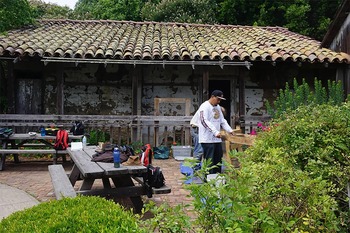
Members of the Amah Mutsun Tribal Band have participated in archaeological field research and training since 2007 through research at the Quiroste Valley Cultural Preserve and Pinnacles National Park (Lightfoot Reference Lightfoot2017; Lightfoot and Lopez Reference Lightfoot and Lopez2013; Lightfoot, Cuthrell, Boone, et al. Reference Lightfoot, Cuthrell, Boone, Byrne, Chavez, Collins and Cowart2013; Lightfoot et al. Reference Lightfoot, Cuthrell, Hylkema, Lopez, Gifford-Gonzalez, Jewett, Grone, Sanchez, Nelson and Apodaca2021, Reference Lightfoot, Cuthrell, Hylkema, Lopez, Gifford-Gonzalez, Jewett, Grone, Sanchez, Nelson and Apodaca2021; Lopez Reference Lopez2013a, Reference Lopez2013b; Vasquez Reference Vasquez2017). The field programs that have occurred over the last two decades have been instrumental in the development of collaborative archaeology along the central California coast (Cuthrell Reference Cuthrell2013; Grone Reference Grone2020; Hylkema and Cuthrell Reference Cuthrell2013; Lightfoot and Lopez Reference Lightfoot, Cuthrell, Striplen and Hylkema2013; Lightfoot, Cuthrell, Boone, et al. Reference Lightfoot, Cuthrell, Boone, Byrne, Chavez, Collins and Cowart2013; Lightfoot, Cuthrell, Striplen, et al. Reference Lightfoot, Cuthrell, Striplen and Hylkema2013; Lightfoot et al. Reference Lightfoot, Cuthrell, Hylkema, Lopez, Gifford-Gonzalez, Jewett, Grone, Sanchez, Nelson and Apodaca2021; Sanchez et al. Reference Sanchez, Grone, Apodaca, Byram, Lopez and Jewett2021). The research also serves a critical role in training Tribal and non-Tribal students in the field of archaeology (Figure 2). These training opportunities were crucial in building capacity in archaeology, cultural heritage management, and Native monitoring within the Amah Mutsun Tribal Band. As Chairman Valentin Lopez states, “These [archaeological] studies are not only about our past, but they are about our future as well.” [Lopez et al. Reference Lopez2025].
Nathan Vasquez (AMTB), a senior Native Stewardship Corps member and Native Monitor, screening archaeological materials from excavations at the historical Bolcoff Adobe at CA-SCR-123/38 in 2016–2017, during a joint UC-Berkeley and Amah Mutsun Tribal Band field school. Photo Courtesy of Kent Lightfoot.

Figure 2 Long description
Nathan Vasquez is engaged in screening archaeological materials outside a historical adobe building with a tiled roof. The setting includes a wooden picnic table with various items on it, such as bags and water bottles. The area is surrounded by greenery, including bushes and plants and the adobe structure has a weathered appearance with visible wooden beams and a tiled roof.
The Amah Mutsun Tribal Band and Land Trust, through engagement with fields such as archaeology, ethnography, history, and others, has worked to study and steward their ancestral lands. Through the development and implementation of the Native Stewardship Corps—which includes Tribal members who have participated in archaeological research since the 2000s—the Amah Mutsun Tribal Band and the Amah Mutsun Land Trust have invested significantly in the success of their members, the stewardship of their cultural landscapes, and Tribal health and wellness. As noted by Sigona and colleagues (Reference Sigona, Apodaca and Lopez2021), reciprocal relationships and benefits are exchanged between humans and nonhumans through the process of land stewardship and access to ancestral homelands. Archaeology and, more specifically, collaborative and Tribal-led eco-archaeology have the potential to support such processes of reciprocal restoration (Sigona et al. Reference Sigona, Apodaca and Lopez2021). Through this lens, archaeology, when done in a mutually sensitive manner with an emphasis on stewardship, can support Tribal-led efforts in ecological restoration and site protection, thereby contributing to the healing of historical trauma within individuals, the Tribe, and the land.
Indigenous Archaeology Field Methods
The Indigenous Archaeology Field Methods Program was collaboratively designed by Gabriel Sanchez, University of Oregon; and Alec Apodaca of the Amah Mutsun Land Trust, with support from Tribal Chairman Valentin Lopez. The program is an outgrowth of nearly two decades of collaborative and Tribal-led archaeology, which includes a decade of collaboration between the Principal Investigators (PIs) and the Tribe. The goal of the program was to train Tribal members and university students in cultural resource management from a Tribal cultural landscape perspective, balancing Tribal stewardship goals, land conservation, and education. The primary objective of the program was to support the Amah Mutsun Land Trust Summer Internship Program. The 2024 Summer Internship Program focused on cultural heritage stewardship and archaeology as part of its engagement with the University of Oregon field school (Sigona and Apodaca Reference Sigona and Apodaca2024). A major goal of the Summer Internship Program was to provide young Tribal members, ages 16–25 years old, with opportunities to participate.
As Sigona and Apodaca (Reference Sigona and Apodaca2024) note, the program was specifically designed
to turn “archaeology” on its head, shake it up, and rethink what it means to be an “archaeologist.” For what it’s worth, “archaeology” exists in large part because of our Ancestors, and the amazing culture they built and passed down to us today. Our ancestors are not relics of the past, but symbols of their contribution to our society and a reminder of the hard work of the ancestors who were spiritual leaders, scientists, educators, they were mothers and fathers, they danced, raised children, cared for elders, sang, ate, thought, dreamed, studied, harvested, and stewarded their traditional lands for millennia.
Through this program, there was an opportunity to redefine what archaeology is for Tribal youth and young adults, how it is practiced, and potential career pathways for Tribal members. For university students, participation in the program offered an opportunity to engage in collaborative research centered around Tribal goals that extend beyond the obvious need to complete a field school.
The program engaged with lands throughout the Amah Mutsun Land Trust Stewardship Areas (Figure 1). These lands include Año Nuevo State Park, Chitactac County Park, Elkhorn Slough National Estuarine Research Reserve, Mission San Juan Bautista, Mt. Madonna County Park, Rocks Ranch Wildlife Crossing, and lands held by private landowners. The program partnered with various agencies, including the California Department of Fish and Wildlife, the California Department of Parks and Recreation, the Land Trust of Santa Cruz County, the National Oceanic and Atmospheric Administration, and Santa Clara County Parks. Tribe members also led field visits to these sites, which worked to decenter archaeological narratives related to Indigenous cultural heritage.
University of Oregon participants included 13 undergraduate students from the University of Oregon, as well as those from UC-Berkeley, San Francisco State, and Santa Clara University. There were three supervisors from the University of Oregon. Staff from the Amah Mutsun Land Trust served as co-PIs. The Summer Internship Program included 23 Tribal members who participated in the program, ranging in age from 16 to 55. There were two cooks—one a Tribal member and the other a spouse of a Tribal member—hired by the Tribe for the field program. There were also three Tribal field supervisors, including Marcella Luna (Tribal Council member), Gabriel Pineida (senior Native Stewardship Corps member), and Alexii Sigona. Collectively, we had 45 field-school participants, with 27 (60%) of those being Tribal members. Guest lecturers included Chairman Lopez; Roberta Jewett, UC-Berkeley; Kent Lightfoot, UC-Berkeley; Lee Panich, Santa Clara University; Martin Rizzo-Martinez, UC-Santa Cruz; Tsim Schneider, UC-Santa Cruz; and Kerstin Wasson, Elkhorn Slough National Estuarine Research Reserve.
We recognize the unique nature of the joint teaching of the Summer Internship and the Indigenous Archaeology Field Methods Programs. This level of participation in co-teaching is rare and may not be replicable in many contexts owing to budgetary and staff constraints. However, we believe there are core components of the program that may provide insights for scholars seeking to develop similar projects. A common factor in collaborative field projects is ensuring that field-school experiences support Tribes in achieving their diverse goals. It is usually the case that very few Tribe members pursue careers in cultural resource management, so how do we tailor field experiences to maximize this opportunity? First, research design and implementation methods are key. In our research, all aspects of the field program, sites to be studied, sampling strategies, and other details are discussed with Tribal leadership, including Tribal Council. A major emphasis in Amah Mutsun’s approaches to archaeology is the importance of low-impact methods. Research that does not incorporate low-impact methodologies is inconsistent with Tribal goals and expectations related to archaeological practice. Second is site selection and areas to focus on. It is often the case that Tribes may have priority areas that would stand to benefit from field studies, even though the archaeological data potential isn’t the highest. Striking a balance between site selection and data potential is an important consideration. Third is collaborating on day-to-day implementation. In our example, it was crucial that daily work was guided by prayer, and that the Tribe was kept informed when sensitive matters were discovered. These communications occurred in real time, as Tribal Council members or Tribal leadership were often involved in the field in some capacity. Therefore, when issues arose, they could be discussed and addressed promptly.
Weekly Program Overview
Our university and Amah Mutsun Land Trust Programs ran for varying lengths of time. The university program was a four-week field school, while the Summer Internship Program lasted five weeks. Both programs started at the same time, but the Tribal program continued for an additional week. Below, we outline the ambitious goals and outcomes of the Indigenous Archaeology Field Methods Program, as well as some of our key findings.
Week One
We initiated our program with an emphasis on a series of workshops designed to immerse students and Tribal members in the previous two decades of archaeological research, collaborative partnerships, memoranda of understanding (MOUs) with agencies, cultural heritage management, and stewardship. A significant component of this orientation was the introduction of the Amah Mutsun Land Trust’s Integrative Cultural Resource Surveys (ICRS; see Apodaca and Sigona Reference Apodaca and Sigona2023; Apodaca et al. Reference Apodaca, Sanchez, Sigona, Grone, Lopez and Lightfoot2024; Sigona et al. Reference Sigona, Apodaca and Lopez2021). The ICRS approach cultural heritage management through a Tribally centered lens that recognizes that natural resources are, in fact, cultural resources. This approach differs from traditional archaeological surveys, which focus entirely on archaeological materials, often outside the cultural context of other important non-archaeological resources on the landscape. Through this methodology, archaeological and natural resources are documented in tandem to provide a comprehensive approach to stewarding Amah Mutsun cultural heritage. The workshops were designed to immerse participants in the ICRS approach, which included Amah Mutsun cultural perspectives, flint-knapping, lithic raw material identification, lithic flake identification, ethnobotany, shellfish identification, and zooarchaeological training.
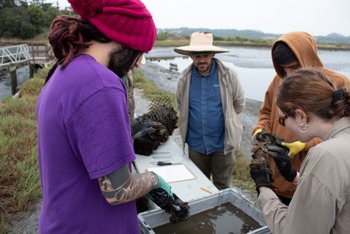
Following our workshops, we spent two days conducting ICRS at Elkhorn Slough National Estuarine Research Reserve (Figure 1). We surveyed a total of two archaeological sites (CA-MNT-1175 and CA-MNT-1186). Applying this integrated approach toward Indigenous cultural heritage, we spent our time documenting archaeological and non-archaeological cultural resources. Our work focused on more-than-human relatives, such as the native Olympia oyster (Ostrea lurida), led by Amah Mutsun Land Trust Coastal Program Manager Jacob Harris and the staff at Elkhorn Slough Reserve (Figure 3). Program participants surveyed oyster beds to understand growth rates and recruitment within the estuary. Through these endeavors, our work aimed to connect the shellfish and other archaeological data collected during our surveys to current Tribal stewardship efforts.
Olympia oyster ecological surveys at Elkhorn Slough National Estuarine Research Reserve.

Figure 3 Long description
Five people stand close together outdoors beside a shoreline. A rectangular open bin in the foreground contains water. Several gloved hands hold dark, wet clumps above the bin. One person stands at the left wearing a short-sleeve shirt and gloves, with a tattoo on one forearm. Two people at the right lean toward the bin; one holds a clump with both hands. A person near the center wears a wide-brim hat and a jacket over a buttoned shirt. A flat work surface next to the bin holds a clipboard with paper. In the background, there is a narrow dock or boardwalk along the water, low vegetation near the shore and distant hills across the water.
At the end of our first week, we had the honor of participating in an inter-Tribal and interfield-school collaboration with the Esselen Tribe of Monterey County and Cabrillo Community College in Carmel Valley near the Rana Creek Reserve (Figure 1, and Figure 4; Esselen Tribe of Monterey County 2024; the Wildlands Conservancy 2025). The Esselen Tribe of Monterey County is a Tribal group with homelands to the south, including the Santa Lucia Mountains, the upper Carmel Valley, the coastal plains between Little Big Sur and Big Sur Rivers, and the Salinas River Valley around Soledad (Sanchez et al. Reference Sanchez, Apodaca, Gonzalez, Gonzalez, Nason, Herthel and Nason2024). The Esselen Tribe of Monterey County are the descendants of survivors of three waves of successive colonialism, beginning with the Spanish, Mexican, and American colonial programs (Sanchez et al. Reference Sanchez, Apodaca, Gonzalez, Gonzalez, Nason, Herthel and Nason2024). Therefore, the Amah Mutsun Tribal Band and Esselen Tribe of Monterey County are neighboring Tribes that came together as part of an inter-Tribal collaboration to support Indigenous stewardship of ancestral sites and cultural landscapes.
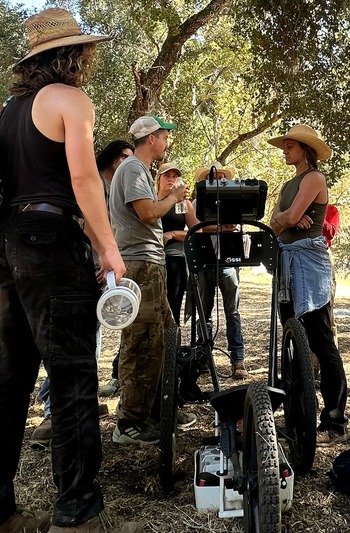
Members of the Esselen Tribe of Monterey County and Amah Mutsun Tribal Band discussing ground-penetrating radar survey approaches during our inter-Tribal and interfield-school collaboration near the Rana Creek Reserve.

Figure 4 Long description
A group of six people stands on uneven ground under trees, gathered around a wheeled device positioned in the foreground. The device has two large wheels, a central frame, a handlebar and a rectangular hard case mounted near the top with cables running downward. A smaller box-shaped component sits low on the frame near the wheels. One person at the left holds a clear cylindrical container by its handle. Near the center, one person raises a hand with a finger extended while facing the others. Two people stand to the right with arms crossed, facing the device and the group. Several people wear wide-brim hats. The camera viewpoint is low and close to the wheeled device, with the group arranged around it in a loose semicircle.
Specifically, we were asked by the Tribal Council of the Esselen Tribe of Monterey County to support their field-school efforts by conducting ground penetrating radar surveys to help identify potential subsurface features. These data were critical for guiding potential subsurface excavations and erosion mitigation at the site. Additionally, owing to historical disturbances at the site, we assisted the Esselen Tribe of Monterey County field school by screening backfill piles to ensure that no artifacts, ecofacts, or other sensitive materials were encountered. While the archaeological research brought our programs together, this was also an important time for the Esselen Tribe of Monterey County and the Amah Mutsun Tribal Band to share gifts and build relationships. We were invited to a wonderful dinner by the Esselen Tribe of Monterey County, where songs were shared and lasting friendships were formed.
Week Two
During week two of the program, we built on the methodologies learned during week one to scale up to landscape-level surveys in a previously unsurveyed portion of the Gabilan Mountains near San Juan Bautista. The property, known as Rocks Ranch Preserve, is managed by a partner organization of the Amah Mutsun Land Trust, the Land Trust of Santa Cruz County (Figure 1). During our time at Rocks Ranch Preserve, our crews were able to locate and document a previously unrecorded site on the property. Additionally, we were able to re-record another site that included a rockshelter with associated bedrock mortars, effectively doubling the site boundaries and providing critical information to the Tribe and agency collaborators. Through our efforts across both sites, we recorded over 80 cupules and dozens of bedrock mortars.
To end our second week, we conducted a site visit to the ancestral village of Chitactac. Tribal members and the Native Stewardship Corps led the visit, focusing on Mutsun culture and stewardship within the park. This village is associated with the Unijaima people, who were taken primarily to Mission Santa Cruz and less so to San Juan Bautista from villages such as Chitactac (Place of the Dance), Pitac (Tick Place), and Thithirii (Rizzo-Martinez Reference Rizzo-Martinez2022). Spanish mission records document Amah Mutsun ancestors who were forcibly removed from Chitactac as early as 1795 (Rizzo-Martinez Reference Rizzo-Martinez2022). As outlined by Rizzo-Martinez (Reference Rizzo-Martinez2022), Chitactac is a village situated in the Uvas Creek region, located on the eastern side of the Santa Cruz Mountains. Today, the village site is now known as Chitactac-Adams County Park, near Gilroy (Rizzo-Martinez Reference Rizzo-Martinez2022). The site visit was a critical transition in our field program, as we would be working in and around the site the following week. The site visit, grounded in Tribal perspectives, helped center our research in the Chitactac project area. As noted by Rizzo-Martinez (Reference Rizzo-Martinez2022), petroglyphs and grinding stones are found along the rock formations at and around Chitactac. Scholars have noted that these “cup-and-ring” petroglyphs appear throughout the world and are often associated with rainmaking, fertility enhancement, puberty rites, or shamanic ritual (Rizzo-Martinez Reference Rizzo-Martinez2022).
Week Three
During week three, we initiated our formal collaboration with Santa Clara County Parks and a private landowner near Mt. Madonna County Park, specifically in and around Chitactac. During this time, we surveyed portions of Little Arthur Creek, which is managed by Santa Clara County Parks. Surveys within Santa Clara County Parks were directed by Amah Mutsun Tribal Band members, with several previously unrecorded sites identified. These findings will inform future discussions between the Tribe and the agency, with the goal of establishing an MOU between the two parties in the long term.
The majority of our efforts during week three were centered on and around a previously recorded site, CA-SCL-90, known as Pattie Farm or the Pattie site. The site had previously been described as a lithic scatter, with limited shell and bone encountered. However, the site had produced a diverse assemblage of ground stone and flaked stone artifacts. When recorded in 1974, the surveyor noted disturbance to the site due to agricultural activities and “small pits by local residents.”
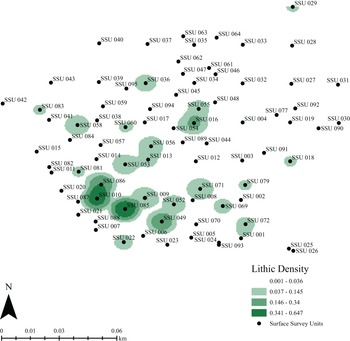
Our efforts at the Pattie Farm site focused on identifying the full boundary of the site. We accomplished this work through intensive surface surveys (Figure 5)—see Sanchez and colleagues (2021, Reference Sanchez, Apodaca, Gonzalez, Gonzalez, Nason, Herthel and Nason2024) for isopleth artifact density map methodologies. Based on our findings from the surface surveys, we worked on conducting geophysical surveys, including ground-penetrating radar. Through these efforts, the Tribal Council made a decision to proceed with small-scale subsurface testing of the site using bucket auguring. We also opportunistically sampled subsurface materials encountered during preparation for the ground penetrating radar surveys, which required the removal of buried metallic mesh that could impact the geophysical surveys.
Lithic densities by count at Pattie Farms.

Figure 5 Long description
The map displays lithic density at Pattie Farms, marked by varying shades. The legend indicates density ranges: 0.001-0.036, 0.037-0.145, 0.146-0.34 and 0.341-0.647. Darker shades represent higher densities. Surface Survey Units (SSU) are marked with black dots and labeled numerically, such as SSU 010, SSU 085 and SSU 053, which are located in areas of higher density. The map includes a scale bar indicating distances in kilometers and a north arrow for orientation. The distribution of lithic density shows clusters primarily in the central and southern regions of the map, with the highest densities concentrated around SSU 010 and SSU 085.
During our time at Pattie Farms, we also worked to analyze an existing collection from that site that the property owner had developed over the decades. As previously stated, these avocational excavations and collections were noted by surveyors in 1974. Items included in the collection ranged from ceramics and ground stone artifacts to flaked stone tools and shellfish. Lee Panich conducted portable X-ray fluorescence (pXRF) of obsidian formal tools. The results of that analysis, along with additional obsidian flakes recovered from the auger and opportunistic subsurface sampling, are forthcoming.
Week Four
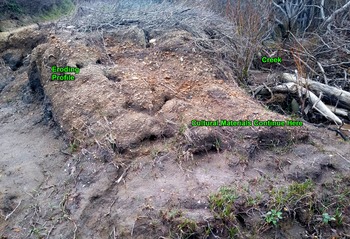
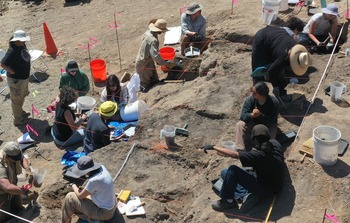
During our final week, we transitioned our work from inland locations to Año Nuevo State Park in the Tribal territory of the Quiroste (Hylkema and Cuthrell Reference Cuthrell2013; Lightfoot and Lopez Reference Lightfoot and Lopez2013; Lopez Reference Lopez2013a; Rizzo-Martinez Reference Rizzo-Martinez2022). The Quiroste represented one of the largest and most politically influential of these Tribes in the region (Rizzo-Martinez Reference Rizzo-Martinez2022). During the previous winter, Amah Mutsun Land Trust staff members had identified a previously unrecorded site that had been exposed during winter storms (Figure 6). The site was actively eroding and at risk owing to increased visibility and visitors in the spring and summer, because of its public access. Therefore, the Tribal Council of the Amah Mutsun Tribal Band provided our programs with the directive to conduct excavations at the site to document the site before it was lost. During our final week of the University of Oregon program, we conducted excavations at the site, which included a 7 × 3 m grid, resulting in 21 1 × 1 m excavation units (Figure 7).
Overview of previously unrecorded archaeological site near Año Nuevo State Park, which was exposed during storm events in the winter of 2024 (see Apodaca et al. Reference Apodaca, Sanchez, Sigona, Grone, Lopez and Lightfoot2024).

Figure 6 Long description
The image shows an eroding profile with three labeled areas. On the left, 'Eroding Profile' is marked, indicating the section of the land that is eroding. To the right, 'Creek' is labeled near a collection of branches and twigs, suggesting the presence of a waterway. In the center, 'Cultural Materials Continue Here' is labeled, indicating the continuation of cultural materials in that area. The ground is uneven with some vegetation visible.
Excavations at previously unrecorded site near Año Nuevo State Park.

Figure 7 Long description
Several individuals are engaged in an archaeological excavation at a site. They are using tools and buckets, with some people kneeling or sitting on the ground. The area is marked with flags and ropes, indicating a grid system. Various equipment and containers are scattered around and some individuals are wearing hats and gloves, suggesting outdoor work. The scene is busy, with people focused on their tasks.
Our excavations at the site encountered dense cultural deposits to ∼80 cm below datum. These cultural deposits included two formal hearth features with associated fire-cracked rock, thermally altered surfaces, and dense dietary and non-dietary zooarchaeological remains, including culturally modified purple Olivella (Callianax biplicata). Four 1 × 1 m excavation units were sampled in their totality, along with a column sample to provide radiocarbon and paleoethnobotanical samples throughout the cultural deposits.
There is a standing agreement between the PIs and the Amah Mutsun Tribal Band to analyze and return the excavated assemblage within two to three years. Currently, University of Oregon students and Amah Mutsun Tribal Band members are collaborating to meet this deadline. Crews from both institutions have been conducting flotation of bulk sediment samples and light and heavy fraction sorting. The results of these analyses, as well as specialized paleoethnobotanical, radiocarbon, zooarchaeology, and proteomic analyses, are forthcoming.
Week Five
The last week of the internship program emphasized cultural learning activities. While the first four weeks were fully integrated with university students, this final week was dedicated only to the Amah Mutsun Tribal members. This was an important decision, to allow space for the Tribal members to reflect on the previous weeks and shift focus from practical fieldwork to a format where the Tribal interns can expand on cultural learning.
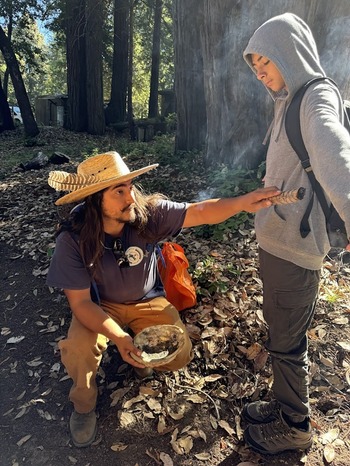
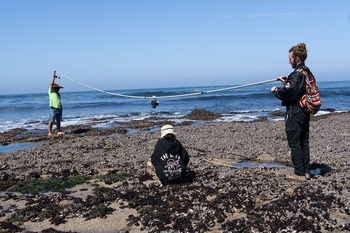
We began with a plant hike of a recently burned area and discussed cultural fire practices led by Native Steward Esak Ordonez at Mount Madonna Retreat Center (Figure 8). Esak discussed his personal experience working on fires and shared the Tribe’s goals of restoring cultural burning to traditional lands. The next day, the team returned to the coast near the town of Davenport to conduct a Tribal Intertidal Digital Ecological Survey (TIDES), a novel Tribal-led initiative of the Tribal Marine Stewardship Network to survey culturally significant ocean resources across California’s shores systematically. During the day, our crews also learned about net fishing and using basket traps in the intertidal zone (Figure 9).
Amah Mutsun Land Trust Native Steward Esak Ordonez led a talk on cultural fire for the interns.

Figure 8 Long description
In a forest setting, one individual is kneeling on the ground, wearing a wide-brimmed hat and holding a bowl. The other individual is standing, wearing a hoodie and a backpack. The ground is covered with leaves and trees are visible in the background.
The team conducts a TIDES at Davenport Landing.

Figure 9 Long description
Three individuals are on a rocky shoreline by the ocean. One person is standing on the left, holding a long pole with a device attached to it. Another person is crouched in the center, wearing a hat and a dark hoodie. The third person, standing on the right, is holding the other end of the pole and has a colorful backpack. The ocean is visible in the background.
Another highlight was a day dedicated to archery, where interns progressed from fundamental archery activities to practice shooting at more distant and challenging three-dimensional targets. We used our archery activity to think about how lithic technologies relate to the acquisition of wild-game foods. The training was facilitated by Mark Medeiros from Peninsula Open Space Trust, and our friends at Pie Ranch hosted our group for the day. On Thursday, the interns were led by Tribal elder Elanor Castro in a Native jewelry workshop, where they learned how to make bead necklaces and medicine bags as gifts. Connecting our archaeological experiences in week four, which focused on excavations of a site that contained bead-making detritus, to contemporary bead-making practices was a powerful learning opportunity.
Finally, the interns participated in an ethnobotany field walk at Whitehouse Field near Año Nuevo to observe the effects of regular prescribed fire and to envision landscapes where the reintroduction of cultural fire can sustain biodiverse, culturally significant landscapes. During this walk, seasoned interns took the lead in describing ethnobotanical resources of their choice, focusing on teaching newer interns how those plants are identified, how they were used traditionally, and how those resources are used today by the Tribe for their cultural revitalization goals.
The key takeaway from the final week is to remind the interns that while they were immersed in a Tribal-led archaeological field school, Tribal resources are much more complex than just those from archaeological contexts and include cultural plants, shells for beads, and knowledge of hunting and fishing locations, to name but a few. Concluding the Internship Program with a space specifically dedicated to Tribal participants to engage in nonarchaeological aspects of Tribal heritage was an important consideration, intended to highlight the Tribal decision to recenter the focus back on Tribal interests.
Discussion
Training the next generation of archaeologists is critical to addressing the shortage of qualified professionals in the field, particularly as Tribes reemerge as key players in the management of cultural resources. Moving beyond legally mandated consultation, archaeology programs must prioritize collaborative research that engages Tribal communities holistically, focusing not only on cultural resources but also on Tribal values, histories, and priorities. By bringing field schools directly to Tribes and tailoring curricula to emphasize Tribal resources, students gain hands-on experience in culturally sensitive methodologies and the interdisciplinary skills essential for most archaeological careers. This approach fosters a deeper understanding of ethical collaboration, preparing scholars to work alongside Indigenous communities as partners rather than extractors of knowledge.
Hiring more Native archaeologists is a vital step toward reducing divisiveness in the field and ensuring that the workforce reflects the communities it serves. Our collaborative program has worked to prepare both Tribal and non-Tribal participants in accordance with state and federal standards. For Tribal members, this includes participation in Tribal monitoring as part of the California Environmental Quality Act, Assembly Bill (AB) 52, and the National Environmental Policy Act (NEPA).
Field schools designed with Tribal input, which can provide critical training, teach students how to integrate Indigenous perspectives into research design, interpretation, and stewardship. These programs cultivate such skills as cross-cultural communication, community engagement, and ethical decision-making, which are essential for modern archaeology. By investing in such initiatives, the discipline can address the shortage of quality archaeologists while building a more inclusive and representative field, where Native voices are not only heard but are central to the practice of archaeology.
The Indigenous Archaeology Field Methods Program, through its collaboration with the Amah Mutsun Tribal Band, Amah Mutsun Land Trust, and the Summer Internship Program, is actively working toward these goals. Our program is emphasizing a diverse training program that includes student and Tribal engagement with various temporal periods (e.g., ancient, historic, modern), diverse site types (e.g., coastal shell middens, inland villages, lithic production centers, and Spanish missions, among others), and a diverse cohort of students, including ∼60% Native American participants.
The central components of the field program we highlight in this article reinforce six critical elements in collaborative research projects. First, co-create research questions with collaborative partners. Second, formalize agreements regarding culturally appropriate field and laboratory methods. Third, provide opportunities for the discussion, review, and approval process of destructive analyses. Fourth, ensure there are opportunities for dialogue and time necessary for the co-interpretation of data. Fifth, collaboratively develop public engagement and education initiatives, which serve the needs of Tribal, academic, and agency collaborators. Lastly, honor relationships and intellectual contributions of all collaborators through shared authorship of academic manuscripts and recognition of individual contributions.
As highlighted in the examples above, to advance the field of anthropological archaeology and the development of collaborative archaeology in the future, Indigenous students must be given opportunities to participate in fieldwork. As academics, we must strive to create learning environments that are welcoming and supportive for Indigenous students and all learners. Field schools, campus classrooms, museums, and other educational settings should continue to integrate Indigenous content into their curricula. This includes coursework related to Indigenous and collaborative archaeology. In the case of the Amah Mutsun Tribal Band, the curriculum resulted in content that included and excluded university students. Those decisions were made on Tribal terms. Ultimately, Tribal and non-Tribal students benefit from being in conversation and co-learning together. Hopefully, with the continued integration and development of these types of Tribal-led collaborative programs, scholars can continue to redefine what anthropological archaeology can be.
Acknowledgments
We would like to thank the Amah Mutsun Tribal Band and the Amah Mutsun Land Trust for their support, without which our collaborative field program would not be possible. We also greatly appreciate the California Department of Parks and Recreation, especially Dr. Mike Grone; the Land Trust of Santa Cruz County; Santa Clara County Parks; and the Elkhorn Slough National Estuarine Research Reserve. Lastly, we are indebted to Chairman Valentin Lopez, Dr. Kent Lightfoot, Roberta Jewett, Dr. Lee Panich, Dr. Martin Rizzo-Martinez, Tsim Schenider, and Dr. Kerstin Wasson for providing guest lectures during the field program. Permits for the program were issued by the Elkhorn Slough National Estuarine Research Reserve to Gabriel Sanchez and the Amah Mutsun Land Trust. Permitting for the excavations at Año Nuevo State Park was issued to the Amah Mutsun Land Trust by the California Department of Parks and Recreation (permit #DPR 412A). Unless otherwise noted, all figures are courtesy of the authors.
Funding Statement
This work was supported by a Parks California, Career Pathways grant, which the Amah Mutsun Land Trust received for the 2024–2026 grant cycle. Support was also provided by the Museum of Natural and Cultural History and the Department of Anthropology at the University of Oregon.
Data Availability Statement
The datasets presented in this article are available upon request to the corresponding author and following approval of the Tribal Council of the Amah Mutsun Tribal Band.
Competing Interests
The author(s) declare none.

 Open access

