

INTRODUCTION
U.S. military commanders sometimes assigned war’s most dangerous tasks to Black soldiers. Accounts from the Vietnam War describe officers placing Black service members in a “position of consummate danger—point man on the leading patrol creeping warily into enemy ground” (Goodwin Reference Goodwin2023, 67). James Barnes, a Black Marine who fought in Vietnam, explained “it’s always the Negro who’s walking point. That means he’s the first to get it if a mine explodes …That’s the kind of assignment we get from the whites.”Footnote 1 Similarly, during the American Civil War, Major General Truman Seymour’s expectation that attacking Fort Wagner would result in high casualty levels led him to assign the all-Black Massachusetts 54th Regiment to lead the charge.Footnote 2 These battlefield assignments indicate that officers at times treated Black soldiers as expendable, or at the extreme as cannon fodder. On the other hand, myriad examples suggest that military commanders steered Black service members away from the frontlines. During World War II, Black soldiers were commonly assigned noncombat labor positions and belatedly deployed to regions in the Pacific that were already secured (Wright Reference Wright2002, 185–6). Rather than asking Black solders to lead the charge, these examples suggest that commanders preferred to keep soldiers away from the frontlines. How does race affect the way commanders employ soldiers during wartime, and in turn who bears the costs of conflict?
Focusing on the era of U.S. military segregation, we argue that prejudicial beliefs about who is and is not an effective fighter played a crucial role in shaping the distributional consequences of war. Commanders’ perceptions of how effective their soldiers will be in combat shape the assignments soldiers receive, the way units are used on the battlefield, and the support those units receive once there. In contrast to prior scholarship that treats combat performance as an outcome variable (Biddle Reference Biddle2004; Lyall Reference Lyall2020; Rozenas, Talibova, and Zhukov Reference Rozenas, Talibova and Zhukov2024; Talmadge Reference Talmadge2015), we provide a new theory for how commanders’ expectations of units’ combat performance shape who bears the costs of war. Tasked with winning wars, commanders seek to maximize their prospects for victory by giving the assignments with the highest returns to fighting efficacy to the soldiers they believe are most effective in combat. Building on a voluminous body of research documenting how structural racism and discriminatory attitudes generate racial inequality in both opportunities and outcomes across a variety of nonmilitary domains (Feagin Reference Feagin2020; Jardina Reference Jardina2019; Mills Reference Mills1997; Omi and Winant Reference Omi and Winant1994), we argue that commanders perceived Black soldiers to be less effective combatants than white soldiers.
These racially biased perceptions shaped Black soldiers’ risk of death in several ways. First, we expect commanders’ beliefs that Black soldiers were less effective led them to place Black soldiers in support, rather than combat, occupations. Second, once conflicts begin, these racial biases motivated commanders to place white units on the frontlines for vital combat operations, while relegating the few Black combat units that existed to reserve positions. Consequently, when battles demanded high fighting efficacy, we expect Black units suffered fewer fatalities due to reduced combat exposure. Our theory suggests that under a broad set of conflict conditions, structural racism and prejudicial attitudes combined to generate racial inequality in a way that constrained Black soldiers’ ability to fight and sacrifice as equals. Third, we expect that racial biases lead commanders to devote disproportionate resources to supporting white units. This desire emerges from either valuing white lives more than Black lives or from wishing to save white units for future operations. We anticipate commanders prioritize providing healthcare and battlefield support to white units. Consequently, when holding fixed units’ exposure to combat, members of Black units were more likely to die from accidents and disease. Our theory suggests that Black soldiers were most likely to die in war’s least consequential and valorized conditions.
We assess the argument in the case of the U.S. Army during World War I (WWI). Focusing on WWI offers several theoretical and empirical benefits. The U.S. military’s mobilization of over four million men provides a unique opportunity to assess how military leaders allocate manpower to fulfill expected battlefield needs. Further, the fact that U.S. force deployments spanned from the brutal 1918 offensives through the postarmistice period allows us to study how commanders employed and supported Black and white units as the returns to combat effectiveness varied. Empirically, we compile two new datasets to assess the distributional implications of commanders’ choices. We transcribed data on over 44,000 infantry fatalities from nonmachine readable lists, collecting information on each infantry soldier’s date and cause of death, race, and unit assignment. This information allowed us to construct a new dataset comprising bi-weekly fatality counts for each infantry regiment deployed to Europe. Further, we compiled novel data on the racial designation of each unit created during the U.S. mobilization effort. These datasets provide some of the most comprehensive information ever compiled on the battlefield consequences of racial inequality (to access datasets, see Huff, Min, and Schub Reference Huff, Eric and Robert2025).
Using these datasets, we present three findings that accord with our broader theory. First, consistent with—but adding further detail beyond—prior findings from historians (e.g., Keene Reference Keene2002), we show that commanders overwhelmingly assigned Black soldiers to support, rather than combat, specialties. Second, we show that during infantry operations, white units suffered nearly four times as many fatalities per period compared to Black units. Qualitative evidence from the Meuse–Argonne offensive corroborates the theoretical expectation that commanders intentionally withheld Black units due to negative and biased assessments of these units’ fighting quality. Third, several analyses indicate that Black units received worse support than white units when holding fixed combat exposure. For instance, we find that after the armistice, Black infantry units suffered greater fatalities from disease, especially prevalent amidst the flu pandemic, than comparable white units. The overall findings align with our theoretical argument for how both societal inequality and commanders’ personal prejudices affected who bore the costs of WWI.
The article makes at least three contributions to political science. First, the study extends a voluminous body of research on the consequences of racist discrimination by governments to one of the largest state institutions: militaries.Footnote 3 Prior research demonstrates how U.S. racial discrimination increases the difficulty of voting (Keele, Cubbison, and White Reference Keele, Cubbison and White2021), increases the likelihood of police discrimination (Knox, Lowe, and Mummolo Reference Knox, Lowe and Mummolo2020), and harms individuals’ job prospects (Bertrand and Mullainathan Reference Bertrand and Mullainathan2004). Around the world, racist, sexist, and xenophobic biases shape citizens’ interactions with the state (Betz, Fortunato, and O’Brien Reference Betz, Fortunato and O’Brien2021; Choi, Harris, and Shen-Bayh Reference Choi, Harris and Shen-Bayh2022), access to public goods (Habyarimana et al. Reference Habyarimana, Humphreys, Posner and Weinstein2007), and can catalyze rebellion (Cederman, Wimmer, and Min Reference Cederman, Wimmer and Min2010). Our article demonstrates how militaries, as political creations, are subject to racial biases that shape who bears the costs of war. However, in contrast to many arenas where inequality generates straightforwardly worse outcomes for members of the targeted group, in our case the battlefield consequences of racial inequality manifested in nuanced ways. The death toll for Black soldiers off the battlefield, when stakes were the lowest, was elevated due to biased allocations of support. By contrast, the death toll for Black soldiers on the battlefield was constrained due to biases that prevented them from fighting and sacrificing as equals. In this sense, racial biases yield perhaps counterintuitive battlefield implications due to commanders’ overriding imperative to win wars.
Second, our article contributes to research on the distributional consequences of conflict by shifting the focus from macro-level factors to military commanders. Existing scholarship demonstrates how socioeconomic or political inequality affect who bears war’s costs (Caverley Reference Caverley2014; Kriner and Shen Reference Kriner and Shen2010). In contrast, we emphasize how military commanders’ expectations of soldiers’ combat performance shape who is asked to do what, and in turn the distributional costs of conflict. This approach provides a theoretical and empirical framework for assessing claims from soldiers, observers, and scholars suggesting that commanders around the world employ marginalized groups as cannon fodder. Allegations span from Russia’s use of ethnic minorities following the 2022 invasion of Ukraine, the U.K.’s deployment of colonial Indian forces on the Western Front in WWI, and the use of Black Americans in the Vietnam War’s initial years.Footnote 4 Evidence for these claims, however, is frequently anecdotal or based on aggregate military statistics (e.g., Keene Reference Keene2002). Highlighting several key decisions—ranging from initial assignment to battlefield support—that shape the distribution of fatalities provides a richer understanding of the myriad choices driving the macro patterns observed in prior research. Our more micro-level approach ensures focused comparisons among similar units that are in theater and eligible to undertake more or less risky tasks. These focused comparisons are essential for evaluating whether commanders employ marginalized groups as cannon fodder; after all, a commander can hardly ask a unit to lead the charge if it is not in theater. By bringing racial prejudice to the fore in military decision-making processes, we join a growing wave of scholars emphasizing race in the study of international relations (Carson, Min, and Van Nyus Reference Carson, Min and Van Nuys2024; Freeman, Kim, and Lake Reference Freeman, Kim and Lake2022; Green-Riley and Leber Reference Green-Riley and Leber2023; Vitalis Reference Vitalis2000).
Finally, the study contributes to a body of research that considers how events on the battlefield can reverberate to shape domestic politics, a dynamic commonly known as the second-image reversed (Gourevitch Reference Gourevitch1978). Historically, military service and battlefield contributions have served as vehicles for social mobility and political gains. This operates at the individual level for veterans turned politicians and at the group level as a rhetorical tool in the fight for marginalized groups to gain political rights at home (Krebs Reference Krebs2006).Footnote 5 While courageous military service might seem to be a pathway for mobility open to all, commanders’ choices meant that precluded groups could not reap the benefits. Against the wishes of Black citizens including W.E.B. Du Bois, Black soldiers were largely denied the opportunity to prove themselves on the battlefields of WWI and thus mobilize for equal rights in American society (Donaldson Reference Donaldson1991, 88–9). Instead, Black soldiers disproportionately bore the costs of conflict after the fighting came to an end when deaths no longer carried the same connotations of sacrifice and valor. Our article demonstrates how racial inequality embedded in the military can limit the ability of all soldiers to fight and sacrifice as equals, in turn limiting the space for battlefield sacrifice to advance domestic equality.
A THEORY OF RACIAL INEQUALITY AND WHO DIES IN WAR
Our theory focuses on three commander choices that determine who bears the costs of war: the occupational specialty assignment soldiers receive, which units are employed in combat operations, and how support is allocated as conflicts unfold. First, soldiers’ occupational specializations affect whether they see the battlefield. Those assigned combat occupations are more likely to encounter enemy fire than those in service occupations. Assessments of soldiers’ combat aptitude influences their occupational specialty assignment. Militaries historically relied on metrics—such as fitness or intelligence tests—and soldiers’ descriptive traits to gauge combat aptitude. For instance, a number of U.S. military policies—including Don’t Ask Don’t Tell and the Combat Exclusion Policy—were in part justified by concerns that soldiers’ sexual orientation or gender would harm the combat effectiveness of units (Kier Reference Kier1998; MacKenzie Reference MacKenzie2012). Intuitively, the higher a soldier’s perceived combat aptitude, the more likely they are to receive a combat occupational specialty.
Second, once soldiers are allocated into units, commanders must determine which units to employ in battle. We argue that this choice depends on the qualities of the available units and attributes of the operational tasks. Combat units vary in terms of their perceived combat effectiveness, while tasks vary in terms of the returns to combat effectiveness. Following Hayward (Reference Hayward1968, 316), we define perceived combat effectiveness as a commander’s judgment of a military unit’s probability of success in combat operations.Footnote 6 Quantitative and qualitative indicators affect perceptions of combat effectiveness. The former encompass the “numbers of people, but also their job specialties, training and experience,” while the latter entail “human factors” such as the “qualities of morale, leadership, and temperament” (Hayward Reference Hayward1968, 317). Just as commanders’ prejudices affect perceptions of an individual soldier’s combat aptitude, they also shape perceptions regarding combat effectiveness for the broader units comprised of these soldiers. Due to commander bias, perceived combat effectiveness may differ from actual combat effectiveness. While the extent of divergence between perceived and actual unit effectiveness is outside the scope of this study, it raises intriguing issues concerning battlefield performance. Commanders optimize overall performance based on their perceptions of unit effectiveness, but if those perceptions depart from reality, then commanders are failing to maximize the battlefield power at their disposal. Regardless, given our focus on how commanders employ their units, a commander’s perception of combat effectiveness is the critical variable to scrutinize.
We define returns to combat effectiveness as the change in the probability of winning a war depending on whether a unit with high versus low combat effectiveness receives an assignment. Wartime tasks vary in terms of their relative importance to the overall war effort and their difficulty. More important and difficult tasks have higher returns to combat effectiveness. Concerning the first dimension, the U.S. military urges commanders to assess the relative importance of operations such that they can “concentrate the effects of combat power at the most advantageous place and time to produce decisive results.”Footnote 7 Concerning the second dimension, an operation’s difficulty is a function of the enemy’s capabilities and positioning (Department of the Army 2022, 6–2), which dictate the complexity of maneuvers needed to defeat them (Biddle Reference Biddle2004). Characteristics of an operation thus affect the value of sending a unit perceived to have high versus low effectiveness. The U.S. Army encourages commanders to take “variance in performance into account in their planning by matching units to missions” based on features of both the unit and the operation (Department of the Army 2022, 3–18). Our contention that returns to combat effectiveness can vary between and within wars is crucial for our argument. An operation’s returns to combat effectiveness dictate the benefits of using the units that military commanders perceive to be most effective. For operations with zero returns to combat effectiveness, there is no benefit to using units perceived to be highly effective and thus commanders are unlikely to employ them. By contrast, this article studies a setting in which returns to combat effectiveness were high across wartime operations. In this context, we expect that commanders employ units with high perceived combat effectiveness because there are sizable benefits to doing so. Battlefield usage increases the expected fatality rates for these units.Footnote 8
Third, once commanders decide which units to employ during wartime, they must provide healthcare and support to their soldiers. Commanders commonly face constraints in this allocation decision. We anticipate that military leaders prioritize supporting units with higher perceived levels of combat effectiveness. This is driven partly by an instrumental logic: if all one’s highly skilled soldiers die due to inferior support, they will be unable to fight in the future. As discussed below, differential valuation of soldiers’ lives can exacerbate this pattern.
We argue that for much of U.S. military history, (1) discriminatory societal institutions and (2) personal biases shaped commanders’ perceptions of how effective Black soldiers would be in combat. The remainder of this section theorizes how, during the era of military segregation, these two forces affected the allocation of manpower across units, how soldiers were employed on the battlefield, and supported once there. We then derive predictions for how these choices shape fatality risks.
How Structural Racism and Prejudicial Attitudes Affect Assessments of Combat Effectiveness
Race was a principal organizing feature of American society during the era of U.S. military segregation. Scholarship on race and ethnic politics defines racism as a system of power that seeks to maintain a particular ethnic or racial hierarchy, in which a dominant group wields power and privilege to oppress those in a nondominant group (Bonilla-Silva Reference Bonilla-Silva1997; Fish and Syed Reference Fish, Syed, Hupp and Jewell2020). Scholars argue that Western states feature a tacit agreement that privileges white people and deems nonwhite people to be inferior and incapable of self-governance. This “racial contract” is perpetuated through discriminatory policies, beliefs, and practices that privilege the dominant group (Feagin Reference Feagin2020; Jardina Reference Jardina2019; Mills Reference Mills1997; Omi and Winant Reference Omi and Winant1994).
Such discriminatory policies, beliefs, and practices generated gross inequality in opportunity and outcomes. Several of these unequal outcomes are particularly pertinent for military assignments and combat usage. Dating back to the late nineteenth and early twentieth century, scholars argued that oppressive societal conditions generated poor health among Black Americans (Du Bois Reference Du Bois1906; Miller Reference Miller1897). More recent work demonstrates how racial discrimination reduces economic and employment opportunities, exacerbating inequalities in health outcomes (Eli, Logan, and Miloucheva Reference Eli, Logan and Miloucheva2023; Harrell et al. Reference Harrell, Burford, Cage, Nelson, Shearon, Thompson and Green2011; Williams, Lawrence, and Davis Reference Williams, Lawrence and Davis2019). Racialized conceptualizations of susceptibility to disease can also create differences in healthcare (Bailey, Feldman, and Bassett Reference Bailey, Feldman and Bassett2021). Beyond healthcare, segregated institutions created differences in educational opportunities and outcomes. Schools for Black children received fewer resources per pupil, leading to reduced school attendance, literacy rates, and standardized test scores (Margo Reference Margo1990, 68).
Health and education inequalities, on average, harmed Black soldiers’ performance on metrics used to assess combat aptitude. Disparities in civilian health care undermined Black soldiers’ physical fitness upon enlistment (Feagin and Bennefield Reference Feagin and Bennefield2014; Williams Reference Williams1999). Commanders often used Black soldiers’ poor performance on the military’s intelligence tests to justify continued segregation. Furthermore, military leaders manipulated standardized metrics to fit preexisting biases. A glaring example involves a test designed for illiterate recruits that yielded similar results for white and Black soldiers. Army officials viewed this as evidence of an invalid test and revised it to reflect what scholars of scientific racism saw as the appropriate “neural differences” between white and Black people (Barbeau and Henri Reference Barbeau and Henri1974, 45, 47). Subsequent tests generated an average score of 13 for white soldiers and 10 for Black soldiers. Not coincidentally, any person who scored below a 12 was defined as a moron (Barbeau and Henri Reference Barbeau and Henri1974, 44).Footnote 9
Military commanders commonly harbored prejudices that extended beyond Black soldiers’ performance on standardized tests. George Armstrong Custer refused to command Black regiments. George Washington issued a 1775 order prohibiting Black people from enlisting, only to rescind the order following the Continental Army’s poor performance in Valley Forge (Hansen Reference Hansen1999–2000, 111). Commanders in subsequent wars similarly prejudged Black units inferior to white units (Bogart Reference Bogart1992; Huff and Schub Reference Huff and Schub2021; Maxwell Reference Maxwell2018; Moskos and Butler Reference Moskos and Butler1996; Phillips Reference Phillips2012) and justified continued segregation on these grounds (Lerner Reference Lerner2018, 537). Institutional discrimination and personal commander biases combined to shape military leaders’ beliefs about the combat aptitude of Black soldiers. The remainder of this section specifies how these biased beliefs affected the occupational specialty assignments soldiers received, the ways they were used on the battlefield, and the support they received once there.
How Differential Beliefs about Combat Aptitude Generate Racial Inequality in Occupational Specialty Allocation
Militaries aim to allocate available manpower into units in ways that maximize the prospects for victory. Occupational specialties vary in terms of their functional responsibilities, including whether they engage in frontline combat. Militaries employ a variety of metrics to sort new recruits into these specialties, which affects the likelihood they engage in combat. During World War II, the US used the Army General Classification Test (AGCT) to help sort soldiers depending on their ability to learn. Soldiers who scored in the lowest category were largely expected to be laborers (Lee Reference Lee1966). Similarly, the modern U.S. Army rank orders Military Occupational Specialties (MOSs) in terms of their physical demands (Vergun Reference Vergun2017). Scores on fitness assessments and standardized tests provide commanders with one means of gauging a soldier’s combat aptitude.
Black soldiers’ poorer average performance on fitness and intelligence tests—driven by discriminatory societal institutions—lowered commander estimates of Black soldiers’ aptitude for combat and reduced the likelihood of Black soldiers receiving combat occupational specialties. Black civilians inducted into the Army most commonly scored in the lowest two classes, which affected the training they received (Lee Reference Lee1966, 242).Footnote 10 During the Korean War, “[c]riticisms of the combat action of Negro units are sometimes accompanied by qualifications which attribute poor performance in part to the lower average education attainment of Negroes” (Bogart Reference Bogart1992, 27). Similarly, if the average Black recruit entered the military in worse health, this decreased their likelihood of receiving a combat specialty. Moreover, officers used their preconception that Black soldiers were malingerers to justify providing Black soldiers with inferior care which further undermined their health (Keene Reference Keene2002, 77). Military commanders thus perpetuated existing health disparities.
Due to these factors, we contend that commanders were more likely to assign Black soldiers to service rather than combat roles compared to white soldiers. This pattern affects overall fatality risks given the elevated chance of death in combat occupations.
How Differential Beliefs about Combat Effectiveness Generate Racial Inequality in Unit Usage
After conflicts begin, commanders must decide which units to employ on the battlefield. We theorize that commanders’ perceptions of the relative combat effectiveness of their units shape this decision. Consider the commander’s choice. An infantry unit is needed for a difficult and critical attack against enemy forces. Which infantry unit should be sent? Commanders’ beliefs about the relative fighting effectiveness of their units shape this decision. As a General Officer during the Korean War stated, “I don’t send men into battle to die, whether they’re regimental commanders or infantrymen. I send them out to do a job. I want them to do it efficiently and I want the most reliable and efficient units to do it” (Bogart Reference Bogart1992, 18–9). We expect, intuitively, that commanders employ combat units with the highest perceived combat effectiveness for operations with the highest returns to combat effectiveness. Commanders fundamentally want to win wars. They optimize toward this objective subject to the “constraints” imposed by their country’s, and their own, biases.
A unit’s racial designation provided a stark heuristic for commanders to gauge combat effectiveness. Despite soldiers in Black infantry units overcoming the aforementioned obstacles to receiving an infantry assignment at all, prejudiced commanders nonetheless commonly held these units in low regard. A 1925 report from the Army War College argues that as fighters, Black soldiers were “inferior to the white man even when led by white officers.”Footnote 11 A 1918 report titled “Disposal of the Colored Drafted Men” offers a clear look into the Army’s sensibilities. It describes the Black draftee as being “unfit,” “ignorant,” “accomplishing nothing of value,” and lacking the “mental stamina and moral sturdiness to put him in line against opposing German troops who consist of men of high average education and thoroughly trained” (Barbeau and Henri Reference Barbeau and Henri1974, 191–3). A white commander of the all-Black 92nd Infantry Division described Black troops as being “hopelessly inferior” (Keegan Reference Keegan2014, 374). Black soldiers were seen as innately low in quality and, therefore, also less trainable. Subpar training conditions for Black units—for example, overcrowded barracks and inadequate clothes (Barbeau and Henri Reference Barbeau and Henri1974, 50–1)—exacerbated commander concerns about their performance.
The historical evidence overwhelmingly demonstrates that U.S. commanders perceived Black infantry units to be less effective than white ones. We thus expect that for frontline operations—which entailed relatively high returns to combat effectiveness—U.S. commanders employed white units while holding Black units away from battle. We expect that this differential employment should cause white fatality rates to exceed Black fatality rates for comparable combat units.
How Differential Beliefs about Combat Effectiveness Generate Racial Inequality in Battlefield Support
After commanders choose which units to employ, they must determine the support their units receive. Extensive logistical efforts ensure that frontline soldiers are fed, supplied, and provided sanitary conditions (O’Hanlon Reference O’Hanlon2009, chap. 3). Combat operations further necessitate medical support to ensure wounded soldiers obtain care or are evacuated (Fazal Reference Fazal2014). Commanders commonly face constraints in their allocation of support (Department of the Army 2019).
We expect that commanders prioritize supporting white units for two reasons. First, an instrumental logic suggests that commanders wish to minimize fatalities in the units they deem most effective to preserve them for future operations. Facing resource constraints, commanders must consider the entire scope of operations, including those in the future. Losing a large number of high-quality soldiers today will negatively affect the prospects for success tomorrow. Given that commanders had higher estimates of the relative combat effectiveness of white units, we expect that military leaders prioritize support to white units. Second, consistent with hierarchies of death in other military contexts (Levy Reference Levy2012), racist commanders may value white lives more than Black lives when holding fixed battlefield imperatives. This generates inequalities in battlefield support and healthcare. For instance, Black soldiers during the American Civil War received dismal medical care due to physicians’ racist inclinations and wrongheaded beliefs about physiological differences between Black and white individuals.Footnote 12 A less discriminatory doctor noted that Union medical officers “did not examine the [Black] men and cases of Pneumonia were undetected because he would not put his ear to the chest of Negro! Men left sick without care until ready to die, and then wonder why they died!” (Humphreys Reference Humphreys2008, chap. 4; emphases in original).
Accordingly, we expect that commanders allocate superior battlefield support to the units they perceive to be most effective to minimize unnecessary deaths. We thus expect that Black units suffer a higher percentage of noncombat fatalities than white units, holding fixed a unit’s exposure to combat.
ASSESSING THE ARGUMENT: THE CASE OF WWI
While WWI formally began in the summer of 1914, the US did not declare war against Germany until April 1917. When declaring war, the US had a standing army of just over 125,000—nowhere near enough to prosecute a conflict of such significant scale. Congress passed the Selective Service Act in May 1917 to recruit white and Black soldiers alike. The US eventually mobilized over four million service members and produced many new divisions within the Regular Army, National Guard, and the newly formed National Army (Eisenhower Reference Eisenhower2001). With the massive influx of new soldiers, commanders had to allocate new soldiers into military units.
Mobilization occurred in a time of bitter racial politics. Systemic and commander-level racial biases were widely evident. Chattel slavery up until the Civil War had created a system of dehumanization and control that made Black Americans’ subservient position unmistakable. After abolition, many white citizens sought other means to reinforce their privileged position and power. Tactics for perpetuating existing hierarchies included wide-scale lynchings of Black Americans (Seguin and Rigby Reference Seguin and Rigby2019, 6), a flourishing of eugenics and Social Darwinist movements (Dorr Reference Dorr2008; Singleton Reference Singleton2014), and the Jim Crow legal regime enshrining segregation which reversed the political, economic, and civil rights gains of the Reconstruction era (e.g., Keele, Cubbison, and White Reference Keele, Cubbison and White2021). Embedded within racist systems, the Army reflected prevailing attitudes and practices. Regiments in the post-Reconstruction era were racially segregated and typically led by white officers.
Commanders’ own biases, above and beyond institutionalized biases, often heightened inequalities in the military. Given the Army’s unpreparedness for mass mobilization or large-scale war, division commanders who received new recruits were given limited guidance on preparing their men for service. The quality and type of training soldiers received was largely a function of the division commander’s knowledge and prejudices (Barbeau and Henri Reference Barbeau and Henri1974; Crane et al. Reference Crane, Lynch, Sheets and Reilly2019, 97). Commanders, therefore, wielded significant influence on soldiers’ eventual fates.
Our theory generates three empirical expectations for the WWI context. First, it suggests that amid the rapid U.S. mobilization effort, Black soldiers should be more likely on average to receive a support, as opposed to combat, occupational specialty. Some existing research using highly aggregated servicemember data indicates that the expected pattern prevailed (Keene Reference Keene2021, 73; Williams Reference Williams2010, 111). We employ an alternative and more micro-level approach that provides a high-resolution assessment of occupational assignment patterns. Documenting racial discrepancies in assignment to combat roles is vital for understanding the overall distribution of fatality risk across the military.
Our second theoretical expectation is that commanders are more likely to employ white combat units for operations with high returns to combat effectiveness. Given commanders’ imperative to succeed on the battlefield, they have incentives to use the units they perceive as most likely to succeed. We test this expectation among infantry units during the prearmistice period. These units engaged in frontline operations with high returns to combat effectiveness. By the time American forces arrived, frontline operations were both vital to the war’s outcome and demanded high martial efficacy. Years of tactical developments along the Western Front gave rise to the “modern system” of fighting, which was “extremely difficult to implement in its entirety” (Biddle Reference Biddle2004, 28). To survive and break through Germany’s elastic defense-in-depth required precise coordination of infantry movements and suppressive fire (Keegan Reference Keegan2014). According to Biddle (Reference Biddle2004, 33), these “new methods were recognized and accepted by each of the Western armies by the beginning of 1918.” Our theory suggests that in this context, military commanders are more likely to employ the units they perceive to have higher levels of combat effectiveness. Accordingly, we anticipate commanders overwhelmingly employed white rather than Black infantry units, which meant that white units suffered higher fatality levels.
The third expectation is that commanders allocate more support to white rather than Black units, which changes the composition of causes of death across racial lines. Our theory suggests that, holding fixed exposure to combat, worse support to Black units generates a higher percentage of deaths due to accidents and disease. Assessing this implication is complicated by the positive correlation among causes of death during combat operations. If, for example, being sent to the frontlines increases the likelihood that soldiers die from all causes, then white soldiers might die from accidents and disease at relatively higher levels despite the fact that they are also receiving superior support than comparable units. In short, if our second expectation is correct, it can bias assessments of our third.
We adopt three empirical approaches to grapple with this challenge. First, we analyze the number of fatalities from disease and accidents during the postarmistice period, which naturally holds fixed the degree of combat exposure. Differences emerge due to support levels, especially those related to mitigating the risk of death from the flu pandemic, rather than exposure to the full panoply of risks associated with combat. We expect that in the postarmistice phase, Black soldiers were more likely on average to die from noncombat causes than comparable white soldiers. Second, we examine the relative risks of death in regular infantry units due to noncombat versus combat reasons during the prearmistice period. If a higher portion of Black deaths compared to white deaths stem from disease and accidents, it would be suggestive of Black units receiving inferior support. Third, we examine the relative risks of death in pioneer infantry units due to noncombat versus combat reasons during the prearmistice period. Pioneer units received training in infantry tactics and combat engineering, and they frequently worked on construction projects proximate to the frontlines (McMahon Reference McMahon2018). Pioneer infantry units serve as a useful robustness check for the results for regular infantry units. Exposure to combat is fixed at a low value for pioneer units, which limits the empirical problems posed by the positive correlation between combat and noncombat causes of death.
Table 1 summarizes the key expectations of our theory. The empirical analysis that follows tests the implications in the context of U.S. forces in WWI, but it bears noting that these predictions are derived from a broader argument that can be applied in other conflicts and along different social dimensions. We return to this point in the Conclusion.
Expectations for the WWI Context

NEWLY COMPILED DATA ON WWI UNITS AND CASUALTIES
In a world with perfect data, we would evaluate H1 using a full roster with every individual service-member who fought, their race, and their occupational assignment. Unfortunately, data with this level of granularity are only available at the unit, rather than individual, level. Given this constraint, for all units that were deployed to Europe, we collected information on their occupational specialty, racial designation, and prescribed personnel numbers using the U.S. Army Center for Military History’s report titled Order of Battle of United States Land Forces in the World War. Within the Order of Battle, we rely upon the Directory of Troops from the Zone of the Interior (Center of Military History 1931). This provides a directory of all U.S. units that deployed to Europe, dates in theater, and the unit’s specialty. Digitizing these records results in unique information on over 1,650 units across more than a dozen occupational specialties. We code the racial designation of units and ascertain the prescribed strength of units from several sources (Center of Military History 1931, Vol. 23–6; Dalessandro, Torrence, and Knapp Reference Dalessandro, Torrence and Knapp2009).
We similarly adopt a bottom-up approach for evaluating the hypotheses on how wartime assignments and battlefield support affected fatalities and causes of death (H2 and H3). This minimally requires data on the race, unit assignment, date of death, and cause of death of all infantry soldiers who died. For the main analysis, we aggregate individuals into relevant military units—regiments—and evaluate unit-level fatalities for those specified for Black soldiers versus those units specified for white soldiers. This section describes the unit of analysis, data sources and collection, and structure of the final dataset.
To examine relative fatality levels, we construct observations at the military unit-period level and restrict attention to units in Europe. While the process of determining which units to send to war in the first place is certainly important, this study focuses on consequences conditional on being proximate to combat. Data are aggregated to the infantry regiment level because this was the level at which segregation occurred. Regiments were nested inside brigades, which were nested within divisions, which were nested within corps. Infantry regiments in WWI varied in size as the US scaled up its forces, with regiments consisting of approximately 3,700 soldiers. For the period portion of the unit of analysis, we use the half-month as the temporal duration of a single observation. This level of specificity allows the analysis to account for fluctuations in fighting intensity (and thus hold this factor fixed) while being long enough to capture significant patterns in conflict outcomes rather than noise.
To generate observations at the military unit-period (regiment-half month) level, we first collect individual-level data on all infantry fatalities. The core data source, hosted by the National Archives II at College Park, MD, consists of nonmachine readable PDFs with the fatality roster for each state (Adjutant General’s Office 1919). A team of research assistants manually entered the individual’s race, date and cause of death, and unit assignment. Our entire dataset features 44,914 fatalities, of which 43,367 (96.6%) are white and 1,547 (3.4%) are Black according to the Army’s racial classifications. Of all those deployed to Europe, 2.4% of white soldiers and 0.8% of Black soldiers died serving in the infantry.Footnote 13 From the individual-level data, we aggregate to the military unit-period level, identifying all soldiers serving in a given unit who died in a specified half-month period. For the presentation of results, we only include deaths when the individual’s race aligns with the racial designation of the unit. This excludes, for instance, white officers who die while commanding a Black unit. We also record the arrival and exit date for each military unit to the war theater to identify when a unit should be included in the analysis. Our dataset includes 1,770 regiment-half month observations from the prearmistice period of WWI, which contains 168 unique regular infantry regiments, 8 of which were designated for Black soldiers. These observations cover 41,148 prearmistice fatalities, which is less than the total U.S. war dead because many soldiers died serving in units other than infantry roles. The analysis uses the raw number of fatalities in the regiment-period as the outcome measure. Section 1 of the Supplementary Material provides descriptive statistics.
Before presenting results, it is worth differentiating our empirical approach and the inferences it enables from existing historical work on racial inequality in the U.S. military during WWI. A fine-grained method is essential for testing our hypotheses and ensuring appropriate comparisons, which is not possible using only the aggregated statistics that historians provide. Keene (Reference Keene2002, 82), as an example, provides summary data indicating that a higher percentage of white combat soldiers died than Black combat soldiers. While intriguing, these aggregate statistics are insufficient for testing H2. Aggregate data on combat soldiers encompass multiple occupational specialties, each with its own fatality risk and different proportions of Black units. Aggregate analysis cannot adjust for these differences and consequently could over- or underestimate the fatality differences across racial lines among comparable units. For instance, there were zero Black cavalry or trench mortar battery units deployed to Europe. If fatalities were especially low in the white cavalry or trench mortar battery units deployed to Europe, then the overall white combat fatality rates would appear low and aggregate analysis would incorrectly suggest that commanders used Black infantry units as cannon fodder. Alternatively, if fatalities were especially high in white cavalry or trench mortar battery units in Europe, then the overall white combat fatality rates would appear high and aggregate analysis would incorrectly suggest that commanders essentially never employed Black infantry units. By contrast, our detailed and disaggregated approach ensures an apples-to-apples comparison between infantry units within the same temporal period. Indeed, as Section 5 of the Supplementary Material shows, we find a larger racial fatality gap than implied by scholarship relying on aggregate measures.Footnote 14 This study thus joins a body of political science research using fine-grained data to evaluate new hypotheses in ways that build upon historians’ work (e.g., Charnysh and Finkel Reference Charnysh and Finkel2017).
RESULTS: DIFFERENTIAL OCCUPATIONAL SPECIALTIES, WARTIME ASSIGNMENTS, AND SUPPORT
Using the two data sources described above, we assess the allocation of occupational specialties, wartime assignments, and battlefield support. Across these three outcomes, we find notable racial disparities in the U.S. military during WWI. These disparities align with the expectations summarized in Table 1 and the presentation of results follows that table’s sequencing.
Result 1: Black Soldiers Disproportionately Assigned to Support Units
Consistent with H1, white soldiers were assigned to combat (versus support) functions more often than Black soldiers. Prior accounts have documented aggregated patterns that accord with H1, albeit with less granularity. For instance, Keene (Reference Keene2021, 73) notes that “African Americans made up approximately 1/3rd of the army’s laboring units and 1/30th of its combat force.” We augment existing work with higher-resolution data that differentiate across occupational specialities. Figure 1 summarizes the overall pattern with combat roles presented on the left and support roles on the right. The figure shows the prescribed number of soldiers deployed to Europe based on the total number of units sent and the designated size for a typical unit. For instance, eight Black infantry regiments deployed to Europe, each with a designated size of 3,768 soldiers, yielding a total prescribed Black infantry deployment of 30,144. For presentational simplicity, Figure 1 excludes MOSs if no Black Americans served in that role (see Section 2 of the Supplementary Material for additional details). Among combat roles, such as field artillery and infantry, Black soldiers typically constituted less than 5% of all personnel. The pattern looks quite different for a variety of support roles—most notably for pioneer infantry, service, and stevedore units. For the latter two occupational specialties, virtually all service members deployed to Europe were Black Americans. While there is heterogeneity with white soldiers dominating for some service roles, such as those in motor truck companies, the overall picture is consistent with H1. To make this readily apparent, Figure 2 aggregates across all occupational specialities to provide the total prescribed personnel deployed for combat and support roles, split by race. As shown, a Black soldier was far more likely to be placed in a support rather than combat role compared to a white soldier. The implications of these biased assignment patterns for overall fatality risk exposure are stark. Black Americans constituted roughly 10% of the U.S. population but were only allowed to assume 5% of the combat roles. If occupational assignment instead reflected no racial bias, the number of Black soldiers placed into combat positions—which carried an elevated risk of death—would immediately double.
Personnel Assignment to Combat and Support Roles, Broken Down by Occupational Specialty

Personnel Assignment to Combat and Support Roles, Aggregating Across Occupational Specialties

The overall assignment patterns accord with our theory, which attributes these military decisions to differential health and educational outcomes at the societal level, as well as commanders’ own biases. Following our presentation of statistical results, we discuss other considerations—namely, political pressure from Southern senators and soldiers’ civilian occupations—that influenced unit assignment patterns. These other factors constitute complementary, rather than rival, explanations for why the military disproportionately steered Black soldiers toward support roles.
Result 2: White Soldiers Die More When Returns to Combat Effectiveness Are High
Prevailing biases during WWI dictate that when selecting among infantry regiments for battlefield assignments, commanders perceived white units as more effective. Consequently, we expect that they employ white rather than Black units, which increases the likelihood of disproportionately high white infantry fatalities. Indeed, we find that white infantry regiments suffered far greater fatalities than comparable Black regiments. Figure 3 provides a descriptive overview of casualty patterns for regular infantry units between the US entry into the war and the armistice. Fatality totals in the figure are shown on a log scale for visual clarity.Footnote 15 Black fatalities are shown in the left panel and white fatalities in the right panel. Each point represents a single regiment’s fatalities for that half-month period while solid lines represent the average fatalities per regiment, distinguished by race. Two patterns are evident. First, U.S. combat exposure in WWI varied widely over time and across regular infantry units. U.S. fatalities generally rose as the war progressed, peaking in the final months before the armistice. Beyond the broad trends shown by the solid line averages, there is striking heterogeneity in burdens across units. Some regiments suffered over 350 fatalities (natural log of nearly 6) in a single half-month period, which represents approximately 10% of a regiment’s personnel. Other regular infantry units suffered no losses during that same period.
U.S. Fatalities (Logged) by Regular Infantry Regiment
Note: Solid lines represent the average regiment fatalities (logged) for that period.

Second, Figure 3 attests to the discretion commanders wielded in terms of which units were placed at greatest risk. White regular infantry units consistently suffered higher fatalities than Black regular infantry units. Average white fatalities exceed average Black fatalities in all periods of intense fighting, albeit to varying degrees. Average per period unit losses substantially differed, with 24.3 deaths in white units compared to 6.7 deaths in Black units. As the points indicate, there is heterogeneity across units. The notably higher losses for a Black unit in September and October of 1918 occurred within the 369th Infantry Regiment, commonly known as the Harlem Hellfighters. This unit operated under French command, which held Black units in higher regard than American Expeditionary Forces (AEF) command did. The heavy losses that the unit suffered were atypical of Black units, particularly those under American command.Footnote 16 Instead, the descriptive patterns indicate that Black units were largely withheld from combat and suffered few losses during much of the war.
Regression results in Table 2 affirm the patterns visually evident in Figure 3. White units suffered higher fatalities than Black units when holding fixed the broad category of combat assignment to regular infantry units. Note that our models are quite sparse because very few factors simultaneously affect a unit’s race and its casualty rates. Some aspects that could potentially influence fatality rates, such as a unit’s training or location, are mediators that are downstream of race. That said, one empirical concern is that white or Black units happen to be in or out of theater during a period of particularly intense fighting. To address this possibility, we include period fixed effects. Holding fixed aggregate patterns of combat, we continue to observe white units suffering substantially higher fatalities. As Section 4 of the Supplementary Material shows, the results are robust to several alternative specifications, including negative binomial models and those that include all fatalities in a unit as part of the outcome variable, regardless of the individual’s race—that is, counting white officer deaths as part of Black unit deaths. A sensitivity analysis examines whether differential unit sizes could drive the results. Regiments were designated to have approximately 3,700 soldiers, but the reality frequently varied. We find that it is exceedingly unlikely that white units suffered higher fatalities simply because they contained more soldiers. Even if white units had 40% more troops than Black units, the central finding remains strong and significant.
Prearmistice Fatalities by Race

Note: OLS regression with the regular infantry regiment-period (half-month) as the unit of analysis. $ {}^{*}p<0.1 $
;
$ {}^{*}p<0.1 $
; $ {}^{**}p<0.05 $
;
$ {}^{**}p<0.05 $
; $ {}^{***}p<0.01 $
.
$ {}^{***}p<0.01 $
.
To illuminate the underlying drivers of this result, we briefly discuss commander decision making in the early phases of the Meuse–Argonne offensive. The Meuse–Argonne operation, which spanned late September 1918 through the armistice in early November, was the AEF’s deadliest encounter in the war, with over 26,000 fatalities occurring during this operation alone.Footnote 17 We study this event within I Corps, which housed the all-Black 92nd Division’s four regiments as well as four all-white divisions. Akin to Lyall’s (Reference Lyall2020, 63) concept of “masking” in which units perceived to be weak are placed in locations where the enemy cannot exploit their weakness, commanders initially held three of the four Black regiments in reserve, with only the 368th given a frontline assignment. By comparison, only one quarter of the white units within I Corps were held in reserve. Due to these differential exposures to combat, the Black regiments suffered an average of 9 fatalities in the final days of September, while comparable white regiments in I Corps suffered an average of 82. Results of the initial encounters with the entrenched enemy in the Argonne forest only exacerbated these trends. The Black 368th Regiment and white 77th Division were jointly tasked with capturing the enemy-held town of Binarville.Footnote 18 The joint effort stalled and failed. As the Army’s historical account contends, “AEF leadership used the perceived failure of the 368th Infantry as an excuse to keep the 92nd Division out of the fighting for the remainder of the Meuse–Argonne Campaign” while the 77th Division remained in the fight (Faulkner Reference Faulkner2018, 28). By early October, three-fourths of I Corps’ white divisions continued with the offensive while none of the Black regiments were employed. Instead, Black regiments “engaged in repairing roads” (Center of Military History 1931, Vol. 2, 433). As expected, the fatality gap widened in the first half of October, with average Black and white units in I Corps suffering three and 118 fatalities, respectively.
Result 3: Black Soldiers Die from Accidents and Disease at Higher Rates
Our final testable implication is derived from our expectation that Black soldiers received worse wartime support. Worse support places Black units in precarious conditions that increase the risk of death from accidents and disease. We test this expectation three ways.
First, we assess the relative levels of noncombat deaths—that is, those from disease and accidents—after the armistice. This approach holds fixed combat exposure, which is correlated with all causes of death. With combat concluded, differences in postarmistice fatality rates are likely indicative of different support levels in terms of food, exposure to accident-prone logistical tasks, sanitary living conditions, and healthcare. Figure 4 provides initial evidence consistent with our expectations, with fatality totals presented on a log scale for visual clarity.Footnote 19 Black infantry units remained in Europe alongside white units for several months after the armistice.Footnote 20 In nearly all half-month intervals, Black units averaged higher noncombat deaths than white units.
Postarmistice Noncombat U.S. Fatalities (Logged) by Regular Infantry Regiment
Note: Solid lines represent the average regiment fatalities (logged) for that period.

Table 3 corroborates the visual pattern. Members of Black infantry units died from noncombat causes more frequently during the postarmistice phase of the war. This remains true when including period fixed effects which restricts the analysis to periods in which both Black and white units remained in Europe. During this span of overlapping deployment, Black units averaged almost 54% more noncombat deaths than white units per period (2.2 and 1.4 deaths, respectively). Further investigation reveals these deaths overwhelmingly resulted from disease, largely stemming from the flu pandemic. The postarmistice evidence is consistent with Black units receiving inferior health support. Results from Table 3 are robust to several alternative approaches (see Section 4 of the Supplementary Material) including negative binomial regressions and varying unit sizes to assess whether more personnel in Black regiments could account for the pattern. The latter analysis shows that even if Black regiments had 20% more soldiers than white regiments, the postarmistice fatality rate remains higher in Black units and statistically significant.
Postarmistice Noncombat Fatalities by Race

Note: OLS regression with the regular infantry regiment-period (half-month) as the unit of analysis. $ {}^{*}p<0.1 $
;
$ {}^{*}p<0.1 $
; $ {}^{**}p<0.05 $
;
$ {}^{**}p<0.05 $
; $ {}^{***}p<0.01 $
.
$ {}^{***}p<0.01 $
.
Second, we assess whether Black units received inferior support by examining the relative rates of the causes of death during the prearmistice period in regular infantry units. Recall that combat deaths are positively correlated with noncombat deaths due to the inherently dangerous conditions of serving on the frontlines. Consequently, higher absolute noncombat deaths during battlefield operations could reflect exposure to inherent risks rather than inferior battlefield support. To deal with these complications, we move to an individual-level rather than unit-level analysis to examine the percentages of deaths stemming from various causes. The left-hand side of Figure 5 provides a descriptive snapshot of noncombat death (due to disease or accidents) patterns. It plots the proportion of deaths from accidents and disease as a share of all deaths with a known cause.Footnote 21 Black infantry units were far more likely to suffer losses from causes not immediately connected to combat itself. Model 1 of Table 4 shows this difference is statistically significant. For white regular infantry units, approximately 11% of prearmistice deaths occurred due to disease or accidents, while the corresponding figure for Black units was 17%.
Cause of Death by Race and Unit Type

Note: OLS regression with the individual fatality as the unit of analysis. Models include all fatalities with a known cause of death. Standard errors in parentheses. $ {}^{*}p<0.1 $
;
$ {}^{*}p<0.1 $
; $ {}^{**}p<0.05 $
;
$ {}^{**}p<0.05 $
; $ {}^{***}p<0.01 $
.
$ {}^{***}p<0.01 $
.
Noncombat Deaths as a Proportion of All Deaths with a Known Cause during the Prearmistice Portion of the War

Third, we repeat the prior analysis but for pioneer infantry regiments which saw less exposure to combat. Due to limited frontline engagements, pioneer units have their combat exposure levels fixed at low levels. This helps minimize empirical complications stemming from the positive correlation between combat and noncombat deaths. As the right-hand side of Figure 5 shows, consistent with our expectations, Black units suffered a higher proportion of deaths from noncombat causes. Disease and accidents account for the lion’s share of deaths in pioneer units and we once again observe a discrepancy across racial lines. The difference evident in Figure 5 is statistically significant, as shown in model 2 of Table 4.
CONSIDERING ALTERNATIVE MECHANISMS
Despite the strength and consistency of our results, two potential alternative explanations for these findings merit discussion. The first addresses how political pressure and labor efficiencies contributed to occupational assignment choices. The second considers the role of prewar healthcare inequality as a driver of wartime deaths due to disease.
Additional Drivers of Occupational Assignments
Qualitative evidence suggests that the low number of Black infantry regiments was a function of two factors. The first was the military’s own assessment that Black soldiers were poorly suited to combat roles. The Army confronted an urgent need to mobilize an enormous fighting force when drafting initial plans in July 1917. These plans, while maintaining segregation, called for 16 Black infantry regiments.Footnote 22 This proposal already would have disproportionately steered Black soldiers toward noncombat roles, given calls for organizing 256 new regiments (64 divisions). Consistent with our theory, this low percentage of units designated for Black soldiers is less than expected if no bias existed.Footnote 23 Under the Army’s initial plan, Black infantry units would have constituted only 6% of newly formed infantry regiments despite Black Americans constituting approximately 11% of all U.S. service-members and 10% of the U.S. population. The second factor was political pressure exerted on the military, which further reduced the number of Black soldiers receiving combat assignments. This political pressure only heightened Black under-representation in combat roles. Many white citizens—most vocally represented by Senator James Vardaman of Mississippi—were terrified that armed Black soldiers would seek to “shar[e] control of a civilization whose very heartbeat is Caucasian” and allow their innate “lust for blood” to “turn their arms upon the whites” (Vardaman Reference Vardaman1917, 6065).Footnote 24 An August 1917 mutiny in Houston sparked by mistreatment of Black soldiers resulted in the death of 14 white civilians and the swift hanging of 13 Black soldiers (Thomas Reference Thomas2018, 575). This incident fueled panic about armed Black forces. Southern states pressured military officials to preclude Black soldiers from training in large numbers, or from being assigned to combat roles. Regardless of the pressure bought to bear, it was the Army leadership’s choice to acquiesce—and acquiesce they did. The General Staff reconsidered initial proposals and halved the number of Black infantry regiments. Army Chief of Staff General Tasker Bliss urged Secretary of War Newton Baker to keep Black recruits away from firearms and instead direct them to support roles (Keene Reference Keene2002, 74). The evidence thus indicates that commanders harbored sufficient concerns about Black soldiers’ combat aptitude that even their initial plans called for Black soldiers to be disproportionately assigned to support roles. Subsequent political pressure only exacerbated the bias already evident.
Employment in the prewar economy also influenced assignment patterns. Black soldiers were disproportionately directed to support roles that paralleled the labor-centric jobs they held as civilians. The Army personnel manual suggested “assigning at the outset men who have particular civilian occupational ability to those units and to those positions in the units, where their ability can count most because of its ready convertibility to army usefulness” (United States Adjutant-General’s Office 1919, 208). These decisions were far from race-neutral, as officials harbored concerns about the consequences of directing so many Black soldiers to labor duties. For instance, a plan to place 70% of Black soldiers in stevedore and labor battalions was kept confidential. The motivation was twofold. Not only would the Black community be upset by their disparate treatment, but fears arose that white soldiers would be unwilling to work in roles associated with Black people (Barbeau and Henri Reference Barbeau and Henri1974, 91–2). While providing additional insight into assignment patterns, recreating the pre-war civilian economy within the military cannot explain the full picture. No civilian job is analogous to being an infantry soldier. Commanders thus retained discretion regarding who to place in combat roles, and they were far more likely to select White rather than Black soldiers. Civilian employment patterns may help explain patterns of Black occupation assignments among the various noncombat specialities, but struggle to explain why Black soldiers disproportionately received noncombat assignments in the first place.
Risk Factors for Deaths from Disease
A concern might be that Black soldiers died at higher rates from disease due to prewar healthcare inequalities rather than inadequate support from the military, as H3 anticipates. However, statistical data from a multivolume compendium compiled by the Medical Department of the U.S. Army provides evidence consistent with unequal military conditions producing differential disease burdens.Footnote 25 Given the prominence of the 1918 pandemic, we focus on this disease and consider three potential explanations for our finding of elevated deaths due to disease for Black soldiers. These are (1) baseline health differences that affect susceptibility to contracting and dying from influenza, (2) differences in living conditions and provisions that affect the probability of contracting influenza, and (3) differences in medical care conditional on contracting the flu, which can affect the likelihood of death. The latter two would be consistent with our argument that Black soldiers received systematically worse support. By contrast, the first explanation presents an alternative, where societal biases before individuals enter the military affect the risk of dying from disease.
Two empirical approaches help adjudicate between these explanations. One analysis examines case-fatality ratios—that is, the risk of death conditional on medical admission. If either the first or third explanations are operative, then Black soldiers should have a higher case-fatality ratio either due to worse underlying health or inferior medical care after admission. However, data from the Surgeon General’s Office show that case-fatality ratios, proxied by deaths per admissions, were quite similar across racial lines. Using the monthly averages, the case-fatality ratio for Black soldiers is only slightly higher than for white soldiers (3.3 versus 3.2). A likely explanation for the comparable risk of dying conditional on admission is the limited treatment options available for any soldier, regardless of their race. As one study reports, medical officers “did their best to save those stricken by influenza, but could do little more than provide palliative care of warmth, rest, and a gentle diet, and hope that their patients did not develop pneumonia” (Byerly Reference Byerly2010, 85). Further, there are cross-cutting pressures affecting baseline health vulnerabilities. On the one hand, Black soldiers on average entered the military in worse health. On the other, white soldiers experienced more combat, which entailed enduring frontline hardships. This may have left white soldiers with elevated health vulnerabilities that offset the health differences present at time of enlistment.
A second analysis examines medical admission rates for influenza. If more Black soldiers died from the flu simply because more caught it, then we should observe higher hospital admission numbers. Indeed, this is the case, as data show far higher Black admissions for influenza than white admissions. For the final 12 months that Black Army units were in Europe (May 1918 through April 1919), Army data report medical admissions for influenza by race as annual ratios per 1,000 soldiers. The average figure for Blacks soldiers was 163 versus 117 for white ones, or a 39% relative difference. Elevated Black admission rates are all the more notable because accounts indicate that white doctors delayed admission of Black troops in the belief that they were malingerers (Keene Reference Keene2002, 77). As for halting the flu’s spread, the Surgeon General acknowledged that “we can control pneumonia absolutely if we could avoid crowding the men, but it is not practicable in military life to avoid this crowding.”Footnote 26 Qualitative reports indicate that the military subjected Black soldiers to particularly difficult living conditions. Combined with insufficient sanitary provisions, one inspector records that Black units “lacked most of the primary creature comforts so necessary to secure efficiency and prevent a lowering of resistance to disease” (Byerly Reference Byerly2005, 172). An inspection conducted in the winter of 1917 noted that Black soldiers “died like sheep” due to “insufficient clothing, shortage in supply of overcoats, inadequate bedding, and tents without flooring and oftimes [sic] situated in wet places, where ice formed” (Williams Reference Williams2010, 79).
A higher prevalence of flu among Black soldiers coupled with limited treatment options produced elevated fatalities among Black soldiers. The Medical Department’s monthly data confirm that Black soldiers suffered higher mortality rates—which is unconditional on medical admissions—than white soldiers, with monthly averages of 5.3 and 3.7 (deaths per thousand soldiers, annualized), respectively. This accords with our findings on divergent fatality rates due to disease. In aggregate, Black soldiers had far higher medical admission rates for the flu and consequently died at higher rates. The totality of evidence on influenza incidence and death suggests that Black soldiers endured dire living conditions in Europe compared to white counterparts and this contributed to the elevated spread of a lethal disease among Black units.
For diseases more treatable than influenza, Black soldiers likely received inferior care. By November 1918, 17,487 U.S. doctors were stationed in Europe; only 104 were Black (Fisher and Buckley Reference Fisher and Buckley2015; Lynch Reference Lynch1925). The soldier-to-doctor ratio for white troops was about 100-to-1; for Black troops, it was about 2,000-to-1. The Army also had no Black nurses during the war. While white doctors did treat Black soldiers, they frequently maintained that they were unable to diagnose or treat a body as unfamiliar and idiosyncratic as the Black one (Humphreys Reference Humphreys2008).
CONCLUSION
This article studied how racial inequality in the military shaped who died in war. We provided a theory for how discriminatory institutions and commanders’ biased beliefs affect the ways that militaries are designed, and how soldiers are employed on the battlefield. Focusing on U.S. racial segregation in WWI, we found that Black soldiers were more likely to be assigned to support, rather than more deadly and valorized combat occupations. Further, we showed that even among combat units, Black units were largely relegated to rear positions. Black infantry units thus incurred fatalities at far lower rates during the war. However, these patterns flipped for fatalities attributable to differences in support. Across three different empirical approaches, Black soldiers were more likely on average to die from noncombat causes such as disease and accidents. Ultimately, the findings of the article demonstrate how widely held racial biases affected the U.S. war effort, leading to large inequalities in when and how soldiers bore the costs of war.
While our article developed and tested the argument in the context of U.S. military segregation, our theoretical framework is generalizable to many conflict contexts. Our framework is most likely to apply when (1) military units are differentiated based on some identifiable trait and (2) there are societal or commander biases about soldiers who possess the identifiable trait that distinguishes units. Militaries throughout history and around the world have adopted organizational structures that meet these two conditions. These include units organized on the basis of race in the U.S., ethnicity in Tsarist Russia and in pre-2015 Israel (Krebs Reference Krebs2006, part I), “martial class” in colonial India (Wilkinson Reference Wilkinson2015), or metropole versus colonial origin in several colonial empires (Barkawi Reference Barkawi2017; Caverley Reference Caverley2014). These same dynamics can emerge when states fight alongside one another. Multilateral wartime coalitions often fight in national units (Auerswald and Saideman Reference Auerswald and Saideman2014; Wolford Reference Wolford2015). Forces in America’s post-9/11 wars frequently distinguished between units consisting of U.S. personnel and those staffed by local partners. Some peacekeeping operations do not integrate peacekeepers from the contributing states (Bove and Ruggeri Reference Bove and Ruggeri2016).Footnote 27 Across these examples, military leaders face similar choices to those theorized in the article: how to allocate members of different groups into units, how to employ those units, and how to support them.
At least two scope conditions affect the broader applicability of our argument. First, we assumed that commanders retain discretion in determining who faces the gravest risks of combat. This is not always the case. For instance, war conditions may be so desperate that commanders have no choice but to deploy all available units even if they might wish to only send units they deem most effective. Further, some operations might require commanders to deploy formations that are larger than the units at which segregation occurs. If segregation between groups occurs at the company level but an operation requires a division, then commanders must employ units of both groups. Full integration of all units would obviously further limit commander discretion (Huff and Schub Reference Huff and Schub2021). Second, there may be additional group-specific biases that attenuate or reverse the mapping from commander perceptions of battlefield effectiveness to battlefield usage. Consider women serving in combat roles. Commanders may perceive women to be less effective combatants akin to Black soldiers during WWI. However, unlike Black soldiers in WWI, commanders may value the lives of women more highly than those of men due to protective paternalistic attitudes (Glick and Fiske Reference Glick and Fiske1996). If this combination of biases holds, then commanders might be less likely to employ women in combat occupational specialties and frontline positions, but be more likely to provide women with high levels of support. Ultimately, understanding the substance of commanders’ biases and their level of agency is crucial for generalizing the argument.
Though Black soldiers died at lower rates during WWI combat, our argument highlights conditions under which minorities perceived as low in combat effectiveness might die at higher rates. Consistent with the scope conditions, commanders must enjoy discretion in determining which soldiers to employ in the most dangerous operations and prevailing biases must place limited value on the lives of soldiers who commanders perceive as less effective combatants. Additionally, it must be an operational environment with low returns to combat effectiveness. By the time U.S. forces entered WWI, sophisticated fighting involving combined arms, defense in depth, maneuver, and suppressive firepower were required for success on the Western Front. However, the nature of combat and complexity of battlefield assignments can vary. In other contexts, fighting might be relatively straightforward to execute, even for neophytes or units that commanders do not trust. When fighting efficacy demands are minimal, we expect that marginalized groups, even when considered ineffective combatants, could see the heaviest frontline action. Evidence from Russia’s 2022 invasion of Ukraine provides initial face validity for this claim. A repeated allegation contends that Russian commanders have used soldiers they perceive to be of relatively lower quality—ethnic minorities, former convicts, or the untrained—as cannon fodder in offensive operations. Commanders exploited these troops in capacities where the returns to combat effectiveness are incredibly low, serving as a tactical means to “draw, and deplete, Ukrainian fire.”Footnote 28 After the convicts completed the first wave of attack, where some estimates placed the casualties as high as 80%, the more experienced fighters followed (Lister, Pleitgen, and Butenko Reference Lister, Pleitgen and Butenko2023). Our article’s theory for how commander’s beliefs about their soldiers can shape battlefield behavior helps to explain the choices of Russian commanders.
Our findings provide new insights into the causes and consequences of racial inequality in war. One implication, which builds on Lyall (Reference Lyall2020), is that commander biases can undermine a country’s overall combat power. If commanders optimize operational assignments based on a unit’s perceived effectiveness, then commander biases that cause perceptions to diverge from reality lead to a sub-optimal allocation of the personnel at the commander’s disposal. The prospect of a U.S. commander withholding a fully staffed and competent Black unit from battle while employing an undermanned and depleted white unit offers one possible example of this failure to maximize combat power. Less biased French commanders understood these implications and used Black units such as the Harlem Hellfighters to advance the overall war effort.
The findings also hold implications for the political consequences of unequal wartime fatalities. Critically, not all fatalities carry equal weight. The import attached to each death depends on who dies and how they die. Who dies in war influences whether wars start and when they end. Leaders gain leeway to persist in war by foisting casualty burdens onto marginalized groups (Caverley Reference Caverley2014). We show a case with the inverse pattern, where the privileged group bears heavy wartime burdens. Perhaps counterintuitively, we demonstrate that those who wield the most domestic political power may nevertheless shoulder the heaviest fatality burdens due to commanders’ biased assessments of combat effectiveness.
How one dies in war can affect the challenges that marginalized communities face in their fight for equality. Under certain conditions, heroic service and sacrifice in combat proves politically useful for securing rights (Krebs Reference Krebs2006). However, as documented for American forces in WWI, marginalized groups were kept away from frontline combat, only to be exposed to greater danger when active hostilities ended. By identifying a more nuanced pattern of discrimination, our article highlights how military commanders can act as crucial roadblocks limiting the ability of Black (or other marginalized) soldiers to demonstrate their valor, enjoy opportunities for career advancement in the military, and break new barriers for their community on the domestic front. Commanders thus denied Black Americans an important rhetorical tool in the fight for political equality by making wartime choices that meant that Black soldiers frequently died from influenza in the infirmary rather than enemy fire on the frontlines.
SUPPLEMENTARY MATERIAL
To view supplementary material for this article, please visit https://doi.org/10.1017/S0003055425101172.
DATA AVAILABILITY STATEMENT
Research documentation and data that support the findings of this study are openly available at the American Political Science Review Dataverse: https://doi.org/10.7910/DVN/DXRLXI.
ACKNOWLEDGEMENTS
We are grateful to the editorial team, four anonymous reviewers, John Aldrich, Cameron Ballard-Rosa, Navin Bapat, Peter Feaver, Lorrie Frasure, Stephen Gent, Matthew Hayes, Tyler Jost, Michael Kenwick, Rachel Myrick, Jen Spindel, Gilad Wenig, Ariel White, and participants at the Duke SPC Workshop, Florida State Speaker Series, Rice IR Workshop, UNC-Chapel Hill IR Lunch, Wisconsin IR Colloquium, APSA 2022, ISA 2022, MPSA 2024, and Peace Science 2022 for helpful comments on the project. For excellent research assistance we thank Drew Baldridge, Ali Beardslee, Kristin Bryant, Caitlyn Croft, Langston Ford, Stuti Jain, Laurene Lee, Delanie Mansfield, Yui Nishimura, Ella Ridge, Allan Rodrigues, Noah Schimenti, Amorae Times, Noelle Troutman, John Vonnes, and Ruoqing Wang.
CONFLICT OF INTEREST
The authors declare no ethical issues or conflicts of interest in this research.
ETHICAL STANDARDS
The authors affirm this research did not involve human participants.
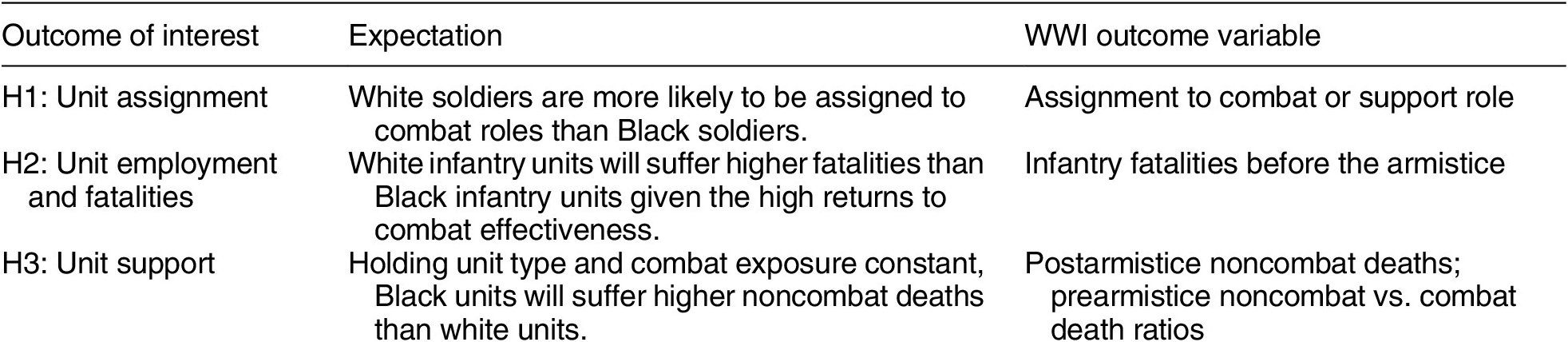


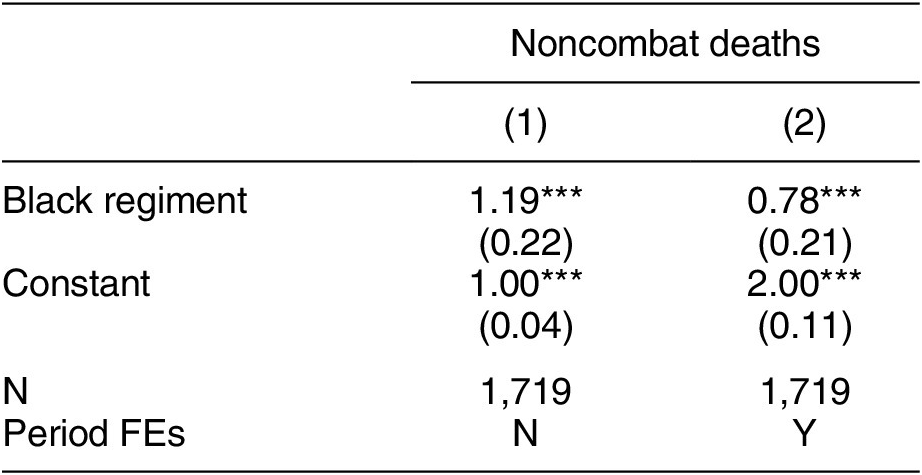

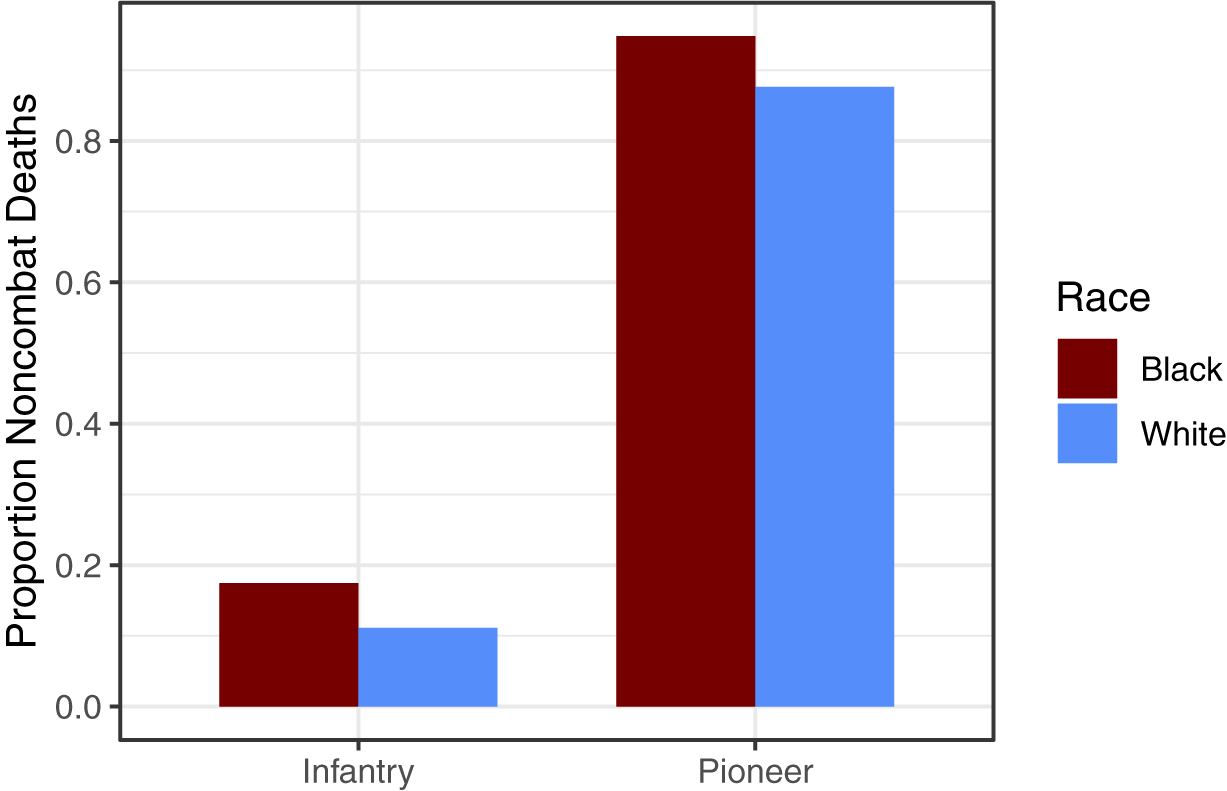


 Open access


Comments
No Comments have been published for this article.