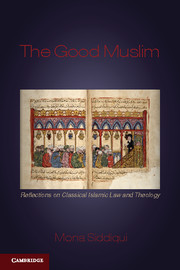
Book contents
- Frontmatter
- Contents
- Acknowledgements
- Introduction
- 1 Spoken, Intended, and Problematic Divorce in Hanafī Fiqh
- 2 Between Person and Property: Slavery in Qudūrī’s Mukhtaṣar
- 3 Pig, Purity, and Permission in Mālikī Slaughter
- 4 Drinking and Drunkenness in Ibn Rushd
- 5 Islamic and Other Perspectives on Evil
- 6 The Language of Love in the Qur’ān
- 7 Virtue and Limits in the Ethics of Friendship
- Glossary
- Bibliography
- Index
- References
7 - Virtue and Limits in the Ethics of Friendship
Published online by Cambridge University Press: 05 July 2012

Book contents
- Frontmatter
- Contents
- Acknowledgements
- Introduction
- 1 Spoken, Intended, and Problematic Divorce in Hanafī Fiqh
- 2 Between Person and Property: Slavery in Qudūrī’s Mukhtaṣar
- 3 Pig, Purity, and Permission in Mālikī Slaughter
- 4 Drinking and Drunkenness in Ibn Rushd
- 5 Islamic and Other Perspectives on Evil
- 6 The Language of Love in the Qur’ān
- 7 Virtue and Limits in the Ethics of Friendship
- Glossary
- Bibliography
- Index
- References
Summary
On that day friends will become enemies of each other, except for those whoare righteous.
(Q43:67)Each friend represents a world in us, a world possibly not born until theyarrive, and it is only by this meeting that a new world is born.
(Anaïs Nin)Growing up as Muslim in the United Kingdom, I have lived most of my life notthinking in any systematic way about the friendships or relationships I haveformed outside those of my immediate family. Friendships just happened;sometimes they were good and sometimes they were short-lived. I grew up in anuclear family with no near or distant relatives and less than a handful oftrips to Pakistan where I was born. My social milieu was made up of Britishpeople largely of non-Muslim origin. My parents, who would be categorised asfirst-generation immigrants to the United Kingdom, were from educatedbackgrounds and in the main became friends with other middle-class Muslims. Wesocialised with them and their children were our peers. Yet, looking back onthese years, I confess I never really forged what I would call true friendshipswith the children. My friends were people with whom I went to school, college,and then university. And today in my professional context my friends are stilllargely from non-Muslim backgrounds. They are nominal and practising Christiansand Jews as well as agnostics and humanists. This has not happened through anydeliberate intent but as a result of the nature of my employment, theenvironment where I work, and, consequently, the kind of people I meet. Many ofthese people have become friends in whom I choose to confide and put mytrust.
Information
- Type
- Chapter
- Information
- The Good MuslimReflections on Classical Islamic Law and Theology, pp. 167 - 196Publisher: Cambridge University PressPrint publication year: 2012
References
Accessibility standard: Unknown
Why this information is here
This section outlines the accessibility features of this content - including support for screen readers, full keyboard navigation and high-contrast display options. This may not be relevant for you.Accessibility Information
Accessibility compliance for the PDF of this chapter is currently unknown
and may be updated in the future.