



In recent years a new healthy eating paradigm that considers the extent and purpose of industrial processes applied to food has emerged( Reference Monteiro, Cannon and Moubarac 1 ). The concept of ultra-processed foods has been applied in the study of population eating patterns and their relationship to health and wellness( Reference Monteiro, Levy and Claro 2 – Reference Juul and Hemmingsson 5 ). Ultra-processed foods are formulations made by the food industry, using substances extracted from natural or unprocessed foods or obtained from the further processing of constituents of foods or through chemical synthesis. The main purpose of industrial ultra-processing is to create products that are durable, accessible, convenient and highly palatable, ready to drink or ready to eat( Reference Monteiro, Cannon and Levy 6 ).
Ultra-processed foods have higher energy density, higher free sugar content and lower micronutrient and fibre contents than natural or minimally processed foods. Thus, the consumption of these foods impacts the nutritional profile of the diet( Reference Louzada, Martins and Canella 7 – Reference Steele, Baraldi and Louzada 9 ). They have also been associated with obesity( Reference Louzada, Baraldi and Steele 10 , Reference Mendonça, Pimenta and Gea 11 ).
Recently, the proportion of dietary energy in ultra-processed products was recommended as an indicator of the quality of diets by the INFORMAS (International Network for Food and Obesity/non-communicable Diseases Research, Monitoring and Action Support) initiative( Reference Vandevijvere, Monteiro and Krebs Smith 12 ). The utility of the concept of ultra-processed foods has been recognized not only for nutritional epidemiology studies, but also for the development of public health policies. In 2014, the Ministry of Health of Brazil updated the national dietary guidelines for the Brazilian population and among its recommendations there is the following golden rule: ‘Always prefer natural or minimally processed foods and freshly made dishes and meals to ultra-processed products’( Reference Monteiro, Cannon and Moubarac 1 , 13 ). Two years later, the Pan American Health Organization presented a Nutrient Profile Model as a tool to classify processed and ultra-processed food and drink products that contain excessive amounts of critical nutrients such as sugars, salt, total fat, saturated fat and trans-fatty acids. This model is intended to help in the design and implementation of various strategies related to the prevention and control of obesity( 14 ).
Food choices, including ultra-processed foods, are inserted in the actions that form part of one’s eating habits and are determined by a number of other factors that go through cognitive, emotional, behavioural, social and environmental elements( Reference Glanz, Rimer and Viswanath 15 ). Moving beyond the recommendation about what people should eat, the Brazilian Guidelines clearly recognize key obstacles that can prevent people from adopting such a recommendation; for instance, access to information, food availability, cost, cooking skills, time and food marketing. The majority of these obstacles are directly related to the food environment( Reference Monteiro, Cannon and Moubarac 1 , 13 ). Taking into account that common attributes of ultra-processed foods are hyper-palatability, sophisticated and attractive packaging, multi-media and other aggressive marketing strategies( Reference Monteiro, Cannon and Levy 6 ) which have a broad potential to influence food choices, the better understanding of the factors that guide the choice of these foods can support the formulation of nutrition interventions. Some previous studies have explored the drivers of consumption and values of what they named ‘convenience food’( Reference Brunner, Van der Horst and Siegrist 16 , Reference Botonaki and Mattas 17 ). Nevertheless, there is a lack of qualitative research that can deeply investigate factors promoting or discouraging the consumption of ultra-processed foods. Thus, the present study qualitatively explored, in a Brazilian sample: (i) how individuals perceive the availability of ultra-processed foods in their neighbourhoods; and (ii) the barriers to and facilitators of consumption of such foods.
Methods
Study design and sample
The present paper is part of the Obesogenic Environment Study in São Paulo, Brazil (ESAO-SP), a multi-method research project which examined the relationship between aspects of the local food environment and food access and consumption in São Paulo. Located in the Southeast region of Brazil and with a population of over 11 million, the city of São Paulo is the largest city in the country and one of the most populous urban agglomerations in the world. Despite being the richest city in Brazil, São Paulo has an unequal distribution of wealth( Reference Villaça 18 ). ESAO-SP used a cross-sectional design and drew upon three data sources from São Paulo city: (i) a local food environment audit of thirteen districts in the city that ensured representation of São Paulo’s socio-economic and food environment diversity; (ii) a survey to collect individual-level characteristics; and (iii) a purposeful sample of forty-eight adults stratified by sex (male and female) and age (20–39 years and 40–59 years). More details on the methodology of ESAO-SP can be obtained in previous publications( Reference Duran, Roux and Maria do Rosario 19 , Reference Duran, de Almeida and Maria do Rosario 20 ). Briefly, we used the Human Development Index to classify each district according to the socio-economic level. Within each tertile of the Human Development Index, districts were classified into low or high food environment density (per 10 000 district residents). The food environment classification was based on whether the districts were below or above the median on all of three selected food environment indicators: (i) local grocery stores and supermarkets; (ii) specialized fruit and vegetable stores/markets and open-air food markets; and (iii) fast-food restaurants. Then two districts from each of the six combined strata of Human Development Index and food density were randomly selected. An extra district, which was adjacent to one of the selected districts within the highest tertile of Human Development Index, was selected to offset potential data loss. No data were lost but the thirteenth district was retained in the analyses to maximize sample size. Eight census tracts were randomly selected in each district. Out of the 104 tracts initially selected, eighteen were excluded, yielding eighty-six eligible tracts. The excluded tracts did not differ from the totality of the selected tracts in terms of mean income and education levels. Of the remaining eighty-six tracts, four were randomly sampled in each of the thirteen selected districts, resulting in a final count of fifty-two census tracts( Reference Duran, Roux and Maria do Rosario 19 ). Individual-level characteristics were gathered from an age- and sex-stratified sample of 2000 adults who lived or worked in those same districts where local food environment-level data were obtained( Reference Duran, de Almeida and Maria do Rosario 20 ).
The qualitative sample was purposefully selected from our survey considering gender, age, and socio-economic and food environment diversity. Individuals who agreed to share their contact information during the survey were identified to be included in the qualitative study. From each socio-economic and food environment stratum, six males and six females from each age group (18–39 years, 40–59 years) were randomly selected to give us three times as many possibilities to achieve our goal of interviewing fifty-two individuals (four adults per district). They were contacted by telephone and forty-eight individuals who fit our selection criteria agreed to participate in the study. All participants (n 48) received written information explaining the study and signed individual consent forms. Ethics approval was granted by the Human Research Ethics Committee of the University of São Paulo’s School of Public Health.
Data collection
In-depth, face-to-face semi-structured interviews were conducted by a trained registered dietitian and an undergraduate student between March and August 2012.
To elaborate the interview guide, we started with two broad questions: (i) how do individuals from each neighbourhood perceive the availability of foods and of restaurants and retail food stores, and how does the presence of these restaurants/stores affect their eating practices; and (ii) where do individuals shop for food, prepare routines of food shopping, preparation and consumption, and how do they relate with food intake, especially of fruits, vegetables and ultra-processed foods? After fully discussing such questions, the authors ended up with an interview guide with sixteen open questions. They were designed to elicit participants’ perceptions regarding: (i) practices and difficulties with food shopping, preparation and consumption; and (ii) how the presence of retail food stores in their neighbourhoods (characteristics, presence of certain food) are associated with their eating practices.
The pre-test was conducted with four participants (two men and two women) with different levels of education; and helped us to improve the interview guide. The interviews were audio-taped and then fully transcribed. Mean duration of the interviews was 35 min, ranging from 12 to 47 min.
Data analysis
A content analysis was performed to analyse the interviews’ transcripts. A trained researcher read the transcripts several times to achieve an immersion into the data. Given the objective of the present paper, excerpts regarding ultra-processed foods (n 113) were extracted from the text and further analysed using the qualitative data analysis software NVivo 10. The approach given to text analysis included a deductive and an inductive design. It started with a more theory-driven investigation, but also allowed new categorizations to emerge from the findings. We conducted a classical and an exploratory content analysis. Bernard and Ryan( 21 ) defined content analysis as ‘a set of methods for systematically coding and analyzing qualitative data (…) used to explore explicit and covert meanings in text’. Classical content analysis is deductive and uses codes derived from theory, while an exploratory content analysis is more inductive and uses codes derived from data. Initially, the classical content analysis included ‘perceptions regarding the availability of ultra-processed foods in the participants’ neighbourhoods’ as an a priori category, and with ‘favourable’ or ‘unfavourable’ as the possible sub-categories. Further, for the categories ‘barriers to and facilitators of the consumption of ultra-processed foods’, inductive sub-categories were identified using the ‘cutting and sorting’ approach. Bernard and Ryan( 21 ) described it as a process that ‘involves identifying quotes or expressions that seem important – these are called exemplars –, and then arranging the quotes/expressions into piles of things that go together’. We started by manually taking notes. Second, using NVivo, we attached the codes and retrieved the sentences with the same sub-categories. Therefore, the sub-categories arose from the most relevant aspects of the data, using an inductive approach( 21 ). We present the number of excerpts classified in each category or sub-category and the quotes that best exemplify each category. The number of quotes in each sub-category was compared among men and women using the χ 2 test and Yates correction on the website Quantpsy.
Results
Table 1 shows the characteristics of the participants. A total of forty-eight participants were interviewed, of whom 54·2 % graduated from high school, 62·5 % lived in the studied neighbourhoods and 70·8 % bought food in their neighbourhood, mainly because of the high cost or the lack of quality of the food establishments. At least half of the sample reported regular consumption of ultra-processed foods (sugar-sweetened beverages, cookies and/or salty snacks) five times or more per week.
Sociodemographic data and food intake of the participants who lived or worked/studied in the investigated neighbourhoods of the city of São Paulo. ESAO-SP study, São Paulo, Brazil, 2012
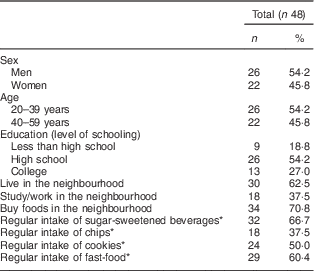
* Regular intake=eating ≥5 times/week.
We extracted a total of 115 quotes (Table 2). The individuals were classified according to their perceptions regarding their food environment. While most of the participants perceived their neighbourhood environments as favourable to the availability of ultra-processed foods, two could not classify their environment as favourable or unfavourable (Table 2). Illustrative quotes of the participants who classified their environment as favourable are presented below:
‘There are a lot of fast-food restaurants here. Yes, you can find chips and sandwiches. Across the street, at the bakery. But the supermarket also has all these things. There are even frozen sandwiches, which you can warm up in the microwave.’ (Woman)
‘You can find chips, cookies and soda virtually everywhere; at small markets, bars, bakeries. There are a lot of soda, bread and lunch meats, they sell a lot at the bakery and at the bar.’ (Woman)
Perceptions on the availability of ultra-processed foods in the neighbourhood and barriers to and facilitators of consumption of such foods. ESAO-SP study, São Paulo, Brazil, 2012
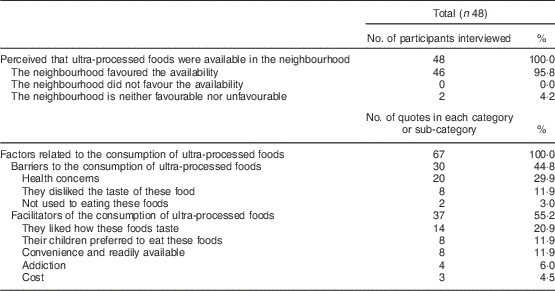
More facilitators were perceived than barriers (55·2 and 44·8 % of the sixty-seven quotes identified, respectively). We identified three barriers to the consumption of ultra-processed foods: (i) health concerns; (ii) the fact that some participants reported that they did not like to eat these foods; and (iii) not being used to eating them. The frequency of these quotes is presented in Table 2 and some of the quotes that best exemplify such barriers are presented in Table 3. No differences in the frequency of quotes were observed between men and women (P=0·69).
Quotes that best exemplify the category ‘barriers to the consumption of ultra-processed foods’ and sub-categories
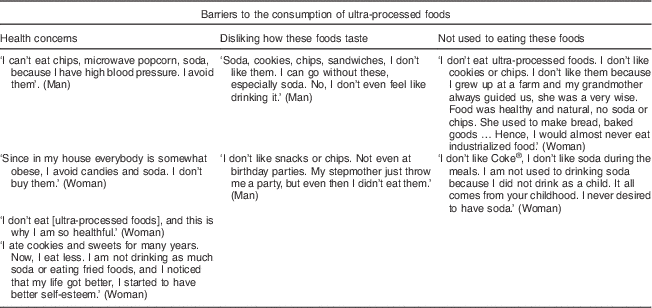
Health concerns were the most cited barrier (Table 2). Several participants suggested that ultra-processed foods were ‘unhealthy’ although they could not explain why these foods were not healthy. Some, however, could link the consumption of ultra-processed foods with non-communicable diseases, such as overweight and hypertension. As result, these participants said they avoid buying or eating these foods. Finally, a few participants mentioned the association of ultra-processed foods with well-being, health and good self-esteem (Table 3). Disliking how ultra-processed foods taste was the second most cited barrier. Four participants reported they were not used to eating ultra-processed foods because they did eat these foods growing up (Tables 2 and 3).
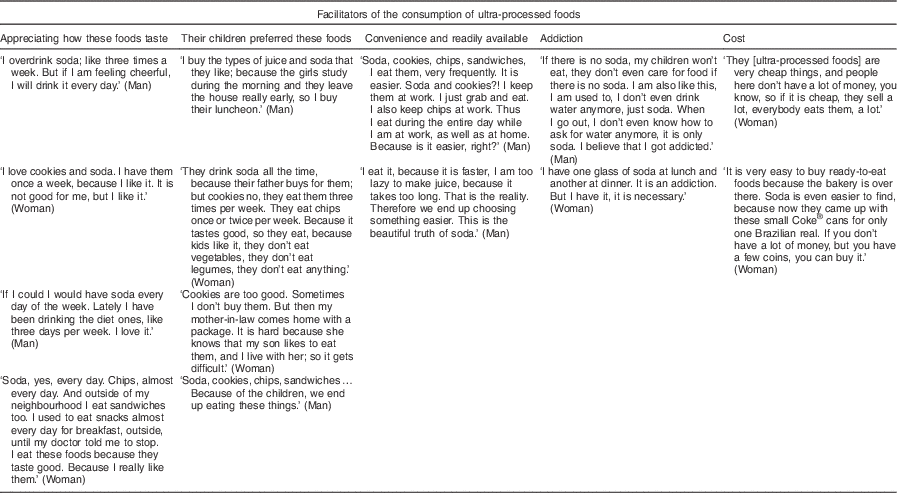
Five facilitators of the consumption of ultra-processed foods were identified: (i) liking to eat these foods; (ii) their children liked to eat these foods; (iii) convenience; (iv) addiction; and (v) cost (Table 2). Participants clearly stated how they enjoyed the taste of ultra-processed foods and how that was an important motivation for consumption (Table 4). The convenience of ultra-processed foods was also repeatedly reported. Participants reported eating them at home, at work, and when they were out having fun (Table 4). Finally, some participants referred to the consumption of ultra-processed foods as an addiction or chose to eat them because they were cheap (Table 4).
Quotes that best exemplify the category ‘facilitators of the consumption of ultra-processed foods’ and sub-categories
Discussion
We found that all participants perceived their environments as favourable to the availability of ultra-processed foods. They perceived these foods as readily available and reported that they were found in supermarkets, grocery stores, bars, cafeterias, restaurants and bakeries. Indeed, when analysing data from seventy-nine countries, Monteiro et al. found that these products are ubiquitous in developed countries and are increasingly being found in developing countries( Reference Monteiro, Moubarac and Cannon 22 ). In fact, more facilitators than barriers to the consumption of ultra-processed foods were reported by the study participants, for whom personal liking or their children liking to eat these foods, convenience, addiction and cost facilitated consumption. This is worrisome, since high availability of ultra-processed foods affects cooking practices( Reference Engler-Stringer 23 , Reference Lavelle, McGowan and Spence 24 ) and is associated with overweight prevalence( Reference Canella, Levy and Martins 25 ).
The sample had a high proportion of individuals who reported to regularly consume sugared beverages, chips, cookies, and especially soda and fast food. Moreover, these individuals perceived more facilitators than barriers to the consumption of ultra-processed foods.
Food environment characteristics can shape the food pattern of the population; however, individuals do not necessarily associate their food consumption with the evident features of the environment( Reference Larson and Story 26 – Reference Caspi, Sorensen and Subramanian 28 ). Our findings showed that reported barriers to and facilitators of the consumption of ultra-processed foods were related to the characteristics of ultra-processed foods themselves or to their individual characteristics. These findings suggest that the influence of the food environment on dietary intake is not clear to individuals.
Ultra-processed foods are energy-dense, rich in saturated fat, trans fat, sugar and sodium, and poor in fibre and micronutrients. Besides that, they contain many additives, thus this kind of food can be dangerous to health( Reference Monteiro 29 – 31 ). Although our participants did not mention these specific characteristics, they identified health concerns as the main barrier to the consumption of ultra-processed foods. They associated the intake of these foods with several diseases and described subsequent actions, such as avoiding eating or buying them. Moreover, avoiding these foods was associated with better health, well-being and better self-esteem. Interestingly, a participant noted that although she knew cookies and soda were not good for her, she liked to eat them. Both taste and health are food values, namely factors considered important by individuals in constructing their food choices( Reference Sobal, Bisogni and Devine 32 ). This participant’s quote shows that attitude towards ultra-processed foods may be multidimensional, for example simultaneously positive and negative. This corroborates both the model of attitudinal ambivalence described by Conner and Armitage( Reference Conner and Armitage 33 ) and the value negotiation process described by Sobal et al., where a certain value is prioritized and there are ‘trade-offs’ between opposing values( Reference Sobal, Bisogni and Devine 32 ).
Taste is one of the primary factors determining food choice( Reference Sobal, Bisogni and Devine 32 ). In our study, participants referred ‘liking the taste of a specific product’ as the main facilitator of the consumption of ultra-processed foods (20·9 %); however, ‘not liking the taste of a specific product’ was the second most cited barrier (11·9 %). Ultra-processed foods are designed to be palatable because of their high content of sugar, fat and sodium. The use of flavourings and colourings can also make them very attractive( Reference Monteiro 29 , 31 ). Studies conducted in Brazil, Slovenia and Norway with adults identified a certain group that preferred simple, traditional and home-cooked foods and rejected fast foods and convenience foods( Reference Sato, Gittelsohn and Unsain 34 ). In a survey with 439 Brazilian mothers, Sato et al.( Reference Sato, Lourenço and Trude 35 ) verified that 39·9, 25·3 and 37·1 % never or seldom bought ready-to-eat meals, used practical foods (such as noodles, ready tomato sauce, packaged soup and boxed cake mix) and liked to eat at fast-food restaurants, respectively. Future studies could focus on investigating the characteristics and drivers of individuals who do not like to eat ultra-processed foods, using more robust theoretical frameworks such the concepts of habitus as proposed by Bourdieu( Reference Bourdieu 36 ) and the food choice trajectory as proposed by Sobal et al.( Reference Sobal, Bisogni and Devine 32 ). In fact, the two participants who reported they were not used to eating ultra-processed foods as a barrier to their consumption also reported they did not like to eat them. They also mentioned that these foods were not part of their life.
An important facilitator of the consumption of ultra-processed foods was the fact that participants’ children liked to eat those foods and adults would buy these products as result of their children’s food preferences. Exposure to advertising of ultra-processed foods may be driving such preferences among children and stricter regulatory measures should be implemented( Reference Mallarino, Gómez and González-Zapata 37 ). We found that the participants seemed to believe that children’s preference for ultra-processed foods was a given, particularly because of the amount of sugar these foods contain. The idea that ‘they like it’ was widely accepted and generated several actions, such as the regular purchase of sugar-sweetened beverages and how children would regularly drink soda. Ochs et al. observed among North Americans that parents constructed generalizations about children’s tastes: children only liked to eat dessert (which were mainly ultra-processed foods, such as ice cream and candies), while adults liked the entrée and other courses of the meal. According to the authors, such behaviour contributed to make meals a stressful time and, in fact, contributed to the children’s craving for sweets. On the other hand, Italian families encouraged children to express their taste for particular cheeses, sauces, pastas and vegetables, and reported enjoying sharing their meals with their children( Reference Ochs, Pontecorvo and Fasulo 38 ). Despite children’s innate preference for sweet, there is a cultural construction of taste, expressed as part of the family dynamics.
When studying Uruguayan mothers, Machín et al. found that among the reasons behind children’s food choices, ‘hedonics’ was an important factor, as exemplified by this quote from their study: ‘I buy what they like to eat because if I buy something they don’t like to eat, they won’t eat it’( Reference Machín, Giménez and Curutchet 39 ). In our research, the quote ‘because it [soda, cookies and chips] is good, they eat, because kids like to eat it, they don’t eat vegetables, they don’t eat legumes, they don’t eat nothing’ showed that parents find it difficult dealing with their children’s eating preferences. Parents thus seemed to believe that children need to eat, and as long as they eat something, they are happy.
Van Ansem et al. and Paes et al. showed that parents shaped their children’s consumption of sugar-sweetened beverages( Reference Van Ansem, Schrijvers and Rodenburg 40 , Reference Paes, Hesketh and O’Malley 41 ). In our study, participants reported that their children will eat or drink those products because the father or another relative (such as a grandparent) buys them. Grandparents tend to indulge children, allowing them to eat whatever they want( Reference Roberts 42 ). In Brazil, lower-income households are more likely to have three or more generations living together, which increases the exposure of children to their grandparents’ actions( Reference Scagliusi, da Rocha Pereira and Unsain 43 ).
Finally, children were not just consumers; they were influencers and had an impact on their own and their parents’ intake of ultra-processed foods, as seen in this quote: ‘soda, cookies, chips, sandwiches … Because of the children, we end up eating these things’. This phenomenon is known as pester power( Reference Roberts 42 ). Dallazen and Fiates conducted a study with parents of students (6–10 years old) from public and private institutions in Brazil and observed that the entire family ended up eating the ultra-processed foods requested by their children – even when these foods were not part of the family food traditions( Reference Dallazen and Medeiros Rataichesck Fiates 44 ).
Convenience and the fact that ultra-processed foods are readily available were also important facilitators of their consumption. Convenience is one of the main characteristics of ultra-processed foods: they are convenient, do not require preparation, can be stored for a long time, and sometimes do not even require utensils (such as plates, knives, forks) to be eaten; thus, they can be consumed anywhere( Reference Monteiro 29 , 31 ).
Some participants identified addiction as a facilitator of the consumption of ultra-processed foods. They reported to eat these foods because they were addicted to them. The term ‘addiction to foods’ is, however, contradictory( Reference Ziauddeen and Fletcher 45 ). Schulte et al. used experimental findings to support their assertion that ultra-processed foods share some pharmacokinetic properties (such as concentrated dose and rapid rate of absorption) with drugs of abuse( Reference Schulte, Avena and Gearhardt 46 ). Further understanding what individuals mean by ‘addiction to food’ would help explore such facilitator in more detail.
Regarding the relationship of cost and consumption of sugar-sweetened beverages, Claro et al. showed that an increase in the price of sugar-sweetened beverages would lead to a reduction in their consumption in Brazil( Reference Claro, Levy and Popkin 47 ). And Duran et al. found that sugar-sweetened beverages are cheaper and more likely to be available in low-income neighbourhoods in São Paulo( Reference Duran, de Almeida and Maria do Rosario 20 ).
The food industry designs and sells ultra-processed foods targeting some attributes that make them highly profitable( 31 ). These attributes matched the facilitators reported by our sample. The fact that they are hyper-palatable and addiction-like was reflected in the sub-categories of taste and addiction. Their aggressive marketing might be related to children’s preference. The sub-category convenience reflected their widespread availability and convenience. Their low cost of production might be mirrored in how accessible and affordable they are. All these categories interact with each other, and form a complex cycle that induces people to choose to eat ultra-processed foods.
The present study has a few limitations. First, it was restricted to thirteen districts in the city of São Paulo and therefore does not represent the entire city. However, the sampled districts represent the socio-economic diversity found in São Paulo and cover all geographic areas of the city. Second, we did not achieve the a priori sample size defined for the qualitative arm of the ESAO-SP study, despite all our efforts. Nevertheless, a diversity of perceptions was obtained, suggesting that our sample gave us enough power to cover the matter. Finally, the study was carried out in 2012 and more recent changes and influences of the food environment on dietary intake may not have been identified. However, it is not likely that substantial changes in the food environment occurred in São Paulo city in the past 5 years. São Paulo is already served by transnational corporations seeking to expand their sales of ultra-processed products in highly populated developing countries.
Finally, participants perceived their neighbourhoods as favourable to the consumption of ultra-processed foods and reported more facilitators than barriers to their consumption. The reported barriers point to the need for the promotion of healthy eating, which should include access to nutritional information and the preservation of traditional food patterns. The reported facilitators reinforce the idea that these foods are habit-forming and that regulatory measures are necessary, particularly because children influence what adults are buying and eating. Therefore, protecting the children from aggressive marketing strategies may also protect the health of the entire family.
To our knowledge, the present study is the first qualitative study concerning individuals’ perceptions of ultra-processed foods. Considering that eating behaviours are complex and multidimensional, qualitative studies help us understand how individuals interact with the environment for more effective public health measures to be enacted. Further qualitative studies could focus on the meanings given to ultra-processed foods by different age groups, which would contribute to the development of models to theorize the choice for ultra-processed foods.
Acknowledgements
Financial support: This work was funded by the São Paulo Research Foundation (FAPESP; grant number 2009/17517-0) and the National Council for Scientific and Technological Development (CNPq; grant numbers 559517/2010-6 and 476881/2010-2). FAPESP and CNPq had no role in study design, data collection and analysis, decision to publish or preparation of the manuscript. The content is solely the responsibility of the authors. Conflict of interest: None. Authorship: L.B.A. had responsibility for recruitment of participants, fieldwork planning, and data collection, coding and analysis. F.B.S. contributed to data analysis and interpretation and drafted the manuscript. A.C.D. had responsibility for data collection, data analysis and contributed to manuscript writing. P.C.J. conceptualized and designed the study, obtained funding for the overall research project, contributed to data analysis and interpretation and to manuscript writing. All authors read and approved the final version of the manuscript. Ethics of human subject participation: Ethics approval was granted by the Human Research Ethics Committee of the School of Public Health of the University of São Paulo. All participants (n 48) received written information explaining the study and signed individual consent forms.



