



The unemployment rate in the USA during the latest economic recession increased from 5·0 % in December 2007 to 10·0 % in October 2009, and remained above 9·0 % throughout the whole year of 2010( 1 ). Personal unemployment leads to lost income, which increases the probability of experiencing food insecurity( Reference Nord, Coleman-Jensen and Gregory 2 ). Food insecurity indicates households’ inability to meet basic food needs and their insufficient access to adequate nutrition( Reference Alaimo 3 ). Food insecurity has been discussed to lead to a series of negative health outcomes across the lifespan( Reference Cook, Black and Chilton 4 , Reference Gundersen, Kreider and Pepper 5 ). Households with food insecurity report greater levels of mental health problems and chronic diseases and lower nutrient intakes( Reference Heflin, Siefert and Williams 6 – Reference Ziliak, Gundersen and Haist 10 ). Adverse consequence of food insecurity for children are particularly concerning in that food-insecure children are likely to experience physical symptoms such as headaches and stomach aches( Reference Alaimo, Olson and Frongillo 11 ), coexistence of obesity( Reference Oluyemisi, Garasky and Gundersen 12 ), hospitalization( Reference Cook, Frank and Berkowitz 13 ), behavioural problems( Reference Huang, Oshima and Kim 14 ) or lower psychosocial health( Reference Alaimo, Olson and Frongillo 11 , Reference Fiese, Gundersen and Koester 15 ). The findings regarding negative consequences of food insecurity are consistently reported by studies using large-scale national data and small community samples( Reference Gundersen, Kreider and Pepper 5 , Reference Kirkpatrick and Tarasuk 16 , Reference Nanama and Frongillo 17 ). Recent statistics present that food insecurity is a national public health concern. The prevalence of household food insecurity rose to a decade-high between 2008 and 2011, and reached 14·9 % by 2011( Reference Coleman-Jensen, Nord and Andrews 18 ). The caseload of the Supplemental Nutrition Assistance Program (SNAP; i.e. food stamps) also increased significantly by about 50 % between 2007 and 2011( Reference Rosenbaum 19 ); nearly one in seven Americans (46·2 million) participated in the SNAP by 2011( Reference Andrews and Smallwood 20 ).
Literature suggests that economic resources are one of the key determinants associated with the risk of food insecurity, along with racial and ethnic minority status, marital status, home ownership, age and education( Reference Nord, Coleman-Jensen and Andrews 21 ). Roles of economic resources have been studied using different economic indicators – for instance, poverty status, liquid assets and unemployment – to account for food insecurity in various ways beyond a simple link between food insecurity and income( Reference Gundersen, Kreider and Pepper 5 ). The present study focused on the relationship between unemployment and food insecurity, considering the recent economic recession and high unemployment rate. It is widely acknowledged that job loss or unemployment is one of the most important risk factors for household food insecurity( Reference Alaimo 3 , Reference Coleman-Jensen 22 – Reference Rose 24 ); unemployment mainly affects household food consumption through negative income shock and income volatility. Previous studies using nationally representative data show that the food insecurity rate is associated with the unemployment rate; households with no adult employed are more likely to experience food insecurity( Reference Nord, Coleman-Jensen and Gregory 2 , Reference Bartfeld and Dunifon 25 ). However, although unemployment appears a key factor predicting food insecurity, many studies investigate the relationship of food insecurity with poverty and food assistance programmes( Reference Nanama and Frongillo 17 , Reference Nord, Coleman-Jensen and Andrews 21 , Reference Nord and Prell 26 ) while fewer studies examine the relationship of food insecurity with unemployment with closer attention to the characteristics of unemployment( Reference Nord, Coleman-Jensen and Gregory 2 , Reference Heflin, Corcoran and Siefert 27 ). Individual unemployment status is often included as a dichotomous control variable in the research on food insecurity; several studies with unemployment status as a primary independent variable often focus solely on specific sub-populations (e.g. those receiving public assistance or single mothers)( Reference Heflin, Corcoran and Siefert 27 , Reference Eamon and Wu 28 ).
The lack of research on the link between unemployment and food insecurity for the population at large may be based on the assumption that unemployment is an adverse event leading to income loss and negative income shock is the direct cause of food insecurity, but previous literature overlooks specific functions of unemployment in predicting food insecurity. We argue that it is important to understand the association between unemployment and food insecurity since food insecurity results from competing demands for constrained resources( Reference Heflin, Sandberg and Rafail 29 ) and multiple measures of unemployment may depict specific pathways from a job loss to food insecurity. More in-depth understanding of the relationship between aspects of unemployment and food insecurity is useful for nutrition and food assistance services to better identify and serve the at-risk populations. A more thorough understanding of this relationship informs important policy implications.
Therefore the present study examined the link between unemployment and food insecurity in the 2007–2009 economic recession using the longitudinal data from the 2008 panel of the Survey of Income and Program Participation (SIPP) in the USA. We focused on sample respondents who were employed at the beginning of the observation period. In addition to a dichotomous indicator of unemployment, we measured unemployment status from multiple aspects, including the number of job losses and the total duration of all episodes of unemployment during the observation period. We aim to contribute to comprehensive understandings of unemployment and food insecurity and provide generalizable findings by employing the large-scale panel data collected from a nationally representative sample.
Methods
Data and sample
Including continuous series of panels since 1984, the SIPP is a longitudinal household survey operated by the US Census Bureau. The SIPP panel ranges from 2·5 to 4 years, and has a sample size from 14 000 to 36 700 households( 30 ). In each panel, the SIPP interviews respondents in multiple waves with a time interval of four months to collect information about their previous four months (i.e. the reference period or reference months of each wave). Since the 1996 panel, the SIPP has included a five-item food insecurity scale in one or two waves of interviews (i.e. Wave 8 in the 1996 and 2001 panels, Wave 5 in the 2004 panel, and Waves 6 and 9 in the 2008 panel).
To examine the research questions discussed above, the present study created two analytic samples from the 2008 panel. The first sample used the data in the first six waves with an observation period from September 2008 to August 2010. We limited the first sample to working-age household heads (aged 16–60 years in Wave 1; n 21 063). The SIPP defines individuals above 15 years as the working-age population, and collects employment information from this population. Following previous literature( Reference Leete and Bania 31 ), we further limited the working-age population to those aged 60 years and below because individuals older than 60 years may have different options (e.g. early retirement) when losing a job. We only included household heads who were employed in the first week of the reference period in Wave 1 (n 15 856) because the research questions are focused on the association between food insecurity and the change of employment status from being employed to unemployed. In addition, household heads who did not complete all six waves’ interviews (n 1383) or lived in group quarters (n 46) were excluded; the final analytic sample included 14 417 household heads.
The second sample used the data from Waves 6 to 9 in the 2008 panel with an observation period from May 2010 to August 2011. The purpose of creating this second sample was to conduct comparison analyses with those on the first sample. Since the 2008 SIPP collected the information on food insecurity in both Waves 6 and 9, this second sample allowed the study to estimate the relationship between unemployment and food insecurity by controlling for food insecurity in Wave 6. In the second sample, we included working-age household heads (aged 16–60 years in Wave 6) who were employed in the last week of the reference period in Wave 6 (n 13 847). In addition, household heads who did not complete all four interviews from Waves 6 to 9 (n 736) or lived in group quarters (n 31) were excluded; the second sample had a size of 13 080 household heads.
Measures
Outcome
Collected in Waves 6 and Wave 9, household food insecurity was measured by five questions excerpted from the US Department of Agriculture’s eighteen-item Food Security Scale( Reference Bickel, Nord and Price 32 ). Food insecurity questions inquired about the frequency of particular food consumption behaviours (e.g. could not afford to eat balanced foods, cut the size of meals or skipped meals) in the reference period of four months. Although this particular set of items does not constitute a standard scale of food insecurity, a previous assessment using the Rasch measurement model suggests that it is a reasonably reliable measure of food insecurity( Reference Nord 33 ). Previous studies have constructed food insecurity scores based on this five-item scale( Reference Shaefer and Gutierrez 34 ). According to participants’ responses to these five questions, households reporting ‘often true’ or ‘sometimes true’ on at least two questions were considered food insecure (food insecurity=1).
Independent variables
The SIPP recorded weekly employment status of individuals in the observation period (from September 2008 to August 2010 for the first sample (104 or 105 weeks depending on the interview time of sample respondents) and from May 2010 to August 2011 (69 or 70 weeks) for the second sample). The weekly employment status included the following categories: (i) ‘With job, working’; (ii) ‘With job, absent without pay but not on layoff’; (iii) ‘With job, absent without pay and on layoff’; (iv) ‘No job, looking for work or on layoff’; and (v) ‘No job, not looking for work and not on layoff’. Those reporting the third or fourth category were coded as ‘1’ on the dichotomous indicator of unemployment (unemployment=1), and those reporting other categories were coded as ‘0’ (unemployment=0). Respondents reporting the fifth category (i.e. ‘No job, not looking for work and not on layoff’) were considered to be out of the labour force instead of being unemployed; they may have retired from work, returned to school or have disability conditions not allowing for work. We created a dichotomous indicator of being out of the labour force separately and included it in the analysis as a control variable; those without a job and not looking for work were coded as ‘1’ on this indicator and others were coded as ‘0’.
Based on the weekly information, the study created three variables to measure different aspects of unemployment status during the observation period. The first one is a dummy variable indicating whether household heads experienced unemployment or not during the observation period (yes=1, no=0). The second one counts the episodes of job losses during the observation period; the episode variable is top-coded at 5 because only a small proportion of respondents had more than five layoffs (0·87 %). The third variable measures the total duration of all episodes of unemployment (number of weeks).
Control variables
The study included several demographic characteristics in Wave 1 as control variables, such as household heads’ age, gender, race (Non-Hispanic White; Non-Hispanic Black; Hispanic; others), education (high school and below; some college; four-year college and above), marital status (married; others) and citizenship (citizen or not). Several household characteristics were added into analyses as well, including income-to-needs ratio, assets-to-needs ratio, participation in the SNAP, access to social support, household type (couple-headed; male-headed; female-headed), number of household members, number of children living in the household, home ownership (home owners; others) and metro status (metro; others). The metro status variable identifies whether participants lived in one of ninety-three MSA (Metropolitan Statistical Areas) and CMSA (Consolidated Metropolitan Statistical Areas), as defined by the US Office of Management and Budget. Using the average income from four reference months in Wave 1, we created an income-to-needs ratio variable that categorized the sample into three groups: (i) those with average income below 200 % of the monthly poverty threshold; (ii) those with average income between 200 % and 400 % of the monthly threshold; and (iii) those with average income above 400 % of the monthly threshold. The monthly poverty threshold is the annual federal poverty line divided by 12. To calculate assets-to-needs ratio, we added up the equities in bank accounts, retirement accounts, stocks, mutual funds and other assets collected in Wave 4. The equities in home, business, vehicle and other real estate were not included because it may not be easy to liquidize these assets during economic hardship. We then compared the value of liquid assets with the monthly poverty threshold and categorized the sample households into two groups using a measure of assets-to-needs ratio: (i) those with liquid assets equal to or below three times the monthly poverty threshold; and (ii) those with liquid assets above three times the monthly threshold. The first category indicates that households do not have sufficient liquid assets to cover household minimum consumption for three months; the literature on asset poverty generally defines the first group of households as being asset-poor( Reference Haveman and Wolff 35 ). The scale of access to social support was created from three survey questions included in the wave when the information on food insecurity was collected. These questions asked, when needed, whether respondents’ households can have all of the help (3), most of the help (2), very little of the help (1) or no help (0) from their family living nearby, from friends and from a social agency or a church, respectively. The sum of these three questions, ranging from 0 to 9, is defined as respondents’ access to social support. A higher value indicates a higher level of social support available for sample respondents. As discussed above, an indicator of whether sample respondents have been out of the labour force during the observation period was also included in analyses. Our analyses also controlled for state fixed effects, which used one state as a reference group and then added other states’ dummy indicators in models.
Statistical analyses
Analyses for the first sample
Since food insecurity is dichotomous, a series of logit models was conducted in the statistical software package STATA version 13·1 to examine the proposed research questions. First, the regression of the outcome measure v. each of the independent variables, respectively, was performed, along with control variables (models 1–3 in Table 2). We also ran a logit model using both the episodes and the duration of unemployment as predictors (model 4 in Table 2).
Analyses for the second sample
We repeated a specific analysis (model 1 in Table 2) on the second sample to predict respondents’ food insecurity in Wave 9 and added their food insecurity in Wave 6 as a control variable. That is, the association between a dichotomous measure of unemployment and food insecurity was estimated in logit models with lagged dependent variables in Wave 6. The analyses on the second sample may provide more accurate estimates because the lagged dependent variable can be considered a proxy or instrument that takes into account unobserved confounders affecting both food insecurity and employment status.
We had two sets of supplemental tests. First, a household may contain more than one family in SIPP; the first supplemental test limited the samples to the households only including a primary family. The second one repeated the analyses discussed above to sample respondents with income-to-needs ratio below 2. Overall, the supplemental tests did not have results substantively different from those in the main analyses. All analyses were adjusted using the longitudinal household weight variable provided by the SIPP.
Results
Sample characteristics
As shown in the first column of Table 1, the mean age of household heads included the first sample was 42·2 (sd 10·6) years at Wave 1 and about half of these respondents were male (53 %). The majority of sample respondents were non-Hispanic White (71 %), nearly three-quarters had at least some college experiences and more than half (56 %) were married. In terms of household characteristics, nearly two-thirds were led by couples, slightly higher than the reported marital rate. The average household size was 2·7 (sd 1·4) and the mean number of children living in the household was 0·9 (sd 1·2). Nearly 70 % of sample respondents were home owners.
Descriptive statistics of sample characteristics, Survey of Income and Program Participation (SIPP), 2008–2011

SNAP, Supplemental Nutrition Assistance Program.
If not mentioned otherwise, all variables were collected in Wave 1.
* Variables were collected in Wave 4.
† Variables were collected in Wave 6 for sample 1 and Wave 9 for sample 2.
‡ Variables were collected in Waves 1 to 6 for sample 1 and in Waves 6 to 9 for sample 2.
Nearly 10 % of participants had food insecurity at Wave 6. Nearly 18 % of household heads experienced job loss during the observation period. The mean episodes of unemployment was 0·3 (sd 0·8) in the whole sample, and was 1·7 (sd 1·1) among those with unemployment experiences. The mean duration of all episodes of unemployment was 4·0 (sd 12·5) weeks for the whole sample; if limiting the sample to those with unemployment experiences, the mean duration was 22·6 (sd 21·3) weeks. About one out of eight household heads had been out of the labour force and half of them also reported unemployment experiences.
Nearly 50 % of sample households had an average monthly income four times higher than the monthly poverty threshold in Wave 1, 30 % had income between two and four times the poverty threshold and 20 % had average monthly income below two times the poverty threshold. Regarding liquid assets, nearly 50 % had liquid assets insufficient to live at the federal poverty level for three months. About 7 % of households in the sample were recipients of SNAP. The mean access to social support reported by households in the sample was 5·3 (sd 2·5). As shown in the second column of Table 1, descriptive statistics of these variables for the second sample were similar to those of the first sample.
Table 2 lists demographic characteristics of the unemployed household heads in the first sample by food insecurity. Nearly 15 % of the unemployed heads reported food insecurity. It is clear that the unemployed heads experiencing food insecurity had a more disadvantaged socio-economic background than those without food insecurity and lower education, income and likelihood to own a house, but a higher probability to receive nutrition assistance.
Sample characteristics of the unemployed household heads by food insecurity status, Survey of Income and Program Participation (SIPP), 2008–2010
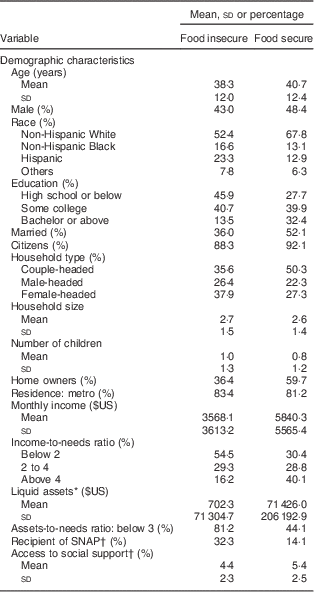
SNAP, Supplemental Nutrition Assistance Program.
If not mentioned otherwise, all variables were collected in Wave 1.
* Variables were collected in Wave 4.
† Variables were collected in Wave 6 for sample 1 and in Wave 9 for sample 2.
Unemployment and food insecurity
Table 3 demonstrates the relationships between different aspects of unemployment and food insecurity in the first sample. In model 1, the odds of food insecurity for those with unemployment experiences were about 1·6 times higher than for those without unemployment experiences (OR=1·55; 95 % CI 1·32, 1·83; P<0·001). The estimated marginal effect of unemployment in model 1 was about 3·1 percentage points: when all other control variables were held at their means, the change from being employed to unemployed increased the probability of food insecurity from 6·1 % to 9·2 %. Model 2 used the number of job losses to replace the dichotomous measure and showed that one more episode of unemployment increased the odds of food insecurity by about 20 % (OR=1·20; 95 % CI 1·12, 1·28; P<0·001). Results of model 3 with the duration of unemployment as a predictor of food insecurity suggested that a one-week increase in unemployment duration raised the odds of food insecurity by about 1 % (OR=1·01; 95 % CI 1·01, 1·02; P<0·001).
Logit regression results for the first sample: unemployment and food insecurity (n 14 417), Survey of Income and Program Participation (SIPP), 2008–2010
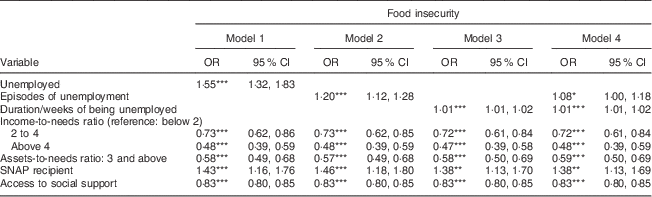
SNAP, Supplemental Nutrition Assistance Program.
Analyses also controlled for the demographic variables listed in Table 1. The results on these demographic variables are not reported. Models 1 to 4 are logit analyses using different measures of unemployment. Model 1 performs the regression of food insecurity v. the dummy indicator of unemployment (whether household heads experienced unemployment or not during the observation period); model 2 does the same v. the number of episodes of unemployment; model 3 does the same v. the total duration of all episodes of unemployment (number of weeks); model 4 uses both the episodes and the duration of unemployment as predictors.
*P<0·05, **P<0·01, ***P<0·001.
Model 4 used both the episodes and duration of unemployment to predict food insecurity because the number of job losses may be confounded with the duration measure in the analysis. Both the number of job losses and the duration of unemployment were still statistically significant, while inclusion of the duration measure reduced the odds ratio of the episodes of unemployment (from 1·20 in model 2 to 1·08 in model 4). For household heads with the same duration of unemployment, one more episode of unemployment increased the odds of food insecurity by 8 % (OR=1·08; 95 % CI 1·00, 1·18; P<0·001).
Other variables included in Table 3 had expected results. Income-to-needs ratio, assets-to-needs ratio and access to social support were all negative predictors of food insecurity, with odds ratios smaller than 1. Consistent with previous literature( Reference Gundersen, Jolliffe and Tiehen 36 ), SNAP participation was a positive predictor of outcome measures, due to the selection into the SNAP by households with food insecurity.
Unemployment and food insecurity in analyses with lagged dependent variables
All the analyses above are correlation-based, and the estimated relationship between unemployment and food insecurity could be biased by omitting unobserved confounders that affect both food insecurity and employment status. Table 4 presents the results of lagged-dependent-variable analyses to predict respondents’ food insecurity at Wave 9 on the second sample. Consistent with model 1 in Table 3, the odds ratio of unemployment was still statistically significant. The odds of food insecurity for those with unemployment experiences was about 1·5 times higher than for those without unemployment experiences (OR=1·54; 95 % CI 1·27, 1·88; P<0·001); the estimated marginal effect of unemployment on food insecurity was about 3·4 percentage points.
Logit regression results with lagged dependent variable for sample 2: unemployment and food insecurity (n 13 080), Survey of Income and Program Participation (SIPP), 2008–2011
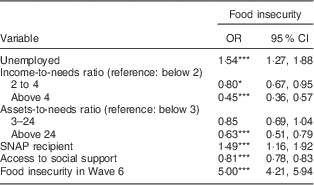
SNAP, Supplemental Nutrition Assistance Program.
This logit analysis used food insecurity measured in Wave 9 as the dependent variable and controlled for food insecurity measured in Wave 6. Since food insecurity in Wave 6 preceded the one in Wave 9, it was considered a lagged dependent variable. Analyses also controlled for the demographic variables listed in Table 1. The results on these demographic variables are not reported.
*P<0·05, ***P<0·001.
Discussion
The present study examined the change of employment status among working-age household heads in the 2008 panel of SIPP and its association with food insecurity in the recent economic recession. In addition to the dummy measure of unemployment, we examined other characteristics of unemployment, such as the number of job loss episodes and the total duration of all episodes of unemployment.
During September 2008 to August 2010, nearly 20 % of sample respondents had unemployment experiences. This rate cannot be directly compared with the national unemployment rate for the population aged 16 years and over (e.g. 6·1 % in September 2008 and 9·5 % in August 2010)( 1 ), as it cumulates all unemployment experiences of sample respondents during the observation period. At the end of this observation period, 10 % experienced food insecurity. The food insecurity rate is lower than the national household food insecurity rate in 2010 (14·5 %) probably because of the selection criteria of the sample (e.g. being employed at Wave 1).
As expected, unemployment was positively related to the probability of food insecurity. This finding is consistent with national data reporting that household food insecurity is positively associated with the national unemployment rate( Reference Nord, Coleman-Jensen and Gregory 2 ). The estimated marginal effect shows that household heads experiencing job loss were 33 % more likely to report food insecurity in model 1 of Table 3. The association between unemployment and food insecurity held even in the lagged-dependent-variable analyses (Table 4). After controlling for food insecurity in Wave 6, the estimated marginal effect shows that household heads experiencing unemployment between Waves 7 and 9 were about 30 % more likely to report food insecurity. Negative income shocks caused by unemployment of household heads clearly seem to affect household food insecurity.
The present study broadens the understandings of the relationship between unemployment and food insecurity by expanding findings from the previous studies that use a binary indicator of unemployment. Other characteristics of unemployment measured in the present study were also associated with the likelihood of experiencing food insecurity: namely, both the episodes and duration of unemployment increase the risk of food insecurity. In particular, with the same duration of unemployment in the observation period, one more episode of unemployment increased the odds of food insecurity by 8 % (model 4 of Table 3). One previous study( Reference Gundersen and Gruber 23 ) also suggests that episodes of unemployment are related to food insecurity. Our results (Table 3) consistently show supportive evidence that multiple episodes of unemployment (i.e. transitions between employment and unemployment) not only increase the amount of time in unemployment, but also impose additional risk of food insecurity. For example, unemployment as a stressor may create a high level of distress and affect family relationships and interactions negatively( Reference McLoyd, Jayaratne and Ceballo 37 , Reference Elder, Eccles and Ardelt 38 ). Each episode of unemployment also increases the risk of poverty and social exclusion from personal networks and institutions, and therefore may increase the risk of food insecurity( Reference Gallie, Paugam and Jacobs 39 , Reference Gallie 40 ). These could be the reason why, with the same duration of unemployment, those experiencing multiple job losses are more vulnerable to food insecurity than their counterparts.
Limitations
We note that our study has some limitations. First, our empirical findings mainly show correlational association. Using observational data, we may not claim the causal impacts of unemployment on food insecurity. Second, the dynamics of change in employment status over the observation period could be more complicated than what we measured in the study; for instance, by types of employment (e.g. full-time, part-time) or occupation. Yet the study did not fully capture other possibilities regarding change in employment status. We did not investigate the change of employment status experienced by other household members as well. In addition, some important predictors that are tied to both food insecurity and unemployment, such as mental health status and disability status, were not included in analyses. It should also be noted that individual unemployment status aggregated from the longitudinal information may suffer from seam bias in the SIPP, which indicates that the tendency of a disproportionate number of changes often occurs between waves in longitudinal panel surveys( Reference Moore, Bates and Pascale 41 ).
Policy implications
The results of the present study have public policy implications to reduce food insecurity and improve nutritional intake for those experiencing unemployment. First, unemployment is clearly linked to food insecurity and is an indicator of households’ needs for food and nutrition assistance for many households, even including those with higher incomes. Access to public assistance can serve to reduce material hardship, including food insecurity( Reference Wu and Eamon 42 ). Connecting unemployment assistance more closely to public food and nutrition assistance, such as the SNAP, could assist to lower the prevalence of food insecurity among unemployed households. For example, applications and eligibility for food assistance and unemployment benefits could be connected to encourage households who apply for unemployment assistance to be screened for public food assistance programme eligibility. Closer linkage of unemployment and food and nutrition assistance may especially benefit higher-income households experiencing food insecurity due to significant income volatility resulting from unemployment, because higher-income households are less likely than lower-income households to be familiar with and seek help from public assistance programmes due to such factors as stigma, unfamiliarity and lack of belief that their family could be eligible( Reference Martin, Cook and Rogers 43 ).
Second, reducing application barriers alone is insufficient and other measures to encourage participation are needed( Reference Ebenstein and Stange 44 ). Public food and nutrition assistance policy could also be shaped to respond to income volatility for those with significant assets that cannot be quickly liquidized to cash. This could occur by changing eligibility rules to account for the volatility, the amount of current income, as well as for non-liquid assets. Adding eligibility criteria to account for sudden drops of income through unemployment and allowing for higher value of assets could increase participation by households who were higher-income prior to an episode of unemployment.
Third, public policy could better account for both episodes and duration of unemployment to reduce food insecurity. Those with multiple episodes of unemployment are more vulnerable to food insecurity, which could be a result of the inability of public assistance bureaucracies to respond quickly enough to rapid employment changes for households. To reduce food insecurity, food and nutrition assistance programmes could have more flexible eligibility rules that provide assistance after households resume employment, as well as streamline the application, certification and approval process and expedite the delivery of assistance benefits for past beneficiaries whose employment status changes. Loosening food assistance eligibility rules can assist to reduce the social ills and public health problems that accompany unemployment, including food insecurity, and increase participation( Reference Hanratty 45 – Reference Borjas 47 ).
Conclusions
The present study concludes that while negative income shocks caused by unemployment clearly affect household food insecurity, several factors are important to consider in policy and practice efforts to mitigate food insecurity for households. While the number of episodes and duration of unemployment both increase the risk of food insecurity, the number of episodes is an especially significant risk factor. Similarly important is to consider pre-unemployment income in mitigation efforts – income volatility most affects the risk of higher-income households to food insecurity, while level of income most affects the risk for lower-income households. Finally, access to food assistance programmes plays an invaluable mitigating role in lowering food insecurity risk.
Acknowledgements
Financial support: Funding for this study was provided by the Saint Louis University President Research Fund (grant number 8548) and the Faculty Research Leave Program. The funders had no role in the design, analysis or writing of this article. Conflict of interest: None. Authorship: J.H. conceptualized the study question and approach, carried out the data analyses, drafted most of the initial article, and approved the final draft of the article. Y.K. contributed to the analysis plan, drafted part of the discussion section and the introduction section, reviewed and revised the article, and approved the final article as submitted. J.B. contributed to forming the research questions and conceptual models, drafted part of the discussion section and the introduction section, reviewed and revised the article, and approved the final article as submitted. Ethics of human subject participation: The study used publicly available secondary data and institutional review board approval was not required.



