





Introduction
Children’s ability to develop trust in parents’ availability for support during distress or secure attachment development enhances their resilience (Bowlby, Reference Bowlby1969). Secure attachment acts as a buffer against the negative impact of stress on child mental health (Dujardin et al., Reference Dujardin, Santens, Braet, De Raedt, Vos, Maes and Bosmans2016; Sroufe, Reference Sroufe2005). Secure attachment development has mainly been attributed to the effect of supportive parenting (Ainsworth et al., Reference Ainsworth, Blehar, Waters and Wall1978) with meta-analyses supporting the robustness of the parenting-attachment association (Madigan et al., Reference Madigan, Deneault, Duschinsky, Bakermans-Kranenburg, Schuengel, van IJzendoorn, Ly, Fearon, Eirich and Verhage2024). Nevertheless, a substantial component of individual differences in (in)secure attachment development seems not to be related to parenting behaviors, which led to research focusing on biology-related child factors moderating the association between parenting and children’s attachment such as genetic variation (e.g., Fearon et al., Reference Fearon, Shmueli-Goetz, Viding, Fonagy and Plomin2014) or children’s cortisol responses to stress exposure (e.g., Houbrechts et al., Reference Houbrechts, Cuyvers, Goossens, Bijttebier, Bröhl, Calders, Chubar, Claes, Geukens, Van Leeuwen, Van Den Noortgate, Weyn and Bosmans2023). Similarly, while secure attachment is linked with well-being and decreased internalizing problems such as depression and anxiety, the effect sizes are often modest (e.g., Madigan et al., Reference Madigan, Brumariu, Villani, Atkinson and Lyons-Ruth2016), suggesting that other variables may play a role in this process.
Of importance is the rising awareness that children differ in the extent to which they are susceptible to the positive and negative influences of the environment, including parenting, as captured by frameworks as differential susceptibility (Belsky et al., Reference Belsky, Bakermans-Kranenburg and Van IJzendoorn2007), sensory processing sensitivity (Aron & Aron, Reference Aron and Aron1997) and biological sensitivity to context (Ellis & Boyce, Reference Ellis and Boyce2008), recently summarized under the broader umbrella of environmental sensitivity (Pluess, Reference Pluess2015). Previous studies have shown that children scoring high on environmental sensitivity—particularly as indexed by the phenotypical marker of sensory processing sensitivity, which reflects deeper processing of stimuli, heightened emotional reactivity, low sensory thresholds, and responsiveness to esthetic experiences (Aron & Aron, Reference Aron and Aron1997; Pluess et al., Reference Pluess, Lionetti, Aron and Aron2023)—are more strongly influenced by the quality of their environment. Specifically, they are more negatively affected by harsh or unresponsive parenting (Slagt et al., Reference Slagt, Dubas, van Aken, Ellis and Deković2018), but also benefit more from positive parenting practices (Slagt et al., Reference Slagt, Dubas, van Aken, Ellis and Deković2018) and psychological interventions (Nocentini et al., Reference Nocentini, Menesini, Lionetti and Pluess2017; Pluess & Boniwell, Reference Pluess and Boniwell2015) than their less sensitive peers.
Whether environmental sensitivity moderates the link between parenting and attachment and moderates the link between attachment and children’s mental well-being has been studied little. Nevertheless, it could help explain for which children these associations matter more, improving theoretical knowledge and providing insights for clinical practice. Therefore, in the current study, we aimed to longitudinally examine whether individual differences in environmental sensitivity moderate (1) the association between supportive parenting and the development of secure attachment, and (2) the association between attachment and the development of internalizing problems in elementary school children. We considered Sensory Processing Sensitivity (Aron & Aron, Reference Aron and Aron1997; Pluess et al., Reference Pluess, Lionetti, Aron and Aron2023; Greven et al., Reference Greven, Lionetti, Booth, Aron, Fox, Schendan, Pluess, Bruining, Acevedo, Bijttebier and Homberg2019) as a phenotypical marker of these individual differences in sensitivity.
Children’s attachment development is the result of repeated experiences with parental support during distress (de Wolff & van IJzendoorn, Reference de Wolff and van IJzendoorn1997). According to Bowlby (Reference Bowlby1969), children’s experiences with caregivers during distress are stored in internal working models: mental representations that guide expectations about support and comfort. When caregivers consistently offer a secure base (by being available, sensitive, and supportive) children develop secure attachments. This involves building internalized knowledge about how secure base interactions typically unfold, often referred to as Secure Base Script (SBS) knowledge (Waters & Waters, Reference Waters and Waters2006). Specifically, children learn to expect that they can express distress and that parents monitor whether they are in distress, that parents then provide emotional (and when possible practical) support, and that this helps to get back on track (Waters & Waters, Reference Waters and Waters2006). Instead, when interactions with parents during distress are experienced as less supportive, children become more insecurely attached and they develop internal working models with less SBS knowledge. Given that SBS knowledge captures how children represent and anticipate support during distress, it offers a theoretically grounded and developmentally sensitive way to assess attachment security in middle childhood. We therefore use SBS knowledge as our central operationalization of secure attachment throughout the present study.
Although research on SBS knowledge sets off more recently compared to research on other indices of (in)secure attachment, so far, most studies align with the findings of previous meta-analyses (Waters & Roisman, Reference Waters and Roisman2019), which indicate a significant association between supportive parenting and attachment (e.g., Madigan et al., Reference Madigan, Deneault, Duschinsky, Bakermans-Kranenburg, Schuengel, van IJzendoorn, Ly, Fearon, Eirich and Verhage2024). Both in cross-sectional (Finet et al., Reference Finet, Waters, Vermeer, Juffer, Van IJzendoorn, Bakermans-Kranenburg and Bosmans2021) and in longitudinal research (Steele et al., Reference Steele, Waters, Bost, Vaughn, Truitt, Waters, Booth-LaForce and Roisman2014; Yang et al., Reference Yang, Gu, Cui, Li, Way, Yoshikawa, Chen, Okazaki, Zhang, Liang and Waters2024), supportive parenting was linked to SBS knowledge in middle childhood, young adults and adolescents, respectively. Nevertheless, also in these studies, the size of the associations was relatively modest, suggesting the presence of other sources of variance and the presence of potential moderators (e.g., Houbrechts et al., Reference Houbrechts, Cuyvers, Goossens, Bijttebier, Bröhl, Calders, Chubar, Claes, Geukens, Van Leeuwen, Van Den Noortgate, Weyn and Bosmans2023).
Nuancing the traditional idea in attachment theory that individual differences in attachment are not related to temperament (Sroufe & Waters, Reference Sroufe and Waters1982), Bosmans et al. (Reference Bosmans, Bakermans-Kranenburg, Vervliet, Verhees and van IJzendoorn2020) proposed that the development of attachment is rooted in biologically driven mechanisms that are partly inborn (such as temperamental tendencies to respond strongly to stress) and partly shaped by experience (reflected in epigenetic programming for example; Cuyvers et al., Reference Cuyvers, Ein-Dor, Houbrechts, Freson, Goossens, van den Noortgate, van Leeuwen, Bijttebier, Claes, Turner, Chubar, Bakermans-Kranenburg and Bosmans2024). Bosmans et al. (Reference Bosmans, Bakermans-Kranenburg, Vervliet, Verhees and van IJzendoorn2020) argued that individual differences at the level of these biologically driven mechanisms might not relate directly to attachment, but that they may moderate the parenting-attachment association. For example, Barry et al. (Reference Barry, Kochanska and Philibert2008) found in 15-month-old children that attachment, measured with the strange situation procedure, was only linked to supportive parenting when children carried at least one short allele of the 5-HTTLPR polymorphism in the serotonin transporter gene. Bakermans-Kranenburg and van IJzendoorn (Reference Bakermans-Kranenburg and van IJzendoorn2011) demonstrated that dopamine-related genetic variants moderated the effects of parenting on child behavior, further underscoring that child-level biological factors shape how parenting influences developmental outcomes.
In keeping with theories suggesting that individual and environmental variables are interconnected in predicting developmental outcomes (Belsky et al., Reference Belsky, Bakermans-Kranenburg and Van IJzendoorn2007), middle childhood research found that individual differences at the level of the cortisol stress-response system (Houbrechts et al., Reference Houbrechts, Cuyvers, Goossens, Bijttebier, Bröhl, Calders, Chubar, Claes, Geukens, Van Leeuwen, Van Den Noortgate, Weyn and Bosmans2023) and the oxytocin response system (Budniok et al., Reference Budniok, Bakermans-Kranenburg and Bosmans2025; Cuyvers et al., Reference Cuyvers, Ein-Dor, Houbrechts, Freson, Goossens, van den Noortgate, van Leeuwen, Bijttebier, Claes, Turner, Chubar, Bakermans-Kranenburg and Bosmans2024) moderated the association between exposure to supportive parenting and changes in (in)secure attachment development (both measured with self-report or tapping into SBS knowledge). Luijk et al. (Reference Luijk, Tharner, Bakermans-Kranenburg, van IJzendoorn, Jaddoe, Hofman, Verhulst and Tiemeier2011) also reported that 15-month-old children carrying the short allele form of two receptors—the glucocorticoid receptor and the mineralocorticoid receptor, which modulate HPA axis responses to stress—amplified the effect of responsive parenting on secure attachment (measured with the strange situation procedure). Similarly, serotonin transporter variants, such as 5-HTTLPR and STin2, were found to longitudinally increase the impact of attachment security measured at age 3 with the Attachment Q-Sort on later socio-emotional competences (Lee et al., Reference Lee, Schoppe-Sullivan and Beauchaine2021). In summary, for some children, innate biological characteristics increase their susceptibility to environmental influences, making their environment more impactful, whether for better or for worse.
Building further on this line of research, the current study focuses on environmental sensitivity to capture individual differences in responsivity to the environment as a potential moderator of the association between supportive parenting and the development of secure attachment (van IJzendoorn & Bakermans-Kranenburg, Reference Van IJzendoorn, Bakermans-Kranenburg, Zentner and Shiner2012). Specifically, children differ in the degree to which they are sensitive to environmental exposures, for better and for worse (Belsky et al., Reference Belsky, Bakermans-Kranenburg and Van IJzendoorn2007). A minority of the population of children, around 25 to 30% (Pluess et al., Reference Pluess, Assary, Lionetti, Lester, Krapohl, Aron and Aron2018), is more sensitive to the role of the environment due to a deeper processing of the environment. More environmentally sensitive children that experience more supportive parenting, might develop more SBS knowledge than less sensitive children (“for better”). However, if more environmentally sensitive children experience less supportive parenting, they might struggle more to develop SBS knowledge compared to less sensitive children (“for worse”). Although several studies showed that parenting counts most for more sensitive children (Lionetti et al., Reference Lionetti, Aron, Aron, Klein and Pluess2019, Reference Lionetti, Klein, Pastore, Aron, Aron and Pluess2022; Slagt et al., Reference Slagt, Dubas, van Aken, Ellis and Deković2018), no study thus far has tested the moderating effect of environmental sensitivity on the association between supportive parenting and attachment.
The clinical relevance of studying both attachment and environmental sensitivity is to understand which children are more resilient and/or more vulnerable to developing mental health problems. One mental health outcome that has robustly but modestly been linked to both attachment and environmental sensitivity is children’s development of internalizing problems (Madigan et al., Reference Madigan, Brumariu, Villani, Atkinson and Lyons-Ruth2016). Several empirical studies showed that more sensitive individuals seem to be more at risk of internalizing problems and reduced well-being (Assary et al., Reference Assary, Vincent, Machlitt-Northen, Keers and Pluess2020), particularly in challenging contexts such as living with parents reporting higher levels of stress (Sperati et al., Reference Sperati, Acevedo, Dellagiulia, Fasolo, Spinelli, D’Urso and Lionetti2024) or simply less than optimal parenting (Lionetti et al., Reference Lionetti, Klein, Pastore, Aron, Aron and Pluess2022; Slagt et al., Reference Slagt, Dubas, van Aken, Ellis and Deković2018). Because secure attachment increases children’s resilience against the development of internalizing problems (Dujardin et al., Reference Dujardin, Santens, Braet, De Raedt, Vos, Maes and Bosmans2016) we can hypothesize this effect to emerge even more strongly in more sensitive children.
The current study
In the current longitudinal study, we aimed to investigate two research questions focusing on the SBS component of attachment. First, we tested whether environmental sensitivity would moderate the association between supportive parenting and SBS knowledge development. We expected that the differential susceptibility effect of environmental sensitivity would manifest itself, with more environmentally sensitive children developing more SBS knowledge when experiencing their parents as supportive while the same children would develop the least SBS knowledge when experiencing their parents as less supportive. Secondly, we tested whether environmental sensitivity moderated the link between SBS knowledge and children’s internalizing problems, expecting the same for better and for worse effects. For this study, we focused on middle childhood because this is a stage where children’s attachment and biological systems are still under substantial development (Bosmans & Kerns, Reference Bosmans and Kerns2015) and when children’s vulnerability to develop lifelong risk for depressive disorders is established (e.g., Yirmiya et al., Reference Yirmiya, Motsan, Zagoory-Sharon, Schonblum, Koren and Feldman2023). SBS knowledge was assessed in children in relation to their mother, who remains the predominant attachment figure during middle childhood (Bosmans & Kerns, Reference Bosmans and Kerns2015). Supportive parenting was measured using children’s self-report based on the assumption that the perceived experience of support is even more important than the observed support for children’s attachment development (Bosmans et al., Reference Bosmans, Bakermans-Kranenburg, Vervliet, Verhees and van IJzendoorn2020). Parents reported on children’s internalizing behavioral problems, and children reported on their environmental sensitivity and on their depressive symptoms.
Methods
Participants
Data were collected in Flanders, the Dutch speaking region of Belgium in three data waves, one year between each wave. Data were available for 614 children on at least one study variable at Wave 1 (M age = 10.28 years; SD age = 0.58; rangeage = 9 – 12; 44% boys and 54% girls, and 2% missing data), for 470 children at Wave 2 (M age = 11.28 years; SD age = 0.61; rangeage = 10 – 13; 44% boys and 54% girls, and 2% missing data), and for 385 children at Wave 3 (M age = 12.01 years; SD age = 0.58; rangeage = 10 – 14; 45% boys and 54% girls, and 1% missing data). Most children lived in households with cohabiting biological parents, comprising 73% of participants at Waves 1 and 2, and 74% at Wave 3. Regarding nationality, the majority identified as Belgian, with percentages of 91% at Wave 1, 92% at Wave 2, and 87% at Wave 3. A small subset reported an additional nationality, comprising 10% of participants in Wave 1, 8% in Wave 2, and 4% in Wave 3.
Of the total sample, 54.4% of participants had data available at all measurement points, whereas 22.5% had data at two points, and 20.9% at one point. We investigated whether there were differences between children with complete data and those with partial data regarding demographic characteristics (i.e., child’s sex, age, and family composition) and study variables (depressive symptoms, internalizing problems, SBS knowledge, parental support, and environmental sensitivity) assessed at Wave 1. Children who participated in all waves did not differ from children who took part in one or two waves in terms of age, t(586) = −1.61, p = .11, depressive symptoms, t(595) = −1.23, p = .22, internalizing problems, t(415) = 0.33, p = .74, parental support, t(488.596) = 1.30, p = .19, environmental sensitivity, t(598) = .59, p = .56, family composition χ2(1) = 1.61, p = .21, and child’s sex χ2(1) = 0.53, p = .55. SBS knowledge of children who had data available in all waves was higher (M = 3.87, SD = 0.62) compared to children who had data available on one or two waves (M = 3.75, SD = 0.62), t(593) = 2.34, p = .02. Children’s nationality was significantly associated with the likelihood that children had data available at all study waves, χ2(1) = 4.91, p = .03. Of children with the Belgian nationality, 58% participated in all waves compared to 43% of children with a different (additional) nationality. The odds ratio of participating in all three waves for children with a different (additional) nationality was 0.54 compared to children with the Belgian nationality, suggesting that children with a another (additional) nationality were less likely to have data available on all three waves.
Measures
SBS knowledge
Children’s SBS knowledge was assessed using the Middle Childhood Attachment Script Assessment (Waters et al., Reference Waters, Bosmans, Vandevivere, Dujardin and Waters2015). During face-to-face contact children were asked to narrate three attachment-themed stories about caregiving interactions with their mother in response to mild everyday stressful situations (e.g., losing a soccer game) based on word prompt outlines. Following the standard procedure, two neutral themed practice stories were administered prior to the attachment-themed stories to familiarize children with the procedure. Children’s narratives were recorded and transcribed verbatim. Trained coders rated the stories on a scale ranging from 1 to 7 for the presence and elaboration on the elements of SBS. Scores of 1 and 2 are assigned to narratives with content that is in contrast with the SBS (i.e., the mother rejects the child instead of providing comfort) or is atypical, respectively. A score of 3 is assigned to narratives that lack SBS content and are event-related. Narratives that are given a score of 4 to 7 contain SBS content with higher scores being indicative of more elaboration. To establish interrater reliability, three coders independently scored a subset of 121 stories (20.20% of the Wave 1 stories) from each storyline (i.e., dog, beach, and soccer). A two-way mixed model and absolute agreement for single measures were used to compute the ICCs for each theme separately. ICCs for the three coders ranged between .84 and .90 for the dog story, between .83 and .94 for the beach story and between .76 and .82 for the soccer story. Disagreements on the triple-coded narratives were resolved through discussion. After establishing reliability, the remaining stories were equally distributed and coded independently. Scores for the three stories were summed (or averaged) to yield a total SBS score. Cronbach’s alphas across the three stories were .60 at Wave 1, .58 at Wave 2, and .62 at Wave 3.
Supportive parenting
Supportive parenting was measured using the Parental Support subscale of the short version of the Parental Behavior Scale (PBS-S; Van Leeuwen & Vermulst, Reference Van Leeuwen and Vermulst2004). Children rated 23 items (e.g., my parents make me feel better when I am feeling upset) on a 5-point scale ranging from 1 (almost never) to 5 (almost always). Building on evidence for strong associations among children’s reports on maternal and paternal parenting (Van Leeuwen & Vermulst, Reference Van Leeuwen and Vermulst2004) and to limit participant burden, children were asked to report on perceived parental support without distinguishing between mother and father. Cronbach’s alpha was .90 at Wave 1, .93 at Wave 2, and .94 at Wave 3. Average scores were calculated with higher scores reflecting more supportive parenting.
Internalizing problems—parent report
Children’s internalizing problems during 6 months prior to the assessment were measured using the Dutch version of the 32-item subscale of the Child Behavior Checklist (Achenbach, Reference Achenbach1991a). Mothers rated the items (e.g., Feels worthless/inferior) on a 3-point scale ranging from 0 (not true) to 2 (very true). Cronbach’s alphas were .86 at Wave 1, .87 at Wave 2, and .88 at Wave 3. Average scores were calculated with higher scores reflecting more internalizing problems.
Depressive symptomschild report
Children’s depressive symptoms were assessed using the 27-item Child Depressive Inventory (Kovacs, Reference Kovacs2003; Timbremont et al., Reference Timbremont, Braet and Roelofs2008). Children rated items describing affective, cognitive, and behavioral depressive symptoms that they experienced during the 2-week period prior to the assessment (e.g., I am sometimes tired; I am often tired; I am always tired) on a 3-point scale. Cronbach’s alphas were .84 at Wave 1, .82 at Wave 2, and .83 at Wave 3. Average scores were calculated with higher scores reflecting more depressive symptoms.
Environmental sensitivity
Children’s environmental sensitivity was measured using the 12-item Highly Sensitive Person scale (Pluess et al., Reference Pluess, Assary, Lionetti, Lester, Krapohl, Aron and Aron2018, see Supplementary Material 4). The psychometric properties (i.e., reliability, factor structure, dimensionality, measurement invariance, and construct validity) of the Dutch version of the 12-item Highly Sensitive Person scale were tested and confirmed in four independent samples including a total of 3056 early to late adolescents (Weyn et al., Reference Weyn, Van Leeuwen, Pluess, Lionetti, Greven, Goossens, Colpin, Van Den Noortgate, Verschueren, Bastin, Van Hoof, De Fruyt and Bijttebier2019). More information on the (back)translation process and validation can be found in Weyn et al. (Reference Weyn, Van Leeuwen, Pluess, Lionetti, Greven, Goossens, Colpin, Van Den Noortgate, Verschueren, Bastin, Van Hoof, De Fruyt and Bijttebier2019) Children rated each item (e.g., I do not like loud noises) on a scale ranging from 1 (not at all true) to 7 (extremely true). At the third study wave, the item ‘I don’t like TV shows with a lot of violence in it’ was changed into ‘I think that TV shows with a lot of violence in it are annoying’ because children had difficulties with answering a negative item on 7-point scale. Cronbach’s alphas were .70 at Wave 1, .72 at Wave 2, and .70 at Wave 3.
Procedure
Families were informed about the study through information letters distributed in schools, public places, and on social media. Prior to their participation in the study, parents provided active informed consent, and active informed assent was obtained from the children. This study was part of the larger MIND project, which investigates social and emotional development during the transition from childhood to adolescence. Children’s SBS knowledge, internalizing problems, depressive symptoms, environmental sensitivity, and perceived supportive parenting were assessed at three different waves, each separated by one year. Data collection took place through home visits, at the research center, or in schools. The study ran between 2017 and 2021. As compensation for their participation, children received a small reward. The study procedure was approved by the Ethics Committee of KU Leuven (protocol number: S60215).
Plan of the analyses
First, we explored bivariate associations among study variables using Pearson’s correlations. Age and gender-effects were tested. For gender, boys received a code of 1, girls a code of 2, positive associations reflect that girls show a characteristic more. Afterwards, in line with our first aim, we explored whether children’s environmental sensitivity interacted with supportive parenting in predicting attachment as captured by SBS knowledge using mixed effects regression models with random intercepts for considering repeated measurements across multiple waves nested within individuals. To test the role of time, we also included wave (time) as moderator, interacting with parental support and environmental sensitivity. More specifically, we tested and compared the following models: a main effect model including wave, parental support and environmental sensitivity as predictors of SBS knowledge; a model adding the two-way interaction term between parental support and environmental sensitivity; and a three-way interaction model including two-way interactions for all study variables and the interaction between wave, environmental sensitivity and parental support.
For our second aim, we used the same mixed model approach to explore whether environmental sensitivity moderated the link between SBS knowledge and internalizing problems and depressive symptoms, also considering potential interactions with wave. Hence, as for internalizing problems, we first tested a main effect model, including study variables as main predictors, followed by a two-way interaction model with environmental sensitivity interacting with SBS, and a three-way interaction model adding wave in the interaction term. For comparing models, we considered the AIC criterium, with lower values providing support for a model against the other nested investigated models. For the model receiving stronger support, we examined the parameter estimates and their significance levels. To further explore the interaction effects, we utilized the Proportion of Interaction (PoI) index. This index, commonly used in studies investigating the interplay between susceptibility factors and environmental influences, helps determine whether the observed interaction aligns more closely with a dual-risk/diathesis-stress or vantage sensitivity framework, as opposed to a differential susceptibility model (Roisman et al., Reference Roisman, Newman, Fraley, Haltigan, Groh and Haydon2012). According to the most recent guidelines, we considered PoI values between .20 and .80 as evidence of Differential Susceptibility and lower and higher values as evidence of dual-risk or advantage only (Del Giudice, Reference Del Giudice2017). All analyses were run using the statistical software R (R Core Team, 2024), using lme4 package (Bates et al., Reference Bates, Maechler, Bolker, Walker, Christensen, Singmann, Dai, Grothendieck, Green and Bolker2015) for nested regression models and ggplot2 (Wickham, Reference Wickham2016) to visualize regression effects. Data assumptions for multilevel models were checked and reported in Supplementary Material 1.
Results
Descriptive statistics
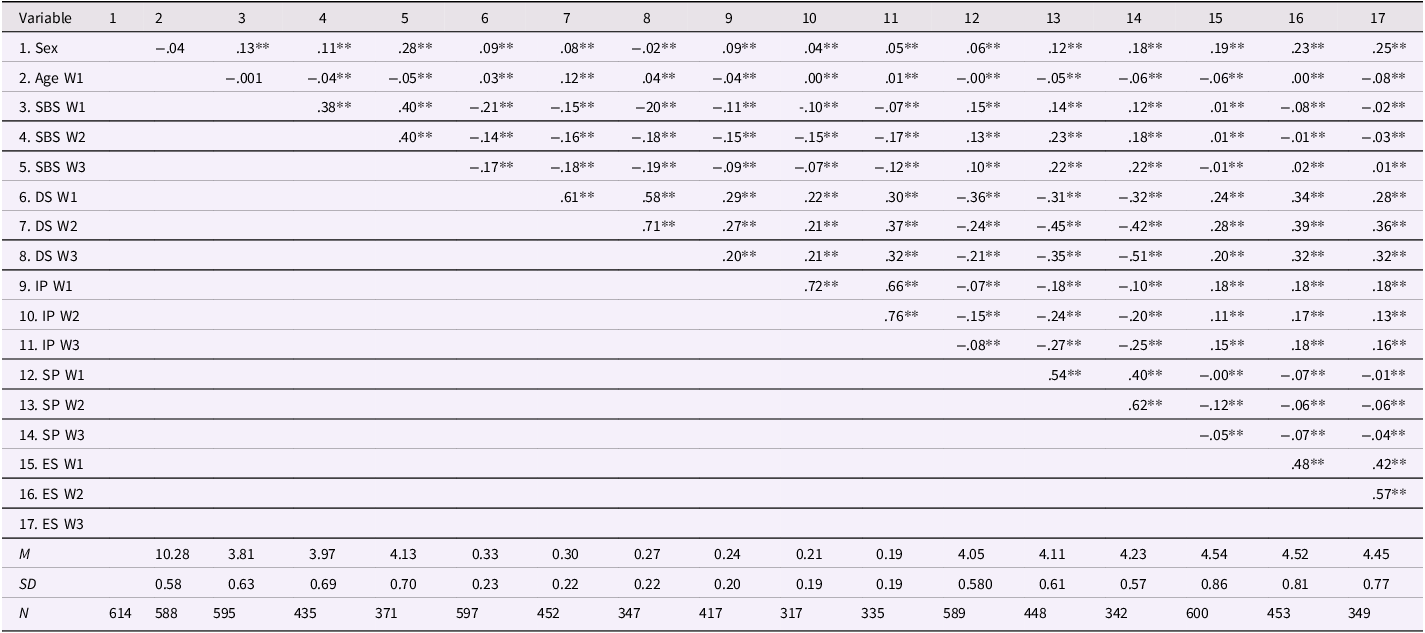
Table 1 presents the means, standard deviations, and sample sizes for each study variable, and bivariate correlations among these variables. Correlations of each variable with itself across waves were overall strong. Child’s sex was positively associated with SBS knowledge across all waves, depressive symptoms at Wave 1, perceived parental support across all waves, and environmental sensitivity across all waves. Associations were relatively small and always lower than .30.
Means, standard deviations, sample size, and correlations among the study variables
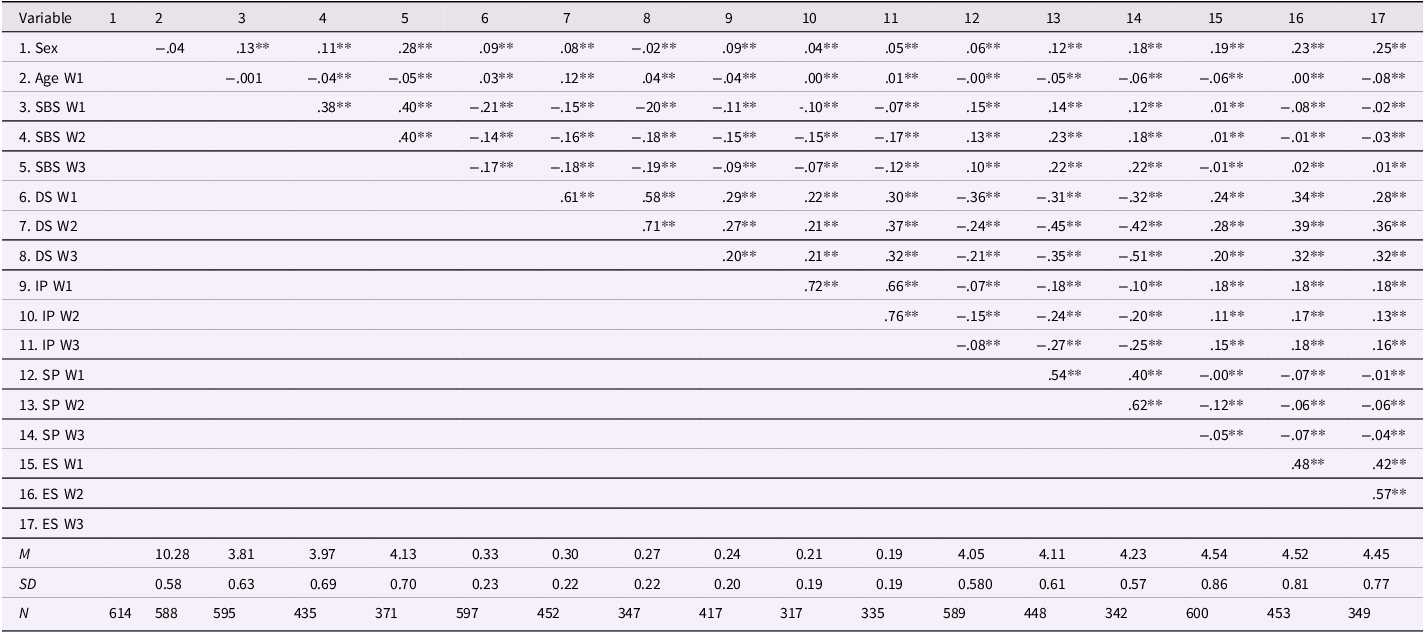
Note. Mention *p ≤ .05 **p ≤ .01 W = Wave; SBS = Secure Base Script knowledge; DS = Depressive Symptoms; IP = Internalizing Problems; SP = Supportive Parenting; ES = Environmental Sensitivity.
SBS knowledge positively correlated with perceived parental support (ranging from .10 to .23, depending on wave), negatively correlated with depressive symptoms (ranging from −.19 to −.21), and with internalizing problems (from −.07 to −.17). The SBS knowledge - internalizing problems associations were less consistent across waves and slightly smaller than those identified for SBS knowledge and depressive symptoms. Additionally, higher environmental sensitivity was associated with more depressive symptoms and internalizing problems, again with stronger associations for depressive symptoms (up to .39) than for internalizing problems (up to .18).
Missing data
In total, 27.97% of data was missing. The number of children with available data for the study variables at each measurement wave is displayed in Table 1. Little’s MCAR test was significant suggesting that the data was not missing completely at random χ2 (1008) = 1243.350, p < .001. Hence, we conducted a follow-up analysis using a Bayesian model implemented in brms. The model was estimated using the default weakly informative priors, which provide a minimally biased estimation framework while incorporating uncertainty from the data. Bayesian methods offer greater flexibility in handling missing data and are robust to violations of missing data assumptions by accounting for uncertainty directly in the posterior distributions.
Parenting X environmental sensitivity on attachment
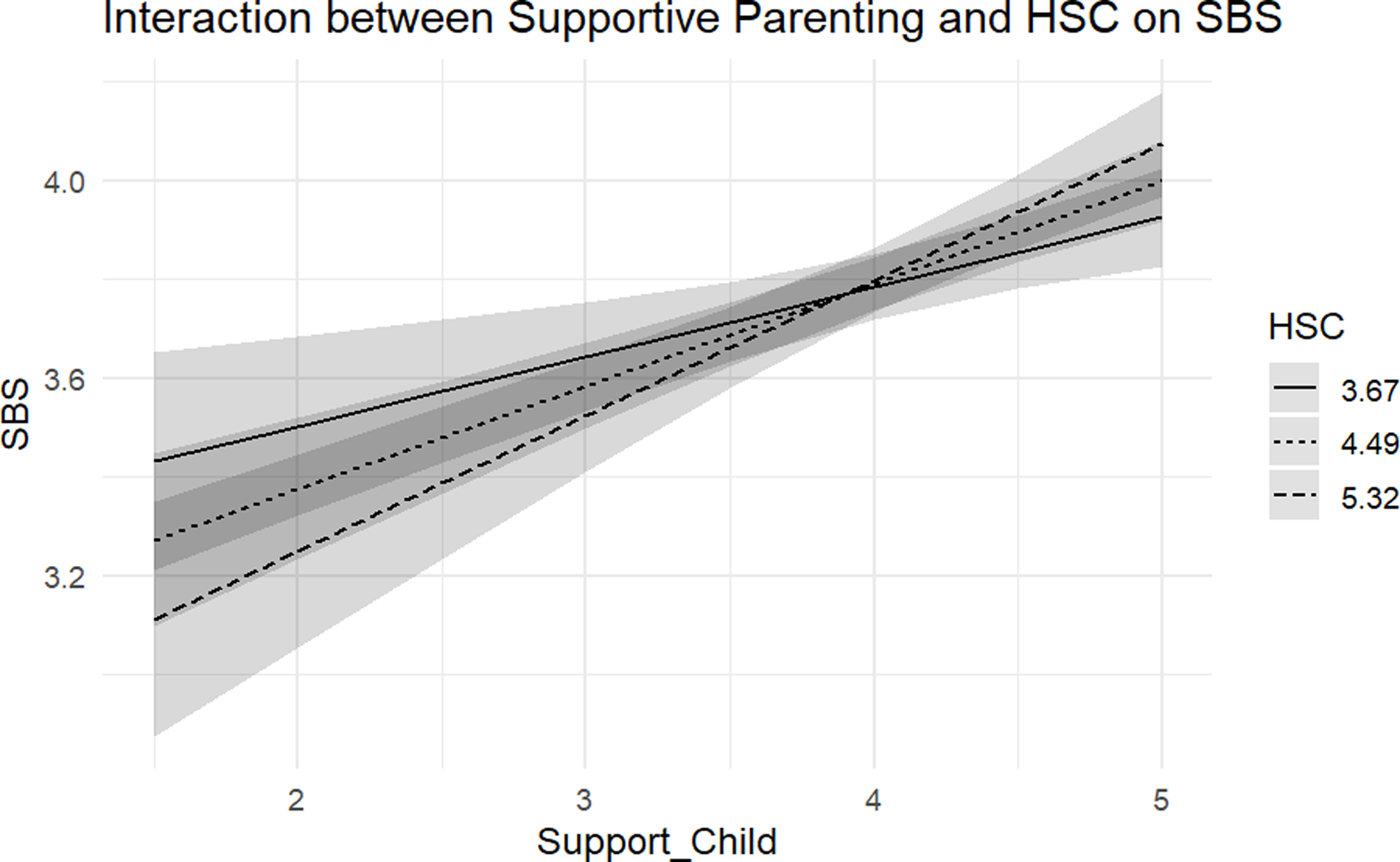
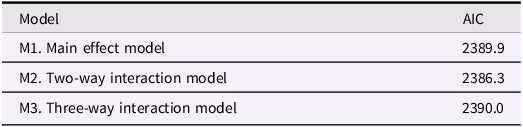
We fitted and compared mixed effect regression models as reported in Table 2. The two-way mixed effect interaction model (M2 in table 2), which included the interaction between perceived support by the parent and environmental sensitivity, provided a better fit to the data compared to the main effects model (M1), as indicated by lower AIC values derived from likelihood-based model comparison (see Table 2). When the interaction with wave (M3) was added to the model, AIC value did not further decrease and hence the two-way interaction model was retained. Diagnostic plots (Q–Q plots, residual distributions, and fitted vs. residuals plots, please see Supplementary Material 1) suggested no substantial deviations from normality or homoscedasticity Estimated regression weight (B) and related standard errors (SE) for the interaction between sensitivity and perceived support on SBS knowledge were B = 0.08, SE = 0.03, p = .018. A graphical representation of findings is depicted in Figure 1. As evident from the graphical representation, the slope was strongest for children scoring higher on sensitivity. The Proportion of Interaction Index (PoI) was 0.06, which, as also evident from the figure, suggested a dual-risk effect with lower perceived support increasing the risk of low SBS knowledge particularly for children scoring high on the HSC scale.
Environmental sensitivity (HSC) interacting with perceived support on secure base script knowledge (SBS). The three slopes and related error bars refer to participants scoring at medium (B = 0.21, SE = 0.03, p < .001), medium + 1SD (B = 0.27, SE = 0.05, p < .001), and medium – 1SD (B = 0.14, SE = 0.04, p < .001) levels of the highly sensitive child scale (HSC).
Mixed effect regression models comparison for attachment (SBS) as the dependent variable. N = 1264
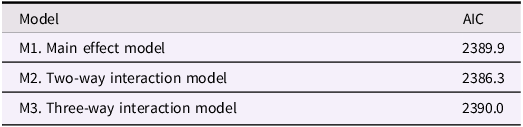
Note. M1 included wave, supportive parenting and environmental sensitivity (HSC) as main predictors; M2 added to M1 the interaction term between HSC and support; M3 considered all interaction terms including the three-way wave × support × HSC.
The follow-up Bayesian analysis, conducted to assess the robustness of our findings in light of the significant result of Little’s MCAR test, demonstrated that the interaction between parental support and sensitivity remained credible, with an estimate of 0.08 and a 95% credibility interval [0.01, 0.15]. The posterior distributions of the fixed effects indicated consistent and precise estimates across chains, with all Rhat values equal to 1.00, suggesting good model convergence.
Attachment X environmental sensitivity on internalizing problems
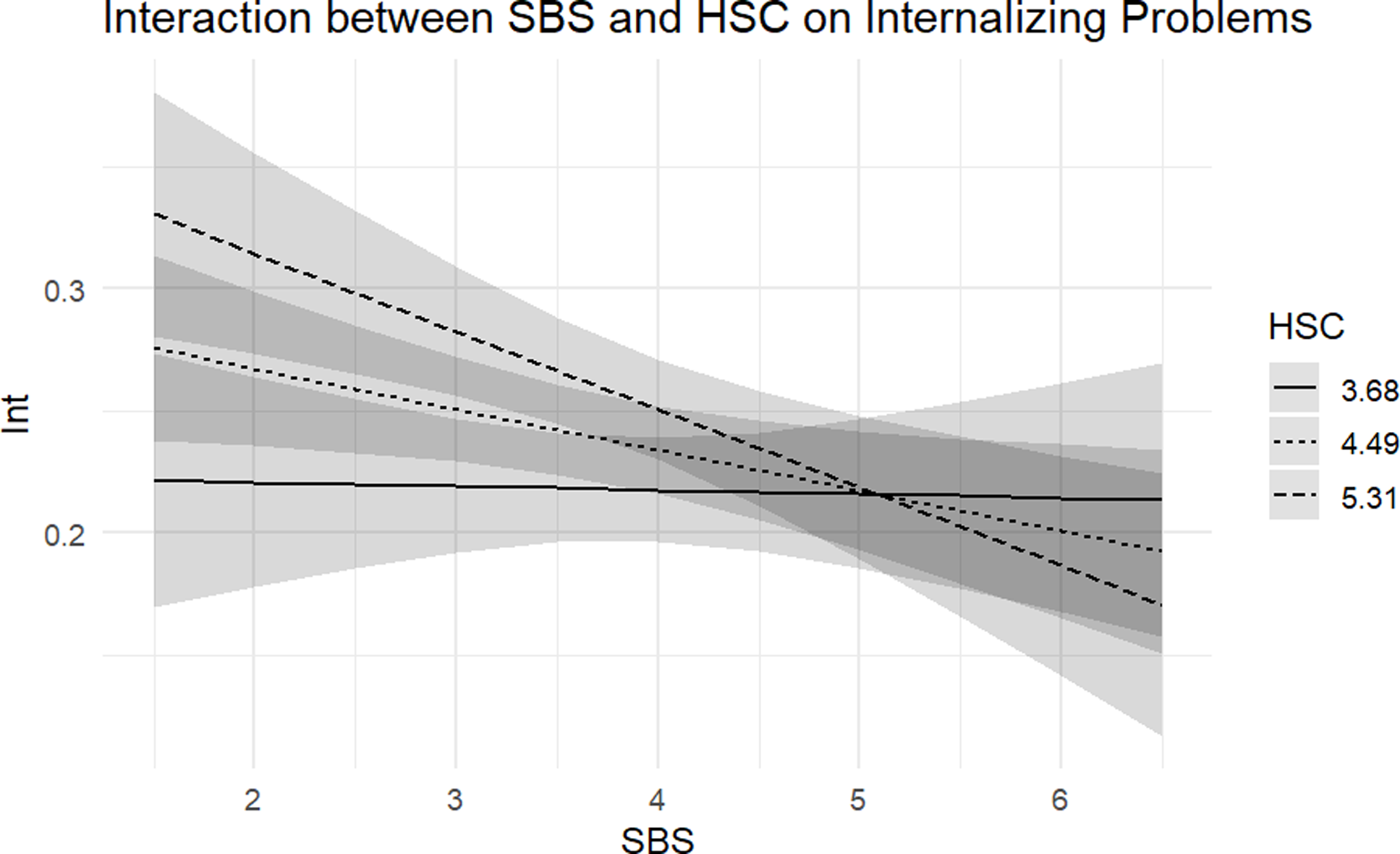
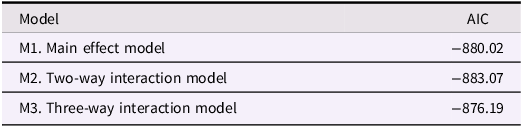
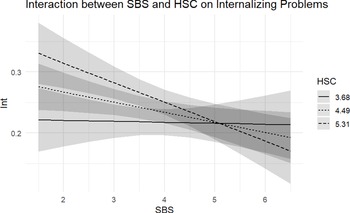
We then fitted and compared mixed effect regression models considering this time the interaction between SBS knowledge and environmental sensitivity on internalizing problems. Again, the mixed effect interaction model, which included the interaction between attachment and environmental sensitivity, provided a significantly better fit to the data compared to the other tested models, as reported in Table 3. Visual inspection of residuals revealed slight departures from normality and some heteroscedasticity; however, the models converged properly and estimates remained stable at follow-up analyses. More specifically, to assess the robustness of our findings, we computed cluster-robust standard errors using the CR1 method from the sandwich package in R, accounting for intra-cluster correlation. The results were overall consistent with those from the primary analysis (reported below) and are provided in Supplementary Material 1. Following up the exploration of parameters for the model including the interaction between attachment and sensitivity we found a significant interaction effect with B = −0.02, SE = 0.01, p = .025. As evident from the graphical representation in Figure 2, the slope for the low sensitive group (scoring below 1SD on the HSC scale) was flat, but significant for more sensitive children. The Proportion of Interaction Index (PoI) was 0.08, which again suggested a dual-risk effect with lower secure attachment knowledge increasing the risk of more sensitive children to present internalizing problems. Interestingly, when SBS knowledge was high, more sensitive children did not benefit more than others but still were protected against internalizing problems.
Mixed effect regression models comparison for internalizing problems as the dependent variable. N = 963
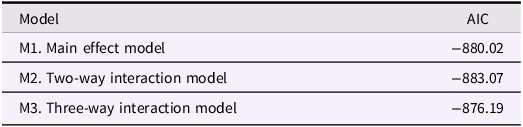
M1 included wave, secure base scripts (SBS) and environmental sensitivity (HSC) as main predictors; M2 added to this the interaction term between sensitivity and secure base scripts; M3 considered all interaction terms including the three-way wave × SBS × HSC.
Environmental sensitivity (HSC) interacting with secure base script knowledge (SBS) on internalizing problems (Int). The three slopes and related error bars refer to subjects scoring at medium (B = −0.02, SE = .01, p = .02), medium + 1SD (B = −0.02, SE = .01, p = .02) and medium – 1SD levels (B = −0.03, SE = .01, p < .001 ) of the highly sensitive child scale.
The follow-up Bayesian analysis again demonstrated that the interaction between parental support and sensitivity remained credible, though small, with an estimate of - 0.02 and a 95% credibility interval of [−0.04, −0.00]. The posterior distributions of the fixed effects indicated consistent and precise estimates across chains, with all Rhat values equal to 1.00, suggesting good model convergence.
Attachment X environmental sensitivity on depressive symptoms
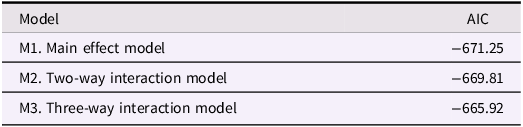
Finally, we ran and compared the same models considering depressive symptoms as the outcome variable (see Table 4). This time a main effect model outperformed the other investigated models. Parameters suggested a main effect of SBS and environmental sensitivity, so that children with more secure attachment representations experienced a reduced risk of depressive symptoms (B = −.04, SE = .01, p < .001), while environmental sensitivity increased the risk for depressive symptoms (B = .05, SE = .01, p < .001). No relevant interaction was found between the two variables.
Mixed effect regression models comparison for depression. N = 1281
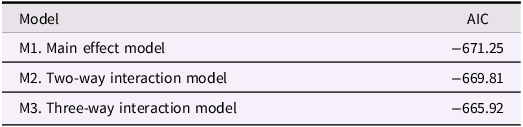
M1 included wave, secure base scripts and environmental sensitivity as main predictors; M2 added to this the interaction term between sensitivity and secure base scripts; M3 considered all interaction terms including the three-way wave × support × HSC.
Follow-up exploration of the findings
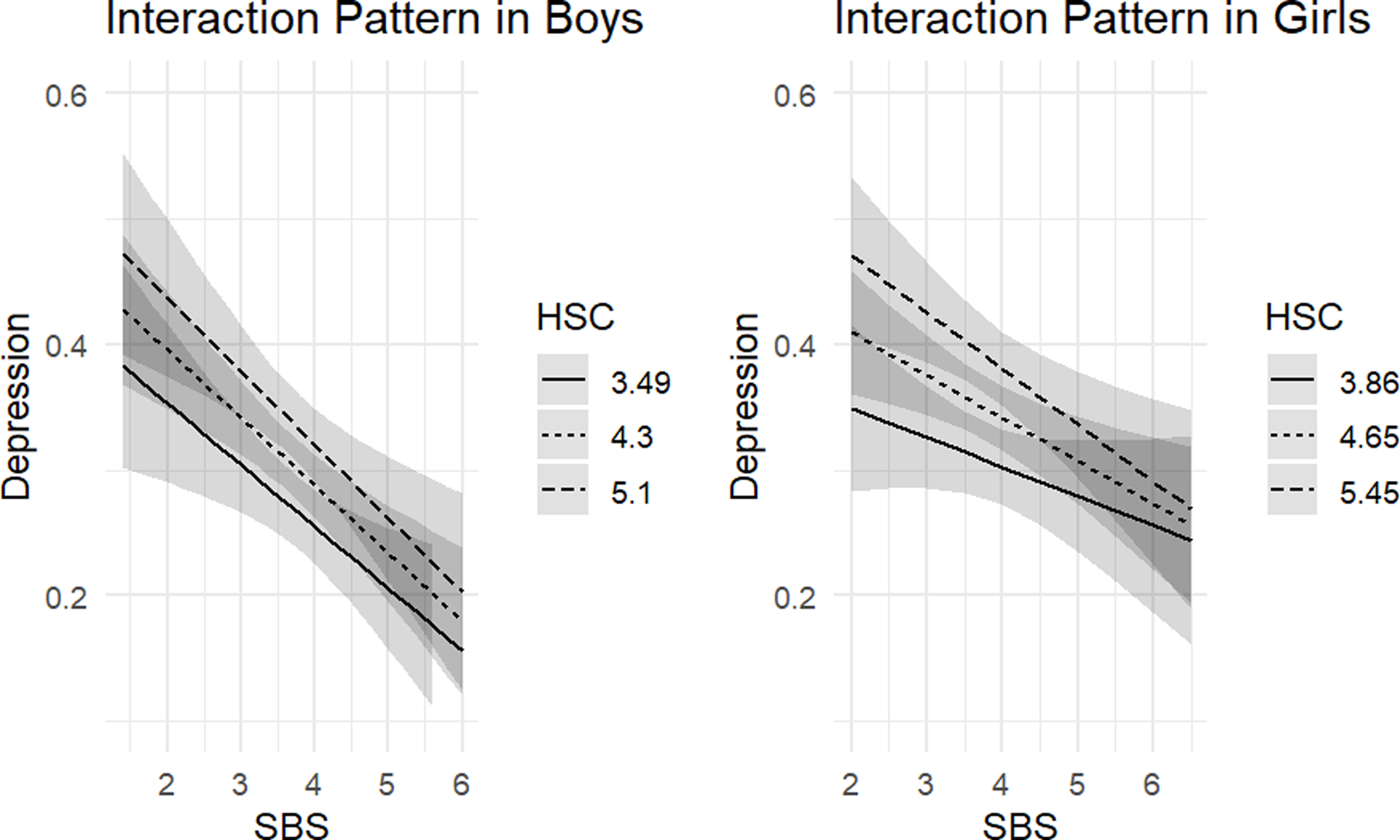
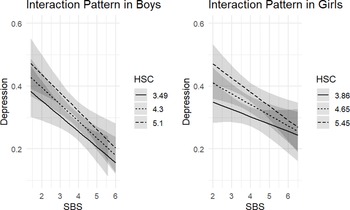
Finally, for exploratory purposes, we graphically inspected if the buffering role of SBS depended on the child’s sex. We did not have a specific hypothesis in this regard, but, for example in Nocentini et al. (Reference Nocentini, Menesini and Pluess2018) an anti-bullying intervention program only had an effect in more sensitive boys, whereas Pluess & Boniwell (Reference Pluess and Boniwell2015) data on the role of an intervention for decreasing depression was limited to girls. In our sample, associations between child’s sex (female) and depression were small, suggesting that girls are slightly more at risk than boys, a finding coherent with the existing literature (Hankin et al., Reference Hankin, Abramson, Moffitt, Silva, McGee and Angell1998). Moreover, for girls’ depressive symptoms the relevance of relational aspects as captured by SBS may be higher than for boys (Brenning et al., Reference Brenning, Bosmans, Braet and Theuwis2012). As shown in Figure 3, in girls but not in boys the pattern in the graph did resemble the effect we found for parent-reported internalizing problems, but the moderating effect of environmental sensitivity did not reach significance (t = −1.076, p = .282).
The interaction between secure base script knowledge (SBS) and environmental sensitivity (HSC) predicting depressive symptoms in boys and girls separately. For boys, simple slopes were all significant at p < .001, and, respectively, −0.05(0.02), −0.05(0.01) and −0.06(0.02) for children scoring low, medium and high on sensitivity. For girls, simple slopes were, respectively, −0.02(0.02, p = .13), −0.03(0.01), p < .001, and −0.04(0.01), p < .001 for children scoring low, medium, and high on sensitivity.
Sensitivity analyses
First, we reran the original analyses with only the participants for which we have full data on SBS at the three waves. By doing so 304 instead of 598 children were included in the analyses. Results remained similar, only for the analysis predicting self-reported depression now the interaction model was also the best according to AIC (instead of the main effect model). Although the interaction term was only significant at .10 level. Second, we reran the original analyses with only the participants for which we have full data on ALL variables at the three waves. By doing so 182 children were included in the analyses. Results remained similar, only for the analysis predicting self-reported depression now the interaction model was also the best according to AIC (instead of the main effect model) and the interaction term was significant at .05 level. Further, because girls’ SBS knowledge scores were higher than boys’, we tested whether including gender as a covariate in the model influenced our results, but because this did not affect the conclusions, we decided to only report these extra analyses in Supplementary Material 3.
Discussion
This multi-method multi-informant longitudinal study in a middle childhood sample aimed to investigate the moderating role of environmental sensitivity in the association between (1) supportive parenting and children’s SBS knowledge development and (2) children’s SBS knowledge and the development of parent-reported children’s internalizing problems and the development of children’s self-reported depressive symptoms. Support was found for the hypothesis that the association between supportive parenting on SBS knowledge development was the strongest for children more environmentally sensitive children. More sensitive children seemed especially vulnerable to develop less SBS knowledge when supportive parenting was low. Similarly, the association between SBS knowledge and internalizing problems was the strongest for children who were more environmentally sensitive. More sensitive children developed more internalizing problems when SBS knowledge was lower. This effect did not replicate for children’s self-reported depressive symptoms.
The preliminary analyses section showed that more supportive parenting was related to more SBS knowledge. This observation fits with the core prediction of attachment theory that supportive parenting is an important factor in children’s secure attachment development (Bowlby, Reference Bowlby1969). Moreover, it replicates prior SBS research in older participants (e.g., Steele et al., Reference Steele, Waters, Bost, Vaughn, Truitt, Waters, Booth-LaForce and Roisman2014). Also, we found a negative association between SBS knowledge and internalizing and depressive symptoms. This finding fits with the robust association found between insecure attachment and mental health problems (Madigan et al., Reference Madigan, Brumariu, Villani, Atkinson and Lyons-Ruth2016). Finally, no significant association was found between SBS knowledge and environmental sensitivity, which is in keeping with the idea that attachment development is dependent on relational experiences and is not a temperamental feature (Groh et al., Reference Groh, Narayan, Bakermans-Kranenburg, Roisman, Vaughn, Fearon and van IJzendoorn2017; Sroufe & Waters, Reference Sroufe and Waters1982).
In support of our first hypothesis, we found that environmental sensitivity moderated the association between supportive parenting and SBS development. Against our expectations, we found no full differential susceptibility effect (Roisman et al., Reference Roisman, Newman, Fraley, Haltigan, Groh and Haydon2012). Instead, more environmental sensitivity rendered children more vulnerable to develop lower levels of secure attachment (i.e., less SBS knowledge) when supportive parenting was low. When supportive parenting was higher, more sensitive children developed an equal amount of SBS knowledge as less sensitive children. The effect suggests that when children are more sensitive to the environment, they feel more the negative impact of the perceived absence and/or the rejection of parents when they feel distressed and need their support. As such, the current result is in keeping with prior research showing that parenting counts most for more sensitive children (Slagt et al., Reference Slagt, Dubas, van Aken, Ellis and Deković2018). However, the effect was only in one direction, suggesting potentially a dual risk (low support from the parent and more sensitivity of the child) rather than a proper differential susceptibility effect in our sample.
In support of our second hypothesis, we found that environmental sensitivity moderated the link between SBS knowledge and children’s development of parent-reported internalizing problems. Results suggested that irrespective of children’s environmental sensitivity, more SBS knowledge was linked with less internalizing problems. Less SBS knowledge was linked to more internalizing problems when children were more sensitive. Because more sensitive children showed limited benefit from more SBS knowledge, results suggest a temperament vulnerability rather than a differential susceptibility effect. This aligns with findings from previous longitudinal research with similarly aged children. In that research, a differential susceptibility effect was found for externalizing behavior problems, but not for internalizing problems for which only a dual-risk effect was found (Lionetti et al., Reference Lionetti, Aron, Aron, Klein and Pluess2019; Reference Lionetti, Klein, Pastore, Aron, Aron and Pluess2022).
Future studies should examine whether this effect varies with children’s developmental stage (e.g., toddlers/preschoolers vs. middle childhood/pre-adolescence) or with the specific outcome being assessed (internalizing vs. externalizing problems). Higher sensitivity has often shown small but significant correlations with internalizing problems, such as anxiety and depression (Liss et al., Reference Liss, Timmel, Baxley and Killingsworth2005), and sensitive children are known to process information more deeply (Aron et al., Reference Aron, Aron and Jagiellowicz2012). Thus, while positive environments might not make more sensitive children outperform their less sensitive peers in internalizing outcomes, supportive conditions may still serve as a buffer, offering some protection against stressors that for a more sensitive child may be more problematic.
When focusing on children’s self-reported depressive symptoms, no moderating effect of environmental sensitivity on the association between SBS knowledge and depressive symptoms was found. Post-hoc inspection of the graphs splitting up boys and girls, did seem to suggest a small trend for more sensitive girls to benefit more than those lower in sensitivity from SBS knowledge, but this effect did not reach significance. One explanation for the divergent findings might be that internalizing symptoms and depressive symptoms do not fully overlap. This is supported by the low bivariate correlations between both variables. Internalizing symptoms also include anxious symptoms, somatic complaints, and withdrawn behavior. Depressive symptoms emerge more strongly at later ages (Hankin, Reference Hankin2015). Therefore, the effects may have been less strong for the latter type of symptoms. It seemed promising that the visual trend we found for girls was in line with the effect we found for internalizing problems. This could be seen as some further support for the internalizing problems effect we found. Notably, in a sensitivity analysis based on complete cases (Supplementary Material 2) we did find the interaction effect for depressive symptoms, further supporting our hypothesis. However, more research and replication remain necessary.
Alternative explanations for the diverging patterns of results cannot be excluded. For example, internalizing problems and depressive symptoms were reported by different informants. In general, children are considered more valid informants of depressive symptoms (Achenbach et al., Reference Achenbach, McConaughy and Howell1987). This raises the question what components of child behavior are captured by different informants (De Los Reyes et al., Reference De Los Reyes, Thomas, Goodman and Kundey2013). Parent report of child internalizing may reflect at least partly parents’ frustration about their children’s difficult to manage behaviors. Also, more sensitive children may overreport depressive symptoms creating a source of variation that cannot be explained by environmental sensitivity’s interaction with SBS knowledge. More research is needed to examine whether the weaker effect for self-reported depressive symptoms is more than a statistical coincidence.
Strengths and limitations
Although the multi-informant, multi-method approach, the substantial sample size, and the longitudinal nature of the study are clear strengths of the current study, there are important limitations. A limitation of the current study is the exclusive reliance on children’s self-reports for measuring supportive parenting. Although prior research has shown that children’s perceptions of parental support are important predictors of attachment development (Bosmans et al., Reference Bosmans, Bakermans-Kranenburg, Vervliet, Verhees and van IJzendoorn2020), self-reports are subject to several well-documented biases. These include social desirability, the influence of current relationship quality on memory retrieval, and the limited ability to recall early-life caregiving experiences with accuracy (De Los Reyes et al., Reference De Los Reyes, Augenstein, Wang, Thomas, Drabick, Burgers and Rabinowitz2015). These issues may introduce measurement error and inflate associations among variables due to shared method variance. Future studies would benefit from including observational or multi-informant measures of caregiving to address these limitations more directly. Additionally, it is important to note that while SBS knowledge was assessed in relation to the mother only, the supportive parenting measure did not distinguish between maternal and paternal figures. Although this decision was made to reduce participant burden and reflects common practice in studies where parenting dimensions from both caregivers show high convergence (Van Leeuwen & Vermulst, Reference Van Leeuwen and Vermulst2004), the mismatch may have introduced some noise into the associations with SBS knowledge. Future studies could assess SBS knowledge in relation to both parents and separately evaluate the contributions of maternal and paternal support.
Also, environmental sensitivity was only measured with a questionnaire, as such convergence between informants over the measurement of different variables may account for why some analyses yielded stronger effects than others. Repeating the current study with observed environmental sensitivity would add to a better understanding of the effects found in the current study. Also important is the fact that we focused mainly on the relationship with mother, ignoring the increasing awareness that fathers may play a unique and incremental role in explaining children’s attachment development and the development of their mental health (Rivers et al., Reference Rivers, Bosmans, Piovanetti Rivera, Ruan-Iu and Diamond2022). Moreover, the current study was conducted in a general population sample, raising the question whether the same effects would be found in a clinical sample. Finally, while our findings align with previous research that examined parenting style instead of attachment to capture environmental influences (Lionetti et al., Reference Lionetti, Klein, Pastore, Aron, Aron and Pluess2022) and remained consistent across different estimation methods (i.e., traditional vs. Bayesian), it is important to note that the effect sizes for the interaction term were small. This highlights the need for replication in independent samples to confirm the robustness and generalizability of these results.
Conclusion
In spite of these limitations, the current study does support the idea that child factors moderate the link between supportive parenting and attachment development, adding to a host of biologically rooted factors that were previously not considered in attachment development. Such factors became the focus of research attention building on the recently formulated learning theory of attachment (Bosmans et al., Reference Bosmans, Bakermans-Kranenburg, Vervliet, Verhees and van IJzendoorn2020). This theory considers attachment development the result of safety conditioning and predicts that variation in the biological processes that underlie this conditioning process impact the likelihood that children learn from interactions with their environment. As such, the current findings add to this literature showing that children who are biologically more sensitive to the experience that parents are not supportive, have an increased need for parental support to be able to develop SBS knowledge and secure attachment. Nevertheless, the current findings also show that developing SBS knowledge is especially important for more sensitive children, as without such knowledge these children were most at risk to develop internalizing problems and (for girls) depressive symptoms. Hence, helping more sensitive children develop more SBS knowledge might be an important endeavor for clinicians. Programs were developed to achieve such a goal in middle childhood (Van Vlierberghe et al., Reference Van Vlierberghe, Diamond and Bosmans2023) and adolescence (Diamond et al., Reference Diamond, Russon and Levy2016). The question can be raised whether these programs require special adaptations to meet more sensitive children’s attachment learning vulnerabilities or whether such programs should be used more readily in especially such samples. More research is needed to understand the clinical implications of the current findings but point to a potentially important future avenue.
Supplementary material
The supplementary material for this article can be found at https://doi.org/10.1017/S0954579425100710.
Data availability statement
Data is available upon request.
Funding statement
This work has been funded by the Research Foundations FWO and F.R.S.-FNRS under the Excellence of Science (EOS) program (EOS 40007528/G0I2422N) and by FWO grant G0D6721N and KULeuven grants C14/16/040 and C16/24/003
Competing interests
The authors have no conflict of interest.



 Open access

