




1 Introduction
The present article contributes to the recent framework [Reference Gregoriades, Kispéter and Pauly12, Reference Harrison-Trainor, Melnikov and Ng14, Reference Hoyrup, Kihara and Selivanov17] that seeks to establish the foundations of computably presented separable structures, akin to computable algebra [Reference Ershov and Goncharov9, Reference Goncharov and Knight11], which focuses on countable discrete structures. The study of effectively presented algebraic structures has become a prominent part of recursion theory [Reference Ash and Knight2, Reference Ershov and Goncharov9]. Various algebraic structures, such as linear orders, groups, and Boolean algebras, have been classified regarding different notions of effective presentability, distinguishing between these notions [Reference Feiner10, Reference Higman15, Reference Khisamiev21]. Following this pattern, many standard notions of effective presentability for spaces have been compared and separated in [Reference Bazhenov, Harrison-Trainor and Melnikov3, Reference Bazhenov, Melnikov and Ng4, Reference Gregoriades, Kispéter and Pauly12, Reference Harrison-Trainor, Melnikov and Ng14, Reference Hoyrup, Kihara and Selivanov17, Reference Koh, Melnikov and Ng23, Reference Lupini, Melnikov and Nies26] by various authors.
The main purpose of the present article is to demonstrate that the notion of a computable topological presentation (Definition 1.1) can be extremely ill-behaved in general. In the special case of compact Polish spaces however, we obtain a number of positive results.
There are several definitions of a computable topological space that can be found in Kalantari and Weitkamp [Reference Kalantari and Weitkamp19], Korovina and Kudinov [Reference Korovina and Kudinov24], and Spreen [Reference Spreen31]. We will use the following version of this definition. This version appears to be standard in the modern literature (e.g., [Reference Korovina and Kudinov25, Definition 3.1] and [Reference Grubba and Weihrauch13, Definition 3.1]).
Definition 1.1. A computable topological presentation of a countably-based topological space M is given by a sequence $(B_i)_{i \in \omega }$
of non-empty basic open sets of M and a computably enumerable set W such that
$(B_i)_{i \in \omega }$
of non-empty basic open sets of M and a computably enumerable set W such that
 $$\begin{align*}B_i \cap B_j = \bigcup \{ B_k : (i,j,k) \in W\}\end{align*}$$
for any $i,j\in \omega $
.
$i,j\in \omega $
.
Note that the important restriction in the definition is that the basic open sets must be non-empty. If one drops this assumption from the definition, then every countably-based space trivially admits a computable presentation, because one can pick any countable sub-basis and close it under finite intersections. The indices can clearly be assigned effectively, providing a countable basis for which finite intersections can be computed.
Conversely, under some mild restrictions, such as $\{ k: (i,i, k)\in W \} \neq \emptyset $
(see Section 3.2 for a detailed discussion), every c.e. set W can be viewed as a (collection of indices of) some formal topological presentation. However it is not entirely clear that every formal computable topological presentation actually represents some space. Further, it is not difficult to see that non-homeomorphic spaces can share the exact same topological presentation. Indeed, any dense subset of a (computably topologically) represented space M will share a same presentation as M. This contrasts greatly the situation with computable Polish presentations (Definition 1.2), and with pretty much every single notion of effective presentation ever used in algebra, such as finite presentations of groups [Reference Higman15], and computable, decidable, and
$\{ k: (i,i, k)\in W \} \neq \emptyset $
(see Section 3.2 for a detailed discussion), every c.e. set W can be viewed as a (collection of indices of) some formal topological presentation. However it is not entirely clear that every formal computable topological presentation actually represents some space. Further, it is not difficult to see that non-homeomorphic spaces can share the exact same topological presentation. Indeed, any dense subset of a (computably topologically) represented space M will share a same presentation as M. This contrasts greatly the situation with computable Polish presentations (Definition 1.2), and with pretty much every single notion of effective presentation ever used in algebra, such as finite presentations of groups [Reference Higman15], and computable, decidable, and $\Sigma ^0_n$
-presentations of structures [Reference Ash and Knight2, Reference Ershov and Goncharov9]. Nonetheless, despite its apparent weakness and limitations, the notion of a computable topological space is rather common in the literature; for a recent application of the notion see, e.g., [Reference de Brecht5].
$\Sigma ^0_n$
-presentations of structures [Reference Ash and Knight2, Reference Ershov and Goncharov9]. Nonetheless, despite its apparent weakness and limitations, the notion of a computable topological space is rather common in the literature; for a recent application of the notion see, e.g., [Reference de Brecht5].
1.1 Which spaces are computable topological?
Whenever a notion of effective presentability is proposed, one of the first tasks is to test it by producing examples and counterexamples to understand its relationship with existing notions. For instance, the following question appears to be fundamental.
-
Question 1: Which (countably-based $T_0$
) topological spaces admit a computable topological presentation? Conversely, which (formal) topological presentations represent some topological space?
$T_0$
) topological spaces admit a computable topological presentation? Conversely, which (formal) topological presentations represent some topological space?

For example, which Polish spaces admit a computable topological presentation? To discuss what is known about partial solutions to the question, we need another commonly studied notion of effective presentability in topology (e.g., Ceitin [Reference Ceitin6] and Moschovakis [Reference Moschovakis28]).
Definition 1.2. A Polish presentation of a (Polish-able) space M is given by a countable metric space $X = ((x_i)_{i \in \omega }, d)$
so that the completion of X is homeomorphic to M. A presentation X is:
$X = ((x_i)_{i \in \omega }, d)$
so that the completion of X is homeomorphic to M. A presentation X is:
-
– right-c.e. if
$\{r \in \mathbb {Q} : d(x_i, x_j) < r\}$
is c.e. uniformly in
$i,j$
; -
– left-c.e. if
$\{r \in \mathbb {Q} : d(x_i, x_j)> r\}$
is c.e. uniformly in
$i,j$
; -
– computable if it is both left-c.e. and right-c.e.


We call each $x_i$
a special point of M.
$x_i$
a special point of M.
It is well-known that the open rational balls $\{y : d(x_i, y) < r\}$
in every right-c.e. (upper semi-computable) Polish space form a computable topological presentation of the underlying topology. However, quite surprisingly, until recently not much was known beyond this elementary observation. It has recently been shown in [Reference Koh, Melnikov and Ng22] that every computable topological, locally compact Polish group admits a right-c.e. Polish presentation. Thus, for topological groups Definition 1.1 is well-behaved. But of course, this result from [Reference Koh, Melnikov and Ng22] additionally assumes that the group operations are effective. Under the (seemingly strong) extra assumption of effective regularity, a computable topological space can be effectively metrised [Reference Schröder30]. In contrast with these results, there exists a computable topological (locally compact) Polish space not homeomorphic to any hyperarithmetical Polish space [Reference Melnikov and Ng27].
$\{y : d(x_i, y) < r\}$
in every right-c.e. (upper semi-computable) Polish space form a computable topological presentation of the underlying topology. However, quite surprisingly, until recently not much was known beyond this elementary observation. It has recently been shown in [Reference Koh, Melnikov and Ng22] that every computable topological, locally compact Polish group admits a right-c.e. Polish presentation. Thus, for topological groups Definition 1.1 is well-behaved. But of course, this result from [Reference Koh, Melnikov and Ng22] additionally assumes that the group operations are effective. Under the (seemingly strong) extra assumption of effective regularity, a computable topological space can be effectively metrised [Reference Schröder30]. In contrast with these results, there exists a computable topological (locally compact) Polish space not homeomorphic to any hyperarithmetical Polish space [Reference Melnikov and Ng27].
The strongest positive result in the literature known to us is as follows: Every $\Delta ^0_2$
-Polish space has a computable topological presentation [Reference Bazhenov, Melnikov and Ng4]. The proof in [Reference Bazhenov, Melnikov and Ng4] was a computability-theoretic approximation construction, mimicking those commonly encountered in computable structure theory. The resulting computable topological structure is
$\Delta ^0_2$
-Polish space has a computable topological presentation [Reference Bazhenov, Melnikov and Ng4]. The proof in [Reference Bazhenov, Melnikov and Ng4] was a computability-theoretic approximation construction, mimicking those commonly encountered in computable structure theory. The resulting computable topological structure is $\Delta ^0_3$
-homeomorphic to that induced by the
$\Delta ^0_3$
-homeomorphic to that induced by the $\Delta ^0_2$
-metric. While such proofs tend to give more fine-grained analysis of the constructed objects, they clearly have their limitations. For example, it is not clear at all whether the construction from [Reference Bazhenov, Melnikov and Ng4] can be iterated to show that every arithmetical space is computable topological, let alone every hyperarithmetical space or beyond.
$\Delta ^0_2$
-metric. While such proofs tend to give more fine-grained analysis of the constructed objects, they clearly have their limitations. For example, it is not clear at all whether the construction from [Reference Bazhenov, Melnikov and Ng4] can be iterated to show that every arithmetical space is computable topological, let alone every hyperarithmetical space or beyond.
The main technical idea of the present article is to abandon the effective dynamic intuition almost entirely and use purely topological methods. The first main result of the article is as follows.
Theorem 1.1.
-
(1) Every countably-based
$T_0$
-space has a computable topological presentation. -
(2) Conversely, every (formal) computable topological presentation is a presentation of a zero-dimensional Polish space.

While this result suggests that computable topological presentations are essentially “useless” in general—at least without additional assumptions—since they carry almost no information about the represented space, we will see that significantly more can be said in the particularly important case of compact Polish spaces.
1.2 Classifying presentations of compact Polish spaces
We will see that given a computable topological presentation of a Polish space, one can detect (using a number of quantifiers) the basic open sets containing exactly one point. Therefore, one can detect the number of isolated points and whether or not the isolated points are dense. Our second result implies in particular that these properties are the only ones that can be detected from a presentation, and that all the spaces that behave the same w.r.t. these properties actually share a computable topological presentation.
Theorem 1.2. There is a uniformly computable sequence of computable topological presentations $(T_i)_{i \in \omega }$
, so that every compact Polish space is represented by exactly one
$(T_i)_{i \in \omega }$
, so that every compact Polish space is represented by exactly one $T_i$
from this sequence.
$T_i$
from this sequence.
The uniform sequence is given by parameters describing the cases (1)–(4):
-
(1) The space is finite.
-
(2) The space has a perfect kernel and has exactly
$m \geq 0$
isolated points,
$m \in \omega $
. -
(3) Compact Polish spaces with infinitely many isolated points, in which isolated points are dense.
-
(4) Compact Polish spaces having infinitely many isolated points, but so that the isolated points are not dense.


For example, in (2) with $m=0$
, the presentation can be taken to be the standard computable topological presentation of
$m=0$
, the presentation can be taken to be the standard computable topological presentation of $2^{\omega }$
, given by an effective numbering of its non-empty clopen sets.
$2^{\omega }$
, given by an effective numbering of its non-empty clopen sets.
1.3 Effective compactness
All results so far confirm our intuition that computable topological presentations are too weak to be of much use, at least without any extra assumptions. In the present article we will look at one such extra condition which appears to be among the most popular (and widely used) in the modern literature.
We say that a compact computable topological space is effectively compact if we can effectively list all tuples of basic open sets covering the space. A Polish space is computably compact if it has a computable Polish presentation (Definition 1.2) and is effectively compact. Computably compact presentations are very common in the modern literature; we cite the two recent surveys [Reference Downey and Melnikov7, Reference Iljazović and Kihara18]. In particular, the notion of a computably compact Polish space is exceptionally robust, as it admits many equivalent formulations; for example, a compact computable Polish space is computably compact iff the continuous diagram of the space is decidable [Reference Downey and Melnikov7]. Our third result gives a somewhat unexpected, further characterisation of computably compact Polish spaces in terms of computable topological presentations. It is as follows.
Theorem 1.3. For a compact Polish space X, the following are equivalent:
-
(1) X has an effectively compact
$\cap $
-decidable (Definition 4.2) topological presentation. -
(2) X admits a computably compact Polish presentation.

Thus by relativization, every effectively compact topological space admits a $\Delta ^0_2$
-Polish presentation. This is also sharp (i.e.,
$\Delta ^0_2$
-Polish presentation. This is also sharp (i.e., $\Delta ^0_2$
cannot be improved to “computable” in general).
$\Delta ^0_2$
cannot be improved to “computable” in general).
(To obtain the notion of a $\cap $
-decidable presentation, we require that the non-emptiness of the intersection of basic sets in Definition 1.1 is decidable rather than merely c.e.) It follows from Theorem 1.3 that, in the context of compact Polish spaces, effective compactness “fixes” the issues with the general computable topological presentation. In particular, effectively compact topological presentations completely determine the topological structure on the represented space, as one can effectively metrize the space (as we will show in due course).
$\cap $
-decidable presentation, we require that the non-emptiness of the intersection of basic sets in Definition 1.1 is decidable rather than merely c.e.) It follows from Theorem 1.3 that, in the context of compact Polish spaces, effective compactness “fixes” the issues with the general computable topological presentation. In particular, effectively compact topological presentations completely determine the topological structure on the represented space, as one can effectively metrize the space (as we will show in due course).
We finish the introduction with an open question.
Question 1. Is it true that the following are equivalent?
-
(1) The space admits an effectively compact topological presentation.
-
(2) The space admits an effectively compact right-c.e. Polish presentation.
The implication $(2) \rightarrow (1)$
is of course obvious, and we will show in Proposition 4.1 that
$(2) \rightarrow (1)$
is of course obvious, and we will show in Proposition 4.1 that $(1) \rightarrow (2)$
holds for Stone spaces.
$(1) \rightarrow (2)$
holds for Stone spaces.
Our main theorem, Theorem 1.1, provides a computable topological presentation for every countably-based $T_0$
-space. On the surface this might seem to be a near impossible task given the richness and the variety of topological types. We do this by exploiting the fact that very different spaces can appear (via embedding into a universal space) as being very similar to each other. An important step in our analysis is the following fact which was already mentioned earlier in the introduction:
$T_0$
-space. On the surface this might seem to be a near impossible task given the richness and the variety of topological types. We do this by exploiting the fact that very different spaces can appear (via embedding into a universal space) as being very similar to each other. An important step in our analysis is the following fact which was already mentioned earlier in the introduction:
If X is a dense subset of Y then any computable topological presentation of Y is also a computable topological presentation of X.
Using the aforementioned fact, the main steps in our proof of Theorem 1.1 proceed as follows:
-
(1) We first obtain a computable topological presentation for every compact Polish space. Compact spaces are somewhat more tractable than the general case.
-
(2) Since every separable metrizable space X embeds as a dense subset of a compact Polish space Y, (1) will provide a computable topological presentation for X.
-
(3) To extend (2) to all countably-based
$T_0$
-spaces, we note that every such space can be embedded into
$\mathcal {P}(\omega )$
with the Scott topology. Therefore it is sufficient to provide a computable topological presentation of every closed subspace of
$\mathcal {P}(\omega )$
. -
(4) Each closed subset X of
$\mathcal {P}(\omega )$
will itself have a zero-dimensional dense subset
$M\subseteq X$
. Each zero-dimensional subset is metrizable and therefore (2) provides a computable topological presentation for M. -
(5) Since M is a subset of X, it is not immediate that (4) gives a computable topological presentation for X. However we shall show that (4) can be extended to a computable topological presentation for X.


For technical reasons, we shall first prove Theorem 1.2, then we will apply the techniques developed in the proof of Theorem 1.2 to establish Theorem 1.1, and only after that we will demonstrate Theorem 1.3. We also chose to present notions and technical facts when needed, instead of creating a preliminaries section.
2 Compact spaces: Proof of Theorem 1.2
It this section we prove Theorem 1.2 that every compact Polish space admits a computable topological presentation.
In order to prove Theorem 1.2, we will classify all compact Polish spaces under the following congruence (which we define for all countably-based $T_0$
spaces):
$T_0$
spaces):
 $$\begin{align*}(\dagger) \,\,\,\,\,\, X\sim Y \iff X\text{ and } Y \text{ share a computable topological presentation}.\end{align*}$$
We will see that these classes are completely described by the four cases listed after the statement of Theorem 1.2. The techniques accumulated in the proof of Theorem 1.2 will be used throughout the rest of the article, in particular, to prove Theorem 1.1 covering non-compact spaces.
2.1 Detecting the behaviour of isolated points
We use $\sim $
as defined by
$\sim $
as defined by $(\dagger )$
.
$(\dagger )$
.
Lemma 2.1. Let $X,Y$
be countably-based
$X,Y$
be countably-based $T_0$
spaces and suppose that
$T_0$
spaces and suppose that $X \sim Y$
. If X has at least n isolated points, then so does Y.
$X \sim Y$
. If X has at least n isolated points, then so does Y.
Proof. Suppose $X \sim Y$
is witnessed by a computable topological presentation P. We can express that a basic open
$X \sim Y$
is witnessed by a computable topological presentation P. We can express that a basic open $D \in P$
isolates a point by saying that there are no
$D \in P$
isolates a point by saying that there are no $B_0, B_1$
such that
$B_0, B_1$
such that $B_i \cap D \neq \emptyset $
,
$B_i \cap D \neq \emptyset $
, $i =0,1$
, and
$i =0,1$
, and $B_0 \cap B_1 = \emptyset $
. Further, we can say that P has at least n isolated points if there are disjoint basic open
$B_0 \cap B_1 = \emptyset $
. Further, we can say that P has at least n isolated points if there are disjoint basic open $D_0, D_1 ,\ldots , D_{n-1}$
each isolating a point.
$D_0, D_1 ,\ldots , D_{n-1}$
each isolating a point.
In particular, it follows that the number of isolated points in X is $\sim $
-invariant.
$\sim $
-invariant.
Lemma 2.2. Let $X,Y$
be countably-based
$X,Y$
be countably-based $T_0$
spaces and suppose that
$T_0$
spaces and suppose that $X \sim Y$
. If the isolated points in X are dense, then the same is true in Y.
$X \sim Y$
. If the isolated points in X are dense, then the same is true in Y.
Proof. If the isolated points are dense, then for every basic B there exists a D isolating a point (see the proof of Lemma 2.1) such that $B \cap D \neq \emptyset $
.
$B \cap D \neq \emptyset $
.
Note that the lemmas above really say that the number of isolated points and their density in the space are definable properties (in the language where terms are built using only $\cap $
, and where we only allow comparison between a term and
$\cap $
, and where we only allow comparison between a term and $\emptyset $
). We conclude that the following are
$\emptyset $
). We conclude that the following are $\sim $
-invariant properties of compact Polish spaces:
$\sim $
-invariant properties of compact Polish spaces:
-
(1) Case 1: The space is finite of size
$n>0$
. (There are n isolated points and isolated points are dense.) -
(2) Case 2: The space has a perfect kernel and has exactly
$m \geq 0$
isolated points. (There are m isolated points and they are not dense.) -
(3) Case 3: The space has infinitely many isolated points which are dense in the space.
-
(4) Case 4: The space has infinitely many isolated points which are not dense in the space.


Note that these cases cover all possible compact Polish spaces. Our next task is to show that in each case, all spaces share the exact same fixed computable presentation, and thus are all pairwise $\sim $
-equivalent. We will see that, furthermore, given the parameters describing each case, we can uniformly produce the computable topological presentation shared between all compact spaces that satisfy the conditions of this case. This will give Theorem 1.2.
$\sim $
-equivalent. We will see that, furthermore, given the parameters describing each case, we can uniformly produce the computable topological presentation shared between all compact spaces that satisfy the conditions of this case. This will give Theorem 1.2.
2.2 Quotient maps and almost injective functions
Before we go over the cases (1)–(4), we need to accumulate enough technical facts that will allow us to handle $\sim $
-equivalent spaces.
$\sim $
-equivalent spaces.
It is well-known that any continuous surjective function from a compact space X to a Hausdorff space Y is a quotient map, in the sense that for all $U\subseteq Y$
,
$U\subseteq Y$
, $f^{-1}(U)$
is open iff U is open (here, compact spaces are not assumed to be Hausdorff). Moreover, the next result shows that any basis of X canonically induces a basis of Y, assuming it is closed under finite unions.
$f^{-1}(U)$
is open iff U is open (here, compact spaces are not assumed to be Hausdorff). Moreover, the next result shows that any basis of X canonically induces a basis of Y, assuming it is closed under finite unions.
Proposition 2.1. Let X be compact and Y be Hausdorff and $(B_i)_{i\in I}$
be a basis of the topology of X which is closed under finite unions. Let
$(B_i)_{i\in I}$
be a basis of the topology of X which is closed under finite unions. Let $f:X\to Y$
be surjective continuous and define
$f:X\to Y$
be surjective continuous and define
 $$ \begin{align*} C_i=Y\setminus f(X\setminus B_i)=\{y\in Y:f^{-1}(y)\subseteq B_i\}. \end{align*} $$
The family $(C_i)_{i\in I}$
is a basis of the topology of Y. If
$(C_i)_{i\in I}$
is a basis of the topology of Y. If $B_i\cap B_j=B_k$
implies
$B_i\cap B_j=B_k$
implies $C_i\cap C_j=C_k$
.
$C_i\cap C_j=C_k$
.
Proof. First, each $C_i$
is open:
$C_i$
is open: $X\setminus B_i$
is compact so
$X\setminus B_i$
is compact so $f(X\setminus B_i)$
is compact hence closed.
$f(X\setminus B_i)$
is compact hence closed.
Let $U\subseteq Y$
be open and
$U\subseteq Y$
be open and $y\in U$
. One has
$y\in U$
. One has $f^{-1}(y)\subseteq f^{-1}(U)$
. As
$f^{-1}(y)\subseteq f^{-1}(U)$
. As $f^{-1}(y)$
is compact and
$f^{-1}(y)$
is compact and $(B_i)_{i\in I}$
is closed under finite unions, there exists i such
$(B_i)_{i\in I}$
is closed under finite unions, there exists i such $f^{-1}(y)\subseteq B_i\subseteq f^{-1}(U)$
. Therefore,
$f^{-1}(y)\subseteq B_i\subseteq f^{-1}(U)$
. Therefore, $y\in C_i\subseteq f(B_i)\subseteq U$
. Therefore,
$y\in C_i\subseteq f(B_i)\subseteq U$
. Therefore, $(C_i)_{i\in I}$
is a basis.
$(C_i)_{i\in I}$
is a basis.
If $B_i\cap B_j=B_k$
, then
$B_i\cap B_j=B_k$
, then $C_i\cap C_j=Y\setminus f(X\setminus (B_i\cap B_j))=Y\setminus f(X\setminus B_k)=C_k$
.
$C_i\cap C_j=Y\setminus f(X\setminus (B_i\cap B_j))=Y\setminus f(X\setminus B_k)=C_k$
.
Note that if $C_i\neq \emptyset $
then
$C_i\neq \emptyset $
then $B_i\neq \emptyset $
but the converse implication fails in general. However, we will see that when the function is “almost injective” (to be defined), we obtain an equivalence.
$B_i\neq \emptyset $
but the converse implication fails in general. However, we will see that when the function is “almost injective” (to be defined), we obtain an equivalence.
For a function $f:X\to Y$
, we define
$f:X\to Y$
, we define
 $$\begin{align*}D_f=\{x\in X:f^{-1}(f(x))=\{x\}\},\end{align*}$$
which is the set of points at which f is injective.
Definition 2.1. Let $X,Y$
be topological spaces. A function
$X,Y$
be topological spaces. A function $f:X\to Y$
is almost injective if the set
$f:X\to Y$
is almost injective if the set
 $$ \begin{align*} D_f=\{x\in X:f^{-1}(f(x))=\{x\}\} \end{align*} $$
is dense.
Proposition 2.2. Let $X,Y$
be topological spaces. If
$X,Y$
be topological spaces. If $f:X\to Y$
is almost injective, then for each
$f:X\to Y$
is almost injective, then for each $i\in I$
,
$i\in I$
, $B_i\neq \emptyset $
iff
$B_i\neq \emptyset $
iff $C_i\neq \emptyset $
.
$C_i\neq \emptyset $
.
Proof. If $B_i$
is non-empty then it contains a point x such that
$B_i$
is non-empty then it contains a point x such that $f^{-1}(f(x))=\{x\}$
. As a result,
$f^{-1}(f(x))=\{x\}$
. As a result, $C_i$
contains
$C_i$
contains $f(x)$
and is therefore non-empty.
$f(x)$
and is therefore non-empty.
These simple results enable one to easily transfer a presentation from a space to another. We say that a computable presentation of a countably-based $T_0$
space X is effectively closed under finite non-empty intersections if for each
$T_0$
space X is effectively closed under finite non-empty intersections if for each $i,j$
, if
$i,j$
, if $B_i\cap B_j\neq \emptyset $
then there exists k such that
$B_i\cap B_j\neq \emptyset $
then there exists k such that $B_i\cap B_j=B_k$
and
$B_i\cap B_j=B_k$
and $(i,j,k)\in W$
. Usually, W will only contain one such a triplet
$(i,j,k)\in W$
. Usually, W will only contain one such a triplet $(i,j,k)$
for each pairs of intersection open sets
$(i,j,k)$
for each pairs of intersection open sets $B_i,B_j$
. Note that this extra condition is easy to obtain: every computable presentation can be turned into a new one which is effectively closed under finite non-empty intersections, by enumerating all the non-empty finite intersections of basic open sets and adding them to the basis.
$B_i,B_j$
. Note that this extra condition is easy to obtain: every computable presentation can be turned into a new one which is effectively closed under finite non-empty intersections, by enumerating all the non-empty finite intersections of basic open sets and adding them to the basis.
Corollary 2.1. Let X be countably-based $T_0$
with a computable presentation which is effectively closed under finite non-empty intersections. Assume moreover that X is compact. If Y is Hausdorff and
$T_0$
with a computable presentation which is effectively closed under finite non-empty intersections. Assume moreover that X is compact. If Y is Hausdorff and $f:X\to Y$
is continuous, surjective, and almost injective, then the computable presentation of X induces a computable presentation of Y.
$f:X\to Y$
is continuous, surjective, and almost injective, then the computable presentation of X induces a computable presentation of Y.
Proof. We use $(C_i)_{i\in {\mathbb {N}}}$
as a basis of the topology of Y. It is indeed a basis by Proposition 2.1. As each
$(C_i)_{i\in {\mathbb {N}}}$
as a basis of the topology of Y. It is indeed a basis by Proposition 2.1. As each $B_i$
is non-empty, each
$B_i$
is non-empty, each $C_i$
is non-empty as well by Proposition 2.2. We show that the c.e. set W associated with
$C_i$
is non-empty as well by Proposition 2.2. We show that the c.e. set W associated with $(B_i)_{i\in {\mathbb {N}}}$
also makes
$(B_i)_{i\in {\mathbb {N}}}$
also makes $(C_i)_{i\in {\mathbb {N}}}$
computable, i.e., that
$(C_i)_{i\in {\mathbb {N}}}$
computable, i.e., that $C_i\cap C_j=\bigcup \{C_k:(i,j,k)\in W\}$
. The right-hand side is contained in the left-hand side because if
$C_i\cap C_j=\bigcup \{C_k:(i,j,k)\in W\}$
. The right-hand side is contained in the left-hand side because if $B_k\subseteq B_i$
, then
$B_k\subseteq B_i$
, then $C_k\subseteq C_i$
by definition of
$C_k\subseteq C_i$
by definition of $C_k$
and
$C_k$
and $C_i$
. We show the other inclusion. One has
$C_i$
. We show the other inclusion. One has $C_i\cap C_j=Y\setminus f(X\setminus (B_i\cap B_j))$
. If
$C_i\cap C_j=Y\setminus f(X\setminus (B_i\cap B_j))$
. If $B_i\cap B_j=\emptyset $
, then
$B_i\cap B_j=\emptyset $
, then $C_i\cap C_j=\emptyset $
as f is surjective. If
$C_i\cap C_j=\emptyset $
as f is surjective. If $B_i\cap B_j$
is non-empty, then it is
$B_i\cap B_j$
is non-empty, then it is $B_k$
for some k such that
$B_k$
for some k such that $(i,j,k)\in W$
. Therefore,
$(i,j,k)\in W$
. Therefore, $C_i\cap C_j=C_k$
by Proposition 2.1, which is indeed contained in
$C_i\cap C_j=C_k$
by Proposition 2.1, which is indeed contained in $\bigcup \{C_k:(i,j,k)\in W\}$
.
$\bigcup \{C_k:(i,j,k)\in W\}$
.
Our next task will be to build almost injective functions from known spaces to arbitrary compact Polish spaces. Before that, we need to investigate further properties of almost injective functions.
First, almost injectiveness is preserved by composition.
Proposition 2.3. Let X be compact and Y be Hausdorff. If $f:X\to Y$
is almost injective and
$f:X\to Y$
is almost injective and $A\subseteq Y$
is dense, then
$A\subseteq Y$
is dense, then $f^{-1}(A)$
is dense.
$f^{-1}(A)$
is dense.
Assume that $X,Y$
are compact Polish. If
$X,Y$
are compact Polish. If $f:X\to Y$
and
$f:X\to Y$
and $g:Y\to Z$
are almost injective, then so is
$g:Y\to Z$
are almost injective, then so is $g\circ f:X\to Z$
.
$g\circ f:X\to Z$
.
Proof. Let $B_i$
be non-empty.
$B_i$
be non-empty. $C_i$
is a non-empty open subset of Y (Proposition 2.2) so it intersects A. Let
$C_i$
is a non-empty open subset of Y (Proposition 2.2) so it intersects A. Let $y\in C_i\cap A$
. One has
$y\in C_i\cap A$
. One has $f^{-1}(y)\subseteq B_i\cap f^{-1}(A)$
, so
$f^{-1}(y)\subseteq B_i\cap f^{-1}(A)$
, so $f^{-1}(A)$
intersects
$f^{-1}(A)$
intersects $B_i$
.
$B_i$
.
We show that if X is compact Polish, Y is Hausdorff, and $f:X\to Y$
is continuous, then
$f:X\to Y$
is continuous, then $\{x\in X:f^{-1}(f(x))=\{x\}\}$
is a
$\{x\in X:f^{-1}(f(x))=\{x\}\}$
is a $G_\delta $
-set. Let
$G_\delta $
-set. Let $(B_i)_{i\in {\mathbb {N}}}$
be a countable basis of X and
$(B_i)_{i\in {\mathbb {N}}}$
be a countable basis of X and  . Let
. Let  , which is an $F_\sigma $
-subset of Y. One has
$F_\sigma $
-subset of Y. One has $D_f=X\setminus f^{-1}(A)$
. Indeed,
$D_f=X\setminus f^{-1}(A)$
. Indeed, $x\notin D_f\iff f^{-1}(f(x))$
contains at least two points
$x\notin D_f\iff f^{-1}(f(x))$
contains at least two points  .
.
As g is almost injective, the set $D_g:=\{y\in Y:g^{-1}(g(y))\}$
is dense. As f is almost injective,
$D_g:=\{y\in Y:g^{-1}(g(y))\}$
is dense. As f is almost injective, $f^{-1}(D_g)$
is dense by the first assertion. Therefore,
$f^{-1}(D_g)$
is dense by the first assertion. Therefore, $f^{-1}(D_g)$
and
$f^{-1}(D_g)$
and $D_f$
are dense
$D_f$
are dense $G_\delta $
-sets, so their intersection is dense by the Baire category theorem. If x belongs to the intersection, then
$G_\delta $
-sets, so their intersection is dense by the Baire category theorem. If x belongs to the intersection, then
 $$ \begin{align*} (g\circ f)^{-1}(g\circ f(x))&=f^{-1}(g^{-1}(g(f(x)))\\ &=f^{-1}(f(x))&\text{as }f(x)\in D_g\\ &=\{x\}&\text{as }x\in D_f. \end{align*} $$
Therefore, $g\circ f$
is almost injective.
$g\circ f$
is almost injective.
Next, isolated points are preserved by almost injective functions.
Proposition 2.4. Let X be compact and Y be Hausdorff. If $f:X\to Y$
is almost injective, surjective continuous, then it bijectively maps the isolated points of X to the isolated points of Y.
$f:X\to Y$
is almost injective, surjective continuous, then it bijectively maps the isolated points of X to the isolated points of Y.
Proof. If $x\in X$
is isolated, then
$x\in X$
is isolated, then $\{x\}$
is open so it intersects
$\{x\}$
is open so it intersects $D_f$
, therefore
$D_f$
, therefore $x\in D_f$
and
$x\in D_f$
and $f^{-1}(f(x))=\{x\}$
. As a result,
$f^{-1}(f(x))=\{x\}$
. As a result, $\{f(x)\}=Y\setminus f(X\setminus \{x\})$
is an open set, so
$\{f(x)\}=Y\setminus f(X\setminus \{x\})$
is an open set, so $f(x)$
is isolated.
$f(x)$
is isolated.
Conversely, if $f(x)$
is isolated then
$f(x)$
is isolated then $f^{-1}(f(x))$
is a non-empty open set so it intersects
$f^{-1}(f(x))$
is a non-empty open set so it intersects $D_f$
. Let y belong to the intersection: one has
$D_f$
. Let y belong to the intersection: one has $f(y)=f(x)$
and
$f(y)=f(x)$
and $\{y\}=f^{-1}(f(y))$
so
$\{y\}=f^{-1}(f(y))$
so $x=y$
and
$x=y$
and $\{x\}=f^{-1}(f(x))$
is open, i.e., x is isolated.
$\{x\}=f^{-1}(f(x))$
is open, i.e., x is isolated.
We now show that the general case of compact Polish spaces can be reduced to the case of zero-dimensional ones. The basic intuition is quite straightforward; the compactness of a space X allows us to cover each closed subset of X with finitely many open sets. The closure of each of these “cells” can in turn be covered by finitely many other open sets. This process allows us to simulate the construction of a compact zero-dimensional space. Since the space itself does not have to be zero-dimensional, this association is not exact. However, if we are careful enough, we will be able to produce an almost injective map. To be precise, we prove the following.
Lemma 2.3. Let X be a compact Polish space. There exists a zero-dimensional compact space $X_0$
and a continuous surjective function
$X_0$
and a continuous surjective function $f:X_0\to X$
which is almost injective.
$f:X_0\to X$
which is almost injective.
Proof. We first build, for each n, an almost partition of X: a finite disjoint family of non-empty open sets $U^n_0,\ldots ,U^n_{k_n}$
of diameters
$U^n_0,\ldots ,U^n_{k_n}$
of diameters $<2^{-n}$
, whose closures cover X.
$<2^{-n}$
, whose closures cover X.
By compactness, there exists a finite covering $(B^n_i)_{i\leq k_n}$
of X by open sets of diameters
$(B^n_i)_{i\leq k_n}$
of X by open sets of diameters $<2^{-n}$
. Let
$<2^{-n}$
. Let  . By definition, for each n the open sets $U^n_i$
are pairwise disjoint. Note that
$U^n_i$
are pairwise disjoint. Note that

The closures  cover X: for $x\in X$
, let i be minimal such that
$x\in X$
, let i be minimal such that  . One has
  by the first inclusion in (1). We finally remove the $U^n_i$
’s that are empty.
$U^n_i$
’s that are empty.
Each $U^n_i$
is called an open cell, its closure is called a closed cell. Say that a point
$U^n_i$
is called an open cell, its closure is called a closed cell. Say that a point $x\in X$
is generic if it belongs to an open cell at each level, i.e., if
$x\in X$
is generic if it belongs to an open cell at each level, i.e., if $x\in \bigcap _n\bigcup _iU^n_i$
. The set of generic points is dense.
$x\in \bigcap _n\bigcup _iU^n_i$
. The set of generic points is dense.
Consider the finitely-branching tree T of finite sequences $(i_n)_{n< N}$
, where
$(i_n)_{n< N}$
, where $N\in {\mathbb {N}}$
and
$N\in {\mathbb {N}}$
and $i_n\leq k_n$
, such that the corresponding intersection of open cells
$i_n\leq k_n$
, such that the corresponding intersection of open cells $\bigcap _{n< N}U^n_{i_n}$
is non-empty. It is a pruned tree, because if
$\bigcap _{n< N}U^n_{i_n}$
is non-empty. It is a pruned tree, because if $\bigcap _{n<N}U^n_{i_n}$
is not empty then it intersects some
$\bigcap _{n<N}U^n_{i_n}$
is not empty then it intersects some $U^N_i$
, so the sequence
$U^N_i$
, so the sequence $(i_n)_{n<N}$
has an extension in T. Let
$(i_n)_{n<N}$
has an extension in T. Let $X_0=[T]$
be the set of infinite paths in T and
$X_0=[T]$
be the set of infinite paths in T and $f:[T]\to X$
send an infinite path to the unique point of X that belongs to the intersection of the closed cells
$f:[T]\to X$
send an infinite path to the unique point of X that belongs to the intersection of the closed cells  . It is continuous, because the diameters of the cells converge to $0$
.
$0$
.
The function f is surjective. Each generic point x belongs to the image of f, because its unique path p belongs to T (every finite intersection of open cells along p is a neighborhood of x, so it is non-empty), and $f(p)=x$
. The image of f is a compact set containing the dense set of generic points, so it is the whole space X.
$f(p)=x$
. The image of f is a compact set containing the dense set of generic points, so it is the whole space X.
Finally, f is almost injective. A finite path of T defines a non-empty open subset of X; take a generic point there, its unique path extends the given finite path.
We now have all the ingredients to prove Theorem 1.2.
2.3 Compact perfect Polish spaces
Theorem 2.1. All the compact perfect Polish spaces share a computable presentation.
Proof. Let X be a compact perfect Polish space. We show that there exists a continuous surjective function $f:{2^\omega }\to X$
which is almost injective. By Lemma 2.3, there exists a zero-dimensional compact Polish space
$f:{2^\omega }\to X$
which is almost injective. By Lemma 2.3, there exists a zero-dimensional compact Polish space $X_0$
and a surjective almost injective continuous function
$X_0$
and a surjective almost injective continuous function $f:X_0\to X$
. As X is perfect, so is
$f:X_0\to X$
. As X is perfect, so is $X_0$
by Proposition 2.4. Therefore,
$X_0$
by Proposition 2.4. Therefore, $X_0$
is a perfect compact zero-dimensional space, so it is homeomorphic to the Cantor space. Let
$X_0$
is a perfect compact zero-dimensional space, so it is homeomorphic to the Cantor space. Let $(B_i)_{i\in {\mathbb {N}}}$
be the computable presentation of the Cantor space, which is an effective enumeration of its non-empty clopen subsets. It is closed under finite unions and effectively closed under finite non-empty intersections, so it induces a formally identical computable presentation
$(B_i)_{i\in {\mathbb {N}}}$
be the computable presentation of the Cantor space, which is an effective enumeration of its non-empty clopen subsets. It is closed under finite unions and effectively closed under finite non-empty intersections, so it induces a formally identical computable presentation $(C_i)_{i\in {\mathbb {N}}}$
of X by Corollary 2.1.
$(C_i)_{i\in {\mathbb {N}}}$
of X by Corollary 2.1.
2.4 Compact with finitely many isolated points
All finite Polish spaces $F_n$
(where
$F_n$
(where $|F_n| = n$
) are clearly computable topological. All the infinite compact Polish spaces with n isolated points share a computable presentation,
$|F_n| = n$
) are clearly computable topological. All the infinite compact Polish spaces with n isolated points share a computable presentation, $F_n \sqcup 2^\omega $
, by applying Theorem 2.1.
$F_n \sqcup 2^\omega $
, by applying Theorem 2.1.
2.5 Infinitely many isolated points that are dense
We show that all the compact Polish spaces having infinitely many isolated points, and such that the isolated points are dense, share a computable presentation.
For that, consider the space $Z=2^{\leq \omega }$
, which is the Cantor space with a dense set of isolated points. (Each finite string is isolated, and for each finite string u, the set of all finite or infinite sequences extending u is open.) Since Z satisfies the premises of Corollary 2.1, in this case it is sufficient to prove the following.
$Z=2^{\leq \omega }$
, which is the Cantor space with a dense set of isolated points. (Each finite string is isolated, and for each finite string u, the set of all finite or infinite sequences extending u is open.) Since Z satisfies the premises of Corollary 2.1, in this case it is sufficient to prove the following.
Lemma 2.4. If X is compact Polish with infinitely many isolated points which are dense in X, then there is a surjective almost injective continuous function $f:2^{\leq \omega }\to X$
.
$f:2^{\leq \omega }\to X$
.
Proof. We first show that there is no loss of generality in assuming that X is zero-dimensional. Let $X_0$
be zero-dimensional compact and
$X_0$
be zero-dimensional compact and $f:X_0\to X$
be given by Lemma 2.3. As X has infinitely many isolated points, so does
$f:X_0\to X$
be given by Lemma 2.3. As X has infinitely many isolated points, so does $X_0$
(Proposition 2.4). As the set of isolated points is dense in X, so is its pre-image (Proposition 2.3), which is the set of isolated points of
$X_0$
(Proposition 2.4). As the set of isolated points is dense in X, so is its pre-image (Proposition 2.3), which is the set of isolated points of $X_0$
. It is sufficient to show the existence of a surjective almost injective continuous function
$X_0$
. It is sufficient to show the existence of a surjective almost injective continuous function $g:2^{\leq \omega }\to X_0$
, because the composition
$g:2^{\leq \omega }\to X_0$
, because the composition $f\circ g:2^{\leq \omega }\to X$
is then surjective, almost injective continuous (Proposition 2.3).
$f\circ g:2^{\leq \omega }\to X$
is then surjective, almost injective continuous (Proposition 2.3).
Therefore, let us assume that X is zero-dimensional. Let T be a pruned finitely-branching tree such that $[T]\cong X$
. Let
$[T]\cong X$
. Let $f:2^\omega \to [T]'$
be surjective continuous, where
$f:2^\omega \to [T]'$
be surjective continuous, where $[T]'$
is the Cantor–Bendixon derivative of
$[T]'$
is the Cantor–Bendixon derivative of $[T]$
, i.e., the set of non-isolated points of
$[T]$
, i.e., the set of non-isolated points of $[T]$
. We define a bijection
$[T]$
. We define a bijection $g:2^{<\omega }\to [T]\setminus [T]'$
and will let
$g:2^{<\omega }\to [T]\setminus [T]'$
and will let $h:2^{\leq \omega }\to [T]$
be the sought function, obtained by combining f and g. Of course we need to make sure that h is continuous.
$h:2^{\leq \omega }\to [T]$
be the sought function, obtained by combining f and g. Of course we need to make sure that h is continuous.
As $[T]$
is zero-dimensional and
$[T]$
is zero-dimensional and $[T]'$
is closed, there is a continuous retraction
$[T]'$
is closed, there is a continuous retraction $r:[T]\to [T]'$
[Reference Kechris20, Theorem 7.3]. We will exploit the following property: for every
$r:[T]\to [T]'$
[Reference Kechris20, Theorem 7.3]. We will exploit the following property: for every $\sigma \in T$
, the set
$\sigma \in T$
, the set $r^{-1}([\sigma ])\setminus [\sigma ]$
is finite because it is compact and only contains isolated points (
$r^{-1}([\sigma ])\setminus [\sigma ]$
is finite because it is compact and only contains isolated points ( $[\sigma ]$
is the set of infinite extensions of
$[\sigma ]$
is the set of infinite extensions of $\sigma $
).
$\sigma $
).
Let $(u_i)_{i\in {\mathbb {N}}}$
be a one-to-one enumeration of
$(u_i)_{i\in {\mathbb {N}}}$
be a one-to-one enumeration of $2^{<\omega }$
and
$2^{<\omega }$
and $(x_i)_{i\in {\mathbb {N}}}$
a one-to-one enumeration of the isolated points of
$(x_i)_{i\in {\mathbb {N}}}$
a one-to-one enumeration of the isolated points of $[T]$
. Let
$[T]$
. Let $F:2^{<\omega }\to T$
be monotone w.r.t. the prefix ordering and converge to f: if
$F:2^{<\omega }\to T$
be monotone w.r.t. the prefix ordering and converge to f: if $u\preceq v$
then
$u\preceq v$
then $F(u)\preceq F(v)$
and for
$F(u)\preceq F(v)$
and for $p\in 2^{\omega }$
, the length of
$p\in 2^{\omega }$
, the length of $F(p|n)$
goes to infinity as n grows, and therefore
$F(p|n)$
goes to infinity as n grows, and therefore $F(p|n)$
converge to
$F(p|n)$
converge to $f(p)$
(we can define
$f(p)$
(we can define $F(u)$
as the longest common prefix of elements of
$F(u)$
as the longest common prefix of elements of $f([u])$
).
$f([u])$
).
For $i\in {\mathbb {N}}$
, we inductively define
$i\in {\mathbb {N}}$
, we inductively define $g(u_i)$
as the isolated point
$g(u_i)$
as the isolated point $x\in [T]$
with minimal index that does not belong to
$x\in [T]$
with minimal index that does not belong to $\{g(u_0),\ldots ,g(u_{i-1})\}$
and such that
$\{g(u_0),\ldots ,g(u_{i-1})\}$
and such that $r(x)$
extends
$r(x)$
extends $F(u_i)$
.
$F(u_i)$
.
First, g is well-defined: $r^{-1}([F(u)])$
is an open set intersecting
$r^{-1}([F(u)])$
is an open set intersecting $[T]'$
because it contains the non-empty set
$[T]'$
because it contains the non-empty set $[F(u)]\cap [T]'$
, so
$[F(u)]\cap [T]'$
, so $r^{-1}([F(u)])$
contains infinitely many isolated points, so one can always pick a “fresh” isolated point of
$r^{-1}([F(u)])$
contains infinitely many isolated points, so one can always pick a “fresh” isolated point of $[T]$
in that set.
$[T]$
in that set.
Second, g is injective by construction.
Finally, g is surjective because each isolated point has infinitely many chances to be chosen. Let x be isolated. As $f:2^\omega \to [T]'$
is surjective, there exists
$f:2^\omega \to [T]'$
is surjective, there exists $p\in 2^\omega $
such that
$p\in 2^\omega $
such that $f(p)=r(x)$
, so for every prefix u of p,
$f(p)=r(x)$
, so for every prefix u of p, $r(x)$
extends
$r(x)$
extends $F(u)$
. Therefore, there exists i such that
$F(u)$
. Therefore, there exists i such that $u_i$
is a prefix of p and
$u_i$
is a prefix of p and $g(u_i)=x$
.
$g(u_i)=x$
.
Let $h:2^{\leq \omega }\to [T]$
be obtained by joining f and g. h is surjective, almost injective (indeed,
$h:2^{\leq \omega }\to [T]$
be obtained by joining f and g. h is surjective, almost injective (indeed, $2^{<\omega }$
is dense), we show that it is continuous. We only need to show that it is continuous at each point of
$2^{<\omega }$
is dense), we show that it is continuous. We only need to show that it is continuous at each point of $2^\omega $
, because all the other points are isolated.
$2^\omega $
, because all the other points are isolated.
Let $f(p)=q$
and let
$f(p)=q$
and let $\sigma $
be a prefix of q. Let
$\sigma $
be a prefix of q. Let $u_0$
be a prefix of p such that
$u_0$
be a prefix of p such that $F(u_0)$
extends
$F(u_0)$
extends $\sigma $
. There are only finitely many u’s such that
$\sigma $
. There are only finitely many u’s such that $g(u)\in r^{-1}([\sigma ])\setminus [\sigma ]$
, so there exists a prefix
$g(u)\in r^{-1}([\sigma ])\setminus [\sigma ]$
, so there exists a prefix $u_1$
of p, longer than
$u_1$
of p, longer than $u_0$
, such that for every finite extension u of
$u_0$
, such that for every finite extension u of $u_1$
,
$u_1$
, $g(u)\notin r^{-1}([\sigma ])\setminus [\sigma ]$
. Let then u be a string extending
$g(u)\notin r^{-1}([\sigma ])\setminus [\sigma ]$
. Let then u be a string extending $u_1$
and let
$u_1$
and let $x=g(u)$
. As
$x=g(u)$
. As $r(x)$
extends
$r(x)$
extends $F(u)$
which extends
$F(u)$
which extends $\sigma $
, one has
$\sigma $
, one has $x\in r^{-1}([\sigma ])$
so
$x\in r^{-1}([\sigma ])$
so $x\in [\sigma ]$
. We have proved that h is continuous at p.
$x\in [\sigma ]$
. We have proved that h is continuous at p.
2.6 Infinitely many isolated points that are not dense
Let X contain infinitely many isolated points, which are not dense. We build a surjective almost injective continuous function $f:2^\omega \sqcup 2^{\leq \omega }\to X$
.
$f:2^\omega \sqcup 2^{\leq \omega }\to X$
.
We decompose X as $K\cup U$
, where K is the perfect kernel and U is countable and open. Note that
$K\cup U$
, where K is the perfect kernel and U is countable and open. Note that  has infinitely many isolated points, which are dense in
  .
.
By the previous results, there exist surjective almost injective continuous functions $f:2^\omega \to K$
and
$f:2^\omega \to K$
and  . Their combination $h:2^\omega \sqcup 2^{\leq \omega }\to X$
is surjective continuous. We show that it is almost injective.
$h:2^\omega \sqcup 2^{\leq \omega }\to X$
is surjective continuous. We show that it is almost injective.
If $x\in 2^\omega $
and
$x\in 2^\omega $
and $x'\in 2^{\leq \omega }$
and
$x'\in 2^{\leq \omega }$
and $f(x)=g(x')=y$
then
$f(x)=g(x')=y$
then $y\in \partial U$
. Therefore,
$y\in \partial U$
. Therefore, $D_h$
contains
$D_h$
contains $(D_f\setminus f^{-1}(\partial U))\sqcup (D_g\setminus g^{-1}(\partial U))$
. The closed set
$(D_f\setminus f^{-1}(\partial U))\sqcup (D_g\setminus g^{-1}(\partial U))$
. The closed set $\partial U$
has empty interior, so its preimage under f and g also has empty interior, because f and g are almost injective (so the preimage of the complement of
$\partial U$
has empty interior, so its preimage under f and g also has empty interior, because f and g are almost injective (so the preimage of the complement of $\partial U$
is dense by Proposition 2.3). As
$\partial U$
is dense by Proposition 2.3). As $D_f$
and
$D_f$
and $D_g$
are dense
$D_g$
are dense $G_\delta $
-sets and
$G_\delta $
-sets and $f^{-1}(\partial U)$
and
$f^{-1}(\partial U)$
and $g^{-1}(\partial U)$
are closed sets with empty interiors, the sets
$g^{-1}(\partial U)$
are closed sets with empty interiors, the sets $D_f\setminus f^{-1}(\partial U)$
and
$D_f\setminus f^{-1}(\partial U)$
and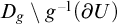 $D_g\setminus g^{-1}(\partial U)$
are dense by the Baire category theorem, so
$D_g\setminus g^{-1}(\partial U)$
are dense by the Baire category theorem, so $D_h$
is dense.
$D_h$
is dense.
To finish the proof of Theorem 1.2, we just note that the finite spaces $F_n$
(
$F_n$
( $n \in \omega $
,
$n \in \omega $
, $n>0$
), the spaces
$n>0$
), the spaces $2^\omega \sqcup F_n $
,
$2^\omega \sqcup F_n $
, $2^{\leq \omega }$
, and
$2^{\leq \omega }$
, and $2^\omega \sqcup 2^{\leq \omega }$
make up the complete list which mentions every
$2^\omega \sqcup 2^{\leq \omega }$
make up the complete list which mentions every $\sim $
-class of compact Polish spaces exactly once.
$\sim $
-class of compact Polish spaces exactly once.
Remark 2.1. The computable presentations build in the proof of Theorem 1.2 have additional property that the set $\{(i_1,\ldots ,i_n):B_{i_1}\cap \dots \cap B_{i_n}\neq \emptyset \}$
is computable rather than merely c.e.
$\{(i_1,\ldots ,i_n):B_{i_1}\cap \dots \cap B_{i_n}\neq \emptyset \}$
is computable rather than merely c.e.
3 General spaces: Proof of Theorem 1.1
Theorem 1.2 implies in particular that every compact Polish space has a computable presentation. But this readily gives the following.
Corollary 3.1. Every separable metrizable space has a computable topological presentation.
Proof. Every separable metrizable space X embeds as a dense subset of a compact Polish space Y (embed the space in the Hilbert cube and take its closure). As X is dense in Y, they share the same computable topological presentation.
Moreover, the same classification as in Theorem 1.2, expressed in terms of number and density of isolated points, also holds for separable metrizable spaces, because these properties are preserved under compactification.
Theorem 1.1(1) states that, more generally, every countably-based $T_0$
-space admits a computable topological presentation. For the purpose of proving this more general fact, let us summarise what we have, adding an ingredient that will be useful in the next section.
$T_0$
-space admits a computable topological presentation. For the purpose of proving this more general fact, let us summarise what we have, adding an ingredient that will be useful in the next section.
Proposition 3.1. Let X be a countably-based and metrizable and ${\mathcal {F}}$
be a countable family of clopen subsets of X. There exists a basis
${\mathcal {F}}$
be a countable family of clopen subsets of X. There exists a basis $(B_i)_{i\in {\mathbb {N}}}$
of X that contains
$(B_i)_{i\in {\mathbb {N}}}$
of X that contains ${\mathcal {C}}$
and such that
${\mathcal {C}}$
and such that $\{(i_1,\ldots ,i_n):B_{i_1}\cap \dots \cap B_{i_n}\neq \emptyset \}$
is computable.
$\{(i_1,\ldots ,i_n):B_{i_1}\cap \dots \cap B_{i_n}\neq \emptyset \}$
is computable.
Proof. When we embed X in the Hilbert cube Q and take its closure  , a clopen subset of X need not be the intersection of a clopen subset of
  with X. However, if we choose in advance a countable family of clopen subsets of X, we can choose an embedding which “respects” these clopen sets.
Let $X_0\subseteq Q$
be homeomorphic to X. Let
$X_0\subseteq Q$
be homeomorphic to X. Let ${\mathcal {F}}=(F_j)_{j\in {\mathbb {N}}}$
be a countable family of clopen subsets of
${\mathcal {F}}=(F_j)_{j\in {\mathbb {N}}}$
be a countable family of clopen subsets of $X_0$
. For each
$X_0$
. For each $F_j\in {\mathcal {F}}$
, the characteristic function
$F_j\in {\mathcal {F}}$
, the characteristic function $f_j:X_0\to \{0,1\}$
of
$f_j:X_0\to \{0,1\}$
of $F_j$
is continuous. Let
$F_j$
is continuous. Let $f:X_0\to Q$
map x to the sequence
$f:X_0\to Q$
map x to the sequence $(f_j(x))_{j\in {\mathbb {N}}}$
. Let then
$(f_j(x))_{j\in {\mathbb {N}}}$
. Let then $X_1=\{(x,f(x)):x\in X_0\}\subseteq Q\times Q\cong Q$
.
$X_1=\{(x,f(x)):x\in X_0\}\subseteq Q\times Q\cong Q$
. $X_1$
is homeomorphic to X. For each j,
$X_1$
is homeomorphic to X. For each j,  is a clopen set corresponding to $F_j$
.
$F_j$
.
Applying the previous results, we obtain a surjective continuous almost injective function  for some compact zero-dimensional Z whose clopen sets form a computable basis $(B_i)_{i\in {\mathbb {N}}}$
. We then define the basis of
$(B_i)_{i\in {\mathbb {N}}}$
. We then define the basis of  ,
,  . Note that this subbasis contains every clopen set
  . Indeed, $f^{-1}(F)$
is clopen so it is some
$f^{-1}(F)$
is clopen so it is some $B_i$
, therefore
$B_i$
, therefore $F=C_i$
. We finally define a basis of
$F=C_i$
. We finally define a basis of $X_1$
,
$X_1$
, $D_i=C_i\cap X_1$
. Every
$D_i=C_i\cap X_1$
. Every $F_j\in {\mathcal {F}}$
is the intersection of a clopen set
$F_j\in {\mathcal {F}}$
is the intersection of a clopen set  with
with $X_1$
, F is some
$X_1$
, F is some $C_i$
, so
$C_i$
, so $F_j=F\cap X_1=C_i\cap X_1=D_i$
.
$F_j=F\cap X_1=C_i\cap X_1=D_i$
.
3.1 Every countably-based
$T_0$
-space has a computable presentation

We prove Theorem 1.1(1) (stated in the title of this section).
The countably-based $T_0$
-spaces are exactly the subspaces of
$T_0$
-spaces are exactly the subspaces of ${{\mathcal {P}}(\omega )}$
with the Scott topology. It is sufficient to prove the result for closed subspaces of
${{\mathcal {P}}(\omega )}$
with the Scott topology. It is sufficient to prove the result for closed subspaces of ${{\mathcal {P}}(\omega )}$
, because a presentation of the closure of
${{\mathcal {P}}(\omega )}$
, because a presentation of the closure of $X\subseteq {{\mathcal {P}}(\omega )}$
induces a presentation of X.
$X\subseteq {{\mathcal {P}}(\omega )}$
induces a presentation of X.
A basis of the Scott topology on ${{\mathcal {P}}(\omega )}$
is given by the sets
${{\mathcal {P}}(\omega )}$
is given by the sets $[F]=\{A\in {{\mathcal {P}}(\omega )}:F\subseteq A\},$
where
$[F]=\{A\in {{\mathcal {P}}(\omega )}:F\subseteq A\},$
where $F\subseteq {\mathbb {N}}$
is finite.
$F\subseteq {\mathbb {N}}$
is finite.
Let X be a non-empty closed subset of ${{\mathcal {P}}(\omega )}$
and
${{\mathcal {P}}(\omega )}$
and $M=\max X$
be the set of elements of X that are maximal w.r.t. inclusion.
$M=\max X$
be the set of elements of X that are maximal w.r.t. inclusion.
First, M is zero-dimensional because each $[F]\cap M$
is clopen in M: if
$[F]\cap M$
is clopen in M: if $A\in M\setminus [F]$
then as A is maximal in X,
$A\in M\setminus [F]$
then as A is maximal in X, $A\cup F\notin X$
which is closed, so there exists a finite set G such that
$A\cup F\notin X$
which is closed, so there exists a finite set G such that $[G]$
contains
$[G]$
contains $A\cup F$
and is disjoint from X. As a result,
$A\cup F$
and is disjoint from X. As a result, $[G\setminus F]\cap M$
is a neighborhood of A which is disjoint from
$[G\setminus F]\cap M$
is a neighborhood of A which is disjoint from $[F]\cap M$
.
$[F]\cap M$
.
As M is countably-based and zero-dimensional, it is metrizable. We apply Proposition 3.1 to M and the countable family of clopen sets $[F]\cap M$
, so M has a computable basis
$[F]\cap M$
, so M has a computable basis $(B_i)_{i\in {\mathbb {N}}}$
which contains each
$(B_i)_{i\in {\mathbb {N}}}$
which contains each $[F]\cap M$
.
$[F]\cap M$
.
As each $B_i$
is an open subset of M, it extends to an open subset of X: there exists an open set
$B_i$
is an open subset of M, it extends to an open subset of X: there exists an open set $V_i\subseteq X$
such that
$V_i\subseteq X$
such that $V_i\cap M=B_i$
. However, the
$V_i\cap M=B_i$
. However, the $V_i$
’s will not in general be rich enough to form a basis of X, because there are many ways to extend
$V_i$
’s will not in general be rich enough to form a basis of X, because there are many ways to extend $B_i$
to an open set of X, and we only chose one. The idea is to allow more choices: for each i, we define a family of open sets
$B_i$
to an open set of X, and we only chose one. The idea is to allow more choices: for each i, we define a family of open sets $(U^n_i)_{n\in {\mathbb {N}}}$
such that
$(U^n_i)_{n\in {\mathbb {N}}}$
such that $U^n_i\cap M=B_i$
. As M is dense in X, a finite intersection of
$U^n_i\cap M=B_i$
. As M is dense in X, a finite intersection of $U^n_i$
’s is non-empty iff the corresponding finite intersection of
$U^n_i$
’s is non-empty iff the corresponding finite intersection of $B_i$
’s is non-empty, which is computable. In order to make
$B_i$
’s is non-empty, which is computable. In order to make $(U^n_i)_{n,i\in {\mathbb {N}}}$
a basis of X, we use the fact that
$(U^n_i)_{n,i\in {\mathbb {N}}}$
a basis of X, we use the fact that $([F_n]\cap X)_{n\in {\mathbb {N}}}$
is a basis of X, where
$([F_n]\cap X)_{n\in {\mathbb {N}}}$
is a basis of X, where $(F_n)_{n\in {\mathbb {N}}}$
is an enumeration of the finite subsets of
$(F_n)_{n\in {\mathbb {N}}}$
is an enumeration of the finite subsets of ${\mathbb {N}}$
, and we let
${\mathbb {N}}$
, and we let $U^n_i=[F_n]\cap X$
for some i such that
$U^n_i=[F_n]\cap X$
for some i such that $[F_n]\cap M=B_i$
.
$[F_n]\cap M=B_i$
.
More precisely, let
 $$ \begin{align*} U^n_i=\begin{cases} [F_n]\cap X&\text{if }[F_n]\cap M=B_i,\\ V_i&\text{otherwise.} \end{cases} \end{align*} $$
By definition, we always have $U^n_i\cap M=B_i$
. The family
$U^n_i\cap M=B_i$
. The family $(U^n_i)_{n,i\in {\mathbb {N}}}$
is a basis because it contains each
$(U^n_i)_{n,i\in {\mathbb {N}}}$
is a basis because it contains each $[F]\cap X$
. Indeed, for each n, one has
$[F]\cap X$
. Indeed, for each n, one has $[F_n]\cap M=B_i$
for some i, so
$[F_n]\cap M=B_i$
for some i, so $U^n_i=[F_n]\cap X$
.
$U^n_i=[F_n]\cap X$
.
As M is dense in X, a finite intersection of $U^n_i$
’s is non-empty iff it intersects M iff the corresponding intersection of
$U^n_i$
’s is non-empty iff it intersects M iff the corresponding intersection of $B_i$
’s is non-empty, so it is a computable relation.
$B_i$
’s is non-empty, so it is a computable relation.
Remark 3.1. For a metrizable space X, there are two proofs. There is a common part: Every countably-based zero-dimensional space Z has a computable basis, proved by building a surjective almost injective map $f:Z_0\to Z$
, where
$f:Z_0\to Z$
, where $Z_0$
is
$Z_0$
is $2^\omega $
or
$2^\omega $
or $2^{\leq \omega }$
or
$2^{\leq \omega }$
or $2^\omega \sqcup 2^{\leq \omega }$
(plus the cases with finitely many isolated points). Then the proofs diverge:
$2^\omega \sqcup 2^{\leq \omega }$
(plus the cases with finitely many isolated points). Then the proofs diverge:
-
• Embed X in
$[0,1]^\omega $
, build an almost injective function for some zero-dimensional compact Z, then transfer the computable subbasis of Z to using g, and then to X. -
• Embed X in
${{\mathcal {P}}(\omega )}$
, consider the zero-dimensional space , then transfer the computable subbasis of Z to a , and then to X.

 for some zero-dimensional compact Z, then transfer the computable subbasis of Z to
  using g, and then to X.
 , then transfer the computable subbasis of Z to a
  , and then to X.
The second proof applies to any space, so it might seem stronger. However, the first proof gives extra information that might be interesting (existence of almost injective function, the basis is formally the same as one of the Cantor-like spaces).
3.2 Every computable topological presentation presents a Polish space
We now prove statement (2) in Theorem 1.1. It is easier to work with a slightly different but equivalent formulation of topological presentations. For a countably-based space X, we will call topological presentations of the first and second kind respectively, the two following data:
-
(1) A basis
$(B_i)_{i\in {\mathbb {N}}}$
consisting of non-empty sets and an enumeration of a set
$E\subseteq {\mathbb {N}}^3$
such that
$B_i\cap B_j=\bigcup _{(i,j,k)\in E}B_k$
. -
(2) A subbasis
$(B_i)_{i\in {\mathbb {N}}}$
and an enumeration of the (indices of) finite sets
$F\subseteq {\mathbb {N}}$
such that
$B_F:=\bigcap _{i\in F}B_i\neq \emptyset $
.


Note that the effective version of the first one is Definition 1.1.
Claim 1. These notions of presentations are equivalent in the sense that there is a computable translation between them.
Proof. Given a basis $(B_i)_{i\in {\mathbb {N}}}$
of the first kind with a set E, take
$(B_i)_{i\in {\mathbb {N}}}$
of the first kind with a set E, take $(B_i)_{i\in {\mathbb {N}}}$
as a subbasis; one can test whether
$(B_i)_{i\in {\mathbb {N}}}$
as a subbasis; one can test whether $B_F$
is non-empty by expressing it as
$B_F$
is non-empty by expressing it as $\bigcup _{k\in G}B_k$
for some G that can be enumerated using E, and so
$\bigcup _{k\in G}B_k$
for some G that can be enumerated using E, and so $B_F\neq \emptyset $
iff
$B_F\neq \emptyset $
iff $G\neq \emptyset $
.
$G\neq \emptyset $
.
Conversely, given a subbasis $(B_i)_{i\in {\mathbb {N}}}$
of the second kind, with an enumeration
$(B_i)_{i\in {\mathbb {N}}}$
of the second kind, with an enumeration $(F_i)_{i\in {\mathbb {N}}}$
of the finite sets such that
$(F_i)_{i\in {\mathbb {N}}}$
of the finite sets such that $B_{F_i}\neq \emptyset $
, let
$B_{F_i}\neq \emptyset $
, let $B^{\prime }_i=B_{F_i}$
and
$B^{\prime }_i=B_{F_i}$
and $E=\{(i,j,k):F_i\cap F_j=F_k\}$
.
$E=\{(i,j,k):F_i\cap F_j=F_k\}$
.
In a presentation of the second kind, note that if $F\subseteq G$
and
$F\subseteq G$
and $B_G\neq \emptyset $
, then
$B_G\neq \emptyset $
, then $B_F\neq \emptyset $
, i.e., the set
$B_F\neq \emptyset $
, i.e., the set $\{F:B_F\neq \emptyset \}$
is downward closed. It is the only restriction to be a valid presentation. In other words, given any non-empty downward closed collection
$\{F:B_F\neq \emptyset \}$
is downward closed. It is the only restriction to be a valid presentation. In other words, given any non-empty downward closed collection $\S $
of finite sets, there exists a space X with a subbasis
$\S $
of finite sets, there exists a space X with a subbasis $(B_i)_{i\in {\mathbb {N}}}$
such that
$(B_i)_{i\in {\mathbb {N}}}$
such that $F\in \S \iff \bigcap _{i\in F}B_i\neq \emptyset $
. Indeed, let
$F\in \S \iff \bigcap _{i\in F}B_i\neq \emptyset $
. Indeed, let ${{\mathcal {P}}(\omega )}$
be the powerset of
${{\mathcal {P}}(\omega )}$
be the powerset of ${\mathbb {N}}$
with the Scott topology and
${\mathbb {N}}$
with the Scott topology and
 $$ \begin{align*} X=\{A\in{{\mathcal{P}}(\omega)}:\forall F,F\subseteq A\implies F\in\S\} \end{align*} $$
and let $B_i=\{A\in X:i\in A\}$
.
$B_i=\{A\in X:i\in A\}$
.
We now improve this observation, by making the space zero-dimensional Polish.
Proposition 3.2. Every topological presentation of the second kind is a presentation of a zero-dimensional Polish space.
Proof. Let X be a topological space with a subbasis $(B_i)_{i\in {\mathbb {N}}}$
and an enumeration of
$(B_i)_{i\in {\mathbb {N}}}$
and an enumeration of $\{F:B_F\neq \emptyset \}$
, where
$\{F:B_F\neq \emptyset \}$
, where $B_F=\bigcap _{i\in F}B_i$
.
$B_F=\bigcap _{i\in F}B_i$
.
Let $Y\subseteq 2^\omega $
be defined as follows. Let
$Y\subseteq 2^\omega $
be defined as follows. Let
 $$ \begin{align*} \mathcal{P}=\{A\in 2^\omega:\forall F,F\subseteq A\implies B_F\neq\emptyset\}. \end{align*} $$
Let Y be the set of maximal elements of $\mathcal{P} $
w.r.t. inclusion. Let
$\mathcal{P} $
w.r.t. inclusion. Let $C_i=\{A\in Y:i\in A\}$
and
$C_i=\{A\in Y:i\in A\}$
and $C_F=\bigcap _{i\in F}C_i$
.
$C_F=\bigcap _{i\in F}C_i$
.
First, ${\mathcal {C}}=(C_i)_{i\in {\mathbb {N}}}$
is a subbasis of the Cantor topology on Y. We only need to check that each set
${\mathcal {C}}=(C_i)_{i\in {\mathbb {N}}}$
is a subbasis of the Cantor topology on Y. We only need to check that each set $N_j:=\{A\in Y:j\notin A\}$
is open in the topology generated by
$N_j:=\{A\in Y:j\notin A\}$
is open in the topology generated by ${\mathcal {C}}$
. Let
${\mathcal {C}}$
. Let $A\in Y$
and
$A\in Y$
and $j\notin A$
. As A is maximal in
$j\notin A$
. As A is maximal in $\mathcal{P} $
,
$\mathcal{P} $
, $A\cup \{j\}\notin \mathcal{P} $
so there exists
$A\cup \{j\}\notin \mathcal{P} $
so there exists $F\subseteq A\cup \{j\}$
such that
$F\subseteq A\cup \{j\}$
such that $B_F=\emptyset $
. Note that F must contain j because
$B_F=\emptyset $
. Note that F must contain j because $A\in \mathcal{P} $
. As
$A\in \mathcal{P} $
. As $B_F=\emptyset $
, every
$B_F=\emptyset $
, every $A'\in \mathcal{P} $
containing
$A'\in \mathcal{P} $
containing $F\setminus \{j\}$
does not contain j, so
$F\setminus \{j\}$
does not contain j, so $A\in \bigcap _{i\in F\setminus \{j\}}C_i\subseteq N_j$
.
$A\in \bigcap _{i\in F\setminus \{j\}}C_i\subseteq N_j$
.
Next, we show that $C_F\neq \emptyset \iff B_F\neq \emptyset $
. If
$C_F\neq \emptyset \iff B_F\neq \emptyset $
. If $C_F\neq \emptyset $
, then let
$C_F\neq \emptyset $
, then let $A\in C_F$
. As
$A\in C_F$
. As $F\subseteq A$
and
$F\subseteq A$
and $A\in \mathcal{P} $
,
$A\in \mathcal{P} $
, $B_F\neq \emptyset $
. Conversely, if
$B_F\neq \emptyset $
. Conversely, if $B_F\neq \emptyset $
then let
$B_F\neq \emptyset $
then let $x\in B_F$
and let
$x\in B_F$
and let $A=\{i\in {\mathbb {N}}:x\in B_i\}$
. Note that
$A=\{i\in {\mathbb {N}}:x\in B_i\}$
. Note that $A\in \mathcal{P} $
. A may not be maximal in
$A\in \mathcal{P} $
. A may not be maximal in $\mathcal{P} $
, but it is contained in a maximal element
$\mathcal{P} $
, but it is contained in a maximal element $A'$
of
$A'$
of $\mathcal{P} $
(iteratively add to A the smallest number which is not already in and results in an element of
$\mathcal{P} $
(iteratively add to A the smallest number which is not already in and results in an element of $\mathcal{P} $
). Therefore,
$\mathcal{P} $
). Therefore, $A'\in C_F$
which is non-empty.
$A'\in C_F$
which is non-empty.
As a result, the presentations $(B_i)_{i\in {\mathbb {N}}}$
and
$(B_i)_{i\in {\mathbb {N}}}$
and $(C_i)_{i\in {\mathbb {N}}}$
are identical.
$(C_i)_{i\in {\mathbb {N}}}$
are identical.
The space Y is a subspace of the Cantor space, we need to show that it is Polish, i.e., $G_\delta $
. Note that
$G_\delta $
. Note that
 $$ \begin{align*} A\in Y\iff \begin{cases} \forall F,F\subseteq A\implies B_F\neq\emptyset \text{ and}\\ \forall n,n\notin A\implies \exists F\subseteq A,B_{F\cup\{n\}}=\emptyset. \end{cases} \end{align*} $$
All this is a $\Pi ^0_2$
formula (relative to the set
$\Pi ^0_2$
formula (relative to the set $\{F:B_F\neq \emptyset \}$
).
$\{F:B_F\neq \emptyset \}$
).
Remark 3.2. Another way to express what we are doing is: we canonically embed X in ${{\mathcal {P}}(\omega )})$
, the powerset of the natural numbers with the Scott topology, via
${{\mathcal {P}}(\omega )})$
, the powerset of the natural numbers with the Scott topology, via $x\in X\mapsto \{i\in {\mathbb {N}}:x\in B_i\}$
, take the closure
$x\in X\mapsto \{i\in {\mathbb {N}}:x\in B_i\}$
, take the closure $\mathcal{P} $
of X in
$\mathcal{P} $
of X in ${{\mathcal {P}}(\omega )})$
, and consider the set Y of maximal elements of
${{\mathcal {P}}(\omega )})$
, and consider the set Y of maximal elements of $\mathcal{P} $
. We show that the Scott topology coincides with the Cantor topology on Y.
$\mathcal{P} $
. We show that the Scott topology coincides with the Cantor topology on Y.
The proof also gives an effective version.
Corollary 3.2. Every presentation of the second kind where the set $\{F:B_F\neq \emptyset \}$
is computable is a presentation of a zero-dimensional computable Polish space.
$\{F:B_F\neq \emptyset \}$
is computable is a presentation of a zero-dimensional computable Polish space.
To prove this result, we need some extra vocabulary. We say that a subset S of computable topological space $(X, \tau , (B_i)_{i \in {\mathbb {N}}})$
is computably overt if the set
$(X, \tau , (B_i)_{i \in {\mathbb {N}}})$
is computably overt if the set $\{i\in {\mathbb {N}}:B_i\cap S\neq \emptyset \}$
is c.e. We say that a subset S is effectively
$\{i\in {\mathbb {N}}:B_i\cap S\neq \emptyset \}$
is c.e. We say that a subset S is effectively $G_\delta $
in M, or simply
$G_\delta $
in M, or simply $\Pi ^0_2$
, if there is a uniformly c.e. sequence of open sets
$\Pi ^0_2$
, if there is a uniformly c.e. sequence of open sets $U_i$
such that
$U_i$
such that $S = \bigcap _i U_i$
. The following effective version of Alexandrov’s Theorem was proved in [Reference Hoyrup16, Proposition 2.3.3].
$S = \bigcap _i U_i$
. The following effective version of Alexandrov’s Theorem was proved in [Reference Hoyrup16, Proposition 2.3.3].
Lemma 3.1. An computably overt $\Pi ^0_2$
subset of a computable Polish M is itself computable Polish.
$\Pi ^0_2$
subset of a computable Polish M is itself computable Polish.
Proof of Corollary 3.2
It remains to observe that the space Y from the proof of Proposition 3.2 is computably overt and is a $\Pi ^0_2$
-subset of the Cantor space.
$\Pi ^0_2$
-subset of the Cantor space.
We are now ready to prove Theorem 1.1(2) which states that every topological presentation (of the first kind) is a presentation of a zero-dimensional Polish space.
Proof of Theorem 1.1(2)
Start from a presentation $(B_i)$
and E, transform into the second kind, apply Proposition 3.2 to obtain the space Y with a subbasis
$(B_i)$
and E, transform into the second kind, apply Proposition 3.2 to obtain the space Y with a subbasis $(C_i)$
. We have
$(C_i)$
. We have $C_i\cap C_j\supseteq \bigcup _{(i,j,k)\in E}C_k$
: if
$C_i\cap C_j\supseteq \bigcup _{(i,j,k)\in E}C_k$
: if $(i,j,k)\in E$
and
$(i,j,k)\in E$
and $A\in Y$
contains k but not i, then by maximality there is
$A\in Y$
contains k but not i, then by maximality there is $F\subseteq A$
such that
$F\subseteq A$
such that $B_F\cap B_i=\emptyset $
. As
$B_F\cap B_i=\emptyset $
. As $F\cup \{k\}\subseteq A$
,
$F\cup \{k\}\subseteq A$
, $B_F\cap B_k\neq \emptyset $
. It contradicts
$B_F\cap B_k\neq \emptyset $
. It contradicts $B_k\subseteq B_i$
. However, we may not have equality. Solution: remove the difference. Let
$B_k\subseteq B_i$
. However, we may not have equality. Solution: remove the difference. Let
 $$ \begin{align*} Z=Y\setminus \bigcup_{i,j}\left(C_i\cap C_j\setminus \bigcup_{(i,j,k)\in E}C_k\right). \end{align*} $$
We have removed a $\Sigma ^0_2$
-subset of Y, so Z is still Polish and by construction,
$\Sigma ^0_2$
-subset of Y, so Z is still Polish and by construction, $C_i\cap C_j=\bigcup _{(i,j,k)\in E}C_k$
on Z. It remains to show that each
$C_i\cap C_j=\bigcup _{(i,j,k)\in E}C_k$
on Z. It remains to show that each $C_n$
is non-empty in Z. By Baire category, it is sufficient to show that the complement of what we remove is dense in Y, i.e., that every
$C_n$
is non-empty in Z. By Baire category, it is sufficient to show that the complement of what we remove is dense in Y, i.e., that every $(C_i\cap C_j)^c\cup \bigcup _{(i,j,k)\in E}C_k$
is dense in Y. Let
$(C_i\cap C_j)^c\cup \bigcup _{(i,j,k)\in E}C_k$
is dense in Y. Let $C_F$
be a non-empty basic open subset of Y. If it intersects
$C_F$
be a non-empty basic open subset of Y. If it intersects $(C_i\cap C_j)^c$
then we are done, otherwise
$(C_i\cap C_j)^c$
then we are done, otherwise $C_F\subseteq C_i\cap C_j$
. Let
$C_F\subseteq C_i\cap C_j$
. Let $G=F\cup \{i,j\}$
. One has
$G=F\cup \{i,j\}$
. One has $C_G=C_F$
which is non-empty, so
$C_G=C_F$
which is non-empty, so $B_G\neq \emptyset $
. Let
$B_G\neq \emptyset $
. Let $A\in B_G\subseteq B_i\cap B_j$
. There exists k such that
$A\in B_G\subseteq B_i\cap B_j$
. There exists k such that $(i,j,k)\in E$
and
$(i,j,k)\in E$
and $A\in B_k$
. Let
$A\in B_k$
. Let $A'$
be maximal in
$A'$
be maximal in $\mathcal{P} $
and contain A. One has
$\mathcal{P} $
and contain A. One has $A'\in C_F\cap \bigcup _{(i,j,k)\in E}C_k$
.
$A'\in C_F\cap \bigcup _{(i,j,k)\in E}C_k$
.
Question 2. Is there an example of a computable topological presentation which does not represent a computable Polish space?
4 Effective compactness: Proof of Theorem 1.3
Definition 4.1. A (compact) computable topological space is effectively compact if there exists an enumeration of all finite covers of the space by basic open balls.
Definition 4.2. A computable topological presentation is $\cap $
-decidable if
$\cap $
-decidable if $B_i \cap B_j = \emptyset $
is a computable relation in
$B_i \cap B_j = \emptyset $
is a computable relation in $i,j$
.
$i,j$
.
We now prove the first half of Theorem 1.3 which states that, for a compact Polish space X, the following are equivalent:
-
(1) X has an effectively compact
$\cap $
-decidable (Definition 4.2) topological presentation. -
(2) X admits a computably compact Polish presentation.

Proof of
$(2)\rightarrow (1)$

It is known that a computably compact Polish space admits a system of $2^{-n}$
-covers so that the property
$2^{-n}$
-covers so that the property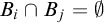 $B_i \cap B_j = \emptyset $
is decidable for any pair of open balls from the system [Reference Downey and Melnikov7, Theorem 1.1]. These balls form an effective basis of the space with the desired property.
$B_i \cap B_j = \emptyset $
is decidable for any pair of open balls from the system [Reference Downey and Melnikov7, Theorem 1.1]. These balls form an effective basis of the space with the desired property.
Proof of
$(1)\rightarrow (2)$

A computable topological space X is effectively normal ([Reference Schröder30], after [Reference Dyment8]) if, given (names of) disjoint effectively closed sets $C_0$
and
$C_0$
and $C_1$
, we can effectively produce (names of) disjoint effectively open sets
$C_1$
, we can effectively produce (names of) disjoint effectively open sets $U_0$
and
$U_0$
and $U_1$
that separate
$U_1$
that separate $C_0$
and
$C_0$
and $C_1$
, i.e., so that
$C_1$
, i.e., so that
 $$\begin{align*}C_0 \subseteq U_0 \text{ and } C_1 \subseteq U_1.\end{align*}$$
In the literature, the operator sending $C_0$
and
$C_0$
and $C_1$
to
$C_1$
to $U_0$
and
$U_0$
and $U_1$
is defined for arbitrary closed sets, and not just effective ones. It turns out that it does not make any difference, and we use this formulation for simplicity. A very similar lemma has been established in [Reference Amir and Hoyrup1].
$U_1$
is defined for arbitrary closed sets, and not just effective ones. It turns out that it does not make any difference, and we use this formulation for simplicity. A very similar lemma has been established in [Reference Amir and Hoyrup1].
Lemma 4.1. Any effectively compact $\cap $
-decidable topological space X is effectively normal.
$\cap $
-decidable topological space X is effectively normal.
Proof. Fix two disjoint effectively closed sets $C_0, C_1$
. Search for all the quadruplets
$C_0, C_1$
. Search for all the quadruplets $(U_0, U_1, V_0, V_1)$
whose elements are finite unions of basic open sets, with the properties:
$(U_0, U_1, V_0, V_1)$
whose elements are finite unions of basic open sets, with the properties:
-
(1)
$ V_0 \subseteq X \setminus C_0$
and
$ V_1 \subseteq X \setminus C_1;$
-
(2) each of the open sets
$U_0 \cup V_0$
and
$U_1 \cup V_1$
is a cover of X; -
(3)
$U_0 \cap U_1 = \emptyset .$


It is clear that such quadruplets exist, and all satisfy $ C_0 \subseteq U_0 $
and
$ C_0 \subseteq U_0 $
and $ C_1 \subseteq U_1 $
. Since
$ C_1 \subseteq U_1 $
. Since $U_0$
and
$U_0$
and $U_1$
are finite unions of basic open sets, we can effectively check (3), while the first two conditions are
$U_1$
are finite unions of basic open sets, we can effectively check (3), while the first two conditions are $\Sigma ^0_1$
.
$\Sigma ^0_1$
.
Lemma 4.2 (Effective Urysohn Lemma [Reference Schröder30])
Let X be an effectively normal computable topological space. Given disjoint effectively closed sets A and B we can uniformly produce a computable function
 $$\begin{align*}f_{A,B}: X \rightarrow [0,1]\end{align*}$$
so that $f_{A,B} \upharpoonright _A = 0$
and
$f_{A,B} \upharpoonright _A = 0$
and $f_{A,B} \upharpoonright _B = 1$
.
$f_{A,B} \upharpoonright _B = 1$
.
Proof. The proof essentially follows the standard textbook argument (e.g., [Reference Munkres29, Theorem 33.1]) but with one minor modification. To define the map, instead of the set of all rationals we will be using the set of the dyadic rationals. We give more details.
Define a uniformly effective list of closed sets $A_i$
and open sets
$A_i$
and open sets $O_i$
, where i ranges over the dyadic rationals in
$O_i$
, where i ranges over the dyadic rationals in $[0,1]$
, as follows. Begin with
$[0,1]$
, as follows. Begin with $A_0 = A$
and
$A_0 = A$
and $O_1 = X \setminus B$
. By effective normality, there we can find
$O_1 = X \setminus B$
. By effective normality, there we can find $A_{1/2}$
and
$A_{1/2}$
and $O_{1/2}$
so that
$O_{1/2}$
so that
 $$\begin{align*}A_0 \subseteq O_{1/2} \subseteq A_{1/2} \subseteq O_1,\end{align*}$$
and then we can iterate this and define
 $$\begin{align*}A_0 \subseteq O_{1/4} \subseteq A_{1/4} \subseteq O_{1/2} \subseteq A_{1/2} \subseteq O_1,\end{align*}$$
and
 $$\begin{align*}A_0 \subseteq O_{1/4} \subseteq A_{1/4} \subseteq O_{1/2} \subseteq A_{1/2} \subseteq O_{3/4} \subseteq A_{3/4} \subseteq O_1,\end{align*}$$
and so on. We also set $O_d = X$
for every dyadic
$O_d = X$
for every dyadic $d>1$
and
$d>1$
and $A_d = \emptyset $
for each dyadic
$A_d = \emptyset $
for each dyadic $d<0$
. The desired function is
$d<0$
. The desired function is
 $$\begin{align*}f_{A,B}(x) = \inf \{i: x \in O_i\} = \sup \{j: x \notin A_j\}.\end{align*}$$
The function is well-defined. The former version of its definition shows that the left cut of the real $f_{A,B}(x)$
is c.e., and the latter implies that the right cut of this real is c.e. as well.
$f_{A,B}(x)$
is c.e., and the latter implies that the right cut of this real is c.e. as well.
Note that we never used that the closed sets were non-empty.
Lemma 4.3. Let X be an effectively compact topological space. We can effectively uniformly list all disjoint effectively closed subsets of X.
Proof. Two effectively closed sets $C_0 = X \setminus U_0$
and
$C_0 = X \setminus U_0$
and $C_1 = X \setminus U_1$
are disjoint iff
$C_1 = X \setminus U_1$
are disjoint iff $U_0 \cup U_1$
covers X. For an effectively open set, being a cover of X is a
$U_0 \cup U_1$
covers X. For an effectively open set, being a cover of X is a $\Sigma ^0_1$
property, by effective compactness.
$\Sigma ^0_1$
property, by effective compactness.
Lemma 4.4. For every $x \in X$
and every open
$x \in X$
and every open $U \ni x$
there exist disjoint effectively closed
$U \ni x$
there exist disjoint effectively closed $C \ni x$
and
$C \ni x$
and $D \supseteq (X \setminus U)$
.
$D \supseteq (X \setminus U)$
.
Proof. It is perhaps easiest to use that the compact X is (classically) metrizable. Fix any compatible metric d and the induced Hausdorff metric $d_H$
.
$d_H$
.
We show that for each $\epsilon>0$
and every closed set
$\epsilon>0$
and every closed set $C \subseteq X$
there exists an effectively closed set
$C \subseteq X$
there exists an effectively closed set $C_\varepsilon \supseteq C$
so that
$C_\varepsilon \supseteq C$
so that $d_H(C, C_\varepsilon ) < \epsilon $
.
$d_H(C, C_\varepsilon ) < \epsilon $
.
Fix a finite cover $(V_i)_{i \leq k}$
of X by basic open sets whose diameters are bounded by
$(V_i)_{i \leq k}$
of X by basic open sets whose diameters are bounded by $\varepsilon /2$
, where
$\varepsilon /2$
, where  . Then the effectively closed set
 $$\begin{align*}C_\varepsilon = X \setminus \bigcup \{V_i: V_i \cap C = \emptyset \} \end{align*}$$
satisfies
 $$\begin{align*}d_H(C, C_\varepsilon) < \epsilon.\end{align*}$$
Clearly, $C \subseteq C_\varepsilon $
. Suppose
$C \subseteq C_\varepsilon $
. Suppose $y \in C_\varepsilon \setminus C$
. Then necessarily
$y \in C_\varepsilon \setminus C$
. Then necessarily $y \in V_j$
for some
$y \in V_j$
for some $V_j$
intersecting C, and thus
$V_j$
intersecting C, and thus $d(x, C) \leq {{\mathrm {diam}}}(V_i) \leq \epsilon /2 < \epsilon .$
To complete the proof of the lemma, fix disjoint closed $C' \ni x$
and
$C' \ni x$
and $D' \supseteq (X \setminus U)$
, and let
$D' \supseteq (X \setminus U)$
, and let $C = C^{\prime }_\epsilon \supseteq C'$
and
$C = C^{\prime }_\epsilon \supseteq C'$
and $D = D^{\prime }_\epsilon \supseteq D' \supseteq (X \setminus U) $
, where
$D = D^{\prime }_\epsilon \supseteq D' \supseteq (X \setminus U) $
, where $\epsilon < d_H(C^{\prime }_i, D^{\prime }_i)/2$
.
$\epsilon < d_H(C^{\prime }_i, D^{\prime }_i)/2$
.
Using Lemma 4.3, fix an effective enumeration $(C_i, D_i)_{i \in \omega }$
of all (computable indices of) disjoint effectively closed subsets in X, perhaps with repetition. Using Lemmas 4.1 and 4.2, produce a uniformly effective list of functions
$(C_i, D_i)_{i \in \omega }$
of all (computable indices of) disjoint effectively closed subsets in X, perhaps with repetition. Using Lemmas 4.1 and 4.2, produce a uniformly effective list of functions
 $$\begin{align*}f_{C_i, D_i}: X \rightarrow [0,1]\end{align*}$$
that map the respective $C_i$
to
$C_i$
to $1$
and vanish at
$1$
and vanish at $D_i$
. Define
$D_i$
. Define $g: X \rightarrow [0,1]^\omega $
to be
$g: X \rightarrow [0,1]^\omega $
to be
 $$\begin{align*}g(x) = (f_{C_i, D_i})_{i \in \omega},\end{align*}$$
where the computable metric on $[0,1]^\omega $
is given by
$[0,1]^\omega $
is given by $d((x_i)_{i \in \omega }, (y_i)_{i \in \omega }) = \sum _i 2^{-i} |x_i - y_i|$
. The function is computable. Lemma 4.4 implies that g is injective, and thus g is a computable homeomorphic embedding of X into
$d((x_i)_{i \in \omega }, (y_i)_{i \in \omega }) = \sum _i 2^{-i} |x_i - y_i|$
. The function is computable. Lemma 4.4 implies that g is injective, and thus g is a computable homeomorphic embedding of X into $[0,1]^\omega $
.
$[0,1]^\omega $
.
We claim that we can effectively list all finite covers of $f(X)$
(that intersect
$f(X)$
(that intersect $f(X)$
). For that, list all finite tuples of basic open balls in
$f(X)$
). For that, list all finite tuples of basic open balls in $[0,1]^\omega $
and calculate their preimages. Keep only those tuples that consist of balls having non-empty preimage, and so that these preimages cover the entire space X. It follows that
$[0,1]^\omega $
and calculate their preimages. Keep only those tuples that consist of balls having non-empty preimage, and so that these preimages cover the entire space X. It follows that $f(X)$
is a computable subset of the computably compact
$f(X)$
is a computable subset of the computably compact $[0,1]^\omega $
(e.g., [Reference Downey and Melnikov7, Proposition 3.29]). Thus, in particular, it is
$[0,1]^\omega $
(e.g., [Reference Downey and Melnikov7, Proposition 3.29]). Thus, in particular, it is $\Sigma ^0_1$
-closed. It is also well-known that, for closed subsets of computable Polish spaces, being
$\Sigma ^0_1$
-closed. It is also well-known that, for closed subsets of computable Polish spaces, being $\Sigma ^0_1$
-closed is equivalent to the existence of an effectively dense sequence (e.g., [Reference Downey and Melnikov7, Lemma 3.27]). Use this effective dense sequence in
$\Sigma ^0_1$
-closed is equivalent to the existence of an effectively dense sequence (e.g., [Reference Downey and Melnikov7, Lemma 3.27]). Use this effective dense sequence in $f(X)$
and the metric inherited from
$f(X)$
and the metric inherited from $[0,1]^\omega $
to produce a computably compact Polish presentation of X. This finishes the proof of
$[0,1]^\omega $
to produce a computably compact Polish presentation of X. This finishes the proof of $(1)\rightarrow (2)$
(of Theorem 1.3).
$(1)\rightarrow (2)$
(of Theorem 1.3).
If we drop the assumption of $\cap $
-decidability, we can use
$\cap $
-decidability, we can use $\emptyset '$
to produce a
$\emptyset '$
to produce a $\Delta ^0_2$
-Polish presentation of the space. To finish Theorem 1.3, we need to show that this is sharp, i.e., in the absence of
$\Delta ^0_2$
-Polish presentation of the space. To finish Theorem 1.3, we need to show that this is sharp, i.e., in the absence of $\cap $
-decidability we cannot contain a computable Polish presentation (in general). For that, we shall use some known results.
$\cap $
-decidability we cannot contain a computable Polish presentation (in general). For that, we shall use some known results.
Proposition 4.1. For a (separable) Stone space S and the dual Boolean algebra $\widehat {S}$
, the following are equivalent:
$\widehat {S}$
, the following are equivalent:
-
(1) S has an effectively compact computable topological presentation;
-
(2) S has
$0'$
-compact computable topological presentation; -
(3) S has a
$\Delta ^0_2$
-compact Polish presentation; -
(4) S has a
$\Delta ^0_2$
-Polish presentation; -
(5) S has a right-c.e. Polish effectively compact presentation;
-
(6)
$\widehat {S}$
has a
$c.e.$
presentation, i.e., it is isomorphic to a factor of the (computable) atomless Boolean algebra by a c.e. ideal; -
(7)
$\widehat {S}$
has a
$\Delta ^0_2$
-presentation.


Proof. The implications $(1) \rightarrow (2)$
and
$(1) \rightarrow (2)$
and $(3) \rightarrow (4)$
are trivial (and so is
$(3) \rightarrow (4)$
are trivial (and so is $(6) \rightarrow (7)$
).
$(6) \rightarrow (7)$
). $(2) \rightarrow (3)$
: This follows from Theorem 1.3.
$(2) \rightarrow (3)$
: This follows from Theorem 1.3. $(5) \rightarrow (1)$
: Basic open balls in a right-c.e. Polish space induces a computable topological presentation of the space (e.g., [Reference Korovina and Kudinov25, Theorem 2.3] or [Reference Downey and Melnikov7, Proposition 2.4]).
$(5) \rightarrow (1)$
: Basic open balls in a right-c.e. Polish space induces a computable topological presentation of the space (e.g., [Reference Korovina and Kudinov25, Theorem 2.3] or [Reference Downey and Melnikov7, Proposition 2.4]). $(4) \rightarrow (7)$
: This is [Reference Harrison-Trainor, Melnikov and Ng14, Theorem 1.1] relativised to
$(4) \rightarrow (7)$
: This is [Reference Harrison-Trainor, Melnikov and Ng14, Theorem 1.1] relativised to $\emptyset '$
.
$\emptyset '$
. $(6) \rightarrow (5)$
: This is [Reference Bazhenov, Harrison-Trainor and Melnikov3, Theorem 3.1].
$(6) \rightarrow (5)$
: This is [Reference Bazhenov, Harrison-Trainor and Melnikov3, Theorem 3.1]. $(7) \rightarrow (6)$
: This is a well-known fact due to Feiner [Reference Feiner10].
$(7) \rightarrow (6)$
: This is a well-known fact due to Feiner [Reference Feiner10].
Now, to establish the final part of Theorem 1.3, we argue that there exists an effectively compact topological space with no computable Polish presentation. To see why such a space exists, fix a c.e. presented Boolean algebra without a computable presentation [Reference Feiner10], and apply Proposition 4.1 and the aforementioned [Reference Harrison-Trainor, Melnikov and Ng14, Theorem 1.1].
This finishes the proof of Theorem 1.3.
Remark 4.1. It also follows that there exists an effectively compact topological space that is not homeomorphic to any $\cap $
-decidable effectively compact topological space.
$\cap $
-decidable effectively compact topological space.
Acknowledgments
The authors wish to thank the anonymous referees for their useful remarks.
Funding
K.M.N. was supported by the Ministry of Education, Singapore, under its Academic Research Fund Tier 2 (MOE-T2EP20222-0018). A.M. was partially supported by the Rutherford Discovery Fellowship (Wellington) RDF-VUW1902, Royal Society Te Aparangi.


 Open access

