Dietary habits formed during childhood and adolescence may be difficult to alter at later ages( Reference Lien, Lytle and Klepp 1 , Reference Mikkilä, Räsänen and Raitarkari 2 ). Nutrition education programmes in schools represent a potentially important policy tool in impacting such habit formation( Reference de Sa and Lock 3 , Reference Jaime and Lock 4 ). Such programmes often involve encouraging the consumption of more fruit and vegetables (F&V). There are several reasons for this. First, an adequate intake of F&V has been shown to protect against a number of adverse health outcomes( 5 ). Second, in many countries including Norway, few children and adults meet recommendations by the WHO of eating at least 400 g of F&V daily( 6 , 7 ). Finally, in terms of school logistics, in particular fruits, and partly also vegetables, are easy to distribute and require little preparation time.
School programmes for increased F&V consumption may include one or several components, including, for example, specific F&V projects in food and health subjects, parental involvement, school cafeteria interventions and actual provision of F&V to the pupils, either free or at a subsidized price( Reference de Sa and Lock 3 , Reference Bere, Veierød and Skare 8 – Reference Bere, Veierød and Klepp 16 ). Experiences from this last type of intervention – actual provision of F&V to the pupils – have generally been positive, although the evidence on whether it leads to sustained increases in F&V intake 2–3 years after the intervention period is both scarce and mixed( Reference de Sa and Lock 3 , Reference Bere, Veierød and Skare 8 – Reference Fogarty, Antoniak and Venn 11 ).
Most impact assessments of school fruit interventions that involve F&V provision have been based on relatively small-scale randomized or non-randomized controlled trials in the USA, New Zealand and various European countries( Reference de Sa and Lock 3 ). These include pilot studies intending to map the potential effects of nationwide school fruit schemes( Reference Bere, Veierød and Skare 8 , Reference Tak, Te Velde and Brug 9 , Reference Eriksen, Haraldsdottir and Pederson 13 ). In the USA, elementary schools with a high proportion of low-income students are eligible for receiving free school fruit through the Fresh Fruit and Vegetable Program. However, due to its design, it is generally difficult to assess the impact of this scheme on the children's F&V intake( 17 ). The European Union (EU) launched a school fruit scheme in the school year 2009/10( 18 ). However, due to its recent implementation and a somewhat slow start-up phase( 19 ), it will probably take some time before thorough impact assessments of the EU school fruit scheme may be conducted.
Nationwide school fruit schemes have now existed for some years in Norway and the UK. However, these schemes have thus far only been assessed using data from certain counties or regions within these countries( Reference Ransley, Greenwood and Cade 10 – Reference Bere, Hilsen and Klepp 12 ). Since the school year 2007/08, the Norwegian School Fruit Scheme (NSFS) has been organized such that primary-school children (grades 1–7) are randomly assigned to one of three school fruit arrangements: (i) the child receives one free fruit or vegetable per day; (ii) the child is given the option to subscribe to one fruit or vegetable per day at a subsidized price, with the daily cost of Norwegian kroner (NOK) 3·50 (approximately €0·50) being shared between the government (NOK 1·00) and the parents (NOK 2·50); and (iii) the child attends a school that has no school fruit arrangement. Based on surveys from September 2001 and 2008 of 6th and 7th grade children from twenty-seven schools in two Norwegian counties, Bere et al. ( Reference Bere, Hilsen and Klepp 12 ) found that free school fruit and subsidized school fruit increase a child's fruit intake by 0·58 and 0·23 portions/d, respectively.
The objective of the present study is to assess impacts of the NSFS. There are three novel features of this study. First, unlike previous assessments of school fruit interventions, including the NSFS, our study is based on data from a nationally representative sample of primary-school children and their parents; all nineteen counties of Norway and more than 750 different schools are represented in our sample. Second, our study includes children from all grades of primary school. And third, our study also includes data on parental F&V intake, which allows for assessing the associations between NSFS participation and F&V intake among both primary-school children and their parents.
Methods
The Norwegian School Fruit Scheme
The NSFS started as a test project in the mid-1990s. It grew gradually in scope and was made nationwide in the school year 2003/04. It was then arranged as a subscription scheme in primary schools (grades 1–7), lower secondary schools (grades 8–10) and combined primary and lower secondary schools (grades 1–10). In this version of the NSFS, which still runs in primary schools (grades 1–7), the school first decides whether it wants to participate in a subsidized fruit subscription scheme. Currently, about 57 % of eligible primary schools participate in this subscription scheme. In the participating schools, subscription to one daily fruit (or occasionally vegetable) is optional for each child at a current cost of Norwegian kroner (NOK) 2·50/d. This is matched by a subsidy from the Norwegian Ministry of Health and Care Services of NOK 1·00/d. Currently, about 30 % of the children in participating primary schools subscribe to subsidized school fruit( 20 ).
In the school year 2007/08, the NSFS was changed from a subsidized subscription scheme (with parental payment) to a free fruit scheme (with no parental payment) in lower secondary schools (grades 8–10) and combined schools (grades 1–10)( 21 ). Thus, since the school year 2007/08, children in school grades 1–7 fall within one of the following four NSFS groups: (i) the child attends a primary school (grades 1–7) that participates in the NSFS and subscribes to subsidized fruit (labelled SUBFRYES); (ii) the child attends a primary school that participates in the NSFS and chooses not to subscribe to subsidized fruit (SUBFRNO); (iii) the child attends a primary school that chooses not to participate in the NSFS and is thus not given the option to subscribe to subsidized fruit (NOFRUIT); and (iv) the child attends a combined school (grades 1–10) and thus receives free fruit as a result of the changes made to the NSFS in the school year 2007/08 (FREEFRUIT). Currently, about 45 % of all primary-school children in Norway attend combined schools and thus receive a free fruit daily in school. Whether a child belongs to NSFS group (i or ii), (iii) or (iv) is largely the result of a random process. The NSFS thus constitutes a natural experiment, since treatment assignment is random and the result of national school fruit policies, rather than being controlled in the traditional sense of a randomized trial.
The NSFS is financed by several Norwegian Ministries, while the Norwegian Fruit and Vegetable Marketing Board is the main administrator of the scheme. In 2011, the total costs for the free and subsidized versions of the NSFS were NOK 230 million and NOK 18 million, respectively.
Data source
The data of the present study are drawn from an Internet survey in which the respondents are parents of primary-school children in Norway (n 1536). The survey was carried out in March 2011 by a professional survey company (TNS Gallup) on behalf of the Norwegian Fruit and Vegetable Marketing Board. The respondents were recruited from TNS Gallup's Internet panel, which consists of approximately 60 000 Norwegian adults who, based on telephone recruitment, have agreed to participate in Internet surveys on various themes. The target group in the present study is adults between 25 and 60 years of age with children who attend primary school. To target a nationally representative sample within this age range, a stratified random sample was extracted from the Internet panel based on age, gender, education and geographic region. Within the stratified random sample, all parents of primary-school children received survey invitations by email with a hyperlink to the Internet survey itself. Not all parents responded to this invitation, and to correct for sample selection in the final sample, the later analyses therefore use survey weights.
The initial survey questions were used for screening purposes, asking the parents indirectly to which NSFS group their child belonged. Quotas were then used to obtain a sufficient number of respondents across the four NSFS groups: SUBFRYES (n 342), SUBFRNO (n 512), FREEFRUIT (n 274) and NOFRUIT (n 295). Although a total of 1536 parents were initially surveyed, our final sample consists of 1423 respondents; twenty-nine respondents were excluded due to unknown or uncertain NSFS group; twenty-six respondents had a child who participated in an alternative, school-specific fruit arrangement (outside the NSFS system); and a further sixty-two respondents were excluded due to incomplete data on either child or parental F&V intake. Respondents from all nineteen counties of Norway and more than 750 different schools are represented in the final sample. The number of respondents per school ranges from one to seven.
Ethical approval was not required for this research; we represent a third party user of the data in question and we only have access to a data file that contains anonymous data, i.e. we do not have access to any information that can be used to identify specific individuals.
Groups analysed
In the following, respondents from fruit subscription schools (SUBFRYES and SUBFRNO) are subsumed into one group labelled SUBFRUIT (n 854). There are two reasons for this. First, in the present study we are mainly interested in comparing F&V intakes across the FREEFRUIT and NOFRUIT groups, because these two groups have typically constituted the intervention group and the control group in previous school fruit intervention studies( Reference de Sa and Lock 3 ). Second, while attending a SUBFRUIT school is the result of a random process, the choice between SUBFRYES and SUBFRNO, conditional on attending a SUBFRUIT school, may depend on observable and unobservable household characteristics that are also related to baseline F&V consumption in absence of the NSFS. Thus, in our analysis, we compare F&V intakes across the three NSFS groups FREEFRUIT, SUBFRUIT and NOFRUIT.
Outcome variables
The parents were asked to indicate both their own intake and the child's intake of (i) fruits (excluding fruit juices) and (ii) vegetables (fresh, canned and frozen, excluding potatoes) on a typical day. The survey text included examples of portion sizes (e.g. an apple, a bunch of grapes, a handful of vegetables) and the respondents were asked to indicate daily intake on the following scale: ‘less than 1 portion’ (0·0); ‘1 portion’ (1·0); ‘between 1 and 2 portions’ (1·5); ‘2 portions’ (2·0); ‘between 2 and 3 portions’ (2·5); ‘3 portions’ (3·0); ‘more than 3 portions’ (3·5); and ‘don't know/remember’ (missing). We have created six outcome variables based on these ordinal-scaled questions: child/parental fruit intake (FRC/FRP), vegetable intake (VEC/VEP) and total F&V intake (FRVEC/FRVEP). To operationalize the later analyses, these variables were made semi-continuous by assuming daily intakes corresponding to the numbers listed in parentheses after each response category above. For robustness purposes, all statistical analyses of the present study have been reiterated using F&V variables with the original, ordinal coding (using ordered probit models). No significant differences between the semi-continuous and the ordinal-coded F&V variables were detected in terms of our main results and conclusions.
Explanatory variables
The key explanatory variables in the analyses of the present study, the NSFS groups FREEFRUIT, SUBFRUIT and NOFRUIT, are described above. To account for possible sampling differences across these groups, in the later regression analyses we also control for relevant child (school grade, gender), parental (age, gender, marital status, education) and household (income, geographic region) characteristics. The parental characteristics are recorded only for the parent who responded to the survey. The different explanatory variables are described in more detail in Table 1.
Variable descriptions and means by NSFS group and for the total sample: parents of primary-school children (n 1423) who responded to an Internet survey on behalf of themselves and their children, Norway, March 2011
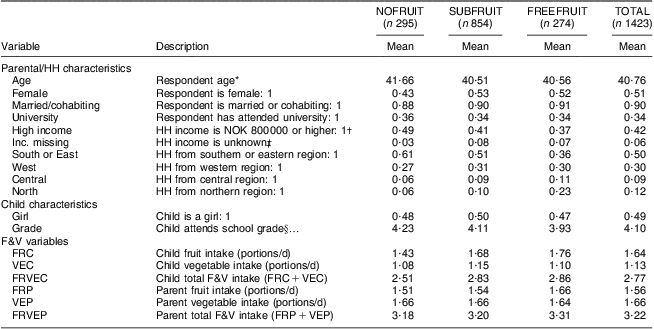
NSFS, Norwegian School Fruit Scheme; NOFRUIT, no option for fruit subscription in school; SUBFRUIT, fruit subscription school; FREEFRUIT, free fruit school; HH, household; F&V, fruit and vegetable; NOK, Norwegian kroner.
*Parental age ranges from 25 to 59 years.
†The HH income question had eight response alternatives, ranging from ‘less than NOK 200 000 per year’ to ‘NOK 1 400 000 per year or more’.
‡The respondents were also given the option not to respond to the HH income question.
§School grade ranges from 1st to 7th grade.
Statistical analysis
Associations between NSFS participation and child/parental fruit intake (FRC/FRP), vegetable intake (VEC/VEP) and total F&V intake (FRVEC/FRVEP) are analysed using multivariate linear regression models (ordinary least squares). The NSFS is organized such that the effects of SUBFRUIT and FREEFRUIT on F&V intake are assumed to be identified conditional on controlling for child, parental and household characteristics. This is sometimes referred to as the unconfoundedness assumption; treatment assignment is believed to be randomized conditional on relevant pretreatment control variables( Reference Imbens and Wooldridge 22 ). The multivariate regression models for our six F&V indicators thus control for SUBFRUIT and FREEFRUIT, as well as child, parental and household characteristics. Children with no fruit arrangement in school and their parents (NOFRUIT) represent the reference group in our models. Although potentially suffering from self-selection issues, we also briefly discuss results from models in which the SUBFRUIT group has been split into subscribing and non-subscribing children, i.e. SUBFRYES and SUBFRNO. As noted, because the choice between SUBFRYES and SUBFRNO, conditional on attending a SUBFRUIT school, may depend on unobservable household characteristics that are also related to baseline F&V consumption in absence of the NSFS, the results from this alternative model specification must be interpreted with caution.
All of the statistical models in the study are estimated using survey weights and robust standard errors. Data were analysed using the statistical software package Stata 12 and a significance level of 0·05 was used in all statistical analyses.
Results
Descriptive statistics
Table 1 displays variable descriptions and mean values, both for the total sample and split by the three NSFS groups. The NSFS groups are largely similar in terms of parental, household and child characteristics, although a few significant differences exist; the average age of the respondent (41·66 v. 40·52 years, P < 0·01) and the proportion of fathers (57·4 % v. 47·4 %, P < 0·01) and high-income households (49·0 % v. 39·6 %, P < 0·01) responding to the survey are higher in the NOFRUIT group than in the other two NSFS groups, and the proportion of combined schools – and consequently the FREEFRUIT group – is higher in the sparsely populated North region than in other regions of Norway (38·9 % v. 17·0 %, P < 0·01). We control for these differences between the three NSFS groups in the multivariate regression models described below.
The sample seems representative in terms of parental age, gender and geographic region, while the percentage of the sample that has attended some form of university or college is somewhat lower than corresponding data from Statistics Norway (34·1 % v. 39·6 %).
Associations between participation in the Norwegian School Fruit Scheme and fruit and vegetable intake
Results of the multivariate regression models for child/parental fruit intake (FRC/FRP), vegetable intake (VEC/VEP) and total F&V intake (FRVEC/FRVEP) are reported in Table 2. The results of the FRC model suggest that, controlling for possibly confounding factors, children who receive free school fruit (FREEFRUIT) are on average predicted to eat 1·80 fruit portions/d. These predictions are calculated based on the regression coefficients of the FRC model in Table 2 with FREEFRUIT equal to one and using sample means for the other explanatory variables in the model. On the other hand, children who attend a primary school with no school fruit arrangement (NOFRUIT) are predicted to eat 1·44 fruit portions/d. Thus, on average, FREEFRUIT children eat 0·36 more fruit portions daily – or 25·0 % more fruits – than NOFRUIT children (P < 0·0 0 1).
Regression models for child and parental F&V intake among parents of primary-school children (n 1423) who responded to an Internet survey on behalf of themselves and their children, Norway, March 2011
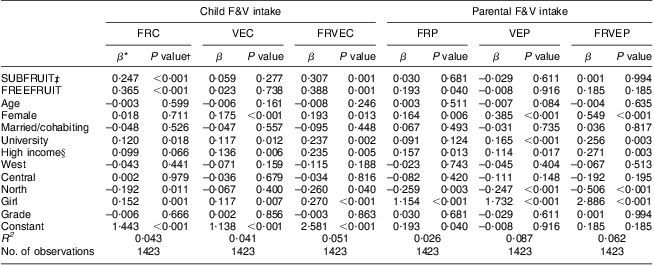
F&V, fruit and vegetable; FRC/FRP, child/parental fruit intake; VEC/VEP, child/parental vegetable intake; FRVEC/FRVEP, child/parental fruit and vegetable intake; SUBFRUIT, fruit subscription school; FREEFRUIT, free fruit school.
*Model coefficients (β) estimated using ordinary least squares with sample weights.
†P values are based on robust standard errors.
‡Reference groups are NOFRUIT and the South or East region. See Table 1 for variable descriptions.
§All models also control for missing income (‘Inc. missing’).
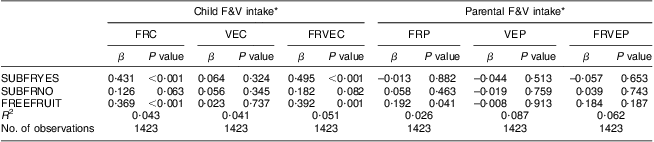
Children who attend fruit subscription schools (SUBFRUIT) are on average predicted to eat 1·68 fruit portions/d, i.e. 0·24 more fruit portions daily – or 16·7 % more fruits – than NOFRUIT children (P < 0·0 0 1). When we instead estimate the FRC model with the SUBFRUIT group split into subscribing and non-subscribing children, the coefficient on SUBFRYES is 0·43 (P < 0·0 0 1), while the coefficient on SUBFRNO is 0·13 (P = 0·063). The NSFS coefficients from this alternative model specification for FRC and the remaining five F&V variables are reported in the Appendix.
Interestingly, results of the FRP model in Table 2 suggest that parents of children who attend FREEFRUIT schools eat significantly more fruits than parents of children who attend NOFRUIT schools. At respectively 1·71 and 1·52 fruit portions/d, parents of FREEFRUIT children eat on average 0·19 more fruit portions daily – or 12·5 % more fruits – than parents of NOFRUIT children (P = 0·040). Thus, there appear to be spillover effects running from free school fruit to higher parental fruit intake. The effect of having a fruit subscription scheme in school on parental fruit intake seems less clear, as the SUBFRUIT coefficient in the FRP model in Table 2 is small and statistically insignificant. This last result is not sensitive to how the SUBFRUIT respondents have been grouped; in the alternative FRP model specification in the Appendix, both the SUBFRYES and SUBFRNO coefficients are small and statistically insignificant.
Results of the VEC and VEP models in Table 2 suggest that there are no associations between the NSFS and child and parental vegetable intakes, as the coefficients on FREEFRUIT and SUBFRUIT in these models are small and statistically insignificant. Thus, as also reflected in the FRVEC and FRVEP models, the effect of FREEFRUIT on total F&V intake seems to be entirely driven by changes in fruit intake.
Discussion
To the best of our knowledge, the present study is the first to assess impacts of a nationwide school fruit scheme using nationally representative data, as all nineteen counties of Norway and more than 750 different schools are represented in our sample of 1423 primary-school children and their parents. Daily provision of one piece of fruit or vegetable to primary-school children through the NSFS, either free or at a subsidized price, is found to significantly affect the children's fruit intake. On average, free school fruit and subsidized school fruit increase a child's fruit intake by 0·36 and 0·25 portions/d, respectively. These effects fall within the range of those reported in previous school fruit intervention studies; in a review of thirty studies, of which ten involved actual provision of fruits and/or vegetables in school, de Sa and Lock( Reference de Sa and Lock 3 ) found that among the twenty-three studies that reported significant effects at follow-up, the intervention effect ranged from 0·14 to 0·99 portions/d.
The estimated effects of the NSFS in the present study are measured while the children attend primary school, and not in a later follow-up survey. Thus, we do not know whether all or at least some of the effects of free or subsidized school fruit are sustained in the medium term (1–3 years) and subsequently into adulthood. The evidence on the medium-term effects of other school fruit interventions is both scarce and mixed, ranging from no effects in England( Reference Ransley, Greenwood and Cade 10 , Reference Fogarty, Antoniak and Venn 11 ), to small but significant effects in the Netherlands( Reference Tak, Te Velde and Brug 9 ), and significant and relatively large effects in Norway( Reference Bere, Veierød and Skare 8 ).
The data in Bere et al. ( Reference Bere, Veierød and Skare 8 ) were drawn from a pilot version of the NSFS. The pilot included 6th and 7th grade children from thirty-eight schools in two Norwegian counties. The intervention group received free school fruit during the school year 2001/02, and follow-up surveys on F&V intake were conducted in May 2002 and May 2005. A new survey of 6th and 7th grade children in twenty-seven out of these thirty-eight schools was conducted in September 2008, which is about one year after the current version of the NSFS was made nationwide. Significant effects of the NSFS based on this survey have been reported in Bere et al. ( Reference Bere, Hilsen and Klepp 12 ), who found that free school fruit and subsidized school fruit increase a child's fruit intake by 0·58 and 0·23 portions/d, respectively. The present study adds to these results by presenting similar evidence from data that are nationally representative and that also include children from all seven grades of primary school.
Norwegian children who attend combined schools (grades 1–10) now receive free school fruit continuously for 10 years. This is a considerably longer time period than in previously studied school fruit interventions( Reference de Sa and Lock 3 ). It seems reasonable to expect that the longer the intervention period, the more likely it is that the children's general dietary habits, or at least their F&V intakes, will be permanently affected. Provided the current version of the NSFS will run for at least 2–3 more years, it will in 5–10 years be interesting to compare the dietary habits and in particular the F&V intakes of young adults (ages 18–23 years) who throughout their whole primary school period were randomly assigned to one of the three main NSFS groups SUBFRUIT, FREEFRUIT or NOFRUIT. This will allow for assessing the long-term impact into adulthood of a nationwide school fruit scheme with a long intervention period. Although arguably important, such long-term impact assessments of school fruit schemes have not yet been conducted because of data availability.
Nationwide school fruit schemes have thus far been subject to only one cost–benefit analysis( Reference Sælensminde 23 ). This is surprising considering the costs involved. For example, the total cost over 10 years for the free version of the NSFS is approximately NOK 6300 per child (NOK 3·50/d × 180 school days/year × 10 years). Sælensminde( Reference Sælensminde 23 ) concludes that the NSFS may be cost-effective if children on average increase their permanent F&V intake by 2·5 g/d as a result of receiving free school fruit for 10 years. While this target appears to be well within reach, Sælensminde( Reference Sælensminde 23 ) stresses that his evaluation includes many uncertain elements, including the general assumptions being made, which costs and benefits to include, and how to calculate these costs and benefits. Thus, there is a need for more studies that evaluate the costs of nationwide school fruit schemes against alternative uses.
Among other factors, such cost–benefit analysis should consider two factors that have been specifically addressed in the present study. First, as suggested by the above results, free school fruit may be associated with positive spillover effects in terms of affecting not only child fruit intake, but also parental fruit intake. On average, parents of children who attend a free fruit school eat 0·19 more fruit portions daily – or 12·5 % more fruits – than parents of children who attend a school with no school fruit arrangement. To the extent that also other studies find similar spillover effects, this will have important implications for the expected effects of school fruit schemes on population health and related health-care costs.
Second, as reported here and in other studies, while school fruit schemes are typically found to have significant effects on fruit intake, they do not seem to affect vegetable intake( Reference Tak, Te Velde and Brug 9 , Reference Ransley, Greenwood and Cade 10 , Reference Bere, Hilsen and Klepp 12 ). This is worrying because at least in Norway, insufficient vegetable consumption represents a greater challenge than insufficient fruit consumption( 7 ). The long-term health benefits associated with free school fruit schemes may be smaller than anticipated if they have no effect on vegetable intake.
In light of this result, nationwide school fruit schemes such as the NSFS may need to focus more explicitly on measures that can help increase vegetable consumption. For example, while many different types of fruits are handed out through the NSFS, vegetables are mainly limited to carrots, and these are typically handed out only once per week or even less frequently. One strategy may therefore be to increase the proportion of vegetables that are handed out through the NSFS, along with attempts at making vegetables more attractive as a snack food, for example through new preparations and offering more varieties. This could in turn be supported by information to the children and their parents about the particular importance of eating more vegetables.
The results of the present study must be considered in light of its limitations. First, as noted, we estimate effects of the NSFS while the children attend primary school, and not in a later follow-up survey. Second, while nationwide natural experiments such as the NSFS are attractive, they lack some of the methodological properties of randomized controlled trials, including control over the selection of intervention and control groups. Except for some regional differences that were controlled for in the above statistical analyses, the schoolchildren in the present study are believed to be randomly assigned to the three main NSFS groups SUBFRUIT, FREEFRUIT and NOFRUIT. However, we do not have access to baseline data in absence of the NSFS, and thus we cannot conclude that households from the different NSFS groups are similar on possibly relevant observable and unobservable characteristics beyond those that were controlled for in the above statistical analyses.
Third, while our sample seems representative in terms of parental age, gender and geographic region, the percentage of the sample that has attended some form of university or college is somewhat lower than corresponding data from Statistics Norway (34·1 % v. 39·6 %). However, while the data from Statistics Norway include all Norwegians between 25 and 60 years of age, our study only includes parents of primary-school children in the same age range. This could explain the difference; for example, respondents between 25 and 29 years of age who already have children attending primary school might be less likely to have attended college or university than other people in the same age range. Nevertheless, overall we believe that our study uses a nationally representative sample of primary-school children and their parents, and that it is the first to do so focusing on effects of a nationwide school fruit scheme.
Finally, biases may also arise from the relatively crude F&V measures that were used in the survey and from the fact that child F&V intakes were reported only by the parents and not by the children themselves. The 6th and 7th grade children in Bere et al. ( Reference Bere, Hilsen and Klepp 12 ) reported an average F&V intake of 3·05 portions/d, while in the present study the parent-reported F&V intake of 6th and 7th grade children is 2·71 portions/d. In Tak et al. ( Reference Tak, Te Velde and Brug 9 ), who evaluated effects of the Dutch Schoolgruiten Project, both the children and the parents reported the child's F&V intake and also they found that child-reported intakes were somewhat higher than parent-reported intakes. However, the regression coefficients on the effects of the school fruit intervention were approximately the same when estimating the models with child- and parent-reported data. Analogously, although the parent-reported F&V intakes in the present study might be somewhat low, this under-reporting is not expected to differ systematically across different groups of parents and therefore the estimated effects of NSFS participation on F&V intakes should be correct. Finally, our study includes children from all grades of primary school, i.e. children between 6 and 13 years of age. For children less than 9 years of age, self-reporting of food intake is difficult( Reference McPherson, Hoelscher and Alexander 24 ) and therefore parent-reported or parent-assisted food intake reports are preferable.
Acknowledgements
Sources of funding: This research was supported by the Research Council of Norway (grant number 199545). The Research Council of Norway had no role in the design, analysis or writing of this article. Conflict of interest declaration: The authors declare that they have no competing interests. Authors’ contributions: A.Ø. drafted the manuscript and conducted the analysis. E.B. critically revised the manuscript. Both authors read and approved the final manuscript. Acknowledgements: The authors would like to thank the Norwegian Fruit and Vegetable Marketing Board for providing the data for this study, and Tore Angelsen and two anonymous reviewers for their helpful comments and suggestions.
Appendix
Regression models for child and parental F&V intake with SUBFRUIT split into SUBFRYES and SUBFRNO among parents of primary-school children (n 1423) who responded to an Internet survey on behalf of themselves and their children, Norway, March 2011