

Daemonum vires, numeros, honores,
Jus, potestatem, officium, figuram,
Ordinem, sensum, facili quis ore
dicere possit?
—Jean Bodin, Colloquium heptaplomeres (Reference Bodin and Noack1857, 100) Footnote 1
INTRODUCTION
The concept of sovereignty occupies a central position in contemporary political science, from international relations (Lake Reference Lake2003; Slomp Reference Slomp, Salmon and Imber2008; Núñez Reference Núñez2020; Savage Reference Savage2020) to comparative politics (Guiraudon and Lahav Reference Guiraudon and Lahav2000; Spruyt Reference Spruyt and Goodin2009; Hislope and Mughan Reference Hislope and Mughan2012, 10–1; Siaroff Reference Siaroff2013, 1–6) and political theory (Benhabib Reference Benhabib2009; Brown Reference Brown2010; Cohen Reference Cohen2012; Stilz Reference Stilz2019). While there are profound disagreements over its meaning (Krasner Reference Krasner1999, 3; Koskenniemi Reference Koskenniemi, Kalmo and Skinner2010; Moses Reference Moses2014, 21–51), empirical utility (MacCormick Reference MacCormick1999, 128, 132–3; Keith Reference Keith2004; Herzog Reference Herzog2020), and normative defensibility (Nagel Reference Nagel2005; Stilz Reference Stilz2019; Schmid Reference Schmid2022), there is substantial agreement across these fields on several key points. First, the early modern French jurist Jean Bodin (1530–1596) is usually regarded as the founder of the modern theory of sovereignty, as articulated principally in his Method for the Easy Comprehension of History (1566, henceforth Methodus) and more comprehensively in the Six Books of the Commonwealth (1576, henceforth République).Footnote 2
Second, many scholars assume that the “classical” concept of sovereignty, as articulated by Bodin, entails a commitment to the legal autonomy of states—a commitment that is often thought to conflict with cosmopolitan political ideals and the aspiration to establish a global legal order (see Held Reference Held2002; Herzog Reference Herzog2020, 164; Schmid Reference Schmid2022, 957–8). Consequently, some theorists have attempted to move beyond the “classical” theory of sovereignty, either by reconceptualizing sovereignty (Benhabib Reference Benhabib2006; Cohen Reference Cohen2012; Stilz Reference Stilz2019; Schmid Reference Schmid2022) or by rejecting the concept altogether (Henkin Reference Henkin1999; Schiemann Reference Schiemann2007; Goodhart and Tanichev Reference Goodhart and Taninchev2011; Herzog Reference Herzog2020).
In this paper, we contend that there are good historical reasons to question the assumption that Bodinian sovereignty is necessarily at odds with either cosmopolitanism or global constitutionalism. Recent scholarship has suggested that Bodin’s theory differs substantially from the so-called “Westphalian” model of sovereignty, which excludes external legal interference in the affairs of independent territorial states (Beaulac Reference Beaulac2004; Lee Reference Lee2021, 28, 39–41, 222–3).Footnote 3 Building on this historiographical reassessment, we argue that Bodin did not conceive of sovereign states as self-sufficient legal orders; rather, he positioned human sovereigns within an enforceable legal framework extending above and beyond the state. To bring these aspects of Bodin’s political thought to light, we will first attend to the theological foundations of his theory of sovereignty.
Owing largely to the influence of Carl Schmitt (Reference Schmitt and Schwab1985, 49), sovereignty is frequently characterized as a secularized theological concept (see de Benoist Reference de Benoist1999, 103; Kahn Reference Kahn2004, 269–70; Reference Kahn2011, 105; Brown Reference Brown2010; Elshtain Reference Elshtain2012). This theoretical formulation typically centers on conceptions of “internal” sovereignty, understood as the supreme authority within a state.Footnote 4 On this view, the theological character of Bodin’s political thought is most apparent in his conception of absolute sovereignty, wherein the sovereign authority occupies a position analogous to God and is accountable to Him alone (de Benoist Reference de Benoist1999, 103; Suggi Reference Suggi2005, 114; Brown Reference Brown2010, 72–3). Our argument identifies a previously overlooked theological dimension of Bodin’s theory of sovereignty. We focus on his claim that human sovereigns are externally embedded within a universal legal order that imposes binding and enforceable constraints on their authority. This claim, we argue, must be understood in the context of Bodin’s belief that God—the sovereign of the universe—enforces His laws through a government or administration of angels and demons.
Our analysis reveals that it can be misleading to counterpose contemporary theories of global constitutionalism to Bodin’s theory of sovereignty. One might argue that such theories in fact reflect the secularization of Bodin’s theological premises: the ideal of global constitutionalism might be interpreted as a secular analog of the cosmic legal order, and contemporary international law as a secular analog of the law of God and nature. Since the theory and practice of international law do not rely on either a unitary sovereign lawgiver or coercive enforcement (see Brunnée Reference Brunnée, Beyerlin, Stoll and Wolfrum2006; von Stein Reference von Stein and Sandal2017; Hathaway and Shapiro Reference Hathaway and Shapiro2019; Katz Miller Reference Miller, Ariella2024), we do not suggest that contemporary global constitutionalists should endorse Bodinian conceptions of sovereignty, cosmology, or natural law. But neither, perhaps, should they view Bodinian sovereignty as their “other.” Bodin was not a proto-Westphalian theorist of exclusive territorial sovereignty (see Lee, Reference Lee2021, 21, 117, 146–8); rather, he was an early theorist of a distinctive form of “cosmopolitan” legalism—in the literal sense of a legalism that applied to the entire cosmos.Footnote 5
To recover these overlooked dimensions of Bodin’s thought, we examine his political works alongside the rest of his oeuvre, which encompasses extensive writings on witchcraft, cosmology, moral philosophy, metaphysics, and theology. As intellectual historians have emphasized, Bodin considered his reflections on these seemingly disparate subjects to constitute a coherent system of thought (Quaglioni Reference Quaglioni1992; Blair Reference Blair1997; Chrom Jacobsen Reference Jacobsen, Mogens2000; Suggi Reference Suggi2005; Vasoli Reference Vasoli2008; Lloyd Reference Lloyd2017). Yet political theorists—and even scholars of political theology—have often neglected Bodin’s ostensibly non-political writings, either because their content falls outside the conventional boundaries of the history of political thought or because of the perceived outlandishness of many of his philosophical ideas. As we will demonstrate, however, Bodin’s theological and philosophical writings illuminate crucial elements of his political thought that are easily overlooked.
Our argument will also reorient what is arguably the most significant debate of the last half-century of scholarship on Bodin’s political thought—namely, whether his theory of sovereignty is “absolutist” or “constitutionalist.”Footnote 6 Although Bodin insists that sovereign power must be “unbound by the laws” (legibus solutus) (Reference Bodin1591, 110), he also maintains that sovereigns are bound by natural and divine law (Reference Bodin1593, sig. ã8r; 149).Footnote 7 The ambiguous relationship between these commitments has given rise to incompatible interpretations of Bodin’s theory of sovereignty. While Bodin has long been understood as the central figure of an “absolutist” political tradition, recent scholars have endorsed non-absolutist—or even “constitutionalist”—interpretations of his political thought.Footnote 8
At the heart of this disagreement lies the question of whether Bodin believed natural and divine laws impose enforceable constraints on sovereigns. Absolutist readings of Bodin generally acknowledge that he saw the laws of God and nature as binding, but deny that he regarded these higher-order norms as enforceable through ordinary institutional mechanisms, such as political trials or judicial review (see e.g., Franklin Reference Franklin1973, 85–6). Proponents of this view often characterize natural and divine laws as essentially moral counsels (Hearnshaw Reference Hearnshaw and Seton-Watson1924, 124; Franklin Reference Franklin1973, 79; Loughlin Reference Loughlin2010, 68), or as prudential guidelines meant to bolster sovereign power (Franklin Reference Franklin1973, 69–70, 87, 92; Keohane Reference Keohane1980, 74). Non-absolutist and constitutionalist readings, in contrast, contend that Bodin regarded natural and divine law as not only binding, but also enforceable. While some scholars go so far as to suggest that sovereigns are subject to legal action in courts (Shepard Reference Shepard1930, 592, 596; Lee Reference Lee2021, 93–4), others locate alternative mechanisms of accountability in the threat of political resistance (Straumann Reference Straumann2016, 286; Tuck Reference Tuck2016, 61; Liu Reference Liu2025, 27–30), or in just wars of liberation (Lee Reference Lee2021, 220; Liu Reference Liu2025, 25–37). Recently, Daniel Lee (Reference Lee2021, 163) has also reinterpreted the Bodinian concept of “absolute power” itself, suggesting that it should be understood not as arbitrary or unfettered authority, but rather as “the sovereign’s negative power of unmaking law.”
The extent to which these objections successfully counter the absolutist reading of Bodin remains a subject of ongoing debate (Franklin Reference Franklin1973, 70–93; Arum and Hoekstra Reference Arum, Hoekstra, Smith and PeltonenForthcoming). Yet both “absolutist” and “constitutionalist” interpretations tend to overlook the one enforcement mechanism that Bodin’s theory of sovereignty clearly provides: he insists that sovereigns are embedded within a cosmic constitutional order, in which higher-order laws are enforced by angels and demons. In contrast to existing interpretations, we argue that Bodin’s political thought was neither “absolutist” nor “constitutionalist,” in the ordinary sense of those terms; rather, he was a theorist of what we propose to call demonic constitutionalism. Footnote 9
In the first section of this article, we reconstruct the demonological doctrines of Bodin’s mature writings on witchcraft, theology, natural philosophy, and cosmology. These texts pose formidable challenges to the interpreter, not only because of their length and complexity, but also because they abound in imprecisions, ambiguities, and outright contradictions (see Crahay and Isaac Reference Crahay and Isaac1987; Blair Reference Blair1997, 63; Lloyd Reference Lloyd2017, 183, 218, 245–6). Nevertheless, Bodin’s apparently “non-political” texts are integral to his overarching political-theological project, and a concern with political demonology runs throughout his corpus. In the following section, we demonstrate that angels and demons serve a crucial political function in Bodin’s universe: they are tasked with executing and enforcing the laws of God and nature. One essential function of demons is the punishment of human sovereigns, who—in accordance with Bodin’s theory of “harmonic justice”—are punished more severely than their subjects for violations of divine and natural law. In the final section, we return to Bodin’s earlier and more widely studied political writings, the Methodus and République, to show that these works exhibit essentially the same conceptions of political demonology and cosmology. We thus establish that, from the 1560s onwards, Bodin argued that God governs the universe—and enforces His higher-order laws—through a celestial administration of spiritual intermediaries.
THE ORDER OF THE COSMOS
Bodin lived most of his adult life during the French Wars of Religion, which began in 1562, four years before the publication of the Methodus, and ended in 1598, two years after his death. The widespread destruction wrought by these conflicts provides an essential context for understanding Bodin’s major writings. As various scholars have emphasized (see Moreau-Reibel Reference Moreau-Reibel1935; Rose Reference Rose, Kouri and Scott1987; Blair Reference Blair1997, 21–30; Lloyd Reference Lloyd2017, 259–62), Bodin was convinced that the evils afflicting France were punishments for impiety and irreligiosity. In the last two decades of his life, his works offered various remedies: On the Demon-Mania of Witches (henceforth Démonomanie) (1580) proposes methods for combating witchcraft; the Paradox (henceforth Paradoxon) (1596) elucidates the true nature of moral virtue, culminating in the worship of God; the Theater of Nature (henceforth Theatrum) (1597) demonstrates that the natural order orients us toward the contemplation of the divine; and the Colloquium of the Seven about the Secrets of the Sublime (henceforth Colloquium) addresses doctrinal disputes.Footnote 10 Rather than imposing one faith above others, Bodin sought to identify fundamental theological principles common to all religions. These principles—largely rooted in a syncretic form of Jewish monotheism—provide the framework for what Bodin sometimes terms “true religion” (vero religio) (see e.g., Reference Bodin and Noack1857, 125, 172, 186, 192; Lloyd Reference Lloyd2017, 64, 255–61).Footnote 11 Each of Bodin’s mature works also contains extended discussions of the nature of spirits and their role in the cosmic order. Bodin evidently viewed demonology as integral to his theological and political project. To understand why, we must first reconstruct the central tenets of his religio.
Bodin’s view of the universe is shaped by his conception of God’s nature and power (Vasoli Reference Vasoli, Canziani, Granada and Zarka2000). In the Theatrum and Colloquium, Bodin develops lengthy arguments refuting the Aristotelian notion that God is a first cause bound by necessity. Against this position, he argues not only for the absolute freedom and omnipotence of the divine, but also for a complete separation between God and created reality. God alone, Bodin asserts in the Theatrum, is “indivisible,” “simple,” “incorporeal,” “infinite,” and “eternal” (Reference Bodin1597, 522–3); the universe, by contrast, is material, composite, finite, and perishable. Bodin appeals to these principles to argue that God, having created the world, can destroy it at will (Reference Bodin1597, 40; Reference Bodin and Kuntz1975, 35–7).
Since God is entirely transcendent and incorporeal, human beings cannot attain direct knowledge of Him. As Bodin suggests in the conclusion of the Theatrum, we can only know the mundane effects of the divine—and, by reflecting on these, attain a “shadowy knowledge” that ultimately leads to contemplation of sublime mysteries (Reference Bodin1597, 633). According to Bodin (Reference Bodin, Krause, Martin and MacPhail2016, 104–5, 125–30), divine mysteries can only be grasped through prophetic illumination, which God grants at His discretion to pious individuals who pray and endeavor to purify their souls (see Rose Reference Rose1980, 9–14; Lloyd Reference Lloyd2017, 260). In the Démonomanie, Bodin (Reference Bodin, Krause, Martin and MacPhail2016, 105–9) gives an example of an acquaintance who summoned a benevolent spirit to guide him in daily choices and philosophical inquiries. Several scholars argue that this story is autobiographical (see von Bezold Reference von Bezold1910; Baxter Reference Baxter and Denzer1973; Rose Reference Rose1980, 164–74; Voegelin Reference Voegelin and Wiser1998, 197; Vasoli Reference Vasoli and Meroi2007, 317), suggesting that Bodin saw himself as a recipient of prophetic illumination or daemonic inspiration.
Bodin believes the human intellect is far more capable of comprehending the created universe, of which he attempts to provide an encyclopedic account in the Theatrum. Like many Renaissance philosophers, Bodin envisions a hierarchical universe structured according to the traditional image Arthur Lovejoy famously described as “the great chain of being.”Footnote 12 Bodin understands the created world as a continuum of species, spanning from the simplest minerals and stones to plants, animals, human beings, and ultimately the celestial sphere (Reference Bodin1597, 3–4; Reference Bodin, Krause, Martin and MacPhail2016, 101). Since God endowed the world with this orderly structure—assigning to each entity its proper function—the course of natural events is regular and comprehensible through reason. The “laws of nature,” for Bodin, are simply laws that God has willed for the entire world (see Isnardi Parente Reference Parente, Margherita and Denzer1973, 40; Kuntz Reference Kuntz and Daniels Kuntz1975, xxx; Goyard-Fabre Reference Goyard-Fabre2002, 60–6).
At the same time, Bodin (Reference Bodin1597, 37, 40) insists that God Himself is “legibus solutus”: He is bound neither by His own laws nor by any other constraint. God thus holds the power to disrupt the ordinary course of natural phenomena (Bodin, Reference Bodin and Kuntz1975, 31, 35). He may influence human wills; control the movements of animals and inanimate objects (Bodin, Reference Bodin1597, 27); cause monstrous births (Bodin Reference Bodin and Kuntz1975, 31; cf. Reference Bodin1597, 391–2); or bring about natural disasters, including extraordinary meteorological events such as hailstorms of blood or milk (Bodin Reference Bodin1597, 31; Reference Bodin and Kuntz1975, 31). Adopting a distinctively Scotist vocabulary,Footnote 13 Bodin differentiates these “extraordinary” occurrences from the “ordinary”—but equally divinely ordained—course of nature (Reference Bodin1597, 165, 180, 182, 327, 328, 339; Reference Bodin and Noack1857, 51, 55, 61–2, 226, 272; Reference Bodin, Krause, Martin and MacPhail2016, 140). Bodin’s God, then, is truly “absolute” in the sense that His power is entirely arbitrary: “God is freed [absolutum] from the necessity of nature” (Bodin Reference Bodin1597, 50; see also Reference Bodin and Noack1857, 25). Bodin’s use of the term “absolute” in a theological context presents a challenge to Lee’s (Reference Lee2021, 148–9) claim that Bodinian “absolute power” does not entail arbitrariness. For Bodin, God is an absolute sovereign in the sense that His power is subject to no constraints whatsoever. As Bodin explains in the Theatrum and the Colloquium, there is a sense in which it can even be misleading to call God’s power “absolute.” Strictly speaking, to possess “absolute power” (absoluta potestas) is to be “freed from laws [legibus solutus] by someone else.” God, however, “is not freed from the laws of nature by the senate or the people, but by Himself” (Bodin Reference Bodin1597, 40; cf. Reference Bodin and Noack1857, 22; Reference Bodin and Kuntz1975, 31).
Bodin’s understanding of divine intervention sits uneasily with his conception of God as transcendent and distinct from created reality. If God and mundane reality share nothing in common, how can Bodin account for the “extraordinary” effects that God produces in the created world? Like many Neoplatonic philosophers (see Brisson, O’Niell, and Timotin Reference Brisson, O’Niell, Timotin, Brisson, O’Niell and Timotin2018, 1),Footnote 14 Bodin (Reference Bodin and Kuntz1975, 32; Reference Bodin, Krause, Martin and MacPhail2016, 101) argues that spiritual intermediaries—angels and demons—link the divine and mundane realms (see Lange Reference Lange1970; Vasoli Reference Vasoli1990, 522–31; Suggi Reference Suggi2005, 93–113).Footnote 15
In Bodin’s hierarchy of beings, spirits occupy the rung directly above humans and are charged with the execution of God’s commands. In the Colloquium, Bodin has Salomon—the representative of Judaism—explain that “it is inconsistent with divine majesty to act through itself what it can perform through the action of angels” (Reference Bodin and Kuntz1975, 71; see also 100, 115; cf. Reference Bodin, Krause, Martin and MacPhail2016, 140). Bodin seems to treat Salomon’s position as authoritative. Throughout the Colloquium, Salomon frequently appears as an expert on demonology, invoking various Biblical, rabbinic, and Kabbalistic sources to support his views.Footnote 16 In the Theatrum, Bodin expresses similar views, arguing that God appoints angels and demons to manage both ordinary natural processes—such as the movement of celestial bodies—and extraordinary events that deviate from the usual course of natural phenomena (Reference Bodin1597, 163). Several passages in the Démonomanie (Reference Bodin, Krause, Martin and MacPhail2016, 76–7, 273–2), Theatrum (Reference Bodin1597, 30–2), and Colloquium (Reference Bodin and Kuntz1975, 7–15, 17–26, 67–82) extensively describe extraordinary occurrences—ranging from speaking animals to magical acts—that can only be explained by assuming angelic or demonic intervention. Throughout these works, Bodin thus presents spirits as intermediaries bridging the created universe—including the entire realm of human activity—and God.
However, Bodin’s demonology leaves two significant theoretical issues unresolved. The first concerns the ontological status of angels and demons. Bodin rejects the traditional Scholastic notion that spirits are incorporeal and immaterial (Lange Reference Lange1970, 109), instead positing that—since God alone is incorporeal—“the nature of angels and demons [must be] corporeal” (Bodin Reference Bodin1597, 58; see also Reference Bodin1597, 163, 512–3; Reference Bodin and Kuntz1975, 51; Reference Bodin, Krause, Martin and MacPhail2016, 64, 98).Footnote 17 If angels and demons intervene in the physical world—for instance, by moving or interacting with human bodies—they must possess bodies themselves. Yet it remains unclear precisely how we should interpret Bodin’s claim that angels and demons are corporeal. At several points in the Theatrum, Mystagogus—whom Bodin employs as a spokesman (see Bodin Reference Bodin1597, 7; Blair Reference Blair1997, 50–65)—expresses uncertainty regarding the physical nature of angels and demons, speculating that their essence might be “airy, or fiery, or celestial” (Bodin Reference Bodin1597, 511), or, alternatively, composed of an “invisible essence” combining several of these elements (Bodin Reference Bodin1597, 515). What Bodin makes explicit is that the bodies of angels and demons—unlike those of humans—are not “flesh-like or bone-like”; their essence is so subtle as to be inaccessible to the human senses (Reference Bodin1597, 515–6).Footnote 18 Given their corporeality, angels and demons can also come into existence and cease to exist, although the details of their genesis and corruption remain obscure (Bodin Reference Bodin and Kuntz1975, 40–2, 49).
A second unresolved issue arises from Bodin’s account of God’s communication and interaction with spiritual intermediaries. If God is truly separate and distinct from created reality, how can He communicate with corporeal beings and issue commands? Bodin never fully addresses this question, perhaps because he sees it as bound up with the mystery of divine omnipotence. This problem is complicated further by Bodin’s ambiguous use of the category of “metaphysics.” At times, he strictly limits this term to the study of God, contrasting it with the natural sciences, which concern physical bodies (Bodin Reference Bodin and Kuntz1975, 41, 49; see Blair Reference Blair1997, 43). From this standpoint, demonology would appear to be a branch of natural philosophy or physics (see Bodin Reference Bodin1597, 163). Elsewhere, however, Bodin (Reference Bodin, Krause, Martin and MacPhail2016, 384–5) uses the term métaphysique to describe the study of angels and demons.
Despite these ambiguities, Bodin never wavers in his conviction that angels and demons provide an essential link between the divine and mundane realms. According to Bodin, angels and demons can be found throughout the universe: “in the skies, in the air, in the waters, on the earth, under the earth, in towns, in states; and in animals, plants, metals, and elements, and individual men” (Reference Bodin1597, 528). Each action performed by these celestial intermediaries executes a divine command (Bodin Reference Bodin and Kuntz1975, 85, 115–6; Reference Bodin, Krause, Martin and MacPhail2016, 97, 140). The resulting cosmological vision—as articulated in the second book of the Colloquium—is one in which God “is infinite in all ways, and alone is eternal… but angels, demons, and minds are corporeal and finite, changeable, and corruptible in their own nature” (Bodin Reference Bodin and Kuntz1975, 62; trans. modified).
THE ENFORCEMENT OF NATURAL LAW
Bodin’s demonology underpins his account of moral retribution. As an extended discussion of resurrection in the third book of the Colloquium makes clear, Bodin (Reference Bodin and Kuntz1975, 130–6; cf. Reference Bodin, Krause, Martin and MacPhail2016, 93) believes divine reward and punishment occur not only in the afterlife, but also in the mundane realm: God employs angels to reward virtue, and demons to punish vice (Reference Bodin and Kuntz1975, 43, 85). Since both angels and demons play an essential role in upholding the moral order of the cosmos, it would be a mistake to regard them as respectively “good” and “evil.” Following a traditional Neoplatonic line of reasoning, Bodin argues in the Paradoxon (Reference Bodin1598, 6–7; see also Reference Bodin1597, 631–2; Reference Bodin and Kuntz1975, 111–2) that evil, properly speaking, does not exist; it is nothing but the privation of good. Demons, then, are “good” insofar as they are controlled by God and tasked with enforcing His laws (Bodin Reference Bodin1597, 632; Reference Bodin1598, 14–5; Reference Bodin, Krause, Martin and MacPhail2016, 95–7).Footnote 19 As we will see, this applies even to Satan—whom Bodin (Reference Bodin, Krause, Martin and MacPhail2016, 91–2) identifies with Asmodeus, the “king of the demons” in the Jewish tradition (see Gittin 68a; Pesachim 110a)—and the messianic beast Leviathan.
Bodin (Reference Bodin1597, 632; Reference Bodin and Kuntz1975, 65, 150) analogizes the cosmos to the political realm, suggesting that the former provides a model for the optimal organization of the latter (see Goyard-Fabre Reference Goyard-Fabre1989, 13–5; Voegelin Reference Voegelin and Wiser1998, 204, 250). He justifies this analogy by asserting that all levels of reality belong to the same universal chain of being, and by appealing to the conventional Renaissance principle that each level of reality structurally mirrors the hierarchical order of the cosmos as a whole (see Greenleaf Reference Greenleaf1964, 21–6; Foucault Reference Foucault and Sheridan1970, 21). Just as God is “sovereign” over the universe, every realm of nature must have its own subordinate sovereign ruler.Footnote 20 Moreover, God’s omnipotence and unity analogically reveal the superiority of monarchy over all other forms of human sovereignty (see Greenleaf Reference Greenleaf and Denzer1973).
To the extent that human sovereignty is analogous to divine sovereignty, human sovereigns must, in some sense, be “absolute.” In the Colloquium, Bodin (Reference Bodin and Noack1857, 51) compares human sovereigns to God, emphasizing that both are “freed from [their own] commands and laws” (imperiis ac legibus solutum). This statement might seem to align straightforwardly with an “absolutist” reading of Bodin’s theory of sovereignty. However, Bodin emphasizes that human sovereigns are not “absolute”—or unbound by the laws (legibus soluti)—in the same sense that God is (see Couzinet Reference Couzinet1991, 14). Unlike God, who is subject to no higher power, human sovereigns are subject to natural and divine law. Yet human sovereigns, like God, are “absolute” in the sense that they are freed from the binding force of their own legislation. As Lee (Reference Lee2021, 158) emphasizes, it follows that human sovereigns hold the power to make and unmake positive civil laws; this power is, indeed, a necessary condition of sovereignty.
Bodin sometimes appears to suggest that God enforces His norms and decisions through direct intervention in human affairs. In the Theatrum, Bodin (Reference Bodin1597, 340; see also Reference Bodin1578, 23) maintains that God withdraws the fertility of lands, waters, and animals to punish human vices; likewise, He afflicts corrupt peoples with plagues and fires. In an example that is especially revealing of Bodin’s moral vision, he claims that God sends swarms of locusts to punish wicked peoples by consuming their food; once the locusts have become plump, they travel to good peoples, where they are eaten (Reference Bodin1597, 313).
More frequently, however, Bodin (Reference Bodin1597, 632; Reference Bodin and Kuntz1975, 65–6) argues that God enforces natural law indirectly through spiritual intermediaries. In both the Démonomanie (Reference Bodin, Krause, Martin and MacPhail2016, 97) and the Theatrum (Reference Bodin1597, 529–30), Bodin provides lengthy accounts of the cosmic administrative roles of beneficent angels—who offer protection to empires, kingdoms, and republics—and punitive demons. “God sends plagues, wars, and famines,” Bodin writes in the Démonomanie, “through the ministry of evil spirits, executors of His justice” (Reference Bodin, Krause, Martin and MacPhail2016, 288–9). Bodin conceives of demons as “executors and executioners” of divine justice (Reference Bodin, Krause, Martin and MacPhail2016, 97); he describes Satan, too, as an “executor of [God’s] will” (Reference Bodin, Krause, Martin and MacPhail2016, 259). In defining the central functions of celestial agents, Bodin emphasizes “the administration of the welfare of the good,” “the punishment of the wicked,” and “the governing of cities and empires” (Reference Bodin1597, 163).
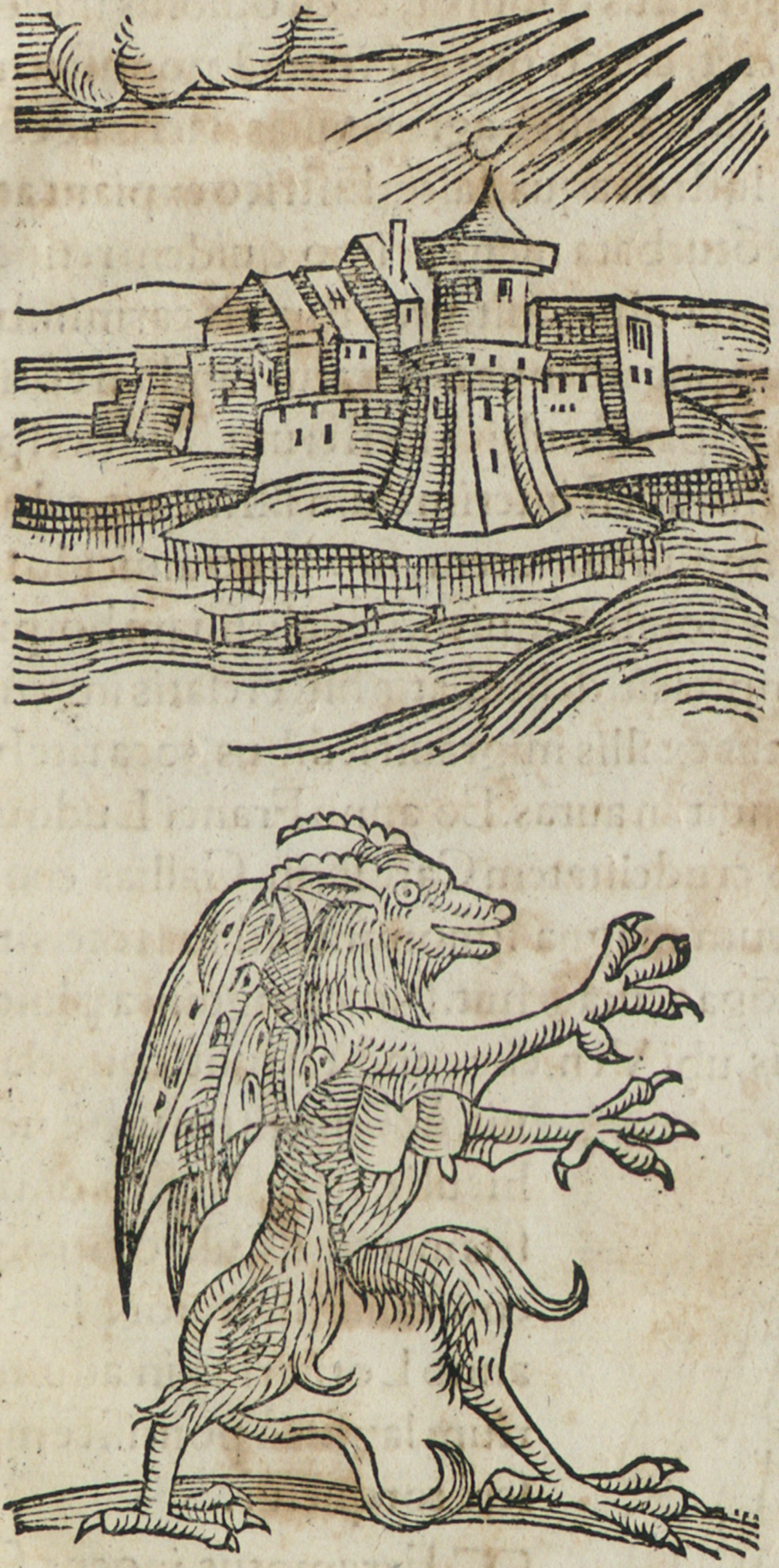
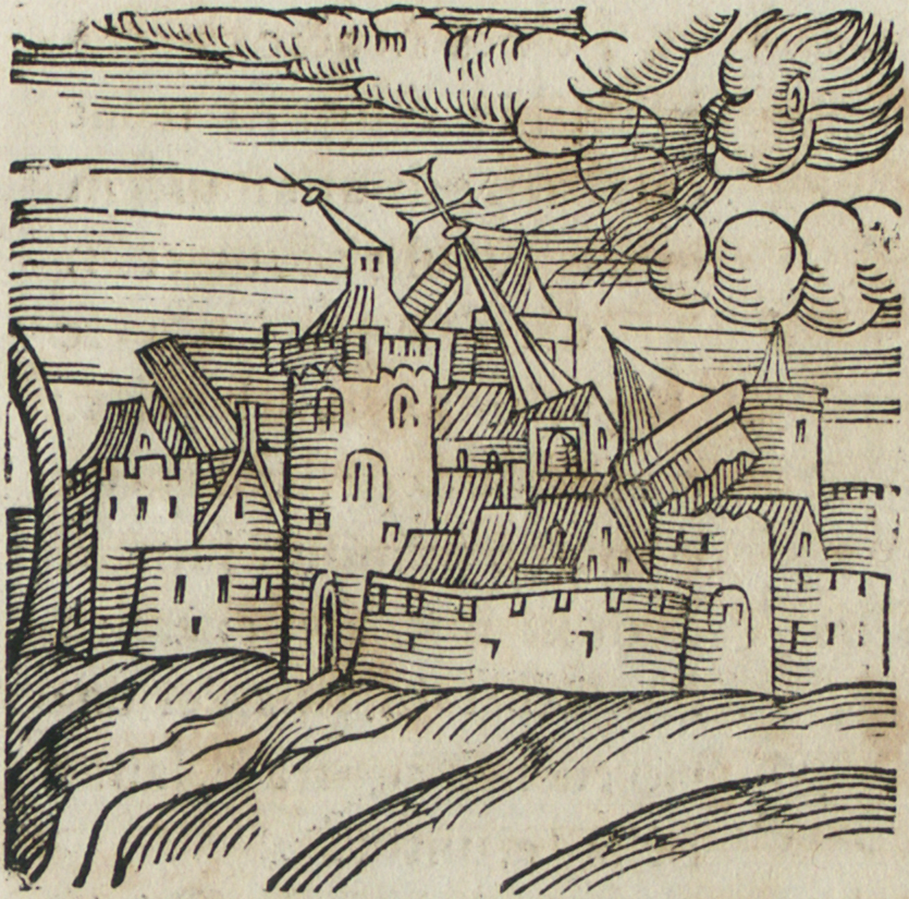
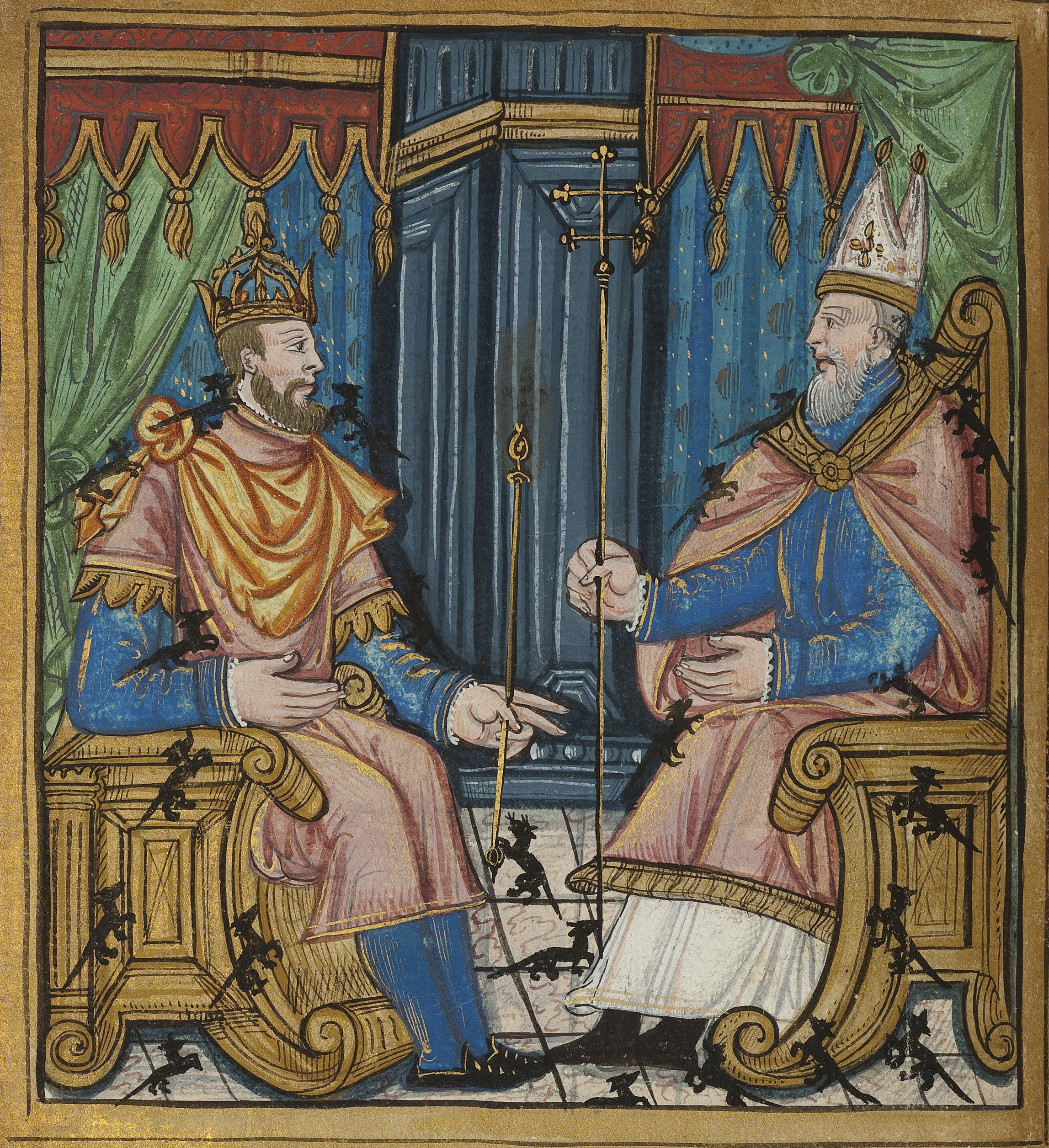
Demons hold the power to destroy cities through natural causes—such as strong winds (Bodin Reference Bodin1597, 174) and earthquakes (Reference Bodin1597, 177–8)—or to afflict rulers with madness. Bodin’s account of these phenomena can be read in the context of widely distributed sixteenth-century texts on “prodigious” events by authors such as Conrad Lycosthenes (1518–61) (Reference Lycosthenes1552; Reference Lycosthenes1557) and Pierre Boaistuau (1517–66) (Reference Boaistuau1560), in which natural disasters and supernatural phenomena are interpreted as “warnings of impending crisis and divine wrath” (Blair Reference Blair1997, 27). In Lycosthenes’ edited volume Prodigiorum liber (Reference Lycosthenes1552)—which Bodin cites in both the Theatrum (Reference Bodin1597, 31) and the Colloquium (Reference Bodin and Noack1857, 22)—we learn that “God uses both good and evil demons to test, chastise, and punish men—sometimes the just, sometimes the wicked” (Lycosthenes Reference Lycosthenes1552, 148). Lycosthenes’ Prodigiorum liber and Prodigiorum ac ostentorum chronicon (Reference Lycosthenes1557) contain striking visual representations of malevolent spirits afflicting towns and cities (Figures 1 and 2). In Boaistuau’s Histoires prodigieuses (Reference Boaistuau1560), one of the most successful French works of this genre (see Blair Reference Blair1997, 27), we read that God sends beasts as “executioners and ministers” of divine justice (Boaistuau Reference Boaistuau1560, fol. 9r). As an example, Boaistuau references the legend of Prince Popiel II and Archbishop Hatto II, who were devoured by rats (Reference Boaistuau1560, fols. 9r–10r; see Figure 3).
Bodin cites Biblical examples of demonic retribution throughout the Colloquium. He interprets the story of Exodus through the framework of his political demonology: “all the first-born of men and beasts throughout the entire realm perished,” he writes, “as they were struck down by Asmodeus” (Reference Bodin and Kuntz1975, 199–200; trans. modified; see also 107, 127; cf. Exodus 12:29). Similarly, Bodin has Salomon explain that God “summoned a council of angels” to punish King Ahab (Reference Bodin and Kuntz1975, 71; cf. 1 Kings 22:14–23). In the Theatrum, Bodin identifies another Biblical instance of demonic retribution in the story of Saul, who disobeyed God’s command by failing to destroy the Amalekites (see 1 Samuel 13:8–14, 15). In Bodin’s interpretation, Saul is abandoned by his guardian angel and tormented by an “evil spirit,” who “blinds [him] with fury and madness” (Reference Bodin1597, 543–4; see also Reference Bodin and Kuntz1975, 127; cf. 1 Samuel 16:14).
In keeping with his cosmic analogies, Bodin insists that angelic and demonic beings should be viewed as participants in a divine government or administration. He conceptualizes the structure of the cosmos in light of his distinction between sovereignty, the right to legislate and appoint magistrates, and government, the site of ordinary policymaking and administration.Footnote 21 Just as a human sovereign appoints “magistrates and ministers” to enforce legislation and govern the commonwealth, “so too [does] that provident governor of the world appoint angels in all places, as if assigned to official posts, to discharge their public offices” (Bodin Reference Bodin1597, 527–8; cf. Reference Bodin and Kuntz1975, 108, 153). In a particularly elaborate image, Bodin describes the cosmos as a vast political system in which God—the “sovereign” of the universe—presides over an assembly of stars, whose “celestial votes” are cast in the “voting urn” of the moon to decide the destinies of human political communities (Reference Bodin1597, 613–4).
Woodcuts Depicting a Demon Tormenting the City of Mainz, from Lycosthenes’ Prodigiorum ac ostentorum chronicon (1557)
Source: Bayerische Staatsbibliothek München (Shelfmark: 4 L.impr.c.n.mss. 11, p. 353).

Woodcut Depicting a Storm Afflicting Mainz, from Lycosthenes’ Prodigiorum ac ostentorum chronicon (1557)
Source: Bayerische Staatsbibliothek München (Shelfmark: 4 L.impr.c.n.mss. 11, p. 355).

Illustrated Miniature of the Deaths of Prince Popiel II and Archbishop Hatto II, from the 1559 Manuscript of Boaistuau’s Histoires prodigieuses
Source: Wellcome Collection, MS 136 (Shelfmark: Boaistuau Reference Boaistuau1559, fol. 14v).

Elsewhere in the Theatrum, Bodin depicts angels and demons as functionaries within God’s cosmic republic:
And just as in a well-ordered commonwealth, executioners, lictors, and corpse-bearers are no less necessary than magistrates, judges, and curators, so too in this mundane commonwealth, God Himself has stationed angels for the the generation, administration [procurationem], and guardianship [tutela] of all things, appointing them as rulers and governors… over cities, provinces, families, and individual human beings. And not only this, but He has also appointed ministers, lictors, enforcers, and avengers in all places, who do nothing without command, nor do they exact punishments on wicked human beings unless matters have been judged and fully understood. Thus, God is said to have created Leviathan… and Behemoth, along with the demons who adhere to them (Reference Bodin1597, 632).
Throughout this passage, Bodin employs Roman juridical terminology to establish an analogy between the state and the cosmic order: angels are not merely agents of the divine will, but procuratores (administrators) and tutores (guardians) of God’s creations (see Berger Reference Berger1953, 653–5; 747–9; cf. Bodin Reference Bodin1597, 529; Reference Bodin and Kuntz1975, 65, 129).Footnote 22 Demons, too, function as political magistrates. In the Colloquium, Bodin has Salomon liken Leviathan and Behemoth—whom the Theatrum characterizes as agents of divine retribution—to “chief officials of higher magistrates” (Reference Bodin and Kuntz1975, 106). In the Démonomanie, Bodin (Reference Bodin, Krause, Martin and MacPhail2016, 140) states that God appoints an “assembly” of angels and demons to govern over all living creatures. In an addition in the edition of 1587, he elaborates on this claim: “This serves to demonstrate that all of nature is ordered to avenge the offense done to God, and that every creature, and especially all spirits—both angels and demons—are armed to swiftly execute His will” (Bodin Reference Bodin, Krause, Martin and MacPhail2016, 140n12).
Bodin’s theory of demonic retribution influenced his outlook on the major political events of his own lifetime. This is especially apparent in his opposition to King Henri III during the Eighth War of Religion (1585–1589). Given Bodin’s reputation as a critic of violent resistance and tyrannicide, one might have expected him to oppose the Catholic League and its allies, who sought to depose Henri III for his leniency toward Protestants. Yet Bodin in fact welcomed violent resistance to the Valois monarchy. In a series of letters written over the course of the war, he argued that Henri III’s adversaries—including Jacques Clément, the King’s assassin—were instruments of divine vengeance. As early as 1578, Bodin predicted that Henri III’s wasteful economic policies would incur divine wrath (see Rose Reference Rose1980, 199). In a letter of March 1589, Bodin appealed to Biblical sources and numerological principles to demonstrate that God disapproved of the Valois monarchy, asserting that the day of retribution was now at hand (Moreau-Reibel Reference Moreau-Reibel1935, 428–9; see also Carta Reference Carta2000). In subsequent letters, he celebrated the assassination of Henri III as an act of divine vengeance, welcoming the ensuing bloodshed as an efficient means of punishment (Moreau-Reibel Reference Moreau-Reibel1935, 432). This attitude was shared by many of Bodin’s contemporaries. During the last two years of Henri III’s reign, the Catholic League circulated pamphlets accusing him of sorcery (see Yardeni Reference Yardeni and Sauzet1992; Zwierlein Reference Zwierlein2016, 44–8). Given that Bodin regarded sorcery as a violation of divine and natural law, these allegations likely reinforced his opposition to the King.
At first glance, Bodin’s support for violent resistance to Henri III may seem to contravene his belief in the sacred character of monarchy. Yet viewed from another angle, Bodin’s position follows directly from his understanding of the relationship between human sovereignty and natural law. Bodin held that human sovereigns remain subject to the jurisdiction of God and His demonic ministers. Consequently, sovereigns who violate divine and natural law incur demonic retribution.
POLITICAL DEMONOLOGY IN THE METHODUS AND RÉPUBLIQUE
The Démonomanie, Theatrum, and Colloquium are not typically read as evidence of Bodin’s political ideas. One might therefore suppose that Bodin’s theory of demonic constitutionalism, as articulated in these texts, was a relatively late intellectual development—one that is, in principle, distinct and separable from his earlier theory of sovereignty. That inference, however, would be mistaken. If we examine Bodin’s earlier and more widely studied political works, the Methodus and the République, alongside his later writings, we find the same set of underlying assumptions regarding cosmology, demonology, and natural law.
Bodin’s earliest political writings reveal a strictly voluntarist conception of natural law. As early as the Distribution of the Whole Law (henceforth Distributio), an outline of juridical concepts written around 1560, Bodin distinguishes between right (ius) and law (lex):
WHAT IS IUS? — Ius is the light of divine goodness and prudence, granted to human beings and transmitted to them for the benefit of human society. (Reference Bodin and Jerphagnon1985, 14)
WHAT IS LEX? — Lex is nothing other than the command [iussum] or sanction of the sovereign power. (Reference Bodin and Jerphagnon1985, 16)
Ius, in other words, refers to universal and rational principles of justice. Lex, in contrast, is the command or sanction of a sovereign authority, enacted as positive law within a specific jurisdiction. Bodin maintains this conceptual distinction throughout his subsequent political writings.
Throughout the Methodus and De Republica, Bodin argues that natural law takes the form of lex rather than ius. Footnote 23 Bodin understands natural law not merely as a set of universal rational principles of justice, but rather as the command of a divine sovereign (see Liu Reference Liu2025, 35). God is legibus solutus with respect to the laws of nature, Bodin explains, because “He himself has commanded [iusserit] them” (Reference Bodin and Miglietti2013b, 268; see also 506, 632). As we have seen, Bodin (Reference Bodin and Jerphagnon1985, 16, 20) uses the same verb—iubeō—to define lex in the Distributio. Thus, it is clear that by the time of writing the Methodus, Bodin had already adopted a voluntarist conception of natural law as divine command; furthermore, he had already developed an “absolutist” understanding of divine authority as arbitrary and unlimited.
In the Methodus, Bodin asserts—as he later elaborates in the Démonomanie, Theatrum, and Colloquium—that the entire cosmos is organized as a hierarchical chain of command: “God governs the angels, the angels, men; men, beasts; and in general the soul, the body; reason, lust; and the intellect, reason” (Reference Bodin and Reynolds1945, 63). This formulation recurs in the French République (Reference Bodin1593, sig. ã4v) and the Latin De Republica (Reference Bodin1591, 1131). The Methodus (Reference Bodin and Miglietti2013b, 284; 380) also anticipates the mature cosmology of Bodin’s later writings by describing the cosmos as a vast respublica comprising numerous jurisdictions. These jurisdictions, Bodin explains, are governed by various divine intermediaries, each of which exercises its own specific “office, authority [potestas], and action” (Reference Bodin and Miglietti2013b, 646; see also 640).
As early as the Methodus, Bodin argues that God punishes wicked sovereigns and political communities, employing demons to intervene in human affairs. He cites the punishment of Nebuchadnezzar as a Biblical example of “divine vengeance” (Reference Bodin and Miglietti2013b, 210; cf. Daniel 4:28–37); likewise, he attributes numerous natural disasters, calamities, and battlefield losses to divine intervention (Reference Bodin and Reynolds1945, 299, 364). Bodin argues that God disrupts the natural course of history through spiritual intermediaries. “Natural history,” he explains, “presents an inevitable and steadfast sequence of cause and effect unless it is checked by divine will or for a brief moment abandoned by it and, so to speak, yielded up to the prince of fluid matter and the father of all evils” (Reference Bodin and Reynolds1945, 17).Footnote 24 Thus, by suspending the laws of nature, God provides a greater scope of action for demonic agents—who must be understood, in turn, as divine servants. Elsewhere in the Methodus, Bodin argues that God directs the rise and fall of empires by altering the positions of stars—which serve “as His instruments” (Reference Bodin and Miglietti2013b, 504)—and through numerological patterns, especially those involving multiples of seven and nine (Reference Bodin and Reynolds1945, 225–34).
Similar arguments reappear in the République. Here too, natural law is presented as a divine command: Bodin refers to natural law as la loy de Dieu et de nature (see Reference Bodin1593, 134, 154, 413–5, 427, 471, 483, 760, 1025).Footnote 25 This characterization implies that such laws are not merely principles of equity, but commands issued by a divine sovereign. Natural law imposes specific constraints on human sovereigns: it dictates, for example, that they must generally abide by their contractual obligations (Bodin Reference Bodin1593, 131, 133, 155–6, 414) and refrain from imposing taxes without consent (Bodin Reference Bodin1593, 140). Bodin also seems to suggest that the Salic law—which forbids female succession to the throne—stems from the law of nature (Reference Bodin1593, 1001; see also Reference Bodin and Reynolds1945, 213, 253; cf. Arum and Hoekstra Reference Arum, Hoekstra, Smith and PeltonenForthcoming).
In the République, Bodin (Reference Bodin1593, 222) explains that a loy (or lex) is not only a commandment, but also an enforceable rule: every non-permissive law, he asserts, must carry a specific reward or punishment. To the extent that Bodin is consistent in his use of juridical terminology, this point must apply not only to the positive law of human sovereigns, but also to the law of nature, which takes the form of loy or lex. Indeed, throughout the République, Bodin reiterates that individuals who violate natural law incur divine retribution—and that sovereigns face particularly severe consequences for transgressions of natural law (see Reference Bodin1593, 140, 611).
Although Bodin maintains that sovereigns are strictly accountable to divine and natural law, he also insists that human princes are “the true images” of God (Reference Bodin1593, 616; see also 578), and that they should govern their states in the same manner that God governs the cosmos (Reference Bodin1593, 578). As Lee explains, Bodin argues that sovereign authority is necessarily “legibus solutus and absolute—free from the binding force of its own legislation”; indeed, it is precisely this quality that “makes the sovereign a sovereign” (Lee Reference Lee2021, 176; see Bodin Reference Bodin1593, 102). Human sovereigns must therefore be legally unbound within their own jurisdictions. But as we have seen, human sovereigns do not possess “absolute power” in the same sense as God—for they remain subject to divine and natural laws. Bodin emphasizes this point in the Preface to the République, where he explains that a sovereign prince is “more strictly bound than any of his subjects” by “the law of God and nature” (Reference Bodin1593, sig. ã8r; see also 149). When sovereigns violate natural and divine laws, God “comes to avenge His wrongs, and to execute the eternal law He established,” by sending foreign princes to wage wars of liberation (Reference Bodin1593, sig. ã4v).Footnote 26 Bodin’s claim that sovereigns are punished more harshly than their subjects for violating higher-order laws follows from his principle of “harmonic justice,” according to which the strong should be punished more severely than the weak (Reference Bodin1593, 1039–40).Footnote 27
As he had argued in the Methodus, Bodin reiterates in the République that divine retribution can afflict not only individual rulers, but also entire political communities. God brings about changes in states through both “celestial causes”—such as the movements of heavenly bodies—and “natural causes,” such as floods, earthquakes, plagues and famines (Reference Bodin1593, 545; see also 240). Bodin explains that God carries out these actions indirectly, governing the natural world “through intermediary causes and through the authority and power [imperio ac potestate] of angels” (Reference Bodin1591, 711).
In the Preface to the République, Bodin reasserts that the cosmos is a hierarchical legal order, in which “God… commands the angels” and “angels command men.” Consequently, he argues, rulers who violate God’s commands—“the sacred laws of nature”—will be deposed and replaced by “good and virtuous princes” (Reference Bodin1593, sig. ã4v). In the concluding lines of the Latin De Republica, Bodin reaffirms that “God commands the angels” and “angels command men,” concluding that all of God’s creations—including sovereigns—are thereby “restrained by the most upright and lawful authorities.” Among the authorities entrusted with restraining human beings, Bodin explains, is Leviathan. Although Leviathan is the “greatest adversary of the human race,” each of his actions ultimately serves a divine purpose, for he is tasked with executing God’s commands.Footnote 28 Bodin thus compares the cosmic order to “a well-ordered commonwealth, composed of good and bad citizens,” wherein God—“the governor of the world”—unifies His subjects through “intermediary orders,” ensuring that goodness and justice prevail (Reference Bodin1591, 1131).
The Methodus and the République advance the same basic doctrine: Bodin consistently argues that human beings exist within a vast cosmic hierarchy, ruled by a sovereign deity who appoints angels and demons to enforce His commands. Although Bodin’s early political writings lack extended philosophical discussions of the nature of God and demons, they nevertheless establish the core theoretical principles that link his political thought to his theology, cosmology, and demonology. Throughout the Methodus and the République, Bodin argues that well-ordered commonwealths are analogous to the cosmic order; that human sovereigns are bound by the laws of God and nature; and that sovereigns who violate these higher-order laws will be punished by demons.
We find further evidence of the fundamental continuity of Bodin’s ideas in his choice to publish multiple revised editions of the République throughout the 1580s and early 1590s, and to translate the text into Latin in 1586. Given that Bodin issued revisions and translations of the République while simultaneously writing the Démonomanie—and developing the ideas later presented in the Paradoxon, Theatrum, and Colloquium—it is clear that he regarded these works as complementary and mutually reinforcing (see Voegelin Reference Voegelin and Wiser1998, 185; Suggi Reference Suggi2005, 70–1). We need not, of course, assume complete coherence in Bodin’s thought; indeed, his works are rife with inconsistencies and internal tensions. Yet it is clear that Bodin’s works on theology, cosmology, and natural philosophy are grounded in a core set of theoretical commitments that can be traced to his earlier political writings. We can therefore conclude that, from the 1560s onwards, the central elements of Bodin’s understanding of God, natural law, and demonology informed his conception of politics.
CONCLUSION
It should now be evident that Bodin’s ostensibly “non-political” writings—the Démonomanie, Theatrum, and Colloquium—merit the serious attention of political scientists and historians of political thought. When these texts are studied alongside the Methodus and the République, it becomes clear that the Bodinian sovereign is not, strictly speaking, legally independent, but embedded within a cosmic legal order that extends above and beyond the state. While Bodin’s belief in a universal legal order places him in agreement with most early modern natural law theorists, his conception of natural law was uniquely radical in its insistence upon a coercive mechanism of enforcement. He elaborated this enforcement mechanism through his theory of demonic constitutionalism.
These findings invite a reconsideration of the historiographical labels that have shaped debates over Bodin’s theory of sovereignty. Properly speaking, Bodin’s theory of sovereignty is neither “absolutist” nor “constitutionalist.” It is true that Bodin shared with many absolutists (see Sommerville Reference Sommerville and Burns1991; Hoekstra Reference Hoekstra2013) the notion that human sovereigns are accountable to God alone within their jurisdictions, and that human subjects must always obey the sovereign’s commands. More broadly, Bodin presents a thoroughly “absolutist” vision of the cosmos, in which God appears as an arbitrary sovereign whose powers are entirely unbound by external constraints. Some scholars have inferred from Bodin’s analogy between human and divine sovereignty that human sovereigns must be similarly unconstrained (e.g., Vasoli Reference Vasoli1990, 478–9; Couzinet Reference Couzinet1991, 17; Suggi Reference Suggi2005, 114). Yet the “absolute power” of human sovereigns is limited by the legal order of the cosmos itself, which imposes enforceable constraints on all human activity. Human sovereigns who violate natural or divine law are punished by demons, who function as a cosmic administration charged with executing and enforcing divine commands. In this sense, human sovereignty—in contrast to divine sovereignty—is not fully “absolute.” As we have seen, Bodin uses the term “absolute power” in multiple ways: in a thoroughly “absolutist” sense when discussing God—or when highlighting the similarities between God and human sovereigns—and in a narrower sense when emphasizing the differences between human and divine sovereignty.
Our recovery of Bodin’s theory of demonic constitutionalism also complicates conventional historiographical narratives concerning the relationship between sovereignty and secularization. As noted above, it has often been argued that sovereignty—understood as the highest internal authority within the state—is a secularized theological concept. Indeed, Bodin himself analogizes the sovereign to God: both are unitary, unlimited, and, in some sense, “absolute.” Subsequent early modern state theorists—such as Grotius, Hobbes, and Vattel—endorsed and adapted secularized versions of Bodin’s notion of internal sovereignty (see Battista Reference Battista1990; Lloyd Reference Lloyd2013; Lee Reference Lee2016). But what became of the external legal regime in which the Bodinian sovereign is embedded? Is it possible to set aside Bodin’s theological and cosmological assumptions, while retaining his insistence on the enforceability of higher-order laws?
In his Leviathan, Hobbes moved in this direction by substituting Bodin’s theory of demonic retribution with the concept of “natural punishments” (see Arum and Hoekstra Reference Arum, Hoekstra, Smith and PeltonenForthcoming). For Hobbes, violations of natural law trigger immanent consequences: “Naturall Punishments,” he explains, are “naturally consequent to the breach of the Lawes of Nature” (Reference Hobbes and Tuck1991, 254). Natural law is thereby enforced through a “chayn of Consequences” (Reference Hobbes and Tuck1991, 253): just as gluttony and drunkenness lead to disease, poor governance leads to rebellion and insurrection (Reference Hobbes and Tuck1991, 254). Through this mechanistic chain of cause and effect, natural law constrains all human beings, including sovereigns. While this argument represents a shift toward a “secularized” theory of natural law, Hobbes suggests that “natural punishments” may be interpreted as divine punishments, insofar as the natural order is itself established by God (see Reference Hobbes and Tuck1991, 215). Hobbes’s theory of natural punishment thus attempts to make natural law effectively self-enforcing, without entirely rejecting the notion of divine retribution. By conceptualizing natural laws not only as binding norms, but also as prudential guidelines for avoiding harmful outcomes—particularly violent death—Hobbes builds the cost of their violation into their structure.
If few contemporary political theorists would endorse Hobbes’s claim that higher-order legal norms are effectively self-enforcing, fewer still would accept Bodin’s assertion that these laws are enforced by a celestial administration of angels and demons. Without recourse to these assumptions, contemporary political theorists tend to conclude that global and supranational legal norms lack a coercive mechanism of enforcement. It is this conclusion—rather than their commitment to universal legal norms—that distinguishes contemporary political theorists from Bodin. Like contemporary cosmopolitans, Bodin views sovereigns as bound by moral norms valid throughout the entire cosmos; like global constitutionalists, he envisions a universal legal order to which all human sovereigns are subject. Yet Bodin (Reference Bodin1593, 222) adheres to an austere Biblical conception of divine reward and punishment, insisting that every non-permissive law must carry a corresponding sanction. For Bodin, norms that lack a mechanism of enforcement are not, properly speaking, laws. It would be a mistake to regard Bodin’s political demonology merely as an eccentric facet of his religious worldview. We cannot make sense of Bodin’s political thought—or his groundbreaking theory of sovereignty—without accounting for his belief that the laws of God and nature are enforced by punitive demons.
ACKNOWLEDGEMENTS
For valuable feedback on earlier drafts, we thank the participants in the UC Berkeley Political Theory Workshop (April 2024), the joint Humboldt-Universität zu Berlin and Freie Universität Berlin Early Modern European History Research Seminar (October 2024), the annual conference of the Britain & Ireland Association for Political Thought (January 2025), the annual meeting of the Renaissance Society of America (March 2025), and the “Lost in Time: Intellectual History Before the Guillotine” graduate conference at University College London (April 2025). We are also grateful to Antonia Alksnis, Haley Anderson, Anna Closas, Jeffrey Dymond, David Grewal, Timothy Hampton, Kinch Hoekstra, Hannah Katznelson, Daniel Lee, Victoria Kahn, Daniel Slate, and Cornel Zwierlein for their suggestions. We are especially indebted to William Rumelhart for editorial assistance. We also thank the editors and two anonymous reviewers at APSR. Additional research was generously supported by the Deutscher Akademischer Austauschdienst.
CONFLICT OF INTEREST
The authors declare no ethical issues or conflicts of interest in this research.
ETHICAL STANDARDS
The authors affirm this research did not involve human participants.

 Open access


Comments
No Comments have been published for this article.