


1. Introduction
Climate change has emerged as one of the most pressing global challenges of the 21st century, with significant implications for industry, policy, and society. Manufacturing companies, as key contributors to industrial emissions, play a key role in the global effort to mitigate climate change. These companies face growing pressure to adopt and meet science-based GHG reduction targets, which align with the scientific benchmarks necessary to limit temperature rise (Reference DangelicoDangelico, 2016). Given this context, there is a critical need to understand the specific practices and innovations that companies employ to achieve these targets effectively (Reference Falcke, Zobel and ComelloFalcke et al., 2024).
Despite the wealth of theoretical literature on low-carbon strategies and corporate climate action, there remains a gap in empirical research that documents the actual initiatives and innovations adopted by manufacturing firms that publicly committed to science-based targets (Reference Zhou and WenZhou and Wen, 2021). Much of the existing research is centered on broad strategic frameworks, such as energy efficiency, circular economy, and supply chain optimization (e.g., Reference Chen, Cheng, Zhang, Chen and WangChen et al., 2024), which are proposed as pathways to decarbonization. However, these studies often lack detailed insight into the practical application and outcomes of these strategies, especially regarding to the limitation of global temperature increase up to 1.5 degrees Celsius (science-based targets) within specific sectors (Reference Yunus, Elijido-Ten and AbhayawansaYunus et al., 2016; Reference Wan, Zhao, Liu, Dinçer and YükselWan et al., 2022). As a result, practitioners and policymakers have limited access to concrete examples and data on how manufacturing firms implement these strategies and which initiatives are most effective in reducing emissions.
By focusing on the manufacturing sector in Europe, a region with stringent climate policies and a high level of commitment to environmental sustainability, this study aims to provide an analysis of the main product innovation strategies that companies are using to reduce their carbon footprint. European manufacturing firms, often operating within the European Union’s regulatory framework, are at the forefront of adopting science-based GHG reduction targets. Their practices provide a rich context for studying the alignment of product innovation with environmental objectives (Reference Cadez and CzernyCadez and Czerny, 2016; Reference Vieira, Longo and MuraVieira et al., 2023). This study seeks to answer the following research question: What product innovation initiatives are European manufacturing companies adopting to achieve science-based GHG reduction targets? The goal is to identify and categorize the main product innovation strategies, thus offering a taxonomy that captures the diverse approaches companies take toward low-carbon product development.
2. Theoretical background
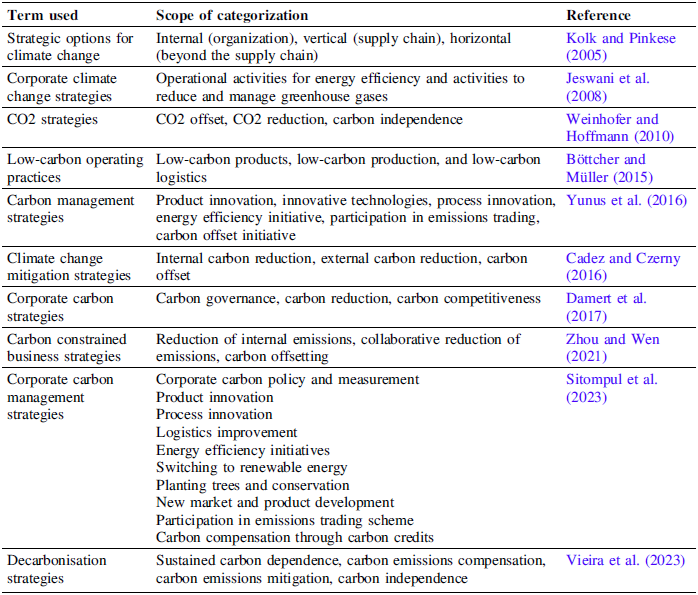
The academic literature on corporate climate strategies has expanded significantly in recent years, driven by the urgent need for industries to reduce their GHG emissions and align with global climate goals (Reference Tanthanongsakkun, Treepongkaruna and JirapornTanthanongsakkun et al., 2023). Central to this body of work is the development of frameworks for corporate climate change management, encompassing both theoretical classifications and practical implementation strategies aimed at reducing emissions across the value chain (Reference Damert, Paul and BaumgartnerDamert et al., 2017). These strategies are typically categorized based on their scope, including internal (organizational) efforts, vertical (supply chain) collaboration, and horizontal (cross-industry) engagement (Reference Kolk and PinkseKolk and Pinkse, 2005). These classifications provide a foundation for understanding diverse approaches to corporate decarbonization, yet they often lack specific, actionable guidance for industries with high emissions, such as manufacturing (Reference Weinhofer and HoffmannWeinhofer and Hoffmann, 2010; Reference Zhou and WenZhou and Wen, 2021). One of the main recent research focuses has been the development of climate change management strategy classifications. In general, these strategies can be understood as initiatives to reduce the impact of business activities on climate change and obtain long-term competitive advantages (Reference Damert, Paul and BaumgartnerDamert et al., 2017). Table 1 summarizes some of the main classifications of corporate strategies for climate change management discussed in the literature and the different terms used.
Summary of strategies for climate change management and terms used

In addition to the theoretical proposition of classifications, from the point of view of applying the proposed strategies, most existing studies have focused on identifying configurations of companies adopting similar strategies and/or on discussing strategies at a broader level. Evidence of what are the specific changes in operations, products and services, and supply chain management, for example, is still limited. In their empirical study, Reference Kolk and PinkseKolk and Pinkse (2005), for example, grouped companies into categories according to the different strategies employed by them, but did not detail which actions were implemented by companies in relation to each strategy. Reference Jeswani, Wehrmeyer and MulugettaJeswani et al. (2008) identified operational activities related to energy efficiency adopted in different sectors in two countries, but did not explore what are the different types of changes regarding processes or products that can be implemented by companies. Reference Yunus, Elijido-Ten and AbhayawansaYunus et al. (2016) identified that product innovation strategies are related to the design of new products that emit less carbon or the improvement of existing products to minimize emissions, but did not provide details on how new and/or existing products can be improved. Few studies so far explore product innovation methods and/or practices (e.g., Reference Zhou and WenZhou and Wen, 2021).
Furthermore, although the literature on corporate strategies for managing greenhouse gas emissions is growing, there is still a lack of clarity on which strategies should be implemented in practice and how those should be implemented (for example, how companies can innovate their products, which specific product innovation strategies can be implemented, etc.), especially in sectors as manufacturing, that make a significant contribution to global emissions. Although some existing studies have focused on cross-sectoral analyses, the investigation of sectors such as manufacturing is still necessary to obtain more detailed knowledge of the strategies and practices that organizations have adopted (Reference Weinhofer and HoffmannWeinhofer and Hoffmann, 2010). Recent studies highlight a persistent gap between high-level strategy and practical application, particularly in sectors like manufacturing, where decarbonization requires specific adjustments in product design, supply chain management, and operational processes (Reference Chen, Cheng, Zhang, Chen and WangChen et al., 2024). Hence, there is a need for empirical studies that go beyond strategic categorizations to detail the actual practices companies adopt to achieve GHG reductions.
Additionally, despite other streams of literature, such as the literature on design considering sustainability issues, have addressed product innovation and the importance of the design stage in developing products with a lower carbon footprint (e,g, Reference Johansson and SundinJohansson and Sundin, 2014; Reference He, Wang, Huang and WangHe et al., 2015; Reference Zheng, Yang, Lou, Gao and FengZheng et al., 2021) and many methods for integrating carbon footprint estimation into design tools have been proposed by previous studies (Reference Devanathan, Ramanujan, Bernstein, Zhao and RamaniDevanathan et al. 2010; Reference Song and LeeSong and Lee, 2010; Reference KuoKuo, 2013), there is still limited empirical evidence on what companies are doing in practice when adopting science-based targets. The existing literature has focused mostly on proposing theoretical models for carbon footprint estimation and/or methods and tools supporting design. Those studies usually only provide an example of application of the proposed method or even focus on a specific context of application. Many companies have been committing to science-based targets for GHG emissions reduction and taking action in practice to innovate their products and reduce products emissions, but evidence of what those companies are doing in practice remains scarce, despite this understanding is helpful either to understand what companies are already doing and what has proven to be effective and to understand what else can be developed from a theoretical perspective and further transferred to practical application.
3. Methods
An inductive approach was adopted to identify changes in products and services within manufacturing companies that have committed to GHG emission reduction targets and have demonstrated progress in meeting those targets. This approach aimed to identify innovation strategies and initiatives adopted by companies in practice. The research process was divided into three main stages.
The first step was to identify European manufacturing companies that had set GHG reduction targets and were actively working toward achieving those targets. The Carbon Disclosure Project (CDP) database was utilized for this purpose. CDP is a globally recognized organization that manages a climate change reporting system, with more than 80% of the world’s largest 500 companies disclosing information on carbon management practices (Reference Doda, Gennaioli, Gouldson, Grover and SullivanDoda et al., 2016). Companies voluntarily provide climate change information to CDP in the form of structured reports that are accessible to the public. A targeted search was conducted within the CDP database to identify European companies that submitted climate change management reports. The focus was specifically on European manufacturing companies, given that the European Union (EU) has one of the most advanced regulatory environments regarding climate change policies (Reference Cadez and CzernyCadez and Czerny, 2016). The selection of European companies is thus justified by the region’s stringent policies, including the European Climate Law enacted in June 2021, which mandates achieving net-zero greenhouse gas emissions by 2050. This regulatory backdrop makes European manufacturing companies a representative sample for studying innovation in climate-related products and services.
The initial database search identified 1,538 companies that had submitted GHG management reports in 2021. To refine the sample, we filtered out non-manufacturing companies and retained only manufacturing firms in alignment with the study’s focus. Further filtering was applied to select companies that responded to Question 3.3 in the CDP report, which specifically addresses how climate-related risks and opportunities influence the company’s product and service strategy. Responses to this question reveal whether and how climate change has shaped the company’s approach to innovation in areas such as product and service development, supply chain management, and R&D investment. After this filtering process, the sample was narrowed to 326 manufacturing companies.
An inductive content analysis was conducted on the responses to CDP question 3.3 to identify “how” climate-related risks and opportunities have influenced the companies’ product and service strategies. The procedures for inductive content analysis outlined by Reference Gioia, Corley and HamiltonGioia et al. (2013) were followed, which involves systematically coding textual data to develop categories and themes based on the content itself.
4. Results
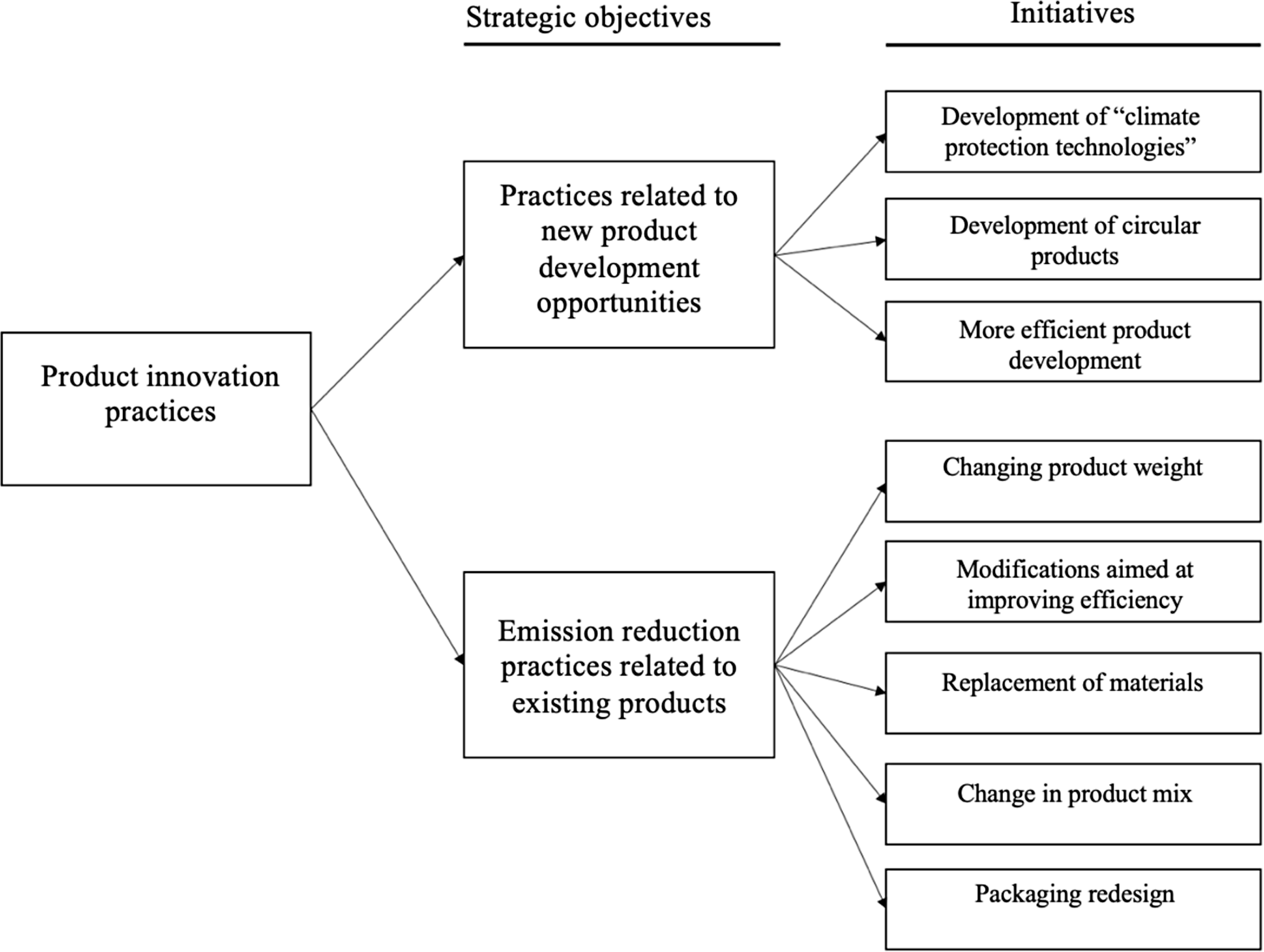
The data shows that manufacturing companies are increasingly focusing on product innovation as a critical means to mitigate environmental impact and achieve greenhouse gas (GHG) reduction targets. Figure 1 outlines two strategic objectives that companies pursue to align with GHG reduction goals: (1) practices related to new product development opportunities and (2) emission reduction practices related to existing products. These initiatives represent the industry’s proactive stance in addressing the environmental and regulatory challenges posed by climate change.
The analysis revealed that companies are prioritizing product innovation over service innovation as a primary response to climate-related risks and opportunities. Although literature underscores the potential of product-service systems (PSS), for example, in contributing to emission reduction (e.g., Reference Farsan, Chang, Kerkhof, Cserna and YanFarsan et al., 2018), initiatives related to service innovation were not identified in the analyzed data. This could be due to the tangible and immediate impacts that product-based innovations offer in terms of GHG reductions, which may be more measurable and actionable for manufacturing companies. Moreover, the emphasis on products may align with existing manufacturing capabilities and resources, making product-focused strategies a more feasible and scalable solution in the short to medium term.
4.1. Practices related to new product development opportunities
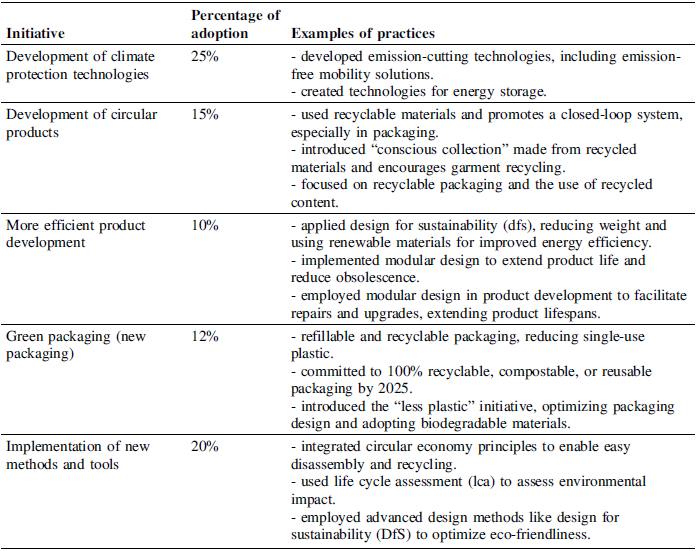
This category encompasses initiatives aimed at creating new products designed to meet the challenges of a low-carbon economy. Around 65% of the companies in the sample stated that they are actively developing new products to address climate-related risks and opportunities. The initiatives demonstrate a structured approach to product innovation, with companies focusing on technological, material, and design improvements to align with environmental objectives. Table 2 highlights the main identified practices related to new product development opportunities and examples of the initiatives by the companies. These initiatives reflect a forward-looking approach, where companies not only seek to comply with current regulations but also anticipate, for example, future shifts towards more stringent environmental standards. Developing new, climate-aligned products allows companies to capture emerging market opportunities and appeal to environmentally conscious consumers.
Each percentage represents the proportion of companies in the sample that have adopted that specific initiative, independently of other initiatives. This highlights the relative popularity of each initiative, showing which practices are more commonly adopted within the sample. The percentages in the table do not add up to 100% because many companies adopt multiple initiatives simultaneously. For instance, a company might be involved in both developing climate protection technologies and implementing green packaging, or it may adopt circular product principles while also using new methods and tools in product development.
Product innovation practices and initiatives adopted by manufacturing companies to achieve greenhouse gas reduction targets

Practices related to new product development opportunities

The development of climate protection technologies is a strategic priority for many companies. This category includes technologies explicitly designed to mitigate environmental impacts, such as low-carbon or carbon-neutral technologies. Companies investing in developing climate protection technologies often aim to minimize emissions not only at the production stage but throughout the product lifecycle, addressing both immediate and long-term environmental impacts. Examples include the offer of technological products that help the consumer to reduce energy consumption, technologies to cut emissions, such as emission-free mobility, and technologies for energy storage. These companies have identified new markets and customer demand for new products. This trend aligns with the literature on sustainable innovation, which suggests that climate-responsive technologies can serve as a competitive differentiator, providing companies with a market advantage in sectors where consumers are increasingly eco-conscious. By focusing on climate protection, companies are not merely adapting to current regulatory requirements but are also anticipating future regulatory and market trends toward stricter carbon limits and sustainability standards.
Some companies in the sample have also focused on developing products that are more energy efficient during their useful life and that generate less emissions throughout their life cycle. By reducing the impacts associated with energy consumption throughout the entire life cycle, for example, through energy efficiency and modular design, it is possible to reduce direct impacts and costs. If a modular upgrade strategy is used, less components are replaced, effectively extending the useful life of the product and reducing resources used and pollution (Reference Ramachandran and KrishnanRamachandran and Krishnan, 2008). Moreover, modular updates can also reduce the obsolescence rate of subsystems with a high environmental impact and accelerate the adoption of new units with a lower impact on use (Reference Agrawal and ÜlküAgrawal and Ülkü, 2012). Product functionality enhancements also deliver reductions in customer emissions and related costs. Therefore, more efficient products contribute both to reducing the direct use of energy and emissions associated with consumption and/or to the elimination of indirect emissions.
Some companies (about 15% of the sample) also mentioned the development of new “circular products” as an alternative for mitigating emissions, including products that allow closing the material cycle, extending their service life, and using new raw materials. In this context, plastic manufacturing companies, for example, have focused on the development of new materials with high recyclability rates, allowing them to be reused multiple times. Other companies have focused on developing products with greater durability, so they can remain in use for longer periods, thereby reducing emissions associated with the manufacture of new products and the use of inputs. The luxury brand company Y, for example, reported that it has begun integrating circular design principles into its product lines. This includes efforts to design products with recyclable materials and promote a closed-loop system, where packaging and product components can be reused or recycled. The brand has also explored using eco-friendly alternatives in its packaging to reduce environmental impact without compromising the premium nature of its products. Another example in the fashion industry is company X, which has made significant strides in implementing circular design principles. The company’s “conscious collection” includes garments made from recycled materials, such as organic cotton and recycled polyester. Additionally, company X has launched initiatives to encourage garment recycling among consumers, providing in-store collection points for used clothing. By promoting both the use of recycled materials in new products and a circular approach to garment lifecycle management, company X exemplifies how circular design can be operationalized within traditional industries such as the fashion industry. Company Z, as a major player in plastics and foam production, has invested in circular product design to reduce its environmental footprint. The company focuses on creating recyclable packaging solutions that allow for material recovery at the end of a product’s life. Company Z has also embraced recycled content in its packaging products, supporting a circular approach to plastics use. With the development of circular products, the opportunity for innovation in business models also arises. The car manufacturer W group, for example, reported innovation in its business model associated with the development of new cars, highlighting opportunities to be explored by companies in this regard.
Another practice is related to innovating the packaging of products, meaning the development of new packaging, which might be adopted in isolation (the company innovates only the packaging of its products, not the product itself), or in conjunction with the newly developed product. Green packaging initiatives were seen as increasingly prevalent as companies respond to both consumer expectations and regulatory pressures to reduce plastic waste and packaging-related emissions. This initiative involves developing new packaging using recyclable, compostable, or minimalistic packaging materials. Companies in the sample adopting green packaging are thus not only addressing waste reduction but also enhancing the brand image. By reducing packaging waste, firms demonstrate a commitment to sustainability that extends beyond the product itself, encompassing the entire consumption experience. In the cosmetics industry, company T has pioneered efforts in circular packaging design, aiming to minimize single-use plastic and promote recyclable materials. The company has introduced refillable and recyclable packaging for some product lines, enabling consumers to reduce waste by reusing containers. The skincare and cosmetics group L has also implemented green packaging by reducing plastic content and introducing recyclable materials in its product packaging. The group has committed to making all packaging 100% recyclable, compostable, or reusable by 2025. Company U, as another example in the food sector, has also committed to using 100% reusable, recyclable, or compostable plastic packaging by 2025. The company has implemented green packaging across multiple product lines, including biodegradable materials for some of its home and personal care products. Company U has also introduced the “less plastic” initiative, which aims to minimize packaging by optimizing design and reducing unnecessary layers.
In addition, the data reveals that companies in the sample are actively implementing new methods and tools in their product development processes. These companies are exploring a range of innovative techniques to enhance efficiency, reduce environmental impact, and meet the demands of a climate-conscious market. The focus on advancing product development through new methodologies reflects a broader industry trend toward integrating sustainable and efficient practices into core business operations. Company L, for example, has adopted a process-centered approach to product development, integrating circular economy principles. The company is rethinking product design to enable easy disassembly and recycling, particularly in its packaging. Company S, a global automotive and industrial supplier, reported using design for sustainability (DfS) principles to enhance the eco-friendliness of its products. This includes reducing the weight of components, using renewable materials, and optimizing energy efficiency. By adopting these practices, companies are positioning themselves to capture emerging opportunities, comply with future standards, and appeal to a consumer base increasingly concerned with sustainability and climate-related risks.
Practices related to innovation of the existing product portfolio
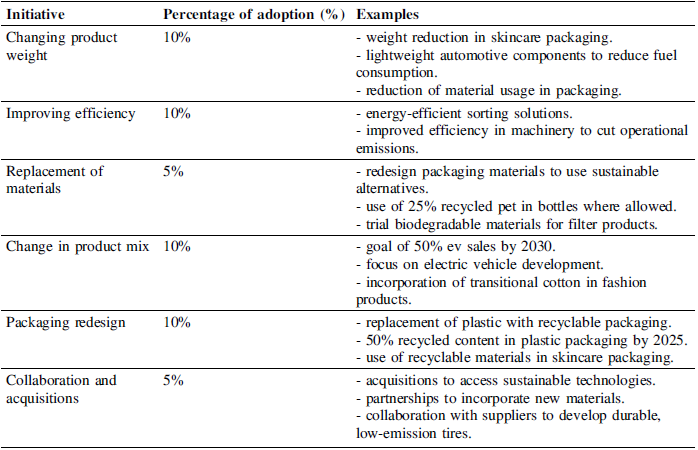
Table 3 highlights some practices identified in the analysis related to emission reduction associated to existing products. Each percentage represents the proportion of companies adopting that specific initiative independently, rather than exclusive or mutually exclusive categories. In practice, many companies adopt multiple initiatives at the same time, implementing several strategies across different aspects of their product improvement efforts.
Practices related to emission reduction in existing products

The analysis of the sample reveals that around 45% of the sample are actively involved in improving their existing product portfolios to reduce emissions, indicating commitment to sustainability beyond new product development. These efforts involve a range of initiatives, each targeted at different aspects of emission reduction. Approximately 10% of companies in the sample reported initiatives to reduce the weight of existing products. Weight reduction is an effective strategy to minimize resource use and lower emissions, particularly in industries where transportation and fuel consumption are significant contributors to environmental impact. For instance, company W has implemented weight reduction measures to decrease the material used in its product packaging while maintaining functionality. H automotive group has developed lightweight automotive components that reduce vehicle fuel consumption, thereby cutting emissions. Similarly, company T and F have made structural modifications to reduce material use, which also helps minimize transportation emissions due to lighter loads. This trend reflects an industry-wide recognition that lightweighting can have significant cumulative effects on both cost savings and environmental impact. Another 10% of companies are engaged in initiatives aimed at improving the efficiency of their existing products. Efficiency improvements often focus on reducing energy use or optimizing product performance to decrease emissions during the product’s lifecycle. A company specializing in collection and sorting solutions has implemented multiple projects to enhance the energy efficiency of its equipment. This allows its products to consume less energy in operation, contributing to reduced emissions and operating costs for clients.
Approximately 5% of companies have invested in replacing materials in existing products with more sustainable alternatives. This initiative involves substituting high-emission materials, often derived from fossil fuels, with renewable or recyclable options. Material replacement reflects a targeted approach, where companies seek to balance functionality, regulatory compliance, and environmental impact. In some cases, companies have also adopted certification standards for suppliers to ensure that the materials used have lower emissions, adding another layer of accountability. Another 10% of companies have adjusted their product mix to include options with a lower environmental impact. This trend is particularly noticeable in the automotive industry, where companies are shifting from internal combustion engine vehicles to electric vehicles (EVs). A German group, for instance, has set ambitious goals to make half of its sales electric by 2030, with a long-term vision of transitioning to a fully electric portfolio. A fashion retailer has introduced transitional cotton into its product mix, reducing reliance on conventional cotton and its associated high water and chemical use. The emphasis on changing the product mix highlights how companies are diversifying their offerings to meet regulatory standards and cater to a growing consumer base that prioritizes eco-friendly products. Moreover, automotive companies are supporting renewable energy sources, offering customers access to green electricity for EV charging, demonstrating a holistic approach to emissions reduction.
Around 10% of companies are redesigning their existing packaging to reduce waste and emissions associated with packaging materials. A pharmaceutical company has invested in replacing its packaging materials with recyclable options, reducing plastic use while ensuring product safety. This shift in packaging practices reduces the dependency on single-use plastics and supports a circular approach to materials management.
In addition to direct modifications to existing products, some companies are leveraging collaborations and acquisitions to build their sustainability capabilities and achieve emission reductions in their current portfolio. For example, some companies have pursued strategic acquisitions to access new technologies and expertise necessary for sustainable product innovation. A tire manufacturer has also established collaborations with material suppliers to develop low-emission products that are durable and energy-efficient. Through acquisitions and partnerships, companies can more effectively integrate advanced technologies and sustainable practices into their product portfolios. Collaborations also enable companies to share resources and knowledge, allowing for faster and more efficient implementation of emission-reducing technologies across the industry.
5. Final considerations
Our findings indicate a strong emphasis on product-centric strategies, with relatively limited attention to service innovations and business model adaptations that could further support decarbonization goals. This predominant focus on products suggests that while companies are making progress in sustainable product development, opportunities remain underexplored in areas like circular economy-driven business models and service-based solutions that could complement and enhance product innovations in reducing emissions. The study contributes by offering a picture of product-related initiatives that manufacturing companies are implementing to achieve GHG reduction. This addresses a recent gap in the literature, which has largely called for more empirical research on how companies operationalize their environmental commitments. The study offers a practical resource for companies seeking to transform high-level emissions goals into effective organizational practices.
However, the scope of this research is limited to a sample of European companies, which may influence the generalizability of the findings. To build a more comprehensive understanding of decarbonization strategies, future research should include a broader range of companies, covering different regions and industries. This expansion would allow for cross-comparative insights and could capture practices from companies that may not report to organizations like the CDP but are nonetheless engaged in meaningful GHG reduction initiatives. Additionally, extending the research to non-European contexts could reveal variations in decarbonization approaches that are influenced by regional policies, market dynamics, and cultural factors.

 Open access

