





Neuropsychological assessment during infancy and childhood are frequently implemented as outcomes in nutrition research because of the consistent link between some nutrients with brain development and neuropsychological functioning( Reference Anjos, Altmäe and Emmett 1 – Reference Portillo-Reyes, Pérez-García and Loya-Méndez 4 ). Investigating this relationship in an international context implies gathering data from participants from different countries with different cultural backgrounds. Therefore, when projects include neuropsychological testing, culture becomes an important factor influencing the performance of participants( Reference Uzzell, Ponton and Ardila 5 ).
According to the United Nations Educational, Scientific and Cultural Organization (UNESCO)( 6 ), culture is defined as ‘set of distinctive spiritual, material, intellectual and emotional features of society or a social group, that encompasses, not only art and literature, but lifestyles, ways of living together, value systems, traditions and beliefs’ (page 1) and cultural neuroscience as ‘an emerging research discipline that investigates cultural variation in psychological, neural, and genomic processes as a means of articulating the bidirectional relationship of these processes and their emergent properties’( Reference Chiao 7 ). A growing number of studies showed neuropsychological differences among people from different cultures( Reference Uzzell, Ponton and Ardila 5 , Reference Ardila 8 ). Differences in neuropsychological performance were found among healthy people from different cultures such as Asian( Reference Hsieh and Tori 9 , Reference Lan, Legare and Ponitz 10 ), Hispanic( Reference Judd, Capetillo and Carrión-Baralt 11 , Reference Llorente 12 ) or African( Reference Khalil 13 – Reference Wicherts, Dolan and van der Maas 15 ). These differences have been shown in verbal and non-verbal tests( Reference Cherner, Suarez and Lazzaretto 16 , Reference Matute, Rosselli and Ardila 17 ), at any age( Reference Lan, Legare and Ponitz 10 , Reference Park and Gutchess 18 ), and also in brain-damaged patients( Reference Boone, Victor and Wen 19 , Reference Ferraro and McDonald 20 ). However, some studies failed to detect neuropsychological differences depending on the cultural background( Reference Ostrosky-Solis, Gutierrez and Flores 21 ).
Cultural differences in neuropsychological performance have also been found between persons living in the same country but belonging to different ethnic groups. Manly et al. showed differences between Caucasians and African Americans in cognitive functioning( Reference Byrd, Touradji and Tang 22 – Reference Manly, Byrd and Touradji 24 ). Similar differences have been found in Hispanic American samples( Reference Byrd, Touradji and Tang 22 , Reference Puente, Perez-García and Vilar-Lopez 25 , Reference Salazar, Garcia and Puente 26 ). Differences have been found even among people from the same ethnicity sharing the same language but living in different countries. For example, Buré-Reyes et al.( Reference Buré-Reyes, Hidalgo-Ruzzante and Vilar-López 27 ) found differences in memory neuropsychological tests among Hispanics living in different countries (North America, Chile, Santo Domingo and Spain).
The cultural differences in neuropsychological performance have traditionally been mainly explained by variables such as sex, language and ethnicity( Reference Boone, Victor and Wen 19 , Reference Ardila 28 – Reference Gasquoine 30 ). When variables such as language, reading ability and analphabetism, bilingualism or socioeconomic status are controlled for, the size of differences in neuropsychological performance decreases( Reference Brickman, Cabo and Manly 31 , Reference Schwartz, Glass and Bolla 32 ). Therefore, acculturation and quality of education could explain at least part of the cultural differences in neuropsychological performance( Reference Byrd, Sanchez and Manly 23 , Reference Manly, Jacobs and Touradji 33 ).
Nevertheless, recently, new variables related to the modulating effect of culture on the cognitive system have been proposed( Reference Wilson 34 ). Agranovich et al.( Reference Agranovich, Panter and Puente 35 ) studied the differences between American and Russian adults in time attitudes, and how these can explain the cultural differences in the chronometric neuropsychological tests. Ouellet et al.( Reference Ouellet, Santiago and Israeli 36 ) have shown that time runs from left (past time) to right (future time) for Spaniards but it runs in the opposite direction for Israeli people, reflecting the direction of reading and writing. Fasfous et al.( Reference Fasfous, Hidalgo-Ruzzante and Vilar-López 37 ) showed that cognitive processes requiring carrying out a culture-free intelligence test may be different, depending on the subject’s cultural background.
Despite all evidence about the influence of culture in neuropsychological performance of adults, little is known about the influence of culture in neuropsychological testing in children. In a review, Byrd et al.( Reference Byrd, Arentoft and Scheiner 38 ) found that only ten studies about cross-cultural neuropsychology in children were conducted, and, half of them conducted in North America. Most of the studies found differences among children with different cultures. Recently, studies focused on specific cognitive processes. Sobeh & Spijkers( Reference Sobeh and Spijkers 39 ) found differences between German and Syrian children in an attention battery, with the latter scoring less than the former, and Kail et al.( Reference Kail, McBride‐Chang and Ferrer 40 ) found differences in speed processing between US and East Asian children. Similar results have been found when children from Sweden, Spain, Iran and China were compared in an executive function inventory( Reference Thorell, Veleiro and Siu 41 ) or using the Children Colour Trail Test( Reference Llorente, Williams and Satz 42 ) in Moroccan children( Reference Fasfous, Puente and Pérez-Marfil 43 ).
However, most of the studies conducted in children have focused on a specific cognitive function but have not used a comprehensive neuropsychological battery. Also, we have not found studies comparing different European countries. The objectives of this study were to compare the neuropsychological performance of children from six European countries (Belgium, Germany, Hungary, Italy, The Netherlands, Poland and Spain) using a comprehensive neuropsychological battery, and applying a statistical procedure to reduce the influence of country/cultural differences in neuropsychological performance.
In the present study, country and culture will be used in an equivalent way. According to the previous definition of culture, several cultures may exist inside one country or several countries could share the same culture. However, in our study, each country is considered to have its own culture. The main objective of this study was to analyse the influence of culture on neuropsychological performance of healthy European children, who were participating in nutrition studies. Also, we were interested in studying the utility of standardisation by country and sex as a way to reduce or eliminate the influence of culture on neuropsychological scores.
Methods
Study design and participants
The data obtained to develop this study comes from the NUTRIMENTHE EU Project, which has been previously described in Anjos et al.( Reference Anjos, Altmäe and Emmett 1 ). Within NUTRIMENTHE EU Project (grant agreement no. 212652) framework, the NUTRIMENTHE Global Database (NGDB) has been developed joining the data sets from three different follow-up European cohorts, the Childhood Obesity Project (CHOP) study (Belgium, Germany, Italy, Poland and Spain), the Generation R study (The Netherlands) and the Nutraceuticals for a Healthy Life (NUHEAL) study (Germany, Hungary and Spain). Description of participants of these cohorts has been already published elsewhere( Reference Schiess, Grote and Scaglioni 44 – Reference Krauss-Etschmann, Shadid and Campoy 46 ). After combining the common variables from the three studies, a new cohort was formed with a total of 1050 children who were assessed using a common neuropsychological procedure; all data sets from these children were included in the NGDB.
A common set of questions, anthropometrical examinations, blood parameters, nutritional and baseline characteristic data were collected besides the common neuropsychological test battery with similar methodologies to be able to combine the data sets for analysis. The merging was performed using the statistical programming language R (The R Foundation for Statistical Computing). To embed, recode and standardise all variables in a good, documented and structured way into one common global database has been essential to ensure proper data analysis later on.
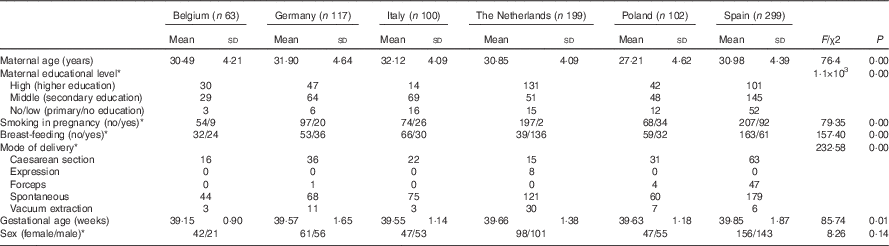
In the present analysis, 880 healthy children from six European countries (Belgium, n 63; Germany, n 117; Italy, n 100; The Netherlands, n 199; Poland, n 102; and Spain, n 299) were included. All participants from Hungary were excluded because of a significant drop-out rate. In addition, participants without all neuropsychological scores were excluded because of technical problems on the computerised tests. Exclusively for the Stroop Test and Hungry Donkey Test (HDT), 681 children were analysed because of the fact that the Dutch children had not finished learning to read at the time of test administration. All participants started primary school at 6 years old. CHOP children were evaluated at 8 years, those from Generation R at 7 years and those participating in the NUHEAL study at 7·5 and 9 years. This study was conducted according to the guidelines laid down in the Declaration of Helsinki, and all procedures involving human subjects were approved by the Ethical Committees of all centres involved in the study. Written informed consent was obtained from all subjects before their inclusion in the study. Characteristics of the study population are listed in Table 1.
Characteristics of the study population forming the new cohort that were merged by the NUTRIMENTHE Global Database (Mean values and standard deviations)

* χ 2 test.
Description of the NUTRIMENTHE Neuropsychological Battery
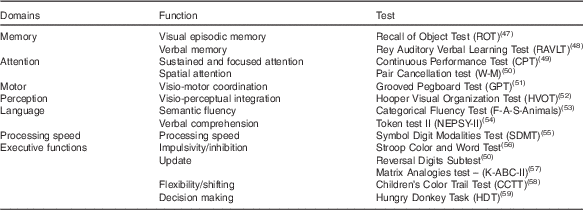
No neuropsychological tests were available with versions for all participating countries, (Belgium, Germany, Italy, The Netherlands, Poland and Spain). Thus, to assess the child’s neurocognitive development, a comprehensive neuropsychological battery was specifically developed for the NUTRIMENTHE project: the NUTRIMENTHE Neuropsychological Battery (NNB). Criteria used to choose the neuropsychological tests were as follows: (1) tests to assess the main neuropsychological domains; (2) tests appropriate for 7–9 year-old children; (3) tests with low verbal stimulus in order to reduce the influence of language; (4) when possible, tests with reduced cultural influence. Most of the tests identified were not available in many of the countries participating in the NUTRIMENTHE project. When a chosen test was not available in one country, procedures were put in place to translate and culturally adapt the test. Finally, the NNB was culturally adapted and translated into six languages and implemented in six European countries. A back-translation procedure was followed to translate the tests. First, instructions were translated from Spanish to each language by a translator, and another expert translated the tests from each language to Spanish. Both versions were compared and discrepancies were sorted out.
The cognitive tests’ battery consists of fifteen tests to assess seven domains( Reference Snodgrass and Vanderwart 47 –59): processing speed, perception, motor, memory, attention, language and executive functions, which are described in Table 2 (full description in the online Supplementary Material). For each subtest, we calculated sex and country internal z-scores. Finally, neuropsychological data from 880 European children were used in the statistical analyses included in the present study.
NUTRIMENTHE Neuropsychological Battery: test description

Selected tests were culturally adapted and translated into six languages (Spanish, German, Italian, French, Dutch and Polish) by experts in the field, after obtaining approval from the owners of the copyrights; in addition, licences were obtained for all children to be assessed in the six countries. Tests were administered by health professionals (most of them psychologists) in each country who had been previously trained centrally by the University of Granada, and provided with Standard Operating Procedure (SOP) Manuals, which also included the assessment conditions (i.e. a quiet room without interruptions, without any other person in the room, and conducting the assessment during the afternoon); The training sessions were carried out through several face-to-face meetings organised within the NUTRIMENTHE framework, where different quality control skills were demonstrated under the supervision of an expert from the University of Granada, until all professionals involved revealed very good inter-subject reliability (intraclass correlation coefficient>0·70 in all cases). All queries were answered and agreements reached regarding the characteristics of each country for the interpretation of the tests. A NUTRIMENTHE blog containing all SOP was placed in the intranet of the NUTRIMENTHE website, where all researchers could ask questions and provide solutions to problems easily as required.
Statistical analysis
All scores were entered in the NGDB, consisting of the raw scores of the dependent variables obtained from the neuropsychological tests. Each individual score was subtracted from the corresponding country and sex mean and divided by the corresponding country and sex standard deviation in order to obtain the standardisation by country and sex. This standardisation was performed to reduce effect and noise due to countries. ‘Leaving-one-out’ standardisation (each observation was standardised using the mean and standard deviation of the particular sample excluding the individual score) was performed in order to eliminate probable effects of extreme values. As there were no differences between the results obtained after applying ‘leaving-one-out’ and normal standardisation, ‘leaving-one-out’ standardised scores were not considered in the present analysis. To reduce the number of statistical analyses, a reduced set of dependent variables was selected.
In order to study differences in neuropsychological performance among countries, a one-way ANOVA and Kruskal–Wallis (skewed variables) analysis were conducted using country as a factor and the raw neuropsychological variables as dependent variables. To study the importance of the country variable as a confounder, ordinal logistic regressions were conducted over the outcomes (neurodevelopmental tests), using the available common variables related with neuropsychological performance in children such as sex, type of delivery, maternal age, gestational age and maternal educational level as predictors; raw neuropsychological scores were considered as dependent variables.
The database was imputed using machine-learning techniques; the best suitable one found was missforest (package ‘missforest’ in R; from Daniel J. Stekhoven, 2013), obtaining an acceptable out-of-bag error of 0·07. The percentage of imputations range from 28 % for HDT to <1 % for Reversal Digits.
Database set up, including file merging, mistake detection and metadata, and the whole statistical analysis were conducted using STATA 12.1.
Results
General characteristics of the children by country included in the present analysis (Table 1).
Maternal age was the youngest in Poland, and the oldest in Italy. The percentage of mothers with a high level of education was higher than 50 % in the Netherlands and Germany; Germany and Italy were the countries with the highest percentage of mothers with a medium level of education (>70 %). The major percentage of mothers with a low level of education came from Spain and Italy (>17 %). In all, 22 % of the mothers were smokers during pregnancy and 44 % of women breast-fed their babies (with a higher percentage in the Netherlands (78 %) and the lowest in Spain (27 %)). A total of 64 % of the babies had a spontaneous mode of delivery. The instrumental deliveries represented the other 36 %; from these, 21 % of the mothers delivered by caesarean section, with this type of delivery being more frequent in Germany (31 %), Poland (30 %), Italy (22 %) and Spain (21 %) compared with the other countries. Delivery by forceps represented 16 % of all deliveries registered in the Spanish sample, compared with a minimal incidence in Poland (4 %) and Germany (0·85 %), and none reported in the rest of the countries. Vacuum extraction was the mode of delivery in 26 % of the Dutch mothers and 6 % of the German ones; in the rest of the countries, vacuum extraction had a very low incidence.
All children were born at term, although there were differences between countries, with the Belgian children being the youngest ones. In all, 451 children were girls and 429 were boys. No statistical differences in the females–males distribution between countries were found.
Neuropsychological differences among countries
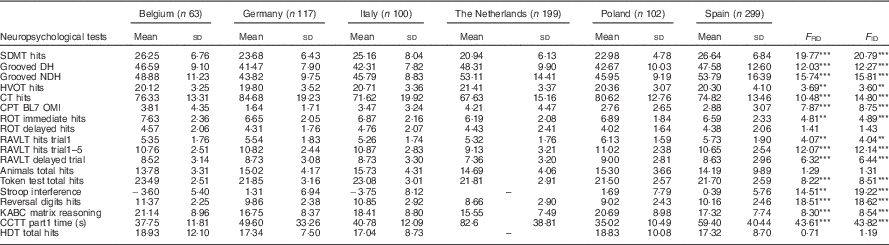
As shown in Table 3, significant statistical differences were found among the six countries in all the neuropsychological variables, except for Recall of Object Test delayed hits, Animal total hits and HDT total hits. In general, the Netherlands’ children scored higher than those from the other countries. Same results were obtained with the multiple imputed scores (Table 3).
F for raw (F RD) and imputed (F ID) data obtained in the different neuropsychological testing in the children participants in NUTRIMENTHE EU Project from six European countriesFootnote † (Mean values and standard deviations)

SDMT, Symbol Digit Modalities Test; DH, Dominant Hand; NDH, Non-Dominant Hand; HVOT, Hooper Visual Organization Test; CT, Cancellation Test; CPT BL7, Continuous Performance Test, Block 7; OMI, omissions; ROT, Recall of Object Test; RAVLT, Rey Auditory Verbal Learning Test; CCTT, Children’s Colours Trail Test; HDT, Hungry Donkey Task.
** P<0·01; *** P<0·001.
† F exp (RD): experimentad F from one-way ANOVA for raw data.
As described in the statistical methods section, scores were standardised by country and sex. After that, the previous statistical differences among countries disappeared (P>0·8), which is congruent with the standardisation procedure.
Predictors of the neuropsychological differences between countries
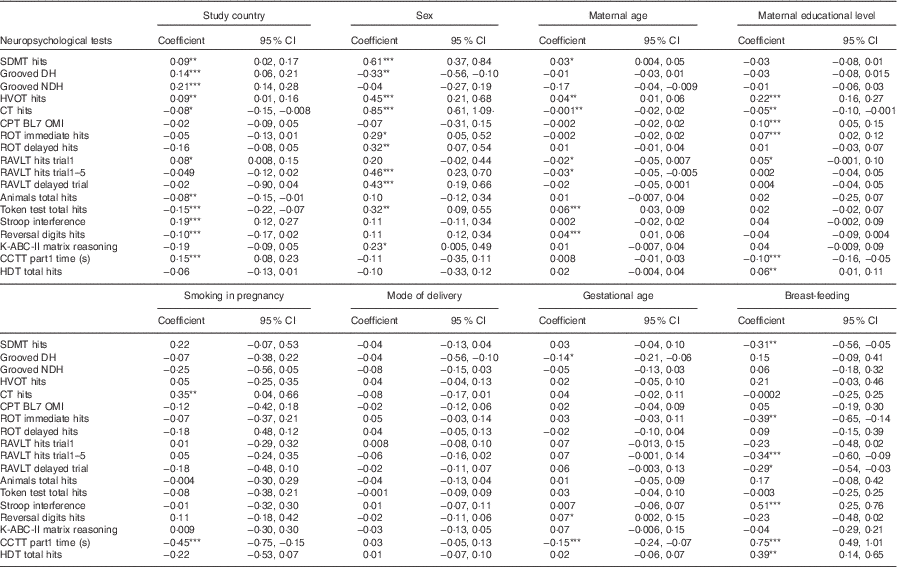
In order to study the importance of the country variable as a confounder, raw neuropsychological scores were adjusted using the available confounder variables related to neuropsychological performance in children, such as sex, breast-feeding, type of delivery, maternal age, gestational age, maternal educational level and smoking. After adjusting for these confounders, the country became the main predictor in most of the neuropsychological variables for raw data (Table 4).
Raw and imputed data from ordered logistic regression of the different tests performed in the NUTRIMENTHE children with the available confounders from six European countriesFootnote † (Coefficients of the ordered logistic regression model for imputed data and 95 % confidence intervals)

SDMT, Symbol Digit Modalities Test (total hits); DH, Dominant Hand; NDH, Non-Dominant Hand; HVOT, Hooper Visual Organization Test (total hits); CT, Cancellation Test (total hits); CPT BL7, Continuous Performance Test (total hits), Block 7; OMI, omissions; ROT, Recall of Object Test (immediate and delayed recalled pictures); RAVLT, Rey Auditory Verbal Learning Test (recalled words in trial 1, trial 1–5 and delayed (hits)); K-ABC-II, Matrix Analogies Test (total hits); CCTT, Children’s Colors Trail Test (time part 1 (s)); HDT, Hungry Donkey Task (total score).
* P<0·05; ** P<0·01; *** P<0·001.
† Children’s neuropsychological scores adjusted by study country, sex, maternal age , maternal educational level , smoke in pregnancy , mode of delivery, gestational age and breast-feeding.
Discussion
The main objective of this study was to analyse the influence of culture (comparing different countries) on the neuropsychological performance of healthy European children. Also, we were interested in studying the utility of standardisation by country and sex as a way to reduce the culture influence. As expected, results showed differences in the neuropsychological performance among children of the six countries involved. Cultural differences related to neuropsychological performance remained after adjusting for other confounders such as sex, maternal age, maternal educational level, smoking during pregnancy, type of delivery and gestational age. Finally, differences among countries disappeared and influence of the country was considerably reduced when standardised scores by country and sex were used.
As previously reported( Reference Uzzell, Ponton and Ardila 5 , Reference Byrd, Arentoft and Scheiner 38 ), culture influenced neuropsychological performance of children. However, there were no previous studies comparing neuropsychological performance of European children, nor on the variables that could explain differences among cultures. Besides traditional variables such as language, educational system or socioeconomic status, which could account for a part of the variability( Reference Byrd, Sanchez and Manly 23 , Reference Manly, Jacobs and Touradji 33 ), country should be considered an important confounder in multinational studies or in intra-national studies comparing different ethnicities, when neuropsychological performance is measured. This may be due to the fact that the ‘culture/country’ variable independently influences the above-mentioned variables in neurodevelopment.
It is worth noting that differences among countries in neuropsychological performance are not homogeneous. The largest differences have been found in processing speed and executive functions and the smallest in the delayed recall of visual memory, verbal fluency and decision making. Specific neuropsychological patterns for specific cultures have not been demonstrated, but differences have been reported in both verbal( Reference Portocarrero, Burright and Donovick 60 ) and non-verbal( Reference Rosselli and Ardila 29 , Reference Fasfous, Hidalgo-Ruzzante and Vilar-López 37 ) tests. Our results are congruent with previous studies showing cultural differences in several cognitive functions( Reference Byrd, Arentoft and Scheiner 38 ). Also, it should be mentioned that most of the studies compared neuropsychological execution only between 2–3 cultures( Reference Thorell, Veleiro and Siu 41 ); studies with six cultures/countries are inexistent. In that sense, NNB is the first European neuropsychological battery for children designed in such way as to be used in six different countries. The development of this tool permitted us to build up the NGDB, giving us the opportunity to evaluate cultural effects in a population of European children.
Standardisation by country and sex has been useful to eliminate differences among countries. This is due to the fact that standardisation sorts neuropsychological performance inside each country according to the country means. This can be done under the assumption that groups of children in each country are normal children, and thus, they represent the normal variability. Under this assumption, a higher score in the same neuropsychological test of one child from one country when compared with that of another child from another country does not indicate a better execution.
Those results may have important implications for future research. First, they highlight the need for developing procedures to compare neuropsychological performance among children from different cultures. This is important even when comparing children inside the same country, with the same education system but different culture. In the case of Europe, this is almost mandatory because of the number of multinational studies promoted by the European Commission in which neuropsychological assessment is involved. Also, it enhances the importance of obtaining ‘normal’ reference values for neuropsychological performance in each European country considering minorities living inside the country.
Our results have some limitations. First, the unbalanced sample sizes in the three studies included in the database prevented this study from using data as a reference for each test in each country. Second, the number of children from each country was different and, in some countries, was relatively small. The objective of this study was not to obtain representative normal reference values for each country, but our conclusions for countries should be considered with caution. Despite the unbalanced situation, comparison between countries could be made, and in many cases the results were clearly significant; hence, we believe that this unbalance does not have a strong influence on the main results of this study. Furthermore, the potential approaches to differentiate useful variables from noisy ones, as well as to detect patterns of association between selected variables, demonstrates the need for further studies to determine the usefulness of the shorter and more targeted assessments. Our study has been conducted only in a selected age range (7–9 years); thus, future studies should be conducted to also explore whether our results can be extended to other ages. Finally, it should be considered that neuropsychological tests were administrated by different technicians with different backgrounds. This variable could increase differences among countries. However, common training carried\ out by the same person was provided to all technicians in order to decrease the influence of this effect. Also, our study cannot verify which country/cultural variables such as language, educational system, etc., are involved in the neuropsychological differences. A crucial aspect of explanatory statistical inference in this context is that we need methods that allow us to deal with categorical outcomes and to include a large number of potentially correlated predictors while avoiding over fitting.
The strengths of the present study have been the development and application of a common Neuropsychological Battery, translated into eight languages, and assessed in 880 European children, which can serve as a reference for future studies. The NGDB allowed us to pool results of three cohort studies that use different tests in assessing the same phenotypes. The majority of functional domains have been divided into a set of specific subdomains. We emphasise that a cautious and robust approach was needed in order to combine the data in a meaningful way, particularly in pooled analyses, where a priori theoretical background and statistical modelling has been employed. Sensible combinations of data, originated from the different neuropsychological tests, have been driven by theoretical considerations of the likely specificity of the effects of particular nutritional and environmental agents on neuropsychological development. This will allow practitioners to gain a clear understanding about the better assessment methods to be used when limited resources and time are available in applied clinical settings.
It is notable that very few neuropsychologists work in the field of nutrition. The presence of these professionals with a background in both neurodevelopment and neuropsychological development is critical to the elaboration and application of assessment protocols (on the basis of their knowledge of brain development and neuropsychological testing), as well as quality control on the data collection and analysis, and for the interpretation of the study findings. Their inclusion in multidisciplinary research teams will improve the quality of research in this important field.
In summary, it is well known that culture is an important confounding factor in neuropsychological testing. In the present study, statistical differences in neuropsychological performance among children of six European countries were demonstrated; those differences remained even after standardisation of the test scoring and adjusting for other confounders related to neuropsychological execution, such as maternal education or mode of delivery. Statistical differences among countries disappeared when standardised scores by country and sex were used. We believe that these findings are of major importance for further studies and can be considered beyond its limitations. Future research should determine what variables can justify those differences and which ones should be tested in future projects, when the use or development of new neuropsychological batteries for multicountry assessment is planned.
Acknowledgements
The authors thank all participating children for their collaboration and all colleagues in the study centres for their support.
The studies reported herein have been carried out with financial support from the Commission of the European Communities, specific Research and Technological Development Programme ‘Quality of Life and Management of Living Resources’, within the 7th Framework Programme (FP7/2008–2013) under grant agreement no. 212652 (NUTRIMENTHE Project: ‘The Effect of Diet on the Mental Performance of Children’). The data included in this study come from the neuropsychological development performed in the 1050 European children participants in the CHOP EU project (FOOD-CT-2005-007036), the Generation R study (www.generationr.nl/researchers.html) and the NUHEAL Project: ‘Nutraceuticals for a healthy life’ (BIOMED QRLT-1999-00888). This publication is the work of the authors and does not reflect the views of the EU Commission.
All authors helped in the interpretation of results and contributed to manuscript preparation. M. P.-G. was responsible for the neuropsychological battery development; M. P.-G. and C. C. wrote the manuscript; J. d. D. L. performed the statistical analysis; F. J. T.-E., C. M.-Z. and J. S.-d. G. were responsible of neuropsychological evaluation of NUHEAL children at 8·5 years and Generation R children at 7 years, supported all other teams and helped to complete the databases; T. A. worked in the NUTRIMENTHE management team, collaborated in the organisation of the study and the completion of the NUTRIMENTHE Global Database; M. W. and V. G. helped in the development of the NUTRIMENTHE Global Database; F. J. T.-E., C. M.-Z., J. S.-d. G., T. A., M. W., V. G., D. G., E. V., P. P., B. K., J. E., H. T. and T. A. supervised the manuscript. D. G., E. V., P. P., B. K. and J. E. were responsible for the CHOP study in Poland, Italy, Belgium, Germany and Spain, respectively; H. T. was responsible for the Generation R study in Rotterdam (The Netherlands); T. A. and B. K. were responsible for the NUHEAL study in Hungary and Germany, respectively; C. C. was the coordinator of NUTRIMENTHE EU Project and supervised the NUHEAL study in Granada.
None of the authors has any conflicts of interest to declare.
Supplementary material
For supplementary material/s referred to in this article, please visit https://doi.org/10.1017/S0007114517000824


 Open access

