


Waterhemp is a summer, annual, broadleaf species native to the midwestern United States (Sauer Reference Sauer1967; Waselkov and Olsen Reference Waselkov and Olsen2014). Waterhemp has been identified as one of the most troublesome weeds over the past decade (Hager et al. Reference Hager, Wax, Stoller and Bollero2002; Prince et al. Reference Prince, Shaw, Givens, Owen, Weller, Young, Wilson and Jordan2012; Steckel and Sprague Reference Steckel and Sprague2004). There are a variety of factors contributing to the rise of waterhemp as a problem weed, including adoption of no-tillage farming practices, extended germination period of waterhemp, decreased use of residual herbicides, and rapid spread of multiple herbicide resistance (Culpepper Reference Culpepper2006; Felix and Owen Reference Felix and Owen1999; Hartzler et al. Reference Hartzler, Buhler and Stoltenberg1999).
Waterhemp biotypes have evolved resistance to six herbicide site-of-action (SOA) groups, including acetolactate synthase inhibitors (Weed Science Society of America Site of Action [WSSA SAO] Group 2), synthetic auxins (WSSA SOA Group 4), triazines (WSSA SOA Group 5), 5-enolpyruvylshikimate-3-phosphate synthase inhibitors (WSSA SOA Group 9), and protoporphyrinogen oxidase inhibitors (WSSA SOA Group 14) (Bernards et al. Reference Bernards, Crespo, Kruger, Gaussoin and Tranel2012; Heap Reference Heap2016a; Sarangi et al. Reference Sarangi, Sandell, Knezevic, Aulakh, Lindquist, Irmak and Jhala2015; Tranel et al. Reference Tranel, Riggins, Bell and Hager2011). In addition, just in the last six years it was confirmed that waterhemp biotypes evolved resistance to 4-hydroxyphenylpyruvate dioxygenase (HPPD)-inhibiting herbicides (WSSA SOA Group 27) in Illinois (Hausman et al. Reference Hausman, Singh, Tranel, Riechers, Kaundun, Polge, Thomas and Hager2011) and Iowa (McMullan and Green Reference McMullan and Green2011). Therefore, new herbicide options to manage waterhemp are needed (Tranel et al. Reference Tranel, Riggins, Bell and Hager2011). However, no new herbicide SOAs have been developed in recent years (Duke Reference Duke2012).
The herbicides with the most recently developed SOA are the HPPD-inhibiting herbicides, introduced in the 1980s (Duke Reference Duke2012; Mitchell et al. Reference Mitchell, Bartlett, Fraser, Hawkes, Holt, Townson and Wichert2001). This herbicide group inhibits HPPD and causes bleaching of green tissues of susceptible plants (Grossmann and Ehrhardt Reference Grossmann and Ehrhardt2007; Mitchell et al. Reference Mitchell, Bartlett, Fraser, Hawkes, Holt, Townson and Wichert2001). Mesotrione, tembotrione, and topramezone are common POST-applied HPPD-inhibiting herbicides, primarily used in corn (Bollman et al. Reference Bollman, Boerboom, Becker and Fritz2008; Gitsopoulos et al. Reference Gitsopoulos, Melidis and Evgenidis2010; Nurse et al. Reference Nurse, Hamill, Swanton, Tardif and Sikkema2010; Sutton et al. Reference Sutton, Richards, Buren and Glasgow2002). The recent occurrence of a HPPD-inhibiting herbicide–resistant waterhemp biotype (HPPD-RW) has increased the complexity of waterhemp control in corn (McMullan and Green Reference McMullan and Green2011).
Control of a waterhemp biotype in Illinois that is resistant to HPPD- and photosystem II–inhibiting herbicides was not achieved using a single active ingredient of foliar or soil-applied herbicide (Hausman et al. Reference Hausman, Tranel, Riechers and Hager2015; Hausman et al. Reference Hausman, Tranel, Riechers, Maxwell, Gonzini and Hager2013); therefore, there is a need for including the use of mixtures in herbicide programs to control HPPD-RW. The benefits of using herbicide mixtures are well documented, including season-long weed control and a reduction in the risk of herbicide resistance (Beckie and Reboud Reference Beckie and Reboud2009; Butts et al. Reference Butts, Norsworthy, Kruger, Sandell, Young, Steckel, Loux, Bradley, Conley, Stoltenberg, Arriaga and Davis2016; Johnson et al. Reference Johnson, Breitenbach, Behnken, Miller, Hoverstad and Gunsolus2012; Kumar and Jha Reference Kumar and Jha2015; Loux et al. Reference Loux, Dobbels, Johnson and Young2011).
Failure of a POST-applied HPPD-inhibiting herbicide to control waterhemp in a seed corn production operation was reported in eastern Nebraska in 2011. Therefore, we conducted a series of experiments to 1) confirm the presence of HPPD-RW and determine its level of resistance to POST-applied mesotrione, tembotrione, and topramezone in dose-response studies, and to 2) evaluate herbicide options for control of HPPD-RW based on PRE-only, POST-only, and PRE followed by (fb) POST herbicide programs. This information will be beneficial in the development of alternative herbicide programs for managing HPPD-RW in Nebraska.
Materials and Methods
Plant Materials
In the fall of 2013, inflorescences of waterhemp plants that survived repeated mesotrione and tembotrione applications were collected from a field near Columbus, Platte County, NE, and used as the suspected HPPD-RW. Waterhemp inflorescences collected in the fall of 2014 from a field in Clay County, NE with a history of effective control using the recommended rate of HPPD-inhibiting herbicides were considered the HPPD-inhibiting herbicide–susceptible waterhemp biotype (HPPD-SW), and used in this study for a comparison. Inflorescences of waterhemp were dried for 2 wk at room temperature (25 C). The seeds were cleaned and stored at 5 C until used in the greenhouse study. Seeds were planted in 713-cm3 plastic pots containing a commercial potting mix (Berger BM1 All-Purpose Mix, Berger Peat Moss Ltd., Saint-Modest, Quebec, Canada). Emerged seedlings (1 cm) were transplanted into 164-cm3 cone-tainers (Ray Leach “Cone-tainer” SC10®, Stuewe and Sons Inc, Tangent, OR 97389) containing identical commercial potting mix described above. Plants were supplied with adequate water and kept in greenhouse conditions at 28/22 C day/night temperature. Artificial lighting was provided using metal halide lamps (600 µmol photon m−2 s−1) to ensure a 16-h photoperiod.
Dose-Response Studies
Greenhouse dose-response bioassays were conducted in 2015 at the University of Nebraska–Lincoln to determine the resistance levels of HPPD-RW and HPPD-SW sprayed with each of the three HPPD-inhibiting herbicides (mesotrione, tembotrione, and topramezone).
Each study had a completely randomized design with four replications and was repeated twice. Separate experiments were conducted for the HPPD-RW and the HPPD-SW. The treatments were arranged in a factorial treatment design with 3 herbicides and 6 rates. The herbicide rates for the HPPD-RW were 0, 0.5×, 1×, 2×, 4×, and 8×, and for the HPPD-SW were 0, 0.25×, 0.5×, 0.75×, 1×, and 2×, where 1× represents either 105 g ai ha−1 mesotrione (Syngenta Crop Protection, Research Triangle Park, NC 27709) plus 1% v/v of crop oil concentrate (Agri-Dex®, Helena Chemical Co., Collierville, TN 38017) and 20.5 g L−1 of ammonium sulfate (DSM Chemicals North America Inc., Augusta, GA 30901); 92 g ai ha−1 tembotrione (Bayer Crop Science, Research Triangle Park, NC 27709) plus 1% v/v methylated seed oil (Noble®, Winfield Solutions, Shoreview, MN 55126) and 20.5 g L−1 ammonium sulfate; or 24.5 g ai ha−1 topramezone (AMVAC, Los Angeles, CA 90023) plus 1% v/v methylated seed oil and 20.5 g L−1 ammonium sulfate.
Herbicide treatments were applied with a single-tip chamber sprayer (DeVries Manufacturing Corp, Hollandale, MN 56045) fitted with an 8001 E nozzle (Spraying Systems Co., North Avenue, Wheaton, IL 60139), calibrated to deliver 140 L ha−1 spray volume at 210 kPa at a speed of 3.7 km h−1. Waterhemp control was assessed visually 21 d after treatment (DAT) using a scale of 0% to 100% (where 0 indicates no injury and 100 indicates plant death). Control ratings were based on symptoms such as bleaching, necrosis, and stunting of plants compared to non-treated plants. Aboveground biomass was harvested at 21 DAT from each experimental unit and oven-dried at 65 C until reaching constant weight before weight of biomass was recorded. The biomass (g) data were converted into biomass reduction (%) compared with the non-treated experimental unit as:
 $$\eqalignno{\quad\quad&{\rm \%\,}\,{\rm HPPD{\hbox-}RW}\,{\rm biomass}\,{\rm reduction} \cr& \quad {\equals}\left[ {\left( {\itĒ-B} \right)\,/\,\itĒ \,\right]{\times}100,\,\,\,\,\,\,\,\,\qquad\qquad\qquad$$
where Ē represents the mean biomass (g) of the non-treated experimental unit replicates, and B represents the biomass (g) of an individual treated experimental unit.
The effective dose needed to suppress the population by 50% (ED50) and 90% (ED90) for HPPD-RW and HPPD-SW was determined using the three-parameter log-logistic curve of the drc package of the R statistical environment (Knezevic et al. Reference Knezevic, Streibig and Ritz2007):
 $$Y{\,\equals\,}d\,/\,1{\plus}{\rm exp}\left\{ {b\left[ {{\rm log}\left( x \right){\minus}{\rm log}\left( e \right)} \right]} \right\}.$$
In this model, Y is the control (%) or biomass reduction (%), d is the upper limit, and e represents the ED50 value. The parameter b is the relative slope around the parameter e, and x is the herbicide dose in g ai ha−1.
The resistance level was calculated by dividing the effective dose (ED50) of the HPPD-RW by the effective dose of the HPPD-SW. The resistance level indices for the respective effective dose between the HPPD-RW and the HPPD-SW were compared using the EDcomp (or SI) function of package drc in R software (Ritz and Streibig Reference Ritz and Streibig2005). The EDcomp function compares the ratio of effective doses using t-statistics, where P-value<0.05 indicates that herbicide ED50 values are different between the HPPD-RW and the HPPD-SW. The Fligner-Killeen test of homogeneity was used to test the assumption of constant error variance among data sets. This is a non-parametric test, which can detect departures from normality in data (Conover et al. Reference Conover, Johnson and Johnson1981).
Efficacy of Herbicide Programs on HPPD-RW
Field experiments were conducted in 2013 and 2014 at a Platte County field location near Columbus, NE (41.64°N, 97.58°W) where the HPPD-RW was reported. The soil type at the study location was a silty clay loam (12% sand, 60% silt, 28% clay) with 3.3% organic matter and a pH of 6.8. Glyphosate- and glufosinate-tolerant hybrid corn ‘Golden Harvest H-9138' was seeded at 79,280 seeds ha−1 in rows spaced 76 cm apart on May 16, 2013 and May 22, 2014. Monthly mean air temperature and total precipitation data during the study periods are provided (Table 1). Experiments were conducted in a randomized complete block design with three replications and 10, 6, and 16 treatments for PRE-only, POST-only, and PRE fb POST herbicide programs, respectively (Tables 2, 3, and 4). A 3 by 7.6 m plot was considered an experimental unit.
Mean monthly air temperature and total precipitation in field experiments conducted in 2013 and 2014 near Columbus, NE.

a Abbreviations: Weather data were obtained from the High Plains Regional Climate Center (HPRCC; http://www.hprcc.unl.edu).
List of PRE-only herbicides used for control of HPPD-inhibiting herbicide-resistant waterhemp in field experiments conducted in 2013 and 2014 near Columbus, NE.

a Abbreviations: Herbicide premix (/); herbicide tankmix (+).
List of POST-only herbicides used for control of HPPD-inhibiting herbicide-resistant waterhemp in field experiments conducted in 2013 and 2014 near Columbus, NE.

a Abbreviations: Herbicide premix (/); herbicide tankmix (+).
b AMS, ammonium sulfate (20.5 g L−1; DSM Chemicals North America Inc., Augusta, GA 30901); COC, crop oil concentrate (1% v/v; Agridex, Helena Chemical Co., Collierville,TN 38017).
List of PRE followed by POST herbicides used for control of HPPD-inhibiting herbicide-resistant waterhemp in field experiments conducted in 2013 and 2014 near Columbus, Platte County, NE.

a Abbreviations: Herbicide premix (/); herbicide tankmix (+); fb, followed by.
b AMS, ammonium sulfate (20.5 g L−1; DSM Chemicals North America Inc., Augusta, GA 30901); COC, crop oil concentrate (1% v/v; Agridex®, Helena Chemical Co., Collierville, TN 38017); NIS, nonionic surfactant (0.25% v/v; Induce®, Helena Chemical Co., Collierville, TN 38017), MSO, methylated seed oil (1% v/v; Noble®, Winfield Solutions, Shoreview, MN 55126).
Herbicide treatments were applied with a CO2-pressurized backpack sprayer calibrated to deliver 140 L ha−1 aqueous solution at 172 kPa (PRE) and 240 kPa (POST) with a 2 m spray boom through Turbo TeeJet® 11002 (PRE) and 110015 (POST) flat fan sprayer nozzles at a speed of 4.3 km h−1. The PRE herbicides were applied on May 17, 2013 and May 23, 2014, and the POST herbicides were applied when the HPPD-RW was 8 to 10 cm tall. The HPPD-RW control was visually assessed at 30, 41, and 56 DAT (PRE-only); 7, 14, and 21 DAT (POST-only); and 30 d after PRE (DAPRE), and 32 d after POST (DAPOST) (PRE fb POST) on a scale ranging from 0%, indicating no control, to 100%, indicating complete control. HPPD-RW density was determined at 56 DAT (PRE), 35 DAT (POST), and 32 DAPOST (PRE fb POST) by counting waterhemp within 0.25 m2 quadrats arbitrarily placed between the middle two corn rows in each experimental unit. The HPPD-RW densities in the non-treated experimental unit averaged of 196 and 344 plants m−2 in 2013 and 2014, respectively. The HPPD-RW density (plants m−2) data were expressed as HPPD-RW density reduction (%) and compared with the non-treated experimental unit as follows:
 $$\eqalignno{{\rm \!\!\!\!\!\!\!\!\!\!\!\!\!\!\!\!\!\!\!\!\!\!\%\,}\,{\rm HPPD{\hbox-}RW}\,{\rm density}\,{\rm reduction} \cr {\,\equals\,}\left[ {\left( {\acute{C}-D} \right)\,/\,\acute{C}} \right]{\times}100$$
Where Ć is the mean HPPD-RW density (plants m−2) of the non-treated experimental unit replicates, and D is the HPPD-RW density (plants m−2) of an individual treated experimental unit.
ANOVA was performed using PROC GLIMMIX in SAS version 9.3 (SAS Institute Inc., Cary, NC 27513). Fligner-Killeen tests of homogeneity of variances between years and treatment-by-year interactions were conducted. HPPD-RW control (%) and density reduction (%) were analyzed with beta distribution with ilink function to meet assumptions of residual variance analysis. If ANOVA indicated significant treatment effects, means were separated at P≤0.05 with Fisher’s protected LSD test.
Results and Discussion
Dose-Response Studies
Error variance among data sets was constant. Treatment-by-experiment interaction was not significant; therefore data were combined.
Dose-response studies confirmed that the waterhemp biotype was resistant to POST-applied HPPD-inhibiting herbicides (mesotrione, tembotrione, and topramezone). The labeled rate of mesotrione (105 g ha−1) provided less than 40% control of the HPPD-RW (Figure 1A). In addition, a mesotrione rate of 342 g ha−1 was needed to achieve 50% (ED50) control of the HPPD-RW (Table 5), which is thirteen times the rate required to control HPPD-SW. The ED90 was not calculated because 90% control was not achieved even with the maximum rate (840 g ha−1) of mesotrione tested in this study. A similar trend was evident with tembotrione (Figure 2A) and topramezone (Figure 3A), with the resistance level, based on ED50 values, estimated as 6-and 3-fold higher for HPPD-RW than for HPPD-SW, respectively. In contrast, the HPPD-SW demonstrated sensitivity to all three HPPD-inhibiting herbicides applied POST: 90% control (ED90) was achieved with the labeled rates (Table 5).
Control of (A) and biomass reduction (B) of 8- to 10-cm tall HPPD-inhibiting herbicide–resistant (HPPD-RW) and susceptible (HPPD-SW) waterhemp biotype at 21 d after treatment with POST-applied mesotrione in dose-response studies under greenhouse conditions.

Control of (A) and biomass reduction (B) of 8- to 10-cm tall HPPD-inhibiting herbicide resistant (HPPD-RW) and susceptible (HPPD-SW) waterhemp biotype at 21 d after treatment with POST-applied tembotrione in dose-response studies under greenhouse conditions.

Control of (A) and biomass reduction (B) of 8- to 10-cm tall HPPD-inhibiting herbicide resistant (HPPD-RW) and susceptible (HPPD-SW) waterhemp biotype at 21 d after treatment with POST-applied topramezone in dose-response studies under greenhouse conditions.

Estimated ED50 and ED90 values based on control (%) in 8- to 10-cm HPPD-inhibiting herbicide–resistant (HPPD-R) and susceptible (HPPD-S) waterhemp biotype at 21 d after treatment in a dose-response study with mesotrione, tembotrione, and topramezone conducted under greenhouse conditions at the University of Nebraska–Lincoln.

a Abbreviations: HPPD-SW, 4-hydroxyphenylpyruvate dioxygenase (HPPD)-inhibiting herbicide–susceptible waterhemp biotype collected from a field in Clay County, NE in 2014; HPPD-RW, HPPD-inhibiting herbicide–resistant waterhemp biotype from a field in Platte County, NE in 2013.
b ED50, effective dose required to control 50% population; ED90, effective dose required to control 90% population.
c HPPD-RW vs HPPD-SW t-statistics comparison of ED50, *** α<0.01.
d Resistance level was calculated by dividing ED50 value of HPPD-RW by HPPD-SW for each herbicide.
Dose-response curves based on biomass reduction (%) suggest the same resistance level as do the data based on control (%) estimates (Figures. 1B, 2B, and 3B; Table 6). Based on biomass reduction (%), the HPPD-SW was most resistant to mesotrione (18-fold), followed by tembotrione (5-fold), and topramezone (2-fold). Higher resistance levels to mesotrione are likely due to longer use history of mesotrione-based products for weed control at the research site.
Estimated ED50 and ED90 values based on biomass reduction (%) in 8- to 10-cm HPPD-inhibiting herbicide–resistant (HPPD-R) and susceptible (HPPD-S) waterhemp biotype 21 d after treatment in a dose-response study with mesotrione, tembotrione, and topramezone, conducted under greenhouse conditions at the University of Nebraska–Lincoln.

a Abbreviations: HPPD-SW, 4-hydroxyphenylpyruvate dioxygenase (HPPD)-inhibiting herbicide–susceptible waterhemp biotype collected from a field in Clay County, NE in 2014; HPPD-RW, HPPD-inhibiting herbicide–resistant waterhemp biotype from a field in Platte County, NE in 2013.
b ED50, effective dose required to control 50% population; ED90, effective dose required to control 90% population.
c HPPD-RW vs HPPD-SW t-statistics comparison of ED50, *** α<0.01.
d Resistance level was calculated by dividing ED50 value of HPPD-RW by HPPD-SW for each herbicide.
McMullan and Green (Reference McMullan and Green2011) reported waterhemp resistant to mesotrione in Iowa, but at a lower level of resistance (8-fold). Differences in fold-level resistance between reported biotypes may partly be due to variation in the sensitivity of the susceptible population used in the study, and may also be due to the fact that the waterhemp biotype from Iowa was also acetolactate synthase– and triazine-resistant. In addition, HPPD herbicide resistance level may be influenced by plant height at the time of application. The Iowa waterhemp biotype height at the time of application was 3 to 5 cm, compared to 8 to 10 cm in this study. Furthermore, multiple resistant populations of waterhemp in Illinois also exhibited various resistance levels to mesotrione, ranging 10- to 35-fold, depending upon the susceptible population used for comparison (Hausman et al. Reference Hausman, Singh, Tranel, Riechers, Kaundun, Polge, Thomas and Hager2011). Palmer amaranth resistant to HPPD-inhibiting herbicides has also been confirmed in Nebraska (Jhala et al. Reference Jhala, Sandell, Rana, Kruger and Knezevic2014) and Kansas (Thompson et al. Reference Thompson, Peterson and Lally2012). In Nebraska, it was reported that Palmer amaranth sprayed when 10 cm tall was most resistant to topramezone (14- to 23-fold), followed by tembotrione (4- to 6-fold), and mesotrione (4-fold) (Jhala et al. Reference Jhala, Sandell, Rana, Kruger and Knezevic2014).
Efficacy of Herbicide Programs on HPPD-RW
Error variance among data sets was constant. Treatment-by-year interaction was not significant for the three field experiments; therefore, data were combined.
PRE-Only Herbicide Program
PRE herbicides evaluated in this study provided 51% to 96% control and density reduction of the HPPD-RW (Table 7). Pyroxasulfone applied alone at 270 g ha−1 and several other PRE-applied herbicide mixtures with different SOA (Treatments 1, 2, 6, 7, 8, and 9) provided ≥93% HPPD-RWcontrol at 30 and 41 DAT. At 56 DAT, mesotrione/atrazine/S-metolachlor, pyroxasulfone (180 and 270 g h−1), and pyroxasulfone + saflufenacil + atrazine provided 95% to 98% control without difference among them. Moreover, at 56 DAT, there was no difference between higher pyroxasulfone rates (180 and 270 g ha−1) and pyroxasulfone applied in tank-mixtures with other herbicides (Treatments 6 and 7). Similarly, other studies have shown ≥90% control of pigweed species with pyroxasulfone applied alone or in tank-mixtures (Knezevic et al. 2009; Mahoney et al. 2014; Nurse et al. Reference Nurse, Hamill, Swanton, Tardif and Sikkema2010).
Effect of PRE-only herbicide programs on HPPD-inhibiting resistant waterhemp control (%) and population density reduction (%) in field experiments conducted in 2013 and 2014 near Columbus, NE.

a Abbreviations: DAT, d after treatment; HPPD, 4-hydroxyphenylpyruvate dioxygenase. The control (0%) data of non-treated experimental unit were not included in analysis. Density reduction (%) was calculated on the basis of comparison with density (plants m2) of non-treated experimental unit.
b Means presented within each column with no common letter(s) are significantly different according to Fisher’s Protected LSD test where P≤0.05.
c Herbicide premix (/); herbicide tankmix (+).
d ANOVA, ***α<0.01.
The HPPD-RW is neither acetolactate synthase nor triazine resistant, and results of PRE-only herbicide programs suggest that PRE herbicide options are available for effective control of the HPPD-RW in corn.
POST-Only Herbicide Program
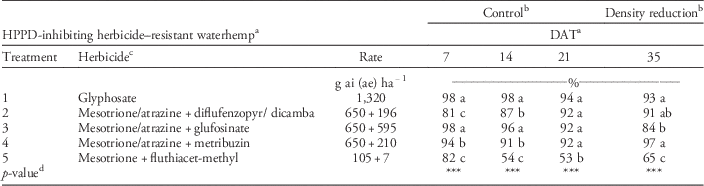
Four POST herbicide programs provided ≥90% control of the HPPD-RW at 21 DAT with ≥84% density reduction at 35 DAT (Table 8). For example, glyphosate (Treatment 1) provided ≥93% HPPD-RW control and density reduction. Thus, the HPPD-RW was very sensitive to glyphosate due to the fact that the experimental site had been under seed corn production at least for last five years with no use of glyphosate. Mesotrione/atrazine+diflufenzopyr/dicamba (Treatment 2), mesotrione/atrazine+glufosinate (Treatment 3), and mesotrione/atrazine+metribuzin (Treatment 4) also provided 92% control of HPPD-RW at 21 DAT. This is due to synergistic effect of HPPD-inhibiting herbicides and photosystem II–inhibiting herbicides (e.g., atrazine and metribuzin). Previous studies have confirmed improved control of Amaranthus species in corn by tank-mixing HPPD- and photosystem II–inhibiting herbicides (Abendroth et al. Reference Abendroth, Martin and Roeth2006; Woodyard et al. Reference Woodyard, Bollero and Riechers2009).
Effect of POST-only herbicide programs on HPPD-inhibiting herbicide–resistant-waterhemp control (%) and population density reduction (%) in field experiments conducted in 2013 and 2014 near Columbus, NE.
a Abbreviations: DAT, d after treatment; HPPD, 4-hydroxyphenylpyruvate dioxygenase. The control (%) data of non-treated experimental unit were not included in analyses. Density reduction (%) was calculated on the basis of comparison with density (plants m−2) of non-treated experimental unit.
b Means presented within each column with no common letter(s) are significantly different according to Fisher’s Protected LSD test where P≤0.05.
c Herbicide premix (/); herbicide tankmix (+).
d ANOVA, ***α<0.01.
There was no difference in HPPD-RW control (21 DAT) between glyphosate and mesotrione/atrazine in tank mixtures with diflufenzopyr/dicamba, glufosinate, or metribuzin. All of these treatments resulted in ≥92% HPPD-RW control. Mesotrione/atrazine + metribuzin caused 15% temporary stunting in corn at 10 DAT (data not shown). Fluthiacet-methyl + mesotrione showed poor (53%) control of the HPPD-RW at 21 DAT (Table 8). Similar results were obtained by Jhala et al. (Reference Jhala, Sandell, Rana, Kruger and Knezevic2014), who reported that fluthiacet-methyl used alone was not effective in controlling Amaranthus species.
The results of POST-only herbicide programs indicated that glyphosate, and premix of mesotrione/atrazine tank mixed with synthetic auxins glufosinate and metribuzin, are effective herbicide programs for control of HPPD-RW in corn.
PRE fb POST Herbicide Programs
Most PRE fb POST herbicide programs provided ≥83% control and density reduction of HPPD-RW at 32 DAPOST (Table 9). The HPPD-RW was ≥86% controlled with PRE herbicide 30 DAPRE. The HPPD-RW control (%) in PRE was higher when treated with 2,780 g ha−1 (Treatments 9, 10, and 11) than 1,550 g ha−1 (Treatment 8) of mesotrione/S-metolachlor/atrazine. Furthermore, adding atrazine (1,080 g ha−1) to mesotrione/atrazine/S-metolachlor (2,780 g ha−1) did not improve the HPPD-RW control (%). The mesotrione/atrazine/S-metolachlor (2,780 g ha−1) provided nearly complete or complete control of HPPD-RW. This mixture, with or without atrazine, resulted in ≥97% HPPD-RW control at 30 DAPRE. Moreover, acetochlor/flumetsulam/clopyralid, pyroxasulfone/fluthiacet-methyl/atrazine, saflufenacil/dimethenamid-P + dimethenamid-P, and thiencarbazone-methyl/isoxaflutole+atrazine provided ≥95% HPPD-RW control.
Effect of PRE followed by POST herbicide programs on HPPD-inhibiting herbicide–resistant-waterhemp control (%) and population density reduction (%) in field experiments conducted in 2013 and 2014 near Columbus, NE.

a Abbreviations: DAPRE, d after PRE; DAPOST, d after POST; HPPD, 4-hydroxyphenylpyruvate dioxygenase. The control (%) data of non-treated experimental unit were not included in analyses. Density reduction (%) was calculated on the basis of comparison with density (plants m−2) of non-treated experimental unit.
b Means presented within each column with no common letter(s) are significantly different according to Fisher’s Protected LSD test where P≤0.05.
c Herbicide premix (/); herbicide tankmix (+); fb, followed by.
d ANOVA, ***α<0.01.
Treatments fb POST application of glyphosate alone (Treatments 3, 6, 9, and 13) or glyphosate + topramezone+atrazine (Treatment 1), glyphosate+diflufenzopyr/dicamba (Treatment 5), and glyphosate/S-metolachlor/mesotrione+atrazine (Treatment 8) provided ≥95% HPPD-RW control and density reduction at 32 DAPOST. Diflufenzopyr/dicamba resulted in 86% to 91% control of HPPD-RW, but the control was improved to 97% when glyphosate was tank-mixed with diflufenzopyr/dicamba (Treatment 5). Non-glyphosate treatments, including topramezone + diflufenzopyr/dicamba+atrazine (Treatment 2), diflufenzopyr/dicamba+atrazine (Treatment 4), atrazine+S-metolachlor+glufosinate (Treatment 7) and topramezone+diflufenzopyr/dicamba (Treatment 14) resulted in ≥94% HPPD-RW control and density reduction at 32 DAPOST. These results suggest that many herbicide options are available to manage HPPD-RW in corn, at least in Nebraska and the upper Midwest.
Herbicide rotations and/or mixtures of active ingredients that have different SOA have been recommended by researchers as a way to prevent or delay the evolution of resistant weeds (Beckie Reference Beckie2006; Gressel and Segel Reference Gressel and Segel1990; Norsworthy et al. Reference Norsworthy, Ward, Shaw, Llewellyn, Nichols, Webster, Bradley, Frisvold, Powles and Burgos2012; Wrubel and Gressel Reference Wrubel and Gressel1994). Similarly, Livingston et al. (Reference Livingston, Fernandez-Cornejo, Unger, Osteen, Schimmelpfennig, Park and Lambert2015) suggested that the lowest risk of evolving herbicide resistance occurred when both PRE and POST herbicide applications are part of a systematic approach to weed control. In addition, the sequential application of PRE fb POST would also help in fields with substantial waterhemp density, which has tendency to emerge over a longer period of time (Cordes et al. Reference Cordes, Johnson, Scharf and Smeda2004; Schuster and Smeda Reference Schuster and Smeda2007).
This study confirmed the first case of HPPD-RW in Nebraska, and the third in the United States (Heap Reference Heap2016b). This biotype showed the highest resistance to mesotrione, followed by tembotrione and topramezone, most likely due to the longer history of mesotrione use at the study site in a continuous seed corn production system. The results indicate that there are herbicide programs that have the potential to provide effective control of HPPD-RW in corn. Tactics for minimizing the risk of herbicide resistance should be based on the principles of integrated weed management, especially utilizing mixtures or premixes of herbicides with different SOA. Despite availability of alternative herbicides, the spread of HPPD-inhibiting herbicide resistance in Amaranthus spp. is increasing across other parts of Nebraska and the United States (Hausman et al. Reference Hausman, Singh, Tranel, Riechers, Kaundun, Polge, Thomas and Hager2011; Jhala et al. Reference Jhala, Sandell, Rana, Kruger and Knezevic2014; McMullan and Green Reference McMullan and Green2011; Thompson et al. Reference Thompson, Peterson and Lally2012), which is of great concern because it limits the effectiveness of mesotrione, tembotrione, and topramezone on pigweed species. Future research is needed to confirm the mechanism of resistance to HPPD-inhibiting herbicides observed in this biotype from Nebraska.
Acknowledgments
The authors thank CAPES (Brazilian Government Foundation) - Proc. no 9112-13-8, for financial support to the graduate student involved in this study. We appreciate the help of Sergio Oliveira, Kyle Kardell, and Amanda Winstead in this project.



