



Fruits and vegetables are nutrient-dense foods, rich in fibre, vitamins, minerals and phytochemicals while being relatively low in energy. This makes them important components of a healthy diet. Regular consumption of an adequate intake is associated with lower risks of obesity( Reference Ledoux, Hingle and Baranowski 1 ), cancers( Reference Boffetta, Couto and Wichmann 2 – Reference Steinmetz and Potter 4 ), CVD( Reference Dauchet, Amouyel and Hercberg 5 – Reference Wang, Ouyang and Liu 7 ), stroke( Reference Hu, Huang and Wang 8 ), hypertension( Reference Appel, Moore and Obarzanek 9 , Reference Miura, Greenland and Stamler 10 ) and all-cause mortality( Reference Bazzano, He and Ogden 11 ). Guidelines vary by country, although most are consistent with the WHO’s minimum recommendation of 400–500 g of fruits and vegetables daily (excluding potatoes and other starchy tubers) to reduce the risk of chronic disease( 12 – 14 ). In the UK, five daily portions of fruits and vegetables (combined weight of 400 g) are recommended for health. This does not include starchy vegetables such as potatoes( 14 ). In Australia, two servings of fruits (150 g/serving) and five servings of vegetables (75 g/serving) are the minimum recommended daily intake for adults and include non-fried potatoes( 15 ). As these recommendations are based on gender-specific energy and nutrient requirements, adult males are recommended six servings of vegetables daily (total weight of 450 g). Variety is also encouraged to maximise dietary diversity and the bioavailability of nutrients and other beneficial phytochemicals( 15 – 18 ).
Fruit and vegetable consumption levels are inadequate in many countries( Reference Rekhy and McConchie 19 – Reference Casagrande, Wang and Anderson 23 ). Internationally, the intake among young adults is particularly low( Reference Serdula and Kettel-Khan 24 , 25 ). Researchers and practitioners have made efforts to encourage intake and most recently the Australian government led the population-wide Go For 2&5® campaign which resulted in a combined increase in consumption by 0·8 servings/d( Reference Pollard, Miller and Daly 26 ). Despite these efforts the latest statistics indicate that 19–30-year-old Australians are the poorest consumers of fruits and vegetables among adults( 27 ).
While formative research with young adults suggests that fruit and vegetable consumption is likely to increase during the transition to parenthood( Reference Dumbrell and Mathai 28 , Reference Hartmann, Dohle and Siegrist 29 ), if the pattern of suboptimal intake tracks into middle adulthood, it increases the risk of diet-related diseases among these adults and their offspring are likely to inherit these poor dietary patterns( Reference Lee and Park 30 ). Thus, innovative interventions and campaigns are needed to positively influence fruit and vegetable intake of future generations of adults. For maximum effect, interventions should be tailored to the target population( Reference Noar, Benac and Harris 31 ). This requires an in-depth understanding of the current patterns of intake and determinants of consumption.
The determinants of fruit and vegetable intake have been well documented in the literature, with gender, socio-economic status (SES), personal preferences, availability and accessibility, and parental intake influencing consumption( Reference Rasmussen, Krølner and Klepp 32 ). Australian-wide studies specifically evaluating fruit and vegetable intake according to demographic associations are limited and more than 10 years old( Reference Dobson, Porteous and McElduff 33 – Reference Giskes, Turrell and Patterson 35 ), although there have been attempts to estimate intake at the state level such as the Western Australian report on intakes following the Go For 2&5 campaign( Reference Pollard, Miller and Daly 26 ). Prior to the most recent nutrition survey measuring food and dietary patterns (the 2011–12 National Nutrition and Physical Activity Survey (NNPAS)), the last national survey was conducted in 1995( 36 ). Preliminary results of the recent national survey show that fruit and vegetable intake remains inadequate( 27 ). However, this analysis does not account for all sources of fruits and vegetables in the diet. Detailed secondary analysis including mixed dishes where fruits and vegetables make a minor contribution might yield more complete results.
In 1995, Australians living in areas of lower SES with low incomes had the lowest fruit and vegetable intakes( Reference Giskes, Turrell and Patterson 35 ). Previous literature has also demonstrated that access to fresh fruits and vegetables varies with geographical location( Reference Dean and Sharkey 37 – Reference Landrigan and Pollard 39 ). Other research has shown that increased vegetable intake can mediate weight loss in young adults( Reference Partridge, McGeechan and Bauman 40 ). To provide context for interventions, current relationships between intake, sociodemographic variables, and factors such as BMI should be examined.
Dietary guidelines based on epidemiological evidence recommend consumption of a variety of fruits and vegetables to maximise bioavailability of nutrients including phytochemicals and the unique health benefits they confer( 15 – Reference Van Duyn and Pivonka 17 ). Thus, variety should be considered when planning interventions. Lastly, with recommendations set at five vegetable servings daily, it is unlikely that an individual will meet his/her requirements if vegetable consumption occurs in a single eating occasion. Thus, assessing distribution of intake across meal occasions is also of interest to discern opportunities for increased consumption.
Evaluating fruit and vegetable intake according to group characteristics and demographics can inform policy and health promotion practice to improve consumption levels. Thus, the present study aimed to conduct secondary analyses on the NNPAS data from 2011–12 in order to: (i) determine the intakes of fruits and vegetables among young adults (18–34-year-olds); (ii) evaluate variety of fruits and vegetables in the diets of young adults; (iii) investigate fruit and vegetable intakes by meal occasion (main meals v. snacks); and (iv) examine intakes according to sociodemographic variables such as age, gender, BMI, Socio-Economic Index for Areas (SEIFA) and geographical location.
Methods
Participants and dietary data methodology
The data analysed in the present study were collected as part of the 2011–12 Australian NNPAS by the Australian Bureau of Statistics (ABS). A detailed description of the survey methods including data collection and handling is available from the ABS( 41 ). Briefly, the 2011–12 NNPAS was conducted using nationally representative sub-samples of the Australian Health Survey 2011–13. Trained ABS technicians collected dietary data on foods and beverages consumed using a computer-assisted personal interview, multiple-pass 24 h dietary recall. This method captured intakes of foods and beverages consumed by respondents on the day prior to the interview. To account for variations in intakes across seasons and days of the week, surveys were conducted over 12 months covering weekdays and weekends. Portion sizes were assessed by quantifying the amount of food the respondent consumed at one meal occasion. Rulers, rings, a grid, a wedge, various meat cuts and Australian-sourced drawings and photographs of actual-size food and drink containers in different shapes and sizes were provided in a food model booklet to help respondents estimate portion sizes, which were converted to grams by multiplying the volume specified by the food density( 41 ). A second 24 h recall was conducted with all participants asked to participate on a voluntary basis. Data from the second interview (computer-assisted telephone interview) was not included as only 64 % of respondents participated in the second dietary recall. The survey included a representative sample of city, metropolitan, rural and remote areas across the Australian States and Territories. In the present paper, secondary analyses were conducted on fruit and vegetable intake data of young adults aged 18–34 years. This age range was chosen to reflect definitions of young adulthood according to national health institutes in the USA and Australia( 42 , 43 ). However, as emerging adults may have quite different lifestyles from those aged 30–35 years( Reference Arnett 44 ), we further grouped into the following age categories: 18–24 years, 25–29 years and 30–34 years. Data were extracted from the Confidentialised Unit Record Files provided by the ABS (permission granted for use)( 45 ).
Classification of fruits and vegetables
The Confidentialised Unit Record Files group food data for all respondents into categories. Further grouping was conducted to classify fruits and vegetables according to categories based on the foundation and total diet food models developed for dietary guidelines( 18 ). Fruits were categorised as citrus, pome, tropical, berries, stone or other; with a separate fruit juice category. Vegetables were grouped as green and brassica, orange, starchy, root/tubular/bulb or other, excluding fried potatoes. Legumes, fresh, canned, frozen and dried varieties of fruits and vegetables, as well as fruits and vegetables within mixed dishes were included in the analyses (see online supplementary material, Table S1). All fruits and vegetables in mixed dishes were included. The proportions of fruits and vegetables within all mixed dishes were determined based on ingredient weights reported within the 2011–13 AUSNUT food recipe file( 46 ) and assigned to the appropriate fruit or vegetable category. Consumption of fruit juice exceeding 125 ml and fried potatoes were excluded from analyses in accordance with the Australian Guide to Healthy Eating recommendations which classify them as discretionary (non-core) items( 15 ). Fried potato intake was assessed and reported separately.
Assessment of fruit and vegetable intake
The total weight of fruits and vegetables consumed by each respondent was calculated as the sum of the fruit and vegetable categories, which included both individual fruits and vegetables and those from mixed dishes. Consumers and non-consumers were identified and proportions were established. The mean intakes of fruits and vegetables (grams) were calculated and converted to servings. Internationally there is variation in the definition of a serving. For example, in the UK, a serving of fruit or vegetables is equivalent to 80 g( 47 ). We used the Australian Guide to Healthy Eating( 15 ) definition which specifies that a standard serving of fruit is equivalent to 150 g, while a serving of vegetables equates to 75 g, with a minimum of two servings of fruit and five servings of vegetables recommended daily for adults. These recommendations are based on gender-specific energy and nutrients requirements, such that adult males are recommended six servings of vegetables daily.
Variety and intake by meal occasion
The variety of fruits and vegetables eaten was calculated as the number of the fruit and vegetable categories consumed as defined in the online supplementary material, Table S1. Variety was assessed using a modified version of the scoring system developed by Magarey et al.( Reference Magarey, McKean and Daniels 34 ). Scoring was as follows: low variety (one type of fruit, one or two types of vegetable), medium variety (two types of fruit, three or four types of vegetable) and high variety (three or more types of fruit, five or more types of vegetable). For this analysis, consuming ≥50 % of a serving of a category of fruit or vegetable as defined in Table S1 (i.e. ≥75 g of fruit or ≥37·5 g of vegetables) was counted as consuming one type of fruit or vegetable. The number of different types consumed by each participant was summed to give his/her total variety score. Fruit juice was excluded from variety scoring as the type of fruit within these products was not differentiated as part of the current analyses. Dried fruit was also excluded as only a small proportion of the population reported consumption on the day prior to the dietary recall. Data were also categorised by meal occasion as breakfast, lunch, dinner or snacks, where snacks included brunch, morning tea, afternoon tea, snack, extended consumption and other. The mean fruit and vegetable intake at each meal occasion was determined. Further analyses were conducted to explore patterns in number of servings consumed across the day and proportions consuming fruits and vegetables per meal occasion.
Associations between fruit and vegetable intake and lifestyle, anthropometry and sociodemographic variables
To explore factors that may influence fruit and vegetable consumption, we evaluated the relationship between age, BMI, sociodemographic variables (SEIFA and geographical location), lifestyle factors and mean intakes. BMI was derived from the height and weight measurements taken objectively by the interviewer and categorised as underweight (≤18·5 kg/m2), healthy weight (18·5–24·99 kg/m2), overweight (25·0–29·99 kg/m2) or obese (≥30·0 kg/m2) based on the National Institutes of Health’s cut-offs( 48 ). Respondents with no BMI recording (n 317) were coded as ‘missing values’ and omitted from BMI analyses. The SEIFA takes into consideration the impact of the area of residence, rather than an individual’s income, occupation or level of education, on intake. Quintile 1 includes the most disadvantaged areas, while quintile 5 represents the least disadvantaged areas. Geographical location was categorised as inner regional Australia, city/metropolitan (capital cities and surrounds) and other (outer regional Australia, remote and very remote Australia). Data on smoking (smoker v. non-smoker) and alcohol consumption (grams per day) were also evaluated as potential confounders in regression models.
Statistics
Statistical analyses were conducted using the statistical software package IBM SPSS Statistics for Windows version 22.0. Data for those aged 18–34 years inclusive were extracted from the Confidentialised Unit Record Files. Subject weighting factors supplied by the ABS were applied to the data before analyses, to ensure they were more representative of the population by age, gender, area of residence and seasonal effect( 41 ). Under-reporters were identified as those with a ratio of energy intake to BMR of <0·87 based on the Goldberg cut-off( Reference Black 49 ), which has been used for identification of misreporting in previous national Australian surveys( Reference Rangan, Allman‐Farinelli and Donohoe 50 ) and validated for use with 24 h recall data( Reference Rennie, Coward and Jebb 51 ). Results are reported including under-reporters unless stated otherwise. Descriptive statistics were used to report fruit and vegetable intake. The mean intake per capita and median intake per consumer were determined and percentage consuming calculated. Differences in proportions of young adults consuming fruits and vegetables according gender, age, BMI, SEIFA and geographical location were assessed using Pearson’s χ 2 tests. Differences in variety scores and proportions of persons consuming vegetables at each meal occasion according to categories of servings consumed were also determined by Pearson χ 2 tests. As data were not normally distributed, Kruskal–Wallis tests were applied to assess trends in intakes across categories and by age and gender, and to compare differences in intakes between meal occasions. Linear regression models were used to determine the relationship between fruit and vegetable intake and age, gender, BMI and sociodemographic variables (SEIFA and geographical location), controlling for energy intake and lifestyle factors (smoking status and alcohol intake). Statistical significance was set at P<0·05 for all tests.
Results
Characteristics
Table 1 summarises the characteristics of the sample of young adults included within the analyses (n 2397). The sample was evenly distributed across genders, age and SEIFA. Close to half the population were classed as overweight or obese (Table 1). Approximately 16 % of respondents were classed as under-reporters (n 386).
Characteristics of the sample of Australian young adults from the National Nutrition and Physical Activity Survey 2011–12 (n 2397)

* n 2080, 317 measurements not obtained.
Proportions of young adults consuming fruits and vegetables
Proportions of young adults consuming fruits and vegetables, and the amounts consumed, according to age, gender, BMI, SEIFA and geographical location, are presented in Tables 2–5. Fifty-six per cent of respondents consumed fruit (48 % when excluding fruit juice) and 93 % consumed vegetables. A small percentage of respondents (4·3 %) did not consume any fruit or vegetables. A greater proportion of females consumed fruits than males (males, 40·6 %; females, 53·8 %; P<0·001). No significant differences were observed between genders for vegetable consumption (Table 2). Fewer young adults aged 18–24 years reported consuming fruits (Table 4), and the largest percentage of consumers was observed in the young adults of the highest SEIFA category for fruit when including juice (Table 5) and for vegetables (Table 3). The proportion consuming legumes on the day prior to the dietary recall was relatively low at 12·3 %. Pome fruit and fruit juice were the most popular fruit categories consumed (Table 4).
Proportions (%) of Australian young adults aged 18–34 years consuming vegetables, and the median intake and interquartile range ((IQR); 25th–75th percentile) per consumer (g/d), according to age, gender and BMI, National Nutrition and Physical Activity Survey 2011–12 (n 2397)

* From Kruskal–Wallis test on per capita intakes; significant P values indicated in bold font.
† n 2080, as 317 participants did not have a measured weight and height for calculation of BMI values.
‡ Excluding fried potatoes.
Proportions (%) of Australian young adults aged 18–34 years consuming vegetables, and the median intake and interquartile range ((IQR); 25th–75th percentile) per consumer (g/d), according to Socio-Economic Index for Areas (SEIFA) and geographical location, National Nutrition and Physical Activity Survey 2011–12 (n 2397)

* From Kruskal–Wallis test on per capita intakes; significant P values indicated in bold font.
† Excluding fried potatoes.
Proportions (%) of Australian young adults aged 18–34 years consuming fruit, and the median intake and interquartile range ((IQR); 25th–75th percentile) per consumer (g/d), according to age, gender and BMI, National Nutrition and Physical Activity Survey 2011–12 (n 2397)

* From Kruskal–Wallis test on per capita intakes; significant P values indicated in bold font.
† n 2080, as 317 participants did not have a measured weight and height for calculation of BMI values.
‡ Including fruit juice, up to 1 serving (125 ml or ½ cup).
§ Up to 1 serving (125 ml or ½ cup).
Proportions (%) of Australian young adults aged 18–34 years consuming fruit, and the median intake and interquartile range ((IQR); 25th–75th percentile) per consumer (g/d), according to Socio-Economic Index for Areas (SEIFA) and geographical location, National Nutrition and Physical Activity Survey 2011–12 (n 2397)

* From Kruskal–Wallis test on per capita intakes; significant P values indicated in bold font.
† Including fruit juice, up to 1 serving (125 ml or ½ cup).
‡ Up to 1 serving (125 ml or ½ cup).
Amounts of fruits and vegetables consumed
Median intake among consumers was 181·5 and 159·5 g for fruit and vegetables, respectively. This is equivalent to 1·2 servings of fruit and 2·1 servings of vegetables using Australian standard serving sizes. The median (interquartile range; 25th–75th percentile) intake of fried potatoes among 18–34-year-olds was 88·5 (55·0–134·3) g, which, if included, would bring the median servings of vegetables consumed to 3·3 servings. Intake of vegetables was lowest for 18–24-year-olds (P=0·002; Table 2). Fruit intake (including juice) was highest for the 30–34-year-olds (P=0·002), with females consuming more than males (P<0·001; Table 4). Those within the obese category reported the lowest intake of fruits (P=0·02; Table 4). While no significant differences were found between SEIFA quintiles for vegetable intake, consumption patterns were trending towards significance (P=0·06). Geographical location had no significant effect on vegetable intake. However, those within regional locations reported consuming more starchy vegetables (P<0·001) and less of the ‘others’ category (P=0·045; Table 3).
Comparison of per capita intake with Australian Guide to Healthy Eating recommendations
On average, 18–34-year-olds consumed 128 g (0·9 servings) of fruit, which was below the 300 g (2 servings) minimum daily recommendation. The mean vegetable intake was 205 g (2·7 servings), also below the 375 g (5 servings) minimum recommended daily intake. Approximately 15 % of the young adults consumed ≥5 servings of vegetables and ≥2 servings of fruit on the day prior to recall.
Fruit and vegetable variety
The variety of fruits and vegetables consumed by the respondents is presented in Table 6. Less than a quarter of population surveyed reported consuming 3–4 different vegetable categories on the day prior to the dietary recall. Among those who consumed vegetables, intake of starchy vegetables was high (approximately 1·2 servings) but consumption of the green and brassica group was less than half a serving (Table 2). A large proportion of the young adults consumed <1 type of fruit, with citrus, pome and stone fruits eaten the most among fruit consumers (Table 4). There were no differences in fruit variety (consuming ≥2 categories) by age or gender. However, those aged 18–24 years had the lowest vegetable variety score (P=0·01), with no differences by gender.
Proportions of Australian young adults aged 18–34 years consuming a low, medium and high variety of vegetable and fruit sub-categories, National Nutrition and Physical Activity Survey 2011–12 (n 2397)
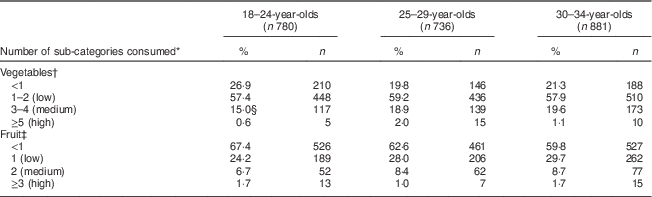
* Consumption of a category defined as eating at least half a serving of fruit or vegetable within the category (≥37·5 g of vegetables or ≥75 g of fruit).
† Excluding fried potatoes.
‡ Excluding fruit juice and dried fruit.
§ Significant difference in proportion scoring ≥3 for vegetable variety score by age using post hoc χ 2 analysis (z=3·0, P<0·008, Bonferroni-corrected P value).
Analysis by meal occasion
Differences in fruit and vegetable intake were observed across meal occasions (P<0·001). The highest mean intake of vegetables occurred at dinner (131 (sd 212) g, 1·75 servings), followed by lunch (64·7 (sd 101) g). Less than a quarter of a serving of vegetables was reported at breakfast (12·5 (sd 52·2) g) and as snacks (15·5 (sd 64·5) g). Fruit consumption was highest between main meals with almost half a serving consumed as snacks (68·9 (sd 128) g). Table 7 demonstrates the differences in proportions consuming fruits and vegetables per meal occasion grouped according to the number of servings consumed throughout the day. Those consuming >5 vegetable servings daily had the highest proportion of consumers across all meals (P<0·001). Additionally, a larger proportion of respondents who consumed >2 fruit servings/d reported intake of fruit as a snack and at lunch compared with those consuming ≤1 serving/d (P<0·001; Table 7).
Proportions (%) of Australian young adults aged 18–34 years consuming vegetables and fruits per meal occasion (breakfast, lunch, dinner and snacks), grouped according to the number of servings consumed throughout the day, National Nutrition and Physical Activity Survey 2011–12 (n 2397)

* From χ 2 analysis of differences in proportions of persons consuming vegetables/fruits at each meal according to categories of servings consumed; significant P values indicated in bold font.
† Excluding fruit juice.
‡ Snacks included all foods consumed between main meals.
Associations between fruit and vegetable intake and lifestyle, anthropometry and sociodemographic variables: linear modelling
Table 8 shows the associations between fruit and vegetable intake and sociodemographic and lifestyle factors. A positive association was observed between age and fruit and vegetable intake (P=0·002, excluding juice; P=0·003 including juice; P<0·001, vegetables). When controlling for energy males consumed less vegetables than females (P=0·002). There were no associations found between BMI and intake (Table 8). While the removal of under-reporters increased β values positively, the associations remained non-significant. Living in outer regional and remote areas was associated with the lowest fruit intake (P=0·01, excluding juice). No associations were found between intake and SEIFA categories.
Linear regression results: factors associated with vegetable and fruit intake among Australian young adults aged 18–34 years, National Nutrition and Physical Activity Survey 2011–12 (n 2397)

* Beta coefficients represent the adjusted mean difference between each subgroup and the reference group (R), based on per capita intake in grams (n 2397), after controlling for confounders including age, gender, BMI, SEIFA, geographical location, smoking status and alcohol intake.
† Under-reporters (n 386) excluded.
Discussion
The present secondary analysis of the 2011–12 NNPAS data confirms that fruit and vegetable intakes of young adults aged 18–34 years are suboptimal. The combined mean fruit and vegetable intake of the surveyed sample (328 g/d) fell short of the WHO standard, which recommends 400–500 g of fruits and vegetables daily for prevention of chronic disease risk( 12 ) and aligns with previous reports on the global inadequacy of population intakes( Reference Miller, Yusuf and Chow 52 ). Most Australian young adults also failed to consume a variety of fruits and vegetables, with those in the youngest age group (18–24 years) reporting the lowest intakes and variety. Analyses by sociodemographic variables revealed that males may need more support than females to improve intake as well as those in regional areas who have less access to a variety of fresh vegetables. These findings can inform policy and health promotion practice to effectively close the gap between current consumption levels and recommended intake.
Young adults consumed a mean of 0·9 and 2·7 servings of fruits and vegetables daily, respectively. This is higher than the ABS analysis for 19–30-year-olds (0·7 and 2·2 servings of fruits and vegetables)( 53 ), but includes all sources of fruits and vegetables using disaggregated data. Overall, vegetable intake of young adults may be slightly better than reported in previous analysis but is still well below recommendations, and therefore public health messages promoting fruit and vegetable consumption remain important.
Previous data collected in 1995 do not report intake of young adults separately; however, mean daily intake for those aged 19 years or over was 3·6 servings of vegetables and approximately 1 serving of fruit( 36 ). While the food items, classification of fruits and vegetables and method of analyses differed between the surveys, it is evident that intake of fruits and vegetables remains poor and is worsening. Thus, immediate action is required to assist this generation of adults to improve their intake.
Despite literature indicating that access to a variety of fruits and vegetables is lower and costs are higher in regional areas of Australia( Reference Landrigan and Pollard 39 , Reference Harrison, Coyne and Lee 54 – 56 ), no differences in intake were observed between geographical locations. However, those within regional locations reported consuming more starchy vegetables and less of the ‘others’ category. As fruits and vegetables are highly perishable, the costs of transportation to remote areas are high and with desert climates, water shortages and soil prohibiting local production in some areas( Reference Edwards, Dixon and Friel 57 ), it is not surprising that young adults in isolated rural areas consume less perishable vegetables. To address this, social marketing campaigns could focus on the promotion of nutritionally equivalent frozen and low-sugar and low-sodium canned fruits and vegetables as a means of increasing variety at low cost, particularly in regional areas. Examples include frozen berries or canned beans, tomatoes and mushrooms.
Studies in Australia have explored differences in fruit and vegetable intake by SES. While Giskes et al. identified lower intakes among adolescents living lower-SES areas( Reference Giskes, Turrell and Patterson 35 ), and the New South Wales population health survey results (2014) showed that fewer people in disadvantaged areas met fruit and vegetable recommendations( 58 ), no studies have specifically looked at young adults. The present analysis found no differences in mean vegetable intake of young adults by SEIFA quintile. However, among the higher SEIFA group there was a trend towards greater consumption of the ‘other vegetables’, such as mushrooms and avocado, which tend to be more expensive. It may be worthwhile to run local rather than national campaigns that address the specific barriers relevant to fruit and vegetable intake for the population within their area of residence. With the perceived cost of vegetables identified as a significant barrier to intake among young adults( Reference Dumbrell and Mathai 28 , Reference Hartman, Wadsworth and Penny 59 ), campaigns could focus on budgeting for the inclusion of fruits and vegetables, particularly for lower SEIFA groups. Furthermore, previous research has indicated that there are no significant differences in knowledge of fruit and vegetable recommendations between socio-economic groups; however, those from higher SES quintiles scored significantly higher in their ability to make healthier food choices( Reference Hendrie, Coveney and Cox 60 ). This suggests the lower-SES areas may need extra support in translating knowledge into behaviour.
The analysis of patterns of fruit intake by SEIFA group revealed that while the lowest intake was recorded for those in the lowest SEIFA quintile, the highest intake of fruit juice was among those of the top SEIFA group. These results contrast what is seen in the USA, where the highest juice consumption is reported among those of lower SES( Reference Drewnowski and Rehm 61 ). Industry reports on the trend of commercial fruit juice consumption estimate an annual growth in revenue from juice sales of 9·8 % in Australia( 62 ). This proliferation of juice sales through outlets that offer ‘designer’ juices may be contributing to a trend for juice consumption among young adults of higher SEIFA. Previous research in Australia highlighted that such juices were seen as a fashion accessory by young adults( Reference Hattersley, Irwin and King 63 ). Although fruit juice can assist in meeting the recommended two fruit servings daily, the higher sugar and lower fibre content of these beverages and ease of overconsumption indicate that intake should continue to be monitored and emphasis placed on increasing whole fruit consumption and replacing juice with water. This is particularly important considering fruit juice promotes weight gain over the long term( Reference Hebden, O’Leary and Rangan 64 ).
Overall, variety was poor among the young adults. Fruit consumers mainly reported intake of pome, citrus and stone fruit with lower intakes of berries and tropical fruit. Among vegetable consumers, intake of starchy vegetables was high but consumption of the green and brassica group was less than half a serving. While starchy vegetables contain carbohydrates (which provide energy) and some vitamins, green leafy and brassica vegetables are rich in folate which has been postulated to reduce the risk of cancer( 18 ) and neural tube defects( Reference De-Regil, Fernández-Gaxiola and Dowswell 65 ). They are also a good source of phytochemicals, Fe and vitamin C. Our estimates of vegetable intake counted potatoes prepared without fat as a starchy vegetable but did not include fried potatoes as per the Australian dietary guidelines. Among consumers the median intake of fried potatoes (1·2 servings) was proportionally high compared with other vegetables.
Only 12 % of the young adults surveyed consumed legumes. The consumption of legumes is of value, as they are a relatively inexpensive source of protein, Fe, fibre and micronutrients. Thus, promoting intake of these protein- and nutrient-rich vegetables to young adults can help to improve vegetable intake while also reducing the total cost of meals. Additionally, with previous research highlighting the effect of exposure to fruits and vegetables in the early years of life on intake and variety consumed in adulthood( Reference Ramsay, Rudley and Tonnemaker 66 ), continued work is needed to promote consumption in younger children with initiatives such as the Stephanie Alexander Kitchen Garden Program( Reference Block, Gibbs and Staiger 67 ).
To our knowledge, the current analysis is the first to examine fruit and vegetable intake by meal occasion. The findings demonstrated that vegetables are consumed mainly at dinner and lunch, with an opportunity to increase intake at breakfast and as snacks. Fruit consumption was highest between main meals with almost half a serving consumed as snack. Additionally, a greater proportion of respondents who met or exceeded the daily recommendations consumed fruits and vegetables throughout the day. Thus, public health practitioners should consider encouraging intake at all meals to increase the likelihood of reaching the recommended daily intake of fruits and vegetables.
Finally, the low level of fruit and vegetable intake within the young adult population is a concern considering the continued risk of overweight and obesity in this age group( Reference Grech and Allman-Farinelli 68 ). Given the cross-sectional nature of these data, it is not surprising that there was no association observed between BMI category and intake. Previous longitudinal studies have confirmed, however, that increasing vegetable intake is associated with a reduction in weight( Reference Bertoia, Mukamal and Cahill 69 ), with a recent systematic review confirming that consumption of whole fruit can reduce the risk for long-term weight gain in middle-aged adults( Reference Hebden, O’Leary and Rangan 64 ). Thus, promoting vegetable and whole fruit intake to young adults, especially those of higher BMI, may be beneficial to weight maintenance in their transition into adulthood. Furthermore, given the additional benefits of increased fruit and vegetable intake in reducing the risk of cancer, CVD and all-cause mortality( Reference Oyebode, Gordon-Dseagu and Walker 70 ), promoting increased intake in this young generation may reduce the future burden of chronic disease.
Strengths and limitations
As with most dietary assessment methods, the 24 h recall has some measurement error introduced by inaccurate recall or estimation of intake( Reference Slimani, Ferrari and Ocke 71 ). It is also important to note that those classified as ‘non-consumers’ on the day of the interview may not typically be non-consumers. Thus, one day recalls may not be a reflection of usual intake among individuals, but provide a good estimation and snapshot of consumption at a population level, allowing public health researchers to assess how intake changes over time. We also looked at the effect of under-reporting, with no significant effect found on associations.
A significant strength of our secondary analysis was the use of detailed intake data including fruits and vegetables consumed as part of any mixed dish, providing a more comprehensive estimation of intake. Future analysis could explore the major mixed-meal sources of fruits and vegetables.
Conclusions
Fruit and vegetable intake remains suboptimal for Australian young adults aged 18–34 years, with poorer intakes among 18–24-year-olds and males. Therefore, intensive efforts are warranted to effectively promote fruits and vegetables to this at-risk population group to increase intake as they transition into adulthood. The analyses documented herein highlight the specific opportunities for improving intake, namely supporting younger adults aged 18–24 years, with a focus on engaging males to increase vegetable intake, promoting fruits and vegetables at all meal occasions, with inclusion in mixed dishes, to increase likelihood of meeting daily requirements. For those in regional areas with limited access to a variety of fresh fruits and vegetables, canned and frozen options can be explored.
Acknowledgements
Financial support: This research received no specific grant from any funding agency in the public, commercial or not-for-profit sectors. M.N. and A.G. are supported by the Australian Post-graduate Award (APA) for doctoral studies. Conflict of interest: The authors have no financial or personal conflicts of interest to declare. Authorship: M.N., Z.S., A.R., A.G. and M.A.-F. contributed to the study design. K.M. provided statistical support and all authors contributed to data analysis and/or interpretation of the results. M.N. drafted the manuscript and all authors read and approved the final version of the manuscript. Ethics of human subject participation: In keeping with the National Statement on Ethical Conduct in Human Research( 72 ), this research was exempt from review by the institutional review board as all data were de-identified. The surveys used to obtain these data were conducted under the Federal Census and Statistics Act 1905( 41 ).
Supplementary Material
To view supplementary material for this article, please visit https://doi.org/10.1017/S1368980017001124



