


Many people, especially in the US, see countries like Sweden or Norway or Finland as role models – we have such a clean energy sector, and so on. That may be true, but we are not role models. Sweden is one of the top 10 countries in the world when it comes to the highest ecological footprints.
The Nordic nations represent a conspicuous contradiction. They are exalted as global benchmarks for sustainability – including in much of this book – yet, like all wealthy OECD nations, their levels of consumption far exceed what the planet can regenerate. This gap between ambition and reality is a defining critique of Nordic capitalism. This chapter examines Nordic overconsumption and other critiques to highlight where reforms are needed as part of the broader ambition to realize sustainable capitalism.
Critiques of Nordic Capitalism
Among American audiences, critiques of the Nordic model typically begin with “Yeah, but” – a phrase that sometimes precedes legitimate challenges and sometimes masks reflexive dismissal. This chapter examines both types, exploring what each reveals about Nordic capitalism’s limitations and possibilities.
Yeah, but the Nordics Overconsume
While Nordic countries are celebrated for their commitment to sustainability, their per capita ecological footprints rank among the highest in the world, alongside other developed OECD nations. This critique highlights a crucial distinction: the difference between system design and system outcomes. Nordic capitalism’s institutional design may offer valuable lessons despite its present unsustainable consumption patterns. As scientists studying planetary boundaries concluded in 2025, “There are currently no countries that achieve good social outcomes while staying within their fair share of planetary boundaries.”Footnote 1
Nordic societies’ excessive consumption illustrates what ecological economists like Herman Daly have termed the “growth-sustainability paradox.” This paradox, where economic growth in developed nations increasingly conflicts with planetary boundaries, presents a fundamental challenge to both Nordic and American models of capitalism. The Nordics’ violation of planetary boundaries despite their environmental consciousness demonstrates how deeply growth imperatives are embedded in modern economic systems. If everyone consumed like the average Nordic citizen, we would need almost four Earths to keep up with consumption.Footnote 2 Critiques of the Nordics for overconsumption are well-founded, like the critique levied by Greta Thunberg at the start of this chapter.
Overconsumption by Nordic societies violates the second half of the definition of sustainable development: “without compromising the ability of future generations to meet their own needs.” Overconsumption steals from future generations. The problem of overconsumption exists across all developed economies represented by the OECD nations. Given the excessively high consumption patterns among the wealthiest individuals, overconsumption is pronounced in societies with heightened levels of inequality (Chapter 2).
Despite their overconsumption – a serious challenge that Thunberg rightly criticizes – the Nordics present a promising path forward for other advanced economies. While Nordic nations currently violate the second half of sustainable development’s definition by consuming beyond planetary boundaries, they are uniquely positioned to address this challenge precisely because they have effectively met the first half: “development that meets the needs of the present.” This achievement provides the social and political stability needed to tackle overconsumption. In SDG terms, the Nordics are effectively meeting SDG #1 “No Poverty,” SDG #2 “Zero Hunger,” SDG #3 “Good Health and Well-Being,” SDG #4 “Quality Education,” SDG #5 “Gender Equality,” and SDG #6 “Clean Water and Sanitation.” The US cannot claim that. Basic needs such as food, healthcare, education, and clean water are routinely unmet for millions of Americans, including many children.Footnote 3
By effectively meeting the needs of the present, the Nordics are better positioned to address problems of overconsumption. When the basic needs of the present generation go unmet, and vast swaths of a population are effectively operating in survival mode, sufficiently considering the well-being of future generations is far less likely. As Paul Farmer asserted, “It’s my conviction that poverty and inequality are the two ranking problems facing our crowded and beautiful planet – not the only problems, but perhaps the most severe, and two that, if addressed, could bring us a little closer to tackling some of the other ones.”Footnote 4
In his article, “The Dark Side of the Nordic Model,” Jason Hickel summarized,
Nordic countries have it right when it comes to public healthcare, education and progressive social democracy, but they need to dramatically reduce their consumption if they are to stand as a beacon for the rest of the world in the twenty-first century. The good news is that all of this can be accomplished while improving human welfare and advancing the cause of social democracy. But it ultimately requires shifting to a different kind of economy – one not organized around endless GDP growth.Footnote 5
This tension between social democratic achievements and ecological limits reveals a fundamental theoretical challenge in sustainable development: How can societies maintain high levels of human well-being while operating within planetary boundaries? The Nordic experience suggests that social democracy may provide crucial institutional foundations for addressing this challenge. Three key theoretical mechanisms link social democratic institutions to environmental sustainability.
First, by reducing economic insecurity through universal social programs, social democracies create the political space needed for long-term environmental planning. When basic needs are met, citizens and policymakers can focus on longer-term challenges like climate change rather than immediate survival concerns. Second, the strong democratic institutions and traditions of social consensus-building in social democracies facilitate the kind of collective action needed to address environmental challenges. The same institutional frameworks that enabled Nordic countries to negotiate labor–capital compromises in the twentieth century now help them build agreement around environmental policies. Third, social democratic emphasis on public goods and market regulation provides tools for addressing market failures around environmental externalities. The Nordic willingness to use state capacity to shape markets aligns with the interventions needed for environmental protection.
The fixation on GDP growth represents one of the starkest differences between American and Nordic capitalism, illustrating how these theoretical mechanisms play out in practice. While GDP growth has become almost religious doctrine in American economic policy – “one stat to rule them all” – Nordic nations maintain a more nuanced relationship with this metric. Ironically, even Simon Kuznets, the American economist who invented GDP and was later awarded the Nobel Memorial Prize in Economics, warned against using GDP to measure societal well-being. Yet while America embraced GDP growth as its primary economic objective, Nordic nations demonstrated that prosperity doesn’t require sacrificing everything at the altar of GDP growth. Their experience suggests that sustainable development requires moving beyond this single-minded focus on growth to consider a broader array of social and environmental metrics.Footnote 6, Footnote 7
The Nordics are assuming a leadership position among the advanced economies through a three-pronged policy approach: first, implementing market-based mechanisms like carbon taxes; second, investing in circular economy initiatives that decouple growth from resource use; and third, developing new metrics beyond GDP to measure societal progress. This comprehensive policy framework, while still evolving, offers important lessons for other nations grappling with sustainability challenges.
Notably, the Nordics are betting on democracy to address sustainability challenges – and it’s a smart bet. “Inequality and climate change are the twin challenges of our time, and more democracy is the answer to both,” offered The Sum of Us author Heather McGhee in the book All We Can Save: Truth, Courage, and Solutions for the Climate Crisis.Footnote 8 Returning to Kate Raworth’s concept of doughnut economics (Chapter 2), the Nordics live above the hole of the doughnut, which is to say, above the collection of lower control limits. The Nordics are now making significant strides to establish policies to ensure they live below the upper control limits representing the planetary boundaries.
The Nordics have demonstrated a commitment to democracy and a strong belief that robust democracies are needed to address our greatest sustainability challenges.Footnote 9
Yeah, but Aging Populations Are Breaking the Nordic Welfare Systems
Demographic aging presents a critical test case for Nordic welfare states’ adaptability and resilience. Empirical evidence suggests a systematic erosion of eldercare infrastructure: Sweden’s care home capacity contracted by 25 percent between 2000 and 2015, while access rates for octogenarians declined from 20 percent to 11 percent by 2020. Meanwhile, waiting times for care home placement increased from fifty-one to sixty-four days, with municipalities citing resource constraints.Footnote 10 Access to eldercare has become more restrictive, with higher threshold requirements for assistance than two decades ago. The result is increasing privatization and reliance on informal care networks – more people must either pay for private services or rely on family members for care.Footnote 11
The Nordics have attempted to address the aging population challenge through various means. Their family-friendly policies, including generous parental leave and subsidized childcare, help maintain higher fertility rates than many developed nations. While still below replacement level, birth rates in Sweden, Norway, and Denmark typically exceed those of other wealthy countries. High female labor force participation also helps maintain the tax base needed for social programs. However, these measures alone may prove insufficient.
Demographic aging has exposed fundamental contradictions in Nordic policy approaches. Even as Denmark implements increasingly restrictive refugee policies and Sweden dramatically cuts refugee acceptance, their economies increasingly depend on immigrant labor. This demographic reality has created an inherent tension: while population aging and labor market needs suggest increasing immigration, political pressures push toward restriction.Footnote 12
The demographic challenge represents a crucial test case for Nordic capitalism’s adaptive capacity in the twenty-first century. These pressures create fundamental contradictions: While demographic and labor market needs suggest a need for more immigration, political pressures push toward restriction. The coming decades will reveal whether Nordic capitalism can maintain its universal aspirations while navigating between these competing imperatives.
Yeah, but the Nordics Are Small
Population size differences between the US and Nordic nations present an obvious challenge for comparative analysis. With 330 million inhabitants, the US is over fifty times larger than Denmark (6 million) and more than ten times larger than all Nordic nations combined (28 million). This dramatic scale difference is frequently cited as reason to dismiss Nordic experiences as irrelevant to US policy challenges.
However, this objection overlooks how comparative analysis can operate at multiple levels of social organization. While “small state studies” have long demonstrated how smaller nations can offer valuable insights for larger ones, the Nordic region presents particularly rich learning opportunities across various units of analysis.Footnote 13 Organizations of similar scale can be meaningfully compared regardless of national context, as evidenced by decades of successful cross-border business benchmarking. Cities face comparable challenges in delivering services and improving quality of life whether situated in Minnesota or Norway, Wyoming or Iceland, or California or Sweden. The key to effective learning lies not in exact matching of scale, but in identifying relevant points of comparison and specific domains where innovation has produced demonstrable results.
My own experience with cross-national learning offers an instructive parallel, not at the city level but at the organizational level – comparing practices between Toyota and IBM. Early in my career as an industrial engineer, I was among countless professionals worldwide captivated by Japan’s remarkable advances of the 1970s–1990s, particularly Toyota’s innovations (Chapter 2). Despite Japan having only one-third the US population and being far more demographically homogeneous, the collective fascination with Toyota’s methods proved well founded. At IBM, I found that approaching Toyota’s practices with curiosity rather than skepticism about contextual differences enabled me to adapt their principles to create significant operational improvements in a very different organizational setting. This experience, shared by countless other efficiency professionals who successfully adapted Japanese methods to Western contexts, demonstrated how thoughtful benchmarking across seemingly distinct contexts can drive meaningful innovation.
Benchmarking the Nordics and applying lessons learned in the US should not be different. Nordic nations, Nordic cities, and Nordic companies (like those featured in Chapter 6) each afford excellent benchmarking opportunities, each at differing units of analysis.
The value derived from comparative analysis often reflects the mindset brought to the exercise. Approaching other societies’ experiences with skepticism and dismissiveness ensures no learning will occur. Conversely, examining different contexts with curiosity and humility – while maintaining analytical rigor – can yield valuable insights for policy innovation. The Nordic experience, properly understood, offers precisely such an opportunity for thoughtful adaptation rather than wholesale adoption.
Case for Benchmarking Nordic Nations and Applying Lessons at the American State Level
Nordic nations are similar to a mid sized American state. The average Nordic nation is approximately 5.5 million people, comparable in size to Wisconsin or Minnesota, the twentieth- and twenty-second-most populated states, and therefore falls somewhere in the middle of the fifty US states in terms of population.Footnote 14 Wisconsin’s real gross domestic product (GDP) is $349 billion,Footnote 15 and Minnesota’s is $383 billion, which also places them in the range of a Nordic nation, as shown in Table 8.1.Footnote 16
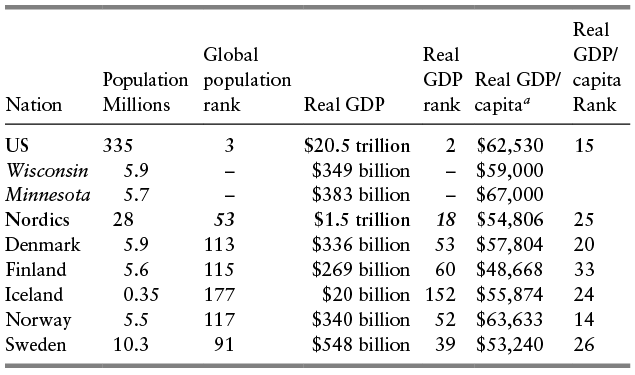
Table 8.1 Long description
Table has seven columns that list nation, population, global population rank, real GDP, real GDP rank, real GDP per capita, and real GDP per capita rank. The data from the table are as follows. US: 335 million, 3, 20.5 trillion dollars, 2, 62,530 dollars, and 15. Wisconsin: 5.9 million, blank, 349 billion dollars, blank, 59,000 dollars, and blank. Minnesota: 5.7 million, blank, 383 billion dollars, blank, 67,000 dollars, and blank. Nordics: 28 million, 53, 1.5 trillion dollars, 18, 54,806 dollars, and 25. Denmark: 5.9 million, 113 336 billion dollars, 57,804 dollars, and 20. Finland: 5.6 million, 115 269 billion dollars, 60, 48,668 dollars, and 33. Iceland: 0.35 million, 177, 20 billion dollars, 152, 55,874 dollars, and 24. Norway: 5.5 million, 117, 340 billion dollars, 52, 63,633 dollars, and 14. Sweden: 10.3, 91, 548 billion dollars, 39, 53,240 dollars, and 26.
Note:
a Bear in mind, real GDP per capita is an average. As the saying goes, the person with their head in the oven and feet in the icebox is, on average, a bit warm. So, too, the extreme concentration of wealth and income in America skews GDP per capita figures upward, even though they may not reflect the wealth or income of the “average” person. (See Chapter 7.)
Given these similarities, Nordic nations offer highly relevant benchmarks for US states. Rather than waiting for federal reforms, states can act as living laboratories – testing and adapting ideas already proven effective in similarly sized and economically comparable societies.
Consider education: Finland routinely ranks at the top of global educational performance measurements.Footnote 17 But that was not the case just two generations ago. “In 1951, the future of Finland was predicted to be ‘grey and dreary,’ but the Finns were tenacious,” wrote Danny Dorling and Annika Koljonen in their book Finntopia. “Finland’s postwar recovery and its capacity to establish itself as a serious country depended on the transformation of its (now world-renowned) education system.”Footnote 18 Finland regularly tops the EIU’s Worldwide Educating for the Future Index (WEFFI).Footnote 19 “Finland has become, in 100 years as a nation-state, one of the world’s benchmarks for quality in school education … The world of education follows what happens in Finland,” remarked Eduardo Andere in his 2020 treatise, The Future of Schools and Teacher Education: How Far Ahead is Finland?Footnote 20
Given that education in the US is primarily organized at the state level, Finland offers valuable lessons for individual states. Finland’s educational policies and their effective implementation have significantly contributed to the nation’s strong performance on SDGs. More specifically, the targets for SDG #4 “Quality Education,” include the following for which Finland performs exceptionally well: Target 4.1, which ensures that all children complete free, equitable, and quality primary and secondary education leading to relevant and effective learning outcomes; Target 4.2, which ensures that all children have access to quality early childhood development and pre-primary education so they are ready for primary education; and Target 4.3, which ensures equal access for all women and men to affordable and quality technical, vocational, and tertiary education, including university.
Let’s consider how Nordic countries manage healthcare. Sweden and Denmark spend only about 10 percent of GDP on universal healthcare compared to the US, which spends about 17 percent, yet the overall health outcomes for Swedes and Danes are just as good (if not better). US healthcare is hyper-inefficient, meaning US states have much to learn from their Nordic counterparts about efficiently delivering healthcare services.
In addition to being hyper-inefficient, healthcare in the US is highly inequitable. 4.3 million children ages 0–18 years are without access to healthcare.Footnote 21 One million children in Texas alone do not have access to healthcare, representing 13 percent of all Texas children, the highest percentage of any US state (15,000 Wyoming children, 11 percent; 161,000 Arizona children, 9 percent; 18,000 Alaskan children, 9 percent; 15,000 North Dakotan children, 8 percent; and 343,000 Florida children, 8 percent, do not have access to healthcare).Footnote 22 Access to healthcare is a fundamental element of freedom, whereas not having access to healthcare represents a significant deficiency of freedom. Zero children across the Nordics are without access to healthcare, meaning Nordic children enjoy significantly greater freedom than their US counterparts.
Access to healthcare directly supports SDG #3 “Good Health and Well-Being.” Target 3.8 measures the degree to which every member of society has access to quality essential healthcare services. Some states are already experimenting with Nordic-style policies and seeing success. We previously reviewed how Minnesota established a state-level policy in 1976, the Minnesota Comprehensive Health Association (MCHA), to ensure every Minnesotan had access to healthcare, which my family utilized when we were denied healthcare (Chapter 1). At just 3 percent (42,000 children), Minnesota has the second-lowest percentage of children without access to healthcare of any US state. Massachusetts has the lowest percentage at 2 percent (22,000 children), thanks to passing the similarly styled MassHealth Children’s Health Insurance Program.
Consider renewable energy: About 80 percent of Denmark’s electricity consumption comes from renewable sources – including wind, solar, hydro, and biomass,Footnote 23 compared to about 20 percent in the US.Footnote 24 Regarding wind energy, about half – and rising – of Denmark’s electricity is generated through wind power.Footnote 25 Denmark produces more wind energy per capita than any other OECD country, almost twice as much as the runner-up among industrialized countries.Footnote 26 Danish wind turbines generated sixty-eight percent of Denmark’s electricity consumption during the month of January 2022.Footnote 27 The US, by contrast, produces only about 8 percent of its electricity consumption through wind power.
Denmark shows that transitioning from fossil fuel to renewable energy can occur rapidly and bring incredible benefits. However, transitioning from fossil fuels to renewables does not magically occur; it demands smart policy and investment.Footnote 28
After the oil crisis of 1973, Denmark began investing in wind energy. Its successful transition to mostly renewable energy has ensured energy independence from foreign energy sources, meaning greater freedom for Denmark and its citizens. Wind energy is democratic energy. Unlike fossil fuels, wind energy is not subject to oligarchic forces, nor is it associated with geopolitical threats recently exemplified by Russia’s war on Ukraine and its withholding of fossil fuel supplies to Germany. Wind energy disperses power in the world more consistent with democratic ideals. Denmark is not at the mercy of geopolitics associated with fossil fuels and thus has strengthened its resilience in the face of future oil crises.
Denmark’s rapid wind energy development directly contributes to its strength in SDG #7 “Affordable and Clean Energy,” Target 7.2, increasing its share of renewable energy in the global energy mix. It also positions Denmark to assume a leadership position in SDG #13 “Climate Action.” While the US lags significantly behind Denmark, Iowa generates about half its electricity consumption through wind, showing that US states can do the same.Footnote 29 Denmark’s investments in wind energy are more intensive, directly contributing to its strength in SDG #8 “Decent Work and Economic Growth.” Denmark demonstrates solid performances in Target 8.3, promoting development-oriented policies that support productive activities, decent job creation, entrepreneurship, creativity, and innovation, and Target 8.5, achieving full and productive employment and decent work for all. Instead of desperately clinging to the jobs of a fossil-fuel past, the Nordics are investing in opportunities for a sustainable future. Denmark enjoys a robust base of employment tied to wind energy and is creating future-oriented industries with the likes of Vestas and Ørsted.
Consider democracy: Nordic nations are routinely cited as global democracy leaders. One component of a strong democracy is high voter turnout. Whereas only 55 percent of eligible voters cast their votes in the US 2016 presidential election, and a record-breaking 67 percent in the 2020 presidential election, over 80 percent of eligible citizens typically vote in Sweden and Denmark.Footnote 30, Footnote 31 US elections are overseen at the state level, another reason to consider what can be learned from Nordic nations given their comparable size. Nordic nations have established systems to ensure better voter turnout, like automatic voter registration, supported across political lines.Footnote 32
Furthermore, Nordic nations are global leaders in media literacy, having invested efforts to develop critical thinking to combat misinformation and unfounded conspiracy theories. Finland has a countrywide media literacy program at all levels of education and scores as the top European country for media-related critical thinking, with Denmark ranked number two.Footnote 33 Finnish educators develop pedagogical skills for teaching to encourage students to detect unsubstantiated claims and logical fallacies. The EIU’s WEFFI emphasizes the need for advanced critical thinking – with the capacity to readily identify and reject lies and logical fallacies – as vital for strengthening democracies worldwide. “With nativism, populism, and similar forces on the march, students must acquire the skills to fight back.”Footnote 34 Nordic educational systems are structured to do exactly that.
The list goes on of strong performances by Nordic nations that the US may prosperously benchmark for consideration at the state level. In virtually all the Nordic examples, we find evidence of smart policies enacted through democratic means, investments in public goods, transparency and good governance, systems thinking, and the continued pursuit of increased efficiency rooted in facts and logical discourse. None of the Nordic successes magically happened; they resulted from deliberate choices and a willingness to apply systems thinking to address systemic problems.
Case for Benchmarking Nordic Cities and Applying Lessons at the City Level
While national-level comparisons between the US and Nordic countries can seem overwhelming given their different scales and contexts, city-level comparisons offer more immediately actionable insights. Nordic cities of similar size to their US counterparts have achieved remarkable progress on pressing urban challenges – from homelessness to transportation safety to sustainable mobility. Their successes demonstrate how local governments can implement effective solutions to seemingly intractable problems.
Consider Helsinki, a Finnish city similar in size to Las Vegas or Detroit (~650,000), and its remarkable advances in nearly eradicating homelessness.Footnote 35 The underlying philosophy of Helsinki’s approach is to humanize the life of the homeless and build a system based on the “Housing First” principle, where housing is deemed a universal right. The program has proven to be a remarkably efficient use of public investment with overall savings to society of about $10,000 per year for every person who is no longer homeless.Footnote 36 This work directly supports SDG #11 “Sustainable Cities and Communities,” Target 11.1, ensuring access for all to adequate, safe, and affordable housing. By prioritizing the basic need for shelter, Helsinki not only enhances the quality of life for its residents but also demonstrates the broader societal and economic benefits of addressing essential social needs through targeted public policies.
Consider Oslo, a Norwegian capital city with roughly the same population as Washington DC (~700,000), and how it achieved zero bicycling deaths and one automobile death in 2019. Helsinki also achieved zero pedestrian deaths in 2019 for the first time since records began in 1960, and down from an average of twenty to thirty deaths annually in the 1990s.Footnote 37 Meanwhile, rates of pedestrians killed by cars has soared across US cities.Footnote 38
Establishing safe transportation systems in cities sums up to safer transportation at the national level, something the US is in desperate need of improvement. According to OECD from 2021, US inhabitants are starkly more likely killed in vehicular road accidents than in the Nordics: 9 times more likely to Norway, 6 times to Sweden, 5 times to Denmark and Iceland, and 3 times to Finland. (And for a measure closer to home, 3 times to Canada.)Footnote 39 The transportation safety achievements by Nordic cities directly support SDG #3 “Good Health and Well-Being,” Target 3.6, halving the number of global deaths and injuries from traffic accidents.
Consider Copenhagen, a city with just over 600,000 citizens and about the size of Portland that has achieved over 60 percent commuter rate by bicycle. Copenhagen in the 1970s was just as car-centric as any US city, and today proves that dramatic change is possible when there is a willingness and desire for change.Footnote 40 Portland is regarded as the US bicycling mecca, but with only about 6 percent of bicycle commuters, its ridership is a magnitude lower than Copenhagen.Footnote 41 “Copenhagenizing,” as it is called for cities to learn from Copenhagen to apply a systems-thinking approach to build pedestrian and bicycle-centric cities, supports SDG #11 “Sustainable Cities and Communities,” Target 11.2, ensuring access to safe, affordable, accessible, and sustainable transport systems for all.Footnote 42
Yeah, but the Nordics Are Homogenous
The frequent dismissal of Nordic achievements on the basis of demographic homogeneity – whether real or perceived – merits careful examination. During the widespread benchmarking of Japanese manufacturing efficiency in the 1990s, Japan’s homogeneity was rarely, if ever, cited as a barrier to learning in the US. Yet the same characteristic is routinely invoked to discount the relevance of Nordic achievements in sustainability and societal well-being.
Benchmarking is about learning from top performers. Japan, often ranked as the world’s most or second-most homogeneous country, served as a global reference point for manufacturing excellence in the 1990s. Japanese practices were presented as the gold standard in my industrial engineering education. I and countless other efficiency professionals successfully applied benchmarking lessons from Japan in the more heterogeneous context of the US.
As discussed in Chapter 2, effective benchmarking begins with curiosity. It starts by identifying strong performers and studying how they achieve their results. Contextual differences matter, but they are best considered after understanding the drivers of performance. To begin with disqualifying differences is to short-circuit the learning process before it begins.
To be sure, the Nordic region and the US differ in many ways, including levels of demographic diversity. Nordic countries routinely measure as more homogeneous than the US. However, causal claims that demographic homogeneity explains national sustainability performance – such as those implied in the frequent “yeah, but they’re homogeneous” responses to Nordic leadership in the SDGs – do not hold up to empirical scrutiny. Many homogeneous nations worldwide do not exhibit strong sustainability performance.
The 2021 edition of the SDG Index ranked homogeneous countries such as Japan, South Korea, Argentina, Haiti, and Australia at #18, #28, #52, #150, and #35, respectively. More heterogeneous countries like Belgium, Canada, Chad, Nigeria, and Switzerland ranked #5, #16, #163, #160, and #21, respectively. The US ranked #32. This distribution reveals no discernible correlation between demographic homogeneity and SDG performance, suggesting that other factors – particularly institutional structures and policy choices – more plausibly explain variation in outcomes.
One may reasonably ask whether homogeneity can help enable or inhibit the processes that lead to these institutional structures and policies.Footnote 43 That is a wise and worthwhile line of inquiry. But such questions should follow, not precede, the benchmarking of the policies and practices in question – approached with genuine curiosity rather than used as a pretext for dismissal. For example, one might begin by investigating the impacts of carbon taxes, universally subsidized childcare, or efficient urban bicycle infrastructure on sustainability outcomes and societal well-being. After examining these policies and practices with curiosity, one can then productively consider how contextual factors – such as differences in demographic homogeneity – might influence efforts to implement them elsewhere.
In my view, invocations of Nordic homogeneity in US policy debates often reflect anxieties about social fragmentation more than genuine efforts at comparative analysis. These deflections warrant close scrutiny, particularly given the US’s distinct historical context. Frequently, the homogeneity critique serves to mask a deeper assumption: that the US is simply too divided to adopt universal policies that have promoted cohesion and well-being elsewhere. A more constructive approach would confront these divisions directly – especially those rooted in racial and economic inequality – rather than dismissing the Nordic experience as irrelevant. Indeed, we may well find that policies proven effective in the Nordics – such as universally subsidized childcare – could contribute to mending the social fabric of the US.
Yeah, but Inequalities Are Rising in the Nordics
Despite their reputation for equality, Nordic countries haven’t been immune to the global trend of rising economic inequality. This development presents a crucial test for the Nordic model: can its strong social welfare systems adapt to twenty-first-century pressures? Global economic forces and domestic policy shifts toward market liberalization have begun eroding some welfare benefits, leading to patterns familiar to Americans: increased wealth concentration at the top and wage stagnation for middle and lower-income brackets. Yet unlike in the US, Nordic societies retain the democratic institutions and social solidarity needed to address these challenges.
While income inequality has increased in Nordic countries since the 1980s, their Gini coefficients remain among the lowest in the OECD. As of 2020, Denmark (0.28), Norway (0.26), and Finland (0.27) maintained significantly lower inequality than the US (0.38), while sustaining robust social protections that help prevent the extreme inequality seen in other developed nations.Footnote 44
Tax policies in the Nordics, traditionally progressive with higher rates on higher wage earners, have recently seen adjustments that favor higher income earners, exacerbating inequality. The concentration of wealth has also led to increased visibility of poverty and social exclusion, challenging the Nordic model’s ability to mediate income disparities effectively. Discussions around reforming the tax system to be more equitable are ongoing, with significant public and political debate.
Moreover, technological advancements and globalization have led to job polarization, where high-skill and low-skill jobs increase, but those in the middle diminish. This economic shift has left certain population segments behind, particularly those with lower educational backgrounds, increasing the socioeconomic divides. Nordic countries are actively exploring educational reforms and continuous learning programs to equip their citizens to better meet the demands of a changing economy.
Yeah, but Racial Inequalities Present a Stark Contradiction to the Egalitarian Image of Nordic Societies
Nordic societies’ celebrated reputation for egalitarianism can contrast with their more complex record on racial equality and inclusion – a reality that challenges idealized portrayals of these nations as egalitarian utopias.
In 1966, Dr. Martin Luther King Jr. lauded Sweden for its efforts to address racial injustices, stating, “Never before has a nation come forth with such total commitment to our cause. Truly, Sweden is a nation with a conscience.”Footnote 45 A few years later, American historian Robert Weisbord examined this perception more systematically, asking, “Scandinavia: A Racial Utopia?”Footnote 46 While such praise may reflect genuine Nordic commitments to racial justice, these assessments likely served more as critiques of American racial inequality than as comprehensive examinations of racism within Nordic societies.
Indeed, Sweden’s and the broader Nordic region’s actual record on racial issues proves far more complex. Despite its reputation for equality, racism persists in Swedish society, manifesting in both institutional barriers and everyday discrimination, as the critical examination within the pages Even in Sweden describe.Footnote 47 Swedish citizens who have experienced racial discrimination would likely challenge such idealized portrayals as King and others have offered. Jason Diakité’s memoir, A Drop of Midnight, provides a poignant personal example, detailing his encounters with racism in modern Sweden that challenge depictions of Sweden as having achieved racial harmony.Footnote 48
Recent years have seen a growing recognition of structural racism across Nordic societies. Studies document persistent disparities in employment, housing, and education outcomes for racial minorities and immigrants. The rise of far-right political movements, particularly in response to immigration, has forced these nations to confront uncomfortable truths about racism. While Nordic nations have implemented various anti-discrimination policies, their effectiveness remains limited by what critics have termed “Nordic exceptionalism” – a self-congratulatory tendency to view racism as a problem that exists elsewhere while remaining blind to discrimination at home. This mindset, scholars argue, actually impedes progress on racial equity by making it harder to acknowledge and address systemic racism within Nordic societies.Footnote 49
The entrenchment of racial assumptions in Nordic societies manifests even in everyday language. Consider the Danish expression “ikke vær så blåøjet” (don’t be so blue-eyed), meaning don’t be so naive. While ostensibly just an idiom, the expression reveals how whiteness – symbolized by blue eyes – has become synonymous with innocence and purity in Nordic cultural consciousness. This linguistic naturalization of whiteness as purity parallels what Toni Morrison explored in The Bluest Eye, where coded associations reveal deeper societal beliefs about race.Footnote 50 The persistence of such expressions in everyday Nordic language illustrates how racial assumptions can remain embedded in society even as official policies promote equality.
However, acknowledging these shortcomings should not obscure an important, outcome of Nordic universal systems. While not designed specifically to address racial discrimination, universal welfare systems are arguably among the most effective tools for reducing racial inequities. Speaking to a US audience, Martin Luther King Jr. emphasized his belief in universal access to healthcare to address racial discrimination. “Of all the forms of inequality, injustice in health is the most shocking and inhumane.”Footnote 51 The Nordic approach to healthcare, education, and social services – making them universal rather than allocated according to the marketplace – provides crucial protections for marginalized communities. While the administration of these systems remains imperfect,Footnote 52 their universal structure helps prevent racial disparities while proving more politically resilient than means-tested alternatives.
Looking ahead, Nordic societies face a critical challenge in developing more sophisticated approaches to addressing racial inequalities. The US, due to its history as a society founded on domestic slavery – where racial categorization became fundamentally tied to the institution of slavery, and descendants of enslaved people remain marked by race as American citizens today – has been forced to confront racism more directly, albeit imperfectly.Footnote 53 Nordic nations, whose involvement in slavery occurred primarily through foreign trade rather than on domestic soil, have maintained a “colorblind” approach that obscures rather than addresses discrimination.Footnote 54
How Nordic societies navigate these fundamental challenges – maintaining their commitment to universal welfare while developing more effective approaches to combat systemic racism – may determine whether their version of capitalism can be considered a viable model for diverse societies seeking to address economic and racial inequalities.
Yeah, but Nordic Capitalism Is Decreasingly Relevant in a Multipolar World Where Power Shifts from West to East
Nordic capitalism faces multifaceted challenges stemming from European integration and shifting global economic and power dynamics. As the EU has increasingly embraced a neoliberal agenda since the 1990s, Nordic nations find their policy autonomy increasingly constrained, especially concerning social welfare systems. Denmark’s renowned flexicurity model has come under strain from EU labor market regulations, while Sweden’s collective bargaining system has faced legal challenges with shareholder interests increasingly prioritized over labor rights.
Additionally, the global economic center of gravity is shifting eastward, with Asia’s emerging economies gaining prominence. With China’s GDP surpassing the entire EU’s in terms of purchasing power parity and projections indicating India will become the world’s third-largest economy by 2030 behind China and the US, the small, open economies of the Nordic countries are exposed to unprecedented competitive pressures. The viability of their high-wage, high-tax model is being tested as emerging economies enhance their production and innovation capabilities.
While critics argue that Nordic capitalism thrived during a period dominated by Western economic supremacy and might struggle in a diversifying global landscape, such views may overlook the region’s historical adaptability and tradition of good governance rooted in strong democratic practices.
Given their small domestic markets, Nordic nations have necessarily maintained an international orientation. Nordic companies and economies have long needed to venture beyond their borders, developing deep expertise in building globally competitive enterprises capable of thriving amid economic turbulence. This outward orientation and good governance practices have fostered remarkable adaptability in the face of global economic shifts.
By fostering education, innovation, and social cohesion through democratic means, Nordic nations have demonstrated remarkable resilience in economic transitions. Their pioneering efforts in sustainability and stakeholder capitalism, developed through transparent and democratically accountable processes, may position them advantageously as international focus increasingly turns towards climate action and social equity.
The relevance of Nordic capitalism in this shifting global landscape lies not in its size but in its potential to inspire evolution in larger economies, particularly the US. While Nordic nations represent just a small fraction of global GDP, their demonstrated ability to balance market efficiency with social welfare offers valuable lessons as nations worldwide grapple with sustainability challenges. As power continues to shift from West to East, the US remains a dominant global force, and its response to sustainability challenges in coming decades will significantly impact whether pressing global challenges – from climate change to rising inequality – are effectively addressed.
Yeah, but Trust in the Nordics Is Eroding
The rising rates of disability benefits in Norway present a critical challenge to the social trust underpinning Nordic capitalism. With approximately 10 percent of working-age adults receiving disability support – far exceeding OECD averages – research by Knut Røed shows that regional variations reflect cultural norms more than health conditions, raising questions about the sustainability of universal welfare systems.Footnote 55
This challenge strikes at the heart of what researchers call “Nordic gold” – the high levels of social trust that enable Nordic capitalism to function. This concept of trust as social capital has been central to institutional theory,Footnote 56 with research suggesting that universal welfare systems may generate rather than deplete such social resources. When too many people are perceived as taking advantage of the system, it can undermine public support for universal welfare programs and weaken the social contract between citizens and the state. As we have seen, this trust is fundamental to the Nordic Theory of Love, where authentic relationships depend upon reduced dependencies enabled by universal systems.
The disability support challenge also reveals tensions in Nordic capitalism’s promise of combining economic efficiency with social security. While the system aims to protect vulnerable citizens, extensive benefits may create disincentives to work that ultimately threaten economic sustainability.
Looking ahead, maintaining social trust will be crucial for Nordic capitalism’s continued success. The system’s effectiveness depends on citizens believing that most people contribute fairly and use benefits appropriately. If trust erodes – whether through actual abuse or perceived misuse of welfare systems – it could trigger a downward spiral where diminishing public support leads to program cuts, potentially undermining the universal nature of Nordic welfare systems that has proven key to their success. The challenge for Nordic societies will be to maintain their commitment to universal welfare while ensuring systems are not subject to abuse that could erode the trust upon which they depend.
Yeah, but Nordic Welfare States Depend on Strict Immigration Control
A contentious critique of Nordic capitalism concerns the tension between maintaining universal welfare systems and managing immigration. Nordic politicians, particularly in Denmark, argue that maintaining their comprehensive welfare states requires restricting immigration. This position has drawn criticism from American progressives who view it as betraying humanitarian values. The tension reveals a fundamental challenge: can universal welfare systems coexist with high immigration levels?
Sweden’s experience offers a sobering case study. Following conflicts in Syria and elsewhere in the early 2010s, Sweden accepted more immigrants per capita than any other European nation, reflecting its humanitarian aspirations. Prime Minister Stefan Löfven, in 2015, declared, “My Europe accepts people fleeing from war, with solidarity and in cooperation. My Europe does not build walls, we help out when the need is great,” highlighting Sweden’s lofty aspirations for humanitarian immigration policies.Footnote 57 However, the subsequent challenges – including high unemployment rates among immigrant populations and increased urban violence fueled in part by Sweden’s inability to sufficiently integrate immigrants into Swedish society – provided ammunition for right-wing groups like the Sweden Democrats, whose political influence has grown significantly. These internal pressures led to a significant policy shift by 2017, when Löfven pledged that Sweden would “never go back” to the prior levels of mass immigration following a failed asylum seeker’s involvement in a truck attack that killed four people in Stockholm.Footnote 58 Other Nordic nations cite Sweden’s experiences as justification for more restrictive immigration policies, highlighting the complex relationship between immigration, social cohesion, and the sustainability of universal welfare systems.Footnote 59
Denmark’s Social Democrats, led by Prime Minister Mette Frederiksen, maintain that their restrictive immigration stance is not merely tactical but fundamental to preserving the Nordic model. They argue that extensive welfare systems require high levels of social trust and cohesion, which they believe can be strained by rapid demographic change. This position has proven politically successful – Denmark has largely avoided the rise of far-right parties seen elsewhere in Europe while maintaining its comprehensive welfare state.Footnote 60
Critics contend this stance represents a moral failure, placing national welfare above global humanitarian obligations. They argue it reflects an ethnocentric solidarity conception that contradicts progressive inclusion and multiculturalism values. The controversy is particularly acute among American progressives who view the Nordic nations as role models for social democracy but find their immigration policies difficult to reconcile with progressive values.
This critique raises profound questions about the future viability of Nordic capitalism in a world increasingly shaped by climate change and conflict, likely leading to unprecedented human displacement. As these pressures mount, can the Nordic model evolve to become more inclusive while maintaining its distinctive features? Central to this inquiry is whether maintaining universal welfare systems necessitates tight immigration controls. How should Nordic nations balance their robust domestic social commitments with their global moral obligations?
Currently, Nordic nations commonly lead globally in humanitarian aid and peacekeeping efforts – endeavors that depend on strong domestic institutions and political stability. Their reliable democratic institutions enable their consistent and predictable engagements with international allies, providing a vitally important stabilizing force in a turbulent world. The predictable, stabilizing role of the Nordics is particularly crucial as the US’s domestic political volatility has rendered it a less dependable partner, affecting historical alliances and international stability. But are these efforts enough?
As climate change and potential conflicts are likely to drive unprecedented human displacement in the upcoming decades, how well Nordic societies navigate the simultaneous demands on domestic institutions and international obligations will shape whether Nordic capitalism is ultimately viewed as a compelling model for other nations seeking to balance domestic social solidarity with global responsibilities.
Yeah, but Nordic Capitalism Is Still Just Capitalism: Why Not Abandon Capitalism Altogether?
A common critique of this book’s premise comes from those who argue that examining Nordic capitalism misses a more fundamental point: Perhaps we should abandon capitalism entirely. This perspective, whether advocating for socialism or other alternatives, deserves serious consideration. While this book focuses on evolving capitalism toward sustainability, it is worth examining why I maintain that properly structured capitalist systems offer the most promising path forward.
Capitalism’s capacity for efficient resource allocation and innovation, when properly regulated through democratic processes, represents a powerful tool for addressing sustainability challenges. A key insight from Nordic capitalism is that markets function best when power is sufficiently dispersed – a principle it shares with democracy. Both systems require preventing excessive concentration of power, whether economic or political, to operate effectively. This constructive tension between democratic and market forces, when properly balanced, can drive innovation while ensuring broader societal benefits.
Critics rightly point to alternatives. Socialist models emphasize collective ownership and planned economies to ensure equitable distribution and prevent exploitation. Socialist perspectives have helped shape Nordic capitalism’s strong labor protections and universal welfare systems. The challenge is how to embed markets within strong democratic institutions that can direct their power toward sustainable development. Nordic capitalism demonstrates how this can work: maintaining dynamic markets while using democratic processes to ensure their benefits are widely shared and aligned with sustainability goals.
This book, therefore, focuses on how capitalism can be transformed to realize sustainable development rather than replaced altogether. The Nordic experience shows how market economies can be structured to serve broader societal goals while maintaining efficiency advantages. Their example suggests that the path to sustainability lies not in abandoning capitalism but in strengthening democratic institutions to ensure markets serve the common good.
However, this evolution of capitalism must be informed by wisdom from other traditions, including indigenous approaches that offer profound insights about humanity’s relationship with the natural world. Traditional indigenous understanding of circular systems – where little is wasted and plant and animal life is respected – has begun inspiring modern circular economy concepts. Their deep respect for all living things, including animals and plants, and recognition of humanity’s role as stewards rather than nature owners provides crucial guidance for developing sustainable practices. The Nordic “freedom to roam” laws (allemannsretten), which balance private property rights with public access to nature, reflect some of these indigenous principles about humanity’s relationship with the natural world.
As we transform capitalism to meet today’s sustainability challenges, indigenous wisdom is likely to become relied upon for inspiring necessary changes.
Yeah, but Historical Context and Institutional Complexity Matter
Institutional economists, including Kathleen Thelen and Wolfgang Streeck, raise a fundamental challenge to replicating Nordic capitalism: its success depends on a complex web of institutions that evolved together over generations.Footnote 61 The Nordic model’s effectiveness emerges from the intricate interplay of mutually reinforcing systems – labor markets, education, welfare policies, and more – developed and refined through decades of democratic negotiation and adjustment. This deep institutional interdependence makes simply transplanting Nordic practices into different contexts particularly challenging.
Peter Hall and David Soskice’s co-edited Varieties of Capitalism framework further suggests that Nordic institutions function effectively precisely because they operate as a coherent system.Footnote 62 Attempting to transplant the entire system into different institutional contexts may fail and potentially destabilize existing institutional arrangements. For instance, strong labor unions work effectively in the Nordic context because employer associations and state mediation balance them – a tripartite arrangement that took generations to develop.
The institutional architecture of Nordic capitalism is embedded within broader geopolitical constraints. Streeck’s analysis demonstrates how these nations’ position within the global economic order has been instrumental to their success: Their capacity to sustain comprehensive welfare states while functioning as small, export-oriented economies has historically relied on the military security and market access provided by larger powers, particularly the US.Footnote 63
While these institutional arguments compellingly challenge attempts at wholesale system transfer of “the Nordic model,” they strengthen the case for careful experimentation with individual elements of Nordic capitalism. Individual US states, for instance, could experiment with specific Nordic policies without threatening broader institutional stability to the nation. Universal subsidized childcare offers a prime example – a state could implement such a program independently, much as states have historically served as “laboratories of democracy” for testing new policies.Footnote 64 The success of such programs could then inform broader adoption, allowing for gradual, organic institutional evolution rather than wholesale system transfer. Indeed, this approach aligns with how Nordic innovations historically developed – through pragmatic experimentation and gradual expansion of successful programs.
Dismissiveness Can Be Denial
I’ve come to see that at least some of the many “yeah, but” remarks I encounter from US citizens are akin to willful denial. It is not that the US could not prosperously learn from the Nordics; it is just that many in the US do not want to. Many individuals in the US seem to perceive any challenge to the idea of US superiority as a threat. Denial becomes the path of immediate comfort.
Instead of denying the reality of others’ relative successes, potential lessons should be seen as an opportunity to improve the US. Benchmarking exercises represent a competition with oneself to improve. Given the highly competitive US spirit, I believe inquiries can be constructively reframed in competitive terms to challenge and improve the US for the benefit of people in the US.
General Motors ran the “No Way, Norway” ad during Super Bowl LV in 2021, which humorously displayed America’s competitive-fueled approach to challenging itself.Footnote 65 The ad begins with actor and comedian Will Ferrell asking, “Did you know that Norway sells way more electric cars per capita than the US?” Over half of the new cars sold in Norway in 2020 were electric vehicles (EVs), compared to just 2 percent in the US.Footnote 66 Ferrell begrudgingly laughs and says, “Norway,” then punches his fist through a globe in a rage. “Well, I won’t stand for it … We’re going to crush those lugers. Crush them! Let’s go, America!”
Instead of embracing Ferrell’s competitive zeal and acknowledging the US can improve, many chose the “yeah, but” path of denial. The General Motors advertisement was met by a loud chorus of deniers who took to social media. One such message on Twitter stated:
That’s nice but …
Norway: Population 5.3 million
USA: Population 328.2 million
Norway: 148,729 square miles
USA: 3.8 million square miles
Norway: 57,754 miles of road
USA: 4.2 million miles of road
The statement implies the US is beyond compare to a nation like Norway. While the US and Norway are certainly very different places, the dismissal represents a logical fallacy related to the nirvana fallacy. The nirvana fallacy is also described as the fallacy of demanding impossible perfection.Footnote 67 Here, we see a particular variant of the nirvana fallacy: the fallacy of demanding the impossibly perfect comparison. When a body of empirical evidence is not presented through a US frame of reference with nearly perfect comparability to the US, I have seen a tendency for individuals to frequently dismiss the evidence, focusing instead on the differences between the US and whatever context is presented (skipping the first three benchmarking steps described in Chapter 2).
Each critique offers an opportunity for improvement when approached with generosity and a willingness to strengthen the underlying arguments. Perhaps the critique can help highlight how the global sustainability challenges faced are much more significant than what could be addressed by EV sales in a small nation like Norway. Norway represents just a blip compared to the world’s largest consuming nation: the US.Footnote 68
Furthermore, transitioning fossil-fuel automobiles to EVs represents just a blip to achieve necessary sustainability needs on a global scale. Fossil-fuel automobiles must be eliminated, but reliance upon automobiles as the primary means of transportation must also be overcome. Automobiles – fossil fuel or EV – are inefficient to move large numbers of people. That means we need massive increases in public transportation systems, including trains, metros, buses, bicycling, pedestrian infrastructure, and accommodations for elderly and disabled citizens.Footnote 69 Instead of fixating on shifting from fossil-fuel automobiles to 100 percent EVs, we must see the transition from fossil fuel vehicles to EVs as a sliver of the solution and raise our gaze to the overall transportation system and its effects on society.Footnote 70
Nevertheless, Norway’s rapid transition to EVs is a fascinating story that may serve as an excellent case for how to go about establishing policies that can result in major systemic transformations. As recently as 2011, Norway had about the same EV sales percentage as the US when both nations were near zero percent. What did Norway do between 2011 and 2020 to shoot from almost 0 to over 50 percent of EV sales, with a realistic target of achieving 100 percent by 2025?Footnote 71 The answer lies in an innovative mixture of policy measures (tax incentives, market mechanisms like EV parking spots, and reduced toll fees) and investments in public transportation systems. The famous Norwegian pop band, a-ha, responsible for the hit “Take on Me,” my favorite song as a kid, is also bizarrely at the center of the story. In the 1990s, members of a-ha drove around Norway in an electric-converted Fiat Panda. Norway’s regulations did not accommodate registering EVs, so a-ha members drove without paying costly road tolls, parked illegally, and ignored every citation received. The Norwegian police impounded their car and auctioned it off, but a-ha was there to repurchase it. The stunt attracted massive media attention. A-ha’s antics directly led to Norway exempting EVs from road tolls and establishing several other EV tax advantages.Footnote 72
Norway’s rapid transition to EVs stems not from its size but from systematic policy design.Footnote 73
Yeah, but the Nordics Don’t Innovate
Critics in the US often dismiss the Nordic countries as lacking innovation. This view was plainly expressed during my 2019 testimony before the U.S. House Small and Medium-Sized Business Committee, when Representative Jim Hagdorn proclaimed that the US is the source of virtually all global innovation, and that the rest of the world merely steals from the US.Footnote 74
The US has undoubtedly produced numerous transformative innovations. But it is far from alone. Nordic countries have given rise to widely adopted advances – from Volvo’s life-saving three-point seatbelt to the iconic LEGO brick, and more recently, Bluetooth, named after Viking king Harald “Blátǫnn” Gormsson, who united Denmark and Norway much as the technology unites communication protocols.Footnote 75 These are not isolated cases. The Nordics consistently perform at the top of global innovation rankings: Sweden placed #2 in the 2024 Global Innovation Index, ahead of the US at #3, with Finland (#7) and Denmark (#10) also ranked among the global leaders.Footnote 76
Furthermore, Nordic societies excel at systematic improvement through expert benchmarking: they consistently identify proven solutions from around the world, adapt them effectively to their local context, and implement them to benefit their entire population. However, this only begins to describe the Nordic approach to innovation. As Nina Witoszek and Atle Midttun wrote in Sustainable Modernity and the Architecture of the ‘Well-Being Society’:
The Nordic model has borrowed vastly from other traditions, including British Parliamentarianism, the ideals of the French Revolution, and the visions of the [U.S.] founding fathers. Even the green growth agenda, which the Nordic countries have taken on board in the 21st century, was first strongly advocated in South Korea before it was embraced in the global North.Footnote 77
Scandinavian Airlines’ 2020 commercial, “What is truly Scandinavian?”Footnote 78 nicely sums up the successes of effective Nordic benchmarking. “We are proud of our Scandinavian heritage. Many of the things we call Scandinavian today were brought here and refined by curious, open-minded, and innovative Scandinavians.” The dialogue reads as a manifesto for effective benchmarking:
What is truly Scandinavian? Absolutely nothing. Everything is copied.
Our democracy? Credit goes to Greece.
Parental leave? Thank you, Switzerland.
The iconic Scandinavian windmills were actually invented in Persia.
And we made the German bicycle a staple of our cities …
America, thank you for taking the first steps in empowering the women’s rights movement …
We’re no better than our Viking ancestors. We take everything we like on our trips abroad, adjust it a little bit, and voilà! It’s a unique Scandinavian thing …
In a way, Scandinavia was brought here – piece by piece. By everyday people who found the best of our home, away from home.
Rather than primarily concern us whether an idea was “invented here,” of greater importance for a society’s well-being is the capacity to identify the best ideas from around the world – those ideas proven to make life better for people – and successfully put those ideas into practice. As Open Innovation expert Henry Chesbrough often says, you don’t have to invent it to be innovative with it. Embracing an approach of continuous benchmarking and adapting proven ideas from elsewhere requires a healthy dose of humility, curiosity, and creativity.
The US can furthermore draw a valuable lesson from the Nordics to see innovation beyond the technological variety and extend it into public policy. Daron Acemoglu and James Robinson’s book, The Narrow Corridor: States, Societies, and the Fate of Liberty emphasizes that the policy and institutional innovations of the state, and the cooperative interactions fostered between business, labor unions, and the state, are of central importance in measuring the successes of the Nordic model.
The real institutional innovation in Sweden, and subsequently in other Scandinavian nations, was not just creating a more interventionist, redistributive state but doing so under the auspices of a coalition including businesses and the great majority of workers organized in politically active trade unions, which imposed tight shackles on the states.
On the one hand, the involvement of business, including the biggest corporations in Sweden, meant that the Swedish welfare state never went in the direction of wholesale nationalization of industries or abrogation of markets. On the other hand, the pivotal role that trade unions played in this process enabled a much greater popular participation in politics, stacking the cards against the hijacking of the now more powerful state institutions by elite interests.Footnote 79
Nordic societies excel at systematic improvement through expert benchmarking: they identify proven solutions globally, adapt them effectively locally, and implement them to benefit their entire population. Their success stems not from claiming to invent everything, but from their pragmatic willingness to learn from and improve upon others’ innovations.
Yeah, but They Don’t Have Any Harvards
This brings us to perhaps the most revealing of the “yeah, but” dismissals. Whether citing Harvards or Stanfords, Amazons or Facebooks, or the world’s wealthiest individuals, critics of Nordic societies invariably point to the absence of such exceptionalism as evidence of these societies’ limitations. But this criticism reveals more about American values than Nordic shortcomings.
The degree to which I hear this particular “yeah, but” reveals something about the mindsets of individuals in the US versus our Nordic counterparts, differences in how “success” is defined, and differing views of purpose.
Society is a system, but many in the US focus on individual elements. When an individual element of US society is deemed exceptional, like a Harvard, a billionaire, or some mega-corporation, many in the US tend to showcase that element and claim that the overall US system is exceptional. By contrast, there may not be as many exceptional elements within Nordic society – no Harvard, per se – but the many elements within Nordic societies are consistently good.
Establishing consistently good elements throughout Nordic societies has resulted in an overall system that is nothing short of exceptional. Good schools for everyone, not just elite schools for some and poor schools for many others. Good healthcare for everyone, not just exceptional healthcare for some, while millions of others go without healthcare. While those from the US may boast about exceptional elements within US society, as an overall system, the shortcomings of US society are apparent.
The Nordic approach reveals a profound difference in how societies can define success. While American capitalism celebrates individual excellence and exceptional achievement, Nordic capitalism pursues what I call the Nordic Theory of the Exceptionally Good – the idea that a society succeeds when it ensures consistently high quality of life for everyone, rather than exceptional opportunities for a few. This theory, deeply connected to the Nordic concept of lagom, produces a paradoxical result: by focusing on making things consistently good for everyone rather than exceptional for some, Nordic societies achieve exceptional outcomes at the societal level. Their educational systems may not produce a Harvard, but they produce the world’s highest literacy rates. Their healthcare systems may not house the world’s most advanced private hospitals, but they ensure universal access to high-quality care. This systematic pursuit of the consistently good over the individually exceptional represents perhaps the most important lesson Nordic capitalism offers other nations.
The way Norway approaches access to sports is symbolic of its overall societal approach. At the 2022 Winter Olympics, Norway won the most gold and total medals of any country. Why? “There just seems to be a lot more emphasis on including everybody,” said Atle McGrath, a twenty-one-year-old Norwegian Alpine skier, in the February 20, 2022 New York Times article, “It’s Norway’s Games Again. What’s Its Secret?”
Norway is committed to ensuring that all Norwegian children have access to good opportunities in sports – skiing and beyond. Norway’s universal commitments to children are expressed in its “Children’s Rights in Sports” document, “with a focus on participation and socialization rather than hardcore competition.”Footnote 80 Everyone in Norway at the individual level has access to consistently good resources – they may not be exceptional, but they are consistently good for everyone. And the outcomes at a societal level are nothing short of exceptional.
When I talk to friends and colleagues in the Nordics, many remark on the juxtaposition of American exceptionalism directly alongside US society’s shocking extremes and cruelty. US society is out of balance. They wonder how the US can have Amazon and Facebook and such opulence in Silicon Valley, yet such cruel living conditions within view … rampant homeless encampments and extreme poverty nearby. My Danish friend Bjarne has lived in US for several years, and he succinctly summed up how denial is central to the US experience: “When I return from Denmark to the US, I have to put back on my American blinders just to function.”
Many of us wear American blinders to survive in the US. But to improve the US, the blinders must be removed, and problems must be faced head-on. Redefining success would be a helpful place to start, shifting a collective gaze from some of the exceptional elements within US society and instead adopting a societal-level view to consider how exceptional a society can be when most everyone can have it good.
Yeah, but Nordic Welfare Systems Depend on US Military Protection
Since World War II, Nordic nations have consistently expressed gratitude to the US for its vital role in military protection in maintaining regional security. Norway, Denmark, and Iceland joined NATO as founding members in 1949, aligning with Western democratic powers under American leadership to countervail the Soviet Union threat.
However, critics contend that the sustainability of Nordic welfare states is dependent upon US military protection. The argument goes that by spending less on defense, Nordic societies can spend more on social programs. Indeed, while Nordic countries traditionally maintain military budgets around 1.5 percent of GDP – significantly lower than US expenditures exceeding 3 percent – this perspective overlooks several key factors.
First, a considerable portion of US military spending is driven by US policy choices in domains one may argue are unnecessary. The wars in Iraq and Afghanistan cost the US military trillions, and arguably without bolstering global stability. Second, the recent geopolitical shifts, including Finland and Sweden’s 2024 accession to NATO and escalated military budgets across the Nordics, like Norway’s substantial support for Ukraine in 2025, underscore a growing commitment to shared military responsibilities. Third, Nordic nations contribute to global stability through their extensive involvement in diplomatic engagement, peacekeeping missions, and consensus-building efforts, which have cemented their reputation as reliable mediators of international cooperation. Their emphasis on dialogue and mutual understanding over confrontation often yields superior returns for global security, irrespective of whether they can be measured through a military budget.
Furthermore, the argument does not account for the pronounced efficiency differences in social spending between the Nordics and the US. For instance, the US allocates about 17 percent of its GDP to healthcare, significantly outstripping the 10 percent expended by Nordic nations, while achieving worse outcomes – with shorter life expectancies and significantly higher infant mortality rates.Footnote 81 This disparity suggests that the effectiveness of Nordic social systems stems more from their design of efficient, democratically accountable institutions than from reduced military spending. If the US were to achieve Nordic levels of healthcare efficiency, the savings would exceed three times the US military budget.
Nordic capitalism demonstrates how market efficiency improves when power is effectively dispersed rather than concentrated among oligarchic interests. Their healthcare system exemplifies this principle: Built on democratic oversight and transparent governance, it prevents the accumulation of market power that characterizes the US system. As Bradley and Taylor conclude in their systematic analysis of global healthcare systems, “Americans have overlooked the true healthcare stars of the world… Sweden, Denmark, and Norway truly outperform the US … The Scandinavian approach has consistently achieved the best health outcomes in the world at a reasonable cost.”Footnote 82
Thus, the efficacy of Nordic welfare systems stems not from reduced military expenditure but from institutional structures that enhance market efficiency through democratic accountability and power dispersion – a model that consistently delivers superior outcomes at lower costs.
Critics might counter that Nordic healthcare efficiencies stem from their smaller scale – an argument addressed earlier in this chapter. While individual US states could theoretically implement universal healthcare programs, offering significant advantages to businesses currently burdened with healthcare administration, such reforms face substantial political obstacles. Even with compelling evidence that Nordic citizens’ tax contributions toward healthcare result in lower personal expenditure than Americans’ out-of-pocket costs, the transition to tax-funded universal healthcare represents a paradigmatic shift many Americans remain reluctant to embrace. This resistance persists despite clear evidence that such systems could reduce costs while expanding access.
At this point in discussions with American audiences, one might turn their “Yeah, but” rhetoric back upon them: “Yeah, but perhaps Americans do not have the ability to build more efficient systems.” This provocation often proves helpful in provoking insightful discourse, appealing to the American competitive identity, and challenging deeply held beliefs about American exceptionalism.
Parting Reflections
A critical examination of Nordic societies reveals fundamental contradictions that challenge any idealized characterizations of Nordic capitalism. Most significantly, their ecological footprint – requiring multiple Earths’ worth of regenerative capacity if globally adopted – represents a profound disconnect between their sustainability aspirations and consumption practices. Nordic societies simultaneously confront mounting institutional pressures from rising inequality, persisting racial discrimination, immigration integration challenges, and demographic strains on their welfare systems.
These contradictions do not negate the value of studying Nordic capitalism. Rather, they show how highly democratic societies navigate the complex tensions and trade-offs inherent in pursuing sustainable development. Their imperfect but substantive progress offers relevant lessons for other nations seeking to advance sustainability within democratic frameworks.
“We arrogantly believe that we have everything to teach other nations and nothing to learn from them,” remarked Dr. Martin Luther King Jr. from the steps of Sproul Hall at UC Berkeley in 1967.Footnote 83 More than half a century later, this criticism remains acutely relevant. The “yeah, but” dismissals of Nordic comparative successes reflect not just skepticism but a more profound resistance to learning from others – a resistance that threatens both American progress and global sustainability.
When we dismiss the experiences of other nations through reflexive “yeah, but” responses, we don’t just miss opportunities for improvement – we actively choose ignorance over knowledge, ideology over evidence, and isolation over collaboration. In an era of global sustainability challenges, such willful blindness becomes increasingly dangerous.
George Orwell understood this danger. When describing his dystopian future in 1984, he identified the death of curiosity as a key marker of totalitarianism: “There will be no curiosity, no enjoyment of the process of life.” All that remains “will be the intoxication of power, constantly increasing and constantly growing subtler. Always, at every moment, there will be the thrill of victory, the sensation of trampling on an enemy who is helpless. If you want a picture of the future, imagine a boot stamping on a human face – forever.”Footnote 84
Orwell later clarified that 1984 was not a prediction but a warning: “The moral to be drawn from this dangerous nightmare situation is simple: Don’t let it happen. It depends on you.” His words remind us that maintaining curiosity – the willingness to learn from others and question our assumptions – is essential for preserving both democracy and hope.Footnote 85
The Nordic nations, for all their imperfections, demonstrate what becomes possible when societies remain open to learning from others while maintaining democratic processes. As Thunberg reminds us, these nations fall short of their own ambitious goals, particularly regarding consumption and planetary boundaries. Yet their willingness to acknowledge these shortcomings and work toward solutions through democratic means offers crucial lessons for societies worldwide.
The path to sustainability requires neither authoritarian control nor technological silver bullets, but rather the patient work of building social consensus and implementing proven solutions. This work demands curiosity – the kind that looks past easy dismissals to find transferable lessons and sees learning from others as a source of strength, not a sign of weakness.
By approaching the Nordic experience with an openness and genuine curiosity rather than defensive dismissals, we can begin to imagine and create more sustainable societies – including in the US. The choice between learning and dismissal, between curiosity and defensive rejection denial, ultimately shapes the kind of future we can build together.
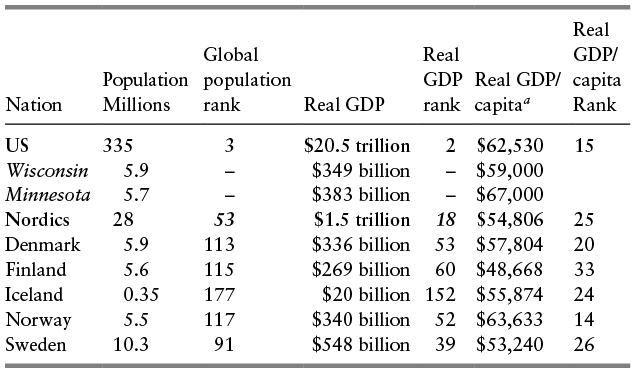

 Open access