


Dietary behaviour in the early stages of life could influence dietary intake later on in life(Reference Skinner, Carruth and Bounds1–Reference Mikkilä, Räsänen and Raitakari3) and could even affect the future risk of non-communicable diseases(Reference Kaikkonen, Mikkilä and Raitakari4). Improving dietary habits of children is an important public health issue. Similarities in dietary intake among parents and their children have been observed in several studies(Reference Wang, Beydoun and Li5, Reference Larsen, Hermans and Sleddens6). A systematic review reported various similarities such as energy and macronutrient intake(Reference Wang, Beydoun and Li5). A more recent US study observed the relationships between diet quality and energy intake of parents and those of their children(Reference Robson, Couch and Peugh7). Thus, children's diet is regarded as being influenced primarily by that of their parents(Reference Larsen, Hermans and Sleddens6).
On the other hand, adults’ lifestyle may also be affected by having children. The transition to parenthood can have a large impact on health and related behaviours such as increased BMI(Reference Gunderson and Abrams8, Reference Laroche, Wallace and Snetselaar9) and decreased physical activity(Reference Hull, Rofey and Robertson10–Reference Berge, Larson and Bauer12). Several studies have compared dietary intake between parents and non-parents, and a significant difference in the intake of several nutrients and food items was observed(Reference Berge, Larson and Bauer12–Reference Devine, Wolfe and Frongillo16). For example, US mothers reported greater intake of sugar-sweetened beverages, total energy and saturated fat than non-mothers(Reference Berge, Larson and Bauer12). In another US study, the presence of children in the household was associated with significantly higher total and saturated fat intake among adults(Reference Laroche, Hofer and Davis13). A UK study showed that women who had children under the age of 16 years had higher vegetable intake and lower fruit intake than did women without children under the age of 16 years(Reference Pollard, Greenwood and Kirk14). Finnish women who had children were shown to have a dietary intake closer to dietary guidelines, such as greater consumption of fruits and vegetables(Reference Roos, Lahelma and Virtanen15), than did non-mothers. Moreover, a previous study in the USA reported that the presence of a young child was positively associated with fruit and vegetable consumption(Reference Devine, Wolfe and Frongillo16). Additionally, some longitudinal studies have examined the change in dietary intake during the transition to parenthood(Reference Smith, McNaughton and Gall17–Reference Elstgeest, Mishra and Dobson22). Among these studies, some reported that dietary patterns of women starting a family had changed unfavourably(Reference Nasuti, Blanchard and Naylor21, Reference Elstgeest, Mishra and Dobson22). For instance, a Canadian study showed that first-time mothers decreased their fruit intake(Reference Nasuti, Blanchard and Naylor21), while an Australian study reported that women starting a new family increased their energy intake and consumption of high-fat foods, sugar, fruit and cooked vegetables(Reference Elstgeest, Mishra and Dobson22). There have been mixed results reported regarding the association between the presence of children in a household and the dietary intake of adults; however, despite a stronger association between dietary intake in children and their parents being observed in countries other than European countries and the USA(Reference Wang, Beydoun and Li5), we are unaware of any comparable research reported in Asian countries, including Japan, where the food culture is quite different from that of Western countries. Typically, the diet consumed by Japanese people is characterised by high intakes of rice, soyabean products, fish, seaweeds and green tea, as well as lower fat intake than that of Western countries(23, Reference Micha, Khatibzadeh and Shi24). To obtain reliable scientific evidence on the presence of children in a household and the dietary intake of adults, it will be necessary to accumulate studies of this kind conducted in various regions with different social and cultural backgrounds. Furthermore, there have been few reports on whether the presence of children influences overall nutrient intake, not only specific nutrients, in married women.
It has also been reported that mothers have stronger influences on their children's dietary intake than do fathers(Reference Robson, Couch and Peugh7, Reference Park, Yim and Cho25–Reference Shrivastava, Murrin and Sweeney27), and maternal modelling of healthy food habits can influence children's diet quality(Reference Collins, Lacy and Campbell28). Understanding the difference in dietary intake between women living with young children and those living without children will be important in proposing dietary strategies for the health of not only mothers, but also the next generation.
Here, we examined the influence of the presence of young children in the home on women's dietary intake. The objective of this study was to characterise the difference in dietary intake profiles of married women with children younger than 5 years old and married women without children, in Japan.
Methods
Procedure
This report describes a cross-sectional, self-administered questionnaire study (the POTATO study) conducted between June and December 2014 and between July and August 2015. Married women aged 23–44 years, with or without a preschool child or children younger than 5 years old, living in Japan, were recruited via an advertisement for volunteer collaborators (snowball sampling). A collaborator explained the survey's purpose and outline using a document distributed to a total of 353 married women who were asked to complete questionnaires about dietary habits and lifestyle. To compare the dietary intake of mothers of preschool children (younger than 5 years old) and women without children, inclusion criteria for subjects’ age was set between 23 and 44 years, because the birth rate was highest for women between the ages of 30 and 34 years and dropped at 40 years in Japan(29). A total of 241 women completed both questionnaires (response rate = 68·3 %). This study was conducted according to the guidelines laid down in the Declaration of Helsinki, and all procedures involving human subjects were approved by the Ethics Committee of Seitoku University (no. H25U017). Written informed consent was obtained from all the participants.
Study population
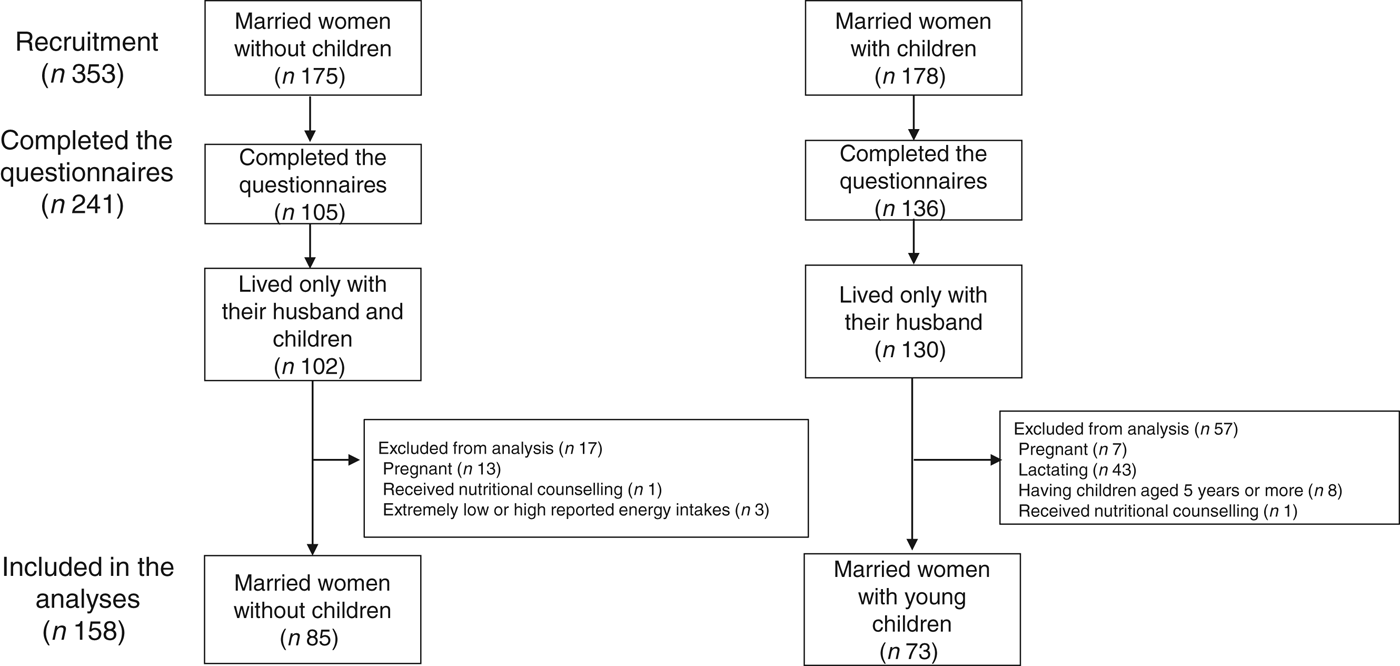
The present analyses were limited to those women who either lived with husbands only or with husbands and children aged younger than 5 years (n 232). We excluded the following respondents: those who were receiving nutritional counselling (n 2), those who were pregnant or lactating (n 63), those who reported energy intake less than half the energy requirement for the lowest physical-activity category according to the Japanese Dietary Reference Intakes 2015(30), and those reporting equal to or more than 1·5 times the energy requirement for the highest physical activity category (n 3). There were no missing data on the variables analysed.
According to the number of children reported in the lifestyle questionnaire, the subjects were categorised into two groups – women with children younger than 5 years old and women without children. Those who had children aged over 5 years were excluded (n 8). The final sample thus consisted of 158 Japanese married women aged 25–44 years categorised into the following two groups: subjects with young children (n 85) and without children (n 73) (Fig. 1).
Participation in the POTATO study comparing the dietary intake of Japanese married women with respect to the presence of young children in the home.

Dietary assessment
Dietary habits during the preceding month were assessed using a previously validated brief-type, self-administered diet history questionnaire (BDHQ)(Reference Kobayashi, Honda and Murakami31, Reference Kobayashi, Murakami and Sasaki32). The BDHQ is a structured questionnaire that includes questions about intake frequencies of selected foods commonly consumed in Japan, general dietary behaviours and usual cooking methods. The daily intake estimates for foods (fifty-eight items in total), energy and selected nutrients were calculated using an ad hoc computer algorithm developed for the BDHQ, which was based on the Standard Tables of Food Composition in Japan(33). Validity of the BDHQ and its structure, as well as the methods used to calculate dietary intake, have been detailed as referenced above. In a previous study of ninety-two women aged 31–69 years, the median Pearson's correlation coefficients of nutrient intake between the BDHQ and 16-d weighed dietary records was 0·54 (range 0·34–0·87), and the median Spearman's correlation coefficient of food intake was 0·44 (range 0·14–0·82)(Reference Kobayashi, Honda and Murakami31, Reference Kobayashi, Murakami and Sasaki32). Although dietary supplement use was queried in the lifestyle questionnaire, intake via supplements was not included in the analysis because of the lack of a reliable composition table for dietary supplements in Japan.
Assessment of lifestyle variables
In the lifestyle questionnaire, the subjects reported their educational background (junior high school, high school, junior college or vocational technical school, or university); working status (full-time, part-time, other); household income (less than 2 million yen/year, 2 million to 6 million yen/year, 6 million to 10 million yen/year, more than 10 million yen/year); current smoking status (yes or no); and dietary supplement use (yes or no). Data regarding self-reported body height (cm) and weight (kg) were also obtained from the BDHQ. BMI was calculated as body weight (kg) divided by the square of body height (m2). On the basis of their reported home address, each participant was grouped into one of six residential blocks (Hokkaido and Tohoku, Kanto, Hokuriku and Tokai, Kinki, Chugoku and Shikoku, or Kyushu), and into three categories according to population size (city with a population ≥1 million, city with a population <1 million, or town and village).
Statistical analysis
All statistical analyses were performed using SAS statistical software, version 9.4 (SAS Institute Inc.). All reported P values were two-tailed, with P<0·05 considered statistically significant. Characteristics of the groups with and without children were compared using independent-samples t tests for continuous variables and the χ2 test for categorical variables.
All the selected nutrient and food intake values were energy-adjusted using the density method (i.e. the percentage of energy for energy-providing nutrients and their amounts per 1000 kcal (4184 kJ) for food groups and other nutrients) to minimise the influence of dietary misreporting, which has caused ongoing controversy in studies that collect dietary information via self-reported instruments.
We examined the difference in the selected nutrient and food intake between subjects with young children and without children by using ANOVA. Additionally, multivariate adjusted mean, with standard error, for nutrient and food intake was calculated for subjects with young children or without children. Potential confounding factors considered in the analysis were those indicating differences between the two groups (P < 0·1), namely, age (continuous variable), working status, annual household income, educational background and size of residential area, as detailed above. The categories of educational background and annual household income were regrouped due to the sample sizes of certain categories: n 0 for junior high school and n 1 for less than 2 000 000 yen/year. The adjusted nutrient and food intake differences between the two groups were assessed by ANCOVA. To perform the ANCOVA tests, the number of participants required to detect a medium effect size (f = 0·25) with a significance level equal to 0·05, statistical power of 0·8 and five covariates was estimated to be 128 in total, according to the power analysis using G*Power 3(Reference Faul, Erdfelder and Lang34).
Results
Basic characteristics of subjects are shown in Table 1. The mean age of the subjects was 32·5 (sd 4·5) years. The mean number of participants’ children was 1·4 (sd 0·5). Compared with subjects with young children, those without children were younger, had a higher proportion of full-time workers, a lower proportion of annual household incomes less than 6 million yen per year, and a higher proportion of dwellers living in a city with a population ≥1 million. No significant differences were observed in BMI, energy intake, and the proportion of current smokers, supplement users, educational backgrounds, survey year, and residential blocks between women with and without children.
Basic characteristics of 158 married women with or without young children at home
(Mean values and standard deviations; numbers and percentages)
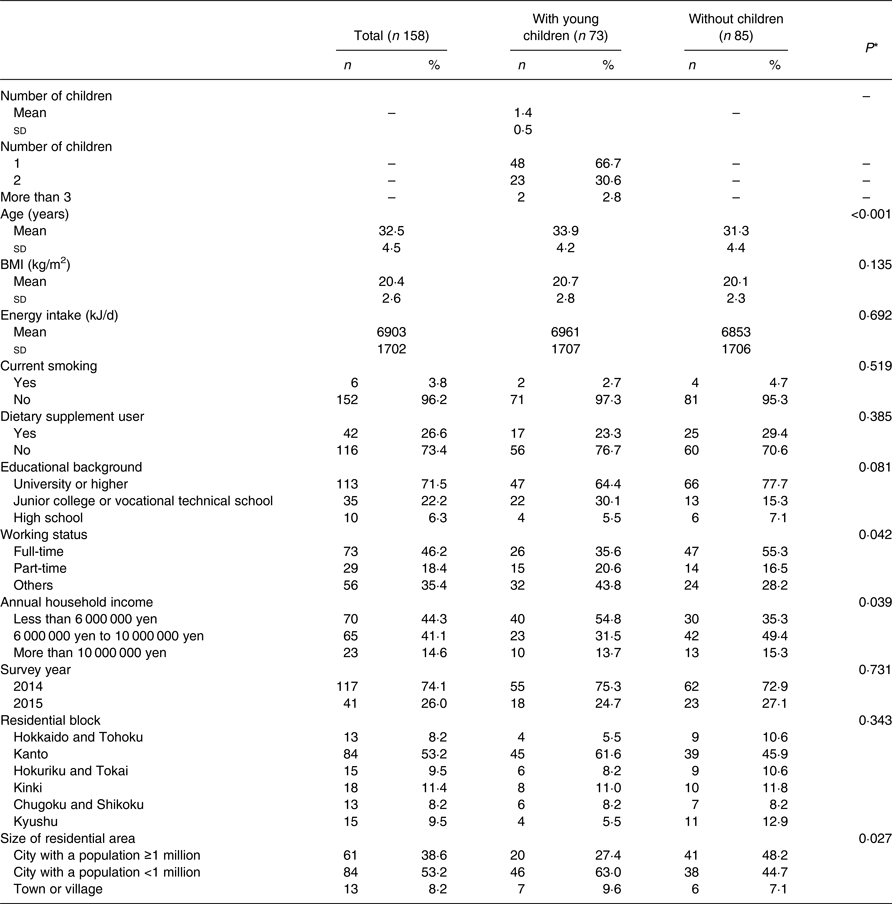
* P values between married women with and without children. Means for continuous values were compared by using independent-samples t tests, and proportions for categorical values were compared using the χ2 test.
Table 2 shows the differences in nutrient intake between subjects with young children and without children. Women with young children had a significantly higher intake of Na than did women without children in the crude model. Even after adjusting for potential confounding factors, the intake of Na was significantly different between the two groups. Additionally, in the multivariate models, women with young children also had a higher intake of proteins, carbohydrates, Zn and Cu than did those without children.
Daily nutrient intake among 158 married women with and without young children at home
(Mean values with their standard errors)

NE, niacin equivalents; RAE, retinol activity equivalents.
* P < 0·05.
† The model included age (continuous variable), working status (full-time, part-time, or other), annual household income (less than 6 000 000 yen/year, 6 000 000 to 10 000 000 yen/year, or more than 10 000 000 yen/year), educational background (high school, junior college or vocational technical school, or university), and size of residential area (city with a population ≥1 million, city with a population <1 million, or town/village).
‡ P values between married women with and without children (ANOVA).
§ P values between married women with and without children (ANCOVA).
|| Sum of retinol, β-carotene/12, α-carotene/24 and cryptoxanthin/24.
¶ Sum of niacin and protein/6000.
†† Na × 2·54.
Intake of pulses and sugar was higher among women with young children than women without them, while intake of oil, alcoholic beverages, non-alcoholic beverages, and fruit and vegetable juices was higher among women without children than women with them (Table 3). In multivariate-adjusted models, similar results were observed with the addition of cereal intake.
Daily food intake among 158 married women with and without young children in the home
(Mean values with their standard errors)
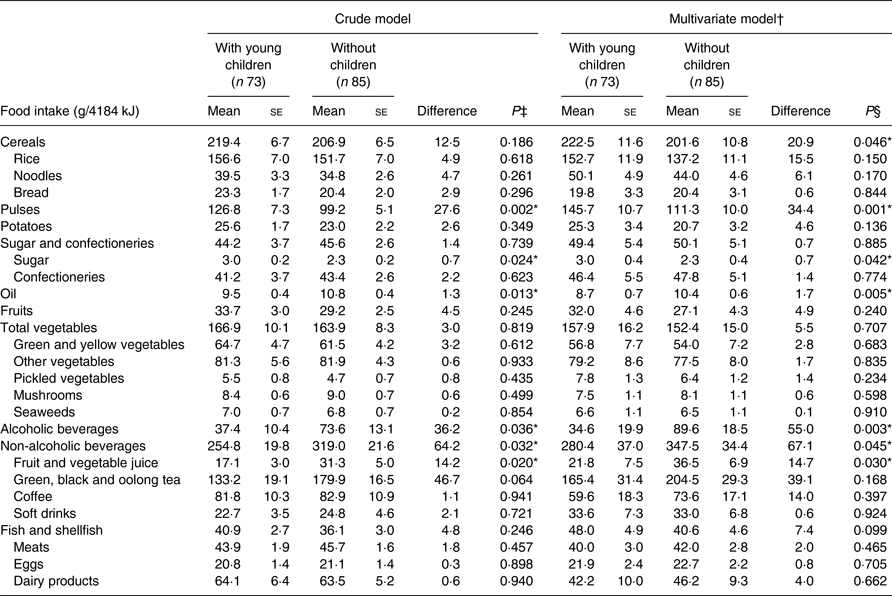
* P < 0·05.
† The model included age (continuous variable), working status (full-time, part-time, or other), annual household income (less than 6 000 000 yen/year, 6 000 000 to 10 000 000 yen/year, or more than 10 000 000 yen/year), educational background (high school, junior college or vocational technical school, or university), and size of residential area (city with a population ≥1 million, city with a population <1 million, or town/village).
‡ P values between married women with and without children (ANOVA).
§ P values between married women with and without children (ANCOVA).
Discussion
To the best of our knowledge, the present study is the first to examine the difference in nutrient and food intake between Japanese married women with young children in the household and those without children. We found that there were several differences in nutrient and food intake profiles between the two groups of subjects. Parenthood is regarded as not only a period of transition in a person's life, but also a period of change in dietary habits. Dietary intake has been compared between parents and non-parents in overseas studies, many of which reported differences in fat intake. For example, in the USA, mothers with children aged 5 years old or younger had a greater intake of total energy and percentage of SFA than did women without children(Reference Berge, Larson and Bauer12). Another study also reported that the presence of children younger than 17 years old in the household was associated with greater intake of total fat and saturated fat(Reference Laroche, Hofer and Davis13). Moreover, in a longitudinal study in the USA, adults who had new children in their homes had a greater intake of saturated fat than did non-parents(Reference Laroche, Wallace and Snetselaar19). Similarly, a Canadian study observed that the total intake of fat increased among new parents while it decreased among non-parents(Reference Nasuti, Blanchard and Naylor21). In contrast, our results showed that intake of other energy-providing nutrients, namely protein and carbohydrates, was higher among women with young children than among non-parents, while we observed no significant difference in the intake of fat and SFA between women with young children and those without them. These differences in nutrient intake reflected greater intake of cereals, pulses and sugars among subjects with young children in the present analysis. It has been reported that intake of fat and SFA is smaller in the Japanese population than in Western populations(Reference Micha, Khatibzadeh and Shi24); moreover, this might have led to the differences between the present study's findings and those studies conducted in Western countries. Although we could not obtain children's dietary intake in cereals and pulses, a higher intake of these might reflect the children's dietary intake. Parents’ food selections might be influenced by the presence of preschool children(Reference O'Dougherty, Story and Stang35). Asakura et al. (Reference Asakura, Haga and Adachi36) reported that, according to dietary records of children aged 3–6 years, well-milled rice, soya sauce, egg, carrot, onion, milk, potato, tofu and pork are frequently consumed foods, and these results are partially consistent with our findings. On the other hand, a difference in cereal intake was observed only in the multivariate-adjusted model, where age was significantly associated with lower cereal intake. This could be explained by the older age of women in the group with children than that of women in the group without children. This trend of higher grain intake among younger women is consistent with previous results in Japan(23), although this might not be the influence of the presence of children in the households. To determine whether children's dietary intake or preferences influence the dietary habit of their parents in the Japanese population, further studies are needed.
In the present study, mothers had higher intakes of Na, Zn and Cu than did non-parents. One Japanese study reported that white rice was the largest contributor to the intake of Zn and Cu, accounting for approximately 20 % of each(Reference Yamada, Asakura and Sasaki37). This study also showed that pulses and nuts contributed to the intake of these nutrients, which might explain why our subjects with young children had higher intakes of Zn and Cu than did the non-parents. The estimated difference in Na intake between the two groups could be as much as 1 g/d. One study reported that more than 60 % of Japanese women's Na intake comes from seasonings such as soya sauce and salt(Reference Asakura, Uechi and Masayasu38). However, we could not compare the intake of seasonings, because validity of the intake of these food items has not been examined in the BDHQ; thus the amounts of seasonings consumed could have been different between mothers and non-mothers. Although we could not refer to the effects of transition to parenthood in this cross-sectional study, mothers may need to be more conscious of their Na intake than they were when they did not have children. Meanwhile, in Eastern Asia, particularly Japan, Na intake is greater than that in other countries(Reference Asakura, Uechi and Sasaki39), which is a major health problem(Reference Forouzanfar, Alexander and Anderson40). Our findings, therefore, may illustrate the need for implementing an effective strategy for reducing Na intake in the target population. Furthermore, children's dietary habits could be influenced by the dietary habits of their parents(Reference Larsen, Hermans and Sleddens6). Therefore, health-promotion programmes, including nutrition counselling, may need to draw mothers’ attention to Na intake, not only for themselves, but also for their children, who could carry these dietary habits into the future.
Our subjects with young children had a lower intake of alcoholic beverages. This result is consistent with a US study showing that motherhood is associated with marked reductions in alcohol consumption(Reference Matusiewicz, Ilgen and Bohnert41). Alcohol reduction during pregnancy and lactation could continue after these periods. Since alcohol intake, in turn, affects intake of foods and nutrients, the differences in dietary intake observed in the present study could have been influenced by the intake of alcoholic beverages. For example, one study showed that moderate or heavy drinkers had a lower intake of carbohydrates than did non-drinkers among Finnish women(Reference Fawehinmi, Ilomäki and Voutilainen42). Moreover, one study in the USA comparing dietary intake on a drinking day with that of a non-drinking day observed lower intakes of discretionary oil and solid fat on a non-drinking day among women(Reference Breslow, Chen and Graubard43), which is partially consistent with our findings. Dietary intake of married women could be affected not only by the presence of young children at home, but also by behavioural changes during pregnancy and lactation. Interestingly, we found that mothers also had a lower intake of non-alcoholic beverages, particularly fruit and vegetable juices, than did non-mothers. Another US study showed that mothers with young children had a greater intake of sugar-sweetened beverages than did women without children, which differs from the results of our findings(Reference Berge, Larson and Bauer12). Among Japanese young women, it has been reported that a higher intake of soft drinks was associated with lower intakes of protein, dietary fibre, vitamins and minerals, even though their intake of soft drinks was lower than that of the US population(Reference Yamada, Murakami and Sasaki44). With a few exceptions, this result is consistent with our results. Additionally, the present study showed that there was no difference in reported energy intake between the two groups. A Canadian study on beverage consumption patterns reported that a smaller amount of beverage intake was associated with lower energy intake(Reference Nikpartow, Danyliw and Whiting45). It could be said, therefore, that Japanese mothers derive more energy or nutrients from foods, than from beverages. Further studies are needed to examine beverage consumption patterns and their effect on dietary intake in the Japanese population, in addition to the influence of the presence of young children in a home on beverage consumption. Nevertheless, our findings indicated that beverage intake habits could change during the transition to motherhood.
Our study has several limitations. First, the subjects of this study were recruited based on a snowball-recruitment strategy and were, therefore, not a random sample of Japanese adult women. The advertisement was distributed mainly via graduates of several universities; thus, all the subjects might have had relatively high social and economic status. Compared with dietary intake data of women aged 30–39 years in the National Health and Nutrition Survey in Japan, 2016(23), which represented the general Japanese population, the fat and carbohydrate energy ratio was slightly lower in the current participants. Due to our recruitment strategy, women who were interested in nutrition were more likely to participate, thus selection bias could not be ruled out. This might explain the small differences between the groups. Moreover, data were only collected among women who lived with their husbands, either with or without children younger than 5 years of age. This strategy was employed to examine the effect made by the presence of children; however, results cannot be extrapolated beyond that. Second, the period of recruitment and the consequent data collection differed based on survey years (2014: June to December; 2015: July to August); thus, the difference in dietary intake by seasons may need to be considered. Because the number of subjects participating in 2014 and 2015 did not differ between the groups, we did not consider this factor in the multivariate analyses. Although the number of subjects was not sufficiently large enough to make a comparison by survey seasons, the results did not differ when we adjusted for the survey years in addition to the multivariate adjustment models (data not shown). Additionally, validation of the BDHQ used 4-d dietary records conducted in each of the four seasons over the period of 1 year as the reference method for minimising the effect of seasonal dietary intake variations(Reference Kobayashi, Murakami and Sasaki32). Furthermore, the aforementioned study examined the validity by using not only a single season's results of the questionnaire but also the mean values of four seasons’ results; thus, we considered that the season variation could be minimised. Third, we were unable to obtain nutrient intake information regarding dietary supplementation. Approximately one-quarter of each group used dietary supplements; thus, the intake from dietary supplements could have affected the results to some extent. Moreover, supplement use could not be evaluated because of the lack of a reliable composition table of dietary supplements in Japan. However, the proportion of dietary supplement users did not differ between the two groups, which may support the robustness of the present findings. Fourth, there could be other confounding factors in addition to those we examined. For example, among women having young children, some subjects may have been on child-care leave from their full- or part-time jobs. In this case, the working status was considered as ‘other’; therefore, the effect on the results from such factors could not be ruled out. Finally, this is a cross-sectional study, and therefore causal relationships were not clarified. It is possible that the women with children already had concrete dietary behaviours before they transitioned to motherhood. Without a longitudinal study, therefore, we cannot say definitively that the presence of a child is responsible for a positive/negative change in dietary habits.
Conclusions
This cross-sectional study showed that there were several differences in the intake of nutrients and foods between married Japanese women with young children and those without children. Our findings suggest that the presence of young children might influence a mother's intake of macronutrients and some minerals, as well as beverage intake habits. Moreover, our findings indicate that mothers especially need to attend to their Na intake. Thus, health-promotion programmes or nutrition counselling might need to pay greater attention to this special period in a mother's life in which great changes can occur in her dietary habits. Further studies, including longitudinal studies, are needed to clarify the association between the presence of children in households and adults’ dietary habits.
Acknowledgements
We thank the members of the Study Group of Nutritional Epidemiology in Tokyo who served as collaborators, and Drs Satoshi Sasaki and Satomi Kobayashi (University of Tokyo), Dr Kaoruko Iida (Ochanomizu University), Dr Shinji Ikemoto (Seitoku University) and Dr Hidemi Takimoto (National Institute of Biomedical Innovation, Health and Nutrition) for their supportive comments on our work.
This work was supported by the Institute for Food and Health Science, Yazuya Co., Ltd (subsidy of 2013).
Author contributions were as follows: all authors contributed to the concept and design of the survey and data collection. M. M., A. H. and M. S. contributed to data management. A. S. and A. H. conducted the statistical analysis. A. S. drafted the paper. M. M, A. H., M. S. and N. O. provided input for the final draft of the manuscript. All authors read and approved the final manuscript.
There were no conflicts of interest.


 Open access

