


Evidence suggests that the regular consumption of diets rich in fruit and vegetables and/or beverages, such as tea and wine, may have cardiovascular benefits( Reference Arts, Jacobs and Harnack 1 – Reference Mink, Scrafford and Barraj 4 ) and that flavonoids contained within these foods may be the components responsible for function( Reference Mink, Scrafford and Barraj 4 – Reference Landberg, Sun and Rimm 10 ). Cocoa and cocoa-based products, such as chocolate, are a potentially rich source of one flavonoid subgroup called flavanols( Reference Lee, Kim and Lee 11 ), and in certain settings, these foods have been found to be important contributors to the total dietary intake of flavonoids( Reference Arts, Hollman and Feskens 5 ). Although the health benefits of flavanols in humans are accumulating, there is insufficient evidence to claim a clear and undisputed positive health effect relating to their consumption, particularly with regard to long-term ingestion and health. In addition, chocolate products are usually rich in sugar and saturated fats, which might counteract the beneficial effects exerted by the flavanols they contain. At present, much of the strongest data, particularly with regard to cardiovascular benefits, are based on short-term, small-scale human studies; where appropriate, well-characterised controls have been utilised.
Considering the limitations mentioned above, cocoa-derived flavanols have been shown to be capable of promoting clinically significant improvements in cardiovascular health through their potential to lower blood pressure( Reference Cassidy, O'Reilly and Kay 7 , Reference Taubert, Roesen and Lehmann 12 – Reference Ried, Sullivan and Fakler 15 ), improve endothelial function( Reference Engler, Engler and Chen 16 – Reference Heiss, Jahn and Taylor 21 ), inhibit platelet aggregation( Reference Murphy, Chronopoulos and Singh 22 – Reference Ostertag, O'Kennedy and Kroon 24 ) and curtail the inflammatory response( Reference Mao, van de Water and Keen 25 – Reference Katz, Doughty and Ali 27 ) following oral intake. As such, there has been much interest in understanding the factors that define the liberation (from foods), absorption, metabolism, distribution and excretion of flavanols in vivo ( Reference Schroeter, Heiss and Balzer 19 , Reference Mullen, Borges and Donovan 28 – Reference Roura, Andres-Lacueva and Estruch 34 ), in order to better understand the bioavailability of flavanols in the context of different food matrices, and ultimately, to enable improved food design for health. An important aspect of flavanol delivery relates to the influence of the food matrix on the liberation of flavanols from the food before absorption. For example, the physical composition of the cocoa-containing product might have an impact on plasma flavanol kinetics( Reference Neilson, George and Janle 32 ). While the majority of the published literature on the effects of food matrices on cocoa flavanol (CF) absorption has focused on the influence of dairy products on absorption and metabolism( Reference Roura, Andres-Lacueva and Estruch 34 , Reference Schroeter, Holt and Orozco 35 – Reference Serafini, Bugianesi and Maiani 38 ), there has also been interest in the impact of carbohydrates on the biotransformation of flavanols. Indeed, the extent, and rate, of flavanol absorption appears to be affected by concurrent consumption of bread, sugar or grapefruit juice, whereas no specific protein–flavanol or lipid–flavanol interactions have been reported with respect to flavanol absorption/metabolism( Reference Schramm, Karim and Schrader 29 ). In addition, co-administration of flavanols with carbohydrate-rich foods appears to lead to a significant increase in plasma flavanol concentrations and an acceleration of their renal elimination( Reference Schramm, Karim and Schrader 29 ). While these results suggest that the presence of carbohydrate in the food matrix may increase overall flavanol absorption, these studies were not designed to specifically assess the impact of sugar on flavanol absorption. The present study has been designed to specifically investigate the impact of sugar type by use of two solid chocolates matched for physical structure, lipid, milk and flavanol content but differing in that one contains sucrose and the other the carbohydrate substitute, maltitol.
Experimental
Materials
Unless otherwise stated, all chemicals and reagents were obtained from Sigma-Aldrich Company Limited or Thermo Fisher Scientific. Flavanol standards were a gift from Mars, Inc. Specialised HPLC solvents were purchased from Hichrom and HPLC columns were from Phenomenex.
Flavanol-containing test chocolates
The test chocolates were in the form of solid chocolate bars, which were supplied by Mars, Inc. The serving size of each bar was 25 g. All test chocolates were standardised for their total CF content and profile, and aside from the energy and carbohydrate content of the maltitol product, all test products were closely matched for equal macro- and micronutrient content, energy load, and theobromine and caffeine levels (Table 1). All chocolate bars were similar in taste and were supplied individually wrapped and labelled with a random three-digit code. Each 25 g serving contained 48 mg (low-CF, sugar-sweetened chocolate), 251 mg (high-CF, sugar-sweetened chocolate) or 266 mg (high-CF, maltitol-sweetened chocolate) of total CF. The amount of total CF is defined as the sum of all monomeric flavanols and their oligomeric (dimer to decamer) derivatives (Table 1). The amount of epicatechin, the major flavanol monomer, present in the chocolates was 8 mg for the low-CF sweetened chocolate, 54 mg for the high-CF sweetened chocolate and 58 mg for the high-CF, maltitol-sweetened chocolate. In addition to the added sugar reported, a small amount of endogenous carbohydrate from the chocolate liquor is present in all the chocolate bars.
Compositional analysis of the cocoa flavanol bars

Intervention study subjects
A total of fifteen healthy volunteers (nine women and six men) with a mean age of 26·9 (sem 3·4) years and a BMI between 18·1 and 26·9 kg/m2 (mean BMI 22·7 (sem 3·5) kg/m2) were recruited. All female volunteers were self-reported pre-menopausal (stable and regular menstrual cycles). Volunteers were assessed before the start of the trial for good health and were selected according to certain inclusion and exclusion criteria. Inclusion criteria for participation in the study were as follows: signed consent form; aged between 18 and 40 years; in good general health; not pregnant or lactating; no allergy to milk products or sensitivity to alkaloids/caffeine; no gastrointestinal disorders (e.g. chronic constipation, diarrhoea, inflammatory bowel disease, irritable bowel syndrome or other chronic gastrointestinal complaints); not diabetic or suffering from hypertension (140/90 mmHg); no anaemia or gall bladder problems. Exclusion criteria were as follows: those on a weight-reducing dietary regimen; taking any dietary supplements; consuming more than fifteen units (120 g) of alcohol per week; taking anti-inflammatory or blood pressure-lowering medication; smokers or those with sensitivities to chocolate, reduced-energy sweeteners, dairy products, nuts or gluten; vegetarians or vegans. Volunteers were instructed not to alter their usual dietary or fluid intakes during their participation in the study. Those selected were required to refrain from the following for 24 h before the start of the study: consumption of flavonoid-rich foods including many fruits and vegetables, cocoa, chocolate, tea, coffee and alcohol, and were provided with a low-flavonoid meal (low-fat macaroni cheese) for consumption the evening before the study days.
Study design
The study was conducted according to the guidelines laid down in the Declaration of Helsinki and all procedures involving human subjects were approved by the University of Reading Research Ethics Committee (reference no. 08/08). The study was also registered with the National Institutes of Health-randomised trial records held on the National Institutes of Health ClinicalTrials.gov website (NCT01292967). The study was a randomised, double-blind, three-arm cross-over study design and consisted of three intervention arms of 5 h each, separated by a 1-week washout period. Each arm was preceded by a 24 h low-flavonoid diet and subjects were asked to fast for 12 h before each intervention day. During each intervention period, participants consumed a high-flavanol chocolate containing maltitol, a high-flavanol chocolate containing sucrose or a low-flavanol chocolate containing sucrose. The order of administration was randomly assigned. On each study day, subjects were cannulated and baseline blood samples were collected. After consumption of the test chocolate, blood samples (20 ml) were collected at 1, 2 and 4 h post-consumption. All chocolates were well tolerated by the volunteers and there were no reports of gastrointestinal problems related to the ingestion of any of the products, including the maltitol-containing product. Indeed, total maltitol ingestion was approximately 10 g, which was below the 40 g where adverse gastrointestinal effects have been reported( Reference Storey, Koutsou and Lee 39 ).
Plasma sample preparation
Due to the lack of authentic flavanol metabolite standards, plasma samples were prepared using enzymatic hydrolysis with β-glucuronidase and sulfatase, as described previously( Reference Ottaviani, Momma and Heiss 40 ). After enzymatic hydrolysis, glucuronidated and sulphated flavanols were converted into unmethylated, 3′-O-methylated and 4′-O-methylated flavanol metabolites. To ensure that the hydrolysis of the flavanol metabolites was complete, this procedure was validated with the use of 4-nitrophenyl-β-d-glucuronic acid and nitrocatechol sulphate (data not shown). The validation with authentic flavanol standards has also been reported previously( Reference Ottaviani, Momma and Heiss 40 ). Briefly, blood samples were immediately processed to isolate plasma and ascorbic acid (1 mg/ml) was added to each before storage (at − 80 °C). Before analysis, 1 ml of plasma was defrosted on ice and subjected to β-glucuronidase and sulfatase treatment (10 000 units β-glucuronidase, 300 units sulfatase, 40 min; 37°C) to produce non-glucuronidated and non-sulphated metabolites for analysis. Then, samples were mixed with 2 ml of acidified ice-cold methanol (0·5 % acetic acid in methanol, v/v) containing 3′-O-ethyl-( − )-epicatechin (500 nm) as a recovery standard. Samples were centrifuged at 17 000 g for 15 min at 4°C and the supernatant was collected. The pellet was extracted again with 2 ml of acidified ice-cold methanol (0·5 % acetic acid in methanol, v/v) containing 3′-O-ethyl-( − )-epicatechin (500 nm), and then with 1 ml of 50 % methanol acidified with 0·5 % acetic acid and containing 3′-O-ethyl-( − )-epicatechin (500 nm). Combined supernatants underwent concentration (to approximately 50 μl) using a Speedvac system (Thermo Fisher Scientific, Inc.) and were mixed with resorcinol (300 pmol) and catechol (300 pmol) (internal standards) before analysis by HPLC.
Flavanol quantification by HPLC-fluorescence detection/UV
Plasma samples were analysed for flavanol metabolites by the HPLC-fluorescence detection/UV technique, as described previously( Reference Ottaviani, Momma and Heiss 40 ). Flavanol monomers and O-methylated metabolites were analysed using a Hewlett-Packard 1200 series HPLC (Hewlett-Packard) equipped with a diode array and fluorescence detector. Samples (50 μl) were injected onto a reversed-phase Phenomenex Luna C18(2) column (4·6 × 150 mm) with 3 μm particle size. The mobile phase consisted of (A) HPLC-grade water, (B) 200 mm-sodium acetate (pH 4·4)–methanol (84:16) and (C) acetonitrile, and the following gradient protocol was run: 0 min, 75 % A, 25 % B; 5 min, 75 % A, 25 % B; 20 min, 65 % A, 25 % B; 28 min, 63 % A, 25 % B; 34 min, 55 % A, 25 % B; 41 min, 45 % A, 25 % B; 45 min, 25 % B, 75 % C; 55 min, 25 % B, 75 % C; 56·1 min, 75 % A, 25 % B; 60 min, 75 % A, 25 % B. The flow rate was 0·8 ml/min. Detection of flavanols and their metabolites was performed using a fluorescence detector with an excitation wavelength of 276 nm and an emission wavelength of 316 nm. The concentration of each compound was determined using an external calibration curve produced with the use of authentic standards.
Statistical analysis
Mixed models were fitted to analyse the data using SAS version 9.1 (SAS Institute). The outcome variables were epicatechin, 3′-O-methyl-epicatechin (3ME) and 4′-O-methyl-epicatechin (4ME). The subject was considered a random effect to explain the correlation of the observations at different times within subjects. For 3ME, a logarithmic transformation was needed in order to validate the model. For 4ME, a Box–Cox transformation was applied with α = 0·3 (the outcome variable 4ME was transformed to 4ME0·3). The AUC and the peak plasma concentration of flavanols (maximum concentration, C max) were calculated according to non-compartmental models.
Results
No flavanols were detected in the plasma samples of any of the subjects at baseline or following the consumption of the low-flavanol chocolate, suggesting that all volunteers complied with the 24 h low-flavonoid diet before the study day (Fig. 1). Unmethylated epicatechin, 3ME and 4ME metabolites were detected in all plasma samples of subjects who had consumed either of the high-flavanol test chocolates (Figs. 1 and 2). In contrast, no catechin, 3′-O-methyl-catechin or 4′-O-methyl-catechin metabolites were detected following the consumption of any of the test chocolates. The plasma levels of unmethylated epicatechin metabolites (P = 0·0002), 3ME (P = 0·0304) and 4ME (P = 0·0397) metabolites were significantly higher at 1 and 2 h after consumption of the sugar-containing test chocolate compared with following the consumption of the maltitol-containing test chocolate (Fig. 2). Furthermore, consumption of the sucrose-containing test chocolate resulted in a 19 % higher total AUC and 17 % higher C max for plasma unmethylated epicatechin compared with its maltitol equivalent (Table 2). However, this was not the case for 3ME or 4ME derivatives, where there were no significant differences (P>0·05). There was no significant difference in the maximum time (T max) between the two high-flavanol containing test chocolates with respect to epicatechin, 3ME and 4ME (P>0·05; Table 2).
HPLC chromatograms of (a) standards of unmethylated (peak 1), 3′-O-methylated (peak 2) and 4′-O-methylated (peak 3) ( − )-epicatechin and the recovery standard 3′-O-ethyl-( − )-epicatechin (peak 4); enzymatic treated plasma samples (b) before and (c) after 2 h of consumption of the sugar-containing high-flavanol chocolate bar. Detection of flavanol metabolites was performed using a fluorescence detector with an excitation wavelength of 276 nm and an emission wavelength of 316 nm.

(a) Unmethylated, (b) 3′-O-methylated and (c) 4′-O-methylated epicatechin metabolites in the plasma before (0 h) and after (1, 2 and 4 h) consumption of the sugar-containing (
 ) and maltitol-containing (
 ) high-flavanol chocolate bar. Values are mean plasma concentrations, with their standard errors represented by vertical bars (n 15). *, ** Mean values were significantly different for non-methylated epicatechin (P = 0·002), 3′-O-methyl-epicatechin (P = 0·0304) and 4′-O-methyl-epicatechin (P = 0·0397) plasma metabolites between the sugar-containing and maltitol-containing high-flavanol chocolate bars.

Pharmacokinetic parameters of flavanol absorption
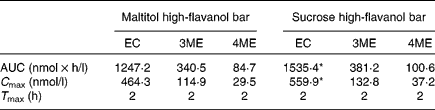
EC, epicatechin; 3ME, 3′-O-methyl-epicatechin; 4ME, 4′-O-methyl-epicatechin; AUC, area under the curve; C max, maximum concentration; T max, maximum time.
*Value was significantly different from that for EC for the maltitol high-flavanol bar (p < 0.05).
The differences in absorption characteristics between the sucrose-containing and maltitol-containing chocolates were also reflected in the total plasma flavanol levels (Fig. 3). At 1 and 2 h post-consumption, the total plasma flavanol concentrations were 26 and 17 % higher, respectively, after consumption of the sucrose-containing chocolate compared with following the maltitol-containing one (P = 0·0001 and P = 0·0102, respectively). However, this difference was no longer evident at 4 h post-consumption (P = 0·6830).
Total plasma flavanol levels before (0 h) and after (1, 2 and 4 h) consumption of the sugar-containing (■) and maltitol-containing (
 ) high-flavanol chocolate bars. Values are mean plasma concentrations, with their standard errors represented by vertical bars (n 15). Mean value was significantly different from that for the maltitol high-flavanol bar: * P = 0·0102, ** P = 0·001.

Discussion
The general kinetics of absorption, metabolism and plasma concentration of flavanols reported here are consistent with previous studies using similar chocolate/cocoa interventions( Reference Schroeter, Heiss and Balzer 19 , Reference Richelle, Tavazzi and Enslen 41 – Reference Holt, Lazarus and Sullards 44 ). However, despite these similarities, there were significant differences in the relative absorption of flavanols as a function of the type of chocolate product consumed. The sugar alcohol maltitol is a commonly used sucrose alternative, as it delivers less energy per g (8·8 kJ/g (2·1 kcal/g) compared with 16·8 kJ/g (4·0 kcal/g)) and does not contribute to tooth decay( Reference Ooshima, Izumitani and Minami 45 ). The present data indicate that consumption of flavanols in a product containing maltitol rather than sucrose results in a significantly lower level of total flavanol absorption and a lower peak plasma concentration of unmethylated epicatechin metabolites. As the primary difference between the two high-flavanol-containing test chocolates used in the present study was their carbohydrate content and thus their total energy load (Table 1), the present data suggest that the carbohydrate composition of the food matrix is an important determinant for total flavanol absorption in the small intestine. However, carbohydrate type and/or energy did not have a significant impact on the O-methylation pattern observed for absorbed flavanols, suggesting that while total absorption was affected, catechol-O-methyltransferase metabolic activity was unchanged. Previous investigations into the influence of carbohydrate on flavanol absorption were inconclusive( Reference Schramm, Karim and Schrader 29 , Reference Neilson, George and Janle 32 ), primarily due to the use of inadequate control interventions or the relatively low amounts of flavanols in the test materials. With respect to the latter, flavanol absorption appears to be influenced by the food matrix to a greater degree if flavanol levels are low (6·7 mg epicatechin, 70 mg procyanidins per cocoa drink)( Reference Mullen, Borges and Donovan 28 ). However, in the case of most commercially available dark chocolates, the level of CF is indeed closer to that used in the present study (54 mg epicatechin, 251 mg of total CF per bar)( Reference Miller, Hurst and Flannigan 46 , Reference Langer, Marshall and Day 47 ).
A limitation of the present study is that plasma flavanols were quantified only 4 h post-consumption. As such, it is unclear whether plasma flavanol levels post-4 h would follow the same profile. However, the maximum level of plasma epicatechin metabolites was found between 1 and 2 h after flavanol intake, and by 4 h, plasma epicatechin metabolites were low (Fig. 2), suggesting that it is unlikely the plasma flavanol levels post-4 h will greatly contribute to the total plasma flavanol load. The well-reported laxative effect of maltitol may be one explanation for the decrease in flavanol absorption( Reference Ruskone-Fourmestraux, Attar and Chassard 48 ), although no gastrointestinal problems were reported among the volunteers of the present study. Polyols undergo negligible absorption in the small intestine, thus causing symptoms of gastrointestinal intolerance, such as increased intestinal transit times, bloating or diarrhoea( Reference Livesey 49 ). Despite this, maltitol, when used at a dose three times higher than the present study (30 g), has been found not to induce gastrointestinal symptoms( Reference Storey, Koutsou and Lee 39 , Reference Ruskone-Fourmestraux, Attar and Chassard 48 , Reference Koutsou, Storey and Lee 50 ). Nevertheless, maltitol may act to limit flavanol absorption due to its effect on the osmolarity of the small-intestinal contents. In the jejunum, nutrient absorption is the major driving force for water absorption( Reference Riley, Kim and Sutcliffe 51 ) and non-absorbable solutes that remain within the intestinal lumen produce an osmotic pressure that may limit water absorption. For example, lactulose, a non-digestible sugar commonly used as a laxative, has been shown to impair drug absorption in healthy volunteers, something that was partially reversed by the co-administration of sucrose( Reference Riley, Kim and Sutcliffe 51 ). Maltitol has previously been reported to reduce the absorption of nutrients in the small intestine( Reference Langkilde, Andersson and Schweizer 52 ), thus the absorption of flavanols may also be affected by the presence of maltitol. Lastly, although the absorption of flavanols, and, indeed, other flavonoids, is considered to occur by a process of passive absorption( Reference Spencer, Chowrimootoo and Choudhury 53 , Reference Tian, Yang and Yang 54 ), we cannot rule out that the greater amount of energy delivered with the sugar-containing food may have an impact on metabolic events in enterocytes, thus facilitating greater transfer from the lumen to the portal blood. Further research is needed to elucidate the precise mechanisms by which maltitol limits the absorption of CF in the small intestine.
As the vascular benefits of flavanol-containing foods are dependent on the delivery of flavanols to the systemic circulation( Reference Heiss, Jahn and Taylor 21 , Reference Faridi, Njike and Dutta 31 , Reference Heiss, Finis and Kleinbongard 18 , Reference Heiss, Keen and Kelm 55 ), factors affecting their absorption and metabolism, including food matrix components such as carbohydrate, represent important considerations in the design of new products aimed to support cardiovascular health. However, while the present data suggest that the use of a replacement sugar, such as maltitol, may reduce flavanol absorption, at present, it is unclear as to whether this approximate 20 % reduction in flavanol absorption would have an impact on beneficial vascular responses. Although plasma flavanol levels were not measured, previous data suggest that sugar-free cocoa may improve endothelial function in overweight adults to a greater degree than regular or sugar-sweetened cocoa( Reference Faridi, Njike and Dutta 31 , Reference Njike, Faridi and Shuval 56 ). While this result may appear to be counter-intuitive to the present findings, there is also clear evidence that flavanol-induced improvements in endothelial function are dose-dependent with respect to plasma levels of ( − )-epicatechin( Reference Heiss, Finis and Kleinbongard 18 ). Furthermore, sugar-free cocoa might be expected to induce a greater vascular effect than a maltitol-containing equivalent, as it would not be expected to influence intestinal osmolarity and thus flavanol absorption. Further work is warranted in order to investigate the impact of low-energy, sucrose replacements on the vascular efficacy of a food in addition to its effects on the absorption of CF.
Despite the findings reported here and elsewhere in the literature, from the point of view of public health nutrition, recommending chocolate consumption, as part of a healthy diet, is controversial, as chocolate, while potentially high in flavanols, is also high in sugar and saturated fats. An increase in chocolate consumption might lead to detrimental effects in cardiovascular health and increases in body weight. As such, any future exploitation of the health effects of CF requires additional work in order to develop nutritionally responsible food matrices designed with optimal flavanol delivery to the vascular system in mind.
Acknowledgements
We thank Dr Javier I. Ottaviani from the University of California at Davis, for his help with the analytical work and for useful discussions. We also thank the study participants for taking part in the study. This study was supported by an unrestricted grant from Mars, Inc. (Hackettstown, NJ, USA). A. R.-M. and J. P. E. S. are senior investigators in the FLAVIOLA research consortium of the European Union (FP7-KBBE-2008-2B). The authors responsibilities were as follows: A. R.-M., J. P. E. S. and C. K.-U. designed the research; A. R.-M. conducted the research and analysed the data; A. R.-M., J. P. E. S., M. J. O.-C. and C. K.-U. wrote the paper; A. V. performed the statistical analysis of the data. All authors read and approved the final manuscript. The authors declare that they have no conflicts of interest.



