

“The common sense of mankind demands that law shall not stop with the punishment of petty crimes by little people. It must also reach men who possess themselves of great power[.]”
Robert H. JacksonFootnote 1Command responsibility, while entrenched in law, continues to be refined. The Rome Statute of the International Criminal Court (ICC), for the first time in the long history of the doctrine, explicitly bifurcates the application of command responsibility between two categories: first, under Article 28(a), the military commander or “person effectively acting as a military commander” (“military-like commander”),Footnote 2 and second, under Article 28(b), “civilians occupying de jure and de facto positions of authority” (“civilian superiors”).Footnote 3 While each category comes with its respective elements, Article 28(a) contains more onerous elements in respect of the accused than Article 28(b) in terms of actus reus and mens rea.Footnote 4
The Rome Statute deviates drastically from the doctrine's earlier iterations. Command responsibility finds its roots in the state obligation to “responsibly command”Footnote 5 armed troops under International Humanitarian Law (IHL)Footnote 6. Its modern conception as a mode of individual criminal liability was first applied by the United States Military Commission as part of the Law of Armed Conflict in the Trial of Tomoyuki Yamashita who was the Commanding General of the 14th Army Group of the Japanese Army in the Second World War.Footnote 7 Despite the absence of any express finding that Yamashita knew of the crimes of his subordinates,Footnote 8 he was held to a strict liability standard and was found criminally responsible for having:
unlawfully disregarded and failed to discharge his duty as commander to control the operations of the members of his command, permitting them to commit brutal atrocities and other high crimes against people of the United States and of its allies and dependencies, particularly the Philippines.Footnote 9
The strict liability approach, though upheld by the Philippine and American Supreme Courts in Yamashita's Habeas Corpus petitions,Footnote 10 would ultimately be rejected in international law.Footnote 11 The International Criminal Tribunal of Rwanda (ICTR) and the International Criminal Tribunal for the Former Yugoslavia (ICTY) evade Yamashita's shadow by incorporating a mens rea element in their respective command responsibility provisions.Footnote 12 A superior may therefore incur command responsibility for failing to control his subordinates only if he or she “knew or had reason to know” of their criminal conduct.Footnote 13 The ICTR and ICTY likewise applied command responsibility to civilian and military superiors alike,Footnote 14 whether de jure or de facto,Footnote 15 within or without the theatre of war.Footnote 16
The unitary application of command responsibility to both military and civil leaders was made without much controversy in light of the ad hoc tribunals’ respective charter's use of the term “superior” – a fluid concept which encompasses both civilian and military authority.Footnote 17 So long as a “superior has effective control over subordinates”, then the same rule of responsibility would apply.Footnote 18 What began as a state obligation to responsibly command military armies has thus since developed to “reach areas outside of armed conflicts and outside of traditional armed forces.”Footnote 19
The Rome Statute only partially resembles the ad hoc tribunals’ approach. Similarly, the Statute does not limit command responsibility to military actors or contexts. However, rather than adjudging all superiors against the same legal standard, the Statute hinges the applicable rule on the character of the accused's authority: military, military-like, or civilian. While either end of the civilian-military spectrum has been defined in large part,Footnote 20 the same cannot be said for the amorphous middle ground. Indeed, the category of “military-like” commanders was precisely created to address new challenges encountered by old doctrines within the grey in-betweens of the civilian and military domains.Footnote 21
Neither the Rome Statute nor ICC jurisprudence provide much guidance on the metes-and-bounds of the hybrid category. In Prosecutor v Bemba, (“Bemba” or “PTC II Decision”), the military-like category was interpreted early-on by the Pre-Trial Chamber II (PTC II) to embrace those superiors “not elected by law to carry out a military commander's role” yet “perform it de facto by exercising effective control over a group of persons through a chain of command.”Footnote 22 It encompasses superiors of “government forces such as armed police units or irregular (non-government forces), such as rebel groups, paramilitary units including, inter alia, armed resistance movements and militias that follow a structure of military hierarchy or a chain of command”.Footnote 23
This enumeration in Bemba reflects the ad hoc tribunal's orthodox understanding of the “de facto military commander” in all instances but one: the “armed police unit”. Jurisprudentially, the de facto military commander is defined forthrightly as a superior who, without colour of law, commands a state or non-state armed force.Footnote 24 The crux of that analysis is the existence of the accused's authority over a military force, rather than the subordinate unit's de facto military nature. While civilian and military superiors would be distinguished,Footnote 25 de jure and de facto armies were conflated.Footnote 26 So long as the subordinate group constitutes an “armed group” as defined under IHL,Footnote 27 then its superior would be characterized as a de jure or de facto military commander. Yet, by throwing armed police units into the mix – generally speaking, a civilian groupFootnote 28 – the ICC broadens its enquiry beyond the existence of a de facto authority over a military force to include the subordinate group's de facto military nature. Therefore, it would not suffice to determine whether an “armed police unit” constitutes an “armed group” under IHL – which a police unit, unless incorporated into the military, is not.Footnote 29 The ICC opens the floodgates to an additional consideration: a “military-like” character.
Granted, Jean-Pierre Bemba Gombo (“Mr. Bemba”) would be ultimately acquitted by the Appeals Chamber (AC) because “one of the elements of command responsibility under article 28(a) of the Rome Statute was not properly established,”Footnote 30 the AC's evidentiary finding did not in any way undo the doctrinal determination of the PTC II preceding it. The AC's judgement, after all, is an Article 81 appeal against the Trial Chamber Judgement of 21 March 2016,Footnote 31 and not an Article 82 appeal to the 2009 PTC II Decision.Footnote 32
Since the Bemba PTC II Decision remains intact, the question thus arises: what bestows an “armed police unit” military-likeness? The answer to this query is found in the application of the command responsibility doctrine, once again, on the shores of the Philippine islands.
The Office of the Prosecutor (OTP) of the ICC, on 14 June 2021, filed an Article 15(3) request before the Pre-Trial Chamber I (PTC I) for authorization to investigate the Situation in the Republic of the Philippines (“Situation in the Philippines”).Footnote 33 Come 15 September 2021, the PTC I confirmed there was a reasonable basis to believe that the Crime Against Humanity (CAH) of Murder inter alia was committed in the context of Rodrigo Duterte's “war on drugs” campaign.Footnote 34
Duterte was elected as Philippine President on a law-and-order campaign promise to “fatten the fish in Manila Bay” with the corpses of criminals.Footnote 35 On 1 July 2016 – within 24 hours of his Presidential term – his newly appointed Philippine National Police (PNP) Chief, General Ronald dela Rosa, signed Command Memorandum Circular (CMC) No. 16-2016 launching “Project Double Barrel”, the “Anti-Illegal Drugs Campaign Plan”.Footnote 36 Enforcing Duterte's campaign promise to eradicate a purported drug epidemic in the Philippines, the PNP pledged to render assistance to the Philippine Drug Enforcement Agency (PDEA)Footnote 37 through two prongs: (i) the Oplan HVT (“Upper Barrel Approach”), which was aimed at high-value targets, and (ii) the Oplan Tokhang (“Lower Barrel Approach”), which was aimed at street-level personalities.Footnote 38 Tokhang is a portmanteau of the words toktok (knock) and hangyo (plead);Footnote 39 referring to the house visits conducted by the PNP to “urge” the surrender of “drug personalities”Footnote 40 – the term of art for street drug peddlers and users in Duterte's so called “war on drugs”Footnote 41 or “drug war”.
Though Project Double Barrel contemplates a two-tiered approach, the PNP has targeted mostly underprivileged communities through the Oplan Tokhang.Footnote 42 Three years into Duterte's term, the body count stood at an estimated 30,000,Footnote 43 most of them small-time drug peddlers and slum-dwelling users, and at least a fifth of them openly killed in police operations.Footnote 44 The Oplan Tokhang has thus become synonymous with the extrajudicial killings in the war on drugs and, critics allege, gives rise to Duterte's own liability as a military-like commander.Footnote 45 This study tests the veracity of this claim.
The article will determine whether Duterte, as Chief Executive and overall superior of the PNP, may be held liable as a “person effectively acting as a military commander” under Article 28(a) of the Rome Statute.Footnote 46 Part I explores the civilian-military gap to define the “military-like group”. This part will identify the defining characteristic which, when adopted by the PNP – statutorily, a civilian police forceFootnote 47 – gives it military-likeness. Part II will then establish the elements of Article 28(a) within the Philippine context, namely: (i) the superior-subordinate relationship between the President and the PNP; (ii) the mens rea elementFootnote 48 of knowledge; and (iii) the actus reus,Footnote 49 the failure to take all necessary and reasonable measures to prevent, repress, or report the PNP's criminal conduct. Among the many ways omission may be criminal, Part III draws the fine nuances among and between the modes of omission liability under the Rome Statute through the principle of fair labelling.Footnote 50 This part will address how Article 28(a), in contrast to Articles 25(c) and 28(b), best captures Duterte's criminal culpability for failing to prevent, repress, and punish Crimes Against Humanity committed in his war on drugs.
I. The Military-Mind: Separating Civilian and Military Spaces
A. Defining Military-likeness
What confers “armed police units” military-likeness? Nora Karsten explores four possibilities: (i) the mandate to use lethal force; (ii) the command structure of the entity; (iii) the nature and scope of the superior's authority; and (iv) the entity's “deployability”.Footnote 51 Each test is briefly surveyed:
(i) Considering that Bemba requires that the police units be armed, weaponry is an obvious candidate for militarization. Upon closer scrutiny, however, militaria serves as an indeterminate standard considering that “all kinds of items may be turned into weapons.”Footnote 52 Indeed, as the Rwandan atrocities illustrate, grave crimes may be executed through machine guns and machetes alike.Footnote 53 Street gangs, mafias, and police forces do not morph into military(-like) armies with a pull of the trigger much in the same way that soldiers are not transformed into civilians by choosing fisticuffs over firearms.
(ii) Bemba points to a formational standard by considering those groups, which “follow a structure of military hierarchy or a chain of command”,Footnote 54 as military-like. But like the militaria threshold, neither does a group's structure dictate its character, as civilian units do formally adopt, but are not necessarily militarized by, military-styled structures.Footnote 55 It is not “untypical that irregular armed groups, for various reasons, deviate from the structure of a conventional army”.Footnote 56 On the other hand, neither the Solicitor GeneralFootnote 57 nor the Police General (i.e. the Chief of Police)Footnote 58 become military officers by title alone.
(iii) The Rome Statute bifurcates the application of command responsibility in recognition of the differences in the “nature and scope of authority” between civilian and military relations. While military relations embody a “penal dimension”, there is “no comparable punishment system for civilians”.Footnote 59 Karsten accurately rebuts that, as evidenced by the “duty to report”, the power to punish fails to demarcate the civilian-military divide. All superiors, military or civilian, incapable of directly punishing their subordinates are obligated “to submit the matter to the competent authorities for investigation and prosecution”.Footnote 60 The absence of penal authority does not, therefore, refute its military character.
(iv) Karsten proposes her standard-of-choice: the group's underlying rationale. An armed police unit is “considered a military entity for the purposes of Article 28(a) if its underlying purpose is to act or be deployed as a party to an armed conflict”.Footnote 61 Thus, “once the civilian police is militarized, in the sense that its members take part in or are supposed to take part in armed conflict, the underlying purpose converts the police unit into a military entity”. Conversely, a non-military group is “an entity which does not share such rationale”.Footnote 62
Karsten admirably abandons the facial and formalistic differences between the military and police by drawing a substantive distinction: “deployability”. This article takes a differing view for practical, syllogistic, and ontological reasons.
First, the “deployability” test assumes that the sole purpose of a military group is to engage in armed conflict. This approach, however, fails to consider the reality that what is essentially military and non-military deviates from one jurisdiction to the other. Indeed, in the Philippines, military and civilian forces are foisted into a world of blends where the PNP, though statutorily severed from the Armed Forces of the Philippines (AFP), remains rooted in militaristic qualitiesFootnote 63 inherited from the Philippine Constabulary (PC) – the predecessor military police.Footnote 64 On the other hand, the AFP is empowered to perform traditional police work, such as the enforcement of anti-drug activities,Footnote 65 and is unapologetically utilized for civilian services.Footnote 66 The purported bright civilian-military divide is, in reality, not only pliable, but blurred. Police and military functions are not neatly divided with mathematical precision into fields of black and white and do not dependably distinguish the civilian and military domains.Footnote 67
Second, Karsten claims that a police unit's statutorily defined “purpose” determines military-likeness.Footnote 68 The view is a non sequitur and undermines the effect of state-sanction in militarization. Any force, whether labelled “police” or otherwise, that is created by the state to engage in armed conflict is not a mere military-like group, but is part of the military force per se. Footnote 69 It is only absent a legal fiat that a group's status would “be judged on the facts and in light of the criteria for defining armed forces.”Footnote 70 But when the purported “civilian” armed police unit is militarized in law, it thereby constitutes an “organized armed force, group, or unit”Footnote 71 – i.e. a military force.
Third, the deployability theory conflates two distinct principles: ethos (character)Footnote 72 and telos (purpose).Footnote 73 As previously discussed, the application of Article 28 is pre-conditioned on the superior's military, military-like, or civilian character; yet hinging that determination on a subordinate group's underlying purpose attempts to define the military ethos in teleological terms.
The reasoning is misplaced. What affords militaries “special character” separate from civilian lifeFootnote 74 is not the function in which they engage in, but the values they espouse.Footnote 75 The mark of military character is neither weaponry, structure, nor purpose, but disposition – the “military-mind”.Footnote 76 Both police and military units share in the state's “monopoly of force”, yet they subscribe to different rules. While the use of force is a measure of “last resort” for the police,Footnote 77 it is not only presumed, but primary in military life.Footnote 78 It is that propensity of bellicose recourse, engrained and epitomized by the military that sets the soldier apart from the civilian.Footnote 79 The martial ethos is thus not defined by the military operation per se, but by the mind behind the matter – the values of the military man:Footnote 80 authoritarianism and bellicosity.Footnote 81
Military character is defined by neither the use of force nor the purpose to engage in it, but the systematically inculcated disposition to use that force ab initio. The telos of a military group may be to engage in successful armed combat,Footnote 82 but its ethos is the inclination to resort to force to compel compliance.Footnote 83 An armed police unit is therefore militarized not by wearing the combat helmet, but by donning the proverbial military cap. Karsten is therefore only partially correct. Indeed, military arms, structures, and practices may be indicative of militarization, but “do not as such unequivocally determine the military or civilian status of the unit or the superior”.Footnote 84 But neither is it their function. Rather, it is the systematic disavowal of the rules of minimal force that convey to civilian police forces military-likeness.
By abandoning their civilian ethos, the “armed police unit” falls short of its non-military telos and functions as a group akin to the military – i.e. a military-like force. That change in function is no threshold per se, but a product of the essential military characteristic: the military mind.
B. The Creeping Militarization of the Philippine National Police
From the Philippine Commonwealth era to as recent as 1990, law enforcement was a function of the Philippine Constabulary (PC) – the military police.Footnote 85 Though a “civilian” Integrated National Police (INP) was created under the dictatorship of Ferdinand E. Marcos, the INP remained a component of the PC, was heavily militarized, and was co-opted throughout the martial law eraFootnote 86 to use violence as a medium for enforcing civilian control.Footnote 87 It was not until the ratification of the 1987 Constitution that the establishment of “one police force” “civilian in character” was envisaged.Footnote 88 Echoing the Constitution's civilian police model,Footnote 89 Republic Act No. (RA) 6975 was passed on 15 December 1990 creating the PNP.Footnote 90 Overnight, the constabulary responsible for Marcosian atrocities was conferred civilian character.Footnote 91
The Philippines attempted to detach law enforcement from its military past by civilianizing the profession in doctrine. Thirty years later, the police-military divide remains blurred. Rather than having separated civilian and military realms, the PNP-AFP dynamic reflects a quasi-military police model where either roles are not only intertwined but interchangeable.Footnote 92 The AFP, on one hand, has penetrated civilian spaces by working within a realm of “permissible use”, such as by providing assistance to the police in anti-drug projects.Footnote 93 On the other hand, the PNP has retained military-like qualities by adopting militaristic command structures and systemsFootnote 94 and by sharing in the state's “monopoly of force” with the AFP, albeit presumably tempered by the principle of minimal force Footnote 95 vis-à-vis their military counterpart, which tends to extremes.Footnote 96
What truly “militarizes” the PNP is its abandonment of that presumption. The PNP has fought at the forefront of a drug war responsible for the loss of a reported 30,000 lives,Footnote 97 over 6,000 of whom were openly killed in police operations at the time the Philippines’ withdrawal from the Rome Statute became effectiveFootnote 98 – an average of at least five victims daily. It is not only the PNP's structure but its orientation that supposedly separates it from the PC,Footnote 99 yet it is its internalization of that martial ethos, of the systematically inculcated disposition to use violence that reveals its military-likeness.Footnote 100
Dutertian rule has shown that the civilian-military gap is but legal fiction. Like its Chief Executive, the PNP is relentless; foregoing the rules of civilian life and donning a “shoot first, think later” attitudeFootnote 101 reminiscent of the military police that preceded it. Authoritarian bellicosity is thus reflected in two aspects in the war on drugs: (i) intra-personally, between the superior (i.e. Duterte) and the subordinate force (i.e. the PNP), which dutifully carries out its commander's will; and (ii) inter-personally, between the subordinate force and their prey (i.e. “drug personalities”).
It has been said that “[t]he government is good or bad as [the President] is good or bad”.Footnote 102 The PNP, as with the entirety of the executive branch, is in its essence chameleonic in how it emulates the character and personality of the sitting President.Footnote 103 Duterte – a self-styled authoritarianFootnote 104 and self-confessed murdererFootnote 105 – lends force to that adage. Beholden to the President, the PNP dons the military mind through CMC No. 16-2016. The national police enforces an intended civilian mandate in militaristic terms – ruthless and unforgiving,Footnote 106 relentless and sustained.Footnote 107 In so doing, it lifts the veil of legal fiction to reveal the wolf in sheep's clothing: a military-like force.
II. Elements of Command Responsibility
Duterte is accused of Crimes Against Humanity in his war on drugs.Footnote 108The Dutertian defence rebuts that those killed in the drug war fought back (nanlaban) and were, therefore, in “Duterte-speak”, “killed in legitimate police operations”.Footnote 109 But even assuming that extra-judicial killings (“EJKs”) were indeed committed, Duterte claims to have had nothing to do with them.Footnote 110 He never ordered them and, thus, cannot be held liable, for EJKs.Footnote 111
Though an affront to elementary notion of fairness, that claim is technically sound. Other than the President's statements sanctioning the drug war, there is “[n]o evidence [that] shows that Duterte planned or ordered specific extrajudicial killings”.Footnote 112 Yet, in that same breath, the view is mistaken. The Dutertian defence assumes that criminal liability is incurred through positive conduct alone. It ignores how the Rome Statute deems a superior's failure to prevent, repress, or punish a subordinate's unlawful conduct criminal. Notably, though the doctrine of command responsibility is rooted in military history, its present-day application is not limited to the battlefield. Indeed, the mode of liability applies to any of the crimes under the Rome Statute, without the need for an armed conflict nexus.Footnote 113 What is of relevance, therefore, is not the reality of conflict, but the relationship of command.
Having established Duterte's command over the PNP as a military-like relationship, this part will identify the elements of Article 28(a) in the war on drugs.
A. Conditio Sine Qua Non: The Superior-Subordinate Relationship
Article 28 liability is preconditioned on a “relationship of subordination”.Footnote 114 The superior-accused may be held liable for failing to exercise the tripartite duties of a commander only if he or she, at the outset, had the capacity to control (rather than merely influence)Footnote 115 the conduct of his subordinate.Footnote 116 The existence of a “superior-subordinate relationship” is thus not solely concerned with the legal authority, but the material ability to exercise effective control.Footnote 117 The former is but prima facie evidence of, and cannot be equated with, the latter.Footnote 118 The highest echelons of command, far-removed from the boots on the ground, may indeed be categorized as “superiors,” but may, therefore, only be held liable under command responsibility if they actually exercise effective control over their subordinates.Footnote 119
As Philippine President, Duterte exercises that requisite level of control over the PNP. He wears two hats under the 1987 Constitution: one, as Commander-in-Chief of the AFP, and two, as the Chief Executive in whom executive power is vested.Footnote 120 The PNP, having been removed from the military service, falls within Duterte's Chief Executive powers.Footnote 121
In Philippine constitutional tradition, the President himself is the Executive.Footnote 122 The 1987 Constitution establishes “a single, not plural, executive” by which the President enjoys plenary authority over all executive offices.Footnote 123 His supremacy is codified as the power of control under which the Chief Executive is authorized to modify and nullify the official acts of a subordinate and substitute them with his own judgments.Footnote 124 It affords him the authority to alter the functions of the executive offices,Footnote 125 discipline and remove insubordinate officers,Footnote 126 and to assume directly their functionsFootnote 127 – presidential prerogatives that shape both official policies and unspoken dispositions.Footnote 128
That power of control is counterbalanced by the “take care” clause, contained in the same constitutional provision, which mandates the President to “ensure that the laws [of the land] be faithfully executed”.Footnote 129 When taken together, the right of control and the duty to take care not only empower, but obligate, the President to command, within legally imposed limits,Footnote 130 the when's, where's, and how's of his subordinates’ operations.Footnote 131
The head of the PNP in statute may be the Police General, but in the grander constitutional scheme of the Philippine Republic, he or she is but a puppet to the president-puppeteer.Footnote 132 The “authority” of the former is in truth one of “agency” on behalf of the latter.Footnote 133 Members of the PNP, from the Chief of Police to Patrolman,Footnote 134 are but alter egos of the President.Footnote 135 Duterte therefore unequivocally holds the material ability to control the PNP by either (i) directing the Police General, who would in turn exercise authority over the boots on the ground, or (ii) bypassing the Police General altogether and personally exercising control over PNP operations.
As evidenced by the episodic suspensions of the Oplan Tokhang, Duterte has exercised both direct and indirect control over the PNP. The anti-drug project was first suspended, upon Duterte's orders, on 30 January 2017 by then Chief of Police, Ronald “Bato” dela Rosa.Footnote 136 The operation's cessation was made amidst the slaying of a South Korean national, Jee Ick-joo, inside Camp Crame – the headquarters of the PNP.Footnote 137
Notably, the suspension was followed by a significant drop in reported police killings,Footnote 138 albeit short-lived. On 6 March 2017, Duterte reinstituted a “more extensive, aggressive and well-coordinated” anti-illegal drug campaign,Footnote 139 and with it, the extrajudicial killings.Footnote 140
The Oplan Tokhang was again suspended following the highly controversial murder of Kian Loyd delos Santos. Kian was a senior high school student who, defenceless, pleading for his life, and without provocation, was shot by PNP officers at point blank range.Footnote 141 Forensic examinations revealed that Kian sustained two gunshot wounds to the head.Footnote 142 He was 17-years-old.Footnote 143
Public outcry ensued. On 10 October 2017, Duterte directly ordered the PNP to leave all anti-illegal drug operations to the PDEA (Philippine Drug Enforcement Agency).Footnote 144 With the PDEA at the operational helm of the war on drugs, the number of reported extrajudicial killings plummeted to a single case.Footnote 145 The Oplan Tokhang was resumed on 5 December 2017Footnote 146 upon Duterte's orders in light of an alleged “resurgence in illegal drug activities and crimes” and public clamour.Footnote 147 According to the PNP's own records, 53 drug personalities were killed in their operations in the following month and a half.Footnote 148
Command responsibility is less concerned with the propinquity of a superior's authorityFootnote 149 than with the practical capacity to control a subordinate's conduct.Footnote 150 It is thus neither title nor position, but the fact of and failure to exercise effective control that triggers Article 28 liability.Footnote 151 The suspensions of the Oplan Tokhang – an ebb and flow which caused a concomitant rise and fall in reported police killingsFootnote 152 – evidence how Duterte exercised that requisite level of control. In unambiguous terms, the President possesses the material capacity to curtail the spate of extrajudicial killings by his subordinates. He exercises both constitutional authority and effective control over the PNP.
B. Mens Rea: “Knew” or “Should Have Known”
Article 28(a) contains two mens rea standards. A military(-like) commander may only be held liable if he or she “knew” or “should have known” that his subordinates were committing, or about to commit, a criminal offense. The first of the two standards refers to the superior's actual knowledge of a subordinate officer's crimes,Footnote 153 while the latter, “should have known”, standard refers to a commander's duty “to take the necessary measures to secure knowledge of the conduct of his troops”.Footnote 154 Notably, “should have known” is more stringent than the ad hoc tribunals’ “had reason to know” standard.Footnote 155 It entails not only a reactive duty to act in light of information available,Footnote 156 but a proactive duty to oversee and obtain knowledge of a subordinate's criminal conduct.Footnote 157
Notwithstanding these distinctions, the availability of information that would give a commander “reason to know” of a subordinate's criminal conduct would naturally entail that he or she, likewise, “should have known”.Footnote 158 The ICC has thus relied on ICTY and ICTR-recognized indicia when determining whether the commander “should have known”.Footnote 159 These include the type and scope of the illegal acts, the modus operandi, their repetition, the officers involved, the implementation of reporting and monitoring systems,Footnote 160 the crime's widespread nature,Footnote 161 and its public manifestation.Footnote 162
Either mens rea standard is satisfied in Duterte's war on drugs. Through Memorandum 17, Duterte expressly admits having actual knowledge of the “allegations […] that summary killings of illegal drug suspects had been perpetrated by law enforcement agencies, particularly the PNP”.Footnote 163 What is more, Duterte has likewise extended executive clemency to all police officers implicated in the war on drugsFootnote 164 – a power he holds under the 1987 Constitution.Footnote 165 The pardon offer not only demonstrates Duterte's knowledge of his subordinates’ conduct, but illustrates his grasp of the police killings’ legal and criminal nature.Footnote 166
The mental element is rarely manifested explicitly,Footnote 167 yet Duterte is the exception to that rule. Through his own words,Footnote 168 Duterte sets the stage for his own liability under command responsibility. But even if it were assumed that Duterte did not have “actual knowledge” of the police killings, certainly he “should have known” of them. The Oplan Tokhang is so widespread, public, and notoriousFootnote 169 it is impossible for the President to claim otherwise.Footnote 170
C. Actus Reus: The Failure to Exercise a Commander's Tripartite Duties
Command responsibility encompasses three distinct duties: the duty to (i) prevent; (ii) repress; or (iii) report a subordinate's crimes. When there is a legal obligation to act,Footnote 171 a commander is obliged to exercise these tripartite duties through necessaryFootnote 172 and reasonableFootnote 173 measures. The article will identify these respective elements within the Philippines’ legal framework.
1. Command Responsibility in Philippine Municipal Law
The Philippines is no stranger to command responsibility. Historically, the doctrine was first applied to war crimes committed within its islands.Footnote 174 Statutorily, it is replete in the Philippines’ legal system.Footnote 175
The Philippines adopted the doctrine of command responsibility as early as 1876 through the Old Penal Code (OPC), a “Filipinized” rendition of Spain's Codigo Penal,Footnote 176 by holding rebel leaders liable for the individual felonies of their subordinates “in case the real perpetrators could not be found”.Footnote 177 Although the doctrine would be twice rejected from Philippine legal order thereafter (first, under American colonial rule with the OPC's repeal through the passage of the Revised Penal Code,Footnote 178 and second, by the drafters of the 1987 ConstitutionFootnote 179), command responsibility presently finds itself in Philippine law through administrative,Footnote 180 fact-finding,Footnote 181 and criminal law mechanisms.Footnote 182
Most relevant to this study is RA 9851, which localizesFootnote 183 the Rome Statute by adopting Article 5's core crimesFootnote 184 and reflecting its modes of criminal liability.Footnote 185 Section 10 enshrines the doctrine of command responsibilityFootnote 186 by imputing:
criminal liability to those superiors who, despite their position, still fail to take all necessary and reasonable measures within their power to prevent or repress the commission of illegal acts or to submit these matters to the competent authorities for investigation and prosecution.Footnote 187
The take care clause obliges Duterte to ensure that his officers comply with the dictates of the law,Footnote 188 but it is RA 9851 that particularizes that general obligation into the language of a commander's tripartite duties. By statutory fiat, the failure to execute that constitutional duty vis-à-vis a subordinate officer's offenses is made criminal under the doctrine of command responsibility.
2. Necessary and Reasonable Measures
Command responsibility does not insist on the impossible. As made clear by the acquittal of Mr Bemba, the doctrine of command responsibility only requires those measures that are “reasonable” and “necessary” to prevent, repress, or report a subordinate's offense; the standard of appropriateness being one of context.Footnote 189 If the underlying crime is merely being attempted, the superior must order its cessation and adopt measures to ensure compliance therewith.Footnote 190 But if the crime had already been consummated, it is his duty to secure its discontinuationFootnote 191 and to express to the body of subordinate officers, through investigation, disciplinary sanction, or prosecutorial actionFootnote 192 that such conduct will not be countenanced.Footnote 193 When the superior does not have the authority to directly punish his forces, then he or she must report the matter to the appropriate bodies that do.Footnote 194
What is “reasonable” and “necessary” is ultimately a question of what is authorized and available given the circumstances. The threshold test is whether “a commander does what he or she can in the particular circumstances he or she faces in order to fulfil his or her duty to prevent, repress and punish the commission of crimes by those under his or her command.”Footnote 195
The limits to the President's power of control over the entirety of the executive branch being few and far between, and the Bemba Appeals Chamber having cautioned against hindsight evaluations, the measures available to Duterte are identified in concreto:Footnote 196
Duty to Prevent: Suspending the Oplan Tokhang's operation to prevent further police killingsFootnote 197 – a power demonstrated through the sporadic and short-lived suspensions of the PNP's anti-drug enforcement plan.Footnote 198
Duty to Repress: Ordering (i) the discontinuation of Oplan Tokhang; (ii) the investigation of crimes already committed – either internallyFootnote 199 by the PNP or by an external body such as the National Bureau of Investigation;Footnote 200 and (iii) dismissing those responsible from the public service.Footnote 201
Duty to Report: Because the Constitution does not confer to the President the authority to directly impose penal sanctions for criminal conduct, Duterte should order the Department of Justice (DOJ) to prosecute those officers accused of extrajudicial killings before the courts of law.Footnote 202
Duterte has fallen short of these tripartite duties. As of March 2018, the month Duterte unilaterally ordered the Philippines’ withdrawal from the Rome StatuteFootnote 203 – there was no record of a single PNP official having been dismissed for conduct related to the Oplan Tokhang.Footnote 204 The only exceptions came in November of that year through the prosecution of three police officers found criminally responsible for the murder of Kian Loyd delos SantosFootnote 205 – the sole criminal conviction of PNP authorities in the drug war. All other implicated officers in the war on drugs had received minor disciplinary sanctions,Footnote 206 or escaped justice altogether with an assurance of executive clemency.Footnote 207 Worse, rather than being punished, others were promotedFootnote 208 – a clear contravention of the duty to repress.Footnote 209
Come September 2021, in the face of a looming ICC investigation, Duterte ordered the DOJ and PNP to conduct a probe into the anti-drug campaign.Footnote 210 On 19 October 2021, the DOJ released a data matrix revealing that, of the alleged 30,000 dead, a mere 52 cases had been reviewed.Footnote 211 As observed by the Center for International Law – Philippines (CenterLaw), “the great majority of the 52 cases only resulted in administrative sanctions”, with only seven resulting in the PNP officer's dismissal from the service, and a singular case being recommended for the filing of criminal charges.Footnote 212
Though this may show that Duterte has, on some occasions and in some way, censured the civilian casualties in his drug war, absent any real action taken to address the ongoing massacre, Duterte merely pays lip service to the Filipino people. Yet, what is more, his passivity worsens the already harrowing state of human rights in the country. It creates an atmosphere of impunity where subordinate officers are led to believe that their illegal conduct is acceptable and will go unpunished.Footnote 213
Duterte has failed to take necessary and reasonable measures available to him as Philippine President.Footnote 214 Contrary to Duterte's defence, his passivity is not exculpatory. Quite the opposite: it sets the stage for command responsibility.
III. What's in a Name? Omissions and Fair Labels
The architects of mass atrocities might not “soil their own hands with blood”,Footnote 215 yet may still incur criminal liability in various ways. Each mode of individual liability comes with its respective criteria; some more difficult to establish than others. At the outset, the article dispenses with indirect “perpetratorship” under Articles 25(3)(a) and (b), absent a showing that Duterte had ordered, solicited, induced, or otherwise exercised control over specific extrajudicial killings.Footnote 216 Indeed, the issue at hand is not criminal commission, but presidential omission.
For this same reason, neither will Article 25(3)(d) find application. Structurally similar to the Joint Criminal Enterprise (JCE) liability adopted by the ad hoc tribunals, Article 25(3)(d) emphasizes group criminality.Footnote 217 Unlike the JCE system, however, which embraces “an act or omission that makes an enterprise efficient or effective”,Footnote 218 subparagraph (d) requires a significant contribution to the crime. That is, actions that are performed in accordance with a common plan.Footnote 219
Even if Article 25(3)(d) were re-interpreted expansively to embrace both action and inaction, neither would it merit much discussion for Duterte in the Situation in the Philippines. As will be shown, there is something amiss about imputing to the President of the nation the “least grave” mode of participation that involves the the “lowest degree of responsibility”.Footnote 220 Thus, this part will compare and contrast Duterte's omission liability under Articles 25(3)(c), 28(a), and 28(b) of the Rome Statute.
A. Alternative Modes of Criminal Responsibility
1. Article 25(3)(c): Aiding and abetting
Aiding and abetting is a form of accessory liabilityFootnote 221 for individuals who, “[f]or the purpose of facilitating the commission of […] crime, aids, abets or otherwise assists in its commission or its attempted commission”.Footnote 222 “Aiding” refers to the rendering of practical assistance,Footnote 223 while “abetting” means encouraging, advising, or instigating the commission of a crime.Footnote 224 While coined conjunctively (i.e. aiding and abetting), jurisprudence has treated these terms disjunctively.Footnote 225 Proof of either would suffice to establish the “broad singular legal concept”Footnote 226 echoed through Article 25(3)(c)'s catchall expression: to “otherwise assist”.Footnote 227
Aiding and abetting may be nuanced in temporis, loci, and materiae. It encompasses assistance before, during, or after the crime had been perpetrated,Footnote 228 whether rendered at the scene of the crime or removed therefrom.Footnote 229 In terms of materiae, it comes in many forms: by word or by deed,Footnote 230 through action or omission.Footnote 231 The assistance need not be tangible,Footnote 232 as in merely lending encouragement or moral support,Footnote 233 or purposely failing to act when there is a legal duty and capacity to do so,Footnote 234 may constitute aiding and abetting.
So long as the act or absence thereof is made to advance the perpetration of a specific crime,Footnote 235 it falls within the purview of Article 25(3)(c).Footnote 236 It is a form of accessorial liability precisely because the accused merely contributes to a crime committed by another.Footnote 237 It is the “weakest form of complicity”Footnote 238 and generally warrants a lesser sentence than other modes of participation.Footnote 239
2. Article 28(b): Superior responsibility
Article 28(b) is found within the negative spaces of its military(-like) counterpart. It applies only “to superior and subordinate relationships not described in paragraph (a)”,Footnote 240 though it subscribes to the same (i) effective control; (ii) actus reus (i.e. the failure to take reasonable and measures to prevent, repress, or report subordinate offenses); and (iii) mens rea framework. Civilian superior responsibility, however, deviates from Article 28(a) through a less stringent mental elementFootnote 241 and a more nuanced scope of responsibility.Footnote 242
In terms of the mental element, Article 28(b) similarly contains two mens rea standards: (i) actual knowledge and (ii) imputed knowledge. Like Article 28 (a), the civilian leader has “actual knowledge” when he or she is aware of the crimes that have been or are about to be committed.Footnote 243 However, short of actual knowledge, superiors may only be held liable if they “consciously disregard” information which clearly indicate the subordinates’ criminal conduct.Footnote 244 In contrast to Article 28(a)'s “should have known” standard, there is no “active duty” for the civilian leader to obtain information about a subordinate's conduct,Footnote 245 but only a “lessened duty”Footnote 246 not to ignore it.Footnote 247 Short of actual knowledge, civilian superiors may, therefore, only be held liable under the doctrine of willful blindness – i.e. the deliberate avoidance of readily available information.Footnote 248
Article 28(b) likewise deviates from Article 28(a) by expressly limiting a civilian leader's liability to “crimes concern[ing] activities that were within the effective responsibility and control” of the superior.Footnote 249 Civilian superiors are, therefore, only responsible for crimes committed by a subordinate acting in their official function,Footnote 250 i.e. “acts only at work and not for acts they committed outside the workplace in their individual capacity”.Footnote 251
The travaux preparatoires of the Rome Statute reveal that these more lenient standards were purposely adopted to correspond to the less stringent disciplinary structures in civilian life.Footnote 252 Article 28(b) has thus been described as a “weaker” form of liability for failing to deter civilian superiors to the same extent as military(-like) commanders.Footnote 253
B. Fairly Labelling the Truth in the Trenches
A glaring difference between command responsibility on one hand, and aiding and abetting and superior responsibility on the other, is military-likeness – a hurdle for Article 28(a) alone. The previous two parts having already established Duterte's liability as a military-like commander, the obvious question arises: why reach for high-hanging fruit?
This part addresses the query through fair labelling: the principle of law that aims to ensure that legal “labels” ascribed to criminality “accurately reflects both its wrongfulness and its severity”.Footnote 254 Fair labelling bridges truth with justice by pursuing justice through truth, whether with regard to the crime per se or the role of criminal participation.Footnote 255
Duterte's failure to control the PNP may constitute either aiding and abetting under Article 25 or trigger command responsibility under Article 28. A thin but dividing line may be drawn between these modes of participation in terms of both the criminal mind (mens rea) and the criminal act or omission (actus reus). While an aider and abettor must intend to assist the crime; mere awareness would suffice for command responsibility.Footnote 256 On the other hand, while the overt act of omission may fall within the ambit of either Article 25(3)(c) or Article 28, the accused's responsibility is more aptly described as a mode of direct participation when the omission is a “component of the deliberate effort to achieve” the crime.Footnote 257 The distinction between the omissive conduct of refusing to act (i.e. Article 25) and failing to act (i.e. Article 28) is, thus, a question of deliberateness.Footnote 258
Admittedly, a strong case exists for prosecuting Duterte's omissions under Article 25(3)(c). His failure to enforce his tripartite duties over the PNP sends the message that “those involved [in the Oplan Tokhang killings] need not fear being held to account, and future killings can be carried out with impunity.”Footnote 259 When taken in light of the influence he derives from his stature,Footnote 260 Duterte's passivity, deliberate and purposeful, encourages the proliferation of police killings, thus rendering him as an aider and abettor.
However, therein lies the weakness of the mode of participation: Article 25(3)(c) understates Duterte's degree of criminal responsibility.Footnote 261 Aiding and abetting depicts the President – the single most powerful person under the Philippine Constitution – as an accessory to the PNP. But as already illustrated, it is Duterte who controls the police, not vice-versa. Characterizing the President as the PNP's accessory not only minimizes Duterte's role in the war on drugs, but does so by turning Philippine legal order on its head.
The Oplan Tokhang is tightly entwined with Dutertian leadership. While the record might fail to prove that Duterte ordered mass killings,Footnote 262 it would be the height of inaccuracy to characterize him as a mere accessory to them. Indeed, CMC 16-2016 expressly builds off Duterte's campaign promise “to get rid of illegal drugs during the first six months of his term”.Footnote 263 Duterte cannot, therefore, be tried as a mere incident to the war on drugs. On the contrary, he is its author.
A similar critique may be made for superior responsibility. From the outset, prosecuting Duterte as a civilian authority is a futile effort considering how Article 28(b) limits a superior's scope of responsibility to those crimes committed by a subordinate “while engaged in work-related activities”.Footnote 264 This standard is troublesome amid Philippine case law that excludes “criminal conduct” en masse from the scope of “official acts”.Footnote 265 Arguably, the jurisprudentially-created paradox carves out an across-the-board immunity from liability under Article 28(b). Civilian leaders can never be punished for failing to prevent, repress, or report crimes made within their effective responsibility and control because all crimes are deemed “ultra vires and cannot be part of official functions”Footnote 266 ab initio.
But beyond pragmatics is the principle. Like Article 25(3)(c), Article 28(b) simply fails to reflect the facts on the ground. As earlier established, Article 28 is less concerned with legal abstractions and bifurcates the rules of command responsibility precisely to recognize the real distinctions between civilian and military relations.Footnote 267 Yet charging Duterte as a civilian leader in light of the PNP's civilian mandate contradicts that underlying purpose. It would be to insist on black letter law definitions of police work and ignore the sombre reality that civilian forces do at times wield militaristic force.
Charging Duterte as a non-military superior simply fails to capture these truths, and the truth is no abstract consideration.Footnote 268 Not all crimes are the same. Neither are all modes of criminal participation made equal. Indeed, the history of international criminal law shows that gradations of criminality exist even in grand atrocities, may they be executed by foot soldiers or commanders, accessories or principals. Courts of law are, after all, not solely engaged in legal determinations but in truth-telling.Footnote 269 There is therefore a need to bridge factual finding with the appropriate legal characterization.Footnote 270 The law's didacticism demands no less.
Fair labelling tells the story of criminality.Footnote 271 In the grander scheme of things, judge-made ascertainment is not only jurisprudential but declaratory.Footnote 272 It projects to the party-litigants and the public writ large the “wrongfulness of the act and the blameworthiness of the offender”.Footnote 273 The ultimate goal of any judicial proceeding is not solely to adjudge liability, but to identify guilt in a manner that demarcates “widely felt distinctions between kinds of offences and degrees of wrongdoing.”Footnote 274 To do away with these fine distinctions would be to muddle the levels of brutality, the felt pains they have caused, and the degrees of responsibility therefore. The challenge to the courts is to draw out these nuances through their decisions. The ICC is not exempt from that challenge.Footnote 275 On the contrary, it has in fact acknowledged its own authority to modify legal characterizations of facts so that they conform with the established crime/s and evidenced mode/s of liability.Footnote 276
Charging Duterte under command responsibility does not by any means escape criticism. In contrast to direct perpetration under Article 25, Article 28 is likewise faulted for trivializing the responsibility of criminal architects as mere bus drivers “asleep at the wheel [rather than] driving purposively toward disaster”.Footnote 277 The analogy is not without merit. But when taken in light of the situation at hand, where there is “no evidence [that] shows that Duterte planned or ordered specific extrajudicial killings”,Footnote 278 it is simply inapplicable. To insist on Article 25(3)(c) solely to illustrate direct participation would not portray Duterte as the “driver behind the wheel”, but a bus aide on another's ride.
Article 25(3)(c) understates Duterte's role in the Oplan Tokhang by portraying him as an accessory to the PNP – an inaccurate description of a President's authority under the Philippines’ doctrinal and factual contexts. On the other hand, Article 28 rightfully captures the responsibility of those who command others – “a form of liability for those who by training, arming, or deploying dangerous forces […] ‘afforded, or participated in affording, the opportunity for the crime to be committed’.”Footnote 279 Article 28(b), however, ignores the fact that the PNP's civilian disposition has been distorted by Dutertian rule. Duterte should therefore be charged under Article 28(a), not solely because it is applicable, but because it is appropriate. It highlights the most peculiar characteristics of the drug war: Duterte's authoritarian role and the betrayal of a civilian mandate.
While command responsibility has been at times relegated as a subsidiary mode of liability vis-à-vis direct modes of participation,Footnote 280 there is neither a statutory nor practical basis to prima facie prefer Article 25(3)(c) over Article 28.Footnote 281 On the contrary, the status of fair labelling as a general principle of lawFootnote 282 requires that Duterte be charged not only forcefully, but with precision.Footnote 283 Article 28(a) captures the truth in the trenches in ways that Articles 25(3)(c) and 28(b) simply do not, and the truth, at the very least, is this: as Chief Executive, Duterte has failed to carry-out his tripartite duties over a military-like force, the Philippine National Police.
IV. Conclusion
The crimes in the Situation in the Philippines may be dubbed a “war”, but it is neither an intense nor organized armed conflict.Footnote 284 Indeed, what separates Duterte's war on drugs from the universe of command responsibility case law is how it is far-removed from the theatre of war. There are no two belligerents, but a sole player: the State. There is no “opposing force”, only victims. The anti-drug campaign is no “war”. It is a massacre.
Yet, neither is the war on drugs of a quintessential civilian nature. Part I of the article establishes how the PNP, by adopting the military-mind, constitutes a military-like force. RA 6975 may have given the PNP civilian character, yet the violence of the Oplan Tokhang betrays that legal fiction and undoes the statutory severance of the police from the constabulary that preceded it. By adopting the military-mind, the PNP has foregone the rules of civilian life and, in so doing, dons a military-likeness. As its Chief Executive, Duterte is a military-like commander under Article 28(a). To insist on subparagraph (b) would be to rely solely on black letter law, ignore the reality that even civilians command military-grade power, and turn a blind eye to the complex truth that police and military domains are distinguished by neither guns nor titles, but dispositions.
Through Part II, the article establishes the effective control, actus reus, and mens rea elements of command responsibility in the war on drugs. As amply illustrated by the sporadic suspensions of the Oplan Tokhang, Duterte not only has actual knowledge of the police killings, but the material ability to repress its continuation. Yet he has failed to do so. On both occasions of its suspension, the Oplan Tokhang was reinstituted in only a matter of weeks without any real changes in the PNP's policy or practice. Indeed, as openly admitted by the PNP, the death toll in their anti-drug operations continues to climb.
Part III demonstrates how Article 28(a) is not only applicable, but appropriate for the war on drugs. While aiding and abetting (Article 25(3)(c)) and superior responsibility (Article 28(b)) may likewise find application to Duterte's failure to prevent, repress, or punish the crimes committed in his drug war, they fail to reflect the essence and extent of Duterte's liability. On one hand, charging Duterte as an aider and abettor understates his role as a leader, let alone, as the Philippine President. On the other hand, in addition to the practical obstacles posed to Article 28(b) (i.e. the superior's limited scope of responsibility), charging Duterte as a civilian superior ignores the violence done to the PNP's civilian mandate. Article 28(a) captures the truth in the trenches by emphasizing how Dutertian rule distorts the civilian police function with military-like bellicose.
The problem with prosecuting Duterte as a military-like commander is the tendency to view the PNP as a civilian agency simply because the law characterizes it as such. But as already established, Article 28 is the turning of the tide from binary to reality. It is concerned less with legal characterizations than with the facts on the ground, and departs from the civilian-military dichotomy to accommodate the phenomenon of civilian leaders who wield military-like power. Duterte falls squarely within this category and, absent evidence of an active role in the drug war, should be sanctioned as a military-like commander.
Duterte's war on drugs fulfils the elements of command responsibility but, more importantly, command responsibility captures the truth of the war on drugs. It would thus not suffice to simply bring those responsible to the courts of law. We must likewise speak truth to justice. While charging Duterte under alternative modes of liability may undoubtedly satisfy “the high feelings of the moment”, truth should not be compromised for justice, lest we ignore Yamashita's ghost, hold Duterte liable as something he is not, and leave to “the sober afterglow” of this difficult choice “the realization of [its] boundless and dangerous implications”.Footnote 285
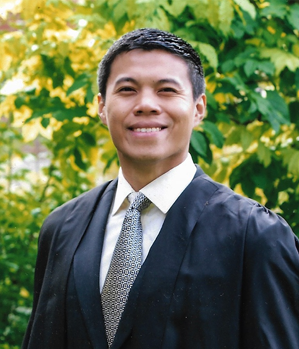 Raphael Lorenzo A. PANGALANGAN completed his law studies at the University of Philippines, the University of Oxford, and the University of Cambridge. He currently is an assistant professor with Jindal Global Law School and is a visiting scholar at Harvard Law School. He likewise represents victims of the Philippine “drug war” as a Fellow at the Center for International Law – Philippines.

 Open access

