


Established dietary food guidelines serve to help individuals meet dietary recommendations to improve health and decrease risks for chronic disease and/or nutrition deficiency( 1 ). In the USA, the Dietary Guidelines for Americans were developed in response to increases in relationships between nutrition and disease. Established food guides and dietary recommendations to improve population health exist internationally. International food guidelines are based on cultural preferences, food availability and scientific evidence. Painter et al. ( Reference Painter, Rah and Lee 2 ) reviewed food guides and illustrations for Australia, Canada, China, Germany, Korea, Mexico, the Philippines, Portugal, Sweden and the UK. These guidelines serve as culturally congruent dietary definitions and recommendations to assist individuals in meeting their daily dietary requirements based on food preferences, availabilities and dietary patterns.
In Arabic-speaking countries, the prevalence rates of chronic diseases and obesity-related co-morbidities have increased in relation to the decline of healthy dietary habits in these countries( Reference Musaiger, Al-Mannai and Al-Lalla 3 – Reference Aboul-Enein, Bernstein and Neary 9 ). Concurrently, this region is also experiencing a growing burden of undernutrition( Reference Musaiger, Hassan and Obeid 5 , Reference Rahim, Sibai and Khader 10 , Reference Abdullah 11 ) and a dietary shift towards a Westernized diet characterized by convenience foods high in sodium, saturated fats and refined sugars( Reference Aboul-Enein, Bernstein and Neary 9 ). Recent studies( Reference Musaiger, Al-Hazzaa and Al-Qahtani 4 , Reference Aboul-Enein, Bernstein and Neary 9 , Reference Aboul-Enein 12 , Reference Aboul-Enein 13 ) continue to propose the need for culturally congruent dietary patterns and healthy lifestyles in this region to address these public health challenges.
Successful dietary intervention and education of individuals from Arabic-speaking countries begin with cultural sensitivity. To promote proper dietary intake for this group, health-care professionals must understand and respect clients’ food practices, ethnic heritage and lifestyle. Clinicians and registered dietitians are responsible to communicate materials and education in an effective manner that emphasizes the ethnicity of individuals such as immigrants from Arabic-speaking countries. Representative foods for each food group should be determined based on cultural foods that clients are accustomed to consuming and serving sizes should be based on predetermined amounts which improve health outcomes. Graphical representation of culturally appropriate food choices and servings sizes is a useful education tool for clinicians and registered dietitians. These graphics can provide guidelines to improve dietary intake for the individual, while allowing the educator to maintain sensitivity to the cultural food practices of the individual( Reference Achterberg, McDonnell and Bagby 14 ). Furthermore, not only are dietary graphics culturally sensitive, but they are also an effective means of improving health communication( Reference Peregrin 15 ). Therefore, developing and promoting graphical representations of regional food guidelines for Arabic-speaking countries can help recipients maintain and understand culturally congruent dietary intake.
While previously published reviews( Reference Painter, Rah and Lee 2 , Reference Murphy and Barr 16 ) offered an introduction to international food guidelines, no review has been published to provide a focused examination of culturally congruent food guidelines in the Arabic-speaking region. The purpose of the present work is to provide dietitians, public health educators and health professionals a narrative review of proposed food guidelines from various Arabic-speaking countries (see Fig. 1 and Table 1). The current review offers a congruent and illustrated understanding of international food guidelines and improves cultural competency and awareness among health professionals operating in this region as it relates to public health nutrition in countries hosting significant target populations originating from Arabic-speaking countries. For the purpose of the review, the Arabic-speaking countries were defined by the twenty-two member countries of the League of Arab States( Reference Blair, Grivna and Sharif 17 ). The guidelines were identified and selected through the FAO’s Near East region for food-based dietary guidelines, the WHO Regional Office for the Eastern Mediterranean (EMRO) country profiles, and the Ministries of Health from member countries of the League of Arab States( 18 , 19 ).
(colour online) Food-based dietary guidelines from Arabic-speaking countries

Recommended food group quantities and physical activity from selected food guidelines in the Arabic-speaking region
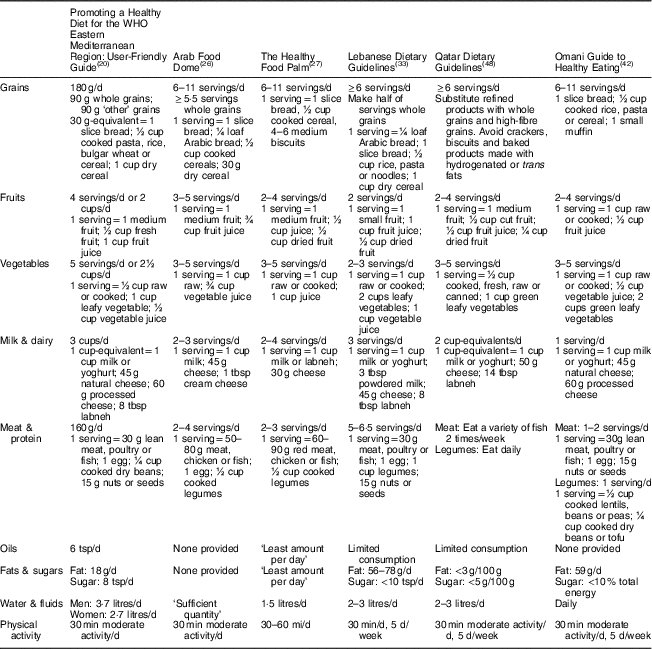
Promoting a healthy diet for the WHO Eastern Mediterranean Region: user-friendly guide
In 2004, in response to public health concerns regarding the high prevalence of malnutrition (over- and undernutrition), in addition to increases in overweight, obesity and resultant diet-related chronic diseases such as CVD, type 2 diabetes, hypertension and some cancers, the WHO authored a recommendation for a regional strategy on nutrition through a consultative process in collaboration with member states of the Eastern Mediterranean Region( 20 ). Promoting a Healthy Diet for the WHO Eastern Mediterranean Region: User-Friendly Guide was developed to provide evidence-based and culturally congruent dietary recommendations for populations living in the member states of the Eastern Mediterranean Region aimed at reducing the risk of obesity-related co-morbidities and undernutrition. The guidelines suggested in the publication offer food-based dietary guidance while accounting for the availability of widely consumed local and affordable foods and regional and cultural food practices( 20 ).
Food-based dietary guidelines provide the consumer with an easy-to-understand framework for healthy eating by encouraging dietary patterns, confirmed through clinical and epidemiological research, that are associated with a reduced rate of diet-related diseases. These evidence-based guidelines encourage maintenance of a healthy body weight for the people of the Eastern Mediterranean Region through consumption of whole grains, fruits, vegetables, lean meat and poultry, and low-fat dairy, and by suggesting that a variety of healthful foods are chosen each day if possible; consumption of fish is encouraged at least twice weekly. Limits on added sugars (particularly in the form of sweetened beverages and sweets), salt, and fats and oils are advised, while the importance of consuming dietary fat from unsaturated fat sources and n-3 fatty acids from foods such as nuts, flaxseed and fish is emphasized( 20 ). Each guideline clearly associates the potential health benefits and negative disease outcomes that food categories may be related to, such as increased intake of fruits and vegetables is associated with lower risk of type 2 diabetes, stroke, CVD, macular degeneration and several types of cancer, and is accompanied by suggestions to increase or decrease the food being discussed and key recommendations for the respective food group. Consuming recommended amounts of clean water and practising food safety in handling and preparation of food are emphasized.
The WHO EMRO dietary guide also offers a corresponding visual representation of the recommendations similar to the US Department of Agriculture’s MyPlate and Dietary Guidelines for Americans( 21 , 22 ). Public Health England has noted that globally, countries depict the complexities of Dietary Reference Values and food-based recommendations using a simplified graphic to complement national dietary guidelines( 23 ). Based on recommendations of the WHO and the FAO, countries should develop simple dietary guidelines that address specific national public health concerns and which are relevant to people of different ages, lifestyles and cultures in the region( 24 ). In developing such guidance, the shape, layout and design of a corresponding graphic are often used to impart the relationship of regional and local practices, customs and beliefs to the dietary recommendations.
Such graphical representations for dietary guidance are an important tool for nutrition educators, dietitians and public health practitioners who work with diverse populations across the lifespan to promote health and reduce diet-related disease incidence. As a visual tool, graphical representations of dietary guidance provide a quick and easy way to convey information that generalizes the dietary recommendations of a nation and may be a practical way to discuss dietary behaviours in the country of origin and with immigrant populations seeking dietary and health information.
Because the WHO Eastern Mediterranean Region is comprised of several predominantly Arabic-speaking nations that exhibit distinct cultural and subcultural beliefs, various graphic representations of dietary guidance have also been developed( Reference Musaiger, Takruri and Hassan 25 – 27 ). These graphics may be used in the region for which they are developed or as a tool to develop rapport and understanding of unique issues and opportunities for public health educators to assist their immigrant or first-generation clients.
The Arab Food Dome
When the Arab Food Dome was first contemplated in 2012( Reference Musaiger, Takruri and Hassan 25 , Reference Musaiger 26 ), there was no specific dietary guidance for native populations residing in the Arab Gulf states. While the need for the establishment of dietary guidelines for Arab populations was identified( Reference Musaiger, Takruri and Hassan 25 ), it was not until the WHO EMRO published Promoting a Healthy Diet for the WHO Eastern Mediterranean Region: User-Friendly Guide ( 20 ), shortly after Musaiger et al. ( Reference Musaiger, Takruri and Hassan 25 ) noted the lack of dietary guidance, that the Eastern Mediterranean Region was provided with dietary guidelines specific to the geographic region.
The appearance of the Food Dome invokes the domes commonly observed in the architecture of the region; domes are found in the home and on mosques, churches and other cultural institutions( Reference Musaiger 26 ). The Food Dome, shaped as its name suggests, depicts the food groups vertically ‘to explain that all foods are equal from their nutritional point of view, and the only difference is in the amount of food that should be eaten from each group’( Reference Musaiger 26 ) (p. 112), while the base of the dome is filled with graphic representations of people engaged in physical activity to illustrate the importance of incorporating such activities daily.
Research suggests that one of the primary factors contributing to the increase in overweight and obesity in the region and the related rise in diet-related disease is the decline in physical activity and a regional dietary transition towards Westernized diets( Reference Musaiger, Al-Hazzaa and Al-Qahtani 4 , Reference Aboul-Enein, Bernstein and Neary 9 , Reference Rahim, Sibai and Khader 10 , Reference Ng, Zaghloul and Ali 28 – Reference Al-Nohair 31 ); thus the Arab Food Dome emphasizes the importance of adults attaining at least 30 min of exercise most days of the week while encouraging children to engage in a minimum of 90 min of physical activity daily. In general, the Food Dome reflects the recommendations of Promoting a Healthy Diet for the WHO Eastern Mediterranean Region: User-Friendly Guide ( 20 ) while adhering to regional and cultural food practices and access.
Dietary guidelines for Saudis – the Healthy Food Palm
Like the Arab Food Dome, the Healthy Food Palm was created in 2012 as a graphic representation of the ideal patterns of food consumption demonstrated as a pictorial representation of the recommended servings from each food group; the indicator of suggested total servings per food group is demonstrated by the relative size allotted to each food group within the palm tree graphic, as well as noted in the ‘trunk’ of the palm tree. Similar to the US Department of Agriculture’s MyPlate graphic, which visually demonstrates the proportions of food groups by demarcating them on a table setting graphic, the Healthy Food Palm visually indicates that the foundation of a healthful diet, depicted in varying sizes of palm fronds, should be comprised of bread and cereals, especially whole grains (6–11 servings/d), fruits and vegetables (3–5 servings/d), followed by smaller amounts of milk and dairy products (2–4 servings/d) and meat and legumes (2–3 servings/d), with the smallest palm fronds indicating that oils and sugars should be used sparingly( 27 ).
Additionally, the Healthy Food Palm is shown growing from the ‘ground’, the base indicating the need for 30–60 min of physical activity daily( 27 ). Inadequate physical activity has been noted as a concern in adolescents in Saudi Arabia( Reference Al-Hazzaa, Al-Sobayel and Abahussain 32 ). Encouraging daily activity as the foundation of a healthy lifestyle is a theme emphasized in Promoting a Healthy Diet for the WHO Eastern Mediterranean Region: User-Friendly Guide ( 20 ) as well as the food guidance graphics being developed throughout the region.
Interestingly, creation of the Healthy Food Palm was based on a review and analysis of science-based dietary guidelines such as the Dietary Guidelines for Americans and those in the UK and Canada( 27 ), rather than the WHO EMRO’s user-friendly guide. The development process included a review of dietary patterns in Saudi Arabia, a review of diet-related diseases common to Saudi Arabia, a review of existing guidelines and the development of a graphic that would appropriately depict the recommendations in a meaningful and relevant way.
The choice of the palm as the outline for the graphic is based on the tree’s cultural and economic significance in the region; the palm appears on the flag of Saudi Arabia and is considered to represent vitality, growth and prosperity( 27 ). The pictures of food within the graphic capture regionally identifiable and commonly used products, such as a variety of breads including flat and yeast breads, and baklava pictured in the ‘sweets’ category.
The food-based dietary guideline manual for promoting healthy eating in the Lebanese adult population
To support the national nutrition strategy for Lebanon, the Faculty of Agricultural and Food Sciences of the American University of Beirut collaborated with the Lebanese National Council for Scientific Research and published fourteen guidelines related to healthy eating and lifestyle practices in 2013: The Food-Based Dietary Guideline Manual for Promoting Healthy Eating in the Lebanese Adult Population. The guidelines promote behaviours to reduce the prevalence of chronic non-communicable diseases such as obesity, CVD, type 2 diabetes and cancer, and also address inadequate food intake and micronutrient deficiency-related diseases. The intention is for these to be used in all settings, including hospitals, private clinics, homes and universities, as well as in health-related businesses( 33 ).
Although the guidelines are termed ‘food-based’, they target a set of behaviours that are meant to be implemented as a whole. The goal is to improve the health of Lebanese adults through behaviour change and reduction of chronic diseases. Socio-economic disparities contribute to rising rates of obesity and lower rates of physical activity in the population, in addition to dietary intake quality( Reference Chamieh, Moore and Summerbell 34 ). The guidelines target overall behaviours and outcomes (body weight, activity, dietary variety) as well as specific dietary recommendations (food groups to eat, foods to limit, food safety) and hydration.
As in many developing countries, the nutrition transition in Lebanon has been characterized by the dual burden of undernutrition and rising rates of obesity among all ages. Co-morbidities related to obesity have been attributed to increasing Westernized diets and lifestyle behaviours( Reference Aboul-Enein, Bernstein and Neary 9 ). Among older Lebanese adults living in the community, a Western diet pattern has been associated with lower indices of healthy eating patterns( Reference Jomaa, Hwalla and Itani 35 ). The traditional Lebanese dietary pattern, a version of the Mediterranean-style diet, appears to be protective against metabolic syndrome. In a cross-sectional survey of dietary patterns in Lebanese adults conducted in 2008–2009, a fast food/dessert-based pattern was associated with a higher likelihood of metabolic syndrome, hypertension and hyperglycaemia when compared with the traditional Lebanese dietary pattern( Reference Naja, Nasreddine and Itani 36 ). A similar association between the Western diet pattern and overweight was found among Lebanese adolescents in the same survey( Reference Naja, Hwalla and Itani 37 ). Studies in other groups have confirmed consistent relationships with the negative effect of a dietary pattern emphasizing Westernized processed foods as well as risk factors for this pattern among different ages and socio-economic groups in Lebanon( Reference Salameh, Jomaa and Issa 38 – Reference Nasreddine, Tamim and Itani 40 ). While these patterns have been defined by consumption of foods within food groups, the overall pattern is the predominating theme associated with risk, rather than specific food groups.
Although the Lebanese guidelines specifically target the adult population, a need exists for greater attention to dietary guidelines in the paediatric population as well. A study of orphaned children in Tripoli showed a high prevalence of sedentary behaviour and inadequate intakes of vegetables, fruits and proteins, as well as high intakes of sweet and salty snacks, compared with the American dietary guidelines( Reference El-Kassas and Ziade 41 ). Promotion of the traditional Lebanese dietary pattern and the messages of the Lebanese Cedar Food Guide could help to inform policy for the most vulnerable children.
The Omani guide to healthy eating
The Department of Nutrition in the Ministry of Health in Oman developed the 2009 Omani Guide to Healthy Eating in response to the WHO’s Global Strategy on Diet, Physical Activity and Health. The guideline includes ten messages tailored for use as a reference for training materials, counselling and education. The target audience for the guide includes teachers of all levels, community educators and health professionals. The guide is designed around a circular graphic illustration, in the form of a plate, highlighting each food group in proportions consistent with the ten messages to support healthy eating in Oman( 42 ). The intended use is to promote adequate nutrition for the general population over 2 years of age with a focus on dietary selections to reduce the prevalence of obesity and chronic diseases. The guidelines include recommended nutrient intakes by age group and individual nutrients (energy, protein, carbohydrate, fibre, all major vitamins, iron, zinc, calcium, fluoride, iodine and sodium)( 42 ).
The Omani guide is nutrient-focused and provides specific serving sizes for all age groups over 2 years with the intent of achieving targeted nutrient recommendations. The selected food groups are more granular than in some other guidelines, with recommended daily amounts specified for the following food groups: whole and refined grains, fruits, vegetables, meats and alternatives, legumes, milk/dairy and fats. A diet lower in total and saturated fat is recommended. A substantial section of the Omani guidelines is devoted to detailed recommendations for safe food and water that include five steps that promote safe foods and avoid contamination due to micro-organisms and/or toxins.
In addition to food choices, the Omani Guide to Healthy Eating includes recommendations for physical activity including aerobic and muscle-strengthening activities. These are consistent with the more recent acknowledgment of the need for a national strategy to address modifiable risk factors for the rising burden of diet-related diseases in Oman( Reference Mabry, Owen and Eakin 43 ). Descriptive data from the Oman World Health Survey in 2008 suggest a rising prevalence of metabolic syndrome with opportunities to address behaviours that mitigate risk, as well as the need to promote quality patient care at all health-care system levels( Reference El-Aty, Mabry and Morsi 44 ). Among a group of Omani adolescents, high prevalence rates of sedentary behaviour, low level of physical activity and high-energy food consumption were observed, although prevalence of overweight and obesity was not especially high in this group( Reference Kilani, Al-Hazzaa and Waly 45 ). Increasing prevalence of obesity among older adults with moderate energy intakes suggests low levels of physical activity may be an important factor( Reference Al Zuhaibi, McCullough and Salter 46 ). Sleep hours were lower than recommended in adolescents and may be a behaviour of interest for future guides due to the association of sleep deprivation with overweight and obesity( Reference Kilani, Al-Hazzaa and Waly 45 ). A more recent study of adolescents showed a rising prevalence of overweight and obesity, and a positive association of consumption of fast foods, sweets and cakes with overweight or obesity( Reference Zayed, Waly and Al-Hadabi 47 ). These findings are consistent with the rapid transition to a Westernized diet in this population and its associated effect on health and nutrition behaviours.
The Qatar dietary guidelines
In 2015 Qatar’s Supreme Council of Health, Health Promotion and Non-communicable Diseases Public Health Department published food-based dietary guidelines for the State of Qatar. The guidelines include eight recommendations developed to direct individual behaviour change and policy creation and evaluation: (i) eat healthy choices from six food groups; (ii) maintain a healthy weight; (iii) limit sugar, salt and fat; (iv) be physically active; (v) drink plenty of water; (vi) adopt safe and clean food preparation methods; (vii) eat healthily while protecting the environment; and (viii) take care of the family( 48 ). Adding a plant-based, environmentally friendly component to a state-sponsored dietary standard is relatively unique to the State of Qatar( 48 ). The guidelines are depicted using an open clam shell with illustrations of six food groups portioned inside: vegetables; fruit; cereals and starchy vegetables; legumes; milk, dairy products and dairy alternatives; and fish, poultry, meat and meat alternatives. Adopting behaviours and policies aligned with the Qatar dietary guidelines will reduce risk factors associated with chronic, non-communicable diseases cancer, diabetes, CVD and stroke( 48 ).
Dietary behaviours in Qatari communities fall short of WHO guidelines for recommended daily allowances( Reference Al-Thani, Al-Thani and Al-Mahdi 49 ). In a cross-sectional study, the authors( Reference Al-Thani, Al-Thani and Al-Mahdi 49 ) found younger adults in Qatar (age 18–39 years, n 2496) consumed fewer than two servings of fruits and vegetables daily and an equal number of meals prepared at home and fast-food meals per week. Coupled with mean BMI (29.2 kg/m2) and rate of overweight/obesity (41·4 %), Qatari men rank among the statistical mean when compared with Arabic-speaking countries, yet obesity rank is 41 % higher for Qatari women compared with men( 50 ). Although the World Bank classifies Qatar as a ‘high income country’ and the WHO reports high access to health services and significantly higher per capita total expenditures on health, adult risk factors for Qatari adults including diet-related chronic diseases such as high blood pressure, obesity, diabetes and CVD risk are increasing( 50 ).
In response to diet-related risks for non-communicable disease, Qatar’s Supreme Council of Health developed a national dietary guideline task force comprised of a coalition that included medical associations, academic institutions, research centres and the National Food Security Program. The task force used evidence-based processes that followed international best practices and regional reports( 48 ) to develop the Qatar Dietary Guidelines in 2015. The graphic illustration of the Qatar Dietary Guideline includes a large open clam shell that reveals an inner ‘plate’ divided into six unequal sections from cereals and grains (largest) down to fish, poultry, meat and eggs (smallest), representing each group’s contribution to a healthy diet. Hovering above the clam’s plate is a large drop of water signifying its importance to the guideline. The guideline also includes behaviours related to a healthy diet including physical activity, respect for the environment, clean and safe food preparation methods, and taking care of the family (e.g. breast-feeding, a healthy home).
The Qatar Dietary Guidelines are intended to provide overarching support in a top-down approach to community and individual health where policy leads to behaviour change. As an example, the graphical representation allows the Qatari Supreme Council of Health to express recommendations for types and amounts of food across age, education and cultural barriers more effectively than objective, maths-based formulations( Reference Martinez, Munoz and Ojeda 51 ). However, communicating the information in a culturally sensitive and easy-to-understand method will not lead to sustained behaviour change or behaviour maintenance( Reference Bandura 52 ). Guidelines that suggest and/or promote community-level interventions are more effective in supporting the original messages and fostering sustainability( Reference Smitasiri and Uauy 53 ). Examples from the Qatar Dietary Guidelines include calls for educational programme outcomes such as physical activity increase, self-reflection on dietary behaviours, food label literacy, decreased sitting time, understanding environmental factors associated with dietary behaviours and realizing the negative consequences associated with not following the guideline.
Conclusions
The present narrative review of current food guidelines within the Arabic-speaking region should provide cultural context for health education, health promotion and nutrition professionals within the region and for those looking to compare or understand cross-cultural policies. All guidelines presented in the review are comparable to the Mediterranean-style diet outlined by the WHO EMRO, which provides consistency across the region. These similarities were observed in dietary recommendations that focus on a predominant consumption of whole grains, fruits and vegetables, and healthy plant-based oils, with reduced consumption of red meats, animal-based proteins, dairy products, animal fats and added sugars. Dietary guidelines in the Arabic-speaking region have seen a shift towards including non-traditional food recommendations. Physical activity, food preparation, maternal health and environmental health are all examples of new language to support a healthy diet. Practitioners should access these supplementary guidelines when developing and promoting behaviour change associated with diet-related risk factors. Additionally, in the light of the current political and humanitarian crisis observed in Arabic-speaking countries such as Yemen, Syria, the Palestinian Territories, etc. and the consequent forced displacement of these respective populations, these guidelines could serve as an influential resource of health promotion for public health practitioners operating in displaced Arabic-speaking communities around the world.
Programme evaluation efforts should also consider the culturally compatible guidelines outlined in the present paper when determining the effectiveness of existing programmes (or programmes in development). Using specific guidelines when working with individuals adds validity to a programme’s perceived value and provides a potential universally recognized symbol for a healthy diet. However, those guidelines should be recognizable by and acceptable to the target audiences – culturally, visually and affectively. Although a universal dietary guideline is a discussion subject in the literature( Reference Smitasiri and Uauy 53 ), the approach potentially eschews the inherent benefits of culture specificity. Tailoring dietary guidelines and their applications to a specific culture, region or ethnic identity could increase recognition, acceptance and use by their target audience.
Collaboration and capacity building between community- and client-level practitioners and government agencies that develop and sponsor dietary guidelines should be encouraged and bidirectional( Reference Geissler 54 ). Health education, health promotion and nutrition practitioners should contribute to the research cycle by providing process, impact and outcome evaluation data on the usability and effect of dietary guidelines on behaviour change. Graphical depictions of dietary guidelines that include cultural ties represent a primary connection between the author (government agency), practitioner and target audience. In completing the research and evaluation cycle, government agencies should incorporate data collected in the field during regular re-evaluation of dietary guidelines.
Acknowledgements
Financial support: This research received no specific grant from any funding agency in the public, commercial or not-for-profit sectors. Conflict of interest: None. Authorship: L.C.: analysis and interpretation of data, drafting the article, revising paper for intellectual content, final approval of the completed article. J.B.: analysis and interpretation of data, drafting the article, revising the paper for intellectual content, final approval of the completed article. E.D.: analysis and interpretation of data, drafting the article, revising the paper for intellectual content, final approval of the completed article. L.B.: analysis and interpretation of data, drafting the article, revising the paper for intellectual content, final approval of the completed article. B.H.A.-E.: conception and design, acquisition of data, analysis and interpretation of data, drafting the article, revising the paper for intellectual content, final approval of the completed article. Ethics of human subject participation: Not applicable.



