

In 1734, the “indigo maker Christiaan Frederik Canselaar was sent to Ambon accompanied by four Javanese” for the purpose of disseminating the production of indigo, one of the global commodities crucial to early modern globalization and European expansion.Footnote 1 The Javanese were contracted for five rijksdaalder per month.Footnote 2 The population of Ambon was mobilized for labour by other means. Reporting to the authorities in the Dutch Republic, the Generale Missiven noted that “the population of [the island] Amblau was exempted from service on Buru on condition that they keep to their promise to plant indigo themselves”.Footnote 3 The dienst (service) referred to here was the coerced corvée labour that local subjects had to perform for the Dutch East India Company (VOC), which was now exchanged for the production of indigo. This interest in the management of cash-crop production by the VOC was no coincidence. The report continues with explicit rationales, pointing out that “the ground of [the neighbouring island] Hitu does not seem very promising for indigo cultivation”, while at the same the “cultivation of coffee was not encouraged because Java was already delivering enough”.Footnote 4
The historical perspective on early modern world trade and European expansion has been strongly influenced by the notion of itinerario, which can be translated as a guide for travelling or for finding one's route, and is derived from the Latin verb itineror, to travel. The landmark account of the richness of late-sixteenth-century Asia, published under this title by Jan Huygen van Linschoten in 1596, had already systematically described ports, commodities, and trading opportunities.Footnote 5 The influence of this perspective is still felt in the process of early globalization, which is to a large extent understood as trade-driven maritime European expansion, captured with concepts such as merchant empires and merchant capitalism.Footnote 6 The VOC is an interesting and crucial example of this, with an extensive historiography describing it as a trading company or a merchant warrior.Footnote 7 The conceptualization of the VOC as a merchant has been strengthened by the dominant perspective of departure (and return). For long, many studies focused on the ships setting sail to Asia from the Dutch Republic, the sailors departing, and the trading goods brought back.Footnote 8
Only more recently have the importance of the Asian or “overseas” sides of the organization of the VOC, its social, economic, and political dimensions, received more attention. Several studies opened up “Asian” perspectives on the Dutch East India Company, rather than solely the perspective of “intercontinental” connections, pointing out that the trade within Asia was crucial to the Company.Footnote 9 With regard to the VOC's workforce, it has been stressed that the VOC employed most of its personnel in Asia, and that roughly half of the workforce was Asian.Footnote 10 The VOC actually employed most of its ships in intra-Asiatic shipping and manned those ships with multicultural European and Asian crews.Footnote 11 Despite this shift, the perspective of the merchant has remained strong, even dominant. Els Jacobs, for example, admits that “European trading companies possessed the power and means to enforce the essential native cooperation through violence”, but nevertheless argues that a survey “of all settlements makes quite clear that the Company in Asia really operated as a merchant”.Footnote 12 This article argues there is a need to break with such perspectives, and it aims to explore the implications of doing so.
In recent decades, research has made it increasingly clear that the VOC cannot be characterized solely as a merchant organization, and that the functions of the Company extended to those of continuous warfare, government responsibilities, and even interfering in and organizing agricultural production. Recent studies remind us that the Company acted with different degrees of sovereignty and took on a pivotal role in regulating regimes of slavery, administering the slave trade and enforcing corvée duties.Footnote 13 The VOC operated not only at sea and in ports; it was a more amphibious monster, acting not only as “merchant”, but also taking on multiple roles as “ruler”, “soldier”, and “producer”.
This article explores the way the Dutch East India Company operated in employing and developing labour regimes in both production and transport work throughout its Asian empire. It does so as a case study to understand early global capitalism through the lens of the mobilization and control of labour employed for the production and transportation of several key global trading commodities of this period, including indigo, but also cinnamon, pepper, sugar, and coffee. It will analyse and compare the development of the need for labour, the employment of different sets of labour relations, and the mechanisms of control and regulation of diversity that developed from this in different parts of the empire of the VOC. The implications of this exercise range wider than merely providing a different account of the VOC but hold important clues for advancing global historical debates on shifts in labour relations, as well as on the nature and impact of early empire. It indicates that the reach of early modern (merchant) capital extended well beyond maritime trade and port economies, but also aimed to control and shape the South and South East Asian countryside, significantly impacting shifts in labour regimes and social relations in regions that were drawn into the spheres of direct and indirect influence of early empires.
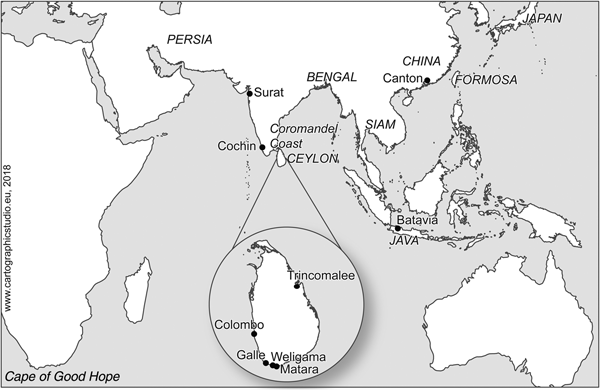
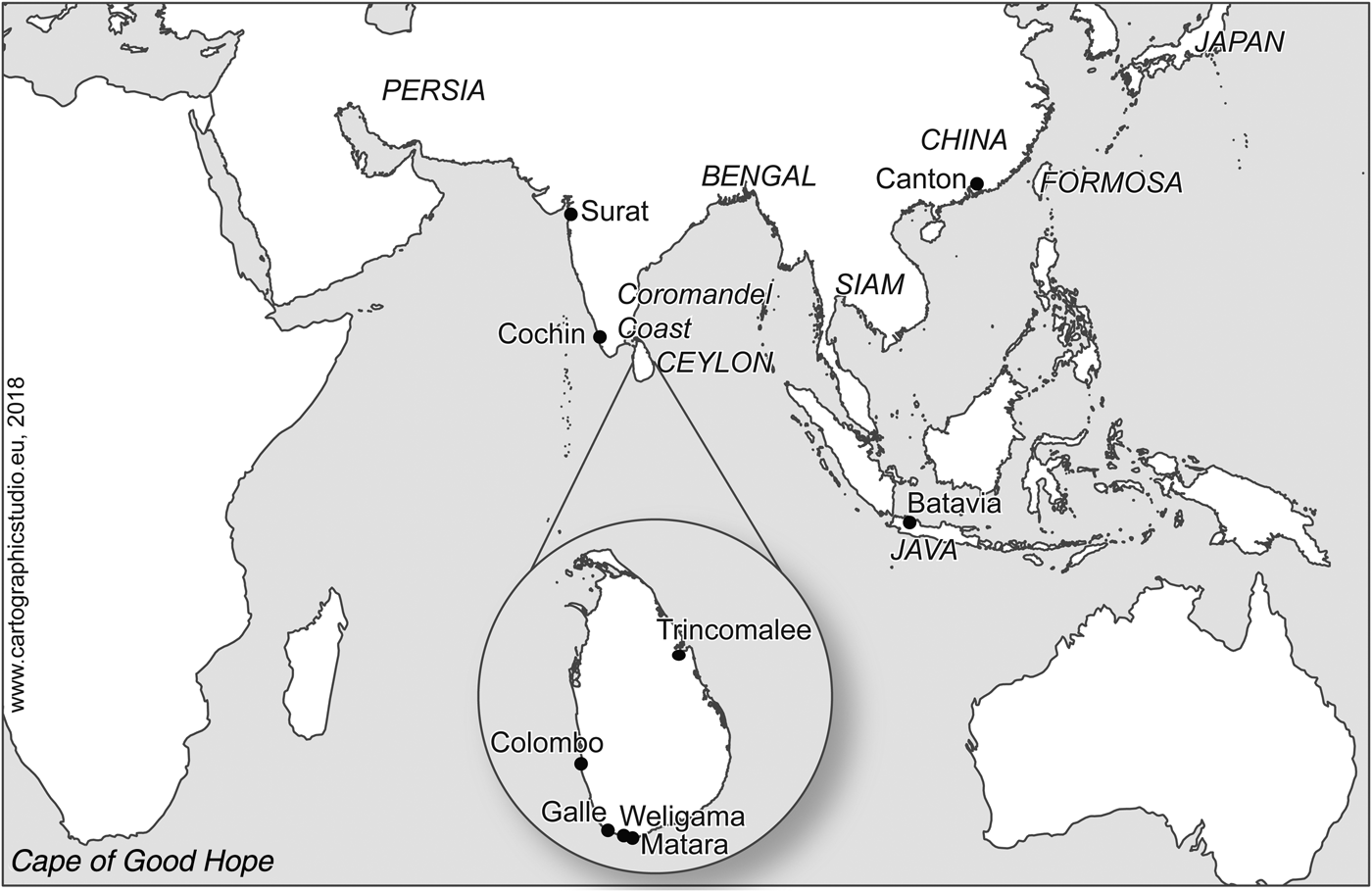
Selected places in the Dutch East India Company Empire that are mentioned in this article in relation to forced labour relations or transformations in labour relations.
EXPLORING GLOBALIZATION, CAPITALISM, AND IMPACT
As the largest company active in Asia (up to the 1750s), the case of the VOC is key to understanding the impact of early imperial and capitalist development in changing global social and labour relations. The proponents of the perspective of early modern globalization and capitalist expansion as being characterized predominantly as trade or merchant phenomena have raised doubts concerning the links, or causal effects, of colonialism. Jan de Vries, for example, challenges “the argument that intercontinental trade, through its differential impact on the location of commercial life, forced changes in political institutions that were favourable to long-term economic growth” in Europe. De Vries concludes: “When all is said and done, we are presented with two simultaneous developments – the establishment and development of a global maritime trading system under western European direction and the divergent growth of the western European economies – and are asked to believe that a causal link exists connecting the first to the second”.Footnote 14
The case of the Dutch East India Company is an important reminder that such links remain insufficiently explored up to this day and should also be investigated in the reverse direction. Given that early modern globalization was dependent not only on the highly labour-intensive modes of maritime transportation but also on labour-intensive, often rural production processes of the global commodities involved, the best places to study the effects of global trade are the spheres of production and transport outside Europe. Throughout the European empires that underpinned early modern global trade, the pressure to procure and allocate labour in effective ways was extremely high. Therefore, the port cities studied in this Special Issue were not just crucial nodal points connecting various sites of production and circuits of distribution, they were also simultaneously employed as the centres of empire, from which coercive imperial activities radiated that underpinned the global commodity chains – from transport and storage, to production and security.
The history of labour mobilization in the Dutch East India Company empire is part of this larger story in which, throughout the Dutch and other empires of the seventeenth and eighteenth centuries, labour was mobilized through a variety of different, but often coercive, labour regimes, based most notably on contracts, slavery, and corvée. The mobilization of these workers often entailed more or less controlled or forced mobility over sometimes short, and more often long, distances. As a result, workers from various regional, social, and cultural backgrounds came to work in the same environments in these ports and their hinterlands. There they were confronted with each other within the framework of legal and disciplining regimes of early modern imperial state-corporate and private authorities. In the case of the European companies in Asia, all this occurred in the context of a highly developed world, with strong states in South, South-East and especially East Asia, and by complex economic systems marked by markets, monetization, and a high diversity of labour relations, ranging from casual wage, contract, slave, and corvée labour.
The labour regimes of ports and hinterlands – the regimes of waterfronts, cities, and rural places of agricultural production – were not separated, but deeply connected. Entanglements between the systems of labour mobilization came about not only through the flows of commodities and the chains of imperial command, but especially through the exchange, interaction, and overlap of labour systems employed and refined by global organizations such as the Dutch East India Company. The active engagement and experimenting of the VOC with the refinement and transplantation of labour regimes indicates that we should consider the deeper impact of the transformations set in motion by the socio-economic and political regimes behind the early modern trade connections. Whereas the study of globalization has been largely connection-centred, cultural historical studies such as that by McCants remind us that such early connections may have been restricted to “small luxuries” but nevertheless led to “mass consumption”.Footnote 15 Taking on board these insights into the field of social and labour history means we should consider much more systematically how the production, transport, and control of such “small” luxuries actually demanded massive mobilization of labour globally. The labour-intensive character of early global contacts affected a multiplicity of aspects of people's lives – work, migration, social and political relations, policing, and more – and fuelled experiments with labour regimes – in maritime hubs and in agricultural hinterlands. The impact and transformative effects of this remain to be scrutinized much more systematically in global labour history as a field.
A consideration of the role of the changes set in motion by globally integrating commodity chains under war capitalism, like that of Sven Beckert in his study of global capitalism through the history of cotton, is a crucial step forward. Emphasizing the role of conquest and coercion in early modern capitalism, Beckert also argues, however, that the expansion of merchant capital, especially in Asia, occurred “largely without exploding older social structures” until the late eighteenth century.Footnote 16 This might indeed be the case for commodities like cotton, in which strong networks of producers and merchants were able to maintain rather high degrees of control, but it seems to have played out differently for other key global commodities. We should reconsider, therefore, whether the characterization of war capitalism accounts sufficiently for the nature and scope of social and labour transformations already set in motion by early modern imperial and capitalist expansion. The expansion of world trade resulting from European expansion in the quest for global commodities in Asia, such as nutmeg, cinnamon, and pepper, but also indigo, sugar, and coffee, seemed to have important transformative effects.
This insight is important especially in the light of recent historiographical turns in global labour history, which have indicated that many forms of labour relations, ranging from free to unfree, existed and continued to exist throughout history. Early modern (and later) global and capitalist expansions were intimately linked to unfreedom and coercive labour relations.Footnote 17 Since the search for linear shifts from unfree to free labour relations has been abandoned, it is increasingly recognized that multiple labour relations not only existed alongside each other, but also in relation to each other. This implies we should start to think about transformations in labour regimes from the notion of clusters of labour relations. Rather than the occurrence and development of single labour relations, it is the specific cluster (or “combinations”) of labour relations as they occur in a specific historical context that should be understood and explained. This holds equally true for historical transitions in labour regimes – these entail not merely the shift from one labour relation to another, but also shifts of specific combinations or clusters of a set of labour relations to another cluster of labour relations.Footnote 18
The case study of labour relations under the VOC indicates the importance of revising our understanding through such an approach. The VOC employed contract labour, slave labour, corvée labour, and casual wage labour, and actively attempted to manage and transplant labour regimes across different regions. This provides an interesting insight into how the labour-intensive character of early modern globalization motivated the drivers of the early capitalist expansion that supported it (corporations, states) to develop practices for the mobilization of labour that had a deep and lasting impact on a multitude of local societies across the globe. This impact was not limited to the organization and management of labour, and the histories of slavery and coercion, but also – through regimes of control and differentiation – extended into wider spheres of social and cultural relations.
CONQUEST, CORVÉE, AND TRADE – THE DUTCH OVERSEAS MONSTER AT WORK
As the largest company operating in Asia from the beginning of the seventeenth century until the mid-eighteenth century, the Dutch East India Company provides an interesting and important case.Footnote 19 The Company's activities were not limited to that of trade, but extended to include diplomatic relations, and more importantly to warfare and government responsibilities such as taxes, administration, and justice. Roughly a quarter to a third of the VOC workforce were military personnel.Footnote 20 In 1760, according to a survey of the political positioning of the VOC by Knaap, the VOC had sovereignty in six regions (Batavia, Java's north-east coast, Banda, Ambon, Ceylon, and the Cape of Good Hope), suzerainty (indirect rule) in twelve regions, and extra-territorial rights in five places (Japan, China, Bengal, Surat, and Persia).Footnote 21
This was part of a system in which the VOC had gained access to global commodities through balancing trade, monopoly claims, and warfare. At the beginning of the seventeenth century, the VOC had secured control over the islands that produced cloves (Ambon, 1605), mace, and nutmeg (Banda, 1621) through a series of conquests. After the conquest and destruction of Jacatra (1619), the Company built the settlement of Batavia as its main headquarters. From here it pursued the trade in that other important spice, pepper. The VOC would never completely possess the areas producing pepper (Sumatra, Malabar), but, over the course of the seventeenth and eighteenth centuries, it would increase its influence by building up a strong political presence through conquest (Cochin, 1663) or establishing suzerainty. Increasingly, the Company was able to enforce contracts for the delivery of pepper for prices below market value. The VOC continued its conquests more to the north of the Indonesian archipelago, where it conquered the important trading hub of Malacca (1641), and especially Formosa (1622–1663), a crucial link in the trade with China, but also interesting as a site for the production of sugar.
Having established the core of its power, the VOC turned its eyes to the Indian Ocean, where it gained control over coastal Ceylon, the only major area producing cinnamon, in a series of conquests (Galle, 1641; Colombo and Jafnapatnam, 1654–1658). As the Coromandel coast was crucial for obtaining high-quality textiles, which were important trading goods in South East Asia and elsewhere, the VOC established a series of forts and trading offices there, as well as control over several cities. The VOC obtained permission to build a fort in Bengal (Houghly) as a way to secure its position in the trade in saltpetre, opium, and silk. The Cape of Good Hope (1652) had become an important resupply station for shipping between Europe and Asia, and with the expansion of European settlement in the hinterland over time it developed into an agricultural production area. In the meantime, the city of Batavia and its surroundings (ommelanden) developed into one of the major production areas for sugar, which was exported largely to Japan and the Western-Indian Ocean region. In the eighteenth century, coffee and tea would become crucial trading commodities for the European markets. Tea was obtained mainly through direct trade in Canton, but coffee was produced in Java.
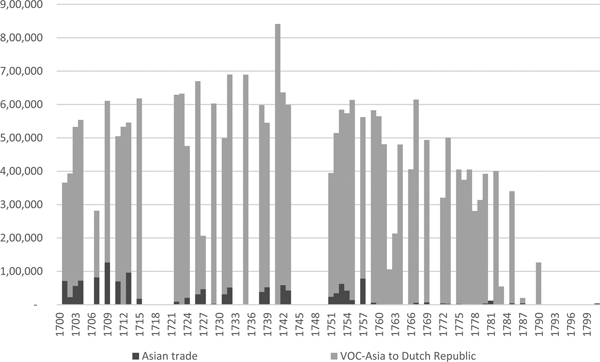
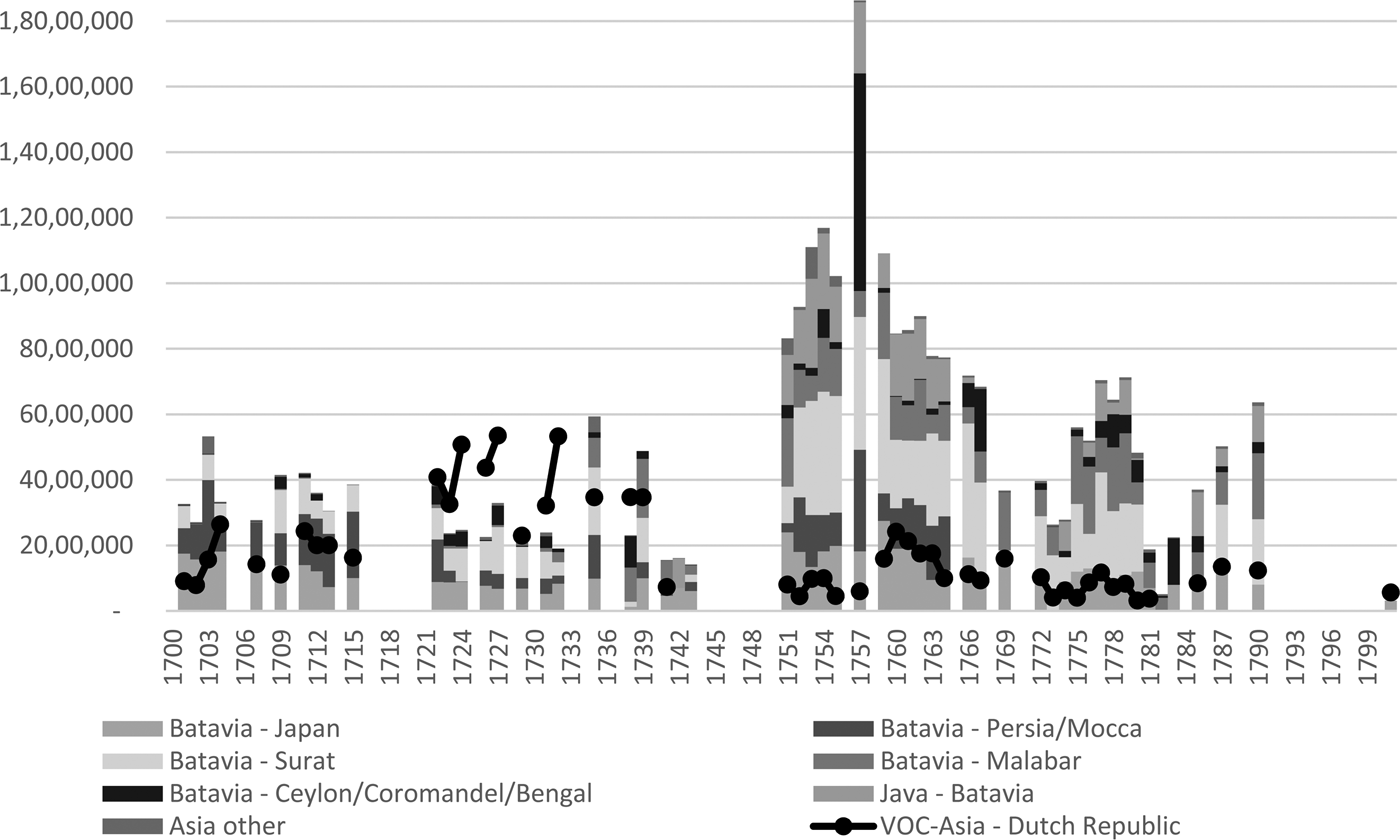
Two observations are important for our understanding of early modern globalization. First, although their rapid expansion over the seventeenth and eighteenth centuries may have been an important factor in the acceleration of connections, it was not only European markets driving the demand for the global commodities pursued by companies like the VOC. The trade within Asia was extremely important for the VOC, and was not negligible, even compared to the bulk trade in spices, coffee, and other goods to Europe. Especially sugar (Figure 2) and textiles, but also pepper and other commodities such as opium, were important trading goods for Asian markets. It is important, therefore, to assess the volume of trade not only along the Europe-Asia axis of global connections, but also through long-distance connections in a truly global sense. Asia was not only a production site, it was also a crucial market for several of the global commodities the VOC traded in. Any assessment of the impact of global trade must therefore account for the activities in Asia's long-distance trade.Footnote 23
VOC transport of sugar on intra-Asian and intercontinental routes (lbs).Footnote 22
Boekhouder-Generaal Batavia (BGB), available at: ; last accessed 5 November 2018.
Second, the VOC was heavily involved in the production of many of its key commodities, directly and indirectly stimulating coercive production regimes. The production of cloves on Ambon, for example, was undertaken by the local inhabitants, but controlled by the VOC through monopoly claims. The population was obliged to sell the entire harvest of cloves to the Company for a fixed price. The VOC prohibited the production of cloves elsewhere and organized annual hongi-tochten (extirpation expeditions) for inspection and extermination.Footnote 24 The thousands of Ambon workers (mainly rowers) recruited for these hongi-tochten were mobilized through corvée labour services. A similar monopoly system was employed for the Banda Islands, but here production was organized around small plantations (perken). The land was owned by the VOC and leased out to European (and later mestizo) owners, who worked with enslaved labourers. The VOC actively sought Europeans, who would be able to “govern slaves”, and also actively sustained the enslaved population, providing slaves for cost price from Timor and elsewhere.Footnote 25
On Ceylon, the VOC profited from a system of corvée labour for the production of cinnamon and various other kinds of work. Different groups of inhabitants were obliged to perform different kinds of labour. The production of cinnamon was organized through the obligation that chialias (caste groups) harvest and deliver cinnamon for the Company. Other groups were obliged to provide military labour (lascarins) or general services, such as transport (koelies).Footnote 26 These were significant obligations. In 1657, for example, it was reported that the “chaleas from the Seven Corlas [Districts] had delivered approximately 670 bhaer cinnamon of 480 pounds [321,600 pounds in total] to the warehouses of Negombo”.Footnote 27 The pressures of corvée labour led time and again to resistance from the local population, with recurrent revolts in the periods 1736–1737, 1744–1747, 1757–1762, and 1783–90.Footnote 28 On 28 April 1730, several heads of the districts around Colombo and Negombo petitioned the VOC concerning the introduction of (obligated) pepper production, because “the people were burdened with many other Companies services”, such as “the planting of Cardamom”, the “planting and maintenance of the coffee trees”, and the “harvesting and transport of cinnamon”.Footnote 29
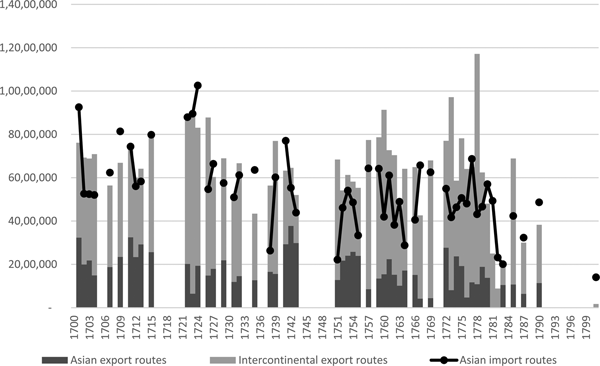
Whereas cinnamon production would rise to over 700,000 pounds per annum (Figure 3), Ceylonese coffee production did not develop quickly under the VOC, with the harvest not exceeding 67,000 pounds in 1740.Footnote 30 Resistance to new crops seems to have played an important part in this. In a revolt among cinnamon peelers in 1736, a group of 1,000 protesters attacked the Company's cow barn, refinery, and warehouses and caused damage “to the Company's coffee-garden”.Footnote 31 Not much later, it was decided no longer to encourage “coffee cultivation” on Ceylon and to try to promote “in the kindest manner” the production of pepper instead by obligating community heads to deliver specific amounts to the Company.Footnote 33 The production of coffee on Java was more successful, with harvests reaching almost six million pounds as early as the mid-1730s, peaking at almost eleven million pounds in the 1790s (Figure 4).Footnote 34 Introduced on Java in the first decade of the eighteenth century, the production of coffee was brought under the monopoly system in 1723, making it illegal to sell coffee produced on Java to anyone other than the VOC, and it became an obligated corvée service in the following years. The VOC's role in coffee production was significant – the residents and regents in these parts of Java fell directly under VOC rule.Footnote 35
VOC transport of cinnamon on intra-Asian and intercontinental routes (lbs).Footnote 32
BGB, available at: ; last accessed 5 November 2018.
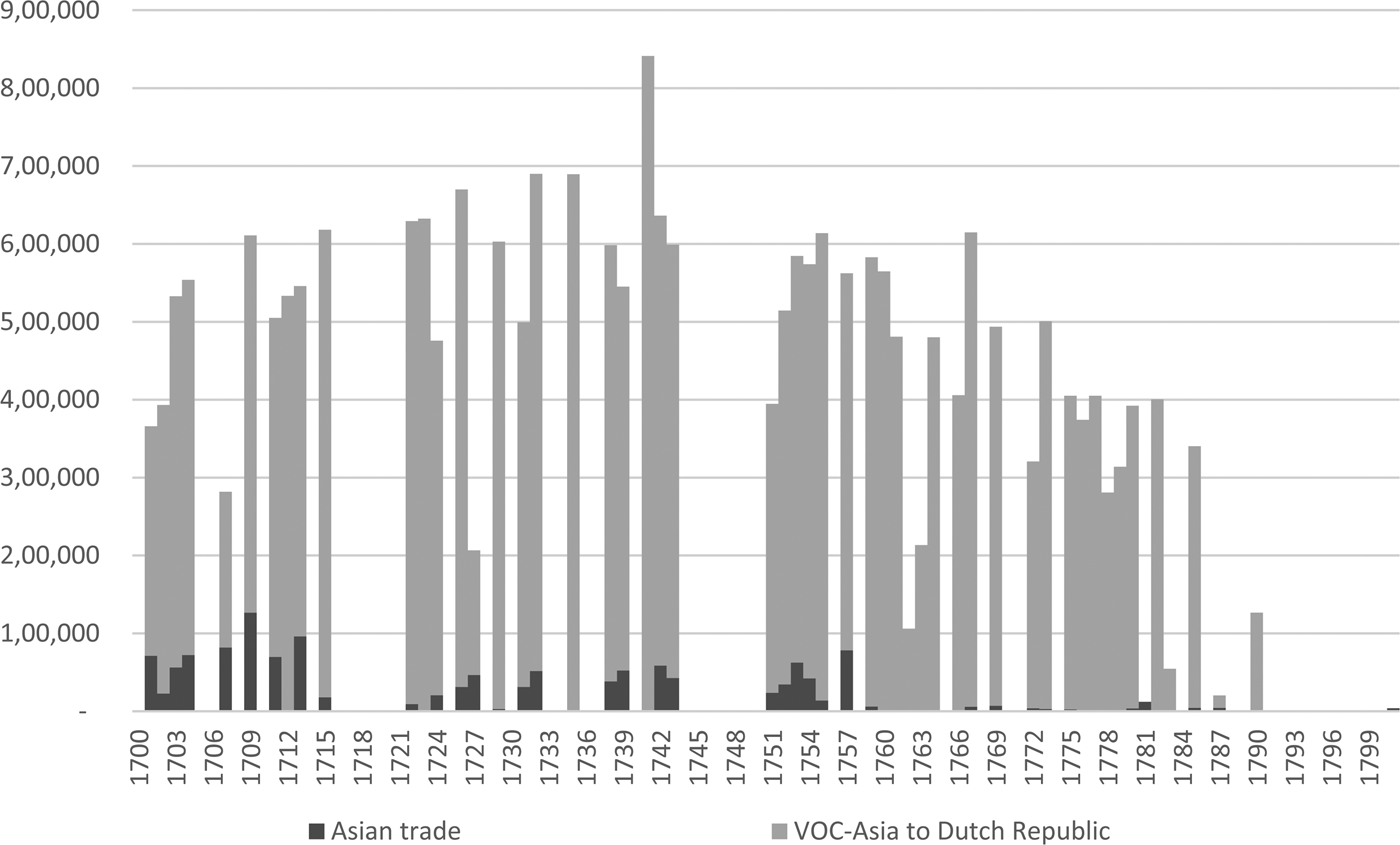
Coffee transport from Dutch East Indies and Dutch West Indies to the Dutch Republic, including deliveries of obligated coffee production in Batavia (lbs).
BGB, available at: ; last accessed 5 November 2018.

The active role of the VOC in the production of its trade commodities becomes clear also from the continuous search to improve and develop the cultivation of different “cash crops” (cultures) in its empire, with the VOC experimenting with coffee and pepper on Ceylon, and with indigo and silk on Java, for instance. Corvée labour played an important role in this search. In this context, the population of the island of Amblau were “exempted from service on Buru on condition that they kept their promise to plant indigo”.Footnote 36 For those inhabitants who went to the neighbouring island of Buru to work in the indigo culture, the Company paid “one stuiver and a pound of rice daily, being the same as what the quaartslieden [corvée labourers] receive in that province”.Footnote 37
In some cases, mainly textile, sugar, and pepper, there were also exceptions to the direct role of the VOC in the production regimes of the main global commodities. In the case of pepper, the VOC tried to increase its influence by putting political pressure on local rulers in places like Bantam and Palembang. In the case of sugar, the VOC actively governed the Batavian ommelanden where its production took place. For both products, coerced labour played an important role. Slaves seem to have been employed in the native pepper fields on Sumatra, but also in the sugar fields, sugar mills, and refineries owned by mainly Chinese and European entrepreneurs in the Batavian ommelanden. As roughly one third of the population of Batavia and the ommelanden consisted of slaves, the VOC actively regulated the institution of slavery as well as the slave trade.Footnote 38
GLOBAL TRADE AND THE DEMAND FOR LABOUR
It was not only the production of early modern global commodities that required large numbers of workers. The transport of the many trade goods from the hinterlands to ports and on to ships was also highly labour intensive, and demanded large amounts of physical labour – carrying, lifting, towing, rowing. This work was not without skill but required organization and planning. Skill was vital in dealing with cargoes during transfers, loading chests into small vessels without damaging the cargo, for example. Even more importantly, loading a ship in the right way was crucial not only for the amount of cargo it could carry, but even more so for the sailing capacities of the ship. In 1717, for example, Gerrit van der Zijden, the equipage master of Batavia, responded to the accusation that two ships had not been loaded well, explaining that had the saltpetre and iron nails not been placed in this manner the ships “would have been barely able to cross the sea”.Footnote 39
An illustrative example of the massive work entailed is provided by historian Lodewijk Wagenaar in his study of the port city of Galle. He describes the laborious task of loading (and unloading) vessels through the examples of two ships, De Drie Papegaaien and Leimuiden, destined for a return voyage to the Dutch Republic. The ships would transport almost 1,200 chests (kisten) of Javanese coffee and 132 chests of Ceylon coffee, each weighing 250 pounds. Another 160,000 pounds of cinnamon was brought on board, distributed over some 1,000 bales. Some 30,000 pounds of tin and over 100,000 pounds of coral stone were packed in bags or chests. The South Indian cloth was bound together in 1,000 packages and the cloth from Surat in some 120 packages, each weighing some 145 pounds. The most important part of the cargo was 336 tons of Malabar and Ceylon pepper, transported in thousands of jute bags. The cargo was distributed over an estimated total of 14,000 bags, bales, packages, and chests.
To an important extent, the geography of hinterlands and ports shaped the work and the demand for labour. Throughout the early modern period, the large seagoing ships needed to be anchored just offshore. This meant that the handling of cargoes was divided into several stages (from warehouse to dock, to small vessel, to ship) and cargoes needed to be rowed or sailed in small vessels from docks, through rivers or even across the surf. In some places, like Batavia and Siam, the VOC located warehouses on islands. In other places, warehouses remained in the city, near loading docks, like the moelje in Galle. This meant that here “the chests needed to be brought downstairs from the first floor of the large storehouse, through the gate and on to the pier, then into one of the small vessels used for loading and unloading, and into the bay to the seagoing ships, in order finally to be stowed in the ships’ hold”.Footnote 40
The volume of the trade flows thus becomes not only an indicator of the thickness of global connections, but also (and especially) of the massive labour demands in the environments of production and transportation. In the second half of the seventeenth century, the VOC shipped around four million pounds of pepper and half a million pounds of nutmeg and cinnamon to the Dutch Republic annually.Footnote 41 In the eighteenth century, the VOC exported products in even larger quantities, for example large amounts of pepper (some six to ten million pounds), sugar (from four to almost twelve million pounds around the middle of the century), and coffee (from four to six million pounds, to over ten million pounds towards the end of the century) (Figures 2–5).
VOC transport of pepper on intra-Asian and intercontinental routes (lbs).Footnote 45
BGB: ; last accessed 5 November 2018.

The workforce employed by the VOC grew along with the expansion of empire and trade. The number of workers directly employed by the Company increased from approximately 15,000 in 1625 to around 42,000 in the late 1680s, peaking at 57,000 in the mid-eighteenth century.Footnote 42 Most of them were either contract labourers, especially European and Asian sailors, soldiers, and artisans, or slaves, bought or hired to work in the service of the Company. These estimates exclude the layer of workers drawn into Company service in other ways, especially populations living in Company-subjected territories, who were obliged to perform corvée services. Good surveys of the populations and obligated corvée labour in the VOC empire are lacking, but some sense of scale can be derived from illustrative examples. In the coastal districts of Ceylon, for example, the VOC ruled over an estimated population of almost 280,000 by the late seventeenth century.Footnote 43 The population under Company authority on the Ambonese islands in the 1690s has been estimated at almost 64,000, all of whom could potentially be drafted for a total of more than two million days of work.Footnote 44
MOBILIZING LABOUR, MANAGING DIVERSITY
The VOC empire revolved around the organization and control of production and transportation in ports and hinterlands. These environments were not isolated, but strongly related. The circulation of goods or the mobility of people, of course, brought about material connections between ports and their urban and rural hinterlands. Much stronger ties came about, however, through the structures of labour mobilization and control, which were organized for production and transport by the VOC in similar and interrelated ways. The ways in which labour was mobilized in specific settings was not merely a function of geography, production relations, or the location of working environments within the larger socio-political (VOC) system. The VOC actively organized the mobilization of labour around the adaptation, creation, and nurturing of the binding mechanisms engrained in contract, slavery, and corvée; in physical and administrative boundaries; and in legal and socio-ethnic divisions. Although the mechanisms of different patterns of labour exploitation, control, and coercion could, at times, result in very similar workers’ experiences, their effectiveness lay especially in their differentiating effects, increasingly segmenting and tying down workforces.
The case of transport labour in ports and their hinterlands in different parts of the VOC empire is illustrative. In the metropole of Batavia, ships were loaded and unloaded by contract workers (both Europeans and Asians), slaves (Asians), and casual wage workers (Asians). The port of Batavia was a bewildering world of work places, mostly accessible by small rowing and sailing vessels, lying along rivers and canals in Batavia or on nearby islands in the Bay of Batavia. The storehouses were located along the city walls, near canals. The ships wharf was located on the island Onrust and the equipage wharf was located along Batavia's Ciliwung river. Several crucial work sites were located on other islands, such as Edam (rope factory) and Kuyper (ships’ repair works). The ocean-going ships of the VOC needed to be anchored some hundred metres offshore as they could not enter the river. The ocean-going ships were loaded and unloaded by small vessels, which could be sailed or rowed from the river to the ships, and back, but needed to be rowed or towed upriver into Batavia.Footnote 46
As Batavia was the main place of arrival for incoming new European personnel, there was always an important reservoir of contract workers, especially sailors, who could be employed in loading and unloading vessels. Being at the end of long intercontinental voyages, however, crews were severely weakened. Ill sailors were immediately placed in the hospital, while soldiers would later be stationed in the military quarters on land rather than remain on board the anchored vessels. In port work, newly arrived sailors were employed alongside Company workers and local workers. They were very visible, not so much owing to their skills as to their behaviour (and inexperience with the climate). Local Chinese port workers distinguished between “orang lama” – old people – and “orang beharu” – new people – who would still have a fairly white skin and would get terribly sunburnt while loading and unloading the ships in Batavia.Footnote 47
From the early seventeenth century onwards, port work in Batavia was done by Company sailors, slaves, and casual local Chinese wage labourers. In 1632, it was decided to employ more slaves and sailors in order to cut back on the cost of hiring Chinese workers.Footnote 48 By the mid-seventeenth century, however, the loading and unloading of vessels was still done by Chinese workers alongside the European sailors and soldiers stationed on the ships before they arrived in Batavia.Footnote 49 With the increasing employment of Indian sailors from the second half of the seventeenth century, however, vital aspects of Batavia port work would become the domain of Indian sailors. In contrast to the local Chinese casual wage workers, these Indian sailors served on multi-annual labour contracts similar to those of European sailors and soldiers. By the mid-eighteenth century, almost 490 “Moorish” (Indian) sailors were registered as employed in Batavia, of whom 272 on the equipage wharf, 105 in rowing and towing vessels upriver (“aan de ploeserscagie”), and thirty-two on one of the flat cargo vessels used in port work (“aan de haijbok”).Footnote 50 The Indian sailors employed in Batavian port work were settled in separate quarters near the ploesercasie (boathouse), just under the castle and along the river.Footnote 51
In the 1780s, over one hundred Indian sailors were still employed in port work in Batavia, but in the second half of the eighteenth century increasing numbers of Chinese casual wage workers were again hired to complement the labour force of Indian, European, and slave workers. In 1765, Batavia's opperequipagemeester (head equipage master) argued for the need to “be assisted with Chinese or [other] natives”, resulting from the “frequent illnesses of the few available sailors”.Footnote 52 Hiring new workers among the local Batavian Chinese community immediately led to complaints about the rising costs of the Chinese hospital, confronted with increasing numbers of injured Chinese port workers going there for treatment and recovery.Footnote 53 In the late 1780s, in the face of difficulties in bringing in Indian sailors from South Asia as well as in recruiting local workers, the VOC began employing Javanese sailors, hired as contract labourers, on the local small vessels used for port work. Owing to high desertion rates among local Javanese workers, the VOC once again resorted to (more expensive) Chinese and Indian sailors.Footnote 54
Almost from the start, the VOC also relied extensively on the employment of slave labour for the loading and unloading of vessels as well as for the transportation of goods within the city. In the early seventeenth century, unloading the rice brought from ships using small vessels to the storehouses on the east side of Batavia was the work of slaves.Footnote 55 The slave labour employed for the port work comprised slaves owned by the Company, but also slaves hired from private slave owners. With this category of “hired slaves”, the boundaries between workers become extremely fluid. The city of Batavia held a very active “coolie” (labour) market of workers performing casual labour, mainly for general work such as (local) transportation of goods or other manual tasks. The word “coolie” here referred to the performance of actual casual wage labour – coolies being hired per day, half day, or even per hour. These casual wage labourers could be both free and enslaved workers, ranging from Mardijkers (local free Asian Christians) or other free inhabitants of Batavia, to slaves being hired out directly by their masters or being sent to hire themselves out to earn “coolie money” (koeliegeld) for their masters. The mobility of these diverse groups of workers was a direct stimulus for the implementation of two types of pass systems directed at both free and enslaved populations. A formal system was imposed by the Company upon Asian sailors and soldiers who left the service of the Company in order to distinguish them from others, especially unfree and Company workers. An informal system was upheld by slave masters, providing written notes to the enslaved when they were sent for work that entailed crossing military posts, or entering or exiting neighbourhoods or parts of the city. Guards would act upon such notices, or the absence of such notices, by permitting slaves to cross or by incarcerating them and sending them back.Footnote 56
Corvée labour played no role in the loading and unloading of vessels in Batavia, but it was crucial for the functioning of the port. Large numbers of corvée labourers were regularly requested from local rulers in order to clear the bed of the sandy Ciliwung river. In 1699, for example, the VOC sent a message to the resident of Cheribon noting that “the Princes here have accepted to provide 500 [subjects] to the Company for some time for the clearing of the sandbanks that have grown before the mouth of the river of this city”. They announced “that a vessel will be sent off today or tomorrow to summon these men” and warned that they should not delay or wait until “current tasks” had been finished.Footnote 57
ADMINISTRATING EXTRACTION, REGULATING MOBILITY
Along the coast of north-east Java, the VOC increasingly came to rely on a mix of corvée and casual wage labour. In Java, the VOC did not demand or administer the corvée labour directly but demanded it from local rulers. At least from the early eighteenth century onwards, the VOC would strike agreements with these rulers on the number of workers to be sent to work for the Company and the compensation to be paid by the VOC to the ruler. In some cases, the ruler would pay modest compensation to workers. Luc Nagtegaal argued that this “forced labour came to be used with increasing frequency” and that “this was not because of any lack of a free labour market”, but because it served as an efficient and extremely cheap way of supplying labour.Footnote 58 Indeed, wage labourers could be recruited along the Javanese coast, which was an area with fairly well developed labour markets from early on.Footnote 59 The Company nevertheless pursued a policy increasing the burden and spread of corvée labour systems in Java.Footnote 60
The obligated corvée labourers were employed in the loading of Company ships, which transported especially timber and rice from the Javanese coast. They were also responsible for the transportation of wood from inland areas, along the rivers to the beaches. An agreement with local rulers around Tagal in 1732 obliged the residents of Tagal to “collect the wood rafts from Wallerij, and bring them to the corner of Brebes, where once they arrived there the people of Brebes were to unload the wood rafts and bring them ashore”. Furthermore, “when any Company ship was in need of being unloaded or loaded, this was to be done also by the joint Tagal residents”.Footnote 61 The daily number of forced corvée workers from Tagal would rise from forty in the 1700s, to sixty in the late 1710s, seventy in the early 1720s, and eighty in the 1730s. In addition, the regents of Pekalongan and Batang would each send some sixty workers daily to Tagal. Similar arrangements were in place along the coast. Nagtegaal states that “in Demak, the inhabitants of eleven villages shared the responsibility for hauling the logs that were floated downstream onto the riverbanks. When a Company ship arrived, these batur tugu or ‘log workers’ would drag the logs into the sea.”Footnote 62 He argued that there was a division between the employment of corvée labour in regions with stronger rulers, such as Surabaya, Tagal, and Demak, and regions with weaker rulers such as Semarang, where the VOC more generally chose to employ wage labour. These casual wage workers engaged in loading and unloading ships in Semarang would be recruited every morning near the alun-alun (the communal square). Only “at certain peaks, such as when rice had to be loaded on the ships, forced labour was used”.Footnote 63 Later in the eighteenth century, the VOC sent Chinese wage workers, recruited in the larger Javanese port cities along with their vessels sailing along the Javanese coast, to work as sjouwers (carriers) and assist in the loading and unloading of the vessels.Footnote 64
In Galle, much of the work in loading and unloading ships was done by the sailors employed by the Company. As return voyages were more heavily manned than intra-Asiatic voyages, sailors must have been more readily available in Galle, which was the second most important port from which return voyages to the Dutch Republic departed. Sailors were, therefore, employed on board the vessels, taking on board the goods and stowing them in the hold. Sailors were also employed on the small vessels sailing between the sea-going vessels and the pier, as well as on the pier itself, for the transport of the goods into the small vessels.Footnote 65
The number of Company workers available was not sufficient, however, for the enormous amounts of goods that needed to be transported from land to shore, and on land, in relatively short periods of time. The VOC therefore employed slaves, who “were used for the loading and unloading of the ships” and were “employed for the work on the fortifications when there was no other work”.Footnote 66 The VOC also employed the local population subjected to obligated labour services. In and around Galle, the obligated labour of the “Mooren” – members of South Asian or Muslim communities – was used for “the loading and unloading of the return and other vessels”. On 30 September 1751, it was noted in Galle that of a “total of 513 heads” there were 213 “dienstbare” [serving] individuals, of whom 72 were “heads who were living in the city of Galle”.Footnote 67 The Moors were not the only group obligated to work in the loading and unloading of ships in Ceylonese VOC settlements. In 1751, the registration of 138 “Christians, heathen Chittijs, as well as Paruas, and freed slaves, both of the Honourable Company as private” referred to the employment of “these people in a fashion similar to the Moors” in the loading of vessels and “other services needed by the Company”.Footnote 68
In other parts of Ceylon, obligated corvée labour was also employed in loading and unloading goods. Early in February 1760, the transport of chalk near Weligama was delayed because many of the fishermen who were obliged to load the chalk and man the vessels as part of their corvée duties had run away to another district. In March 1760, the obligated corvée labour of fishermen from Matara of the Karawa caste were employed in the transport of wood with rafts.Footnote 69 As late as 1788, it was reported that the “koelies” employed at the works of the forts of Trincomalee as part of their obligated labour services were used partly in the warehouses and in loading and unloading vessels.Footnote 70 In the second half of the eighteenth century, large numbers of “koelies” were sent from different districts to Colombo and Galle as part of their corvée service every year.Footnote 71 Following the mobility involved in corvée duties and in response to corvée workers avoiding their duties by “roaming around the country”, the Company issued regulations proclaiming that “all chitties, Moors or paruas, without distinction and nobody excluded, are obliged to carry a pass signed by the supervisor of their residency”, and that they “were obliged to be able to provide this pass to anyone legitimated to ask for it”. These passes indicated the place and the number under which the person was administrated on the oeliammersrolle (the corvée duty roll), ensuring the effectiveness of the corvée labour system.Footnote 72
CONCLUSIONS
The impact of early globalization went well beyond that of market integration or cultural exchange. The case of the VOC provides a clear picture of the drastic effects of labour mobilization on the production and transport of the global commodities involved. Systems of coerced labour were at the core of the Dutch East India Company empire. The VOC interfered in the production of its main trading commodities in different, but at times far-reaching, ways, nurturing more or less directly systems of slave and corvée labour for the production of cloves, mace, nutmeg, cinnamon, and coffee, and playing more indirect roles in coercive labour relations in the production of sugar and pepper. Coercive labour regimes were not restricted to agricultural production sites. Slaves were employed on board small vessels transporting cargo between port and ships, or hinterland and port, in Batavia as well as Galle. These slaves were either owned or hired by the Company or merchants loading its ships. Just as important were the corvée labour systems that were appropriated and intensified by the Dutch in different parts of the Dutch-Asian empire. This type of bonded labour, which is often associated with local systems of agricultural production, was just as easily redirected by the VOC for transportation and port work (Ceylon, Java).
Port work was typically the place where labour regimes employed on land and at sea collided and/or functioned alongside each other. Indeed, throughout the early modern period, much of the work “on water” was done by the sailors of the oceangoing ships that were loaded and unloaded. Other groups of local workers, however, seem to have been crucial in all parts of the processes involved, both for the work on land as well as on the water, right up to the transferring of goods onto the oceangoing ships. The labour relations under which these local workers were employed often reflected the practices in use locally, which were strongly shaped by larger processes of imperial expansion.
Ports especially were places were sailors – mainly working on long-term, strict labour contracts – could be employed alongside casual wage workers as well as coerced workers. Systems of labour exploitation on the waterfronts of the Dutch early modern empire were extremely flexible. Casual wage labour was used for port work and related transportation in economic (and imperial) cores, as well as peripheries. Although urban and more rural markets for casual wage labour were widespread (Batavia; north-east Java), coerced labour was crucial also in urban contexts, partly undermining workers’ bargaining position. In Batavia, Chinese casual wage labourers were replaced (to some extent successfully) with Indian sailors (contract workers), European sailors, and Asian slaves. On the north-east coast of Java, intensifying systems of corvée labour were preferred to the use of casual wage labour.
This global history of production and transportation furthermore indicates that the waterfronts and hinterlands of the ports of the early modern Dutch Empire witnessed a complex interplay between systems of organizing work through labour contracts, casual wage labour markets, enslavement, and corvée labour obligations. Sailors employed on contract labour were employed everywhere – most of them worked on the ships being loaded or unloaded; in some cases, these sailors were not employed onboard ships, but solely for port work. In addition to (specialized, contracted) sailors, large numbers of other, local workers were employed in the loading and unloading of ships and the related transportation work on land and water. Among this large body of workers, coercive labour relations were at the core. Corvée, slave, and (in some cases) casual wage labour were employed alongside each other.
This overview of labour relations in the production and transport stages of the commodity chains of key global commodities of the VOC gives us a picture of a so-called “trading company” that operated more as a coercive state and creative agriculturalist than as a joint-stock merchant enterprise. The Dutch East India Company was an amphibious monster that not only worked from sea to land, but increasingly worked from land to sea. The results hint, firstly, at the need to rethink existing notions of the making of the modern world, the development of capitalism, of “free” labour markets, and of wage labour. It indicates the importance of further scrutinizing how coercive and casual labour systems existed or functioned in “clusters” – alongside and in relation to each other – and how these transformed not linearly and singularly but transitioned from one specific constellation of clusters of labour relations to another. And, secondly, it seems to stress the importance of further questioning early modern global changes with an open understanding of the concepts of imperialism and capitalism, and with new interest in the early transformations set in motion by merchant capital not only on the imperial maritime frontiers, but also in the South and South East Asian and wider global countryside.