


The 2008 Lancet maternal and child nutrition series quantified the global prevalence of maternal undernutrition, predicted its short- and long-term consequences, and estimated the potential for reducing the burden through high and equitable coverage of proven nutrition interventions( Reference Bhutta, Ahmed and Black 1 – Reference Bryce, Coitinho and Darnton-Hill 4 ). Five years after the initial series, a second series re-evaluated the underlying factors of maternal and child malnutrition and examined the growing concern of overweight and obesity for women and their consequences in low- and middle-income countries. Many of these countries are experiencing the double burden of malnutrition: continued undernutrition along with the emerging problem of overweight and obesity( Reference Black, Allen and Bhutta 2 , Reference Black, Victora and Walker 5 – Reference Kamal, Hassan and Alam 7 ).
The burden of maternal undernutrition continues to be high in South Asia and parts of Africa. In South Asia, the prevalence of maternal undernutrition, both acute and chronic, ranges from 10 to 40 %( Reference Osmani and Sen 8 ). BMI is an important indicator of the nutritional status of a population. The proportion of women reported to be underweight in most low- and middle-income countries ranges from 10 to 19 %( Reference Black, Allen and Bhutta 2 , Reference Black, Victora and Walker 5 ). Stunting is a marker of chronic undernutrition( Reference Bogin, Scheffler and Hermanussen 9 , Reference Perkins, Subramanian and Davey Smith 10 ) and is driven by genetic and environmental factors( Reference Silventoinen 11 , Reference de Oliveira and Quintana-Domeque 12 ). The prevalence of maternal underweight status and stunting is high in Bangladesh; about a third of ever-married women are underweight and about half of women have a height of <150 cm( 13 ).
Adequate nutrition is an essential foundation for the health of individuals and populations. Underweight and stunting in women are not only associated with their poor health status but also that of their offspring, as widely evidenced by numerous studies on maternal nutrition and fetal and child health outcomes. Past research has solidified the relationship of maternal undernutrition (low BMI, stunting) with maternal health conditions such as chronic energy deficiency of mothers, caesarean delivery, pre-eclampsia, anaemia, loss of productivity and mental health, as well as adverse pregnancy outcomes( Reference Shafique, Akhter and Stallkamp 14 – Reference Xu, Shatenstein and Luo 19 ). Overweight and obese women are also predisposed to a wide range of health problems( Reference Chopra, Galbraith and Darnton-Hill 20 ), particularly an increased risk of acquiring hypertension, diabetes( Reference Ng, Fleming and Robinson 21 – Reference Ly, Ton and Ngo 23 ), CVD and stroke( Reference Ly, Ton and Ngo 23 ).
Undernutrition in women has been attributed to a multitude of factors, including upstream variables such as community-level WASH (water, sanitation and hygiene) practices( Reference Fenn, Bulti and Nduna 24 , 25 ), food stability status( Reference Harris-Fry, Azad and Kuddus 26 ), as well as household- and individual-level factors such as land ownership, household income and wealth, women’s education level, age at first marriage, age at first delivery, multiparity and short birth interval( Reference Kamal, Hassan and Alam 7 , Reference Zahangir, Hasan and Richardson 22 , Reference Islam, Islam and Bharati 27 – Reference Ahsan, Arifeen and Al-Mamun 31 ).
Robust estimates of levels and identification of determinants of nutritional status of women in resource-limited settings are important for targeting services and initiation of risk-specific interventions. Using data from a population-based cohort of non-pregnant women of childbearing age in a rural district of Bangladesh, we present the levels and correlates of nutritional status of rural Bangladeshi women.
Methods
Study population
The study was conducted in a rural field site in Sylhet District of north-eastern Bangladesh. The field site was established by the Projahnmo Study Group, a research partnership of Johns Hopkins University, USA, with the Bangladesh Ministry of Health and Family Welfare (MOHFW) and a number of Bangladeshi non-governmental organizations (NGO). The site was established in 2001 to conduct clinical–epidemiological studies and intervention trials to contribute to improvements of maternal, newborn and child health( Reference Baqui, El-Arifeen and Darmstadt 32 , Reference Arifeen, Mullany and Shah 33 ). The field site covers a population of about 500 000 with about 60 000 married women of childbearing age, aged 15–49 years, and an annual birth cohort of about 13 000. Most of the population in this agrarian community is poor, with low levels of education, and more than a third of the men and women have no formal schooling.
The site has substantial infrastructure including: a census; a GPS (Global Positioning System)-based map; an updated population database maintained through home visits by locally recruited community health workers every two months; and data on background characteristics of the entire population which are updated periodically. In addition, study-specific data are collected as needed. Each woman has a current identification number for locating the woman and a permanent identification number allowing longitudinal linkages. An updated linked database is maintained to provide the sampling frame for current and future studies and to provide investigators the ability to link data on the same person across different studies for additional secondary analyses or study proposals. The present study was conducted in one part of the study area in a geographically contiguous population of about 100 000.
Data sources
We used the following data sources: (i) the census of the study area initially conducted in 2002 and continually updated. The census database provides information on woman’s age, education, her husband’s education and family size; (ii) data on household socio-economic status collected alongside the census and updated every 3 years. These data were collected using a standardized data collection form. The household socio-economic data include information on materials used to build the house, toilet facility, sources of drinking-water and household possessions; (iii) community (village)-level data including presence of a primary health-care centre operated by either the MOHFW or an NGO, collected along with the socio-economic status data; (iv) data on time required to reach the sub-district hospital from the centre of each village calculated from a GIS (Geographic Information System) database; and (v) pre-pregnancy anthropometric data of married women of reproductive age collected at baseline of a cluster randomized trial designed to evaluate the impact of screening and treatment of pregnant women for bacterial vaginosis and urinary tract infection on preterm birth rate, known as the Maternal Infection Screening and Treatment (MIST) study( Reference Lee, Quaiyum and Mullany 34 ). Anthropometric data included weight and height and were measured by trained community health workers during 2010 and 2011. Weight was measured using a portable UNICEF Redline scale within the nearest 100 g and height was measured within the nearest 0·1 cm using a locally constructed portable height stadiometer. Weighing scales were calibrated daily using known weights.
Data management
We collected anthropometric data of 14 731 women. To restrict the analysis to non-pregnant women of childbearing age, those who were pregnant during anthropometric measurement (n 908) and those below 15 years or over 49 years of age (n 347) were excluded. A further 246 observations with implausible weight and height values (i.e. outliers) were excluded from the analysis. The hot deck method was used to impute values for missing data for the following variables: parity (n 3, 0·02 %); woman’s education (n 488, 3·7 %); husband’s age (n 636, 4·8 %); and household size (n 3, 0·02 %). In this procedure, other observations of the sample that have analogous characteristics were used to generate the missing values( Reference Andridge 35 ). The final analytic file contained 13 230 observations.
We categorized households according to their economic conditions by creating wealth scores based on house construction materials and household assets using principal component analysis and dividing them into quintiles. We calculated BMI from weight and height, which is defined as the ratio of weight in kilograms to the square of height in metres. We created a variable ‘community-level food availability’ as a proxy measure for community-level food shortages by dividing the calendar year into pre-harvest and post-harvest seasons. July–December were considered as pre-harvest with presumed inadequate food availability and January–June were considered as post-harvest with presumed adequate food availability.
Data analysis
Women were categorized according to their BMI and height. They were classified into: underweight (<18·5 kg/m2), normal (18·5–24·9 kg/m2) and overweight/obese (≥25·0 kg/m2) using BMI; and moderate to severely stunted (<150 cm), mildly stunted (150–154 cm) and normal (≥155 cm) using height. Bivariate and multivariate analyses were performed to measure the association between the two outcome variables (BMI, height) and selected individual, household sociodemographic and community-level characteristics. The association between two categorical variables was determined using the χ 2 test. Results with a P value of <0·05 were considered statistically significant. Two multinomial logistic regression models were fitted to identify risk factors for underweight and overweight/obese status using normal weight as reference category and adjusting for other covariates associated significantly at P<0·05 in bivariate analyses. Model 1 examined the association of individual and household factors, and model 2 additionally examined the effect of community variables. The models provided estimated relative risk ratios (RRR) and 95 % CI. Similar multinomial logistic regression models were fitted to examine risk factors for moderate to severe stunting (<150 cm) and mild stunting (150–<155 cm) using normal height (≥155 cm) as reference category. Analyses were conducted in the statistical software package Stata version 14.
We obtained ethical approval for collection of data from the Johns Hopkins University Institutional Review Board and the International Centre for Diarrhoeal Disease Research, Bangladesh (icddr,b) Ethical Review Committee.
Results
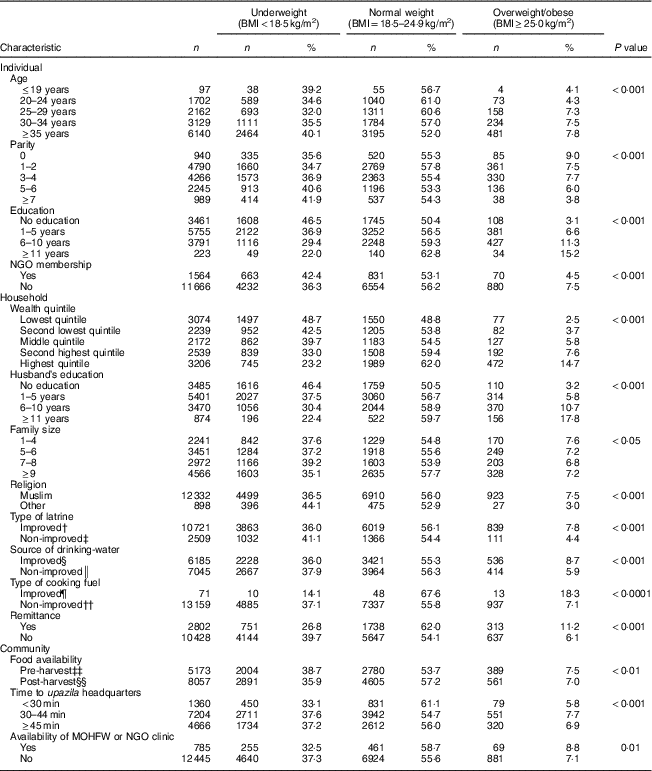
Table 1 shows the frequency distribution including 95 % CI and the mean and sd of weight, height and BMI of the analytic cohort (n 13 230). The mean weight, height and BMI were 44·8 (sd 8·0) kg, 149·9 (sd 5·6) cm and 19·9 (sd 3·3) kg/m2, respectively. The distribution of the study women across height categories shows that 16·5 % of the women were severely stunted (<145 cm), 32·1 % were moderately stunted and another 34·3 % were mildly stunted. The distribution of the women across BMI categories shows that 55·8 % of the women had normal weight, 37·0 % were underweight and 7·2 % were overweight/obese (Table 1).
Distribution of weight, height and BMI among the cohort of non-pregnant women of childbearing age (n 13 230) in rural Bangladesh

The distribution of the three categories of BMI of women was significantly associated with all variables examined including community-level food availability (Table 2). Underweight rate was 38·7 % during the pre-harvest season when food availability is low and 35·9 % in the post-harvest season (P<0·01; Table 2).
Distribution of BMI categories by selected sociodemographic and community characteristics of the cohort of non-pregnant women of childbearing age (n 13 230) in rural Bangladesh
NGO, non-governmental organization; MOHFW, Ministry of Health and Family Welfare.
† Improved latrine included all flushed and pit latrines with slab.
‡ Non-improved latrine included pit latrine without slab, hanging latrine, dry latrine and no latrine/bush/field.
§ Improved sources of drinking-water included water from pipe/tap, tube well and tank.
║ Non-improved sources of drinking-water included water from dug well, spring, rain and river/dam/lake/pond/stream/canal.
¶ Improved cooking fuel included cooking by electric, liquefied petroleum gas and kerosene.
†† Non-improved cooking fuel included cooking by using wood, charcoal, straw/shrubs/grass, agricultural crop and animal dung.
‡‡ Pre-harvest: period between July and December of a year.
§§ Post-harvest: period between January and June of a year.
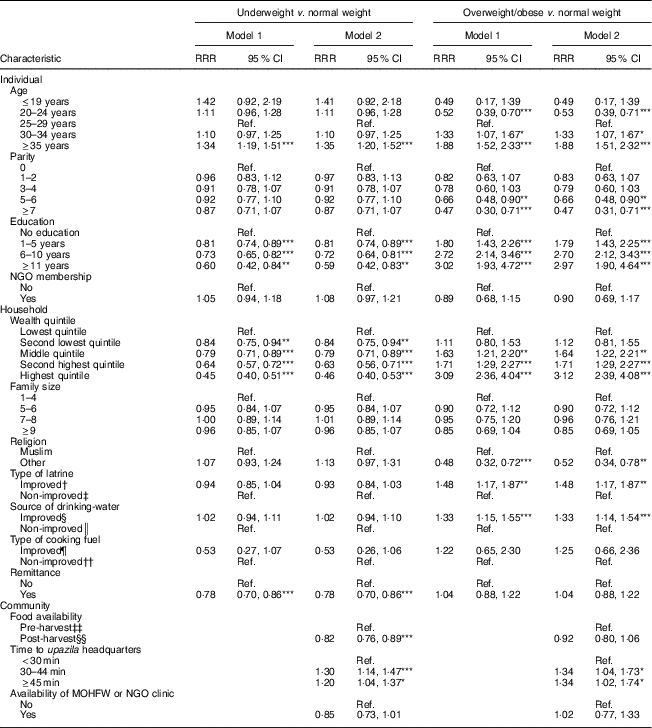
In the multivariable multinomial regression analyses, when groups with underweight and normal weight were compared in model 1, age, women’s education, household socio-economic status and remittance were statistically significantly associated with undernutrition. Compared with women aged 25–29 years, risk of undernutrition was higher in women older than 35 years (RRR=1·34; 95 % CI 1·19, 1·51). The risk of undernutrition was inversely related to women’s education, household wealth and remittance (Table 3). In model 2 of underweight v. normal weight comparison, risk of underweight was significantly lower in the post-harvest season (RRR=0·82; 95 % CI 0·76, 0·89) with presumed higher food availability at the community level. When groups with normal weight and overweight/obesity were compared in model 1, compared with women aged 25–29 years, the risk of overweight was significantly higher in women older than 30 years of age (30–34 years: RRR=1·33; 95 % CI 1·06, 1·67; ≥35 years of age: RRR=1·88; 95 % CI 1·52, 2·33), women who had any education, women who belonged to households with higher wealth, and women having an improved latrine and an improved source of drinking-water (Table 3).
Multinomial logistic regression of selected sociodemographic and community characteristics associated with low and high BMI among the cohort of non-pregnant women of childbearing age (n 13 230) in rural Bangladesh
RRR, relative risk ratio; NGO, non-governmental organization; MOHFW, Ministry of Health and Family Welfare; Ref., reference category.
Model 1 examined the association of individual and household factors; model 2 additionally examined the effect of community variables.
*P<0·05, **P<0·01, ***P<0·001.
† Improved latrine included all flushed and pit latrines with slab.
‡ Non-improved latrine included pit latrine without slab, hanging latrine, dry latrine and no latrine/bush/field.
§ Improved sources of drinking-water included water from pipe/tap, tube well and tank.
║ Non-improved sources of drinking-water included water from dug well, spring, rain and river/dam/lake/pond/stream/canal.
¶ Improved cooking fuel included cooking by electric, liquefied petroleum gas and kerosene.
†† Non-improved cooking fuel included cooking by using wood, charcoal, straw/shrubs/grass, agricultural crop and animal dung.
‡‡ Pre-harvest: period between July and December of a year.
§§ Post-harvest: period between January and June of a year.
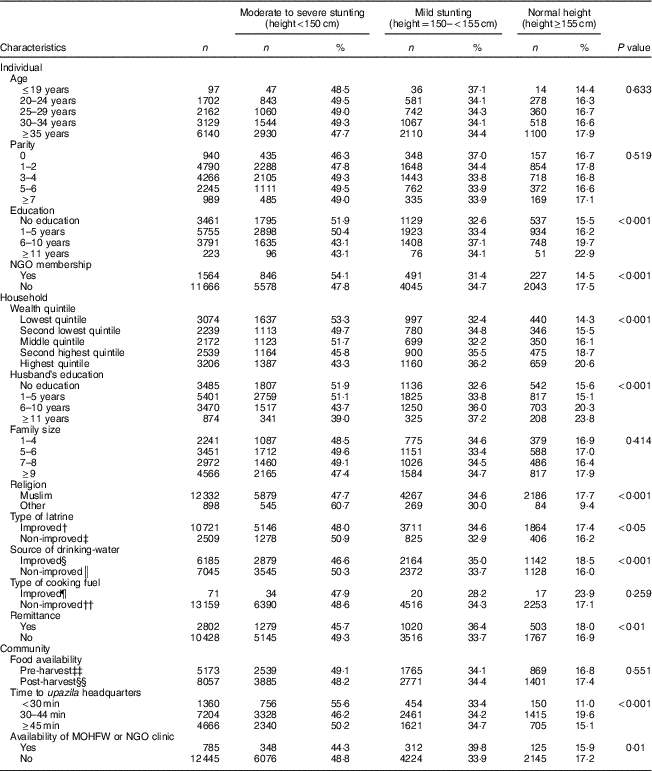
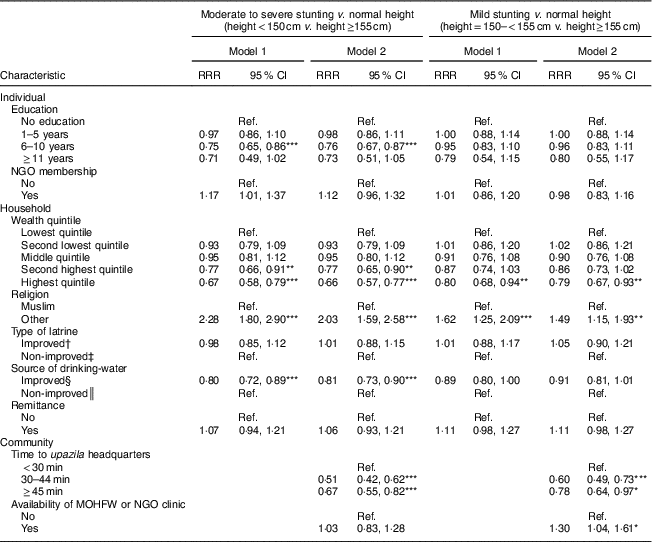
In bivariate analysis, women’s education, husband’s education, religion, NGO membership, household wealth, household’s access to improved toilet, improved drinking-water, remittance, time to go to the sub-district (upazila) headquarters, and availability of an MOHFW or NGO clinic in the village were significantly associated with height categories (Table 4). Women with secondary education were less likely to be moderate to severely stunted in both model 1 (RRR=0·75; 95 % CI 0·65, 0·86) and model 2 (RRR=0·76; 95 % CI 0·67, 0·87). Women who belonged to the highest wealth quintiles were significantly less likely to be moderate to severely stunted in model 1 (RRR=0·67; 95 % CI 0·58, 0·79) and model 2 (RRR=0·66; 95 % CI 0·57, 0·77; Table 5). Women in the second highest wealth quintiles were also significantly less likely to be moderate to severely stunted in model 1 (RRR=0·77; 95 % CI 0·66, 0·91) and model 2 (RRR=0·77; 95 % CI 0·65, 0·90; Table 5). Women other than Muslim were at a significantly higher risk of being moderate to severely stunted as well as mildly stunted in both models (Table 5).
Distribution of height by selected sociodemographic and community characteristics of the cohort of non-pregnant women of childbearing age (n 13 230) in rural Bangladesh
NGO, non-governmental organization; MOHFW, Ministry of Health and Family Welfare.
† Improved latrine included all flushed and pit latrines with slab.
‡ Non-improved latrine included pit latrine without slab, hanging latrine, dry latrine and no latrine/bush/field.
§ Improved sources of drinking-water included water from pipe/tap, tube well and tank.
║ Non-improved sources of drinking-water included water from dug well, spring, rain and river/dam/lake/pond/stream/canal.
¶ Improved cooking fuel included cooking by electric, liquefied petroleum gas and kerosene.
†† Non-improved cooking fuel included cooking by using wood, charcoal, straw/shrubs/grass, agricultural crop and animal dung.
‡‡ Pre-harvest: period between July and December of a year.
§§ Post-harvest: period between January and June of a year.
Multinomial regression of selected sociodemographic and community characteristics associated with height among the cohort of non-pregnant women of childbearing age (n 13 230) in rural Bangladesh
RRR, relative risk ratio; NGO, non-governmental organization; MOHFW, Ministry of Health and Family Welfare; Ref., reference category.
Model 1 examined the association of individual and household factors; model 2 additionally examined the effect of community variables.
*P<0·05, **P<0·01, ***P<0·001.
† Improved latrine included all flushed and pit latrines with slab.
‡ Non-improved latrine included pit latrine without slab, hanging latrine, dry latrine and no latrine/bush/field.
§ Improved sources of drinking-water included water from pipe/tap, tube well and tank.
║ Non-improved sources of drinking-water included water from dug well, spring, rain and river/dam/lake/pond/stream/canal.
Discussion
In this population-based cohort of women of childbearing age, underweight and moderate to severe stunting rates were high at 37·0 and 48·6 %, respectively. About 17 % of the women were severely stunted (height<145 cm) and about another a third were moderately stunted (height=145–<150 cm). About 7 % of the women were overweight or obese.
Underweight status was associated with individual-level factors such as age; older women were experiencing the highest risk of being underweight. Several other individual and household factors including educational attainment of women, household wealth and remittance were inversely associated with underweight status. The associations remained same after addition of community-level factors. Compared with women living in villages within 30 min travel distance from the sub-district headquarters, women residing in villages with a travel time of more than 30 min were more likely to be underweight. The risk of underweight among women of childbearing age was lower in the post-harvest season and in villages with an MOHFW or NGO health clinic. Maternal overweight/obesity was found to be positively associated with individual-level factors including increasing age, higher parity and higher educational attainment; and household-level factors including higher household wealth, improved latrine and improved source of drinking-water. These associations remained unchanged after inclusion of community-level variables. Our findings highlight the importance of household- and community-level factors in addition to individual-level factors on likelihood of women to be underweight as well as overweight/obese.
The present study documented a high prevalence of underweight among women of childbearing age in Bangladesh. This is similar to earlier findings from Bangladesh( Reference Islam, Islam and Bharati 27 , Reference Mohsena, Goto and Mascie-Taylor 36 ) and India( Reference Sengupta, Angeli and Syamala 37 , Reference Bharati, Pal and Bhattacharya 38 ). Using Bangladesh Demographic and Health Survey (BDHS) 2011 data of married Bangladeshi women, Islam et al. ( Reference Islam, Islam and Bharati 27 ) reported an underweight rate of 32·1 %. Using the Indian National Family Health Survey (NFHS) data collected across twenty-one states of India during 1998–1999 and 2005–2006, Sengupta et al. ( Reference Sengupta, Angeli and Syamala 37 ) reported that almost one out of three Indian ever-married women was underweight. A large community-based study in India reported similar findings, where 31·2 % of women were underweight and 12·0 % of women were overweight or obese( Reference Bharati, Pal and Bhattacharya 38 ). However, the underweight rate in Bangladesh as a whole is declining; the proportion of women who are underweight (BMI<18·5 kg/m2) has declined from 34·0 to 19·0 % between 2004 and 2014( 13 ).
Our study also documented a low to moderate prevalence of overweight/obesity, similar to several studies conducted in Bangladesh and India( Reference Mohsena, Goto and Mascie-Taylor 36 , Reference Bharati, Pal and Bhattacharya 38 ). The overweight/obesity rate we observed was lower compared with some other studies conducted in Bangladesh( Reference Kamal, Hassan and Alam 7 , 13 ). BDHS 2014 data revealed that overweight or obesity (BMI≥25·0 kg/m2) among ever-married women aged 15–49 years in Bangladesh has been increasing over the past decade, from 9 % in 2004 to 24 % in 2014( 13 ). The present study was conducted in a rural area in Sylhet Division, a division with the lowest prevalence of overweight (15·2 %) among the eight divisions of Bangladesh( 13 ). The lower rate we observed may be due to differences in population( Reference Zahangir, Hasan and Richardson 22 , Reference Hossain, Bharati and Aik 28 ). It has been shown that in Bangladesh the underweight rate in women is higher among rural than urban residents (21 and 12 %, respectively), whereas urban women are twice more likely to be overweight or obese compared with rural women (36 and 19 %, respectively)( Reference Kamal, Hassan and Alam 7 , 13 ). Therefore, the actual burden of overweight or obesity in Bangladesh is much higher than what we have observed and, seemingly, Bangladesh is in an early stage of experiencing the dual burden of under- and overnutrition. Continuing underweight and increasing burden of overweight/obesity is a common phenomenon of rapidly growing economies( Reference Black, Victora and Walker 5 ) where socio-economic disparities remain high( Reference Kamal, Hassan and Alam 7 ). Underweight and overweight/obesity are a result from an imbalance in the amounts of nutrients and energy required and consumed by the body. Underweight is associated with insufficient intakes of foods and nutrients and burden of infection that can perpetuate underweight status. On the other hand, among the higher socio-economic groups, food consumption is much higher and they also have a sedentary lifestyle, leading to overweight/obesity.
The present study provides evidence that while the underweight rate in Bangladesh has declined over the past 20 years, the rate remains high. The underweight rate reduced from 68·0 % in 1993( Reference Bhuiya and Mostafa 29 ) to 30·1 % in 2011 (using an underweight cut-off of BMI≤18·0 kg/m2) among rural women of reproductive age. Another study conducted in 1994 among urban women living in slums of Bangladesh documented an underweight rate of 59·2 % using the underweight cut-off of BMI≤18·0 kg/m2 ( Reference Baqui, Arifeen and Amin 30 ).
Our findings that socio-economic variables are important determinants of nutritional status are similar to those of earlier studies examining these associations in Bangladesh. Household wealth status( Reference Zahangir, Hasan and Richardson 22 , Reference Islam, Islam and Bharati 27 , Reference Hossain, Bharati and Aik 28 ) and higher educational attainment( Reference Kamal, Hassan and Alam 7 , Reference Islam, Islam and Bharati 27 – Reference Bhuiya and Mostafa 29 , Reference Ahsan, Arifeen and Al-Mamun 31 , Reference Mohsena, Goto and Mascie-Taylor 36 , Reference Rengma, Sen and Mondal 39 , Reference Ahmed, Adams and Chowdhury 40 ) are well-established determinants of nutritional status. Like ours, earlier studies also reported that women in households with low socio-economic status experience a greater risk of underweight status and those in households with high socio-economic status experience a higher risk of being overweight/obese( Reference Islam, Islam and Bharati 27 , Reference Subramanian and Smith 41 ). The association suggests that women from poorer households may not afford sufficient foods to maintain their nutrition or experience higher rates of infections. On the other hand, no or low levels of education may be associated with lack of awareness about a relatively less expensive balanced diet that may result in undernutrition in women( Reference Harris-Fry, Azad and Kuddus 26 ). Our findings agree that both wealth and literacy are related to food security and dietary diversity( Reference Harris-Fry, Azad and Kuddus 26 ) of a household and thereby attribute to maternal underweight and overweight/obesity.
Food availability during the post-harvest period was found to be significantly associated with lower underweight rate. This is consistent with the finding of an earlier study on food insecurity in relation to nutritional status in Bangladesh( Reference Harris-Fry, Azad and Kuddus 26 ). Non-Muslim women in Bangladesh are less likely to be overweight or obese, a finding also observed earlier( Reference Hossain, Bharati and Aik 28 ). A possible explanation for this could relate to social capital and limited resource access for religious minorities( Reference Hossain, Bharati and Aik 28 , Reference Bhuiya and Mostafa 29 ). Concordant with results from other studies, household remittance was found to be significantly associated with lower risk of underweight, suggesting a relationship between remittance, social and economic capital, and improvements to family health status( Reference Lu 42 – Reference Anton 44 ).
The increased likelihood of being underweight and decreased risk of being overweight/obese among younger women may be partly because of their awareness of being slim, their higher physical activity and their dietary habits. Berkel et al. discussed that individual behaviours, such as physical activity and good dietary practices, contribute to weight loss( Reference Berkel, Poston and Reeves 45 ). On the other hand, the likelihood of being underweight among the oldest women may be because of a cohort effect, as nutritional status has improved over time. The likelihood of being overweight/obese among the older group of women may partly be attributed to less physical activity( Reference Berkel, Poston and Reeves 45 ).
NGO membership was associated with higher likelihood of being underweight in unadjusted analysis, which disappeared when accounting for other covariates. This crude association could be due to a selection bias, because NGO often target women from very-low-income households presumably with lower nutritional status. A study of longitudinal nature might elucidate if active participation in NGO programmes can contribute to a decrease of underweight status of women over time. Another study found NGO presence to be related to better nutritional status, although more so in children than mothers( Reference Linnemayr, Alderman and Ka 46 ). Longer travel time to upazila headquarters was found to be significantly associated with underweight of women of childbearing age; there was a slight significant increase in likelihood of underweight for those who lived 31–44 min away rather than over 45 min away; however, the difference in the RRR is rather small and thus is not of practical significance.
Our findings of lower risk of stunting in women with secondary education and higher household wealth are consistent with the literature including from Bangladesh( Reference Bogin, Scheffler and Hermanussen 9 – 13 , Reference Fudvoye and Parent 47 ). Adult height is determined by genetic predispositions and environmental factors( Reference Silventoinen 11 ). In addition to genetic influence, income, social status, infection and nutrition were shown to affect body height in the European general population( Reference Fudvoye and Parent 47 ). Environmental factors are likely to be more important determinants of height in low- and middle-income countries since environmental stress including food availability and infections is much higher in such countries compared with high-income countries( Reference Perkins, Subramanian and Davey Smith 10 , Reference Silventoinen 11 ). Perkins et al. explained in their review that short adult stature in low- and middle-income countries is mainly because of the cumulative net impact of nutrition associated with disease and environmental conditions, such as socio-economic status( Reference Perkins, Subramanian and Davey Smith 10 ).
Use of improved drinking-water was associated with lower risk of stunting. Improved water may be a proxy for less exposure to enteric pathogens. Watanabe and Petri discussed that environmental enteropathy is a chronic disease caused by continuous exposure to faecally contaminated food and water that does not produce symptoms but contributes to poor physical development( 48 ).
The present study has several limitations. Inferences should be limited due to the cross-sectional nature of the study. As data on height, weight and other covariates were collected simultaneously, understanding a causal relationship of the factors on nutritional status is not possible due to a lack of temporality. Additionally, reverse causational associations are possible between factors such as nutrition status and educational attainment, NGO membership and wealth levels. We were not able to examine several risk factors such as household food security, micronutrient intakes, physical activity, media exposure and decision-making ability, which are important components for nutritional assessment of women of childbearing age. However, we created a proxy variable for food availability at the community level and demonstrated a lower rate of underweight status in the post-harvest season. Also, the study did not include information on, for example, anaemia, infection (malaria, dengue and HIV) and management of illness, which might be important for nutritional assessment of women.
The strength of the study is that it was large, population-based and restricted to non-pregnant women. We examined different levels of variables that may affect malnutrition among women. Future studies could address issues of temporality with a longitudinal design and incorporate additional relevant variables that were not included herein.
Bangladesh has experienced a substantial reduction of underweight status in women of childbearing age; however, the underweight rate still remains high, with an emergence of overweight/obesity among women. Maternal underweight contributes to fetal growth restriction, which increases the risk of stillbirth and neonatal death. Overweight/obesity in women is associated with increased risk of chronic diseases, such as hypertension, diabetes and CVD, as well as with complications during pregnancy, labour and postpartum, such as gestational diabetes mellitus, pre-eclampsia, maternal death and haemorrhage( Reference Van Lieshout, Taylor and Boyle 49 ). To combat the underweight, overweight/obesity and stunting of women of childbearing age, Bangladesh requires multidimensional intervention programmes based on identified individual-, household- and community-level sociodemographic and economic risk factors that affect maternal nutritional status. A Bangladesh health, population and nutrition sector programme already has the following interventions to promote women’s nutrition: counselling on adequate nutrition during antenatal and postnatal contacts; and provision of iron–folic acid supplements to pregnant women. Bangladesh may consider replacing iron–folic acid by multiple-micronutrient supplements to all pregnant women, provision of calcium supplementation to those at risk of low intake and provision of balanced energy–protein supplementation to pregnant women as needed, as recommended in the second Lancet series on maternal and child nutrition( Reference Bhutta, Das and Rizvi 50 ). Regular systematic monitoring and surveillance of the social trajectory of nutritional status is essential to develop an appropriate strategy to reduce the dual burden of malnutrition in Bangladesh.
Acknowledgements
Acknowledgements: The authors acknowledge the contribution of the study women and the dedication of the Projahnmo field team. Projahnmo is a research partnership of Johns Hopkins University, the Bangladesh MOHFW and other Bangladeshi institutions including icddr,b and Shimantik. Financial support: This study was supported by the Eunice Kennedy Shriver National Institute of Child Health and Human Development (NICHD; grant number R01 HD066156-02). The NICHD had no role in the design, data collection, analysis or interpretation; or manuscript preparation and submission. Conflict of interest: The authors declare that they have no competing interests. Authorship: R.K. and A.H.B. conceived and designed the analysis. A.H.B., A.S.C.C.L., M.A.Q. and L.C.M. designed and implemented the parent project. L.C.M. and N.B. developed and maintained the database. R.K. and M.R. conducted data analyses. R.K. drafted the first version of the manuscript. All authors read, provided technical input and approved the final manuscript. Ethics of human subject participation: Ethical approval for the collection of data was obtained from the Johns Hopkins University Institutional Review Board and the icddr,b Ethical Review Committee.



