





Poor diet quality is implicated in the rapid global increase in non-communicable diseases, posing detrimental risk to long-term physical and mental health(Reference Wirt and Collins1). Cooking skills (physical or mechanical skills used in the production of a meal, e.g. peeling and boiling(Reference Lavelle, Mcgowan and Hollywood2)) and food skills (knowledge and skills to be able to select and prepare food, e.g. shopping and meal planning(Reference Lavelle, Mcgowan and Hollywood2)) have been associated with better diet quality(Reference McGowan, Pot and Stephen3), reducing convenience food consumption(Reference van der Horst, Brunner and Siegrist4) and increasing self-preparation(Reference Wolfson, Leung and Richardson5). Food skills may additionally facilitate intention to reduce household food waste(Reference Graham-Rowe, Jessop and Sparks6), minimising its associated negative socioeconomic and environmental impacts, which are argued to be largely avoidable(7).
Early acquisition of cooking skills may confer long-term beneficial effects on cooking behaviours, diet quality and food waste reduction into adulthood(Reference Lavelle, Spence and Hollywood8). However, evidence suggests transference of cooking skills from parents to children is declining(Reference Lavelle, Benson and Hollywood9). Time scarcity, both real and perceived, is a barrier to children’s involvement in food preparation(Reference Lavelle, Benson and Hollywood9), as are concerns that children lack the necessary fine motor skills to prepare food safely(Reference Lavelle, Benson and Hollywood9). Additionally, a general population-level decline in adequate cooking skills for food preparation(Reference Lang and Caraher10) may further inhibit social modelling. Given the sociodemographic variation in cooking skills and attitudes(Reference Wolfson, Leung and Richardson5,Reference Worsley, Wang and Yeatman11) , particularly the association between lower educational attainment and lower cooking and food skills confidence(Reference McGowan, Pot and Stephen3), this may disproportionately affect children in areas of deprivation.
Consequently, the importance of prevention strategies which target health and nutrition literacy to improve diet-related outcomes is recognised(Reference Nelson, Corbin and Nickols-Richardson12). A wide range of culinary education interventions have been developed to target children, adults and families, varying in setting, approach, duration and dose(Reference Reicks, Kocher and Reeder13–Reference Lavelle16). Overall, interventions have demonstrated improvements in nutrition-related behaviours (e.g. fruit and vegetable consumption), attitudes (e.g. willingness to try new foods) and psychosocial outcomes (e.g. cooking self-efficacy)(Reference Ng, Kaur and Koo14–Reference Lavelle16). Recent frameworks for developing culinary education programmes also integrate components of food waste education(Reference Asher, Jakstas and Lavelle17), and evidence suggests targeting food management skills (e.g. storage, meal planning) may be effective for minimising household food waste(Reference Schanes, Dobernig and Gözet18).
However, culinary education interventions have been criticised for weaknesses in methodological design(Reference Reicks, Kocher and Reeder13,Reference Hersch, Perdue and Ambroz15,Reference Lavelle16) , a lack of theoretical underpinning and opacity about how any applied theories inform programme design(Reference Reicks, Kocher and Reeder13,Reference Ng, Kaur and Koo14,Reference Lavelle16,Reference Hollywood, Surgenor and Reicks19) . For example, programmes targeting children often lack due consideration of the age-appropriateness of their content(Reference Lavelle16,Reference Asher, Jakstas and Lavelle17) . Heterogeneity in study design has also limited the identification of which programme characteristics contribute to observed effects(Reference Reicks, Kocher and Reeder13,Reference Hersch, Perdue and Ambroz15,Reference Lavelle16) . Furthermore, specific techniques for changing target behaviours are rarely reported(Reference Hollywood, Surgenor and Reicks19), for example referencing established behaviour change technique (BCT) taxonomies(Reference Michie, Richardson and Johnston20,Reference Michie, Ashford and Sniehotta21) . This prevents the characterisation of the active components of an intervention and limits the understanding of ‘what works’ in different populations and contexts(Reference Michie, Johnston and Francis22). Validated measures for influences on cooking behaviours, such as cooking skills, food skills, and perceived cooking confidence, have been developed to act as a proxy for cooking (which lacks validated measures)(Reference Asher, Jakstas and Wolfson23); however, these are infrequently utilised(Reference Reicks, Kocher and Reeder13,Reference Hersch, Perdue and Ambroz15) . A lack of process evaluation has limited the production of evidence to justify ongoing support for interventions and investigate their scalability, replicability and areas for refinement(Reference Asher, Jakstas and Wolfson23). Thorough evaluation is critical to investigate contextual factors impacting delivery and observed outcomes(Reference Saunders, Evans and Joshi24). Only recently has a specific framework for systematically developing and evaluating culinary interventions been developed, namely the ‘Cook-EdTM’ model(Reference Asher, Jakstas and Lavelle17,Reference Asher, Jakstas and Wolfson23) , which sets out an eight-stage, end-to-end co-design process for culinary education programmes aimed at improving skills for healthy food preparation. The Cook-EdTM model consists of three phases: ‘planning’ (stages 1–3), which defines the cooking-related need, considers target behaviour change factors in programme design and assesses capacity for delivery; ‘development and implementation’ (stages 4–5), which develops and tests programme content, defines evaluation measures, and assesses programme feasibility; and, finally, ‘evaluation’ of process, impact and outcome measures using validated tools (stages 6–8)(Reference Asher, Jakstas and Wolfson23). Consultative engagement with key stakeholders is encouraged throughout(Reference Asher, Jakstas and Wolfson23). Cook-EdTM components may also be pragmatically applied to existing programmes to inform their iterative refinement.
‘Let’s Get Cooking’ (LGC) is a culinary education intervention, which was established by the Children’s Food Trust (formerly the School Food Trust) in 2007. LGC was designed to be delivered through a cookery club format, operating a ‘train the trainer’ model whereby LGC club leaders are centrally trained and provided resources and funding to establish clubs in their various contexts. LGC initially established a ‘school and community-based’ programme for children and their families in England, prioritising the most disadvantaged areas. By 2012, the ‘school and community-based’ programme was established nationally with c.5000 cookery clubs, c.3000 of which were newly established and c.2000 of which were existing clubs integrated into the LGC network(25). By September 2017, over three million people had benefitted from the ‘school and community-based’ programme(26), at which time ownership of LGC transferred to the British Dietetic Association (BDA) following the closure of the Children’s Food Trust. Under the BDA’s leadership, LGC’s ‘school and community-based’ programme continues, with the aim of equipping children and families with cooking and food skills to prepare healthy food and improve dietary intake; however, the number of clubs and programme reach has been in decline. In 2015, an additional LGC programme for adults focusing on ‘food waste reduction’ was established in partnership with the Merseyside Recycling and Waste Authority. Several public evaluations of LGC’s ‘school and community-based’ programme were published under the Children’s Food Trust with varying scopes and sub-population focuses(25–28). However, the last of these evaluations was conducted in 2017, since which time the ‘school and community-based’ programme has evolved. No formal evaluation of LGC’s ‘food waste reduction’ programme has been conducted to date. Furthermore, the design of the LGC intervention was not underpinned by specific theoretical frameworks; thus, the active components which characterise this intervention are currently unknown.
As outlined by the Cook-EdTM model, understanding the current content and delivery of LGC and the findings and robustness of previous evaluations is essential to facilitate programme refinement(Reference Asher, Jakstas and Wolfson23). Therefore, the aim of this study is to understand initial assessments of LGC’s effectiveness, the content of resources provided for programme delivery, and the experiences and perceptions of LGC club leaders. The objectives of this study are as follows: (1) to synthesise and critically appraise previously published evaluations of LGC’s ‘school and community-based programme’; (2) deconstruct LGC programme resources and assess their alignment to theoretical frameworks; and (3) conduct interviews to understand LGC club leaders’ perspectives on the programme and training. These reflect a pragmatic application of principles outlined in the ‘planning’ stages of the Cook-EdTM model to inform the refinement of LGC’s programme and evaluation design. This includes reviewing existing evaluations to identify evidence gaps and methodological limitations (Objective 1, Cook-EdTM stage 1): understanding the content of programme resources to identify theoretical and practical factors unaddressed by previous evaluations (Objective 2, Cook-EdTM stage 2) and consulting key stakeholders to assess delivery capacity, triangulate and contextualise findings (Objective 3, Cook-EdTM stage 3)(Reference Asher, Jakstas and Wolfson23).
Methods
The three components of this mixed methods study have been specifically chosen to understand the existing evidence base, current content and delivery of LGC, respectively, to inform its future refinement, reflecting the ‘planning’ principles described in Cook-EdTM model stages 1–3(Reference Asher, Jakstas and Wolfson23). The three components include the following: (1) synthesis and critical appraisal of previous LGC evaluations (Objective 1, Cook-EdTM stage 1), (2) deconstruction of LGC resources (Objective 2, Cook-EdTM stage 2) and (3) club leaders’ perspectives on LGC (Objective 3, Cook-EdTM stage 3).
Synthesis and critical appraisal of previous LGC evaluations
An online search of material in the public domain identified a total of three previous evaluations of LGC’s ‘school and community-based’ programme with publicly available reports. This included a five-year ‘Evaluation of the Let’s Get Cooking Programme’ conducted from the programme’s inception in 2007–2012(25,28) , a 2016 evaluation of the programme focused on ‘looked after children’(27) and a two-year evaluation of ‘school-based clubs’ conducted from 2015 to 2017(26). No publicly available evaluations of LGC’s ‘food waste reduction’ programme were identified.
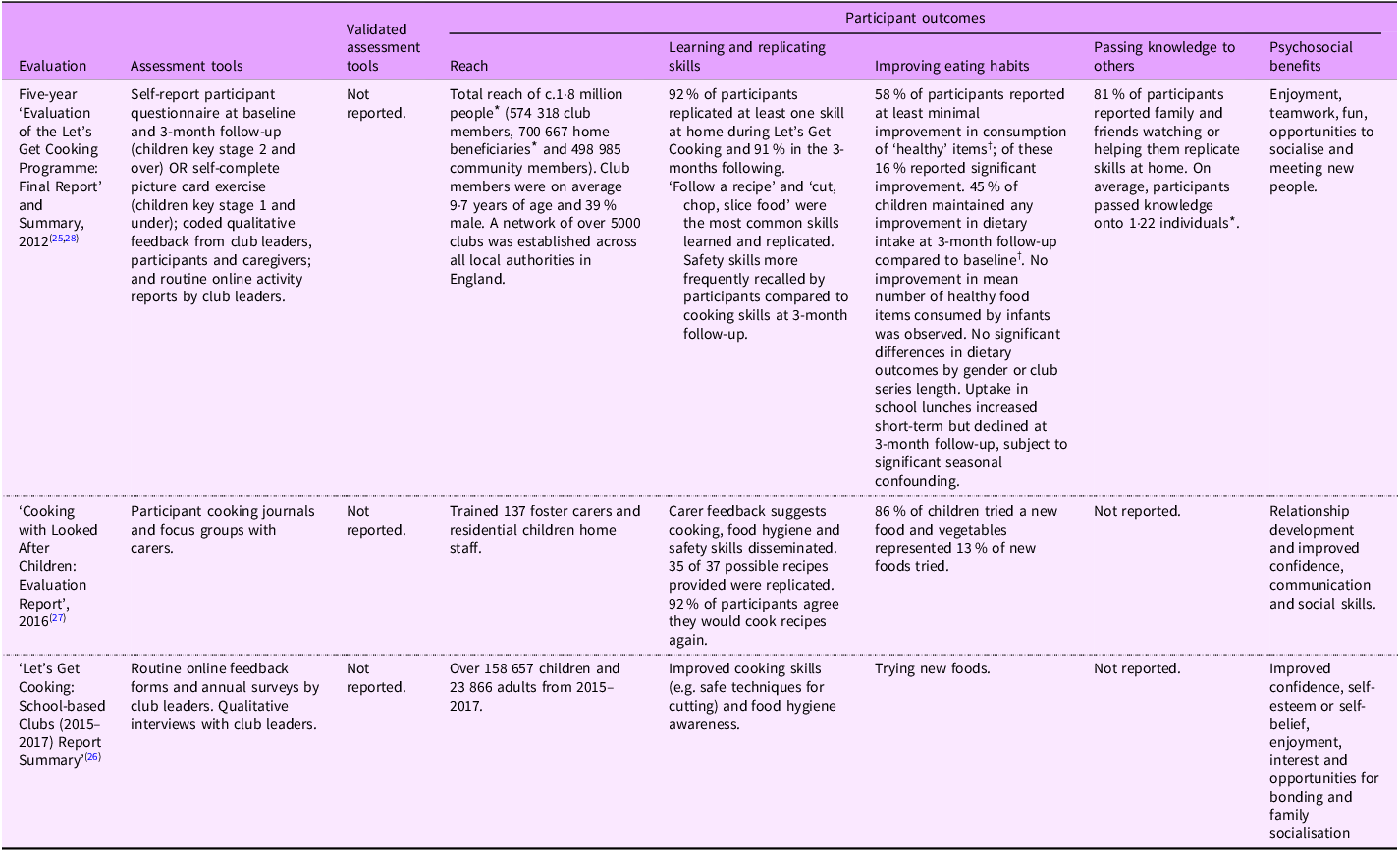
Evaluation reports were read several times for full immersion. A data extraction tool was developed to facilitate the relevant information extraction. Quantitative and qualitative data on the following topics were extracted from each evaluation for synthesis: programme aims and design, evaluation methodologies, facilitator feedback, programme cost and participant outcomes. Participant outcomes were summarised by programme and are presented in Table 1; a specific theoretical framework was not applied. Extracted data on evaluation methodologies was systematically compared to the elements of Saunders et al.’s process evaluation framework(Reference Saunders, Evans and Joshi24): fidelity, dose delivered, dose received, reach, recruitment and context. A table of included and excluded components in each evaluation was compiled. Due to variation in reported detail, data from the most comprehensive report (five-year ‘Evaluation of the Let’s Get Cooking Programme’ 2012(25,28) ) were synthesised first, and data from the remaining reports in ‘school-based clubs’(26) and ‘looked after children’(27) were compared for pertinent similarities and differences. Results were summarised descriptively (Section 3.1). Full details of evaluation methodologies, programme aims, and design are given in online Supplementary Material A Tables A.1/A.2.
Assessment tools and synthesis of reported outcomes in previously published Let’s Get Cooking evaluations

Table 1. Long description
The initial five-year evaluation used self-report participant questionnaires (children key stage 2 and over) or self-complete picture card exercise (children key stage 1 and under), qualitative feedback (club leaders, participants, caregivers); and online activity reports. Total reach: 1.8 million people (average age 9.7 years). Over 90% of participants replicated skills at home (81% involving family/friends), 58% reported improvement in ‘healthy’ item consumption. Evaluations in ‘looked after children’ used participant cooking journal and focus groups with carers. 137 carers/staff were trained. Majority of provided recipes were replicated, 86% of children tried new foods. Evaluation in ‘schools-based clubs’ used online feedback forms, surveys and interview with club leaders. Total read: c.159k children, c.24k adults. Reported improvement in cooking skills, hygiene awareness and trying new foods. Psychosocial benefits reported in all evaluations.
* The number of home beneficiaries was estimated using the assumption that each club member passed skills onto an additional 1·22 people on average.
† Improvement defined according to a healthy score increase: ≥ 1 point = minimal; ≥ 10 points = significant; healthy score = number of healthy items – number of unhealthy items, as indicated through a self-complete questionnaire (see online Supplementary Material A Table A.1).
Deconstruction of LGC resources
Resources used in the training and delivery of LGC’s ‘school and community-based’ and ‘food waste reduction’ programmes were provided by the BDA. Due to the volume of resources used across the duration of the LGC programmes and project time constraints, a sample deemed representative of the overall suite of resources was selected by the LGC programme lead at the BDA. Resources were categorised by type including ‘training’ resources for BDA staff, ‘logistics’ resources for club leaders (e.g. safety checklists), resources for ‘session delivery’ and ‘educational’ material distributed to participants. Several ‘session delivery’ and ‘educational’ resources also included printed recipes.
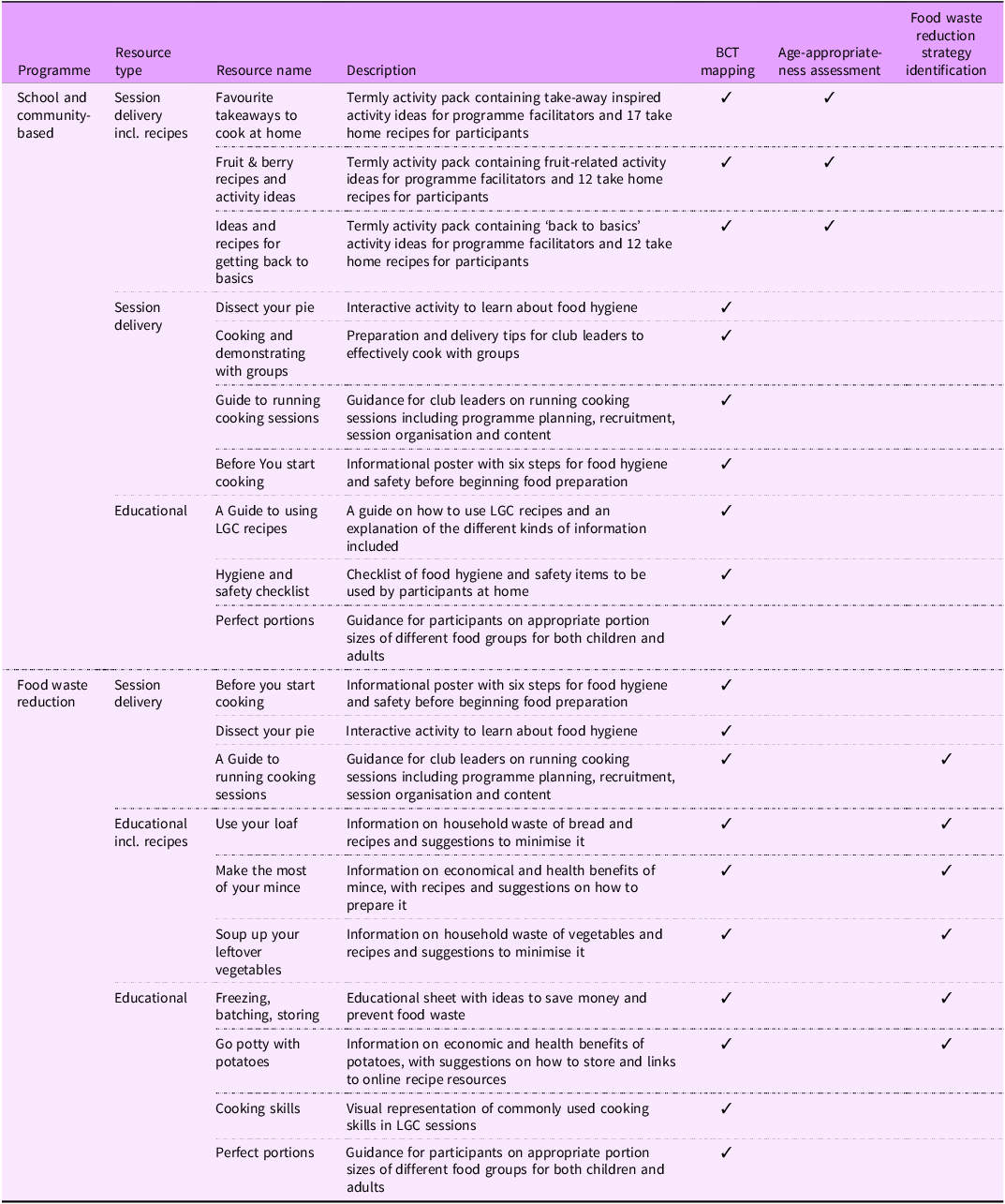
Three deconstruction processes were conducted: coding of BCT, assessment of age-appropriateness (‘school and community-based’ programme resources only) and identification of food waste reduction strategies (‘food waste reduction’ programme resources only). Full details of deconstructed resources are provided in Table 2. A second researcher independently coded 11 % of resources, which was deemed a sufficient proportion to assess inter-rater reliability. Overall, inter-rater relatability for included codes and frequency of occurrence of codes was 95 % and 77 %, respectively, as measured by percentage agreement (details in online Supplementary Material B). Coding discrepancies were discussed, and agreement reached.
Deconstruction processes conducted by resource
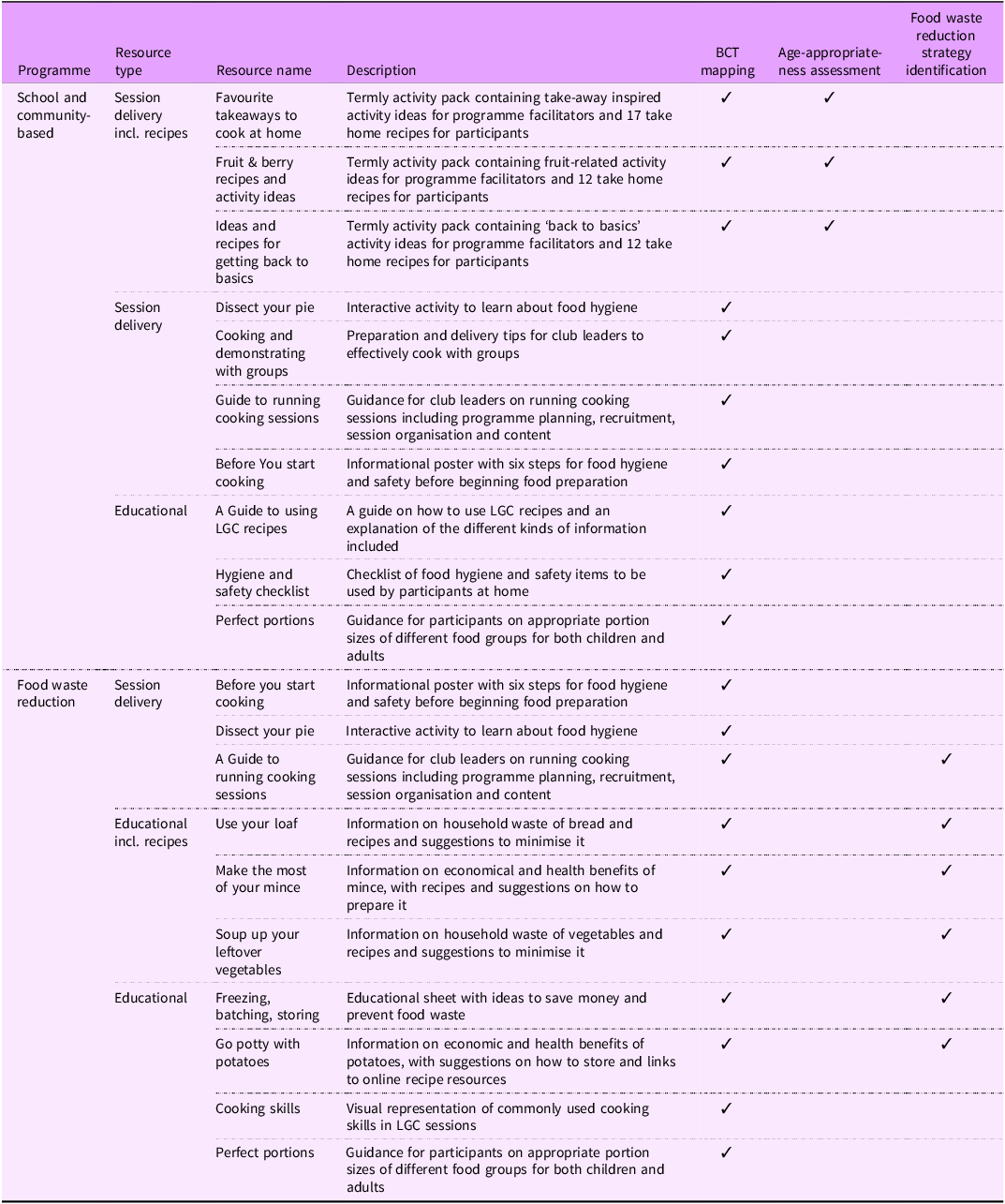
Table 2. Long description
The table shows the resource type by programme and the deconstruction processes undertaken for each resource. A total of 10 resources were deconstructed from the ‘school and community-based programme’ including for ‘session delivery’ (N=4), ‘session delivery including recipes’ (N=3) and ‘educational’ (N=3) resources. All ‘school and community-based’ programme resources underwent BCT mapping and ‘session delivery including recipes’ resources underwent age-appropriateness assessment. A total of 10 resources were deconstructed from the ‘food waste reduction’ programme including ‘session delivery’ (N=3), ‘educational’ (N=4) and ‘educational including recipes’ (N=3) resources. All ‘food waste reduction’ programme resources underwent BCT mapping and 6 resources underwent food waste reduction strategy indentification (1 ‘session delivery’, 2 ‘educational’ and 3 ‘educational including recipes’).
BCT, behaviour change techniques; LGC, Let’s Get Cooking.
BCT coding
LGC does not have a theoretical underpinning and LGC resources did not explicitly report BCT. Consequently, a deductive coding approach was applied to identify BCT using Michie et al.’s ‘Coventry, Aberdeen & London – Refined’ (CALO-RE) taxonomy(Reference Michie, Ashford and Sniehotta21) (see online Supplementary Material C Table C.1 for a complete list of BCT definitions). BCT were coded where identifiable targeting cooking as a behaviour. The total occurrence and percentage of resources each BCT occurred in was analysed by programme. Examples of how identified BCT targeted cooking as a behaviour were recorded to provide evidence of their application in LGC resources. The CALO-RE taxonomy was selected over alternative taxonomies, such as the Behaviour Change Technique Taxonomy v1(Reference Michie, Richardson and Johnston20), for its specific relevance to interventions targeting behaviours to improve diet quality(Reference Michie, Ashford and Sniehotta21,Reference Asher, Jakstas and Wolfson23) and to enable direct comparison to literature(Reference Hollywood, Surgenor and Reicks19).
Age-appropriateness assessment
A random sample (51 %, n 21) of recipes included in ‘session delivery’ resources was selected for deconstruction using a random number generator. The distribution of selected recipes from relevant ‘session delivery’ resources and different cuisines/recipe types was checked to ensure a representative sample. Recipes were deductively coded using Dean et al.’s guidelines(Reference Dean, O’Kane and Issartel29) to identify all included cooking skills and their corresponding minimum age requirements. Only cooking skills in the ‘method’ section of each recipe were coded as these were deemed essential to its preparation. Where an individual recipe contained variations of a single cooking skill requiring significantly different techniques, these were coded as separate occurrences, for example, using ‘weighing scales’ and ‘measuring spoons’ or ‘finely slicing’ and ‘chopping’ represents two occurrences of ‘weighing and measuring’ and ‘cutting, chopping and slicing’ respectively. A subjective assessment of additional factors affecting a recipe’s age-appropriateness, such as use of appropriate language, font size and clear page layouts, was also assessed in line with elements discussed by Dean et al. (Reference Dean, O’Kane and Issartel29).
Food waste reduction strategy identification
‘Food waste reduction’ programme resources were inductively coded to create a comprehensive codebook of food waste reduction strategies (e.g. repurposing leftovers), which were checked for overlap and grouped according to the ‘household food-related practices and lifestyle’ categories as described by Chia et al. (Reference Chia, Yap and Wu30) (e.g. cooking and leftover reuse; etc.) to facilitate comparison to literature. Resources were then re-read and the frequency of occurrence of each identified food waste reduction strategy in the codebook recorded.
Club leaders’ perspectives on LGC
Researchers adopted a realist ontology(Reference Palermo, Reidlinger and Rees31) and essentialist epistemology. A qualitative descriptive design was conducted using a pragmatic approach to inform strengths and recommendations relating to the LGC programme and training, with themes identified at the semantic level(Reference Braun and Clarke32).
Convenience sampling was used. Recruitment advertisements were shared by the BDA via email; all subsequent contact proceeded directly with participants via email and the BDA had no knowledge of participating individuals. Eligible participants were LGC club leaders who had completed training and run a programme at any time since 2017. Exclusion criteria included being under 18 years old. Participants were provided an information sheet and gave written consent. Participants were aware they were not obliged to participate and could withdraw up to the date of report submission for final review without reason or consequence. No relationship was established with participants prior to study commencement nor was personal researcher characteristics disclosed. Participants were aware of the study aims as related to interviews. Interviews were conducted by a female researcher (GB), with an MChem qualification, completing an MSc in Nutrition and 2–3 years’ experience interviewing subject experts in corporate consultancy. Interviews were conducted one-on-one, online via Microsoft Teams in July 2024. Interviews lasted between 23–44 min. No repeat interviews were conducted. A semi-structured format with guided open-ended questions was used (see online Supplementary Material D for interview schedule). No pilot testing was conducted due to time constraints. Participants received an honorarium £25 voucher for their time. See online Supplementary Material E Table E.1 for a completed ‘Consolidated Criteria for Reporting Qualitative Research’ (COREQ) checklist.
Interviews were audio recorded, transcribed verbatim and checked for accuracy against field notes. Participants weren’t contacted for comment on transcripts or study findings. Data were coded by a single researcher, and an inductive thematic analysis was conducted in line with Braun and Clarke(Reference Braun and Clarke32) using NVivo 14 software (QSR International Pty Ltd, Australia). Data within codes were checked for coherence and codes grouped were into themes. Themes were checked for overlap to ensure ‘clear and identifiable distinctions’(Reference Braun and Clarke32). Illustrative quotes were extracted from data where appropriate. A collection of additional extracts mapped to each theme can be found in online Supplementary Material F.
Results
Synthesis and critical appraisal of previous LGC evaluations
Previous evaluations of LGC’s ‘school and community-based’ programme suggest it effectively disseminated cooking skills and modestly increased healthy food consumption (Table 1). Facilitator feedback collected via post-training feedback forms suggest training was highly rated by club leaders, with between 96–100 % rating training as ‘excellent’ or ‘very good’ across evaluations.
The extent to which methodological detail was provided varied considerably between evaluation reports, limiting comparability. The initial five-year evaluation final report provided information pertaining to study design, for example sampling, method, questionnaire development and testing, fieldwork, data collection and statistical analysis. In contrast, the evaluation reports of ‘school-based clubs’ and ‘looked after children’ provided less methodological information. Although sample sizes were given in the ‘school-based clubs’ report, information on sampling methodologies was lacking; for example, the sampling methodology of club leaders to participate in qualitative interviews was not provided. Additionally, it is unclear exactly what types of data were collected and analysed to produce presented results, such as how data from cooking journals in ‘looked after children’ were used to determine the proportion of new foods tried which were vegetables.
It is unclear whether methods of participant outcome measurement were validated in studied populations across reports. The initial five-year evaluation of LGC describes testing the self-report questionnaire for participants in a sample of clubs to determine ease of use and, however, does not provide information on the validity of this method in the target population. Within the ‘school-based clubs’ report, club leader feedback was used to assess the impact of LGC on participants and the validity of this method to assess presented outcomes such as ‘improving literacy and numeracy skills’ is unknown.
Regarding process evaluation, only the initial five-year evaluation of LGC analysed the impact of contextual factors such as gender, club series length and seasonality (e.g. variable school meal uptake) on observed outcomes and acknowledged that participating schools may be relatively more engaged with the school food agenda. However, the impact of contextual and intervention-specific differences between new and associate clubs (e.g. differing funding and training structures) on programme outcomes and implementation was not presented.
No evaluation explicitly defined acceptable programme delivery in line with an underpinning theory or presented an assessment of programme ‘fidelity’(Reference Saunders, Evans and Joshi24). Although the ‘school-based clubs’ and ‘looked after children’ evaluations provided details of training content and delivery, no underlying theoretical assumption was referenced.
In terms of ‘dose delivered’, the five-year evaluation described series length as varying ‘considerably’ and however did not outline the intended number of sessions per series or a timeframe for their delivery. Evaluations in ‘school-based clubs’ and ‘looked after children’ did specify a ‘dose’; however, adherence was not reported. No evaluation reported the extent to which content was covered or resources used as intended within sessions. Furthermore, the impact of socioeconomic, environmental or resource-related factors on programme implementation was not commonly discussed and only the ‘school-based clubs’ evaluation reported feedback on challenges in programme delivery, namely lack of funding, facilities, cooking equipment and time. Only the five-year evaluation provided information on programme cost, which was £34 per club member and £11 per beneficiary in 2012.
All evaluations included some assessment of the ‘dose received’ by participants and defined expected engagement behaviours. However, only the five-year and ‘looked after children’ evaluations directly measured these. All evaluations measured overall programme’s ‘reach’. However, recruitment methodologies, proportional reach in priority populations (e.g. schools with high free school meal eligibility) and barriers to participation were not reported.
Deconstruction of LGC resources
Twenty resources were identified as appropriate to be coded for BCT, three for age-appropriateness assessment and six for food waste reduction strategy identification (Table 2).
BCT Coding
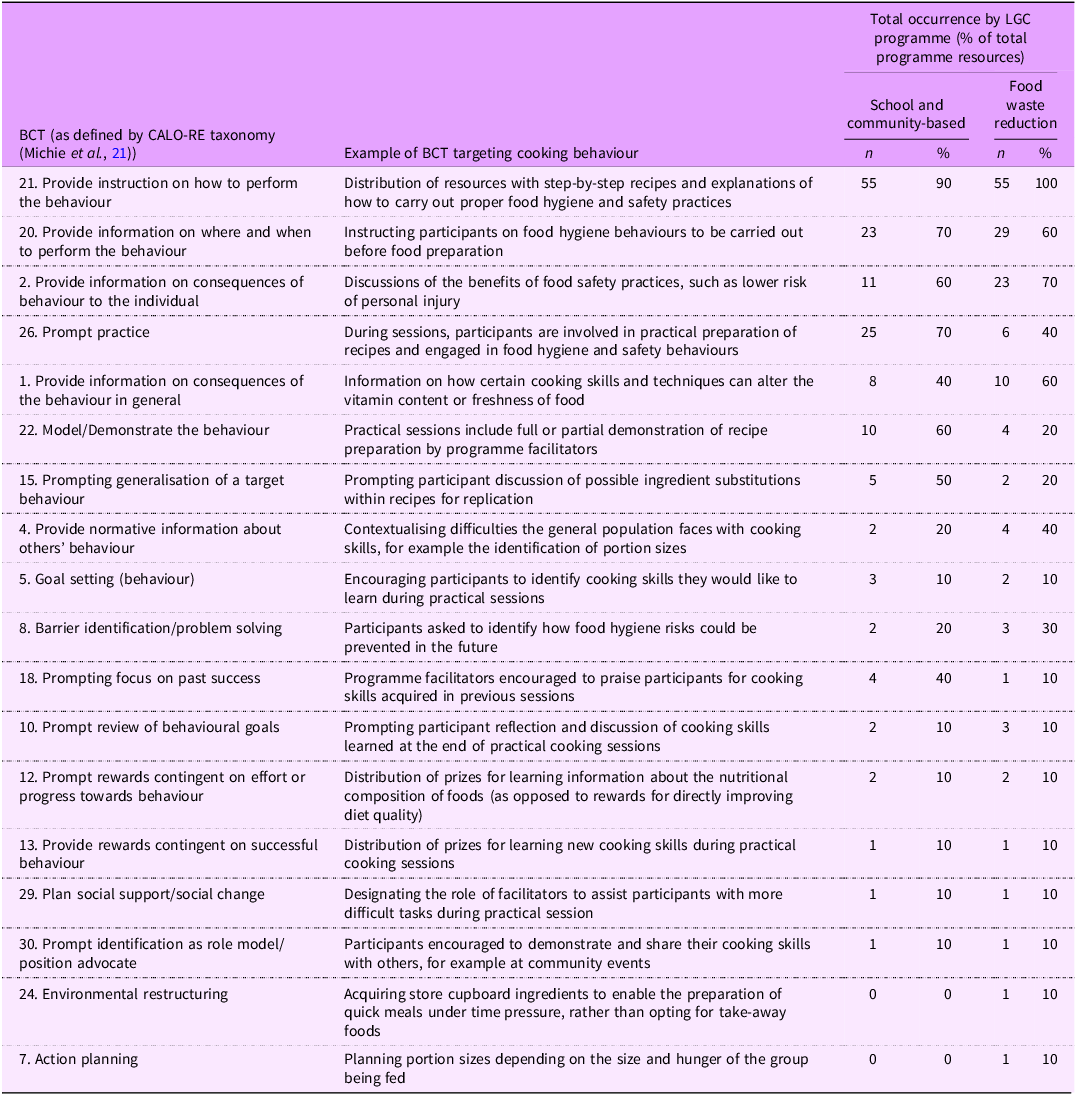
Overall, 18 of 40 BCT in the CALO-RE taxonomy(Reference Michie, Ashford and Sniehotta21) were identified across resources (Table 3), with between 1 and 14 BCT present per resource. Most unidentified BCT (e.g. BCT#31–40) were not applicable to practical interventions, however others were (e.g. BCT#9 set graded tasks).
Total occurrence by BCT and programme
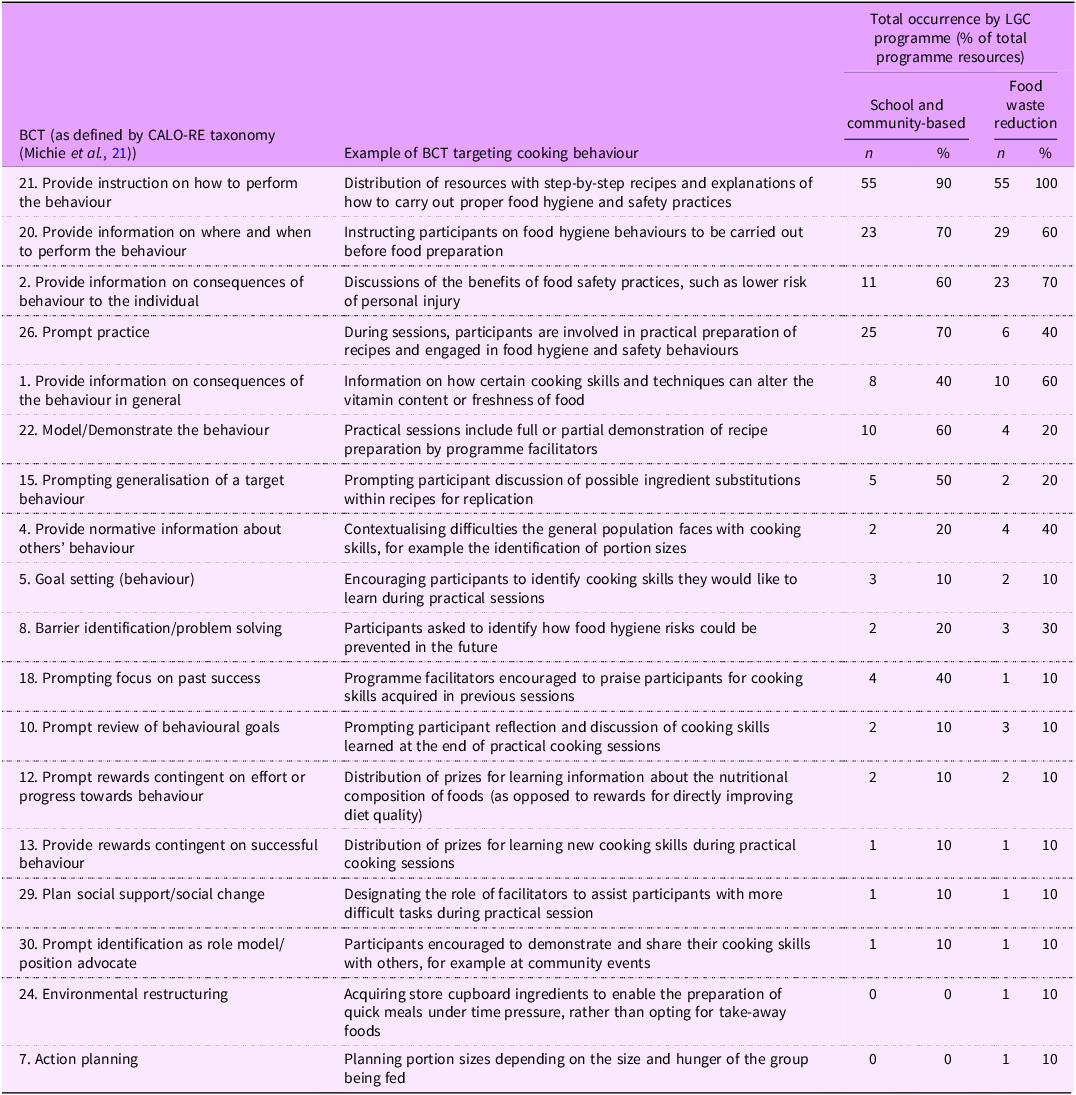
Table 3. Long description
The table shows the 18 BCTs which were identified across LGC programme resources. In order of most to least frequently occuring these, with total % occurrence in resources, were: BCT#21 Provide instructions on how to perform the behaviour (95%), BCT#20 provide information on where and when to perform the behaviour (65%), BCT#2 give information on individual consequences (65%), BCT#26 prompt practice (55%), BCT#1 give information on general consequences (50%), BCT#22 model/demonstrate behaviour (40%), BCT#15 prompt generalisation of behaviour (35%), BCT#4 provide normative information (30%), BCT#5 goal setting (10%), BCT#8 barrier identification/problem solving (25%), BCT#18 prompt focus on past success (25%), BCT#10 prompt goal review (10%), BCT#12 prompt reward of effort/progress (10%), BCT#13 prompt reward of success (10%), BCT#29 plan social support/change (10%), BCT#30 prompt identification as role model (10%), BCT#24 environmentla restructuring (5%), BCT#7 action planning (5%)
LGC, Let’s Get Cooking; BCT, behaviour change techniques.
The ‘school and community-based’ and ‘food waste reduction’ programmes shared four of their five most frequently occurring BCT, namely BCT#21 provide instructions on how to perform the behaviour, BCT#20 provide instruction on where and when to perform the behaviour, BCT#2 provide information on consequences of the behaviour to the individual and BCT#26 prompt practice. Instructions on how (BCT#21) and when (BCT#20) to perform cooking behaviours occurred in 95 % and 65 % of resources, respectively. Across both programmes, information on the individual consequences of cooking behaviours (BCT#2) primarily referenced self-preparation being ‘quicker, cheaper and healthier’ than convenience alternatives. Resources frequently prompted practice (BCT#26), reflecting LGC’s ‘hands-on’ approach and encouragement of behaviour replication at home. ‘School and community-based’ resources frequently included facilitator demonstration (BCT#22 model/demonstrate the behaviour). Over half of ‘food waste reduction’ resources referenced the negative environmental impacts of food waste (BCT#1 provide information on the consequences of the behaviour in general).
Age-appropriateness Assessment
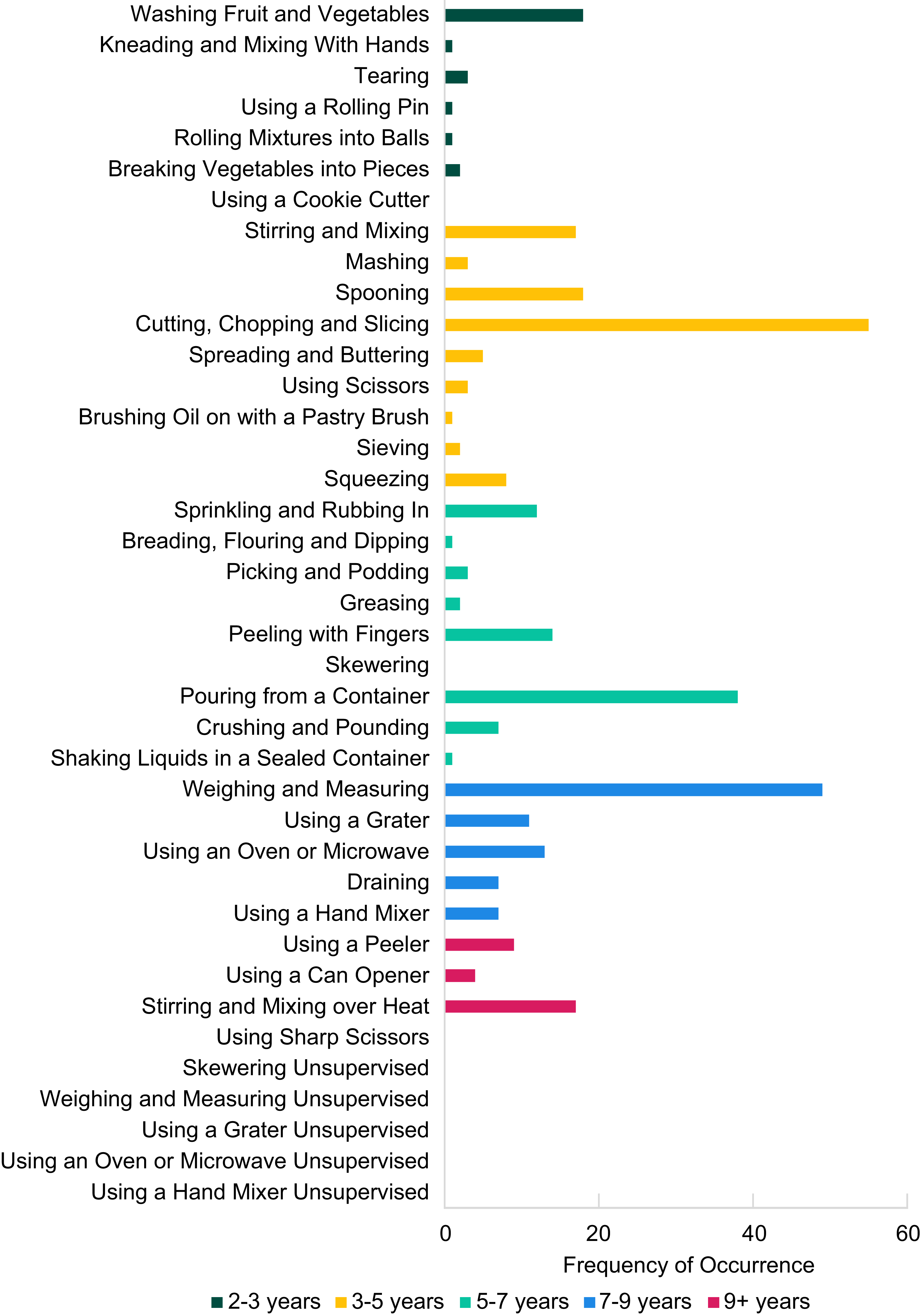
Individual recipes included between 7–17 separate cooking skills. As illustrated by Figure 1, the most commonly occurring cooking skills were ‘cutting, chopping and slicing’ (3–5 years), ‘weighing and measuring ingredients’ (7–9 years) and ‘pouring from a container’ (5–7 years).
Total occurrence in deconstructed recipes by cooking skill.

Figure 1. Long description
Cooking skills are grouped by appropriate age group: 2-3 years (washing fruit/vegetables, kneading/mixing with hands, tearing, using a rolling pin, rolling mixtures into balls, breaking vegetables into pieces, using a cooking cutter), 3-5 years (stirring/mixing, mashing, spooning, cutting chopping and slicing, spreading/buttering, using scissors, brushing oil on with a pastry brush, sieving, squeezing), 5-7 years (sprinkling and rubing in, breading flouring and dipping, picking and podding, greasing, peelign with fingers, skewering, pouring from a container, crusing and pounding, shaking liquids in a sealed container), 7-9 years (weighing and measuring, using a grater, using an oven or microwave, draining, using a hand mixer) and 9+ years (using a peeler, using a can opener, stirring and mixing over heat, using sharp scissors, unsupervised skewering, weighing, measuring grating, using an oven or microwave unsupervised, using a hand mixer unsupervised)
Cooking skills appropriate for 3–5-year-olds occurred most frequently, representing 34 % of identified skills, followed by 7–9 years (26 %), 5–7 years (23 %), 9+ years (9 %) and 2–3 years (8 %). No recipe specified an appropriate age-range and at most, 50 % of cooking skills in each recipe originated within a single age group. About one-fifth (19 %) of recipes did not contain cooking skills suitable for the youngest (2–3 years) or oldest (9+ years) age groups.
Layout was consistent across recipes, outlining ingredients, equipment and method. However, some included sections relating to food resource management, such as how to ‘prepare now, eat later’, may not be appropriate for children. Language used within methods was in some cases complex or lacked step-by-step instructions for performing certain cooking skills (e.g. deseeding a chilli) or when and how to use specific equipment (e.g. measuring spoons v. measuring jugs). Furthermore, font was small, and methods in deconstructed recipes were not accompanied by visual aids such as pictures.
Food Waste Reduction Strategy Identification
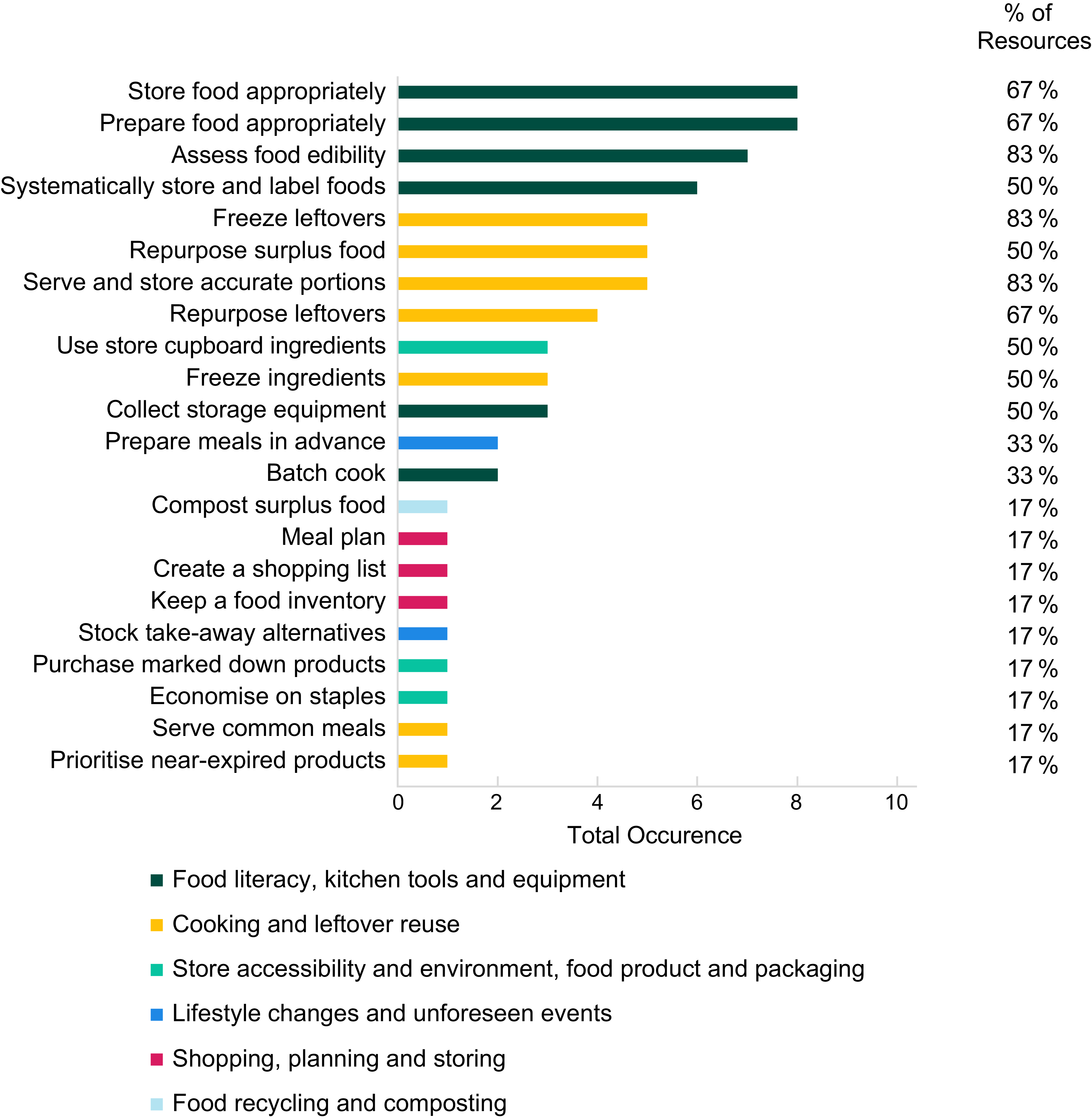
The most frequent food waste reduction strategies identified related to ‘food literacy, kitchen tools and equipment’ and ‘cooking and leftover reuse’ (Figure 2), occurring at least twice per resource. Strategies encompassed the food preparation and storage life cycle; most resources (67–83 %) included at least one strategy for assessing edibility (e.g. visual assessment or best before dates) or preparing and storing food appropriately to prolong shelf life, facilitated, for example, by keeping empty ‘plastic tubs’ for storing leftovers. Most resources (67–83 %) contained information on repurposing leftovers or surplus foods, for example by preparing mince from leftover cooked meat. Half of resources discussed serving and storing accurate portions when preparing or freezing food. One resource discussed prioritising the use of near-expired products.
Total and percentage occurrence in deconstructed resources by food waste prevention strategy.
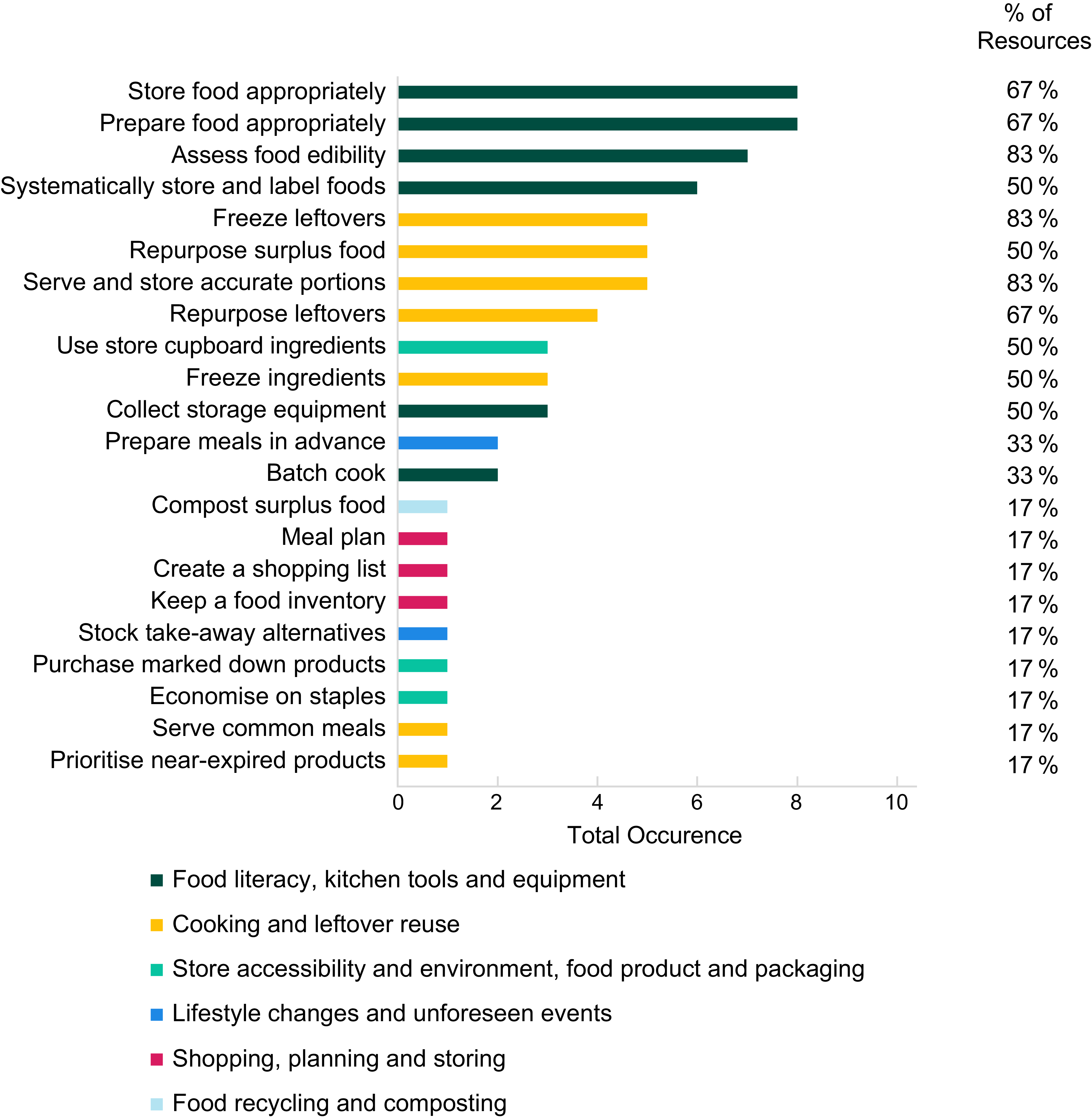
Figure 2. Long description
The total and percentage occurrence of food waste reduction strategies in 6 deconstructed resources were: store food appropriately (N=8,67%), prepare food appropriately (N=8,67%), assess food edibility (N=7,83%), systematically store and label foods (N=6,50%), freeze leftovers (N=5,83%), repurpose surplus food (N=5,50%), serve and store accurate portions (N=5,83%), repurpose leftovers (N=4,67%), use store cupboard ingredients (N=3,50%), freeze ingredients (N=3,50%), collect storage equipment (N=3,50%), prepare meals in advance (N=2,33%), batch cook (N=2,33%), compost surplus food (N=1,17%), meal plan (N=1,17%), create a shopping list (N=1,17%), keep a food inventory (N=1,17%), stock take-away alternatives (N=1,17%), purchase marked down products (N=1,17%), economise on staples (N=1,17%), serve common meals (N=1,17%), prioritise near-expired products (N=1,17%).
Strategies within ‘store accessibility and environment, food product and packaging’ primarily discussed using long-life store cupboard ingredients to ‘bulk out’ recipes which use surplus foods. Only 10 % of strategies identified related to ‘lifestyle changes and unforeseen events’, ‘shopping, planning and storing’ or ‘food recycling and composting’.
Club leaders’ perspectives on LGC
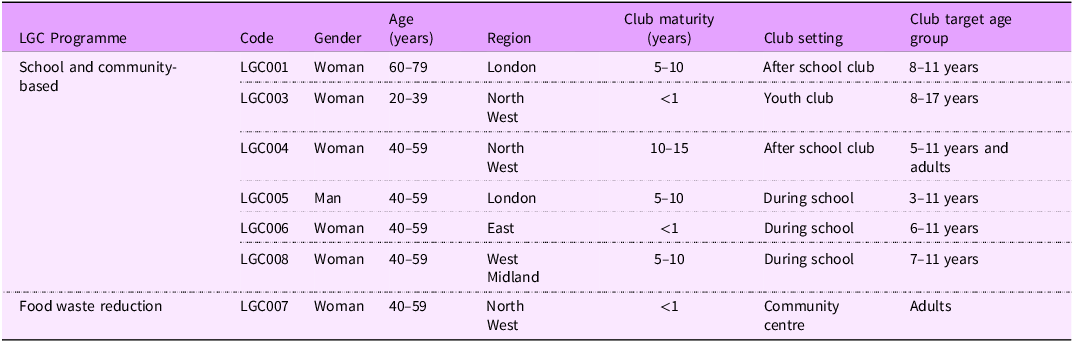
Twelve individuals responded to the invitation to participate in interviews, nine consented and eight interviewed, with one withdrawal due to illness. Seven interviews were analysed, with one participant excluded due to answers indicating that they didn’t lead their club, despite confirming their participation in training. Participant demographics are shown in Table 4.
Participant characteristics
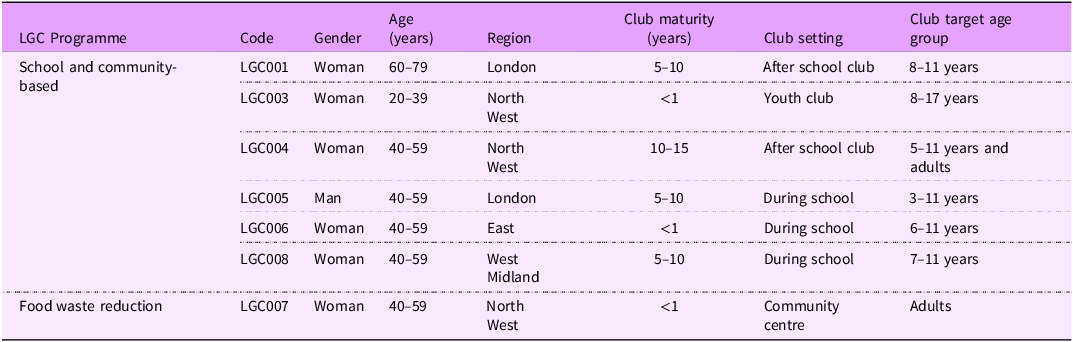
Table 4. Long description
6 participants were club leaders of ‘school and community-based’ clubs (LGC001,3,4,5,6,8) and 1 was a club leader of a ‘food waste reduction’ club (LGC007). Details by participant: LGC001: woman aged 60-79 years; club details: after school for 8-11 year olds; London; maturity: 5-10 years. LGC003: woman aged 20-39 years; club details: youth club for 8-17 year olds; North West England; maturity: >1 year LGC004: woman aged 40-59 years; club details: after school for 5-11 year olds & adults; North West England; maturity 10-15 years. LGC005: man aged 40-59 years; club details: during school for 3-11 year olds; London; maturity: 5-10 years. LGC006: woman aged 40-59 years; club details: during school for 6-11 year olds; East England; maturity: >1 year LGC007: woman aged 40-59 years; club details: community centre for adults; North West England; maturity: >1 year. LGC008: woman aged 40-59 years; club details: during school for 7-11 year olds; West Midlands; maturity 5-10 years.
LGC, Let’s Get Cooking.
Five key themes were generated and are detailed below; (1) Perceived benefits of LGC; (2) Perceptions of training; (3) Adapting for participant needs; (4) Resourcing clubs; (5) Networking.
Perceived benefits of LGC
Participants expressed belief in the need for LGC due to an observed lack of cooking skills and knowledge in both children and adults. Clubs were described as ‘very popular’, with high participant demand and support from caregivers. Perceived benefits of LGC included acquisition of cooking and food skills, with some participants described as lacking the ‘basics’, psychosocial benefits (e.g. social skill development) and exposure to new foods. ‘Food waste reduction’ programme participants were described as learning practical waste reduction strategies and generating less food waste.
‘It’s providing a lot of enjoyment, a lot of education. Do you know what I mean? It’s it’s put to a really good use. So I can’t see why it shouldn’t long continue’ (LGC007)
Replication of skills outside sessions was mentioned for both programmes. The extension of skills, such as batch cooking, to families in ‘school and community-based’ clubs was described, although in most cases parental attendance was at special events rather than regular sessions.
Perceptions of training
Training is perceived as ‘very informative’, equipping club leaders with knowledge, skills, ‘confidence’ and useful ‘hints and tips’. Most advocated for in-person training, believing ‘the more practical, the better’. Online training was felt to communicate the ‘aims’ and ‘values’ of LGC; however, perceptions of its sufficiency to provide ‘the skills to teach’ children were mixed, and the inclusion of online demonstrations was advocated for,
‘Where the person like yourself is there delivering the training, perhaps cooking some of the recipes or going through some of the steps’. (LGC008)
The desire for ongoing training was apparent. Conducting onsite training in schools was suggested to increase the number of staff members available to support programme delivery. Separate ‘refresher’ training for established club leaders was also suggested, focusing on recipe preparation to avoid ‘repetitive’ training.
‘If I’ve done the training before, I don’t need a lengthy spiel on how to cut…but what I do need is being taught how to cook hot food’. (LGC005)
Adapting for participant needs
LGC delivery ranges in setting and extent of integration into a wider programme (e.g. during a youth club) and was described as evolving over time. Variations in session delivery were described in response to different participant characteristics, including age, behaviour or cultural context. Some felt younger participants require more supervision, demonstration and a ‘simpler, slower…more clearly outlined’ recipe. Others described multi-age sessions as mitigating this challenge as ‘older children can help the younger children’ and facilitating siblings’ attendance by avoiding multiple pick-up times for parents. Adaptations for vulnerable children or those with ‘additional needs’ included delivering in-school sessions to promote inclusion or shortening sessions to maintain engagement.
Generally, LGC resources were perceived as adaptable and suitable for a variety of participants, with the ‘same [resource] being used in a slightly different way’. However, interviewees described a degree of trial and error to find the ‘recipes that really work for you’ and in some cases supplement resources with additional material. Several clubs including ‘children new to the country’, non-native English speakers or adults with refugee status described a need for more culturally inclusive recipes, such as Halal or vegetarian. Others described participants’ reluctance to try certain foods as a barrier to preparing LGC’s healthier recipes, creating a need to select or alter recipes to be ‘user friendly’,
‘I’d probably changed certain ingredients in the, in the foods, in the recipes…because our kids, won’t eat certain things, so a lot of our kids won’t eat veg’. (LGC003)
Resourcing clubs
Overall club leaders felt ‘well resourced’, expressing appreciation for LGC’s funding, which facilitates the purchase of equipment and ingredients. However, funding pressures remain and, although not viewed as critical to clubs’ continuation in the near term, some described these increasing due to sporadic financial support, rising ingredient costs and budgetary competition, particularly in schools. Financial self-sufficiency was seen as unlikely and even unattainable in more deprived areas. Discomfort with the possibility of charging participants to cover costs was expressed.
Additional challenges constraining session delivery included limited cooking facilities, facilitator availability and tight session timings. Club leaders described using only the cheapest, quickest recipes, recipes requiring no cooking, reducing session frequency due to being unable ‘to afford to do it every week’ and limiting group size or compromising participant autonomy due to equipment sharing.
‘Some [recipes] required…resources that we didn’t have, so we couldn’t cook them.’ (LGC005)
Consequently, the need for budget recipes with estimated costs and fewer ingredients was emphasised, both for clubs and families replicating recipes at home. Furthermore, provision of the equipment required to replicate training recipes was suggested, including a ‘basic cookery pack’ to adequately resource new clubs. Generally, club leaders described resources as ‘really useful’, making sessions ‘more efficient’. However, established club leaders felt resource provision has declined, highlighting the ceasing of termly packs, skill progression focused resources and a dedicated LGC website.
Networking
Club leaders described the ‘ability to network with other organisations’ as important for providing a sense of ‘belonging’, a resource for ‘solving problems’ and a platform for knowledge sharing. However, network links were felt to have ‘diminished’ and the desire for greater community connection was expressed.
‘Those old links are sort of diminished slightly…it would be good to have a session online at some stage, maybe just to recap for everybody, what everybody’s doing and kind of how important it all is’ (LGC001)
Discussion
This study investigated the content, delivery and existing evidence base for LGC’s effectiveness to inform future programme design and evaluation refinements, drawing on the ‘planning’ principles outlined in the first three stages of the Cook-EdTM model(Reference Asher, Jakstas and Wolfson23). The results of past evaluations suggest that LGC’s ‘school and community-based’ programme may improve cooking skills, modestly increase short-term consumption of healthy items(25–28) and deliver psychosocial benefits(25–28), in line with recent evidence suggesting that cooking behaviour may mediate both diet quality and mental health(Reference Farmer and Cotter33), conferring wellbeing(Reference Utter, Denny and Lucassen34). These benefits were also described by club leaders, who reported observing cooking and social skill acquisition. Retrospective application of the CALO-RE taxonomy(Reference Michie, Ashford and Sniehotta21) to LGC resources identified the most commonly occurring BCT targeting cooking behaviour across programmes as how (BCT#21) and when (BCT#20) to perform the behaviour, highlighting individual consequences of the behaviour (BCT#2) and prompting practice (BCT#26). The frequent identification of BCT#26 in resources may explain observed positive dietary outcomes in past evaluations, with evidence suggesting a ‘hands-on’ approach can create an ‘IKEA’ effect, whereby self-preparation increases preference for homemade and healthy items(Reference Radtke, Liszewska and Horodyska35). Club leaders also expressed their preference for ‘hands-on’, in-person training due to perceived benefits for skill acquisition, as postulated by Experiential Learning Theory(Reference Kolb36). Prospective or retrospective application of BCT taxonomies to interventions targeting children remains relatively uncommon(Reference Hendrie, Lease and Bowen37). Therefore, this study fills a gap both in previous LGC evaluations and the wider literature.
In aggregate, LGC’s ‘school and community-based’ recipes contain cooking skills appropriate for all participating children (aged from 3 to 17 years); however, recipes did not specify appropriate age ranges. Subjective assessment of additional aspects related to age-appropriateness highlighted that the layout and language of recipes may not be child-friendly; small fonts and lack of visual aids may further limit resource accessibility. Club leaders reported adapting resources in response to participant needs, including making age-related simplifications. LGC’s ‘train the trainer’ model was seen as providing this necessary flexibility and previous LGC evaluations suggest this delivery model may be effective, potentially due to increased personal relevance to participants, increasing the likelihood of behaviour change(Reference Michie, Johnston and Francis22). However, due to a lack of assessment of programme ‘fidelity’ and ‘dose delivered’ in previous evaluations, the extent to which these variations in delivery may impact observed outcomes is currently unknown. ‘Food waste reduction’ programme resources primarily include strategies relating to ‘food literacy, kitchen tools and equipment’ and ‘cooking and leftover reuse’(Reference Chia, Yap and Wu30). Anecdotal interview evidence in this study provides positive indications that learning practical waste reduction strategies through participation in LGC may result in a reduction in food waste generation; however, this has not been formally evaluated.
The findings of this study highlight several areas for consideration at the ‘development and implementation’ phase of refinement(Reference Asher, Jakstas and Wolfson23). Deconstruction of resources demonstrated overlap between the most frequently occurring BCTs in the ‘school and community-based’ and ‘food waste reduction’ programmes, despite different target age groups. Culinary interventions targeting adult populations also share frequently occurring BCT (BCT#21 and 26)(Reference Hollywood, Surgenor and Reicks19), suggesting that they may target cooking behaviour independently of age. This may be a strength of LGC’s programme design as club leaders describe delivery in both single and multi-age groups, including to adults and children together. Given delivery of LGC can be to children across multiple age groups, it could be argued that distributing recipes targeted at single age groups is not appropriate or that the variable impact of individual development trajectories and willingness to try(Reference Dean, O’Kane and Issartel29) may negate the need for skill focused adaptations. However, as numeracy and literacy skills are required for skill acquisition and reading recipes(Reference Dean, O’Kane and Issartel29), the lack of step-by-step instructions on how to perform certain cooking skills and the complex language used in the methods section of LGC recipes may hinder children’s skill acquisition. This could be both directly, through lack of understanding, or indirectly, from associated negative feelings of embarrassment. Therefore, redesign of LGC’s child-facing resources to accommodate a range of literacy levels may enhance children’s cooking skill acquisition(Reference Dean, O’Kane and Issartel29). This could include simplifying recipe layouts, breaking down cooking skills, enlarging font and providing visual aids to increase accessibility. Provision of separate club leader-facing recipes which indicate the age-appropriateness of included skills may enable them to make more informed recipe selections.
This study identified several opportunities to support club leaders delivering LGC. Firstly, interviews suggest a proportion of LGC’s recipes are not fit for purpose considering the resource and budgetary constraints facing both clubs and participants. Recipes were also felt to lack cultural diversity. If recipes covered in sessions are not replicable in participants’ home environment, this could contribute to an ‘intention-behaviour gap’(Reference Sheeran38), limiting meaningful long-term behaviour change. Additionally, time constraints highlighted by club leaders may limit their capacity to fully adapt programme resources to meet participants’ diverse needs, potentially reducing LGC’s efficacy. Therefore, it is important to consider external factors, including cost and access to cooking facilities, in programme design. Greater provision of club leader-facing resources, including recipe cost estimates and expanding the cultural inclusivity of provided recipes, may support delivery. Consulting key stakeholders (club leaders, participants) regarding future resource adaptations will be important to ensure acceptability for end users. Secondly, club leaders expressed a desire for ongoing training. Online training is likely less time and resource-intensive, however, and may limit opportunities for social modelling(Reference Bandura39), inhibiting acquisition of the necessary skills for session delivery, a concern raised by some club leaders. An alternative approach may be the introduction of supplementary instructional video material, with evidence suggesting step-by-step video instructions may improve understanding of cooking methods by reducing cognitive load(Reference Surgenor, Hollywood and Furey40). Further investigation into the potential for an integrated online and in-person training approach is required and may have broader public health applications. Finally, interviews demonstrate club leaders’ desire for knowledge sharing and a greater sense of community. Beyond the direct implication of strengthening LGC’s inter-club network, embedding co-design in programme refinements may offer mutual benefit in building community links while leveraging club leaders’ experience to increase programme acceptability(Reference Asher, Jakstas and Lavelle17,Reference Asher, Jakstas and Wolfson23) . Investigating the perspectives of programme stakeholders through interviews is a strength of this study forming part of the ‘planning’ phase of programme refinement(Reference Asher, Jakstas and Wolfson23). However, co-design can require time and financial investment and so alternative formats, such as focus groups, could be explored in future.
Deconstruction of ‘food waste reduction’ resources suggests the programme may target several predictive factors of intention to reduce food waste(Reference Chia, Choo Yap and Aroua41). Resources include information on how (BCT#21) and when (BCT#20) to perform behaviours which may increase competence and perceived behavioural control(Reference Chia, Choo Yap and Aroua41), reinforced by advice on environmental restructuring (BCT#24) or action planning (BCT#7). Descriptions of the individual (BCT#2) and general (BCT#1) consequences of food waste in these resources may target attitudes and anticipated regret, invoking concern for doing the ‘right thing’(Reference Graham-Rowe, Jessop and Sparks42). ‘Food waste reduction’ programme resources contain dual messaging concerning food waste reduction and healthier eating, primarily promoting food preparation from scratch. However, this may introduce conflicting behavioural drivers as food waste concerns can act as a barrier to cooking from scratch(Reference Lavelle, McGowan and Spence43), while a desire to offer healthy foods may lead to overprovision, increasing waste(Reference Graham-Rowe, Jessop and Sparks6). A full programme evaluation is required to elucidate the programme’s relative impact on target healthy and sustainable behaviours. Parallel acquisition of cooking and food waste reduction skills may reduce the perceived conflict between these behaviours, offering an alternative mechanistic interpretation of the association between early cooking skill acquisition and food waste reduction(Reference Lavelle, Spence and Hollywood8). Recent frameworks for culinary intervention design incorporate sustainable food practices(Reference Asher, Jakstas and Lavelle17); however, this is not currently reflected in the ‘school and community-based’ programme. Integrating age-appropriate food waste education into sessions for children could help foster sustainable practices and a pro-environmental self-identity(Reference Graham-Rowe, Jessop and Sparks42).
Assessment of past evaluations has identified evidence gaps and methodological limitations for future consideration. Process evaluation is critical to understand and monitor the implementation of a programme ahead of assessing its effectiveness(Reference Asher, Jakstas and Wolfson23). However, it could be argued that within a ‘train the trainer’ model, a single definition of acceptable programme delivery, and by extension inclusion of ‘fidelity’ and ‘dose delivered’, unaddressed by previous evaluations, is redundant. Conversely, this may increase the importance of understanding which components of session delivery are critical to LGC’s effectiveness, which are adaptable without compromising effectiveness, and if/how contextual factors and challenges (e.g. lack of facilities, funding or time) impact this. Additionally, mapping how BCT included in refined programme design are reflected in implementation will help understand which components are associated with positive outcomes. Cooking skills and diet quality have a non-uniform relationship with sociodemographic characteristics(Reference McGowan, Pot and Stephen3,Reference Wolfson, Leung and Richardson5,Reference Worsley, Wang and Yeatman11) . However, previous evaluations of LGC’s ‘school and community-based’ programme did not present analysis of socioeconomic factors; thus, it cannot be assumed that reported outcomes are consistent across sub-groups. Given the diversity of LGC participants, analysis of sociodemographic variables would strengthen future evaluations. Impact evaluation in both adults and children should prioritise the use of validated instruments to assess cooking behaviour influences, such as CooC7 and CooC11 for children’s cooking confidence(Reference Dean, Issartel and Benson44) or the ‘checklist’ for food skill acquisition in adults(Reference Fordyce-Voorham45). Ensuring future impact evaluations are adequately powered would increase the reliability of findings. Finally, culinary interventions such as LGC can be ‘resource-intensive’(Reference Asher, Jakstas and Wolfson23), with a paucity of data reporting programme costs(Reference Reicks, Kocher and Reeder13). Therefore, assessments of cost-effectiveness may be required to understand the programme’s ongoing economic viability.
Strengths and limitations
This study is the first evaluation of LGC conducted since 2017. Strengths of this research include examination of the totality of publicly available evaluations of LGC since its inception in 2007. However, synthesis was conducted ‘outside in’, without access to raw data or full evaluation methodologies, reducing the reliability of results. Resources deconstructed reflect all those available for a given programme and type or were confirmed as representative with the BDA, increasing the generalisability of results across LGC. However, due to time constraints, in some cases a random selection of resources was deconstructed; deconstruction of the entirety of LGC’s programme resources would have strengthened this study. Deconstruction of resources using published theoretical frameworks increases comparability and repeatability of results. However, frameworks were not designed for retrospective application and analysis is subject to inherent limitations within the frameworks themselves. Due to time constraints, the primary coder received no formal BCT coding training, which is a skilled task(Reference Wood, Richardson and Johnston46); however, a high level of inter-rater reliability with a second trained coder was reached. Utilising quantitative and qualitative approaches within a mixed methods design increases confidence in the findings from respective approaches. Given narrower study aims and a high dialogue quality, the interview sample size (n 7) was deemed to generate sufficient information power(Reference Malterud, Siersma and Guassora47). Interview questions were open-ended; however, participants’ answers may be susceptible to social-desirability bias. Convenience sampling increases the risk of self-selection bias and only one food waste programme interview was conducted. However, a range of regions and club maturities were sampled, with no reason to believe results are not representative of club leaders generally. Use of focus group interviews in future research to promote discussions between club leaders may strengthen findings to inform programme refinements.
Conclusions
Previous evaluations suggest LGC may be an effective intervention for disseminating cooking and food skills, modestly improving healthy food consumption. However, understanding of which programme components contribute to effectiveness is limited by a lack of reported ‘fidelity’ and ‘dose delivered’ assessment. Identification of BCT suggests that LGC resources target behaviour change through describing how and when to perform cooking behaviour, highlighting individual consequences of the behaviour and prompting practice. ‘School and community-based’ resources contain age-appropriate cooking skills; however, adapting child-facing resources may improve accessibility for children (e.g. larger font, visual aids). LGC’s ‘food waste reduction’ programme primarily includes strategies relating to food management skills and results highlight potential for incorporating food waste reduction elements into the ‘school and community-based’ programme. LGC training is well received, and ongoing training and networking opportunities are desired. The primary benefit of LGC’s ‘train the trainer’ model is the ability to meet different clubs’ needs, although limited funding, facilities and time are challenges in session delivery. Resource adaptations, such as age specifications and cost estimations, may support club leaders in facing these challenges. Further rigorous evaluation is required to better understand LGC’s effectiveness, as well as the impact of contextual challenges and variations in programme delivery on observed outcomes. Future evaluation should include analysis of relevant socioeconomic variables to elucidate sub-group differences, ensure validated measurement instruments are utilised when assessing programme effectiveness and consider incorporating co-design elements such as qualitative interviews and focus groups. Improved understanding of programme adaptations and effectiveness within different sub-groups may have wider public health implications.
Supplementary material
For supplementary material accompanying this paper, visit https://doi.org/10.1017/S1368980026102675
Acknowledgements
The authors are extremely grateful to the interview participants for giving their time and sharing their perspectives.
Authorship
Conceptualisation: R.G., F.L.; Formal analysis: G.B., F.L.; Investigation: G.B.; Methodology: R.G., F.L., G.B.; Project administration: G.B.; Resources: S.M.; Supervision: R.G., F.L.; Visualisation: G.B.; Writing – original draft: G.B.; Writing – reviewing and editing: R.G., S.M., F.L.
Financial support
This research received no specific grant from any funding agency, commercial or not-for-profit sectors.
Competing interests
S.M. was the Let’s Get Cooking Business Development Manager at the British Dietetic Association and, however, was not involved in data analysis. The authors have no other conflicts of interest to declare.
Ethics of human subject participation
The study was conducted according to the guidelines laid down in the Declaration of Helsinki, and all procedures involving research study participants were approved by the King’s College London Research Ethics Committee on 26th June 2024 (Ref: MRSU-23/24-44362). Written informed consent was obtained from all subjects.


 Open access

