




No CrossRef data available.
Article contents
PSEUDO-FINITE SETS, PSEUDO-O-MINIMALITY
Published online by Cambridge University Press: 26 October 2020
Abstract
We give an example of two ordered structures 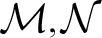 $\mathcal {M},\mathcal {N}$ in the same language $\mathcal {L}$ with the same universe, the same order and admitting the same one-variable definable subsets such that $\mathcal {M}$ is a model of the common theory of o-minimal $\mathcal {L}$-structures and $\mathcal {N}$ admits a definable, closed, bounded, and discrete subset and a definable injective self-mapping of that subset which is not surjective. This answers negatively two question by Schoutens; the first being whether there is an axiomatization of the common theory of o-minimal structures in a given language by conditions on one-variable definable sets alone. The second being whether definable completeness and type completeness imply the pigeonhole principle. It also partially answers a question by Fornasiero asking whether definable completeness of an expansion of a real closed field implies the pigeonhole principle.
MSC classification
Information
- Type
- Article
- Information
- Copyright
- © The Association for Symbolic Logic 2020
Footnotes
*
The second affiliation for the author of the article has been corrected. An erratum detailing this change has also been published (doi: 10.1017/jsl.2021.100).
References
Čech, E., Bodové množiny, Academia Nakladatelství Československé Akademie Věd, Prague, 1966.Google Scholar
Fornasiero, A.,
Locally o-minimal structures and structures with locally o-minimal open core
.
Annals of Pure and Applied Logic
, vol. 164 (2013), no. 3, pp. 211–229.CrossRefGoogle Scholar
Fornasiero, A. and Hieronymi, P., A fundamental dichotomy for definably complete expansions of ordered fields, this Journal, vol. 80 (2015), no. 4, pp. 1091–1115.Google Scholar
Fornasiero, A. and Servi, T.,
Relative Pfaffian closure for definably complete Baire structures
.
Illinois Journal of Mathematics
, vol. 55 (2011), no. 3, pp. 1203–1219.CrossRefGoogle Scholar
Hieronymi, P.,
Expansions of subfields of the real field by a discrete set
.
Fundamenta Mathematicae
, vol. 215 (2011), no. 2, pp. 167–175.CrossRefGoogle Scholar
Hieronymi, P., An analogue of the Baire category theorem, this Journal, vol. 78 (2013), no. 1, pp. 207–213.Google Scholar
Huntington, E. V.,
Inter-relations among the four principal types of order
.
Transactions of the American Mathematical Society
, vol. 38 (1935), no. 1, pp. 1–9.CrossRefGoogle Scholar
Miller, C., Expansions of dense linear orders with the intermediate value property, this Journal, vol. 66 (2001), no. 4, pp. 1783–1790.Google Scholar
Novák, V.,
Cuts in cyclically ordered sets
.
Czechoslovak Mathematical Journal
, vol. 34 (1984), no. 2, pp. 322–333.CrossRefGoogle Scholar
Rennet, A., The non-axiomatizability of o-minimality, this Journal, vol. 79 (2014), no. 1, pp. 54–59.Google Scholar
A correction has been issued for this article:
Linked content
Please note a has been issued for this article.