

John Williams’s music for Steven Spielberg’s celebrated Lincoln (2012) is a unique entry in the composer’s filmography and mostly anomalous within Hollywood’s conventional musical practice.Footnote 1 Its themes are centered around a style topic informed by aesthetics of nineteenth-century American hymnody.Footnote 2 Like Williams’s functional music for baseball stadiums, presidents, and the Statue of Liberty, the hymns heard in Lincoln also have marked important cultural occasions in America. By investigating influences on Williams’s hymn style and through close analysis of themes and cues, I explore how Lincoln is distanced from the Coplandesque frame used to commonly categorize film music that signifies the American, and how its hymns shape audioviewers’ reception of this filmic past. In the process, I establish aesthetic influences on the Lincoln score, address its interesting convergence of sacred music and film music, and discuss the role of film music in representing a historic American figure. This article ultimately positions the score as an expression of Williams’s patriotism—understood as his evident dedication to, and pride in, his homeland—and shows how that patriotism influenced the textual and extra-textual functionality of its original hymns. Accordingly, the hymns cannot simply be understood as film music, but as Williams’s expression of an American music, a cultural imaginary of nineteenth- and twentieth-century American folk and art music traditions.
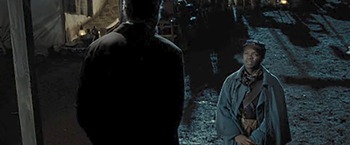
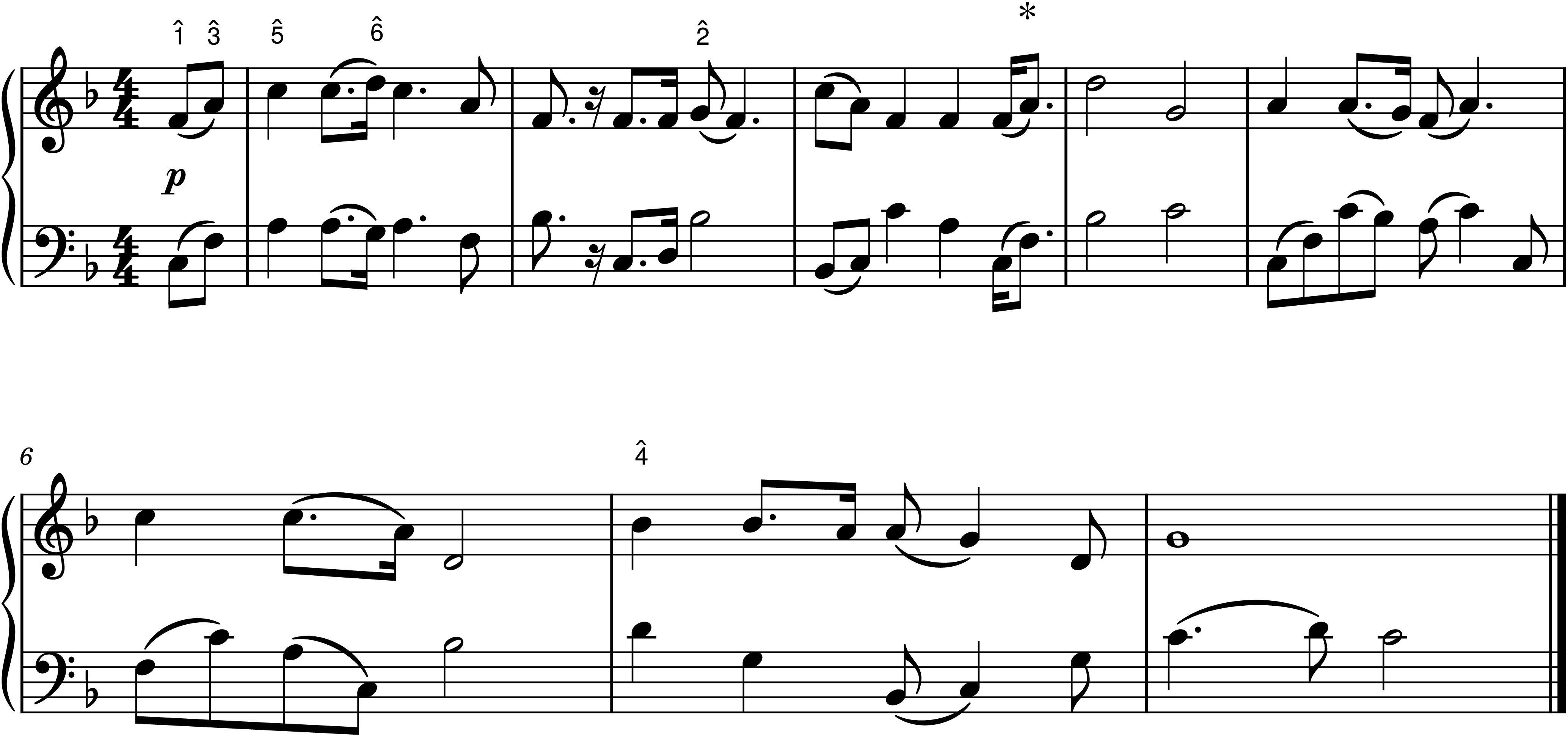
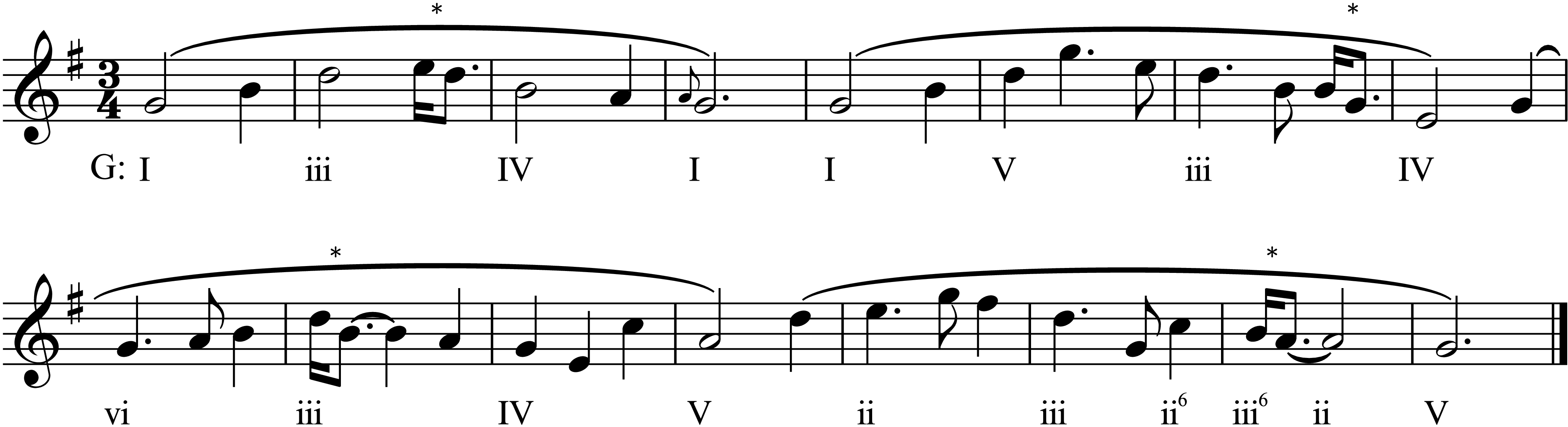
The style and purpose of Williams’s hymns are evident from the beginning. The eponymous icon of Lincoln is first seen from behind, the audience encouraged to regard his silhouette as if his visage and presence were too sublime to behold.Footnote 3 Lincoln is seated, taking shelter from the rain, as two Black soldiers—Corporal Clark and Private Green—approach him. Their candid exchange about racial equality is interrupted by two enthusiastic white soldiers who take turns gracelessly reciting the Gettysburg Address to the president. All the soldiers are called to muster, but Clark remains to conclude the recitation in earnest, literally looking up to Lincoln, who has risen to his feet to bid the soldiers goodbye (see Figure 1). At this moment, Williams quietly introduces “The American Process” (see Example 1).Footnote 4 The original theme is set simply for solo piano and defined by a lean, lyrical, and predominantly pentatonic melody (appropriate scale degrees indicated by carets in example), plagal harmonies, simple rhythms, scotch snaps (asterisked in example), balanced phrases, a moderate tempo, and a poetic meter common to Protestant hymnody. These features locate Williams’s theme clearly within a filmic instrumental hymn topic. Through stylization and narrative context, the hymn accords with one of Stanley Kleppinger’s designated “Copland sounds” in Hollywood film music, “protaganistic introspection.”Footnote 5 The hymn underlines the simple recitation with a reverential air that at once signifies Clark’s awe for Lincoln and, moreover, encourages our own. It is therefore useful to think of this theme, and the score by extension, through the lens of musical mythopoetics (from the Greek mythos, myth, and poeia, to make or create; here taken as synonymous with a broadly construed mythmaking), to consider how these hymns are designed, deployed, and received to support the cinematic depiction of Lincoln’s final months in office. Following the work of Timothy Scheurer, this article contends that the hymns function “as indexical signs signifying mythic values,” here idealized values connected to an American exceptionalism via Lincoln, and construct the “mythic foundations and formations” of the film.Footnote 6 My understanding of myth is informed by Nimmo and Combs’s definition of “a credible, dramatic, socially constructed re-presentation of perceived realities that people accept as permanent, fixed knowledge of reality while forgetting (if they were aware of it) its tentative, imaginative, created, and perhaps fictional qualities.”Footnote 7
Lincoln, Clark looks up to Lincoln while reciting the Gettysburg Address.

John Williams, Lincoln, “The American Process.”

“The American Process” both defines the hymn style topic central to the score and introduces the overarching aesthetic of simplicity and restraint. In tandem, hymnody, simplicity, and restraint operate to esteem Lincoln, endowing the president’s attempts to pass the Thirteenth Amendment before the end of the American Civil War with a quiet dignity. While this U.S. history is configured by narrative and mise en scène, Williams’s music is ordained to carefully and selectively revere that history rather than to provide clichéd Americana—bravura Sousa-styled marches or energetic Coplandesque rodeos—that would heighten an already celebrated historical moment with a sense of patriotic excess.Footnote 8 Seldomly foregrounded and largely not competing with Lincoln’s dialogue, the score occupies a strictly supportive role. Spielberg explains his desire was “not to make [his own and Williams’s] voices” heard above Lincoln’s but rather to use camerawork and music to “linger in quiet support.”Footnote 9 Indeed, of the film’s 140-minute runtime, approximately thirty-eight minutes are scored (twenty-seven percent of the film excluding eight-minute credits), with a mere sixteen minutes accompanying Lincoln himself.Footnote 10 Such restraint marks a deviation from much of the Spielberg-Williams oeuvre; previously, the sparsity and restraint of their other historical dramas like Schindler’s List (1993), Saving Private Ryan (1998), and Munich (2005) have been in the name of a “realism” concerning the depiction of history, as David Ireland has observed of the latter film.Footnote 11 More recently, contemporary Hollywood film-scoring practice has made this sparsity de rigueur, with Williams’s more minimalist music for The Post (2017) and The Fabelmans (2022) tending toward texture- and timbre-centered cues rather than his celebrated symphonic thematicism. Yet in Lincoln, this restraint indicates the filmmakers’ efforts to construct an ostensibly authentic version of Lincoln.
Popularly and colloquially conceived as “Honest Abe,” Lincoln has regularly acted as a symbol for broader ideals of freedom, equality, victory, and exceptionalism associated with an American character.Footnote 12 Fluid and diverse stances on the president have evolved over time: ranging from opinions that he was not radical enough in his work for racial equality to views that he only capitalized on the agenda for personal political gain.Footnote 13 Such conflicting perspectives, according to historian Peter S. Field, “converged” as the sixteenth president’s reputation became bound up with President Barack Obama, regarded simultaneously as finishing Lincoln’s unfinished work and as a direct outcome of that work.Footnote 14 Responding to the film, Obama spoke of Lincoln as a complicated figure who could “pursue the highest ideals” and also “get [his] hands dirty,” and be “somewhat imperfect.”Footnote 15 Obama here exemplifies Field’s notion of a contemporaneous “isomorphic perspective” of Lincoln, an “imperfect” hero of both epic and folk proportions, both a national icon and a flawed individual.Footnote 16 Capitalizing on the diminishing chasm between Lincoln proponents and skeptics and contemporaneous resonances with Obama, Spielberg ran a bipartisan screening of Lincoln in the Capitol for members of Congress around the film’s release.Footnote 17 Such an event is perhaps testament to the director’s high-minded if naive aims and his efforts to present this folk and epic Lincoln who might reconcile lingering conflicting perspectives. Williams’s score, by consequence, played a role in supporting these lofty aims and in complementing the film’s presentation of “the Great Emancipator”—using a fantasized hymn tradition to resonate with imaginaries of Lincoln.Footnote 18
For Williams, this surely unspoken politico-filmic agenda necessitated a composition process that strayed from his typical methodology. The result was a score that diverted from the sound and function of his existing music for U.S. presidents, including Spielberg’s Amistad (1997) and Oliver Stone’s JFK (1991) and Nixon (1995).Footnote 19 Stone’s “sledgehammer aesthetics” coupled with Williams’s occasionally “remorselessly manipulative” scores often actively unveiled musical mythopoetics.Footnote 20 Frank Lehman argues that music “enable[d] reflection on past presidencies at a critical distance” with heavy-handed cues revealing their own capacity to influence.Footnote 21 For Stone, film music thus worked to reorient existing historical narratives and to formulate his own mythic interpretations of 1960s America.Footnote 22 The restrained hymnody of Lincoln, however, does not encourage historical critique or establish any “counter-myth” contrary to culturally accepted history.Footnote 23 Rather, its aesthetic function and modus operandi build upon the comparably spare score to Saving Private Ryan. Despite these fleeting connections to earlier scores, Lincoln is singular in Williams’s oeuvre, given the central position of hymnody.Footnote 24
Building on ideas of musical mythopoetics discussed by Lehman in “Scoring the President,” this article argues that Williams’s historically fantasized hymns functioned to deify Lincoln, to support a reverential attitude to this past within and beyond the film, and, ultimately, that Williams’s score reveals a personal patriotic imperative to serve both film and country. Drawing from film musicologists, Copland scholars, hymnologists, and music historians, and from the words of Williams and Copland, I address musical praxis, authenticity, and mythopoetics to position Lincoln as a work of and about America and as emblematic of Williams’s desire to be taken seriously as a specifically American composer—and not merely a film composer. My musical analyses are informed by topic theory and comparative analysis, while I take a narratological approach to scenic case studies. These twinned musical and narratological analyses permit exploration of the conception, function, and reception of Williams’s hymns.
The article follows a tripartite structure. The first section traces the hymn style and suggests pertinent nineteenth-century precedents to establish the musical association of and the genetic heritage of Williams’s hymns. This, in turn, permits an analysis of the film’s hymn themes to reveal their rootedness in the gospel hymn idiom and thus to demonstrate their mythopoetic function in a central scene, “The Telegraph Office.” In the second section, I connect the Lincoln score to aesthetic currents of a nineteenth-century American hymn tradition, putting its simplicity in dialogue with tenets linked to the music of Aaron Copland and Shakerism. The extent of this simplicity is illustrated through comparison of Lincoln’s score to hymns in Amistad and Saving Private Ryan. I then connect the quasi-religious regard for Lincoln to the concerns for authenticity during the filmmaking, before critiquing the reception of Williams’s hymns within the broader context of authenticity and religiosity in the final section. A reading of the film’s sentimental finale discusses how this coda reveals the wider purpose and positionality of Williams’s score. In sum, the article positions Lincoln as a unique entry in the composer’s oeuvre, marking the score both as an expression of Williams’s patriotism and as indicative of his efforts to rank among esteemed composers of American art music.
Williams as Hymnist
In reference to Lincoln, this article understands the hymn as a piece of devotional music commonly directed at a deified figure and used in religious rituals. The mid-nineteenth-century gospel hymn topic (discussed below) is commonly defined by meters common to Protestant hymnody (common meter, long meter, short meter), folkish rhythms, gapped scales, and plagal harmonies, with tunes set to sacred texts. However, hymn topics prove to be stylistically broader when considering Williams’s other work. While not as characteristic a style topic when compared to fanfares or marches, hymns have been impressed upon certain scores. Instrumental hymns have appeared across his filmography: the titular themes to Star Wars: The Rise of Skywalker (J. J. Abrams, 2019) and Jurassic Park (Spielberg, 1993), the finale of War Horse (Spielberg, 2011), “Meeting the Queen” in The BFG (Spielberg, 2016), and the Holy Grail theme from Indiana Jones and the Last Crusade (Spielberg, 1989), to name a few. These instrumental hymns often take the form of slow-to-mid tempo chorales in strings or brass. A choral religioso topic also bears obvious connections to hymnody, with the following cues acting as set pieces in orchestral scores and suggesting diverse signifieds: “Saying the Rosary” from Sleepers (Barry Levinson, 1997) and “Gloria” from Monsignor (Frank Perry, 1982) have clear ecclesiastical associations; the Christmas carols of the Home Alone films (Chris Columbus, 1990, 1992) and “Exsultate Justi” and “Cadillac of the Skies” from Empire of the Sun (Spielberg, 1987) suggest ideas of innocence and wonder; the ethereal choruses of Family Plot (Alfred Hitchcock, 1976) and Harry Potter and the Prisoner of Azkaban (Alfonso Cuarón, 2004) suggest the supernatural. A common manifestation of a hymn topic is in funereal settings, for example the funeral theme of the Star Wars prequel trilogy, a “slow choral dirge” that appears in The Phantom Menace (George Lucas, 1999) and Revenge of the Sith (Lucas, 2004).Footnote 25 For Williams, Star Wars’s epic oratorio, “Duel of the Fates,” suggests the sense of being “in a big temple” or “taking part in a ritual,” like “a Mass.”Footnote 26 More grounded in localized idioms is some of Williams’s early career work. For example, as orchestrator and arranger for Fiddler on the Roof (Norman Jewison, 1970), Williams demonstrated a familiarity with an Eastern European idiom in “Sabbath Prayer” and a pseudo-Orthodox topic for a Russian theme heard in “Tradition.” These myriad and eclectic cases both show Williams’s adroitness with a broadly construed hymn style topic and, more importantly, indicate that though hymnody can suggest the religious—via associations with artifacts, settings, or the sacramental—this is not always a guaranteed outcome. The complex of inter-related and multi-faceted idioms speaks to the varied sources of inspiration for film composers. Accordingly, film audiences might not always detect any singular association effected by the root of this inspiration, but rather pick up on interrelated signifieds: the religious, the funereal, the traditional, the ritualistic, the royal, the ancient, the ecclesiastic, the innocent, the mythic, the supernatural, as well as more specific locales, ethnicities, and traditions.
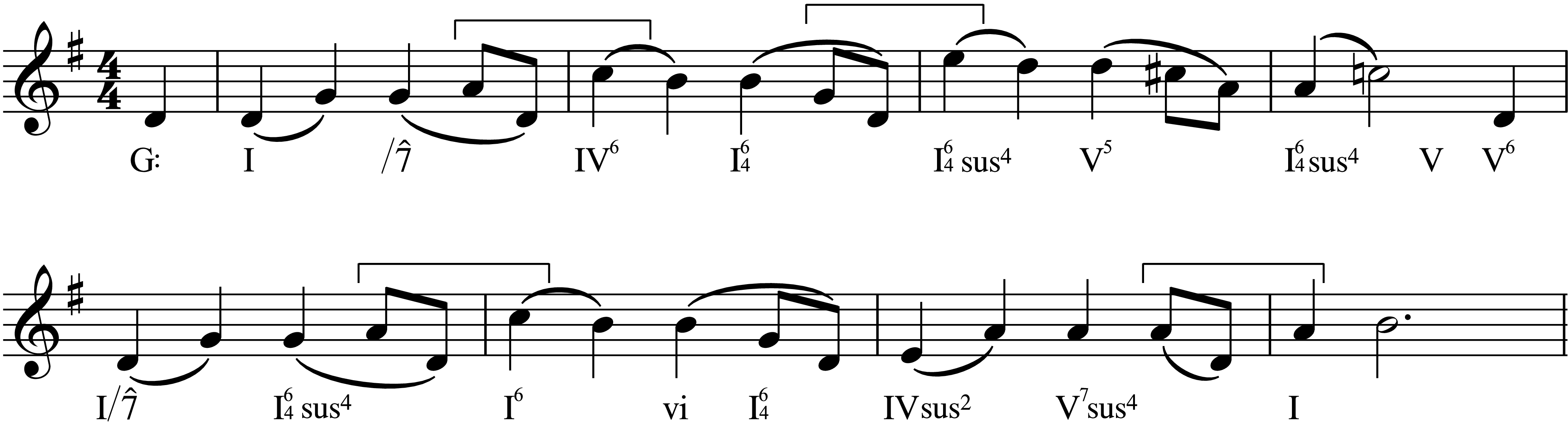
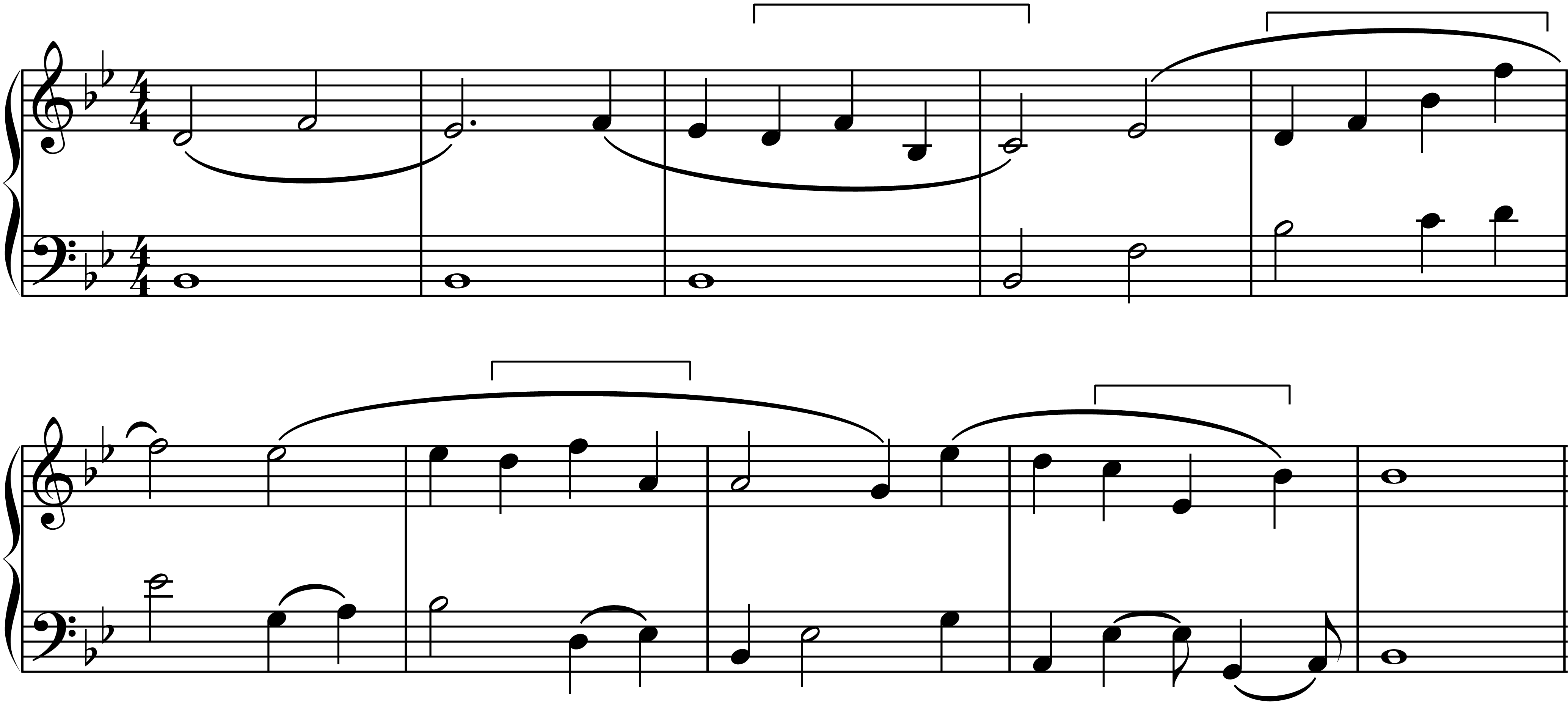
Removed from these examples is Williams’s relatively broad but distinctive American-associated hymn topic. This topic has come to influence his patriotic compositions beyond Hollywood film: American Journey (1999), the airs of Liberty Fanfare (1986), A Timeless Call (2008), Air and Simple Gifts (2009), and the lyrical passages of Dear Basketball (2017) and Of Grit and Glory (2023). The central theme of Hymn to New England (1987) (later reworked in American Journey) is indicative of this American hymn mode (see Example 2). Its angular disjunct intervals (indicated by square brackets in the example), diatonic harmonies often with suspended fourths, and lyrical major melody are common markers of Williams’s Americana hymns. However, the work’s supposed hymn theme lacks the simplicity and restraint of Lincoln, tending toward an anthem with its ascending, optimistic lines, or even a march, given its rhythmic character and upbeat-driven momentum. Nonetheless, the absorption of Williams’s American-styled hymnody into some of this occasional music reveals that topical associations effected in film cues are not simply proffered by visual associations, though they are of course strengthened by connections with American-themed narratives. Cues in Amistad, The Post, The Patriot (Roland Emmerich, 2000), or the America-set conclusion of Angela’s Ashes (Alan Parker, 1999) draw from this broad but manifestly American hymn topic. The best known example is likely “Hymn to the Fallen” in Saving Private Ryan, an elegy that adopts traits of the late-nineteenth-century reform tradition: stepwise melody, isometric rhythms, diatonic chords, homophonic texture, and mostly traditional voice-leading (discussed in greater detail later in relation to Example 11). Although hymnody appears to different extents in these film scores, its pervasiveness and recurring stylistic features would indicate that, for Williams, an American hymn idiom has become a veritable topic with its own specific connotations and, as this article will show, a potential for personal patriotic expression.
John Williams, Hymn to New England, anthemic theme.

Williams’s work as composer, arranger, orchestrator, and conductor granted him access to different forms of specifically American hymn traditions, equipping him with the bona fides to create his own hymn sound for Lincoln.Footnote 27 As arranger and orchestrator, Williams worked with Mahalia Jackson, conducting and arranging spirituals in the gospel style. He remarked that this was “true music, truly inspired, and truly unusual and unique to the group of worshippers,” indicating his high regard for the genre.Footnote 28 As a film composer, Williams built on his work with Jackson by contributing to the spiritual tradition for Rosewood (John Singleton, 1997). Here, he wrote music and—atypically—lyrics for the original spirituals “Look Down, Lord,” “Light My Way,” and “Freedom Train,” locating the score in the film’s setting, a Black town in 1920s Florida.Footnote 29 As conductor of the Boston Pops, Williams performed hymn tunes by fellow American composers, including William Billing’s “Chester,” featured in William Schuman’s New England Triptych (1956), Copland’s version of “Simple Gifts,” and Charles Ives’s “A Christmas Carol.” These experiences and projects indicate that Williams would have possessed a rounded knowledge of diverse Christian hymnal traditions from across American culture and history by the time of Lincoln. Knowledge of these precedents offered the composer numerous implicit models when writing Lincoln.
Hymnody in Lincoln
At first blush, one is tempted to identify the simple and open sound of Lincoln with the music of Aaron Copland. Indeed, the vernacular of Lincoln Portrait (1942) has a certain influence over the score of Lincoln, specifically Scotch snap rhythms, dialogic wind passages, a prevalent sol-do-mi-sol figure, and a clear indebtedness to American folk traditions. In scoring America of 1865 and the paragon of American exceptionalism, Williams would have just cause to utilize the distinctly American sound indebted to Copland and American symphonists such as Virgil Thomson, Roy Harris, and Walter Piston. Not long before Lincoln, Williams had already confirmed his ability to utilize the Coplandesque with Air and Simple Gifts (composed for Obama’s inauguration), a piece indebted to what Thomson called the “hymn lore” of Appalachian Spring, due to its pandiatonicism, open intervals, quintal harmonies, and evocative variations on the Shaker hymn “Simple Gifts.”Footnote 30 These marked features and the Coplandesque frame are our common means for describing musical Americana, a soundworld which “persists in the widely understood musical vocabulary of today’s Hollywood,” as Neil Lerner has already established.Footnote 31 Unsurprisingly, then, Copland has been described as “hover[ing] in the background” of Lincoln.Footnote 32 When pressed on its possible Coplandesque frame, Williams defended his Lincoln score, arguing that it resonated with traditions older than Copland’s.
In Copland’s case, he didn’t write his original pastiche. He took “Simple Gifts” right from the Shakers. As far as I know he didn’t write his own. So the question is absurd on its face. Of course [Lincoln’s] a pastiche! Has nothing to do with Copland at all. He doesn’t own the Appalachian Mountains or the 19th-century hymnbook of American folk song… It’s the root source, the same sources that Copland has looked at and others. Fair game for every American composer, and should be.Footnote 33
The composer was evidently impassioned to distance Lincoln from Copland, almost as if to validate the authenticity of his hymns. Rather than imitate Copland, Williams re-appropriated the reference points of Copland and his compatriots, endeavoring to draw upon a lived American past rather than standard Hollywood “tropes.”Footnote 34
In conversation with Classical California KUSC, Williams indicated that he was not immediately concerned with familiar twentieth-century precedents; he first thought the music “in some fundamental way should have the harmonic and melodic grammar of the nineteenth century—music that might have been heard at the time.”Footnote 35 Yet after his research into contemporaneous church and folk melodies with which Lincoln could have been familiar, Williams found that this style did not result in anything that felt “exactly right.”Footnote 36 Given the composer’s extensive experience with different hymn traditions and his research into Lincoln-era hymnody, I locate Lincoln alongside the gospel tradition: a mid-nineteenth century Protestant hymnody linked to a period of urban revivalism, intertwined with the vocabulary of spirituals and folk hymnody (religious texts set to secular tunes), and built upon various early-nineteenth century precedents.
The so-called “founder of American Protestant hymnody” and “father of public school music,” Lowell Mason (1792–1872) was a key figure in an era of clergy-led reform before the Civil War, effecting a decisive shift in musical aesthetics by departing from the “crudities of half-learned [i.e. eighteenth-century] harmonists.”Footnote 37 Mason’s goal was to homogenize European and American hymnody and achieved this by adapting the “Ancient Music” style of Handel and Haydn. Summarizing Mason’s style, Richard Crawford described his hymns as “blend[ing] elements of European science [i.e. learned practice] and American revivalism.”Footnote 38 With tunes like “Old Hundred” serving as the quintessential model of this reformist style, tenor-led melodies moved to the treble, many fuguing tunes (four-part Anglo-American hymns of independent lines, “suggesting a compositional approach based on contrapuntal layering rather than simultaneous harmonic working out”) were made homophonic, and pervasive parallel harmonies were smoothed out by independent horizontal voice-leading.Footnote 39 As well as European-influenced harmony and melodic clarity, a thesis of simplicity was tantamount to the hymn reformist:
It was supposed that the good sense and improved taste of the public would be better satisfied with those tunes, which, while they have a sufficient flow of melody to interest and please, are, at the same time, sufficiently chaste and dignified for public religious worship. Footnote 40
Mason supposed that simplicity, couched within his desire for America’s musical self-determination, could be combined with a European-associated learning and “solemnity”:
One of the most important characteristics of a good psalm tune is simplicity …with respect to both melody and harmony, as shall render the design intelligible, and the execution easy. Solemnity is no less important…Correct harmony is undoubtedly important…Let there be…simple, easy, and solemn tunes selected for… worship.Footnote 41
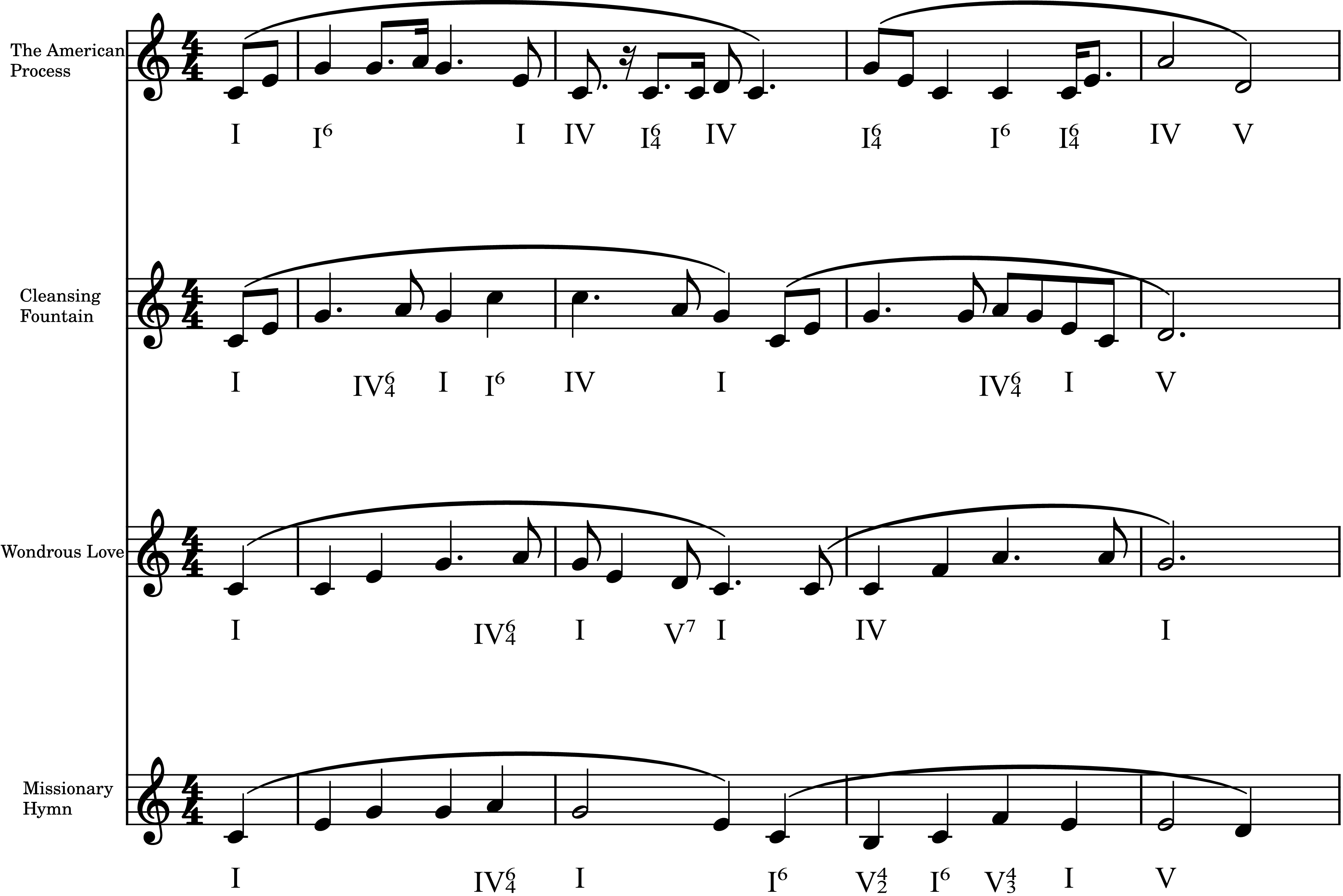
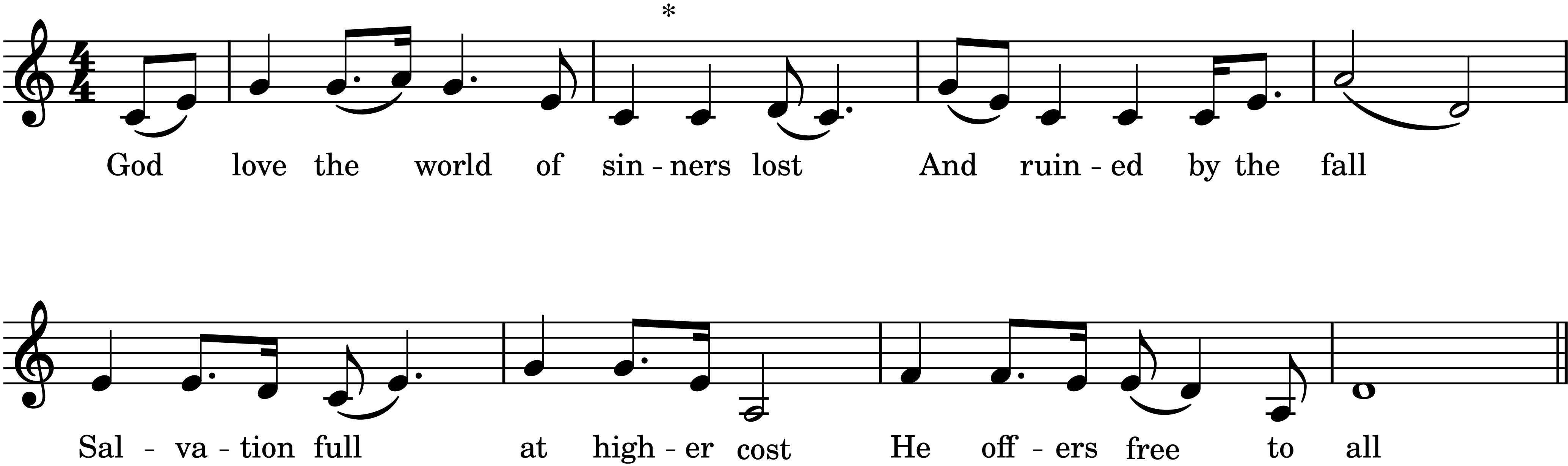
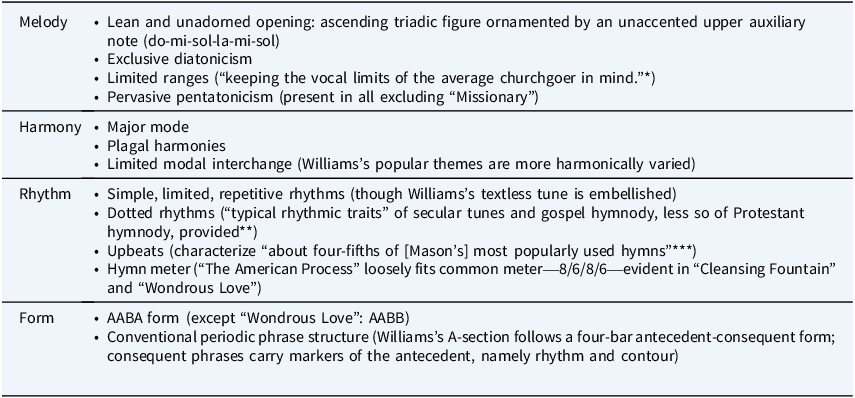
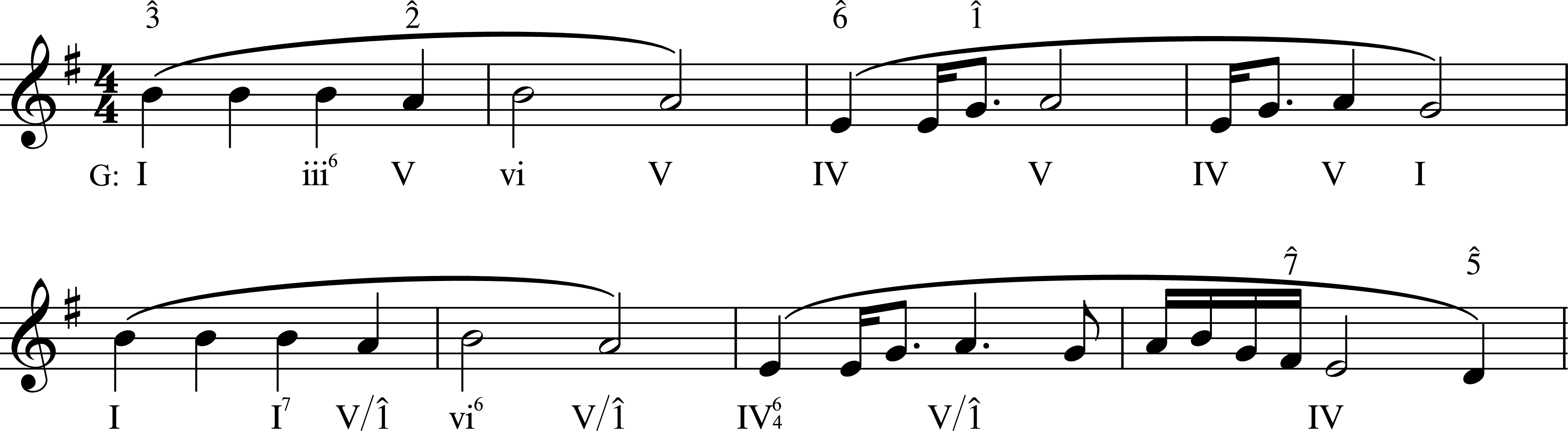
The goals of intelligibility, solemnity, and simplicity could with equal appropriateness be taken to describe Williams’s Lincoln no less than the hymns of Mason’s age. In terms of style, Mason’s aesthetics resonate with the restrained hymns of Lincoln, likely acting as an unspecified model for Williams. The following short comparative analysis of “The American Process” from Lincoln demonstrates how Williams draws upon this reformist style. Having analyzed hymn tunes from a variety of different collections, I have chosen a selection of tunes that bear resemblance to “The American Process”: “Cleansing Fountain” (“There is a fountain filled with blood”), “Wondrous Love” (“God loved the world of sinners lost”), and “Missionary” (“From Greenland’s Icy Mountains”) (see Example 3). Thereafter, Table 1 highlights certain stylistic commonalities between the tunes with reference to more thorough surveys on American nineteenth-century hymnody, elucidating how Williams taps into this musical past. The intent is not to claim that Williams directly imitated the chosen tunes; rather, similarly styled tunes were selected to show how Williams’s theme presents itself as being related to this canon. In further testament to the accordance of Williams’s themes with this hymnal style, Example 4 demonstrates how a common-meter text (8/6/8/6) could be set to “The American Process.”Footnote 42
John Williams, “The American Process” compared with select American hymns. All transposed to C. “Cleansing Fountain” and “Wondrous Love” transcribed from P. P. Bliss, Ira Sankey, Gospel Hymns and Sacred Songs; “Missionary Hymn” transcribed from Lowell Mason, Carmina Sacra: Boston Collection of Church Music.

John Williams, Lincoln, “The American Process” set to the lyrics of “God love the world of sinners lost.” Rhythmic alteration in bar 2 marked with an asterisk.

Stylistic commonalities between “The American Process,” “Cleansing Fountain,” “Wondrous Love,” and “Missionary”

* Carol A. Pemberton, Lowell Mason: His Life and Work (UMI Research Press, 1985), 187.
** Stephen Shearon and Harry Eskew, revised by James C. Downey and Robert Darden, “Gospel Music,” The Grove Dictionary of American Music, in Grove Music Online (Oxford University Press, 2013; published online 2012), https://doi.org/10.1093/gmo/9781561592630.article.A2224388.
*** Pemberton, Lowell Mason, 187. Upbeats also mark Williams’s “The People’s House,” “The Blue and Grey,” and the concert arrangements of “With Malice Toward None.”
Although at times Williams peeks beyond Mason’s reformist pale, “The American Process” generally seems to inherit the overarching chasteness of nineteenth-century gospel hymnody. This style constituted a mélange of the “respectable” qualities of the reform tradition and the “exuberance” of spirituals and the folk tradition, and would be an appropriate choice given the rising popularity of gospel hymns surrounding the period represented in Lincoln.Footnote 43 In the nineteenth century, compilations of gospel hymns flourished with Thomas Hasting’s Musica Sacra going through ten editions (1815–38) and Ira Sankey and Philip Bliss’s Gospel Hymns and Sacred Songs comprising six volumes (1875–91). The style especially spread from New England Sunday schools and Presbyterian and Methodist churches. Further supporting the authenticity of Williams’s hymn style are musical details of Lincoln’s life and presidency. The president was purportedly fond of “Pilgrim Stranger” (“I am bound for the kingdom”), a popular mid-nineteenth-century tune with a hexatonic mode and roughly long meter, beginning on the dominant like Williams’s own hymns.Footnote 44 “Thousands of African Americans” commemorated Independence Day and the Emancipation Proclamation in 1864 by singing spirituals before the White House.Footnote 45 Historical accounts detail Mason’s hymns like “Rock of Ages” and “There Is A Fountain Filled With Blood” being sung to the wounded after the Battle of Gettysburg.Footnote 46 Mason’s hymn “Peace, Troubled Soul” was performed by a choir of 250 at Lincoln’s funeral in Springfield, Illinois.Footnote 47 Further considering quotations in dedicated works like Copland’s Lincoln Portrait and Charles Ives’s Lincoln, the Great Commoner (1921) or Ernst Bloch’s evocation of hymnody in America: An Epic Rhapsody (1926), references and allusions to the music present during Lincoln’s life clearly offer composers a means of connecting with their subject.Footnote 48 Likewise for Williams, appropriately stylized hymns would help reinforce filmic verisimilitude via musical verisimilitude and allow him to thread his music for Lincoln-the-myth to styles associated with Lincoln-the-man.
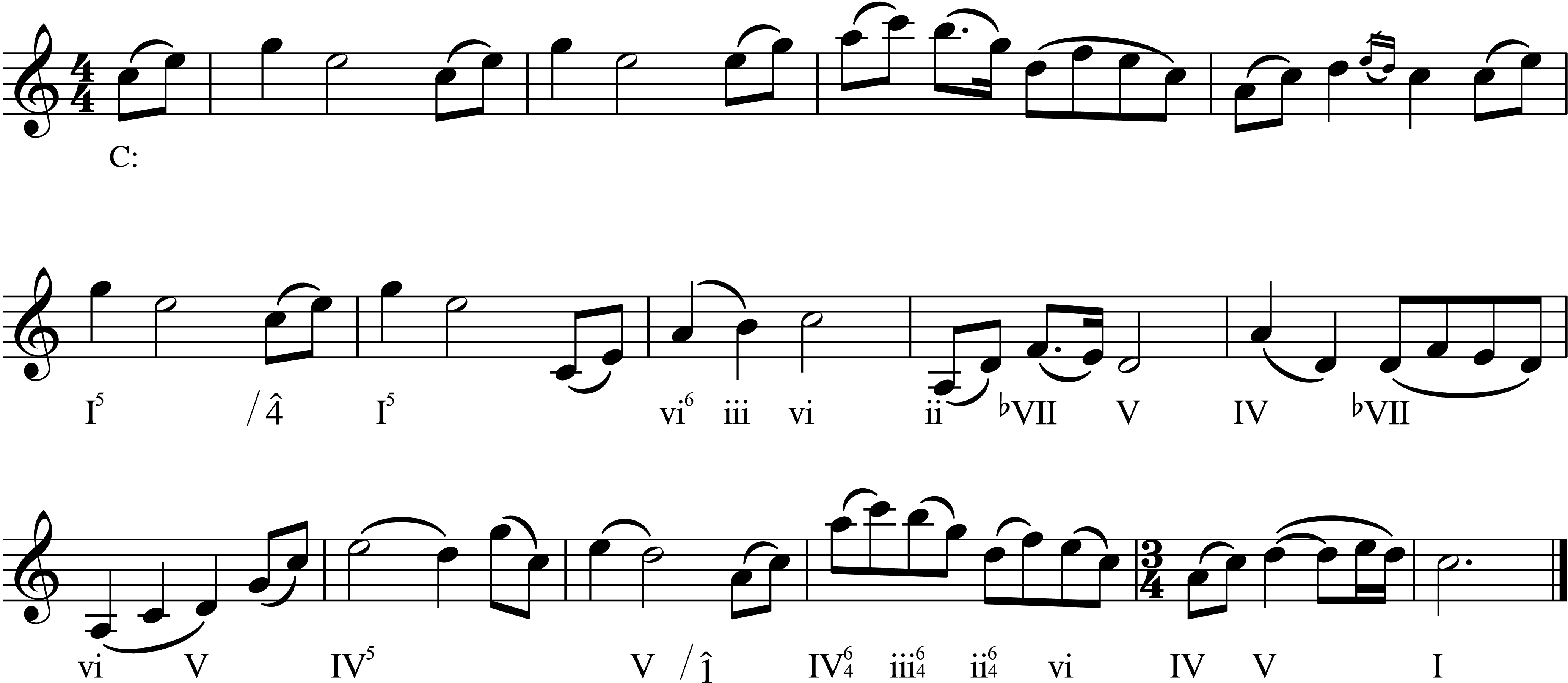
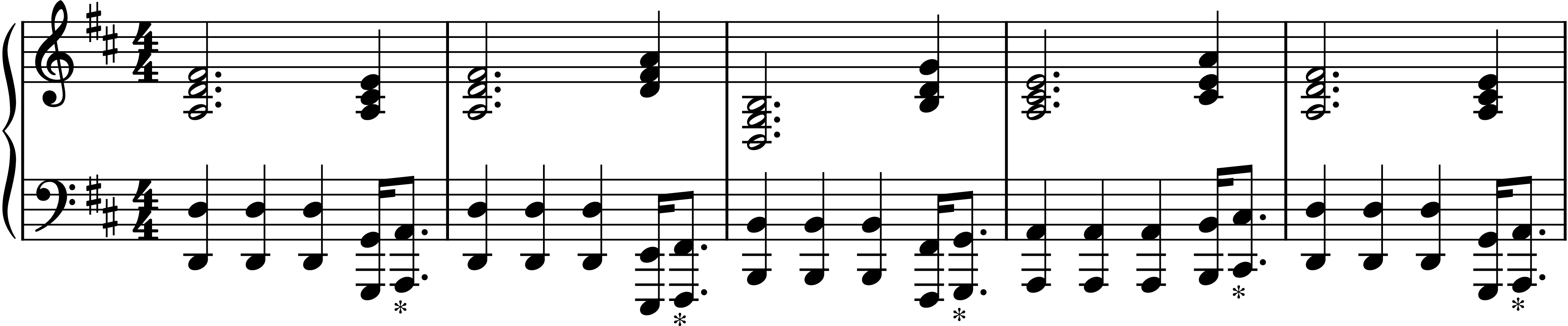
Williams’s other themes similarly illustrate his efforts to evoke this broad nineteenth-century American tradition for filmgoers. Beyond “The American Process,” the ne plus ultra of this aesthetic is “The People’s House,” another triadic theme, but one more rhythmically and often texturally restrained, particularly in the opening bars (see Example 5).Footnote 49 Its latter phrases show a tendency toward plagal harmonies, with a borrowed ♭VII acting as Williams’s common “signifier of America.”Footnote 50 The theme “With Malice Toward None” also conforms to this specific style: diatonic melody, gapped scale, arching phrases, declamatory trochaic lines, a phrase structure redolent of long meter (8/8/8/8), weak mediant-related harmonies (indicative of the “old tunebook flavour,” as noted in Gene Hinson’s study of select American sacred works), and the occasional Scotch snap rhythm—helping channel a folk sensibility more overt here than in other themes (see Example 6).Footnote 51 Furthermore, its opening contour is almost identical to “The American Process” (do-mi-sol-la-mi-sol), and seems drawn from a similarly marked idiom. Elsewhere, the anthemic “Freedom’s Call” appropriates the simple harmonies, trochaic meter, and the “scotch snap” accompaniment befitting of folk hymnody (Example 7 is more detailed to illustrate the distinctive rhythmic character of the bass and generally fuller orchestration).Footnote 52 The stylistic roots of these themes are further supported by Williams-biographer Tim Greiving who has noted titles for thematic arrangements including “‘Prayer’ for brass, ‘Hymn’ for strings.”Footnote 53 Rather than superficially replicate the Mason hymn style to generate a clear reverent sensibility, Williams’s hymns abide by their deep-rooted ideology of simplicity to prompt some sense of American purity. In addition, simplicity, solemnity, intelligibility, and dignity are suggested by the careful cueing and chamberlike orchestration of these hymns.Footnote 54
John Williams, Lincoln, “The People’s House”.

John Williams, Lincoln, “With Malice Toward None.” Scotch snap figures marked with asterisks.

John Williams, Lincoln, “Freedom’s Call.” Scotch snap figures marked with asterisks.

A representative example of this all-encompassing simplicity is a cue from the center of the film: “The Telegraph Office” (Example 8). Here, Lincoln dictates a message to a telegraph operator, instructing that a soon-to-arrive Confederate commission be kept out of Washington to delay peace talks until after the vote on the Thirteenth Amendment. Lincoln sermonizes, referring to Euclid’s first axiom (“things which are equal to the same thing are equal to each other”) as a means of proposing racial equality. A statement of “The People’s House” is cued on clarinet over string pedal as he reaches his conclusion and asks the operator to read a message.Footnote 55 The light timbre and spare orchestration inflect the scene with a pastoral calm, loosely echoing the bookending solo clarinet triads of Appalachian Spring whose semplice and “‘white’ tone” instruction would not be out of place in this scene.Footnote 56 Solo flute continues the theme as Lincoln dictates his new message, again continuing the religious air. Thereafter, iterative string chords present “Freedom’s Call” in a prayerful manner, marking Lincoln’s authoritative emendation, “Do not proceed to Washington,” with a simultaneous weight and warmth. A high-angle shot frames Lincoln standing to leave, as a soft trumpet continues “The People’s House.” Carefully dignifying his departure, the trumpet imparts associations of nobility and heroism to Lincoln, underlining the veneration of a soldier who watches on (Figure 2). The cue thus prompts our own quiet admiration.
John Williams, Lincoln, “The Telegraph Office” transcription with audiovisual annotations.

Example 8 Long description
Panel A: A musical score with annotations. The top staff is labeled Cl and the bottom staff is labeled Str. The annotations include The People's House, We begin with equality, and Lincoln asks for message to be read. Panel B: A musical score with annotations. The top staff is labeled Fl and the bottom staff is labeled Str. The annotations include Lincoln dictates new message and Do not proceed to Washington. Panel C: A musical score with annotations. The top staff is labeled Tpt and the bottom staff is labeled Str. The annotation includes Lincoln begins to leave.
Lincoln, a high angle shot shows the young soldier standing to watch Lincoln (screen right) quietly leave.

The late arrival of the score in the scene indicates the careful approach taken to cueing and synchronization. Daniel Day-Lewis’s delicate performance is musically unaccompanied for most of the five-minute scene, allowing his sermon to occupy the sole focus. When music does arrive for the final ninety seconds, it serves to emphasize Lincoln’s conclusion with a valorizing earnestness and to affirm the implicit perspective of the mise en scène and the soldiers the president addresses. Over the course of the scene, gentle push-ins, quiet reaction shots, and repeated subtly low-angled medium shots (before the shot shown in Figure 2) have operated to lend an understated weight to Lincoln’s words. The score operates similarly: delicate performance, spare orchestration, considered cueing, and hymn themes have been carefully measured to not overbear the already quiet scene and Day-Lewis’s performance. Adopting the aesthetics of simplicity, solemnity, and intelligibility central to reform hymnody, Williams roots his original hymns and the wider score in an authentic vernacular.
Simplicity, Historicity, and Authenticity in the Making of Lincoln
Casting his net wide when citing American influences, Williams also took inspiration from the approaches and techniques of nineteenth-century American symphonists. In the aforementioned KUSC interview, he cites Arthur Foote (1853–1937), George Whitefield Chadwick (1854–1931), and Chadwick’s student Edward Burlingame Hill (1872–1960) while speaking of his “interest in early symphonic American music,” noting that he “played fairly frequently” works of these composers who variously incorporated folk and hymn styles into their secular music.Footnote 57 In Williams’s view, these lesser-known nineteenth-century forebears touched a “groundstone” of what he calls “American melody”: a “bedrock source of melody” mined from liturgical sources, nineteenth-century hymnody, and from the folk traditions of New England and Appalachia.Footnote 58 Hewn from similar sacred and secular traditions, the tunes of Lincoln were excavated for their perceived intrinsic Americanness rather than for their resonances with any one religion or precise historical moment. We should then consider Williams’s conscientious crafting of historically rooted tunes akin to these precedents as symptomatic of a reverence for the history depicted in the film, a reverence which becomes pronounced when contextualized alongside Copland’s similar attitude toward American hymnody, against Williams’s previous Americana hymns, and within the more widespread concerns for authenticity during film production, as this section illustrates.
Working with American history and the “groundstone” of American music elicited a certain spirituality for Williams during composition. He described writing Lincoln as “a natural thing,” “an elusive spiritual thing,” a process he “didn’t have to think very much about,” practically suggesting some innate connection to these sources of American inspiration.Footnote 59 In this context, such an attitude brings to mind historical notions of music as a form of religion, with the composer acting as Creator. While it is generally out of character for Williams intentionally to portray himself in such a light (his methods, he describes, are like those of a sculptor, one who takes time to shape and hone materials), it is interesting to consider this perceived instinctive approach to composing purposefully American tunes. Here, Williams parallels Copland who also addressed the praxis of hymn setting when claiming that hymn tunes could only be “successfully handled” by a composer “who [was] able to identify himself with, and re[-]express in his own terms, the underlying emotional connotation of the material.”Footnote 60 Stripped of religiosity and abstracted from their original function, hymns, in Copland’s view, served as vehicles of expression. Williams, perhaps tacitly conscious of this expressive mandate, testified to the areligious American sound of the theme “With Malice Toward None,” describing it as a “Protestant hymn, but without any overt sense of religiosity.”Footnote 61 Williams’s paradoxical description here indicates his efforts to connect to a historical imaginary of American music informed by this hymnody, Appalachian and New England folk music, and the constructed folk music of those aforementioned art music composers. Tapping into this so-called American melody via instrumental hymns that pastiche existing traditions and thus are abstracted from a specific religiosity, Williams’s hymns can retain the broad signifying potential required for Hollywood film. Consequently, American associations are foregrounded, given these hymns’ resonance with specifically American aesthetics outlined by Copland.
In discussing his efforts to strip his hymns of religious connotations and accent their Americanness, Williams positioned himself in dialogue with the “imposed simplicity” of Copland’s music of the late 1930s and early 1940s.Footnote 62 Though Williams resisted conflation of his music with Copland’s when discussing Lincoln (likely due to reasons outlined in the previous sections), the implicit connection between the two manifests in a shared aesthetic. For Copland, the anti-decadence of the hymnal idiom—one defined by an “optimistic tone,” “a directness in expression of sentiment,” and a “songfulness”—was explicitly connected to a quintessential Americanness.Footnote 63 Evidently, Williams had a similar mindset, given the myriad American traditions he connected to his Lincoln hymns. Like Copland, Williams capitalized on the Shaker resonances of an American-associated simplicity.Footnote 64 This is made plain in the performance directions found in the published themes of Lincoln, which are often redolent of the “simply, expressive” indication for “Simple Gifts” in Appalachian Spring.Footnote 65 Hal Leonard’s publication of Lincoln for solo piano—atypically arranged by Williams himself—instructs that “With Malice Toward None” is to be played “with simple expression;” the string orchestra arrangement indicates “freely and simply” and “andante, with simple sincerity,” while the introduction of the trumpet and orchestra arrangement suggests “simply, nobly.”Footnote 66 (Few performance directions in these published themes indicate “religioso” or similar terms.Footnote 67) Before Lincoln, Williams had already drawn explicit connections to Shakerism and an American past when conflating Shaker associations with Richard Nixon’s Quaker upbringing while discussing the “Shaker/Quaker American roots solidity” of a nostalgic theme in Nixon.Footnote 68
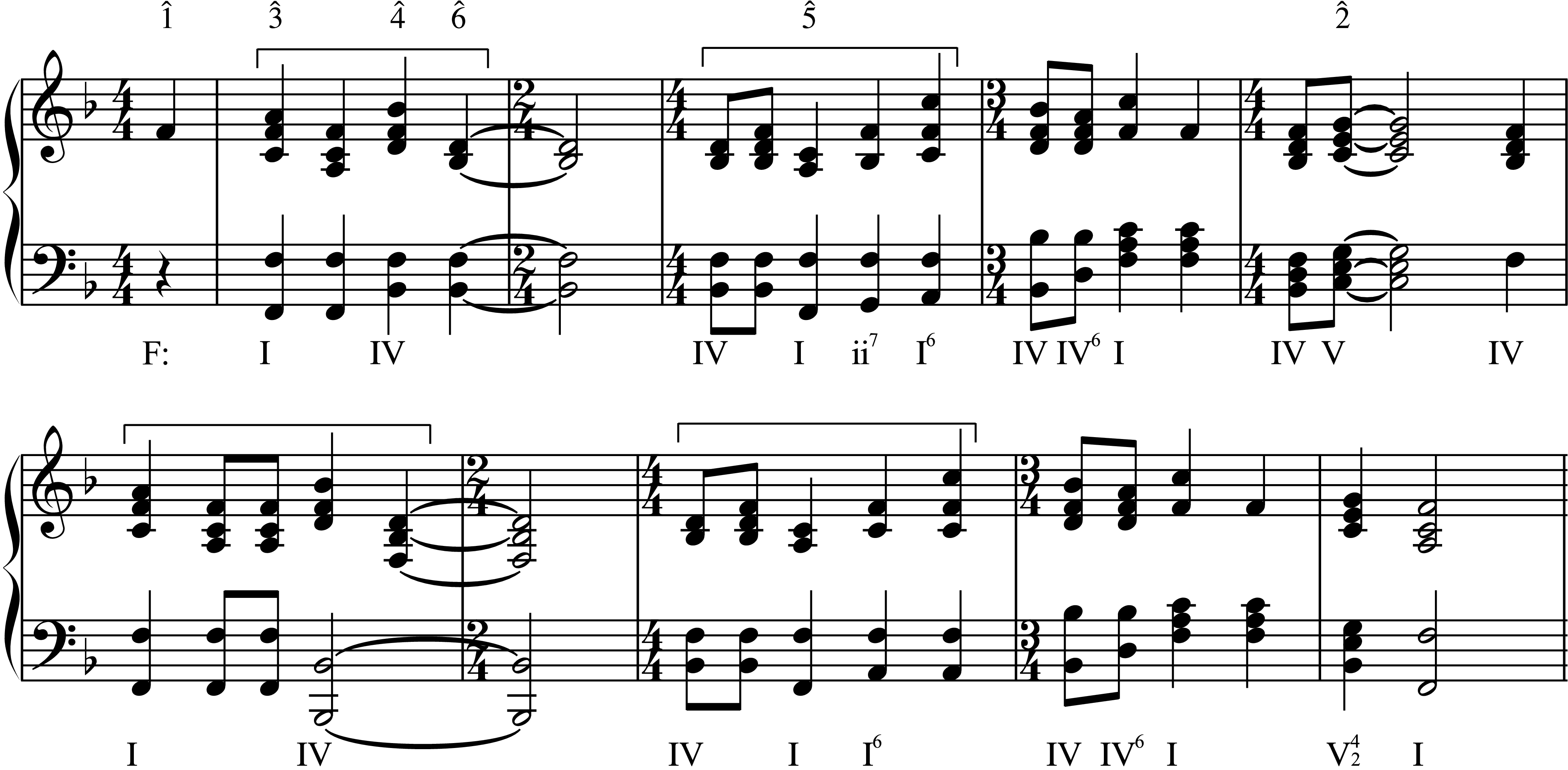
To exemplify the centricity of simplicity and an indebtedness to “American roots” rather than any overt “religiosity,” it is worthwhile contrasting Lincoln’s American hymns with those of Amistad and Saving Private Ryan. In Amistad, “The Long Road to Justice” theme ennobles the actions and status of former President John Quincy Adams. While sparse soli and prayerful chorales position it as a hymn, bravura brass statements evoke the fanfare topic, affecting broad Americana associations and the patriotic rather than the reverential. Though a chorale variation (Example 9) demonstrates a predominantly pentatonic melody (first appearances of scale degrees marked in the example) and plagal harmonies, its imbalanced phrases do not suggest such a familiar hymn meter or “grammatical” structure, and its wider disjunct intervals (marked with a square bracket) make it difficult to sing.Footnote 69 Consequently, “The Long Road to Justice” is more of an all-purpose Americana theme rather than a plain hymn in the Lincoln mold. Saving Private Ryan presents two hymn themes: an intradiegetic theme in the cue “Omaha Beach” and the extradiegetic “Hymn to the Fallen.”Footnote 70 The former, which venerates duty and military service, lacks the simplicity of Lincoln given its ungrammatical structure (due to varying phrase lengths), wide intervals (marked with square brackets in the example), and the irregular harmonic rhythm indicated by the bassline (Example 10).Footnote 71 The latter theme, “Hymn to the Fallen,” adheres closely to gospel hymn precedents: stepwise melody suggesting the pentatonic (first appearances of scale degrees marked in the example), stately isometric rhythms, a clear period structure, a possible 6/6/6/6 meter, and a religioso chorus (Example 11). But a hymnal purity is diluted by the snare ostinato, brass dyads, and dotted patterns that elsewhere signify militarism. While parallel motion and an evocative restraint can suggest the American, the work has a broader Euro-American Christian sound, in the vein of the multi-denominational hymn “Old Hundred.”Footnote 72 Spielberg perhaps recognized this, conferring the piece with a universality when noting that it would “stand the test of time and honour forever the fallen of this war and possibly all wars.”Footnote 73 This supposed universality testifies to the associative breadth of cinematic hymns abstracted from a specific religion, and ties “Hymn to the Fallen” to that similar a-religiosity Williams noted in Lincoln. Though the hymns of Amistad and Saving Private Ryan reflect and revere the American via hymn-redolent style topics, they lack the sheer simplicity of Lincoln, acting as stepping stones to Williams’s mature Americana.
John Williams, Amistad, “The Long Road to Justice.” Transcribed from Amistad: Piano/Vocal Selections (Cherry Lane Music, 1998).

Example 9 Long description
Panel A: A musical score with annotations and Roman numerals indicating chord progressions. The score is divided into measures with notes and rests. The annotations include numbers above the staff and Roman numerals below the staff. Panel B: A continuation of the musical score with similar annotations and Roman numerals. The score features various musical notations, including eighth and quarter notes, as well as dynamic markings.
John Williams, Saving Private Ryan, hymn theme from “Omaha Beach.” Transcribed from Saving Private Ryan (Cherry Lane, 1998).

John Williams, Saving Private Ryan, “Hymn to the Fallen.” Transcribed from Saving Private Ryan (Cherry Lane, 1998).

Williams’s distinct efforts to capture an antiquated musical vernacular rather than recall a troped Hollywood Coplandesque Americana are indicative of the historicist mindset of Lincoln’s production. His verbal references and musical allusions to the past suggest a desire for authenticity, one designed to enliven this mediatized history with a verisimilitude.Footnote 74 Concerns for a sense of historical accuracy resounded through film production and are detectable in production design and cinematography, and of course Day-Lewis’s strict method-acting approach.Footnote 75 Williams even positioned himself in dialogue with the meticulous method actor, comparing the innate “Americanisms” of music to “speech” and “inflection” and extending that comparison to Day-Lewis’s “believable impression” of Lincoln’s voice.Footnote 76 (Day-Lewis’s high, thin, and reedy voice clashed with traditional conceptions of Lincoln. Yet, Lincoln historians were quick to claim this vocal performance as more authentic than the previous bass and baritone Lincolns of Hollywood.Footnote 77) Sound designer Ben Burtt, speaking to these prevalent production attitudes, summarized that his goal was to make audiences “believe sounds are authentic”; accordingly, he and his team recorded and used the sounds of “‘Lincoln’s pew’” and the bell in St John’s Episcopal Church (an oft-visited church for Protestant presidents), the creaking furniture, clocks, and door knocks of the White House, and Lincoln’s own watch: “so, every time you hear that little ticking in the story, that’s Abraham Lincoln’s actual pocket watch.”Footnote 78 Burtt qualified these exercises in authenticity, observing that “I could have recorded a watch that belonged to my great-grandfather … but there is something sacred about working on a film about Lincoln.”Footnote 79 Here, the sound designer touches on two points that are relevant to Williams’s score: (1) a sense of individual obligation and (2) the significance of the “sacred” subject matter.
Firstly, just as it is improbable that general audiences can identify the idiosyncrasies of Lincoln’s timepiece, they are similarly unlikely to recognize Williams’s specific hymnal themes as being historically appropriate. Yet this was not the intent. It was “making this effort,” to use the composer’s words, that was significant; self-evident conscientiousness was more essential than the actual results of research.Footnote 80 For the audience, Williams’s music is already explicitly American, given its associations, cuing, and the pervasive resonances of the broadly defined Coplandesque in film scores. Any concerns regarding the authenticity of style are surely of secondary concern to the American-associated restraint and the “unadorned charm” of hymn tunes.Footnote 81 As Ilka Oramo has argued, “what is accepted as national is national, wherever its roots may be.”Footnote 82 For the audience, the score connotes the American successfully due to both the generic associations of the nineteenth-century hymnal vernacular, of pious religiosity, and its connection to a broad Americanness due to the lineage of the Shaker/Copland tradition—not to mention precedents for Williams’s American hymn topic from previous films. Furthermore, the positioning of Williams’s hymns within a narrative so central to American history affixes them to an Americanness in a reciprocal process. The score imparts a homespun and patriotic warmth and sentimentality to the film through its stylization, modesty, and discretion; while, simultaneously, the film weds the music to the history it depicts, using it—like costumes and make-up—to anchor the narrative with a verisimilitude. Given the idiomatic guarantee of stable associativity, Williams’s assiduous efforts in authenticity instead appear to be a personal imperative.
Secondly, while Williams described his “hope” that the score would be “remotely worthy of the writing, and the performing of the piece,” I argue that this intention was instead a plea to the history itself.Footnote 83 Williams’s assimilation of hymn traditions was not simply to add an appropriate period flavor, but because, like Burtt, he deemed the subject matter as something sacrosanct, and thus as requiring an especially diligent approach. As Spielberg described, the whole process of making Lincoln was an “entire sacred effort.”Footnote 84 Accordingly, tokenistic acts illustrating a devotion to America and its history occupied much of the filmmaking process. Not merely influencing the musical style itself, a sense of sacralization extended to the performance and recording of the soundtrack. Williams recorded the score with the Chicago Symphony Orchestra (with Day-Lewis in attendance), so chosen because Lincoln lived in Illinois and the state was the first to ratify the Thirteenth Amendment: “Steve and I [Williams] said to each other, ‘They’ve [the orchestra] earned the right to do this.’”Footnote 85 Whether the Chicago Symphony Orchestra “earned” the right to play and record this music just because of its location is a matter for debate: it seems like a welcome and useful opportunity for the orchestra rather than some “right” bestowed upon it by history.Footnote 86 This gesture, instead, demonstrates the general patriotic pretensions of composer and director.Footnote 87 Rather than work with Williams’s standard collaborators in Boston, London, or Los Angeles, the collaboration with the CSO could mark the Lincoln recording as unique and thus momentous in the minds of the director and composer. For them, the recording was hence endowed with a sense of the ceremonial through these geo-historical links and the novel collaboration, testifying to Burtt’s contention that there was “something sacred” about the project. Evidently, the history and subject matter have been so venerated during production that these—surely incidental—special efforts and ceremonial acts were required as expressions of a national faith. The composition of hymns distanced from his preceding American hymns and explicitly in dialogue with Shakerism and an elusive American rootedness, and the recording with an esteemed orchestra in American musical history, together reveal an atypical process that indicates Williams’s own pilgrimage to the authentic. Such patriotic worship reveals the reverence for this history and its idealized status in the minds of the filmmakers, a reverence that shaped the reception of the completed score, in turn.
Hymnody and Mythopoetics
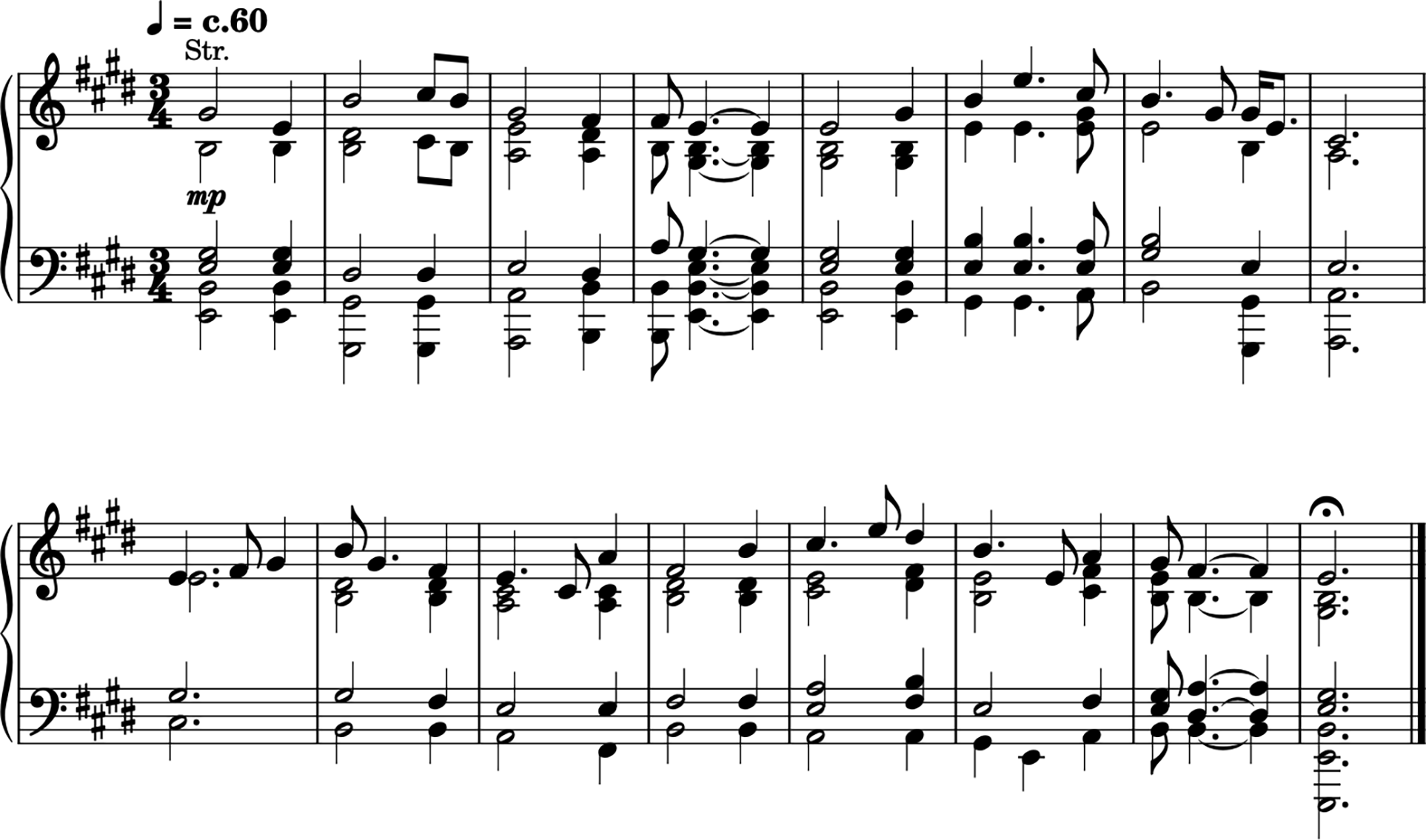
The climax of Lincoln offers a useful opportunity to discuss the score through the lens of mythopoetics. After the Thirteenth Amendment has passed and peace has been declared, the president makes for Ford’s Theatre, a pregnant moment for the audience.Footnote 88 “With Malice Toward None” is reintroduced, its first restatement since the prologue (where it accompanied a summary of the Civil War). The theme here acts in the vein of a “reminiscence motive”; the sense of import lent by its long-awaited return and its absence of a clear signifier do not suggest conventional leitmotivic signification but a larger mythological function permitting the audioviewer to reflect on their own and the cultural construction of Lincoln. As noted by Lehman, this “mythologizing impulse” pervades many Williams scores, the composer using the orchestra to “magnif[y] mundane events into epochal turning points and [turn] actors working from scripts into walking Jungian archetypes.”Footnote 89 The case is much the same here. The lack of explicit signification in this scene lends the theme “a mythic substrate, a fluid semiosis that points to an indelible realm beyond signification,” to borrow James Buhler’s description of Wagnerian leitmotifs apropos Star Wars.Footnote 90 Solo trumpet is cued as Lincoln prepares to leave, with thickened string harmonies added as Lincoln’s valet, William Slade, hurries after the president with his forgotten gloves. Rather than returning the gloves, Slade pauses to watch the lumbering silhouette of Lincoln quietly retiring down the hall (Figure 3). We are positioned in Slade’s perspective, echoing earlier moments in the film where the silhouetted form of Lincoln marks an iconic presence (see Figures 1 and 2). The gentle and slow trumpet hymn generates a serenity, encouraging a moment of reflection, with the resulting stillness only briefly countered by interjecting short piano dyads on a quick reverse shot of the glint-eyed valet.Footnote 91 The trumpet continues all the while, shadowing Lincoln’s exit and somberly cadencing over the scene transition (Example 12).
Lincoln, the President departs from the White House for Ford’s Theatre, as Slade looks on.

John Williams, Lincoln, “Trumpet Hymn” cue with audio-visual annotations.

The retention of the opening theme until this moment suggests the grander operations behind the hymnal score. “With Malice Toward None” acts as a sort of “baptism” for the president as a symbol, bookending the film and providing a musical frame for the entire story.Footnote 92 While other themes serve broader atmospheric purposes rather than explicit significatory ends, “With Malice Toward None” functions to extra-textually canonize the icon: a needless endeavor given Lincoln’s cultural and historical status.Footnote 93 The tone of finality in the scene—Lincoln’s unknowing goodbye, Slade’s distant admiration, and the audience’s foreknowledge—is also marked by the dignifying and ennobling trumpet timbre (a common musico-associative trope as demonstrated in “The Telegraph Office” cue). Realizing that the president has served his role in American history, the audience recognizes the music as signaling conclusion and thus the completion of the presidential portrait promised by the film title.Footnote 94 The staging, cinematography, and score quietly enshrine Lincoln during his departure: a simple and noble farewell for (what is shown to be) a simple and noble man, for the folk hero who will become the epic hero following his martyrdom. One expects the credits to follow Lincoln’s farewell, but an additional scene draws attention to the mythopoetic function of the score. Another statement of “With Malice Toward None” makes the underlying religiosity of Williams’s hymns overt, contrary to the intentions behind his religiously abstract hymns. This post-climactic descent into bathos—an “unnecessary addendum, an anticlimax”—is the trademark Spielbergian coda evident in his other American historical films like Saving Private Ryan, Amistad, and The Post.Footnote 95
Rather than allowing the audience to resign themselves to Lincoln’s inevitable fate after his departure for Ford’s Theatre, the would-be poignant end note is followed by twelve-year-old Tad Lincoln hearing of his father’s death and Lincoln being pronounced dead in the White House.Footnote 96 From a tableau of mourners and a medium shot of Lincoln’s deathbed, Spielberg pans to a close-up of a gas lamp. As the flickering flame obstructs our view of the deceased president, the shot dissolves into a memory of Lincoln’s “With Malice Toward None” speech from his Second Inaugural Address. We hear Lincoln before cutting to the flashback where he stands on the steps of the Capitol surrounded by attentive listeners. As his speech concludes, the “With Malice Toward None” theme is cued, “provid[ing] a reverential background to Lincoln’s words,” according to Williams.Footnote 97 The arrangement for prayerful strings renders the theme a dirge. If the foregone iteration of the theme was a dedication to legacy, this appearance is a memorial and a strikingly emotive one, given the warm string tone, the quasi rubato performance, and the comparatively thick orchestration (Example 13). In style and function, this statement of “With Malice Toward None” recalls Todd Decker’s “elegiac register”: a contemplative and/or mournful string-centered topic made a trope in late-twentieth century American war films and often “suggest[ing] a bid by the filmmakers to encourage viewers to think back upon the narrative through a particular sort of lens.”Footnote 98 In this elegiac mode, “With Malice Toward None” recalls Williams’s “musical devotional” for President Kennedy in JFK, “Arlington.” Additionally, with its function of memorialization and idealization, it is also linked to the “Theme from JFK”—reframed by Lehman as a “theme for” JFK.Footnote 99 Following these precedents, the elegiac “With Malice Toward None” can be read as another paean for the memory of a martyr. “With Malice Toward None” thus sentimentalizes the already poignant flashback, no longer “lingering in quiet support” but coming to the fore to confirm, in the text, that religious reverence for Lincoln-the-myth that pervaded film production.
John Williams, Lincoln, “With Malice Toward None” string elegy of final scene.

The score does not simply reflect the crowd’s adulation as they listen to Lincoln’s words. The dirge—like Lincoln’s speech—is instead directed at film-viewers, pointing to an audience-text relationship first prompted by the post-mortem augury of Lincoln’s Secretary of War, Edwin Stanton: “Now he belongs to the ages.” Such a perspective affirms Decker’s notion that musical eulogies encourage meta-textual associations.Footnote 100 Coincidence of the prayerful thematic statement in the “elegiac register” and the meta-textual conclusion of Lincoln’s speech makes any previously subtle mythologizing tendencies overt, as a musical “monumentalization” comes to the fore.Footnote 101 The emotive music of the flashback thus momentarily transcends narrative space, reminding us of the filmic framing of this history and of our own viewing. This meta-textual moment marks “With Malice Toward None” as Williams’s own commemorative Lincoln portrait, not simply as a theme confined to the film but a patriotic tone poem dedicated to, and in honor of, Lincoln’s memory and spirit.Footnote 102
If one is not persuaded by this revelation of the meta-textual function of “With Malice Toward None” in the coda (amplified by the sober brass chorale arrangement in the credits), then its extra-filmic appearances reflect its extended patriotic function. These include a number of performances by “The President’s Own” United States Marine Band between 2016 and 2023, by the Boston Pops at a “A Country Salute to Our Troops” concert in 2013 (programmed with “Hymn to the Fallen”), and as a solo trumpet arrangement for A Capitol Fourth in 2013 to commemorate the 150th anniversary of the Battle of Gettysburg.Footnote 103 Williams’s solo piano performance of “With Malice Toward None on the original soundtrack album is also a rarity suggestive of a personal significance. With these performances revealing the hymn’s capacity to serve national rituals of remembrance, “With Malice Toward None” is positioned alongside Williams’s music for national commemorations and celebrations. Not only is the vernacular of Lincoln related to his other hymns for American occasions but it is similarly dedicative, placing it in a lineage of many Lincoln-related works by other American composers including Copland, Bloch, Ives, Robert Russell Bennett, Philip Glass, Rubin Goldmark, Morton Gould, Roy Harris, Daniel Gregory Mason, Robert Moffat Palmer, Florence Price, Earl Robinson, Elie Siegmeister, Jacob Weinberg, Jaromír Weinberger, and others.Footnote 104 As Thomas Kernan has argued, these Lincoln-dedicated works connect the occasion of their performance to “a historical origin and a sense of lineage” and permit composers to “demonstrate their ideological proximity to the historical figure.”Footnote 105 Tethered to “a historical origin” through this lineage of works, his fantasized hymnal tradition, and the hyperreal recreation of Lincoln and his time in the film, Williams scores both mediatized man and idealized myth, proffering interpretations ranging from a simple esteem for a pillar of U.S. history, to an earnest patriotic devotion, to potentially theocratic understandings of the presidential.
“With Malice Toward None” continues the Lincoln tradition begotten by Williams’s forebears in American art music. But more than simply remembering Lincoln, Williams’s Lincoln supports his own self-positioning as a distinctly American composer, not just a film composer. To connect with Lincoln, as Kernan contended, “is to adopt the moral security of his legacy as a bulwark for one’s own causes.”Footnote 106 The elevation of “With Malice Toward None” beyond the narrative—the results of a cueing, composition, and recording process distanced from the composer-director duo’s established modus operandi—reveals both the mythopoetic function of these homespun hymns but also their patriotic meaning and potentiality for their composer.
“Now he belongs to the ages”
The hymn topic and the aesthetic of simplicity shrouded musical mythopoetics until the finale—including in the introduction, “The Telegraph Office,” the departure for Ford’s Theatre as demonstrated, in scenes of perceived historical or cultural significance as when Black citizens enter the House, and in the vote on the Thirteenth Amendment—functioning to mask the score’s reverential capacity and to locate Williams’s hymns in this mediatized history.Footnote 107 This distinguishes Lincoln from Williams’s other scores for American historical films. JFK and Nixon, as Lehman contends, do not “show the past to us” but explore what “issues of the past (can) mean,” partly by “disrupt[ing] or dismantl[ing]” otherwise familiar style topics.Footnote 108 Elsewhere, Amistad, Saving Private Ryan, and The Patriot are located within the Coplandesque, using Lerner’s “pastoral trope” and Kleppinger’s “Copland sounds” to underscore more clichéd cinematic representations of U.S. history and as an expedient way of “projecting certain U.S. values.”Footnote 109 These scores (especially the latter) co-mingled American-coded style topics in a more typical Hollywood style and less directly derived from particular sources and aesthetics indebted to historic American musical traditions. Singular in Williams’s oeuvre, the Lincoln score was hence composed and functioned to suit contemporary perspectives of a folk and epic Lincoln, an iconic figure of U.S. history seen as requiring his own cinematically legible hymn tradition. Williams’s hymns were thus ordained to deify the American icon and so earthed in vernaculars suggestive of nineteenth-century American music rather than any specific religion. Though the composer claims his hymns are “without any overt sense of religiosity,” they reveal a deep spirituality, one which maintains a ritualized faith in—what the film presents as—this iconic martyr in American history (Figure 4).Footnote 110
Lincoln, Lincoln concluding his “With Malice Toward None” speech, adopts a cruciform pose in the final shot of the film.

Investigating the origins, aesthetics, and reception of Williams’s hymns, this article has elucidated facets of the composer’s practice and patriotism. Williams availed of the chance to separate his musical Americana from the Coplandesque frame delimiting Hollywood scores by writing original hymns resonant with the film setting. My investigation of these historically fantasized hymns and Williams’s commentary on them has illustrated the composer’s deep knowledge of nineteenth-century American art and folk music, and his efforts to journey into the authentic to make his compositions “worthy” of a film deemed sacred by its creators.Footnote 111 The evident consideration behind these compositional endeavors and the aesthetic of simplicity illustrates Williams’s own patriotic devotion to this American past and the role of hymnody in sacralizing the Lincoln myth, but also raises further questions concerning knotty issues of authenticity in relation to film music and how a composer’s ideology might shape a score and audience reaction in turn—issues beyond the scope of one case study. Ultimately, as musical monumentalizing continued beyond the cinema, this music would broadcast Williams’s bona fides as an American composer, serving America on varied cultural occasions and, in the process, embodying his own devotion to his homeland. The Lincoln hymns worked to consolidate the legacy of the “Great Emancipator” in an American cultural consciousness and to cement Williams and his explicitly American music in that consciousness also, marking him not just as a composer of film but a composer of America.
Acknowledgements
With thanks to both anonymous peer reviewers for their helpful suggestions; to Emilio Audissino, Antonio Cascelli, Christopher Morris, and Cathal Twomey for their advice when this article was a thesis chapter; and to Laura Anderson, Adam Behan, and Hannah Millington, who advised on earlier drafts.
Conor Power is a Teaching Fellow in Music Theory and Performance at University College Dublin. He has published further articles on the music of Johnn Williams with Émergences and Cuadernos de Investigación Musical and is contributing to the upcoming Cambridge Companion to John Williams. Conor is interested in public musicology; he has been interviewed by The Journal and the BBC, written for RTÉ Brainstorm, and lectured at the Irish Film Institute.






 Open access

