





1 Introduction
The study of language density can be traced back to the work of Schützenberger in the 1960s [Reference Schützenberger53], Berstel in the 1970s [Reference Berstel and Nivat6], and Hansel and Perrin in the 1980s [Reference Hansel and Perrin32]. The idea also appears in Eilenberg’s monograph [Reference Eilenberg26] and in the monograph by Berstel, Perrin, and Reutenauer [Reference Berstel, Perrin and Reutenauer8]. These earlier works, motivated mainly by automata theory and the theory of codes, focused on density with respect to Bernoulli measures (see §4).
In the present paper, we draw our motivation from symbolic dynamics and turn to ergodic measures on shift spaces. Within this setting, the density of a given language can be understood as the frequency (with respect to some given ergodic measure) of some pattern in the shift space—for example, a pattern like “words with an even number of a given letter”. More precisely, given a shift X on the alphabet A endowed with a shift-invariant probability measure
$\mu $
 , and
$L \subseteq A^*$
, and
$L \subseteq A^*$
 a language, the density
$\delta _\mu (L)$
a language, the density
$\delta _\mu (L)$
 of L under the measure
$\mu $
of L under the measure
$\mu $
 is defined as the Cesàro limit of
$\mu (\{ u\in L : |u|=n\})$
is defined as the Cesàro limit of
$\mu (\{ u\in L : |u|=n\})$
 as
$n\to \infty $
as
$n\to \infty $
 , whenever it exists.
We restrict our attention to group languages, i.e., languages recognized by morphisms onto finite groups: by fixing a morphism
$\varphi \colon A^*\to G$
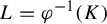
 onto a finite group G, we consider a language of the form
$L=\varphi ^{-1}(K)$
onto a finite group G, we consider a language of the form
$L=\varphi ^{-1}(K)$
 ,
$K\subseteq G$
,
$K\subseteq G$
 . The density of the languages of this form can be understood using a skew product (sometimes called a group extension), which, briefly put, is a dynamical system built from a group G, together with a dynamical system acting on G. In our case, we consider a first dynamical system, a shift X over A that supports a measure
$\mu $
. The density of the languages of this form can be understood using a skew product (sometimes called a group extension), which, briefly put, is a dynamical system built from a group G, together with a dynamical system acting on G. In our case, we consider a first dynamical system, a shift X over A that supports a measure
$\mu $
 , which is then enriched through an action on a finite group G defined via a morphism
$\varphi $
, which is then enriched through an action on a finite group G defined via a morphism
$\varphi $
 . This yields a further dynamical system, the skew product, which is governed both by the dynamics of the original system X and by the algebraic structure of the group G. A precise definition of the skew products used in this paper may be found at the beginning of §3. The key idea in this paper is that the density can be expressed in terms of limits of ergodic sums in a skew product (cf. Theorem 1.1). This allows us to show that the density always exists and, under suitable conditions, to calculate it. This approach is strongly related with foundational work by Furstenberg, Veech, Schmidt, and Zimmer (among others) on ergodic properties of skew products [Reference Furstenberg29, Reference Schmidt52, Reference Veech56, Reference Veech57, Reference Zimmer59]. Veech’s work, in particular, is concerned with a special case of the very same notion of density studied here and it played a key role in guiding our investigation.
Given a shift space X with an ergodic measure
$\mu $
 , one of our main results relates the density
$\delta _\mu (L)$
, one of our main results relates the density
$\delta _\mu (L)$
 with ergodic measures on the skew product between X and G, denoted
${G\rtimes _{\varphi }X}$
with ergodic measures on the skew product between X and G, denoted
${G\rtimes _{\varphi }X}$
 , where the skewing function is the cocycle determined by
$\varphi $
, where the skewing function is the cocycle determined by
$\varphi $
 (a skewing function which depends only on the symbol at the zero coordinate of elements of the shift). We say that a measure
$\overline \mu $
(a skewing function which depends only on the symbol at the zero coordinate of elements of the shift). We say that a measure
$\overline \mu $
 on the skew product projects to
$\mu $
on the skew product projects to
$\mu $
 if
$\overline \mu (G\times B) = \mu (B)$
if
$\overline \mu (G\times B) = \mu (B)$
 for every measurable
$B\subseteq X$
for every measurable
$B\subseteq X$
 .
.
Theorem 1.1. Let X be a shift space on a finite alphabet A with a shift-invariant probability measure
$\mu $
 and let
$\varphi \colon A^*\to G$
and let
$\varphi \colon A^*\to G$
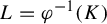
 be a morphism onto a finite group G. For every group language
$L=\varphi ^{-1}(K)$
be a morphism onto a finite group G. For every group language
$L=\varphi ^{-1}(K)$
 , where
$K\subseteq G$
, where
$K\subseteq G$
 , the density
$\delta _\mu (L)$
, the density
$\delta _\mu (L)$
 exists. Moreover, if
$\mu $
exists. Moreover, if
$\mu $
 is ergodic, the density is given by

where
$\overline \mu $
 is any ergodic measure on the skew product
$G \rtimes _{\varphi } X$
is any ergodic measure on the skew product
$G \rtimes _{\varphi } X$
 that projects to
$\mu $
that projects to
$\mu $
 .
.
The result is proved in §3. The proof uses the known fact that the skew product always admits an ergodic measure
$\overline \mu $
 that projects to
$\mu $
that projects to
$\mu $
 (see Lemma 3.4). A natural candidate for the measure
$\overline \mu $
(see Lemma 3.4). A natural candidate for the measure
$\overline \mu $
 is the product measure
$\nu \times \mu $
is the product measure
$\nu \times \mu $
 , where
$\nu $
, where
$\nu $
 is the uniform probability measure on G. When
$\nu \times \mu $
is the uniform probability measure on G. When
$\nu \times \mu $
 happens to be ergodic, then the above formula takes on the following very simple form (see Corollary 3.6):

However, this is not always the case: see for instance Examples 3.7, 5.19, 7.12, and 7.13. We also introduce in §3.3 a pointwise version of density (Definition 3.10). This leads to a further proof of the existence of the density of group languages, expressed as an integral over pointwise densities.
In the rest of the paper, we apply Theorem 1.1 to two cases: when
$\mu $
 is a Markov measure on a shift of finite type (SFT) and when
$\mu $
is a Markov measure on a shift of finite type (SFT) and when
$\mu $
 is an ergodic measure on a minimal shift space. In the former case, we present a characterization of ergodicity of the product measure
$\nu \times \mu $
is an ergodic measure on a minimal shift space. In the former case, we present a characterization of ergodicity of the product measure
$\nu \times \mu $
 when
$\mu $
when
$\mu $
 is an r-step Markov measure,
$r\geq 1$
is an r-step Markov measure,
$r\geq 1$
 , meaning that

for all words w of length
$m\geq r$
 such that
$\mu (x_m = a \mid x_{[0,m)} = w)\neq 0$
such that
$\mu (x_m = a \mid x_{[0,m)} = w)\neq 0$
 . We define for this purpose a suitable notion of irreducibility, called
$\varphi $
. We define for this purpose a suitable notion of irreducibility, called
$\varphi $
 -irreducibility (Definition 5.1), which leads to the following theorem.
Theorem 1.2. Let
$\mu $
 be an r-step Markov measure on
$A^{\mathbb {Z}}$
be an r-step Markov measure on
$A^{\mathbb {Z}}$
 ,
$r\geq 1$
,
$r\geq 1$
 , and let X be the support of
$\mu $
, and let X be the support of
$\mu $
 . Let
$\varphi \colon A^*\to G$
. Let
$\varphi \colon A^*\to G$
 be a morphism onto a finite group with uniform probability measure
$\nu $
be a morphism onto a finite group with uniform probability measure
$\nu $
 . If X is
$\varphi $
. If X is
$\varphi $
 -irreducible, then the product measure
$\nu \times \mu $
-irreducible, then the product measure
$\nu \times \mu $
 is ergodic on the skew product
$G\rtimes _{\varphi }X$
is ergodic on the skew product
$G\rtimes _{\varphi }X$
 .
.
In particular, for every
$K\subseteq G$
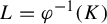
 , the language
$L = \varphi ^{-1}(K)$
, the language
$L = \varphi ^{-1}(K)$
 has density
$\delta _\mu (L) = |K|/|G|$
has density
$\delta _\mu (L) = |K|/|G|$
 .
.
When
$\mu $
 is a Bernoulli measure, the above result also follows from the work of Hansel and Perrin [Reference Hansel and Perrin32, Theorem 3], which uses a completely different approach based on the theory of codes. We provide a survey of this approach in §4.
In the case of minimal shift spaces, we specialize Theorem 1.1 into a formula that holds under the condition that
$\nu \times \mu $
 is ergodic on the minimal closed invariant subsets of
$G\rtimes _{\varphi }X$
is ergodic on the minimal closed invariant subsets of
$G\rtimes _{\varphi }X$
 . This generalizes the simple formula found when the product measure
$\nu \times \mu $
. This generalizes the simple formula found when the product measure
$\nu \times \mu $
 is ergodic.
Let us briefly present the notion, inspired by [Reference Lemańczyk and Mentzen38, Proposition 2.1], which lies at the core of this more general formula. Given a subgroup
$H\leq G$
 , a map
$\alpha $
, a map
$\alpha $
 from X to the right coset space
$H\backslash G$
from X to the right coset space
$H\backslash G$
 is called a cobounding map mod H if it satisfies the following coboundary type equation, where S denotes the shift map:

The term cobounding appears for instance in a paper by Baggett et al [Reference Baggett, Medina and Merrill3]; the terms transfer function and intertwining have also been used with similar meanings in [Reference Baggett, Medina and Merrill3, Reference Baggett and Merrill4, Reference Ramsay51]. As the name suggests, this notion is related with cocycles and coboundaries, and more broadly to the long history of cohomology in ergodic theory. In addition to [Reference Lemańczyk and Mentzen38] and the previously mentioned work of Furstenberg, Veech, Schmidt, and Zimmer, we drew inspiration also from [Reference Anzai2, Reference Conze20]. The following theorem is our third main result; its statement uses a natural partial order on cobounding maps, which is introduced in §7.2.
Theorem 1.3. Let X be a minimal shift space on A with an ergodic measure
$\mu $
 and
$\varphi \colon A^*\to G$
and
$\varphi \colon A^*\to G$
 a morphism onto a finite group G with uniform probability measure
$\nu $
a morphism onto a finite group G with uniform probability measure
$\nu $
 . Suppose that
$\nu \times \mu $
. Suppose that
$\nu \times \mu $
 is ergodic on each of the minimal closed invariant subsets of
$G\rtimes _\varphi X$
is ergodic on each of the minimal closed invariant subsets of
$G\rtimes _\varphi X$
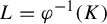
 . Then, for every group language
$L = \varphi ^{-1}(K)$
. Then, for every group language
$L = \varphi ^{-1}(K)$
 , where
$K\subseteq G$
, where
$K\subseteq G$
 , the density
$\delta _\mu (L)$
, the density
$\delta _\mu (L)$
 is given by the following formula, where
$\alpha \colon X\to H\backslash G$
is given by the following formula, where
$\alpha \colon X\to H\backslash G$
 is any minimal cobounding map:

Behind this last result is a bijection between the minimal closed invariant subsets of
$G\rtimes _{\varphi } X$
 and the cobounding maps that are minimal under the aforementioned partial order (Proposition 7.4). This entails, among other things, that whenever X is minimal,
$\nu \times \mu $
and the cobounding maps that are minimal under the aforementioned partial order (Proposition 7.4). This entails, among other things, that whenever X is minimal,
$\nu \times \mu $
 can be ergodic only when
$G\rtimes _{\varphi } X$
can be ergodic only when
$G\rtimes _{\varphi } X$
 itself is minimal (Corollary 7.2). The formula in Theorem 1.3 is derived from Theorem 1.1, where the role of the ergodic measure
$\overline \mu $
itself is minimal (Corollary 7.2). The formula in Theorem 1.3 is derived from Theorem 1.1, where the role of the ergodic measure
$\overline \mu $
 is played by an appropriate rescaling of the measure
$\nu \times \mu $
is played by an appropriate rescaling of the measure
$\nu \times \mu $
 , with
$\nu $
, with
$\nu $
 being the uniform probability measure on G. This rescaling explains the factor
$1/|H|$
being the uniform probability measure on G. This rescaling explains the factor
$1/|H|$
 in the formula.
Theorem 1.3 motivates further study of the structure of the skew products between minimal shifts and finite groups, which includes a characterization of minimality of such skew products in terms of return words (Theorem 6.1). We first give a combinatorial proof of this characterization using the theory of bifix codes, inspired by ideas from earlier works [Reference Berstel, De Felice, Perrin, Reutenauer and Rindone7, Reference Berthé, De Felice, Dolce, Leroy, Perrin, Reutenauer and Rindone12]. Later, we show that the same conclusion can be reached using cobounding maps (Proposition 7.8).
Having in mind Theorem 1.3, we also provide sufficient conditions for ergodicity of
${\nu \times \mu }$
 on minimal closed invariant subsets of
$G\rtimes _{\varphi } X$
on minimal closed invariant subsets of
$G\rtimes _{\varphi } X$
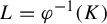
 . A first condition is given in Corollary 7.11 combined with Proposition 7.10, and a second one, restricted to the case of shift spaces generated by primitive substitutions, is given in Proposition 8.3. We deduce as a corollary of the second condition that substitutive dendric shifts (definitions are recalled in §8) have ergodic skew products with all finite groups and, consequently, the density of
$L= \varphi ^{-1}(K)$
. A first condition is given in Corollary 7.11 combined with Proposition 7.10, and a second one, restricted to the case of shift spaces generated by primitive substitutions, is given in Proposition 8.3. We deduce as a corollary of the second condition that substitutive dendric shifts (definitions are recalled in §8) have ergodic skew products with all finite groups and, consequently, the density of
$L= \varphi ^{-1}(K)$
 is simply
$|K|/|G|$
is simply
$|K|/|G|$
 ,
$K\subseteq G$
,
$K\subseteq G$
 (see Corollary 3.6).
Here is an example of what these results tell us about specific systems. Consider the Fibonacci shift on the two-letter alphabet
$\{a,b\}$
 , whose definition is recalled in §3.4. For each word w in the language of the shift space, denote by
$|w|_a$
, whose definition is recalled in §3.4. For each word w in the language of the shift space, denote by
$|w|_a$
 the number of occurrences of a in w. Then, we can apply Theorem 1.1 to deduce that the average probability over sufficiently long words w that
$|w|_a$
the number of occurrences of a in w. Then, we can apply Theorem 1.1 to deduce that the average probability over sufficiently long words w that
$|w|_a$
 is congruent to r mod m is approximately
$1/m$
is congruent to r mod m is approximately
$1/m$
 for each
$r=0,\ldots , m-1$
for each
$r=0,\ldots , m-1$
 . However, the convergence of these probabilities holds only in the sense of Cesàro mean. This specific example with
$m=2$
. However, the convergence of these probabilities holds only in the sense of Cesàro mean. This specific example with
$m=2$
 is developed in detail in §3.4.
There have been previous results of a similar nature concerning equidistribution modulo m. For instance, Veech [Reference Veech56, Reference Veech57] studied the parity of the number of visits to an interval by the orbit of a point under an irrational rotation (see Example 3.11), and Jager and Liardet [Reference Jager and Liardet34] studied the congruence classes of the matrices in
$\operatorname {GL}(2,\mathbb {Z})$
 associated with continued fraction expansions of real numbers (see Example 3.16). We also revisit these results in §9 in the particular case of Sturmian shifts. In each case, it is ergodicity of a relevant skew product that implies equidistribution among cosets. Our approach provides still more examples. These examples include the Thue–Morse shift (explored in Examples 2.1 and 7.12) and the case of substitutive dendric shifts (presented in §8.2), which includes substitutive Sturmian shifts and substitutive codings of interval exchanges.
Let us give a brief overview of the paper’s structure. Section 2 gives some preliminaries on symbolic dynamics. Section 3 recalls the definition of skew products and gives an elementary proof of our first main result, Theorem 1.1, which shows in particular that the density always exists. We also provide an alternative proof of the existence using a pointwise version of density. We then survey the original approach to density under Bernoulli measures in §4, relying on notions from algebraic theory of formal languages. The study of the density for SFTs is then handled in Theorem 1.2 together with a discussion on various notions of irreducibility. Section 6 contains the material on bifix codes and a characterization of minimal skew products in terms of return words. Our third main result, Theorem 1.3, is presented in §7, where cobounding maps are studied. The section also contains a simple sufficient condition for ergodicity of the product measure
$\nu \times \mu $
 on minimal closed invariant subsets. In §8, we take a closer look at shifts generated by primitive substitutions and we consider particular examples of skew products based on Sturmian shifts in §9.
2 Symbolic dynamics
Let A be a finite alphabet. Let
$\varepsilon $
 stand for the empty word of the free monoid
${A}^*$
stand for the empty word of the free monoid
${A}^*$
 and
$A^+ = A^*\setminus \{\varepsilon \}$
and
$A^+ = A^*\setminus \{\varepsilon \}$
 . We denote by
$A^{\mathbb {Z}}$
. We denote by
$A^{\mathbb {Z}}$
 the set of two-sided infinite words on A. For any word w in the free monoid
$A^*$
the set of two-sided infinite words on A. For any word w in the free monoid
$A^*$
 (endowed with concatenation),
$|w|$
(endowed with concatenation),
$|w|$
 denotes the length of w and
$|w|_a$
denotes the length of w and
$|w|_a$
 stands for the number of occurrences of the letter a in the word w. We start indexing finite words with 0, so that a word
$w\in A^*$
stands for the number of occurrences of the letter a in the word w. We start indexing finite words with 0, so that a word
$w\in A^*$
 has the form
$w = w_0w_1\cdots w_{n-1}$
has the form
$w = w_0w_1\cdots w_{n-1}$
 , where
$n=|w|$
, where
$n=|w|$
 . Given
$0\leq i\leq j< n$
. Given
$0\leq i\leq j< n$
 , we let

and we extend a similar notation for infinite words.
A factor of a (finite or infinite) word w is defined as a finite concatenation of consecutive letters occurring in w, that is, a word u is a factor of w if there exist indices
$i\leq j$
 such that
$u = w_{[i,j)}$
such that
$u = w_{[i,j)}$
 . If w is a finite word, then u is a factor of w precisely when there are words p and s such that
$w = pus$
. If w is a finite word, then u is a factor of w precisely when there are words p and s such that
$w = pus$
 . When
$p = \varepsilon $
. When
$p = \varepsilon $
 (respectively,
$s = \varepsilon $
(respectively,
$s = \varepsilon $
 ), we say that u is a prefix (respectively, suffix) of w.
An infinite word
$x = (x_n)_{n\in \mathbb {Z}}$
 is uniformly recurrent if every word occurring in x occurs in an infinite number of positions with bounded gaps; in other words, for every factor w of x, there exists a positive integer m such that for every n, w is a factor of
$x_{[n,n+ms)}$
is uniformly recurrent if every word occurring in x occurs in an infinite number of positions with bounded gaps; in other words, for every factor w of x, there exists a positive integer m such that for every n, w is a factor of
$x_{[n,n+ms)}$
 .
.
We view closed shift-invariant sets of two-sided infinite words as dynamical systems under the map S, called the shift map, defined by

A shift space (also shortened to shift) is a pair
$(X,S)$
 , where X is a topologically closed and shift-invariant subset of
$A^{\mathbb {Z}}$
, where X is a topologically closed and shift-invariant subset of
$A^{\mathbb {Z}}$
 for some finite alphabet A. We usually shorten
$(X,S)$
for some finite alphabet A. We usually shorten
$(X,S)$
 as X when we refer to the system
$(X,S)$
as X when we refer to the system
$(X,S)$
 . The language of X is defined as the set
$\mathcal {L}(X)$
. The language of X is defined as the set
$\mathcal {L}(X)$
 of factors of elements of X

When a shift X is said to be defined on the alphabet A, we assume that
$A\subseteq \mathcal {L}(X)$
 .
.
A shift space is said to be minimal if it admits no proper non-empty closed and shift-invariant subset; equivalently, the S-orbit of every element of X is dense. Note that a shift space X is minimal if and only if every infinite word
$x \in X$
 is uniformly recurrent. However, a shift space is called irreducible if there exists an element
$x\in X$
is uniformly recurrent. However, a shift space is called irreducible if there exists an element
$x\in X$
 with dense S-orbit. This is equivalent to the following property of
$\mathcal {L}(X)$
with dense S-orbit. This is equivalent to the following property of
$\mathcal {L}(X)$
 : for every
$u,v\in \mathcal {L}(X)$
: for every
$u,v\in \mathcal {L}(X)$
 , there exists
$w\in A^*$
, there exists
$w\in A^*$
 such that
$uwv\in \mathcal {L}(X)$
such that
$uwv\in \mathcal {L}(X)$
 .
.
Let X be a shift space on A and fix
$w\in \mathcal {L}(X)$
 . We denote by
$\mathcal {R}_X(w)$
. We denote by
$\mathcal {R}_X(w)$
 the set of (right) return words to w. It is, by definition, the set of words r such that
$rw$
the set of (right) return words to w. It is, by definition, the set of words r such that
$rw$
 is in
$\mathcal {L}(X)$
is in
$\mathcal {L}(X)$
 and has exactly two factors equal to w, one as a prefix and the other one as a suffix; that is,

Let
$X\subseteq A^{\mathbb {Z}}$
 be a shift space equipped with a Borel probability measure
$\mu $
be a shift space equipped with a Borel probability measure
$\mu $
 . For
$w\in \mathcal {L}(X)$
. For
$w\in \mathcal {L}(X)$
 , we denote

the right cylinder defined by w (right refers here to the fact this definition involves only non-negative indices). When X is clear from context, we often drop the subscript X and write simply
$[w]$
 . Note that we have
$\mu ([\varepsilon ])=1$
. Note that we have
$\mu ([\varepsilon ])=1$
 and
and

The measure
$\mu $
 is invariant if
$\mu (S^{-1}U)=\mu (U)$
is invariant if
$\mu (S^{-1}U)=\mu (U)$
 for every Borel set
$U\subseteq X$
for every Borel set
$U\subseteq X$
 . Note that
$\mu $
. Note that
$\mu $
 is invariant if and only if, for every
$w\in \mathcal {L}(X)$
is invariant if and only if, for every
$w\in \mathcal {L}(X)$
 ,
,

Recall that an invariant measure
$\mu $
 is ergodic if every Borel set U which is invariant (that is,
$S^{-1}U=U$
is ergodic if every Borel set U which is invariant (that is,
$S^{-1}U=U$
 ) has measure
$0$
) has measure
$0$
 or
$1$
or
$1$
 . A well-known equivalent condition is that
$\mu $
. A well-known equivalent condition is that
$\mu $
 is ergodic if and only if

for every pair
$U,V$
 of Borel sets [Reference Petersen48, p. 56, Exercise 4(a)]. If instead of converging on average (that is, in Cesàro’s sense) the sequence
$(\mu (U\cap S^{-n}V))_{n\in \mathbb {N}}$
of Borel sets [Reference Petersen48, p. 56, Exercise 4(a)]. If instead of converging on average (that is, in Cesàro’s sense) the sequence
$(\mu (U\cap S^{-n}V))_{n\in \mathbb {N}}$
 converges directly to
$\mu (U)\mu (V)$
converges directly to
$\mu (U)\mu (V)$
 for all pairs of Borel sets
$U,V$
for all pairs of Borel sets
$U,V$
 , then the measure is said to be mixing.
The shift X is said to be uniquely ergodic if there is a unique invariant probability measure on X, in which case, this unique measure is necessarily ergodic. An important class of uniquely ergodic shifts is given by primitive substitution shifts, whose definition may be recalled in [Reference Durand and Perrin25, §1.4] for instance. By a theorem of Michel, every primitive substitution shift is uniquely ergodic [Reference Michel43]. Other important sufficient conditions for unique ergodicity of shift spaces are due to Boshernitzan [Reference Boshernitzan16, Reference Boshernitzan17]. More details on such results may be found in [Reference Durand and Perrin25, Reference Queffélec50].
Example 2.1. The Thue–Morse shift
$X=X(\sigma )$
 with
$\sigma \colon a\mapsto ab,b\mapsto ba$
with
$\sigma \colon a\mapsto ab,b\mapsto ba$
 is uniquely ergodic by Michel’s theorem. Its unique ergodic measure
$\mu $
is uniquely ergodic by Michel’s theorem. Its unique ergodic measure
$\mu $
 is depicted in Figure 1.
The invariant probability measure on the Thue–Morse shift.

The aim of this paper is to study the density of languages under a given measure
$\mu $
 , defined as follows.
Definition 2.2. Let L be a language on an alphabet A and
$\mu $
 a measure on
$A^{\mathbb {Z}}$
a measure on
$A^{\mathbb {Z}}$
 . The density of L under the measure
$\mu $
. The density of L under the measure
$\mu $
 is the following limit whenever it exists:

In other words,
$\delta _\mu (L)$
 is the Cesàro limit of
$\mu ([L\cap A^n])$
is the Cesàro limit of
$\mu ([L\cap A^n])$
 as
$n\to \infty $
as
$n\to \infty $
 . Since
${\mu (w)=0}$
. Since
${\mu (w)=0}$
 when
$w\notin \mathcal {L}(X)$
when
$w\notin \mathcal {L}(X)$
 , we have of course that
$\delta _\mu (L)=\delta _\mu (L\cap \mathcal {L}(X))$
, we have of course that
$\delta _\mu (L)=\delta _\mu (L\cap \mathcal {L}(X))$
 and
$\delta _\mu (\mathcal {L}(X))=1$
and
$\delta _\mu (\mathcal {L}(X))=1$
 . Moreover, it follows from the definition of density that, whenever L and
$L'$
. Moreover, it follows from the definition of density that, whenever L and
$L'$
 are disjoint,

There is also a dual rule for the intersection: when
$L\cup L' = A^*$
 , the density of the intersection is given by
$\delta _\mu (L\cap L') = \delta _\mu (L)+\delta _\mu (L')-1$
, the density of the intersection is given by
$\delta _\mu (L\cap L') = \delta _\mu (L)+\delta _\mu (L')-1$
 .
.
Note however that the density of a general intersection
$L \cap L'$
 might not exist, even when the density of both L and
$L'$
might not exist, even when the density of both L and
$L'$
 exist. For instance, if we consider the two languages

over some fixed finite alphabet A, then it is not hard to see that
$\delta _\mu (L) = \delta _\mu (L') = \frac 12$
 , no matter the probability measure
$\mu $
, no matter the probability measure
$\mu $
 . However, the sequence of Cesàro sums
$s_n = (1/n)\sum _{i=1}^n\mu ([L\cap L'\cap A^{i}])$
. However, the sequence of Cesàro sums
$s_n = (1/n)\sum _{i=1}^n\mu ([L\cap L'\cap A^{i}])$
 has two subsequences
$(s_{2^{2n}})_{n\in \mathbb {N}}$
has two subsequences
$(s_{2^{2n}})_{n\in \mathbb {N}}$
 and
$(s_{2^{2n+1}})_{n\in \mathbb {N}}$
and
$(s_{2^{2n+1}})_{n\in \mathbb {N}}$
 , which converge to
$1/3$
, which converge to
$1/3$
 and
$1/6$
and
$1/6$
 , respectively. Therefore, the sequence of Cesàro sums does not converge and
$L\cap L'$
, respectively. Therefore, the sequence of Cesàro sums does not converge and
$L\cap L'$
 does not have a density.
An easy observation is that a finite language has zero density for every measure. This observation can be generalized to a larger class of languages called thin languages, see §4.
Next, we introduce a language that serves as a guiding example throughout the paper.
Example 2.3. Consider integers
$m,d,r$
 with
$m,d\geq 2$
with
$m,d\geq 2$
 and
$0\leq r\leq m-1$
and
$0\leq r\leq m-1$
 . Define the language

on the alphabet
$A=\{1,2,\ldots ,d\}$
 , as the set of finite words having a number of
$1$
, as the set of finite words having a number of
$1$
 s congruent to r modulo m. This is a group language, as defined in the next section (see also Example 3.2). One of our motivations for the present study is to establish the existence of the density of
$\delta _ \mu (L_r)$
s congruent to r modulo m. This is a group language, as defined in the next section (see also Example 3.2). One of our motivations for the present study is to establish the existence of the density of
$\delta _ \mu (L_r)$
 and obtain conditions for equidistribution, that is,
$\delta _ \mu (L_r)=1/m$
and obtain conditions for equidistribution, that is,
$\delta _ \mu (L_r)=1/m$
 .
.
3 Group languages and skew products
We first recall basic definitions on group languages and skew products in §3.1. We then prove Theorem 1.1 in §3.2. The proof uses any ergodic lift to the skew product of the given ergodic measure on the shift space. We also consider in Corollary 3.6 the special case where the product between the original measure and the uniform probability measure on the group is ergodic. If the shift space is uniquely ergodic, then this is even equivalent to unique ergodicity of the skew product, cf. Proposition 3.9. We then consider in §3.3 a pointwise version of density. Lastly, we focus on the case of the Fibonacci shift in §3.4, where we prove that the density considered as a Cesàro mean converges, whereas the sequence of measures
$(\mu ([L\cap A^n]))_{n\in \mathbb {N}}$
 does not converge in the classical sense.
3.1 First definitions
A rational language is a language recognized by a finite automaton. Equivalently, a language is rational if and only if it is of the form
$\varphi ^{-1}(N)$
 , where
$\varphi \colon A^*\to M$
, where
$\varphi \colon A^*\to M$
 is a morphism onto a finite monoid M and
$N\subseteq M$
is a morphism onto a finite monoid M and
$N\subseteq M$
 is a subset.
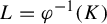
A group language is a set of the form
$L = \varphi ^{-1}(K)$
 , where
$\varphi \colon A^*\to G$
, where
$\varphi \colon A^*\to G$
 is a morphism onto a finite group G and
$K\subseteq G$
is a morphism onto a finite group G and
$K\subseteq G$
 . Note that such languages are in particular rational, being recognized by finite groups. For more on the topic, see [Reference Berstel, Perrin and Reutenauer8].
Let X be a minimal shift space equipped with an invariant measure
$\mu $
 . We consider the skew product of G and X with respect to
$\varphi $
. We consider the skew product of G and X with respect to
$\varphi $
 , denoted
$G\rtimes _\varphi X$
, denoted
$G\rtimes _\varphi X$
 : it is the dynamical system
$G\rtimes _\varphi X=(G\times X,T_\varphi )$
: it is the dynamical system
$G\rtimes _\varphi X=(G\times X,T_\varphi )$
 , where
$T_\varphi $
, where
$T_\varphi $
 is the transformation defined by

More generally,
$T_\varphi $
 satisfies, for every
$n\in \mathbb {Z}$
satisfies, for every
$n\in \mathbb {Z}$
 ,
,

where
$\varphi ^{(n)}$
 is defined by

The map
$(n,x)\mapsto \varphi ^{(n)}(x)$
 is the cocycle defined by
$\varphi $
is the cocycle defined by
$\varphi $
 . When the morphism
$\varphi $
. When the morphism
$\varphi $
 is clear from context, we may simply write T and
$G\rtimes X$
is clear from context, we may simply write T and
$G\rtimes X$
 . Skew products constitute one of the basic extensions of dynamical systems; see e.g. [Reference Cornfeld, Fomin and Sinaĭ21, Reference Petersen48].
Lemma 3.1. The skew product
$G\rtimes _{\varphi } X$
 is topologically conjugate to a shift space on
$G\times A$
is topologically conjugate to a shift space on
$G\times A$
 via the map
$\Psi \colon G\rtimes _{\varphi } X\to (G\times A)^{\mathbb {Z}}$
via the map
$\Psi \colon G\rtimes _{\varphi } X\to (G\times A)^{\mathbb {Z}}$
 defined by

Note that the lemma does not say that
$\Psi $
 is surjective on
$(G\times A)^{\mathbb {Z}}$
is surjective on
$(G\times A)^{\mathbb {Z}}$
 , but simply that
$\Psi $
, but simply that
$\Psi $
 is a topological conjugacy from
$G\rtimes _{\varphi } X$
is a topological conjugacy from
$G\rtimes _{\varphi } X$
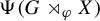
 to the subshift
$\Psi (G\rtimes _{\varphi } X)$
to the subshift
$\Psi (G\rtimes _{\varphi } X)$
 .
.
Proof. The map
$\Psi $
 is continuous and injective; hence, it is an homeomorphism onto its image. Moreover, it follows from the definitions that
$\Psi \circ T_{\varphi } = S\circ \Psi $
is continuous and injective; hence, it is an homeomorphism onto its image. Moreover, it follows from the definitions that
$\Psi \circ T_{\varphi } = S\circ \Psi $
 .
.
Example 3.2. Let
$L_r= \{ w\in A^* : |w|_1 \equiv r \bmod m\}$
 be the language from Example 2.3. Let X be a shift on
$\{1, \ldots , d\}$
be the language from Example 2.3. Let X be a shift on
$\{1, \ldots , d\}$
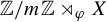
 . We consider the skew product
$\mathbb {Z}/m\mathbb {Z}\rtimes _{\varphi } X$
. We consider the skew product
$\mathbb {Z}/m\mathbb {Z}\rtimes _{\varphi } X$
 , where
$ \mathbb {Z}/m\mathbb {Z}$
, where
$ \mathbb {Z}/m\mathbb {Z}$
 is the m-element additive group, and
$\varphi $
is the m-element additive group, and
$\varphi $
 is the morphism
$\{1,\ldots ,d\}^*\to \mathbb {Z}/m\mathbb {Z}$
is the morphism
$\{1,\ldots ,d\}^*\to \mathbb {Z}/m\mathbb {Z}$
 given by
$1\mapsto 1$
given by
$1\mapsto 1$
 and
$i \mapsto 0$
and
$i \mapsto 0$
 for
$2\leq i\leq d$
for
$2\leq i\leq d$
 . The language
$L_r$
. The language
$L_r$
 is indeed a group language, since
$L_r= \varphi ^{-1}(\{r\})$
is indeed a group language, since
$L_r= \varphi ^{-1}(\{r\})$
 . In particular, one has
$\varphi ^{(n)}(x)= |x_0 \cdots x_{n-1}|_1$
. In particular, one has
$\varphi ^{(n)}(x)= |x_0 \cdots x_{n-1}|_1$
 modulo m for
$n \geq 0$
modulo m for
$n \geq 0$
 . Understanding the equidistribution properties of the sequence
$(\varphi ^{(n)}(x))_n$
. Understanding the equidistribution properties of the sequence
$(\varphi ^{(n)}(x))_n$
 in
$G = \mathbb {Z}/m\mathbb {Z}$
in
$G = \mathbb {Z}/m\mathbb {Z}$
 allows one to see how often factors have a given congruence modulo m of occurrences of the letter
$1$
allows one to see how often factors have a given congruence modulo m of occurrences of the letter
$1$
 ; see §3.4 as an illustration.
Example 3.3. Let X be the three-element shift defined as the finite orbit of the periodic word
$x=(abc)^\infty $
 , so
$X=\{x,y,z\}$
, so
$X=\{x,y,z\}$
 with
$y=Sx$
with
$y=Sx$
 ,
$z=Sy$
,
$z=Sy$
 . Let
$\varphi \colon A^*\to \mathbb {Z}/2\mathbb {Z}$
. Let
$\varphi \colon A^*\to \mathbb {Z}/2\mathbb {Z}$
 be the morphism

The skew product
$\mathbb {Z}/2\mathbb {Z}\rtimes _{\varphi } X$
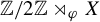 has six elements. Viewed as a shift on the alphabet
${\mathbb {Z}/2\mathbb {Z}\times A}$
has six elements. Viewed as a shift on the alphabet
${\mathbb {Z}/2\mathbb {Z}\times A}$
 , it is the disjoint union of the orbits of two periodic words,

Despite its apparent simplicity, this example proves to be more profound than it seems, by offering a clear way to illustrate ergodicity (see Examples 3.7 and 3.14), irreducibility (see Examples 5.6 and 5.8), as well as minimality properties (see Example 5.6). It can also be generalized as detailed in Example 3.8. The shift X and the skew product
$\mathbb {Z}/2\mathbb {Z}\rtimes _{\varphi } X$
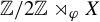 are depicted in Figure 2.
The finite shift X generated by
$x=(abc)^\infty $
 and its skew product with
$\mathbb {Z}/2\mathbb {Z}$
and its skew product with
$\mathbb {Z}/2\mathbb {Z}$
 from Example 3.3.

3.2 A formula for the density
The aim of this section is to prove our first main result, Theorem 1.1. The proof uses the existence of an ergodic measure
$\overline \mu $
 on the skew product which projects to
$\mu $
on the skew product which projects to
$\mu $
 (see Lemma 3.4). This known fact follows from classical results in ergodic theory (see for example [Reference Denker, Grillenberger and Sigmund23, Reference Furstenberg30, Reference Kryloff and Bogoliouboff37, Reference Oxtoby46]); we provide a proof for the sake of completeness. Let us recall briefly that a factor map between two dynamical systems
$(Z,R)$
(see Lemma 3.4). This known fact follows from classical results in ergodic theory (see for example [Reference Denker, Grillenberger and Sigmund23, Reference Furstenberg30, Reference Kryloff and Bogoliouboff37, Reference Oxtoby46]); we provide a proof for the sake of completeness. Let us recall briefly that a factor map between two dynamical systems
$(Z,R)$
 and
$(Y,T)$
and
$(Y,T)$
 is a map
$\pi \colon Z\to Y$
is a map
$\pi \colon Z\to Y$
 that is onto and satisfies
$\pi \circ R = T\circ \pi $
that is onto and satisfies
$\pi \circ R = T\circ \pi $
 .
.
Lemma 3.4. Let
$(Z,R)$
 and
$(Y,T)$
and
$(Y,T)$
 be two compact dynamical systems with a factor map
$\pi \colon Z\to Y$
be two compact dynamical systems with a factor map
$\pi \colon Z\to Y$
 . Then, for each ergodic measure
$\mu $
. Then, for each ergodic measure
$\mu $
 on
$(Y,T)$
on
$(Y,T)$
 , there is an ergodic measure
$\overline \mu $
, there is an ergodic measure
$\overline \mu $
 on
$(Z,R)$
on
$(Z,R)$
 such that
$\overline \mu \circ \pi ^{-1}=\mu $
such that
$\overline \mu \circ \pi ^{-1}=\mu $
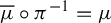 .
.
Proof. Let
$\mathcal {M}$
 be the set of invariant measures on
$(Z,R)$
be the set of invariant measures on
$(Z,R)$
 and
$\mathcal {M}_\mu $
and
$\mathcal {M}_\mu $
 be the subset of those
$\zeta \in \mathcal {M}$
be the subset of those
$\zeta \in \mathcal {M}$
 such that
$\zeta \circ \pi ^{-1}=\mu $
such that
$\zeta \circ \pi ^{-1}=\mu $
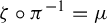 . First, we show that
$\mathcal {M}_\mu \neq \emptyset $
. First, we show that
$\mathcal {M}_\mu \neq \emptyset $
 . Start by choosing a point
$y\in Y$
. Start by choosing a point
$y\in Y$
 satisfying

for every continuous function on X; the point y is called a generic point for
$\mu $
 . It is well known that ergodicity of
$\mu $
. It is well known that ergodicity of
$\mu $
 implies that
$\mu $
implies that
$\mu $
 -almost all points of Y have this property (see for instance [Reference Furstenberg30, Proposition 3.7]); thus, such a point y exists. Take a preimage
$z\in \pi ^{-1}(y)$
-almost all points of Y have this property (see for instance [Reference Furstenberg30, Proposition 3.7]); thus, such a point y exists. Take a preimage
$z\in \pi ^{-1}(y)$
 and let
$\zeta _i$
and let
$\zeta _i$
 be the point mass measure concentrated on
$R^iz$
be the point mass measure concentrated on
$R^iz$
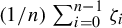
 . Consider the sequence of Cesàro averages
$({1}/{n})\sum _{i=0}^{n-1}\zeta _i$
. Consider the sequence of Cesàro averages
$({1}/{n})\sum _{i=0}^{n-1}\zeta _i$
 . By the Banach–Alaoglu theorem, we may choose a subsequence that converges for the weak-
$*$
. By the Banach–Alaoglu theorem, we may choose a subsequence that converges for the weak-
$*$
 topology in the space of all probability measures on
$(Z,R)$
topology in the space of all probability measures on
$(Z,R)$
 , say
, say

Observe that
$\zeta _i\circ R^{-1} {\kern-1pt}={\kern-1pt} \zeta _{i+1}$
 and, thus,
$\zeta - \zeta \circ R^{-1} {\kern-1pt}={\kern-1pt} \lim _{k\to \infty }({1}/{n_k})(\zeta _0 {\kern-1pt}-{\kern-1pt} \zeta _{n_k}+1){\kern-1pt}={\kern-1pt}0$
and, thus,
$\zeta - \zeta \circ R^{-1} {\kern-1pt}={\kern-1pt} \lim _{k\to \infty }({1}/{n_k})(\zeta _0 {\kern-1pt}-{\kern-1pt} \zeta _{n_k}+1){\kern-1pt}={\kern-1pt}0$
 , that is,
$\zeta \in \mathcal {M}$
, that is,
$\zeta \in \mathcal {M}$
 . Moreover, for every measurable subset
$B\subseteq Y$
. Moreover, for every measurable subset
$B\subseteq Y$
 ,
,

Thus,
$\zeta \in \mathcal {M}_\mu $
 .
.
Observe that
$\mathcal {M}_\mu $
 is a closed convex subspace of
$\mathcal {M}$
is a closed convex subspace of
$\mathcal {M}$
 and, since it is non-empty, we can apply the Krein–Milman theorem to conclude that it contains an extreme point. Since the ergodic measures on
$(Z,R)$
and, since it is non-empty, we can apply the Krein–Milman theorem to conclude that it contains an extreme point. Since the ergodic measures on
$(Z,R)$
 are precisely the extreme points of
$\mathcal {M}$
are precisely the extreme points of
$\mathcal {M}$
 , it remains only to show that any extreme point
$\overline \mu \in \mathcal {M}_\mu $
, it remains only to show that any extreme point
$\overline \mu \in \mathcal {M}_\mu $
 is also extreme in
$\mathcal {M}$
is also extreme in
$\mathcal {M}$
 . Assume that
$\overline \mu = s\zeta ' + (1-s)\zeta "$
. Assume that
$\overline \mu = s\zeta ' + (1-s)\zeta "$
 , where
$0<s<1$
, where
$0<s<1$
 and
$\zeta '$
and
$\zeta '$
 ,
$\zeta "\in \mathcal {M}$
,
$\zeta "\in \mathcal {M}$
 . Let us prove that
$\overline \mu $
. Let us prove that
$\overline \mu $
 cannot be expressed as a non-trivial convex combination of distinct elements of
$\mathcal {M}$
cannot be expressed as a non-trivial convex combination of distinct elements of
$\mathcal {M}$
 . Then, we have

Since
$\mu $
 , being ergodic, is an extreme point in the space of invariant measures of
$(Y,T)$
, being ergodic, is an extreme point in the space of invariant measures of
$(Y,T)$
 , we conclude that
$\zeta '\circ \pi ^{-1} = \zeta "\circ \pi ^{-1} = \mu $
, we conclude that
$\zeta '\circ \pi ^{-1} = \zeta "\circ \pi ^{-1} = \mu $
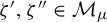
 . Therefore,
$\zeta ',\zeta "\in \mathcal {M}_\mu $
. Therefore,
$\zeta ',\zeta "\in \mathcal {M}_\mu $
 and since
$\overline \mu $
and since
$\overline \mu $
 is an extreme point in
$\mathcal {M}_\mu $
is an extreme point in
$\mathcal {M}_\mu $
 , it follows that
$\zeta '=\zeta "$
, it follows that
$\zeta '=\zeta "$
 . Thus,
$\overline \mu $
. Thus,
$\overline \mu $
 is an extreme point in
$\mathcal {M}$
is an extreme point in
$\mathcal {M}$
 .
.
Let us recall now our first main result, which expresses the density of a group language in a shift space in terms of an ergodic measure on the skew product
$G\rtimes X$
 . This is specialized later for SFTs (§5) and then for minimal shifts (§7).
Theorem 1.1. Let X be a shift space on a finite alphabet A with a shift-invariant probability measure
$\mu $
 and let
$\varphi \colon A^*\to G$
and let
$\varphi \colon A^*\to G$
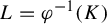
 be a morphism onto a finite group G. For every group language
$L=\varphi ^{-1}(K)$
be a morphism onto a finite group G. For every group language
$L=\varphi ^{-1}(K)$
 , where
$K\subseteq G$
, where
$K\subseteq G$
 , the density
$\delta _\mu (L)$
, the density
$\delta _\mu (L)$
 exists. Moreover, if
$\mu $
exists. Moreover, if
$\mu $
 is ergodic, the density is given by

where
$\overline \mu $
 is any ergodic measure on the skew product
$G \rtimes _{\varphi } X$
is any ergodic measure on the skew product
$G \rtimes _{\varphi } X$
 that projects to
$\mu $
that projects to
$\mu $
 .
.
Proof. We first assume that
$\mu $
 is ergodic.
For
$C\subseteq G$
 , let
$U_{C} = C\times X$
, let
$U_{C} = C\times X$
 ; in the case where
$C = \{g\}$
; in the case where
$C = \{g\}$
 ,
$g\in G$
,
$g\in G$
 , we write simply
$U_g$
, we write simply
$U_g$
 . Then, we find

Since the projection
$G\times X\to X$
 is a factor map, by Lemma 3.4, we may take an ergodic measure
$\overline \mu $
is a factor map, by Lemma 3.4, we may take an ergodic measure
$\overline \mu $
 on
$G\rtimes _{\varphi } X$
on
$G\rtimes _{\varphi } X$
 that projects to
$\mu $
that projects to
$\mu $
 . In terms of
$\overline \mu $
. In terms of
$\overline \mu $
 , we have

Since
$\overline \mu $
 is ergodic, we can use (2.1) to obtain

We now only assume that
$\mu $
 is a shift-invariant probability measure on X. Let
${\mathcal {E} = \mathcal {E}(X,S)}$
is a shift-invariant probability measure on X. Let
${\mathcal {E} = \mathcal {E}(X,S)}$
 be the set of ergodic invariant probability measures on
$(X,S)$
be the set of ergodic invariant probability measures on
$(X,S)$
 . By e.g. [Reference Phelps49, Ch. 12], there exists a Borel probability measure
$\tau $
. By e.g. [Reference Phelps49, Ch. 12], there exists a Borel probability measure
$\tau $
 on
$\mathcal E$
on
$\mathcal E$
 such that

Then, by the dominated convergence theorem

where the densities
$\delta _\nu (L)$
 exist by the first part of the proof.
Remark 3.5. Under the stronger assumption that
$\overline \mu $
 is mixing, then the density converges in a stronger sense, that is,

See for instance Example 5.11.
In the case where
$\nu \times \mu $
 is ergodic on the skew product, the above theorem yields the following simple formula for the density.
Corollary 3.6. Let X be a shift space on a finite alphabet A with an ergodic measure
$\mu $
 and let
$\varphi \colon A^*\to G$
and let
$\varphi \colon A^*\to G$
 be a morphism onto a finite group G with uniform probability measure
$\nu $
be a morphism onto a finite group G with uniform probability measure
$\nu $
 . If the product measure
$\nu \times \mu $
. If the product measure
$\nu \times \mu $
 is ergodic on
$G \times X$
is ergodic on
$G \times X$
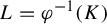
 , then for every group language
$L=\varphi ^{-1}(K)$
, then for every group language
$L=\varphi ^{-1}(K)$
 with
$K\subseteq G$
with
$K\subseteq G$
 ,
$\delta _\mu (L) = |K|/|G|$
,
$\delta _\mu (L) = |K|/|G|$
 .
.
Proof. Since
$(\nu \times \mu )(U_C)=|C|/|G|$
 for all
$C\subseteq G$
for all
$C\subseteq G$
 , the above theorem with
$\overline \mu =\nu \times \mu $
, the above theorem with
$\overline \mu =\nu \times \mu $
 yields
$\delta _\mu (L) = \sum _{g\in G}|K|/|G|^2=|K|/|G|$
yields
$\delta _\mu (L) = \sum _{g\in G}|K|/|G|^2=|K|/|G|$
 .
.
There are however many examples where
$\nu \times \mu $
 is not ergodic on the skew product, such as the following simple one.
Example 3.7. Let X be the three-element shift,
$\varphi $
 be as in Example 3.3, and
$L=\varphi ^{-1}(0)$
be as in Example 3.3, and
$L=\varphi ^{-1}(0)$
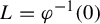 . The shift X is uniquely ergodic, with ergodic measure
$\mu $
. The shift X is uniquely ergodic, with ergodic measure
$\mu $
 given by the uniform probability measure. Moreover,

and, thus,

It follows that
$\delta _\mu (L)$
 is given by
$\delta _\mu (L)=(1+1/3+1/3)/3=5/9$
is given by
$\delta _\mu (L)=(1+1/3+1/3)/3=5/9$
 . In contrast, if
${\nu \times \mu }$
. In contrast, if
${\nu \times \mu }$
 would be ergodic, then we should find instead
$1/2$
would be ergodic, then we should find instead
$1/2$
 . The fact that
$\nu \times \mu $
. The fact that
$\nu \times \mu $
 is not ergodic can also be observed directly by noting that
$\mathbb {Z}/2\mathbb {Z}\rtimes _{\varphi } X$
is not ergodic can also be observed directly by noting that
$\mathbb {Z}/2\mathbb {Z}\rtimes _{\varphi } X$
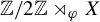 has two invariant subsets, each of
$\nu \times \mu $
has two invariant subsets, each of
$\nu \times \mu $
 -measure
$1/2$
-measure
$1/2$
 (which are, in fact, minimal invariant subsets).
We can also compute
$\delta _\mu (L)=5/9$
 using the formula from Theorem 1.1. Indeed, there are two ergodic measures
$\overline \mu _1$
using the formula from Theorem 1.1. Indeed, there are two ergodic measures
$\overline \mu _1$
 and
$\overline \mu _2$
and
$\overline \mu _2$
 that project to
$\mu $
that project to
$\mu $
 , each supported on one of the two invariant subsets of
$\mathbb {Z}/2\mathbb {Z} \rtimes _{\varphi } X$
, each supported on one of the two invariant subsets of
$\mathbb {Z}/2\mathbb {Z} \rtimes _{\varphi } X$
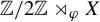 . For each i,
$\overline \mu _i(\{h\}\times X)$
. For each i,
$\overline \mu _i(\{h\}\times X)$
 is either
$1/3$
is either
$1/3$
 or
$2/3$
or
$2/3$
 , depending on whether
$h=0$
, depending on whether
$h=0$
 or
$1$
or
$1$
 . Therefore, for
$i=1$
. Therefore, for
$i=1$
 or
$2$
or
$2$
 , we find
${\delta _\mu (L) = \overline \mu _i(\{0\}\times X)^2 + \overline \mu _i(\{1\}\times X)^2 = 5/9}$
, we find
${\delta _\mu (L) = \overline \mu _i(\{0\}\times X)^2 + \overline \mu _i(\{1\}\times X)^2 = 5/9}$
 .
.
Example 3.8. We can, in fact, generalize the above example as follows. Take
$d\geq 3$
 and consider an alphabet
$A = \{a_0,\ldots ,a_{d-1}\}$
and consider an alphabet
$A = \{a_0,\ldots ,a_{d-1}\}$
 of size d. Let X be the d-element shift space generated by the periodic word
$(a_0\cdots a_{d-1})^\infty $
of size d. Let X be the d-element shift space generated by the periodic word
$(a_0\cdots a_{d-1})^\infty $
 and
$\varphi \colon A^*\to \mathbb {Z}/d\mathbb {Z}$
and
$\varphi \colon A^*\to \mathbb {Z}/d\mathbb {Z}$
 mapping
$a_0$
mapping
$a_0$
 to
$0$
to
$0$
 , and
$a_i$
, and
$a_i$
 to 1 for
$0<i<d$
to 1 for
$0<i<d$
 . Then, the density of
$\varphi ^{-1}(0)$
. Then, the density of
$\varphi ^{-1}(0)$
 is
$(2n-1)/d^2$
is
$(2n-1)/d^2$
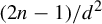 . Thus, the actual value of the density tends to be twice what ergodicity of
$\nu \times \mu $
. Thus, the actual value of the density tends to be twice what ergodicity of
$\nu \times \mu $
 would yield (namely
$1/d$
would yield (namely
$1/d$
 ), in the sense that
$d\delta _\mu (L)\to 2$
), in the sense that
$d\delta _\mu (L)\to 2$
 as
$d\to \infty $
as
$d\to \infty $
 .
.
Next, we show that if X is uniquely ergodic, then ergodicity of
$\nu \times \mu $
 implies unique ergodicity of
$G\rtimes _{\varphi } X$
implies unique ergodicity of
$G\rtimes _{\varphi } X$
 . This is used, e.g., in Example 3.15. It was proved by Veech [Reference Veech56] for the case where X is a binary coding of an irrational rotation and
$G=\mathbb {Z}/2\mathbb {Z}$
. This is used, e.g., in Example 3.15. It was proved by Veech [Reference Veech56] for the case where X is a binary coding of an irrational rotation and
$G=\mathbb {Z}/2\mathbb {Z}$
 . We show below how Veech’s argument can be adapted in a straightforward way to the case where X is any uniquely ergodic shift and G is a finite group. The result is true more generally when G is a compact group with normalized Haar measure
$\nu $
. We show below how Veech’s argument can be adapted in a straightforward way to the case where X is any uniquely ergodic shift and G is a finite group. The result is true more generally when G is a compact group with normalized Haar measure
$\nu $
 , cf. [Reference Furstenberg30, Proposition 3.10].
Proposition 3.9. Let X be a uniquely ergodic shift on A with ergodic measure
$\mu $
 and
$\varphi \colon A^*\to G$
and
$\varphi \colon A^*\to G$
 be a morphism onto a finite group G with uniform probability measure
$\nu $
be a morphism onto a finite group G with uniform probability measure
$\nu $
 . If
$\nu \times \mu $
. If
$\nu \times \mu $
 is an ergodic measure on
$G\rtimes _{\varphi }X$
is an ergodic measure on
$G\rtimes _{\varphi }X$
 , then
$G\rtimes _{\varphi }X$
, then
$G\rtimes _{\varphi }X$
 is uniquely ergodic.
Proof. Let
$\zeta $
 be an invariant measure on
$G\rtimes _{\varphi }X$
be an invariant measure on
$G\rtimes _{\varphi }X$
 . Observe that the measure
$\zeta \circ P_X^{-1}$
. Observe that the measure
$\zeta \circ P_X^{-1}$
 , where
$P_X\colon G\rtimes _{\varphi }X\to X$
, where
$P_X\colon G\rtimes _{\varphi }X\to X$
 denotes the projection on the second component, is an invariant measure on X; thus, it must be equal to
$\mu $
denotes the projection on the second component, is an invariant measure on X; thus, it must be equal to
$\mu $
 as X is uniquely ergodic. In other words,

Let
$g\in G$
 act on the left of
$G\rtimes _{\varphi }X$
act on the left of
$G\rtimes _{\varphi }X$
 by
$g(h,x) = (gh,x)$
by
$g(h,x) = (gh,x)$
 . This action is
$T_{\varphi }$
. This action is
$T_{\varphi }$
 -commuting, as well as measure-preserving as is easily checked on rectangular sets (that is, sets of the form
$F\times E$
-commuting, as well as measure-preserving as is easily checked on rectangular sets (that is, sets of the form
$F\times E$
 , where
$F \subseteq G$
, where
$F \subseteq G$
 , and
$E\subseteq X$
, and
$E\subseteq X$
 is measurable). Thus, the measure
$g\zeta $
is measurable). Thus, the measure
$g\zeta $
 defined by
$g\zeta (F) = \zeta (gF)$
defined by
$g\zeta (F) = \zeta (gF)$
 is also an invariant measure. We claim that the average measure
$\overline \zeta = (\sum _{g\in G}g\zeta )/|G|$
is also an invariant measure. We claim that the average measure
$\overline \zeta = (\sum _{g\in G}g\zeta )/|G|$
 is equal to
$\nu \times \mu $
is equal to
$\nu \times \mu $
 . Indeed, for every measurable set
$E\subseteq X$
. Indeed, for every measurable set
$E\subseteq X$
 and
$h\in G$
and
$h\in G$
 , we have

Thus, we conclude that
$\nu \times \mu = \overline \zeta $
 . If
$\nu \times \mu $
. If
$\nu \times \mu $
 is ergodic, then it is an extremal point in the convex set of invariant measures of
$G\rtimes _{\varphi } X$
is ergodic, then it is an extremal point in the convex set of invariant measures of
$G\rtimes _{\varphi } X$
 . Since
$\nu \times \mu =\overline \zeta $
. Since
$\nu \times \mu =\overline \zeta $
 is a uniform convex combination of the measures
$g\zeta $
is a uniform convex combination of the measures
$g\zeta $
 , it follows that
$g\zeta = \nu \times \mu $
, it follows that
$g\zeta = \nu \times \mu $
 for all
$g\in G$
for all
$g\in G$
 .
.
3.3 Pointwise densities
We show in this section that the concept of density of a language can be adapted to Cesàro averages along orbits of individual points (see Theorem 3.12). This leads to another proof of the fact that the density always exists for group languages (as stated in Theorem 1.1) and an expression for the density as an integral of pointwise densities. For the following definition of the pointwise density, we recall the notation
$\varphi ^{(i)}(x) = \varphi (x_{[0,i)})$
 from (3.2).
Definition 3.10. Let X be a shift space on a finite alphabet A with a shift-invariant measure
$\mu $
 and let
$\varphi \colon A^*\to G$
and let
$\varphi \colon A^*\to G$
 be a morphism onto a finite group G. For every group language
$L=\varphi ^{-1}(K)$
be a morphism onto a finite group G. For every group language
$L=\varphi ^{-1}(K)$
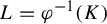 , where
$K\subseteq G$
, where
$K\subseteq G$
 , we define the pointwise density of L along the orbit of a point
$x \in X$
, we define the pointwise density of L along the orbit of a point
$x \in X$
 as the following limit whenever it exists:

where
$1_{K}$
 stands for the indicator function of the set K.
The main result of the section, namely Theorem 3.12, states the almost everywhere existence of pointwise densities for all group languages under all invariant measures.
Example 3.11. We continue Example 3.2. Recall that
$A = \{1,\ldots ,d\}$
 and
$L = \{ w\in A^* : |w|_1 \equiv r\bmod m\}$
and
$L = \{ w\in A^* : |w|_1 \equiv r\bmod m\}$
 ,
$0\leq r <m$
,
$0\leq r <m$
 . Alternatively,
$L= \varphi ^{-1}(\{r\})$
. Alternatively,
$L= \varphi ^{-1}(\{r\})$
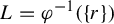 , where
$\varphi \colon A^*\to \mathbb {Z}/m\mathbb {Z}$
, where
$\varphi \colon A^*\to \mathbb {Z}/m\mathbb {Z}$
 is the morphism that sends
$1\in A$
is the morphism that sends
$1\in A$
 to
$1\in \mathbb {Z}/m\mathbb {Z}$
to
$1\in \mathbb {Z}/m\mathbb {Z}$
 and all other letters of A to
$0$
and all other letters of A to
$0$
 . The pointwise density
$\dot \delta _L(x) $
. The pointwise density
$\dot \delta _L(x) $
 , when it exists, is the frequency of occurrences of prefixes in x having a number of
$1$
, when it exists, is the frequency of occurrences of prefixes in x having a number of
$1$
 s congruent to r mod m. In particular, Theorem 3.12 states that this frequency exists for
$\mu $
s congruent to r mod m. In particular, Theorem 3.12 states that this frequency exists for
$\mu $
 -almost every x, for all invariant probability measures
$\mu $
-almost every x, for all invariant probability measures
$\mu $
 on
$A^{\mathbb {Z}}$
on
$A^{\mathbb {Z}}$
 .
.
We now turn to Theorem 3.12. First, let us recall part of Birkhoff’s ergodic theorem; for a complete statement, see [Reference Petersen48, Theorem 2.3]. Let
$(X,T)$
 be a dynamical system with an invariant probability measure
$\mu $
be a dynamical system with an invariant probability measure
$\mu $
 . Given an
$\mathrm {L}^1$
. Given an
$\mathrm {L}^1$
 map
$f\colon X\to \mathbb {R}$
map
$f\colon X\to \mathbb {R}$
 , let us define the time average of f as

whenever it exists. The ergodic theorem states that
$\overline f$
 exists
$\mu $
exists
$\mu $
 -almost everywhere and, moreover,

Theorem 3.12. Let X be a shift space on a finite alphabet A with a shift-invariant probability measure
$\mu $
 and a morphism
$\varphi \colon A^*\to G$
and a morphism
$\varphi \colon A^*\to G$
 onto a finite group G. For every group language
$L = \varphi ^{-1}(K)$
onto a finite group G. For every group language
$L = \varphi ^{-1}(K)$
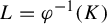 , the pointwise density
$\dot \delta _L(x)$
, the pointwise density
$\dot \delta _L(x)$
 exists for
$\mu $
exists for
$\mu $
 -almost every
$x\in X$
-almost every
$x\in X$
 . Moreover, the density
$\delta _\mu (L)$
. Moreover, the density
$\delta _\mu (L)$
 exists and is given by

Proof. Let
$\overline \mu $
 be any
$T_{\varphi }$
be any
$T_{\varphi }$
 -invariant measure on the skew product
$G\rtimes _{\varphi } X$
-invariant measure on the skew product
$G\rtimes _{\varphi } X$
 that projects to
$\mu $
that projects to
$\mu $
 (for instance, the product measure
$\nu \times \mu $
(for instance, the product measure
$\nu \times \mu $
 , where
$\nu $
, where
$\nu $
 is the uniform probability measure on G). For
$g\in G$
is the uniform probability measure on G). For
$g\in G$
 , let
$f_g$
, let
$f_g$
 be the indicator function of
$\{g\}\times X$
be the indicator function of
$\{g\}\times X$
 . By the ergodic theorem applied to
$G\rtimes _{\varphi }X$
. By the ergodic theorem applied to
$G\rtimes _{\varphi }X$
 , the time average function
$\overline f_g$
, the time average function
$\overline f_g$
 exists on some subset
$E_g \subseteq G \times X$
exists on some subset
$E_g \subseteq G \times X$
 with
$\overline \mu (E_g)=1$
with
$\overline \mu (E_g)=1$
 .
.
Next, note that
$\varphi ^{(i)}(x) = g$
 if and only if
$T_\varphi ^i(1_G,x) \in \{g\}\times X$
if and only if
$T_\varphi ^i(1_G,x) \in \{g\}\times X$
 , so
, so

Let
$E = \bigcap _{g \in G} E_g$
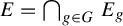 and
$F = \{ x\in X : (1_G,x)\in E\}$
and
$F = \{ x\in X : (1_G,x)\in E\}$
 . Then,
$\dot \delta _L(x)$
. Then,
$\dot \delta _L(x)$
 certainly exists for all
$x\in F$
certainly exists for all
$x\in F$
 by the above, so it suffices to show that
$\mu (F)=1$
by the above, so it suffices to show that
$\mu (F)=1$
 . However, observe that
$T_\varphi ^i(h,x)\in \{g\}\times X$
. However, observe that
$T_\varphi ^i(h,x)\in \{g\}\times X$
 is equivalent to
$T_\varphi ^i(1_G,x)\in \{h^{-1}g\}\times X$
is equivalent to
$T_\varphi ^i(1_G,x)\in \{h^{-1}g\}\times X$
 , so that

It follows that if
$(h,x)\in E$
 , then
$\overline f_{g}(1_G,x) = \overline f_{hg}(h,x)$
, then
$\overline f_{g}(1_G,x) = \overline f_{hg}(h,x)$
 for all
$g\in G$
for all
$g\in G$
 and, thus,
$x\in F$
and, thus,
$x\in F$
 . Therefore, we have
$E\subseteq G\times F$
. Therefore, we have
$E\subseteq G\times F$
 . Since
$\overline \mu $
. Since
$\overline \mu $
 projects to
$\mu $
projects to
$\mu $
 , we conclude that
$\mu (F) = \overline \mu (G\times F) \geq \overline \mu (E)$
, we conclude that
$\mu (F) = \overline \mu (G\times F) \geq \overline \mu (E)$
 . However, E is a finite intersection of sets of
$\overline \mu $
. However, E is a finite intersection of sets of
$\overline \mu $
 -measure 1; thus,
$\overline \mu (E)=1$
-measure 1; thus,
$\overline \mu (E)=1$
 and
$\mu (F)=1$
and
$\mu (F)=1$
 .
.
For the last part of the statement, we first note that for
$w\in A^i$
 , we have
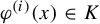
$\varphi ^{(i)}(x)\in K$
, we have
$\varphi ^{(i)}(x)\in K$
 if and only if
$x\in [w]$
if and only if
$x\in [w]$
 for some
$w\in L\cap A^i$
for some
$w\in L\cap A^i$
 , and thus,

Hence, we have

where the integral and limit can be swapped by the dominated convergence theorem.
Remark 3.13. We can also recover the formula for
$\delta _\mu (L)$
 in Theorem 1.1 using pointwise densities. Indeed, suppose that
$\mu $
in Theorem 1.1 using pointwise densities. Indeed, suppose that
$\mu $
 is an ergodic measure on X and let
$\overline \mu $
is an ergodic measure on X and let
$\overline \mu $
 be an ergodic measure on
$G\rtimes _\varphi X$
be an ergodic measure on
$G\rtimes _\varphi X$
 that projects to
$\mu $
that projects to
$\mu $
 (which exists by Lemma 3.4). We can then use the trick from the proof of Theorem 1.1 involving the sets
$U_C=C \times X$
(which exists by Lemma 3.4). We can then use the trick from the proof of Theorem 1.1 involving the sets
$U_C=C \times X$
 as follows:

Example 3.14. Consider the three-point example introduced in Example 3.3, where X is the orbit closure of the two-sided sequence
$x=(abc)^\infty $
 , the group is
$\mathbb {Z}/2\mathbb {Z}$
, the group is
$\mathbb {Z}/2\mathbb {Z}$
 (with its additive structure), and the morphism
$\varphi \colon \{a,b,c\}^*\to \mathbb {Z}/2\mathbb {Z}$
(with its additive structure), and the morphism
$\varphi \colon \{a,b,c\}^*\to \mathbb {Z}/2\mathbb {Z}$
 maps
$a,b$
maps
$a,b$
 to
$1$
to
$1$
 and c to 0. The sequences
$\varphi ^{(i)}(y)$
and c to 0. The sequences
$\varphi ^{(i)}(y)$
 for
$y = x, Sx, S^2x$
for
$y = x, Sx, S^2x$
 are in turn,

For
$L=\varphi ^{-1}(0)$
 , the pointwise densities
$\dot \delta _L(y)$
, the pointwise densities
$\dot \delta _L(y)$
 are the average frequencies of 0 in each of these sequences, which are in turn
$2/3, 1/3, 2/3$
are the average frequencies of 0 in each of these sequences, which are in turn
$2/3, 1/3, 2/3$
 . As X is a finite space with a uniform probability measure, the integral of
$\dot \delta _L$
. As X is a finite space with a uniform probability measure, the integral of
$\dot \delta _L$
 is simply the average
$(2/3 + 1/3 + 2/3)/3 = 5/9$
is simply the average
$(2/3 + 1/3 + 2/3)/3 = 5/9$
 . Thus,
$\delta _\mu (L)=5/9$
. Thus,
$\delta _\mu (L)=5/9$
 by Theorem 3.12, which agrees with the value found in Example 3.7. Note that the two ergodic measures on the skew product
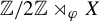
$\mathbb {Z}/2\mathbb {Z} \rtimes _\varphi X$
by Theorem 3.12, which agrees with the value found in Example 3.7. Note that the two ergodic measures on the skew product
$\mathbb {Z}/2\mathbb {Z} \rtimes _\varphi X$
 are not fully supported and that the function
$\dot \delta _L(x)$
are not fully supported and that the function
$\dot \delta _L(x)$
 is not constant.
We now give two examples that show how our equidistribution statement, namely Corollary 3.6, together with the unique ergodicity result from Proposition 3.9, can be applied in this pointwise setting. Both examples are pursued in §9 for Sturmian shifts (see Examples 9.1 and 9.2).
Example 3.15. This example is inspired by the equidistribution results from Veech [Reference Veech56, Reference Veech57] for irrational rotations in continuation of Example 3.2. Let
$L_r$
 and
$\varphi $
and
$\varphi $
 be as in Example 3.2. Assume that X is a uniquely ergodic shift whose ergodic measure
$\mu $
be as in Example 3.2. Assume that X is a uniquely ergodic shift whose ergodic measure
$\mu $
 is such that the product measure
$\nu \times \mu $
is such that the product measure
$\nu \times \mu $
 is ergodic on
$G\rtimes _\varphi X$
is ergodic on
$G\rtimes _\varphi X$
 ; or equivalently,
$G\rtimes _\varphi X$
; or equivalently,
$G\rtimes _\varphi X$
 is uniquely ergodic (Proposition 3.9). Then, Corollary 3.6 yields that
$\delta _{\mu } (L_r)$
is uniquely ergodic (Proposition 3.9). Then, Corollary 3.6 yields that
$\delta _{\mu } (L_r)$
 exists and equals
$ 1/m$
exists and equals
$ 1/m$
 .
.
We now revisit this result in terms of elements of X. Recall that
$1_{\{r\}}$
 stands for the indicator function of the set
$\{r\}$
stands for the indicator function of the set
$\{r\}$
 in
$\mathbb {Z}/m\mathbb {Z}$
in
$\mathbb {Z}/m\mathbb {Z}$
 . Applying unique ergodicity to the continuous function
$1_{\{r\}} \times 1$
. Applying unique ergodicity to the continuous function
$1_{\{r\}} \times 1$
 on
$G\rtimes _{\varphi } X$
on
$G\rtimes _{\varphi } X$
 yields indeed that for every
$x \in X$
yields indeed that for every
$x \in X$
 ,
,

In other words, for every
$x \in X$
 and for every r, one has

In the next example, we consider a skew product with a non-Abelian skewing group, namely
$G(2)= \operatorname {GL}(2, {\mathbb Z}/2{\mathbb Z})$
 , that is, the group of
$2 \times 2$
, that is, the group of
$2 \times 2$
 matrices with entries in
$\mathbb {Z}/2\mathbb {Z}$
matrices with entries in
$\mathbb {Z}/2\mathbb {Z}$
 and determinant
$1$
and determinant
$1$
 . The example could also be carried out with
$G(m)$
. The example could also be carried out with
$G(m)$
 for arbitrary
$m\geq 2$
for arbitrary
$m\geq 2$
 , but we treat only the case
$m=2$
, but we treat only the case
$m=2$
 for simplicity. It is inspired by the work of Jager and Liardet [Reference Jager and Liardet34] (see also [Reference Borda15, Reference Moeckel44, Reference Szüsz55] for related works), and is motivated by distribution properties for convergents in continued fraction expansions.
Example 3.16. Let X be a shift on the alphabet
$ A=\{1,2\}$
 and consider the morphism

where
$\overline {k}$
 stands for the congruence class of the integer k modulo
$2$
stands for the congruence class of the integer k modulo
$2$
 . Note that this morphism is onto. Let
$x=(x_n)_{n\in \mathbb {Z}} \in X$
. Note that this morphism is onto. Let
$x=(x_n)_{n\in \mathbb {Z}} \in X$
 . Consider the real number in the unit interval
$[0,1]$
. Consider the real number in the unit interval
$[0,1]$
 that admits
$(x_n)_{n\in \mathbb {N}}$
that admits
$(x_n)_{n\in \mathbb {N}}$
 as its sequence of partial quotients and let
$(p_n(x)/q_n(x))_{n\in \mathbb {N}}$
as its sequence of partial quotients and let
$(p_n(x)/q_n(x))_{n\in \mathbb {N}}$
 stand for the associated sequence of rational approximations. Recall that one has
$q_{-1}(x)=0$
stand for the associated sequence of rational approximations. Recall that one has
$q_{-1}(x)=0$
 ,
${p_{-1}(x)=1}$
,
${p_{-1}(x)=1}$
 ,
$q_0(x)=1$
,
$q_0(x)=1$
 ,
$p_0(x)=0$
,
$p_0(x)=0$
 , and for all positive n,

[Reference Hardy and Wright33, Theorem 149] and, moreover,

In the case where the skew product
$G(2) \rtimes _{\varphi } X$
 turns out to be uniquely ergodic, the following distribution results for the sequence
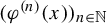
$( \varphi ^{(n)}(x))_{n\in \mathbb {N}}$
turns out to be uniquely ergodic, the following distribution results for the sequence
$( \varphi ^{(n)}(x))_{n\in \mathbb {N}}$
 in the group
$G(2)$
in the group
$G(2)$
 can be deduced: for every
$k=1,2$
can be deduced: for every
$k=1,2$
 and for every
$x \in X$
and for every
$x \in X$
 ,
,

The numbers
$1/3$
 and
$2/3$
and
$2/3$
 come from the counting measure on
$G(2)$
come from the counting measure on
$G(2)$
 . Consider indeed the entries of index
$(2,2)$
. Consider indeed the entries of index
$(2,2)$
 in the matrices of
$G(2)$
in the matrices of
$G(2)$
 . There are twice as many matrices in
$G(2)$
. There are twice as many matrices in
$G(2)$
 for which this entry is odd than matrices for which it is even. We show in Example 9.2 that this analysis applies, in particular, to the Fibonacci shift, because there, unique ergodicity of the skew product follows from Theorem 8.11.
3.4 An example in the substitutive Fibonacci shift
We now proceed to illustrate Theorem 1.1 (and, more specifically, Corollary 3.6, see also Example 3.11) in the substitutive Fibonacci shift, whose precise definition is recalled below. We consider the language
$L = \varphi ^{-1}(0)$
 , where
$\varphi \colon \{a,b\}^*\to \mathbb {Z}/2\mathbb {Z}$
, where
$\varphi \colon \{a,b\}^*\to \mathbb {Z}/2\mathbb {Z}$
 is the morphism defined by
$\varphi (a) = 1$
is the morphism defined by
$\varphi (a) = 1$
 and
$\varphi (b)=0$
and
$\varphi (b)=0$
 ; in other words,

We show that
$\delta _\mu (L)=1/2$
 for
$\mu $
for
$\mu $
 the unique ergodic measure on the substitutive Fibonacci shift (Proposition 3.17), but also that the sequence
$(\mu ([L\cap A^n]))_{n\in \mathbb {N}}$
the unique ergodic measure on the substitutive Fibonacci shift (Proposition 3.17), but also that the sequence
$(\mu ([L\cap A^n]))_{n\in \mathbb {N}}$
 does not converge in the classical sense (Proposition 3.18). In particular, the measure
$\nu \times \mu $
does not converge in the classical sense (Proposition 3.18). In particular, the measure
$\nu \times \mu $
 on the skew product is ergodic, but not mixing, cf. Remark 3.5.
Consider the substitution
$\sigma \colon a\mapsto ab, b\mapsto a$
 , called the Fibonacci substitution. The substitution
$\sigma $
, called the Fibonacci substitution. The substitution
$\sigma $
 is primitive; thus, the shift space
$X=X(\sigma )$
is primitive; thus, the shift space
$X=X(\sigma )$
 generated by
$\sigma $
generated by
$\sigma $
 , called the substitutive Fibonacci shift, or Fibonacci shift for short, is uniquely ergodic by Michel’s theorem (this alternatively follows from Boshernitzan’s criterion [Reference Boshernitzan16]). Its unique ergodic measure
$\mu $
, called the substitutive Fibonacci shift, or Fibonacci shift for short, is uniquely ergodic by Michel’s theorem (this alternatively follows from Boshernitzan’s criterion [Reference Boshernitzan16]). Its unique ergodic measure
$\mu $
 viewed as a map on
$\mathcal {L}(X)$
viewed as a map on
$\mathcal {L}(X)$
 is depicted in Figure 3.
The invariant probability measure on the Fibonacci shift (
$\unicode{x3bb} =$
 the golden ratio). Circled nodes represent elements from the language
$L = \{w\in \{a,b\}^* : |w|_a \equiv 0 \bmod 2\}$
the golden ratio). Circled nodes represent elements from the language
$L = \{w\in \{a,b\}^* : |w|_a \equiv 0 \bmod 2\}$
 .
.

Figure 3 Long description
The diagram begins at a root node on the far left labeled 1. From this root, two edges branch out labeled a and b. The a branch leads to a value lambda exponent negative 1, and the b branch leads to a circled node labeled lambda exponent negative 2. As the tree progresses to the right, it follows a specific branching rule. Specific circled nodes, representing elements from the language L, are distributed throughout the levels. * At the second level, the b branch ends in a circled lambda exponent negative 2. * At the third level, the top a-b path ends in a circled lambda exponent negative 3. * At the fourth level, multiple circled nodes appear including lambda exponent negative 2, lambda exponent negative 3, and lambda exponent negative 4. * The fifth and sixth levels show increasing complexity with circled nodes labeled lambda exponent negative 3, lambda exponent negative 4, and lambda exponent negative 5. The terminal nodes on the far right represent the ninth level of branching, with values ranging from lambda exponent negative 4 to lambda exponent negative 6.
We next prove that the skew product of the Fibonacci shift with
$\mathbb {Z}/2\mathbb {Z}$
 for the skewing function determined by
$\varphi $
for the skewing function determined by
$\varphi $
 is also uniquely ergodic, as an application of Michel’s theorem. The argument is a special case of the general method described in §8.
Proposition 3.17. The skew product
$\mathbb {Z}/2\mathbb {Z}\rtimes _{\varphi } X$
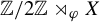 is uniquely ergodic.
Proof. Take the substitution
$\overline \sigma $
 defined as follows on the alphabet
$\mathbb {Z}/2\mathbb {Z}\times A$
defined as follows on the alphabet
$\mathbb {Z}/2\mathbb {Z}\times A$
 , whose letters are denoted
$a_0, a_1, b_0, b_1$
, whose letters are denoted
$a_0, a_1, b_0, b_1$
 for conciseness,

This substitution is primitive and satisfies
$\pi \circ \overline \sigma =\sigma ^3$
 , where
$\pi \colon (\mathbb {Z}/2\mathbb {Z}\times A)^*\to A^*$
, where
$\pi \colon (\mathbb {Z}/2\mathbb {Z}\times A)^*\to A^*$
 is the natural projection (mapping
$a_i$
is the natural projection (mapping
$a_i$
 to a and
$b_i$
to a and
$b_i$
 to b). Moreover,
$\varphi \circ \sigma ^3 = \varphi $
to b). Moreover,
$\varphi \circ \sigma ^3 = \varphi $
 and
$\overline \sigma (\mathcal {L}(Y))\subseteq \mathcal {L}(Y)$
and
$\overline \sigma (\mathcal {L}(Y))\subseteq \mathcal {L}(Y)$
 , where
$Y = \Psi (G\rtimes _{\varphi } X)$
, where
$Y = \Psi (G\rtimes _{\varphi } X)$
 is the skew product viewed as a shift space on
$\mathbb {Z}/2\mathbb {Z}\times A$
is the skew product viewed as a shift space on
$\mathbb {Z}/2\mathbb {Z}\times A$
 via the map
$\Psi $
via the map
$\Psi $
 of Lemma 3.1. It follows that Y is the shift space generated by
$\overline \sigma $
of Lemma 3.1. It follows that Y is the shift space generated by
$\overline \sigma $
 . Therefore, by Michel’s theorem, Y is uniquely ergodic; hence, so is
$G\rtimes _{\varphi } X$
. Therefore, by Michel’s theorem, Y is uniquely ergodic; hence, so is
$G\rtimes _{\varphi } X$
 .
.
As an immediate consequence of Corollary 3.6 (see also Example 3.11), we conclude that the density
$\delta _\mu (L)$
 , where
$L = \{ w\in \{a,b\}^*: |w|_a \equiv 0 \bmod 2\}$
, where
$L = \{ w\in \{a,b\}^*: |w|_a \equiv 0 \bmod 2\}$
 , exists and is
$1/2$
, exists and is
$1/2$
 . In other words, the sequence
$(\mu ([L\cap A^n]))_{n\in \mathbb {N}}$
. In other words, the sequence
$(\mu ([L\cap A^n]))_{n\in \mathbb {N}}$
 converges to
$1/2$
converges to
$1/2$
 in Cesàro’s sense, even though, as we next show, the sequence itself does not converge (this is in contrast with Example 5.11, where
$\nu \times \mu $
in Cesàro’s sense, even though, as we next show, the sequence itself does not converge (this is in contrast with Example 5.11, where
$\nu \times \mu $
 is mixing). The rest of the section is devoted to the proof of the following result, where
$F = (F(n))_{n\in \mathbb {N}}$
is mixing). The rest of the section is devoted to the proof of the following result, where
$F = (F(n))_{n\in \mathbb {N}}$
 is the Fibonacci number sequence (starting with
$F(0)=0$
is the Fibonacci number sequence (starting with
$F(0)=0$
 ,
$F(1)=1$
,
$F(1)=1$
 ).
).
Proposition 3.18. Let
$L = \{ w\in \{a,b\}^*: |w|_a \equiv 0 \bmod 2\}$
 . Then, the sequence of measures
${(\mu ([L\cap A^n]))_{n\in \mathbb {N}}}$
. Then, the sequence of measures
${(\mu ([L\cap A^n]))_{n\in \mathbb {N}}}$
 does not have a limit, as

The proof relies on a number of key facts about the structure of the language of the Fibonacci shift. An important tool is the notion of special word. Recall that, for a general shift space
$X\subseteq A^{\mathbb {Z}}$
 , a word
$w\in \mathcal {L}(X)$
, a word
$w\in \mathcal {L}(X)$
 is called left special if
$aw, bw\in \mathcal {L}(X)$
is called left special if
$aw, bw\in \mathcal {L}(X)$
 for some
$a,b\in A$
for some
$a,b\in A$
 ,
$a\neq b$
,
$a\neq b$
 ; it is called right special if instead
$wa, wb\in \mathcal {L}(X)$
; it is called right special if instead
$wa, wb\in \mathcal {L}(X)$
 for some
$a,b\in A$
for some
$a,b\in A$
 ,
$a\neq b$
,
$a\neq b$
 ; and it is called bispecial if it is both left and right special. Since it is Sturmian, the Fibonacci shift has the property that for every
$n\in \mathbb {N}$
; and it is called bispecial if it is both left and right special. Since it is Sturmian, the Fibonacci shift has the property that for every
$n\in \mathbb {N}$
 ,
$\mathcal {L}(X)\cap A^n$
,
$\mathcal {L}(X)\cap A^n$
 contains exactly one left and one right special factor (which might or might not coincide). We next establish two lemmas which are central in the proof of Proposition 3.18.
Lemma 3.19. Let u be a left special factor and v be a right special factor in the Fibonacci shift X.
-
(i) The word $u' = \sigma ^2(ub)$
 is also left special.
 -
(ii) The word $v' = \sigma ^2(va)$
is also right special.
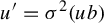
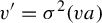
Proof. (i) As u is left special, then
$au$
 and
$bu$
and
$bu$
 are in
$\mathcal {L}(X)$
are in
$\mathcal {L}(X)$
 . Let c and d be right extensions of respectively
$au$
. Let c and d be right extensions of respectively
$au$
 and
$bu$
and
$bu$
 ; let
$c'$
; let
$c'$
 and
$d'$
and
$d'$
 be such that
$\sigma ^2(c) = abc'$
be such that
$\sigma ^2(c) = abc'$
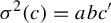 and
$\sigma ^2(d) = abd'$
and
$\sigma ^2(d) = abd'$
 (
$c'$
(
$c'$
 and
$d'$
and
$d'$
 are either a or
$\varepsilon $
are either a or
$\varepsilon $
 ). Then, the following words also belong to
$\mathcal {L}(X)$
). Then, the following words also belong to
$\mathcal {L}(X)$
 :
:

In particular,
$au'$
 and
$bu'$
and
$bu'$
 belong to
$\mathcal {L}(X)$
belong to
$\mathcal {L}(X)$
 .
.
(ii) The proof of the second part follows similar lines. Let c and d be right extensions of respectively
$va$
 ,
$vb$
,
$vb$
 (in fact,
$d=a$
(in fact,
$d=a$
 since
$bb$
since
$bb$
 does not occur in X); let
$c'$
does not occur in X); let
$c'$
 be such that
$\sigma ^2(c) = ac'$
be such that
$\sigma ^2(c) = ac'$
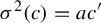 . Then, we find that the following words belong to
$\mathcal {L}(X)$
. Then, we find that the following words belong to
$\mathcal {L}(X)$
 :
:

Hence, both
$v'a$
 ,
$v'b\in \mathcal {L}(X)$
,
$v'b\in \mathcal {L}(X)$
 .
.
Lemma 3.20. Let
$u_n$
 and
$v_n$
and
$v_n$
 denote respectively the left and right special factors of length n in the Fibonacci shift X. Then, whenever
$n = F(2k+2)-1$
denote respectively the left and right special factors of length n in the Fibonacci shift X. Then, whenever
$n = F(2k+2)-1$
 for some
$k\geq 0$
for some
$k\geq 0$
 , the equality
$bu_n = v_nb$
, the equality
$bu_n = v_nb$
 holds and, moreover,

where
$\varphi \colon \{a,b\}^*\to \mathbb {Z}/2\mathbb {Z}$
 is the morphism defined by
$\varphi (a)=1$
is the morphism defined by
$\varphi (a)=1$
 and
$\varphi (b)=0$
and
$\varphi (b)=0$
 .
.
Proof. Let us first prove that
$bu_n = v_nb$
 when
$n=F(2k+2)-1$
when
$n=F(2k+2)-1$
 ,
$k\geq 0$
,
$k\geq 0$
 . Consider the following recursively defined sequence of words:

In other words, this is the sequence of words starting with

It is clear from Lemma 3.19 that this is a sequence of left special factors of X. We claim that
$|w_k| = F(2k+2) - 1$
 for every
$k\geq 0$
for every
$k\geq 0$
 . Indeed, observe that, for every
$i\in \mathbb {N}$
. Indeed, observe that, for every
$i\in \mathbb {N}$
 ,
$|\sigma ^{2i}(b)| = F(2i+1)$
,
$|\sigma ^{2i}(b)| = F(2i+1)$
 (a fact easily established by induction) and thus,

Thus, we are reduced to show that
$bw_k = v_nb$
 , where
$n = F(2k+2)-1$
, where
$n = F(2k+2)-1$
 ; or in other words that removing the last letter from
$bw_k$
; or in other words that removing the last letter from
$bw_k$
 yields a right special factor. We do so by induction on k. The basis
$k=0$
yields a right special factor. We do so by induction on k. The basis
$k=0$
 is trivial since
$w_0 = \varepsilon $
is trivial since
$w_0 = \varepsilon $
 . Assume that the equality
${bw_k = v_nb}$
. Assume that the equality
${bw_k = v_nb}$
 holds for some
$k\geq 0$
holds for some
$k\geq 0$
 . Then, we have

By Lemma 3.19, the word
$\sigma ^2(v_na)$
 is right special and, thus, so is the word
$a^{-1}\sigma ^2(v_na)$
is right special and, thus, so is the word
$a^{-1}\sigma ^2(v_na)$
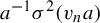 obtained by removing its leading letter a. Finally, we observe that
$a^{-1}\sigma ^2(v_na)b = bw_{k+1}$
obtained by removing its leading letter a. Finally, we observe that
$a^{-1}\sigma ^2(v_na)b = bw_{k+1}$
 and, thus,
$bw_{k+1}=v_{m}b$
and, thus,
$bw_{k+1}=v_{m}b$
 , where
$m=F(2k+4)-1$
, where
$m=F(2k+4)-1$
 .
.
Next, let us fix
$k\geq 0$
 and let
$n=F(2k+2)-1$
and let
$n=F(2k+2)-1$
 . Then, by the first part of the proof, we know that
$w_k = u_n$
. Then, by the first part of the proof, we know that
$w_k = u_n$
 ,
$bu_n=v_nb$
,
$bu_n=v_nb$
 , and then

We need to show that
$\varphi (w_k) \equiv k \bmod 2$
 . We do so by induction on k. Since
$w_0 = \varepsilon $
. We do so by induction on k. Since
$w_0 = \varepsilon $
 and
$w_1 = \sigma ^2(b)=ab$
and
$w_1 = \sigma ^2(b)=ab$
 , the result is clear for
$k=0,1$
, the result is clear for
$k=0,1$
 . Assume then that the result holds for some
$k\geq 0$
. Assume then that the result holds for some
$k\geq 0$
 . By definition,
$w_{k+2} = \sigma ^4(w_{k}b)\sigma ^2(b) =\sigma ^4(w_kb)ab$
. By definition,
$w_{k+2} = \sigma ^4(w_{k}b)\sigma ^2(b) =\sigma ^4(w_kb)ab$
 . However, observe that

Thus, we have the relation
$\varphi (\sigma ^4(x)) \equiv |x| \bmod 2$
 for all
$x\in A^*$
for all
$x\in A^*$
 . By induction, we then have

which concludes the proof.
Proof of Proposition 3.18.
Recall that
$L = \{w\in \{a,b\}^* : |w|_a\equiv 0 \bmod 2\} = \varphi ^{-1}(0)$
 , where
$\varphi \colon A^*\to \mathbb {Z}/2\mathbb {Z}$
, where
$\varphi \colon A^*\to \mathbb {Z}/2\mathbb {Z}$
 is the morphism defined by
$\varphi (a)=1$
is the morphism defined by
$\varphi (a)=1$
 ,
$\varphi (b)=0$
,
$\varphi (b)=0$
 . Let
$\leq _{\mathrm {lex}}$
. Let
$\leq _{\mathrm {lex}}$
 denote the lexicographic order on words. It follows immediately from the description of
$\leq _{\mathrm {lex}}$
denote the lexicographic order on words. It follows immediately from the description of
$\leq _{\mathrm {lex}}$
 on
$\mathcal {L}(X)\cap A^n$
on
$\mathcal {L}(X)\cap A^n$
 by Perrin and Restivo [Reference Perrin and Restivo47, Theorem 2] that for every
$w\in \mathcal {L}(X)$
by Perrin and Restivo [Reference Perrin and Restivo47, Theorem 2] that for every
$w\in \mathcal {L}(X)$
 with
$|w|=n+1$
with
$|w|=n+1$
 ,
,

Moreover, [Reference Perrin and Restivo47, Proposition 2] states that the lexicographically maximal element of
$\mathcal {L}(X)\cap A^{n+1}$
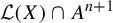 is
$bu_{n}$
is
$bu_{n}$
 . In particular, if
$bu_n = v_nb$
. In particular, if
$bu_n = v_nb$
 , then
$v_nb$
, then
$v_nb$
 is maximal in
$\mathcal {L}(X)\cap A^{n+1}$
is maximal in
$\mathcal {L}(X)\cap A^{n+1}$
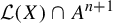 and for such values of n,

However, by Lemma 3.20, we know that
$\varphi (v_nb) = \varphi (v_n)\equiv k \bmod 2$
 , where
$n = F(2k+2)-1$
, where
$n = F(2k+2)-1$
 , and
, and

Finally, k is even precisely when
$n+1 = F(4\ell +2)$
 for some
$\ell $
for some
$\ell $
 and k is odd precisely when
$n+1 = F(4\ell )$
and k is odd precisely when
$n+1 = F(4\ell )$
 for some
$\ell $
for some
$\ell $
 . We conclude the proof by observing that
$\lim _{n\to \infty }\mu ([v_n]) = 0$
. We conclude the proof by observing that
$\lim _{n\to \infty }\mu ([v_n]) = 0$
 , which is a straightforward consequence of [Reference Durand24, Proposition 13].
4 The case of Bernoulli measures
This section gives a brief account of the original approach to densities under Bernoulli measures due to Schützenberger [Reference Schützenberger53], Berstel [Reference Berstel and Nivat6], and Hansel and Perrin [Reference Hansel and Perrin32] with an approach based on the algebraic theory of formal languages. Details may be found in the monograph [Reference Berstel, Perrin and Reutenauer8].
A probability measure
$\mu $
 on the full shift
$A^{\mathbb {Z}}$
on the full shift
$A^{\mathbb {Z}}$
 is a Bernoulli measure when the map
$A^*\to [0,1]$
is a Bernoulli measure when the map
$A^*\to [0,1]$
 induced by evaluating
$\mu $
induced by evaluating
$\mu $
 on cylinders is a morphism. More explicitly,

A Bernoulli measure is called positive if
$\mu ([a])>0$
 for all
$a\in A$
for all
$a\in A$
 . The simplest example of a positive Bernoulli measure is that of the uniform distribution given by
$\mu ([a])=1/|A|$
. The simplest example of a positive Bernoulli measure is that of the uniform distribution given by
$\mu ([a])=1/|A|$
 .
.
A first result on densities under Bernoulli measures is the following, which generalizes the simple observation that finite languages have zero density. We say that a language
$L\subseteq A^*$
 is thin if there is a word
$w\in A^*$
is thin if there is a word
$w\in A^*$
 that does not appear in any word of L as a factor.
Proposition 4.1. [Reference Berstel, Perrin and Reutenauer8, Proposition 13.2.3]
Let
$\mu $
 be a Bernoulli measure on
$A^{\mathbb {Z}}$
be a Bernoulli measure on
$A^{\mathbb {Z}}$
 and
${L\subseteq A^*}$
and
${L\subseteq A^*}$
 . If L is thin, then one has
$\delta _\mu (L)=0$
. If L is thin, then one has
$\delta _\mu (L)=0$
 .
.
Recall that a rational language is a language recognized by a finite automaton, which may, without loss of generality, be assumed to be complete. Formally, this means that there is a triple
$\mathcal {A} = (Q,i,F)$
 , where Q is a finite set of states on which
$A^*$
, where Q is a finite set of states on which
$A^*$
 acts on the right,
$i\in Q$
acts on the right,
$i\in Q$
 is the initial state, and
$F\subseteq Q$
is the initial state, and
$F\subseteq Q$
 is the set of final states, and such that
$L = \{w\in A^*\mid i\cdot w\in F\}$
is the set of final states, and such that
$L = \{w\in A^*\mid i\cdot w\in F\}$
 .
.
Example 4.2. The language
$L=\{aa,ab,b\}^*$
 is rational. An automaton recognizing L is shown in Figure 4; it is, in fact, the minimal automaton of L.
For rational languages, we have the following converse of Proposition 4.1. We provide a sketch of proof using notions from the algebraic theory of formal languages, which may be recalled in [Reference Berstel, Perrin and Reutenauer8].
Proposition 4.3. Let
$\mu $
 be a positive Bernoulli measure on
$A^{\mathbb {Z}}$
be a positive Bernoulli measure on
$A^{\mathbb {Z}}$
 and
$L\subseteq A^*$
and
$L\subseteq A^*$
 be a rational language. If
$\delta _\mu (L)=0$
be a rational language. If
$\delta _\mu (L)=0$
 , then L is thin.
Proof. Let
$\varphi \colon A^*\to M$
 be a morphism onto a finite monoid M such that
$L = \varphi ^{-1}(\varphi (L))$
be a morphism onto a finite monoid M such that
$L = \varphi ^{-1}(\varphi (L))$
 and let K be the minimal ideal of M. For
$q\in M$
and let K be the minimal ideal of M. For
$q\in M$
 , we denote by
$L_q$
, we denote by
$L_q$
 the language
$\varphi ^{-1}(q)$
the language
$\varphi ^{-1}(q)$
 . Observe that every element
$m\in K$
. Observe that every element
$m\in K$
 satisfies
$MmM = K$
satisfies
$MmM = K$
 and, in particular,
$L_q$
and, in particular,
$L_q$
 is thin whenever
$q\in M\setminus K$
is thin whenever
$q\in M\setminus K$
 . As a result, we deduce that
$\delta _\mu (L)=\delta _\mu (L \cap L_K)$
. As a result, we deduce that
$\delta _\mu (L)=\delta _\mu (L \cap L_K)$
 and
$\delta _\mu (L_K)=1$
and
$\delta _\mu (L_K)=1$
 , where
$L_K = \varphi ^{-1}(K)$
, where
$L_K = \varphi ^{-1}(K)$
 .
.
An automaton recognizing the language
$L=\{aa,ab,b\}^*$
 with the state
$1$
with the state
$1$
 being the initial state and the only final state.

We claim that
$\delta _\mu (L_m)>0$
 for all
$m\in K$
for all
$m\in K$
 . First, observe that there must be at least one
$n\in K$
. First, observe that there must be at least one
$n\in K$
 with
$\delta _\mu (L_n)>0$
with
$\delta _\mu (L_n)>0$
 . Next, fix
$m\in K$
. Next, fix
$m\in K$
 and let
$r,s\in M$
and let
$r,s\in M$
 such that
$rns=m$
such that
$rns=m$
 ; let
$u,v\in A^*$
; let
$u,v\in A^*$
 such that
$\varphi (u)=r$
such that
$\varphi (u)=r$
 and
$\varphi (v)=s$
and
$\varphi (v)=s$
 . It follows that
$uL_nv \subseteq L_m$
. It follows that
$uL_nv \subseteq L_m$
 . Then, the fact that
$\mu $
. Then, the fact that
$\mu $
 is a Bernoulli measure implies that

Since
$\mu $
 is positive, we get
$\mu ([L_m]) \geq \mu ([u])\mu ([v])\delta _\mu (L_n)> 0$
is positive, we get
$\mu ([L_m]) \geq \mu ([u])\mu ([v])\delta _\mu (L_n)> 0$
 . It now follows that if
$\delta _\mu (L) = 0$
. It now follows that if
$\delta _\mu (L) = 0$
 , then L must be a union of
$L_q$
, then L must be a union of
$L_q$
 with
$q\in M\setminus K$
with
$q\in M\setminus K$
 . This concludes the proof since finite unions of thin codes are thin, cf. [Reference Berstel, Perrin and Reutenauer8, Proposition 2.5.8].
Note however that the previous proposition fails for non-rational languages: take, for instance,

Then, one has
$\mu ([L\cap A^{2n}])=1/\mu ([a])^n$
 , which implies
$\delta _\mu (L)=0$
, which implies
$\delta _\mu (L)=0$
 . However, L is clearly not thin, since every word appears as a suffix.
Next, we give a proof of the fact that the density of a rational language under a Bernoulli measure always exists.
Proposition 4.4. Let
$\mu $
 be a Bernoulli measure on
$A^{\mathbb {Z}}$
be a Bernoulli measure on
$A^{\mathbb {Z}}$
 and
$L\subseteq A^*$
and
$L\subseteq A^*$
 be a rational language. Then, the density
$\delta _\mu (L)$
be a rational language. Then, the density
$\delta _\mu (L)$
 exists and if
$\mu ([A])\subseteq \mathbb {Q}$
exists and if
$\mu ([A])\subseteq \mathbb {Q}$
 , it is a rational number.
Proof. Let
$\mathcal {A}=(Q,i,F)$
 be a complete deterministic automaton recognizing L. For every terminal state
$t\in F$
be a complete deterministic automaton recognizing L. For every terminal state
$t\in F$
 , let
$L_t$
, let
$L_t$
 be the language recognized by
$(Q,i,t)$
be the language recognized by
$(Q,i,t)$
 . Since
$L=\bigcup _{t\in F}L_t$
. Since
$L=\bigcup _{t\in F}L_t$
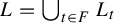 , it is enough to prove that every
$L_t$
, it is enough to prove that every
$L_t$
 has a density. Thus, we may assume that
$F=\{t\}$
has a density. Thus, we may assume that
$F=\{t\}$
 . Let M be the
$Q\times Q$
. Let M be the
$Q\times Q$
 -matrix defined by

Observe that M is a stochastic matrix and since the sets
$\{x\in A^{\mathbb {Z}}\mid p\cdot x_0=q\}$
 are disjoint unions of cylinders
$[a]$
are disjoint unions of cylinders
$[a]$
 for
$a\in A$
for
$a\in A$
 , it has rational entries under our hypothesis. Moreover, this matrix has the property that

Without loss of generality, we may assume that every
$q\in Q$
 is on a path from i to t (otherwise, q can be removed). Let U be the set of labels of paths
$i\to t$
is on a path from i to t (otherwise, q can be removed). Let U be the set of labels of paths
$i\to t$
 and which pass by t exactly once; let V be the set of labels of simple loops
$t\to t$
and which pass by t exactly once; let V be the set of labels of simple loops
$t\to t$
 . Then,
$L = UV^*$
. Then,
$L = UV^*$
 ,
$0\leq \mu ([U])<\infty $
,
$0\leq \mu ([U])<\infty $
 , and
$\delta _\mu (UV^*) = \mu ([U])\delta _\mu (V^*)$
, and
$\delta _\mu (UV^*) = \mu ([U])\delta _\mu (V^*)$
 exists whenever
$\delta _\mu (V^*)$
exists whenever
$\delta _\mu (V^*)$
 exists [Reference Berstel, Perrin and Reutenauer8, Proposition 13.2.5]. Hence, we may assume moving forward that there is a path from t to i. In particular, it means that the matrix M is irreducible, that is, for all
$p,q$
exists [Reference Berstel, Perrin and Reutenauer8, Proposition 13.2.5]. Hence, we may assume moving forward that there is a path from t to i. In particular, it means that the matrix M is irreducible, that is, for all
$p,q$
 in Q, there exists an integer k such that
$M_{p,q}^k>0$
in Q, there exists an integer k such that
$M_{p,q}^k>0$
 or else
$(M+I)^{|Q|-1}>0$
or else
$(M+I)^{|Q|-1}>0$
 , where I is the
$Q\times Q$
, where I is the
$Q\times Q$
 identity matrix. By the Perron–Frobenius theorem, the numbers
$M_{i,t}^n$
identity matrix. By the Perron–Frobenius theorem, the numbers
$M_{i,t}^n$
 converge in average and, thus, the density of L exists. Moreover, the matrices
$M^n$
converge in average and, thus, the density of L exists. Moreover, the matrices
$M^n$
 converge as
$n\to \infty $
converge as
$n\to \infty $
 to a matrix with all rows equal to a stochastic eigenvector v of M of eigenvalue 1. However, since M has rational entries, the eigenspace of eigenvalue 1 (which has dimension one by the Perron–Frobenius theorem) has a spanning vector u with only rational entries. Therefore, the aforementioned vector v is equal to
$\pm u/\Vert u\Vert _1$
to a matrix with all rows equal to a stochastic eigenvector v of M of eigenvalue 1. However, since M has rational entries, the eigenspace of eigenvalue 1 (which has dimension one by the Perron–Frobenius theorem) has a spanning vector u with only rational entries. Therefore, the aforementioned vector v is equal to
$\pm u/\Vert u\Vert _1$
 , where
$\Vert u\Vert _1$
, where
$\Vert u\Vert _1$
 denotes the 1-norm of u and, thus, also has rational entries.
Example 4.5. Let L and
$\mathcal {A}$
 be the language and automaton from Example 4.2. Set
${\mu ([a])=p}$
be the language and automaton from Example 4.2. Set
${\mu ([a])=p}$
 and
$\mu ([b])=1-p$
and
$\mu ([b])=1-p$
 . The matrix M, which is irreducible, is

The normalized left eigenvector is

Thus,
$\delta _\mu (L)=1/(1+p)$
 (by considering here
$M_{1,1}$
(by considering here
$M_{1,1}$
 since
$i=t=1$
since
$i=t=1$
 ).
).
Remark 4.6. The proof of the above theorem uses a Markov chain associated to an automaton. It can also be understood as a skew product
$Q\rtimes X$
 of the set Q with the shift
$X=A^{\mathbb {Z}}$
of the set Q with the shift
$X=A^{\mathbb {Z}}$
 , in the same way as we did with groups. Indeed, if
$\mathcal {A}=(Q,i,F)$
, in the same way as we did with groups. Indeed, if
$\mathcal {A}=(Q,i,F)$
 is a deterministic automaton, then the set
$Q\times X$
is a deterministic automaton, then the set
$Q\times X$
 may be turned into a dynamical system using the transformation

Let
$\rho $
 be the unique probability measure on Q such that

Then,
$\rho \times \mu $
 is an invariant probability measure on the skew product
$Q\rtimes X$
is an invariant probability measure on the skew product
$Q\rtimes X$
 , which is ergodic whenever the matrix of the automaton is irreducible. Moreover, it is mixing as soon as
$\mathcal {A}$
, which is ergodic whenever the matrix of the automaton is irreducible. Moreover, it is mixing as soon as
$\mathcal {A}$
 is aperiodic, that is, when the
$\gcd $
is aperiodic, that is, when the
$\gcd $
 of the lengths of cycles in
$\mathcal {A}$
of the lengths of cycles in
$\mathcal {A}$
 is
$1$
is
$1$
 ; or equivalently, the matrix M is primitive. In this case, we recover the conclusion of Remark 3.5. Also, by ergodicity of Bernoulli measures, the existence of the density in Proposition 4.4 is a special case of Theorem 1.1.
We end with a discussion on prefix codes, a notion which also appears later in §6. A prefix code is a subset
$U\subseteq A^*$
 , where no word is a strict prefix of another. Any prefix code must satisfy
$\mu ([U])\leq 1$
, where no word is a strict prefix of another. Any prefix code must satisfy
$\mu ([U])\leq 1$
 for any Bernoulli measure
$\mu $
for any Bernoulli measure
$\mu $
 , cf. [Reference Berstel, Perrin and Reutenauer8, Proposition 3.7.1].
If U is a prefix code such that
$\mu ([U])=1$
 , then its average length (relatively to
$\mu $
, then its average length (relatively to
$\mu $
 ) is defined as

It is well known that the average length satisfies

where P is the set of proper prefixes of the words in U [Reference Berstel, Perrin and Reutenauer8, Proposition 3.7.11]. The following is closely related to our second main result, Theorem 1.2. Its proof is based on relations between associated generating functions.
Proposition 4.7. [Reference Berstel, Perrin and Reutenauer8, Theorem 13.2.11]
Let
$\mu $
 be a positive Bernoulli measure on
$A^{\mathbb {Z}}$
be a positive Bernoulli measure on
$A^{\mathbb {Z}}$
 . Let U be a prefix code such that
$\mu ([U])=1$
. Let U be a prefix code such that
$\mu ([U])=1$
 and
$\ell (U)<\infty $
and
$\ell (U)<\infty $
 . Then,
$\delta _\mu (U^*) = 1/\ell (U)$
. Then,
$\delta _\mu (U^*) = 1/\ell (U)$
 .
.
Note that a rational prefix code satisfying
$\mu ([U])=1$
 must satisfy the assumption
$\ell (U)<\infty $
must satisfy the assumption
$\ell (U)<\infty $
 . Indeed, any rational code is thin by [Reference Berstel, Perrin and Reutenauer8, Proposition 2.5.20]; hence, the set P of proper prefixes of U is also thin, which implies
$\mu ([P])<\infty $
. Indeed, any rational code is thin by [Reference Berstel, Perrin and Reutenauer8, Proposition 2.5.20]; hence, the set P of proper prefixes of U is also thin, which implies
$\mu ([P])<\infty $
 by [Reference Berstel, Perrin and Reutenauer8, Proposition 2.5.12].
Let
$\varphi \colon A^*\to G$
 be a morphism from
$A^*$
be a morphism from
$A^*$
 onto a finite group G. If H is a subgroup of G, then the submonoid
$M=\varphi ^{-1}(H)$
onto a finite group G. If H is a subgroup of G, then the submonoid
$M=\varphi ^{-1}(H)$
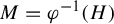 is generated by the prefix code U consisting of the non-empty words in M with no non-trivial prefix in M; we say that U is a group code. Observe in fact that U is also equal to the non-empty words in M with no non-trivial suffix in M and, as a result, has the dual property of being a suffix code (no element of U is the suffix of another). Note that sets which are both prefix and suffix codes are called bifix codes; bifix codes are at the heart of §6.1.
Proposition 4.8. Let
$\mu $
 be a positive Bernoulli measure on
$A^{\mathbb {Z}}$
be a positive Bernoulli measure on
$A^{\mathbb {Z}}$
 . Let
$\varphi \colon A^*\to G$
. Let
$\varphi \colon A^*\to G$
 be a morphism from
$A^*$
be a morphism from
$A^*$
 onto a finite group G and let H be a subgroup of G. Let U be the group code defined by
$\varphi \colon A^*\to G$
onto a finite group G and let H be a subgroup of G. Let U be the group code defined by
$\varphi \colon A^*\to G$
 and
$U^*=\varphi ^{-1}(H)$
and
$U^*=\varphi ^{-1}(H)$
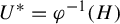 . Then,
$\ell (U)=d$
. Then,
$\ell (U)=d$
 and
$\delta _\mu (U^*)=1/d$
and
$\delta _\mu (U^*)=1/d$
 with
$d=[G:H]=|H|/|G|$
with
$d=[G:H]=|H|/|G|$
 .
.
Proof. The proof that
$\ell (U)=d$
 uses the fact that the set P of proper prefixes of U is a disjoint union of d suffix codes
$U_i$
uses the fact that the set P of proper prefixes of U is a disjoint union of d suffix codes
$U_i$
 such that
$\mu ([U_i])=1$
such that
$\mu ([U_i])=1$
 . Then, using (4.1), we obtain
$\ell (U)=\sum _{i=1}^{d}\mu ([U_i])=d$
. Then, using (4.1), we obtain
$\ell (U)=\sum _{i=1}^{d}\mu ([U_i])=d$
 . For further details, see [Reference Berstel, Perrin and Reutenauer8, Corollary 6.13.16, Theorem 13.2.9], noting that the code U is a maximal bifix code [Reference Berstel, Perrin and Reutenauer8, pp. 64, 65], which is moreover rational and, thus, also thin [Reference Berstel, Perrin and Reutenauer8, Proposition 2.5.20].
Example 4.9. Let
$A=\{a,b\}$
 . Set
$p=\mu ([a])$
. Set
$p=\mu ([a])$
 ,
$q=\mu ([b])$
,
$q=\mu ([b])$
 . Let
$\varphi \colon A^*\to \mathbb {Z}/2\mathbb {Z}$
. Let
$\varphi \colon A^*\to \mathbb {Z}/2\mathbb {Z}$
 be defined by
$\varphi (a)=0$
be defined by
$\varphi (a)=0$
 ,
$\varphi (b)=1$
,
$\varphi (b)=1$
 . Then,
$\varphi ^{-1}(1)=U^*$
. Then,
$\varphi ^{-1}(1)=U^*$
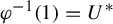 with
$U=\{a\}\cup ba^*b$
with
$U=\{a\}\cup ba^*b$
 . The set P of proper prefixes of U is
$P{\kern-1pt}={\kern-1pt}\{\varepsilon \}\cup ba^*$
. The set P of proper prefixes of U is
$P{\kern-1pt}={\kern-1pt}\{\varepsilon \}\cup ba^*$
 and we have
$\ell (U){\kern-1pt}={\kern-1pt}\mu ([\{\varepsilon \}\cup ba^*]){\kern-1pt}={\kern-1pt}1{\kern-1pt}+{\kern-1pt}q/(1{\kern-1pt}-{\kern-1pt}p)=2$
and we have
$\ell (U){\kern-1pt}={\kern-1pt}\mu ([\{\varepsilon \}\cup ba^*]){\kern-1pt}={\kern-1pt}1{\kern-1pt}+{\kern-1pt}q/(1{\kern-1pt}-{\kern-1pt}p)=2$
 .
.
5 Densities in SFTs
The aim of this section is to apply our main density formula (Theorem 1.1) within the setting of SFTs. We provide a simple condition which guarantees topological transitivity of the skew product with a finite group; this, in turn, implies ergodicity for the product of the uniform probability measure on the group and a Markov measure on the shift. This also includes the case of Bernoulli measures, which we already discussed in §4.
The question of ergodicity for skew products over Bernoulli measures was studied by Kakutani [Reference Kakutani35] and the more general Markov case was studied by Bufetov [Reference Bufetov18]. The latter introduced a condition that he called ‘strongly connected’ to characterize ergodicity of certain skew products involving Markov measures [Reference Bufetov18, Theorem 4]. Restating Bufetov’s criterion in our setting, for consistency of terminology, we rename this condition strong irreducibility; his result was also recently extended in a paper by Lummerzheim et al [Reference Lummerzheim, Pogorzelski and Zimmermann40, Theorem 4.3].
In §5.1, we define
$\varphi $
 -irreducibility of a subshift with respect to a morphism onto a finite group, which characterizes topological transitivity in skew products. Section 5.2 treats skew products of shift spaces over Markov measures, using the fact that irreducibility implies ergodicity. In §5.3, we discuss strong irreducibility, which provides topological transitivity simultaneously for all skew products.
5.1 SFTs and
$\varphi $
-irreducibility

Recall that a shift X is an r-step SFT (
$r\geq 1$
 ) if there is a list
$F\subseteq A^{r+1}$
) if there is a list
$F\subseteq A^{r+1}$
 of forbidden factors of length
$r+1$
of forbidden factors of length
$r+1$
 , with the property that an infinite word
$x \in A^{\mathbb {Z}}$
, with the property that an infinite word
$x \in A^{\mathbb {Z}}$
 belongs to X precisely when none of its factors of length
$r+1$
belongs to X precisely when none of its factors of length
$r+1$
 are in F. Recall also that a shift X is topologically transitive if for every pair
$(U,V)$
are in F. Recall also that a shift X is topologically transitive if for every pair
$(U,V)$
 of non-empty open sets in X, there is
$n>0$
of non-empty open sets in X, there is
$n>0$
 for which
$S^nU \cap V \neq \varnothing $
for which
$S^nU \cap V \neq \varnothing $
 . This is equivalent with the irreducibility of X, that is, for every
$u,v\in \mathcal {L}(X)$
. This is equivalent with the irreducibility of X, that is, for every
$u,v\in \mathcal {L}(X)$
 , there is
$w \in A^*$
, there is
$w \in A^*$
 such that
$uwv \in \mathcal {L}(X)$
such that
$uwv \in \mathcal {L}(X)$
 . For more on SFTs, see e.g. [Reference Lind and Marcus39, Reference Petersen48]. Topological transitivity is used to prove ergodicity for r-step Markov measures fully supported on r-step SFTs in §5.2.
Definition 5.1. Let X be a shift on A, G a finite group, and
$\varphi \colon A^*\to G$
 be a morphism onto G. We say that X is
$\varphi $
be a morphism onto G. We say that X is
$\varphi $
 -irreducible if, for all
$u,v\in \mathcal {L}(X)$
-irreducible if, for all
$u,v\in \mathcal {L}(X)$
 , there exists
$w\in A^*$
, there exists
$w\in A^*$
 such that
$uwv\in \mathcal {L}(X)$
such that
$uwv\in \mathcal {L}(X)$
 and
$\varphi (uw) = 1_G$
and
$\varphi (uw) = 1_G$
 .
.
Clearly,
$\varphi $
 -irreducibility always implies irreducibility. This is a special case of the following remark.
Remark 5.2. For a morphism
$\varphi \colon A^*\to G$
 as above, let

Observe that if
$\psi \colon A^*\to H$
 is another morphism onto a finite group H such that
$\ker (\varphi )\subseteq \ker (\psi )$
is another morphism onto a finite group H such that
$\ker (\varphi )\subseteq \ker (\psi )$
 , then there exists a unique morphism
$\beta \colon G\to H$
, then there exists a unique morphism
$\beta \colon G\to H$
 such that
$\beta \circ \varphi = \psi $
such that
$\beta \circ \varphi = \psi $
 and, as a result,
$\varphi $
and, as a result,
$\varphi $
 -irreducibility implies
$\psi $
-irreducibility implies
$\psi $
 -irreducibility.
We prove the following result, which shows that
$\varphi $
 -irreducibility is precisely the notion needed for topological transitivity of the original shift to propagate to skew products with finite groups.
Theorem 5.3. Let X be an r-step SFT on A and let
$\varphi \colon A^*\to G$
 be a morphism onto a finite group. Then, X is
$\varphi $
be a morphism onto a finite group. Then, X is
$\varphi $
 -irreducible if and only if the skew product
$G \rtimes _{\varphi } X$
-irreducible if and only if the skew product
$G \rtimes _{\varphi } X$
 is topologically transitive.
Before doing so, we establish an intermediate result involving the following notion.
Definition 5.4. We say that X is fiber ergodic with respect to
$\varphi $
 if, for every
$g,h\in G$
if, for every
$g,h\in G$
 , there exists
$w\in \mathcal {L}(X)$
, there exists
$w\in \mathcal {L}(X)$
 such that
$g\varphi (w) = h$
such that
$g\varphi (w) = h$
 ; or, equivalently, the restriction of
$\varphi $
; or, equivalently, the restriction of
$\varphi $
 to
$\mathcal {L}(X)$
to
$\mathcal {L}(X)$
 is onto.
Fiber ergodicity follows from
$\varphi $
 -irreducibility for SFTs, as shown next.
Lemma 5.5. Let X be a SFT on A and let
$\varphi \colon A^*\to G$
 be a morphism onto a finite group. If X is
$\varphi $
be a morphism onto a finite group. If X is
$\varphi $
 -irreducible, then it is fiber ergodic with respect to
$\varphi $
-irreducible, then it is fiber ergodic with respect to
$\varphi $
 .
.
Proof. Let
$r\geq 1$
 such that X is an r-step SFT. Take
$g\in G$
such that X is an r-step SFT. Take
$g\in G$
 . Since
$\varphi $
. Since
$\varphi $
 is onto, we may find letters
$a_1,\ldots , a_k\in A$
is onto, we may find letters
$a_1,\ldots , a_k\in A$
 such that
$\varphi (a_1\cdots a_k) = g$
such that
$\varphi (a_1\cdots a_k) = g$
 . For
$i=1,\ldots ,k$
. For
$i=1,\ldots ,k$
 , let
$u_i$
, let
$u_i$
 be a word of length
$r+1$
be a word of length
$r+1$
 in
$\mathcal {L}(X)$
in
$\mathcal {L}(X)$
 starting with
$a_i$
starting with
$a_i$
 . Let
$t_i$
. Let
$t_i$
 and
$v_i$
and
$v_i$
 be the suffix and prefix of length r of
$u_i$
be the suffix and prefix of length r of
$u_i$
 . By assumption, there exists, for each
$i = 1,\ldots k-1$
. By assumption, there exists, for each
$i = 1,\ldots k-1$
 , a word
$w_i$
, a word
$w_i$
 such that
$t_iw_iv_{i+1}\in \mathcal {L}(X)$
such that
$t_iw_iv_{i+1}\in \mathcal {L}(X)$
 and
$\varphi (t_iw_i)=1_G$
and
$\varphi (t_iw_i)=1_G$
 . Since X is an r-step shift, it follows that the word
$z = u_1w_1\cdots w_{k-1}u_kw_k$
. Since X is an r-step shift, it follows that the word
$z = u_1w_1\cdots w_{k-1}u_kw_k$
 belongs to
$\mathcal {L}(X)$
belongs to
$\mathcal {L}(X)$
 and
and

which proves that X is fiber ergodic.
Proof of Theorem 5.3.
For
$g\in G$
 , define a relation
$\prec _g$
, define a relation
$\prec _g$
 on
$\mathcal {L}(X)$
on
$\mathcal {L}(X)$
 by
$u\prec _gv$
by
$u\prec _gv$
 if there exists
$w\in \mathcal {L}(X)$
if there exists
$w\in \mathcal {L}(X)$
 such that
$uwv\in \mathcal {L}(X)$
such that
$uwv\in \mathcal {L}(X)$
 and
$\varphi (uw)=g$
and
$\varphi (uw)=g$
 . Observe that
$u\prec _gv$
. Observe that
$u\prec _gv$
 precisely when
$T^m(\{1_G\}\times [u]_X)$
precisely when
$T^m(\{1_G\}\times [u]_X)$
 intersects
$\{g\}\times [v]_X$
intersects
$\{g\}\times [v]_X$
 for some
$m\geq |u|$
for some
$m\geq |u|$
 . Therefore,
$G\rtimes _{\varphi } X$
. Therefore,
$G\rtimes _{\varphi } X$
 is topologically transitive precisely when all relations
$\prec _g$
is topologically transitive precisely when all relations
$\prec _g$
 ,
$g\in G$
,
$g\in G$
 , are total. In particular, whenever this is the case,
$\prec _{1_G}$
, are total. In particular, whenever this is the case,
$\prec _{1_G}$
 must contain all pairs
$u,v\in \mathcal {L}(X)$
must contain all pairs
$u,v\in \mathcal {L}(X)$
 , which is precisely the definition of
$\varphi $
, which is precisely the definition of
$\varphi $
 -irreducibility. Thus, topological transitivity of
$G\rtimes _{\varphi } X$
-irreducibility. Thus, topological transitivity of
$G\rtimes _{\varphi } X$
 implies
$\varphi $
implies
$\varphi $
 -irreducibility of X. It remains to prove the converse.
Assume that X is
$\varphi $
 -irreducible, so that
${\prec } = {\prec _{1_G}}$
-irreducible, so that
${\prec } = {\prec _{1_G}}$
 contains all pairs of words in
$\mathcal {L}(X)$
contains all pairs of words in
$\mathcal {L}(X)$
 . Take
$u,v\in \mathcal {L}(X)$
. Take
$u,v\in \mathcal {L}(X)$
 and
$g\in G$
and
$g\in G$
 ; we need to show that
$u\prec _g v$
; we need to show that
$u\prec _g v$
 .
.
By fiber ergodicity (which holds thanks to Lemma 5.5), there is
$u' \in \mathcal {L}(X)$
 such that
$\varphi (u')=g$
such that
$\varphi (u')=g$
 . Since
$u\prec u'$
. Since
$u\prec u'$
 , there is
$z\in \mathcal {L}(X)$
, there is
$z\in \mathcal {L}(X)$
 such that
$uzu'\in \mathcal {L}(X)$
such that
$uzu'\in \mathcal {L}(X)$
 and
$\varphi (uz)=1_G$
and
$\varphi (uz)=1_G$
 . Then,
$w_0=zu'$
. Then,
$w_0=zu'$
 satisfies
$uw_0 \in \mathcal {L}(X)$
satisfies
$uw_0 \in \mathcal {L}(X)$
 and
$\varphi (uw_0)=g$
and
$\varphi (uw_0)=g$
 .
.
Extend
$uw_0$
 to a word
$wu_0v' \in \mathcal {L}(X)$
to a word
$wu_0v' \in \mathcal {L}(X)$
 with
$|v'| \geq r+1$
with
$|v'| \geq r+1$
 . Since
$v'\prec v$
. Since
$v'\prec v$
 , there is a word
$v"$
, there is a word
$v"$
 such that
$v'v"v \in \mathcal {L}(X)$
such that
$v'v"v \in \mathcal {L}(X)$
 and
$\varphi (v'v")=1_G$
and
$\varphi (v'v")=1_G$
 . Then, all subwords of length
$r+1$
. Then, all subwords of length
$r+1$
 of
$uw_0v'v"v$
of
$uw_0v'v"v$
 are in
$\mathcal {L}(X)$
are in
$\mathcal {L}(X)$
 and, hence,
$uw_0v'v"v \in \mathcal {L}(X)$
and, hence,
$uw_0v'v"v \in \mathcal {L}(X)$
 . Finally, letting
$w=w_0v'v"$
. Finally, letting
$w=w_0v'v"$
 , we have
$uwv \in \mathcal {L}(X)$
, we have
$uwv \in \mathcal {L}(X)$
 and
$\varphi (uw)=g$
and
$\varphi (uw)=g$
 . This shows that
$u\prec _g v$
. This shows that
$u\prec _g v$
 , which concludes the proof.
It is not hard to see directly that topological transitivity of
$G\rtimes _{\varphi } X$
 implies fiber ergodicity (as also follows from Theorem 5.3); but the converse is false, as shown by the following example.
Example 5.6. Take again the skew product from Example 3.3, based on the three-element shift generated by the periodic infinite word
$(abc)^{\infty }$
 taken with respect to the morphism
$\varphi \colon \{a,b,c\}^*\to \mathbb {Z}/2\mathbb {Z}$
taken with respect to the morphism
$\varphi \colon \{a,b,c\}^*\to \mathbb {Z}/2\mathbb {Z}$
 ,
$\varphi (a)=\varphi (b)=1$
,
$\varphi (a)=\varphi (b)=1$
 ,
$\varphi (c)=0$
,
$\varphi (c)=0$
 . Then, X is fiber ergodic, but
$G\rtimes _{\varphi } X$
. Then, X is fiber ergodic, but
$G\rtimes _{\varphi } X$
 is not topologically transitive.
Finally, we prove the following useful property of
$\varphi $
 -irreducibility in SFTs. It shows that for SFTs, the task of verifying the condition in Definition 5.1 can be reduced to a finite set of words.
Proposition 5.7. Let X be an r-step SFT on A and
$\varphi \colon A^*\to G$
 be a morphism onto a finite group. Then, for X to be
$\varphi $
be a morphism onto a finite group. Then, for X to be
$\varphi $
 -irreducible, it suffices that, for all
$u,v\in \mathcal {L}(X)$
-irreducible, it suffices that, for all
$u,v\in \mathcal {L}(X)$
 with
$|u|=|v|=r$
with
$|u|=|v|=r$
 , there exists
$w\in A^*$
, there exists
$w\in A^*$
 such that
$uwv\in \mathcal {L}(X)$
such that
$uwv\in \mathcal {L}(X)$
 and
$\varphi (uw) = 1_G$
and
$\varphi (uw) = 1_G$
 .
.
Proof. Let
$u,v\in \mathcal {L}(X)$
 . If
$|v|<r$
. If
$|v|<r$
 , then we may simply replace v by one of its extensions in
$\mathcal {L}(X)$
, then we may simply replace v by one of its extensions in
$\mathcal {L}(X)$
 of length r. If
$|v|>r$
of length r. If
$|v|>r$
 , then we may likewise replace it by its prefix of length r. Thus, we may assume moving forward that
$|v|=r$
, then we may likewise replace it by its prefix of length r. Thus, we may assume moving forward that
$|v|=r$
 .
.
First, we assume that
$|u|>r$
 . Let
$u = pq = p'q'$
. Let
$u = pq = p'q'$
 , where
$|q| = |p'| = r$
, where
$|q| = |p'| = r$
 . By assumption, there are words
$w,w'$
. By assumption, there are words
$w,w'$
 such that
$qw'p', qwv\in \mathcal {L}(X)$
such that
$qw'p', qwv\in \mathcal {L}(X)$
 and
$\varphi (qw) = \varphi (qw') = 1_G$
and
$\varphi (qw) = \varphi (qw') = 1_G$
 . Observe that, for every
$n\in \mathbb {N}$
. Observe that, for every
$n\in \mathbb {N}$
 ,
$u(w'u)^nwv$
,
$u(w'u)^nwv$
 has all of its factors of length r in
$\mathcal {L}(X)$
has all of its factors of length r in
$\mathcal {L}(X)$
 . Thus, the word
$z_n = (w'u)^nw$
. Thus, the word
$z_n = (w'u)^nw$
 is such that
$uz_nv\in \mathcal {L}(X)$
is such that
$uz_nv\in \mathcal {L}(X)$
 , while
$\varphi (uz_n) = \varphi (p)^n$
, while
$\varphi (uz_n) = \varphi (p)^n$
 . Taking
$n = |G|$
. Taking
$n = |G|$
 , we get
$\varphi (uz_n) = 1_G$
, we get
$\varphi (uz_n) = 1_G$
 , as needed.
It remains to handle the case where
$|u|<r$
 . Take a word p such that
$|p|=r-|u|$
. Take a word p such that
$|p|=r-|u|$
 and
$pu\in \mathcal {L}(X)$
and
$pu\in \mathcal {L}(X)$
 . Then, we may find words
$w, w'$
. Then, we may find words
$w, w'$
 such that
$puw'uwv\in \mathcal {L}(X)$
such that
$puw'uwv\in \mathcal {L}(X)$
 with
${\varphi (puw') = 1_G}$
with
${\varphi (puw') = 1_G}$
 and
$\varphi (puw'uw) = 1_G$
and
$\varphi (puw'uw) = 1_G$
 ; thus,
$\varphi (uw) = 1_G$
; thus,
$\varphi (uw) = 1_G$
 .
.
Example 5.8. Consider once again the three-element shift X from Example 3.3 generated by the periodic word
$(abc)^\infty $
 , which is an irreducible 1-step SFT. Let
$\varphi \colon \{a,b,c\}^*\to \mathbb {Z}/2\mathbb {Z}$
, which is an irreducible 1-step SFT. Let
$\varphi \colon \{a,b,c\}^*\to \mathbb {Z}/2\mathbb {Z}$
 ,
$\varphi (a) = \varphi (b) = 1$
,
$\varphi (a) = \varphi (b) = 1$
 and
$\varphi (c) =0$
and
$\varphi (c) =0$
 .
.
Observe that every word w such that
$awb\in \mathcal {L}(X)$
 is of the form
$(bca)^n$
is of the form
$(bca)^n$
 for some
$n\geq 0$
for some
$n\geq 0$
 . In particular, it follows that for every such word w,
$\varphi (aw) = 1$
. In particular, it follows that for every such word w,
$\varphi (aw) = 1$
 ; thus, X is not
$\varphi $
; thus, X is not
$\varphi $
 -irreducible (though note that it is fiber ergodic). It is however
$\varphi $
-irreducible (though note that it is fiber ergodic). It is however
$\varphi $
 -irreducible if
$\varphi $
-irreducible if
$\varphi $
 is similarly defined, but takes values instead in
$\mathbb {Z}/3\mathbb {Z}$
is similarly defined, but takes values instead in
$\mathbb {Z}/3\mathbb {Z}$
 .
.
Example 5.9. Let X be the golden mean shift, that is, the 1-step SFT formed by sequences in
$\{a,b\}^{\mathbb {Z}}$
 avoiding the factor
$bb$
avoiding the factor
$bb$
 . Take the morphism
$\varphi \colon \{a,b\}^*\to \mathbb {Z}/2\mathbb {Z}$
. Take the morphism
$\varphi \colon \{a,b\}^*\to \mathbb {Z}/2\mathbb {Z}$
 ,
$\varphi (a) = 1$
,
$\varphi (a) = 1$
 ,
$\varphi (b)=0$
,
$\varphi (b)=0$
 . As seen before, this choice of a morphism allows one to count the parity of occurrences of as. Then, X is
$\varphi $
. As seen before, this choice of a morphism allows one to count the parity of occurrences of as. Then, X is
$\varphi $
 -irreducible, as evidenced by the fact that
$aab, aaa, ba, baab\in \mathcal {L}(X)$
-irreducible, as evidenced by the fact that
$aab, aaa, ba, baab\in \mathcal {L}(X)$
 , according to Proposition 5.7. It is also not hard to verify directly that the skew product viewed as a SFT under the topological conjugacy
$\Psi $
, according to Proposition 5.7. It is also not hard to verify directly that the skew product viewed as a SFT under the topological conjugacy
$\Psi $
 from Lemma 3.1 is indeed irreducible. The shift X and the skew product
$\mathbb {Z}/2\mathbb {Z}\rtimes _{\varphi } X$
from Lemma 3.1 is indeed irreducible. The shift X and the skew product
$\mathbb {Z}/2\mathbb {Z}\rtimes _{\varphi } X$
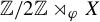 are depicted in Figure 5. Note that the same example works with
$G=\mathbb {Z}/m\mathbb {Z}$
are depicted in Figure 5. Note that the same example works with
$G=\mathbb {Z}/m\mathbb {Z}$
 by considering longer words.
The SFT and skew product from Example 5.9. The arrows represent the two respective dynamics, namely the shift map and the skew product map.

5.2 Markov measures
Using the topological transitivity condition from Theorem 5.3, we establish ergodicity for skew products involving invariant Markov measures. Recall that a measure
$\mu $
 on
$A^{\mathbb {Z}}$
on
$A^{\mathbb {Z}}$
 is an r-step Markov measure,
$r\geq 1$
is an r-step Markov measure,
$r\geq 1$
 , when for every word
$w\in A^*$
, when for every word
$w\in A^*$
 of length
$m\geq r$
of length
$m\geq r$
 such that
$\mu (x_{[0,m)} = w)\neq 0$
such that
$\mu (x_{[0,m)} = w)\neq 0$
 and every letter
$a\in A$
and every letter
$a\in A$
 ,
,

Invariant Markov measures are also called stationary. The support of an r-step invariant Markov measure
$\mu $
 is an r-step SFT. We say that an r-step Markov measure
$\mu $
is an r-step SFT. We say that an r-step Markov measure
$\mu $
 is irreducible when for all
$u,v\in A^r$
is irreducible when for all
$u,v\in A^r$
 , there exists
$m>0$
, there exists
$m>0$
 such that

Note that this is equivalent to irreducibility of the SFT supporting
$\mu $
 . It is well known that a Markov measure is ergodic if and only if it is irreducible. The 1-step case may be found in [Reference Petersen48, pp. 51–53], while the general r-step case can be reduced to
$r=1$
. It is well known that a Markov measure is ergodic if and only if it is irreducible. The 1-step case may be found in [Reference Petersen48, pp. 51–53], while the general r-step case can be reduced to
$r=1$
 by passing to the higher block shift (whose definition is recalled after Example 5.11). We now prove our second main result, which we recall.
Theorem 1.2. Let
$\mu $
 be an r-step Markov measure on
$A^{\mathbb {Z}}$
be an r-step Markov measure on
$A^{\mathbb {Z}}$
 ,
$r\geq 1$
,
$r\geq 1$
 , and let X be the support of
$\mu $
, and let X be the support of
$\mu $
 . Let
$\varphi \colon A^*\to G$
. Let
$\varphi \colon A^*\to G$
 be a morphism onto a finite group with uniform probability measure
$\nu $
be a morphism onto a finite group with uniform probability measure
$\nu $
 . If X is
$\varphi $
. If X is
$\varphi $
 -irreducible, then the product measure
$\nu \times \mu $
-irreducible, then the product measure
$\nu \times \mu $
 is ergodic on the skew product
$G\rtimes _{\varphi }X$
is ergodic on the skew product
$G\rtimes _{\varphi }X$
 .
.
In particular, for every
$K\subseteq G$
 , the language
$L = \varphi ^{-1}(K)$
, the language
$L = \varphi ^{-1}(K)$
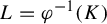 has density
$\delta _\mu (L) = |K|/|G|$
has density
$\delta _\mu (L) = |K|/|G|$
 .
.
Recall that if X is
$\varphi $
 -irreducible, then it is irreducible and so, under the assumptions of the above theorem,
$\mu $
-irreducible, then it is irreducible and so, under the assumptions of the above theorem,
$\mu $
 itself must be ergodic. Recall also, from Lemma 3.1, that for every morphism
$\varphi \colon A^*\to G$
itself must be ergodic. Recall also, from Lemma 3.1, that for every morphism
$\varphi \colon A^*\to G$
 onto a finite group G and every shift X, the skew product
$X\rtimes _{\varphi } G$
onto a finite group G and every shift X, the skew product
$X\rtimes _{\varphi } G$
 is topologically conjugate to a subshift of
$(G\times A)^{\mathbb {Z}}$
is topologically conjugate to a subshift of
$(G\times A)^{\mathbb {Z}}$
 via the map

Lemma 5.10. Let X be an r-step SFT,
$r\geq 1$
 , and
$\varphi \colon A^*\to G$
, and
$\varphi \colon A^*\to G$
 be a morphism onto a finite group G with uniform probability measure
$\nu $
be a morphism onto a finite group G with uniform probability measure
$\nu $
 .
.
-
(i) The set $\Psi (G\rtimes _{\varphi } X)$
is an r-step SFT. -
(ii) For every r-step Markov measure $\mu $
fully supported on X, the measure
$(\nu \times \mu )\circ \Psi ^{-1}$
is a Markov measure fully supported on
$\Psi (G\rtimes _{\varphi } X)$
.



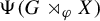
Proof. (i) Take a word
$\omega \in (G\times A)^*$
 with
$\omega _i = (g_i,w_i)$
with
$\omega _i = (g_i,w_i)$
 and
$m=|\omega |\geq r+1$
and
$m=|\omega |\geq r+1$
 . Observe that
$\omega $
. Observe that
$\omega $
 belongs to the language of
$\Psi (G\rtimes _{\varphi } X)$
belongs to the language of
$\Psi (G\rtimes _{\varphi } X)$
 as long as
$w = w_0\cdots w_{m-1}$
as long as
$w = w_0\cdots w_{m-1}$
 belongs to
$\mathcal {L}(X)$
belongs to
$\mathcal {L}(X)$
 and
$g_i\varphi (w_i) = g_{i+1}$
and
$g_i\varphi (w_i) = g_{i+1}$
 . Both of those conditions only need to be verified on factors of length
$r+1$
. Both of those conditions only need to be verified on factors of length
$r+1$
 of
$\omega $
of
$\omega $
 ; hence,
$\Psi (G\rtimes _{\varphi } X)$
; hence,
$\Psi (G\rtimes _{\varphi } X)$
 is indeed an r-step SFT.
(ii) Fix an r-step Markov measure on X and let
$\pi = (\nu \times \mu )\circ \Psi ^{-1}$
 . Fix a word
$\omega \in (G\times A)^*$
. Fix a word
$\omega \in (G\times A)^*$
 , with
$\omega _i = (g_i,w_i)$
, with
$\omega _i = (g_i,w_i)$
 ,
$m=|\omega |\geq r$
,
$m=|\omega |\geq r$
 , and
$w = w_0\cdots w_{m-1}$
, and
$w = w_0\cdots w_{m-1}$
 . Assume that
$\omega $
. Assume that
$\omega $
 belongs to the language of
$\Psi (G\rtimes _{\varphi } X)$
belongs to the language of
$\Psi (G\rtimes _{\varphi } X)$
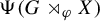 , which means that
$w\in \mathcal {L}(X)$
, which means that
$w\in \mathcal {L}(X)$
 and
$g_{i+1} = g_i\varphi (w_i)$
and
$g_{i+1} = g_i\varphi (w_i)$
 ,
$i=0,\ldots ,m-2$
,
$i=0,\ldots ,m-2$
 . Take a letter
$\alpha = (g,a)\in G\times A$
. Take a letter
$\alpha = (g,a)\in G\times A$
 . In case
$g\neq g_{m-1}\varphi (a)$
. In case
$g\neq g_{m-1}\varphi (a)$
 , then it is clear that

Thus, we may suppose from now on that
$g=g_{m-1}\varphi (a)$
 . Then, we have

Using a similar argument together with the invariance of
$\pi $
 , we find

The fact that
$\pi $
 is r-step Markov now follows directly from the fact that
$\mu $
is r-step Markov now follows directly from the fact that
$\mu $
 is.
is.
Proof of Theorem 1.2.
In light of Lemma 5.10, the measure
$(\nu \times \mu )\circ \Psi ^{-1}$
 is an r-step Markov measure fully supported on a SFT, which is topologically transitive by Theorem 5.3. Therefore,
$(\nu \times \mu )\circ \Psi ^{-1}$
is an r-step Markov measure fully supported on a SFT, which is topologically transitive by Theorem 5.3. Therefore,
$(\nu \times \mu )\circ \Psi ^{-1}$
 must be ergodic and since
$\Psi $
must be ergodic and since
$\Psi $
 is a topological conjugacy, we deduce that the measure
$\nu \times \mu $
is a topological conjugacy, we deduce that the measure
$\nu \times \mu $
 is ergodic as well.
The last part of the statement is then an immediate consequence of Corollary 3.6.
Example 5.11. Consider the full shift on
$A=\{a,b\}$
 , equipped with a Bernoulli measure
$\mu \colon a\mapsto p$
, equipped with a Bernoulli measure
$\mu \colon a\mapsto p$
 ,
$b\mapsto 1-p$
,
$b\mapsto 1-p$
 , where
$0<p<1$
, where
$0<p<1$
 . Let
$\varphi \to \mathbb {Z}/2\mathbb {Z}$
. Let
$\varphi \to \mathbb {Z}/2\mathbb {Z}$
 be the morphism defined by
$a\mapsto 1$
be the morphism defined by
$a\mapsto 1$
 ,
$b\mapsto 0$
,
$b\mapsto 0$
 , and
$\nu $
, and
$\nu $
 be the uniform measure probability measure on
$\mathbb {Z}/2\mathbb {Z}$
be the uniform measure probability measure on
$\mathbb {Z}/2\mathbb {Z}$
 . Since, clearly, the full shift is
$\varphi $
. Since, clearly, the full shift is
$\varphi $
 -irreducible, the product measure
$\nu \times \mu $
-irreducible, the product measure
$\nu \times \mu $
 is ergodic on the skew product
$\mathbb {Z}/2\mathbb {Z}\rtimes _{\varphi } A^{\mathbb {Z}}$
is ergodic on the skew product
$\mathbb {Z}/2\mathbb {Z}\rtimes _{\varphi } A^{\mathbb {Z}}$
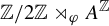 . However, looking directly at the transition diagram of the skew product, we can see that it is not only irreducible, but also aperiodic. Hence, we deduce that the skew product is strongly mixing, and by Remark 3.5,

Next, let us briefly describe how ergodicity for r-step Markov measures can also be reduced to the 1-step case by passing to the higher block shift. Let
$\mu $
 be an invariant r-step Markov measure,
$r\geq 1$
be an invariant r-step Markov measure,
$r\geq 1$
 , with support a SFT X. Let
$A_X^{[r]} = \mathcal {L}(X)\cap A^r$
, with support a SFT X. Let
$A_X^{[r]} = \mathcal {L}(X)\cap A^r$
 , which we view as an alphabet. We define the map
$\beta _r\colon A^{\mathbb {Z}}\to (A_X^{[r]})^{\mathbb {Z}}$
, which we view as an alphabet. We define the map
$\beta _r\colon A^{\mathbb {Z}}\to (A_X^{[r]})^{\mathbb {Z}}$
 by
by

The image
$\beta _r(X)$
 forms a shift space on
$A_X^{[r]}$
forms a shift space on
$A_X^{[r]}$
 denoted
$X^{[r]}$
denoted
$X^{[r]}$
 , which is called the higher block shift. The image measure of
$\mu $
, which is called the higher block shift. The image measure of
$\mu $
 under
$\beta _r$
under
$\beta _r$
 , denoted
$\mu ^{[r]}$
, denoted
$\mu ^{[r]}$
 , is an invariant 1-step Markov measure on this shift space. Moreover,
$\mu $
, is an invariant 1-step Markov measure on this shift space. Moreover,
$\mu $
 is ergodic exactly when
$\mu ^{[r]}$
is ergodic exactly when
$\mu ^{[r]}$
 is.
is.
The density of a group language also carries over to the higher block shift, as follows. Given a morphism
$\varphi \colon A^*\to G$
 onto a finite group, let
$\varphi ^{[r]}\colon A_X^{[r]}\to G$
onto a finite group, let
$\varphi ^{[r]}\colon A_X^{[r]}\to G$
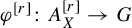 be the morphism defined by
$\varphi (w) = \varphi (w_0)$
be the morphism defined by
$\varphi (w) = \varphi (w_0)$
 for
$w = w_0\cdots w_{r-1}\in A_X^{[r]}$
for
$w = w_0\cdots w_{r-1}\in A_X^{[r]}$
 . To the group language
$L = \varphi ^{-1}(K)$
. To the group language
$L = \varphi ^{-1}(K)$
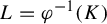 ,
$K\subseteq G$
,
$K\subseteq G$
 , corresponds the group language
$L^{[r]} = (\varphi ^{[r]})^{-1}(K)$
, corresponds the group language
$L^{[r]} = (\varphi ^{[r]})^{-1}(K)$
 . It is straightforward to check that
$\mu ^{[r]}(L^{[r]}\cap (A_X^{[r]})^i) = \mu ([L\cap A^i])$
. It is straightforward to check that
$\mu ^{[r]}(L^{[r]}\cap (A_X^{[r]})^i) = \mu ([L\cap A^i])$
 and, as a result,

5.3 Strong irreducibility
We now relate
$\varphi $
 -irreducibility to a condition introduced by Bufetov [Reference Bufetov18], originally under the name strongly connected. The term strictly irreducible was used by Lummerzheim et al [Reference Lummerzheim, Pogorzelski and Zimmermann40]. We make a compromise between the two and use the term strongly irreducible. We show below that if it holds, then all skew products by morphisms onto finite groups are topologically transitive; however, when it fails, such skew products can behave in a variety of manners.
Definition 5.12. Let X be a shift on an alphabet A. For
$r\geq 1$
 , we define the relation
$\sim _r$
, we define the relation
$\sim _r$
 on
$\mathcal {L}(X)$
on
$\mathcal {L}(X)$
 by
$u \sim _r v$
by
$u \sim _r v$
 if there exists
$w \in A^r$
if there exists
$w \in A^r$
 such that
$wu, wv\in \mathcal {L}(X)$
such that
$wu, wv\in \mathcal {L}(X)$
 . Since
$\sim _r$
. Since
$\sim _r$
 is symmetric, its transitive closure, which we denote by
$\simeq _r$
is symmetric, its transitive closure, which we denote by
$\simeq _r$
 , is an equivalence relation.
An r-step SFT is called strongly irreducible if it is irreducible and the relation
$\simeq _r$
 is total, meaning that it has a single equivalence class.
Remark 5.13. It may happen that
$\simeq _r$
 has a single equivalence class even in the absence of irreducibility. This is the case in the 1-step SFT X on the alphabet
$A=\{a,b\}$
has a single equivalence class even in the absence of irreducibility. This is the case in the 1-step SFT X on the alphabet
$A=\{a,b\}$
 consisting of sequences avoiding the factor
$ba$
consisting of sequences avoiding the factor
$ba$
 .
.
Recall the notation
${\prec } = {\prec _{1_G}}$
 , used in the proof of Theorem 5.3 for the relation defined by
$u\prec v$
, used in the proof of Theorem 5.3 for the relation defined by
$u\prec v$
 if and only if there exists
$w\in \mathcal {L}(X)$
if and only if there exists
$w\in \mathcal {L}(X)$
 such that
$uwv\in \mathcal {L}(X)$
such that
$uwv\in \mathcal {L}(X)$
 and
$\varphi (uw) = 1_G$
and
$\varphi (uw) = 1_G$
 .
.
Proposition 5.14. In an irreducible r-step SFT,
$r\geq 1$
 , the following implication holds:

Proof. Let X be an irreducible r-step SFT. We start by showing that given
$u,v \in \mathcal {L}(X)$
 with
$u \sim _r v$
with
$u \sim _r v$
 , there is a word w such that
$|w|\geq r$
, there is a word w such that
$|w|\geq r$
 ,
$uwv \in \mathcal {L}(X)$
,
$uwv \in \mathcal {L}(X)$
 , and
$\varphi (uw)=1_G$
, and
$\varphi (uw)=1_G$
 . By definition of
$\sim _r$
. By definition of
$\sim _r$
 , there is a word z such that
$|z|=r$
, there is a word z such that
$|z|=r$
 and
$zu,zv \in \mathcal {L}(X)$
and
$zu,zv \in \mathcal {L}(X)$
 . Let
$t\in A^*$
. Let
$t\in A^*$
 be a word such that
$zut\in \mathcal {L}(X)$
be a word such that
$zut\in \mathcal {L}(X)$
 and
$|ut|\geq r$
and
$|ut|\geq r$
 . Since X is irreducible, there exists a word
$w_0\in A^*$
. Since X is irreducible, there exists a word
$w_0\in A^*$
 such that
$utw_0zut \in \mathcal {L}(X)$
such that
$utw_0zut \in \mathcal {L}(X)$
 . Then,
$(utw_0z)^nu, z(utw_0z)^nv \in \mathcal {L}(X)$
. Then,
$(utw_0z)^nu, z(utw_0z)^nv \in \mathcal {L}(X)$
 for all
$n \geq 1$
for all
$n \geq 1$
 , since every factor of length r in either of those words is a factor of either
$zv$
, since every factor of length r in either of those words is a factor of either
$zv$
 ,
$zut$
,
$zut$
 , or
$utw_0z$
, or
$utw_0z$
 , all of which are in
$\mathcal {L}(X)$
, all of which are in
$\mathcal {L}(X)$
 . Taking
$n=|G|$
. Taking
$n=|G|$
 , we find
$\varphi ((utw_0z)^n) = 1_G$
, we find
$\varphi ((utw_0z)^n) = 1_G$
 . The word
$w=(tw_0zu)^{n-1}tw_0z$
. The word
$w=(tw_0zu)^{n-1}tw_0z$
 then satisfies
$uw = (tw_0zu)^{n}$
then satisfies
$uw = (tw_0zu)^{n}$
 , and, thus, we get
$uwv\in \mathcal {L}(X)$
, and, thus, we get
$uwv\in \mathcal {L}(X)$
 and
$\varphi (uw)=1_G$
and
$\varphi (uw)=1_G$
 , as required.
Suppose next
$u = u_0 \sim _r u_1 \sim _r \cdots \sim _r u_{n-1} \sim _r u_n = v$
 . We want to find a word w such that
$uwv \in \mathcal {L}(X)$
. We want to find a word w such that
$uwv \in \mathcal {L}(X)$
 and
$\varphi (uw)=1_G$
and
$\varphi (uw)=1_G$
 . Using the above claim, there are words
$w_i$
. Using the above claim, there are words
$w_i$
 such that
$u_iw_iu_{i+1} \in \mathcal {L}(X)$
such that
$u_iw_iu_{i+1} \in \mathcal {L}(X)$
 ,
$\varphi (u_iw_i)=1_G$
,
$\varphi (u_iw_i)=1_G$
 , and
$|w_i| \geq r$
, and
$|w_i| \geq r$
 . Then, defining
$w=w_0u_1w_1\cdots u_{n-1}w_{n-1}$
. Then, defining
$w=w_0u_1w_1\cdots u_{n-1}w_{n-1}$
 produces the requisite word such that
$uwv\in \mathcal {L}(X)$
produces the requisite word such that
$uwv\in \mathcal {L}(X)$
 and
${\varphi (uw)=1_G}$
and
${\varphi (uw)=1_G}$
 .
.
We then deduce the following. It is our version of Bufetov’s theorem [Reference Bufetov18, Theorem 5] and its generalization by Lummerzheim et al [Reference Lummerzheim, Pogorzelski and Zimmermann40, Theorem 4.3], which we here specialize to the case of skew products with finite groups and morphisms, but generalize to the case of higher step shifts.
Theorem 5.15. Let X be an irreducible r-step SFT on A,
$r \geq 1$
 . If X is strongly irreducible, then it is
$\varphi $
. If X is strongly irreducible, then it is
$\varphi $
 -irreducible for every morphism
$\varphi \colon A^*\to G$
-irreducible for every morphism
$\varphi \colon A^*\to G$
 onto a finite group G. When
$r=1$
onto a finite group G. When
$r=1$
 , the converse holds.
Proof. For the first part of the statement, note that when X is strongly irreducible, then by Proposition 5.14, the relation
${\prec } = {\prec _{1_G}}$
 must be total for every morphism
$\varphi \colon A^*\to G$
must be total for every morphism
$\varphi \colon A^*\to G$
 onto a finite group G, which is precisely the definition of X being
$\varphi $
onto a finite group G, which is precisely the definition of X being
$\varphi $
 -irreducible.
We now suppose that
$r=1$
 . We prove the contrapositive: assuming that X is not strongly irreducible, then it is not
$\varphi $
. We prove the contrapositive: assuming that X is not strongly irreducible, then it is not
$\varphi $
 -irreducible for some
$\varphi $
-irreducible for some
$\varphi $
 . The construction presented is essentially the same as that used in the proof of [Reference Lummerzheim, Pogorzelski and Zimmermann40, Theorem 4.3].
Fix an equivalence class C of
$\simeq _1$
 restricted to
$A\times A$
restricted to
$A\times A$
 . For each
$a\in A$
. For each
$a\in A$
 , observe that the set of right extensions of a in X,

is contained in a class of
$\simeq _1$
 ; thus, either
$\operatorname {R}(a)\subseteq C$
; thus, either
$\operatorname {R}(a)\subseteq C$
 or
$\operatorname {R}(a)\subseteq A\setminus C$
or
$\operatorname {R}(a)\subseteq A\setminus C$
 . Let
. Let

Define a morphism
$\varphi \colon A^*\to \mathbb {Z}/2\mathbb {Z}$
 by
$\varphi (a) = 1$
by
$\varphi (a) = 1$
 if
$a\in B$
if
$a\in B$
 and
$\varphi (a) = 0$
and
$\varphi (a) = 0$
 otherwise. Let
$a\in C$
otherwise. Let
$a\in C$
 and
$b\in A$
and
$b\in A$
 ; take a word w such that
$awb\in \mathcal {L}(X)$
; take a word w such that
$awb\in \mathcal {L}(X)$
 . We claim that
$\varphi (aw) = 0$
. We claim that
$\varphi (aw) = 0$
 if and only if
$b\in C$
if and only if
$b\in C$
 . Observe that this claim finishes the proof, as it implies that
$a\not \prec b$
. Observe that this claim finishes the proof, as it implies that
$a\not \prec b$
 whenever
$b\in A\setminus C$
whenever
$b\in A\setminus C$
 .
.
To establish the claim, we argue by induction on
$|w|$
 . We first consider the case
$|w|=0$
. We first consider the case
$|w|=0$
 . We have to check that
$\varphi (a)=0$
. We have to check that
$\varphi (a)=0$
 if and only if
$b\in C$
if and only if
$b\in C$
 . However,
$\varphi (a)=0$
. However,
$\varphi (a)=0$
 if and only if
${a \not \in B}$
if and only if
${a \not \in B}$
 , which is in turn equivalent to
$\operatorname {R}(a) \subseteq C$
, which is in turn equivalent to
$\operatorname {R}(a) \subseteq C$
 , that is,
$b \in C$
, that is,
$b \in C$
 . For the induction step, suppose that
$w = w'c$
. For the induction step, suppose that
$w = w'c$
 ,
$c\in A$
,
$c\in A$
 , with
$aw'b \in \mathcal {L}(X)$
, with
$aw'b \in \mathcal {L}(X)$
 , and that the claim holds for
$w'$
, and that the claim holds for
$w'$
 . First, assume that
$\varphi (aw)=0$
. First, assume that
$\varphi (aw)=0$
 . If
$c\in C$
. If
$c\in C$
 , then by induction,
$\varphi (aw')=0$
, then by induction,
$\varphi (aw')=0$
 and
$\varphi (aw) = \varphi (c) = 0$
and
$\varphi (aw) = \varphi (c) = 0$
 , and as
${b\in \operatorname {R}(c)}$
, and as
${b\in \operatorname {R}(c)}$
 , we get
$b\in C$
, we get
$b\in C$
 . If, however,
$c\in A\setminus C$
. If, however,
$c\in A\setminus C$
 , then
$\varphi (aw') = 1$
, then
$\varphi (aw') = 1$
 , since the claim holds for
$w'$
, since the claim holds for
$w'$
 and
$ c \in A \setminus C$
and
$ c \in A \setminus C$
 ; hence,
$\varphi (aw) = 1+\varphi (c) = 0$
; hence,
$\varphi (aw) = 1+\varphi (c) = 0$
 , and so
$\varphi (c) = 1$
, and so
$\varphi (c) = 1$
 and
$c \not \in B$
and
$c \not \in B$
 . As
$b\in \operatorname {R}(c)$
. As
$b\in \operatorname {R}(c)$
 , it again follows that
$b\in C$
, it again follows that
$b\in C$
 . Conversely, assume that
$b\in C$
. Conversely, assume that
$b\in C$
 . If
$c\in C$
. If
$c\in C$
 , then as
$b\in \operatorname {R}(c)$
, then as
$b\in \operatorname {R}(c)$
 , we get
$c \not \in B$
, we get
$c \not \in B$
 and
$\varphi (c) = 0$
and
$\varphi (c) = 0$
 , while by induction,
$\varphi (aw') = 0$
, while by induction,
$\varphi (aw') = 0$
 ; hence,
$\varphi (w) = 0+0 = 0$
; hence,
$\varphi (w) = 0+0 = 0$
 . Likewise, if
$c\in A\setminus C$
. Likewise, if
$c\in A\setminus C$
 , then
$c\in B$
, then
$c\in B$
 , and
$\varphi (aw') = 1 = \varphi (c)$
, and
$\varphi (aw') = 1 = \varphi (c)$
 and
$\varphi (aw) = 1+1 = 0$
and
$\varphi (aw) = 1+1 = 0$
 .
.
At this time, we are unsure whether the converse holds when
$r>1$
 . Nonetheless, the first part of the above combined with Theorem 5.3 yields the following immediate corollary.
Corollary 5.16. Let X be a strongly irreducible (hence, irreducible) r-step SFT on A,
$r\geq 1$
 . For every morphism
$\varphi \colon A^*\to G$
. For every morphism
$\varphi \colon A^*\to G$
 , assumed to be onto the finite group G, the skew product
$G\rtimes _{\varphi } X$
, assumed to be onto the finite group G, the skew product
$G\rtimes _{\varphi } X$
 is topologically transitive.
To end this section, we give a few examples of SFTs which are or are not strongly irreducible. However, first we make the following simple observation, similar to Proposition 5.7.
Proposition 5.17. Let X be an irreducible r-step SFT on A,
$r \geq 1$
 . Then, for X to be strongly irreducible, it suffices that
$u\simeq _rv$
. Then, for X to be strongly irreducible, it suffices that
$u\simeq _rv$
 for all pairs
$u,v\in \mathcal {L}(X)$
for all pairs
$u,v\in \mathcal {L}(X)$
 with
$|u|=|v|=r$
with
$|u|=|v|=r$
 .
.
Proof. Let
$u'$
 and
$v'$
and
$v'$
 be words in
$\mathcal {L}(X)$
be words in
$\mathcal {L}(X)$
 of arbitrary lengths. Choose some words
$u,v$
of arbitrary lengths. Choose some words
$u,v$
 such that
$|u|=|v|=r$
such that
$|u|=|v|=r$
 , u is a prefix of
$u'$
, u is a prefix of
$u'$
 or vice versa, and v is a prefix of
$v'$
or vice versa, and v is a prefix of
$v'$
 or vice versa. By assumption, we may find n words
$w_0,\ldots ,w_{n-1}$
or vice versa. By assumption, we may find n words
$w_0,\ldots ,w_{n-1}$
 in
$A^*$
in
$A^*$
 and
$n+1$
and
$n+1$
 words
$t_0,\ldots ,t_{n}$
words
$t_0,\ldots ,t_{n}$
 , also all of length r, such that
$t_0 = u$
, also all of length r, such that
$t_0 = u$
 ,
$t_n=v$
,
$t_n=v$
 , and
, and

Then, note that
$w_0u'$
 is also in
$\mathcal {L}(X)$
is also in
$\mathcal {L}(X)$
 ; indeed, this is obvious when
$u'$
; indeed, this is obvious when
$u'$
 is a prefix of u and otherwise, it follows from the fact that X is an r-step SFT. Likewise,
$w_{n-1}v'\in \mathcal {L}(X)$
is a prefix of u and otherwise, it follows from the fact that X is an r-step SFT. Likewise,
$w_{n-1}v'\in \mathcal {L}(X)$
 , which shows that
$u'\simeq _r v'$
, which shows that
$u'\simeq _r v'$
 .
.
Example 5.18. Continuing from Example 5.9, we claim that the golden mean shift is, in fact, strongly irreducible. Indeed, it suffices to note that in this irreducible
$1$
 -step SFT, for any letters u and v in A, one has
$au$
-step SFT, for any letters u and v in A, one has
$au$
 and
$av$
and
$av$
 in
$\mathcal {L}(X)$
in
$\mathcal {L}(X)$
 ; hence,
$u \sim _1 v$
; hence,
$u \sim _1 v$
 and, by Proposition 5.17, X is indeed strongly irreducible. As a result, by Corollary 5.16, all skew products of the golden mean shift with skewing functions given by morphisms onto finite groups are topologically transitive, including the one in Example 5.9.
Example 5.19. Let X be the 1-step SFT on
$A = \{a,b,c\}$
 formed by the sequences avoiding the words
$ca,ab,bb,cc$
formed by the sequences avoiding the words
$ca,ab,bb,cc$
 . Then, X is irreducible, but not strongly irreducible. Indeed, the relation
$\simeq _1$
. Then, X is irreducible, but not strongly irreducible. Indeed, the relation
$\simeq _1$
 has two classes in
$A\times A$
has two classes in
$A\times A$
 , namely
$\{b\}$
, namely
$\{b\}$
 and
$\{a,c\}$
and
$\{a,c\}$
 . Taking for instance
$C = \{b\}$
. Taking for instance
$C = \{b\}$
 , the set B in the second part of the proof of Theorem 5.15 equals
$\{b,c\}$
, the set B in the second part of the proof of Theorem 5.15 equals
$\{b,c\}$
 . Consider now the morphism
$\varphi \colon A^*\to \mathbb {Z}/2\mathbb {Z}$
. Consider now the morphism
$\varphi \colon A^*\to \mathbb {Z}/2\mathbb {Z}$
 ,
$\varphi (a) =0$
,
$\varphi (a) =0$
 ,
$\varphi (b)=\varphi (c)=1$
,
$\varphi (b)=\varphi (c)=1$
 . One has that X is irreducible, whereas
$\mathbb {Z}/2\mathbb {Z} \rtimes _{\varphi } X$
. One has that X is irreducible, whereas
$\mathbb {Z}/2\mathbb {Z} \rtimes _{\varphi } X$
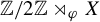 is not. If
$w\in A^*$
is not. If
$w\in A^*$
 and
$bwa \in \mathcal {L}(X)$
and
$bwa \in \mathcal {L}(X)$
 , we must have
$\varphi (bw)=1$
, we must have
$\varphi (bw)=1$
 and, therefore, X is not
$\varphi $
and, therefore, X is not
$\varphi $
 -irreducible. The shift X and the skew product
$\mathbb {Z}/2\mathbb {Z}\rtimes _{\varphi } X$
-irreducible. The shift X and the skew product
$\mathbb {Z}/2\mathbb {Z}\rtimes _{\varphi } X$
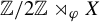 are depicted in Figure 6.
The SFT and skew product from Example 5.19.

Figure 6 Long description
The image contains two panels. Left panel: A directed graph with three nodes labeled a, b, and c arranged in a triangle. Node a is at the top and has a self-loop arrow. A directed arrow points from a down to c. Node c is at the bottom right and has two horizontal arrows connecting it to node b at the bottom left. One arrow points from c to b, and another points from b to c. A directed arrow points from b up to a. Right panel: A more complex directed graph with six nodes arranged in two horizontal rows. Top row: Two nodes labeled 1 comma a and 0 comma a. Both have self-loop arrows. Bottom row: Four nodes labeled from left to right as 0 comma b, 1 comma b, 1 comma c, and 0 comma c. Connections: A straight arrow points from 0 comma b up to 1 comma a. A straight arrow points from 1 comma b up to 0 comma a. A straight arrow points from 1 comma a down to 1 comma c. A straight arrow points from 0 comma a down to 0 comma c. Four curved arrows at the bottom connect the c-nodes back to the b-nodes. Specifically, an arrow curves from 1 comma c to 0 comma b, another from 1 comma c to 1 comma b, another from 0 comma c to 0 comma b, and a final one from 0 comma c to 1 comma b.
In particular, it follows from Theorem 5.3 that no Markov measure fully supported on
$\mathbb {Z}/2\mathbb {Z}\rtimes _{\varphi } X$
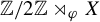 (viewed as a SFT as per Lemma 5.10) can be ergodic. This includes every measure of the form
$\nu \times \mu $
(viewed as a SFT as per Lemma 5.10) can be ergodic. This includes every measure of the form
$\nu \times \mu $
 , where
$\nu $
, where
$\nu $
 is the uniform probability measure on
$\mathbb {Z}/2\mathbb {Z}$
is the uniform probability measure on
$\mathbb {Z}/2\mathbb {Z}$
 and
$\mu $
and
$\mu $
 is a Markov measure fully supported on X.
6 A characterization of minimality via return words
We now shift our focus away from SFTs and towards minimal shift spaces. We start by giving a first characterization of minimality for skew products (Theorem 6.1), stated in terms of return words (§2). Its proof, given in §6.2, strongly relies on the deep links between the skew products under consideration and bifix codes, recalled in §6.1.
Theorem 6.1. Let X be a minimal shift space on A and
$\varphi \colon A^*\to G$
 be a morphism onto a finite group G. The following conditions are equivalent.
-
(i) For every $n>0$
and
$x\in X$
,
$\{\varphi (x_{[0,m)}) \mid m\in \mathbb {N}, x_{[m, m+n)} = x_{[0,n)}\} = G$
. -
(ii) The skew product $G\rtimes _{\varphi } X$
is minimal. -
(iii) For every $u\in \mathcal {L}(X)$
, the restriction of
$\varphi $
to
$\mathcal {R}_X(u)^*$
is surjective.





We provide later a further characterization of minimality in Theorem 7.5, stated in terms of cobounding maps, in the flavor of Anzai’s theorem on ergodicity of skew products [Reference Anzai2]. We also provide an alternate proof of the equivalence between conditions (ii) and (iii) (Remark 7.9).
Remark 6.2. Condition (i) is reminiscent of the welldoc property (which stands for well-distributed occurrences) studied by Balková et al [Reference Balková, Bucci, De Luca, Hladký and Puzynina5] in the context of pseudorandom number generators. For convenience, we recall that an infinite word X is said to have the welldoc property when it satisfies the following condition where
$\operatorname {Ab}$
 denotes the Parikh Abelianization map
$A^*\to \mathbb {Z}^{|A|}$
denotes the Parikh Abelianization map
$A^*\to \mathbb {Z}^{|A|}$
 :
:

It follows from the above theorem that the welldoc property is equivalent to all skew products of the form
$(\mathbb {Z}/k\mathbb {Z})^d\rtimes _{\varphi } X$
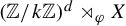 being ergodic.
6.1 More on the theory of codes
We survey some basic notions from the theory of codes, some of which already appeared in §4. Again, we refer to [Reference Berstel, Perrin and Reutenauer8] for additional details.
Recall that a prefix code is a subset
$U\subseteq A^*$
 where no word is a strict prefix of another and, likewise, a suffix code is a subset of
$A^*$
where no word is a strict prefix of another and, likewise, a suffix code is a subset of
$A^*$
 where no word is a strict suffix of another. Let X be a shift space. A prefix code
$U\subseteq \mathcal {L}(X)$
where no word is a strict suffix of another. Let X be a shift space. A prefix code
$U\subseteq \mathcal {L}(X)$
 is called X-complete if every word
$w\in \mathcal {L}(X)$
is called X-complete if every word
$w\in \mathcal {L}(X)$
 is either a prefix of a word in U or has a prefix which is an element of U; replacing prefix by suffix in this definition, we obtain the corresponding notion of X-complete suffix code.
Example 6.3. Let X be the Fibonacci shift considered in §3.4. Then, the set
$U=\{a,ba\}$
 is an X-complete prefix code, though clearly not a suffix code.
We recall that a set U is a bifix code if it is both a prefix and a suffix code. It is X-complete if it is both an X-complete prefix code and an X-complete suffix code. When
$X=A^{\mathbb {Z}}$
 , we simply say complete instead of
$A^{\mathbb {Z}}$
, we simply say complete instead of
$A^{\mathbb {Z}}$
 -complete, be it for prefix, suffix, or bifix codes.
Let
$\varphi \colon A^*\to G$
 be a morphism onto a finite group G. If
$H\leq G$
be a morphism onto a finite group G. If
$H\leq G$
 is a subgroup, then the submonoid
$M=\varphi ^{-1}(H)$
is a subgroup, then the submonoid
$M=\varphi ^{-1}(H)$
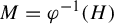 of
$A^*$
of
$A^*$
 is uniquely generated by a bifix code Z (an argument is given in [Reference Berstel, Perrin and Reutenauer8, p. 64]), which is also a group code (as introduced in §4). It is, in fact, a complete bifix code.
Let Z be a group code. Let P (respectively S) be the set of proper prefixes (respectively suffixes) of the words in Z. Note that P (respectively S) is also the set of words which have no prefix (respectively suffix) in Z. The Z-degree
$d(u)$
 of a word
$u\in A^*$
of a word
$u\in A^*$
 is then defined as any of the following numbers, which all coincide [Reference Berstel, Perrin and Reutenauer8, Proposition 6.1.6]:
-
(i) the number of suffixes of u that are in P;
-
(ii) the number of prefixes of u that are in S;
-
(iii) the number of Z-parses of u, that is, the number of triples $(s,z,p)$
such that
$u=szp$
with
$s\in S$
,
$z\in Z^*$
and
$p\in P$
.


It follows from the third definition that for every
$u, v, w\in A^*$
 , the Z-degrees of u and
$uvw$
, the Z-degrees of u and
$uvw$
 satisfy

Indeed, if
$(s,z,p)$
 is a Z-parse of v, let
$us=s'z'$
is a Z-parse of v, let
$us=s'z'$
 with
$s'\in S$
with
$s'\in S$
 and
$z'\in Z^*$
and
$z'\in Z^*$
 , and
${pw=z"p'}$
, and
${pw=z"p'}$
 with
$z"\in Z^*$
with
$z"\in Z^*$
 and
$p'\in P$
and
$p'\in P$
 . Then,
$(s'z'zz",p')$
. Then,
$(s'z'zz",p')$
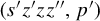 is a Z-parse of
$uvw$
is a Z-parse of
$uvw$
 which extends
$(s,z,p)$
which extends
$(s,z,p)$
 . This shows that every parse of v extends to a parse of
$uvw$
. This shows that every parse of v extends to a parse of
$uvw$
 .
.
Proposition 6.4. Let
$\varphi \colon A^*\to G$
 be a morphism onto a finite group G and H be a subgroup of index d in G. Let Z be the group code such that
$\varphi ^{-1}(H) = Z^*$
be a morphism onto a finite group G and H be a subgroup of index d in G. Let Z be the group code such that
$\varphi ^{-1}(H) = Z^*$
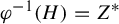 and let S be the set of proper suffixes of elements of Z. For every
$p,q\in S$
and let S be the set of proper suffixes of elements of Z. For every
$p,q\in S$
 such that q is a proper prefix of p,
$\varphi (p)H\neq \varphi (q)H$
such that q is a proper prefix of p,
$\varphi (p)H\neq \varphi (q)H$
 . In particular, every word has Z-degree at most d.
Proof. Let
$p = qx$
 and assume by contradiction that
$\varphi (p)H=\varphi (q)H$
and assume by contradiction that
$\varphi (p)H=\varphi (q)H$
 . Then, it follows that x is in
$\varphi ^{-1}(H)$
. Then, it follows that x is in
$\varphi ^{-1}(H)$
 ; hence, it is a non-empty word of
$Z^*$
; hence, it is a non-empty word of
$Z^*$
 and, thus, it has a suffix in Z. Set
$x=sr$
and, thus, it has a suffix in Z. Set
$x=sr$
 with
$r\in Z$
with
$r\in Z$
 . Let
$z\in Z$
. Let
$z\in Z$
 be such that
$z=tp$
be such that
$z=tp$
 . Then,

so
$r\in Z$
 is a proper suffix of
$z\in Z$
is a proper suffix of
$z\in Z$
 , which contradicts the fact that Z is bifix.
Let X be a minimal shift space and let
$U=Z\cap \mathcal {L}(X)$
 . The X-degree of U, denoted
$d_X(U)$
. The X-degree of U, denoted
$d_X(U)$
 , is the maximal value of the Z-degrees of all words in
$\mathcal {L}(X)$
, is the maximal value of the Z-degrees of all words in
$\mathcal {L}(X)$
 . The following is essentially a reformulation of [Reference Berstel, De Felice, Perrin, Reutenauer and Rindone7, Theorem 4.2.11]; we include a proof for the convenience of the reader.
Theorem 6.5. Let X be a minimal shift space on A and
$\varphi \colon A^*\to G$
 be a morphism onto a finite group G. Let H be a subgroup of index d in G and Z be the group code such that
$\varphi ^{-1}(H) = Z^*$
be a morphism onto a finite group G. Let H be a subgroup of index d in G and Z be the group code such that
$\varphi ^{-1}(H) = Z^*$
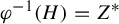 . The set
$U=Z\cap \mathcal {L}(X)$
. The set
$U=Z\cap \mathcal {L}(X)$
 is a finite X-complete bifix code of X-degree
$d_X(U)\leq d$
is a finite X-complete bifix code of X-degree
$d_X(U)\leq d$
 .
.
The proof makes use of the following simple observation.
Lemma 6.6. Let v be a word with maximal Z-degree. Then, no word of U can be of the form
$uvw$
 with u or w non-empty.
Proof. Assume the contrary. Then, we would have
$d(uvw)>d(v)$
 because every Z-parse of v extends to a Z-parse of
$uvw$
because every Z-parse of v extends to a Z-parse of
$uvw$
 , while the latter has the additional Z-parse
$(\varepsilon ,uvw,\varepsilon )$
, while the latter has the additional Z-parse
$(\varepsilon ,uvw,\varepsilon )$
 .
.
Proof of Theorem 6.5.
Since Z is a bifix code, the same is true for U. Consider a word
$v\in \mathcal {L}(X)$
 of maximal Z-degree. By Lemma 6.6, there is no word in U containing v as a strict factor; thus, U must be finite. Indeed, since X is minimal, every long enough element of
$\mathcal {L}(X)$
of maximal Z-degree. By Lemma 6.6, there is no word in U containing v as a strict factor; thus, U must be finite. Indeed, since X is minimal, every long enough element of
$\mathcal {L}(X)$
 is of the form
$uvw$
is of the form
$uvw$
 with
$u,w$
with
$u,w$
 non-empty and, thus, cannot be a factor of a word in U; hence, the length of the words in U is bounded.
Next, we show that U is an X-complete prefix code. Consider a non-empty word
$u\in \mathcal {L}(X)$
 . Since X is minimal, there is a word w such that
$uwv\in \mathcal {L}(X)$
. Since X is minimal, there is a word w such that
$uwv\in \mathcal {L}(X)$
 . Set
$u=au'$
. Set
$u=au'$
 , where a is a letter. Since
$d(au'wv)\ge d(u'wv)\ge d(v)$
, where a is a letter. Since
$d(au'wv)\ge d(u'wv)\ge d(v)$
 and since
$d(v)$
and since
$d(v)$
 is maximal, we have
$d(au'wv)=d(u'wv)$
is maximal, we have
$d(au'wv)=d(u'wv)$
 . This forces the word
$au'wv$
. This forces the word
$au'wv$
 to have a prefix in Z and, hence, in U. Thus, either u has a prefix which is an element of U or it is a prefix of an element of U. Hence, U is an X-complete prefix code. The proof that U is an X-complete suffix code is similar.
Example 6.7. Let X be the Fibonacci shift on
$A=\{a,b\}$
 (as in §3.4) and let
$\varphi \colon A^*\to S_3$
(as in §3.4) and let
$\varphi \colon A^*\to S_3$
 be the morphism onto the symmetric group
$S_3$
be the morphism onto the symmetric group
$S_3$
 defined by
$\varphi (a)=(1\,2),\varphi (b)=(1\,3)$
defined by
$\varphi (a)=(1\,2),\varphi (b)=(1\,3)$
 , where permutations are written in usual cycle notation. Note that
$S_3$
, where permutations are written in usual cycle notation. Note that
$S_3$
 is isomorphic to the group of matrices
$G(2)$
is isomorphic to the group of matrices
$G(2)$
 considered in Example 3.16. Let H be the subgroup of G formed of the permutations fixing
$1$
considered in Example 3.16. Let H be the subgroup of G formed of the permutations fixing
$1$
 . Let Z be the group code such that
$\varphi ^{-1}(H)=Z^*$
. Let Z be the group code such that
$\varphi ^{-1}(H)=Z^*$
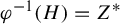 ; it is given by
$Z = ab^*a\cup ba^*b$
; it is given by
$Z = ab^*a\cup ba^*b$
 . The elements of the infinite set Z are represented in the tree found in Figure 7 as the labels of paths from the root to the leaves. The X-complete bifix code
$U=Z\cap \mathcal {L}(X)$
. The elements of the infinite set Z are represented in the tree found in Figure 7 as the labels of paths from the root to the leaves. The X-complete bifix code
$U=Z\cap \mathcal {L}(X)$
 , equal to
$\{aa,aba,baab,bab\}$
, equal to
$\{aa,aba,baab,bab\}$
 , is depicted in Figure 7.
Representation of the X-complete bifix code U of Example 6.7. Nodes are labeled by the image of 1 under the permutation given by the label of the path. Elements of U correspond to paths ending in double-circled nodes.

Figure 7 Long description
The graph originates from a single root node labeled 1 on the left. From the root node, two solid arrows branch out. An upper arrow labeled a points to a node labeled 2. A lower arrow labeled b points to a node labeled 3. From the first node 2, two solid arrows emerge. An upward diagonal arrow labeled a points to a double-circled node labeled 1. A horizontal arrow labeled b points to another node labeled 2. From the first node 3, a horizontal solid arrow labeled a points to another node labeled 3. A downward diagonal dotted arrow labeled b points to a single-circled node labeled 1. Moving to the third level of nodes. From the second node 2, a solid upward diagonal arrow labeled a points to a double-circled node labeled 1. A horizontal dotted arrow labeled b points to a third node 2. From the second node 3, a horizontal solid arrow labeled a points to a third node 3. A downward diagonal solid arrow labeled b points to a double-circled node labeled 1. Moving to the fourth level of nodes. From the third node 2, a dotted upward diagonal arrow labeled a points to a single-circled node labeled 1. A horizontal dotted arrow labeled b points to a fourth node 2 followed by an ellipsis. From the third node 3, a horizontal dotted arrow labeled a points to a fourth node 3 followed by an ellipsis. A downward diagonal solid arrow labeled b points to a double-circled node labeled 1.
The next result uses ideas found in the proof of the main result of [Reference Berthé, De Felice, Dolce, Leroy, Perrin, Reutenauer and Rindone12].
Proposition 6.8. Let X be a minimal shift space on A and
$\varphi \colon A^*\to G$
 be a morphism onto a finite group G. Let
$H\leq G$
be a morphism onto a finite group G. Let
$H\leq G$
 be a subgroup of G, Z be the group code such that
$\varphi ^{-1}(H)=Z^*$
be a subgroup of G, Z be the group code such that
$\varphi ^{-1}(H)=Z^*$
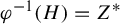 , and
$U = Z\cap \mathcal {L}(X)$
, and
$U = Z\cap \mathcal {L}(X)$
 . Assume that there exists some word
$u\in \mathcal {L}(X)$
. Assume that there exists some word
$u\in \mathcal {L}(X)$
 with maximal Z-degree such that
$\varphi (\mathcal {R}_X(u)^*)H=G$
with maximal Z-degree such that
$\varphi (\mathcal {R}_X(u)^*)H=G$
 . Then, the X-degree of U is
$[G:H]$
. Then, the X-degree of U is
$[G:H]$
 .
.
Proof. Let
$F_A$
 be the free group A and let K be the subgroup of
$F_A$
be the free group A and let K be the subgroup of
$F_A$
 generated by U. Let
$u\in \mathcal {L}(X)$
generated by U. Let
$u\in \mathcal {L}(X)$
 be of maximal X-degree. Let Q be the set of prefixes of u which are suffixes of some element of U (so
$|Q|$
be of maximal X-degree. Let Q be the set of prefixes of u which are suffixes of some element of U (so
$|Q|$
 is the X-degree of U). Observe that, for distinct elements p and
$q\in Q$
is the X-degree of U). Observe that, for distinct elements p and
$q\in Q$
 , the cosets
$pK$
, the cosets
$pK$
 and
$qK$
and
$qK$
 are distinct by Proposition 6.4; indeed, since
$\varphi (K)\leq H$
are distinct by Proposition 6.4; indeed, since
$\varphi (K)\leq H$
 , Proposition 6.4 implies that
$\varphi $
, Proposition 6.4 implies that
$\varphi $
 maps
$pK$
maps
$pK$
 and
$qK$
and
$qK$
 inside disjoint right cosets of H in G.
Let us define

For every
$v\in V$
 , the map
$\pi (v)\colon p\mapsto q$
, the map
$\pi (v)\colon p\mapsto q$
 defined by
$vp\in qK$
defined by
$vp\in qK$
 is a permutation. Indeed, let
$vp,vp'\in qK$
is a permutation. Indeed, let
$vp,vp'\in qK$
 for some
$q\in Q$
for some
$q\in Q$
 . Then,
$v^{-1}q$
. Then,
$v^{-1}q$
 is in
$pK\cap p'K$
is in
$pK\cap p'K$
 and, thus,
$p=p'$
and, thus,
$p=p'$
 .
.
We claim that V is a subgroup of
$F_A$
 . First, let
$v \in V$
. First, let
$v \in V$
 . Then, for any
$q\in Q$
. Then, for any
$q\in Q$
 , since
$\pi (v)$
, since
$\pi (v)$
 is a permutation of Q, there is a
$p\in Q$
is a permutation of Q, there is a
$p\in Q$
 such that
$vp\in qK$
such that
$vp\in qK$
 . Then,
$v^{-1}q\in pK$
. Then,
$v^{-1}q\in pK$
 . This shows that
$v^{-1}\in V$
. This shows that
$v^{-1}\in V$
 . Next, if v and
$w\in V$
. Next, if v and
$w\in V$
 , then
$vwQ \subseteq vQK \subseteq QK$
, then
$vwQ \subseteq vQK \subseteq QK$
 and, thus,
$vw\in V$
and, thus,
$vw\in V$
 . Since it is clear that V contains the identity element, this proves the claim.
Next, V contains
$\mathcal {R}_X(u)$
 . Indeed, let
$q \in Q$
. Indeed, let
$q \in Q$
 and
$y\in \mathcal {R}_X(u)$
and
$y\in \mathcal {R}_X(u)$
 . Since q is a prefix of u,
$yq$
. Since q is a prefix of u,
$yq$
 is a prefix of
$yu$
is a prefix of
$yu$
 , and since
$yu$
, and since
$yu$
 is in
$\mathcal {L}(X)$
is in
$\mathcal {L}(X)$
 (by definition of
$\mathcal {R}_X(u)$
(by definition of
$\mathcal {R}_X(u)$
 ),
$yq$
),
$yq$
 is also in
$\mathcal {L}(X)$
is also in
$\mathcal {L}(X)$
 . Since, by Theorem 6.5, U is an X-complete bifix code, it is an X-complete suffix code. This implies that
$yq$
. Since, by Theorem 6.5, U is an X-complete bifix code, it is an X-complete suffix code. This implies that
$yq$
 is a suffix of a word in
$U^*$
is a suffix of a word in
$U^*$
 and, thus, there is a suffix r of U such that
$yq \in rU^*$
and, thus, there is a suffix r of U such that
$yq \in rU^*$
 . We verify that the word r is a suffix of u. Since
$y \in \mathcal {R}_X(u)$
. We verify that the word r is a suffix of u. Since
$y \in \mathcal {R}_X(u)$
 , there is a word
$y'$
, there is a word
$y'$
 such that
$yu = uy'$
such that
$yu = uy'$
 . Consequently, r is a prefix of
$uy'$
. Consequently, r is a prefix of
$uy'$
 and, in fact, the word r is a prefix of u. Indeed, one has
$|r| \le |u|$
and, in fact, the word r is a prefix of u. Indeed, one has
$|r| \le |u|$
 , since otherwise, u would be in the set of internal factors of U and this cannot be the case by Lemma 6.6 (recall that u has maximal Z-degree). Thus, we have
$r \in Q$
, since otherwise, u would be in the set of internal factors of U and this cannot be the case by Lemma 6.6 (recall that u has maximal Z-degree). Thus, we have
$r \in Q$
 . Since
$U^*\subseteq K$
. Since
$U^*\subseteq K$
 and
$r \in Q$
and
$r \in Q$
 , we have
$yq \in QK$
, we have
$yq \in QK$
 ; hence,
$y \in V$
; hence,
$y \in V$
 .
.
We finish the proof by showing that
$|Q| = [V:K\cap V] \geq [G:H]$
 . The fact that
${|Q| = [V:K\cap V]}$
. The fact that
${|Q| = [V:K\cap V]}$
 follows by noting that
$\pi (v)$
follows by noting that
$\pi (v)$
 is the identity on Q if and only if v is in K. For the remaining inequality, observe first that, as
$K\leq \varphi ^{-1}(H)$
is the identity on Q if and only if v is in K. For the remaining inequality, observe first that, as
$K\leq \varphi ^{-1}(H)$
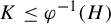 , the map
$V/(K\cap V)\to G/H$
, the map
$V/(K\cap V)\to G/H$
 ,
$v(K\cap V)\mapsto \varphi (v)H$
,
$v(K\cap V)\mapsto \varphi (v)H$
 is well defined. Moreover, the fact that V contains
$\mathcal {R}_X(u)$
is well defined. Moreover, the fact that V contains
$\mathcal {R}_X(u)$
 implies that
$\varphi (V)H=G$
implies that
$\varphi (V)H=G$
 ; hence, this map is surjective, thereby showing that
$[V:K\cap V] \geq [G:H]$
; hence, this map is surjective, thereby showing that
$[V:K\cap V] \geq [G:H]$
 . Since the X-degree of U is at most
$[G:H]$
. Since the X-degree of U is at most
$[G:H]$
 (by Theorem 6.5) and equal to
$|Q|$
(by Theorem 6.5) and equal to
$|Q|$
 , this concludes the proof.
The next example shows that there can be elements of maximal degree which fail the condition
$\varphi (\mathcal {R}_X(u)^*)H=G$
 . There are in fact even infinitely many of them.
Example 6.9. Take
$A = \{a,b\}$
 ,
$\varphi \colon A\to \mathbb {Z}/2\mathbb {Z}$
,
$\varphi \colon A\to \mathbb {Z}/2\mathbb {Z}$
 defined by
$\varphi (a) = 1, \varphi (b) =0$
defined by
$\varphi (a) = 1, \varphi (b) =0$
 , and X equal to the Thue–Morse shift, considered in Example 2.1. The bifix code
$U = \varphi ^{-1}(0)\cap \mathcal {L}(X)$
, and X equal to the Thue–Morse shift, considered in Example 2.1. The bifix code
$U = \varphi ^{-1}(0)\cap \mathcal {L}(X)$
 is equal to
$\{b, aa, aba, abba\}$
is equal to
$\{b, aa, aba, abba\}$
 . It has X-degree
$2$
. It has X-degree
$2$
 , but
$\mathcal {R}_X(u)$
, but
$\mathcal {R}_X(u)$
 is contained in
$\varphi ^{-1}(0)$
is contained in
$\varphi ^{-1}(0)$
 for every u sufficiently long. This last claim can be checked by finding one word u with this property and then using the return preservation property [Reference Berthé, Goulet-Ouellet, Frid and Mercas13]. Nonetheless, the word a has maximal degree and
$\mathcal {R}_X(a) = \{a,ab,abb\}$
for every u sufficiently long. This last claim can be checked by finding one word u with this property and then using the return preservation property [Reference Berthé, Goulet-Ouellet, Frid and Mercas13]. Nonetheless, the word a has maximal degree and
$\mathcal {R}_X(a) = \{a,ab,abb\}$
 satisfies
$\varphi (\mathcal {R}_X(a)^*) = \mathbb {Z}/2\mathbb {Z}$
satisfies
$\varphi (\mathcal {R}_X(a)^*) = \mathbb {Z}/2\mathbb {Z}$
 .
.
Here is another example with the Thue–Morse shift where
$d_X(U)<[G:H]$
 . Let
$\varphi \colon \{a,b\}^*\to \mathbb {Z}/n\mathbb {Z}$
. Let
$\varphi \colon \{a,b\}^*\to \mathbb {Z}/n\mathbb {Z}$
 be a morphism with
$\varphi (a)=1=-\varphi (b)$
be a morphism with
$\varphi (a)=1=-\varphi (b)$
 . Set
$Z^*=\varphi ^{-1}(0)$
. Set
$Z^*=\varphi ^{-1}(0)$
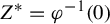 and
${U=Z\cap \mathcal {L}(X)}$
and
${U=Z\cap \mathcal {L}(X)}$
 . For every
$n\geq 3$
. For every
$n\geq 3$
 , we have
$U=\{ab,ba,aabb,bbaa,aababb,bbabaa\}$
, we have
$U=\{ab,ba,aabb,bbaa,aababb,bbabaa\}$
 , while
$d_X(U)=3<n$
, while
$d_X(U)=3<n$
 as soon as
$n>3$
as soon as
$n>3$
 .
.
6.2 Proof of the characterization of minimality
We are now ready to give the proof of the main theorem of this section.
Proof of Theorem 6.1.
(i) implies (ii). Let
$Y\subseteq G\rtimes _{\varphi } X$
 be a minimal closed invariant subset. Fix
$g\in G$
be a minimal closed invariant subset. Fix
$g\in G$
 and
$x\in X$
and
$x\in X$
 ; let us show that
$(g,x)\in Y$
; let us show that
$(g,x)\in Y$
 .
.
First, note that the projection
$P_X(Y)=X$
 , since X is minimal. Thus, we may find h such that
$(h,x) \in Y$
, since X is minimal. Thus, we may find h such that
$(h,x) \in Y$
 . By condition (i), we can find a sequence of positive integers
$(m_n)_{n\in \mathbb {N}}$
. By condition (i), we can find a sequence of positive integers
$(m_n)_{n\in \mathbb {N}}$
 such that
$\varphi (x_{[0,m_n)})=h^{-1}g$
such that
$\varphi (x_{[0,m_n)})=h^{-1}g$
 and
$x_{[0,n)} = x_{[m_n,m_n+n)}$
and
$x_{[0,n)} = x_{[m_n,m_n+n)}$
 . It follows that

showing that
$(g,x)\in Y$
 .
.
(ii) implies (iii). Fix a word
$u\in \mathcal {L}(X)$
 , an element
$g\in G$
, an element
$g\in G$
 , and consider the two clopen subsets
$\{1_G\}\times [u]$
, and consider the two clopen subsets
$\{1_G\}\times [u]$
 and
$\{g\}\times [u]$
and
$\{g\}\times [u]$
 . By minimality of
$G\rtimes _{\varphi } X$
. By minimality of
$G\rtimes _{\varphi } X$
 , there exists
$n\in \mathbb {Z}$
, there exists
$n\in \mathbb {Z}$
 such that

Choose a point
$(1_G,x)$
 in that intersection. Let
$w = x_{[0,n)}$
in that intersection. Let
$w = x_{[0,n)}$
 if
$n\geq 0$
if
$n\geq 0$
 , and
$w = x_{[n,0)}$
, and
$w = x_{[n,0)}$
 otherwise. Then, we have
$T_{\varphi }^n(1_G,x) = (\varphi (w),S^nx)\in \{g\}\times [u]$
otherwise. Then, we have
$T_{\varphi }^n(1_G,x) = (\varphi (w),S^nx)\in \{g\}\times [u]$
 if
$n \geq 0$
if
$n \geq 0$
 , and
$T_{\varphi }^n(1_G,x) = (\varphi (w)^{-1},S^nx)\in \{g\}\times [u]$
, and
$T_{\varphi }^n(1_G,x) = (\varphi (w)^{-1},S^nx)\in \{g\}\times [u]$
 otherwise. Thus,
${w\in \mathcal {R}_X(u)^*}$
otherwise. Thus,
${w\in \mathcal {R}_X(u)^*}$
 and
$g^{\pm 1}\in \varphi (\mathcal {R}_X(u)^*)$
and
$g^{\pm 1}\in \varphi (\mathcal {R}_X(u)^*)$
 .
.
(iii) implies (i). Fix
$x\in X$
 ,
$n\geq 0$
,
$n\geq 0$
 and
$g\in G$
and
$g\in G$
 . We want to prove that we can find
$m\geq 0$
. We want to prove that we can find
$m\geq 0$
 with
$x_{[0,m)}\in \varphi ^{-1}(g)$
with
$x_{[0,m)}\in \varphi ^{-1}(g)$
 and
$x_{[0,n)} = x_{[m,m+n)}$
and
$x_{[0,n)} = x_{[m,m+n)}$
 .
.
Let
$u = x_{[0,n)}$
 and
$Y = \mathcal {D}_u(X)$
and
$Y = \mathcal {D}_u(X)$
 be the derivative shift of X with respect to u (whose definition may be found in [Reference Durand and Perrin25, p. 291]). Thus, Y is a shift space on an alphabet
$B = B_u$
be the derivative shift of X with respect to u (whose definition may be found in [Reference Durand and Perrin25, p. 291]). Thus, Y is a shift space on an alphabet
$B = B_u$
 with a bijection
$\theta _u\colon B\to \mathcal {R}_X(u)$
with a bijection
$\theta _u\colon B\to \mathcal {R}_X(u)$
 such that
$\theta _u(Y) = X$
such that
$\theta _u(Y) = X$
 . Let
$y\in Y$
. Let
$y\in Y$
 be such that
$\theta _u(y) = x$
be such that
$\theta _u(y) = x$
 . Consider moreover the morphism
$\psi = \varphi \circ \theta _u$
. Consider moreover the morphism
$\psi = \varphi \circ \theta _u$
 , guaranteed to be onto by condition (iii). Let Z be the group code on B such that
$Z^* = \psi ^{-1}(1_G)$
, guaranteed to be onto by condition (iii). Let Z be the group code on B such that
$Z^* = \psi ^{-1}(1_G)$
 and
$U = Z\cap \mathcal {L}(Y)$
and
$U = Z\cap \mathcal {L}(Y)$
 . By Theorem 6.5, the set U is a Y-complete bifix code and, thus, it is, in particular, non-empty.
Next, observe that the morphism
$\psi $
 also satisfies the condition of Proposition 6.8: the restriction of
$\psi $
also satisfies the condition of Proposition 6.8: the restriction of
$\psi $
 to every
$\mathcal {R}_{Y}(v)^*$
to every
$\mathcal {R}_{Y}(v)^*$
 is onto. Indeed, for every
$v\in \mathcal {L}(Y)$
is onto. Indeed, for every
$v\in \mathcal {L}(Y)$
 , the morphism
$\theta _v$
, the morphism
$\theta _v$
 coding the return words to v satisfies
$\theta _u\circ \theta _v=\theta _w$
coding the return words to v satisfies
$\theta _u\circ \theta _v=\theta _w$
 with
$w=\phi _u(v)u$
with
$w=\phi _u(v)u$
 . Thus, we may apply Proposition 6.8 to conclude that the Y-degree of U is equal to
$|G|$
. Thus, we may apply Proposition 6.8 to conclude that the Y-degree of U is equal to
$|G|$
 . Since U is a Y-complete prefix code, y has arbitrary long prefixes in
$U^*$
. Since U is a Y-complete prefix code, y has arbitrary long prefixes in
$U^*$
 . If such a prefix v is long enough, it has Z-degree equal to the Y-degree of U, that is,
$|G|$
. If such a prefix v is long enough, it has Z-degree equal to the Y-degree of U, that is,
$|G|$
 .
.
We claim that v has a prefix p such that
$\psi (p)=g$
 . Indeed, since the Z-degree of v is
$|G|$
. Indeed, since the Z-degree of v is
$|G|$
 , it has
$|G|$
, it has
$|G|$
 prefixes which belong to the set of proper suffixes of the elements of Z. By Lemma 6.6, all these prefixes have distinct images by
$\psi $
prefixes which belong to the set of proper suffixes of the elements of Z. By Lemma 6.6, all these prefixes have distinct images by
$\psi $
 and, thus, one such prefix p is mapped to g by
$\psi $
and, thus, one such prefix p is mapped to g by
$\psi $
 . Letting
$m = |\theta _u(p)|$
. Letting
$m = |\theta _u(p)|$
 , we find that
$x_{[0,n)} = u = x_{[m,m+n)}$
, we find that
$x_{[0,n)} = u = x_{[m,m+n)}$
 and, moreover,
$\varphi (x_{[0,m)}) = \psi (p) = g$
and, moreover,
$\varphi (x_{[0,m)}) = \psi (p) = g$
 .
.
Remark 6.10. We remark that there is also a direct proof that (ii) implies (i), which sheds some light on these equivalences. Assume minimality of the skew product
$G \rtimes _{\varphi } X$
 and fix
$x \in X$
and fix
$x \in X$
 ,
$n>0$
,
$n>0$
 . Let
$w_n=x_{[0,n)}$
. Let
$w_n=x_{[0,n)}$
 and
$g \in G$
and
$g \in G$
 be given. We need to find a factor
$v_n$
be given. We need to find a factor
$v_n$
 such that
$x\in [w_nv_nw_n]_X$
such that
$x\in [w_nv_nw_n]_X$
 and
$\varphi (w_nv_n)=g$
and
$\varphi (w_nv_n)=g$
 . By minimality of
$G\rtimes _{\varphi } X$
. By minimality of
$G\rtimes _{\varphi } X$
 , there is a sequence
$(n_j)_{j\in \mathbb {N}}$
, there is a sequence
$(n_j)_{j\in \mathbb {N}}$
 such that
$T_{\varphi }^{n_j}(1_G,x)= (\varphi ^{(n_j)}(x),S ^{n_j}x) \to (g,x)$
such that
$T_{\varphi }^{n_j}(1_G,x)= (\varphi ^{(n_j)}(x),S ^{n_j}x) \to (g,x)$
 . Thus, for large enough j, the sequences
$S^{n_j} x$
. Thus, for large enough j, the sequences
$S^{n_j} x$
 and x agree on arbitrarily long prefixes
$p_j$
and x agree on arbitrarily long prefixes
$p_j$
 , and
$x\in [p_j q_j p_j]_X $
, and
$x\in [p_j q_j p_j]_X $
 for some factor
$q_j$
for some factor
$q_j$
 such that
$|p_j q_j| = n_j.$
such that
$|p_j q_j| = n_j.$
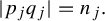 If j is large enough, then the given prefix
$w_n$
If j is large enough, then the given prefix
$w_n$
 of x is a prefix of
$p_j$
of x is a prefix of
$p_j$
 and (since G is finite)
$\varphi (p_jq_j)= \varphi ^{(n_j)}(x) = g$
and (since G is finite)
$\varphi (p_jq_j)= \varphi ^{(n_j)}(x) = g$
 .
.
Example 6.11. Consider once more the Fibonacci substitution
$\sigma \colon a\mapsto ab,b\mapsto a$
 and the Fibonacci shift X. Let
$\varphi \colon A^*\to \mathbb {Z}/2\mathbb {Z}$
and the Fibonacci shift X. Let
$\varphi \colon A^*\to \mathbb {Z}/2\mathbb {Z}$
 be the morphism
$\varphi \colon a\mapsto 1, b\mapsto 0$
be the morphism
$\varphi \colon a\mapsto 1, b\mapsto 0$
 . We saw in §3.4 that the skew product
$G\rtimes _{\varphi } X$
. We saw in §3.4 that the skew product
$G\rtimes _{\varphi } X$
 is minimal and uniquely ergodic. We provide here another argument for this which uses bifix codes.
First, let Z be the bifix code such that
$Z^* = \varphi ^{-1}(0)$
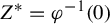 and
$U = Z\cap \mathcal {L}(X)$
and
$U = Z\cap \mathcal {L}(X)$
 . We find
$U = \{aa, aba, b\}$
. We find
$U = \{aa, aba, b\}$
 . Consider an alphabet
$B = \{u,v,w\}$
. Consider an alphabet
$B = \{u,v,w\}$
 and define a morphism
$\phi \colon B^*\to A^*$
and define a morphism
$\phi \colon B^*\to A^*$
 by
by

By construction, the image of
$\phi $
 has the same intersection with
$\mathcal {L}(X)$
has the same intersection with
$\mathcal {L}(X)$
 as the submonoid
$\varphi ^{-1}(0) = Z^*$
as the submonoid
$\varphi ^{-1}(0) = Z^*$
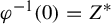 . Moreover, we have
$\sigma ^3\circ \phi =\phi \circ \tau $
. Moreover, we have
$\sigma ^3\circ \phi =\phi \circ \tau $
 , where
$\tau $
, where
$\tau $
 is the morphism

Letting Y be the shift space generated by
$\tau $
 , the skew product
$G\rtimes _{\varphi } X$
, the skew product
$G\rtimes _{\varphi } X$
 can be identified with the tower
$\widehat {Y}$
can be identified with the tower
$\widehat {Y}$
 relative to the function
$f(x)=|\phi (x_0)|$
relative to the function
$f(x)=|\phi (x_0)|$
 (see [Reference Durand and Perrin25, §1.1.3] for details). Since
$\tau $
(see [Reference Durand and Perrin25, §1.1.3] for details). Since
$\tau $
 is primitive, Y is minimal and uniquely ergodic by Michel’s theorem, and so is
$\widehat {Y}$
is primitive, Y is minimal and uniquely ergodic by Michel’s theorem, and so is
$\widehat {Y}$
 .
.
6.3 Relation with average length
We finish the section by coming back to the notion of average length discussed in §4. Let X be a minimal shift space on A and
$\varphi \colon A^*\to G$
 be a morphism onto a finite group G. Let Z be the group code such that
$\varphi ^{-1}(1_G)=Z^*$
be a morphism onto a finite group G. Let Z be the group code such that
$\varphi ^{-1}(1_G)=Z^*$
 , and
$U = Z\cap \mathcal {L}(X)$
, and
$U = Z\cap \mathcal {L}(X)$
 the prefix code considered in Proposition 6.8. Recall the formula for the average length of U relative to
$\mu $
the prefix code considered in Proposition 6.8. Recall the formula for the average length of U relative to
$\mu $
 :
:

Example 6.12. The bifix code U in Example 6.11 has average length

where
$\unicode{x3bb} $
 is the golden ratio (cf. Figure 10).
By (4.1), one has also

where P is the set of proper prefixes of some element of U. Moreover, under the hypotheses of Theorem 1.1, that is, ergodicity of the appropriate product measure on the skew product
$G\rtimes _{\varphi } X$
 , where
$L=Z^*=\varphi ^{-1}(1_G)$
, where
$L=Z^*=\varphi ^{-1}(1_G)$
 , the following equalities hold, as an extension of Proposition 4.8:

Indeed, we show that ergodicity of the skew product entails minimality (Corollary 7.2), which implies that the restriction of
$\varphi $
 on the sets
$\mathcal {R}_X(u)^*$
on the sets
$\mathcal {R}_X(u)^*$
 is onto by Theorem 6.1. Then, by Proposition 6.8, the degree
$d_X(U)$
is onto by Theorem 6.1. Then, by Proposition 6.8, the degree
$d_X(U)$
 of U is
$|G|$
of U is
$|G|$
 . We thus are in the scope of [Reference Berstel, De Felice, Perrin, Reutenauer and Rindone7, Corollary 4.3.8], which states that
$d_X(U)=\ell (U)$
. We thus are in the scope of [Reference Berstel, De Felice, Perrin, Reutenauer and Rindone7, Corollary 4.3.8], which states that
$d_X(U)=\ell (U)$
 and, so,
$\ell (U)=|G|$
and, so,
$\ell (U)=|G|$
 .
.
7 Minimal subsets and modular cobounding maps
We now generalize some results from the previous sections, in particular, Theorem 1.1, which allows a simple expression of the density under the assumption of ergodicity, and Theorem 6.1, which characterizes minimality (referring here to the action of the skew product
$T_{\varphi }$
 as defined in (3.1), since the action of the shift map S on X is already assumed to be minimal). We rely on the key notion of modular cobounding map (Definition 7.3), closely related with the notion of coboundary. It allows, in particular, to obtain a further characterization of minimality (Theorem 7.5) inspired by Anzai’s theorem on ergodicity of skew products [Reference Anzai2].
We prove first that the minimal skew products under consideration (that is, skew products
$G\rtimes _{\varphi }X$
 with
$\varphi $
with
$\varphi $
 being a morphism onto a finite group G) are finite disjoint unions of their minimal closed invariant subsets, all of which have the same measure (Proposition 7.1). We conclude that ergodicity implies minimality (Corollary 7.2). Moreover, Proposition 7.10 together with Corollary 7.11 provide sufficient conditions for ergodicity on every minimal closed invariant subset of
$G \rtimes _{\varphi } X$
being a morphism onto a finite group G) are finite disjoint unions of their minimal closed invariant subsets, all of which have the same measure (Proposition 7.1). We conclude that ergodicity implies minimality (Corollary 7.2). Moreover, Proposition 7.10 together with Corollary 7.11 provide sufficient conditions for ergodicity on every minimal closed invariant subset of
$G \rtimes _{\varphi } X$
 . We prove our third main result, Theorem 1.3, in §7.4 and conclude with examples in §7.5.
7.1 Modular coboundaries
We start by examining the general structure of skew products in terms of minimal closed invariant subsets.
Proposition 7.1. Let X be a minimal shift space on A with an invariant measure
$\mu $
 and
$\varphi \colon A^*\to G$
and
$\varphi \colon A^*\to G$
 be a morphism onto a finite group G with uniform probability measure
$\nu $
be a morphism onto a finite group G with uniform probability measure
$\nu $
 . The skew product
$G\rtimes _{\varphi } X$
. The skew product
$G\rtimes _{\varphi } X$
 is a disjoint union of its minimal closed invariant subsets, which are finite in number and equal in
$\nu \times \mu $
is a disjoint union of its minimal closed invariant subsets, which are finite in number and equal in
$\nu \times \mu $
 -measure.
Proof. Let G act on the left of
$G\rtimes _{\varphi } X$
 by
$g(h,x) = (gh,x)$
by
$g(h,x) = (gh,x)$
 . This action commutes with the transformation
$T_{\varphi }$
. This action commutes with the transformation
$T_{\varphi }$
 of the skew product (defined in (3.1)) and is continuous, so G acts by automorphisms. In particular, it permutes the set of minimal closed invariant subsets.
Let us fix a pair
$(g,x)\in G\times X$
 and show that it is contained in some minimal closed invariant subset of
$G\rtimes _{\varphi } X$
and show that it is contained in some minimal closed invariant subset of
$G\rtimes _{\varphi } X$
 . By Zorn’s lemma, there exists at least one minimal closed invariant subset, say
$Y\subseteq G\rtimes _{\varphi } X$
. By Zorn’s lemma, there exists at least one minimal closed invariant subset, say
$Y\subseteq G\rtimes _{\varphi } X$
 . Its projection on X is also a minimal closed invariant subset; thus, by minimality of X, it must be X itself. It follows that
$(h,x)\in Y$
. Its projection on X is also a minimal closed invariant subset; thus, by minimality of X, it must be X itself. It follows that
$(h,x)\in Y$
 for some
$h\in G$
for some
$h\in G$
 , and then
$gh^{-1}Y$
, and then
$gh^{-1}Y$
 is a minimal closed invariant subset containing
$(g,x)$
is a minimal closed invariant subset containing
$(g,x)$
 .
.
This also shows that G acts transitively on the set of all minimal closed invariant subsets; thus, it must be finite and with cardinality dividing
$|G|$
 . Moreover, this action by G is measure-preserving, as is easily checked on rectangular sets: indeed, for every measurable sets
$E\subseteq G$
. Moreover, this action by G is measure-preserving, as is easily checked on rectangular sets: indeed, for every measurable sets
$E\subseteq G$
 and
$F\subseteq X$
and
$F\subseteq X$
 , we have

Thus, all minimal closed invariant subsets must have the same measure.
The above result has the following straightforward consequences.
Corollary 7.2. Let X be a minimal shift space on A with an invariant measure
$\mu $
 and
$\varphi \colon A^*\to G$
and
$\varphi \colon A^*\to G$
 be a morphism onto a finite group G with uniform probability measure
$\nu $
be a morphism onto a finite group G with uniform probability measure
$\nu $
 .
.
-
(i) If $\nu \times \mu $
restricts to an ergodic measure on a closed invariant subset Y, then Y must be minimal. -
(ii) If $\nu \times \mu $
restricts to an ergodic measure on any minimal closed invariant subset, then it must restrict to an ergodic measure on each of them. -
(iii) If $\nu \times \mu $
is ergodic, then
$G\rtimes _{\varphi } X$
must be minimal.


We now proceed to describe the minimal closed invariant subsets of
$G\rtimes _{\varphi } X$
 , using the following key notion inspired by [Reference Lemańczyk and Mentzen38].
Definition 7.3. Let
$(X,S)$
 be a shift space on A and
$\varphi \colon A^*\to G$
be a shift space on A and
$\varphi \colon A^*\to G$
 be a morphism onto a finite group G. A cobounding map for
$\varphi $
be a morphism onto a finite group G. A cobounding map for
$\varphi $
 on X is a continuous map
$\alpha \colon X\to H\backslash G$
on X is a continuous map
$\alpha \colon X\to H\backslash G$
 to the set of right cosets of a subgroup
$H\leq G$
to the set of right cosets of a subgroup
$H\leq G$
 such that, for all
$x\in X$
such that, for all
$x\in X$
 , the following relates the images of
$\alpha $
, the following relates the images of
$\alpha $
 on x and on its shifted image
$Sx$
on x and on its shifted image
$Sx$
 :
:

We also say that
$\alpha $
 is a cobounding map mod H. Observe that if
$\alpha $
is a cobounding map mod H. Observe that if
$\alpha $
 is a cobounding map, then

for all
$n\in \mathbb {Z}$
 , with
$\varphi ^{(n)}$
, with
$\varphi ^{(n)}$
 as in (3.2).
As the name suggests, this definition is related to the cohomological equations developed in ergodic theory. These equations have a rich history, as evidenced, for instance, by [Reference Anzai2, Reference Conze20, Reference Lemańczyk and Mentzen38, Reference Schmidt52, Reference Veech56, Reference Veech57, Reference Zimmer59]. In particular, we may view a cobounding map as a ‘certificate’ that (the cocycle defined by)
$\varphi $
 is a coboundary mod H. The next proposition clarifies the link between cobounding maps and closed invariant subsets. It is a special case of a result of Lemańczyk and Mentzen [Reference Lemańczyk and Mentzen38, Proposition 2.1].
Proposition 7.4. Let X be a minimal shift space on A with an invariant measure
$\mu $
 and
$\varphi \colon A^*\to G$
and
$\varphi \colon A^*\to G$
 be a morphism onto a finite group G with uniform probability measure
$\nu $
be a morphism onto a finite group G with uniform probability measure
$\nu $
 . Let
$\alpha $
. Let
$\alpha $
 be a cobounding map mod H for
$\varphi $
be a cobounding map mod H for
$\varphi $
 and
$Y_\alpha = \{ (g,x) \mid \alpha (x) = Hg \}$
and
$Y_\alpha = \{ (g,x) \mid \alpha (x) = Hg \}$
 .
.
-
(i) The set $Y_\alpha $
is a closed invariant subset of
$G\rtimes _{\varphi } X$
of
$\nu \times \mu $
-measure
$1/[G:H]$
. -
(ii) If Y is a minimal closed invariant subset of $G\rtimes _{\varphi } X$
, then
$Y = Y_\alpha $
for some cobounding map
$\alpha $
.


Proof. (i) Note that
$Y_\alpha = \bigcup _{Hg\in H\backslash G} Hg\times \alpha ^{-1}(Hg)$
 . Since
$\alpha $
. Since
$\alpha $
 is continuous, each
$\alpha ^{-1}(Hg)$
is continuous, each
$\alpha ^{-1}(Hg)$
 is closed and so is
$Y_\alpha $
is closed and so is
$Y_\alpha $
 . Fix a pair
$(g,x)\in Y_\alpha $
. Fix a pair
$(g,x)\in Y_\alpha $
 , which means that
$g\in Hg=\alpha (x)$
, which means that
$g\in Hg=\alpha (x)$
 . Hence,
$g\varphi ^{(n)}(x)\in \alpha (x)\varphi ^{(n)}(x) = \alpha (S^nx)$
. Hence,
$g\varphi ^{(n)}(x)\in \alpha (x)\varphi ^{(n)}(x) = \alpha (S^nx)$
 and
$T_{\varphi }^n(g,x) = (g\varphi ^{(n)}(x), S^nx) \in Y_\alpha $
and
$T_{\varphi }^n(g,x) = (g\varphi ^{(n)}(x), S^nx) \in Y_\alpha $
 . Thus,
$Y_\alpha $
. Thus,
$Y_\alpha $
 is invariant. It has measure

(ii) Let Y be a minimal closed invariant subset of
$G\rtimes _{\varphi } X$
 . Consider the subgroup
${H = \{ h\in G \mid hY = Y \}}$
. Consider the subgroup
${H = \{ h\in G \mid hY = Y \}}$
 and for each
$x\in X$
and for each
$x\in X$
 , let
, let

Since X is minimal, the restriction to Y of the projection
$P_X \colon G\times X \to X$
 is surjective and, therefore,
$\alpha $
is surjective and, therefore,
$\alpha $
 is defined everywhere on X. Fix an element
$g\in \alpha (x)$
is defined everywhere on X. Fix an element
$g\in \alpha (x)$
 . We claim that
$\alpha (x) = Hg$
. We claim that
$\alpha (x) = Hg$
 . On the one hand, it is clear that for
$h\in H$
. On the one hand, it is clear that for
$h\in H$
 ,
$(hg,x)\in hY = Y$
,
$(hg,x)\in hY = Y$
 ; thus,
${hg\in \alpha (x)}$
; thus,
${hg\in \alpha (x)}$
 . This shows that
$Hg\subseteq \alpha (x)$
. This shows that
$Hg\subseteq \alpha (x)$
 . On the other hand, for
$k\in \alpha (x)$
. On the other hand, for
$k\in \alpha (x)$
 , we have that
$(g,x) = (gk^{-1}k,x)\in Y\cap gk^{-1}Y$
, we have that
$(g,x) = (gk^{-1}k,x)\in Y\cap gk^{-1}Y$
 . However, note that
$gk^{-1}Y$
. However, note that
$gk^{-1}Y$
 is also a closed invariant subset of
$G\rtimes _{\varphi } X$
is also a closed invariant subset of
$G\rtimes _{\varphi } X$
 , since Y is and
$T_{\varphi }$
, since Y is and
$T_{\varphi }$
 commutes with the left action of G on
$G\rtimes _{\varphi } X$
commutes with the left action of G on
$G\rtimes _{\varphi } X$
 . This shows that
$Y\cap gk^{-1}Y$
. This shows that
$Y\cap gk^{-1}Y$
 is a non-empty closed invariant subset of Y and, thus,
$Y\cap gk^{-1}Y = Y$
is a non-empty closed invariant subset of Y and, thus,
$Y\cap gk^{-1}Y = Y$
 by minimality of Y.
For every
$(h,y)\in Y$
 , we conclude that
$h = kg^{-1}h'$
, we conclude that
$h = kg^{-1}h'$
 for some
$h'\in G$
for some
$h'\in G$
 such that
${(h',y)\in Y}$
such that
${(h',y)\in Y}$
 , which implies that
$kg^{-1}(h,y) = (h',y)\in Y$
, which implies that
$kg^{-1}(h,y) = (h',y)\in Y$
 . This means that
$kg^{-1}\in H$
. This means that
$kg^{-1}\in H$
 and, thus,
$k = kg^{-1}g\in Hg$
and, thus,
$k = kg^{-1}g\in Hg$
 , as claimed. In particular, this shows that
$\alpha $
, as claimed. In particular, this shows that
$\alpha $
 is a map
$X\to H\backslash G$
is a map
$X\to H\backslash G$
 and that
$Y = Y_\alpha $
and that
$Y = Y_\alpha $
 . It remains to show that
$\alpha $
. It remains to show that
$\alpha $
 is a cobounding map.
To establish continuity, it suffices to show that
$\alpha ^{-1}(Hg)$
 is closed for each
$g\in G$
is closed for each
$g\in G$
 . However, observe that
$\alpha ^{-1}(Hg)$
. However, observe that
$\alpha ^{-1}(Hg)$
 can be written in terms of the two component projections
$P_G\colon G\rtimes _{\varphi } X\to G$
can be written in terms of the two component projections
$P_G\colon G\rtimes _{\varphi } X\to G$
 and
$P_X\colon G\rtimes _{\varphi } X\to X$
and
$P_X\colon G\rtimes _{\varphi } X\to X$
 :
:

Since Y is a closed subspace,
$P_G$
 is continuous, and
$P_X$
is continuous, and
$P_X$
 is a closed map, we conclude that
$\alpha ^{-1}(Hg)$
is a closed map, we conclude that
$\alpha ^{-1}(Hg)$
 is indeed closed.
We end the proof by showing that
$\alpha (x)\varphi ^{(n)}(x) = \alpha (S^nx)$
 for every
$x\in X$
for every
$x\in X$
 and
$n\in \mathbb {Z}$
and
$n\in \mathbb {Z}$
 . Take first
$h\in \alpha (x)$
. Take first
$h\in \alpha (x)$
 , so
$(h,x)\in Y$
, so
$(h,x)\in Y$
 . Since Y is invariant,

and, therefore,
$h\varphi ^{(n)}(x)\in \alpha (S^nx)$
 . This shows that
$\alpha (x)\varphi ^{(n)}(x) \subseteq \alpha (S^nx)$
. This shows that
$\alpha (x)\varphi ^{(n)}(x) \subseteq \alpha (S^nx)$
 . As this inclusion holds for all
$x\in X$
. As this inclusion holds for all
$x\in X$
 and
$n\in \mathbb {Z}$
and
$n\in \mathbb {Z}$
 , it also holds for x replaced by
$S^nx$
, it also holds for x replaced by
$S^nx$
 and n replaced by
$-n$
and n replaced by
$-n$
 , which yields

Since
$\varphi ^{(-n)}(S^nx) = \varphi ( (S^nx)_{[-n,0)})^{-1} = (\varphi ^{(n)}(x))^{-1}$
 by (3.2), this also proves the other inclusion.
7.2 A characterization of minimality via cobounding maps
There is always at least one cobounding map, namely the constant map
$X\to G\backslash G$
 , which we call the trivial cobounding map. The corresponding closed invariant subset is then the whole skew product. It is immediately apparent that the existence of a non-trivial cobounding map thus forbids minimality of the skew product. In fact, we have the following consequence of Proposition 7.4, which is reminiscent of Anzai’s theorem on ergodicity of skew products [Reference Anzai2] (see also [Reference Petersen48, Ch. 2, Theorem 4.8]).
Theorem 7.5. Let X be a minimal shift space on A and
$\varphi \colon A^*\to G$
 be a morphism onto a finite group G. The skew product
$X\rtimes _{\varphi } G$
be a morphism onto a finite group G. The skew product
$X\rtimes _{\varphi } G$
 is minimal if and only if there exists no non-trivial cobounding maps for
$\varphi $
is minimal if and only if there exists no non-trivial cobounding maps for
$\varphi $
 .
.
Proof. We prove the contrapositive implications. If there is a non-trivial cobounding map
$\alpha \colon X\to H\backslash G$
 , then the subset
$Y_\alpha $
, then the subset
$Y_\alpha $
 from Proposition 7.4 is a proper, non-empty, closed invariant subset of
$G\rtimes _{\varphi } X$
from Proposition 7.4 is a proper, non-empty, closed invariant subset of
$G\rtimes _{\varphi } X$
 . Conversely, if
$G\rtimes _{\varphi } X$
. Conversely, if
$G\rtimes _{\varphi } X$
 is not minimal, then it has (by Zorn’s lemma) a proper minimal closed invariant subset Y, which must then be of the form
$Y = Y_\alpha $
is not minimal, then it has (by Zorn’s lemma) a proper minimal closed invariant subset Y, which must then be of the form
$Y = Y_\alpha $
 for some cobounding map
$\alpha \colon X\to H\backslash G$
for some cobounding map
$\alpha \colon X\to H\backslash G$
 , by condition (ii) of Proposition 7.4. Since
$Y_\alpha $
, by condition (ii) of Proposition 7.4. Since
$Y_\alpha $
 is proper,
$\alpha $
is proper,
$\alpha $
 must be non-trivial.
Given two cobounding maps
$\alpha $
 and
$\beta $
and
$\beta $
 , respectively mod H and K, write
$\alpha \leq \beta $
, respectively mod H and K, write
$\alpha \leq \beta $
 if
$H\leq K$
if
$H\leq K$
 and
$\alpha ^{-1}(Hg)\subseteq \beta ^{-1}(Kg)$
and
$\alpha ^{-1}(Hg)\subseteq \beta ^{-1}(Kg)$
 for all
$g\in G$
for all
$g\in G$
 . This gives a partial order on cobounding maps, which corresponds directly to the ordering of the corresponding closed invariant subsets under inclusion.
Proposition 7.6. Let X be a minimal shift space on A and
$\varphi \colon A^*\to G$
 be a morphism onto a finite group G. For any two cobounding maps
$\alpha $
be a morphism onto a finite group G. For any two cobounding maps
$\alpha $
 and
$\beta $
and
$\beta $
 ,
$Y_\alpha \subseteq Y_\beta $
,
$Y_\alpha \subseteq Y_\beta $
 if and only if
$\alpha \leq \beta $
if and only if
$\alpha \leq \beta $
 . Therefore, the minimal closed invariant subsets of
$G\rtimes _{\varphi } X$
. Therefore, the minimal closed invariant subsets of
$G\rtimes _{\varphi } X$
 correspond to the minimal cobounding maps under
$\leq $
correspond to the minimal cobounding maps under
$\leq $
 .
.
Proof. Assume
$\alpha \colon X\to H\backslash G$
 and
$\beta \colon X\to K\backslash G$
and
$\beta \colon X\to K\backslash G$
 . If
$\alpha \leq \beta $
. If
$\alpha \leq \beta $
 , then
$Hg\subseteq Kg$
, then
$Hg\subseteq Kg$
 and
$\alpha ^{-1}(Hg)\subseteq \beta ^{-1}(Kg)$
and
$\alpha ^{-1}(Hg)\subseteq \beta ^{-1}(Kg)$
 for every
$g\in G$
for every
$g\in G$
 ; thus,

Conversely, assume that
$Y_\alpha \subseteq Y_\beta $
 and fix
$Hg\in H\backslash G$
and fix
$Hg\in H\backslash G$
 . Then,
$Hg\times \alpha ^{-1}(Hg)\subseteq Kg'\times \beta ^{-1}(Kg')$
. Then,
$Hg\times \alpha ^{-1}(Hg)\subseteq Kg'\times \beta ^{-1}(Kg')$
 for some
$g'\in G$
for some
$g'\in G$
 . In particular,
$g\in Kg'$
. In particular,
$g\in Kg'$
 so we may assume
$g = g'$
so we may assume
$g = g'$
 . We then deduce that
$H\subseteq K$
. We then deduce that
$H\subseteq K$
 and
$\alpha ^{-1}(Hg)\subseteq \beta ^{-1}(Kg)$
and
$\alpha ^{-1}(Hg)\subseteq \beta ^{-1}(Kg)$
 .
.
The left action of G on
$G\rtimes _{\varphi } X$
 corresponds to the left action on cobounding maps given by
$(g\alpha )(x) = g(\alpha (x))$
corresponds to the left action on cobounding maps given by
$(g\alpha )(x) = g(\alpha (x))$
 , where
$g\alpha $
, where
$g\alpha $
 is viewed as a cobounding map mod
$H^g = gHg^{-1}$
is viewed as a cobounding map mod
$H^g = gHg^{-1}$
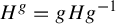 . This cobounding map is such that
$g\alpha (x) = H^gh \iff \alpha (x) = Hg^{-1}h$
. This cobounding map is such that
$g\alpha (x) = H^gh \iff \alpha (x) = Hg^{-1}h$
 ; hence,
$X_{g\alpha } = gX_\alpha $
; hence,
$X_{g\alpha } = gX_\alpha $
 . This shows that the passage from minimal closed invariant subsets to minimal cobounding maps preserves the left action of G. In particular, G acts transitively on the set of minimal cobounding maps.
Corollary 7.7. Let X be a minimal shift space on A and
$\varphi \colon A^*\to G$
 be a morphism onto a finite group G. Let H be a subgroup of G such that there exists a minimal cobounding map
$\alpha \colon X\to H\backslash G$
be a morphism onto a finite group G. Let H be a subgroup of G such that there exists a minimal cobounding map
$\alpha \colon X\to H\backslash G$
 . Then, for any other minimal cobounding map
$\beta \colon X\to K\backslash G$
. Then, for any other minimal cobounding map
$\beta \colon X\to K\backslash G$
 , the group K is a conjugate of H. Consequently, the number of minimal closed invariant subsets of the skew product
$G\rtimes _{\varphi } X$
, the group K is a conjugate of H. Consequently, the number of minimal closed invariant subsets of the skew product
$G\rtimes _{\varphi } X$
 equals
$[G:H]$
equals
$[G:H]$
 .
.
7.3 Cobouding maps and return words
We have established in Theorem 6.1 a characterization of minimality in terms of return words. Without surprise, we also find links between cobounding maps and return words. This makes the relationship between conditions (ii) and (iii) in Theorem 6.1 more transparent (see Remark 7.9).
Proposition 7.8. Let X be a minimal shift space on A and
$\varphi \colon A^*\to G$
 be a morphism onto a finite group G. Let H be a subgroup of G.
-
(i) If a cobounding map $\alpha \colon X\to H\backslash G$
takes constant value
$Hg$
on a cylinder
$[u]_X$
, then
$\varphi (\mathcal {R}_X(u))\subseteq g^{-1}Hg$
. -
(ii) If a word $u\in \mathcal {L}(X)$
satisfies
$\varphi (\mathcal {R}_X(u))\subseteq H$
, then there exists a cobounding map
$\alpha \colon X\to H\backslash G$
that takes constant value H on
$[u]_X$
. -
(iii) A cobounding map $\alpha \colon X\to H\backslash G$
is minimal if and only if
$\varphi (\mathcal {R}_X(u))$
generates
$g^{-1}Hg$
whenever u is such that
$\alpha $
takes constant value
$Hg$
on
$[u]_X$
.











Proof. (i) Consider
$w\in \mathcal {R}_X(u)^*$
 . Taking
$x\in [wu]_X\subseteq [u]_X$
. Taking
$x\in [wu]_X\subseteq [u]_X$
 , we find

while the stabilizer of
$Hg$
 under the right action of G on
$H\backslash G$
under the right action of G on
$H\backslash G$
 is exactly
$g^{-1}Hg$
is exactly
$g^{-1}Hg$
 .
.
(ii) Let
$u\in \mathcal {L}(X)$
 be such that
$\varphi (\mathcal {R}_X(u)) \leq H$
be such that
$\varphi (\mathcal {R}_X(u)) \leq H$
 . For
$x\in X$
. For
$x\in X$
 , let
, let

Observe that under the assumption that
$\varphi (\mathcal {R}_X(u)) \subseteq H$
 , the value of
$H\varphi (x_{[0,j)})^{-1}$
, the value of
$H\varphi (x_{[0,j)})^{-1}$
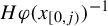 is identical for every
$j\in C_x$
is identical for every
$j\in C_x$
 . Hence, we may define a map
$\alpha \colon X\to H\backslash G$
. Hence, we may define a map
$\alpha \colon X\to H\backslash G$
 by
by

Since X is a minimal shift space, there exists a constant
$m>0$
 independent of x such that
$\min (C_x)<m$
independent of x such that
$\min (C_x)<m$
 ; hence,
$\alpha $
; hence,
$\alpha $
 is continuous, since its value is determined by the first m letters. Moreover, fixing
$x\in X$
is continuous, since its value is determined by the first m letters. Moreover, fixing
$x\in X$
 and
$j\in C_x$
and
$j\in C_x$
 with
$j\geq 1$
with
$j\geq 1$
 , we find that

(iii) Assume first that
$\alpha $
 is minimal. Fix
$h\in H$
is minimal. Fix
$h\in H$
 and suppose that
$\alpha $
and suppose that
$\alpha $
 takes constant value
$Hg$
takes constant value
$Hg$
 on some cylinder
$[u]$
on some cylinder
$[u]$
 . We need to show that
$g^{-1}hg$
. We need to show that
$g^{-1}hg$
 belongs to
$\langle \varphi (\mathcal {R}_X(u))\rangle $
belongs to
$\langle \varphi (\mathcal {R}_X(u))\rangle $
 . Since
$\{g\}\times [u]$
. Since
$\{g\}\times [u]$
 and
$\{hg\}\times [u]$
and
$\{hg\}\times [u]$
 are two non-empty clopen subsets of the minimal closed invariant subset
$Y_\alpha $
are two non-empty clopen subsets of the minimal closed invariant subset
$Y_\alpha $
 , we may find
$k\in \mathbb {Z}$
, we may find
$k\in \mathbb {Z}$
 with
$(\{g\}\times [u])\cap T_{\varphi }^{-k}(\{hg\}\times [u])\neq \varnothing $
with
$(\{g\}\times [u])\cap T_{\varphi }^{-k}(\{hg\}\times [u])\neq \varnothing $
 . Choose x in that intersection, and let
$w = x_{[0,k)}$
. Choose x in that intersection, and let
$w = x_{[0,k)}$
 if
$k\geq 0$
if
$k\geq 0$
 and
$w = x_{[k,0)}$
and
$w = x_{[k,0)}$
 otherwise. It follows that

hence,
$\varphi (w) = g^{-1}h^{\pm 1}g$
 (according to whether
$k\geq 0$
(according to whether
$k\geq 0$
 or
$k< 0$
or
$k< 0$
 ). However, w is a concatenation of elements of
$\mathcal {R}_X(u)$
). However, w is a concatenation of elements of
$\mathcal {R}_X(u)$
 ; thus,
$g^{-1}hg$
; thus,
$g^{-1}hg$
 belongs to the subgroup of G generated by
$\varphi (\mathcal {R}_X(u))$
belongs to the subgroup of G generated by
$\varphi (\mathcal {R}_X(u))$
 .
.
To prove the converse, we consider a cobounding map
$\beta \colon X\to K\backslash G$
 such that
$\beta \leq \alpha $
such that
$\beta \leq \alpha $
 . Let u be a word such that both
$\alpha $
. Let u be a word such that both
$\alpha $
 and
$\beta $
and
$\beta $
 are constant on
$[u]$
are constant on
$[u]$
 , say with
$\alpha ([u]) = Hg$
, say with
$\alpha ([u]) = Hg$
 and
$\beta ([u]) = Kh$
and
$\beta ([u]) = Kh$
 . Note that
$h\in Kh\subseteq Hg$
. Note that
$h\in Kh\subseteq Hg$
 , so we may assume that
$h=g$
, so we may assume that
$h=g$
 . By part (i) of the statement,
$\varphi (\mathcal {R}_X(u))$
. By part (i) of the statement,
$\varphi (\mathcal {R}_X(u))$
 generates a subgroup of
$g^{-1}Kg$
generates a subgroup of
$g^{-1}Kg$
 , while it also generates
$g^{-1}Hg$
, while it also generates
$g^{-1}Hg$
 by our assumption. Thus,
$H=K$
by our assumption. Thus,
$H=K$
 and
$\beta = \alpha $
and
$\beta = \alpha $
 on
$[u]$
on
$[u]$
 . As we may partition X into a union of such cylinders, we get
$\alpha =\beta $
. As we may partition X into a union of such cylinders, we get
$\alpha =\beta $
 , and thus show that
$\alpha $
, and thus show that
$\alpha $
 is minimal.
Remark 7.9. From this result combined with Theorem 7.5, we deduce an alternate proof for the equivalence between conditions (ii) and (iii) in Theorem 6.1. Indeed, on the one hand, if the skew product is not minimal, then Theorem 7.5 states that there exists a non-trivial cobounding map; hence, it follows from condition (i) of Proposition 7.8 that for a sufficiently long word u, all return words in
$\mathcal {R}_X(u)$
 are mapped inside some proper subgroup of G. On the other hand, if the image of some return set
$\mathcal {R}_X(u)$
are mapped inside some proper subgroup of G. On the other hand, if the image of some return set
$\mathcal {R}_X(u)$
 fails to generate G, then by condition (ii) of Proposition 7.8, there exists a non-trivial cobounding map; hence, the skew product cannot be minimal by Theorem 7.5.
Roughly speaking, the smaller the subgroup, the more restrictive the coboundary condition and, hence, the most stringent cobounding maps are the cobounding maps mod 1, where the notation mod 1 refers to working modulo the trivial subgroup. One important fact is that having such cobounding maps turns out to be sufficient for the measure
$\nu \times \mu $
 to be ergodic on each of the minimal closed invariant subsets of
$G\rtimes _{\varphi } X$
to be ergodic on each of the minimal closed invariant subsets of
$G\rtimes _{\varphi } X$
 .
.
Proposition 7.10. Let X be a minimal shift space on A with an ergodic measure
$\mu $
 and
$\varphi \colon A^*\to G$
and
$\varphi \colon A^*\to G$
 a morphism onto a finite group G with uniform probability measure
$\nu $
a morphism onto a finite group G with uniform probability measure
$\nu $
 . If there exists a cobounding map
$\alpha \colon X\to G$
. If there exists a cobounding map
$\alpha \colon X\to G$
 mod 1, then the product measure
$\nu \times \mu $
mod 1, then the product measure
$\nu \times \mu $
 is ergodic on
$Y_\alpha $
is ergodic on
$Y_\alpha $
 .
.
Proof. The map
$\gamma \colon X\to Y_\alpha $
 ,
$\gamma (x) = (\alpha (x),x)$
,
$\gamma (x) = (\alpha (x),x)$
 , is a homeomorphism which intertwines S and
$T_{\varphi }$
, is a homeomorphism which intertwines S and
$T_{\varphi }$
 , and satisfies
$\mu (E)/|G| = (\nu \times \mu )(\gamma (E))$
, and satisfies
$\mu (E)/|G| = (\nu \times \mu )(\gamma (E))$
 for every measurable set
$E\subseteq X$
for every measurable set
$E\subseteq X$
 . Thus,
$(Y_\alpha ,T_{\varphi },\nu \times \mu )$
. Thus,
$(Y_\alpha ,T_{\varphi },\nu \times \mu )$
 is measure-theoretically isomorphic to
$(X,S,\mu )$
is measure-theoretically isomorphic to
$(X,S,\mu )$
 , and since the latter is ergodic, so is the former.
We moreover observe that cobounding maps mod 1 are minimal by Proposition 7.8(iii). In this special case, Proposition 7.8 also yields the following corollary.
Corollary 7.11. Let X be a minimal shift space on A with and
$\varphi \colon A^*\to G$
 a morphism onto a finite group G. The following conditions are equivalent:
-
(i) $\varphi $
has a cobounding map mod 1 on X; -
(ii) $\varphi (\mathcal {R}_X(u)) = 1$
for every long enough
$u\in \mathcal {L}(X)$
; -
(iii) $\varphi (\mathcal {R}_X(u)) = 1$
for some word
$u\in \mathcal {L}(X)$
.





7.4 A formula for density in terms of cobounding maps
The next theorem is our third main result. It gives a simple closed form for the density in terms of any minimal cobounding map under suitable assumptions. It generalizes Corollary 3.6 within the setting of minimal shift spaces.
Theorem 1.3. Let X be a minimal shift space on A with an ergodic measure
$\mu $
 and
$\varphi \colon A^*\to G$
and
$\varphi \colon A^*\to G$
 a morphism onto a finite group G with uniform probability measure
$\nu $
a morphism onto a finite group G with uniform probability measure
$\nu $
 . Suppose that
$\nu \times \mu $
. Suppose that
$\nu \times \mu $
 is ergodic on each of the minimal closed invariant subsets of
$G\rtimes _\varphi X$
is ergodic on each of the minimal closed invariant subsets of
$G\rtimes _\varphi X$
 . Then, for every group language
$L = \varphi ^{-1}(K)$
. Then, for every group language
$L = \varphi ^{-1}(K)$
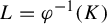 , where
$K\subseteq G$
, where
$K\subseteq G$
 , the density
$\delta _\mu (L)$
, the density
$\delta _\mu (L)$
 is given by the following formula, where
$\alpha \colon X\to H\backslash G$
is given by the following formula, where
$\alpha \colon X\to H\backslash G$
 is any minimal cobounding map:

Note that when
$G\rtimes _{\varphi } X$
 is ergodic, the trivial cobounding map
$\alpha \colon X\to G\backslash G$
is ergodic, the trivial cobounding map
$\alpha \colon X\to G\backslash G$
 is minimal and we recover the formula from Corollary 3.6:

Proof. Without loss of generality, we may assume that
$L = \varphi ^{-1}(k)$
 for some fixed
${k\in G}$
for some fixed
${k\in G}$
 . Fix a minimal cobounding map
$\alpha \colon X\to H\backslash G$
. Fix a minimal cobounding map
$\alpha \colon X\to H\backslash G$
 and let
$\overline \mu $
and let
$\overline \mu $
 be the measure on
$G\rtimes _{\varphi } X$
be the measure on
$G\rtimes _{\varphi } X$
 defined by

Note that
$\overline \mu $
 is ergodic by assumption. For
$g\in G$
is ergodic by assumption. For
$g\in G$
 , let
$U_g = \{g\}\times X$
, let
$U_g = \{g\}\times X$
 . We claim that
$\nu \times \mu $
. We claim that
$\nu \times \mu $
 projects to
$\mu $
projects to
$\mu $
 . Indeed, for every measurable subset
$B\subseteq X$
. Indeed, for every measurable subset
$B\subseteq X$
 ,
,

Applying Theorem 1.1 with
$\{g\}\times X = U_g$
 , we obtain

which after regrouping like terms,

which concludes the proof.
Recall from Corollary 7.2 that the ergodicity assumption from the above theorem is equivalent to
$\nu \times \mu $
 being ergodic on any closed invariant subset (which is then necessarily minimal).
7.5 Examples
We finish the section with two examples that illustrate various aspects of Theorem 1.3.
Example 7.12. Let X be the Thue–Morse shift with its unique invariant measure
$\mu $
 (see Example 2.1) and let
$\varphi \colon A^*\to \mathbb {Z}/2\mathbb {Z}$
(see Example 2.1) and let
$\varphi \colon A^*\to \mathbb {Z}/2\mathbb {Z}$
 ,
$\varphi (a) = 1$
,
$\varphi (a) = 1$
 ,
$\varphi (b)=0$
,
$\varphi (b)=0$
 .
.
The morphism
$\varphi $
 has two cobounding maps mod 1 on X; hence, by Corollary 7.11,
$\mathbb {Z}/2\mathbb {Z}\rtimes _{\varphi } X$
has two cobounding maps mod 1 on X; hence, by Corollary 7.11,
$\mathbb {Z}/2\mathbb {Z}\rtimes _{\varphi } X$
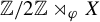 has two minimal closed invariant subsets on which the measure
$\nu \times \mu $
has two minimal closed invariant subsets on which the measure
$\nu \times \mu $
 is ergodic. The cobounding maps take constant values on the cylinders of length 7; one of them is depicted in Figure 8. Note that the cobounding maps are not constant on cylinders of length 6: for instance, the map of Figure 8 satisfies
$\alpha ([baabbab])=1$
is ergodic. The cobounding maps take constant values on the cylinders of length 7; one of them is depicted in Figure 8. Note that the cobounding maps are not constant on cylinders of length 6: for instance, the map of Figure 8 satisfies
$\alpha ([baabbab])=1$
 and
$\alpha ([baabbaa])=0$
and
$\alpha ([baabbaa])=0$
 , but
$[baabbaa]$
, but
$[baabbaa]$
 and
$[baabbaa]$
and
$[baabbaa]$
 are both contained in the cylinder
$[baabba]$
are both contained in the cylinder
$[baabba]$
 of length 6.
One of the two cobounding maps
$X\to \mathbb {Z}/2\mathbb {Z}$
 on the Thue–Morse shift for the morphism
$\varphi \colon \{a,b\}^*\to \mathbb {Z}/2\mathbb {Z}$
on the Thue–Morse shift for the morphism
$\varphi \colon \{a,b\}^*\to \mathbb {Z}/2\mathbb {Z}$
 ,
$\varphi (a)=1$
,
$\varphi (a)=1$
 ,
$\varphi (b)=0$
,
$\varphi (b)=0$
 . The map is constant on cylinders of length 7.

Figure 8 Long description
The graph consists of 16 rectangular nodes arranged in a grid-like perimeter with two internal vertical columns. Each node contains a string of seven characters using the letters a and b. Arrows between nodes are labeled with either a or b, and numerical values 0 or 1 are positioned outside the nodes. Outer Perimeter (Clockwise from Top-Left): Node a a b b a b a (top edge) has a 1 above it. An arrow labeled a points right to node a b b a b a a. Node a b b a b a a has a 0 above it. An arrow labeled a points right to node b b a b a a b. Node b b a b a a b has a 1 above it. An arrow labeled b points right to node b a b a a b b. Node b a b a a b b has a 1 above it. An arrow labeled b points right and down to node a b a a b b a. Node a b a a b b a (right edge) has a 1 to its right. An arrow labeled a points down to node b a a b b a a. Node b a a b b a a has a 0 to its right. An arrow labeled b points down to node a a b b a a b. Node a a b b a a b has a 0 to its right. An arrow labeled a points down to node a b b a a b a. Node a b b a a b a has a 1 to its right. An arrow labeled b points left and down to node b b a a b a b. Node b b a a b a b (bottom edge) has a 0 below it. An arrow labeled b points left to node b a a b a b b. Node b a a b a b b has a 0 below it. An arrow labeled b points left to node a a b a b b a. Node a a b a b b a has a 0 below it. An arrow labeled a points left to node a b a b b a a. Node a b a b b a a has a 1 below it. An arrow labeled a points left and up to node b a b b a a b. Node b a b b a a b (left edge) has a 0 to its left. An arrow labeled b points up to node a b b a a b b. Node a b b a a b b has a 0 to its left. An arrow labeled a points up to node b b a a b b a. Node b b a a b b a has a 1 to its left. An arrow labeled b points up to node b a a b b a b. Node b a a b b a b has a 1 to its left. An arrow labeled b points right and up back to the start. Internal Vertical Paths: Left internal column: Node a a b a b b a (bottom) points up via arrow a to node a b a b b a b (labeled 1), which points up via arrow a to node b a b b a b a (labeled 0), which points up via arrow b to node a b b a b a a (top). Right internal column: Node b b a b a a b (top) points down via arrow b to node b a b a a b a (labeled 1), which points down via arrow b to node a b a a b a b (labeled 1), which points down via arrow a to node b a a b a b b (bottom).
Observe that the cobounding maps are fair, in the sense that the preimages
$\alpha ^{-1}(g)$
 have the same
$\mu $
have the same
$\mu $
 -measure for all elements of the group. Therefore, even though the skew product
$\mathbb {Z}/2\mathbb {Z}\rtimes _{\varphi } X$
-measure for all elements of the group. Therefore, even though the skew product
$\mathbb {Z}/2\mathbb {Z}\rtimes _{\varphi } X$
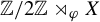 is not ergodic, the shift space X is still evenly distributed with respect to
$\varphi $
is not ergodic, the shift space X is still evenly distributed with respect to
$\varphi $
 , in the sense that

Example 7.13. Consider the following substitution and morphism onto
$S_3$
 defined on the alphabet
$A = \{a,b,c\}$
defined on the alphabet
$A = \{a,b,c\}$
 :
:

Let X be the shift space generated by the primitive substitution
$\sigma $
 . We claim that the skew product
$S_3\rtimes _{\varphi } X$
. We claim that the skew product
$S_3\rtimes _{\varphi } X$
 has three minimal closed invariant subsets. These minimal subsets correspond to three cobounding maps

The cobounding map
$\alpha _{12}$
 is depicted in Figure 9 and the other two can be deduced from
$\alpha _{12}$
is depicted in Figure 9 and the other two can be deduced from
$\alpha _{12}$
 using the natural left action of
$S_3$
using the natural left action of
$S_3$
 on cobounding maps. Note that in all cases, the subgroup involved has index 3 in
$S_3$
on cobounding maps. Note that in all cases, the subgroup involved has index 3 in
$S_3$
 , in accordance with Corollary 7.7.
Cobounding map mod
$H = \langle (1\:2)\rangle $
 on the shift of Example 7.13 for the morphism
$\varphi \colon \{a,b,c\}^*\to S_3$
on the shift of Example 7.13 for the morphism
$\varphi \colon \{a,b,c\}^*\to S_3$
 ,
$\varphi (a)=\varphi (c) = (1\:2\:3)$
,
$\varphi (a)=\varphi (c) = (1\:2\:3)$
 ,
$\varphi (b)=(1\:2)$
,
$\varphi (b)=(1\:2)$
 . The map is constant on cylinders of length 4.

Figure 9 Long description
The diagram consists of twelve rectangular nodes arranged in a rectangular perimeter with a central horizontal bar. Outer Perimeter (Clockwise from Top-Right): Node H containing a b b a. An arrow labeled a points left to node H open parenthesis 1 3 close parenthesis containing b b a a. Node H open parenthesis 1 3 close parenthesis containing b b a a. An arrow labeled b points left to node H open parenthesis 2 3 close parenthesis containing b a a c. Node H open parenthesis 2 3 close parenthesis containing b a a c. A curved arrow labeled b points down to node H open parenthesis 1 3 close parenthesis containing a a c b. Node H open parenthesis 1 3 close parenthesis containing a a c b. A curved arrow labeled a points down to node H open parenthesis 2 3 close parenthesis containing a c b a. Node H open parenthesis 2 3 close parenthesis containing a c b a. A curved arrow labeled a points down to node H containing c b a c. Node H containing c b a c. A curved arrow labeled c points down to node H open parenthesis 1 3 close parenthesis containing b a c b. Node H open parenthesis 1 3 close parenthesis containing b a c b. An arrow labeled a points right to node H containing a b a c. Node H containing a b a c. An arrow labeled a points right to node H open parenthesis 2 3 close parenthesis containing a a b a. Node H open parenthesis 2 3 close parenthesis containing a a b a. A curved arrow labeled a points up to node H containing a b a a. Node H containing a b a a. A curved arrow labeled a points up to node H open parenthesis 1 3 close parenthesis containing b a a b. Node H open parenthesis 1 3 close parenthesis containing b a a b. A curved arrow labeled b points up to node H containing a a b b. Node H containing a a b b. A curved arrow labeled a points up to the starting node H containing a b b a. Internal Connections: A horizontal path runs through the center: Node H open parenthesis 2 3 close parenthesis containing a c b a points right via arrow a to node H containing c b a a, which points right via arrow c to node H open parenthesis 1 3 close parenthesis containing b a a b. Two vertical paths connect the perimeter to the center: Node H open parenthesis 1 3 close parenthesis containing b a c b points up via arrow b to node H open parenthesis 2 3 close parenthesis containing a c b a. Node H open parenthesis 1 3 close parenthesis containing b a a b points down via arrow b to node H open parenthesis 2 3 close parenthesis containing a a b a.
We now briefly sketch a proof of the fact that the above cobounding maps are indeed minimal. In the present case, this is equivalent to showing that there are no cobounding maps mod 1. Recall that by Corollary 7.11, there is a cobounding map mod 1 if and only if
$\mathcal {R}_X(u)$
 has trivial image under
$\varphi $
has trivial image under
$\varphi $
 for all sufficiently long words u.
By the first main result from [Reference Berthé, Goulet-Ouellet, Frid and Mercas13], since
$\sigma $
 is a bifix encoding, there exists a constant
$K>0$
is a bifix encoding, there exists a constant
$K>0$
 such that for all
$u\in \mathcal {L}(\sigma )$
such that for all
$u\in \mathcal {L}(\sigma )$
 with
$|u|\geq K$
with
$|u|\geq K$
 ,
,

Using the formula provided in [Reference Berthé, Goulet-Ouellet, Frid and Mercas13], we find the upper bound
$K\leq 6$
 , but direct computations show that we can take
$K=2$
, but direct computations show that we can take
$K=2$
 ; in fact, the one-letter word
$u=c$
; in fact, the one-letter word
$u=c$
 is the only word which fails the above equality. Now, take the sequence of words
$u_n = \sigma ^n(a)$
is the only word which fails the above equality. Now, take the sequence of words
$u_n = \sigma ^n(a)$
 ; we claim that
$(2\:3)\in \mathcal {R}_X(u_n)$
; we claim that
$(2\:3)\in \mathcal {R}_X(u_n)$
 for infinitely many n. Indeed, observe that the following equalities hold:

As
$\mathcal {R}_X(u_0) = \{{a, ba, bba, cba}\}$
 , it follows that
$(2\:3) = \varphi (\sigma ^{7k+1}(a))$
, it follows that
$(2\:3) = \varphi (\sigma ^{7k+1}(a))$
 belongs to
$\mathcal {R}_X(u_{7k+1})$
belongs to
$\mathcal {R}_X(u_{7k+1})$
 for all
$k\geq 0$
for all
$k\geq 0$
 . This shows that
$\mathcal {R}_X(u_n)$
. This shows that
$\mathcal {R}_X(u_n)$
 have non-trivial images for infinitely many n; thus,
$\varphi $
have non-trivial images for infinitely many n; thus,
$\varphi $
 has no cobounding map mod 1 on X. This confirms that the above cobounding maps are minimal.
8 Ergodicity for primitive substitutions
In this section, we focus on the special case of shift spaces defined by primitive substitutions. Our main result is a sufficient condition for the minimal closed invariant subsets of skew products to be uniquely ergodic (Proposition 8.3). As a corollary, we deduce that substitutive dendric shifts have ergodic skew products with all finite groups (Theorem 8.11). Note that the family of dendric shifts, studied in [Reference Berstel, De Felice, Perrin, Reutenauer and Rindone7, Reference Berthé, De Felice, Dolce, Leroy, Perrin, Reutenauer and Rindone9–Reference Berthé, De Felice, Dolce, Leroy, Perrin, Reutenauer and Rindone12], encompasses several classical families of shifts, such as Sturmian shifts, codings of interval exchanges, and Arnoux–Rauzy shifts.
8.1 Skew products based on primitive shifts
Let us fix a primitive substitution
$\sigma $
 over a finite alphabet A and let
$X = X(\sigma )$
over a finite alphabet A and let
$X = X(\sigma )$
 be the shift space defined by
$\sigma $
be the shift space defined by
$\sigma $
 . The shift X is a minimal shift space and we recall that it is uniquely ergodic by Michel’s theorem.
Definition 8.1. Let
$\varphi \colon A^*\to G$
 be a morphism onto a finite group G. We say that the primitive substitution
$\sigma $
be a morphism onto a finite group G. We say that the primitive substitution
$\sigma $
 is invertible under
$\varphi $
is invertible under
$\varphi $
 if:
if:

Example 8.2. Let
$\sigma \colon a\mapsto ab, b\mapsto a$
 be the Fibonacci substitution and consider the morphism
$\varphi \colon A^*\to \mathbb {Z}/2\mathbb {Z}$
be the Fibonacci substitution and consider the morphism
$\varphi \colon A^*\to \mathbb {Z}/2\mathbb {Z}$
 ,
$\varphi (a)=1$
,
$\varphi (a)=1$
 ,
$\varphi (b)=0$
,
$\varphi (b)=0$
 . One checks that

hence,
$\varphi \circ \sigma ^3 = \varphi $
 , so
$\sigma $
, so
$\sigma $
 is invertible under
$\varphi $
is invertible under
$\varphi $
 . This property has already been used in the proof of Proposition 3.17. In fact,
$\sigma $
. This property has already been used in the proof of Proposition 3.17. In fact,
$\sigma $
 has the much stronger property of being invertible under every homomorphism onto a finite group, as we show later (Lemma 8.5).
Proposition 8.3. Let
$\sigma $
 be a primitive substitution, X be its shift space, and
$\varphi \colon X\to G$
be a primitive substitution, X be its shift space, and
$\varphi \colon X\to G$
 be a morphism onto a finite group G. If
$\sigma $
be a morphism onto a finite group G. If
$\sigma $
 is invertible under
$\varphi $
is invertible under
$\varphi $
 , then the minimal closed invariant subsets of
$G\rtimes _{\varphi } X$
, then the minimal closed invariant subsets of
$G\rtimes _{\varphi } X$
 are uniquely ergodic.
Proof. Up to replacing
$\sigma $
 by some power, we may assume without loss of generality (since this does not change the shift space) that
$\varphi \circ \sigma =\varphi $
by some power, we may assume without loss of generality (since this does not change the shift space) that
$\varphi \circ \sigma =\varphi $
 and that
$\sigma $
and that
$\sigma $
 has a fixed point
$y\in X$
has a fixed point
$y\in X$
 .
.
Let
$\Psi $
 be the topological conjugacy from Lemma 3.1. The fact that
$\varphi = \varphi \circ \sigma $
be the topological conjugacy from Lemma 3.1. The fact that
$\varphi = \varphi \circ \sigma $
 entails the existence of a substitution
$\overline \sigma $
entails the existence of a substitution
$\overline \sigma $
 on
$(G\times A)^*$
on
$(G\times A)^*$
 such that
$\Psi (g,\sigma (x)) = \overline \sigma (\Psi (g,x))$
such that
$\Psi (g,\sigma (x)) = \overline \sigma (\Psi (g,x))$
 , namely, when
$\sigma (a) = b_0\cdots b_{n-1}$
, namely, when
$\sigma (a) = b_0\cdots b_{n-1}$
 ,
,

Observe that, for every
$g\in G$
 , the infinite word
$z = \Psi (g,y)$
, the infinite word
$z = \Psi (g,y)$
 is a uniformly recurrent fixed point of
$\overline \sigma $
is a uniformly recurrent fixed point of
$\overline \sigma $
 , since

Let B be the subset of letters in
$G\times A$
 appearing in z; it follows that
$\overline \sigma $
appearing in z; it follows that
$\overline \sigma $
 restricts to a substitution over B. Moreover, z belongs to a minimal subset of
$(G\times A)^{\mathbb {Z}}$
restricts to a substitution over B. Moreover, z belongs to a minimal subset of
$(G\times A)^{\mathbb {Z}}$
 ; hence, it must be uniformly recurrent. Since
$\overline \sigma $
; hence, it must be uniformly recurrent. Since
$\overline \sigma $
 is a growing substitution fixing a uniformly recurrent word, it must be primitive and have for shift space the closed orbit of z, which is
$\Psi (Y)$
is a growing substitution fixing a uniformly recurrent word, it must be primitive and have for shift space the closed orbit of z, which is
$\Psi (Y)$
 . In particular,
$\Psi (Y)$
. In particular,
$\Psi (Y)$
 is uniquely ergodic by Michel’s theorem and so is Y.
Observe that Example 7.13 fails both the invertibility property (8.1) and the property of Corollary 7.11. At this time, we do not know whether the product measure is ergodic on the minimal closed invariant subsets of the skew product. In contrast, here is an example which satisfies both (8.3) and Corollary 7.11.
Example 8.4. Consider the following substitution and morphism onto
$\mathbb {Z}/2\mathbb {Z}$
 defined on the alphabet
$A = \{a,b,c,d\}$
defined on the alphabet
$A = \{a,b,c,d\}$
 :
:

Then,
$\varphi \circ \sigma =\varphi $
 , and hence, the minimal closed invariant subsets of
$\mathbb {Z}/2\mathbb {Z}\rtimes _{\varphi } X$
, and hence, the minimal closed invariant subsets of
$\mathbb {Z}/2\mathbb {Z}\rtimes _{\varphi } X$
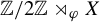 are uniquely ergodic. The substitution
$\overline \sigma $
are uniquely ergodic. The substitution
$\overline \sigma $
 satisfying
$\Psi (g,\sigma (x)) = \overline \sigma (\Psi (g,x))$
satisfying
$\Psi (g,\sigma (x)) = \overline \sigma (\Psi (g,x))$
 is defined as follows on the alphabet
$\mathbb {Z}/2\mathbb {Z}\times A$
is defined as follows on the alphabet
$\mathbb {Z}/2\mathbb {Z}\times A$
 , written
$a_0$
, written
$a_0$
 ,
$a_1$
,
$a_1$
 ,
$b_0$
,
$b_0$
 ,
$b_1$
,
$b_1$
 , etc. for convenience,

This substitution splits in two the primitive substitutions defined respectively on the alphabets
$B = \{a_0, b_0, c_1, d_0\}$
 and
$C = \{a_1, b_1, c_0, d_1\}$
and
$C = \{a_1, b_1, c_0, d_1\}$
 . Each corresponds to one of the two minimal closed invariant subsets of the skew product
$\mathbb {Z}/2\mathbb {Z}\rtimes _{\varphi } X$
. Each corresponds to one of the two minimal closed invariant subsets of the skew product
$\mathbb {Z}/2\mathbb {Z}\rtimes _{\varphi } X$
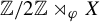 .
.
In what follows, we say that a substitution
$\sigma \colon A^*\to A^*$
 is invertible if its extension to an endomorphism on the free group
$F_A$
is invertible if its extension to an endomorphism on the free group
$F_A$
 is an automorphism. We now state two further properties when the substitution is assumed to be invertible.
Lemma 8.5. Let
$\sigma $
 be a primitive substitution. If
$\sigma $
be a primitive substitution. If
$\sigma $
 is invertible, then it is invertible under every morphism
$\varphi \colon A^*\to G$
is invertible, then it is invertible under every morphism
$\varphi \colon A^*\to G$
 onto a finite group G.
Proof. Let
$\operatorname {Aut}(F_A)$
 be the automorphism group of
$F_A$
be the automorphism group of
$F_A$
 and
$\operatorname {Hom}(F_A, G)$
and
$\operatorname {Hom}(F_A, G)$
 be the set of morphisms
$F_A\to G$
be the set of morphisms
$F_A\to G$
 . For
$\tau \in \operatorname {Aut}(F_A)$
. For
$\tau \in \operatorname {Aut}(F_A)$
 , denote by
$\tau _*$
, denote by
$\tau _*$
 the self-map of
$\operatorname {Hom}(F_A, G)$
the self-map of
$\operatorname {Hom}(F_A, G)$
 defined by

Since
$\rho _*\circ \tau _* = (\tau \circ \rho )_*$
 , the map
$\tau \mapsto \tau _*$
, the map
$\tau \mapsto \tau _*$
 is a morphism from
$\operatorname {Aut}(F_A)$
is a morphism from
$\operatorname {Aut}(F_A)$
 to the symmetric group on
$\operatorname {Hom}(F_A,G)$
to the symmetric group on
$\operatorname {Hom}(F_A,G)$
 . Moreover, observe that
$\operatorname {Hom}(F_A,G)$
. Moreover, observe that
$\operatorname {Hom}(F_A,G)$
 is a finite set, being in bijection with the set of maps
$A\to G$
is a finite set, being in bijection with the set of maps
$A\to G$
 . As a result, for every automorphism
$\tau $
. As a result, for every automorphism
$\tau $
 of
$F_A$
of
$F_A$
 ,
$\tau _*$
,
$\tau _*$
 is a permutation of
$\operatorname {Hom}(F_A,G)$
is a permutation of
$\operatorname {Hom}(F_A,G)$
 with finite order; in other words, there exists
$n\geq 0$
with finite order; in other words, there exists
$n\geq 0$
 such that
$\tau _*^n=\mathrm {id}$
such that
$\tau _*^n=\mathrm {id}$
 , that is,
$\varphi \circ \tau ^n = \varphi $
, that is,
$\varphi \circ \tau ^n = \varphi $
 for every morphism
$F_A\to G$
for every morphism
$F_A\to G$
 . Applying this to the extension of
$\sigma $
. Applying this to the extension of
$\sigma $
 to an automorphism of
$F_A$
to an automorphism of
$F_A$
 yields the result.
In what follows, we say that a substitution is aperiodic if it generates a shift space that contains no finite orbit. We next establish the following lemma that is used in the next section. Observe that the generation property expressed below implies the one stated in Theorem 6.1.
Lemma 8.6. Let
$\sigma $
 be a primitive aperiodic substitution and X the shift generated by
$\sigma $
be a primitive aperiodic substitution and X the shift generated by
$\sigma $
 . If
$\mathcal {R}_X(u)$
. If
$\mathcal {R}_X(u)$
 generates
$F_A$
generates
$F_A$
 for every
$u\in \mathcal {L}(X)$
for every
$u\in \mathcal {L}(X)$
 , then
$\sigma $
, then
$\sigma $
 is invertible.
Proof. First, fix a point
$x\in X$
 which is periodic under
$\sigma $
which is periodic under
$\sigma $
 , meaning
$\sigma ^k(x)=x$
, meaning
$\sigma ^k(x)=x$
 for some
$k>0$
for some
$k>0$
 [Reference Durand and Perrin25, Proposition 1.4.8]. Let w be a word of the form
$w = x_{[-n,n)}$
[Reference Durand and Perrin25, Proposition 1.4.8]. Let w be a word of the form
$w = x_{[-n,n)}$
 and let
$u = x_{[0,n)}$
and let
$u = x_{[0,n)}$
 be its suffix of length n, for some
$n\geq 0$
be its suffix of length n, for some
$n\geq 0$
 . As Almeida and Costa observed in the proof of [Reference Almeida and Costa1, Proposition 5.5], it follows from Mossé’s recognizability theorem [Reference Mossé45, Theorem 3.1bis] that when n is large enough,
$u\mathcal {R}_X(w)u^{-1}\subseteq \operatorname {im}(\sigma ^k)$
. As Almeida and Costa observed in the proof of [Reference Almeida and Costa1, Proposition 5.5], it follows from Mossé’s recognizability theorem [Reference Mossé45, Theorem 3.1bis] that when n is large enough,
$u\mathcal {R}_X(w)u^{-1}\subseteq \operatorname {im}(\sigma ^k)$
 . Since by assumption
$\mathcal {R}_X(w)$
. Since by assumption
$\mathcal {R}_X(w)$
 generates
$F_A$
generates
$F_A$
 , we conclude that
$\sigma ^k$
, we conclude that
$\sigma ^k$
 is a surjective endomorphism of
$F_A$
is a surjective endomorphism of
$F_A$
 . Since finitely generated free groups have the Hopfian property [Reference Lyndon and Schupp41, Proposition 3.5], it follows that
$\sigma ^k$
. Since finitely generated free groups have the Hopfian property [Reference Lyndon and Schupp41, Proposition 3.5], it follows that
$\sigma ^k$
 is invertible and, hence, so is
$\sigma $
is invertible and, hence, so is
$\sigma $
 .
.
For the sake of completeness, we give an example showing that the converse of the above lemma fails, that is, invertibility does not guarantee that all
$\mathcal {R}_X(u)$
 generate
$F_A$
generate
$F_A$
 .
.
Example 8.7. Let
$\sigma $
 be the primitive substitution from Example 8.4 defined on the four-letter alphabet
$A=\{a,b,c,d\}$
be the primitive substitution from Example 8.4 defined on the four-letter alphabet
$A=\{a,b,c,d\}$
 by
by

This is an invertible substitution, with
$\sigma ^{-1}$
 given by

Nonetheless, the following is not a generating set of
$F_A$
 :
:

In fact, this set of return words generate the rank 3 subgroup of
$F_A$
 with basis
$\{a,b,dc\}$
with basis
$\{a,b,dc\}$
 .
.
8.2 Skew products based on dendric shifts
We turn now to the dendric case. First, we recall the definition. Let X be a shift space. For
$w\in \mathcal {L}(X)$
 , let
$\operatorname {L}(w)=\{a\in A\mid aw\in \mathcal {L}(X)\}$
, let
$\operatorname {L}(w)=\{a\in A\mid aw\in \mathcal {L}(X)\}$
 and
$\operatorname {R}(w)=\{a\in A\mid wa\in \mathcal {L}(X)\}$
and
$\operatorname {R}(w)=\{a\in A\mid wa\in \mathcal {L}(X)\}$
 . We denote by
$\operatorname {E}(w)$
. We denote by
$\operatorname {E}(w)$
 the graph with vertices the disjoint union of
$\operatorname {R}(w)$
the graph with vertices the disjoint union of
$\operatorname {R}(w)$
 and
$\operatorname {L}(w)$
and
$\operatorname {L}(w)$
 , and edges the pairs
$(a,b)\in A\times A$
, and edges the pairs
$(a,b)\in A\times A$
 such that
${awb\in \mathcal {L}(X)}$
such that
${awb\in \mathcal {L}(X)}$
 ; it is called the extension graph of w. A shift space X is dendric if for every
$w\in \mathcal {L}(X)$
; it is called the extension graph of w. A shift space X is dendric if for every
$w\in \mathcal {L}(X)$
 , the extension graph
$\operatorname {E}(w)$
, the extension graph
$\operatorname {E}(w)$
 is a tree. For instance, every Sturmian shift is dendric [Reference Berthé, De Felice, Dolce, Leroy, Perrin, Reutenauer and Rindone11].
An important result concerning dendric shifts is the so-called return theorem of Berthé et al, which we quote next.
Theorem 8.8. [Reference Berthé, De Felice, Dolce, Leroy, Perrin, Reutenauer and Rindone11, Theorem 4.5]
Let X be a dendric shift on an alphabet A. For every
$w\in \mathcal {L}(X)$
 , the set
$\mathcal {R}_X(w)$
, the set
$\mathcal {R}_X(w)$
 is a basis of the free group on A.
Therefore, it follows from Theorem 6.1 that every skew product of a dendric shift and a finite group is minimal.
Example 8.9. The Fibonacci shift (see §3.4) is Sturmian and therefore dendric. There, we have
$\operatorname {R}(a)=\operatorname {L}(a)=\{a,b\}$
 and the graph
$\operatorname {E}(a)$
and the graph
$\operatorname {E}(a)$
 is shown in Figure 10. Moreover,
$\mathcal {R}_X(a)=\{a,ab\}$
is shown in Figure 10. Moreover,
$\mathcal {R}_X(a)=\{a,ab\}$
 , which is obviously a basis of the free group on
$\{a,b\}$
, which is obviously a basis of the free group on
$\{a,b\}$
 .
.
We also give an example of a shift space which is not dendric.
Example 8.10. Let X be the Thue–Morse shift from Example 2.1, generated by the two-letter substitution
$\sigma \colon a\mapsto ab, b\mapsto ba$
 . For the word
$w = aba$
. For the word
$w = aba$
 , we find
$\operatorname {L}(w)=\operatorname {R}(w)=\{a,b\}$
, we find
$\operatorname {L}(w)=\operatorname {R}(w)=\{a,b\}$
 and the graph
$\operatorname {E}(w)$
and the graph
$\operatorname {E}(w)$
 , depicted in Figure 11, is not connected.
The extension graph
$\operatorname {E}(a)$
 in the Fibonacci shift.

The extension graph
$\operatorname {E}(w)$
 ,
$w=aba$
,
$w=aba$
 , in the Thue–Morse shift.

We recover, as a consequence of the following general result, the unique ergodicity of the skew product of §3.4.
Theorem 8.11. Let X be a dendric shift generated by a primitive substitution. Then, the skew product
$G\rtimes _{\varphi } X$
 is uniquely ergodic for every morphism
$\varphi \colon A^*\to G$
is uniquely ergodic for every morphism
$\varphi \colon A^*\to G$
 onto a finite group G.
The proof uses Lemmas 8.5 and 8.6. Observe that dendric shift spaces, in particular, fall under the scope of Lemma 8.6, thanks to the return theorem of Berthé et al, stated above as Theorem 8.8.
Proof. Assume that X is generated by the primitive morphism
$\sigma $
 . Observe that
$\sigma $
. Observe that
$\sigma $
 must be aperiodic, as dendric spaces cannot contain finite orbits. Moreover, by the return theorem,
$\langle \mathcal {R}_X(w)\rangle =F_A$
must be aperiodic, as dendric spaces cannot contain finite orbits. Moreover, by the return theorem,
$\langle \mathcal {R}_X(w)\rangle =F_A$
 for all
$w\in \mathcal {L}(X)$
for all
$w\in \mathcal {L}(X)$
 . Therefore, we may apply Lemmas 8.5 and 8.6 to conclude that
$\sigma $
. Therefore, we may apply Lemmas 8.5 and 8.6 to conclude that
$\sigma $
 is invertible and, as a result, invertible under every morphism
$\varphi \colon A^*\to G$
is invertible and, as a result, invertible under every morphism
$\varphi \colon A^*\to G$
 onto a finite group G. Applying Proposition 8.3, it follows that the skew product
$G\rtimes _{\varphi } X$
onto a finite group G. Applying Proposition 8.3, it follows that the skew product
$G\rtimes _{\varphi } X$
 has uniquely ergodic minimal closed invariant subsets. As the skew product is also minimal by the return theorem (Theorem 8.8) and Theorem 6.1, this completes the proof.
We thus obtain, as a direct application of Corollary 3.6, the following result about the density of group languages in substitutive dendric shifts.
Corollary 8.12. Let X be a dendric shift generated by a primitive substitution and let
$\mu $
 be its unique ergodic measure. For every morphism
$\varphi \colon A^*\to G$
be its unique ergodic measure. For every morphism
$\varphi \colon A^*\to G$
 onto a finite group G and every language
$L = \varphi ^{-1}(K)$
onto a finite group G and every language
$L = \varphi ^{-1}(K)$
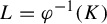 ,
$K\subseteq G$
,
$K\subseteq G$
 , the density
$\delta _\mu (L)$
, the density
$\delta _\mu (L)$
 exists and is equal to
$|K|/|G|$
exists and is equal to
$|K|/|G|$
 .
.
9 Skew products based on Sturmian shifts
We end with a discussion about earlier related works on skew products based on irrational rotations, mostly by Veech [Reference Veech56, Reference Veech57] and Jager and Liardet [Reference Jager and Liardet34]. Due to the nature of the examples involved and to stay consistent with the relevant literature, it is convenient here to use alphabets consisting of natural numbers, such as
$\{0,1\}$
 and
$\{1,2\}$
and
$\{1,2\}$
 .
.
Among the first classical examples of skew products, skew translations (that is, skew products with base an irrational rotation on the unit circle), and their ergodic and spectral properties have been widely investigated; see e.g. [Reference Ferenczi and Hubert27, Reference Guenais and Parreau31, Reference Merrill42, Reference Stewart54, Reference Veech56, Reference Veech57] and the classical references [Reference Cornfeld, Fomin and Sinaĭ21, Reference Petersen48]. In particular, they have been used to produce examples of interval exchanges that are not uniquely ergodic [Reference Keynes and Newton36]. Such examples are based on skew products of irrational rotations associated with the group
$\mathbb {Z}/2\mathbb {Z}$
 that are minimal and not uniquely ergodic, with the skewing function being the indicator function of an interval [Reference Veech56, Reference Veech57].
More precisely, let
$\alpha $
 be an irrational number in
$[0,1]$
be an irrational number in
$[0,1]$
 . We consider the rotation
$R_{\alpha }\colon x \mapsto x + \alpha $
. We consider the rotation
$R_{\alpha }\colon x \mapsto x + \alpha $
 modulo
$1$
modulo
$1$
 defined on
$\mathbb {T}=\mathbb {R}/\mathbb {Z}$
defined on
$\mathbb {T}=\mathbb {R}/\mathbb {Z}$
 . Let
$I=[0, \beta )$
. Let
$I=[0, \beta )$
 be a semi-open interval of
$\mathbb {T}$
be a semi-open interval of
$\mathbb {T}$
 . Let
${1}_I\colon {\mathbb T} \to \{0,1\}$
. Let
${1}_I\colon {\mathbb T} \to \{0,1\}$
 be the indicator function of I, that is,
$1_I(x)=1$
be the indicator function of I, that is,
$1_I(x)=1$
 if and only if
$x\in I$
if and only if
$x\in I$
 . Let
$m \geq 2$
. Let
$m \geq 2$
 and let
$G=\mathbb {Z}/m\mathbb {Z}$
and let
$G=\mathbb {Z}/m\mathbb {Z}$
 . Let
$\varphi :\{0,1\}^*\to G$
. Let
$\varphi :\{0,1\}^*\to G$
 be the morphism defined by
$0\mapsto 0$
be the morphism defined by
$0\mapsto 0$
 ,
$1 \mapsto 1$
,
$1 \mapsto 1$
 . We then consider the skew product
$G\rtimes _I {\mathbb {T}}$
. We then consider the skew product
$G\rtimes _I {\mathbb {T}}$
 of
$R_{\alpha }$
of
$R_{\alpha }$
 defined as

Such skew products over rotations are closely related to symbolic skew products such as those considered in the present paper and, more precisely, to skew products over shifts obtained as binary codings of rotations. Let
$I^{\mathrm {c}}$
 stand for the complement of I in
$\mathbb {T}$
stand for the complement of I in
$\mathbb {T}$
 . We use the notation
$I_0=I$
. We use the notation
$I_0=I$
 and
$I_1=I^{\mathrm {c}}$
and
$I_1=I^{\mathrm {c}}$
 . Let x be the infinite word in
$\{0,1\}^{\mathbb {Z}}$
. Let x be the infinite word in
$\{0,1\}^{\mathbb {Z}}$
 obtained by coding the orbit of
$0$
obtained by coding the orbit of
$0$
 under
$R_{\alpha }$
under
$R_{\alpha }$
 with respect to the partition
${\mathcal I}=\{I, I^{\mathrm {c}}\}$
with respect to the partition
${\mathcal I}=\{I, I^{\mathrm {c}}\}$
 , that is, for any
$n \in \mathbb {Z}$
, that is, for any
$n \in \mathbb {Z}$
 ,
$x_n=1$
,
$x_n=1$
 if and only if
$R_{\alpha }^n(0) \in I$
if and only if
$R_{\alpha }^n(0) \in I$
 , or in other words,
$x_n = 1_I( R_{\alpha }^n (0))$
, or in other words,
$x_n = 1_I( R_{\alpha }^n (0))$
 for all
$n \in {\mathbb Z}$
for all
$n \in {\mathbb Z}$
 . Let
$(X,S)$
. Let
$(X,S)$
 be the shift space generated by x. Then, this shift is minimal and uniquely ergodic since
$\alpha $
be the shift space generated by x. Then, this shift is minimal and uniquely ergodic since
$\alpha $
 is irrational and I is semi-open. Indeed, we associate in a bijective way words
$w=w_1 \cdots w_n$
is irrational and I is semi-open. Indeed, we associate in a bijective way words
$w=w_1 \cdots w_n$
 in
$\{0,1\}^n$
in
$\{0,1\}^n$
 with sets
$I_{w} := I_{w_1} \cap R_{\alpha } ^{-1} I_{w_2} \cap \cdots \cap R_{\alpha } ^{-n+1} I_{w_n}$
with sets
$I_{w} := I_{w_1} \cap R_{\alpha } ^{-1} I_{w_2} \cap \cdots \cap R_{\alpha } ^{-n+1} I_{w_n}$
 as follows: w occurs at index k in x if and only if
$k \alpha \in I_w$
as follows: w occurs at index k in x if and only if
$k \alpha \in I_w$
 . It is important to stress the fact that I is assumed to be semi-open. As an illustration of the relevance of this hypothesis, consider the case
$I=[0,\alpha ]$
. It is important to stress the fact that I is assumed to be semi-open. As an illustration of the relevance of this hypothesis, consider the case
$I=[0,\alpha ]$
 , with
$\alpha <1/2$
, with
$\alpha <1/2$
 ; then,
$00$
; then,
$00$
 occurs only once in the orbit of
$0$
occurs only once in the orbit of
$0$
 and minimality fails. The fact that I is semi-open guarantees that if
$I_w$
and minimality fails. The fact that I is semi-open guarantees that if
$I_w$
 is not empty, then there are infinitely many k such that
$k \alpha \in I_w$
is not empty, then there are infinitely many k such that
$k \alpha \in I_w$
 , by density of the sequence
$(k \alpha )_k$
, by density of the sequence
$(k \alpha )_k$
 ; hence, the uniform recurrence of x and, thus, the minimality of X. When the length of I equals
$\alpha $
; hence, the uniform recurrence of x and, thus, the minimality of X. When the length of I equals
$\alpha $
 or
$1-\alpha $
or
$1-\alpha $
 , such binary codings of rotations are Sturmian.
Not all intervals I lead to ergodic skew products. In fact, by [Reference Veech56], if
$\alpha $
 is not badly approximable, then there exists an interval I such that the skew product
$G\rtimes _I\mathbb {T}$
is not badly approximable, then there exists an interval I such that the skew product
$G\rtimes _I\mathbb {T}$
 of
$R_{\alpha }$
of
$R_{\alpha }$
 is not ergodic, a result which inspired the elegant characterization of ergodicity from [Reference Guenais and Parreau31] stated in terms of Ostrowski’s numeration. Moreover, as proved in [Reference Veech57], skewing a badly approximable rotation over a finite number of intervals with rational endpoints still provides a uniquely ergodic skew product. However, [Reference Chaika19] provides a
$\mathbb {Z}/2\mathbb {Z}$
is not ergodic, a result which inspired the elegant characterization of ergodicity from [Reference Guenais and Parreau31] stated in terms of Ostrowski’s numeration. Moreover, as proved in [Reference Veech57], skewing a badly approximable rotation over a finite number of intervals with rational endpoints still provides a uniquely ergodic skew product. However, [Reference Chaika19] provides a
$\mathbb {Z}/2\mathbb {Z}$
 skew product of a badly approximable rotation that is minimal and not uniquely ergodic, by skewing over the indicator function of a union of two intervals.
In most examples considered in [Reference Veech56, Reference Veech57], intervals have lengths that do not belong to
$\mathbb {Z} \alpha + \mathbb {Z}$
 . We consider here the complementary case of Sturmian shifts. We can then apply Theorem 8.11 and Corollary 8.12 when they are furthermore assumed to be generated by a substitution, such as exemplified below. Note also that substitutive Sturmian shifts have been characterized in [Reference Crisp, Moran, Pollington and Shiue22, Reference Yasutomi58] (in particular, the parameter
$\alpha $
. We consider here the complementary case of Sturmian shifts. We can then apply Theorem 8.11 and Corollary 8.12 when they are furthermore assumed to be generated by a substitution, such as exemplified below. Note also that substitutive Sturmian shifts have been characterized in [Reference Crisp, Moran, Pollington and Shiue22, Reference Yasutomi58] (in particular, the parameter
$\alpha $
 of the underlying rotation is quadratic and, thus, badly approximable).
Example 9.1. Let X be the Fibonacci shift on the alphabet
$\{0,1\}$
 . We consider the skew product
$\mathbb {Z}/m\mathbb {Z}\rtimes _{\varphi } X$
. We consider the skew product
$\mathbb {Z}/m\mathbb {Z}\rtimes _{\varphi } X$
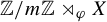 , where
$\varphi $
, where
$\varphi $
 is the morphism
$\{0,1\}^*\to \mathbb {Z}/m\mathbb {Z}$
is the morphism
$\{0,1\}^*\to \mathbb {Z}/m\mathbb {Z}$
 given by
$0\mapsto 0$
given by
$0\mapsto 0$
 ,
$1 \mapsto 1$
,
$1 \mapsto 1$
 . In particular, one has
$\varphi ^{(n)}(x)= |x_0 \cdots x_{n-1}|_1$
. In particular, one has
$\varphi ^{(n)}(x)= |x_0 \cdots x_{n-1}|_1$
 modulo m for
$n \geq 0$
modulo m for
$n \geq 0$
 , as explained in Example 3.2. By Theorem 8.11,
$\mathbb {Z}/m\mathbb {Z}\rtimes _{\varphi } X$
, as explained in Example 3.2. By Theorem 8.11,
$\mathbb {Z}/m\mathbb {Z}\rtimes _{\varphi } X$
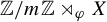 is uniquely ergodic, which yields equidistribution results on the congruence of the number of visits of
$R_{\alpha }$
is uniquely ergodic, which yields equidistribution results on the congruence of the number of visits of
$R_{\alpha }$
 to the interval
$[0 ,\alpha )$
to the interval
$[0 ,\alpha )$
 , where
$\alpha =({\sqrt 5 -1})/{2}$
, where
$\alpha =({\sqrt 5 -1})/{2}$
 . In other words, for every
$x \in X$
. In other words, for every
$x \in X$
 ,
$r\in \mathbb {Z}/m\mathbb {Z}$
,
$r\in \mathbb {Z}/m\mathbb {Z}$
 and
$a\in \{0,1\}$
and
$a\in \{0,1\}$
 , one has

or, in other words,

Finally, we consider in the next example, inspired by the work of Jager and Liardet [Reference Jager and Liardet34], equidistribution properties for convergents in continued fraction expansions.
Example 9.2. Let X be the Fibonacci shift on the alphabet
$ \{1,2\}$
 . We continue Example 3.16 with the skew product
$G(2) \rtimes _{\varphi } X$
. We continue Example 3.16 with the skew product
$G(2) \rtimes _{\varphi } X$
 with the non-Abelian skewing group
${G(2)= \operatorname {GL}(2, {\mathbb Z}/2{\mathbb Z})}$
with the non-Abelian skewing group
${G(2)= \operatorname {GL}(2, {\mathbb Z}/2{\mathbb Z})}$
 in relation to distribution properties modulo
$2$
in relation to distribution properties modulo
$2$
 for convergents of continued fraction expansions, inspired by the work [Reference Jager and Liardet34], which handles the case of a random real number.
Let
$x=(x_n)_{n\in \mathbb {Z}} \in X$
 . Consider the real number in the unit interval
$[0,1]$
. Consider the real number in the unit interval
$[0,1]$
 that admits
$(x_n)_{n\geq 1}$
that admits
$(x_n)_{n\geq 1}$
 as its sequence of partial quotients and let
$(p_n(x)/q_n(x))_{n\in \mathbb {N}}$
as its sequence of partial quotients and let
$(p_n(x)/q_n(x))_{n\in \mathbb {N}}$
 stand for the associated sequence of rational approximations. By Theorem 8.11, the skew product
$G(2) \rtimes _{\varphi } X$
stand for the associated sequence of rational approximations. By Theorem 8.11, the skew product
$G(2) \rtimes _{\varphi } X$
 is uniquely ergodic. We can thus deduce, as detailed in Example 3.16, the following distribution results in the group
$G(2)$
is uniquely ergodic. We can thus deduce, as detailed in Example 3.16, the following distribution results in the group
$G(2)$
 , as a counterpart of [Reference Jager and Liardet34, Theorem 3.11], which holds for almost every real number in
$[0,1]$
, as a counterpart of [Reference Jager and Liardet34, Theorem 3.11], which holds for almost every real number in
$[0,1]$
 (see also [Reference Borda15, Reference Moeckel44, Reference Szüsz55] for related works). For every
$k=1,2$
(see also [Reference Borda15, Reference Moeckel44, Reference Szüsz55] for related works). For every
$k=1,2$
 and for every
$x \in X$
and for every
$x \in X$
 ,
,

In fact, the distribution in the group
$G(2)$
 of the sequence of continued fraction convergents
$(p_n/q_n)_{n\in \mathbb {N}}$
of the sequence of continued fraction convergents
$(p_n/q_n)_{n\in \mathbb {N}}$
 , whose sequence of partial quotients is given by elements of the Fibonacci shift X, behaves like that of a random irrational number. Note that we recover the well-known fact that certain residue classes are attained more frequently than others (as already noted at the end of Example 3.16, the entries of equidistributed matrices in
$G(2)$
, whose sequence of partial quotients is given by elements of the Fibonacci shift X, behaves like that of a random irrational number. Note that we recover the well-known fact that certain residue classes are attained more frequently than others (as already noted at the end of Example 3.16, the entries of equidistributed matrices in
$G(2)$
 are not equidistributed modulo
$2$
are not equidistributed modulo
$2$
 ).
).
This statement can be considered as a modulo m counterpart of Lévy’s theorem stating that
$\lim _{n\to \infty } (({\log q_n})/{n})= {\pi ^2}/{12 \log 2}$
 almost everywhere. It is therefore natural to ask how the convergents behave without taking them modulo m, in terms of convergence of
$ ({\log q_n})/{n}$
almost everywhere. It is therefore natural to ask how the convergents behave without taking them modulo m, in terms of convergence of
$ ({\log q_n})/{n}$
 . Consider the cocyle map
$\psi \colon \{0,1\}^* \rightarrow \operatorname {GL}(2, {\mathbb R})$
. Consider the cocyle map
$\psi \colon \{0,1\}^* \rightarrow \operatorname {GL}(2, {\mathbb R})$
 defined similarly as
$\varphi $
defined similarly as
$\varphi $
 , but now with the matrix
$\psi (k)$
, but now with the matrix
$\psi (k)$
 being considered in
$ \operatorname {GL}(2, {\mathbb R})$
being considered in
$ \operatorname {GL}(2, {\mathbb R})$
 (without reduction modulo
$2$
(without reduction modulo
$2$
 ). By [Reference Furman28, Theorem 3], there exists some constant
$\Lambda _X>0$
). By [Reference Furman28, Theorem 3], there exists some constant
$\Lambda _X>0$
 such that
${\lim _{n\to \infty } (1/n) \log \Vert \psi ^{(n)} (x)\Vert =\Lambda _X}$
such that
${\lim _{n\to \infty } (1/n) \log \Vert \psi ^{(n)} (x)\Vert =\Lambda _X}$
 for all
$x \in X$
for all
$x \in X$
 , which yields the existence of
$\lim _{n\to \infty } (1/n) \log q_n (x)=\Lambda _X$
, which yields the existence of
$\lim _{n\to \infty } (1/n) \log q_n (x)=\Lambda _X$
 for all
$x \in X$
for all
$x \in X$
 . In other words, the cocycle
$\psi $
. In other words, the cocycle
$\psi $
 is uniform, with the terminology of [Reference Furman28]. We use here the fact that X is minimal, uniquely ergodic, and the cocycle map
$\psi $
is uniform, with the terminology of [Reference Furman28]. We use here the fact that X is minimal, uniquely ergodic, and the cocycle map
$\psi $
 is such that the entries of
$\psi ^{(2)}$
is such that the entries of
$\psi ^{(2)}$
 are positive.
Lastly, observe that similar results can be obtained for higher-dimensional continued fractions via skew products defined with primitive dendric shifts on larger alphabets, such as codings of interval exchanges; consider for instance the Jacobi–Perron algorithm whose equidistribution properties modulo m are studied in [Reference Berthé, Nakada and Natsui14] for random numbers.
Acknowledgements
We would first like to thank the anonymous referees for carefully reading through our paper and for making very helpful comments and suggestions. We warmly thank Samuel Petite for leading us to a mistake in an early version of this paper and France Gheeraert for suggesting a simplification in the proof of Theorem 6.1. We also thank Olivier Carton and Vincent Delecroix for insightful conversations about the notion of pointwise densities.
V.B. is supported by Agence Nationale de la Recherche through the project SymDynAr (ANR-23-CE40-0024) and 2024 ERC Synergy Project DynAMiCs (101167561). H.G.-O. was partially supported by the CTU Global Postdoc Fellowship program. C.-F.N.-B. is supported by the KIAS Individual Grant (MG094701) at Korea Institute for Advanced Study. V.B. and D.P. were supported by the Agence Nationale de la Recherche through the project ‘IZES’ (ANR-22-CE40-0011).

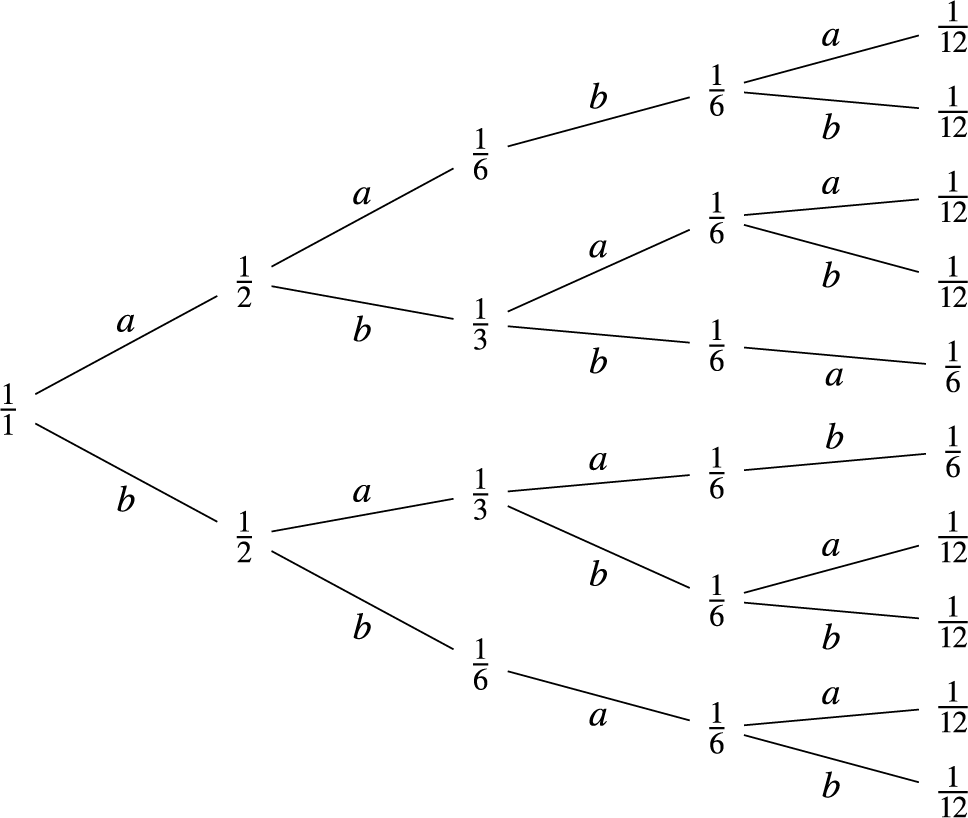
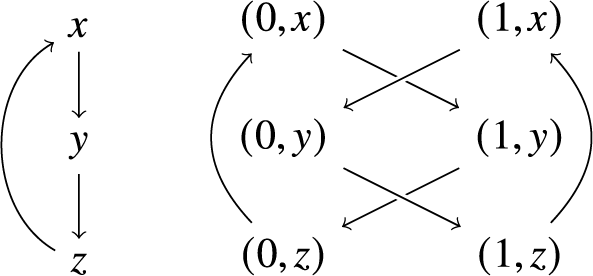


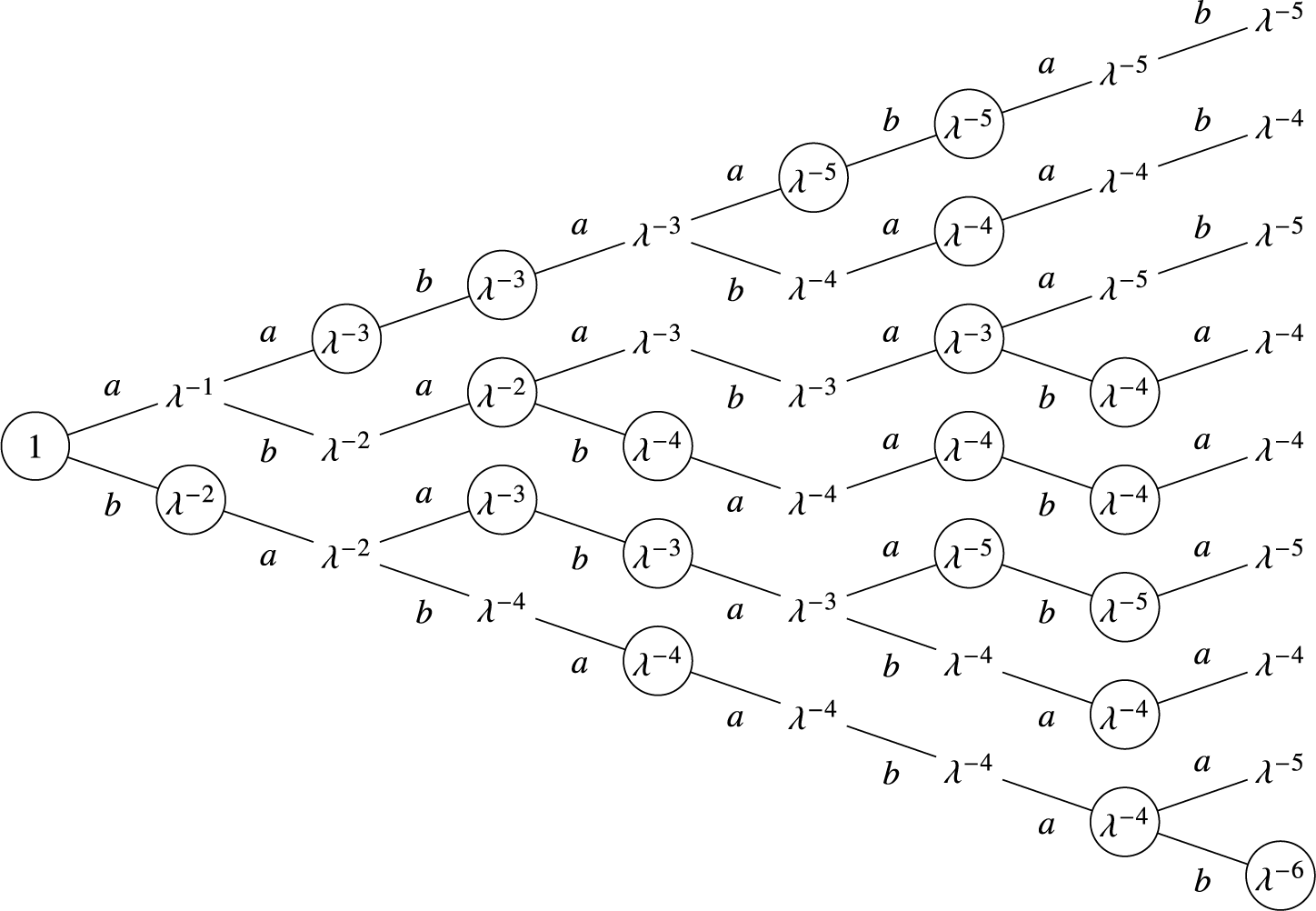


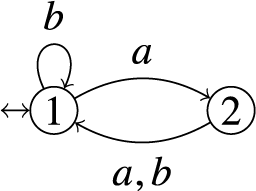


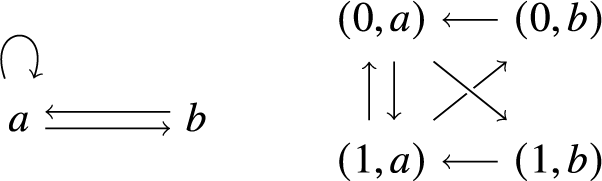
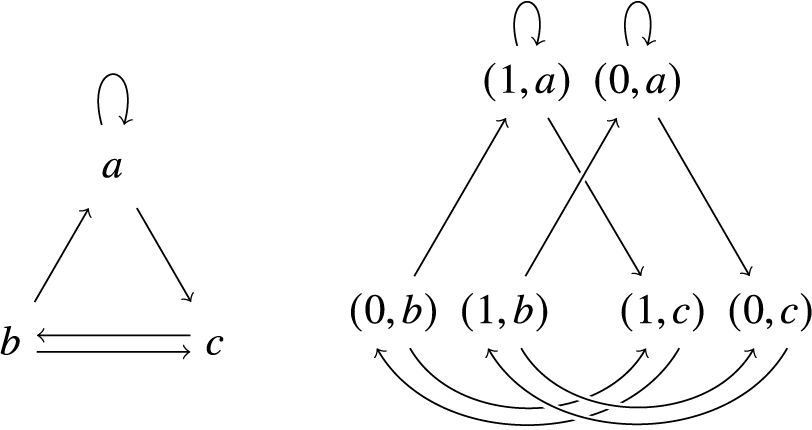
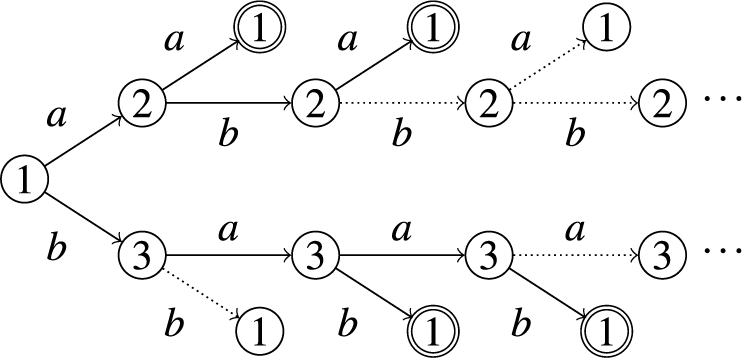
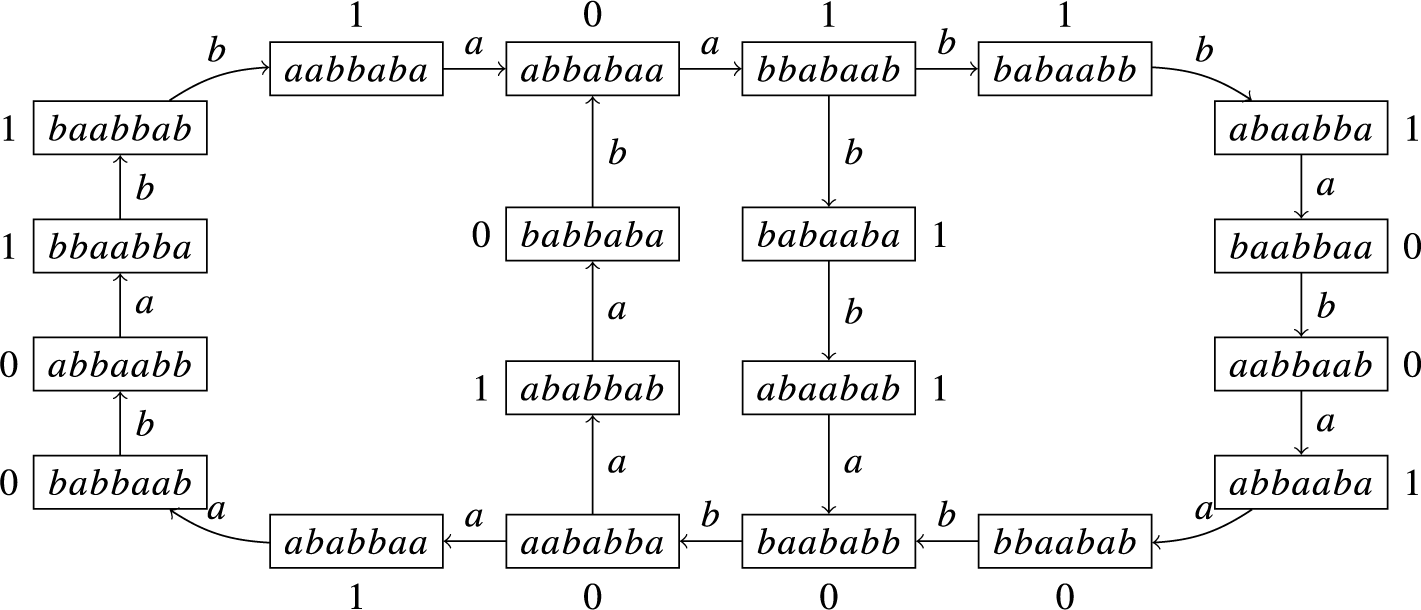


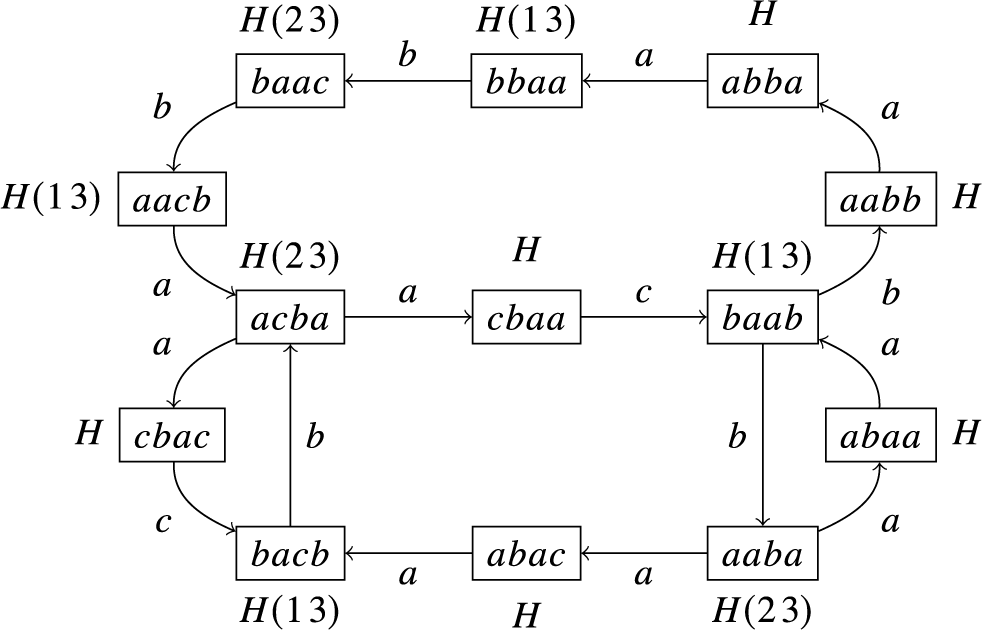


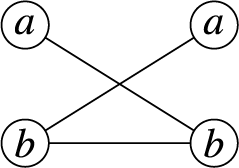

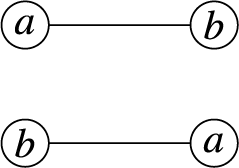


 Open access

