


Diet is one of the modifiable risk factors associated with the risk of chronic diseases such as CVD, type 2 diabetes and some cancers( 1 ). The prevalence of obesity in Australia is rising dramatically, with data from the Australian Health Survey 2011–12 indicating that 56·2 % of women were overweight or obese( 2 ). Poor diet is implicated in an estimated 56 % of all deaths in Australia( 3 ). To deal with the increasing public health challenges and the consequences of poor nutrition, healthy eating messages and dietary guidelines form a core component of Australia's prevention strategies( 4 ). However, it is unclear to what extent the diets of Australians of various ages meet dietary guidelines.
Following an extensive review of current scientific evidence( 4 ), the Australian Dietary Guidelines (ADG) have recently been updated to ADG 2013 to replace the previous guidelines, ADG 2003( 5 ). The development of the new guidelines, including modelling and consultation with nutrition and medical experts and consumers, has emphasised the objective of the guidelines being ‘realistic, practical and achievable’, with each recommendation considered in terms of its social context( 4 ). The website ‘Eat for Health’ accompanying the guidelines provides links to a number of companion documents and resources, including calculators to estimate individual dietary requirements( 6 ).
The ADG 2013 encourage Australians to be physically active with a nutritious diet sufficient to meet their energy needs, to eat a wide variety of foods from each of the five food groups (Cereals, Vegetables (and Legumes), Fruit, Dairy, and Meat and Alternatives), to choose mostly wholegrain and/or high-fibre-grain food varieties, lean meats and reduced-fat dairy foods, to drink plenty of water, and to limit intake of foods containing saturated fats, added salt, added sugars and alcohol. As with the ADG 2003, the new guidelines identify different age and population groups including men, women, and pregnant and breast-feeding women, and specify a recommended number of daily servings for each food group. However a number of important changes have been made, including: providing separate guidance for those aged 19–50 years and 51–70 years; changes in the number of servings recommended for some food groups, for instance increasing the recommended dairy intake to four daily servings for women aged 51–70 years; and changes in standard serving sizes for some food items, such as more than halving the serving size for muesli from 65 g to 30 g (Table 1). The ADG 2003 had a specific category of Extra Foods that included items high in saturated fats or added sugars, and recommended limiting their intake to 2·5 daily servings for adults( 5 ). The ADG 2013 refers to foods that are high in energy, saturated fat, added sugars and/or salt, or alcohol as ‘Discretionary Choices’ since they are not considered an essential or necessary part of healthy dietary patterns. The guidelines suggest that to avoid gaining excess weight, there is little room for additional servings beyond the recommended intakes in each food group for ‘smaller or less active’ (sedentary) people in each population group. Only for those who are ‘taller or more active’ are some additional servings suggested from the five food groups or unsaturated spreads and oils or from the discretionary choices, up to a suggested limit of 2·5 daily servings for women aged less than 70 years( 4 ).
Serving sizes of foods included in food groups according to the Australian Dietary Guidelines
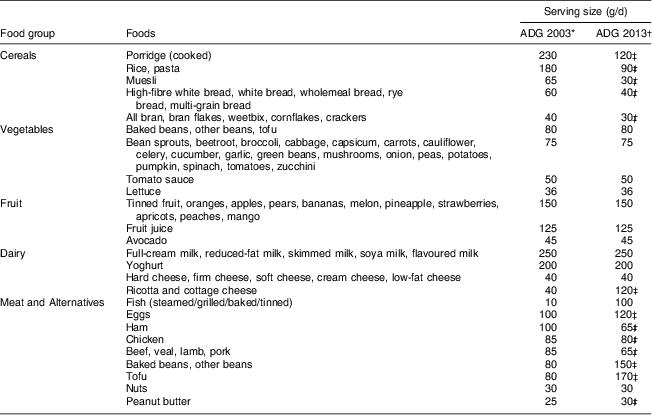
*Australian Dietary Guidelines 2003.
†Australian Dietary Guidelines 2013.
‡Different for the two guidelines.
Previous studies suggest that considerable scope exists to encourage more women in Australia to follow dietary guidelines( Reference Ball, Mishra and Thane 7 – Reference Mishra, McNaughton and Ball 9 ). In the present study, we examine how the diets of more than 18 000 women from two nationally representative age cohorts (young, mid-age) in the Australian Longitudinal Study on Women's Health (ALSWH) compare with the recommended intakes of food groups specified in the ADG 2013.
Methods
The ALSWH is a population-based study that examines the health of over 40 000 Australian women since baseline data collection commenced in 1996 with subsequent surveys since 1998 at 3-year intervals( Reference Lee, Dobson and Brown 10 ). There are three cohorts who were initially aged 18–23 years (born 1973–1978, young), 45–50 years (born 1946–1951, mid-age) and 70–75 years (born 1921–1926, older). Women were randomly selected using the national health insurance database (Medicare), which includes all permanent residents of Australia. For all age cohorts, women from rural and remote areas were selected at twice the rate of women living in urban areas to capture the heterogeneity of health and well-being of women living outside urban areas. Comparison of demographic characteristics of participants at recruitment with census data indicated that the samples are broadly representative of the Australian population in these age groups( Reference Brown, Bryson and Byles 11 ). The study includes somewhat more women in married or de facto relationships than in the general population (20·3 % v. 11·4 % for young women, 80·7 % v. 77·1 % in mid-age women). In the mid-age cohort, more women are employed while in the younger cohort, women in the workforce are under-represented( Reference Brown, Bryson and Byles 11 ). Further, the attenuation since baseline had minimal impact on representativeness( Reference Powers and Loxton 12 ). Full details of recruitment and the sample's representativeness have been published previously( Reference Lee, Dobson and Brown 10 , Reference Brown, Bryson and Byles 11 ). Informed consent was obtained from all participants, with ethical clearance obtained from the Human Research Ethics Committees of the University of Newcastle and the University of Queensland.
ALSWH collected data on sociodemographic and behavioural characteristics including the dietary intakes of the young women (including pregnant women) at survey 5 in 2009 (aged 31–36 years) and at survey 3 in 2001 for the mid-age women (aged 50–55 years). The response rates for the FFQ were 69 % (n 7759) at survey 5 for the young women and 91 % (n 10 467) at survey 3 for the mid-age women, of those women who completed survey 1 and had not died or dropped out because of ill health. A separate category has been defined for young women who were pregnant at the time of the survey in 2009 or who had given birth in the previous 12 months, to form three groups: ‘young women’, ‘pregnant women’ and ‘mid-age women’.
Dietary assessment
Diet was assessed using the Dietary Questionnaire for Epidemiological Studies (DQES), a validated FFQ developed for use with Australian adults( Reference Hodge, Patterson and Brown 13 ). This questionnaire assesses usual frequency of consumption of seventy-four foods, six alcoholic and nine non-alcohol beverage items and water intake over the previous 12 months, using a 10-point frequency scale ranging from ‘never’ to ‘three or more times per day’. The DQES also includes ten questions on the amount of fruit, vegetables, milk, bread, sugar and eggs consumed and questions on the type of milk, bread, fat spreads and cheese used. Photographs of different portion sizes are included in the FFQ, which are used by respondents to identify their level of consumption for vegetables, meat and casseroles.
Statistical analysis
For the data analysis, the photographs were used to estimate the weight of intake for each food item. Based on the frequency of consumption the weight estimates were then converted to daily equivalents (in grams per day). Table 1 shows the food items in each food group. Using the new specifications in the ADG 2013 for serving size (for instance, 90 g of cooked rice or pasta comprises one serving), intake by weight was converted into the number of servings consumed per day by each woman (Table 1). For each food group, the total number of servings per day was calculated by summing the number of servings consumed per day for all the food items in that food group as described by each guideline. The same method was used to calculate the daily number of servings consumed according to the ADG 2003. Summary statistics were calculated for the daily number of servings consumed by women in each category for each of the five food groups according to the ADG 2013 and the ADG 2003. The percentages of women in each category who adhered to the guidelines for each food group were weighted to account for the oversampling in rural and remote areas of Australia.
Results
Table 2 shows the sociodemographic characteristics of the ‘young women’, ‘pregnant women’ and ‘mid-age women’. More than half (54 %) of the young women and 64 % of the pregnant women had a university or higher degree, compared with 16 % of the mid-age women. In terms of BMI, more than half (54 %) of the mid-age women were overweight or obese, compared with 44 % of young women and 41 % of pregnant women (based on reported pre-pregnancy weight). Half or more of women in all groups were sedentary or had low physical activity levels.
Sociodemographic and behavioural characteristics of young, pregnant and mid-age women participating in the Australian Longitudinal Study on Women's Health (n 18 226)
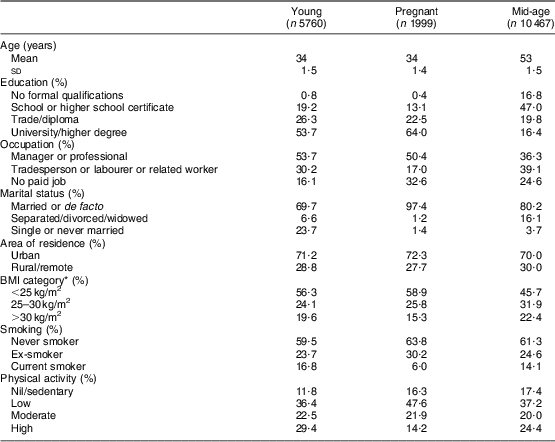
*Pre-pregnancy BMI for pregnant women.
Under the ADG 2003, overall median daily consumption by women in all groups was less than the recommended number of servings for each food group, except those for meat and alternatives (Table 3). For all groups of women, the daily servings of vegetables consumed by women in the first (lowest) quartile were one-third or less of the recommended intake. In contrast, median daily servings were only slightly less than the recommendation of two servings for fruit for mid-age women (median 1·9; interquartile range 1·1–2·9) and two servings for dairy for pregnant women (median 1·9; interquartile range 1·5–2·4). For extra foods, median daily consumption by all groups of women was above the suggested upper limit, with the fourth quartile of intake among young and pregnant women above five servings and double the recommended limit of 2·5 servings daily under ADG 2003.
Food group intakes of young, pregnant and mid-age women participating in the Australian Longitudinal Study on Women's Health (n 18 226) and comparison with the recommendations of the Australian Dietary Guidelines
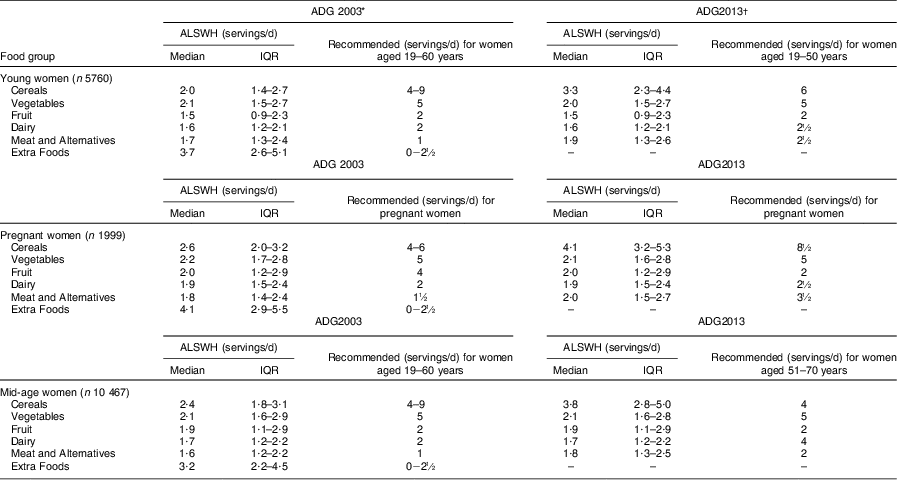
ALSWH, Australian Longitudinal Study on Women's Health; IQR, interquartile range.
*Australian Dietary Guidelines 2003.
†Australian Dietary Guidelines 2013.
Similarly for the ADG 2013, median daily consumption by all groups of women was less than the intake recommended for all food groups (except for fruit by pregnant women). Moreover, one in four women from all groups reported vegetable consumption that was one-third or less of the recommended five daily servings; alternatively three out of four women (i.e. up to and including the third quartile) needed to increase their daily intake of vegetables by more than two servings to reach the recommendation. For mid-age women, the median daily servings of dairy was less than half the intake specified by ADG 2013. Three out of four pregnant women fell short of the recommended 3·5 daily servings of meat and alternatives.
In terms of percentage of women adhering to the recommended intakes (Fig. 1), for all groups of women less than 2 % met the intake for vegetables under either set of guidelines. For young women, less than one in three met the ADG 2013 recommendations for fruit (29 %) and meat and alternatives (28 %), and a small minority attained recommended intakes for dairy (12 %) and cereals (7 %) food groups. While half of the pregnant women adhered to the guidelines for fruit intake, only 22 % had the recommended daily servings of dairy and just a small minority reached the recommended intakes for meat and alternatives (10 %) and cereals (2·5 %). For mid-age women the level of adherence was considerably higher, with almost half of the women attaining the ADG 2013 recommended number of daily servings for fruit (48 %), meat and alternatives (41 %) and cereals (45 %), whereas only 1 % had the suggested dairy intake (which had been increased on the intake recommended in ADG 2003).
Percentage of (a) young women (aged 31–36 years), (b) pregnant women (aged 31–36 years) and (c) mid-aged women (aged 50–55 years) participating in the Australian Longitudinal Study on Women's Health (n 18 226) who adhered to recommended intakes of food groups specified in the Australian Dietary Guidelines ( , previous guidelines, ADG 2003;
 , new guidelines, ADG 2013)

Discussion
The current study used dietary data from young, pregnant and mid-age women from ALSWH and compared their reported intakes of food groups with the recommendations for daily servings under both the ADG 2003 and the ADG 2013. Specifically, findings with respect to the ADG 2013 indicated that the majority of women from all three groups reported intakes below the recommended daily servings for all food groups, with the single exception of fruit consumption by pregnant women. In many cases the reported intake diverged widely from the guidelines, for instance less than 2 % of women from all groups attained the ADG 2013 recommended daily intake of five servings of vegetables, with three in four women needing to increase their daily consumption by more than two servings. Changes in the ADG 2013 mean that a third of young women and only 10 % of pregnant women attained the new recommendation of 2·5 and 3·5 daily servings for meat and alternatives. While one in three mid-age women met the level of dairy intake under the previous guidelines, just 1 % reached the higher level of four daily servings of dairy foods recommended in the ADG 2013, with most mid-age women needing to more than double their dairy intake.
A further indication of the divergence between women's diets and the guidelines was apparent for the food items in the Discretionary Choices category. These items are typically high in saturated fat, added sugars and salt and not included under ADG 2013 as part of a healthy diet, with the proviso that ‘taller and more active’ women may consume up to an additional 2·5 daily servings from the food groups or from the discretionary choices. For most women this would essentially mean eliminating or greatly reducing their consumption of items that were included in the Extra Foods category under ADG 2003, of which the majority reported more than three daily servings and one in four young or pregnant women had more than five daily servings.
Strengths of the present study include the large nationally representative sample, detailed sociodemographic and behavioural data, and the use of a validated FFQ designed for use with the Australian adult population( Reference Hodge, Patterson and Brown 13 ). Although the FFQ for the mid-age cohort was undertaken in 2001, it shows similar intakes to those of the young cohort that were collected in 2009. Furthermore, comparison with a later survey of the mid-age cohort in 2010 indicates that fruit and vegetable intakes have changed little over the intervening years (results not shown). Unfortunately, other food intakes from this more recent survey are not sufficiently detailed for the analysis of daily servings used in the present study. Findings from the 2012 National Health Survey (NHS)( 14 ), which uses responses on general questions of a 24 h recall of intake, indicate that 52·9 % of Australian women aged 18 years and over had two servings or less of vegetables daily, which compares closely with the median values of 2·1–2·2 daily servings found in the present study. The NHS results also show, however, that 9·5 % of women met the recommended guidelines with five or more daily servings of vegetables, which is higher than the figure of less than 2 % found our study. This discrepancy may be due to the different methods of dietary assessment used in the two studies, albeit they both indicate that the vast majority of women consume less than the recommended servings of vegetables daily.
Photographs were used to estimate the level of consumption of food items; however, errors may still occur in the estimation of portion sizes. Furthermore, accurate reporting of habitual intake over the last 12 months relies on the respondent's memory. Another limitation of the self-reported food intake is dietary under-reporting. It has been shown in some studies to be particularly associated with higher BMI and with some types of foods, such high-fat foods and snack foods( Reference Heitmann and Lissner 15 – Reference Rodríguez and Moreno 17 ). We undertook a number of sensitivity analyses to address this potential weakness. We found no evidence to suggest that under-reporting was associated with BMI. Women with higher BMI were more likely to have higher energy intake (results not shown). We excluded those with implausible energy intake data (>16 800 kJ/d or <2100 kJ/d) and this did not alter our final results( Reference Willett 18 ).
Findings from the present study have considerable implications given the guidelines’ aim to be ‘realistic, practical and achievable’( 4 ), as they indicate that for many women to follow the ADG 2013 recommendations would require a transformation of their diet. It will likely be necessary, therefore, to advocate a series of changes applicable at every meal; for instance, meeting the dietary guidelines for vegetable intake could be achieved for most women by incorporating one extra serving at each of three daily meals. However, given the high prevalence of obesity and overweight among Australian women( 14 ), recommendations for increases in the number of daily servings of the dairy and meat and alternatives food groups would need careful dissemination to encourage a corresponding decline in items from the discretionary choices category, to avoid excessive energy intake and weight gain. It also implies an integrated approach to addressing diet in a wider social context; for instance, highlighting the role of increased physical activity among women that in turn may facilitate a dietary transition more in line with recommendations.
Dissemination of the ADG 2013 already uses a range of formats, such as the depiction of the proportion of food groups in a balanced diet using a visual representation of a plate, illustrating meals that meet daily requirements and using ‘eat for health’ calculators available on the website( 6 ). Attention to detail will be required for those who may incorrectly assume they meet the ADG 2013 guidelines, but are unaware of changes in portion sizes for some food items and the recommended number of servings from the previous ADG 2003, such as with respect to the increased daily servings of meat and alternatives recommended for young and pregnant women. Some aspects may need explicit and targeted messages, such as the increased dairy intake recommended for those aged 51–70 years.
In summary, the degree of divergence of dietary intakes of most Australian women from the recommended guidelines, such as insufficient intake of vegetables and overconsumption of foods with high saturated fat and added sugar, poses considerable challenges for health professionals to encourage the necessary changes in dietary behaviour. Further research is needed to understand the pattern of sociodemographic factors and health behaviours that are linked with dietary intakes divergent from or consistent with the ADG 2013. The evaluation of the effectiveness of the new guidelines in influencing the diets of Australians will also require regular data collection from national surveys. Dietary data being collected by the Australian Health Survey (2011–13) will act as key baseline data from which to gauge the rate of progress of the impact of the new ADG 2013 on people's everyday food choices.
Acknowledgements
Sources of funding: The ALSWH is funded by the Australian Department of Health and G.D.M. is supported by the Australian National Health and Medical Research Council (APP1000986). The Australian Department of Health and the Australian National Health and Medical Research Council had no role in the design, analysis or writing of this article. Conflict of interest: No relevant disclosures. Authors’ contributions: G.D.M. contributed to the study design and drafted the manuscript. D.A.J.M.S. was responsible for the statistical analysis and presentation of data. S.M. and A.J.D. contributed to the interpretation of the data and critical revision of the manuscript. All authors approved the final version.



